Decorative Vessels and Cups

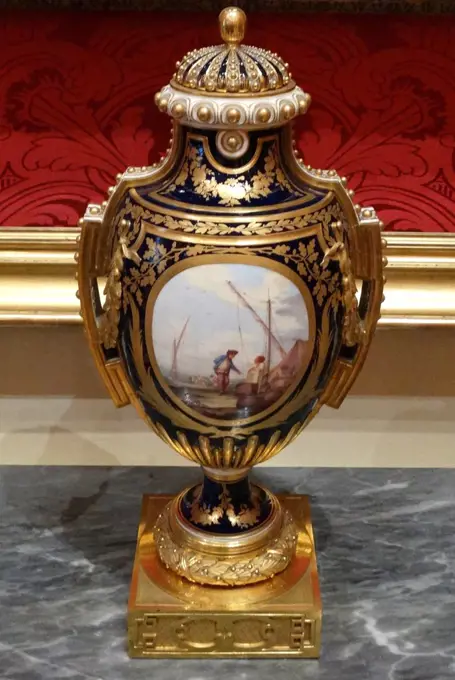
Ornate containers, including a Persian cup, Sèvres vase, and jeweled coupe lids featuring fine craftsmanship and intricate designs.
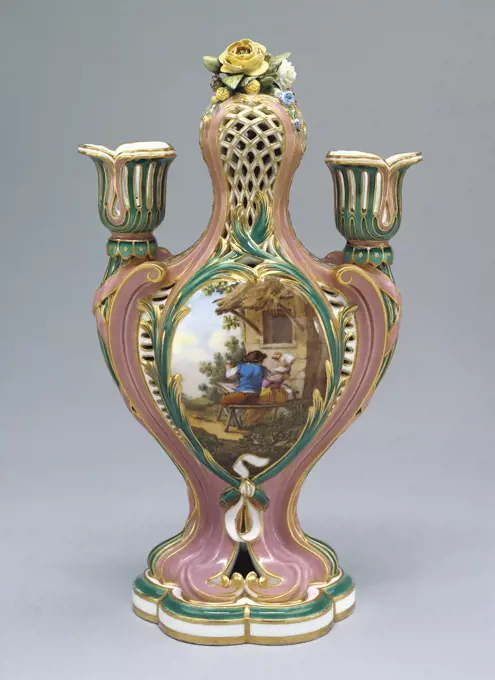
Vase; Painted by Charles-Nicolas Dodin (French, 1734 - 1803); Sèvres, France; 1759; Soft paste porcelain, pink and green ground colors, colored enamel decoration and gilding; 24.9 x 14.4 x 9.4 cm (9 13,16 x 5 11,16 x 3 11,16 in.)
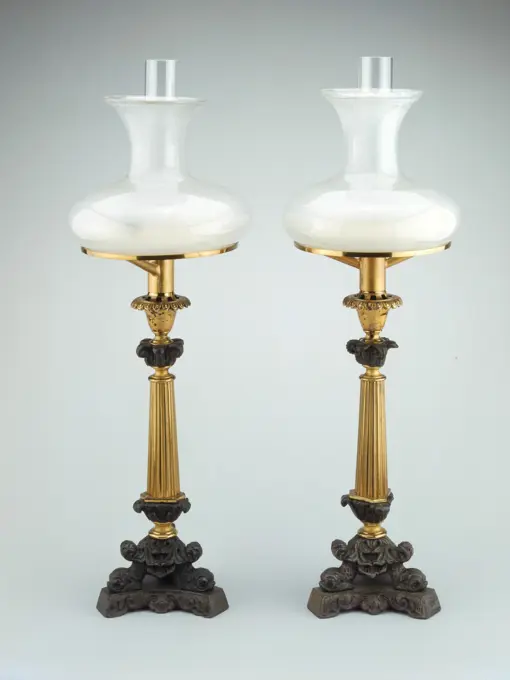
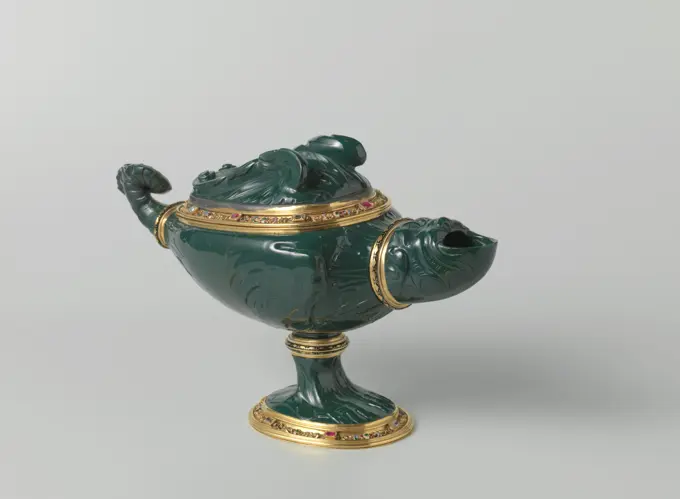
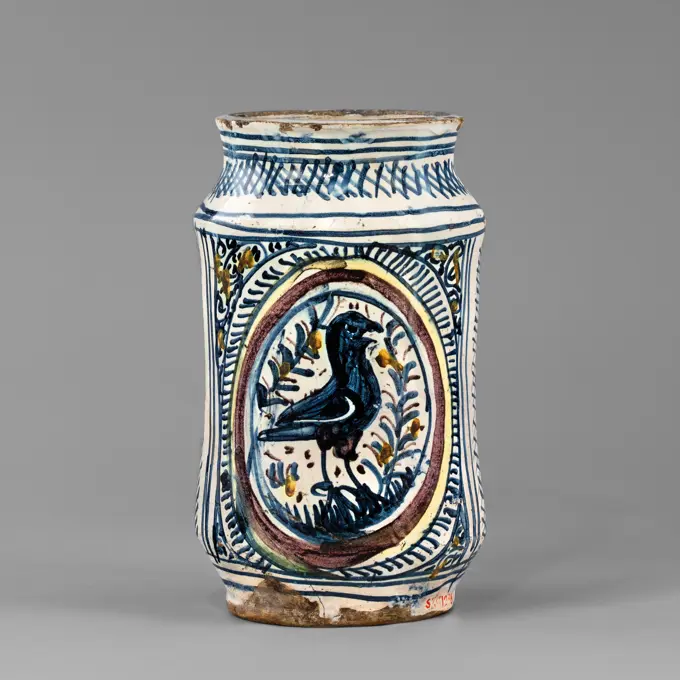
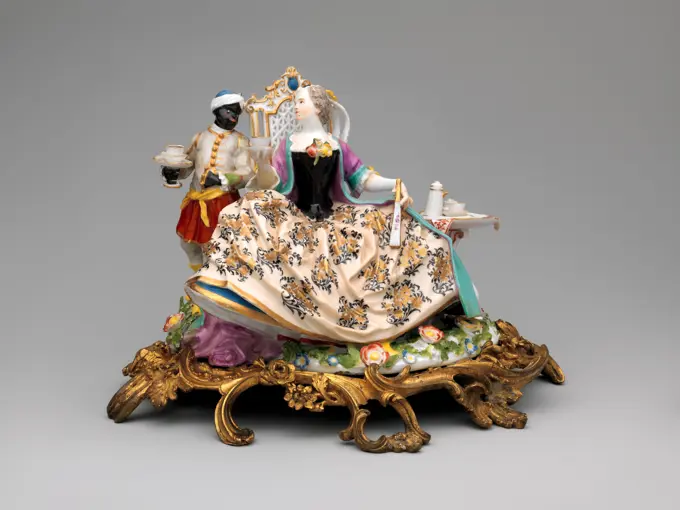
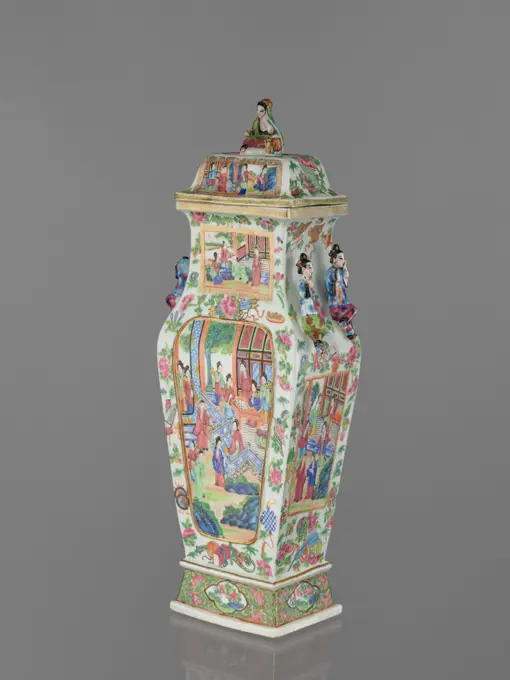
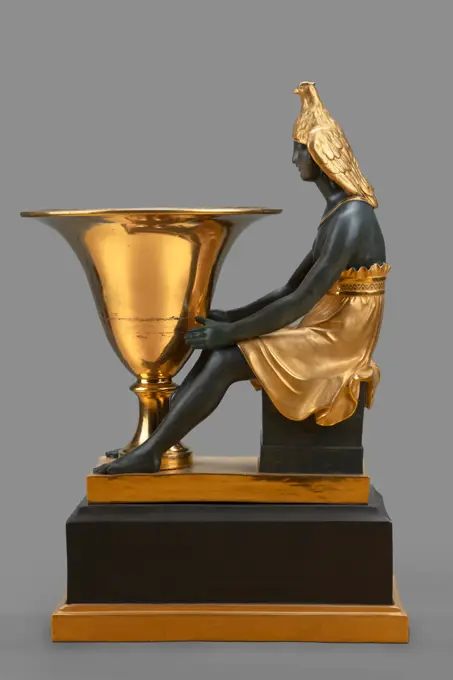
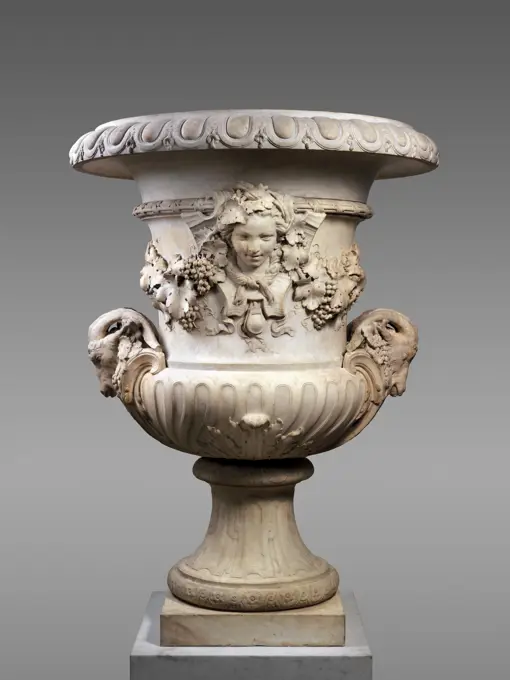
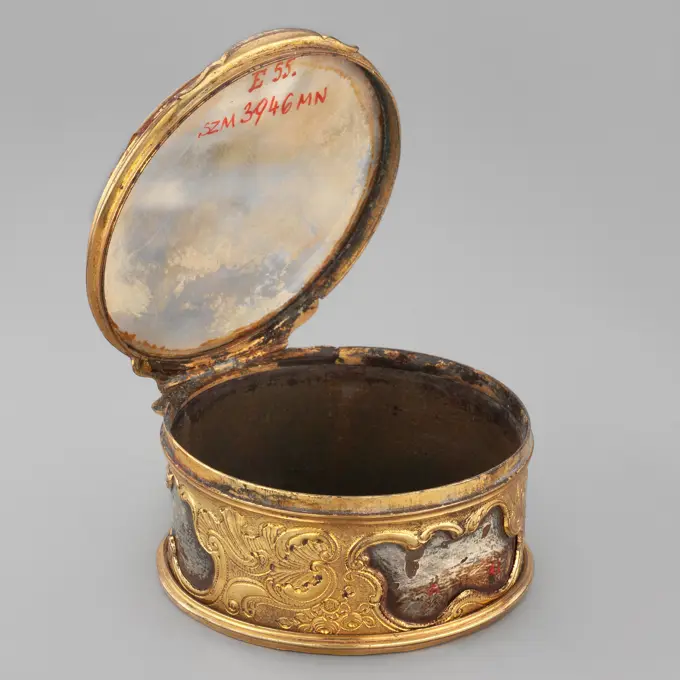
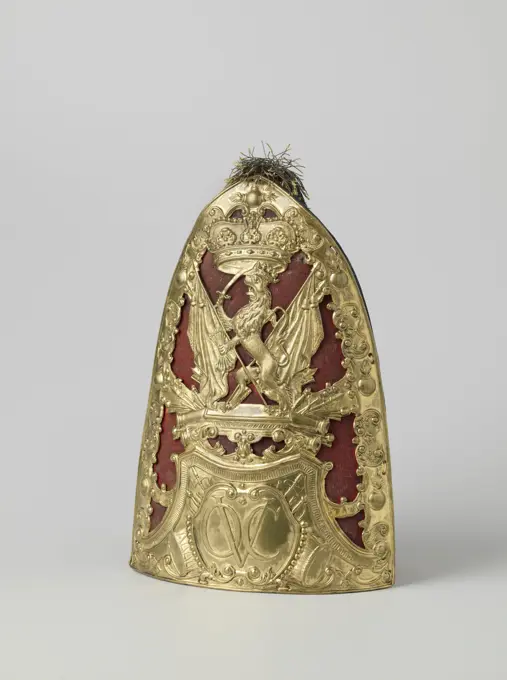
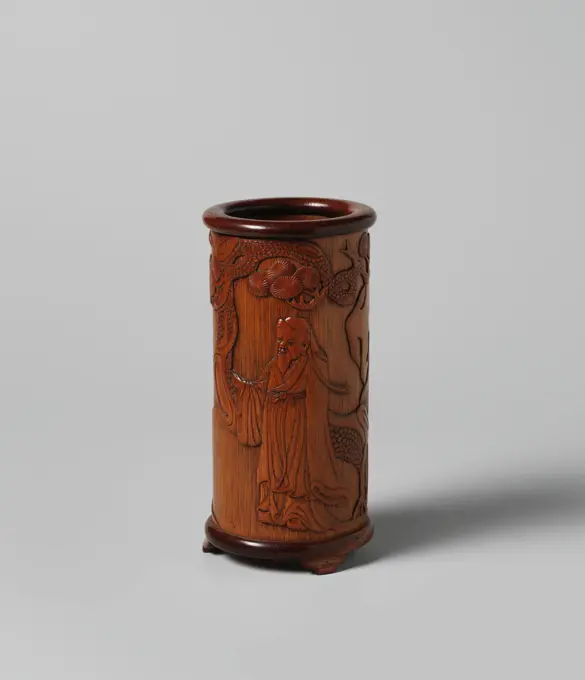
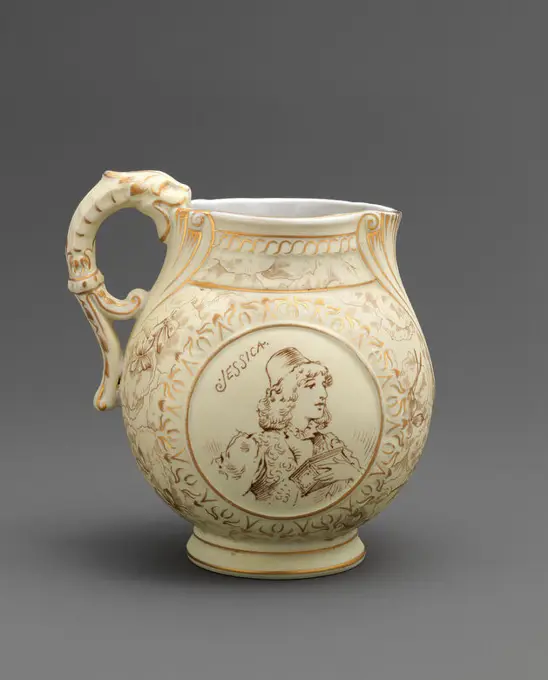
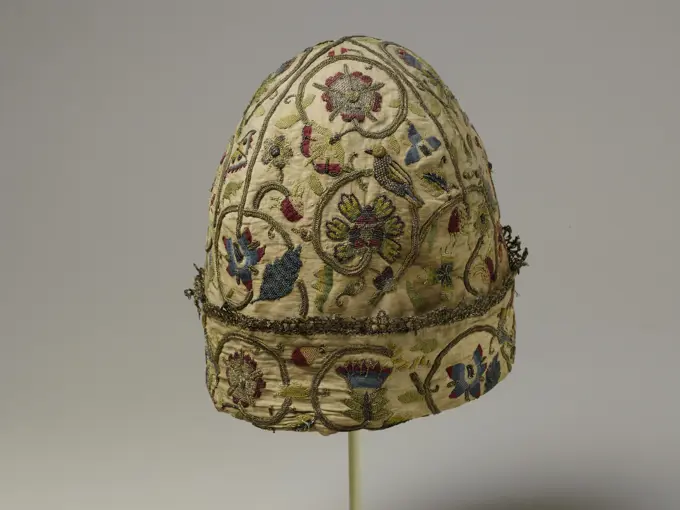
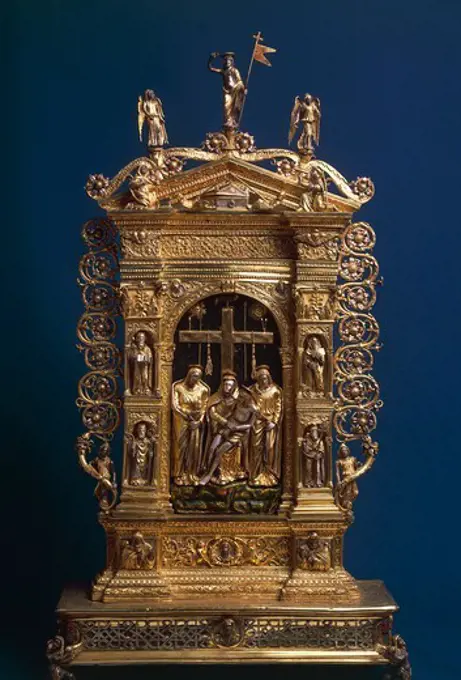
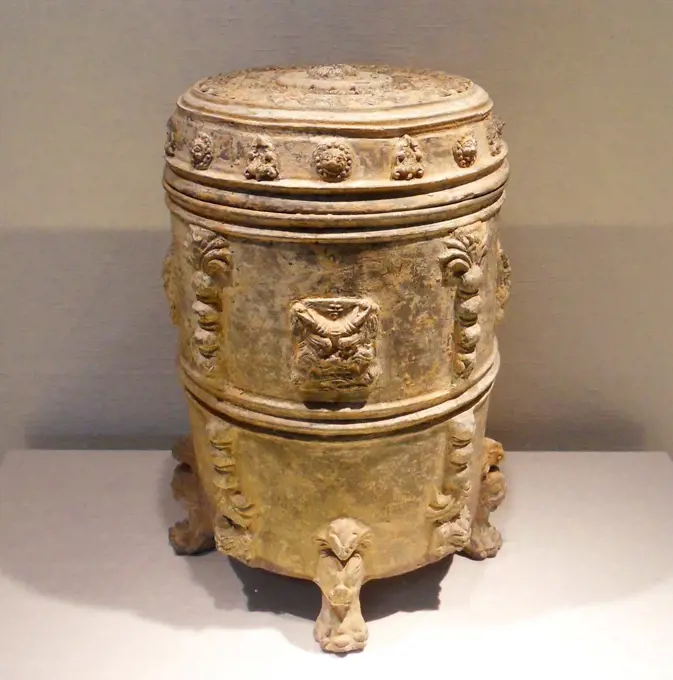
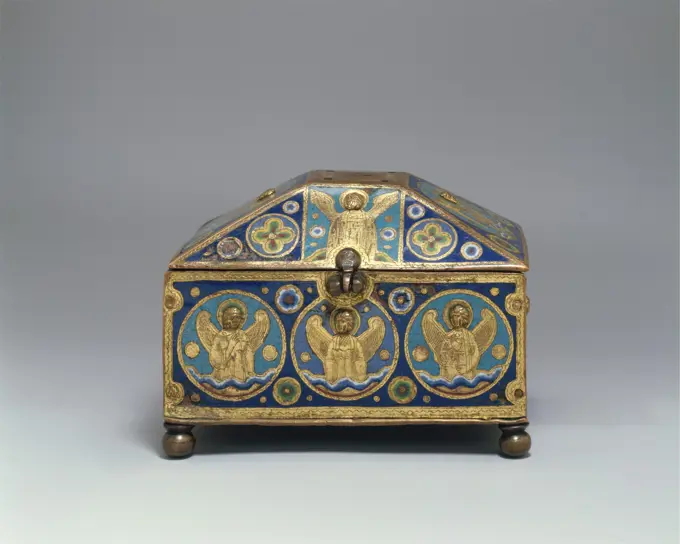
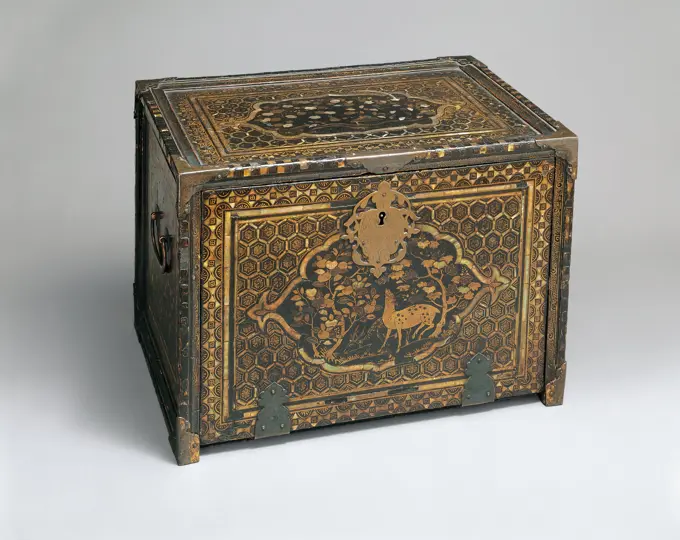
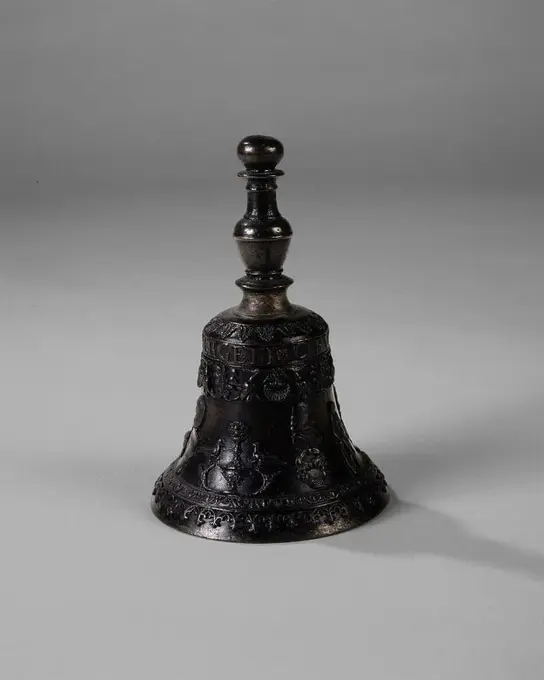
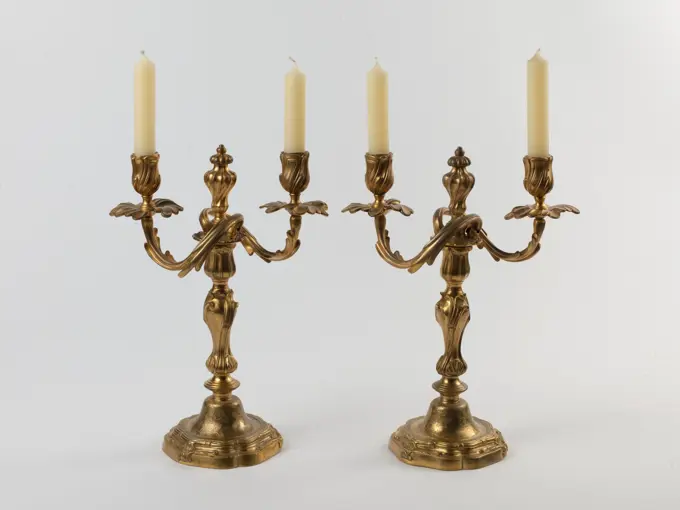
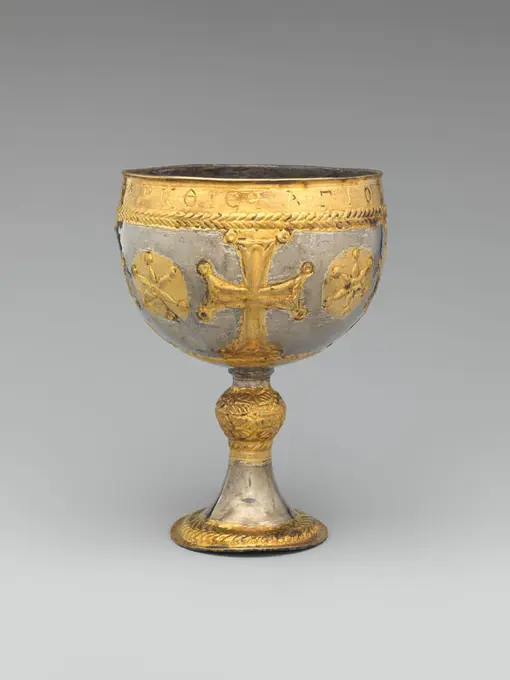
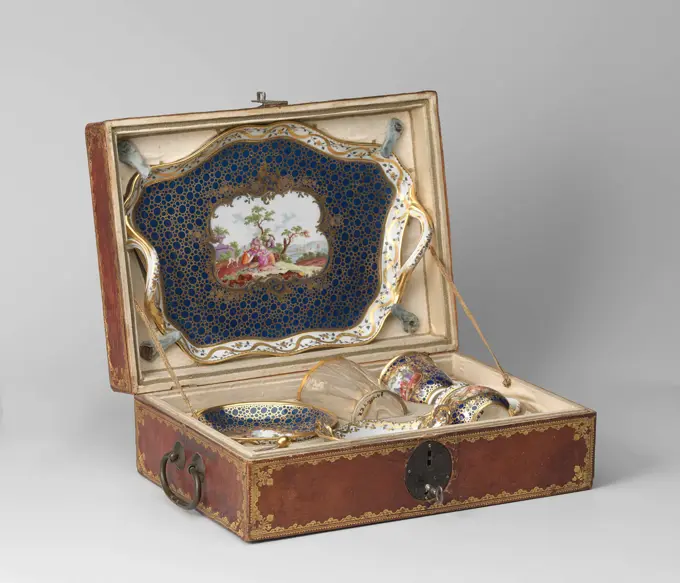
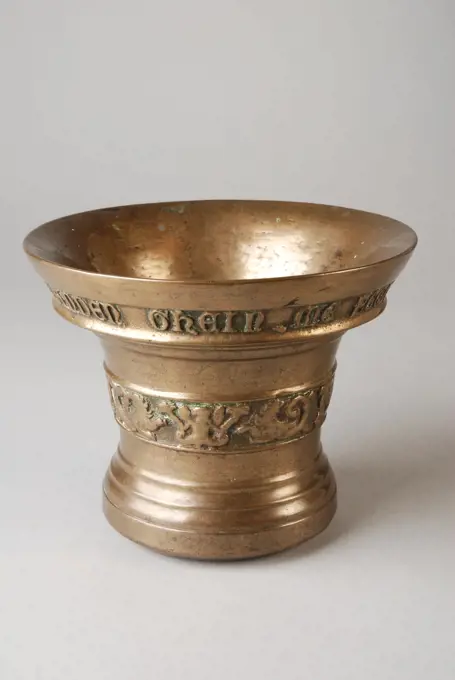
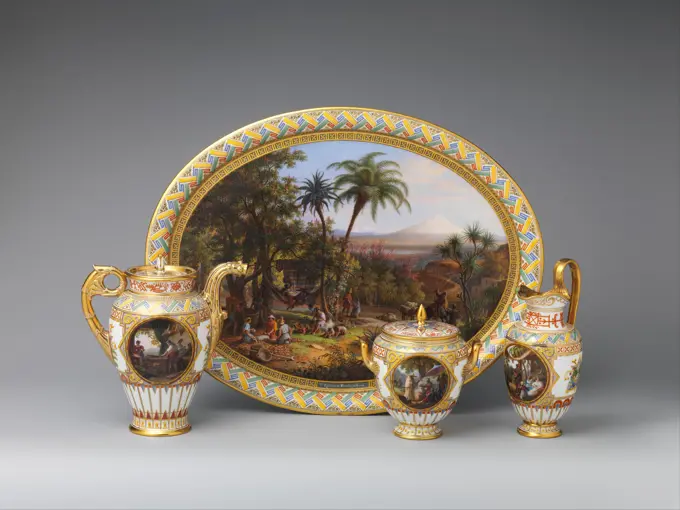
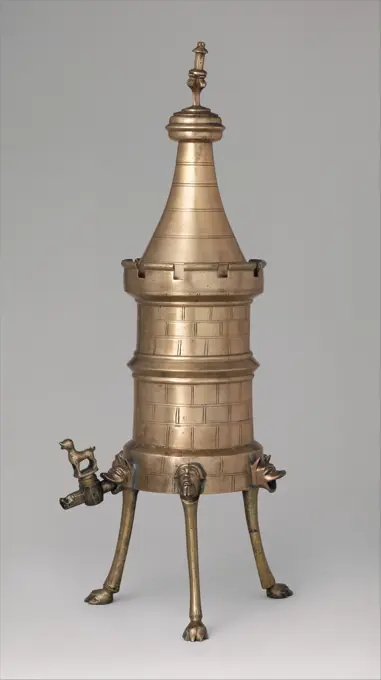
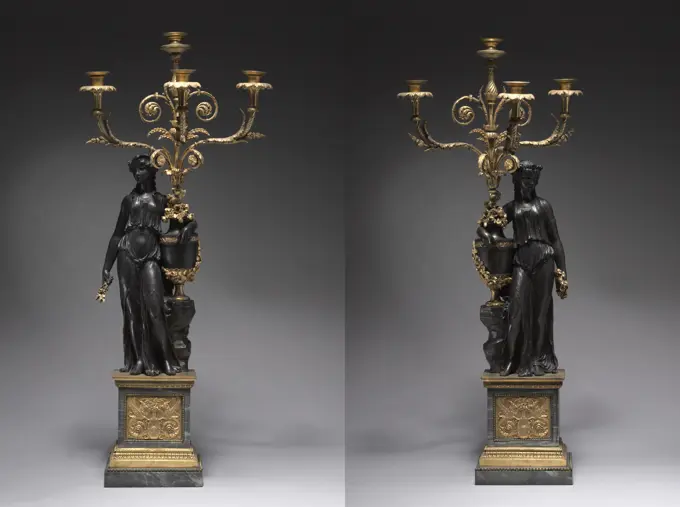
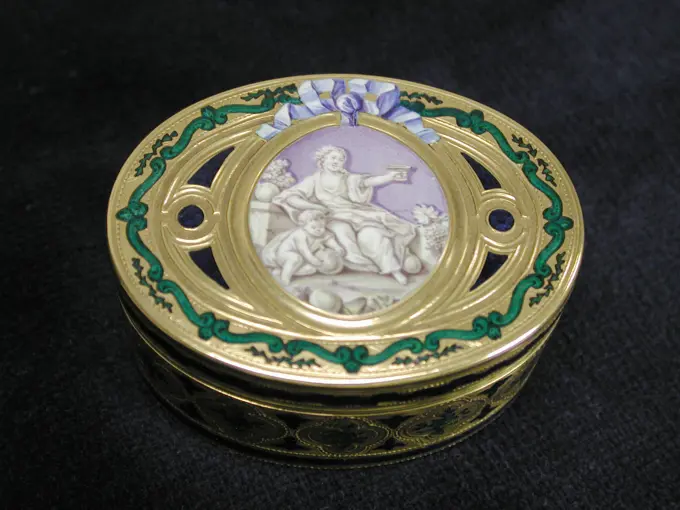
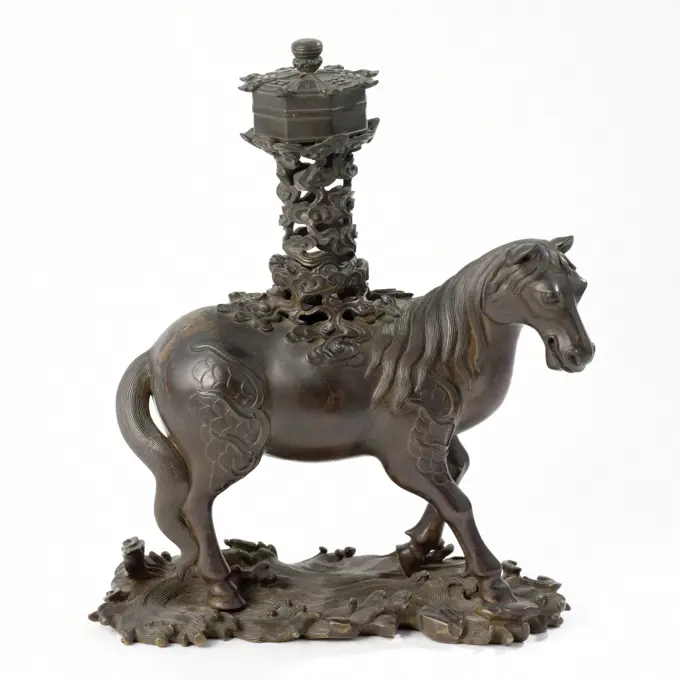
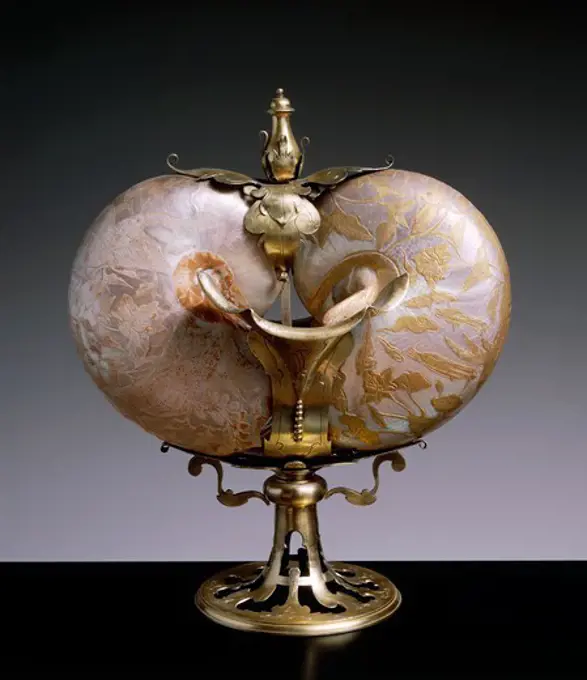
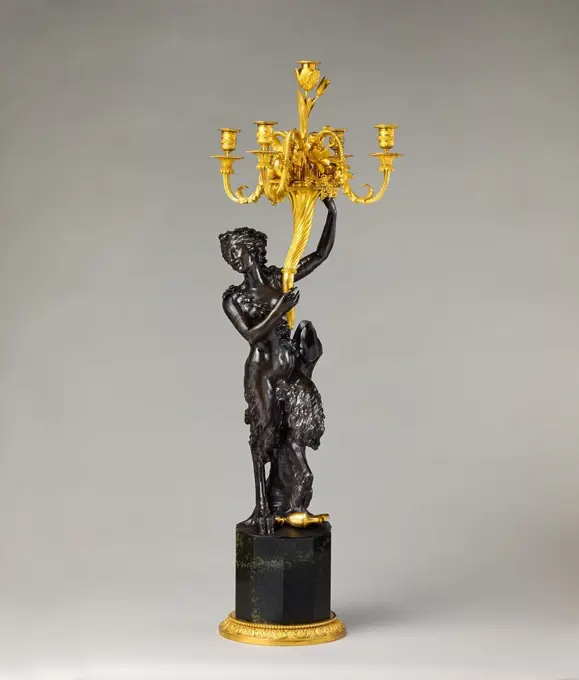
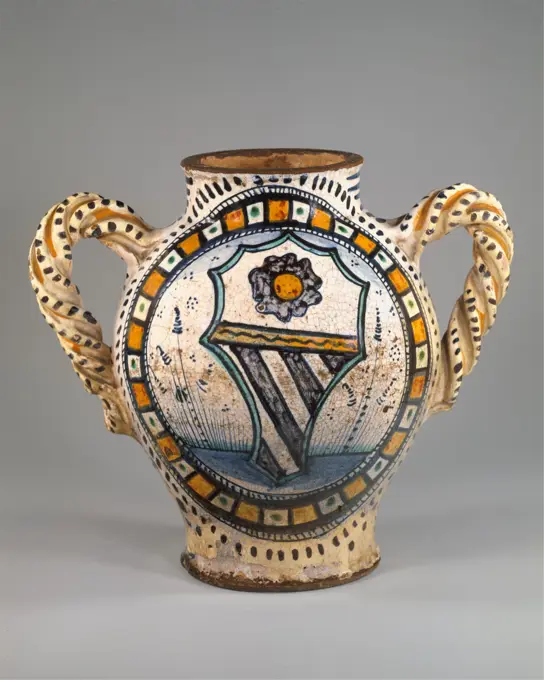
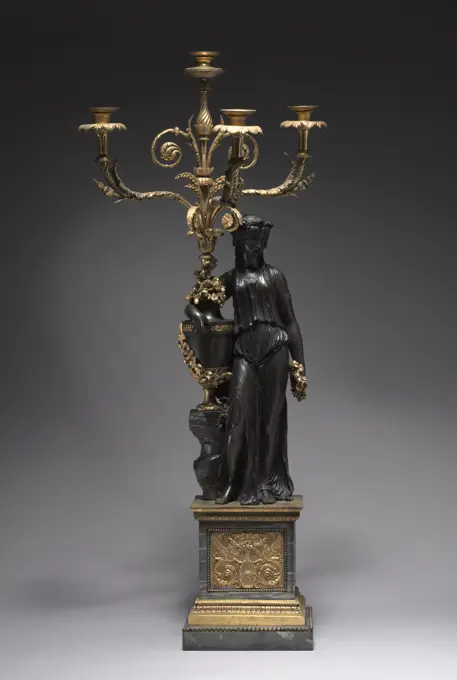
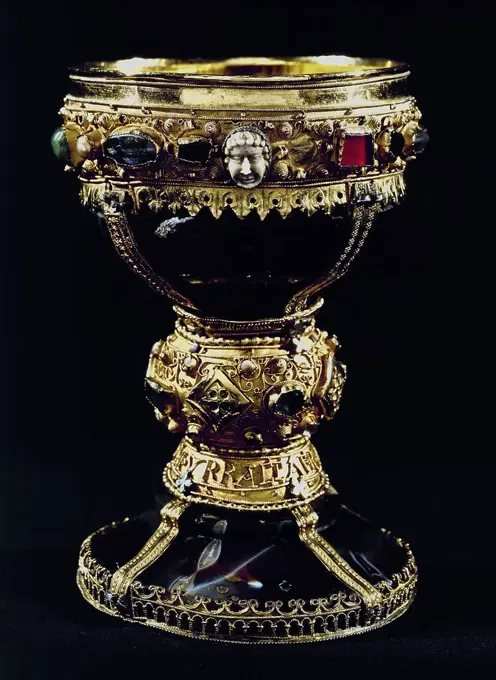
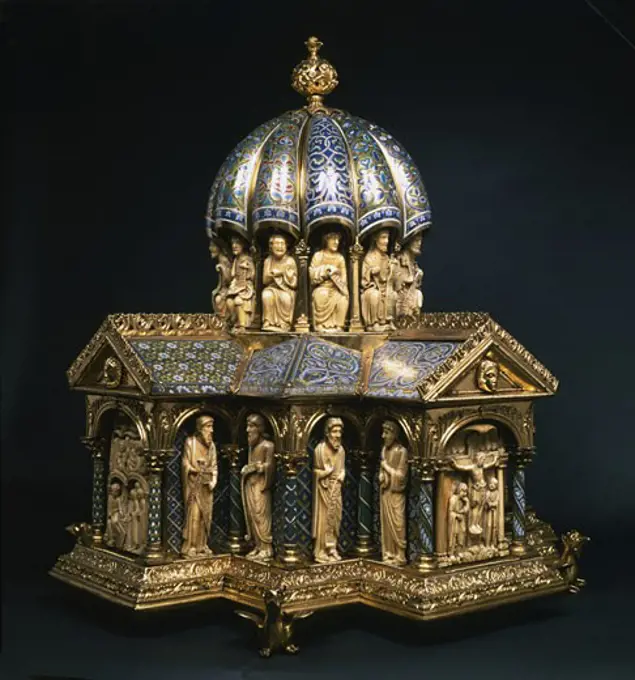
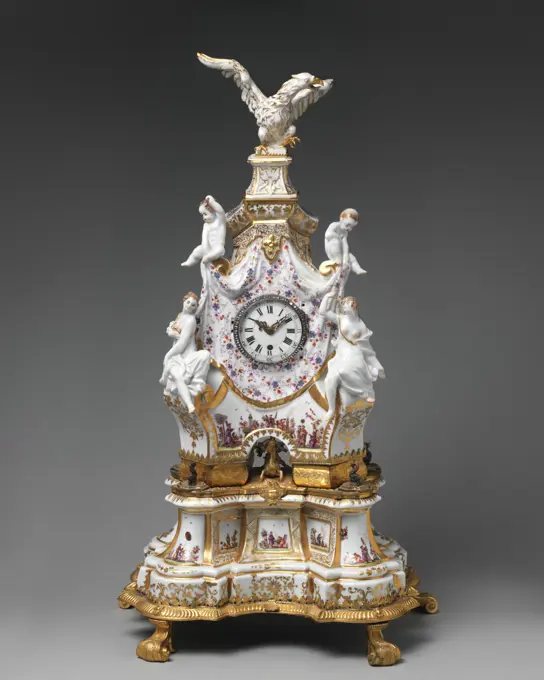
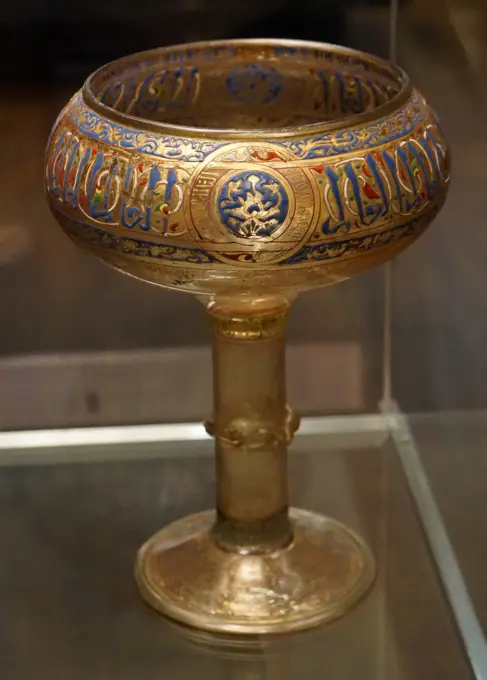
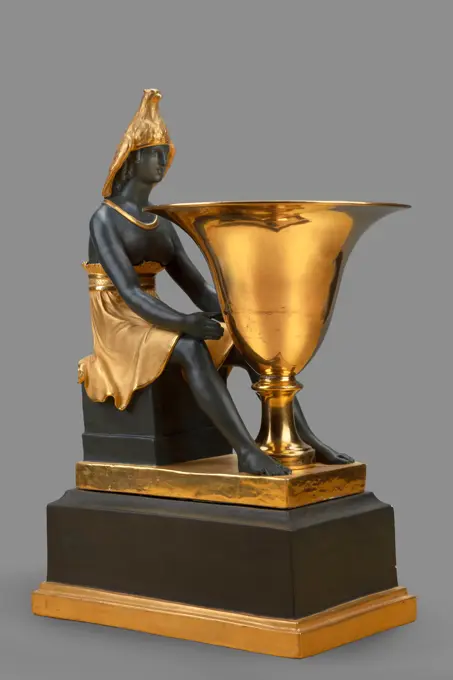
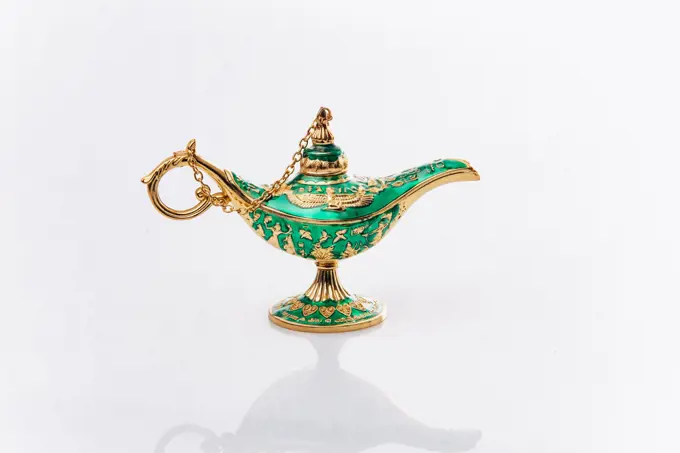
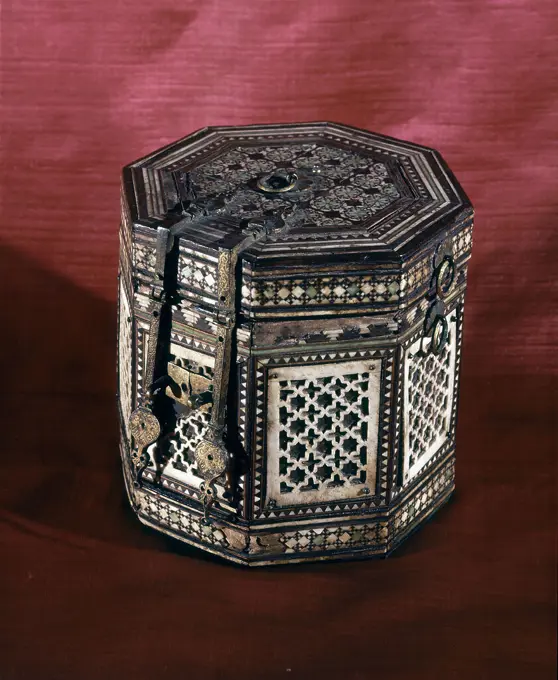
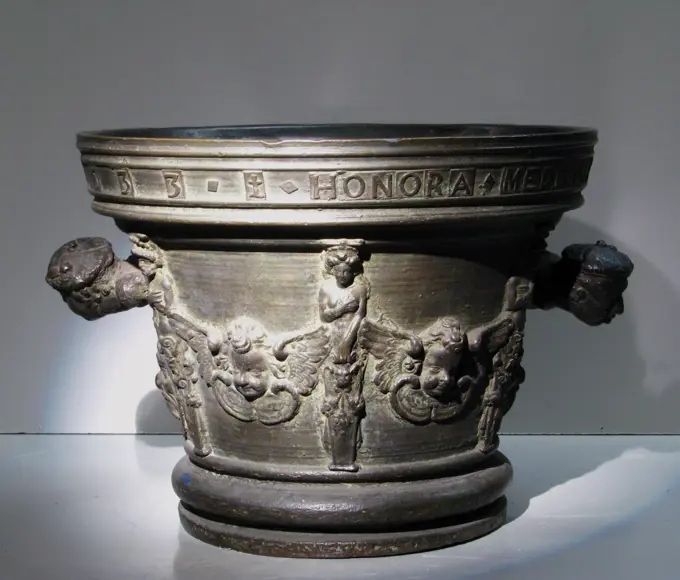
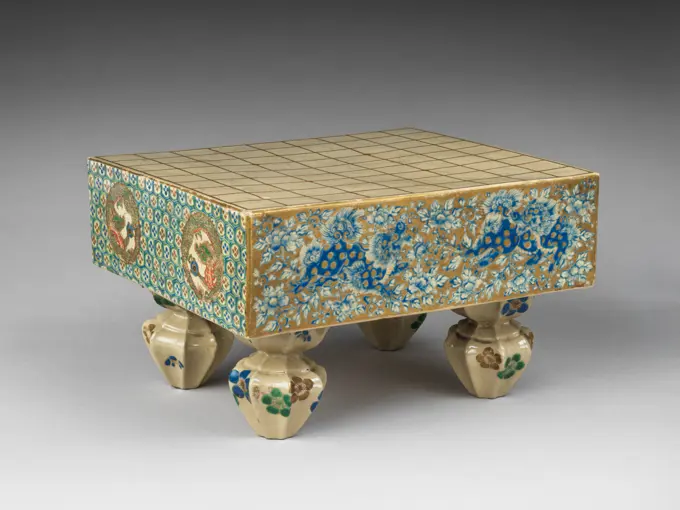
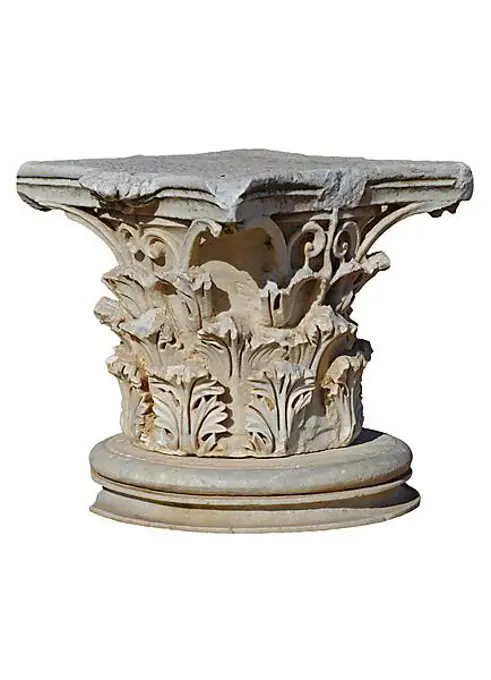
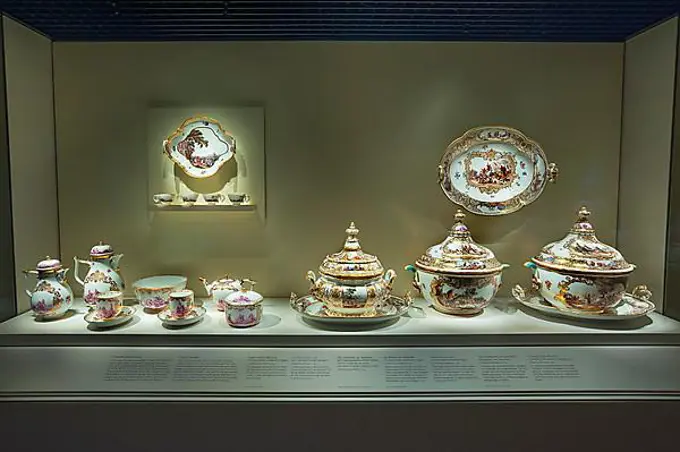
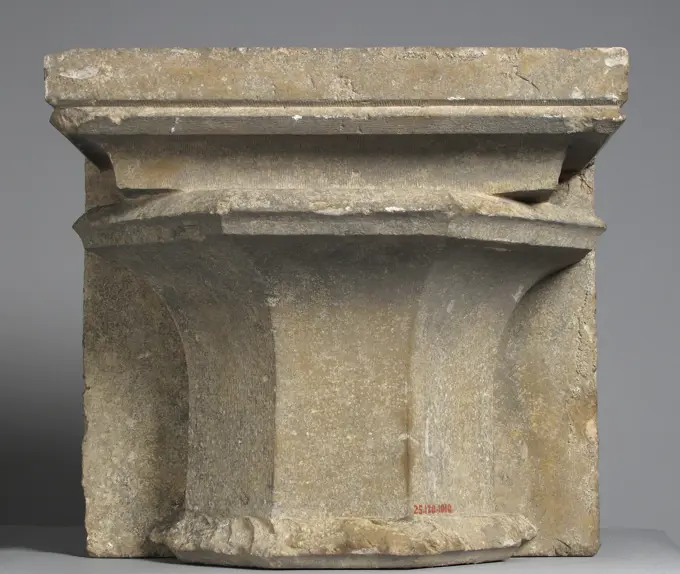
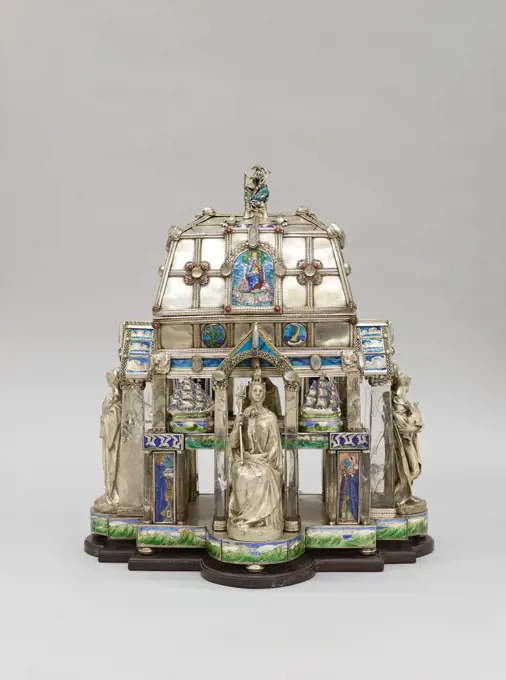
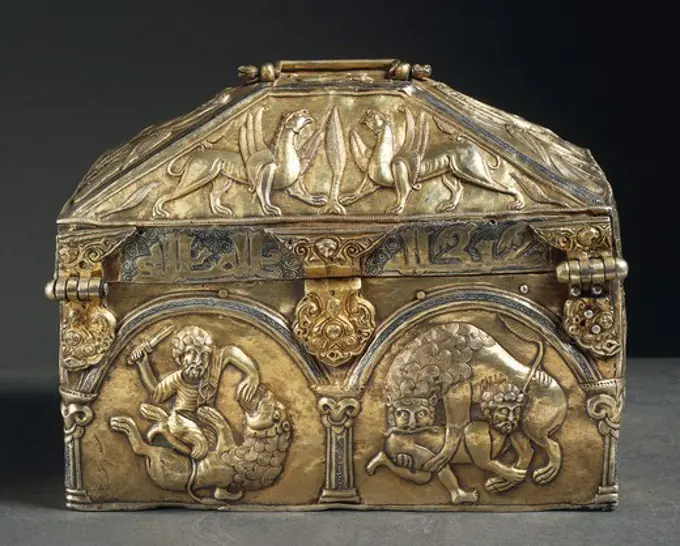
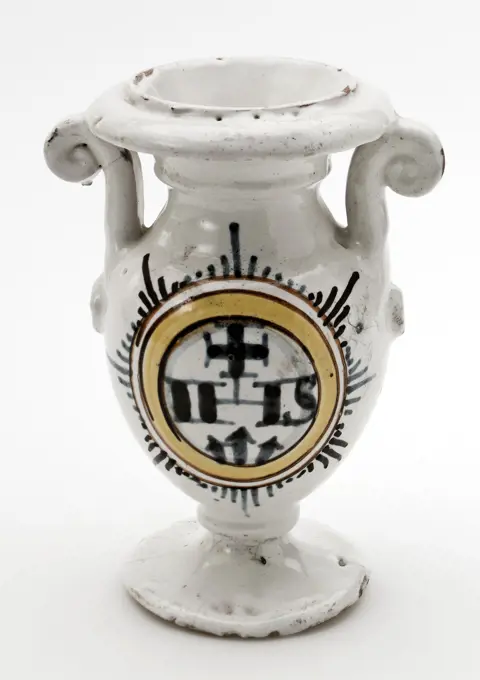
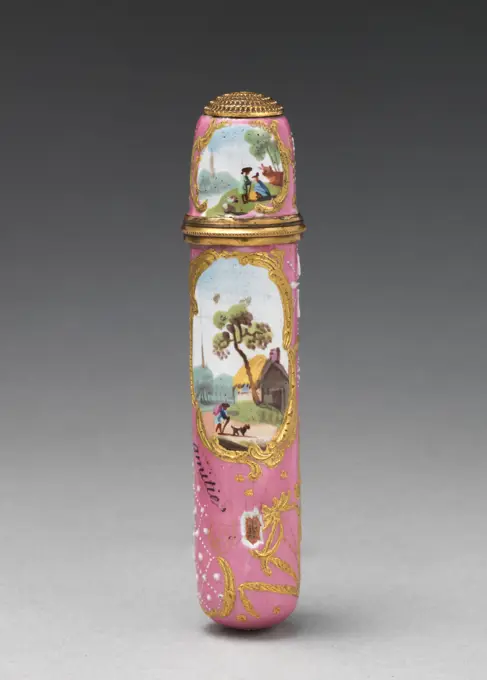
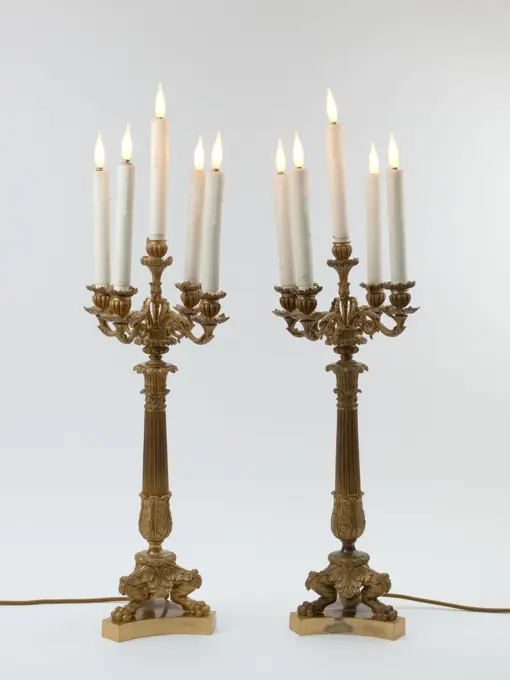
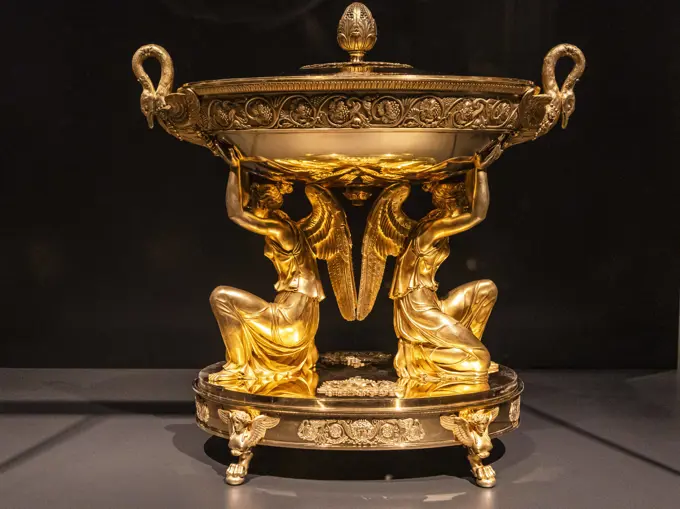
Cloches dish covers Cloches dish covers, Silver Gilt, Paris 19th century, Amsterdam, Netherlands Copyright: xZoonar.com/BartomeuxBalaguerxRotgerx 21697123Pax 1873, after ca. 1525 original Franchi and Son This electrotype is after a sixteenth-century original (ca. 1525), attributed to Juan de Orna, in the Victoria and Albert Museum, London.. Pax 185878Table with folding sheet. Table, lacquered in Japanese style, inlaid with round painting of two women to the painting by Cornelis Kruseman, "one of the sense" (SK-A-1070).Potpourri Vase, mid 1700s. Saint Cloud Porcelain Factory (French). Soft-paste porcelain; overall: 15 cm (5 7/8 in.).Pair of Sinumbra Lamps c 1827-1831 Philadelphia. This type of lighting device, popularly referred to as a sinumbra (without shadow) lamp, was conceived to help reduce the shadows created by the more elaborate Argand lamp. American firms such as Cornelius and Company may have created sinumbra lamps, perhaps modeled after French examples, in order to compete with European imports. Replete with classically inspired decoration, this pair of lamps would have been used in a fashionable domestic parlor.. Gilded brass, bronze, and glass . Cornelius and Company (Maker)Pair of Standing Candelabra. Attributed to Lucien-François Feuchère (French, about 1750 - 1828)Cover of Vat, Saracchi (workshop of), 1600 - 1649 Cover of VAT, from Jasper with Golden Frame, occupied with gems in motifs from email. Malib jasper. gold (metal). Cover of VAT, from Jasper with Golden Frame, occupied with gems in motifs from email. Malib jasper. gold (metal).Pharmacy vessel (Albarello); Montelupo (ceramic family; Ca 1400-); 1480-1490 (1480-00-00-1490-00-00);Szwarc, Szymon (1884-197.) - collection, birds, fishLady with attendant ca. 1740 Meissen Manufactory German. Lady with attendant 203065Four-sided vase with lid. unknown, craftsmanVase-thread; Manufacture Nationale de Porcelaine de Sevres (1756-); beginning of the 19th century (1801-00-00-1810-00-00);Egypt, women, eaglesAutumn (one of a pair) 1742-45 Jean-Baptiste Pigalle French This vase, along with its mate by Jean-Baptiste Pigalle, was part of a set of four designed for the royal Chteau de Choisy by the architect Ange-Jacques Gabriel. None of the vases, however, was ever sent to Choisy. The Museum's pair was given by Louis XV to the marquis de Marigny, the marquise de Pompadour's brother, who placed them in his own chteau at Ménars, where they remained until the beginning of this century. The other pair, decorated with the attributes of Spring, was made by Jacques Verbeckt and is divided between the Musée du Louvre in Paris and the chteau at Malmaison.. Autumn (one of a pair). Jean-Baptiste Pigalle (French, 1714-1785). French, Paris or Versailles. 1742-45. Marble. SculptureSnuffbox;  after. XVIII (1745-00-00-1755-00-00);Estera (Bible), Esther before Ahaswerus (Bible), Ministry of Finance (Warsaw - 1950-) - message, National Bank of Poland (Warsaw - 1945-), Panoplia (ornament), message (provenance), dogs, biblical scenes, swanChandelier. Gérard Jean Galle (French, 1788 - 1846)Bottle of ruby glass with flattened spherical body with vertical ribs and gilded silver frame, anonymous, c. 1700 Conical foot of gilded silver, which with a toothed edge comprises the flattened nodus on the bottom of the body. Laterly flattened pear -shaped body and tissue neck, blown into the shape with 16 vertical ribs. A second layer of glass has been applied to the body for reinforcement. The mouth is caught in a gilded silver frame with a toothed edge. Flat, scalloped stop, attached to the frame with a chain. The underside of the foot and stop marked with a rosette (unknown Master sign) and a N (Nuremberg). The Frontuur Nuremberg approx 1700. glassblower: Germanysilversmith: Neurenberg glass. silver (metal) glassblowing / gilding Conical foot of gilded silver, which with a toothed edge comprises the flattened nodus on the bottom of the body. Laterly flattened pear -shaped body and tissue neck, blown into the shape with 16 vertical ribs. A second layer of glass has been applied toMitra of a Grenadier der VOC, Anonymous, c. 1740 - c. 1760  Headgear of meekrap red and indigo blue sheet. Poured off with (worn) gold galon, on top small hanging brush of presumably gold thread. Front yellow metal front plate Ajour, on which the Dutch Lion, with sword and arrow bundle in the claws, above, the stadholder's crown. Under the lion are the letters v.o.c., flags crossed around the lion. Remnants of fire gilt on the plate and on a grenade (ornament), hanging on the plate. Grenade originally attached to the left (see must be in the fabric). Left on the plate label with no. 200. Netherlands cloth. felt (textile). copper (metal). cardboard. metal. wool. gilding (material) striking (metalworking) / gilding  Netherlands. Dutch East Indies, TheCome from multicolored painted majolica, anonymous, c. 1540 Klock -shaped bowl of multicolored painted majolica. The bowl is on a foot. A fish is painted on the bottom on the inside and a wide blue band on the wall on which in yellow and orange flower vines. The same tire is painted on the outside wall. Montelupo earthenware. tin glaze. lead glaze majolica Klock -shaped bowl of multicolored painted majolica. The bowl is on a foot. A fish is painted on the bottom on the inside and a wide blue band on the wall on which in yellow and orange flower vines. The same tire is painted on the outside wall. Montelupo earthenware. tin glaze. lead glaze majolicaBrush holder decorated with the story of Tao Yuanming, Danian Ma, c. 1644 - c. 1911  China bamboo cutting  China bamboo cuttingDrum, 1832 musical instrument. percussion instrument. drum Trom of the militia. The brass kettle is equipped with a veal sheet on both sides, held by a hoop and tense by means of a tension with tractors and screws. Both hoops are decorated with a motif of triangles in the colors red, white and blue. With engraved numbers: 1832-22. Netherlands Kettle: Brass (Alloy). Hoop: Wood (Plant Material). Team resorts: RopeOne Goldstein, Martin (fl. 1878-1886), Vander, C.J., Ltd (London; company Z Otnicza; 1856-); 1884/85 (1884-00-00-1885-00-00);Pitcher, "Alsatian" line. Culture: American. Dimensions: 4 15/16 in. (12.5 cm). Manufacturer: Chesapeake Pottery (Baltimore, Maryland, 1882-1914). Date: ca. 1891-92.The Chesapeake Pottery was an important late-19th and early-20th century firm located in Baltimore, Maryland. The pottery created a number of novel glazes and forms during the 1880s and '90s, including the line to which this pitcher belongs, the then-new Avalon china body. This slip-cast pitcher is decorated in the "Alsatian" pattern, distinguished by its allover transfer-printed, floral decoration further embellished with portraits in gold enamel. This was part of a larger toilet set decorated with scenes from "The Merchant of Venice"; the two sides depict portraits of Jessica and Portia painted in gold enamel in the central reserve. Museum: Metropolitan Museum of Art, New York, USA.Beaker 10th-11th century Lambayeque (Sicán). Beaker 316432Silversmith's art, Flanders, 16th century. Silver gilt mounted ewer with a double nautilus, set with rubies and turquoises, height cm. 30Memorial Dedicated to King Louis Napoleon, Johannes Hubertus Reygers, 1807 memorial In a gilded frame and behind glass a memorial piece on light blue fond: a vase, excessively decorated with martial attributes, medallions and plant motifs, with black base, in a niche with a shield with freedom -tuned and right a shield with anchor. Above the niche an open book, crowned shield with the combined weapon of the Netherlands and the French Empire, flanked left and right through oval shields, with the initials of Louis Napoleon, and on the right E. de Beauharnais. Middelburg iron (metal). paper. cardboard. gold leaf. wood (plant material). glass. oil paint (paint) gilding / penInkwell, c. 1900. George W. Shiebler (American, 1846-1920). Swirl glass and silver; overall: 11.5 x 14.6 cm (4 1/2 x 5 3/4 in.).Silver goblet, 16th Century, Evora Museum, Evora, Alentejo, PortugalFragrance Box, 1700s. China, Qing dynasty (1644-1911). Tortoiseshell; diameter: 8.6 cm (3 3/8 in.).Mitra from a Grenadier der VOC. Headpiece of mate red and indigob blue sheet. Dipped with (worn) gold gallon, on top small dependent brush of presumably gold thread. Front yellow metal front plate ajour, on which the Dutch lion, with in the claws sword and arrows bundle, above the stadholder's crown. The letters v.O.c., around the lion, crossed flags are among the lion. Remnants of fire cemulix on the plate and on a grenade (ornament), hanging on the plate. Garnet originally attached to the left (see must be in the fabric). Links to plate label with no. 200.Possibly Paduan or Venetian 16th Century, Incense Burner, c 1560 1580 Incense BurnerNight cap 1600-1620 British Roses, thistles and eglantines, butterflies, birds and caterpillars decorate this skillfully embroidered gentlemans nightcap. Despite its name, this type of cap would also have functioned as an informal, indoor article of clothing during the daylight hours.. Night cap 228950Goldsmith's art, Italy, 15th-16th century. Gold liturgical object called Pace (Peace) or osculum pacis, by unknown Lombard goldsmith.Close-up of a glass, Bohemia, Czech RepublicChinese covered footed vessel . Six Dynasties, Northern Qi dynasty (55077) Grey earthenware with applied-relief decoration under white slipChrismatory ca. 1200-1220 French This ornamented box probably once contained holy oils, the use of which at baptism is noted by early Christian writers. Oils were also used for other sacraments, such as confirmation, the ordination of priests, and extreme unction, and for the consecration of churches. Few medieval containers for holy oils survive.. Chrismatory 464695Pedestal early 14th century China. Pedestal. China. early 14th century. Porcelain with relief decoration under bluish white glaze (Qingbai-shufu transitional type ware). Yuan dynasty (1271-1368). CeramicsVotive Stupa. Sri Lanka, Kandy period, 17th-18th century. Sculpture. Ivory with paintGoldsmith's art, France, 14th century. Tournament cup or Coupe du Tournoi, in gold, enamel, rock crystal. Height cm. 25. Detail of the octagonal base decorated with chivalric subjects.Portable desk, early 17th century, Unknown Japanese, 12 3/8 × 17 1/8 × 12 1/8 in. (31.43 × 43.5 × 30.8 cm), Black lacquer with gold and silver maki-e and mother-of-pearl inlay; metal fittings, Japan, 17th century, European merchants and missionaries in Japan discovered the beauty of lacquer in 1543 and began commissioning artists to create furnishings for European homes and churches soon thereafter. By 1610, an import company was established in Amsterdam to meet demand. This portable desk has a drop front and small drawers inside for storing writing supplies, making it a bargueño, a style of desk that emerged in Spain during the Renaissance. Its surfaces are richly decorated with traditional Japanese motifs executed in lacquer and inlaid metals and mother-of-pearl. Cartouches on the front and top show deer and a small hut in a grove of trees. Morning glories decorate the rear panel and the inside of the drop front, while the interior drawers feature auspicious motifs also commonly seenPair of Vases (vases hollandois nouveaux, deuxième grandeur).Russian Enamel and Silver collection, antiquesTable Bell with Portrait of Lodovico Maria Sforza, 1451-1508, called Il Moro, 7th Duke of Milan 1494-1508. Dated: possibly c. 1494/1499. Dimensions: overall (height by diameter): 15.2 × 9.9 cm (6 × 3 7/8 in.). Medium: bronze//Medium brown patina. Museum: National Gallery of Art, Washington DC. Author: Zuanne I (Zanin) Alberghetti.Anonymous / 'Case for jasper and chalcedony tazza with garlands'. 1650 - 1711. Leather, Wood, Metal, Cloth. Museum: Museo del Prado, Madrid, España.(Ceremonial Offering Stands, one of a pair), 18th century, Nagata Yūji, Japanese, active 1711 - 1736, 12-1/4 x 10-7/8 x 10-7/8 in. (31.1 x 27.6 x 27.6 cm), Black lacquer with mother-of-pearl inlay and sprinkled gold and silver designs, Japan, 18th century, Since ancient times, the Japanese have paid homage to Buddhist deities by making offerings of food on high-footed lacquer stands placed before painted or sculptural images. This pair of ceremonial stands was created in the early eighteenth century by the renowned lacquer artist Nagata Yu_ji, who adorned the background of lightly sprinkled gold with a stylized pattern of chrysanthemums, rendered in gold, mother-of-pearl, and silver. Because chrysanthemums are autumnal flowers, these stands might also have been used by an aristocratic woman to serve sweet round rice dumplings, reminiscent of the full, harvest moon.Anonymous. "Candelabra with two branches (of a pair)". Golden bronze. 1701-1800. Paris, Museum of Romantic Life. Candle holder, candle, calear, lighting, light, lighting, 18th 18th 18th 18th 18th 18th 18th centuryCandlestick, worn by three fantasy animals, anonymous, c. 1400 - c. 1525 The object is composed of the following parts: the foot, the trunk and the fat catcher, which are cast in one whole, the candle pin and the three pedestals. The trunk is massive. The profiled Konical foot turns into the round trunk with one knot. The fat catcher and the candle pin are connected to this. The round deepened fat catcher has four decorations in the raised wall, consisting of a perforation in the form of a three -pass. Foot, trunk and fat catcher are decorated with fine grooved rings. The candlestick has three cams on the inside, to which the three pedestals are applied in the form of fantasized animals. These are not originally. Northern Netherlands (possibly) brass (alloy) casting / perforating / soldering The object is composed of the following parts: the foot, the trunk and the fat catcher, which are cast in one whole, the candle pin and the three pedestals. The trunk is massive. The profiled KonicThe Attarouthi Treasure - Chalice. Culture: Byzantine. Dimensions: Overall: 8 1/8 × 5 7/8 in., 12.7oz. (20.7 × 14.9 cm, 360g)Diam. of foot: 3 1/2 in. (8.9 cm)Diam. of knop: 1 9/16 in. (3.9 cm)Capacity of cup: 1100 ml. Date: 500-650.With stars and crossesInscribed in Greek: Of Saint John of the village of Tarothis The stars probably represent the star of Bethlehem that announced Christ's birth, the crosses the manner of his death. They are symbols of the birth and death of Christ, events commemorated in the Eucharist for which these chalices were made. Museum: Metropolitan Museum of Art, New York, USA.Tableware from Viennese porcelain, in case. Crockery in leather pouch (g) consisting of a leaf (a), a milk jug (b), a sugar container (c), a head (d) and saucer (e) and a glass (f), painted multily with figures A landscape in cartouches with rocaille edges with flower branches saved in blue fond covered with `caillouté 'in gold. Marked with the factory brand in underglazing blue.Vase with View of Worcester and the Chamberlain's Factory. Chamberlain's Factory (England, Worcester, 1788-1852)Humphrey Chamberlain, Jr. (England, Worcester, 1791-1824). England, circa 1815. Furnishings; Accessories. Porcelain, gilding, marble. Oval golden snuff box, fully enamelled. On the lid and bottom of chiniosiums. To the wall panels with branches and birds.CAJA FUNERARIA EGIPCIA XXVI DINASTIA-PROC ASSIUT-MADERA POLI. Location: MUSEO ARQUEOLOGICO NACIONAL-COLECCION. MADRID. SPAIN.Jan van den Ghein II (1537 - 1573), Copper mortar with Jan vanden Ghein me fecit MCCCCCLIIII, auger equipment copper brass, cast Cylindrical upwardly widening body built from round base with three ridges partially smooth wall with top edge framed by decorative frieze with inscription. Transition middle section and projection is formed by three ridges In gothic minuscels poured into the top edge: metalworker health care pharmacy grindingLidded Vase, Meissener Porcelain Manufaktur, 1727 Vase with lid, made of multicolored painted porcelain. The vase has an underlaze blue spotted stock in which two four -steps saved. The Russian imperial weapon is painted in one four pass and in the other a chinoiserie of two Chinese figures near a fence in a garden with "Indianic Blumen". The lid has a gilded edge and button and is painted with chinoiseries within four passes. The neck of the vase is decorated between gilded relief tires with tire work and rosettes. The vase is marked. Float porcelain gilding Vase with lid, made of multicolored painted porcelain. The vase has an underlaze blue spotted stock in which two four -steps saved. The Russian imperial weapon is painted in one four pass and in the other a chinoiserie of two Chinese figures near a fence in a garden with "Indianic Blumen". The lid has a gilded edge and button and is painted with chinoiseries within four passes. The neck of the vase is decorated between gilded reliParure. Sets of jewellery, called parures, could comprise various pieces. Displayed here are a necklace, earrings and a pair of bracelets. The highlight is the comb, which was worn on the hair like a crown. Each costume called for a different kind of parure. The wife of an Utrecht judge had at least four gold sets: one without jewels, one with blue stones, one with red, and one with pearls.Partial coffee service (Déjeuner Culture et Récolte du cacao”) 1836 Sèvres Manufactory French The interest in depicting foreign and exotic locations on Sèvres porcelain tea and dinner services begins in the earliest years of the nineteenth century, propelled in part by French Emperor Napoléon I’s (1769-1821) expedition to Egypt in 1798-99. The fascination with Egypt was both profound and long lasting, and some of the factory’s most inventive work is found on services that utilize Egyptian motifs in both two and three dimensions.[1 The curiosity about foreign lands extended far beyond Egypt, however, and the taste for depictions of exotic places lasted into the 1840s.[2 The popularity of this type of subject matter coincided with a growing interest in creating thematic programs for multi-piece services.[3 In a letter from 1834, Alexandre Brongniart (French, 1770-1847), director of the Sèvres factory, stated his belief in the importance of linking sets of objects together by theme, a. Salt barrel of silver. On a rectangular, the pedestal worn on four bolballs, the handle of the handle contains two helfbolle from inside gold-plated kegs on four lion claws; Each barrel is decorated with two ring-bearing lion's heads and a narrow profile edge. The handle like an upward thickener with four lion claws on a baseboard. From above a button with two lion masks wearing a flat lamp with two flames. Brand of The Hague: Climbing lion; yearl. I (1804). Master Sign F.S. from Francois Marcus Simons. See foot 170.Bust of bust of Frederika Louise Wilhelmina Princess of Prussian. White porcelain base on eight sudden foot. Decorated with golden rectangles and golden edges.Chasse German 19th century (early 12th century style)Terrine in the shape of a shell, with lid. The inscription CHZ indicates that this terrine is from the Churfürstliche Hof Zöhrgaden (Keurvangelevendorkamer) in Munich. Keurvorst Max Joseph van Bavaria was the founder and the driving force behind the nearby porcelain factory of Nymphenburg. The factory specialized in figures, but also produced crockery parts to Meissens model, such as this terrine.Hsun ok offering vessel. unknown, craftsmanTurret Laver 15th century German Although this object is frequently called an aquamanile, it does not satisfy the definition: true aquamanilia are handheld and generally provided with a handle for that purpose. This vessel was designed to stand on a shelf with a basin below. The small heads surrounding the tower mimic the gargoyles of monumental architecture, which were designed to manage rainwater.. Turret Laver 470150Candelabrum Pair , c. 1780-1785. Attributed to Pierre Philippe Thomire (French, 1751-1843), Clodion (French, 1738-1814). Bronze, gilt bronze, gray marble; overall: 92.8 x 41 x 28 cm (36 9/16 x 16 1/8 x 11 in.); part 1: 45.8 cm (18 1/16 in.).Plateau;  XIXW. (1801-00-00-1900-00-00);Snuffbox 1765-66 Pierre Médard Mothet In eighteenth-century Europe, Paris led the production of high-quality luxury goods. Parisian goldsmiths made a wide range of small, personal articles such as snuffboxes; étuis to hold sealing wax, tweezers, or utensils for sewing; souvenirs, which contained thin ivory tablets for note taking; and shuttles for knotting lace. Gold snuffboxes and boxes decorated with portrait miniatures were prized and frequently given as royal gifts, often to ambassadors or members of the court in lieu of cash payments for their services. Coveted and admired, these boxes were produced from a variety of materials. The best were skillfully made of gold and embellished with diamonds, enameled decoration, lacquer, and other luxurious materials. By the middle of the century, the taking of snuff had become an entrenched social ritual, and the snuffbox, too, had become an important social prop. Snuffboxes were considered highly fashionable accessories, with some merchants Horse carrying a tower on its back. Bronze. Japan. XVIII-XIXth century. Paris, Cernuschi museum. Animal, Japanese art, bronze, horse, Japanese object, wear, cloud tower, 19th 19th 19th 19th 19th 19th 19th century, 18th 18th 18th 18th 18th 18th 18 Centile, animalTibetan buddhist ceremonial religious bell isolated on whiteSilversmith's art, Flanders, 16th century. Ewer with a double nautilus, gilded floral engravings and silver gilt mount. Height cm. 26.Helmet possibly 15th-17th century Tibetan or Central Asian. Helmet 27793Five-light candelabrum (one of a pair). Culture: French. Dimensions: H. 45 3/8 x W. 16 7/8 x D. 14 1/4in. (115.3 x 42.9 x 36.2cm). Modeler: derives from a model by Clodion (Claude Michel) (French, Nancy 1738-1814 Paris). Date: ca. 1785. Museum: Metropolitan Museum of Art, New York, USA.Armorial Jug (vaso) probably ca. 1480 Italian, probably Tuscany (). Armorial Jug (vaso) 460133Salt Cellar, 1800s. After Saint-Porchaire (French). White earthenware with inlaid decoration; diameter of base: 10.9 x 12.7 cm (4 5/16 x 5 in.).Candelabrum, c. 1780-1785. Attributed to Pierre Philippe Thomire (French, 1751-1843), Clodion (French, 1738-1814). Bronze, gilt bronze, gray marble; overall: 92.1 x 40.7 x 45.1 cm (36 1/4 x 16 x 17 3/4 in.); part 1: 45.8 cm (18 1/16 in.).Pair ofvasesCALIZ DE DOÑA URRACA CON INCRUSTACIONES DE RUBIES Y ZAFIROS - ORFEBRERIA DEL SIGLO XI. Location: COLEGIATA DE SAN ISIDORO. LEON. SPAIN.Bust of Christ. Culture: Italian, Rome. Dimensions: Overall (Bust .a) (confirmed): 9 1/2 × 5 1/2 × 4 1/8 in. (24.1 × 14 × 10.5 cm); Height (Tube .b): 4 7/8 in. (12.4 cm). Date: late 16th century. Museum: Metropolitan Museum of Art, New York, USA.Cosmetic Jar, 500-550. Byzantium, probably Syria, early Byzantine period, 6th century. Ivory and gold; overall: 4.8 x 4 cm (1 7/8 x 1 9/16 in.).Eltenberg Reliquary - Rhine Valley. Late 12th century. Victoria & Albert Museum, LondonClock case case ca. 1728-30, movement ca. 1830-50 Meissen Manufactory This clock case is one of the most ambitious pieces of Meissen porcelain made in the early years of the factory. Its scale and sculptural program distinguish it from other pieces of Meissen made at this time, and the relatively few clock cases produced at Meissen in the course of the eighteenth century reflect the technical challenges and costs of making such large and complex pieces of porcelain.. Clock case. German, Meissen with Dresden mounts. case ca. 1728-30, movement ca. 1830-50. Hard-paste porcelain with gilt-metal mounts. Ceramics-PorcelainEnamelled glass with stem cup from Egypt. Dated 14th CenturyVase-thread; Manufacture Nationale de Porcelaine de Sevres (1756-); beginning of the 19th century (1801-00-00-1810-00-00);Egypt, women, eaglesAladdin’s magic genie lamp isolated on white. Aladdin’s lamp is green on a white background.ARQUETA ARABE OCTOGONAL DE TARACEA Y PLACAS DE HUESO CALADAS Y ENGARCES DE AZOFAR DORADO - SIGLO XIV/XV. Location: INSTITUTO VALENCIA DE DON JUAN-COLECCION. MADRID. SPAIN.plastic twigs of tree in indian vase isolated artificial plastic twigs of tree in carved indian vase isolated on white background Copyright: xZoonar.com/ValeryxVoennyyx 15362874Mortar 1533 Trovilliar. Mortar 199777Chess board Japan Edo period (1615-1868) View more. Chess board. Japan. Earthenware with polychrome glaze (Ko-Kiyomizu ware). Edo period (1615-1868). CeramicsBeaker (Humpen). Germany. Date: 1637. Dimensions: H. 27.9 cm (11 in.). Glass. Origin: Germany. Museum: The Chicago Art Institute, Chicago, USA.Statuette of Frederick the Great, King of Prussia. This small equestrian statue of the powerful Frederick the Great was probably a gift from the King to Princess Wilhelmina of Prussia, his beloved niece, who at his behest married the Dutch stadtholder William V. Princess Wilhelmina corresponded regularly with her uncle in Berlin and received many gifts from him.Ornamental Finial, late 1700s. France, late 18th century, Period of Louis XVI. Bronze; overall: 12.5 x 7.7 cm (4 15/16 x 3 1/16 in.).Buckle 1785-1790 Burslem. Stoneware (jasperware), cut steel frame . Wedgwood Manufactory (Manufacturer)BraceletCorinthian capital, Leptis Magna, Libya, AfricaCoffee and tea service as well as lid terrines, Meissen porcelain around 1745, National Museum, Munich, Upper Bavaria, Bavaria, Germany, EuropeColumn Base with Shaft Fragment late 12th century French. Column Base with Shaft Fragment. French. late 12th century. Stone. Made in Languedoc, France. Sculpture-ArchitecturalThe Chamberlain Casket, 1903, Top view Designer: Henry Wilson (d. 1934) Commissioned by Members of the Constitutional Club to express admiration and gratitude to the Rt Hon Joseph Chamberlain MP in 1903 for his services at home and abroad. It was made at the Central School of Arts & Crafts, London., Precious metal, Gold, Enamel, Precious metal, Silver, Precious stone, moonstone, Birmingham historySilversmith's art, Poland, 12th century. Embossed silver reliquary box of Saint Stanislaus.Faience altar vase with in medallion IHS, altar vase vase tableware holder earth discovery ceramics earthenware glaze tin glaze lead glaze h 11.5 in mold formed baked 2x majolica Majolica altar vase red brown shard polychrome underside unglazed In medallion IHS archeology adorn religion church eucharist religious ceremony ceremonySoft-paste porcelain vase with gilt bronze stand. France. Dated 18th CenturyScent bottle and holder with thimble ca. 1760-1800 British, Staffordshire. Scent bottle and holder with thimble. British, Staffordshire. ca. 1760-1800. Enameled copper. EnamelsUnknown, Andirons, brass.Object ID #18804235; wood, leather, gildingAnonymous. "Candelabrian with five branches (of a pair)". Golden bronze. 1801-1900. Paris, Museum of Romantic Life. Candelabre, lighting, electric, light, lighting, 19th XIX XIX 19EM E19E 19 CENTURY