Decorative Wooden Boxes and Cases

Various types of decorative boxes, including a liqueur cellar and lacquered stationery box, reflecting craftsmanship from different cultures and eras.
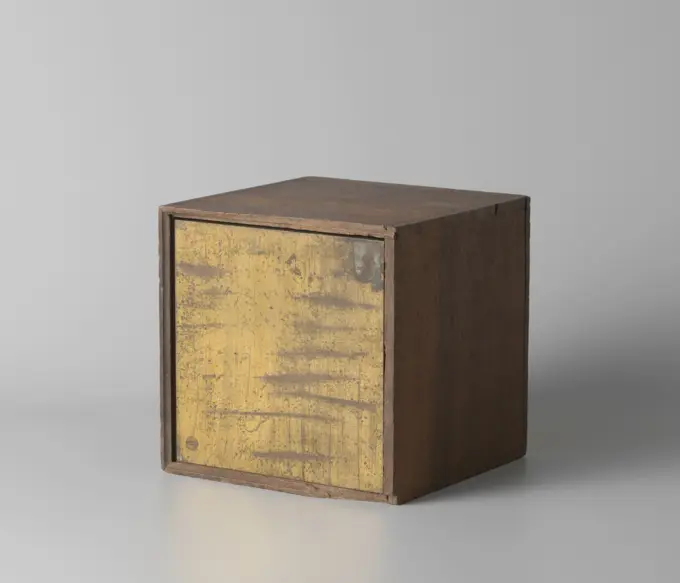
Copper cube, filled with hail and in a wooden box, anonymous, c. 1400 - c. 1950 Copper cube, filled with hail and in a wooden box with a loose wooden back  copper (metal). wood (plant material) Copper cube, filled with hail and in a wooden box with a loose wooden back  copper (metal). wood (plant material)
Copper cube, filled with hail and in a wooden box, anonymous, c. 1400 - c. 1950 Copper cube, filled with hail and in a wooden box with a loose wooden back copper (metal). wood (plant material) Copper cube, filled with hail and in a wooden box with a loose wooden back copper (metal). wood (plant material)
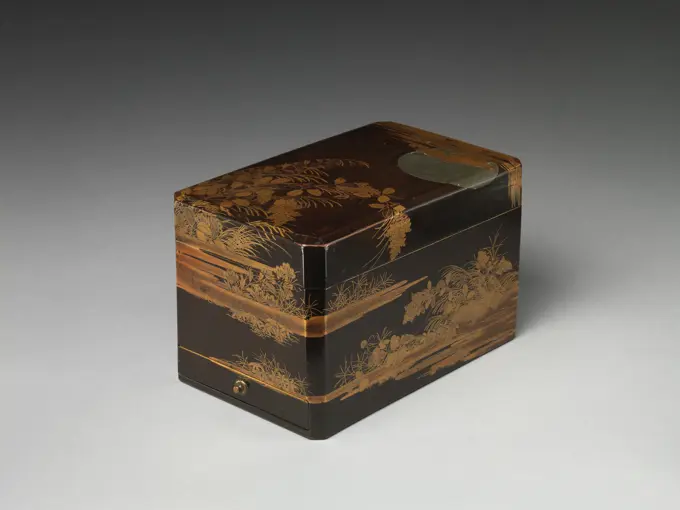
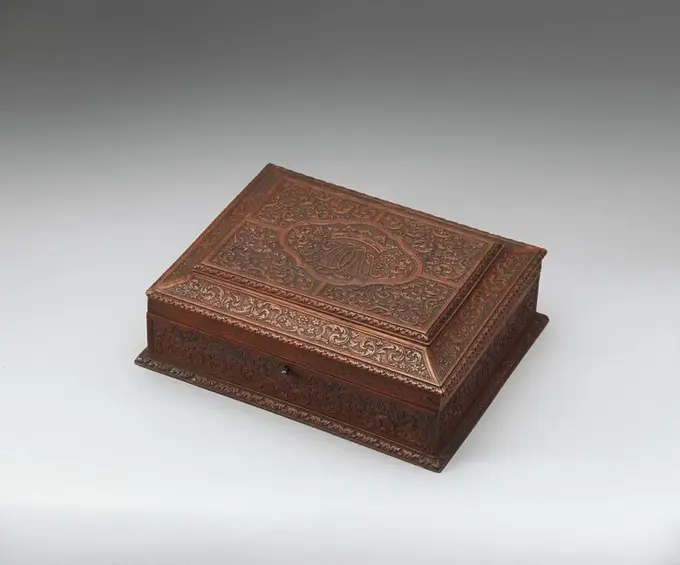
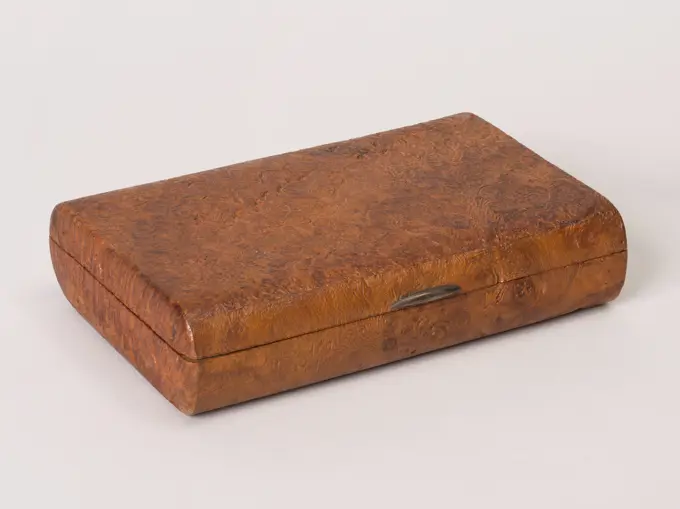
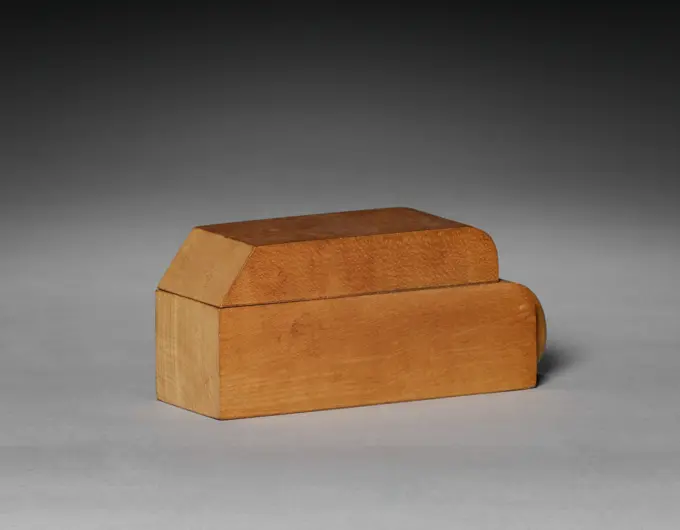
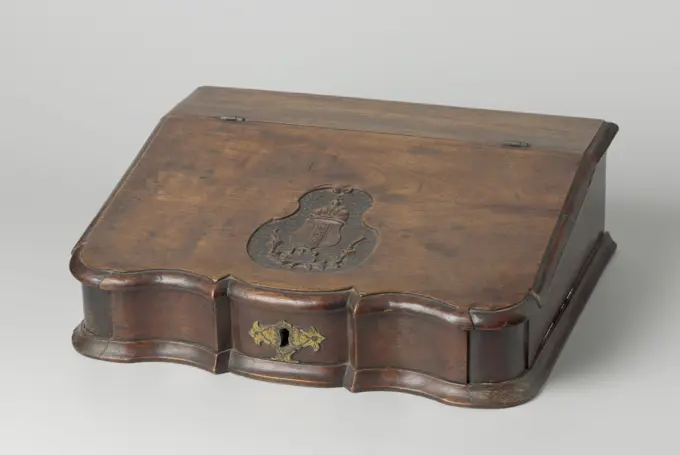
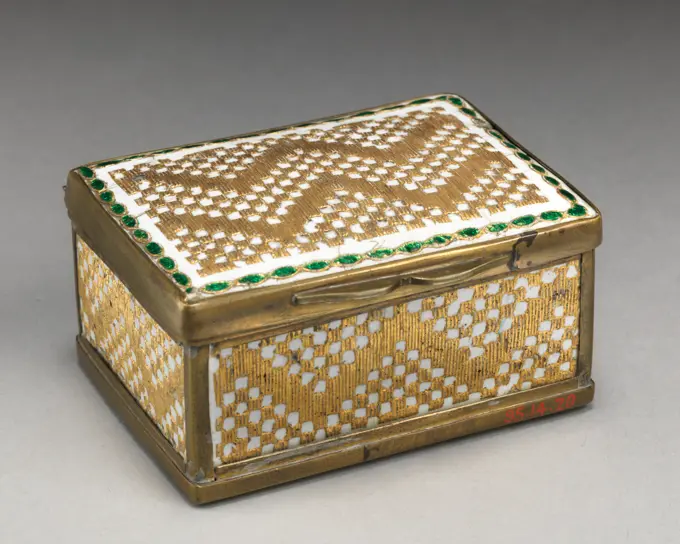
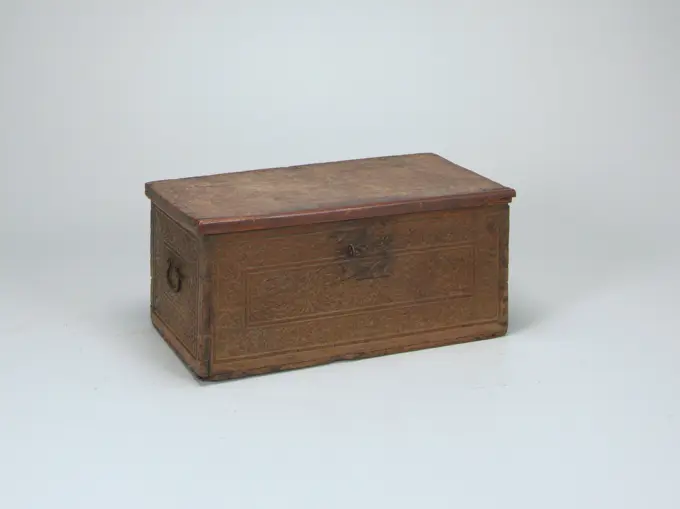
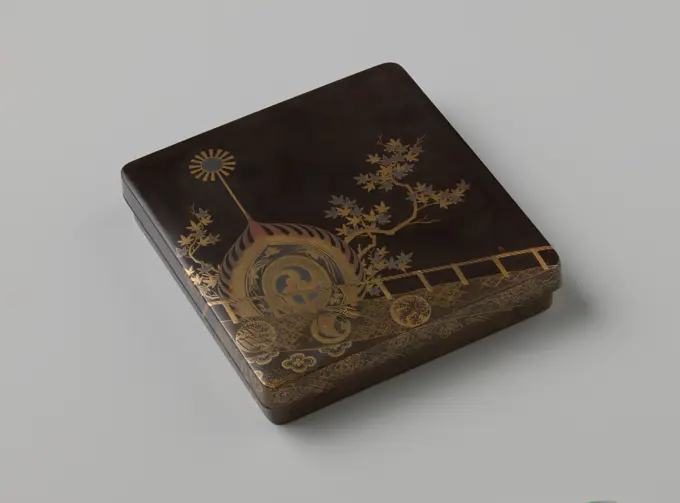
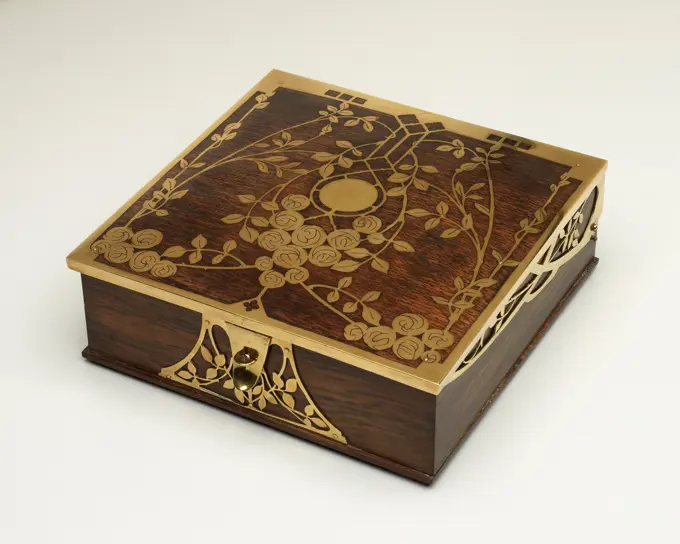
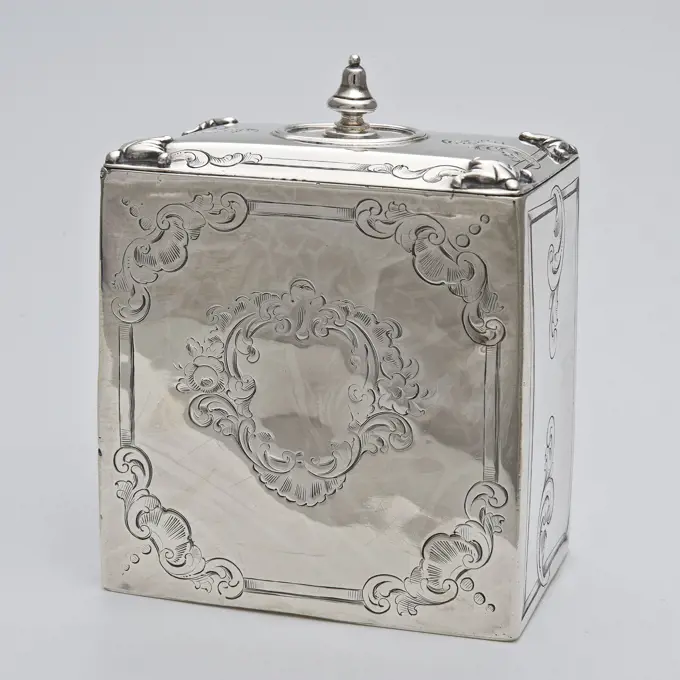
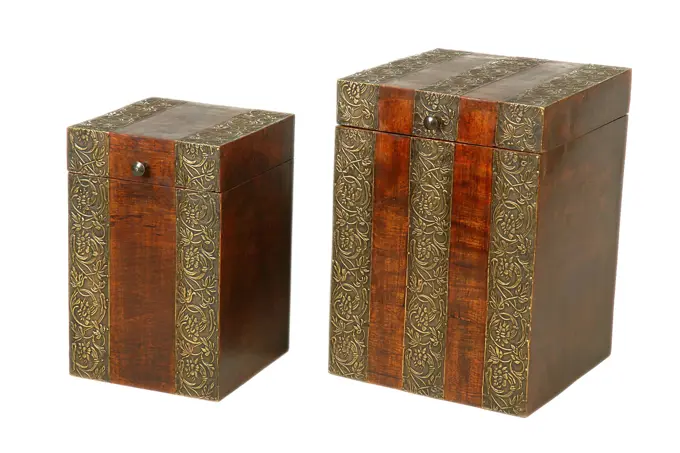
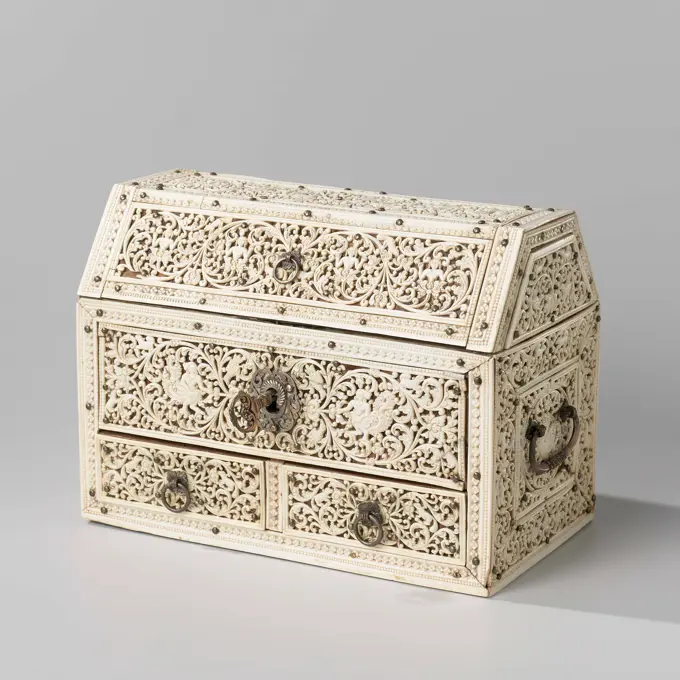
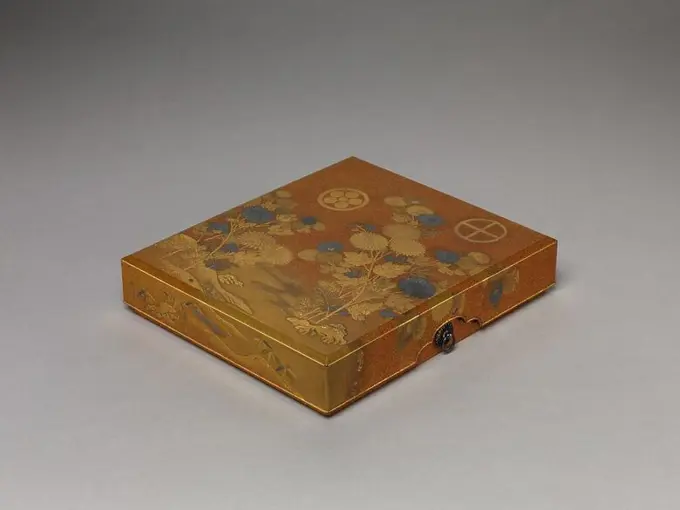
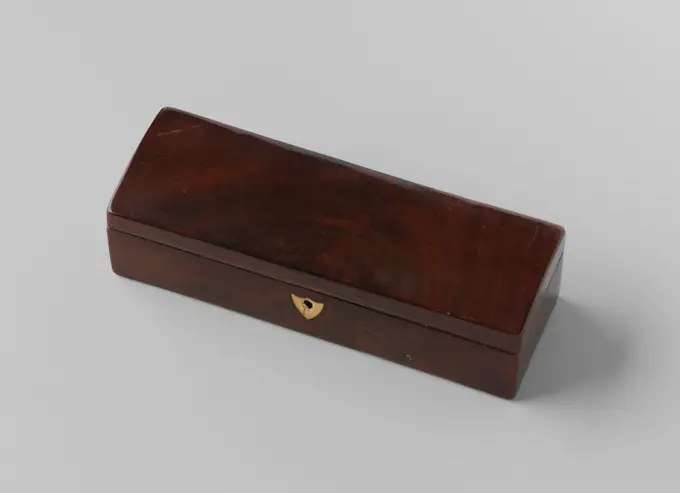
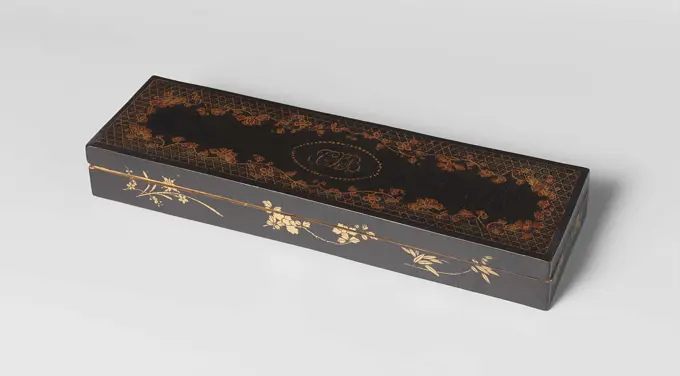
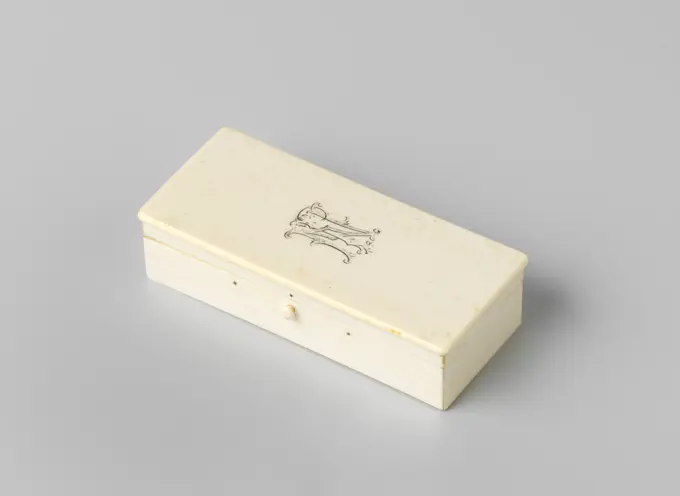
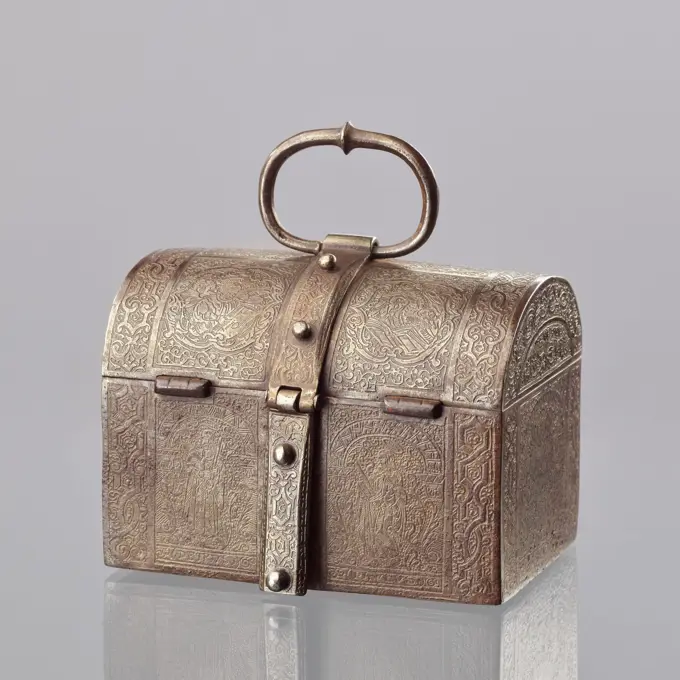
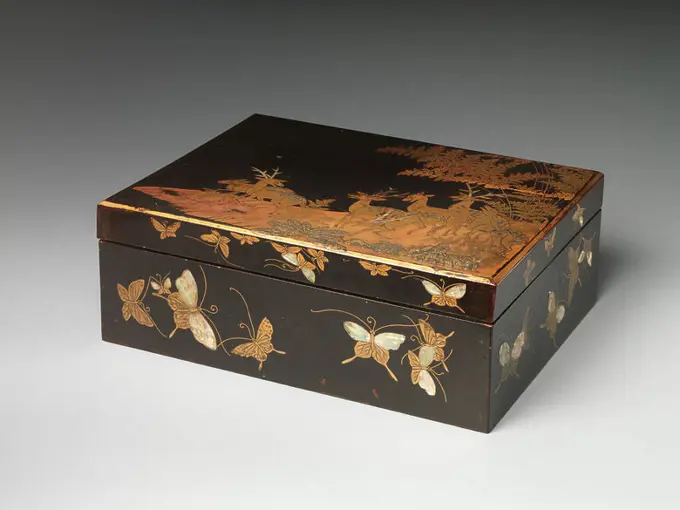
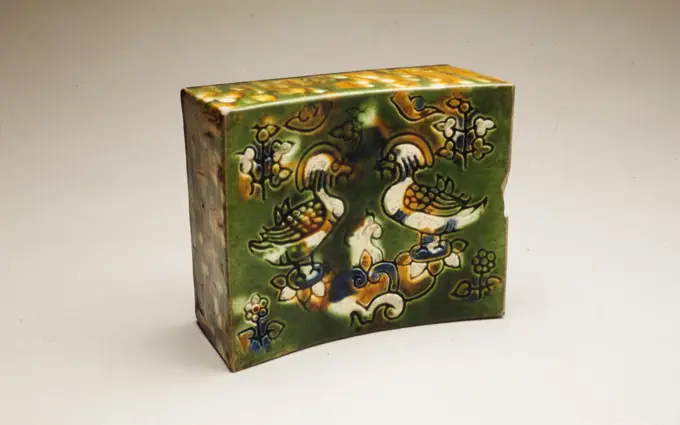
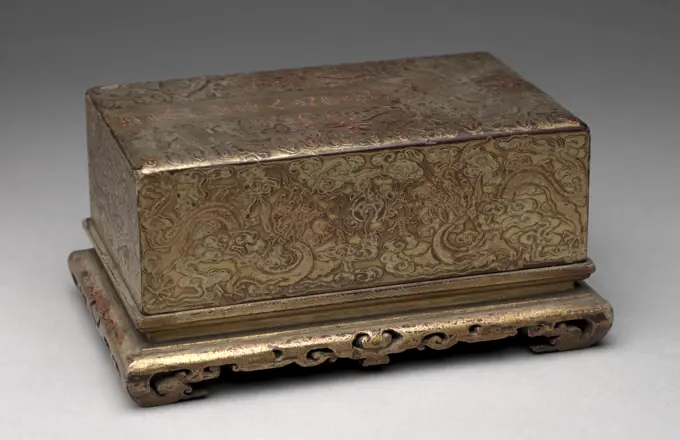
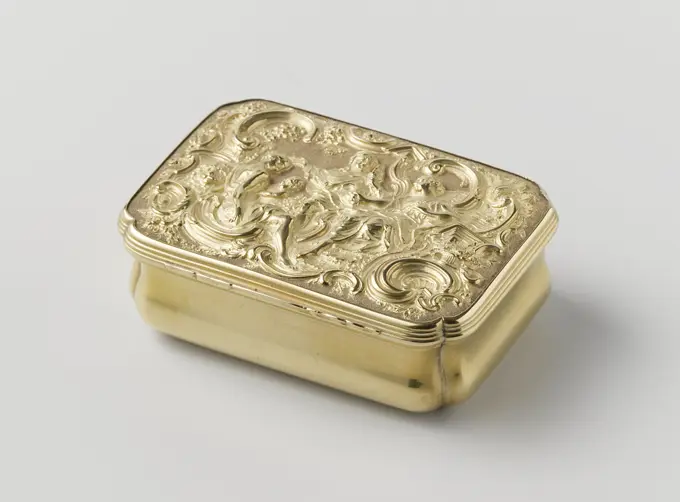
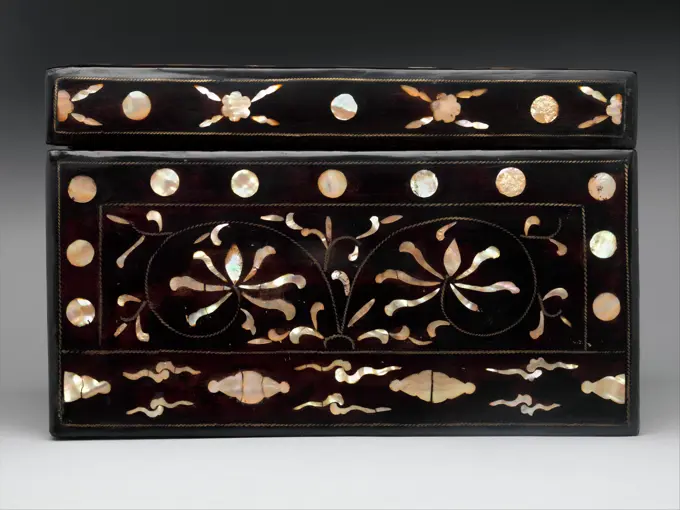
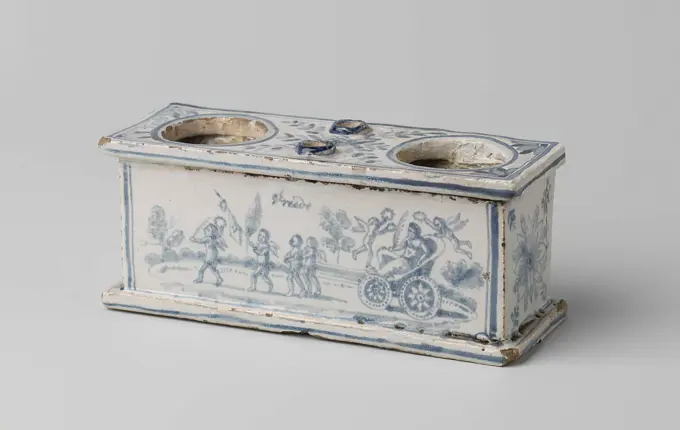
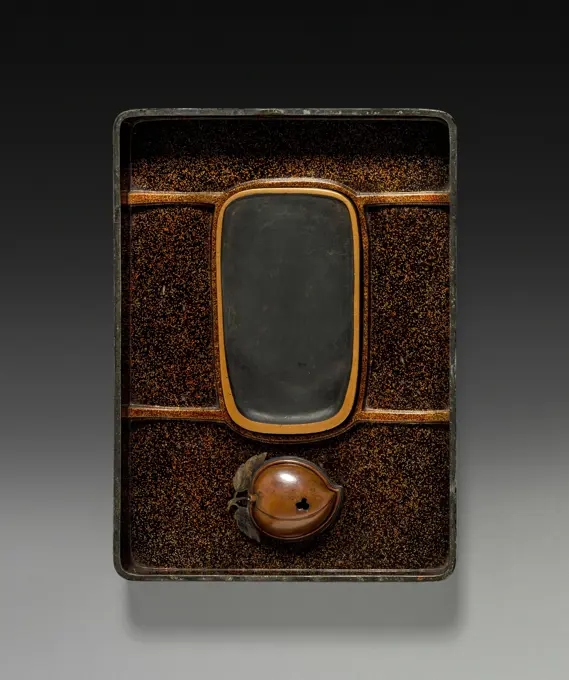
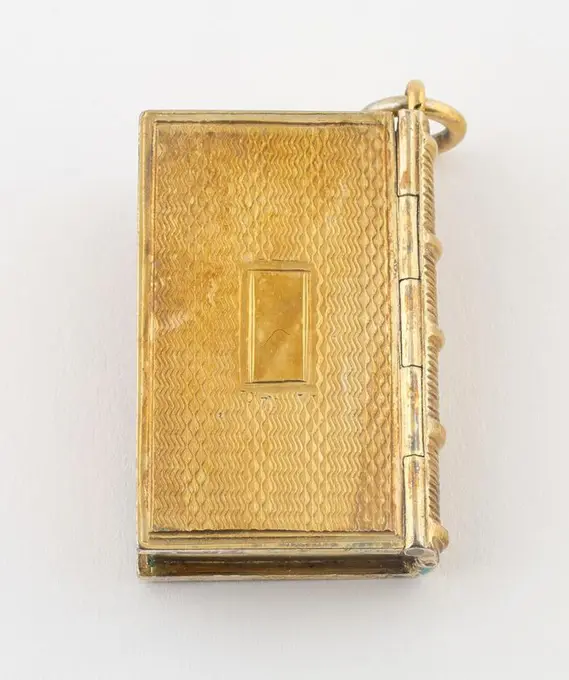
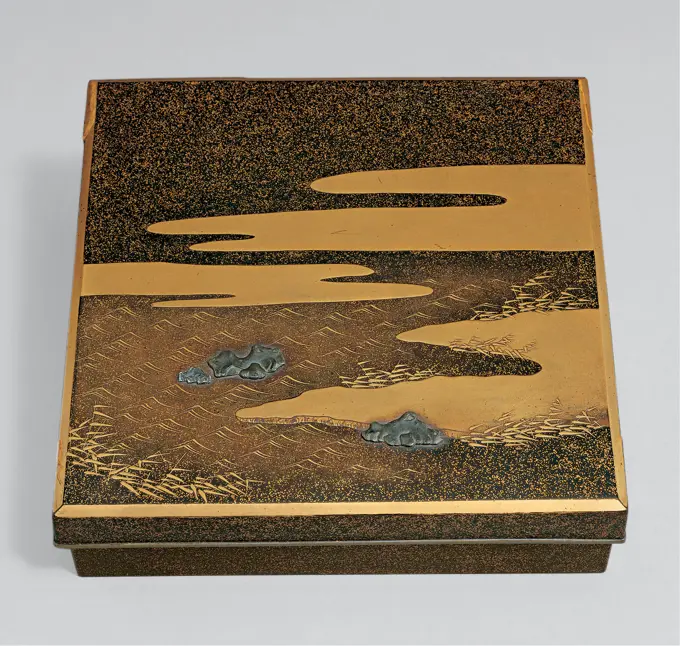
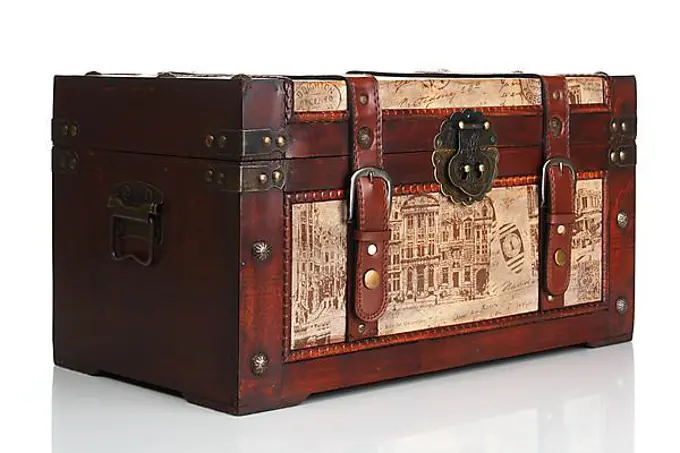
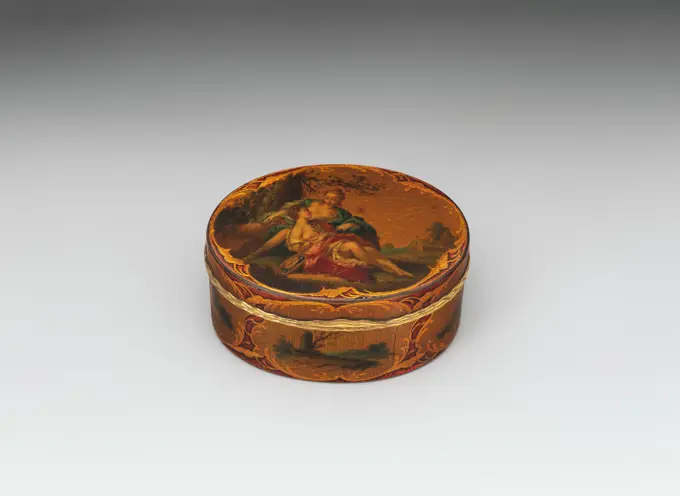
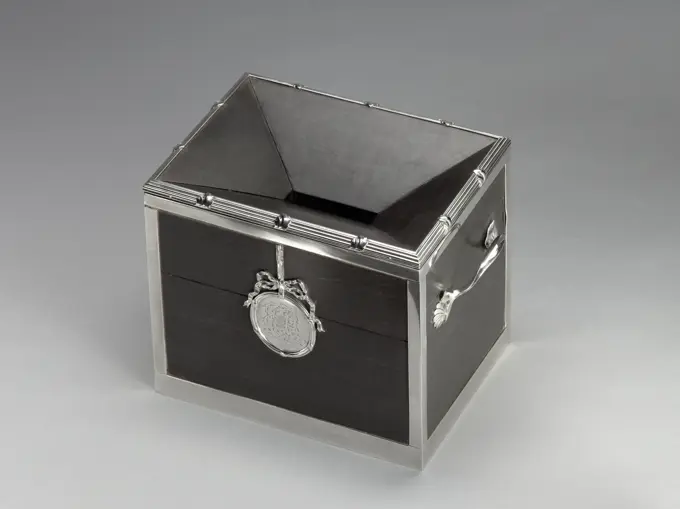
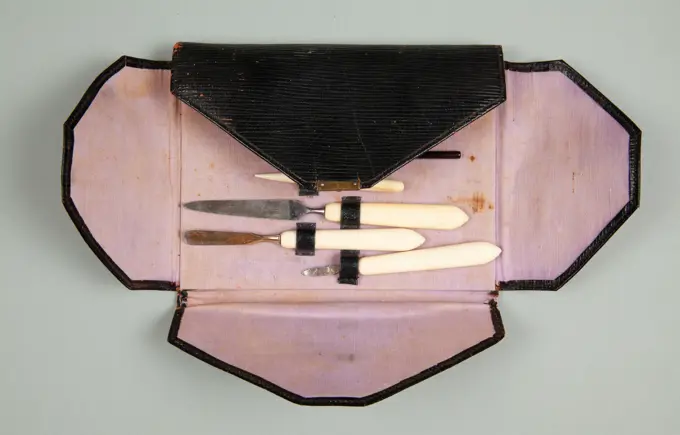
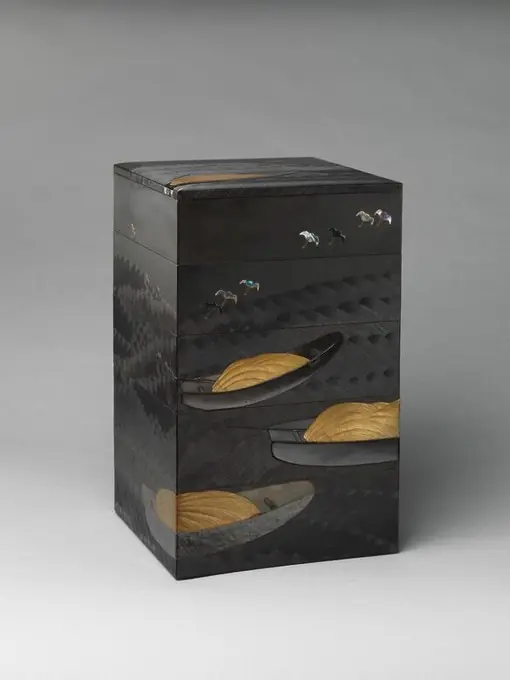
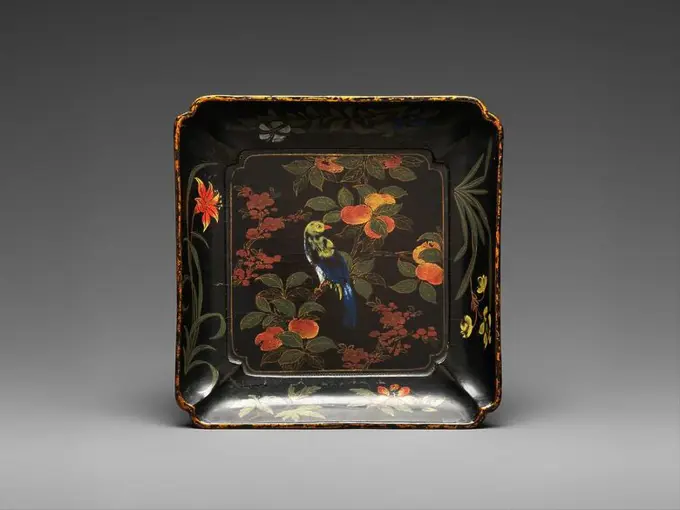
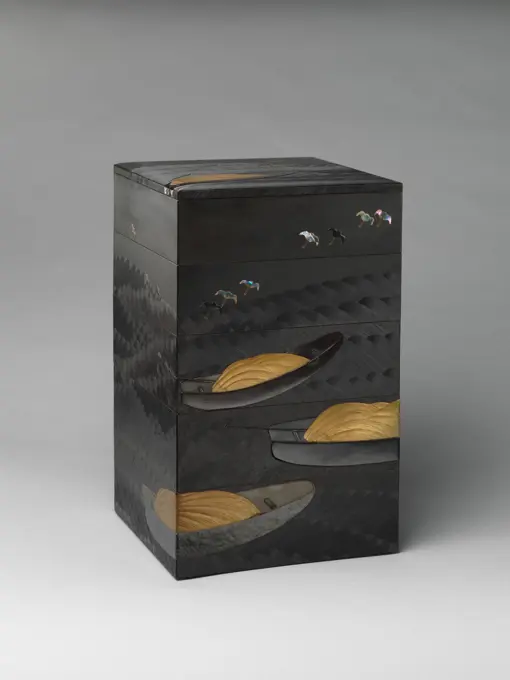
Copper cube, filled with hail and in a wooden box, anonymous, c. 1400 - c. 1950 Copper cube, filled with hail and in a wooden box with a loose wooden back  copper (metal). wood (plant material) Copper cube, filled with hail and in a wooden box with a loose wooden back  copper (metal). wood (plant material)Liqueur cellar. Liqueur cellar of mahogany in which seven bottles, one glass and a funnel. With copper handle and lock plate.Portable Stationery and Cosmetic Box (Tabi kushi-bako) with Moon and Autumn Grasses 18th century Japan The composition on this box recalls bright moonlight shining on an autumn field. The custom of holding moon-viewing parties (tsukimi) in the autumn is thought to have begun in Japan among aristocrats during the Heian period (794-1185), but later became more common. While participants contemplated the full moon, sake was offered in prayer for an abundant harvest. Poetry composition was often also part of the celebration. The style of the maki-e decoration on this box follows that of the Momoyama-period (1573-1615) Kdaiji lacquers created in Kyoto for the warlord Toyotomi Hideyoshi (1537-1598).. Portable Stationery and Cosmetic Box (Tabi kushi-bako) with Moon and Autumn Grasses. Japan. 18th century. Lacquered wood with gold and silver togidashimaki-e, hiramaki-e, e-nashiji, and pewter inlay. Edo period (1615-1868). LacquerBox (part of a set). Culture: French, Lorraine. Dimensions: 3 7/8 × 11 7/8 × 8 3/4 in. (9.8 × 30.2 × 22.2 cm). Date: early 18th century.The use of dressing-table sets made of bois de Sainte Lucie was stimulated by Louis XIV's sumptuary edicts of 1689 and 1709, which caused much French silver to be melted down. Named for the patron saint of the Lorraine region, this type of cherry or dense fruitwood from a forest near Nancy was appreciated for its reddish brown color and its pleasant smell reminiscent of cinnamon. It lent itself beautifully to carving, showing intricate patterns that resemble goldsmith work. Museum: Metropolitan Museum of Art, New York, USA.Casket;  1730-1760 (1730-00-00-1760-00-00);Old chest isolated on the white backgroundChest withdrawersCigarette Box; wood, burrel/ amboyna exterior, mohogany interiorBoysen Toys (car), 1900s. Denmark, 20th century. Wood; overall: 6 x 4.8 cm (2 3/8 x 1 7/8 in.).Brass design fitting on antique wooden pen box, Jodhpur, Rajasthan, India Copyright: xSafatxAli/DinodiaxPhotoxWritingBox, 17thcentury, Huang-hua-li wood with brass fittings, 7 × 17 1/4 × 9 1/4 in. (17.8 × 43.8 × 23.5cm), China, Chinese, Late Ming dynasty (1368-1644) or early Qing dynasty(1644-1911), Containers -WoodLesser with Wapen Amsterdam and Year 1741, Anonymous, 1741 Mahoniehouten Lesenaar with a sloping folding leaf, on which the Wapen van Amsterdam with the year 1741. A copper locking plate has been applied to the scumed front. Northern NetherlandsNetherlands wood (plant material). oak (wood). mahogany (wood). spruce (wood) Mahoniehouten Lesenaar with a sloping folding leaf, on which the Wapen van Amsterdam with the year 1741. A copper locking plate has been applied to the scumed front. Northern NetherlandsNetherlands wood (plant material). oak (wood). mahogany (wood). spruce (wood)Brass design leather fitting on antique wooden half round box, Jodhpur, Rajasthan, India Copyright: xSafatxAli/DinodiaxPhotoxConfectioner;  around 1840 (1835-00-00-1860-00-00);Snuffbox 18th century German. Snuffbox. German. 18th century. Enamel on copper, inlaid with gold; copper mounts. Enamels. .Casket, anonymous, c. 1700 - c. 1725 chest Chest/box made of turtle with silver batter. Symmetrical decoration with lotus motifs, leaf ornaments and volutes. Two handles on the sides. Batavia (possibly) silver (metal)Scroll Box with Phoenix and PaulowniaDesignBrass design fitting on antique wooden box, Jodhpur, Rajasthan, India Copyright: xSafatxAli/DinodiaxPhotoxCase. unknown, authorTiered Box with Figures in a Landscape 18th century China. Tiered Box with Figures in a Landscape. China. 18th century. Carved red lacquer. Qing dynasty (1644-1911). LacquerTwo chests isolated on the whitePudeczko (Kobako) with the cover (kabusebut);  19th century (1801-00-00-1868-00-00);Chest; wood, wrought ironSuzuribako with lid. Suzuribako whose lid is decorated in golden lacquer and silver lacquer with a windshield and a drill set.Doos, anonymous, c. 1775 - c. 1800 Lacquer box with a representation of Daruma on the top, sailing on its reeds. Reddish -brown lacquer inlaid with mother -of -pearl. Possibly from the Ryukyu Islands. Japan wood (plant material). lacquer (coating). mother of pearl Lacquer box with a representation of Daruma on the top, sailing on its reeds. Reddish -brown lacquer inlaid with mother -of -pearl. Possibly from the Ryukyu Islands. Japan wood (plant material). lacquer (coating). mother of pearlFlowerbrick.   Maker: UnknownCase. unknown, creatorDocument box, c. 1905, New Orleans, 2 13/16 x 7 5/16 x 7 1/2 in. (7.14 x 18.57 x 19.05 cm), Rosewood, brass, Germany, 20th centuryToilet set. The principal piece of this toilet set is a small chest of drawers with an attached mirror. This example was made in China, though its mirror follows an English design. It was commissioned by the Canton-based Dutch merchant Andreas Everardus van Braam Houckgeest as a gift for his daughter in the Netherlands; her initials are found on the accompanying toilet boxes.secretary, paper, glass, Paper jewelry boxes with transfer printed front panel., probably Northern Europe, ca. 1820, Decorative Arts, Miniature, MiniatureSilversmith: Douwe Eysma, Silver tea caddy, tea caddy holder silver, serveTwo chests isolated on the whiteBrass design fitting on antique wooden box, Jodhpur, Rajasthan, India Copyright: xSafatxAli/DinodiaxPhotoxChest, koami workshop (attributed to), c. 1635 - c. 1645 Large box with a flat lid, with rich decorations in paintwork on all side. Figures are shown in a landscape on the front and the short sides, the lid contains a similar representation caught in a large cartouche; Two blossom branches are displayed against a black background on the back. Work has always been done in Maki-e technology, gold powder scattered in the wet lacquer in different colors and to a diverse degree of fineness; Any insert in mother -of -pearl has been added to this. The performances on the lid and on the sides are always framed with wide decorative tires. The batter on the plinth and the lid, handles and the final plate are made of ciseled copper. The coffin is on a low, European cut and gilded foot that probably dates from the 19th century (AK-RAK-2013-3-2). Kyoto wood (plant material). lacquer (coating). silver (metal). copper (metal). mother of pearl inlay (process) Large box with a flat lid, with rich decorPainting cassette;  1830-1840 (1830-00-00-1840-00-00);. Smoking ring of wood with metal frames. Decorated with plum blossoms in golden lacquer. Complete with pipe, stew for charcoal, ashtray, etc.. Kistje van withouthout coated with ivory, with a hinged lid with beveled front and back and two loads. All sides are completely decorated with open-worked ivory plates with inside rosette and pearl edges symmetrical patterns of stylized flower and leaf raft with human and animal figures. The ivory has been attached to the coffin with silver nails; These are later replacements of ivory pins, of which a few more remains are present. Lock plate, tractors on the drawers and the lid, handles on the sides, hinges and key from silver.Box with Design of Chrysanthemums by a Stream. Culture: Japan. Dimensions: H. 1 1/2 (3.8 cm); W. 8 3/4 in. (22.2 cm); L. 10 in. (25.4 cm). Date: 19th century.Well-born Japanese brides brought elaborate sets of household articles in gold- and silver-sprinkled lacquer to their new homes. Their trousseaux usually contained writing implements, tea utensils, toiletry articles, and equipment for such refined pursuits as incense games and the tea ceremony. Gold, which was carefully rationed by a sumptuary law specifying the permitted amount for various ranks, was lavishly expended on wedding sets. These ensembles were rarely used and, after being displayed at the wedding, were preserved in storerooms and handed down as heirlooms. The lacquer objects on display bear the Maeda and Shimazu family crests, probably those of the influential daimyo lords of the Kaga clan in Kanazawa and the Satsuma clan in Kagoshima. Museum: Metropolitan Museum of Art, New York, USA.chocolate and praline luxury box with candy and sweetsLeprosy box made of mahogany, red. Leprosy box made of mahogany, red. Content 6 teaspoons (only 3 found) deposited with a finely ribbed cable.Tunbridgeware Glove Box, 1800-1900. This Tunbridgeware glove box. was possibly made by Henry Hollamby of Tunbridge Wells around 1850-1860. The lid is decorated with a picture of Eton College which has been made from sticks of different woods, to make it look like a painting. The sticks are first cut and glued on to a paper backing which is then placed into a background of holly wood. Finally, it is set into a rosewood veneer which covers the carcass of the box. The sides of the box are covered with a version of a Berlin Woolwork pattern, normally found on tapestry... Purchased from Edward H Pinto, 1965.. .LimeContainerMusic Box And Key; tortoiseshell, silver gilt, feathersToilet set.The principal piece of this toilet set is a small chest of drawers with an attached mirror. This example was made in China, though its mirror follows an English design. It was commissioned by the Canton-based Dutch merchant Andreas Everardus van Braam Houckgeest as a gift for his daughter in the Netherlands; her initials are found on the accompanying toilet boxes.Two chests isolated on the whiteOld book isolated on white backgroundBasket 19th century Japan. Basket 56558Leather boxbrLeather box Leather box isolated with clipping path included Leather box isolated with clipping path included Copyright: xZoonar.com/Baloncicix 14697952Old vintage suitcase opened front isolated on whiteCasket Vintage brown casket isolated included clipping path Copyright: xZoonar.com/Baloncicix 15098628Box, rectangular, from ivory with monogram jvn. Box, rectangular, from ivory with monogram jvn, in embroidered bag.Stationery Tray, late 18th century, H.3-1/4 x W.9-3/4 x D.9-3/4 in., Chi-ch'i-mu hardwood and white brass, China, 18th centuryCasket;  16th century (1501-00-00-1600-00-00);The stack of books The stack of books on a white background Copyright: xZoonar.com/SergiixSvyerchkovx 5887440Document Box (Ryoshibako) with Deer and Butterflies. Culture: Japan. Dimensions: L. 17 3/4 in. (45.1 cm); W. 12 1/4 in. (31.1 cm); H. 6 3/4 in. (17.1 cm). Date: 17th century.This document box is embellished with seasonal motifs: the butterflies represent spring and the deer is a symbol of autumn. The lid is decorated with an autumn landscape featuring large ferns. Deer were favored as design elements by Rinpa lacquer artists, but they were represented in Japanese lacquer art since medieval times. Autumn landscapes with deer were popular painterly subjects in the Edo period; several paintings from the Fishbein-Bender Collection represent deer wandering in autumn woods. The document box is also associated with literature, as the melancholy cry of the deer in autumn was frequently mentioned in classical poetry. Museum: Metropolitan Museum of Art, New York, USA.Head Rest, 618-906, 2 1/4 in. (5.72 cm), Sancai ware Stoneware with impressed decor under a three-color glaze, China, 7th-10th centuryBox with Enamel Plaques Austrian first half 14th century View more. Box with Enamel Plaques. Austrian. first half 14th century. copper gilt, enamel. Made in probably Vienna, Austria. Metalwork-CopperBrass design fitting on antique wooden box, Jodhpur, Rajasthan, India Copyright: xSafatxAli/DinodiaxPhotoxEmpty wooden cutting board for preparing ingredients for preparing a delicious dish Empty wooden cutting board for preparing ingredients for preparing a delicious dish. Kitchen utensils Copyright: xZoonar.com/TetianaxChernykovax 21728424Woman's Envelope Bag with Mirror. United States, Minnesota, Minneapolis, late 19th century. Costumes; Accessories. Leather. The rectangular box, with swamped corners, has a hinged lid. He rests on a profiled stand ring. The wall of the box describes a slight S-curve. The lid has a profiled edge with a standing, scalloped tab on the front. In the edge, a record was caught with a driven show, probably from Venus and Pomona, with a woman's figure in the foreground with a lion and a boy who pulls her dress. The performance has been placed in an asymmetrical picture frame made up of C-Volutes, a capital, seed beads and wine and flower raft. With the figure that assumes Pomona, a basket with flowers is placed in the frame. The background is roughened. A second, completely smooth plate is applied to the underside of the plate.Snuff box of gold, rectangular, with the lid and on the walls enameled decorations of dancing nymphs with amors. Rectangular golden box. On the lid in an enamelled oval a dancing NYMF with amor in grisaille. The other sides are decorated in a similar way.Clothing Tray (Midare-bako) with Paulownia and "Nine Stars" Crests. Culture: Japan. Dimensions: L. 22 1/8 in. (56.2 cm); W. 2 1/8 in. (5.4 cm); H. 4 in. (10.2 cm). Date: late 16th-early 17th century.This large midarebako, a shallow box without a lid used to hold clothing ready for wearing, was usually kept on a shelf of the lacquered cabinets that were part of the traditional furnishings of living quarters. Its form suggests a box cover, and perhaps it is derived from the use of box lids to present gifts of clothing. This example is decorated with the paulownia motif associated with Toyotomi Hideyoshi (1536-1598) and with a nine-orb (kuyo) crest used by various families as early as the twelfth century. Museum: Metropolitan Museum of Art, New York, USA.Platform with 26 arrows associated with arms rack of Cornelis Tromp. Platform for 26 arrows. The wooden sleeve is red lacquered and decorated with imitations of Japanese family weapons, Mons. The arrows are made of bamboo with a glass point.Stacked Food Box (Jubako) with "Whose Sleeves" (Tagasode) Design. Culture: Japan. Dimensions: H. 10 5/8 in. (27 cm); W. 8 7/8 in. (22.5 cm); L. 8 1/4 in. (21 cm). Date: 18th century.The design of this elegant food box, created for a celebratory meal such as a New Year's feast, features kimono racks with draped-over kimonos and accessories, such as amulets, perfume bags, and even an inro (portable medicine case for men). This composition, known as "Whose Sleeves" (Tagasode), was a popular pictorial subject represented on Momoyama- (1573-1615) and Edo-period folding screens as well as on decorative arts. The Japanese term refers to the beautiful owner of these kimonos, who is absent. It was used in waka, including poems in Collection of Poems Ancient and Modern (Kokin wakashu, ca. 905), but the design on this food box also has references to The Tale of Genji via picture-within-a-picture compositions, as the depicted screen and the kimono rack are embellished with scenes from the storToilet Box for holding, powder boxes, mirror and other items. English, 1929, made from walnut an silver and covered with Shageen ( a Leather, mother of pearl substitute.Box, 2nd half 18th Century. China, Qing dynasty (1644-1911). Pressed sizing on wood painted with lacquer; overall: 11.2 x 15 cm (4 7/16 x 5 7/8 in.).Snuff box of gold with driven representation of Vertumnus and Pomona, accompanied by Venus and Amor, Jean Saint (attributed to), 1750 The rectangular box, with swiveled corners, has a hinged lid. He rests on a profiled stand ring. The wall of the box describes a silly S-curve. The lid has a profiled edge with a raised lip on the front. In the edge there is a plate with a driven performance, probably from Venus and Pomona, with a female figure in the foreground with a lion and a boy who pulls her rug. The show is placed in an asymetrical frame made up of C-volutes, a capital, rocailles and wine and flower vines. With the figure that is adopted Pomona, a basket with flowers is placed in the frame. The background is roughly. A second, completely smooth plate has been applied to the underside of the plate. goldsmith: Amsterdamgoldsmith: England (possibly) gold (metal) The rectangular box, with swiveled corners, has a hinged lid. He rests on a profiled stand ring. The wall of the box descriBox with floral decoration 18th century Korea The black lacquer exterior of this box is decorated with mother-of-pearl inlaid in the form of simple floral scrolls and formal borders. Twisted metal wires make up the stems of the scrolls and frame the different zones of the decoration. Several of the circular disks of tortoiseshell inlay on the top surface, apparently lost, have been replaced by mother-of-pearl. The inside of the box is lined with red satin. A number of boxes nearly identical to this one in dimensions and decoration are known.A notable feature of this piece and others of this type is the incorporation of gold powder sprinkled on the lacquer. The gold appears only in patches, however, probably because most of it was rubbed off when the surface was polished down after the mother-of-pearl and tortoiseshell were inlaid.. Box with floral decoration 40526Kästchen - Open casket Kästchen - Open casket Copyright: xZoonar.com/lantapixx 5667914CDK unknownAsa Cheffetz, Summer Idyll, 1941, wood-engraving block.Picture block - Rondes et FablesVinaigrette; silverCover the pouch Lviv manufactureInktpot, blauw beschilderd met kinderen die een slede voorttrekken en met dansende kinderen en het opschrift "Vreede"..Elongated inkwell of blue painted faience, with two large and two small holes in the top. On one long side, children who persuade a sled (= peace) are painted with the inscription "Vreede" above the performance. On the other side a group of children is dancing to dance a column above which are banners. The letter W has been painted between the banners. The object is false.Inkstone Case, 1800s. Japan, Edo period (1615-1868). Lacquer on wood inlaid with mother-of-pearl, applied carved metal, and glazed ceramic; overall: 3.5 x 21.6 x 16 cm (1 3/8 x 8 1/2 x 6 5/16 in.).Writing Box (Needlework) Made 1601-1700 England. Wooden box; covered with linen, plain weave; embroidered with silk floss in back, running, and satin stitches; laid work and couching; edged with silvered-metal-strip-wrapped silk and silvered-metal strips, plain weave; lined with silk, plain weave and plain weave with supplementary pile warps forming cut solid velvet; silver hardware; two glass bottles inside .Writing box 17th century China. Writing box. China. 17th century. Indian rosewood (huali). Woodworkpurse isolated on white backgroundBook-Shaped Vinaigrette. Taylor and Perry; Birmingham, England. Date: 1835-1836. Dimensions: 2.5 × 2 cm (1 × 3/4 in.). Silver gilt. Origin: Birmingham. Museum: The Chicago Art Institute, Chicago, USA.Writing Box (Suzuribako) with Dream in Naniwa” Design 18th century Japan Writing boxes hold an inkstone (suzuri), a water dropper, and writing brushes. As with this example, they are often decorated with images featuring literary references. This box is embellished with a design referring to Naniwa (present-day Osaka), one of the famous scenic spots of Japan. The poem depicted on its exterior and inscribed on the lids’s interior is from New Collection of Poems Ancient and Modern (Shin kokin wakashū, ca. 1206). Tsu no kuni no Naniwa no haru wa yume nare ya Ashi no kareha ni kaze wataru nari Was spring at Naniwain Tsu Provincea dream?Wind blows over thewithered reeds’ leaves.—Trans. Haruo Shirane. Writing Box (Suzuribako) with Dream in Naniwa” Design 53414Farmer and peasant women under Boom, Leendert Verbeek, c. 1700 Silver tobacco box. Engraved with a farmer and peasant women who are sitting under a tree. Netherlands silver (metal) Silver tobacco box. Engraved with a farmer and peasant women who are sitting under a tree. Netherlands silver (metal)Old trunkToilet set. The principal piece of this toilet set is a small chest of drawers with an attached mirror. This example was made in China, though its mirror follows an English design. It was commissioned by the Canton-based Dutch merchant Andreas Everardus van Braam Houckgeest as a gift for his daughter in the Netherlands; her initials are found on the accompanying toilet boxes.Anonymous, well of well (common name). Cernuschi Museum, Asia Museum of Asia in the city of Paris.Snuffbox mid-18th century French In eighteenth-century Europe, Paris led the production of high-quality luxury goods. Parisian goldsmiths made a wide range of small, personal articles such as snuffboxes; étuis to hold sealing wax, tweezers, or utensils for sewing; souvenirs, which contained thin ivory tablets for note taking; and shuttles for knotting lace. Gold snuffboxes and boxes decorated with portrait miniatures were prized and frequently given as royal gifts, often to ambassadors or members of the court in lieu of cash payments for their services. Coveted and admired, these boxes were produced from a variety of materials. The best were skillfully made of gold and embellished with diamonds, enameled decoration, lacquer, and other luxurious materials. By the middle of the century, the taking of snuff had become an entrenched social ritual, and the snuffbox, too, had become an important social prop. Snuffboxes were considered highly fashionable accessories, with some merchants adverWooden stereo box camera by Theodor Schröter, adjustable from 4 x 4 cm to 4.5 x 10.7 cm, produced around 1900.Sacrifice block for The English Reformed Church, Johannes Schiotling, 1771 Sacrifice block of ebony with silver batter and monogram ECA and extensively engraved inscriptions. Amsterdam silver (metal). ebony (wood) Sacrifice block of ebony with silver batter and monogram ECA and extensively engraved inscriptions. Amsterdam silver (metal). ebony (wood)Suitcase with bombarded lid, anonymous, 1600 - 1699 Suitcase with bombarded lid. Covered with pressed and gilded leather. Decorated on the lid with a gentleman and a lady. At the front scene with a hunt for a hare. With batter and handle of copper.  wood (plant material). leather. brass (alloy) gilding Suitcase with bombarded lid. Covered with pressed and gilded leather. Decorated on the lid with a gentleman and a lady. At the front scene with a hunt for a hare. With batter and handle of copper.  wood (plant material). leather. brass (alloy) gildingBrass design fitting on antique wooden box, Jodhpur, Rajasthan, India Copyright: xSafatxAli/DinodiaxPhotoxA set of manicure accessories in the caseSuitcase. An iron suitcase with barrel lid. Removed gothic decorations. Double slot, the tires of which are through the lid and attached to the rear wall by three bolts. The suitcase rests on four small legs. The handle is rectangularly bent with thickened, profiled center piece and is attached to the top of the lid. The decoration is missing in different places.Tiered Box (Jubako) with Design of Boats and Plovers. Artist: Shibata Zeshin (Japanese, 1807-1891). Culture: Japan. Dimensions: L. 9 5/8 in. (24.4 cm); W. 9 3/8 in. (23.8 cm); H. 16 1/2 in. (41.9 cm). Date: second half of the 19th century.In the nineteenth century Shibata Zeshin, who exhibited at several world's fairs, was one of the few Japanese artists known in the West. He is noted both for his use of lacquer as a painting medium and for his innovative melding of techniques and unusual materials in lacquers. The boats here are made of pewter that was roughly finished with lacquer, while the traditional "sprinkled gold" (maki-e) technique defines the sheaves of rice. The combed pattern on the waves illustrates Zeshin's revival of the "blue wave" (seigaiha-nuri) technique, in which lacquer thickened with egg white or clay is placed on a surface and then combed into a pattern with a bamboo brush. Small pieces of pearl shell form the plovers flying over the scene, which has autumnal ovSand shaker with pierced top, anonymous, c. 1750 - c. 1799 Sand spreader of stoneware with a cylindrical body, flared edge to place in the holder and openwork top. The edge with a petal pattern in cobalt blue. Westerwald. Westerwald stoneware. glaze. cobalt (mineral) vitrification Sand spreader of stoneware with a cylindrical body, flared edge to place in the holder and openwork top. The edge with a petal pattern in cobalt blue. Westerwald. Westerwald stoneware. glaze. cobalt (mineral) vitrificationDish with persimmons, flowers, and birds. Culture: China. Dimensions: W. 6 5/16 in. (16 cm). Date: 16th century.The blue used in the depiction of the magpie was created using an oil-based pigment that allowed for the development of additional colors in the design of Chinese lacquers. Such pigments, to which a lead oxide is added as a drying agent, are known as litharge in Western writings, and as mituoseng in Chinese. Museum: Metropolitan Museum of Art, New York, USA.Tobacco Box. France. Date: 1755-1765. Dimensions: 9.5 × 9.5 × 7.6 cm (3 3/4 × 3 3/4 × 3 in.). Pewter. Origin: France. Museum: The Chicago Art Institute, Chicago, USA.Wooden Vintage Chest isolated on white backgroundTiered Box (Jūbako) with Design of Boats and Plovers second half of the 19th century Shibata Zeshin In the nineteenth century Shibata Zeshin, who exhibited at several world's fairs, was one of the few Japanese artists known in the West. He is noted both for his use of lacquer as a painting medium and for his innovative melding of techniques and unusual materials in lacquers. The boats here are made of pewter that was roughly finished with lacquer, while the traditional "sprinkled gold" (maki-e) technique defines the sheaves of rice. The combed pattern on the waves illustrates Zeshin's revival of the "blue wave" (seigaiha-nuri) technique, in which lacquer thickened with egg white or clay is placed on a surface and then combed into a pattern with a bamboo brush. Small pieces of pearl shell form the plovers flying over the scene, which has autumnal overtones.. Tiered Box (Jūbako) with Design of Boats and Plovers 40491