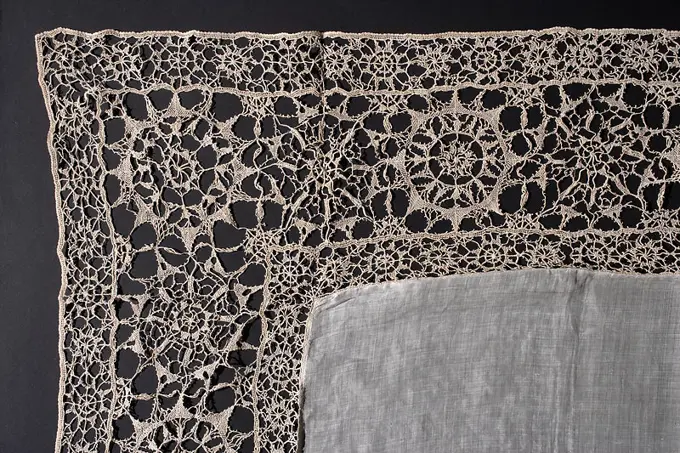
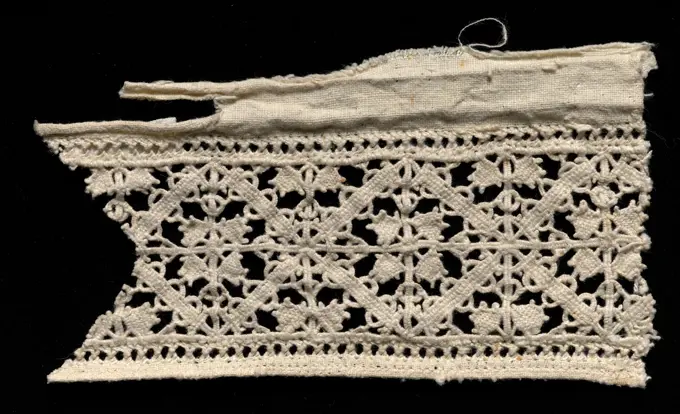
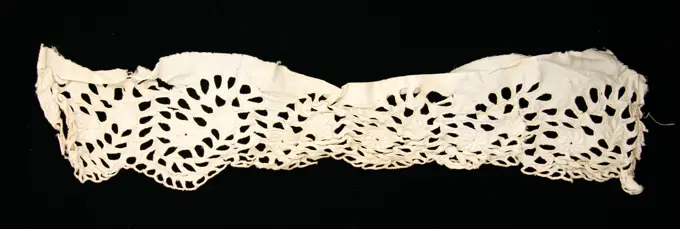
Delicate Lace Fragments

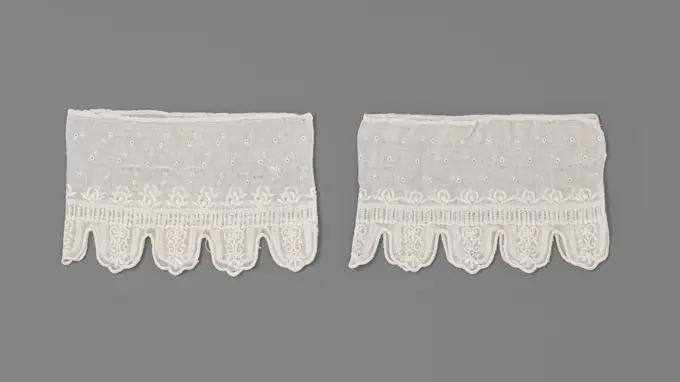
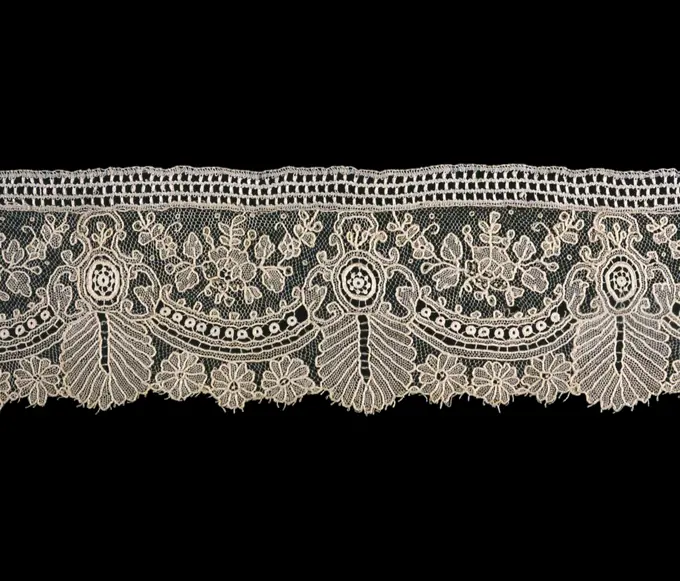
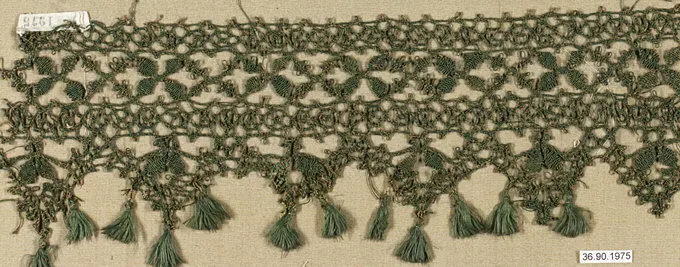
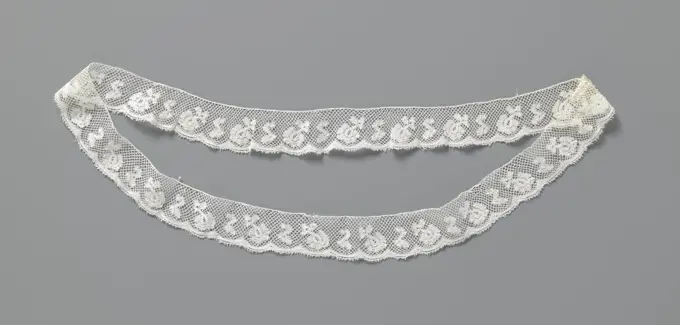
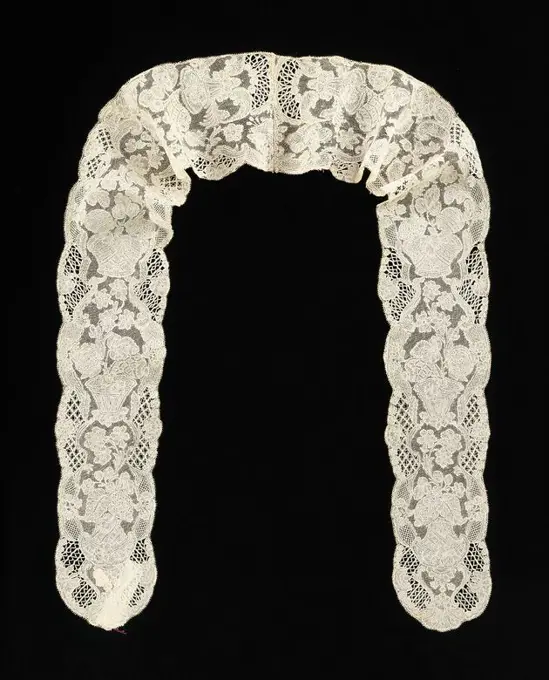
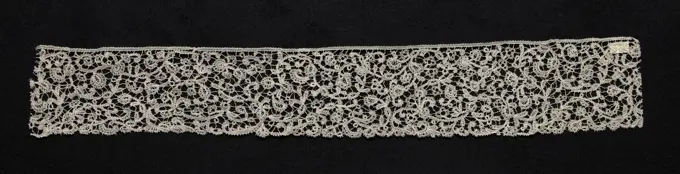
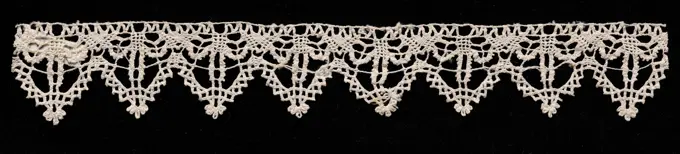
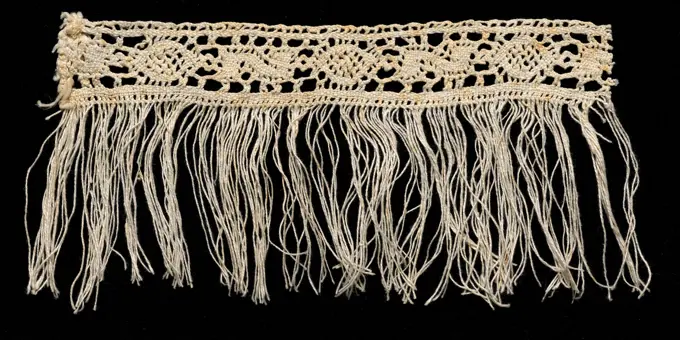
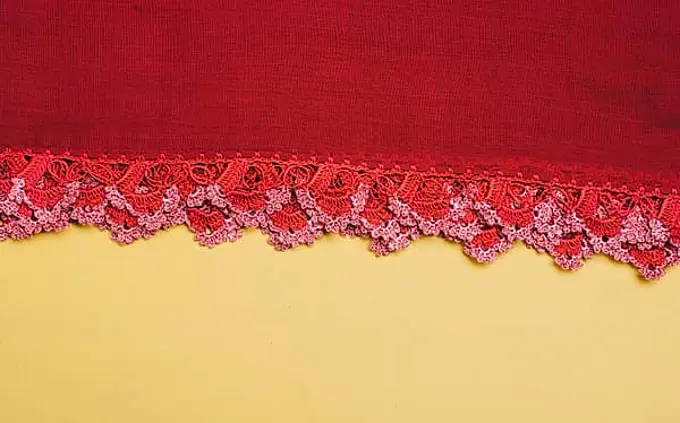
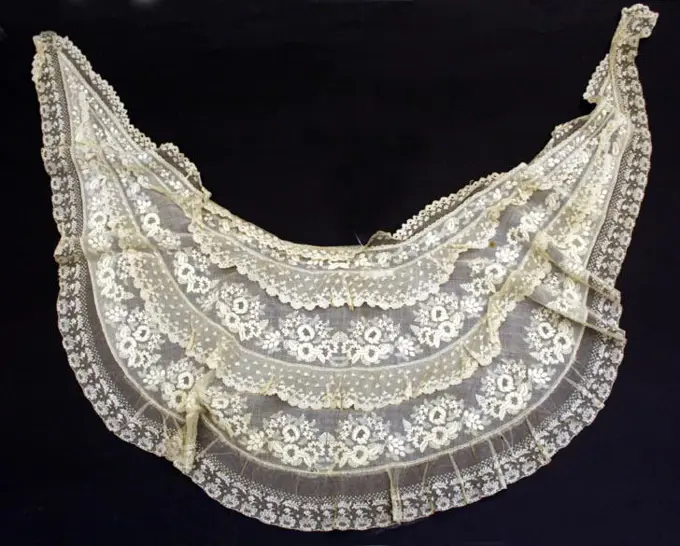
18th-century intricate lace strips featuring floral and arch patterns, displaying fine craftsmanship and historical textile artistry.

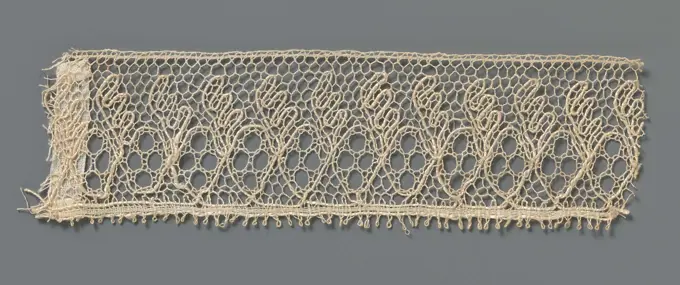
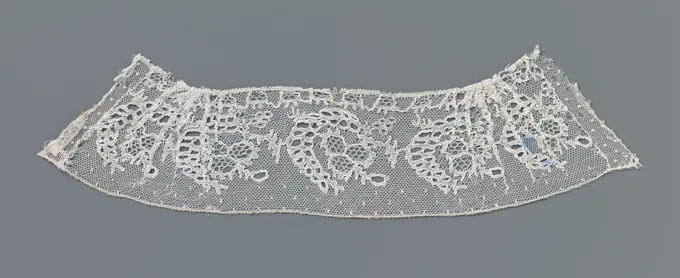
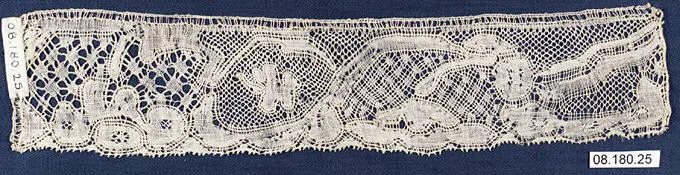
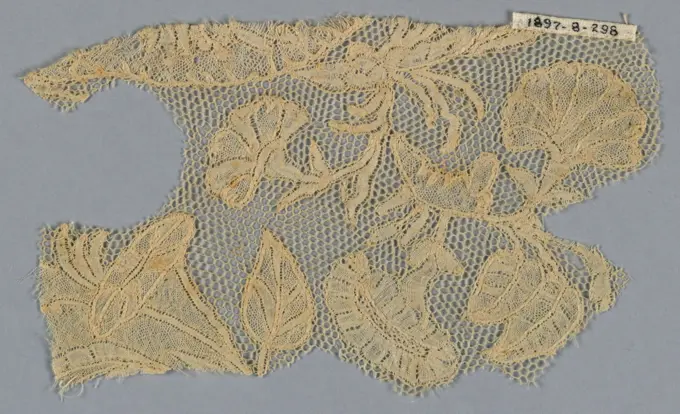
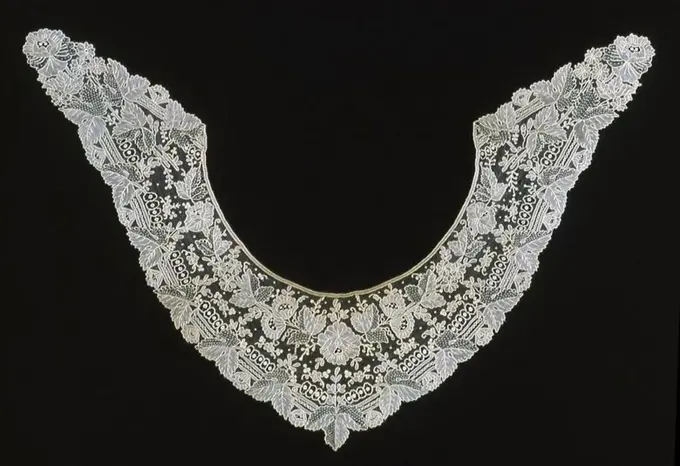
Fragment, Medium: Technique: bobbin lace (late Valenciennes ground), Flowering band above border of ovals separated by leaf ornament., 19th century, lace, Fragment
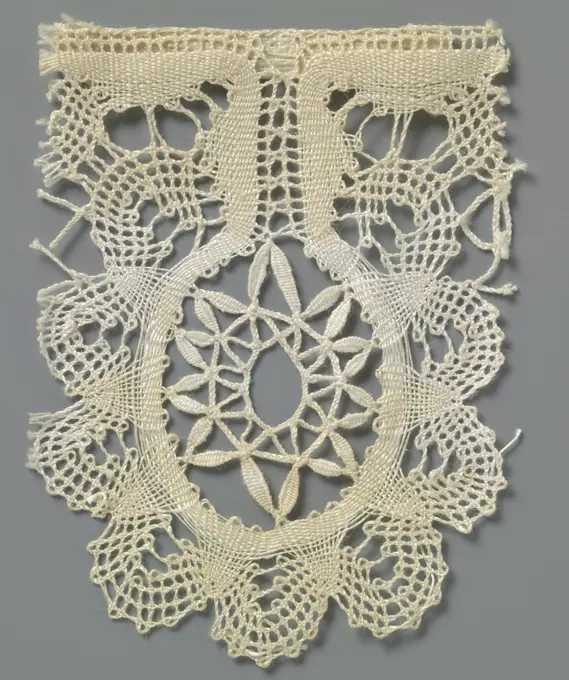
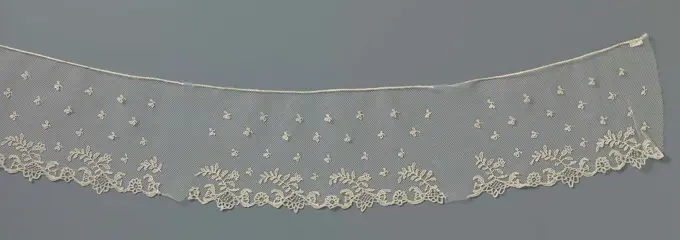
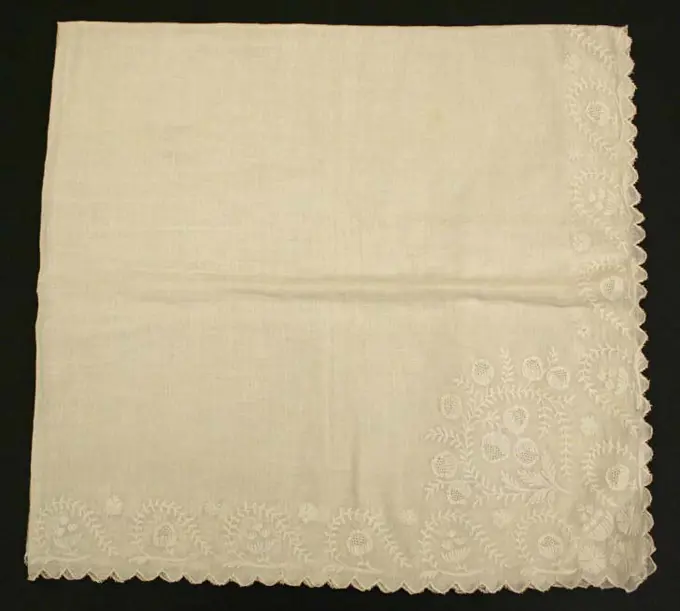
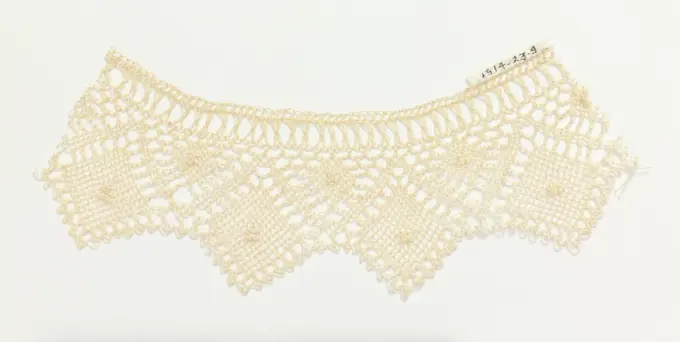
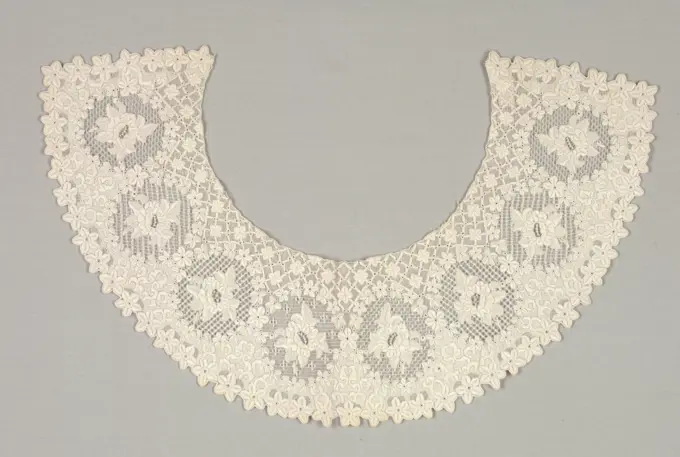
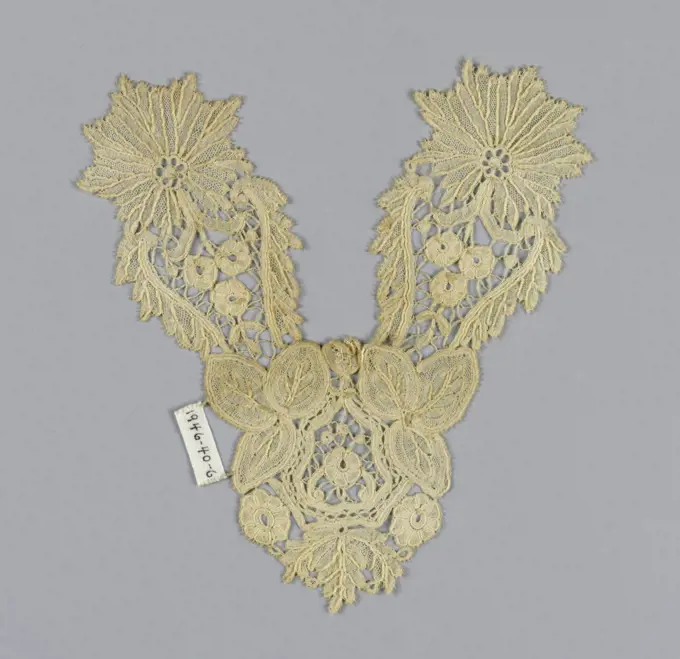
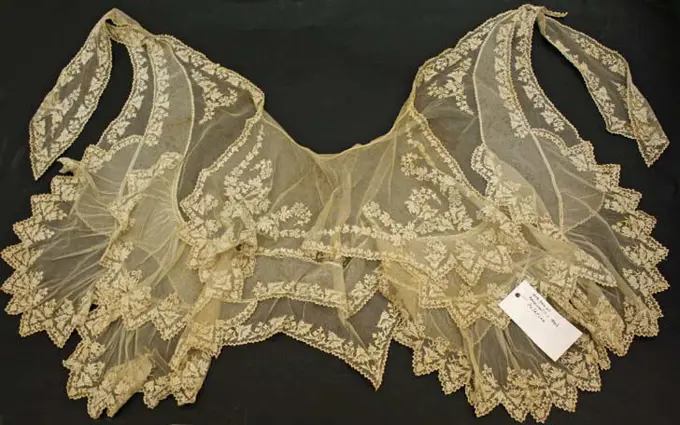
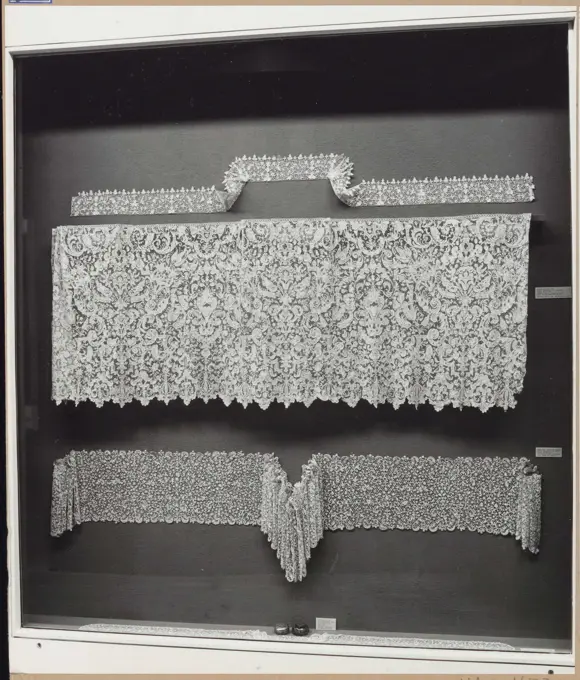
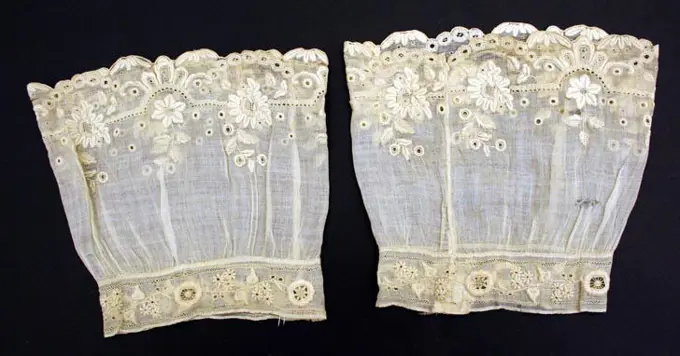
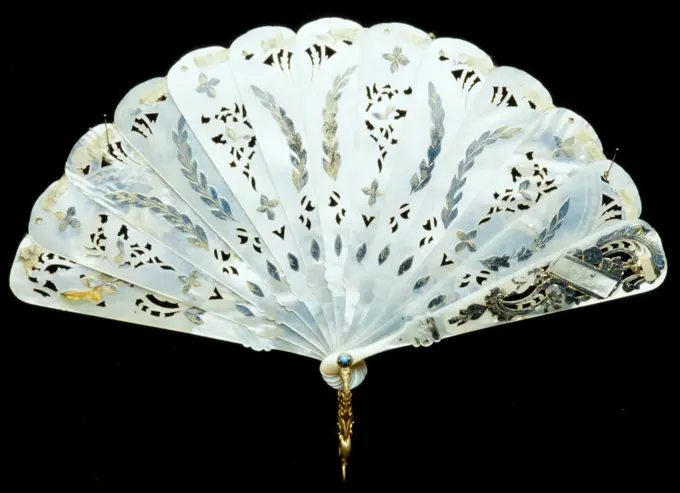
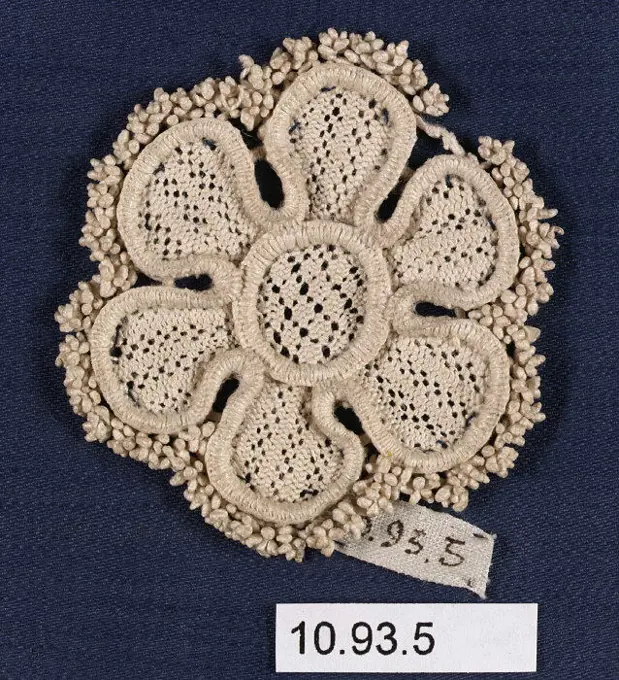
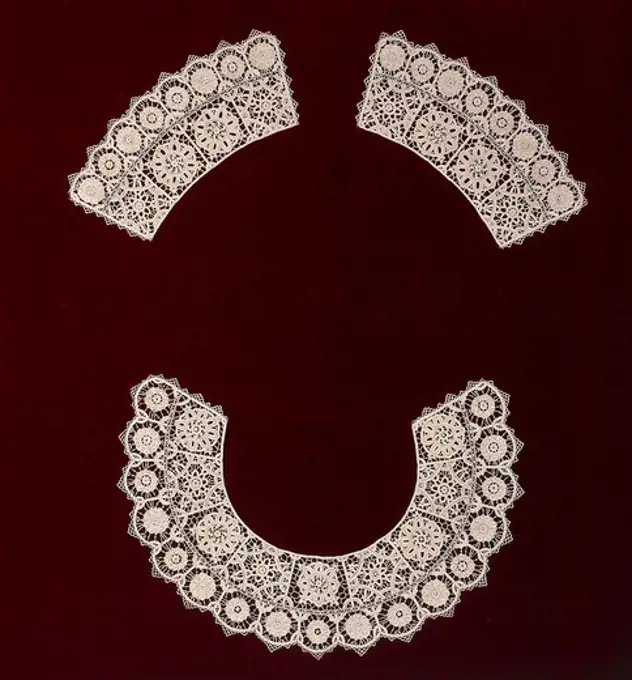
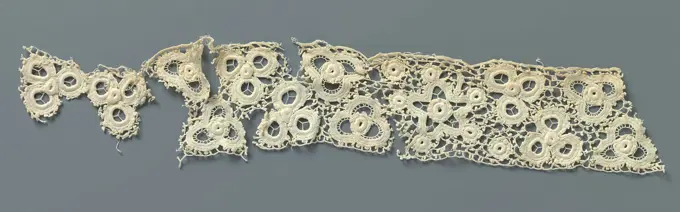
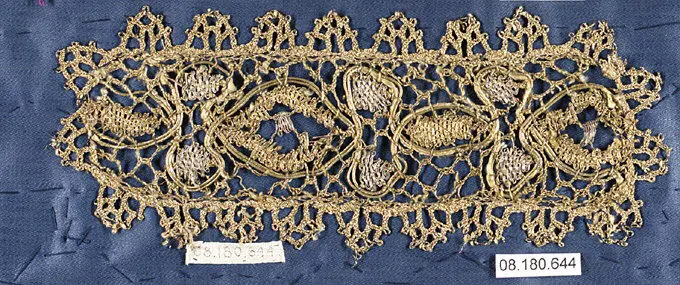
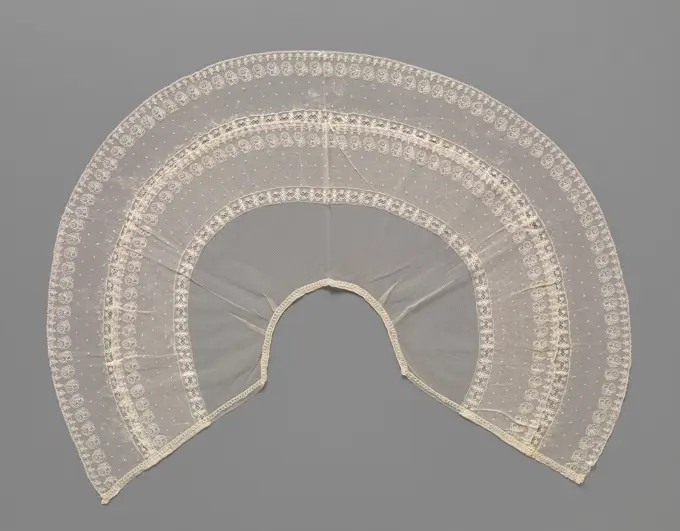
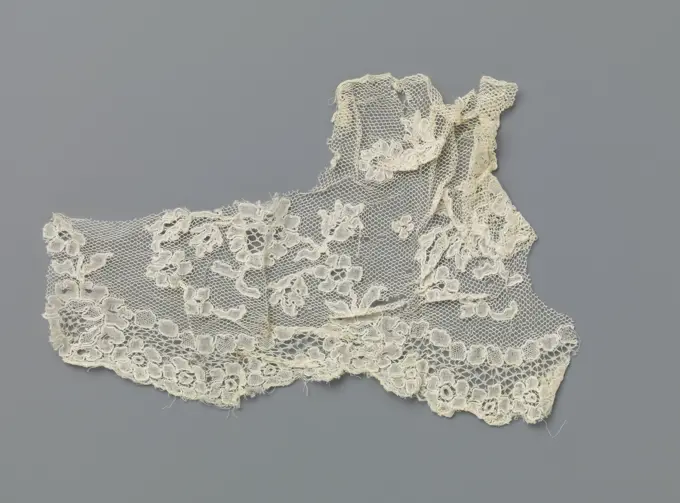
Cutslip from Binchekant, Anonymous, c. 1750 - c. 1760 Capslip from Binchekant with hemisphere end. The pattern consists of flowers and various grid fillings. The scalloped edge is trimmed with picots. The slip is cut in half and has three cut buttonholes. Binche linen (material). Binche Lace Capslip from Binchekant with hemisphere end. The pattern consists of flowers and various grid fillings. The scalloped edge is trimmed with picots. The slip is cut in half and has three cut buttonholes. Binche linen (material). Binche LaceCollar 1840s probably American. Collar 110128Batist cuff decorated with whitework, anonymous, c. 1800 - c. 1825 Batist cuff, decorated with whitework in the form of moes, feathers and leaves. The scoops have been fested. West-Europa batiste Batist cuff, decorated with whitework in the form of moes, feathers and leaves. The scoops have been fested. West-Europa batisteLampshade Covers (USA)Strook kloskant met staande ovalen en eenzijdig gevederde blad.Strip natural colosside, Lille side. The pattern consists of a concatenation of standing ovals between which there is always one feeded leaf slanted. The ovals are made from a circles of ornamental land, a rose soil, and are on the straight strap that runs along the bottom. The contours are made with thicker and shiny wires. Also along the band, made in linen stroke, contour wires, where the upper is used to form the motifs. The motifs are connected by a Maas soil, a tulet. The top and bottom of the strip are straight finished, the underside with picots.Strip ca. 1700 Flemish. Strip 218254Borders Made 1875-1900 Belgium. Cotton, needle lace of a type known as Point de Gaze .Woman's Fichu. England, early 19th century. Costumes; Accessories. Cotton plain weave with cotton embroidery and cotton laceCollar 19th century Belgian. Collar 102616Collar of needle side (Brussels mesh side), Anonymous, c. 1900 Round collar of needle side. The pattern consists of C-Voluten and flowers. Along the scalloped edge a flower and leaf edge. Brussels . Round collar of needle side. The pattern consists of C-Voluten and flowers. Along the scalloped edge a flower and leaf edge. Brussels .Border; linenVerdubbelde strook naaldkant met hartvormige rankjes.Strip natural needle side: Flat Venetian side. On a ground of regular six-sided mesh is a fine pattern of two symmetrical, heart-shaped ranks connected by serpentine ranks. Straight finish of large triangles.Collar; cotton; 1910-24-24Collar ca. 1860 French. Collar 168303Border Made 1775-1825 France. Linen and horsehair, needle lace of a type known as Point d'Argentan with whipped mesh ground .Collar 1830-50 European This collar has a particularly detailed and unusual design motif. The complex embroidery and the lotus form taken from the Egyptian design vocabulary sets it apart from the usual.. Collar 156985Strip bobbin with lobed oval shell with star or flower in it, anonymous, c. 1890 - c. 1899  Strip of natural -colored bobbin, Russian side. The pattern consists of an openwork oval shell with nine lobes all around. The motifs are made in linen battle, the lobes with curved straps with square meshes. In the center of the shell, a flower or star was made with triangles made with braids and around triangles made in shape. The top of the strip is straight finished. The lobes around the Schulpt are finished with picots. Russia linen (material) bobbin lace / Russian laceStrook applicatiekant met naar links wuivende blaadjes.Strip natural-colored application side: needle side applicated on machine tulle. This type of side is also known as the name: Point d'Angleterre. Two-thirds part is littered with leaves, a third part consists of a symmetrical sculpture of a rosette and an open medallion, connected by sickle-shaped leaves. From those medallions a to the left grows waving, incised leaves.Strip of needle side with quonated C-shapes, anonymous, c. 1700 Strip of natural needle side, point the france. Repetitive motif with whimsical ranks to which various quonated C-shapes and a few signed circles. Hexagonal soil with picoted bars. Fullwork with recesses and largely without relief, except for the Kordons. Schulpenrand on the underside with alternately a arched arched arches and a triangle that is made up of small -bloned circles. The top is trimmed with a straight edge of needle with crosses. unknown linen (material) Strip of natural needle side, point the france. Repetitive motif with whimsical ranks to which various quonated C-shapes and a few signed circles. Hexagonal soil with picoted bars. Fullwork with recesses and largely without relief, except for the Kordons. Schulpenrand on the underside with alternately a arched arched arches and a triangle that is made up of small -bloned circles. The top is trimmed with a straight edge of needle with crosses. unknown linen (maCollar early 18th century Flemish. Collar 214549Fichu 1795-1800 European. Fichu 115683Fragment; cottonHandkerchief. unknown, authorLace, bobbin, circa 1700, Flanders, maker unknown. Gift of Yvonne Riddiford, 2007.Round dress of Batist with Filetrand decorated with rose branches. Dress of natural-colored batist with a natural-colored edge of edge embroidery: fillet edge. Round model. Pattern with a concatenation of a roster branch interspersed with a three-piece leaf. The motifs are embroidered with the cross-linking technique on filet node: a knotted network with square meshes. Scalloped edge where one scallop always comprises one flour or one sheet.Strook of manchet van kloskant met sikkelvormig blad.Strip natural colosside: Lille side. The strip is bent slightly because it has a few folds at the ends and it is sloped off to both short sides and finished with a narrow edge tulle. It is possible to use as a cuff. Under a narrow edge with three rows of sprinkled moes, the repeating pattern consists of a sickle-shaped sheet that bends around a configuration of three openwork circles with whimsical edges. At the circles a smaller cut-away oval hangs and a small bunch of berries hangs on the leaf. Along the bottom of the strip, an edge runs openwork motifs, where the erratic edge, which runs like a kind of crown, runs the edge of the next. The motifs are connected by a fine grille, a tulet. The motifs are made in linen stroke with mostly large recesses and thicker and contour wires. Ornamental grounds are applied in the circles, the berries and the motifs along the underside. The Moeses are made in shape stroke. Upper and bottom are sInsertion 17th century Italian, Genoa. Insertion 218019Strip bobbin with blue and gold -colored flowers and leaves, anonymous, c. 1740 - c. 1760 Strip of natural-colored bobbin, binche side, where the pattern is painted light blue, with dark blue contour lines and gold-colored dots. The repeating pattern consists of two curved branches along the top edge. A fan -shaped flower hangs down on one branch, up to the lower edge. Two palm leaves or palm flowers hang down on the other. The motifs are largely connected by a decorative soil, a snowflake land and partly with a wastage ground, a five -part ground. The fullwork is largely made in linen battle with openwork edges, one (flower) leaf is made in netslag. A mains filling is used around the branch with the fan -shaped flour. The scums along the bottom follow the shape of the pattern and are finished with picots. The top is straight. Southern Netherlands linen (material) Binche Lace / Bobbi Lace Strip of natural-colored bobbin, binche side, where the pattern is painted light blue, with dark bJabot of application office with flower branch edge. Jabot of natural-colored application side: needle side applicated on machine tulle. The jabot is made from an oval-shaped piece of tulle, which is strongly wrinkled in the middle. The bland scalloped edge is always span by one curved flower branch. There are fine leaves and a few smaller and one larger flower to each sprig.Dress of needle side with geometric motif with four squares, anonymous, c. 1925 - Before 1936  Dress of natural -colored needle side with geometric motif, reticella. The motif consists of four squares that are partially intersected by two lines and two lines. In the center a circle that connects the lines. The textile is surrounded, with small recesses or open effects along the inside of the zoom edge as an extra decoration. Sicily linen (material)Needlepoint (Reticella) Lace Insertion, 16th century. Italy, Venice, 16th century. Lace, needlepoint: linen; average: 5.8 x 13.1 cm (2 5/16 x 5 3/16 in.).Dress of knotted side with rosette flower in the center and bow edge, anonymous, c. 1900 Dress of natural -colored knotted side: Frivolité. Round model. Rosette flower in the center. Archers with picots form the scrap edge all around. Europe linen (material) Dress of natural -colored knotted side: Frivolité. Round model. Rosette flower in the center. Archers with picots form the scrap edge all around. Europe linen (material)Doll's lace lace, doll accessoryFragment 17th century Danish, possibly Tønder. Fragment 214379Edging, Medium: silk Technique: bobbin lace, blonde style, Edging lace showing a pattern of flowers and leaves that form scallops along one side., Spain, 19th century, lace, EdgingCollar late 19th century American or European. Collar 118962Pin cushion from Kloskant with 'earrings', anonymous, c. 1875 - c. 1899 A square tulls in the middle is trimmed with a strip of bobbin. The bastard of the bobbin (Mechelen soil or ice soil) is decorated with mulets, a row of one -sided targeted leaf branches and a series of 'earrings', which form the shells with campanes. Mechelen side. Belgium linen (material) bobbin lace / Mechlin (lace) A square tulls in the middle is trimmed with a strip of bobbin. The bastard of the bobbin (Mechelen soil or ice soil) is decorated with mulets, a row of one -sided targeted leaf branches and a series of 'earrings', which form the shells with campanes. Mechelen side. Belgium linen (material) bobbin lace / Mechlin (lace)Scarf of black bobbin with eight-pointed rosette in the middle and a border with strashed octagon and s-volutes, anonymous, c. 1875 - c. 1899 Black bobbin scarf: Chantilly side. Square model. In the middle fills a rosette with eight pointed -dull 'petals' the tuler land strewn with mosjes. The circumference of each 'petal' is formed by a leaf garland that ends in the point with a bouquet. The circular rosette heart consists of eight rosette flowers, one flower at the start of each 'petal'. Two zigzag lines emerge from each flower, which together form a checkered leaf grain. A very wide and richly decorated list grabs large bouquets -oriented bouquets between the leaves of the middle rosette from the corners and from the middle of the sides. These bouquets are on strashed octagon, which are clamped between colossal S-Voluten. Under the S-Voluten a banderolle, doubled on the outside with a pendulum of large roses. These form the scrap edge along the outside of the scarf, along with smallCollar ca. 1850 American. Collar 169199Embroidered Handkerchief, 1857. Switzerland, 19th century. Embroidery: linen; average: 48.3 x 48.3 cm (19 x 19 in.).Oplegstuk van gehaakte kant imitatie grove Venetiaanse kant.V-shaped image of natural-colored Irish crochet side, imitation coarse Venetian needle side. The long sides of the V are finished with a copied bow edge. The short side is not finished.Bed curtain border 1780-1820 Russian This object is from the collection of Natalia de Shabelsky (1841-1905), a Russian noblewoman compelled to preserve what she perceived as the vanishing folk art traditions of her native country. Traveling extensively throughout Great Russia, she collected many fine examples of textile art of the wealthy peasant class. From the 1870s until moving to France in 1902, Shabelsky amassed a large collection of intricately embroidered hand-woven household textiles and opulent festival garments with rich decoration and elaborate motifs. The Brooklyn Museum holdings include many fine examples including the majority of the garments. Portions of Shabelsky's collection are also housed at the Museum of Fine Arts, Boston, the Cleveland Art Museum, and the Russian Museum of Ethnography in St. Petersburg.Russian bed curtains and towels were not only used for decorative purposes, but also provided an important role in ceremony. Bed curtains often adorned sleighs for wZakdoek van linnen batist met een rand kloskant en plumetis borduurwerk.Handkerchief of linen batist with a border. The side is smoothly turned on the sides and wrinkled in the corners. It has a flat picoted schulchrand along the outer edge, which arises from a running pattern with a simple flower branch and with ornamental soil stuffed half oval cartouches. Fine maas land with full-length in linen and contour lines with a thicker thread. The plus pattern consists of a fine rank that runs around the handkerchief and a bouquet in every corner.Sample, Medium: linen Technique: grid of withdrawn element with needle lace, reticella style, Square of fringed linen with center portion ornamented with drawn and cutwork with lace stitches. One of six samples mounted on a piece of blue satin ribbon., New York, USA, 1892, lace, SampleCollar Made 1860-1889 Belgium. Cotton, needle lace of a type known as Point de Gaze .Mutsenbol and strip of closen with wedge -shaped rivières and bladder -shaped cartouches, anonymous, c. 1770 Hats ball with sewn strip, both of natural-colored bobbin: probably Buckingham side. The pattern consists of two wedge -shaped Rivières formed by a winding stem, leaf, rosette buttons, with gridwork in the saved bladder -shaped cartouches. Spread motif of leaves, rosettes and a coarse twig with berries or round leaves. The side is reminiscent of Brussels bobbin, but with a coarse drochel soil. The motives are made in linen stroke with sparingly used relief contours. A coarser grid has been applied as a decorative land, decorated with picots and shape strokes. Buckinghamshire linen (material) bobbin lace / Bucks point (lace) Hats ball with sewn strip, both of natural-colored bobbin: probably Buckingham side. The pattern consists of two wedge -shaped Rivières formed by a winding stem, leaf, rosette buttons, with gridwork in the saved bladder -shaped cartouches. Spread motif of leaFragment (Belgium); linenLaces, 17th century. Venice stitch (Punto Venezia) lace hem with vegetable and floral motifs, cm 19 x 40. Detail: flower.Voile from application side with large S-shaped branches, anonymous, c. 1900 - c. 1924 Voile of natural -colored application side, bobbin lacquered on mechanical tulle. A rectangular model with a stock that is largely littered with mushes. The sculpts along the lower edge are alternating from flat arches and convex C-Voluten; From the last rising large S-shaped flower branches, which hang to the right. Between the S-shaped branches, two smaller flower branches placed above the other can be seen. Netherlands (possibly) linen (material) Voile of natural -colored application side, bobbin lacquered on mechanical tulle. A rectangular model with a stock that is largely littered with mushes. The sculpts along the lower edge are alternating from flat arches and convex C-Voluten; From the last rising large S-shaped flower branches, which hang to the right. Between the S-shaped branches, two smaller flower branches placed above the other can be seen. Netherlands (possibly) linen (material)Pelerine. Culture: American. Date: ca. 1835. Museum: Metropolitan Museum of Art, New York, USA.Piece 18th century () European. Piece. European. 18th century (). Bobbin lace. Textiles-LacesPiece 17th century Italian. Piece 227655Hats slips from Brussels bobbin that are sewn together, anonymous, c. 1725 - c. 1749 Hats slips of natural -colored Brussels bobbin side. It concerns two hat slips that are sewn together. Scalloped edges and picots. The decoration consists of leaf and floral motifs. Brussels linen (material) bobbin lace / Brussels bobbin lace / sewing Hats slips of natural -colored Brussels bobbin side. It concerns two hat slips that are sewn together. Scalloped edges and picots. The decoration consists of leaf and floral motifs. Brussels linen (material) bobbin lace / Brussels bobbin lace / sewingTable mat or doily with needle lace, circa 1890, maker unknown. Gift of Dr Tom Farrar, 2010.Lace, 1800s, Ireland, maker unknown. Gift of Mrs G. Acland Allen, 1955.Sleeve strip of Kloskant with loose florets, anonymous, c. 1910 On a stock of square meshes, above small smooth shells, alternating loose florets and twigs in the form of question marks. Valenciennes side. Netherlands (possibly) linen (material) Bobbi Lace / Valenciennes Lace On a stock of square meshes, above small smooth shells, alternating loose florets and twigs in the form of question marks. Valenciennes side. Netherlands (possibly) linen (material) Bobbi Lace / Valenciennes LaceHandkerchief, 1700s. France, 18th century. Bobbin lace, embroidery; overall: 42.6 x 42.6 cm (16 3/4 x 16 3/4 in.).Lappet. Culture: Flemish. Date: 1730-50.This is a finely worked example of this type of Flemish lace, known as point d'Angleterre. Notable characteristics of this piece are the design variations and naturalism of the four flower basket motifs. Museum: Metropolitan Museum of Art, New York, USA.Collar ca. 1855 American. Collar 168703Bobbin Lace (Duchesse) Edging, 19th century. Belgium, Brussels or Bruges, 19th century. Lace, bobbin: linen; average: 8.3 x 53.3 cm (3 1/4 x 21 in.).Cap streamers, Medium: linen Technique: bobbin lace Label: linen bobbin lace, Cap streamers of Mechlin lace in a design of an asymmetrical 'pearled' serpentine band, intertwined at intervals by floral and foliated forms., Belgium, 1700-1750, lace, Cap streamersClose up of Macramé wall hanging pattern, a form of textile produced using knotting techniquesBobbin Lace Edging of Points, mid 16th century. Italy, Venice, mid 16th century. Lace, bobbin; average: 2.9 x 20 cm (1 1/8 x 7 7/8 in.).Photo of a lace collar or fan blade with four butterflies, anonymous, c. 1900 - c. 1924 Photo of a lace collar or fan blade with four butterflies. The photo is part of five other photos of Kant with inventory numbers: BK-1979-33-B-1 to BK-1979-33-B-6. The photo described here is stuck together on a black cardboard, on the back BK-1979-33-B-2 is stuck. It concerns lace objects made by L.W. van der Meulen-Nulle and J.H. Pleging-Faber. Among other things, they worked as a lace teacher at the Rijksacademie for Applied Arts. Netherlands photographic support. cardboard Photo of a lace collar or fan blade with four butterflies. The photo is part of five other photos of Kant with inventory numbers: BK-1979-33-B-1 to BK-1979-33-B-6. The photo described here is stuck together on a black cardboard, on the back BK-1979-33-B-2 is stuck. It concerns lace objects made by L.W. van der Meulen-Nulle and J.H. Pleging-Faber. Among other things, they worked as a lace teacher at the Rijksacademie for ApplieFragment climbing side with crosses between seven horizontal lines. Fragment black clamping side, cluny side. It is a rectangular fragment that is unfinished on all sides. The fragment shows an ornamental ground with seven thin straight lines, with more or less heart-shaped motifs on short and regular distance. In between straight lines, these motifs are connected to each other by crosses between curved cross line. There is a cutter square in the center of each cross. The straight, curved and intersecting lines concern braids. The heart-shaped motifs are made in linen. A pressed circle can be seen at one of the longer sides, in which a cross is made in leaf-shaped shape stroke.Pelerine second quarter 19th century French. Pelerine 119022Bobbin Lace Insertion with Fringe, 17th century. Italy, 17th century. Lace, bobbin; average: 8.1 x 15.9 cm (3 3/16 x 6 1/4 in.).Bobbin Lace Edging with Points, mid 16th century. Italy, Venice, mid 16th century. Lace, bobbin; average: 5.1 x 17.9 cm (2 x 7 1/16 in.).Lace collar in Point Coupé with a stock of spiders, anonymous, c. 1910 - c. 1920 Lace collar in Point Coupé with a stock of spiders, on which cut out flowers with petals of tamboured cotton and spiral branches. Netherlands (possibly) whole: Lace collar in Point Coupé with a stock of spiders, on which cut out flowers with petals of tamboured cotton and spiral branches. Netherlands (possibly) whole:Undersleeves ca. 1825 American. Undersleeves 168747Fringe, Medium: silk Technique: plain weave, Red fringe with heading, trellis band with floss tufts and looped skirt with tufts., France, late 18th century, trimmings, FringeBobbin Lace (Needlepoint Design) Insertion, 17th-18th century. Italy, Genoa, 17th-18th century. Lace, bobbin; average: 3.2 x 15.9 cm (1 1/4 x 6 1/4 in.).Fragment, Medium: linen Technique: grid of laid cord with needle lace, reticella style, Fragment containing vase forms and flowers that radiate from a central arrangement of curlicues. Between vase forms are large curling scrolls. The design shows the transition from the geometrical reticella style to the curving forms of punto in aria., Italy, 16th-17th century, lace, FragmentBonnet early 19th century American or European. Bonnet. American or European. early 19th century. cottonCollar, Medium: linen Technique: needle made knotting called bebilla or oya, Collar with a design of flowering plants, carnations and roses., Turkey, 19th century, knotted, knitted and crocheted textiles, CollarEdge; linen; Bequest of Marian Hague; 1971-50-393Collar, 19th century. France or Switzerland, 19th century. Cotton, drawnwork; overall: 22 x 35.5 cm (8 11/16 x 14 in.).Lace ornament, Medium: linen Technique: Brussels-style bobbin lace, Ornament in design of small flowers with several types of leaves. Probably intented to be worn as a jabot., Belgium, late 19th century, lace, Lace ornamentCollar 1830s probably American. Collar 110130Showcase with lace; Halls of crafts 1963..Turkish needle work embroidery Ornamental with lace patterns, details, flowersCuffs mid-19th century American. Cuffs 98143Lace laceFan, 18th century, Unknown French, 11 x 8 1/4 in. (27.94 x 21 cm) (opened), Mother of pearl,carved & inlaid w/ gold and silver, France, 18th centuryRosace (one of five) 18th century Italian. Rosace (one of five) 218732Laces, 19th-20th century. Venice stitch (Punto Venezia) lace collar and cuffs, inspired by 16th century motifs, School of Burano.Scarf collar of batist with moesjes in shadow work and a border valenciennes side, anonymous, c. 1920 Scarf collar of batist with moesjes in shade work and a border of Valenciennes side. Netherlands linen (material) Valenciennes lace / embroidering Scarf collar of batist with moesjes in shade work and a border of Valenciennes side. Netherlands linen (material) Valenciennes lace / embroideringStrook gehaakte kant met vijfpuntige sterren en bloemen gemaakt met open cirkels.Part of a strip of natural-colored Irish crochet side. The original, repetitive pattern consists of a double row with a total of eight triangular floral motifs made with open circles, interspersed with one five-pointed star with a circle in the middle and a circle of each point. Crocheted irregular mesh soil with picots. Top and bottom are finished with a straight edge.Bands; linen; 1931-53-3-a/hEngageante with tambourer work, anonymous, c. 1700 - c. 1750 Engageante with tambouring work, consisting of two strips of which the lower one protrudes outside the upper. The Engageante has a wide edge pattern of coupling leaves, which form the scalloped outside. Two stems with bell flowers rise from the leaves. Where the wide strip is covered by the narrower strip, it is unadorned. On the upper strip there are pointed Boogranken and bonds along the inside. Netherlands (possibly) whole: Linen (Material) embroidering Engageante with tambouring work, consisting of two strips of which the lower one protrudes outside the upper. The Engageante has a wide edge pattern of coupling leaves, which form the scalloped outside. Two stems with bell flowers rise from the leaves. Where the wide strip is covered by the narrower strip, it is unadorned. On the upper strip there are pointed Boogranken and bonds along the inside. Netherlands (possibly) whole: Linen (Material) embroideringFragment 17th century Italian. Fragment 214994Dress of needle side with geometric motif and four leaves. Dress of natural needle side with geometric motif, reticella. The vertical horizontal and diagonal support wires are scented. The leaves are formed by processing the tense support wires to nerf, to feston and finish with picots to both sides.Pelerinekraag van kloskant.Pelerine collar of natural-colored machine tulle decorated with strips of climbing side - Leande lace and edge embroidery: tuledo strop. Semi-circular model. The pelerine is along the short sides and continuous along the neckline finished with a thicker decorative thread laid in loops, a worthwhile thread that is also called 'Laiton'. Closure with a knot of mother-of-pearl and scented loop.Collar Paraguayan 19th centuryLace, 1900s , Devon, maker unknown. Gift of Doris Bennett, 1983.Collar. Belgium. Date: 1860-1869. Dimensions: 30.8 × 47.1 cm (12 1/8 × 18 1/2 in.)Width of lace: 11.7 cm (4 5/8 in.)Width repeat: 5.2-5.4 cm (2-2 1/8 in.). Cotton, needle lace of a type known as "Point de Gaze". Origin: Belgium. Museum: The Chicago Art Institute, Chicago, USA.Strip bobbin with pearl and rosette list, anonymous, c. 1830 - c. 1850 There is a running pattern on the traly land, a Mechelen soil (also known as ice ground), with a few stripped four -pass -shaped mulets. Along the inside there are small hanging rosette branches, a dune rose in the middle on larger volute stems, which spring with the same flower that forms the final piece of the pure circular arch -shaped scallops. The sculptes consist of a pearl and rosette list, which encloses a middle track with gridwork. Mechelen side. Belgium linen (material) bobbin lace / Mechlin (lace) There is a running pattern on the traly land, a Mechelen soil (also known as ice ground), with a few stripped four -pass -shaped mulets. Along the inside there are small hanging rosette branches, a dune rose in the middle on larger volute stems, which spring with the same flower that forms the final piece of the pure circular arch -shaped scallops. The sculptes consist of a pearl and rosette list, which encloseFichu early 19th century British. Fichu 120961Collar 1700-1941 American. Collar. American. 1700-1941. linenCollar, Medium: linen Technique: plain weave embroidered with deflected element work, Collar with a slightly scalloped edge showing design of large flowers and buds with curving leaves., possibly France, possibly Italy, 18th century, embroidery & stitching, Collar