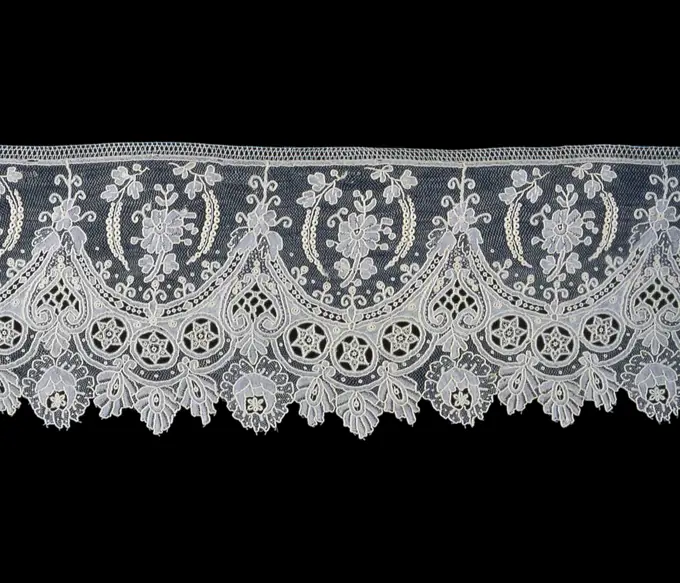
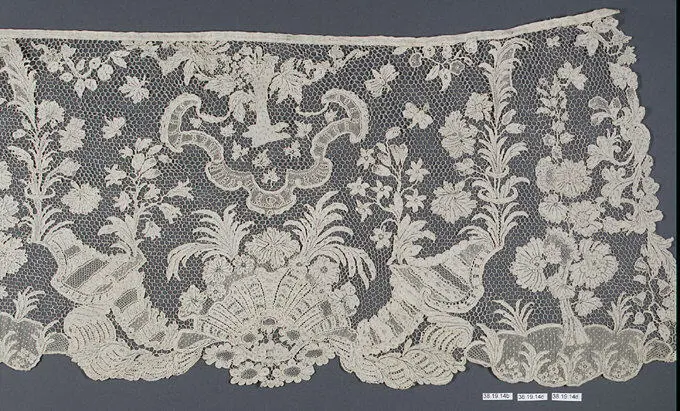
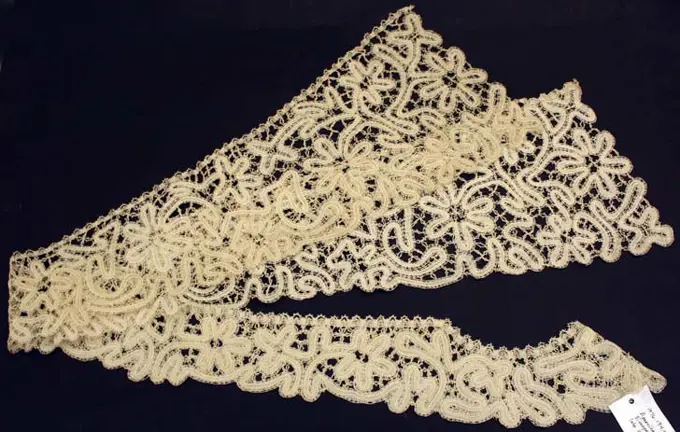
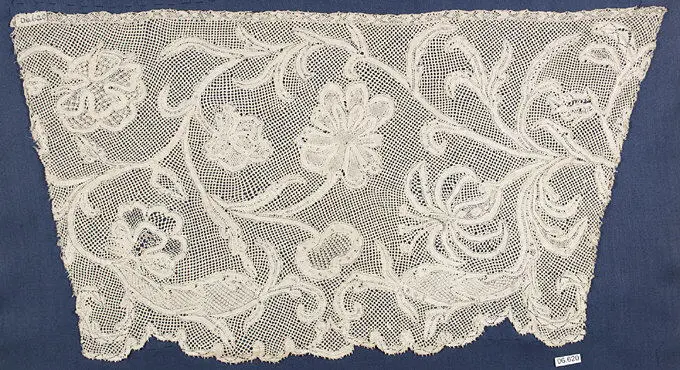
Delicate Lace Fragments

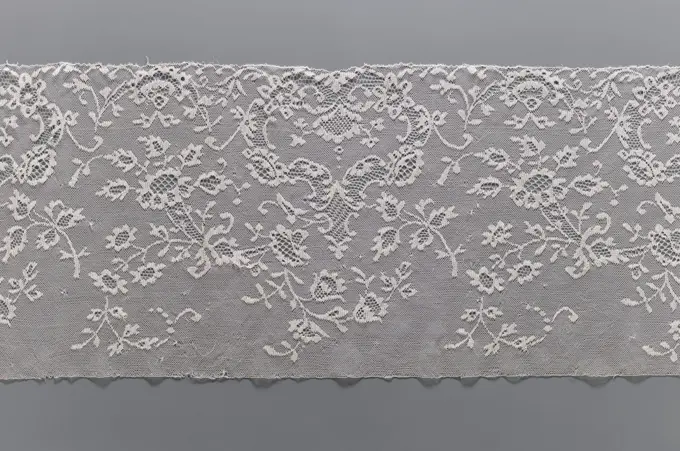
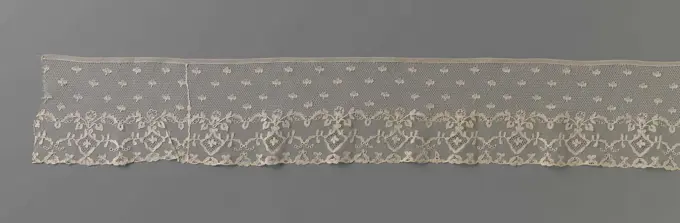
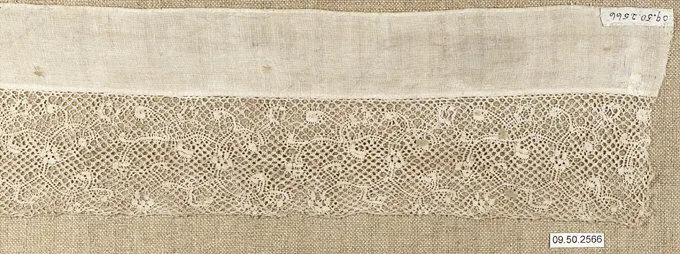
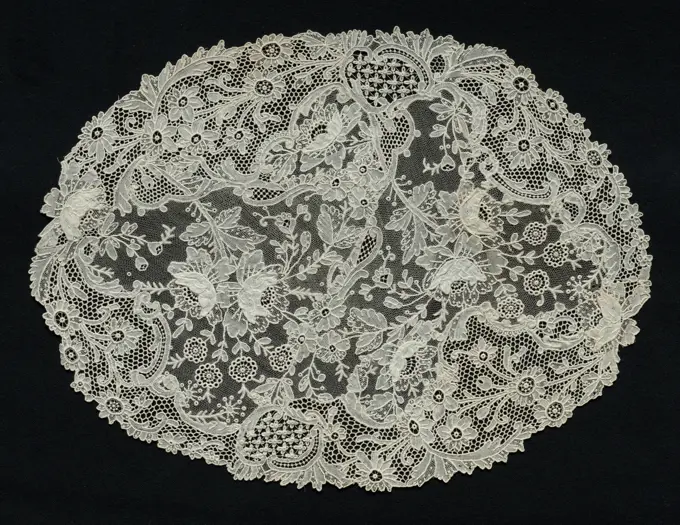
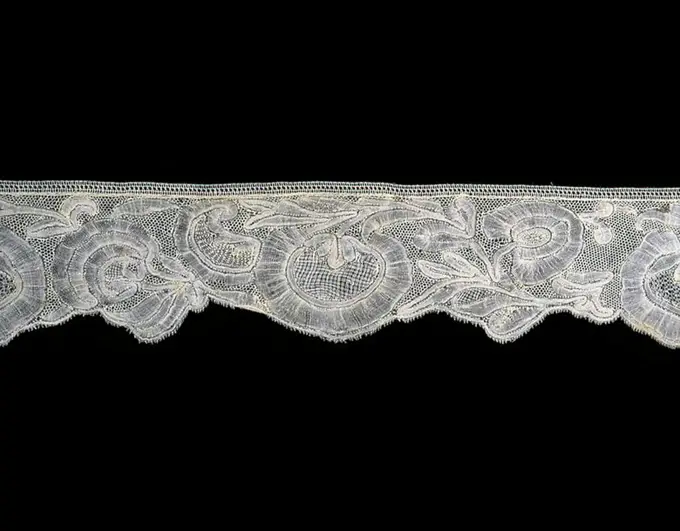
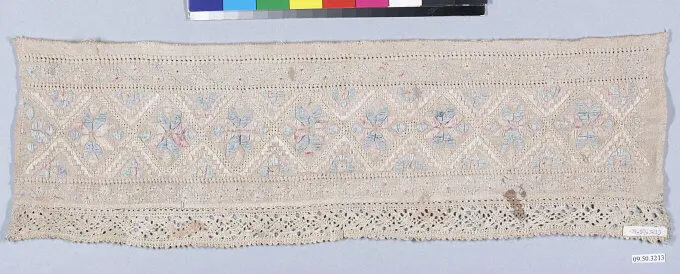
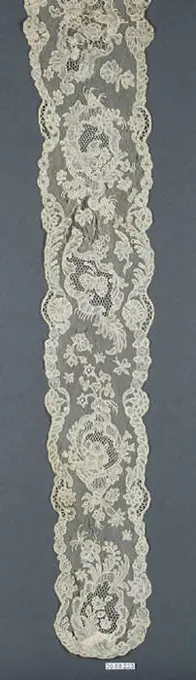
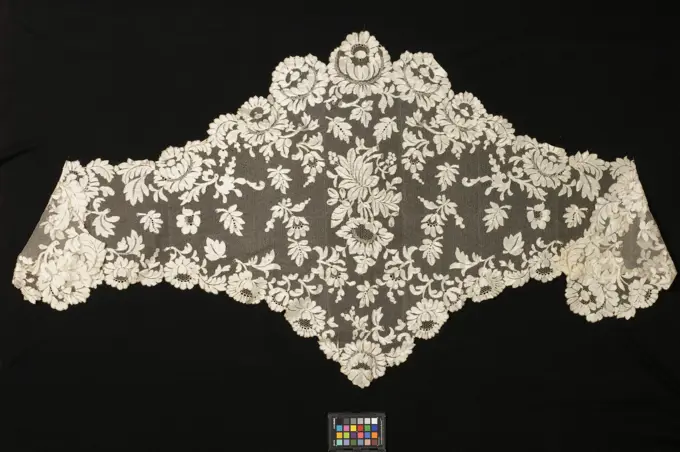
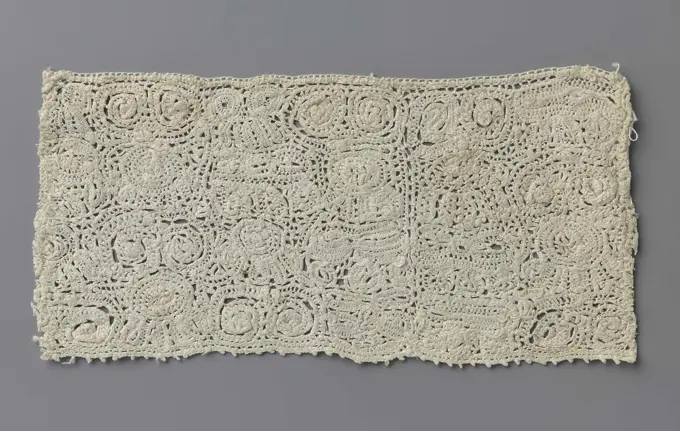
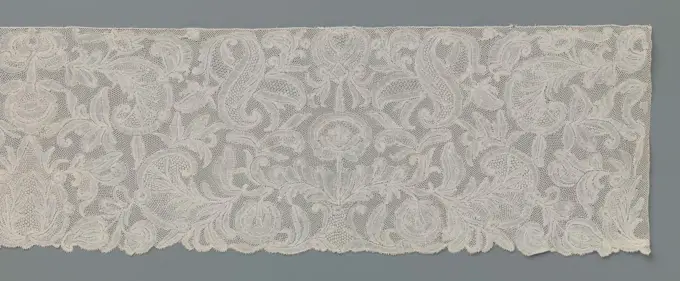
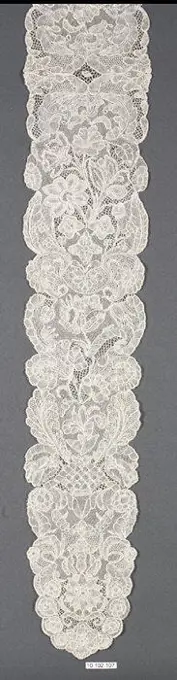
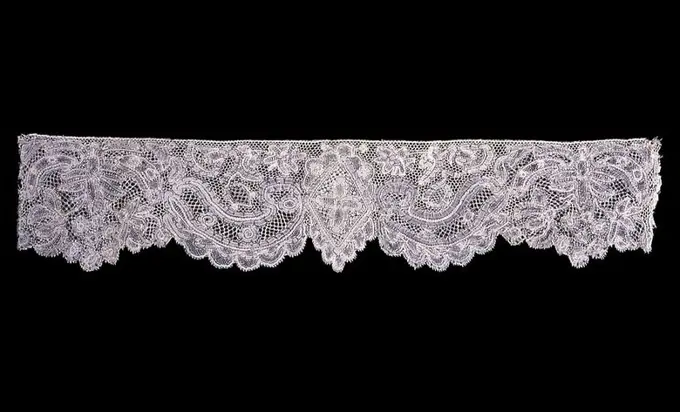
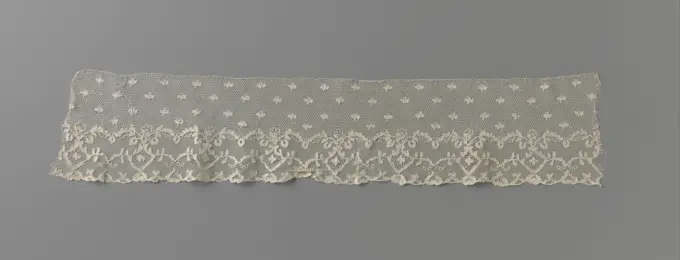
18th-century intricate lace strips featuring floral and arch patterns, displaying fine craftsmanship and historical textile artistry.

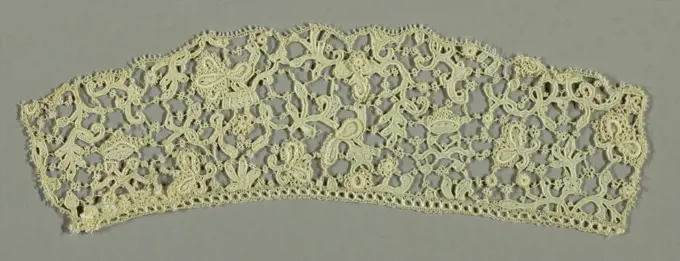
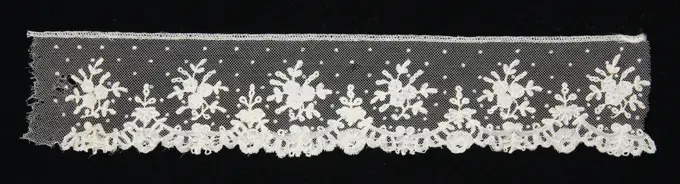
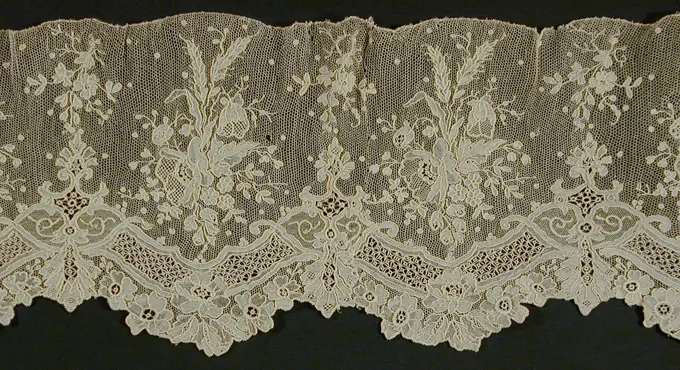
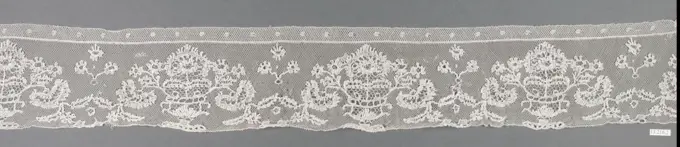
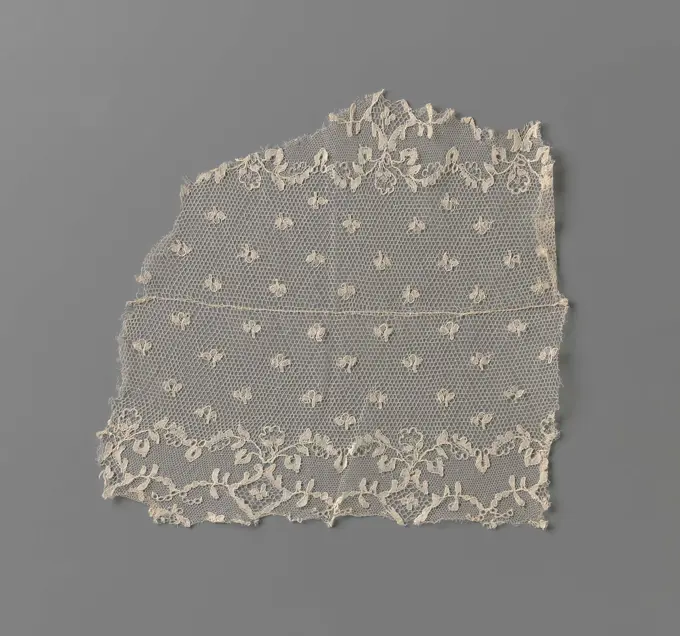
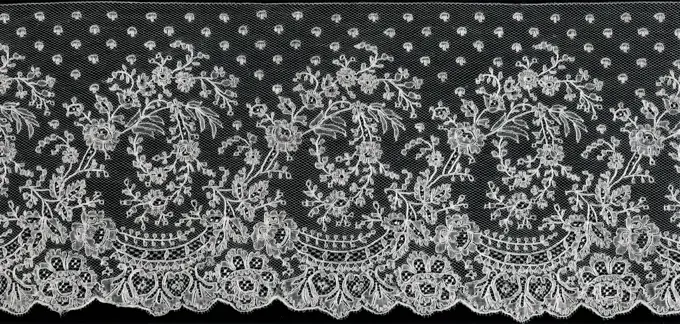
Fragment, Medium: Technique: bobbin lace (late Valenciennes ground), Flowering band above border of ovals separated by leaf ornament., 19th century, lace, Fragment
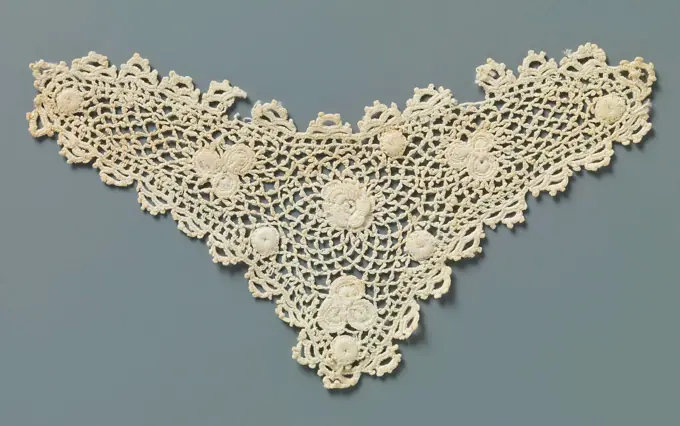
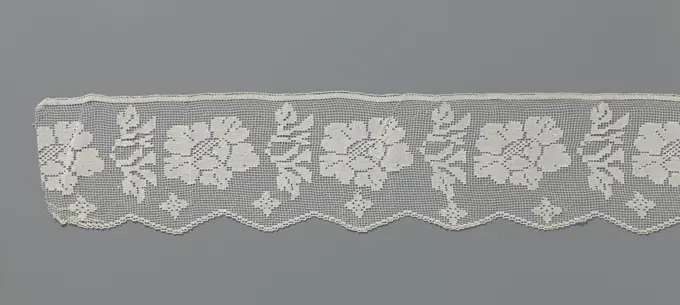
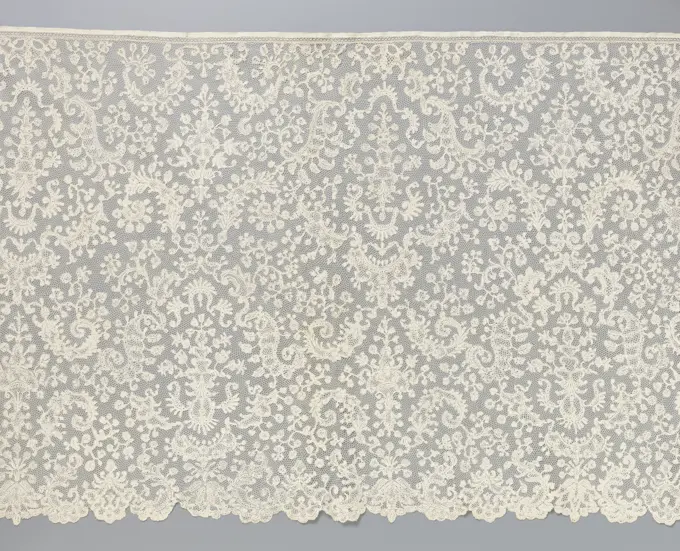
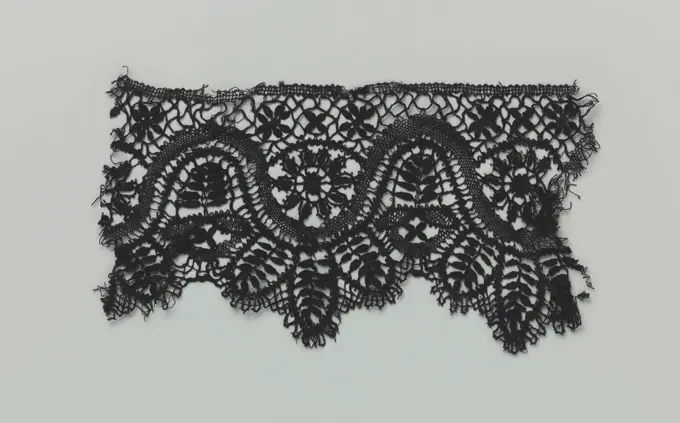
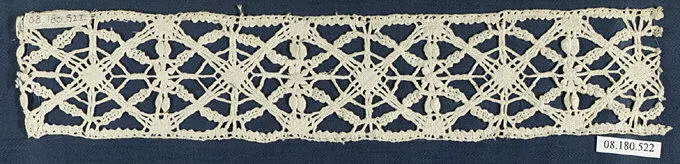
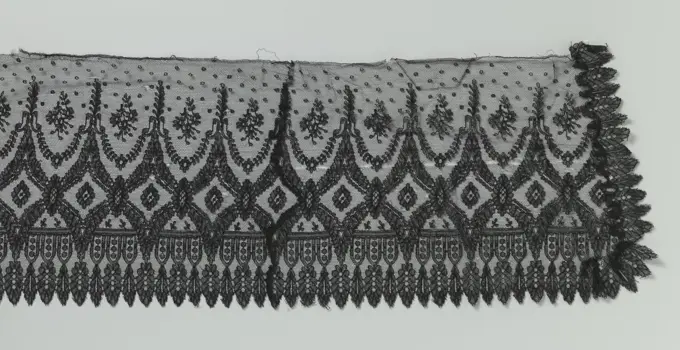
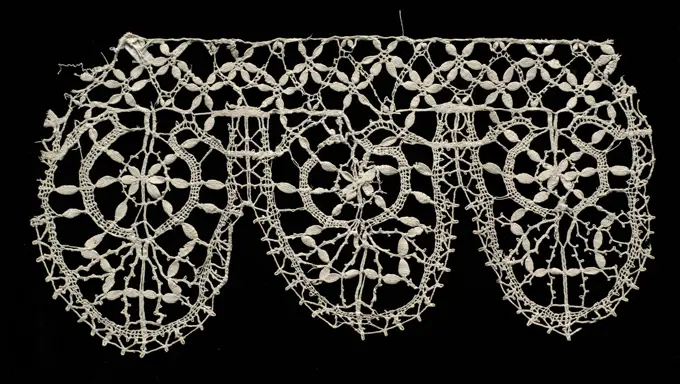
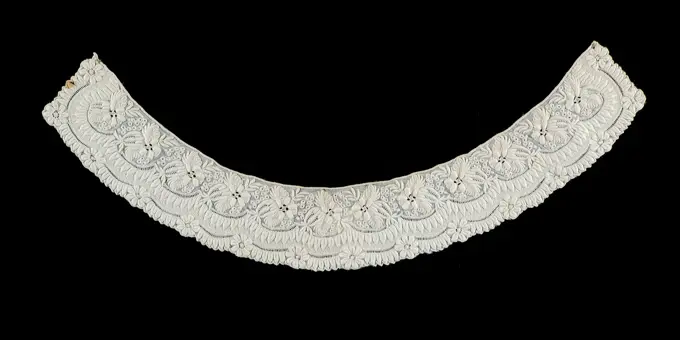
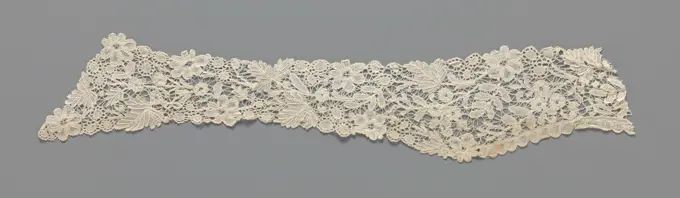
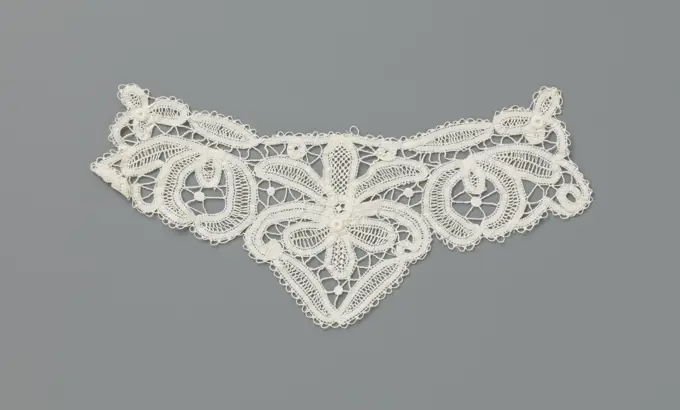
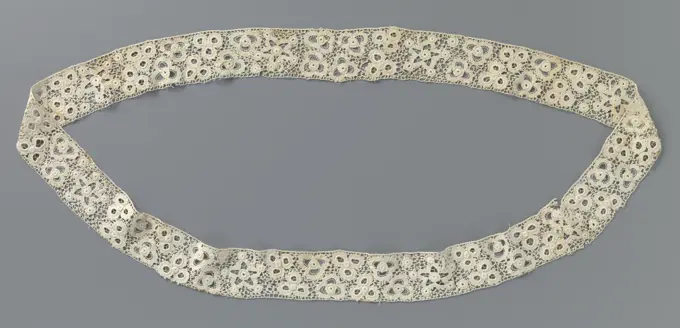
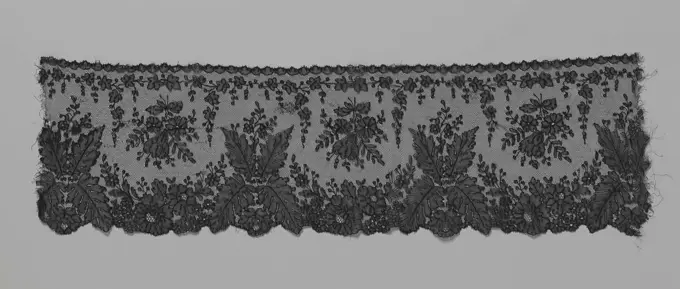
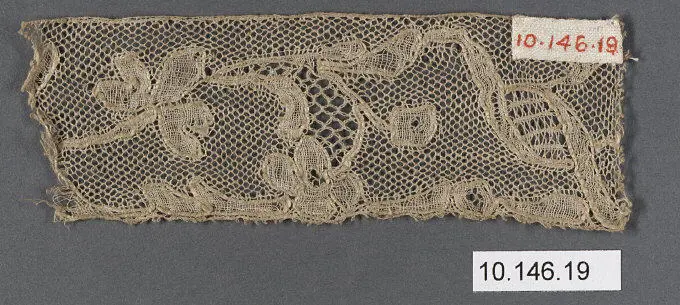
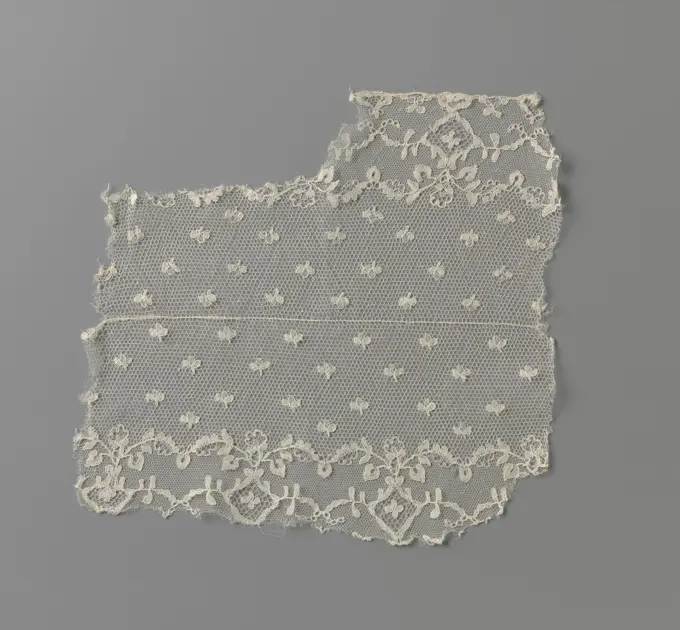
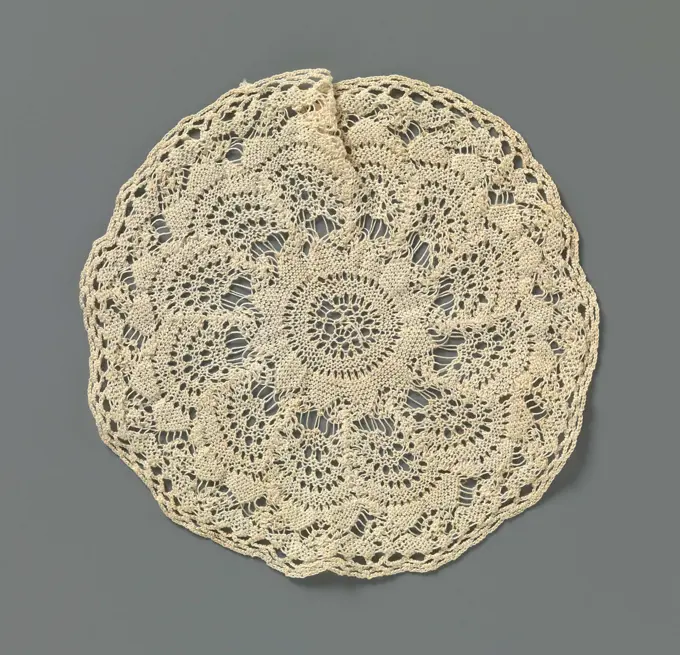
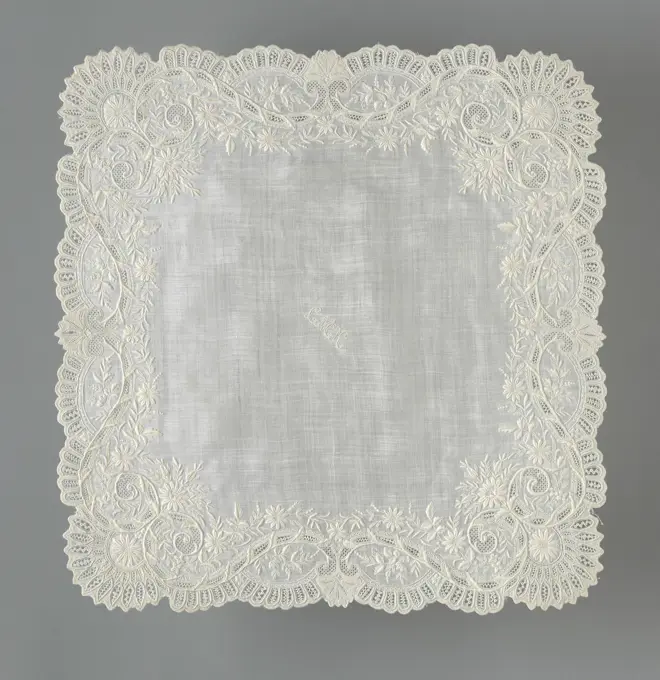
Fragment, Medium: linen Technique: needle lace, Fragment of elaborate coral shapes. Pattern outlined by cordonnet and connected by brides picotées, interspersed by portes and gaze quadrillée., Belgium or Italy, 18th century, lace, FragmentEdging with fringe 16th century Italian, Venice. Edging with fringe. Italian, Venice. 16th century. Bobbin lace. Textiles-LacesBorder Made 1860-1880 Belgium. Cotton, needle lace of a type known as Point de Gaze .Bobbin Lace Insertion, mid 16th century. Italy, Venice, mid 16th century. Lace, bobbin; average: 5.1 x 20.7 cm (2 x 8 1/8 in.).Strip of bobbin with plume flour on C-shaped leaves, anonymous, c. 1740 - c. 1760  Strip of natural-colored bobbin, binche side. The repeating and continuous pattern consists of a thick plume flour on the center line, hanging on a feathered C-shaped leaf. Two feathered leaves spring from the top of the hanging flower and walk up with a bend through the underside of the strip, where they turn into the next C-shaped leaf with a loop. The motifs are connected by a decorative land, a snowflake ground. The fullwork is mainly made in linen battle and partly mains, with openwork edges. The bottom is straight finished and provided with picots. The top is finished with a separate strap. One short side is finished with a zoompje. Binche linen (material) Bobbi Lace / Binche LaceFlounce 1715-24 French. Flounce 226276Cape 1650-1700 Italian. Cape 212570Fragment (Spain); linen; Bequest of Richard Cranch Greenleaf in memory of his mother, Adeline Emma Greenleaf; 1962-50-123-bCollar late 19th century American or European. Collar 118940Sleeve piece 18th century Flemish. Sleeve piece 212840Piece 18th century German, Saxony. Piece 214723Strip of needle side with clover leaves and fan -shaped flowers, anonymous, c. 1775 - c. 1799 Strip of natural-colored needle side: men's-Aalençon. Spread motif with clover leaves on a fine hexagonal Maas soil. Along the top edge a row of mosjes. The pattern on the underside of the strip consists of a succession of leaf branches with plumes. Among them fan -shaped flowers that spring from the bottom edge, filled with a decorative land. The underside is finished with scalloped edge of potented circles with a Raderpicot. The top is finished with a straight edge. Alençon linen (material) Alençon Lace Strip of natural-colored needle side: men's-Aalençon. Spread motif with clover leaves on a fine hexagonal Maas soil. Along the top edge a row of mosjes. The pattern on the underside of the strip consists of a succession of leaf branches with plumes. Among them fan -shaped flowers that spring from the bottom edge, filled with a decorative land. The underside is finished with scalloped edge of Strip bobbin with volute vines and rosettes, anonymous, c. 1875 - c. 1899 Strip of natural-colored bobbin: Duchesse side. On a braid ground is an ongoing pattern of branched volute vines with incised leaves and rosettes, which form the sculpes. Netherlands linen (material) bobbin lace Strip of natural-colored bobbin: Duchesse side. On a braid ground is an ongoing pattern of branched volute vines with incised leaves and rosettes, which form the sculpes. Netherlands linen (material) bobbin laceFragment of the lace;  19th century (1801-00-00-1900-00-00);Needlepoint (Reticella) and Bobbin Lace Band, 19th century. Italy, 19th century. Lace, needlepoint and bobbin: linen; average: 19.7 x 61 cm (7 3/4 x 24 in.).Length of Lace. Italy, circa 1620. Textiles; textile lengths. Linen needle laceVolant van kloskant met ruitvormige medaillons.Volant of natural colosside: Parisian side. The ground has been shared in two in a paris soil with clover leaves at the top and a tulet below. In the last one is a symmetrical pattern of diamond-shaped openwork medallions with sidewalks crowned by a flower between two leaves. The leaves, the side drinks and a series of flowers and ranks in the sculpture are released in three closed garlands. The motifs are made in linen stroke and equipped with contour wires. A rose soil has been applied as ornamental ground. The top of the strip is finished with a separate splitting strap.Collar 1830-49 American. Collar. American. 1830-49. cottonBobbin Lace Edging with Points, 16th-17th century. Italy, Venice, 16th-17th century. Lace, bobbin; average: 6.1 x 25.5 cm (2 3/8 x 10 1/16 in.).Band; linen; Bequest of Marian Hague; 1971-50-249Fragment 18th century Hungarian. Fragment 217232Needlepoint (Point d'Gaze) Lace, 19th century. Flanders, 19th century. Lace, needlepoint: linen; overall: 23.9 x 32 cm (9 7/16 x 12 5/8 in.).Strip application side with a row of arches and thin twigs, anonymous, c. 1790 - c. 1799 Strip of natural -colored Brussels Application side: Needle side Applicated on Drochelgrond. The repeating pattern consists of a row of openwork arches with thin tales at the ends. On the underside of the strip, thin branches with three openwork round flowers, which reach up to the arcs. Between the arcs there are some stripped flowers. The sparing fullwork is enclosed by wide -founded wire bundles. The top is finished with a separate strap. The virtually straightforward underside is equipped with very fine picots. Brussels linen (material) Brussels Applied Strip of natural -colored Brussels Application side: Needle side Applicated on Drochelgrond. The repeating pattern consists of a row of openwork arches with thin tales at the ends. On the underside of the strip, thin branches with three openwork round flowers, which reach up to the arcs. Between the arcs there are some stripped flowers. The sparStrip 16th-17th century Italian, Tuscany. Strip 220911Fragment 18th century Italian, Burano. Fragment 215053Collar; linenLace laceStrip early 18th century French. Strip 218574Border Made 1750-1800 Italy. Linen, bobbin straight lace .Oplegstuk van gehaakte kant met roosje en klaverblaadjes.Triangular design of natural-colored Irish crochet side. Central to the triangle a layered rose with a scattering pattern with a cloverleaf and dots around it. Crochet soil with picoted diamond shaped mesh. Along all sides finished with picoted three-piece arcs.Strip of fillet side with flour and star -shaped flower, anonymous, c. 1925 Strip of natural -colored lace -ups: fillet side. The repeating pattern consists of a flower without stem between two separate leaf branches. Diagonally under the flour a smaller star -shaped flour. The motifs are embroidered in the removal technique, on a ground with square knotted meshes. The top is finished with a straight edge. Regular large scallops along the lower edge. In the linen (material) embroidering Strip of natural -colored lace -ups: fillet side. The repeating pattern consists of a flower without stem between two separate leaf branches. Diagonally under the flour a smaller star -shaped flour. The motifs are embroidered in the removal technique, on a ground with square knotted meshes. The top is finished with a straight edge. Regular large scallops along the lower edge. In the linen (material) embroideringRochet strip from cluster side with two triangular compositions. Strip natural colosside: Old Brabantse side. The pattern has two alternating and more or less triangular compositions with large motifs, which are partly connected to each other by a braid ground with picots and partly by a grille. One composition is caught between two slanting leaves between which, among other things, a flower with a stem and a flour without steal and some oval forms. The other composition is symmetrical with centrally a large flower, or fruit in a bowl surrounded by rosette flowers and four spitsovals. The motifs are made in loosened linen battle with openwork edges and with very economical relief contour lines. A five-grade soil is used as ornamental ground. The top is finished with a scrossed edge. The tube edge on the underside comes from the pattern. The ends are sewn together.Kloskant Albesto smoke with Kandelaber motifs, anonymous, c. 1690 - c. 1699 Albesto smoke of natural color gie bastard: Old Flemish side. The symmetrical pattern consists of a double row of candle-ware motifs, alternately in two variants. One motif consists of a tulip vase between leaves in the form of C and S-Voluten, with a vase with flowers above it in a window shape made of four hollow scoops with leaves and flowers. The other motif consists of a vase with flowers between four leaves in the form of S-Voluten, with a tulip vase above it that also stands between leaves in the form of C and S-Voluten. The motives are made in linen battle with recesses. The motifs are connected by a grid and a decorative land has been applied in different motives. The underside is finished with a scrap edge that comes from the pattern. The top of the strip is finished with a separate curled edge with a woven edge above it. The ends of the strip are sewn together. Southern Netherlands linen (material) bFragment of lace. unknown, authorFragment Swedish, Dalarna 19th centuryLace, 1800s , Brussels, maker unknown. Gift of Mrs G. Acland Allen, 1955.Bobbin Lace Insertion without Selvage, mid 16th century. Italy, Venice, mid 16th century. Lace, bobbin; average: 5.1 x 16.9 cm (2 x 6 5/8 in.).Needlepoint (Punto Avorio or Ivory Stitch) Lace Insertion and Points, 17th century. Italy, 17th century. Lace, needlepoint; average: 4.5 x 14.3 cm (1 3/4 x 5 5/8 in.).Needlepoint. Belgium, Brussels, circa 1870. Costumes. Linen bobbin laceStrook kloskant met een rij ruitvormige velden waartussen hartjes.Strip natural colosside: sloping. The repetitive and symmetrical pattern consists of a row of coated diamond-shaped fields. The fields each consist of a list of a slot stroke containing a sparingly applied nozzle ground with a more or less diamond-shaped motif in the center in the center. The triangular fields top and bottom of the windows are filled with a steam ground soil with a single heart, made in the center. Upper and bottom of the strip are straight finished.Side pledger handkerchief on batist with the alliance weapon Netherlands-Wurtemberg and the crowned S, Anonymous, c. 1840 Natural -colored lace -up lace handkerchief: work with extended threads and plumetis on batist. A circle of unadorned batist is surrounded by sixteen lobes with work with pulled out threads and plumetis. In one corner there is a crowned S (for Queen Sophie, first wife of King William III), the crowned alliance weapon Netherlands-Wurtemberg in the opposite corner. The other lobes show a pendulum, in egg form that surrounds a very varied decorative land on which a flower branch is. There are eight different decorative land with diamond stitch or geese eye pattern. The scums have a succession of lobed leaves on the outside. Belgium (possibly) linen (material) embroidering Natural -colored lace -up lace handkerchief: work with extended threads and plumetis on batist. A circle of unadorned batist is surrounded by sixteen lobes with work with pulled out threads and plumetBobbin Lace Insertion, 17th-18th century. Italy, 17th-18th century. Lace, bobbin; average: 8.3 x 21 cm (3 1/4 x 8 1/4 in.).Bobbin lace unknownSilk bobbin lace edging early 19th century Spanish. Silk bobbin lace edging 218341Strook kloskant met diepe golflijn.Strip of black climbing side, Cluny side. The repetitive and symmetrical pattern consists of a deep wave line. There is a rosette in each golf valley with two smaller rosettes and a four-pointing asterisk in between. Each wave top comprises a composite, standing leaf, with five leaves on either side. Under the leaf is a four-pointed asterisk framed. The sloping edge along the bottom of the strip is formed by three radiating lovers under each golf valley. A composite leaf hangs down in each of these lobes. The lobes are finished with arcs made with picotted braids. The wave lines and picture frames are made in a slur in and linen, the rosette leaves, composite leaves and stars in shape stroke. They are connected by a braid soil, which forms a coarse square grain on the top of the strip. The top of the strip is straight finished.Cuff. Belgium. Date: 1880-1899. Dimensions: 10.5 × 35.4 cm (4 1/8 × 14 in.)Width repeat: 19.5 cm (7 3/4 in.)Cuff width repeat: 18.7-19.5 cm (7 3/8-3/4 in.). Cotton, mixed lace: bobbin part lace of a type known as "Duchesse" and of needle lace of a type known as "Point de Gaze". Origin: Belgium. Museum: The Chicago Art Institute, Chicago, USA.Bobbin Lace Edging of Points, late 16th century. Italy, Venice, late 16th century. Lace, bobbin; average: 5.1 x 12.5 cm (2 x 4 15/16 in.).Strook kloskant met parel- en rozetlijst.On the ground soil, a mechelen soil (also known as ice soil), with some sprinkled four-pastor moes is a running pattern. Along the inside are small hanging rosette branches, a dune rose in the middle of a dune rose to larger voluntaries, which shown at the same flour that forms the closing piece of pure circle arc shut. The tubes consist of a pearl and rosette list, which enclose a center barrier with grid work. Mechelen side.Insertion 16th century Italian. Insertion 214872Border 18th century Flemish. Border 219673Cuffs (England); linenHandkerchief third quarter 19th century Philippine. Handkerchief 168378Strip of black machine side with diamond -shaped cartouches, anonymous, c. 1880 - c. 1899 Strip of black machine side: Machinal Chantilly side. The repeating and almost symmetrical pattern consists slightly below the center line of the strip of a succession of diamond -shaped cartouches. Each window is crowned by a narrow spring-shaped top on C-Voluten. Between the windows there is a leaf garland with one rosette flower and a loose rose branch above it and moesjes. At the bottom runs behind the windows along a straight horizontal track. There are three longer -leaking half ovals with dots in this course between the successive windows. On each half oval, a straight down -shaped leaf or corner hangs straight, alternating with and without round recesses in the middle. The motifs are connected by a machine tulip. The scrap edge consists of narrow deep shells and are formed by the hanging corners. The top of the strip is straight, but largely unfinished or cut. A strip with spring -shaped lBobbin Lace (Needlepoint Design) Insertion and Edging of Round Points, 17th century. Italy, Genoa, 17th century. Lace, bobbin; average: 14.3 x 30.5 cm (5 5/8 x 12 in.).Volant from dick side with diamond-shaped medallions. Volant of natural colosside: Parisian side. The ground has been shared in two in a paris soil with clover leaves at the top and a tulet below. In the last one is a symmetrical pattern of diamond-shaped openwork medallions with sidewalks crowned by a flower between two leaves. The leaves, the side drinks and a series of flowers and ranks in the sculpture are released in three closed garlands. The motifs are made in linen stroke and equipped with contour wires. A rose soil has been applied as ornamental ground. BK-BR-J-375-H and -J are sewn together in the length. The bottom edge is cut into both strips. With -J the side is sloped sloping.Collar ca. 1845 American. Collar 170101Sjaalkraag (helft) van kloskant met eikeblaadjes en rozen.Scarf collar (half) of natural colosside: Bruges flower work. Rectangular model with one sloping side and a narrowing and widening with a small kink in it. Pattern with different types of flowers and leaves, including Eike leaves and roses. The motifs are interconnected by a braid soil where the braids are placed in zigzag lines as a grille. The collar is cut in the middle.Embroidered Interior Textile, anonymous, c. 1750 - c. 1760  France (possibly) silk. braid embroidering  France (possibly) silk. braid embroideringFichu ca. 1830 French. Fichu 102721Two fragments of block laceBorder Made 1850-1859 Mechlin. Cotton and linen, bobbin straight lace of a type known as Mechlin with a Mechlin mesh ground .Band (Italy); linenBobbin Lace (Needlepoint Design) Edging of Bell Points, 17th-18th century. Italy, Genoa, 17th-18th century. Lace, bobbin; average: 3.2 x 38.8 cm (1 1/4 x 15 1/4 in.).Border. Probably England, West Country. Date: 1725-1750. Dimensions: 6.3 × 193.2 cm (2 1/2 × 76 in.)Width repeat: 26 cm 26 cm (10 1/4 in.). Linen, bobbin part lace. Origin: England. Museum: The Chicago Art Institute, Chicago, USA.Headscarf first quarter 19th century Russian. Headscarf 173372Band Southern German 17th centuryCollar 1830s American. Collar 118906Border Made 1890-1899 Switzerland. Cotton, burn-out lace with machine net insets .Lappet 18th century Flemish. Lappet 218162Woman's Shawl (Fichu- Perlerine)Strook naaldkant met spiralen.Strip natural needle side. Pattern with densely penetrated volutes and palmets, without ground. The full work consists of thick contour wires that are solidified, where compounds are made by twisted feston stitches in one tour height. The top and bottom are finished with a straight edge, but on the bottom hang very small stemes or dots. The short sides are stitched to prevent raffles.Strook kloskant met ovale bloemen en druppelvormen tussen voluten.Strip natural colosside: Old Brabantse side. The pattern has two alternating and accumulating symmetrical compositions. One composition consists of an oval flower awarded by a heart-shaped flower between two s volutes. The other composition consists of a drip-shaped motif, above which a reverse oval flower depends between two C-voltages. The motifs are connected by a grille, a round valenciennes ground. The full work is largely made in linen battle with cut-outs and open editors and partly in a cut-off. A large variety of ornamental grounds has been applied in the motifs. The top is just finished. The irregular slip edge on the underside comes from the pattern and is finished with picots. One short side is finished with a separate clust strap.Barbe early 18th century Flemish. Barbe 218855Mixed side cuff with a faint V-shaped model, anonymous, c. 1890 - c. 1910 Cuff made of natural ribbon side (mixed side): luxurious lace, with a woven ribbon and needle side fillings. Faint V-shaped model, with rectangular ends and a widened triangular center. The symmetrical pattern consists of motifs whose contours are formed by a narrow woven ribbon. In the middle is the largest flower with a three -lobe center, flanked by Voluten under which there is a triangular point. And crowned by a circle from which three leaves spring. In addition to this central palmet flower, there is an openwork oval flower on each side, made with two sikkels placed against each other, two oval leaves and a three -lobe flower in each top corner. The three -lobby flowers and the central flower have an elevated (relief) and feasted circular flower heart. Within the contours with which the motifs are formed, decorative lands (needle side) with coarser yarn are used for making the ribbon. The motifs are connectHandkerchief fourth quarter 19th century probably French. Handkerchief 169596Insertion 17th century Italian. Insertion 221004Fragment of lace 18th century Flemish. Fragment of lace 218161Strip 18th century Flemish. Strip 212845Fragment, Medium: linen Technique: needle lace, Fragment with a large elaborate flower and picot edges. Several petals and center in a diamond diaper design., Venice, Italy, 17th century, lace, FragmentFragment; linenFragment 18th century French. Fragment 214665Kloskant intermediate mate with heart and round flower, anonymous, c. 1640 - c. 1660 Intermediate springs of natural -colored Dutch bobbin side. The repeating pattern consists alternately of a heart and one round flower between two elongated curling leaves. The heart is alternately upright and vice versa. The motifs are connected by a round grid with braid strokes. The motifs are made in linen battle with openwork edges and recesses in the circular flower heart. Top and bottom of the strip are straight finished and sewn to a fragment linen from a demolition. Antwerp linen (material) bobbin lace Intermediate springs of natural -colored Dutch bobbin side. The repeating pattern consists alternately of a heart and one round flower between two elongated curling leaves. The heart is alternately upright and vice versa. The motifs are connected by a round grid with braid strokes. The motifs are made in linen battle with openwork edges and recesses in the circular flower heart. Top and bottom oFragment (France); linenBorder. Belgium, Flanders. Date: 1720-1740. Dimensions: 10.4 × 50.4 cm (4 1/8 × 19 7/8 in.). Linen, bobbin part lace. Origin: Flanders. Museum: The Chicago Art Institute, Chicago, USA.Strip crocheted side with five -pointed stars and flowers made with open circles, anonymous, c. 1890 - c. 1909 Strip of natural -colored Irish crocheted side. A repeating pattern of a double row with a total of eight triangular floral motifs made with open circles, interspersed with one five -pointed star with a circle in the middle and a circle on each point. Crochet irregular mesh soil with picots. Up and bottom is finished with a straight edge. The short sides of the strip are sewn together. Ireland cotton (textile) Strip of natural -colored Irish crocheted side. A repeating pattern of a double row with a total of eight triangular floral motifs made with open circles, interspersed with one five -pointed star with a circle in the middle and a circle on each point. Crochet irregular mesh soil with picots. Up and bottom is finished with a straight edge. The short sides of the strip are sewn together. Ireland cotton (textile)Border 16th century Italian. Border 214802Piece 18th century Flemish. Piece. Flemish. 18th century. Bobbin lace. Textiles-LacesStrip of a climbing side with spitsovals in four rows of opened windows. Strip natural colosside, sling. The repeating pattern consists of a flat distribution of four rows of windows rolled against each other, with a spindle in each window in the top. In the line below the windows are filled with a grille, a cross bands with recesses. These two rows repeat themselves down. A nozzle ground is applied above the windscreen pattern. The top of the strip is straight finished. Along the bottom row of windows runs a path in a cut-off, which forms a rounded scallop under each window.Needlepoint (Reticella) Lace Insertion, 16th century. Italy, Venice, 16th century. Lace, needlepoint: linen; overall: 5.7 x 17.1 cm (2 1/4 x 6 3/4 in.).Japonstrook van kloskant met varens.Japon strip from black climbing side: Chantilly side. On a blank mesh stock is a closed edge with slot, filled with a garland of flowers and leaves. On the intersections there is a small shell with a hanging rose, above which a striker bouquet rises from four large fern leaves and a flower branch, which reaches the top edge. Here a horizontal ivy drink with hanging twigs runs, while a large bouquet depends on the large scallop of this ivy drink, among other things with a tulip.Insertion 16th century Italian. Insertion 214870Fragment 18th century Flemish. Fragment 218908Volant Van Kloskant with diamond -shaped medallions, anonymous, c. 1870 - c. 1920 Volant of natural -colored bobbin: Parisian side. The soil is divided in two in a Paris soil with clovers at the top and a tuler ground underneath. In the latter is a symmetrical pattern of diamond -shaped openwork medallions with side vines crowned by a flower between two leaves. The leaves, the side ranks and a series of flowers and sling in the scallops are loose on the other in three closed garlands. The motifs are made in linen stroke and provided with contour threads. A rose soil has been applied as a decorative land. BK-BR-J-375-G and -I are sewn together in length. A part of both strips has been cut off the bottom edge, only at -i is a small part of the lower edge intact. Belgium linen (material) bobbin lace / Paris lace Volant of natural -colored bobbin: Parisian side. The soil is divided in two in a Paris soil with clovers at the top and a tuler ground underneath. In the latter is a symmetrical Fragment; linen; 1933-1-120Round dress of knitted side with concentric rosettes. Round dress of natural knitted side. Pattern with concentric rosettes. Big scaled edge along the circumference.Border Italian 19th centuryVolant Van Kloskant with diamond -shaped medallions, anonymous, c. 1870 - c. 1920 Volant of natural -colored bobbin: Parisian side. The soil is divided in two in a Paris soil with clovers at the top and a tuler ground underneath. In the latter is a symmetrical pattern of diamond -shaped openwork medallions with side vines crowned by a flower between two leaves. The leaves, the side ranks and a series of flowers and sling in the scallops are loose on the other in three closed garlands. The motifs are made in linen stroke and provided with contour threads. A rose soil has been applied as a decorative land. Belgium linen (material) bobbin lace / Paris lace Volant of natural -colored bobbin: Parisian side. The soil is divided in two in a Paris soil with clovers at the top and a tuler ground underneath. In the latter is a symmetrical pattern of diamond -shaped openwork medallions with side vines crowned by a flower between two leaves. The leaves, the side ranks and a series of flowers and sBatist handkerchief with embroidery with drop -shaped flowers with a fan of pointed petals on it and a border bobbin with hanging rosette flower, anonymous, c. 1860 Batist handkerchief with embroidery - Plumetis - and finished all with a border bobbin: Valenciennes side. Square model with a slightly wrinkled strip of lace. The embroidery is only located along the edge of the batist. The pattern consists of a branch with two drop -shaped flowers that are occupied on the bulging with a fan of narrow pointed petals. The pattern repeats itself eight times along each side, with a small variation of the branch with flowers in the corners. In one corner, the letters S and T are embroidered above the embroidered edge. The edge of the batist is finished with an edge work with extended threads on which the strip of the side is sewn. The upper half of the strip side has no motives. Along the lower half of the strip, the pattern consists of a scrap of regular arcs, with a hanging branch with rosetEdge (Russia); linen; 1938-23-40Handkerchief Made 1801-1900 France. Linen, plain weave; embroidered .