Elegant Glass Goblets

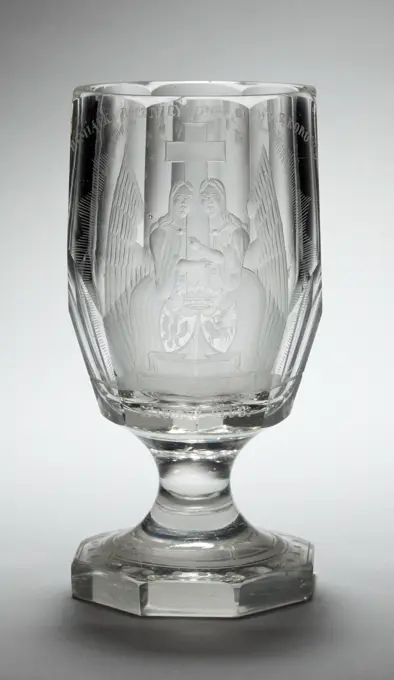
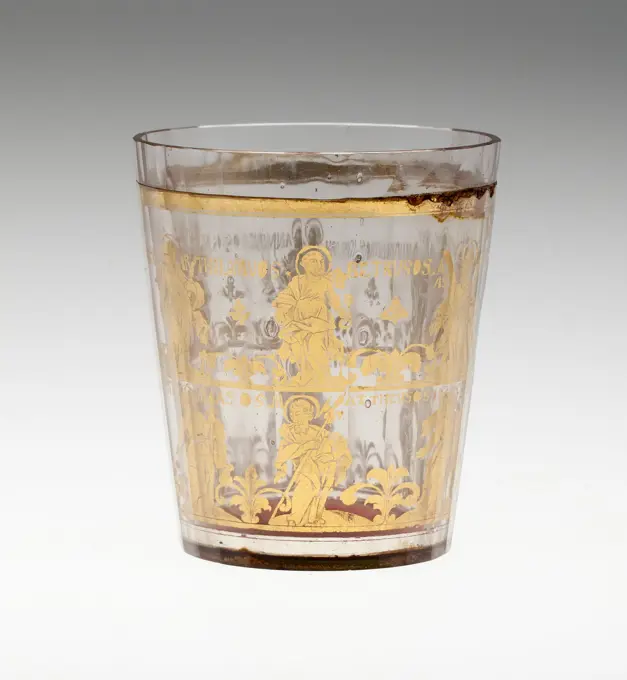
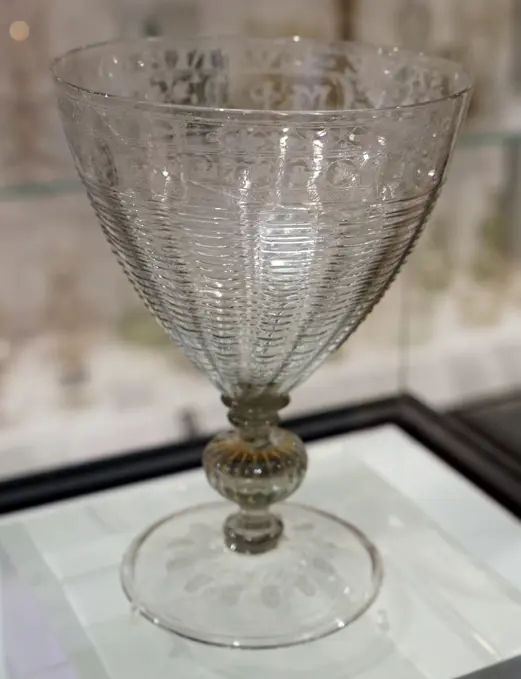
A collection of delicate glass goblets showcasing intricate designs and historical motifs. The transparency and craftsmanship highlight their artistic value and heritage.
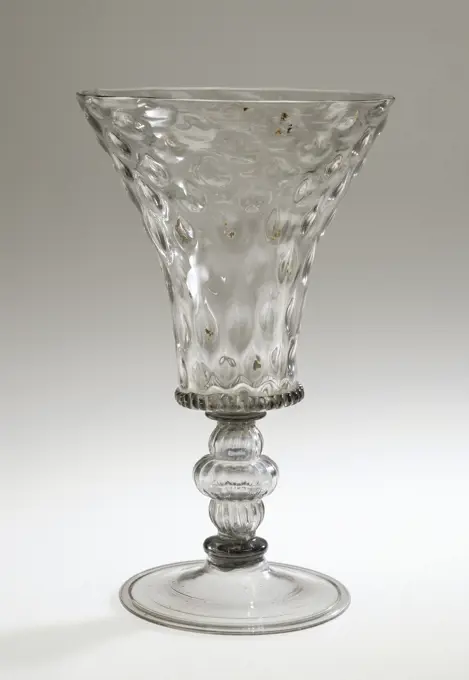
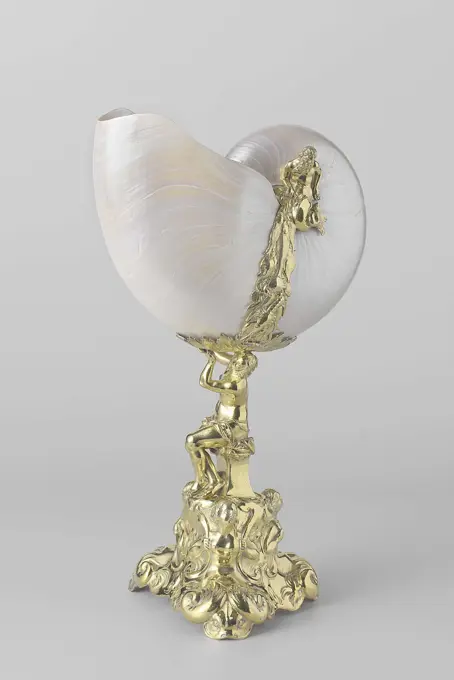
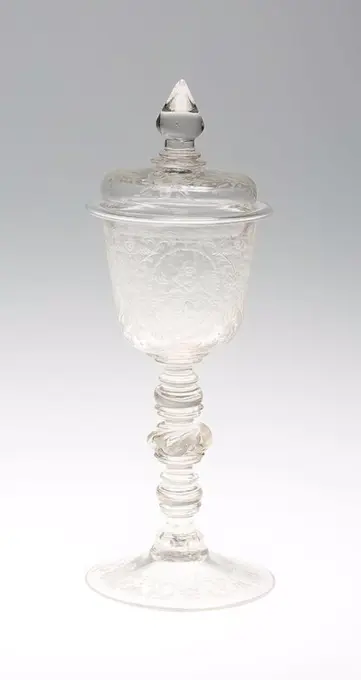
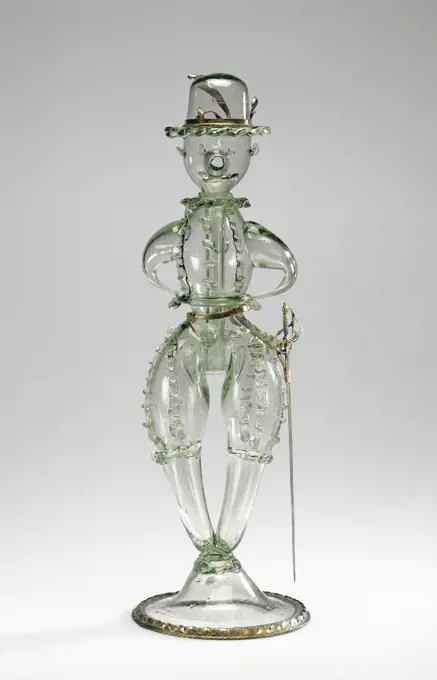
Goblet; Façon de Venise, possibly the Glashütte of Sebastian Höchstetter (Austrian, active 1540 - 1569); Hall, Austria; 1540 - 1560; Free- and mold-blown colorless (purplish-gray) glass with gilding and cold painted and applied decoration; 25.4 x 16.4 cm (10 x 6 7,16 in.)
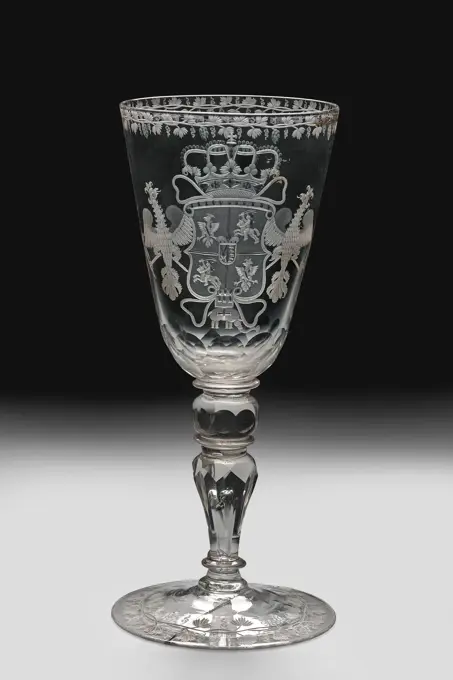
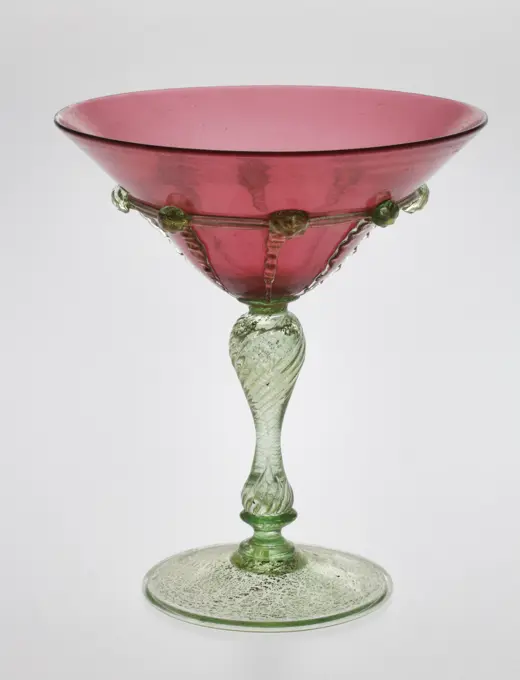
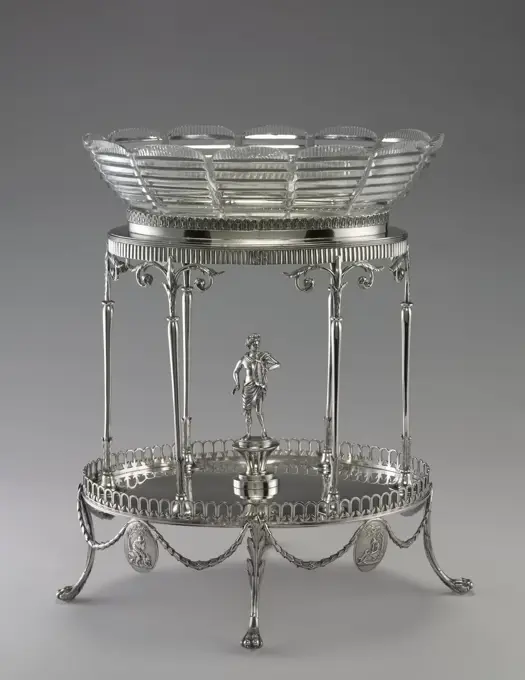
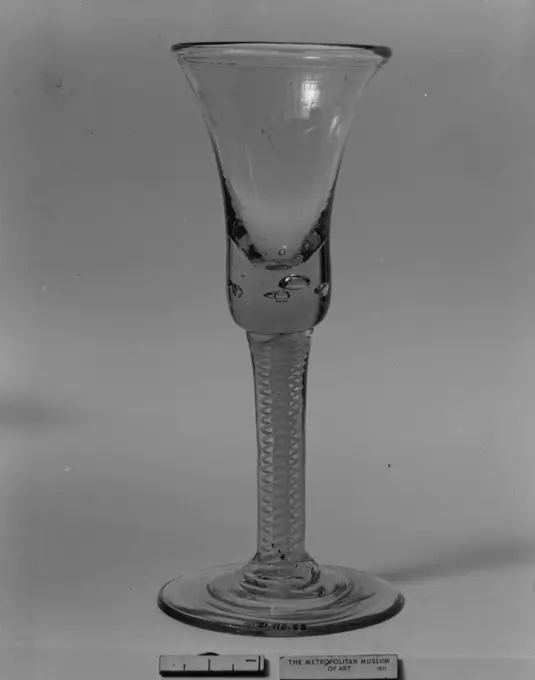
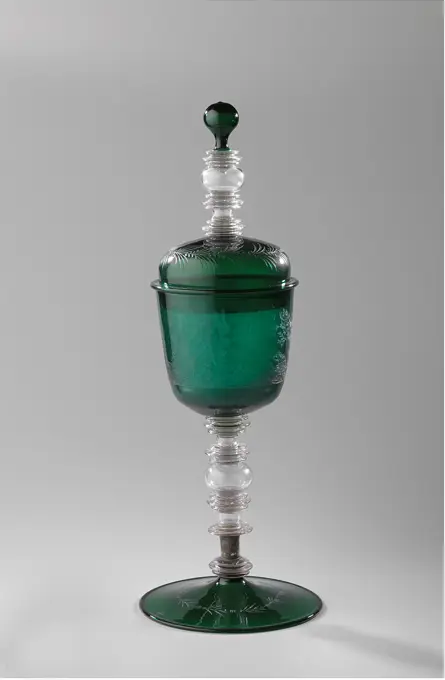
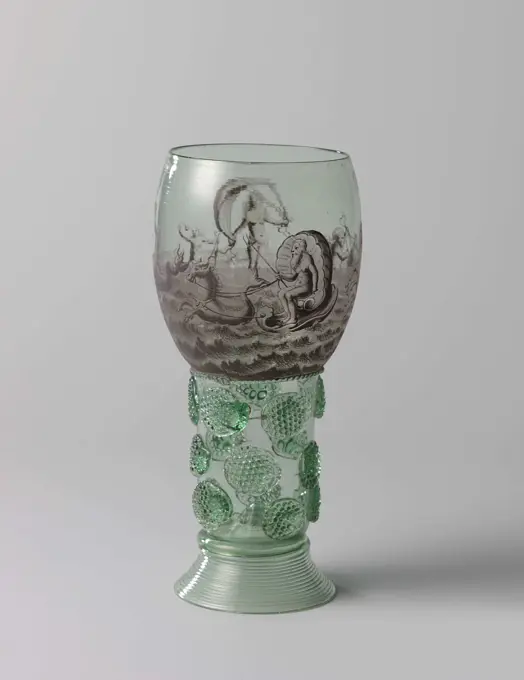
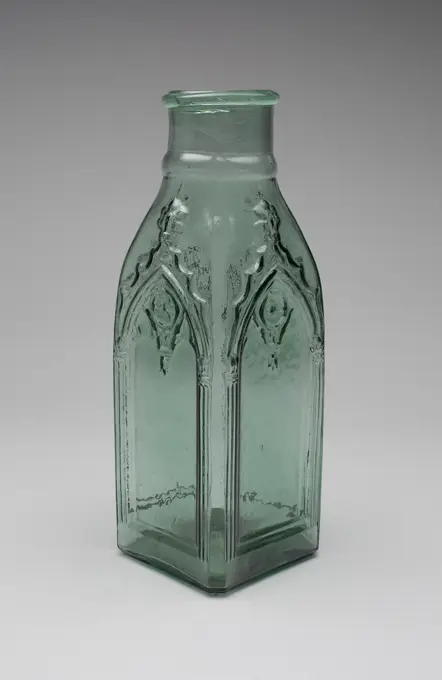
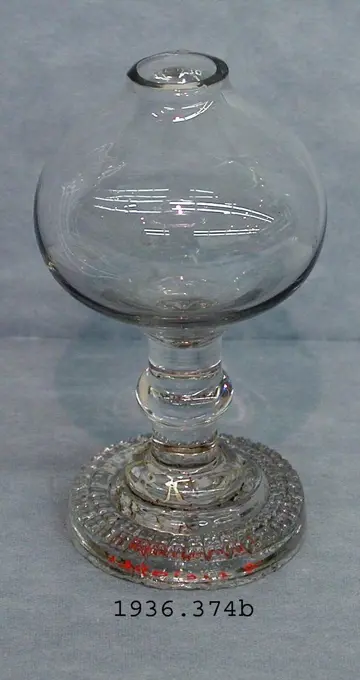
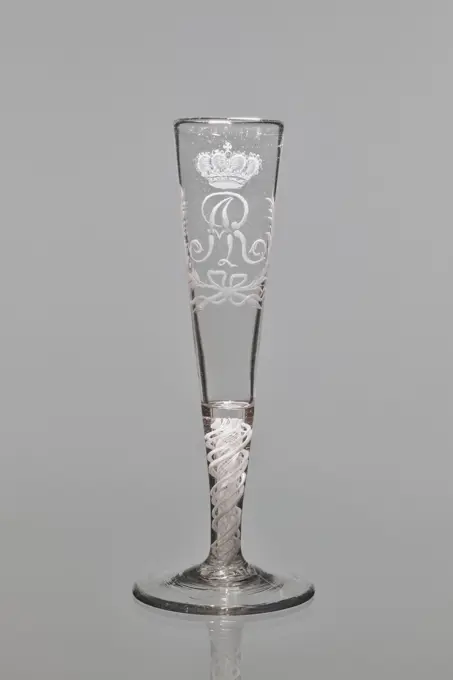
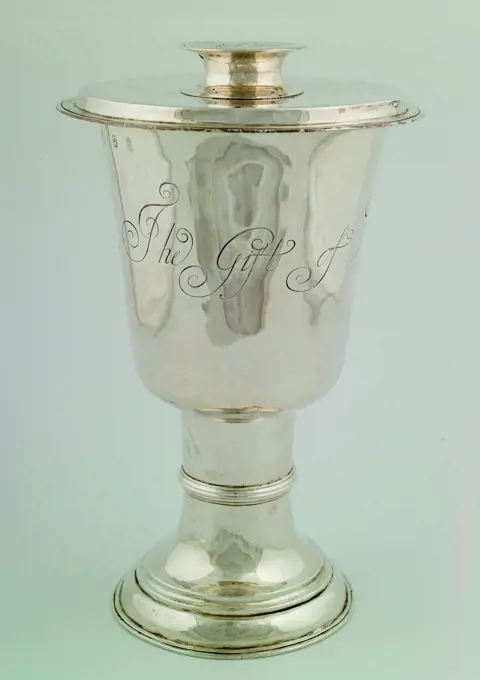
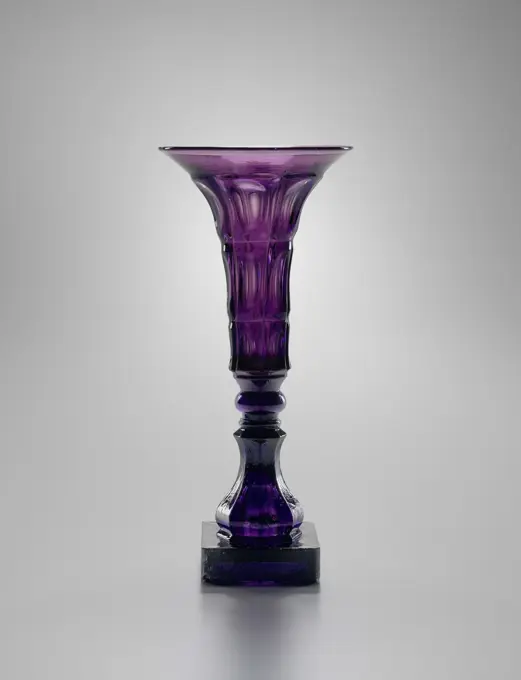
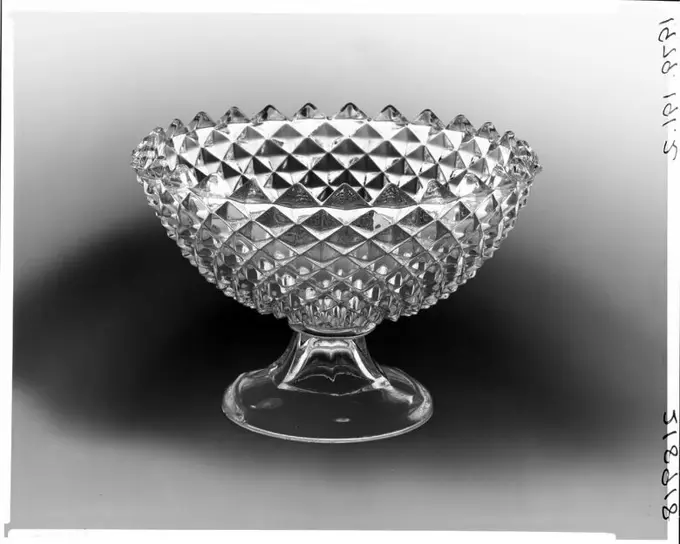
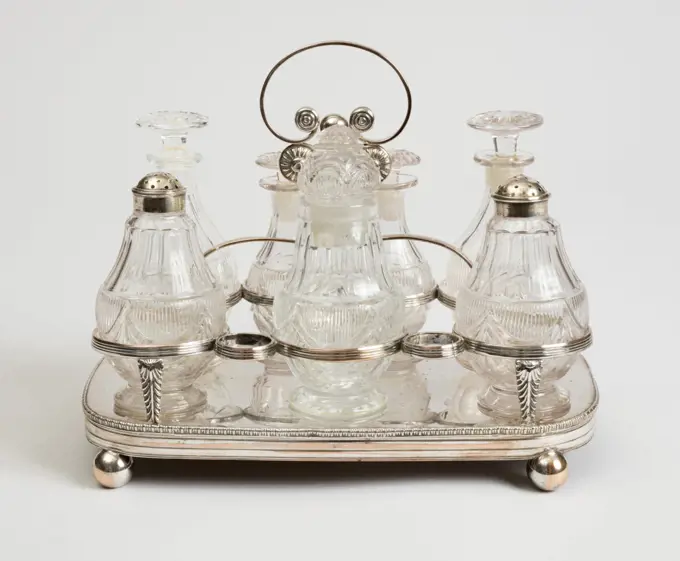
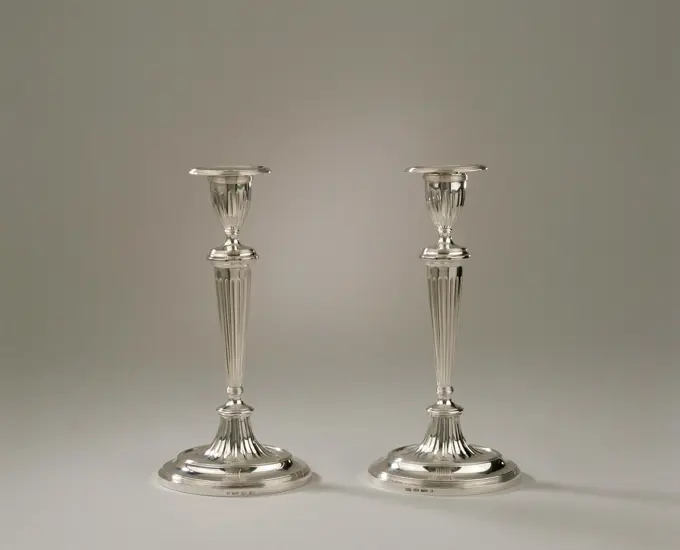
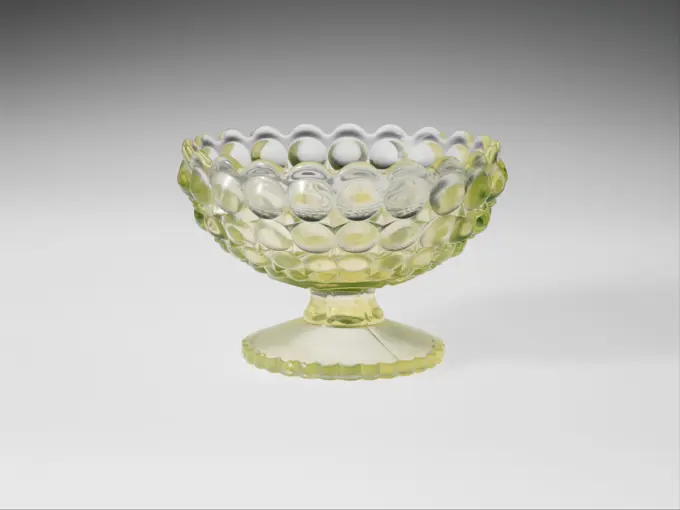
Sauce Dish ca. 1888 Richards and Hartley Flint Glass Co.. Sauce Dish. American. ca. 1888. Pressed yellow glass. Made in Tarentum, Pennsylvania, United StatesSalt, Clear blown flint glass, 2 3/4 × 2 1/4 in. (6.99 × 5.72cm), Made in Pennsylvania, American, 18thcentury, Containers -GlassCup;  1736-1763 (1736-00-00-1763-00-00);Antoni Jan (1844-1934) - collection, August III (Polish king - 1696-1763), Order of the Elephant, Polish -Lithuanian Commonwealth (coat of arms), Saxony, Strzałecki, Wettyn (coat of arms), electorate (coat of arms), coats of arms, vine (ornamentation ), ruler, purchase (provenance)Lid box with the portrait of King Willem III, Anonymous, in or after 1690 - c. 1700 Low base with turned around. Balus -shaped trunk with two flat discs. Cylinder -shaped chalice, which is rounded on the bottom. Vaulted lid with reversed baluster -shaped button. On the chalice a bust of King-Stadholder Willem III is engraved, with a crown and scepter and the inscription 'William Rex'. Flower branches are engraved on the foot and lid. glassblower: Low CountriesRotterdam glass glassblowing Low base with turned around. Balus -shaped trunk with two flat discs. Cylinder -shaped chalice, which is rounded on the bottom. Vaulted lid with reversed baluster -shaped button. On the chalice a bust of King-Stadholder Willem III is engraved, with a crown and scepter and the inscription 'William Rex'. Flower branches are engraved on the foot and lid. glassblower: Low CountriesRotterdam glass glassblowingRoemer with the intake of the city of Damiate, Anonymous, After Willem Outgertsz. Akersloot, after Jacob Matham, 1644 Konian, spun from a wire. Inserted soil. The trunk, which is set with five rows of blackberry, is blown as a whole with the curved chalice. A ribbed thread indicates the transition from the trunk to the chalice. In an oval, medallion built up from Voluten, the occupation of the city of Damiate is engraved, proposed by three ships for the city walls with a tower on which is a war people. On both sides of the cartouche, a clock hangs on a curly leaf vank. There is a turtle on the leaf vank. The Stedemag van Haarlem is depicted on the downside. On her right hand, a coat of arms with the new weapon of Haarlem, a standing sword with two six -pointed stars on both sides of the Lammet. She sits on a lion, the head of which comes to the left of her. She holds a palm branch in her left hand. Two floating putti hold a laurel wreath above her head. A coat of arms with the old coatChampagne glass - Inconnu / UnknownFunnel box of filigree glass, Anonymous, c. 1550 - c. 1600 Concave conical foot with turned around. The trunk made up of a hollow nodus between two rings. Funnel -shaped chalice. Foot, stem and chalice of filigree glass with alternating jobs 'A Fili' and 'A Retortoli', the rings of colorless glass. Venice glass glassblowing Concave conical foot with turned around. The trunk made up of a hollow nodus between two rings. Funnel -shaped chalice. Foot, stem and chalice of filigree glass with alternating jobs 'A Fili' and 'A Retortoli', the rings of colorless glass. Venice glass glassblowingCompote - Woodrow PatternWine glass. Engraved along the rim of this glass are the words s Lands welvaren(‘the countrys [good health). The Dutch word for ‘health or prosperity (welvaren), when separated (wel varen), translates literally as ‘good sailing, a double meaning illustrated here by the threemaster under sail. This glass could thus be used to toast the good fortune of the Netherlands.Bokaal with a travding horse, anonymous, c. 1850 - c. 1875 Sculpted, facet -cut foot. Balus -shaped, facet -cut trunk. Klock -shaped chalice with überfang, on which a travding horse is engraved in a landscape. On the back a dimensions and palmets. The foot and trunk fell off with red piping. Bohemia glass glassblowing / grinding Sculpted, facet -cut foot. Balus -shaped, facet -cut trunk. Klock -shaped chalice with überfang, on which a travding horse is engraved in a landscape. On the back a dimensions and palmets. The foot and trunk fell off with red piping. Bohemia glass glassblowing / grindingNo. 2, Josef Lobmeyr Senior, Austrian, 1792 - 1855, J. & L. Lobmeyr GmbH, Vienna, Austria, founded ca. 1935, Mouth-blown crystal, faceted and relief-prismatic-cut and polished, Mouth-blown green crystal wine glass, faceted and relief-prismatic-cut and polished, Austria, ca. 1835, glasswares, Decorative Arts, Rhine wine glass, Rhine wine glassDecanter 1820-40 American. Decanter 3068Centerpiece (metal stand and glass bowl), 1792. William Pitts (British), Joseph Preedy (British). Silver and glass; overall: 35.9 x 39.4 x 27.3 cm (14 1/8 x 15 1/2 x 10 3/4 in.).Ointment jar of Sithathoryunet ca. 1887-1813 B.C. Middle Kingdom. Ointment jar of Sithathoryunet 543975Slinger glass with bell-shaped chalice. Slinger glass with conical foot and straight trunk. In the trunk a multiple opaque white garland. Bell-shaped chalice with a thick bottom in which a wreath of 8 air bubbles has been inserted.CupFiligrana Umbo Vase; Venice, Veneto, Italy; 1580 - 1600; Free- and mold-blown colorless (slightly gray) glass with lattimo canes; 21.2 cm (8 5,16 in.). The body of this cup is made from the shell of a marine mollusc, the nautilus. It also served as the inspiration for the decoration, which consists of a multitude of sea creatures. Dolphins and mermaids swim around the foot; fish, sea gods and goddesses form the bands of the mount.Egg cup 1725-26 Pierre Soulaine. Egg cup 200280Candelabrum ca. 1840 American or French. Candelabrum. American or French. ca. 1840. Blown glass. Possibly made in France; Possibly made in United StatesGoblet 19th century Italian, Venice (Murano). Goblet 186050Fles Met Het Opschrift: Who has leisure, he makes a basket, Anonymous, c. 1675 - in gold before 1692 Soul inserted. Spherical body, long slender neck with imposed ring around the neck. On the bottom a second layer of glass blown in shape with ribs that are pinched into a network pattern. On the body calligraphy inscription: 'Qui a loisir, il fait panier'. glassblower: Low CountriesLeiden glass glassblowing Soul inserted. Spherical body, long slender neck with imposed ring around the neck. On the bottom a second layer of glass blown in shape with ribs that are pinched into a network pattern. On the body calligraphy inscription: 'Qui a loisir, il fait panier'. glassblower: Low CountriesLeiden glass glassblowingLate Baroque spoon. unknown, authorEgg cup 1721-22 Robert Mothé. Egg cup 200281Sugar bowl. Culture: American. Dimensions: H. 7 1/2 in. (19.1 cm); Diam. 4 1/4 in. (10.8 cm). Manufacturer: Boston & Sandwich Glass Company (American, 1825-1888, Sandwich, Massachusetts). Date: 1865-75.In 1867, after twenty-two years of employment as factory superintendent of the Boston and Sandwich Glass Company, William E. Kern received a retirement gift of more than fifty pieces of glassware including this sugar bowl. (See 67.7.1-.14, .16, .24, .25, .27-.44 for the set of matching glassware.). Museum: Metropolitan Museum of Art, New York, USA.Flip Cup (lid), c. 1800. America, early 19th century. Glass; overall: 49.9 x 20.7 cm (19 5/8 x 8 1/8 in.).Glass, one of four, c. 1880, 4 3/4 x 3 in. (12.07 x 7.62 cm), Glass, England, 19th centuryGoblet with Cover. Bohemia, Czech Republic. Date: 1685-1695. Dimensions: H. 21.6 cm (8 1/2 in.). Glass. Origin: Bohemia. Museum: The Chicago Art Institute, Chicago, USA.Candlestick; Koenigliche Porcellain Fabrique, Meissen (1710-1763); around 1740-1745 (1740-00-00-1745-00-00);Ale glass late 18th century British. Ale glass. British. late 18th century. Glass. GlassCandlestick - Classical figures Josiah Wedgwood & Sons, 1780-1895 Josiah Wedgwood & Sons, 1780-1895Bowl 1700-1799 England. Glass .Candlestick; Silver Products Factory K.F. Malcza (Warsaw; Sreber label; 1828-1864), Malcz, Karol (1797-1867); 1852 (1840-00-00-1860-00-00);Goblet 1784-1785 London. Silver and silver gilt . Hester BatemanWineglass 18th century Dutch or Flemish. Wineglass. Dutch or Flemish. 18th century. Glass. GlassLidded wine glass, anonymous, c. 1675 - c. 1700 Green, curved foot. The tribe compiled from a hollow knot between five composite discs. There is a silver frame between the two lower discs. Conical, green chalice with rounded bottom. Vaulted, green lid with a button consisting of a hollow button and three compound discs, ending in a green ball. On the chalice, in a continuous forest landscape, pig hunt with two hunters on horseback and dogs. On the foot and on the lid a continuous wreath of palm leaves. Nuremberg glass. silver (metal) glassblowing Green, curved foot. The tribe compiled from a hollow knot between five composite discs. There is a silver frame between the two lower discs. Conical, green chalice with rounded bottom. Vaulted, green lid with a button consisting of a hollow button and three compound discs, ending in a green ball. On the chalice, in a continuous forest landscape, pig hunt with two hunters on horseback and dogs. On the foot and on the lid a continuous wreath of Roemer with a row of bumps, anonymous, c. 1600 - c. 1700 Roemer with inserted bottom on high, concave, spun from a wire. The light convex chalice blown as a whole with the trunk, which is set with four convex studs. The transition from the chalice to the trunk is indicated by a ribbed thread. Low Countries glass glassblowing Roemer with inserted bottom on high, concave, spun from a wire. The light convex chalice blown as a whole with the trunk, which is set with four convex studs. The transition from the chalice to the trunk is indicated by a ribbed thread. Low Countries glass glassblowingMasonic cup. unknown, authorCovers; Non -like Lona Huta; Ok. PO. 18th century (1740-00-00-1760-00-00);.. GlassPair of trembleuse stands 1713-14 Paul de Lamerie British. Pair of trembleuse stands 205001Goblet with Incised Designs 8th-9th century This goblet belongs to a distinctive group of glass vessels with scratch-engraved decoration that share stylistic and decorative similarities. Some objects bear inscriptions, such as the kufic calligraphy on this goblet that reads, "Drink! Blessings from God to the owner of the goblet". Formulas including good wishes were commonly found on eating and drinking vessels in both pottery and glass.. Goblet with Incised Designs. 8th-9th century. Glass, bluish green; blown, applied solid stem and blown foot; scratch-engraved. Made in probably Iraq or Syria. GlassCandlestick, Francois Marcus Simons, 1803 Candlestick with foot consisting of 6 parts, including a bobèche. Marked and dated. The Hague silver (metal) casting Candlestick with foot consisting of 6 parts, including a bobèche. Marked and dated. The Hague silver (metal) castingPair of bowls, Sterling Silver, Seven-lobed bowl with slight rim on high lobed spread foot., USA, late 19th-early 20th century, metalwork, Decorative Arts, Pair of bowlsCandlestick ca. 1740 British. Candlestick. British. ca. 1740. Glass. GlassNappy - Diamond Ray Variant pattern Humphreys Glass Company Humphreys Glass CompanyPlate 1753-55 Gottlieb Satzger. Plate 206230Pair of Salts. Thomas Shields; American, 1742-1819; Philadelphia, Pennsylvania. Date: 1765-1785. Dimensions: Ea. 4.1 × 7.3 × 5.7 cm (1 5/8 × 2 7/8 × 2 1/4 in.); 1989.61.1: 99.1 grams; 1989.61.2: 95.1 grams. Silver. Origin: Philadelphia. Museum: The Chicago Art Institute, Chicago, USA.Roemer with a seascape with mythological figures. Spun from a wire, light concave foot. Inserted soil. The trunk that is occupied with three staggered rows of flat braque buds is blown like a whole with the egg-shaped chalice. A ribbed wire indicates the transition from trunk to Kelk. On the chalice, a seascape with mythological figures is painted around: Neptune with its trident sat in a shell, which is being pulled through a hippocampus, half horse, half fish; Fortuna balancing on the globe, the bulging sail tensioned between her arms spread; Two tritones, one on a dolphin, the other on a sea deceit and a putto with three hippocampi.Decanter (one of a pair) late 18th century Cork Glass Company. Decanter (one of a pair). Irish, Cork. late 18th century. Glass. GlassMaker, attributed to: John Allen, American, 1671-1760, Beaker, ca.1693, Silver, 5 1/2 × 4 1/4 in. (14 × 10.8 cm, 428 g), Made in Boston, Massachusetts, American, 17thcentury, Containers -MetalsPickle jar c 1850-1870 Crowleytown. From about 1830 to 1860, design elements found in the Gothic cathedrals of Northern Europeóespecially pointed arched windows with ornamental stoneworkówere adapted for use in the country house architecture and furnishings of members of Americaís elite. The popularity of the Gothic Revival style extended to the design of humble wares, among them this pickle jar. With Gothic-style arches on each side, the jar is evidence of the interest of the middle class in a high style of the period.. Mold-blown glass . Bulltown Glass WorksLamp. Maker, probably by: Boston and Sandwich Glass Works, American, 1826-88Pair ofsalts.  Manufacturer: Gorham Manufacturing Company, American, founded 1831America's Cup still image. Postcards. 1903 - 1904. The Miriam and Ira D. Wallach Division of Art, Prints and Photographs: Photography Collection. America's Cup, YachtsSweetmeat Glass (Ireland); glassWine or cordial glasses (set of six) late 18th century British. Wine or cordial glasses (set of six). British. late 18th century. Glass. GlassFlute; Non -like Lona Huta; Ok. PO. 18th century (1740-00-00-1760-00-00);Beaker 1575-1710 Germany. Glass .Nappy - Queen Victoria pattern Burlington Glass Works Burlington Glass WorksNappy - Beaded Grape PatternWm Lukin, Silver supper cup, sacrament beaker liturgic container silver h 24.0 578 gram (ab) Silver supper cup on round profiled base with slightly woadened stem at the bottom and top of the stem The center of the trunk has profiled narrow ribbed bell-shaped chalice Engraved on chalice and lid: The Gift of Wm Sanderson ESQ Rotterdam Delfshaven Pieter de Hoochweg St. Mary's Church religion church supper religious ceremonyJoke Glass (Scherzgefäss); or Netherlands; 17th century; Free-blown pale green glass with applied decoration; silver and silver-gilt mounts; 34.3 x 10.8 x 10.8 cm (13 1,2 x 4 1,4 x 4 1,4 in.)Water pitcher - Nova Scotia Starflower pattern Nova Scotia Glass Company Nova Scotia Glass CompanyMilk Jug (England); copper, silver; Overall: 16.4 x 11 x 6.3 cm (6 7/16 x 4 5/16 x 2 1/2 in.); Bequest of Walter Phelps Warren; 1986-61-17Standing Bowl 1485-1505 Murano. Colorless glass with enamel and gilding .Winged Glass (Flügelglas) 1650-1700 Germany. Glass .Beaker. Warsztat Mistrza szklanicy Kouli (ca 1700), glass engraver, Weissbach (huta szkła ; 1617-ante 1754), creatorTazza 17th century Italian, Venice (Murano). Tazza. Italian, Venice (Murano). 17th century. Glass. Glass... Pinto Collection - Purchased from Edward H Pinto, 1965.1965T3183. Match container, 1850-1900. This highly decorative match holder was made in England from African Blackwood around 1850-1900. Ornamental turnery was a popular pastime in the late Victorian period and many small trinkets were produced mainly from hard woods such as blackwood and ebony. They were turned on an ornamental turning lathe. This differed from the traditional treadle lathe as it was the tools which rotated rather than the work. This meant that it was much easier to add decorative flourishes to work and often tended to lead to overly fussy and complicated designs... Purchased from Edward H Pinto, 1965.. .Candlestick of cast silver with bell -shaped foot, Johannes Schiotling, 1766 The bell -shaped base, the baluster -shaped tribe and the candle holder are all torn (the candle holder in the opposite direction) and they are made up of alternating lobes and ribbed parts. The foot has a continued lower edge. Foot and trunk are decorated with flower branches, rocailles and C-volutes, the candle holder with foam motifs. The trunk is closed on top and bottom by a constricted, octagonal, outward curly part. The loose fat catcher is made up of curling leaves. Engraved on the outer edge of the foot: HDR. A wooden plate is applied to the foot, which follows the irregular contour. Amsterdam silver (metal). wood (plant material) The bell -shaped base, the baluster -shaped tribe and the candle holder are all torn (the candle holder in the opposite direction) and they are made up of alternating lobes and ribbed parts. The foot has a continued lower edge. Foot and trunk are decorated with flower branchIsaac Hutton, Bowl, c. 1800, silver.Tazza late 16th century Italian, Venice (Murano) During the Renaissance, Venetian glassmakers, working on the island of Murano, were celebrated across Europe for their fine and sparkling work. Called cristallo” emulating the clarity of rock crystal, in the hands of the most skilled glassblowers the medium could be delightfully manipulated, variously stretched paper-thin flat, or playfully twisted, or blown into molds with spectacular patterns.. Tazza. Italian, Venice (Murano). late 16th century. Glass. GlassLluís Masreira i Rosés / Copas de Champagne. Hacia 1903 . Plata reposada. Author: LLUÍS MASRIERA I ROSÉS.. Bell-shaped head of porcelain with a straight wall, painted on the glaze in black and gold. On the outside twice a representation of the crucifixion with the two Maria's; the bottom with a sprig; On the inner edge a band with a decorative pattern. Part of a tea service. European performance in Encre de Chine.Nappy - Pointed Bull's Eye PatternVaseCandle holder. Candlestick on a square, profiled, vaulted foot with chamfered corners. The strain is profiled and baluster-shaped. The candlestick is labeled: STK. = Amsterdam, JRL. = E (1739), Mt. = Willem of STRANT and an ax. The candlestick is equal to the candlestick with the INVnr. BK-15108-a.Footed Bowl. Culture: American. Dimensions: H. 5 1/2 in. (14 cm); Diam. 8 1/4 in. (21 cm). Maker: Possibly New England Glass Company (American, East Cambridge, Massachusetts, 1818-1888). Date: 1850-70. Museum: Metropolitan Museum of Art, New York, USA.Dish. Oval dish with scalloped edge. Rocaille elements, leaves and flowers are engraved in the edge. The dish is marked: STK. = Amsterdam, JRL. = W (1781) and an unknown master sign.Bottle stopper, glass, Pear-shaped body cut with drapery swags and flat vertical fluting; flat circular foot; mushroom-shaped stopper with radial cutting. One of set of seven bottles., possibly Ireland, ca. 1810, glasswares, Decorative Arts, Bottle stopperPickle jar - Rogers Bros. Rogers Bros.Spirit Flask 1645-1655 Nuremberg. Glass with engraved decoration . Workshop of Georg SchwanhardCandlestick ca. 1700-1725 British. Candlestick. British. ca. 1700-1725. Glass. Glass. The oval candlesticks with loose fat catchers rest on a foot, which is made up of two vaulted portions above a stage-stood basis. The borrowing tribe is crowned by a neck, consisting of a conical lower part and a vaulted, rejuvenating upper part. In the vase-shaped candle holder, the scale-shaped fat catcher closes. The upper part of the foot, the shaft and candle holder have been channeled. Under along the two parts of the foot, along the bottom of the trunk, along the neck above the strain, along the top side of the candle holder and along the outer edge of the fat catcher are arranged. The weapon Clifford is engraved at the foot of both.Pair of tapersticks 1710-11 Thomas Merry I Tapersticks are miniature candlesticks, believed to have been primarily for the melting of sealing wax.. Pair of tapersticks 204871Six glasses Lausitzer glassworksBeaker 1725-1735 Bohemia. Glass with engraved gold leaf decoration .Wineglass with William V of Orange 1784 Engraved by David Wolff. Wineglass with William V of Orange. Dutch, The Hague. 1784. Glass. Engraved by David Wolff (Dutch, 's Hertogenbosch 1732-1798 The Hague). GlassTwo -life fervor;  19th century (1801-00-00-1900-00-00);Basket 1744 Paul de Lamerie British. Basket 204974antique oil lamp in front of white backgroundTumbler 18th century. Tumbler 8996Art Nouveau small flower vase. unknown, authorVase (France); Gabriel Argy-Rousseau (French, 1885 - 1953); pate-de-verre glassSports Cup isolated on a white backgroundDiamond engraved goblet made at Giacomo Verzelini's Crutched Friars Glasshouse. Dated 16th CenturyFlip Glass (lid), late 1700s. America, 18th century. Glass; diameter: 11.2 cm (4 7/16 in.); overall: 26 x 8.5 cm (10 1/4 x 3 3/8 in.); container: 16 cm (6 5/16 in.).Crystal Vase Crystal vase on a glass studio background Copyright: xZoonar.com/AndreyxSkatx 12308984