Elegant Glass Vessels

Decorative glass cups and chalices with intricate designs and gold detailing, often depicting hunting themes or religious symbols.

Jar with a hunting scene, anonymous, c. 1850 - c. 1875 Flat, octagonal, faceted foot. Facet cut, baluster -shaped tribe. Funnel -shaped, rounded and faceted chalice at the bottom. On the chalice, in Neo-Louis XV style, in gold a hunting scene with a hunter with a shot duck. A deer, a stork and a dog surrounded by rocaille ornament. The facets on foot, trunk and button with gold. Bohemia glass glassblowing / grinding / gilding Flat, octagonal, faceted foot. Facet cut, baluster -shaped tribe. Funnel -shaped, rounded and faceted chalice at the bottom. On the chalice, in Neo-Louis XV style, in gold a hunting scene with a hunter with a shot duck. A deer, a stork and a dog surrounded by rocaille ornament. The facets on foot, trunk and button with gold. Bohemia glass glassblowing / grinding / gilding
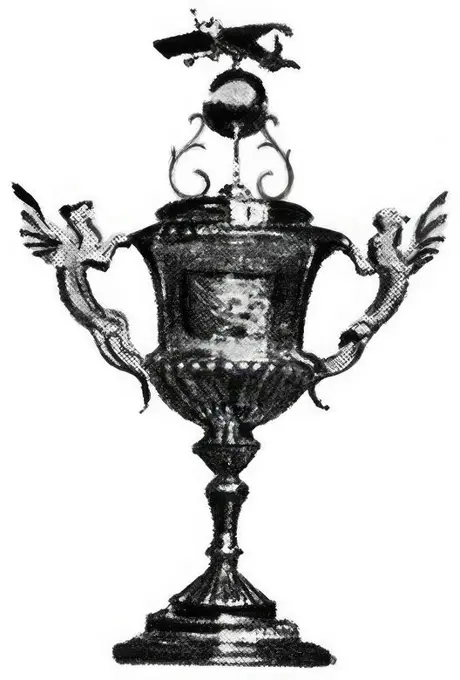
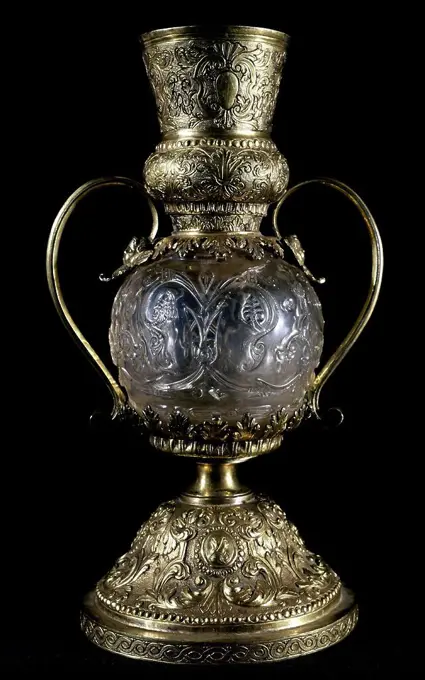
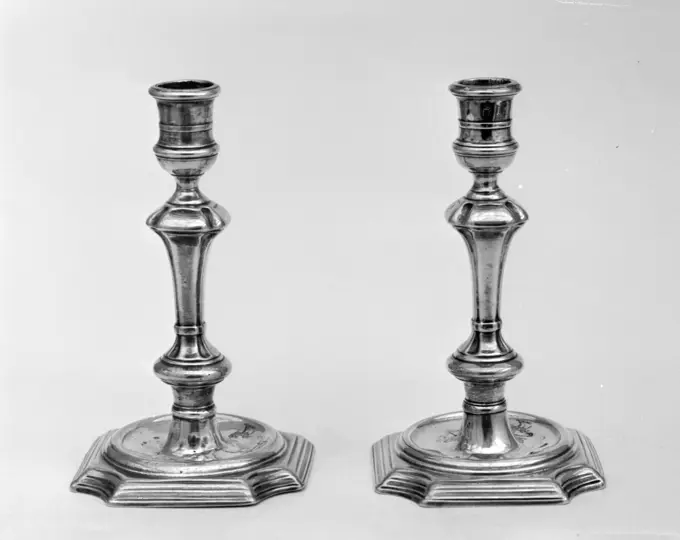
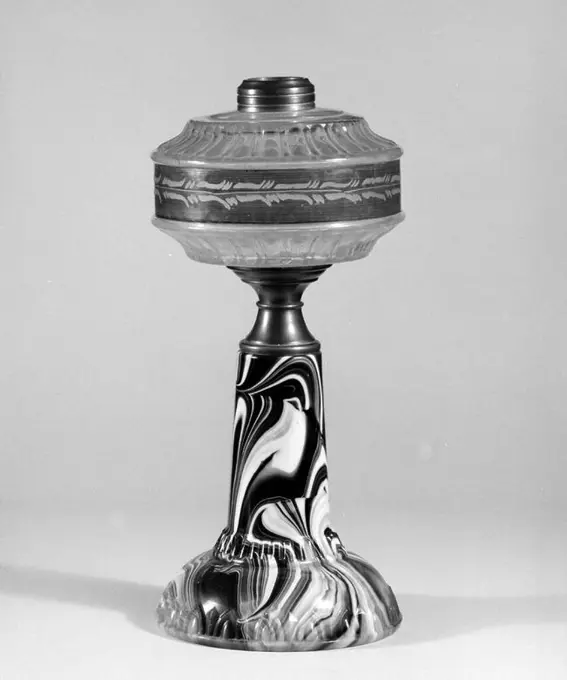
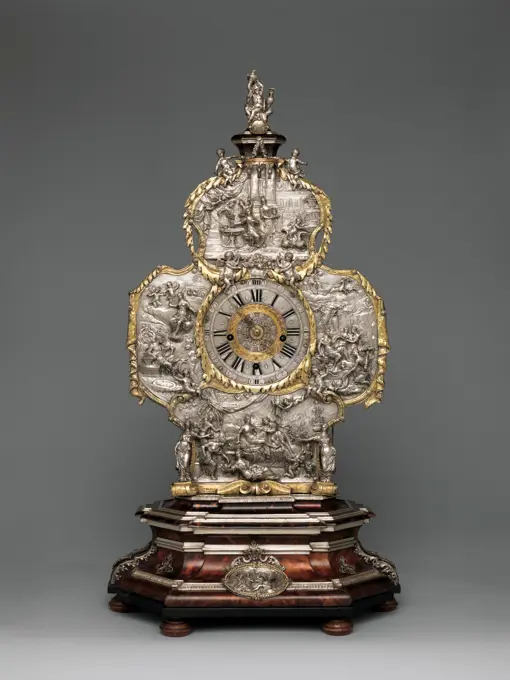
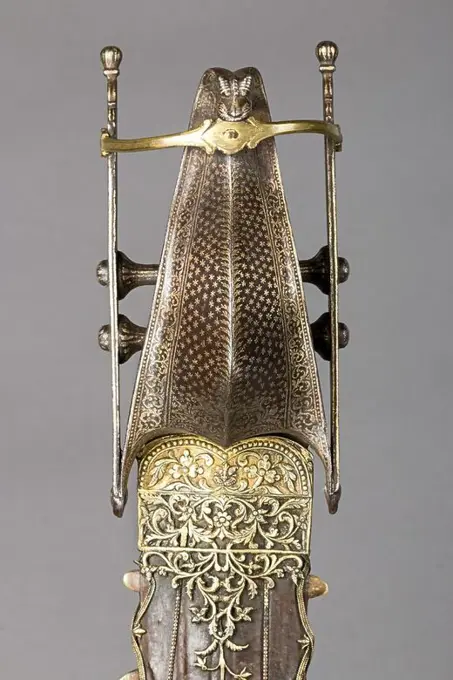
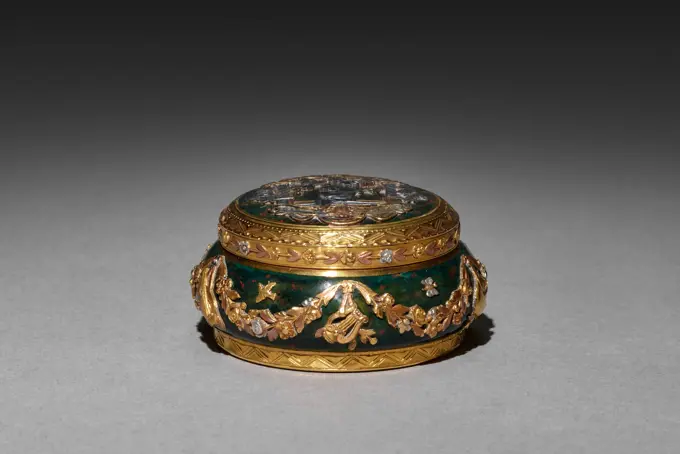
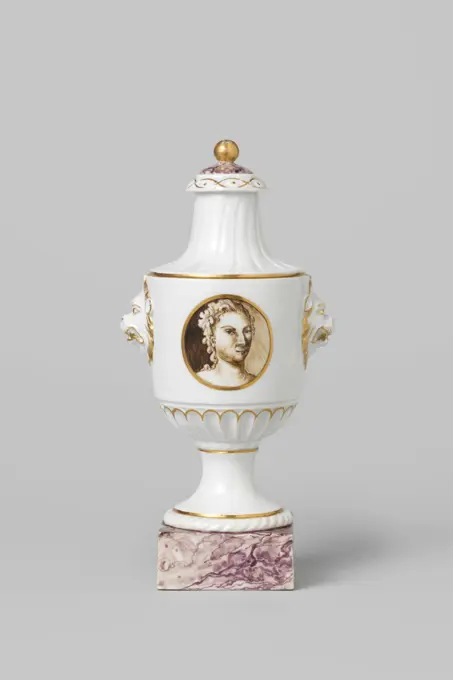
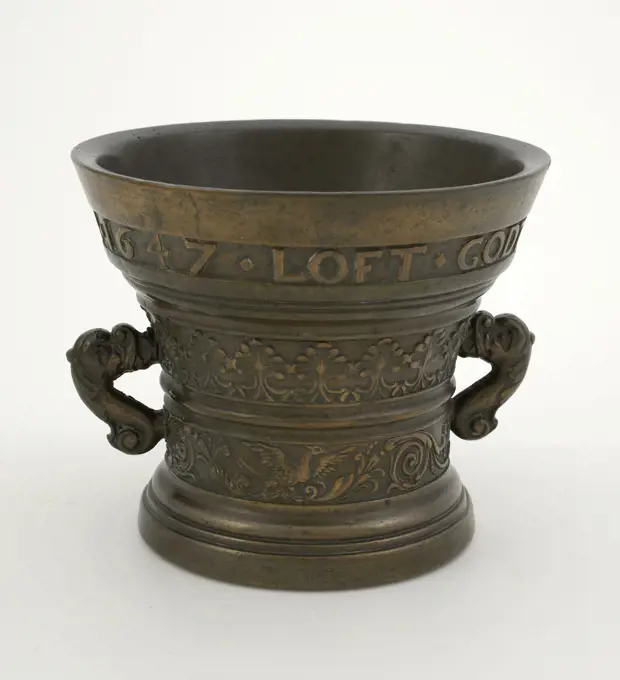
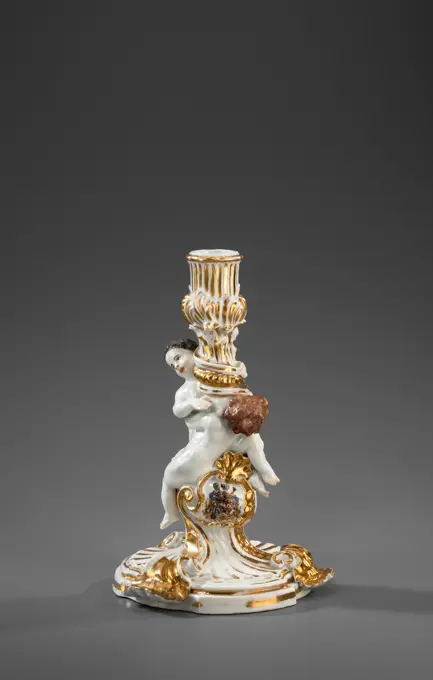
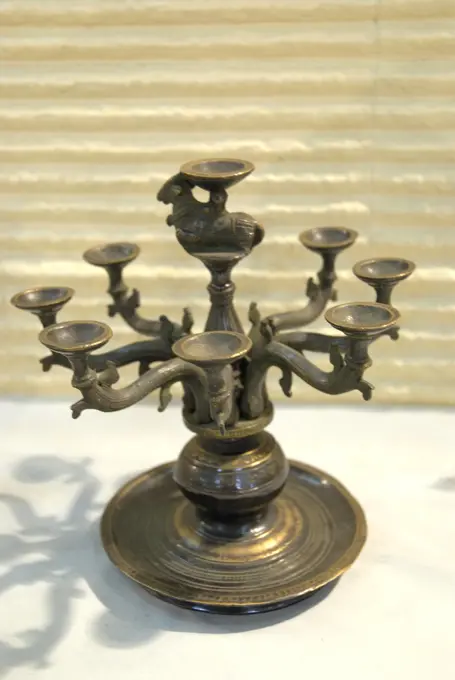
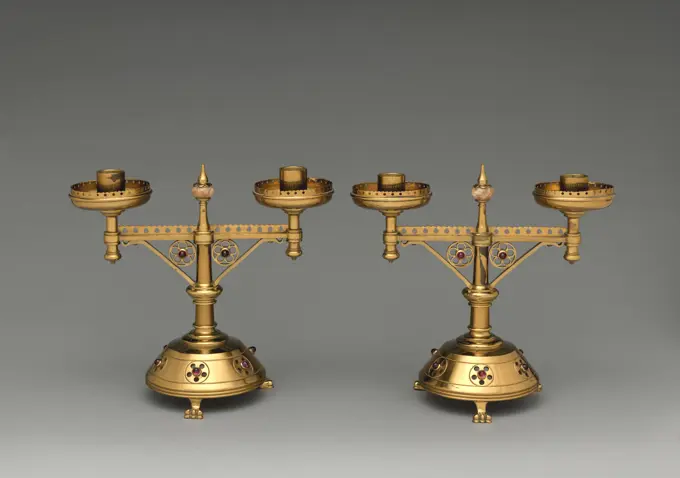
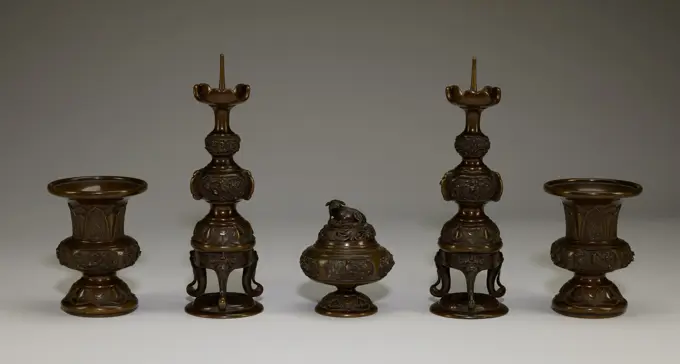
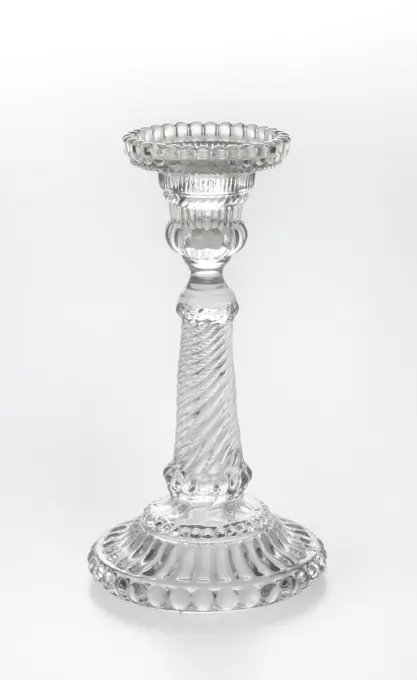
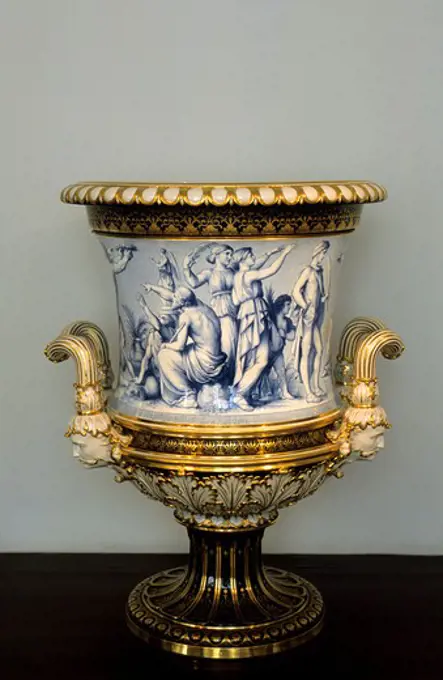
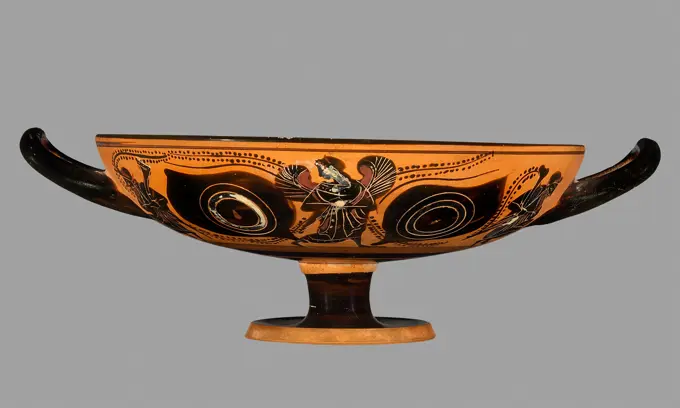
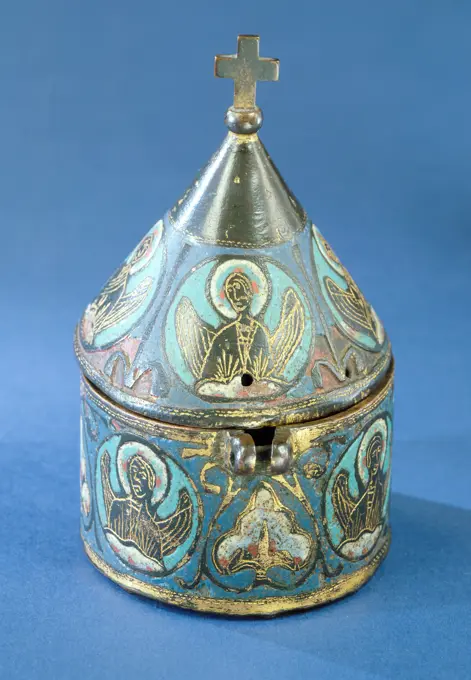
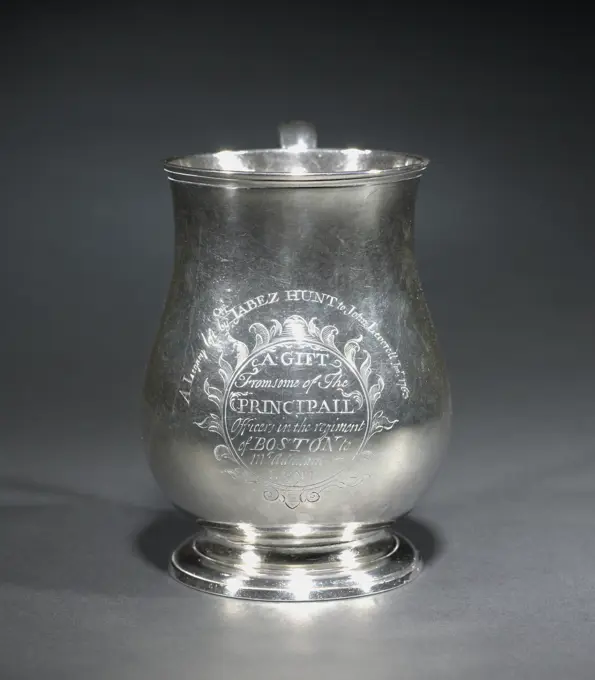
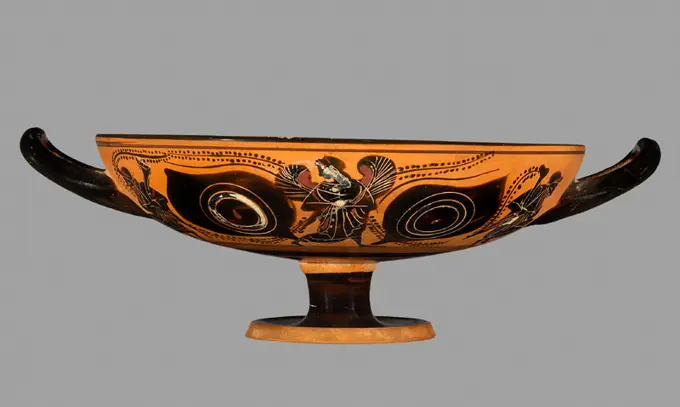
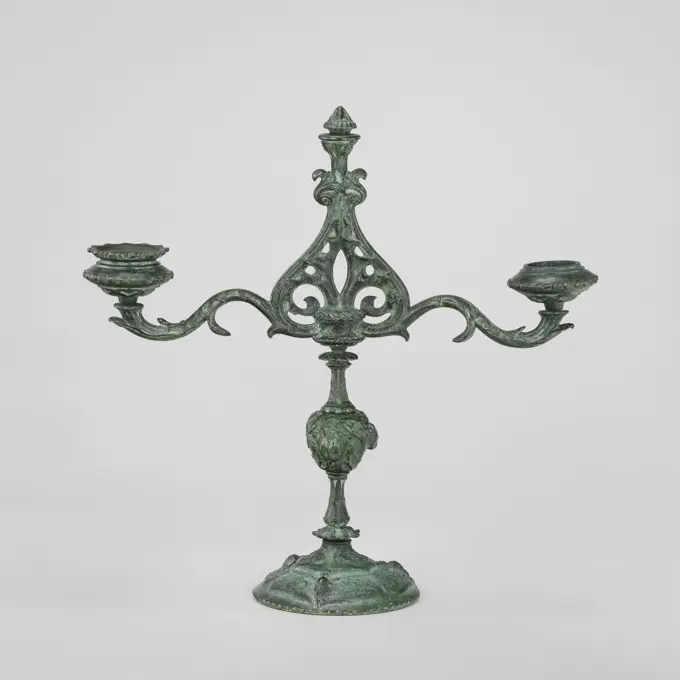
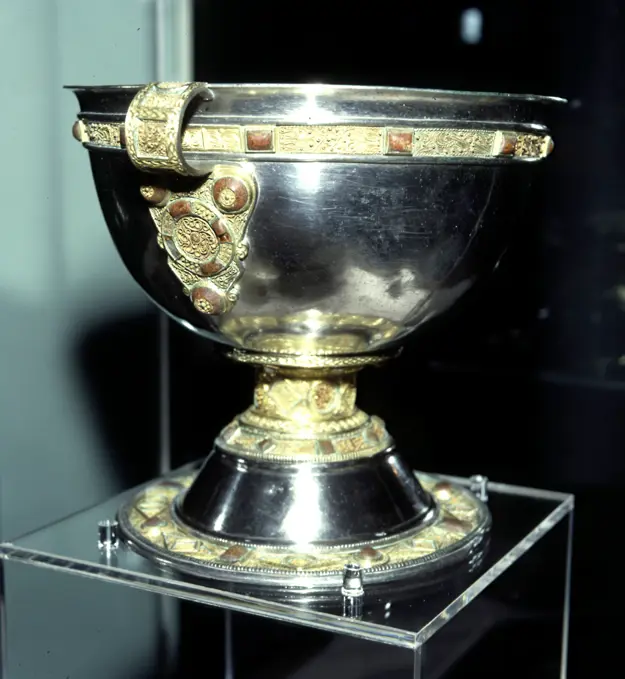
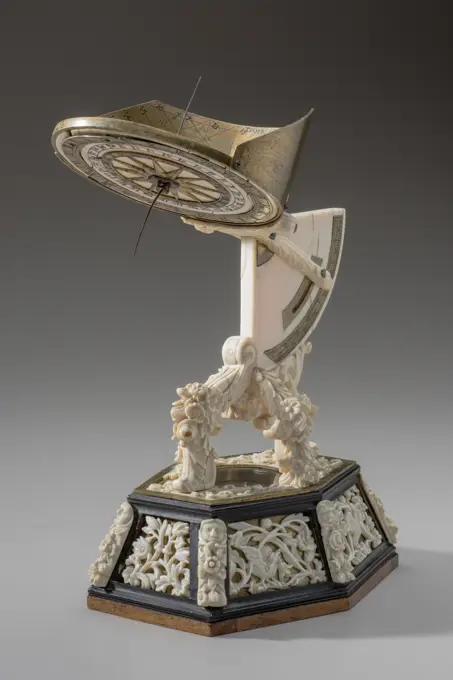
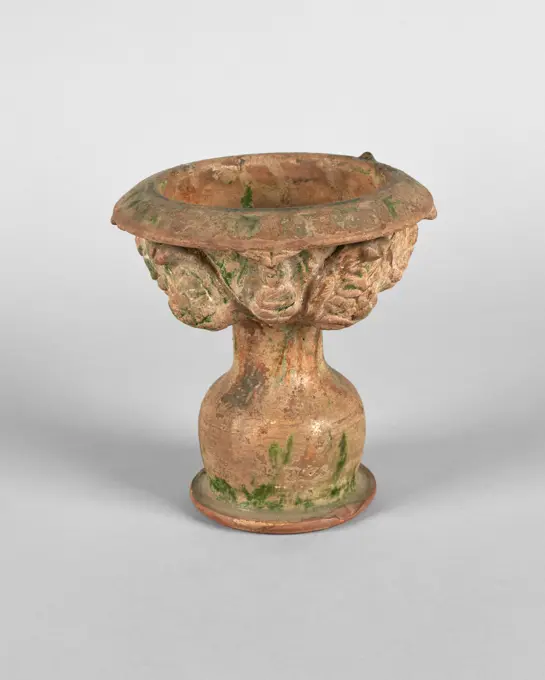
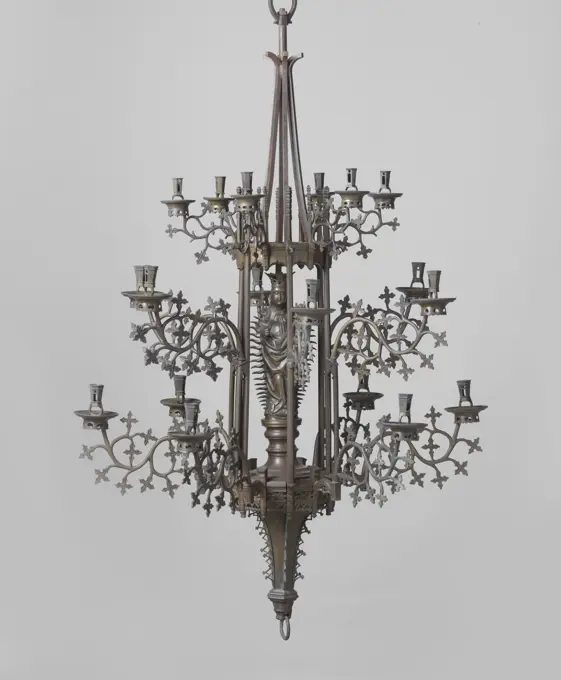
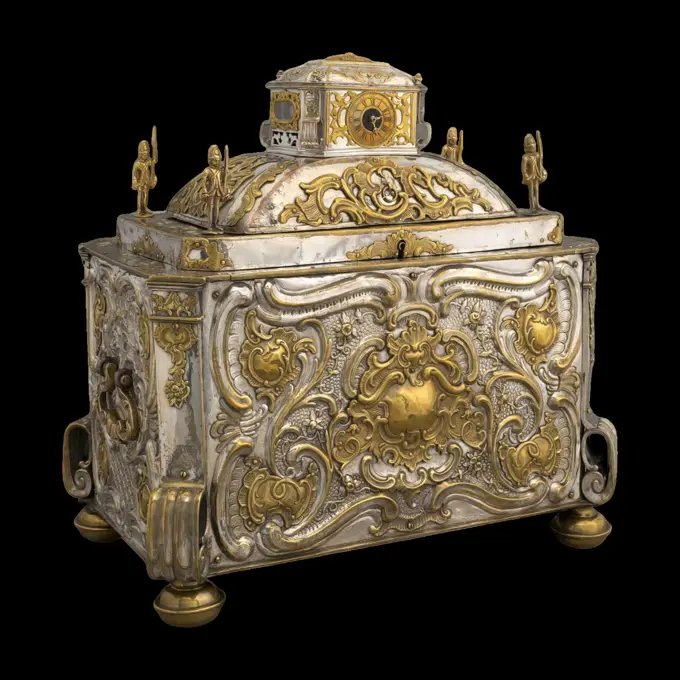
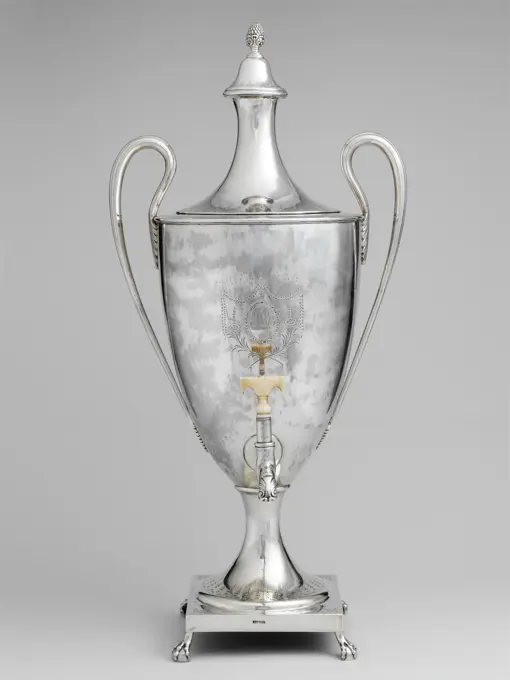
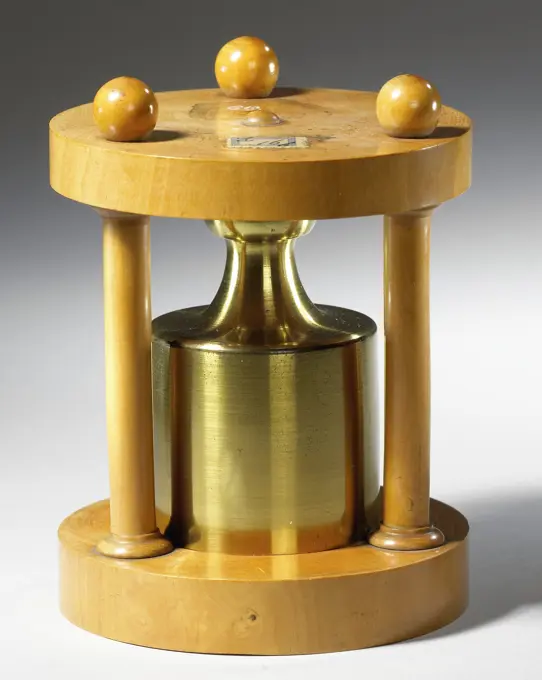
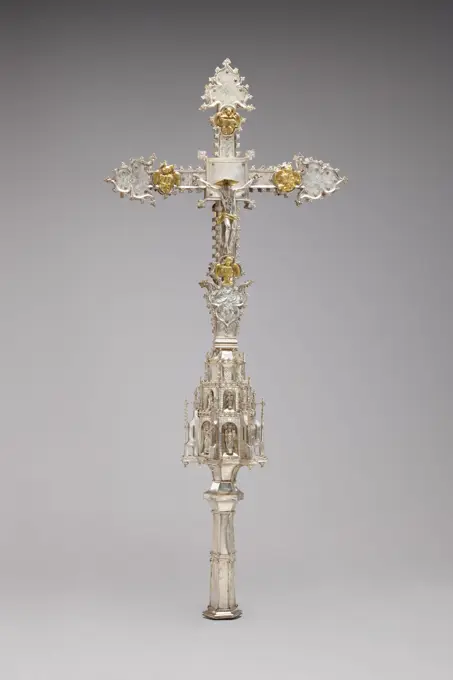
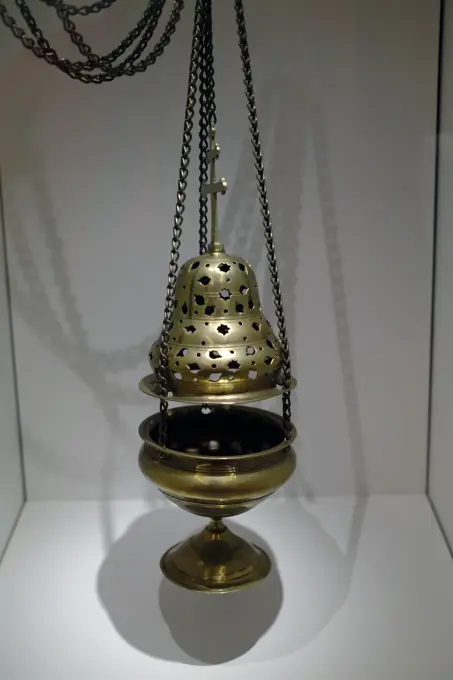
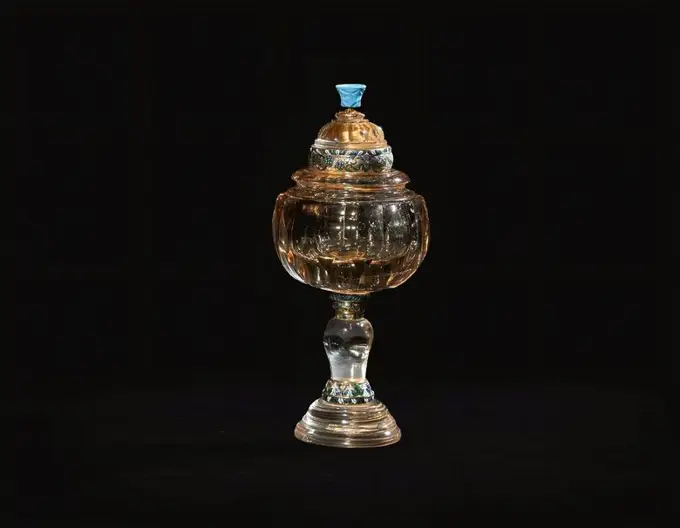
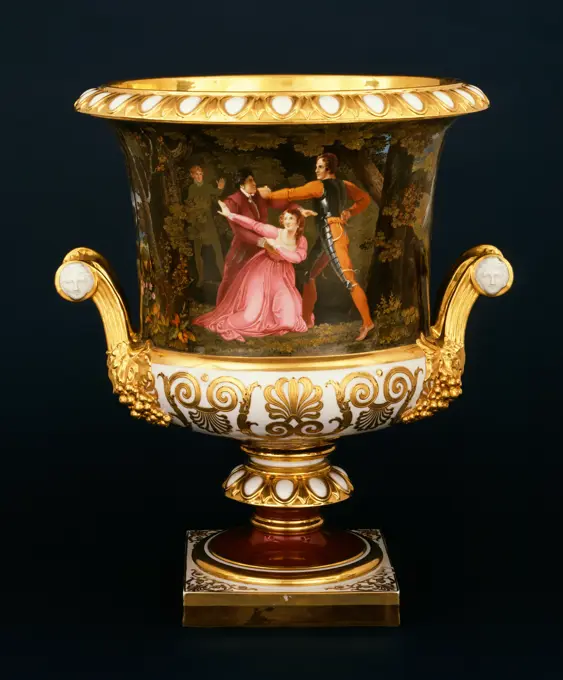
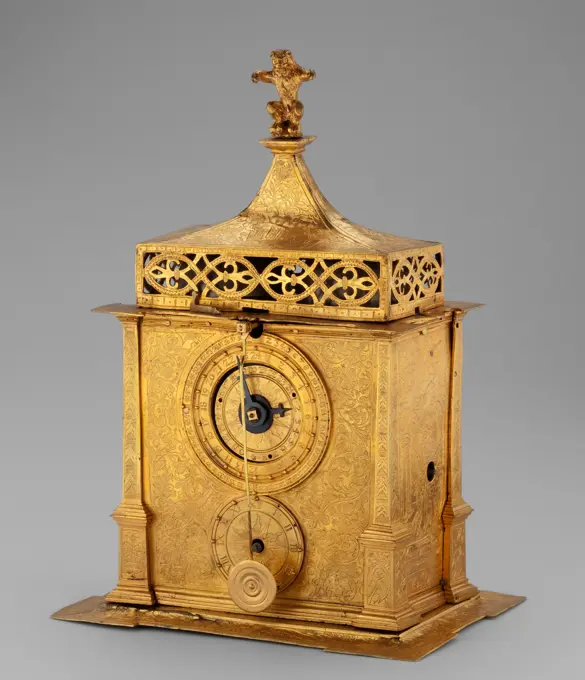
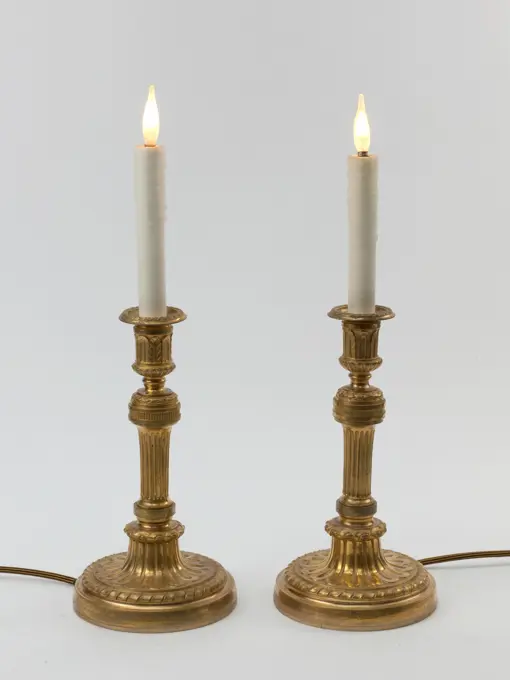
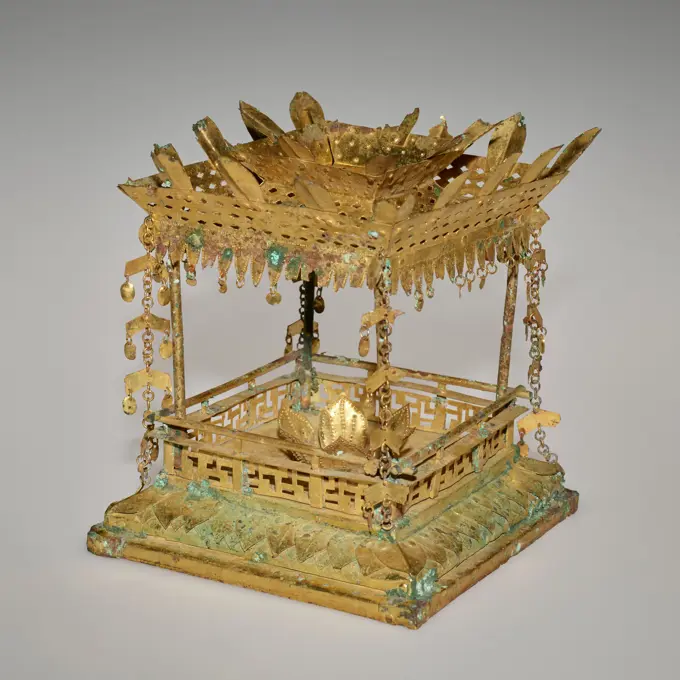
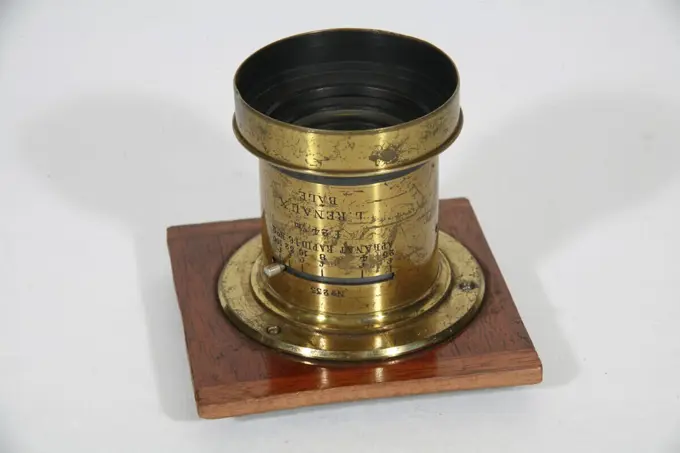
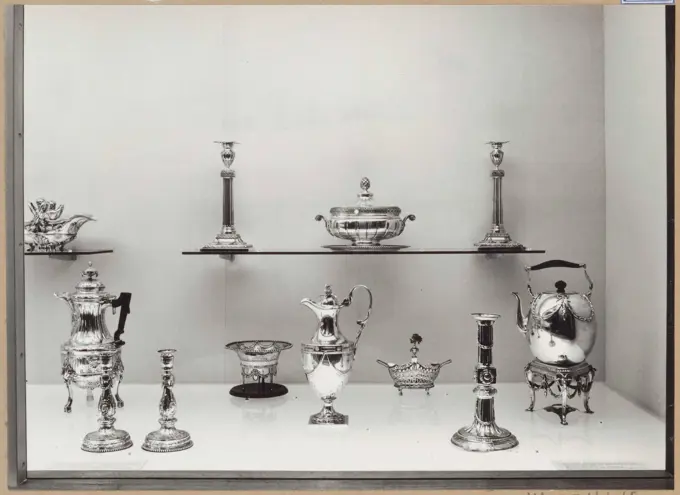
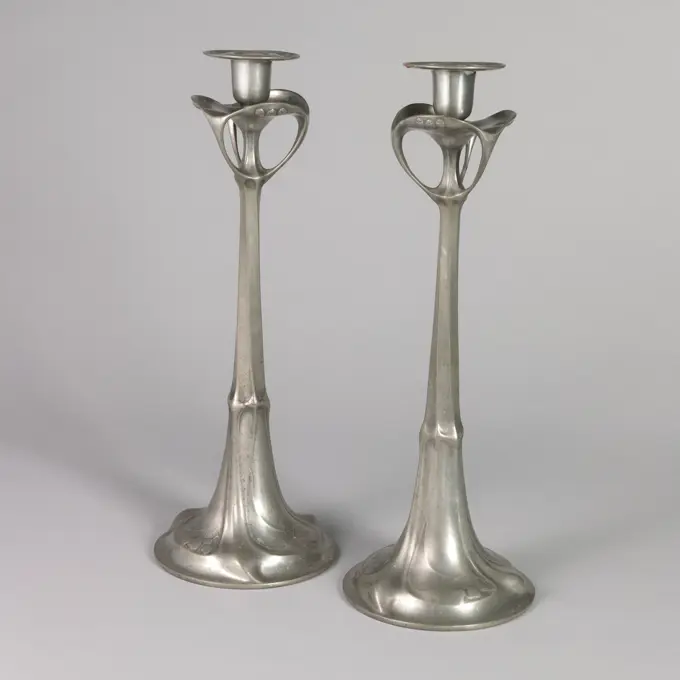
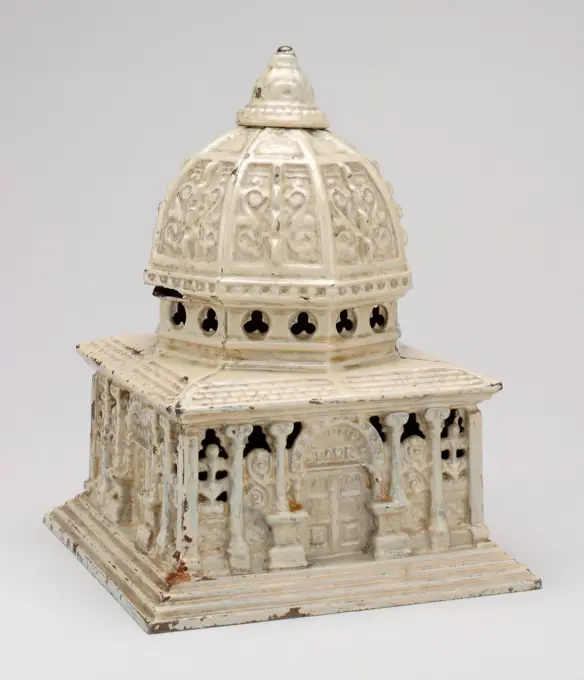
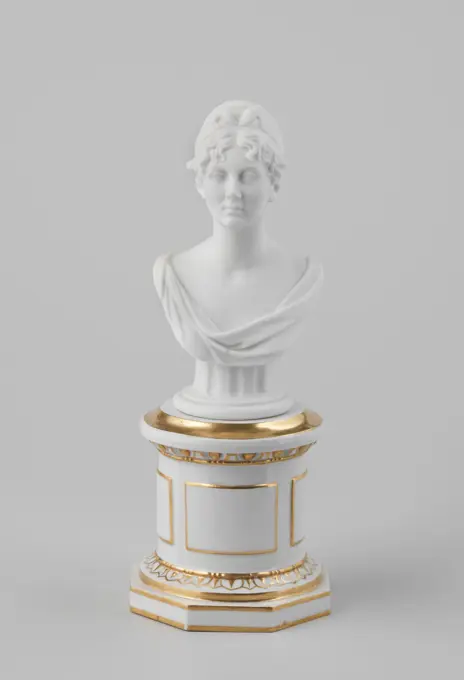
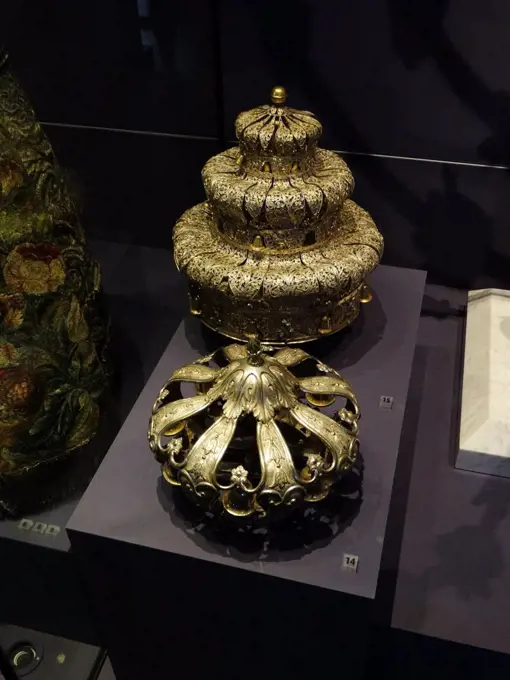
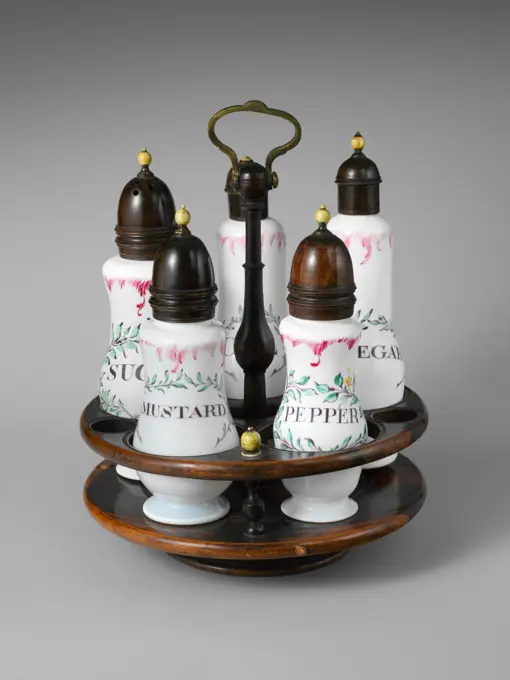
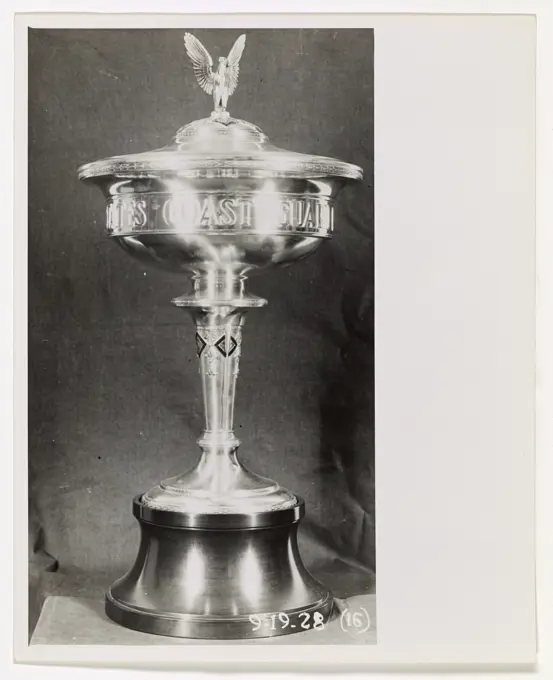
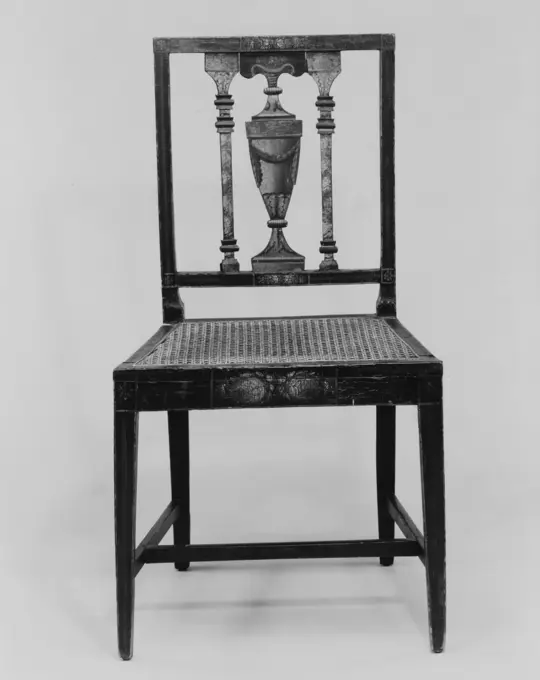
Side Chair 1795-1803 Attributed to John Seymour. Side Chair 168805/31/1912. Gold Cup won in the English Aviation Derby by Hamel.Gold Enamel Chalice made by Firma Schmidt en Cante (active 1837-1852). Amsterdam. Dated 1849CALIZ DE SAN SEGUNDO. Location: CATEDRAL DE SANTA MARIA. ASTORGA. LEON. SPANIEN.Pair of candlesticks 1730-32 Robert Calderwood. Pair of candlesticks 198844BellsPair of Casters. Paul de Lamerie; English, born Netherlands, 1688-1751; London, England. Date: 1732-1743. Dimensions: H. 17.8 cm (7 in.). Silver. Origin: London. Museum: The Chicago Art Institute, Chicago, USA.Candle holder. Candlestick of wrought iron with a base of three legs, ending in a stylized dragon head. The octagonal strain with nodus is placed on the chassis. Three flat decorations have riveted on the transition from the three legs to the trunk. There are three arms with a single leaf decoration at the top of the trunk. Above it is a flat, clover-blade-shaped fat trap with five holes in it, which respectively stabbing the candle pin and four candle holders. The candle holders are riveted to the arms of the trunk. A round hole is placed in one of the legs.Covered goblet, mid 19th century, Attributed to Dominik Biemann, Bohemian, 1800-1857, 11 1/4 x 5 x 5 in. (28.58 x 12.7 x 12.7 cm) (goblet)4 1/2 x 6 x 6 in. (11.43 x 15.24 x 15.24 cm) (lid), Cut and engraved layered-glass, Czechoslovakia, 19th century, Throughout the 19th century, American and European manufacturers alike produced luxury wares emblazoned with images of George Washington (1732-99), the first American icon. Washington's qualities of fortitude, judgment, and sense of duty made him a constant inspiration to Americans. Following Washington's death in 1799, the nation observed a year of official mourning and throughout the century, citizens clamored for any type of object bearing Washington's likeness. Foreign manufacturers recognized the demand for these goods and produced the former president's image on every type of decorative object imaginable.Lamp. Culture: American. Dimensions: Dimensions unavailable. Maker: Probably Challinor, Taylor and Company (1866-1891). Date: 1870-90. Museum: Metropolitan Museum of Art, New York, USA.Incense burner. This incense burner represents a mythical mountain where immortals roam. Such objects in the form of a mountain may have symbolized the entrance to the supernatural world, which the Han Chinese believed could be accessed from the highest mountain tops. A second possibility is that this is Mount Penglai, the mystical island of paradise in the Eastern Sea.Mantel clock case ca. 1710, movement ca. 1760-70 Clockmaker: Franz Xavier Gegenreiner Thelot's ancestors were French Huguenots who emigrated from Dijon in 1585. He became one of the most celebrated goldsmiths in Augsburg, a city renowned for its metalwork in silver and silver gilt. The reliefs on this case depict the goddess Venus at her toilette (top), Venus and Diana (right), Venus and Mars (bottom), and Venus at the forge of Vulcan (left). The present quarter-striking movement, with an alarm and a repeating mechanism, is the work of a competent but comparatively unknown clockmaker, and it was probably fitted to this extraordinary case at some time in the second half of the eighteenth century.. Mantel clock 199771Dagger (Katar) with Sheath. Culture: Indian, Vijayanagara. Dimensions: L. with sheath 30 1/2 in. (77.5 cm); W. 3 5/8 in. (9.2 cm); D. 3 3/4 in. (9.5 cm); Wt. with sheath 3 lb. 5.8 oz. (1525.2 g). Date: second half 16th century. Museum: Metropolitan Museum of Art, New York, USA.Terminal for an Open Ring Brooch ca. 950 Viking Although a fragment, this brooch terminal is artistically and technically one of the finest works to survive from the great age of the Vikings. The silver sphere (now slightly dented) was hollow cast, and virtually its entire surface is decorated with niello in an early Viking style known as Jellinge/Mammen. Raised, twisted gold wire forms a quatrefoil ring-knot pattern on a raised, circular gold panel. Two adjacent triangular gold panels are filled with studs, and one has a medallion in its center with serpentine tendrils.The terminal bears typological and aesthetic similarites to a brooch terminal and pinhead found in a large Viking silver hoard at Eketorp, Sweden, in 1950 and 1955, which are now in the regional Örebro Lans Museum, west of Stockholm. As with the present item, much of the Eketorp hoard consists of silver that, during and after the Viking period, was broken into pieces, a common practice for monetary exchange. ReconstructJewel casket; c.1870 England; Birmingham. Attributed to John Hardman & Co.; Gilt; brass and enamel.Bonbonniere, 1850-1899. France, 19th century. Bloodstone () mounted in colored golds; diameter: 5 cm (1 15/16 in.).Bucket. Painted and wrought iron sheet, 1701. Paris, Carnavalet museum. 77640-31 Anse, tree, seat, Louis XIV period, woman, forge iron, Asian pattern, landscape, painted, bucket, Louis XIV style, tole, 18th century, Habitat, HousePyx 13th century French. Pyx 467488ANFORA DE VIDRIO CATALAN - SIGLO XVI. Location: MUSEO DEL VIDRIO. Barcelona. SPANIEN.Real Fábrica de Platería de Antonio Martínez / 'Silver writing desk'. Ca. 1847. Metal plating. Museum: Museo del Prado, Madrid, España.Vase painted with jewelers in landscape, manufacture Oud -Loosdrecht, 1774 - 1784 Vase with porcelain lid. On the square pedestal rests the high, round base that the vase carries. On the vase, lion masks as ears. is completely open. Painted with a river landscape with guinea fowls and a church tower and portrait. Loosdrecht porcelain Vase with porcelain lid. On the square pedestal rests the high, round base that the vase carries. On the vase, lion masks as ears. is completely open. Painted with a river landscape with guinea fowls and a church tower and portrait. Loosdrecht porcelainCandlestick of silver with stem in the shape of a winding trunk with three swinging branches with oval leaf and candle holder in flower wreath. Candlestick of silver. A winding trunk rises from a leaf rosette, which divides into three winding branches with oval leaves. The candle holder is caught in a flower wreath.CALIZ DE ORO LABRADO. Location: MUSEE D'ARTS DECORATIFS. MADRID. SPANIEN.Bronze mortar with LOFT GODT VAN ALLES ROTTERDAM 1647, auger equipment bronze, cast Cylindrical upwardly widening body made of round profiled foot wall with two decorative fringes of the same width protruding above edge with inscription. Two ridges on the middle part and cantilever. On decorative friezes one profiled ridge. Two ears in the form of dolphin are attached to the wall. Latin majusels are cast in the upper rim: metal watering can Grinding Rotterdam health care pharmacySmall candlestick from a swan" dinner set. Eberlein, Johann Friedrich (1695-1749), sculptor, Koenigliche Porcellain Fabrique, Meissen (1710-1763), factoryHeritage brass lamp with Nandi at centre  Orissa  India Copyright: xManojxNavalkar/DinodiaxPhotoxCandlestick (one of a pair) ca. 1870 Bruce J. Talbert Bruce J. Talbert was an influential Scottish designer who is mainly known for his richly-ornamented furniture in the Gothic style. The Pericles Cabinet (2015.281a, b) is emblematic of his most ambitious work. He was also a successful commercial designer and these candlesticks represent the work he did for a middle class market, which included schemes for interior furnishings like textiles, metalwork, stained glass and carpets. In 1868 (though dated 1867) he published his first and most influential book, Gothic Forms Applied to Furniture, Metal Work and Decoration for Domestic Purposes, which championed the structural honesty of the reformed Gothic style. The candlesticks represent the juncture of historicizing imagery with modern manufacturing. Intended for a middle class market rather than an elite one, they speak to the Victorian celebration of what was perceived as Britains “own” style, the Gothic.. Candlestick (one of a pair). ARTE IRANI-LAMPADARIO DE BRONCE FUNDIDO. Location: MUSEO ARQUEOLOGICO NACIONAL-COLECCION. MADRID. SPAIN.Tonkinservies. Crockery consisting of a tap kan, two quis pedestrians, two cups, three dishes and a sugar bowl. The crockery is partly black and partly (fire) gilt suassa, with entered decorations and cartouches with similar performances in relief.Flower vase, from a five-piece Buddhist altar set, 18th century, Unknown Japanese, 5 3/16 x 4 x 4 in. (13.18 x 10.16 x 10.16 cm), Bronze, Japan, 18th century, In East Asia, Buddhists place incense, flowers, and light (candles) before holy images as an expression of homage and to increase the magnificence of the worship hall. Incense is believed to purify the space, flowers constitute an offering or gift to the diety, and light symbolically illuminates the darkness of ignorance. Altar sets consisting of flower vases, candleholders, and incense burners were first brought to Japan by traveling priests in the 1200s. By the 1300s, the Japanese were casting their own versions, which were more subdued than their Chinese prototypes and often featured birds and flowers of the four seasons cast in high relief. Miniature altar sets, such as this one, were used in formal reception halls when the painting on display in the alcove represented a Buddhist diety.Candlestick -GERMANY, MEISSEN, MEISSEN PORCELAIN EXHIBIT,VASEKylix Echcope with Nike performance; Unknown attic workshop; The end of the 6th century BC (-610-00-00--601-00-00);Działyńska, Izabela (1830-1899), Działyńska, Izabela Elżbieta née Czartoryski (1830-1899)-collection, Działyński, Jan (1829-1880), Greece, Sylenów (Mitol.)Priesthood. Priesthood with standing bull as a top piece.Cup And Cover (USA); porcelainStanding Cup and Cover, 1600-1700. Pinto Collection - Purchased from Edward H Pinto, 1965.. Boxwood standing cup and cover, northern Europe, 17th century. This beautifully made rose engine-turned cup is similar to lignum vitae wassail bowls made in England in the 17th century.Pyx. France, Limoges, 12th century. Furnishings; Accessories. Gilt copper, champleve enamelCloches (dish covers), coolers, soup tureens, sauceboats, salt cellars, pepper and mustard pots, Jean Baptiste Claude Odiot, c. 1819 Empire glass cooler with smooth deployment scale of gilded silver. Along the scale a band of imposed, openwork vines. Above that a bond of cams. Pelvic putti as a handle. Paris silver (metal). gilding (material) gilding Empire glass cooler with smooth deployment scale of gilded silver. Along the scale a band of imposed, openwork vines. Above that a bond of cams. Pelvic putti as a handle. Paris silver (metal). gilding (material) gildingCann, 1747. Jacob Hurd (American, 1702-1758). Silver; overall: 13.7 cm (5 3/8 in.); with handle: 14 cm (5 1/2 in.); without handle: 9.9 cm (3 7/8 in.).Kyliks oczowy z przedstawieniem Nike. warsztat attycki, workshopGoldweight Bird, 19th-20th century, 1 7/8 x 1 1/2 x 9/16 in. (4.76 x 3.81 x 1.43 cm), Brass, Ghana, 19th-20th centuryLamp 1835-40. Lamp. 1835-40. Lacy pressed blue glass, tin. Candlestick with foot. Signature and dated.Vase and pedestal decorated with Cupids and the seasons. Chromolithograph drawn by Grivell and lithographed by Parrot et Co. from Frederick Rathbone's Old Wedgwood, the Decorative or Artistic Ceramic Work Produced by Josiah Wedgwood, Quaritch, London, 1898.Salt cellar, 1728-1729, Paul de Lamerie, English, (born Holland), 1688-1751, 2 3/16 x 3 1/2 x 3 1/2 in. (5.56 x 8.89 x 8.89 cm), Silver, gilt, England, 18th centuryInkwell with LidAntoine Louis Barye, Two Light Candlestick, model nd, cast c 1850 1874 Two Light CandlestickCandleholder And Cover (England); pear wood, turned; Overall: 21.5 x 11.5 x 6 cm (8 7/16 x 4 1/2 x 2 3/8 in.)Derrynaflan chalice. Early 9th cent.Vase with cover (one of a pair) porcelain ca. 1740-45, mounts 1745-49 Meissen Manufactory German. Vase with cover (one of a pair) 205724Candelabra (Netherlands); Manufactured by Onder den St. Maarten Workshop, Zaltbommel; brass, copperXianglu burn-burn (common name). Bronze. Cernuschi Museum, Asia Museum of Asia in the city of Paris.Unknown, Kunstkammer Sundial, mid 16th century, ivory and brass.Candlestick (one of a pair) ca. 1815-30 French. Candlestick (one of a pair). French. ca. 1815-30. Bronze, parcel gilt. Metalwork-Gilt BronzeAnonymous, cut (usual name), 0025. sandstone, green glaze. Cernuschi Museum, Asia Museum of Asia in the city of Paris. The paunch decorated with four small buddha in meditation; Alternating with petals comprising Buddha and King Naga (protective cobra of the Buddha) very stylized.Table lamp, study lamp on high column with supporting eye, desk lamp lamp illuminant brass glass iron metal, Table lamp or desk lamp Reinforced base with cast iron core High column with supporting eye at the top along which the lamp can be moved vertically to reduce the light control Removable bush, as reservoir set screw and lamp with shade and lamp glass. Wing nut marked on the bottom at the reservoir: 42 lights evening night illuminate officeLamp 1835-40. Lamp 4703Candlestick, Francois Marcus Simons, 1803 Candlestick with foot. Marked and dated. The Hague silver (metal) casting Candlestick with foot. Marked and dated. The Hague silver (metal) castingRattle Beaker 10th-11th century Lambayeque (Sicán). Rattle Beaker 316433Candle of candle crown, c. 1475 - c. 1485 Candle arm belonging to a candle crown of three heights with Maria Chapel in the middle. The arm is bent twice and has eleven leaves. The fat catcher rests at the end, which has a vertical serrated edge with cruciferous motifs on the underside. The candle holder is six-flagged with a perforated side on the front and back and has a vertical ring-shaped lower piece. This is the third arm of the middle ring (center of the bars), numbered with 3 dots. Southern Netherlands brass (alloy) casting Candle arm belonging to a candle crown of three heights with Maria Chapel in the middle. The arm is bent twice and has eleven leaves. The fat catcher rests at the end, which has a vertical serrated edge with cruciferous motifs on the underside. The candle holder is six-flagged with a perforated side on the front and back and has a vertical ring-shaped lower piece. This is the third arm of the middle ring (center of the bars), numbered with 3 dots. Southern NeAncient silver pardose with clockwork and artistic embossing ancient silver shipping with clockwork and artistic embossing copyright: xzoonar.com/gallóxgusztávx 22639171Candle On A Red Candle in a stick on a red fabric studio background Copyright: xZoonar.com/AndreyxSkatx 14112689Ornamental Calcite drinking cup in the shape of a lotus flower, from the tomb of King Tutankhamen. 1323 BC. 18th dynasty, New KingdomTea Urn 1791 Paul Revere Jr. American The urn is recorded in Revere's ledgers, where on April 20, 1791, a debit is charged to Mrs. Hannah Rowe for a silver tea urn weighing 111 ounces. It is the earliest and the largest of the three known tea or coffee urns by Revere. Listen to experts illuminate this artwork's story Listen Play or pause #4519. Tea Urn Supported by Bloomberg Philanthropies We're sorry, the transcript for this audio track is not available at this time. We are working to make it available as soon as possible.. Tea Urn 8288Weight of 1 kilogram in wooden standard, anonymous, c. 1825 weight. stand (support object) Yielding kilogram with a fixed button. The weight is stored between two circular pieces of palm wood, which are connected by three wooden columns. On the top of From thread and a wooden button, so that the upper board can be taken. Object v.z.v. Label and stamp on the ground plane of the Ministry of the Interior and with that of the first class of the Royal Netherlands Institute. Utrecht Weight: Brass (Alloy). Standard: Boxwood   UtrechtTable clock, Nicolaas Weylandt, c. 1730 - c. 1750 Table clock glued with turtle on nut core. The rest on silly flat silver feet has a profiled plinth list and a cushion -shaped crown with silver handle. The door is arched arched on the top. The silver dial has the female figures in the corners, the four continents symbolizing, and in the arch acanthus drinks with instruments on either side of a solar and monthly reading. The copper hands are open and gilded. In the middle an indication of day and date and on a cartouche, surrounded by openwork Acanthusranken, the Signature N. Weylandt Amsterdam. The sides have bow -shaped sawn -out openings at the top that show open -worked, silver fillings with acanthus drinks, a dolphin and trophies of musical instruments on a land of green fabric. The clock plays several tunes. At the rear a door as at the front, so that part of the timepiece and the engraved back plate, which is also provided with the signature, is visible. Amsterdam oak (wood). peClose-up of a perfume bottle, Paris, FranceCorbel late 15th century French. Corbel 465968Cross processing;  16th century-17th century (1401-00-00-1650-00-00);Regensburg Museum of History. Catholic encensoir charbon.  Regensburg. Germany.Workshop of the Miseroni / 'Citrine quartz glass with a turquoise finish'. 1600 - 1630. Citrine, Rock crystal / Hyaline quartz, Gold, Turquoise. Museum: Museo del Prado, Madrid, España. Author: TALLER DE LOS MISERONI.Vase. Flight, Barr & Barr (England, Worcester, 1813-1840)Thomas Baxter, Jr. (England, London, 1782-1821). England, circa 1815. Furnishings; Accessories. Porcelain, enamels, gildingStrong clock;  1. PO. XVII W (1601-00-00-1650-00-00);Groteska (ornament), monkeys, bears, peacocks, birds, renaissance (style), deer, hares, animals, snails, turtlesPorcelain vase decorated with a bust of a woman, and profil, and garlands, anonymous, 1880 - 1940 photograph This photo is part of an album.  cardboard. photographic support gelatin silver print container of ceramics: jar, jug, pot, vase. adult woman (+ right side visible; right - (r. hand, r. foot, etc.)). ornament ~ festoon, garlandRELICARIO DE SANTA ELENA - SIGLO XVI. Location: CATEDRAL-MUSEO. Toledo. SPAIN.antique malachite candlestick standing by the windowAnonymous. "Arm of light". Golden bronze. Paris, Museum of Romantic Life. Light arm, gilded bronze, calear, lighting, electric, light, luminaireTwo Candelabra. England. Date: 1780-1800. Dimensions: H. 66 cm (26 in.). Clear and blue glass, gilding and bronze mounts. Origin: England. Museum: The Chicago Art Institute, Chicago, USA.Sports Cup isolated on a white backgroundSarira reliquary in the shape of a pavillion, 8th century, Unknown Korean, 6 1/8 × 5 1/2 × 5 9/16 in. (15.56 × 13.97 × 14.13 cm) (without base), Gilt bronze, Korea, 8th century, Since the early years of Buddhism in South Asia, Buddhists have enshrined funerary relics in stupas, or burial mounds. As Buddhism spread to Northeast Asia in subsequent centuries, thousands of stupasoften tower-like and dubbed 'pagodas’' in the Westwere constructed, each embedded with bone fragments or other relics (sarira) housed within a multi-layered reliquary. The present work is the innermost container of such a reliquary. Made of gilt bronze, it takes of the shape of a palatial building, decorated at the base with downturned lotus petals and a lavishly adorned, detachable roof. Inside is a small, lotus-shaped rest for the container that would have held the actual relics. Based on other extant Korean reliquaries from this period, the missing container was likely a glass jar or bottle. This inner reliquaFIGURA DE PLATA DE LA DIOSA FORTUNA. Location: BRITISH MUSEUM. LONDON. ENGLAND.Arm of a candle crown in two heights, Anonymous, 1630 The S-shaped arm is provided with a ridge on the trunk side with an opening to secure it with a pin in the stand rings. At the trunk the arm is decorated on the end and to the center with two stylized dolphin heads and with three pairs of curls or leaves executed in lobe style. To the outside, the arm ends in a lip, in which a hole provided with a thread is applied, to confirm the candle holder and the fat catcher. The arm is cast using the same model as the other arms of the wreath. The cylindrical candle holder has two profiled ribs, two grooved rings and profiled excellent edge. The fat catcher is deepened twice at the top towards the center. At the bottom it is profiled around the hole on the somewhat spherical middle and ribbed on the edge and with two grooved rings. The fat catcher has been cast using the same model as the other fat catchers of this wreath. The pin is equipped with a vase -shaped button. This is the seventh arAplanate-Rapid Lens 2, No. 233 by L. Renaux, 24 cm focal length, f/6.0, with iris blend (English divisions 2.5-100) in a glass, brass, and wooden frame, produced in 1894. Designed for photographic precision.Fork. Fork with four teeth and a slightly curved handle. The handle has a middle clad and double praise. The fork is equal to three forks with Invnrs. BK-NM-11177-225, BK-NM-11177-226 and BK-NM-11177-228. The fork has not been marked.Spoon with double praise.Anonymous / 'Ewer from the Travel Toiletry Case Belonging to Ferdinand VII, King of Spain'. First third of the XIX century. Silver. Museum: Museo del Prado, Madrid, España.Cup with cover and stand (one of a pair). Culture: British, London. Dimensions: Overall, cup with cover (confirmed): H. 14 1/2 x W. 11 7/8 x D. 7 3/16 in. (36.8 x 30.2 x 18.3 cm);Overall, base (confirmed): H. 2 1/4 x W. 6 7/8 x D. 6 7/8 in. (5.7 x 17.5 x 17.5 cm). Maker: John Parker (British, active 1759-77); Edward Wakelin (British, active before 1748, died 1784). Date: 1766/67.This pair of cup was made for the Curzon family, important patrons of the architect Robert Adam. The bold profile, rich beading, and unusual square base represent an early foray into the neoclassical style. Although the design is not attributed, some motifs are apparently borrowed from the published designs of William Kent, an architect active a generation earlier. Museum: Metropolitan Museum of Art, New York, USA.Showcase with objects of (noble) metal; Halls of crafts July 1962..Candlestick Candlestick; Designed by Hugo Leven (German, 1874-1956); Manufactured by J. P. Kayser & Sohn (Germany); pewterColumbia' still bank, 1893, Kenton Hardware Manufacturing Co., Kenton, Ohio, 1890-1950, 7 1/4 x 5 1/2 x 5 1/2 in. (18.42 x 13.97 x 13.97 cm), Iron, pigment, 19th centuryE.GERMANY, MEISSEN, PORCELAIN MUSEUM, DISPLAYTrophy of a militia company, anonymous, c. 1500 - c. 1599 Schuttersvogel, gilded, with long tail and engraved feathers; Around the neck a tire in the shape of a crown. The bird is on a gilded hemisphere; This is attached to a bus that could be put around the scepter of the Schutterskoning. Southern Netherlands silver (metal) casting / engraving / gilding  Holly Schuttersvogel, gilded, with long tail and engraved feathers; Around the neck a tire in the shape of a crown. The bird is on a gilded hemisphere; This is attached to a bus that could be put around the scepter of the Schutterskoning. Southern Netherlands silver (metal) casting / engraving / gilding  HollyBase of a bust of Frederika Louise Wilhelmina, princess of Prussia, Fürstenberg, c. 1807 pedestal. bust Bug of a bust of porcelain, painted on the glaze in gold. The base consists of a column with modeled courses in relief and on the profile at the top and bottom a bond with stylized leaf motifs in relief. The column is placed on an octagonal pedestal. Marked on the bottom with the f 2 twice. Fürstenberg porcelain. glaze. gold (metal) painting / gilding / vitrification historical persons - BB - womanTower Reliquary with Eight Apostles and the Symbols of the Four Evangelists. Culture: German. Dimensions: Overall: 9 3/16 x 5 1/2 in. (23.3 x 14 cm)base only: 6 1/8 x 5 1/2 in. (15.6 x 14 cm)Lid only: 3 3/8 x 5 1/2 in. (8.6 x 14 cm). Date: ca. 1200-1250.Inscriptions identify eight of Jesus' apostles: Simon, Philip, Matthew, Andrew, Peter, John, James, and Paul. A large number of relics, often in the form of bone or textile fragments associated with a holy figure, were housed in such containers. In the 1200s, the city of Cologne became the primary center in Germany for the production of bone caskets made in a variety of shapes. Museum: Metropolitan Museum of Art, New York, USA.Mand, Hendrik Duller, 1784 Basket with an oil and vinegar set. The style is Louis XVI. The basket is open and garlands are walking around the sawing work. The basket is on four legs and has two handles. There is a plateau in the basket with four bottles. Amsterdam silver (metal) Basket with an oil and vinegar set. The style is Louis XVI. The basket is open and garlands are walking around the sawing work. The basket is on four legs and has two handles. There is a plateau in the basket with four bottles. Amsterdam silver (metal)Knife with gun -shaped handle, anonymous, c. 1775 - c. 1800 Knife with gun -shaped blade and gun -shaped handle. The knife is not marked. The knife is equal to five knives with the invnrs. BK-NM-11177-238, BK-NM-1177-239, BK-NM-11177-240, BK-NM-11177-241 and BK-NM-11177-242. Netherlands silver (metal) Knife with gun -shaped blade and gun -shaped handle. The knife is not marked. The knife is equal to five knives with the invnrs. BK-NM-11177-238, BK-NM-1177-239, BK-NM-11177-240, BK-NM-11177-241 and BK-NM-11177-242. Netherlands silver (metal)Kastanjevaas, Hendrik Duller, 1789 Egg -shaped chestnut cheese on a square foot. The two handles are rectangular at the top and bent around at the bottom. The vase is grooved vertically. The highly skinned lid is not grooved. The button of the lid is formed by a bunch of flowers. Shiringes are engraved on the foot. The Kastanjevaas is marked: stk. = Amsterdam, Jrl. = G (1791) and Mt. = Hendrik Duller. The Kastanjevaas belongs to an identical vase (BK-NM-11177-247). Amsterdam silver (metal) Egg -shaped chestnut cheese on a square foot. The two handles are rectangular at the top and bent around at the bottom. The vase is grooved vertically. The highly skinned lid is not grooved. The button of the lid is formed by a bunch of flowers. Shiringes are engraved on the foot. The Kastanjevaas is marked: stk. = Amsterdam, Jrl. = G (1791) and Mt. = Hendrik Duller. The Kastanjevaas belongs to an identical vase (BK-NM-11177-247). Amsterdam silver (metal)Torah presented by the Jewish community of Den Bosch in Holland. This object would sit on the top of the torch covering before it was taken from the ark to be read in the synagogue. Dated 1867.Cruet ca. 1765 British. Cruet 2746Coast Guard Rowing Trophy. Coast Guard Rowing Championship Trophy. The cup stands over two feet in height and is the largest and most beautiful rowing trophy awarded in any service. Awarded in the interest of Service sports by a well-known sports enthusiast.