Elegant Glass Vessels

Decorative glass cups and chalices with intricate designs and gold detailing, often depicting hunting themes or religious symbols.

Jar with a hunting scene, anonymous, c. 1850 - c. 1875 Flat, octagonal, faceted foot. Facet cut, baluster -shaped tribe. Funnel -shaped, rounded and faceted chalice at the bottom. On the chalice, in Neo-Louis XV style, in gold a hunting scene with a hunter with a shot duck. A deer, a stork and a dog surrounded by rocaille ornament. The facets on foot, trunk and button with gold. Bohemia glass glassblowing / grinding / gilding Flat, octagonal, faceted foot. Facet cut, baluster -shaped tribe. Funnel -shaped, rounded and faceted chalice at the bottom. On the chalice, in Neo-Louis XV style, in gold a hunting scene with a hunter with a shot duck. A deer, a stork and a dog surrounded by rocaille ornament. The facets on foot, trunk and button with gold. Bohemia glass glassblowing / grinding / gilding
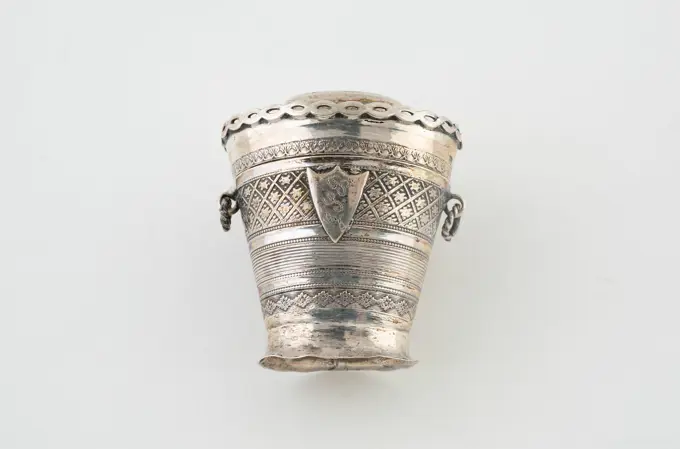
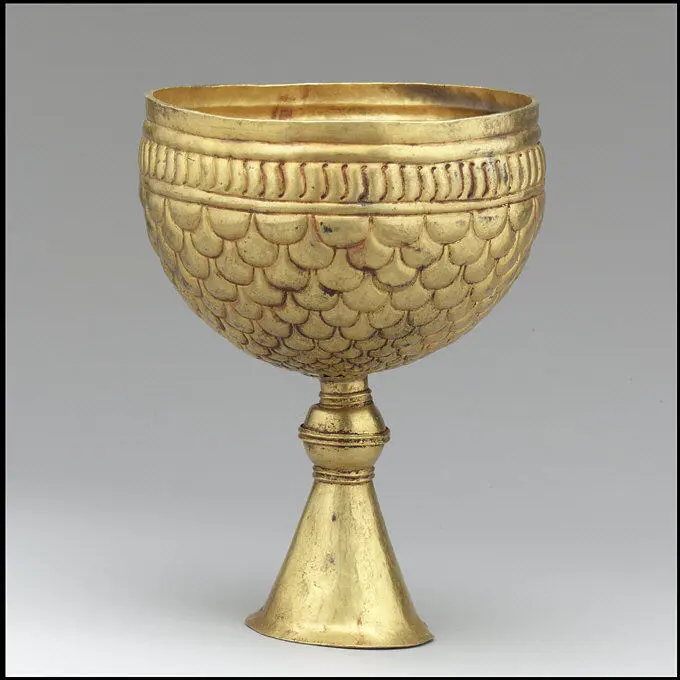
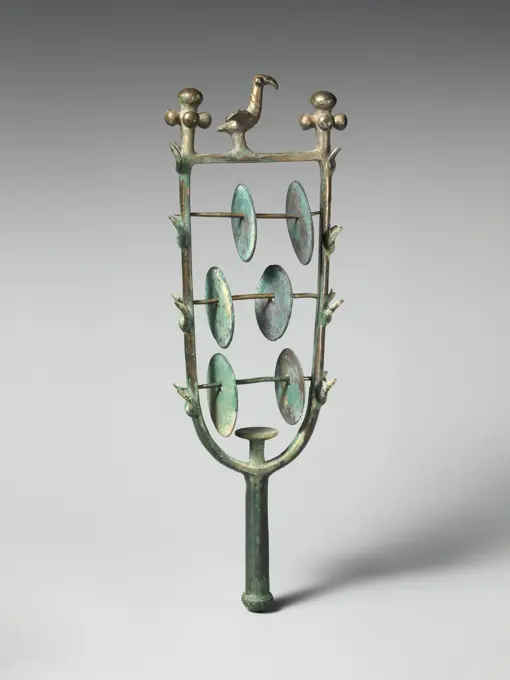
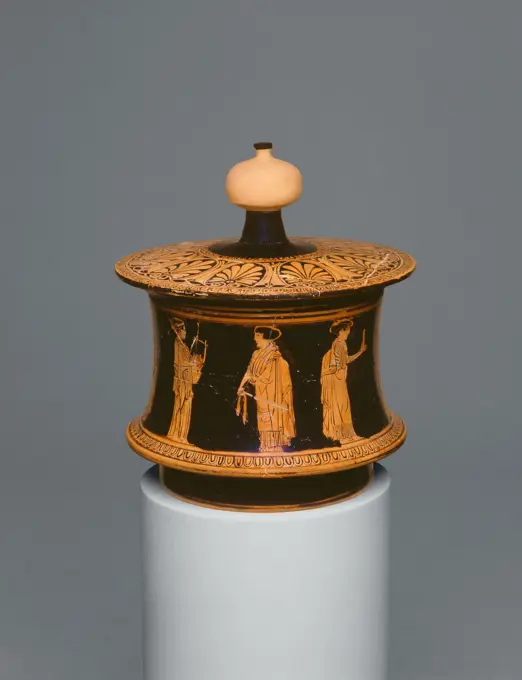
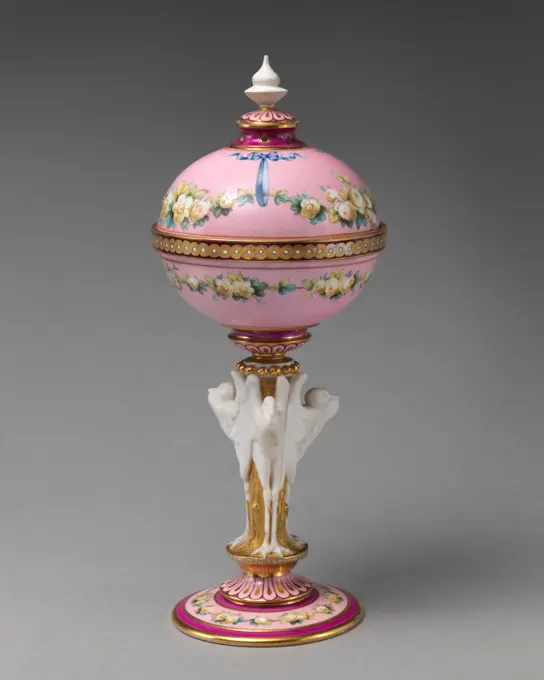
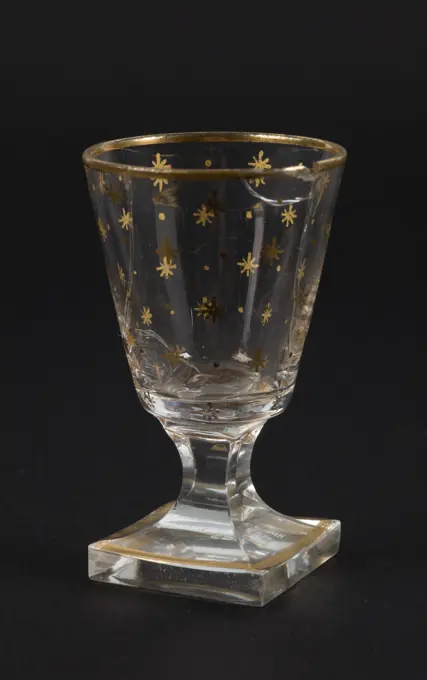
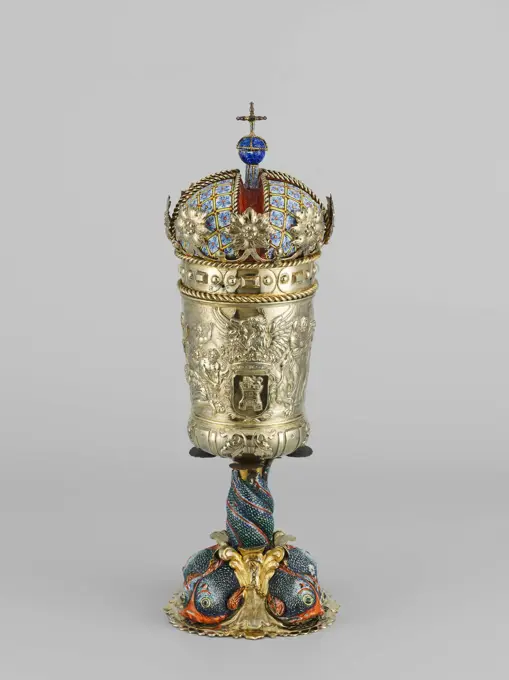
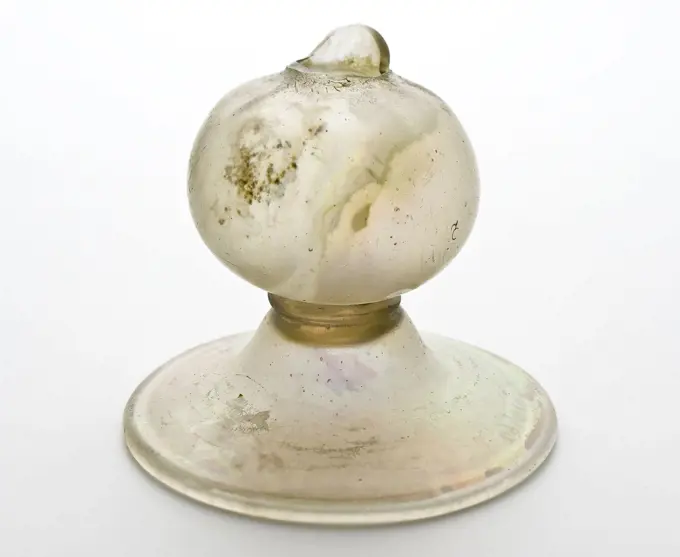
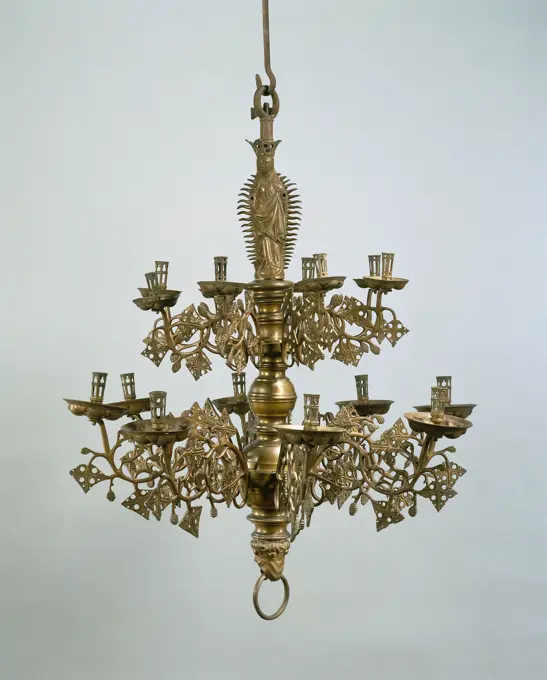
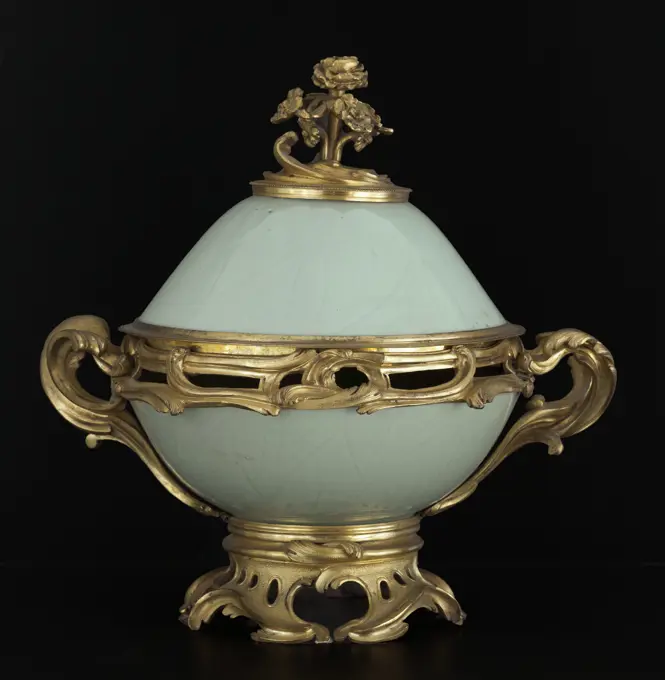
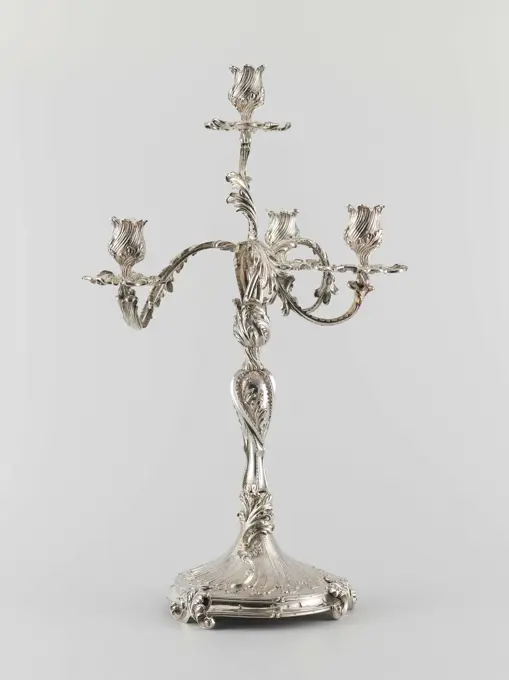
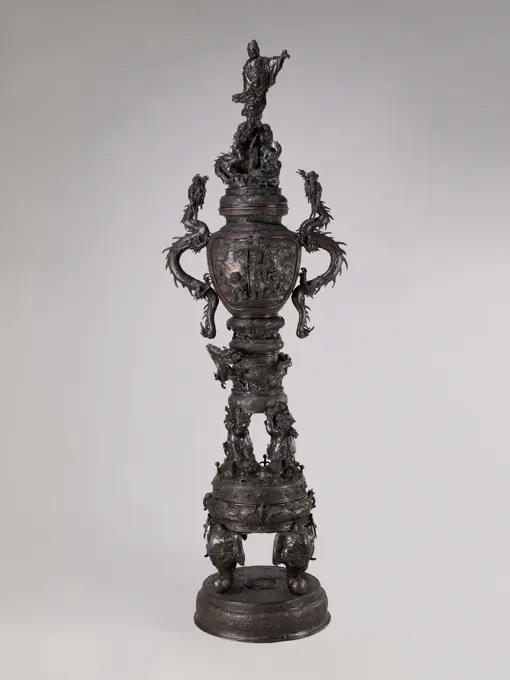
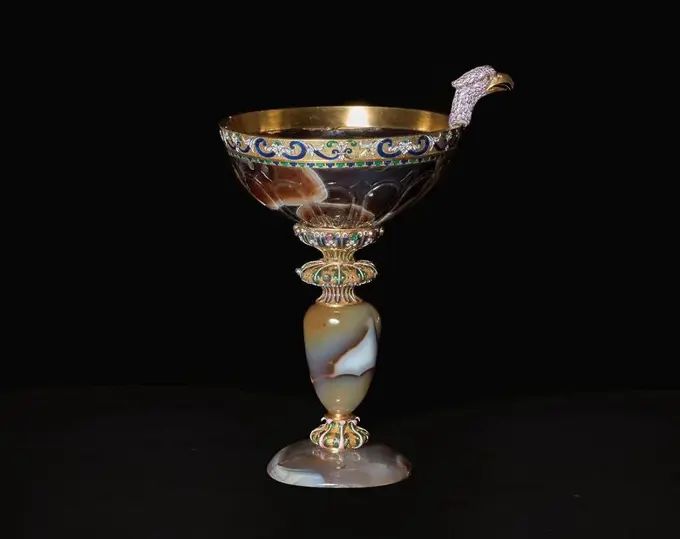
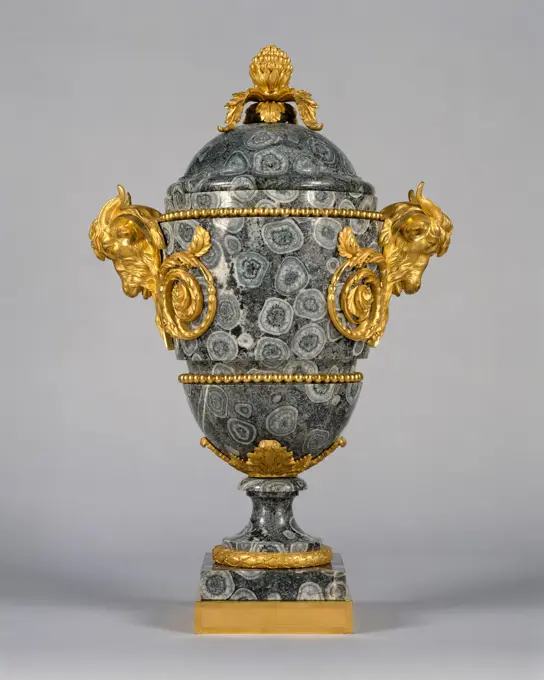
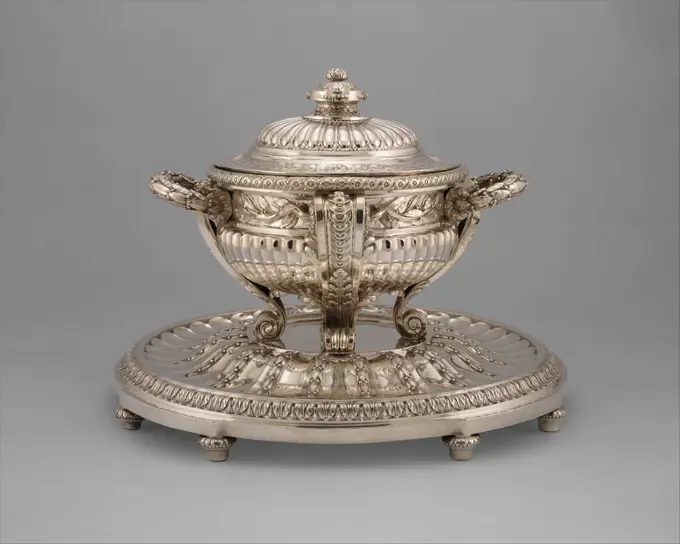
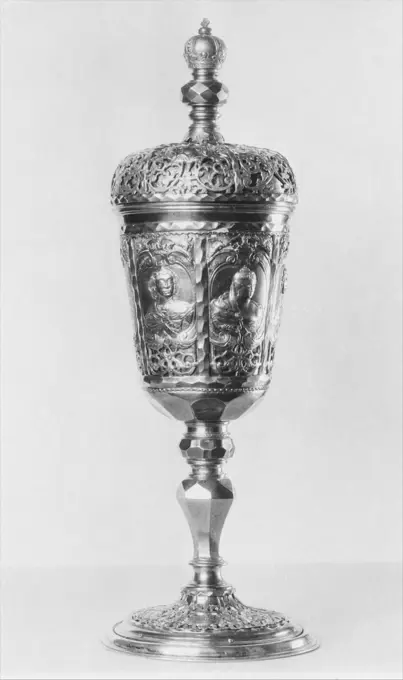
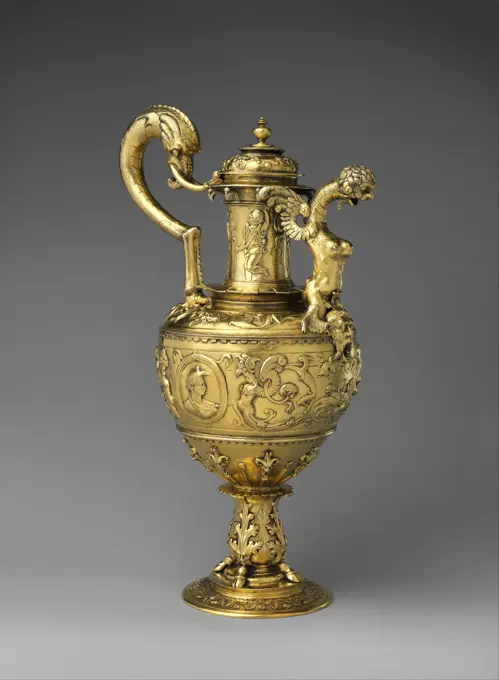
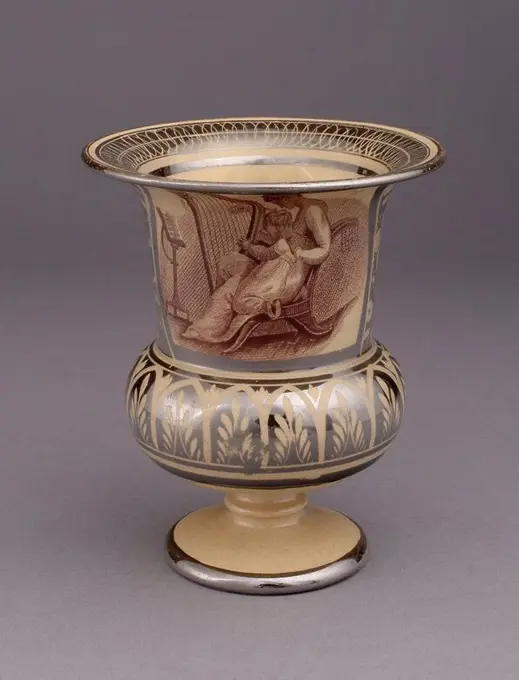
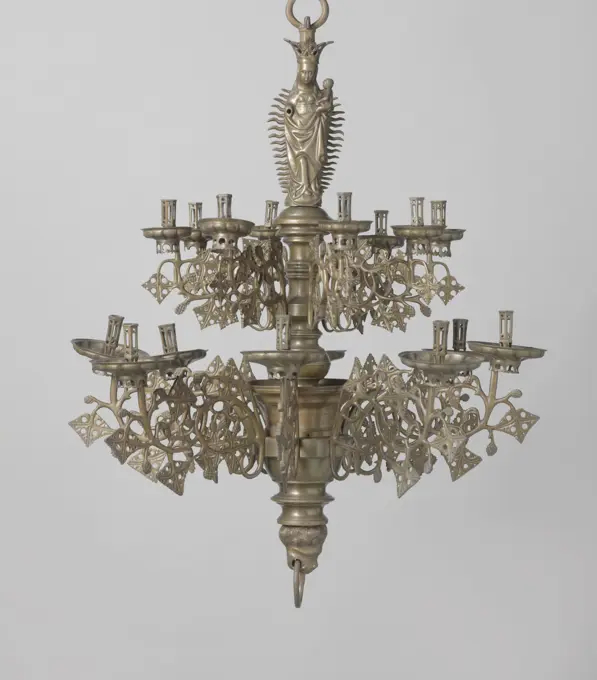
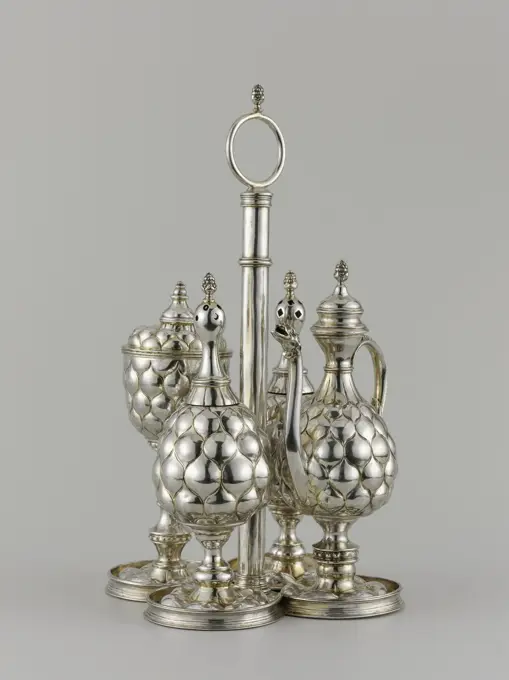
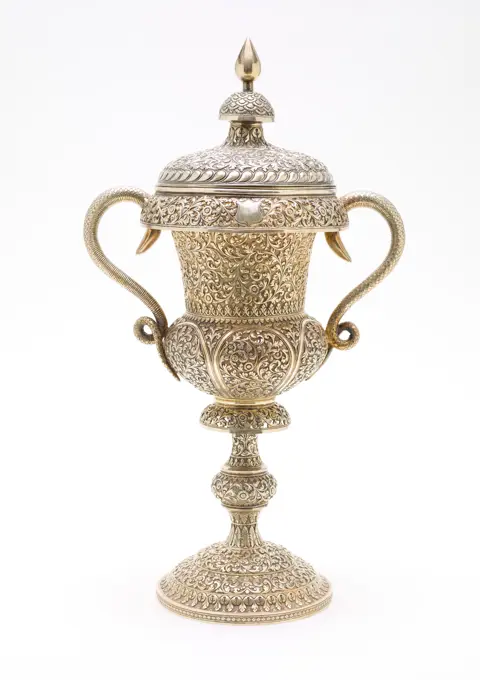
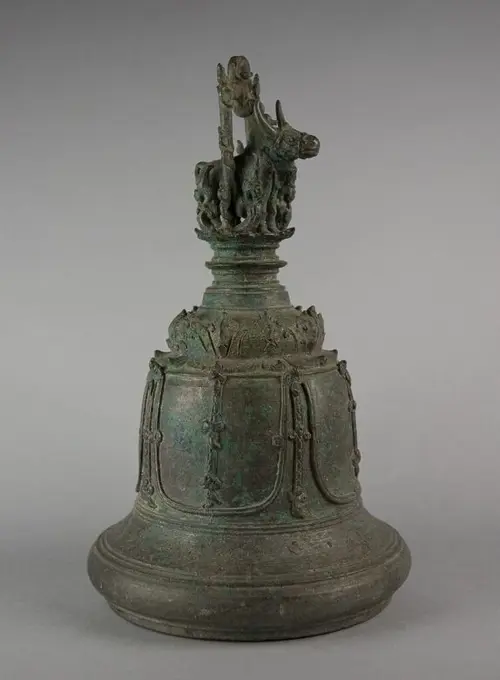
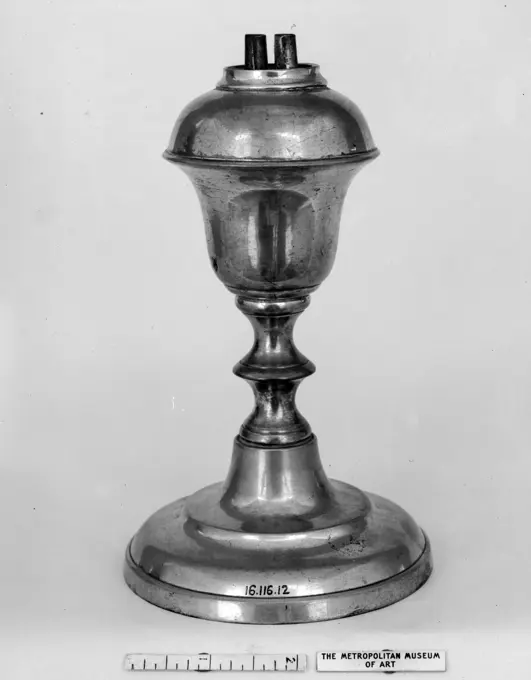
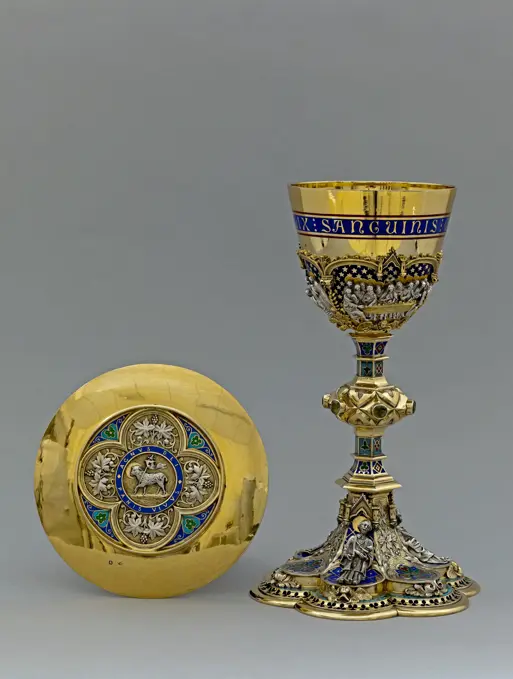
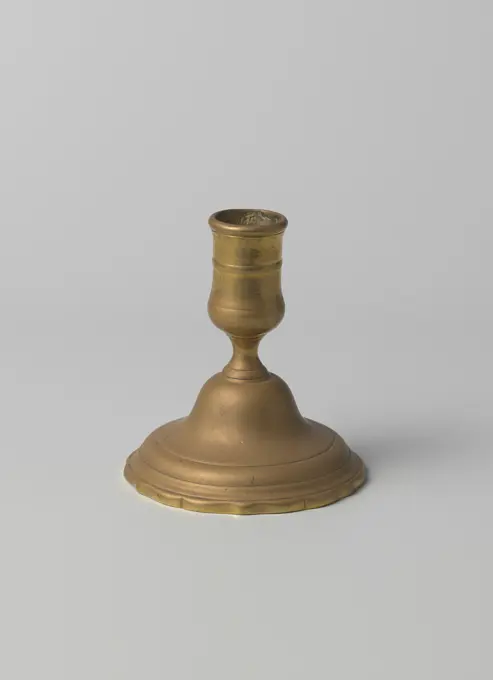
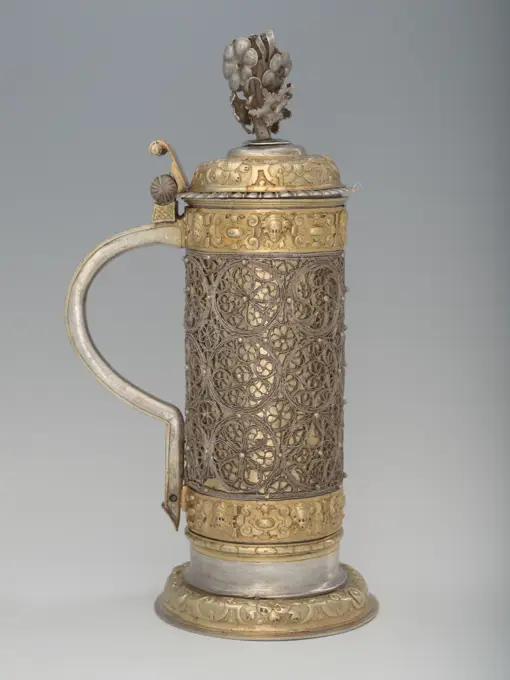
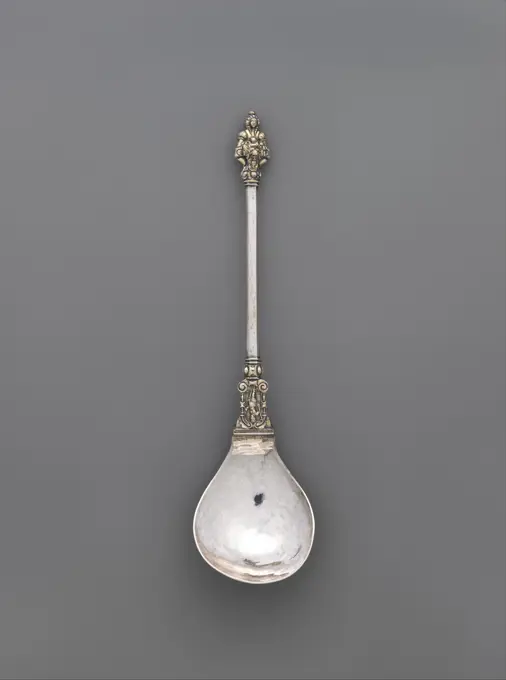
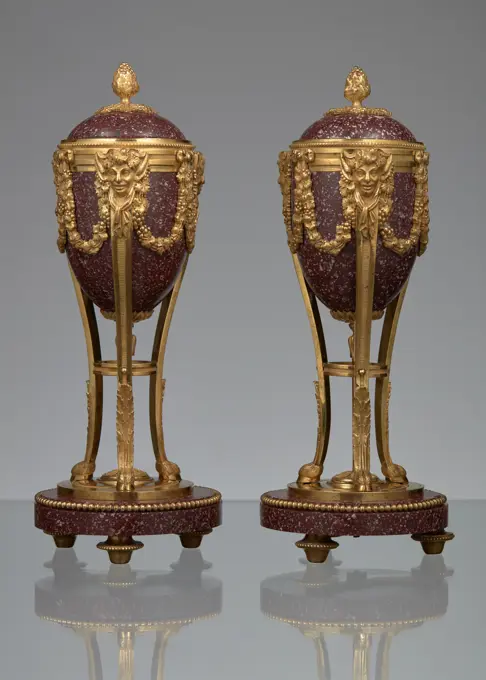
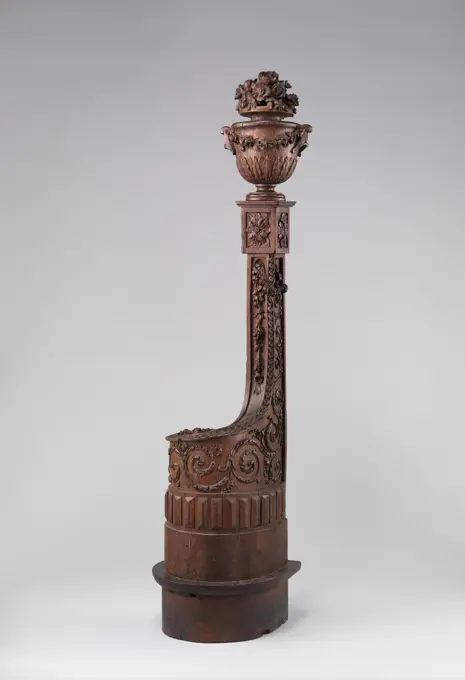
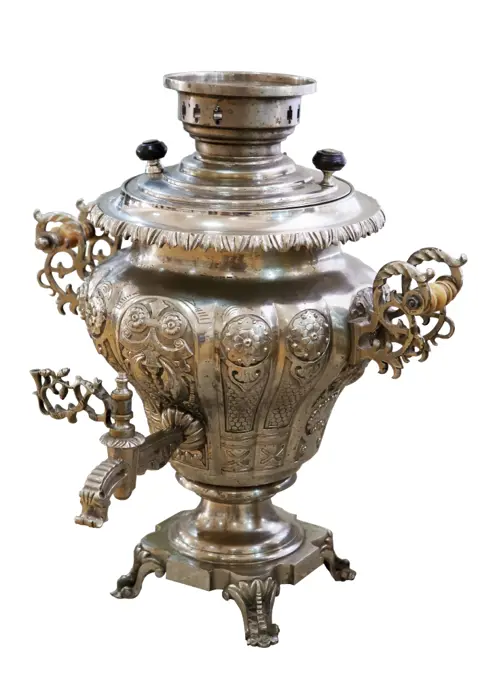
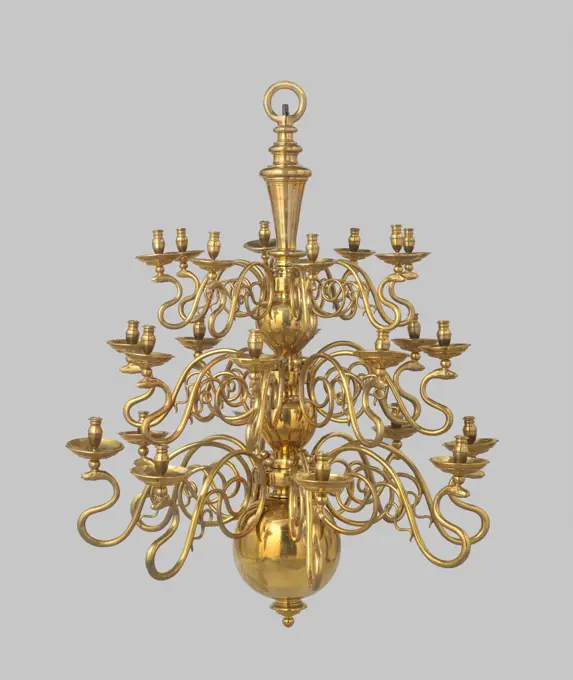
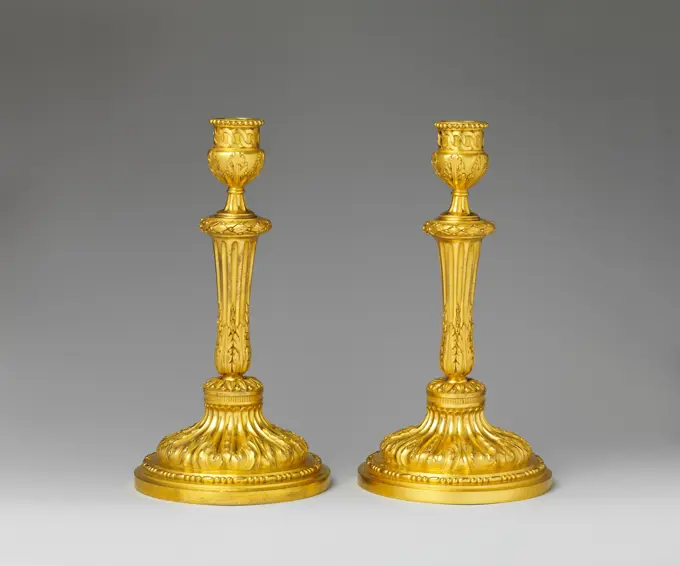
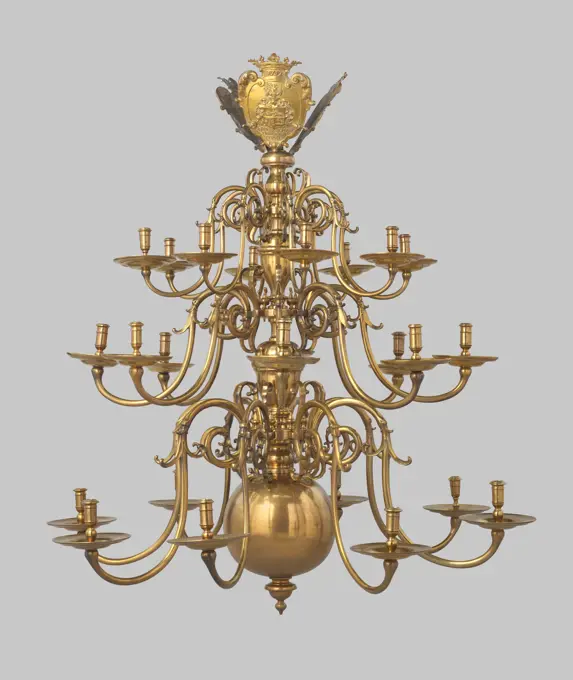
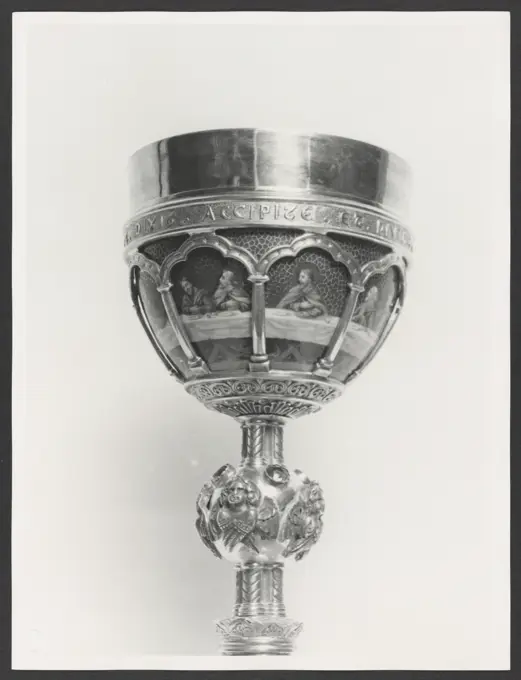
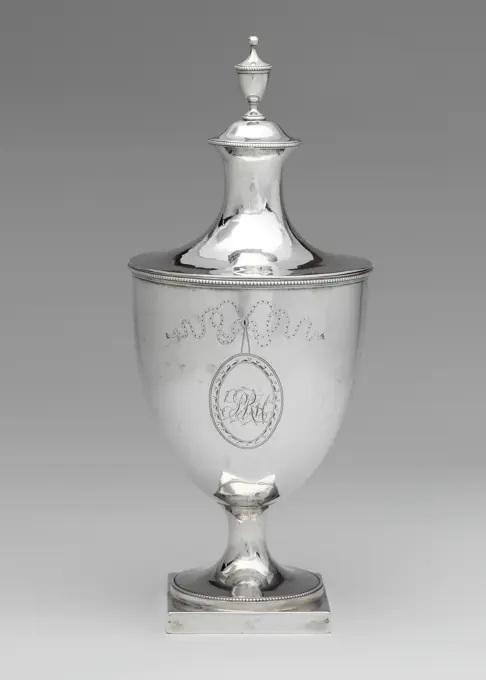
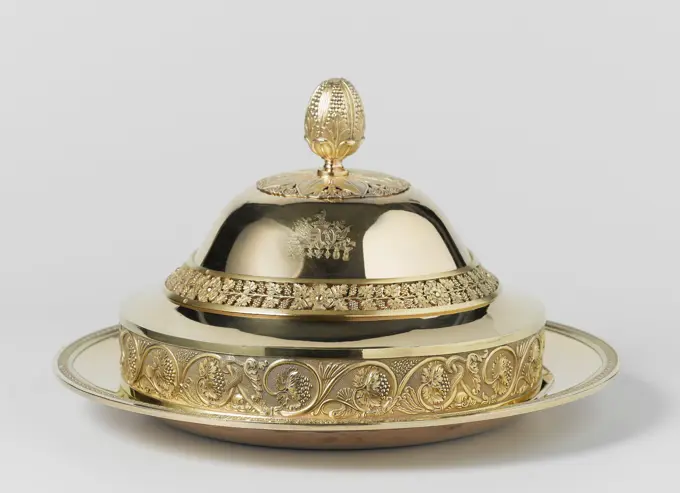
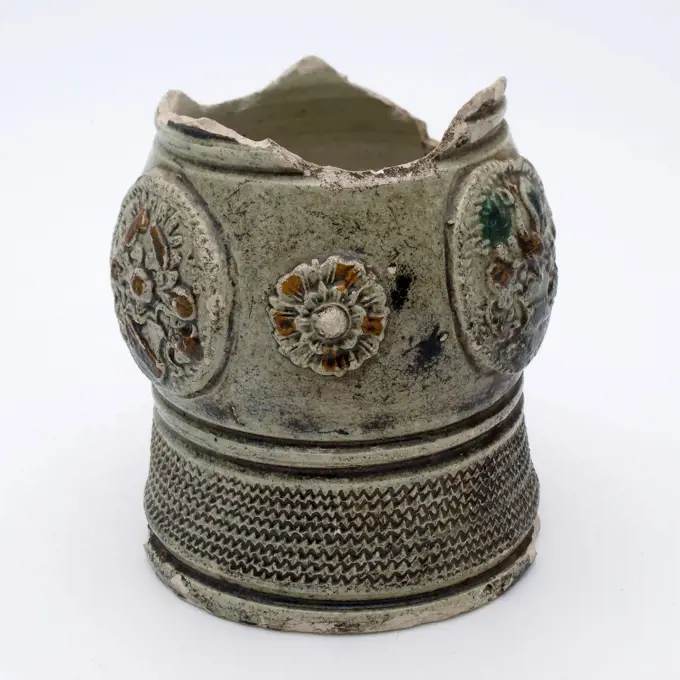
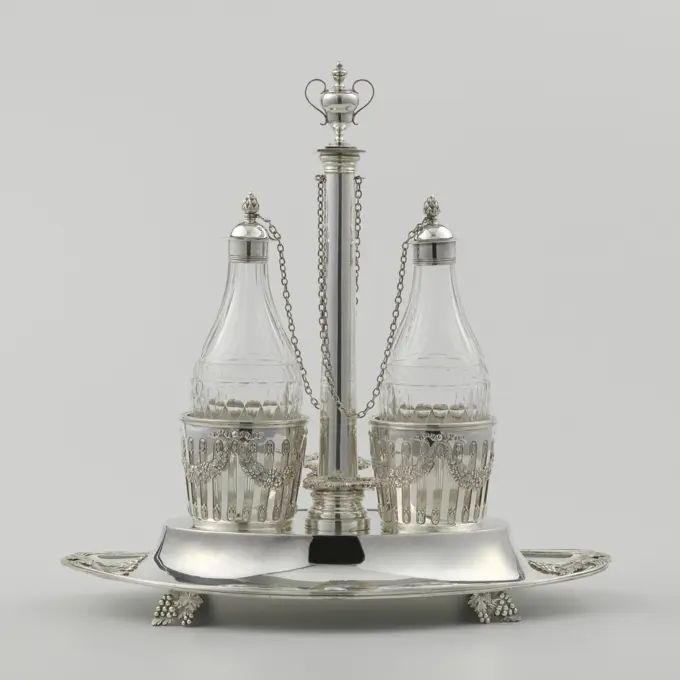
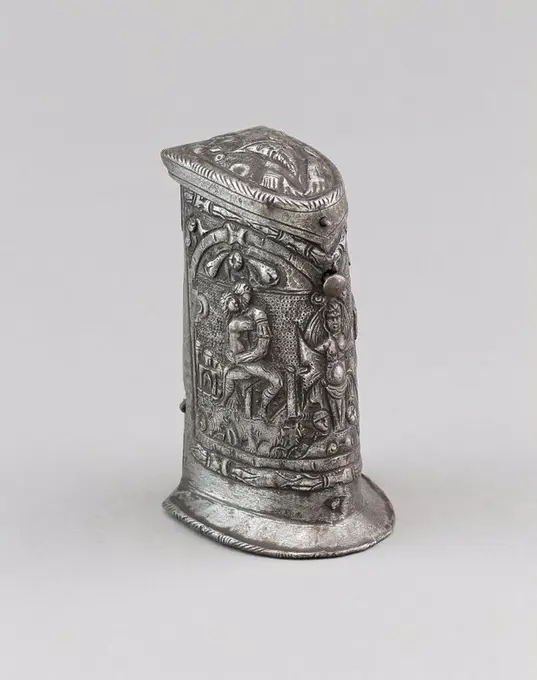
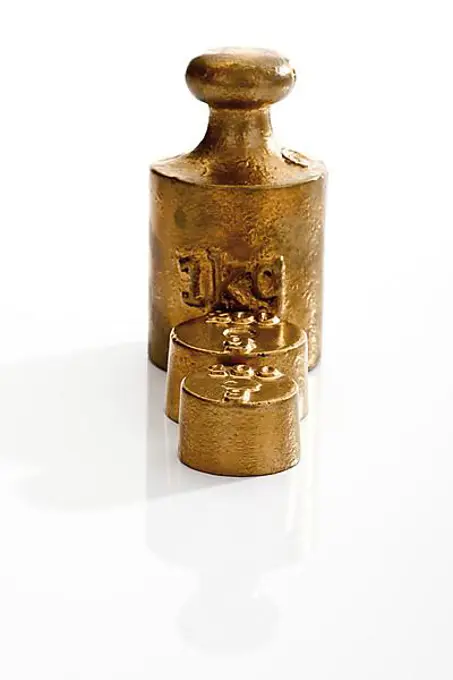
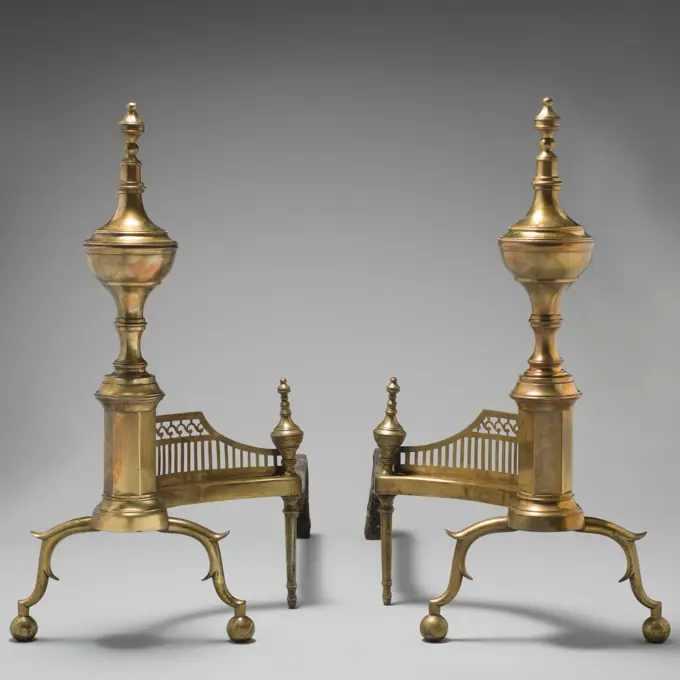
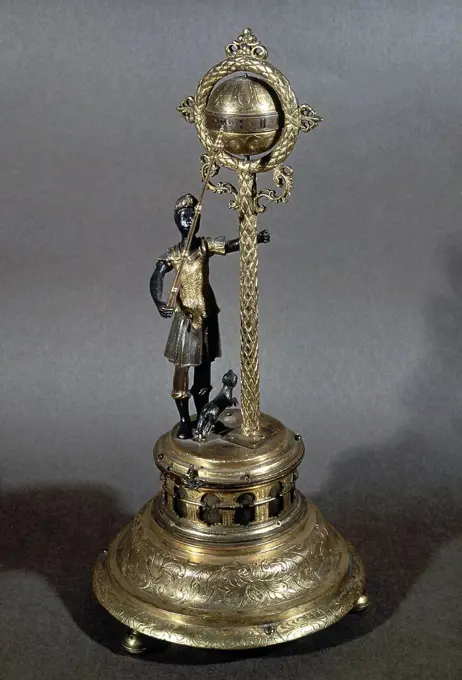
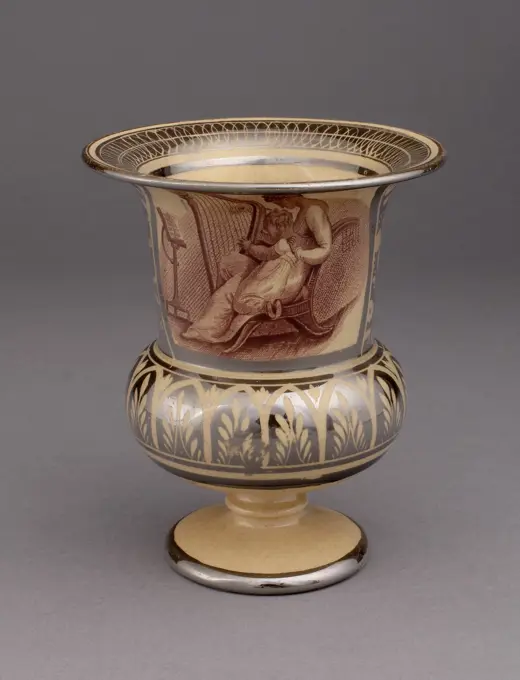
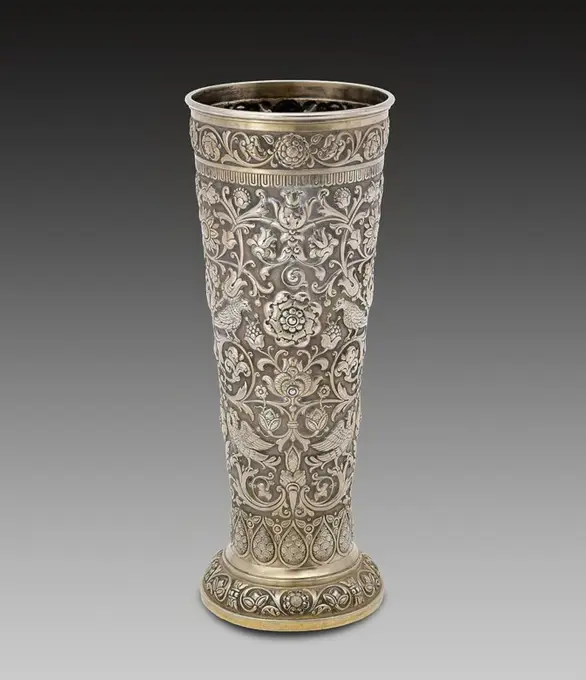
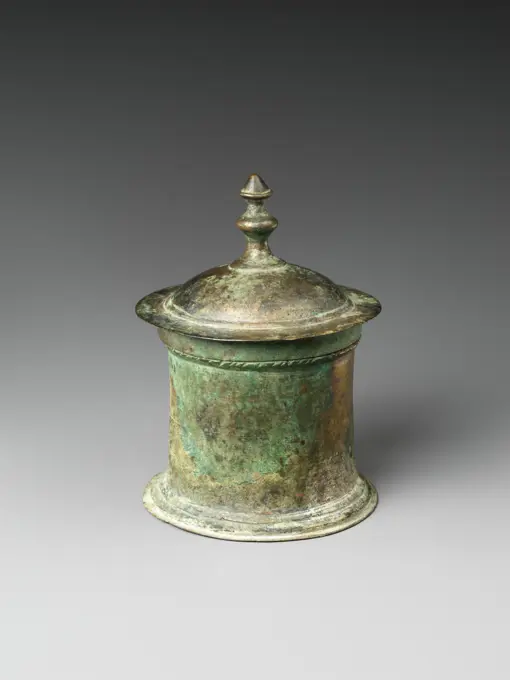
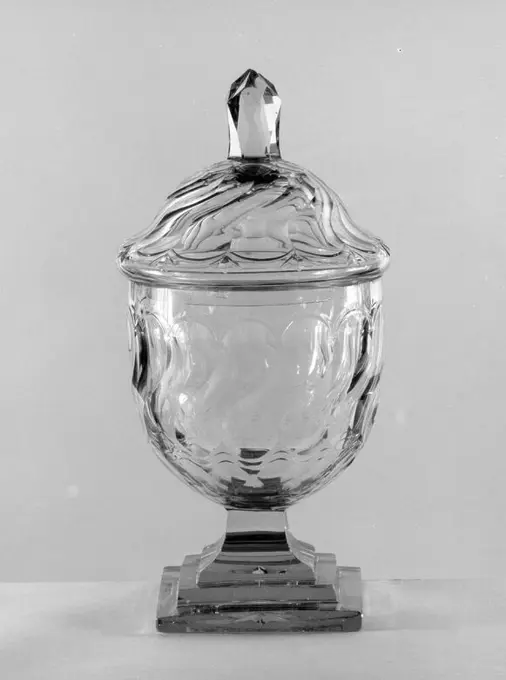
Vase 1815-1825 Leeds. Earthenware with silver lustre decoration, monochrome brown, and yellow ground . Adam Buck (Decorator)Sponge Box 1857 Netherlands. Silver .Gold Goblet 700s Avar or Byzantine This goblet may in fact be a Byzantine export, though the foot of the cup does not conform to the standard shape of Byzantine chalices.The AvarsThe Avars were a nomadic tribe of mounted warriors from the Eurasian steppe. The Byzantine emperor Justinian negotiated with them in the sixth century to protect the Empires northern border along the Black Sea. Emboldened by their subjugation of numerous tribes, they unsuccessfully attempted to seize the Empires capital, Constantinople. They remained a scourge of both Byzantium and the Western kingdoms until Charlemagne defeated them through a series of campaigns in the 790s and early 800s.All the money and treasure that the Avars had been years amassing was seized, and no war in which the Franks have ever engaged.. brought them such riches and such booty. Up to that time the Avars had passed for a poor people, but so much gold and silver was found.. that one may well think that the Franks took justly from tSistrum (rattle) ca. 2300-2000 B.C. Hattian. Sistrum (rattle). Hattian. ca. 2300-2000 B.C.. Copper alloy. Early Bronze Age III. Central AnatoliaWaste bowl, Silver, Ovoid body on spreading foot, with bead edging and fret band. Engraved on one side: 'Gussie from Father and Mother.' Monogram on opposite side: 'A J()S().', Philadelphia, Pennsylvania, USA, 1825-50, metalwork, Decorative Arts, Waste bowlPyxis (Container for Personal Objects) 430 BCE-420 BCE Athens. Nine women are depicted in the figured scene that runs right around the vase. The women are presumably in the gynaikeion or womenís quarters, and include a seated woman with a book roll, a woman holding wreath, a woman with a mirror, a woman with an alabastron, a woman with a sash, a woman with a lyre, a woman with a mirror, a girl standing stiff and straight to the right, who might be the bride-to-be, and a woman with an alabastron.Vessels of this type were probably used to hold personal effects like cosmetics, jewelry, or other trinkets and were often given as wedding gifts.. terracotta, decorated in the red-figure technique . Ancient GreekGoblet (England); copper, silver, gold, leadPotpourri ca. 1860-70 Minton(s) Minton was the most important ceramics factory during the Victorian period and began exhibiting products at the first Great Exhibition of 1851. Founded in 1793 by Thomas Minton at Stoke-on-Trent, the firm initially specialized in transferware pottery before expanding under the ownership of Thomass son Herbert Minton, beginning in 1836. Under the ownership of Colin Minton Campbell, who succeeded his uncle in 1858, the factory became recognized as a specialist producer of Aesthetics movement porcelain, which were inspired by a rich array of exotic and eclectic decorative motifs.. Potpourri. British, Stoke-on-Trent, Staffordshire. ca. 1860-70. Bone china and unglazed porcelain (Parian ware). Ceramics-Porcelain. Small arm with the accompanying fat catcher and holder. The labeled arm has a bol and hollow-profiled nodus in the middle and thickened a little on either side. At the trunk she walks out in spiral curls. It goes outwards in the screw ends of iron, on which the candle holder can be attached. The round fat catcher has lowered edges. The round in each other's extended openwork holders have holronde feet, which are screwed on the arms.Glass. The warden of Voorne and Putten organized an annual dinner for the officials with whom he would adjudicate that year. At this event they all drank from this cup, affirming that they would review the disputes brought before them in concert and without prejudice. The cup is superbly worked with chasing and enamel.Foot fragment goblet or flute glass, folded foot edge, hollow ball in trunk, pontilmark, flute glass drinking glass drinkware tableware holder soil find glass, free blown Goblet or flute glass Discoloration by irides dof appearance Foot with folded rim pontilmerk in the middle soul In the trunk large hollow ball Probably the base been conical chalice of flute glass archeology Valckensteyn Poortugaal Albrandswaard drink liquor wine beer serve Soil discovery: castle Valckensteyn in Poortugaal now Albrandswaard 1961-1962.. Large arm of candle wreath.. Small arm of candles wreath.Anonymous. Incense burner. Céladon, golden bronze, 1750. Paris, Cognacq-Jay museum. 78926-8 Anse, bronze gilded, burn-brurge, ceramic, ceramic, lid, gilding, flower, 18th 18th 18th 18th 18th 18th 18The silver top of a mosque from Java in Indonesia. 21st Century. .Censer (kôro). unknown, craftsmanAnonymous; Josias Belle (); Taller Parisino / 'Sardony gadroon glass with eagle's head'. After 1689. Diamond, Emerald, Gold, Ruby, Ágata sardónice. Museum: Museo del Prado, Madrid, España.Pair of vases ca. 1780 possibly Russian, St. Petersburg with French mounts In the second half of the eighteenth-century, French designers sought ever rarer and more exotic materials for decorative objects. This pair of vases, of a granite called orbicular diorite found in both Corsica and the Ural mountains, may have been turned and polished either in Paris or St. Petersburg, where there was a luxury market for hard stone objects. They were then completed in Paris with gilt-bronze mounts including large handles in the form of rams' heads and finials with a knob of berries above acanthus leaves. Objects of this quality were much sought after by collectors and were sometimes especially commissioned by the Parisian dealers called "marchands merciers".. Pair of vases. possibly Russian, St. Petersburg with French mounts. ca. 1780. Orbicular diorite, gilt bronze. Metalwork-Gilt BronzeTureen with cover and stand 1770-71 Jacques-Nicolas Roettiers This tureen and stand comprise one of twenty-two such tureens in the most extensive silver service of the second half of the eighteenth century, numbering more than 3,000 items. Catherine the Great commissioned it to be "made in the latest fashion" in Paris. The empress was concerned with the smallest details of the design and production. The sculptor Étienne-Maurice Falconet, who had been instrumental in introducing the Neoclassical style to the Sèvres porcelain factory, advised on stylistic matters and may have been responsible for some of the drawings, whereas imperial Russian agents periodically supervised the execution at the various workshops involved in filling this large order.Catherine, born Princess Anhalt-Zerbst, had grown up in comparatively modest circumstances, thus possessed an intense enthusiasm for an opulent court life, in which the decorative arts played an important role. The silver service is a rare docuStanding cup with cover 1737 Basil Nikiforoff. Standing cup with cover 195247Ceremonial ewer ca. 1520-50 Portuguese The ewer exemplifies the individual interpretation of the Renaissance style in Portugal. Its daring juxtaposition of whimsical, exotic and macabre sculptural details attests to the commanding quality of Portuguese design. By combining the extravagant and the bizarrefabulous beasts, mythological creatures and all too mortal humans, vanitas symbols of earthly fame, beauty and of inevitable deathit mirrors perfectly the period’s taste for the odd and the unexpected that was a result of the astonishing successes of Portuguese navigators’ voyages of discovery. Very likely a royal commission, the form of the ewer is rooted in the last phase of the Manueline style, named for King Manuel I (1469-1521) that combines details of flamboyant Late Gothic architecture, Italian, as well as Flemish, elements and even references to the decoration of East Indian temples. Among the king's favored diplomatic gifts were white elephants, venerated as divine in Asia, aHandbell, anonymous, c. 1720 - c. 1770 Bell -shaped table bell with handle. The handle is baluster -shaped. A wreath of leaves is engraved around the onset of the handle. On the bell is halfway through an imposed piping. The table bell is marked, but the brand is unreadable. Netherlands silver (metal) Bell -shaped table bell with handle. The handle is baluster -shaped. A wreath of leaves is engraved around the onset of the handle. On the bell is halfway through an imposed piping. The table bell is marked, but the brand is unreadable. Netherlands silver (metal)Communion Cup and Paten Cover 1640-1641 London. Silver .Vase. England, Leeds; With Transfer Decoration after Adam Buck; Irish, 1759-1833. Date: 1815-1825. Dimensions: H. 11.4 cm (4 1/2 in.). Earthenware with silver lustre decoration, monochrome brown, and yellow ground. Origin: Leeds. Museum: The Chicago Art Institute, Chicago, USA.Arm with candle holder of candle crown of two heights with eight arms each, c. 1525 - c. 1550 Candle arm belonging to a candle crown of two heights with maria figure at the top. The arm is bent twice and is decorated with nine grape bunches and five vine leaves. The round fat catcher is decorated with fish bladder motifs at the bottom and has an excellent edge of cross flowers towards the middle, which masks the placement on the arm. The candle holder is six -flat, opened, placed on three vertical styles, transferring to a threaded protrusion. This is the second arm of the bottom ring, numbered with 7 round points. The candle holder is numbered with 2 diagonal notches. Southern Netherlands brass (alloy) casting  Barneveld Candle arm belonging to a candle crown of two heights with maria figure at the top. The arm is bent twice and is decorated with nine grape bunches and five vine leaves. The round fat catcher is decorated with fish bladder motifs at the bottom and has an excellent edgeLouis-Jacques Berger. "Cup". Money. 1807-1809. Museum of Fine Arts of the City of Paris, Petit Palais. 74382-23 Money, silverware, gobletOliekan, belonging to a spice service., Anthonie Grill (attributed to), 1642 Oliekan, belonging to a spice service. The oil can rests on a six -lobe base on which, above a narrow knder edge, a diabolo -shaped intermediate piece is placed. Above the body that has the shape of a pineal, decorated with drop -shaped bulges. On the neck widening upwards there is a multiple profiled folding lid that is crowned by a button in the shape of a pineal. The KAN has a standing S-shaped ear that is decorated at the top with cracks and an S-shaped spout whose end is formed by a monster head with soft lobe-like shapes. Marked on the foot edge: Stadsweur Amsterdam; Jrl. L = 1642; mt. Stork between AG. Amsterdam silver (metal). gilding (material) casting / gilding Oliekan, belonging to a spice service. The oil can rests on a six -lobe base on which, above a narrow knder edge, a diabolo -shaped intermediate piece is placed. Above the body that has the shape of a pineal, decorated with drop -shaped bulges'Golden Jubilee of Queen Victoria' Presentation Cup and Cover. India, Gujarat, Kachchh (Kutch), circa 1885. Furnishings; Accessories. Gilded silver, repoussé and openworkBell with Bull with Chain. Culture: Indonesia (Java). Dimensions: H. (excl. chain) 11 in. (28.5 cm); Diam. 6 7/8 in. (17.5 cm). Date: 10th-11th century(). Museum: Metropolitan Museum of Art, New York, USA.Water goblet. Culture: French, Saint-Louis-les-Bitche. Dimensions: Height: 5 5/8 in. (14.3 cm). Maker: Probably made at Compagnie des Cristalleries de Saint-Louis (est. 1586 (as Verrerie de Münzthal); 1767 renamed as Compagnie des Cristalleries). Date: ca. 1845. Museum: Metropolitan Museum of Art, New York, USA.Lamp 1825-50 American. Lamp. American. 1825-50. Pewter. Probably made in New York, United StatesTrioullier et fils (association founded in 1863). "Chalice and his paten". Golden silver, stamped, molded and chopped, enamels and hard stones. After 1863. Museum of Fine Arts of the City of Paris, Petit Palais. 71340-4 Lamb Pascal, silver dore print, silver mussel chisel, chalice, cene, chretien, last meal, email, eucharist, religious object, goldsmith, patene, hard stone, precious stone, Catholic religion, religious scene, 19th centuryÉtui mid-18th century probably British. Étui. probably British. mid-18th century. Gold and agate. Metalwork-Gold and PlatinumVase. Ovchinnikov Firm; Moscow, 1853-1917; St. Petersburg, 1873-1917; Moscow. Date: 1899-1900. Dimensions: 29.2 x 12.1 cm (11 1/2 x 4 3/4 in.). Silver gilt. Origin: Russia. Museum: The Chicago Art Institute, Chicago, USA.Covered Reliquary 1st century Pakistan (ancient region of Gandhara). Covered Reliquary. Pakistan (ancient region of Gandhara). 1st century. Bronze. SculptureCandlestick (one of a pair) 1753-55 Possibly by Johann Martin Satzger I The crowned cipher "W" belonged to Duke Wilhelm in Bavaria (1752-1837).. Candlestick (one of a pair) 206262Creamer Charles Faris American 1790-1800Cup, 7th-8th century, 2 3/8 x 2in. (6 x 5.1cm), Bronze, China, 7th-10th centuryCandlestick -Candlestick of brass. The candle holder has been poured into two parts, the foot as a whole. At the bottom of the base the holders are restiled with tin. The conical foot has an edge maniceled in acko-profile profile. The slightly cylindrically shaped holder is decorated with silly ribs.Przeszo Przyszoci unknownRelicario de la Santa Espina, siglo XVI. Monasterio Cisterciense De Santa María De Vallbona.Paul Revere Jr., Sugar Bowl and Cover, c. 1795, silver.Covered Cup (cover), 1723-1724. Gabriel Sleath (British, 1674-1756). Silver; overall: 25.7 x 23.2 x 13.7 cm (10 1/8 x 9 1/8 x 5 3/8 in.).Flute glass with the alliance weapon Stegeman-de Quade, Anonymous, c. 1593 Flat base with turned around and pontil brand. Hollow, baluster-shaped trunk with two discs, blown in the shape of two lion masks between garlands, shot with a border on the lower and top. High, funnel -shaped chalice. On the chalice, the inscription is engraved 'Siet how nice and loving is it all stood that fragging is in Eendraghttyhtycheit'. Furthermore, a twig with three orange apples. Among them two weapons connected by two in -one hands that hold three arrows. Upstairs and below the hands the Latin spell 'Concordia insuperabilis ratione et Constantia' (in translation: 'invincible by Eendracht, Rede and Steadfastness'). The left men's weapon is shield -shaped and celebrated 1 and 4 a crossbar 2 and 3 a raised horizontal tree stump, accompanied below from a French lily. In the heart shield a cross accompanied by four drying scissors with the points directed down. As a helmet sign a significant naked man, whoBeaker 1757-58 Jacques Besnier. Beaker 200290Candlestick worn by three fantasy animals, anonymous, c. 1400 - c. 1525 The object is composed of the following parts: the foot, the trunk and the fat catcher, which are cast in one whole, and the candle pin. The trunk is hollow from the inside to the upper knot. The profiled Konical foot turns into the round trunk with two knots, and then in the fat catcher, on which the candle pin is applied. The raised wall of the round -deepened Vetavanger bends in a horizontal edge, which turns into a narrow raised edge. Foot, trunk and fat catcher are decorated with fine grooved rings. The candlestick has three cams at the bottom of the inside, to which the three foots are mounted in the form of a fantasized animal. The three pedestals and the pin have been renewed. Northern Netherlands (possibly) brass (alloy) casting The object is composed of the following parts: the foot, the trunk and the fat catcher, which are cast in one whole, and the candle pin. The trunk is hollow from the inside to the Spoon 1586 Attributed to Sebastianus Aurifaber The former northern Hungarian town of Lőcse had a vibrant cultural scene and prospering economy until the end of sixteenth century. It was a center of humanist learning and Reformation thinking and a printing press was established there as early as 1624. Aurifaber is mentioned in public records as the first goldsmith master of the local guild in 1575.LiteratureEuropean Silver. Sale cat., Sothebys, Geneva, May 12, 1983, p. 45, no. 107.Judit H. Kolba. Hungarian Silver: The Nicolas M. Salgo Collection. London, 1996, p. 27, no. 5.ReferencesElemér Kőszeghy. Magyarországi ötvösjegyek a középkortól 1867-ig / Merkzeichen der Goldschmiede Ungarns vom Mittelalter bis 1867. Budapest, 1936, possibly no. 1170 [makers mark.[Wolfram Koeppe 2015. Spoon 236985Candlestick, Francois Marcus Simons, 1803 Candlestick with foot. Marked and dated. The Hague silver (metal) casting Candlestick with foot. Marked and dated. The Hague silver (metal) castingChalice.  Maker: Assayer Felipe De Ribas El Mayor”Przeszo Przyszoci unknownCandlestick of brass. The object, which is completely poured into a whole, has a round foot, a slightly bol and baluster-shaped stem, a round fat catcher and a candle pin profiled with the impetus. Inside, the round hollow strain is marked by four grooves at mutual distance, serving to provide the lathe. The object shows small differences with Candlestick BK-NM-2289-A.Newel post 18th century French. Newel post 189359 French, Newel post, 18th century, Oak (), wax-polished, Overall (confirmed): 64 x 14 1/2 x 14 in. (162.6 x 36.8 x 35.6 cm). The Metropolitan Museum of Art, New York. Gift of J. Pierpont Morgan, 1906 (07.225.79)Old Russian samovar on white background, isolated
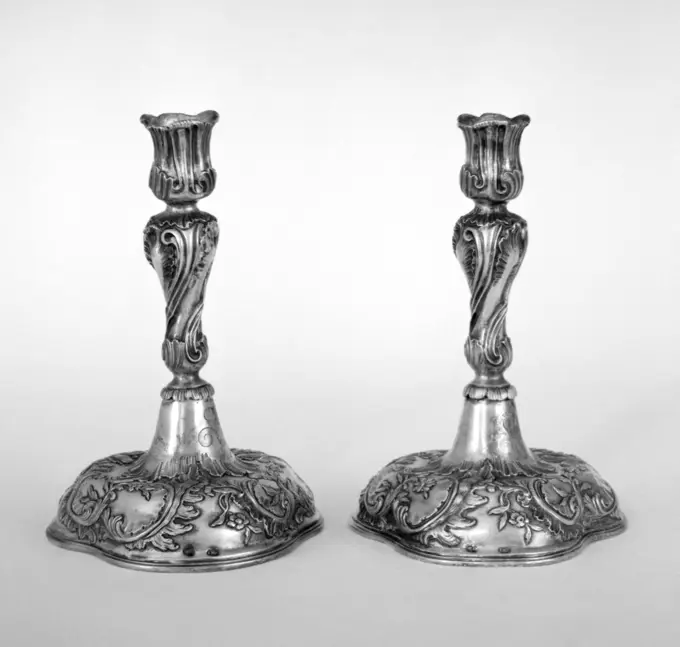
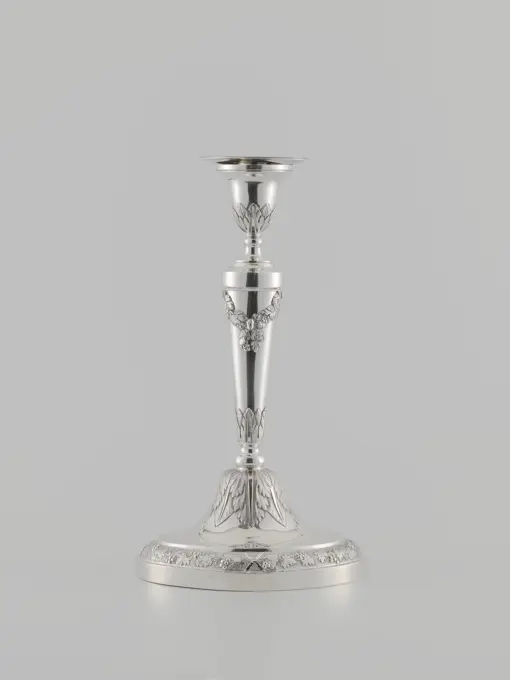
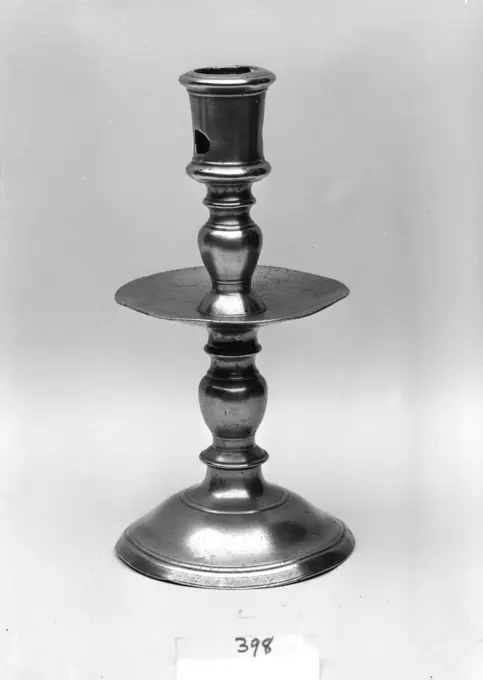
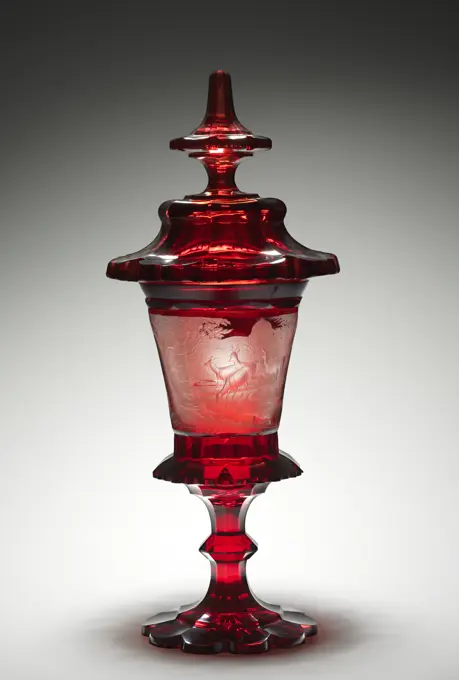
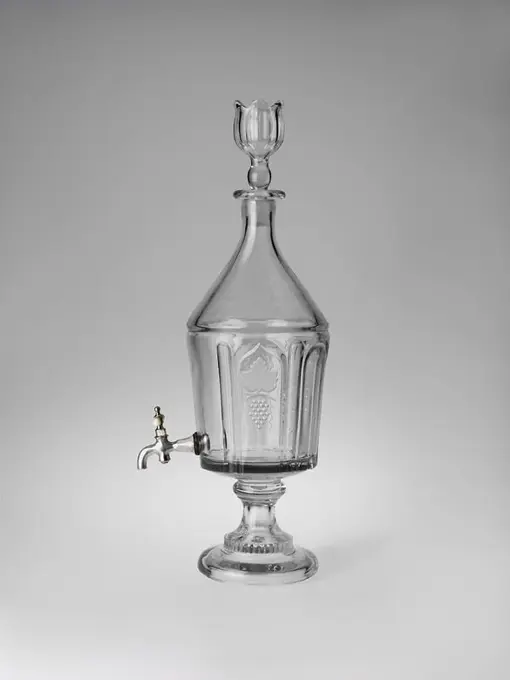
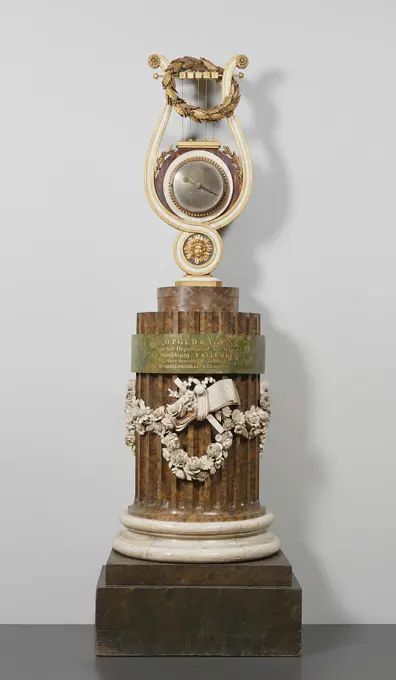
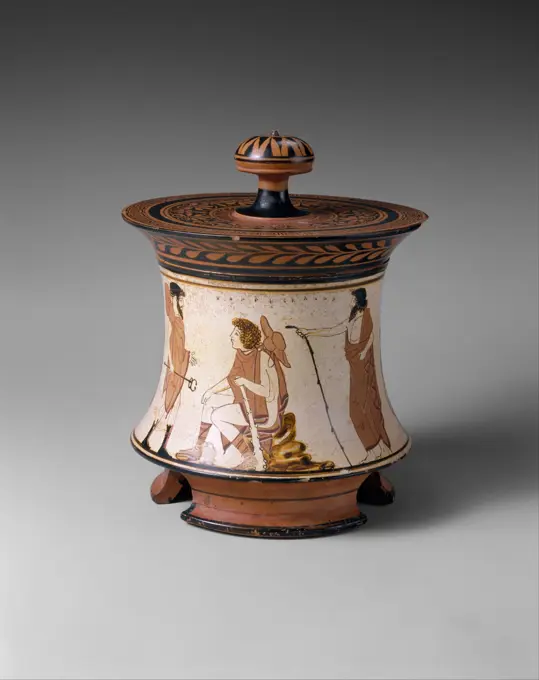
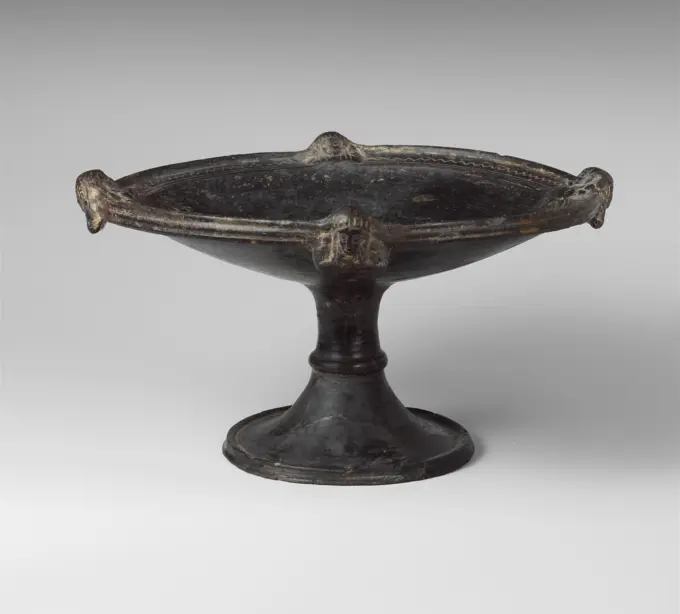
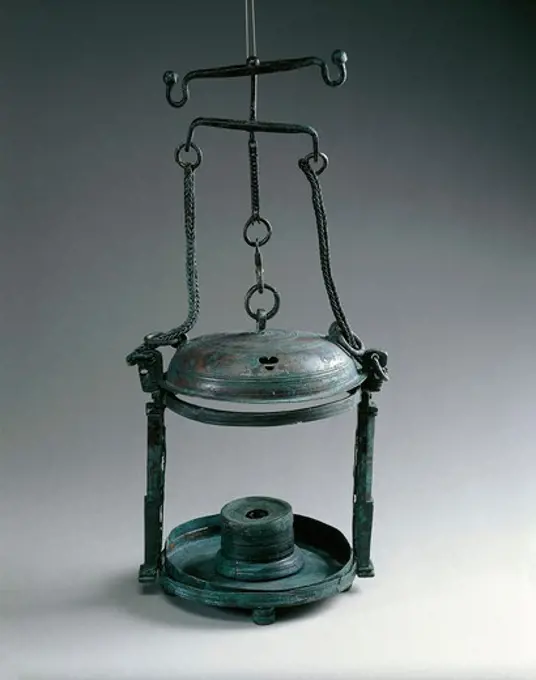
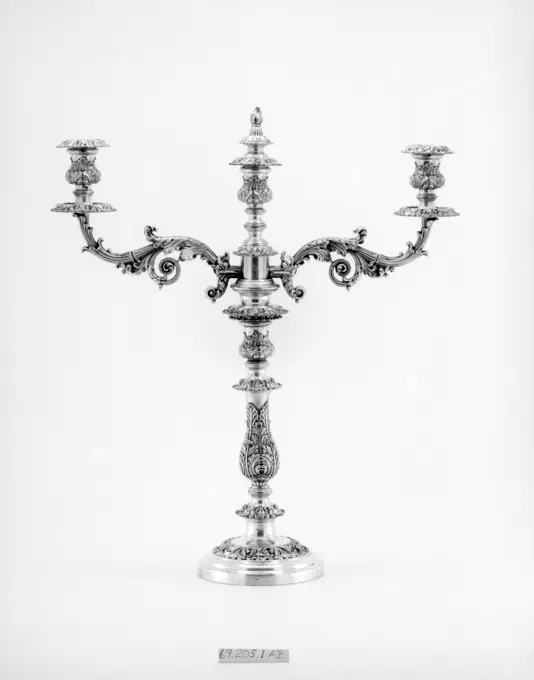
Candlestick 1600-1700. Candlestick. 1600-1700. Brass. Possibly made in Netherlands; Possibly made in EnglandPair of candlesticks 1724-27 French, Paris. Pair of candlesticks 200357Covered Cup, mid-1800s. Bohemia, 19th century. Ruby glass with engraved decoration; diameter: 36.5 x 17.5 cm (14 3/8 x 6 7/8 in.); overall: 59 cm (23 1/4 in.).Bell-Shaped Huqqa Base with Floral Design 1701-1800 Hyderabad. Zinc alloy inlaid with copper and silver (bidriware) .Candelabra (one of a pair). Tiffany and Company; American, founded 1837; Chasing by Eugene J. Soligny; American, c. 1833-1901; New York, New York. Date: 1873. Dimensions: 77.4 × 43.2 cm (30 1/2 × 17 in.). Silver. Origin: New York City. Museum: The Chicago Art Institute, Chicago, USA.. Candlestick on square, sketched foot. The trunk is square, profiled and baluster-shaped. The candlestick is not noticed. The candlestick hears an identical candlestick (Invnr. BK-NM-11177-140).Candlestick. Culture: Spanish. Dimensions: Overall: 16 15/16 x 6 11/16 x 6 11/16 in. (43.1 x 17 x 17 cm). Date: 16th century. Museum: Metropolitan Museum of Art, New York, USA.Oil can, belonging to a spice detection .. Oliekan, belonging to a spice service. The oil can rest on a six-spectant foot on which, a diabolo-shaped spacer is placed above a narrow knerr edge. Aboves the body that has the shape of a pine apple, decorated with drip-shaped bulges. On the neck fluttered to the top is a multi-profiled hinged cover that is crowned by a button in the form of a pine cone. The can have a standing S-shaped ear that is decorated at the top with knerring and an S-shaped spout whose end is formed by a sample cap with soft lobe-like forms. Marked on the foot edge: Stadskeur Amsterdam; JRL. L = 1642; Mt. Stork between AG.Wine urn. Culture: American. Dimensions: H. 20 7/8 in. (53 cm). Maker: Probably Boston & Sandwich Glass Company (American, 1825-1888, Sandwich, Massachusetts). Date: 1869-80.Because the mold for such an ambitious piece as this one would have been very costly, this urn was probably one of the most expensive pressed-glass articles of its time. It is decorated in a pattern called "magnet and grape" by collectors. The patent information on the spigot indicates that this piece was manufactured after 1869, although the pattern may date from around 1850. The design motif reflects Victorian delight in ornament appropriate to the object; here, a bunch of grapes for a wine urn. Museum: Metropolitan Museum of Art, New York, USA.Hanging lantern, c. 1895, William Arthur Smith Benson, British, English, 1854-1924, 11 x 6 1/2in. (27.9 x 16.5cm), Glass, brass, England, Arts and CraftsMetronome.A metronome is a device for keeping time (a steady beat) while playing music. This example was given by several members of the Felix Meritis Society to its music department. It is shaped like a lyre surmounted by a laurel wreath, symbolizing the Triumph of Music.Terracotta pyxis (box) ca. 465-460 B.C. Attributed to the Penthesilea Painter The Judgement of ParisDuring the middle of the fifth century B.C., the white-ground technique was commonly used for lekythoi, oil flasks placed on graves, and for fine vases of other shapes. As classical painters sought to achieve ever more complex effects with the limited possibilities of red-figure, the white background gave new prominence to the glaze lines and polychromy. The decoration of this pyxis reflects the delight with which an accomplished artist like the Penthesilea Painter depicted a traditional subject. Listen to experts illuminate this artwork's story Listen Play or pause #1029. Terracotta pyxis (box) Supported by Bloomberg Philanthropies We're sorry, the transcript for this audio track is not available at this time. We are working to make it available as soon as possible.. Terracotta pyxis (box). Greek, Attic. ca. 465-460 B.C.. Terracotta; white-ground. Classical. VasesArm of a candle crown in three heights, Anonymous, 1625 - 1650 The arm is provided with a ridge on the tribe side, in which a hole is applied to secure them with a pin in the stand rings. The S-shaped arm has the shape of a hose with a tail-wrinkled tail and outside a lifted head with a round button on it, in which the hole provided for a thread is applied to confirm the candle holders with the fat catchers. The arm is cast using the same model as the other arms of the wreath. The round candle holder is vase -shaped with a profiled rib. At the top she has two holid profile, and a protruding edge and at the bottom of a foot consisting of two holy -round profiles. The foot runs out in a rejuvenating screw end with a center hole. The convex fat catcher is smooth at the top and has fish bladder -like godrons and a rib at the bottom. The fat catcher is cast using the same model as the other fat catchers of the wreath. The pins are decorated with convex buttons. This is the sixth arm of the Pair of candlesticks ca. 1770-75 French. Pair of candlesticks 236576Cartridge Box Made 1570-1575 Brunswick. To aid in loading pistols from horseback, a premeasured amount of black powder and a lead ball were prepared in cylindrical paper cartridges. This box suspended from the shooterís belt and could contain four such cartridges. The shooter would tear the paper, pour the powder charge down the barrel, and tamp the bullet over the charge.Cartridge boxes were often ornamented with figures and coats of arms. This one is startlingly embossed with two lovers, a subject frequently associated with shooting in this period.. Steel, iron and wood .Chamber candlestick 1817-18 Rebecca Emes. Chamber candlestick 232356Terracotta stemmed dish 6th century B.C. Etruscan The rim is decorated with four heads in relief.It is interesting to compare this object with its Attic counterpart (1977.11.5) of about a century later Though comparable in general appearance, they are significantly different in the quality of the clay and in the articulation of the shape.. Terracotta stemmed dish 246228Arm of a candle crown in three heights, Anonymous, 1717 chandelier The S-shaped arm is equipped with a ridge on the tribe side to secure it with a pin in the stand ring. At the trunk, the arm is decorated at the end and to the center with two stylized dolphin heads and with curls, the shape of which is derived from the lobe ornament. To the outside, the arm ends in a thickening, in which a hole provided with a thread is applied to attach the candle holder to the fat catcher. The arm is cast using the same model as the other arms of the wreath. The candle holder is cylinder -shaped with profiled excellent edge and with a baluster foot, which turns into a threaded end, in which the center hole at the bottom. The fat catcher is deepened twice at the top towards the center. At the bottom it is profiled around the hole in the somewhat spherical center and the edge is ribbed. The fat catcher has been cast using the same model as the other fat catchers of this wreath. The pin is equipped withHat standard of black lacquered wood, c. 1910 - c. 1930 stand (support object) Hat standard of black lacquered wood. On the round, profiled foot there is a composite baluster tribe with a round support. Netherlands wood (plant material) lacqueringFinial (Italy); carved wood, gessoed and giltBronze lantern with three footed circular flat base, from PompeiLazio Roma Velletri Museo Capitolare6. Hutzel, Max 1960-1990 Medieval: Breviaries (two, 14-15th century); "The Passion" on vellum (French school, late 13th century); reliquaries. Post-medieval: Paintings, frescoes, vestments, sculpture, metalwork, panel painting Object Notes: Bibliographic material housed in Center library. Hutzel photo campaign dates: one undated, another November 9, 1985. It is likely that notes for the Pinacoteca Cattedrale (no separate Hutzel entry) describe items under this heading. TCI seems to indicate that the Museo Capitolare is adjacent to the cathedral. As well, some prints are missing; the initial Hutzel entry indicates that there are 422 prints. At this count, I can find 142. German-born photographer and scholar Max Hutzel (1911-1988) photographed in Italy from the early 1960s until his death. The result of this project, referred to by Hutzel as Foto Arte Minore, is thorough documentation of art historical development in Italy up to the 18th century, incluCzarka on the footEMPUÑADURA VIKINGA DE ESPADA, CON POMO DE ORO Y ESMALTES.Bin of Kastanjevaas decorated with griffins. Bake from Kastanjevaas with ears in the form of griffins.Sugar Bowl ca. 1800 Joel Sayre. Sugar Bowl 8024Pair of candlesticks ca. 1745-49 French. Pair of candlesticks 199863Caster ca. 1773 American. Caster 1461Circular dish, Jean Baptiste Claude Odiot, c. 1819 Round Empire dish of gilded silver. Decorated with a narrow palmetrand. Engraved with the weapon of Potemkin. Paris silver (metal). gilding (material) gilding Round Empire dish of gilded silver. Decorated with a narrow palmetrand. Engraved with the weapon of Potemkin. Paris silver (metal). gilding (material) gildingGreen foot of cup or mug with three weapon medallions and two rosettes, rad stamp around foot, jug cup drinking utensils tableware holder soil find ceramic stoneware pottery glaze lead glaze, hand turned stamped molded glazed fried Fragment of drinking jug or cup decorated with rad stamping around the foot and imposed weapon medallions and rosettes. White-gray shard entirely covered with greenish lead glaze. Raised accents on the reliefs of the medallions in brown and green Two different types of weapon medallions both with parts of lettering. Stand surface. End of standing ear above the foot Text in the medallions: DR * V * 6 RRH DR * V ** archeology indigenous pottery import drink serve wine beer heraldryBottle belonging to oil and vinegar consisting of two bottles and one holder, Francois Marcus Simons, 1803 Bottle with sharpened decoration. The silver cap is attached to the holder with a chain The Hague crystal (lead glass) Bottle with sharpened decoration. The silver cap is attached to the holder with a chain The Hague crystal (lead glass)Cartridge Box. German, probably Brunswick. Date: 1570-1575. Dimensions: H. 12 cm (4 3/4 in.)Wt. 9 oz. Steel, iron and wood. Origin: Brunswick. Museum: The Chicago Art Institute, Chicago, USA.triple candlesholder with one candle isolated on white backgroundPortable candle holderArm with candle holder of candle crown of three heights, c. 1675 - c. 1725 Candle belonging to a brass candle crown of three heights. The S-shaped arm has a curl and turns outside into the flat thickening with a screw hole. The candle holder is secured with the fat catcher. The fat catcher is ribbed to the bottom of the opening and also has two grooved rings and a single grooved ring. The cylindrical candle holder, who has a profiled excellent edge, two grooved rings and a thickening at the bottom, turns into a baluster with the end with a flat underside at the bottom. This is the fourth arm of the middle stand ring, numbered with 4 round points. The pin, to attach the arm to the stand ring, has a round button on top. Southern Netherlands (possibly) brass (alloy) casting Candle belonging to a brass candle crown of three heights. The S-shaped arm has a curl and turns outside into the flat thickening with a screw hole. The candle holder is secured with the fat catcher. The fat catcher isSounding Lead.Deepzeelood, consisting of a brass cylinder with loden foot, and a countdown. The countdown consists of a small double-leaf propeller on top of which drives a screw without end in the cylinder, on which a pointer moves behind a viewing glass with a scale next to it. Two protective brackets are applied to the propeller; Propeller blades fold out as soon as lead in the water drops, and hit down as soon as it is lit.Golden weightsPair of andirons 18th century British. Pair of andirons. British. 18th century. Brass. Metalwork-BrassRELOJ DE MESA-MECANISMO FIGURAS MOVILES S XVI. Author: MIMO. Location: PRIVATE COLLECTION. MADRID. SPAIN.Candle holder. Candlestick on a square, profiled, vaulted foot with chamfered corners. The strain is profiled and baluster-shaped. The candlestick is labeled: STK. = Amsterdam, JRL. = G (1741), Mt. = Willem of STRANT and an ax.Covered Sweetmeat Jar. Culture: Irish. Dimensions: 11 3/8 x 5 7/8 in. (28.9 x 14.9 cm). Date: 1775-1800. Museum: Metropolitan Museum of Art, New York, USA.Kop, Tea head, part of a tête-à-tête, painted with Lelies, N.V. Haagsche Plateel Factory Rozenburg, 1900 Kop, tea head of a porcelain tête-à-tête. Painted in yellow, reddish -brown and different shades of green with an ornamental decor, in which lilies. On all parts the monogram MVV (= Michiels van Verduynen) and the weapon of this family, in which the color blue also occurs. Marked Rozenburg. The Hague porcelain Kop, tea head of a porcelain tête-à-tête. Painted in yellow, reddish -brown and different shades of green with an ornamental decor, in which lilies. On all parts the monogram MVV (= Michiels van Verduynen) and the weapon of this family, in which the color blue also occurs. Marked Rozenburg. The Hague porcelainCandelabrum ca. 1830. Candelabrum. ca. 1830. Sheffield silver plate. Made in EnglandWilliam Cafe, Pair of Candlesticks, 1763, silver.