Elegant Glassware Collection

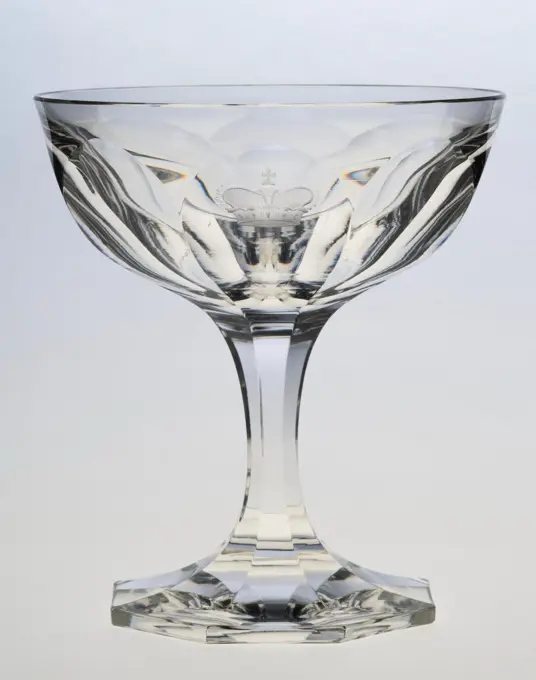
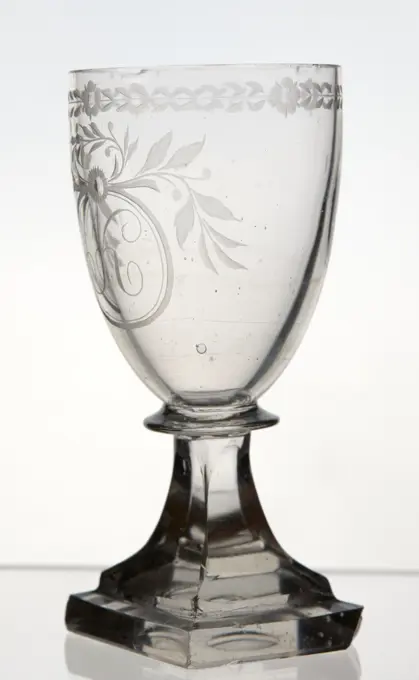
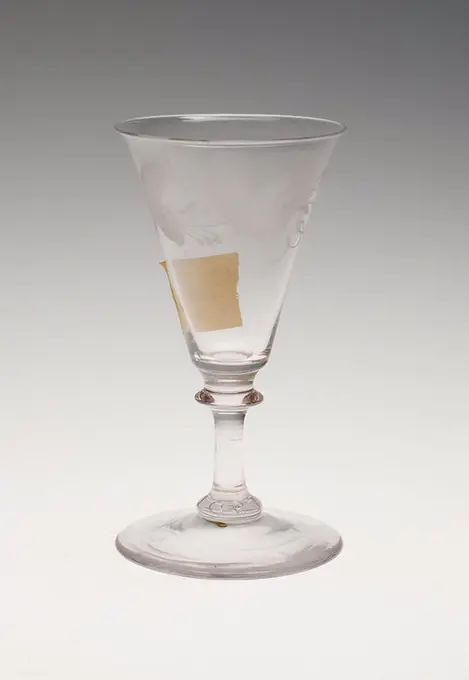
Artisan glassware featuring intricate designs and historical details, including chalices and wine glasses, showcasing beautiful craftsmanship from different eras.

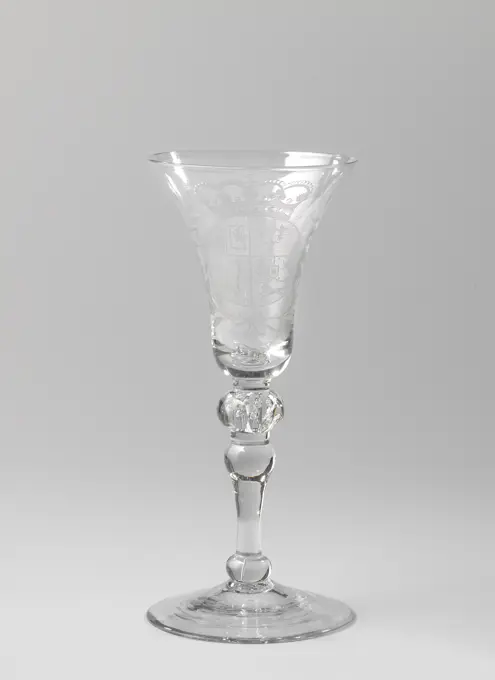
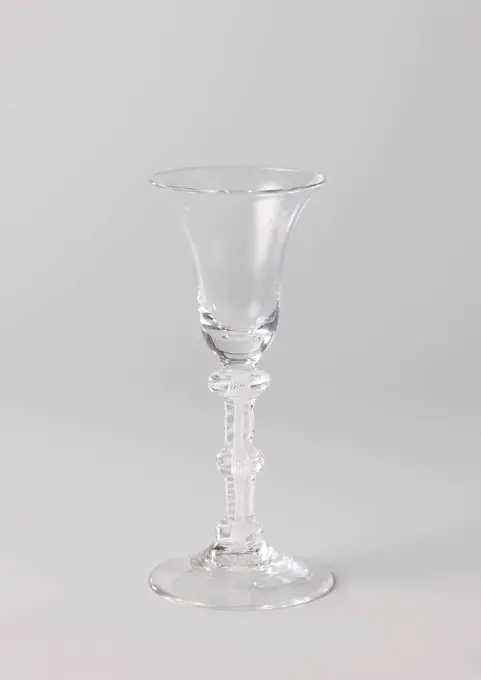
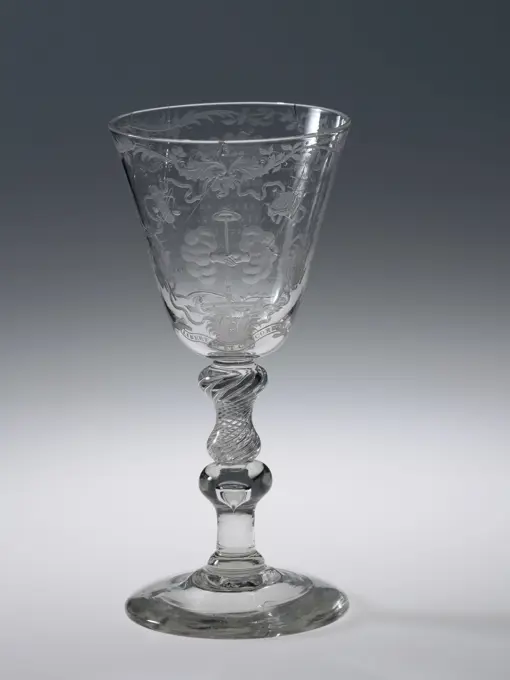
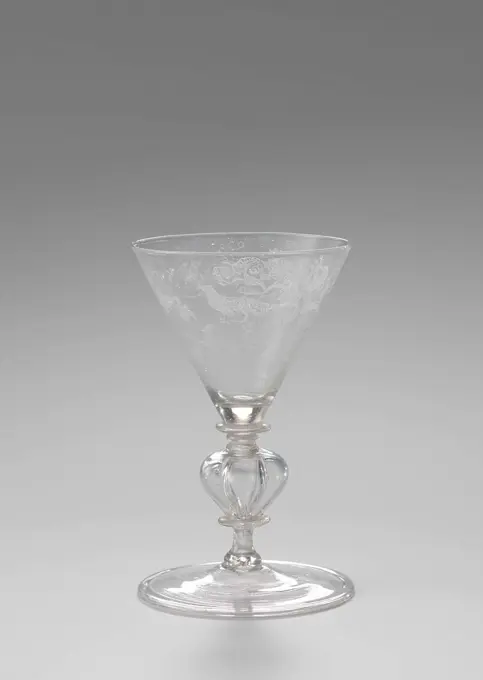
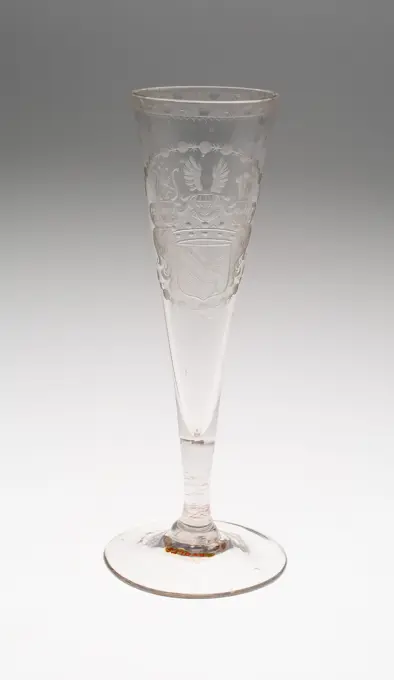
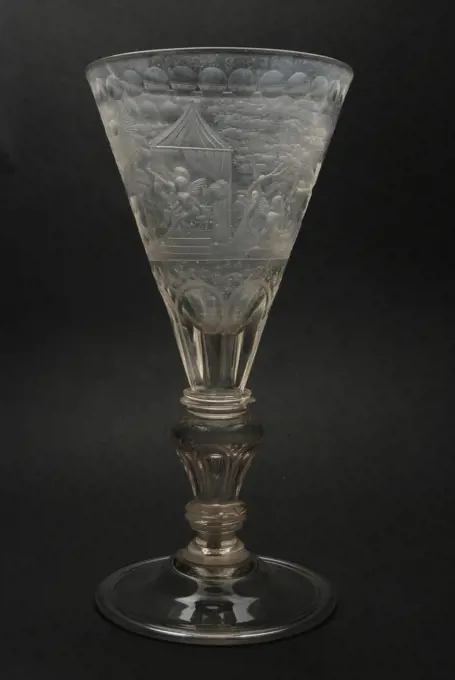
Chalice glass with the weapon of Goes, Anonymous, c. 1725 - c. 1750  Chalice glass made of clear, colorless glass. Conical foot. The baluster -shaped trunk with five knots, air bubbles and a double tire of air bubbles. Bell -shaped chalice. On the chalice, on two symmetrical leaves held together by a flower challenge, the crowned weapon of Goes flanked by two climbing lions. The name of the city is engraved under the weapon. glassblower: Low CountriesNorthern Netherlands glass glassblowing  Goes
Chalice glass with the weapon of Goes, Anonymous, c. 1725 - c. 1750 Chalice glass made of clear, colorless glass. Conical foot. The baluster -shaped trunk with five knots, air bubbles and a double tire of air bubbles. Bell -shaped chalice. On the chalice, on two symmetrical leaves held together by a flower challenge, the crowned weapon of Goes flanked by two climbing lions. The name of the city is engraved under the weapon. glassblower: Low CountriesNorthern Netherlands glass glassblowing Goes
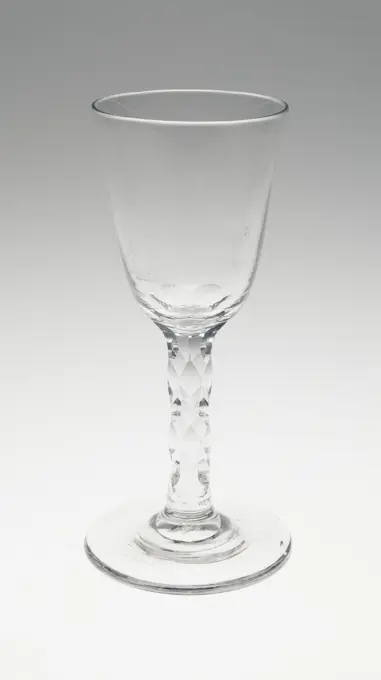
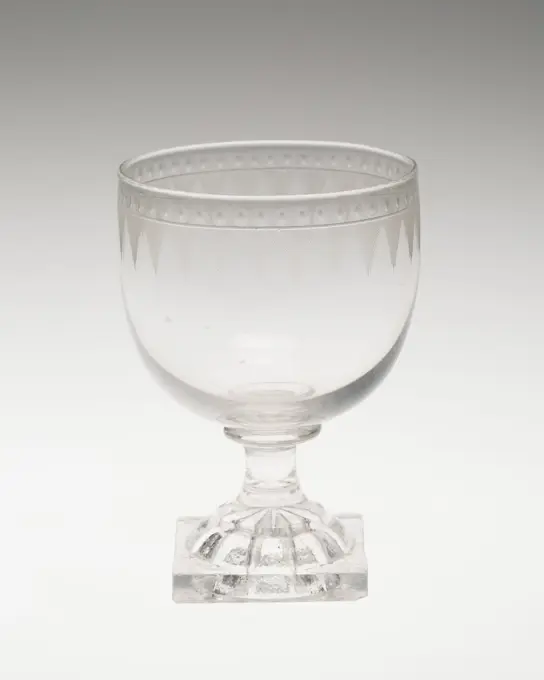
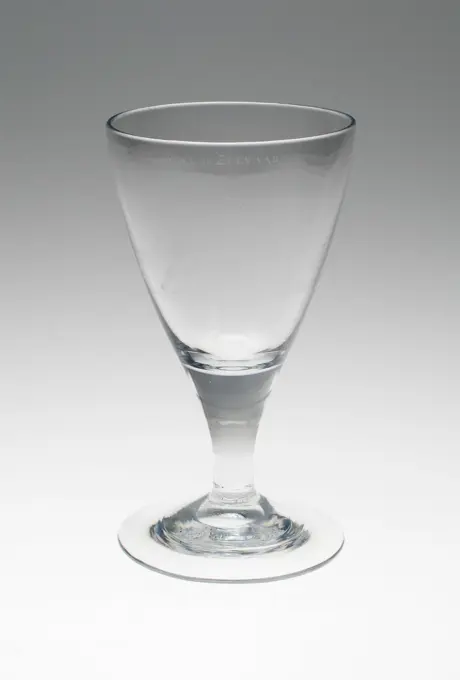
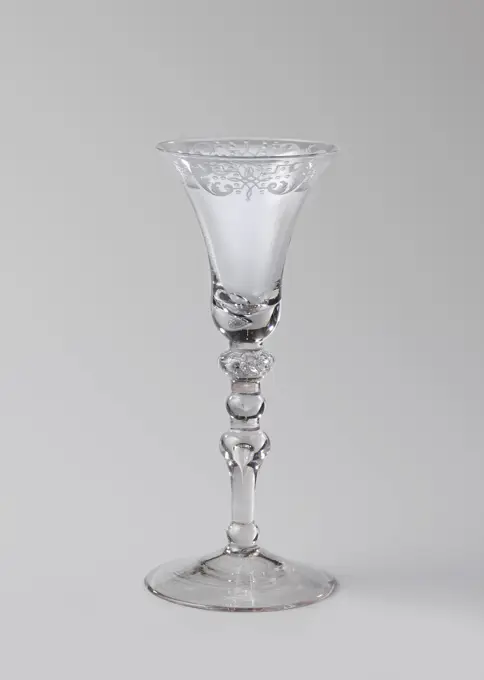
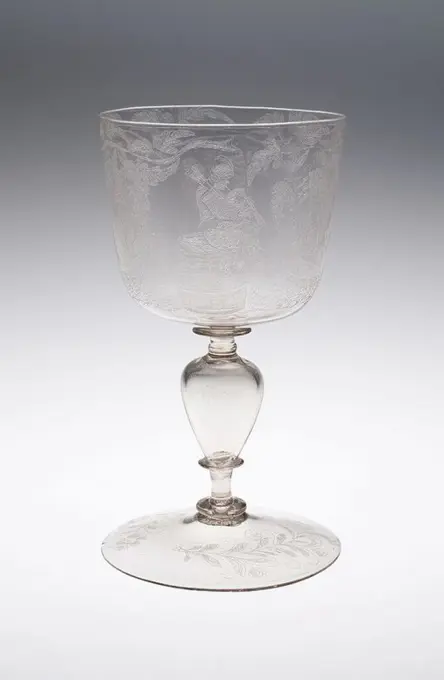
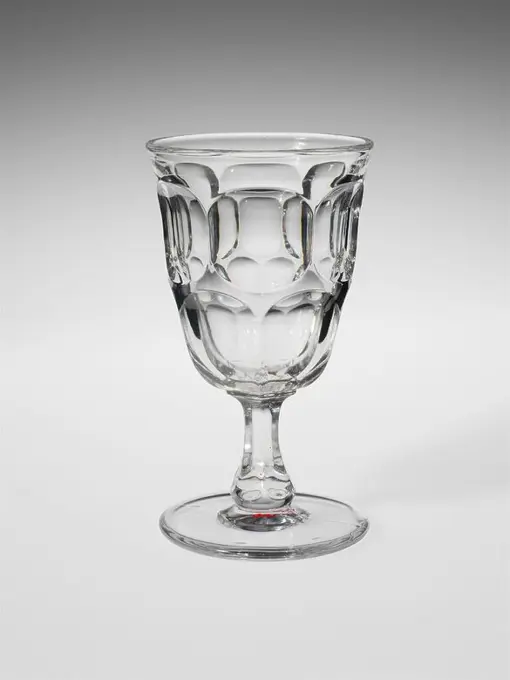
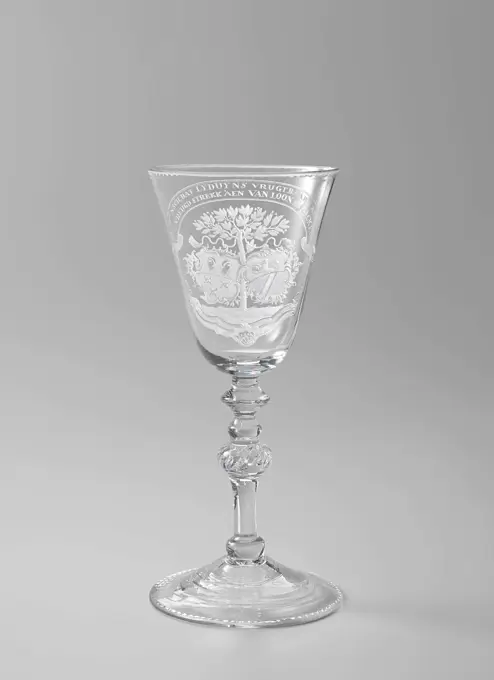
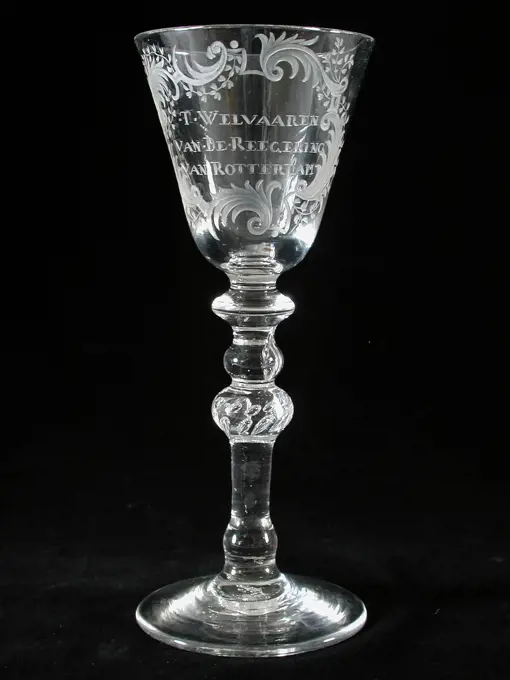
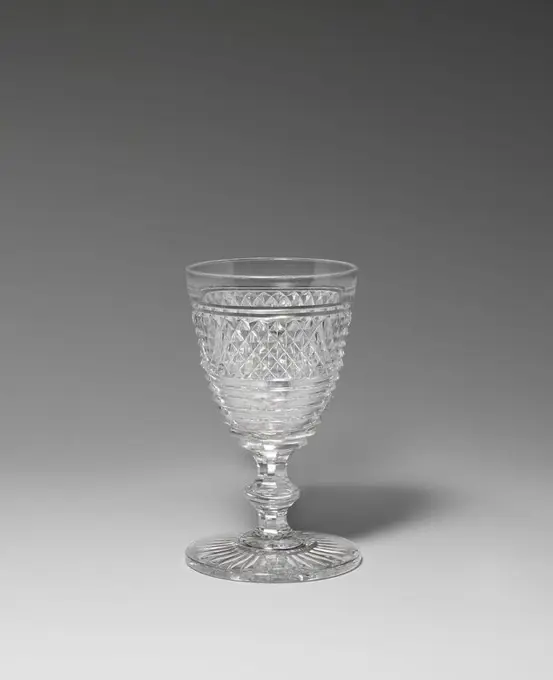
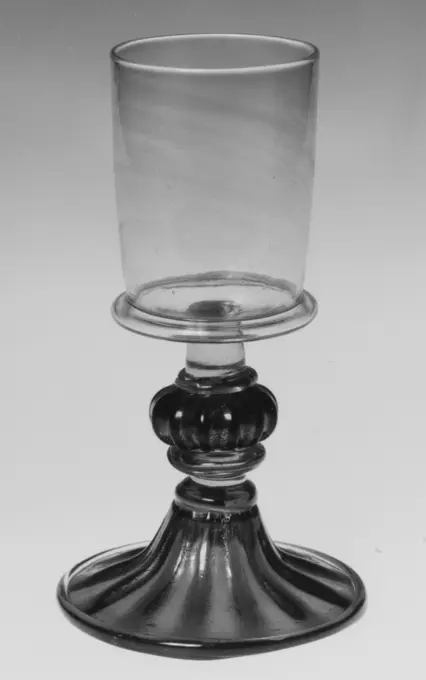
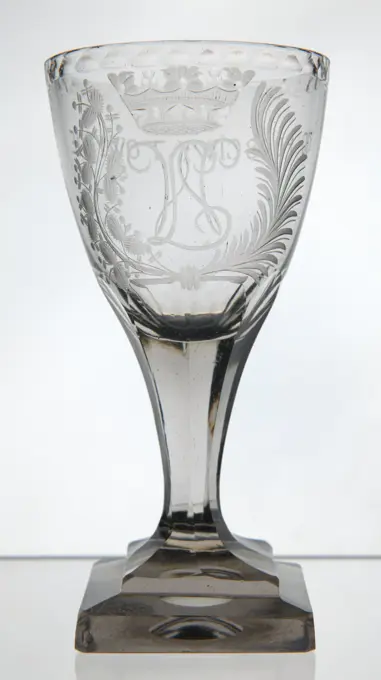
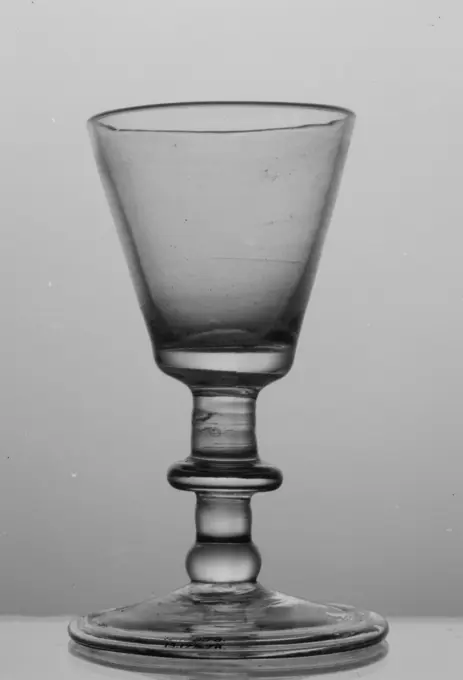
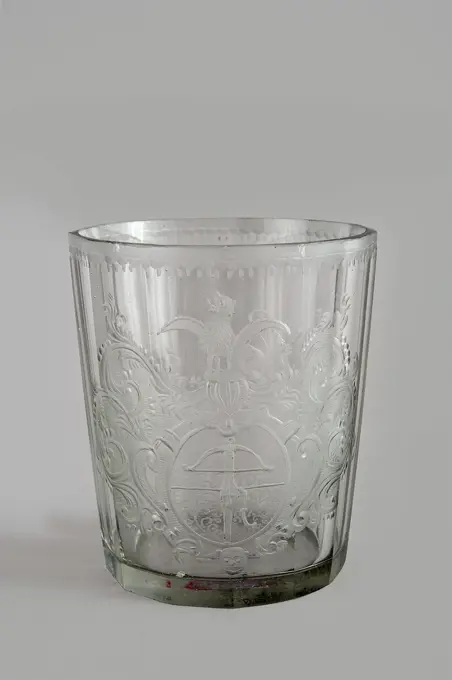
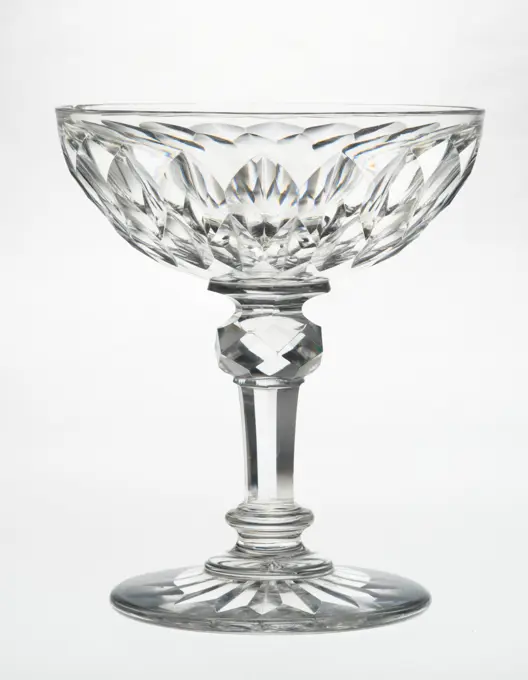
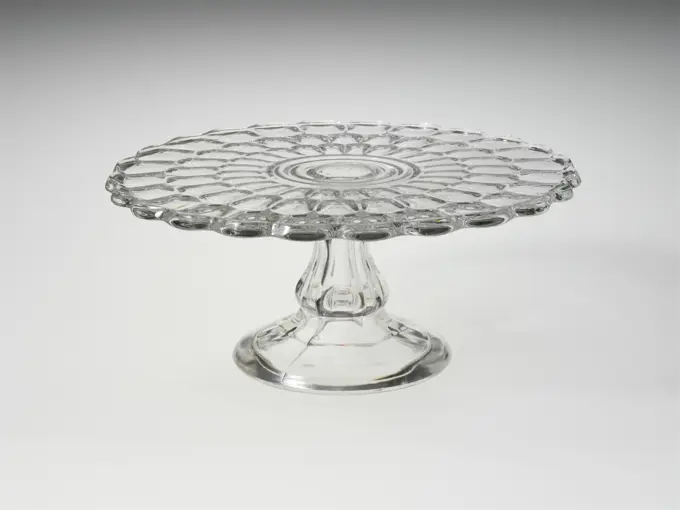
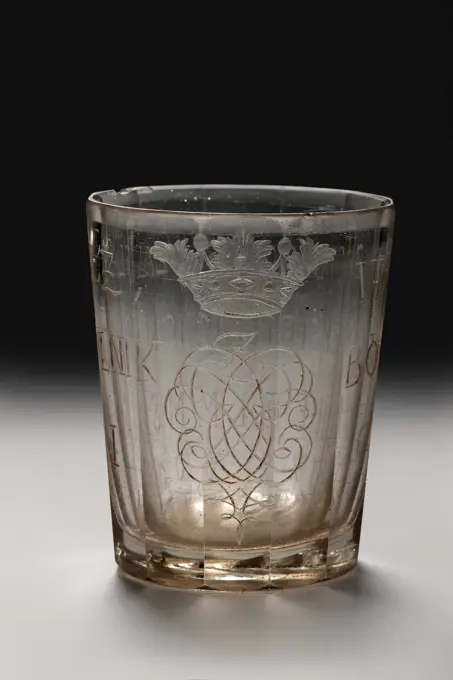
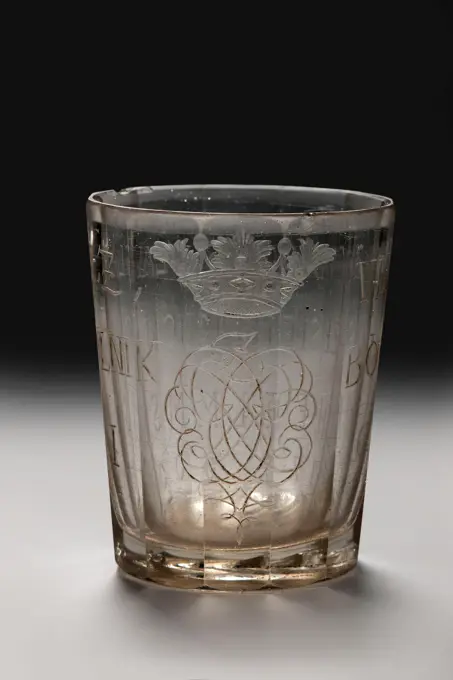
Slinger glass with bell-shaped chalice. Slinger glass with conical foot and a ballustroid tribe. In the trunk opask white garland around white network spiral. Bell-shaped chalice.Wine Glass 1755-1785 England .Bokaal with alliance weapon by Anna van Hannover and Willem IV of Oranje-Nassau. Vaulted foot with beaten edge. Massive Baluster Stem with button and a bubble. On the conical chalice The alliance weapons of Anna van Hanover (1709-1759) and Stadhouder Willem IV van Oranje-Nassau (1711-1751).Chalice glass with the weapon of Goes, Anonymous, c. 1725 - c. 1750  Chalice glass made of clear, colorless glass. Conical foot. The baluster -shaped trunk with five knots, air bubbles and a double tire of air bubbles. Bell -shaped chalice. On the chalice, on two symmetrical leaves held together by a flower challenge, the crowned weapon of Goes flanked by two climbing lions. The name of the city is engraved under the weapon. glassblower: Low CountriesNorthern Netherlands glass glassblowing  GoesGlass;  around 1840 (1830-00-00-1860-00-00);Rummer 1795-1805 England. Glass .Miniature Wine Glass. United States, 1815-1840. Furnishings; Serviceware. GlassChalip glass with representations of the sea, livestock farming and agriculture, anonymous, c. 1775 - In or Before 1798 Conical foot. Broadening, facet -cut trunk, transferring to a curved chalice. On the chalice a landscape, bordered by trees, with a farmer, a milkmaid with yoke and buckets, a plowing farmer and two cows, one of which is milked by a farmer's wife. In the background a farm and ships at sea. Above, in irregular letters, sea. Cattle. And agriculture. glassblower: EnglandNorthern Netherlands glass grinding / glassblowing Conical foot. Broadening, facet -cut trunk, transferring to a curved chalice. On the chalice a landscape, bordered by trees, with a farmer, a milkmaid with yoke and buckets, a plowing farmer and two cows, one of which is milked by a farmer's wife. In the background a farm and ships at sea. Above, in irregular letters, sea. Cattle. And agriculture. glassblower: EnglandNorthern Netherlands glass grinding / glassblowingRummer 1796 England .. Glass; stipple engravedChalip glass with David and Jonathan and the inscription: De Goede Vrindchap, Anonymous, c. 1750 - c. 1775 Chalip glass with engraved performance of King David and Jonathan and the inscription: "De Goede Vrindschap". glassblower: Low CountriesNorthern Netherlands glass glassblowing Chalip glass with engraved performance of King David and Jonathan and the inscription: "De Goede Vrindschap". glassblower: Low CountriesNorthern Netherlands glass glassblowingSlinger glass with bell-shaped chalice. Slinger glass with conical foot and a ballustroid tribe. In the trunk opask white garlands around white network spiral. Bell-shaped chalice.Kelkglas with a church, a meadow with cattle and the inscription: t.welsyn vant.land. Kelkglas with baluster trunk and two buttons with violet blades. On the chalice engraved face on a church and a meadow with cattle above: T.Welsyn Vant.land.Goblet 1795-1805 England. Glass .Chalice glass with a three -mast on a quay and the inscription: the good negotiation, anonymous, c. 1750 - c. 1775  Chalice glass with conical chalice on slim solid baluster -shaped trunk. A disc between chalice and trunk and a bullet between the trunk and the somewhat rising base. On the chalice in Radsnijwerk a double warehouse in which barrels are hoisted; Balen and barrels on the quay; On the other hand, a moored frigate, flag and pennant to different directions. Clear glass. Inscription: On the edge of the chalice: the good negoty. glassblower: Low CountriesNorthern Netherlands glass glassblowing sailing-ship, sailing-boat. warehouse (~ harbour)Cup with a grape vine, Anonymous, 1861 Slightly curved foot. Stam Otgouwed from a nodus, a collar, an eight -sided ribbed baluster with diamonds on the shoulder and two composite nodi, etched the bottom mat. Funnel -shaped chalice rounded at the bottom, on which an awarded grape vine on a tulle surface. On the underside of the chalice, in an oval medallion with pearl edge the signature and the year D.H de Castro 1861 FEC; Above Amsterdam. Glassblower: Englandamsterdam glass etching / glassblowing Slightly curved foot. Stam Otgouwed from a nodus, a collar, an eight -sided ribbed baluster with diamonds on the shoulder and two composite nodi, etched the bottom mat. Funnel -shaped chalice rounded at the bottom, on which an awarded grape vine on a tulle surface. On the underside of the chalice, in an oval medallion with pearl edge the signature and the year D.H de Castro 1861 FEC; Above Amsterdam. Glassblower: Englandamsterdam glass etching / glassblowingKelkglas with funnel-shaped chalice with ribs. Flat foot with beaten edge. Baluster-shaped strain with four ribs. Funnel-shaped chalice with ribs at the bottom. Under the edge a double smooth wire.No. 132 Cordial Glass; Designed by Professor Josef Storck (Austria, 1830 - 1902); Manufactured by J. & L. Lobmeyr GmbH (Austria), Meyr's Neffen, Adolf; Austria; mouth-blown crystal, facet-cut and polishedStanding cup ca. 1735 German, Silesia. Standing cup. German, Silesia. ca. 1735. Glass. GlassChalice glass with an ornament edge, anonymous, c. 1750 - c. 1775 Chalice glass on the baluster tribe with three knots, one with air vesicles. The chalice is decorated with Louis XV ornament. glassblower: Low CountriesNorthern Netherlands glass glassblowing Chalice glass on the baluster tribe with three knots, one with air vesicles. The chalice is decorated with Louis XV ornament. glassblower: Low CountriesNorthern Netherlands glass glassblowingChalip glass of the Libertate et Concordia Society, also called the Friday company, 1764 Gewelfde Voet. Dubbele balusterstam, on the onderste baluster met eenuchtbel, de Bovenste metuchtspiralen. Conische Kelk met Afgeronde bodem. / // approves the tekst of the Muses of the Museum, the candidate, and Country, or Tempera love: // Maiugenae whom the gifts are attended, // technology of the city, in six days, in six more venerable Members // Friendship of friendship is not violated. // witness will be cycles, which, the descendants of the summer // secure the genius, Bacchus your. // 1764 // P.B.S. glassblower: Low CountriesAmsterdam glass glassblowing  Amsterdam Gewelfde Voet. Dubbele balusterstam, on the onderste baluster met eenuchtbel, de Bovenste metuchtspiralen. Conische Kelk met Afgeronde bodem. / // approves the tekst of the Muses of the Museum, the candidate, and Country, or Tempera love: // Maiugenae whom the gifts are attended, // technology of the city, in six days, in six morgoblet, glass, Short, straight-sided bowl raised from circular knop base. Short stem with blade knop and broad circular foot. No engraving., Ireland, ca. 1810-25, glasswares, Decorative Arts, gobletCup. Flat foot with cut star. Short strain with one disc. Clock-shaped chalice, on which the people of Schulze and Müller are depicted, surrounded by vines. On the down side two ruffs; To the right of Schulze and Müller a man and woman who watches from behind the bushes, and left a peacock. Under the figure of Müller the signature and the year DHDE CASTRO. f. 1856.Kelkglas with funnel-shaped chalice. Kelkglas with flat foot and slim, high trunk. Stam continuously in a funnel-shaped, slightly flared chalice.Goblet with Peasant Dancers and Musicians. Probably engraved by Willem Mooleyser; Dutch, active 1666-1697; Netherlands. Date: 1675-1699. Dimensions: 16.5 x 8.9 cm (6 1/2 x 3 1/2 in.). Glass. Origin: Netherlands. Museum: The Chicago Art Institute, Chicago, USA.Wineglass 1700-1735 German or Bohemian. Wineglass. German or Bohemian. 1700-1735. Glass. Glass. Conical foot. Baluster-shaped strain with a wreath air bubbles, two buttons. Conical, rugged on the bottom. On the chalice, in a shield with a frame of Rococo motifs, the coat of arms of the Sint Jozefgilde in The Hague, surrounded by weapent trophies and awarded an open visor.Rummer 1820 England. Glass .Jar with a sitting hunter, anonymous, c. 1725 - c. 1750 Vaulted foot with turned around. Baluster tribe with three knots and a dazzled bubble. A sitting hunter, trees and a house on the conical chalice. Bohemia glass glassblowing Vaulted foot with turned around. Baluster tribe with three knots and a dazzled bubble. A sitting hunter, trees and a house on the conical chalice. Bohemia glass glassblowingDouble loft with ornaments. Double loft of bright, colorless glass. Dischotted ornaments unclaimed on the chalice. On top of the lid instead of the button a drinking glass decorated in the same way.Goblet. Culture: American. Dimensions: H. 6 3/16 in. (15.7 cm). Date: 1830-70.With the development of new formulas and techniques, glass-pressing technology had improved markedly by the late 1840s. By this time, pressed tablewares were being produced in large matching sets and innumerable forms. During the mid-1850s, colorless glass and simple geometric patterns dominated. Catering to the demand for moderately-priced dining wares, the glass industry in the United States expanded widely, and numerous factories supplied less expensive pressed glassware to the growing market. At the Exhibition of the Industry of All Nations at New York's Crystal Palace in 1853, for example, the New England Glass Company exhibited 130 pieces of one design, "consisting of bowls, tumblers, champagnes, wines, and jelly glasses." This object belongs to one such service. Although the glass manufactory is not known, the glassware is very typical of the large services that were very popular with America's middleGlass; Lobmeyr, J. & L. (Vienna; 1823-); 1920-39 (1920-00-00-1939-00-00);Cup;  1920-39 (1920-00-00-1939-00-00);Slinger glass with a representation of a bull. Conical foot. Straight stem with a double, white garland around a white stocking. Funnel-shaped chalice with rounded bottom. On the chalice, in a rectangular field, in a landscape with trees, a bull at a fence. At the bottom left signed G H Hoo / Laart / 1775.Wineglass 18th century probably British. Wineglass. probably British. 18th century. Glass. GlassNo. 126, Ludwig Lobmeyr, Austrian, 1829 - 1917, J. & L. Lobmeyr GmbH, Vienna, Austria, founded ca. 1935, Mouth-blown crystal, hand-painted gold, Mouth-blown crystal wine glass, hand-painted with gold rims., Austria, ca. 1870, glasswares, Decorative Arts, White wine glass, White wine glassGlassWineglass late 17th-early 18th century British. Wineglass. British. late 17th-early 18th century. Glass. GlassGlass;  1920-39 (1920-00-00-1939-00-00);Goblet. England. Date: 1755-1765. Dimensions: H. 13.3 cm (5 1/4 in.). Glass. Origin: England. Museum: The Chicago Art Institute, Chicago, USA.Wine Glass 1830-70 American With the development of new formulas and techniques, glass-pressing technology had improved markedly by the late 1840s. By this time, pressed tablewares were being produced in large matching sets and innumerable forms. During the mid-1850s, colorless glass and simple geometric patterns dominated. Catering to the demand for moderately-priced dining wares, the glass industry in the United States expanded widely, and numerous factories supplied less expensive pressed glassware to the growing market. At the Exhibition of the Industry of All Nations at New Yorks Crystal Palace in 1853, for example, the New England Glass Company exhibited 130 pieces of one design, "consisting of bowls, tumblers, champagnes, wines, and jelly glasses." This object belongs to one such service. Although the glass manufactory is not known, the glassware is very typical of the large services that were very popular with Americas middle class in the nineteenth century.. Wine Glass. AmerKelkglas with leaf drinks and birds. Flat foot with beaten edge and pontital brand. Viblobige, hollow, baluster-shaped strain with two discs. Funnel shaped chalice. Grape drinks, flowers and birds are engraved on the chalice.Champagne Glass 1795-1805 Bohemia. Glass .Glass;  1920-39 (1920-00-00-1939-00-00);Chalip glass with the inscription: the prosperity of the Krimpenre-Waard, Anonymous, c. 1755 Vaulted foot. Double baluster -shaped trunk with three knots. Airswlingers twisted in the trunk. On the chalice in Diamantgravure in Italian letters: "The prosperity of the Krimpenre-Waard" (last word Roman). Signed closely: HV Lokhorst Fecit. glassblower: EnglandThe Hague glass glassblowing  Krimpenerwaard Vaulted foot. Double baluster -shaped trunk with three knots. Airswlingers twisted in the trunk. On the chalice in Diamantgravure in Italian letters: "The prosperity of the Krimpenre-Waard" (last word Roman). Signed closely: HV Lokhorst Fecit. glassblower: EnglandThe Hague glass glassblowing  KrimpenerwaardCup with ornament edge, Anonymous, c. 1750 - c. 1800 Cup of clear, colorless glass. Along the mouth rim an engraved ornament edge. Bohemia glass glassblowing Cup of clear, colorless glass. Along the mouth rim an engraved ornament edge. Bohemia glass glassblowingNo. 2, Josef Lobmeyr Senior, Austrian, 1792 - 1855, J. & L. Lobmeyr GmbH, Vienna, Austria, founded ca. 1935, Mouth-blown crystal, faceted and relief-prismatic-cut and polished, Mouth-blown crystal champagne flute, faceted and relief-prismatic-cut and polished., Austria, ca. 1835, glasswares, Decorative Arts, Champagne flute, Champagne fluteChampagne Glass. Culture: American. Dimensions: Dimensions unavailable. Maker: George Duncan and Sons (1874-1891). Date: 1878-90. Museum: Metropolitan Museum of Art, New York, USA.Cup with deer, hares and trees, anonymous, c. 1700 - c. 1800 Cup of clear, colorless glass with engraved deer, hares and trees. Bohemia glass glassblowing Cup of clear, colorless glass with engraved deer, hares and trees. Bohemia glass glassblowingTumbler 1860-70 Bakewell, Pears and Company. Tumbler 9040Chalice, goblet, engraved with maternity scene and THE WELFARE OF THE KRAM WOMAN AND CHILD, wine glass drinking glass drinking utensils tableware holder glass, gram free blown rad engraving polishing goblet goblet in clear colorless glass with gray-green hue and lid in clear colorless glass with gray-yellowish hint THE WELFARE OF THE KRAM WOMAN AND CHILD birth birthwother childbirthRoemer. Netherlands. Date: 1700-1725. Dimensions: 12.7 x 7 cm (5 x 2 3/4 in.). Glass. Origin: Netherlands. Museum: The Chicago Art Institute, Chicago, USA.Goblet. Czechy, creatorKelkglas with a bird cage and the inscription: aurea libertas. Selk glass with conical chalice, facing under rounded, baluster-shaped strain with a wreath round and wreath Reted air bubbles in the pear, a disc at the chalice and a bullet at the driven base. On the chalice in Rad-engraving a bird cage above which a bird flies, under the cage acanthus curls and garlands. Above the cage inscription: Aurea Libertas. Bright thick glass with some seeds.Glass; Lobmeyr, J. & L. (Vienna; 1823-); 1920-39 (1920-00-00-1939-00-00);Goblet. Germany. Date: 1700-1725. Dimensions: H. 21.1 cm (8 5/6 in.). Glass. Origin: Germany. Museum: The Chicago Art Institute, Chicago, USA.Water glass 1720-30 Bohemian The engraved scenes represent activities of the four seasons. This side is wintera couple enjoying tobacco and a cup of chocolate. The glass probably once had a silver mount around the foot.. Water glass 196007Wine Glass Glass; Manufactured by Val St. Lambert; glassGoblet 1880-90 Adams and Company. Goblet 4110Pipe stalk glass with funnel -shaped chalice, anonymous, c. 1700 - c. 1800 Pipe stalk glass on flat base. Slim, high tribe, transfer in a funnel -shaped, slightly flared chalice. Southern Netherlands glass glassblowing Pipe stalk glass on flat base. Slim, high tribe, transfer in a funnel -shaped, slightly flared chalice. Southern Netherlands glass glassblowingBeaker (Maigelbecher). UnknownKelkglas with the weapons of the wages and backer families. Vaulted foot. Slim baluster trunk with buttons and air bubbles. Skelk and foot edge. Conical chalice on one side decorated with a tired decoration: on a rocaille list, in which the signature S.I. Sang, is a tree on a ground; On either side of the tree the weapons of wages and backer, a cord with brushes. Above all a spell belt on which: "ick wish that Lyduyns is extremely arable, joyful stretching 'on Van Loon and Backer.. Flat foot. Baluster-shaped, squeezed four places, trunk. Conical chalice on a flat disk.Empty wine glass on a black backgroundHobnail Finger Bowl. Culture: American. Dimensions: H. 2 1/2 in. (6.4 cm); Diam. 4 9/16 in. (11.6 cm). Maker: Probably Hobbs, Brockunier and Company (1863-1891). Date: after 1886. Museum: Metropolitan Museum of Art, New York, USA.Chalice glass engraved with 'T. Welcoming. The. Reegering of Rotterdam, wine glass drinking glass drinking utensils tableware holder glass glass, gram free blown and formed radgraving, Goblet wineglass in clear colorless glass Pontil mark under round light ascending hollow base From two parts made of solid balustere: bottom part with convex knot to baluster knot with rounded drop-shaped air bubbles; upper part with two stacked buttons lower with eccentric entrapped air bubble Bottom rounded funnel-shaped chalice with fire-rounded edge 'T Welvaaren van. The Reign of Rotterdam Rotterdam Van Nelle Sara Lee Mayor Opstelten Christie's London Auction 1990.10.16 (lot 164); Peter Korf de Gidts Amsterdam; donated to mayor Opstelten on 16 June 1999 as result of contribution to the redevelopment process for Van Nelle factory by Sara LeeDE in the name of . Six.Beaker with a man between barrels. translation of inscription: Long live Hensel in / the cellarWineglass 18th-early 19th century Dutch or German. Wineglass. Dutch or German. 18th-early 19th century. Glass. GlassChalice glass with funnel -shaped chalice, anonymous, c. 1550 - c. 1600 Flat base, hollow hungry tribe and funnel -shaped chalice. Venice glass glassblowing Flat base, hollow hungry tribe and funnel -shaped chalice. Venice glass glassblowingNo. 126 Wine Pitcher; Designed by Ludwig Lobmeyr (Austrian, 1829 - 1917); Manufactured by J. & L. Lobmeyr GmbH (Austria); Austria; mouth-blown crystal, hand-painted goldClaret. Culture: American. Dimensions: 4 in. (10.2 cm). Maker: Pellatt & Green. Date: 1818.William Bayard (1761-1826) commissioned this table service (2008.594.1-.53) in 1818 for his daughter Harriet (1799-1875) and her husband Stephen Van Rensselaer IV (1789-1868) from Pellatt & Green, London's premier glasshouse. The fine lead glass and deep Regency cutting would have created a brilliant sparkle in their candlelit dining room, in Albany, New York. The set originally included dozens of drinking glasses, for claret, ale, and champagne, as well as decanters, wine coolers, tumblers, and finger glasses, all "elegantly cut in diamonds & Rings" according to the surviving bill of sale (2008.594.54a,b). In addition to its elegance and quality, the service is extremely rare in it's documentation to the specific American family who owned it and to the English glasshouse that made it. Museum: Metropolitan Museum of Art, New York, USA.Kelkglas with a portrait of Willem II. Flat foot. Stem with solid, spherical knot. Conical chalice with flattened underside. On the chalice a portrait in half of king Willem II in military outfit. On the downside, under a canopy, the crowned weapon in the Netherlands, stopped by two crowned lions. Under the weapon the motto: your Maintiendrai. Signed on foot: N L Hoevenaar 1847.Wine glass with the arms of William V. translation of inscription: Shame on him who thinks evil of itEmpty glassSaltcellar 1780-1825 Japan. Saltcellar 6980Goblet ca. 1500 Italian (Venice). Goblet 460735Compote 1850-70 American With the development of new formulas and techniques, glass-pressing technology had improved markedly by the late 1840s. By this time, pressed tablewares were being produced in large matching sets and innumerable forms. During the mid-1850s, colorless glass and simple geometric patterns dominated. Catering to the demand for moderately-priced dining wares, the glass industry in the United States expanded widely, and numerous factories supplied less expensive pressed glassware to the growing market. At the Exhibition of the Industry of All Nations at New Yorks Crystal Palace in 1853, for example, the New England Glass Company exhibited 130 pieces of one design, "consisting of bowls, tumblers, champagnes, wines, and jelly glasses." This object belongs to one such service. Although the glass manufactory is not known, the glassware is very typical of the large services that were very popular with Americas middle class in the nineteenth century.. Compote. American. CupGoblet, jar engraved with allegory of marital love, wine glass drinking glass drinking utensils tableware holder glass metal, gram free blown and formed rad engraving (matte and tiefschnitt) polishing Large goblet wine glass goblet in clear colorless glass Pontil mark under round hollow ascending foot with folded down edge On flat knot (around finely chipped as if cut into it) massive reversed balustere with three stacked flat knots (chips) and hexagonal faceted baluster (enclosed air bubble). On three-sided flat knot (crisps) funnel-shaped chalice facetted at the bottom with longitudinal bevelled edge and alongside the top of the chalice an edge of polished circles or lenses. Fire-finished edge marriage serve drink lust loveGlass; Lobmeyr, J. & L. (Vienna; 1823-); 1920-39 (1920-00-00-1939-00-00);Wineglass 18th century probably British. Wineglass. probably British. 18th century. Glass. GlassRummer, Anonymous, 1644Beaker. unknown, glass worksChampagne glass;  the beginning of the 20th century (1900-00-00-1910-00-00);empty glass cup isolated on white backgroundGlass; Lobmeyr, J. & L. (Vienna; 1823-); 1920-39 (1920-00-00-1939-00-00);Cake Stand 1850-70 Bakewell, Pears and Company. Cake Stand 1096Cruet set, c. 1800, 11 3/4 x 8 x 3 1/2 in. (29.85 x 20.32 x 8.89 cm), Silver, glass, Italy, 18th-19th centuryTumbler 1850-60 American With the development of new formulas and techniques, glass-pressing technology had improved markedly by the late 1840s. By this time, pressed tablewares were being produced in large matching sets and innumerable forms. During the mid-1850s, colorless glass and simple geometric patterns dominated. Catering to the demand for moderately-priced dining wares, the glass industry in the United States expanded widely, and numerous factories supplied less expensive pressed glassware to the growing market. At the Exhibition of the Industry of All Nations at New Yorks Crystal Palace in 1853, for example, the New England Glass Company exhibited 130 pieces of one design, "consisting of bowls, tumblers, champagnes, wines, and jelly glasses." This object belongs to one such service. Although the glass manufactory is not known, the glassware is very typical of the large services that were very popular with Americas middle class in the nineteenth century.. Tumbler 9088Beaker. unknown, glass worksTumbler ca. 1827 Attributed to Deming Jarves. Tumbler 9056Glass of shot drink isolated on a white background. Glass on a white backgroundKelkglas with three cyclamen. Flat foot, slender, in the middle stem, crooked chalice, which have been painted three red cyclamen (c). Along the edge of the foot and the chalice a gold-plated trim.Glass;  1700 (1700-00-00-1700-00-00);Bronisław Krystall. Testament (Warsaw - Exhibition - 2015/2016), Krystall, Bronisław (1887-1983) - collection, Sienicki, Bogusław (Stolek Chełmski - Fl. 1690 -Ca 1702), Dar (provenance), monograms, testamentary record (provenance)Empty Wine Glass Empty Clear Wine Glass at White Background Copyright: xZoonar.com/MarkoxBericx 14025004Empty wineglass isolated on a white background. Wing glass on flat foot with beaten edge. Hollow, ribbed and twisted, baluster-shaped strain with three nodi. On both sides a wing in the shape of a sea horse from opaque yellow and colorless glass. Fully shaped, rugged on the underside with white combed wires.Beaker 1835-1855 Bohemia. Glass; colorless, blown, cut, silver stained and engraved .Jar with three hollow baluster, anonymous, c. 1600 - c. 1700 Flat base with turned around. The trunk made up of three hollow balusters, the middle of blue glass, and four discs. Funnel -shaped chalice rounded at the bottom. Low Countries glass glassblowing Flat base with turned around. The trunk made up of three hollow balusters, the middle of blue glass, and four discs. Funnel -shaped chalice rounded at the bottom. Low Countries glass glassblowing