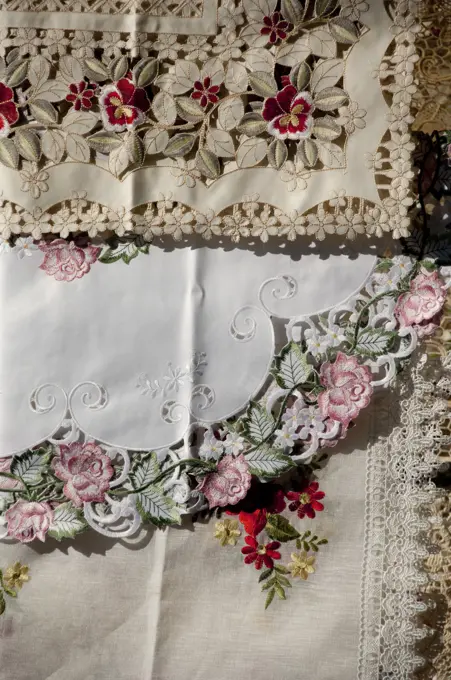
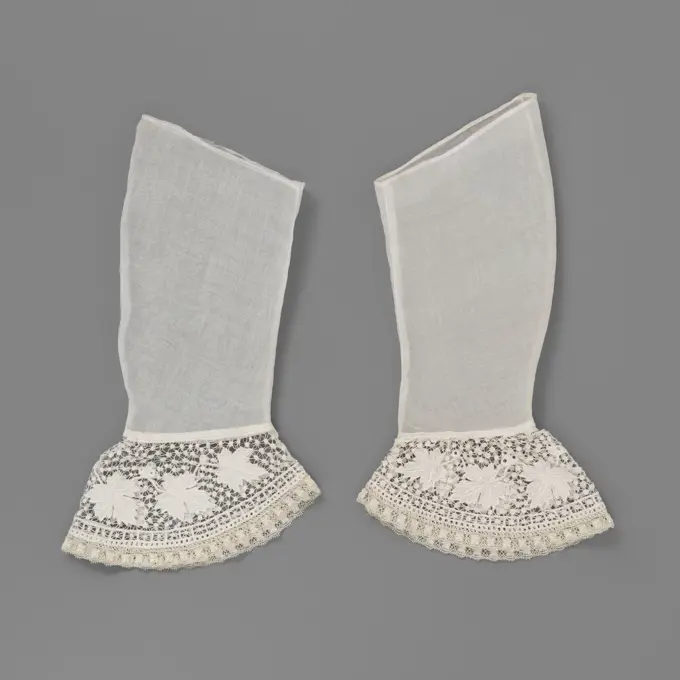
Elegant Lace Patterns

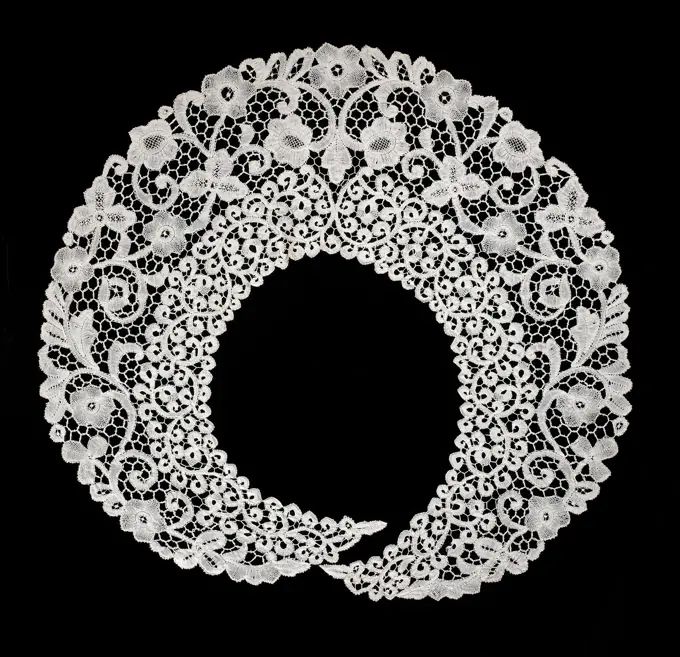
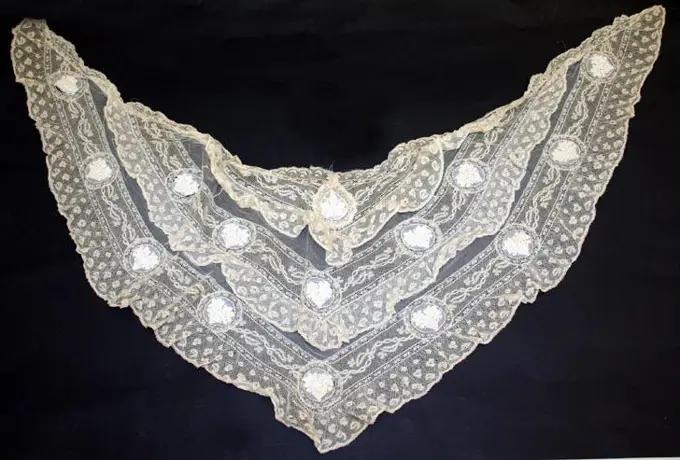
Detailed lace strips and cuffs featuring floral motifs and symmetrical designs, reflecting traditional craftsmanship in various styles.

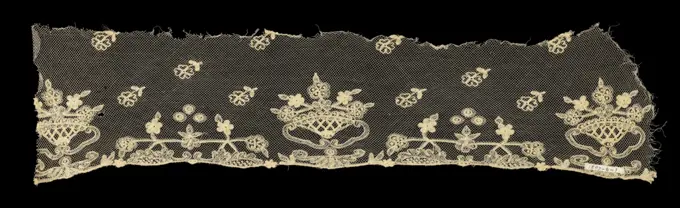
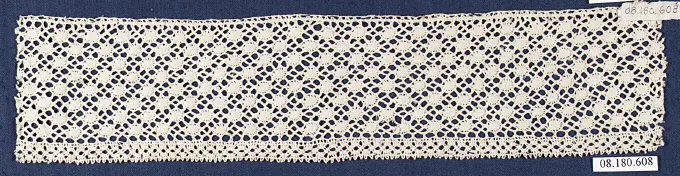
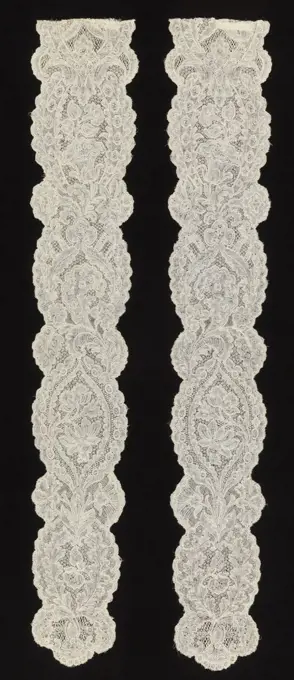
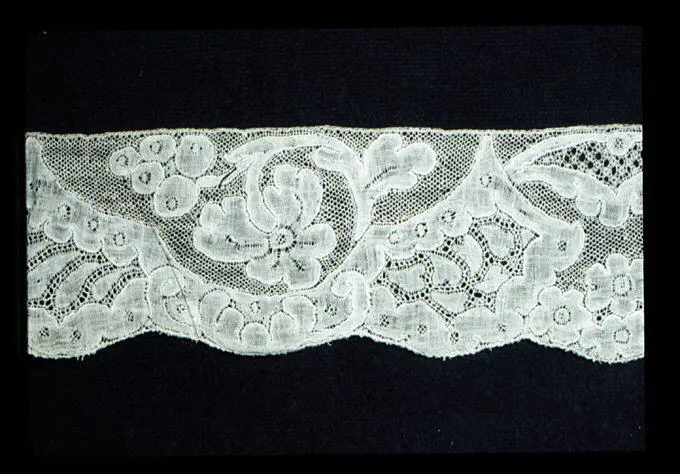
Border, Medium: linen Technique: bobbin lace, Brussels style, Large and small flowers and leaves in close arrangement., Belgium, 19th century, lace, Border
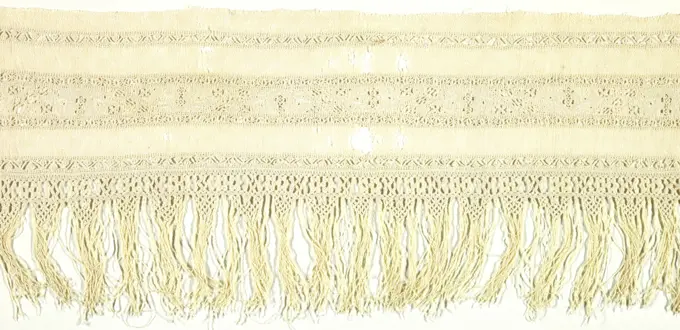
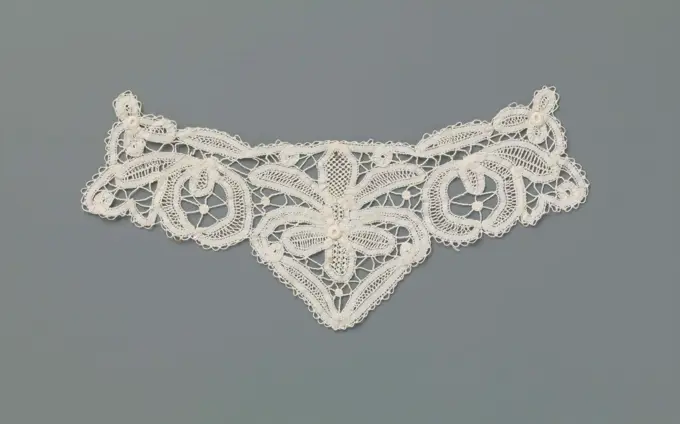
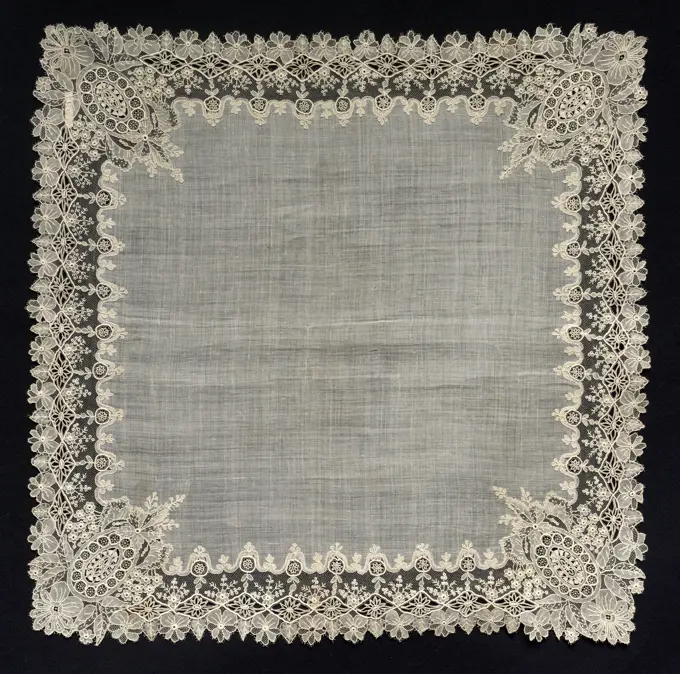
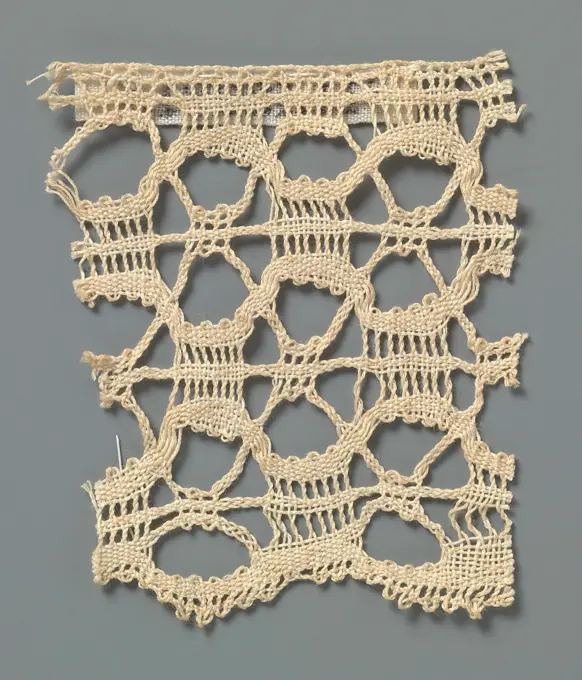
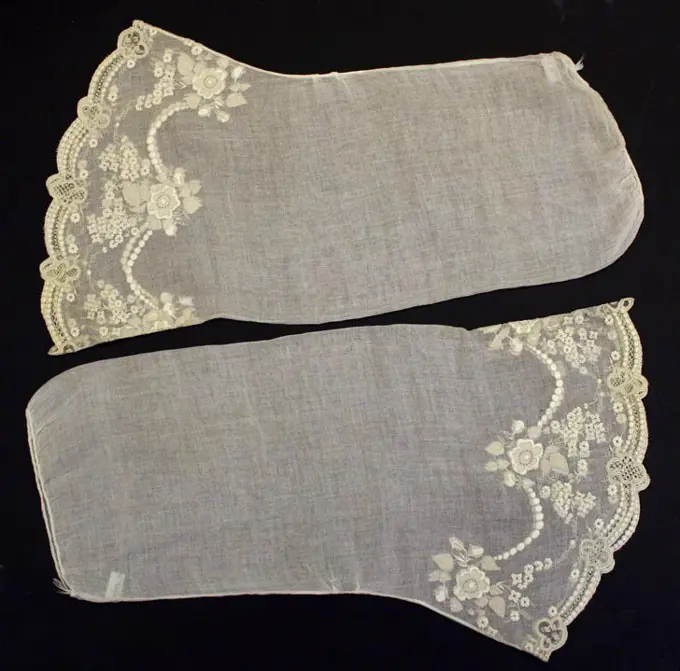
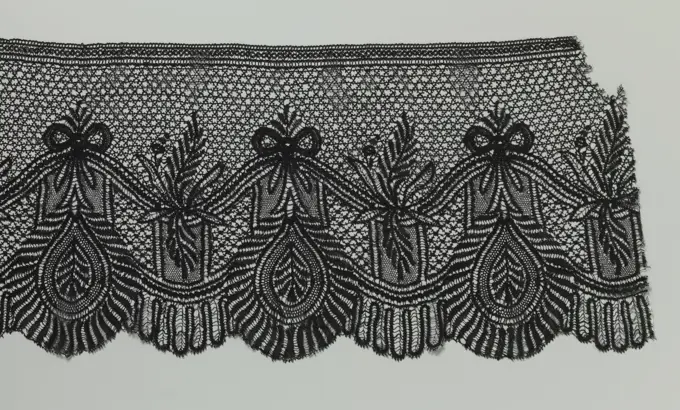
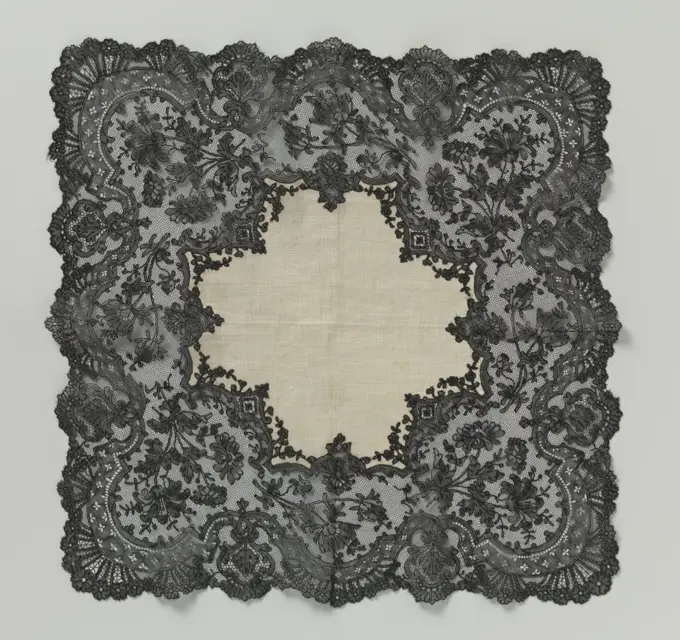
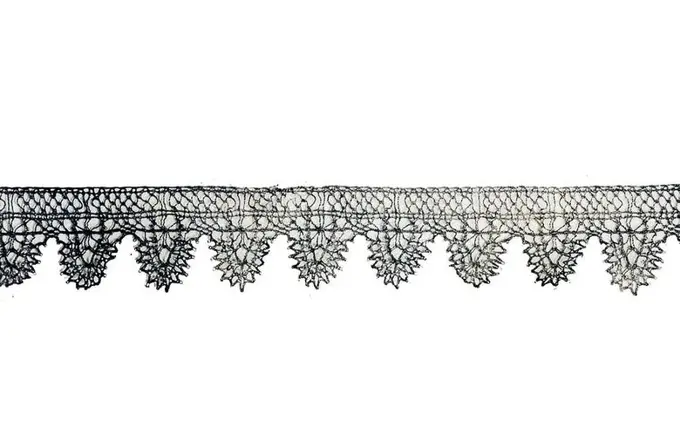
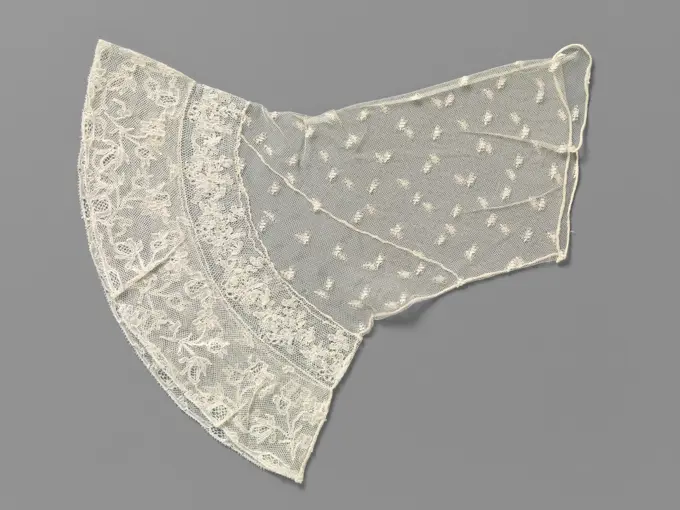
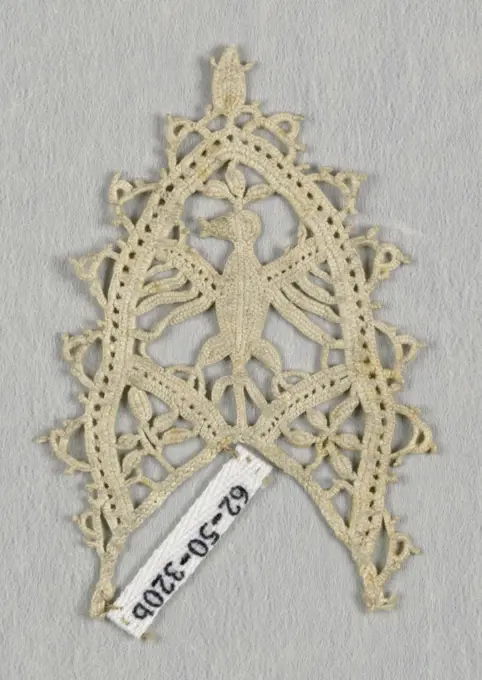
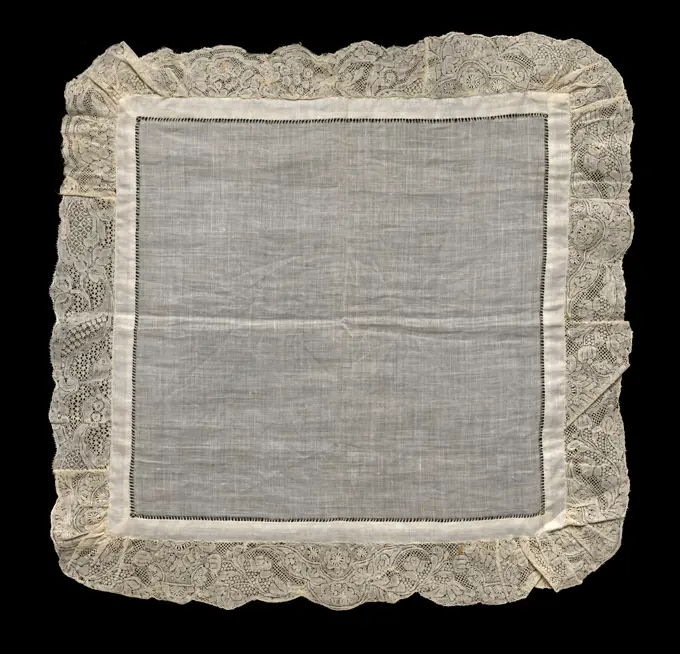
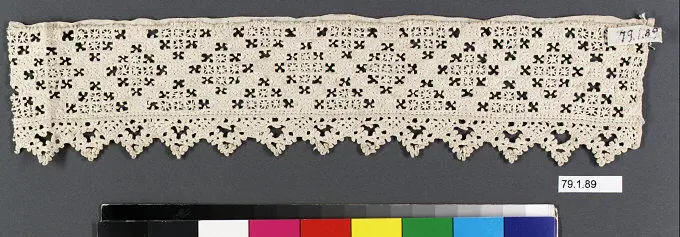
Fragment; cottonTowel end, Medium: linen Technique: knotting (macramé), withdrawn element work, needlemade filling stitches, Towel end of float-patterned linen has narrow bands of geometric patterning made with needlemade filling stitches. Towel is finished with a fringe of fine macramé., Italy, 16th-17th century, knotted, knitted and crocheted textiles, Towel endSteel bobbin with Mechelen soil, anonymous, c. 1875 - c. 1899 Steel or short piece of a strip of natural -colored bobbin side: Mechelen bastard. Coming from a lifted side school in Turnhout. Turnwood cotton (textile) bobbin lace / Mechlin (lace) Steel or short piece of a strip of natural -colored bobbin side: Mechelen bastard. Coming from a lifted side school in Turnhout. Turnwood cotton (textile) bobbin lace / Mechlin (lace)Strip Application side with Peter and Johannes, Anonymous, c. 1800 Strip of natural -colored Brussels application side, bobbin and needle side on drochel soil. A wavy pendulum runs above an edge of oval medallions and tendrils, with figures from Peter and John the Evangelist in the needle side underneath. The tendrils and pendulum spring on the scrap edge on the underside. The top is finished with a border bobbin. The ends of the strip are sewn together. Brussels  Brussels Applied Strip of natural -colored Brussels application side, bobbin and needle side on drochel soil. A wavy pendulum runs above an edge of oval medallions and tendrils, with figures from Peter and John the Evangelist in the needle side underneath. The tendrils and pendulum spring on the scrap edge on the underside. The top is finished with a border bobbin. The ends of the strip are sewn together. Brussels  Brussels AppliedFragment, Medium: linen Technique: bobbin made continuous tape with net added, 18th century, lace, FragmentManchet van gemengde kant met een flauw v-vormig model.Cuff from natural ribbon side (mixed side): luxury owl, with a woven ribbon and coniferous folers. FIND V-shaped model, with rectangular ends and a widened triangular center. The symmetrical pattern consists of motifs whose contours are formed by a narrow woven ribbon. In the middle is the largest flower with a Drielobig center, flanked by volutes under which a triangular point hangs. And crowned by a circle from which three leaves spring. In addition to this central palmet flower, there is an open-worked oval flower on each side, made with two oval leaves set against each other, two oval leaves and a triple flower in each top corner. The triple flowers and the central flower have an increased (relief) and festonated circular flower heart. Within the contours with which the motifs are formed, ornamental grounds are applied (needle side) with grover yarn than used to make the ribbon. The motifs are connected by a bars soil (needle sNeedlepoint (Point de Gaze) Lace Handkerchief, 19th century. Belgium, Brussels, 19th century. Linen center with narrow needlepoint lace edging; average: 35.6 x 35 cm (14 x 13 3/4 in.).Zakdoek van batist met een geborduurd monogram "ET" en rondom afgewerkt met een rand naaldkant.Handkerchief of Batist with an embroidered monogram "ET" and finished around with an edge natural-colored needle side: Brussels gauze side. Symmetrical pattern with an overagonal medallion placed in every corner with a rose in it. Under the medallion, in the extreme corners of the handkerchief, a winger blade. On either side of the medallion two drip-shaped lists with three leaves below. In the middle of the sides, a leaf is between two C volutes, including four flowers.Strip of climbing with rows standing ovals with a cross. Strip natural colosside. The pattern consists of three rows of ovals with a cross in it, interspersed by striped cubes. The ovals are formed by wavy ribbons between horizontal lines. The top of the strip is straight finished. The slot along the underside are formed by the lower wavy ribbon, which is provided with picots at the bottom.Border (From an Insertion) Made 1690-1710 Italy. Linen, bobbin straight lace (continuous clothwork tapes) .Lace application for a dress;  around 1920 (1915-00-00-1925-00-00);Magdalena, Witwińska, Dar (provenance)Fragment (Border). France or Flanders. Date: 1690-1710. Dimensions: 5.2 × 41.7 cm (2 × 16 3/8 in.). Linen, needle lace. Origin: France. Museum: The Chicago Art Institute, Chicago, USA.White handkerchief trimmed with edge lace and initial, Susanna Maria from Pabst Rutgers-Linse, c. 1836 - c. 1898  Netherlands .  Netherlands .Border; medium:Collar 18th century British. Collar 119425Strip 16th century Italian. Strip 220827Undersleeves 1850s probably American. Undersleeves. probably American. 1850s. cottonCapslip from Valenciennes side, Anonymous, c. 1750 Hapslip van Kloskant, which consists of two hat slips sewn together. The pattern has loose flower arrangements, some of which are in a basket, on a ground of diamond -shaped meshes. On the edges of golf vessels with flowers and leaves. The scalloped edges are trimmed with picots. France linen (material). Valenciennes lace Hapslip van Kloskant, which consists of two hat slips sewn together. The pattern has loose flower arrangements, some of which are in a basket, on a ground of diamond -shaped meshes. On the edges of golf vessels with flowers and leaves. The scalloped edges are trimmed with picots. France linen (material). Valenciennes laceStrip of bobbin with drop -shaped shell under bow, anonymous, c. 1860 - c. 1870 Strip of black bobbin. The repeating pattern consists of a regularly wavy decorative band around the horizontal center line of the strip. Each wave top is crowned by a bow, including a large drop -shaped motif hangs at the bottom of the strip and forms a shell. Each golf valley is cut by a few spring -shaped leaves, one standing hanging the other. Above the wavy band, the motifs are connected by a fantasy round with picoted braids. The motifs are built up with, among other things, OMTRLAINS in linen battle or 'stripes', which are connected by crossing couples, braids or decorative grounds. The top of the strip is straight finished. The scrap edge along the bottom is finished with picots. Le Puy-en-Velay silk bobbin lace Strip of black bobbin. The repeating pattern consists of a regularly wavy decorative band around the horizontal center line of the strip. Each wave top is crowned by a bow, including a largeGoldsmith's art, Italy, 20th century. Mario Buccellati, lace pattern gold and silver band bracelet set with diamonds, 1920s.Piece 18th century Italian, Abruzzi. Piece 214958. Collar of Duchesse with large flower rinks and point the Flandre with small flower branches.Trimming (France); silkFragment 17th century Italian. Fragment 218821Border (Italy); linenCollar ca. 1845 Scottish. Collar 169970Border, Technique: bobbin lace, Bobbin lace pillow border, floral scrolls; mid-18th century Flemish., mid-18th century, lace, BorderFichu 19th century American or European. Fichu 118947Kloskant handkerchief with straight and curved lines, anonymous, c. 1840 - c. 1850 Black bobbin handkerchief: Chantilly side. A wide edge of black lace runs around a cross -shaped white batist cloth. The symmetrical ornament consists of wide tires, which are strewn with saved stars and that are laid in hollow and convex half -circular and straight lines. On the center of the edge there are tuilds to the left, including a chalice flower and two daisies. Bayeux (possibly) linen (material). silk. batiste bobbin lace Black bobbin handkerchief: Chantilly side. A wide edge of black lace runs around a cross -shaped white batist cloth. The symmetrical ornament consists of wide tires, which are strewn with saved stars and that are laid in hollow and convex half -circular and straight lines. On the center of the edge there are tuilds to the left, including a chalice flower and two daisies. Bayeux (possibly) linen (material). silk. batiste bobbin laceFlounce Made 1660-1680 Italy. Linen, raised needle lace .Curtain of a four -poster bed, anonymous, c. 1890 - c. 1910 Curtain of a sky-bed of mechanical tulle in white embroidered with chain and feston stitch with openwork parties in the way of Richelieuboarding. Flower and leaf motif in Cartouche. Scotland (Possible) . embroidering Curtain of a sky-bed of mechanical tulle in white embroidered with chain and feston stitch with openwork parties in the way of Richelieuboarding. Flower and leaf motif in Cartouche. Scotland (Possible) . embroideringCollar 1700-1943 American. Collar 118881Cap Streamer (France); linenBorder. Italy. Date: 1601-1625. Dimensions: 5.7 x 87 cm (2 1/4 x 34 1/4 in.)Width repeat: 3.8 cm (1 1/2 in.). Gold-gilt-silver-strip-wrapped silk, bobbin straight lace. Origin: Italy. Museum: The Chicago Art Institute, Chicago, USA.Fragment (France); linenBobbin Lace Insertion with Edging of Points, 16th-17th century. Italy, Venice, 16th-17th century. Lace, bobbin; average: 9.6 x 19.1 cm (3 3/4 x 7 1/2 in.).Fragment, Medium: linen Technique: grid of withdrawn element work with needle lace (reticella style), Insertion of reticella in a geometric design based on the square with circles at the alternating right angles., Italy, 16th century, lace, FragmentOndermouw van kantborduurwerk met een manchet bestaande uit twee soorten kloskant.Submit of edge embroidery - tuledo strop on machine tulle - and a cuff of two strips of clusters: Lille and Malinois. The strip of Lille side is sewn at the bottom and the strip of Malino side at the bottom of the strip of Lille side. Pagodod model. A scattering pattern of berry branches is embroidered on the machine tulle. The reenching pattern of the Lille side consists of a lying branch with a rosette flower, three berries and some erraticly shaped leaves. The repeating and symmetrical pattern of the Mechelen side consists of a horseshoe-shaped arc formed by two flower branches with a few different flowers. Along the very flat sloping edge, oval fields are formed by leaves or twigs, interspersed by a hand-shaped leaf right under the bow. The edge is finished with picots.Stomacher Made 1801-1900 France. Linen, plain weave; pulled threadwork embroidered with linen yarns in black, buttonhole, interlocking lace, overcast, satin, single faggot, and stem stitches; attached cord of 8-strand, 4-sided braid .Bobbin Lace Edging, 18th century. Belgium, Brussels, 18th century (Louis XIV period). Lace, bobbin: linen; average: 6.4 x 22.9 cm (2 1/2 x 9 in.).Fichu mid-19th century French. Fichu 168496Fragment 17th century Italian, Venice. Fragment 212454Cuff of crocheted with fan motif, anonymous, c. 1930 Cuff made of natural crochet. Eight rows of fan, made with crocheted sticks. The impellers form a wavy edge on the bottom. The top is trimmed with a woven edge. Europe cotton (textile) crocheting Cuff made of natural crochet. Eight rows of fan, made with crocheted sticks. The impellers form a wavy edge on the bottom. The top is trimmed with a woven edge. Europe cotton (textile) crochetingEmbroidered Handkerchief, 18th century. Switzerland, 18th century. Embroidery: linen; average: 45.7 x 45.7 cm (18 x 18 in.).Wedding dress and mandwater lamp. The blue Damask cladding consists of two parts, both attached to a stoval lamp line.Panel Fragment, 17th century, 7 1/2 x 4 in. (19.05 x 10.2 cm), Embroidery, Turkey, 17th centuryLace, bobbin, Mid 19th Century, Italy, maker unknown. Gift of Yvonne Riddiford, 2007.Edging 17th century Italian, Venice. Edging 221034Ornament, Medium: linen Technique: punto in aria needle lace, Shield-shaped corner ornament with a design of an eagle., late 16th century, lace, OrnamentTextile, Medium: silk, metallic foil on a silk core Technique: compound satin, Diagonal repeat of large symmetrical tulip-like flowers with smaller tulip and broad-toothed leaves on either side of stem. Diamond rosette diaper filling interstices. In tarnished white metal threads in plain and fancy twill and coarse white satin ground. Wide plain cloth selvages. Plain satin area on top with fragmentary woven inscription in white on blue band., Russia, 18th century, woven textiles, TextileFancon of Brussels Application side (needle side on machine tulle), anonymous, c. 1860 - c. 1870 Fancon of application side, with a small middle part with two large leaves between volutes. The Fancon has long slips with scattered flower branches and moesjes. The wide, rounded ends have small squares with decorative stitches. Brussels . Brussels Gaze Point Fancon of application side, with a small middle part with two large leaves between volutes. The Fancon has long slips with scattered flower branches and moesjes. The wide, rounded ends have small squares with decorative stitches. Brussels . Brussels Gaze PointFragment, Medium: silk Technique: woven, Central pineapple flanked on either side by acanthus leaves. Previously used as chair upholstery., Lyon, France, ca. 1865, woven textiles, FragmentLaces, 19th century. Bobbin lace polychrome hem, Michelangelo Jesurum Manufacture.Handkerchief. Austria, Vienna; lace made in Belgium, late 19th century. Costumes; Accessories. Linen plain weave with drawn threadwork, cotton embroidery, and cotton bobbin lace (point de Paris)Border (Germany); embossed, die cut; 45.5 x 33 cm (17 15/16 x 13 in.)Border, Technique: bobbin lace, Bobbin lace edge sample, scroll floral border; late 18th century Valenciennes, late 18th century, lace, BorderFragment crochet side with flowers and grape food. V-shaped part of a piece of natural-colored Irish crochet side. Pattern with flowers and grape fees and a crochet irregular maase with picots. Along the outside, the semi-circular shelters are trimmed with picoted arcs. Different parts of edges are not finished and / or cut off or cut.Berthe from crocheted side with spreading motif, anonymous, c. 1890 - c. 1909 Berthe of natural -colored Irish crocheted side. Spread motif with multifaceted flowers and shapes including roses, daisies, circles and ovals. Crocheted soil with irregular and potented meshes. Straight finish along the neckline. The remaining edges are finished with potentially three -part arches. Ierland (possibly) cotton (textile) Berthe of natural -colored Irish crocheted side. Spread motif with multifaceted flowers and shapes including roses, daisies, circles and ovals. Crocheted soil with irregular and potented meshes. Straight finish along the neckline. The remaining edges are finished with potentially three -part arches. Ierland (possibly) cotton (textile)Valance; cottonDoily (Yougoslav), 20th century, 12 in. (30.48 cm), Lace, Yugoslavia, 20th centuryStrip 16th century possibly Spanish. Strip 212314Vestee (USA); cotton, jet beads; 1923-46-145Photo of a range of lace with two paws, anonymous, c. 1900 - c. 1924 Photo of a fan sheet of lace with two paws bothered. The photo is part of five other photos of Kant with inventory numbers: BK-1979-33-B-1 to BK-1979-33-B-6. The photo described here is stuck together with photo BK-1979-33-B-4 on a black cardboard, on the back BK-1979-33-B-5 and BK-1979-33-B-6 are stuck. It concerns lace objects made by L.W. van der Meulen-Nulle and J.H. Pleging-Faber. Among other things, they worked as a lace teacher at the Rijksacademie for Applied Arts. Netherlands photographic support. cardboard Photo of a fan sheet of lace with two paws bothered. The photo is part of five other photos of Kant with inventory numbers: BK-1979-33-B-1 to BK-1979-33-B-6. The photo described here is stuck together with photo BK-1979-33-B-4 on a black cardboard, on the back BK-1979-33-B-5 and BK-1979-33-B-6 are stuck. It concerns lace objects made by L.W. van der Meulen-Nulle and J.H. Pleging-Faber. Among other things, Collar 17th century Italian. Collar 218042Fichu 1700-1938 European. Fichu 119087Border. Culture: Italian, Genoa. Dimensions: L. 73 x W. 6 1/2 inches (185.4 x 16.5 cm). Date: early 17th century. Museum: Metropolitan Museum of Art, New York, USA.Hals decorations of gross bobbin side with three connected kidney-shaped frames with a flower with leaves in shape in the center, Sophia Gerardine Cenijn-Smit, c. 1914 Natural-colored bobbin side: Cluny side. V-shaped model. The pattern consists of three connected kidney -shaped frames, containing concentric circles of braids with picots. In every center there is a Margriet with a flower heart in netslag and leaves made in shape. The lists are largely made in Ovenlag and the inner curly parts in linen battle. The neck decoration is finished with point braids on the outside. Amsterdam cotton (textile) bobbin lace / Cluny lace Natural-colored bobbin side: Cluny side. V-shaped model. The pattern consists of three connected kidney -shaped frames, containing concentric circles of braids with picots. In every center there is a Margriet with a flower heart in netslag and leaves made in shape. The lists are largely made in Ovenlag and the inner curly parts in linen battle. The neck decoration Bobbin Lace Hemstitched Handkerchief, 19th century. Belgium, Binche, 19th century. Lace, bobbin; average: 32.4 x 32.4 cm (12 3/4 x 12 3/4 in.).Band Italian 16th centuryCap Streamers, Medium: linen Technique: bobbin lace, Mechlin ground, Mechlin-style bobbin lace lappets. Elaborate floral designs symmetrically arranged in a series of enframents of foliage. Deeply scalloped border at end., Some Mechlin ground but mostly snowball ground., Belgium, 18th century, lace, Cap StreamersFragment (Italy); gold and silver wrapped silk threadsWoman's Collar. Europe or the Middle East, mid 19th to early 20th century. Costumes; Accessories. Cotton knotted lace, cotton embroideryStrook geknoopt kant met schuine lijnen en schulpen.Strip natural colored knotted side: Chebka side. The repeating pattern consists of sloping lines of alternating a fine diamond-shaped grid and openwork ovals. Slip edge with rounded triangular slot. The tubes consist of the same diamond-shaped grid as in the pattern above. Above every shell Three oblique jobs. The top of the strip is straight finished.Lace openwork pattern Beautiful vintage doily lace crochet napkins on table close up Copyright: xZoonar.com/mrivsergx 10496878Border, Technique: bobbin lace, Bobbin lace edge, dense floral; early 18th century Maline, early 18th century, lace, Border. Plastron with a board, both of natural machine side: Etkant. Pattern with mid front in the point a quadruple circle. The outer circle is crowned by two small flowers with a larger larger flower in between. This motif is repeated twice in smaller variants to each side. A sloping edge runs along the outside of the plastron, which is finished by a glipper with three arc spicots.Lace application for a dress;  around 1920 (1915-00-00-1925-00-00);Magdalena, Witwińska, Dar (provenance)Collar of crocheted side with round spiral scales, anonymous, c. 1930 - c. 1935 Collar of natural Irish crocheted side. Strip -shaped round model, 2/3 of a circle. Two rows of moes, slightly curved rectangles in a diamond -shaped network with picots. Finished on three sides with a sculpy edge of connected round spiral sculptures, which are formed by a laid and hooked wire bundle. The inner edge is finished straight. Amsterdam cotton (textile) Collar of natural Irish crocheted side. Strip -shaped round model, 2/3 of a circle. Two rows of moes, slightly curved rectangles in a diamond -shaped network with picots. Finished on three sides with a sculpy edge of connected round spiral sculptures, which are formed by a laid and hooked wire bundle. The inner edge is finished straight. Amsterdam cotton (textile)Section of crocheted side imitation coarse Venetian needle side, anonymous, c. 1890 - c. 1909 Spread piece with two pointed points of natural -colored Irish crocheted side, imitation coarse Venetian needle side. Finished on all sides with a picoted bow edge. Ireland cotton (textile) Spread piece with two pointed points of natural -colored Irish crocheted side, imitation coarse Venetian needle side. Finished on all sides with a picoted bow edge. Ireland cotton (textile)Fragment 17th century German. Fragment 217716Letter bag made of white cotton decorated with floral motifs in 'Point de Marseille' or Zoans stitching, dropped out with a narrow strip of dumpling. Letter bag made of white cotton decorated with floral motifs in 'Point de Marseille' or Zoans stitching, dropped out with a narrow strip of dumpling. The stitching has a symmetrical structure of stylized floral motifs. The edge is deposited with a lace board. To the tip of the valve a loop, which can be beaten in the middle of the bag with the solid cotton in the middle of the bag. The inside is partially lined on the back in part. Zaans stitching.Fragment 17th century Italian, Venice. Fragment 218049Sleeve piece 18th century Italian, Venice. Sleeve piece 219947Woman's headcovering, Medium: silk Technique: bobbin lace, Chantilly style Label: silk bobbin lace, Woman's headcovering or fall cap in Chantilly-style black silk lace. With a large basket of flowers in the center and a deeply scalloped border all around with sprigs of flowers., France, mid-19th century, lace, Woman's headcoveringNeedlepoint (Point de Gaze) Lace, mid 19th century. Belgium, Brussels, mid 19th century. Lace, needlepoint; average: 12.1 x 210.8 cm (4 3/4 x 83 in.).Insertion 1830 British, Exmouth, Devonshire. Insertion 218561Engageantes ca. 1760 British. Engageantes 170006Lappet 18th century Flemish, Mechlin. Lappet. Flemish, Mechlin. 18th century. Bobbin lace, Mechlin lace. Textiles-LacesFragment of silk fabric  net pattern unknownCuffs mid-19th century American. Cuffs 98142Mitaine made of machinated lace, with separate open thumb, cream white. Right mitaine of machined cream white lace with flower and bulbs motif and a separate open thumb. Two cans dust press buttons and a hook at the wrist.Ornament; linen; Bequest of Marian Hague; 1971-50-368Turkish needle work embroidery Ornamental with lace patterns, details, flowersCollar ca. 1860 Irish. Collar. Irish. ca. 1860. Crochet. Textiles-LacesMitts 1830-35 American. Mitts 168632Romania, Wallachia, Sinaia. Traditional hand made Romanian embroidered textiles.Edging 18th century Italian, Abruzzi. Edging 221136Under sleeve of cotton with a fanning cuff trimmed with a strip of bobbin, anonymous, c. 1865 Under sleeve of cotton with a blunt cuff from lace with used applications in the form of leaves. The cuff is trimmed with a bobbin strip. West-Europa cotton (textile). manchet: bobbin lace Under sleeve of cotton with a blunt cuff from lace with used applications in the form of leaves. The cuff is trimmed with a bobbin strip. West-Europa cotton (textile). manchet: bobbin laceCuffs ca. 1890 Belgian. Cuffs 169460Pin Cushion with fixing pins, elevated view