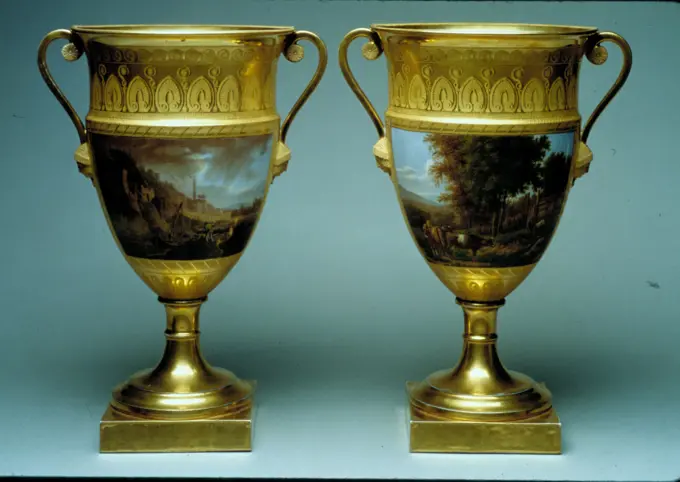
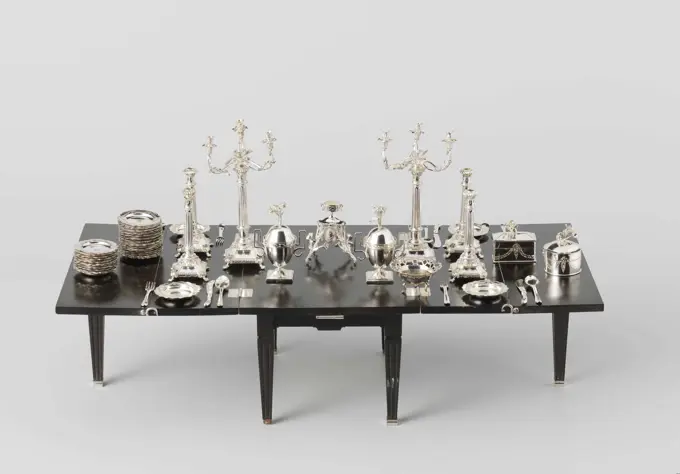
Elegant Silverware and Glassware

Exquisite pieces of silver and glassware including sugar bowls and candlesticks, highlighting intricate craftsmanship and historical details.

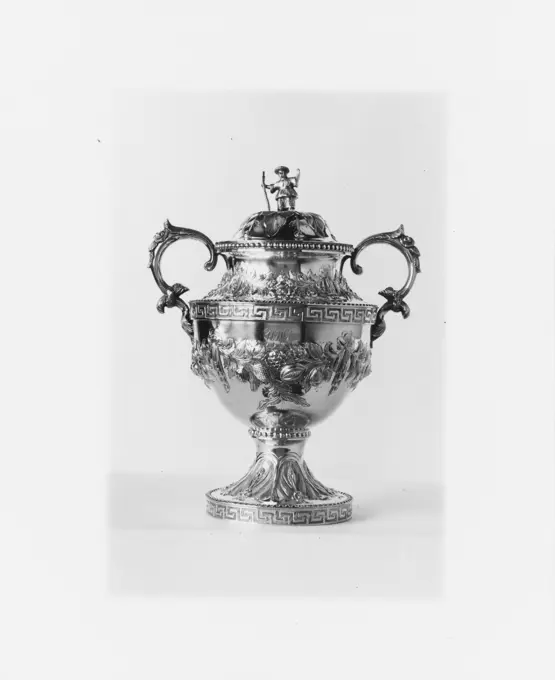
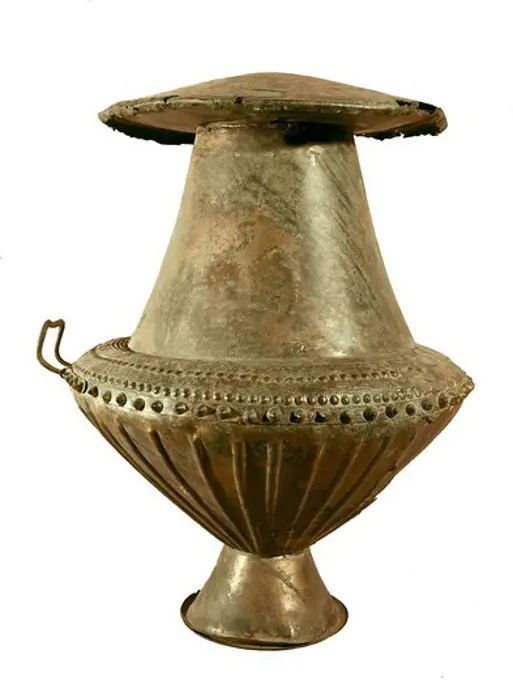
Kastanjevaas with gilded silver inner wall, visible by the openwork parts, Francois Marcus Simons, 1804 Round chestnut cheese with loose lid. In the interior of the vase there is a gilt silver inner wall, which is visible through the openwork parts. Marked and dated. The Hague silver (metal) casting Round chestnut cheese with loose lid. In the interior of the vase there is a gilt silver inner wall, which is visible through the openwork parts. Marked and dated. The Hague silver (metal) casting
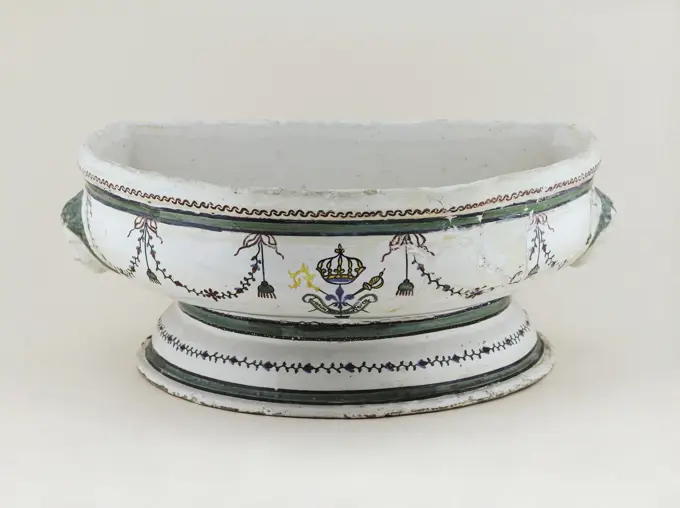
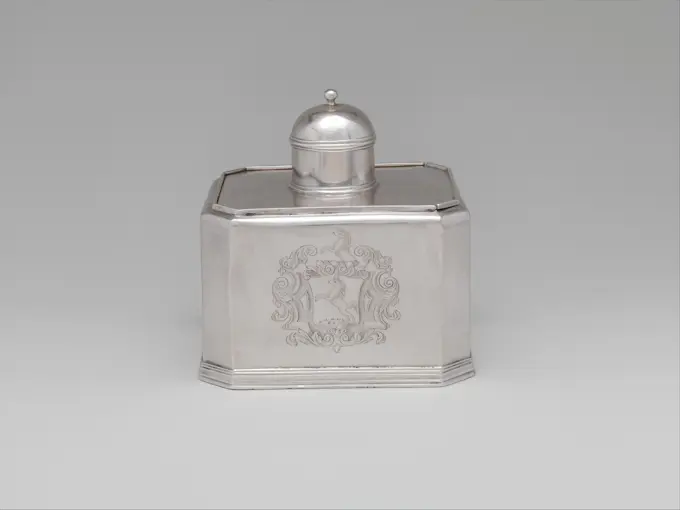
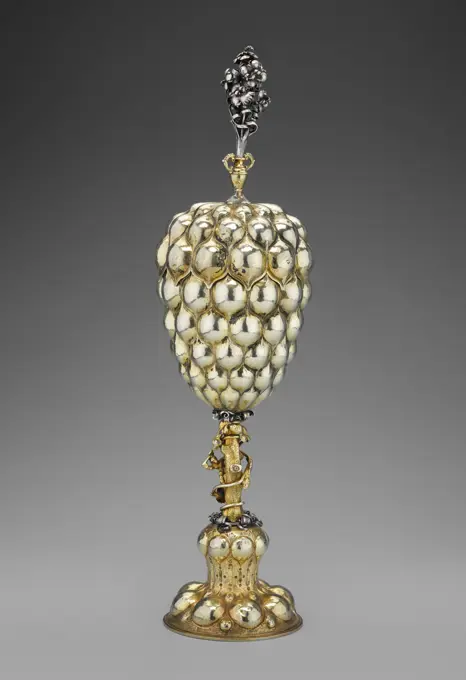
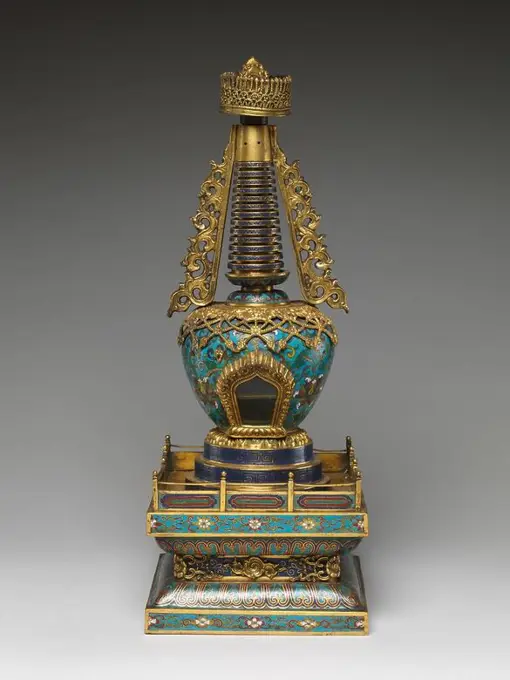
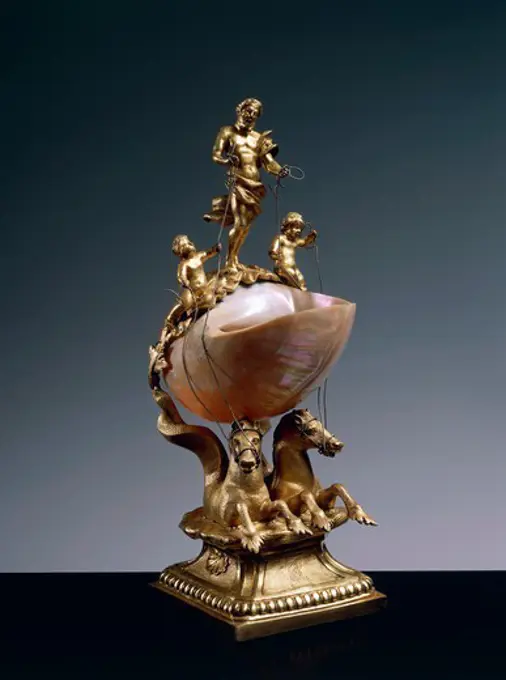
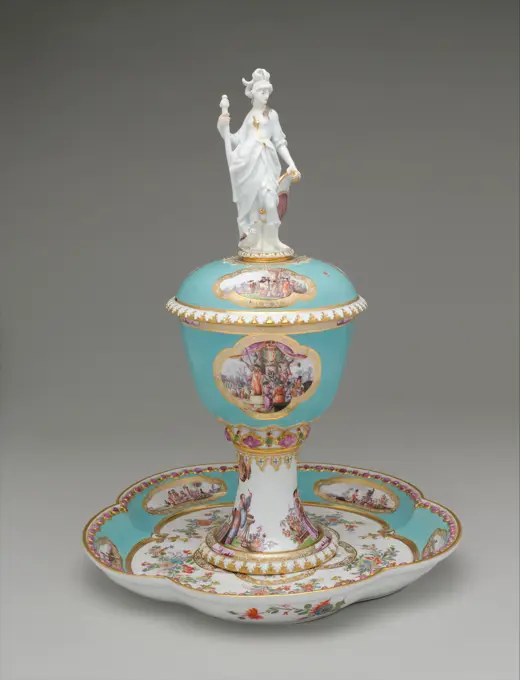
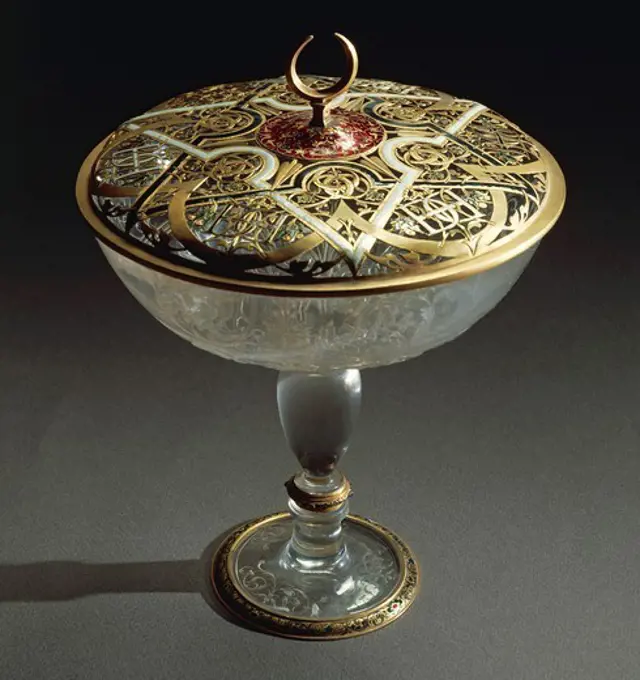
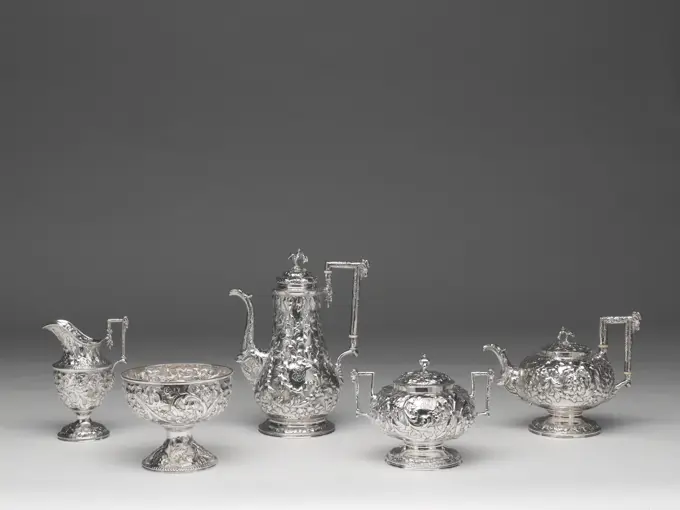
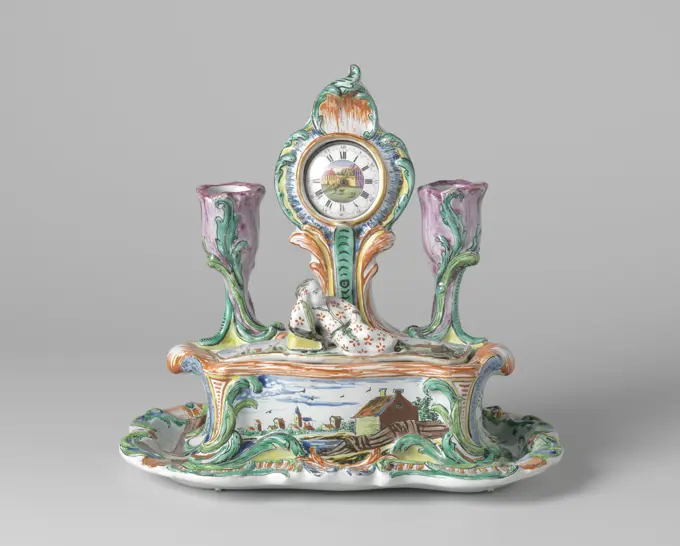
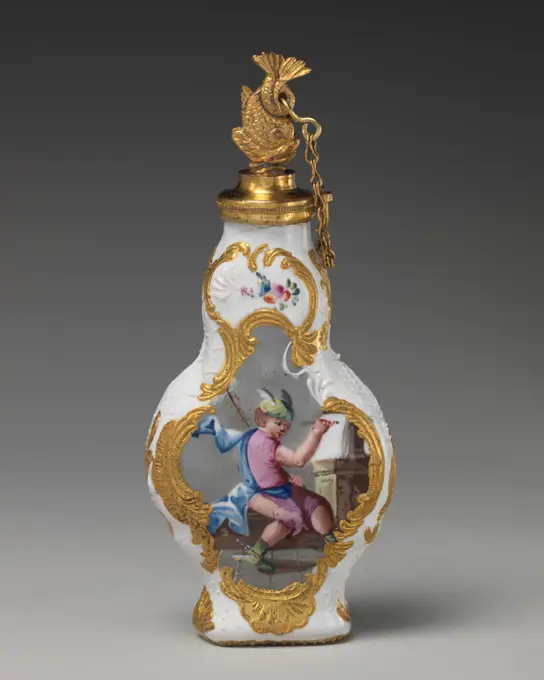
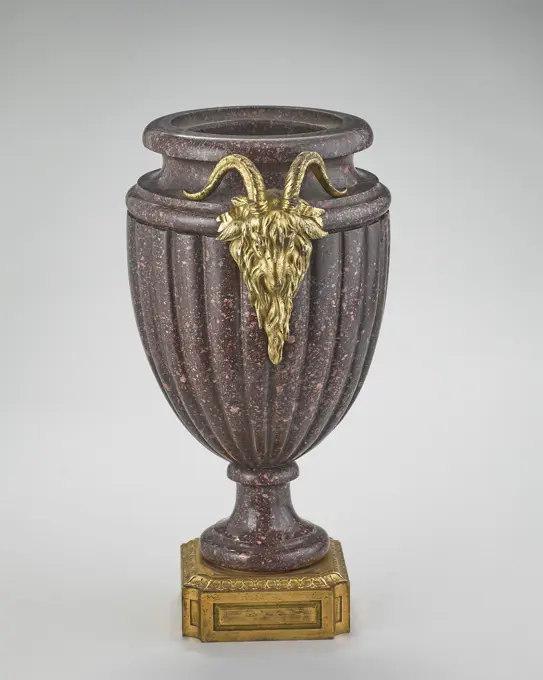
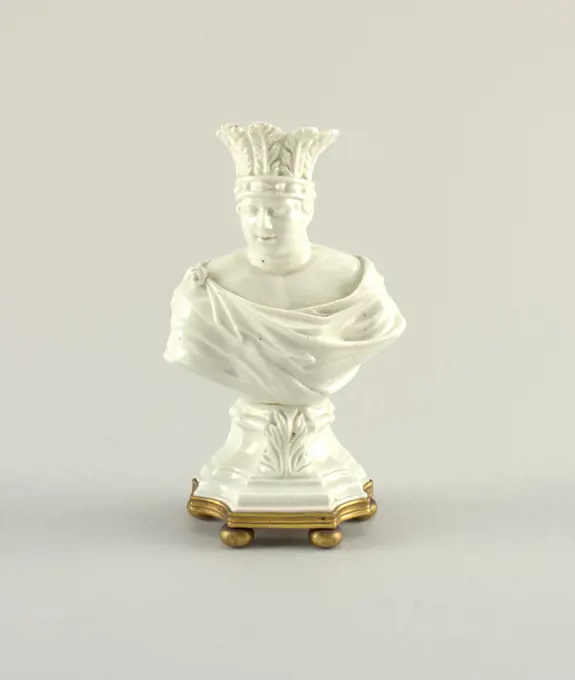
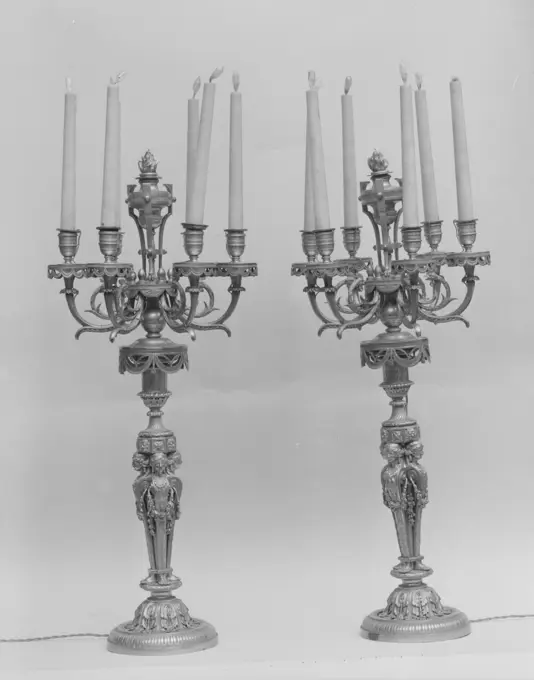
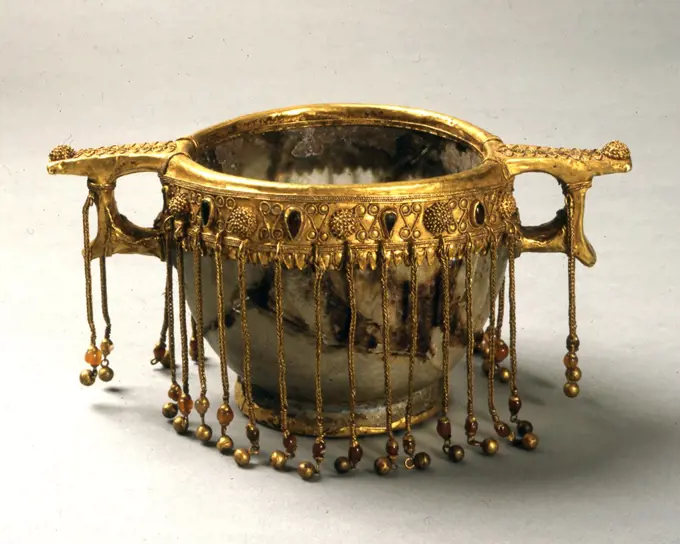
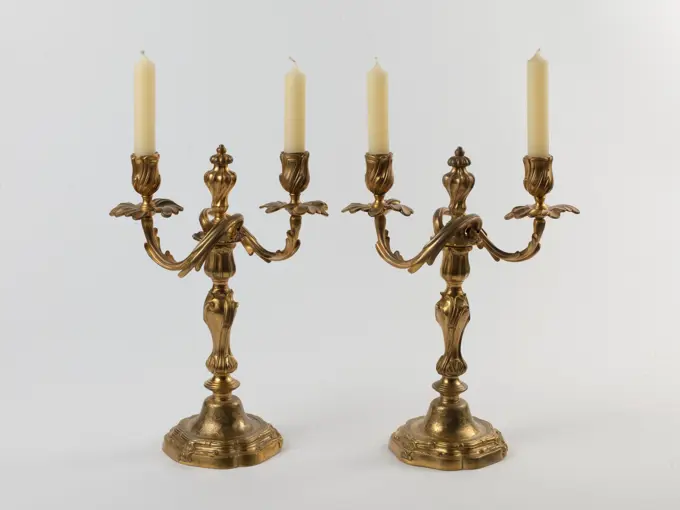
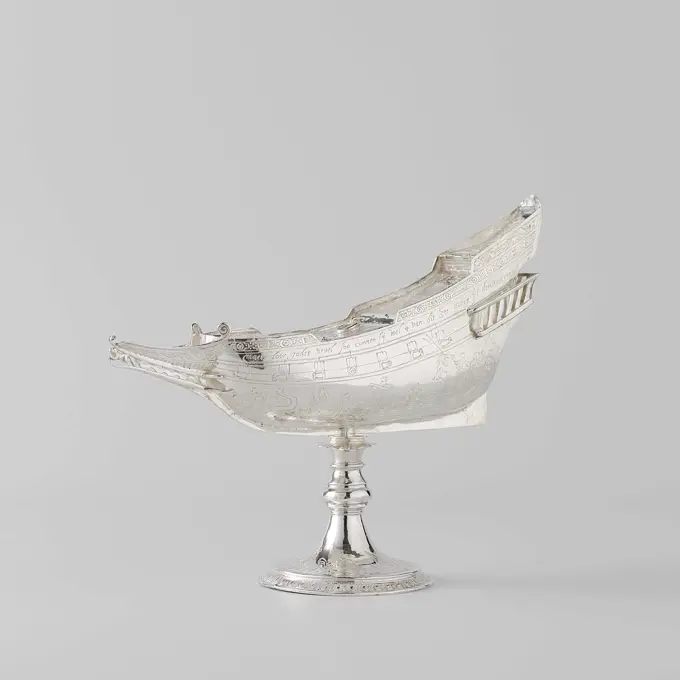
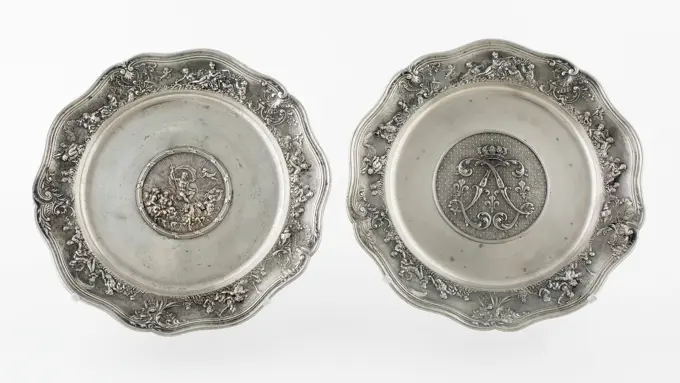
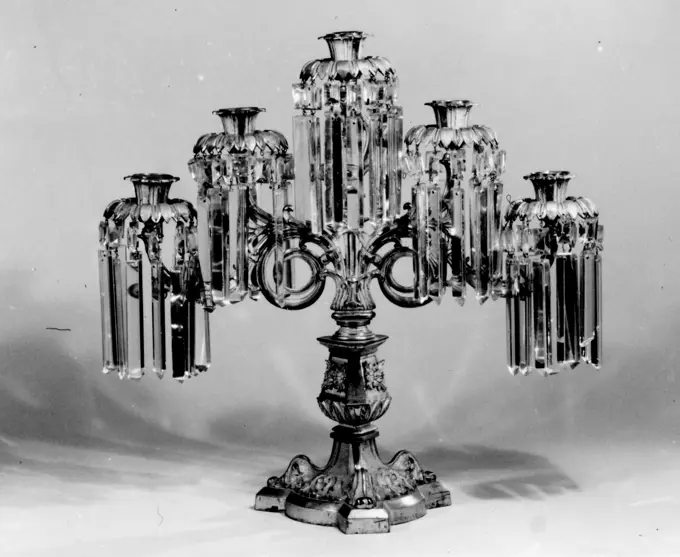
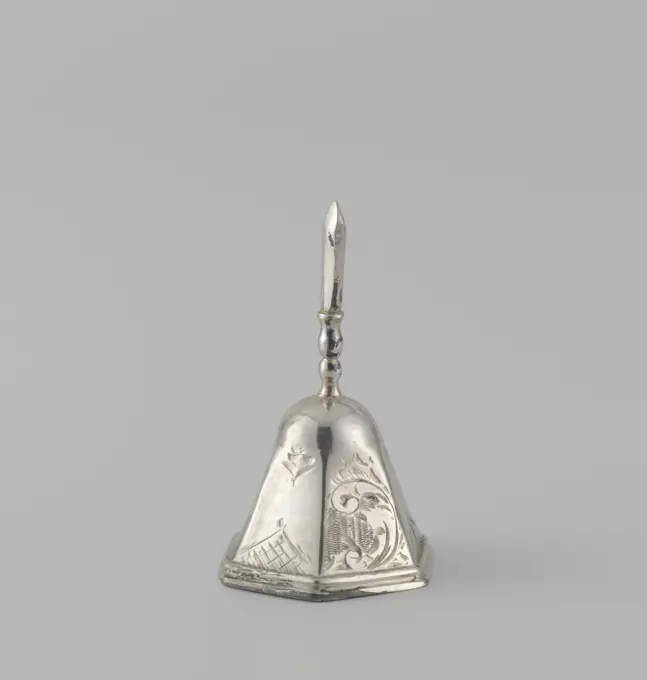
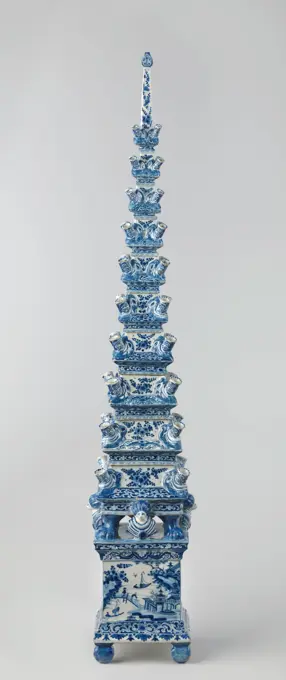
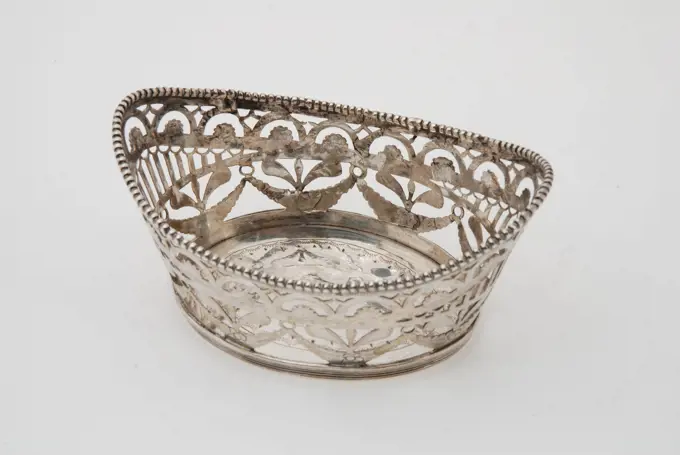
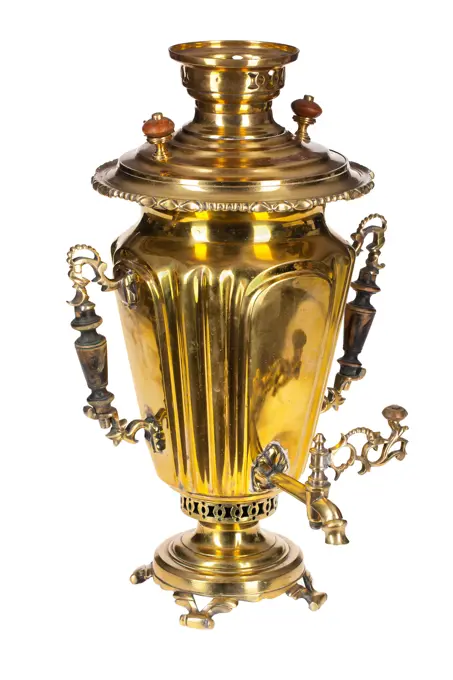
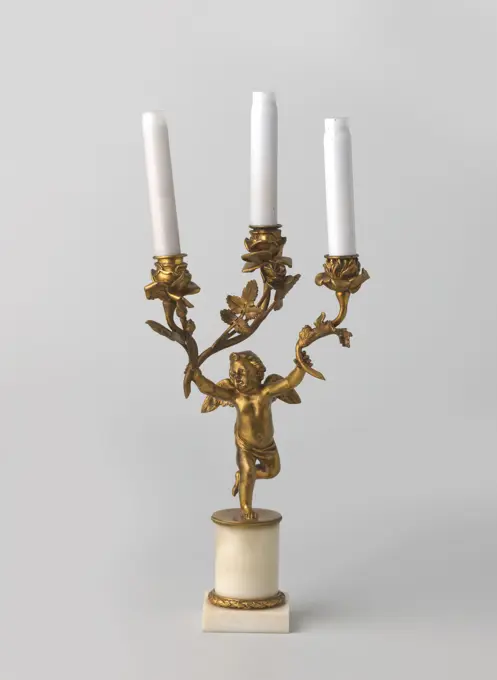
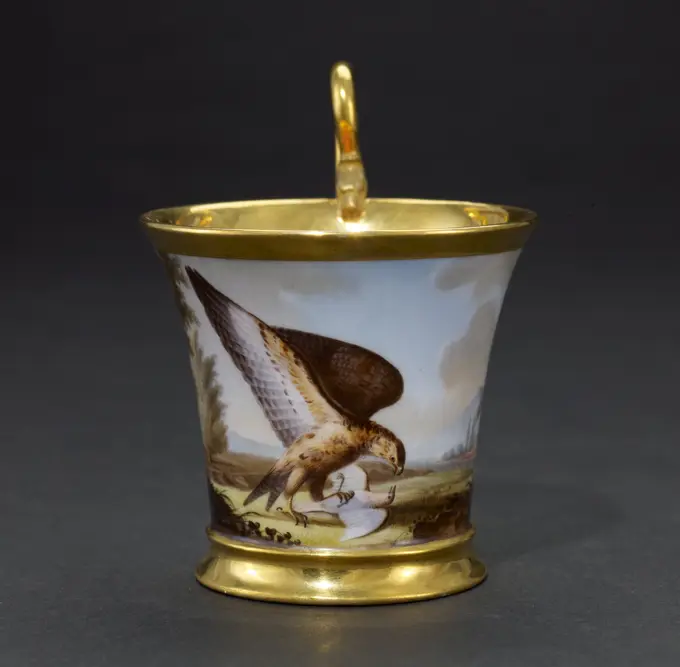
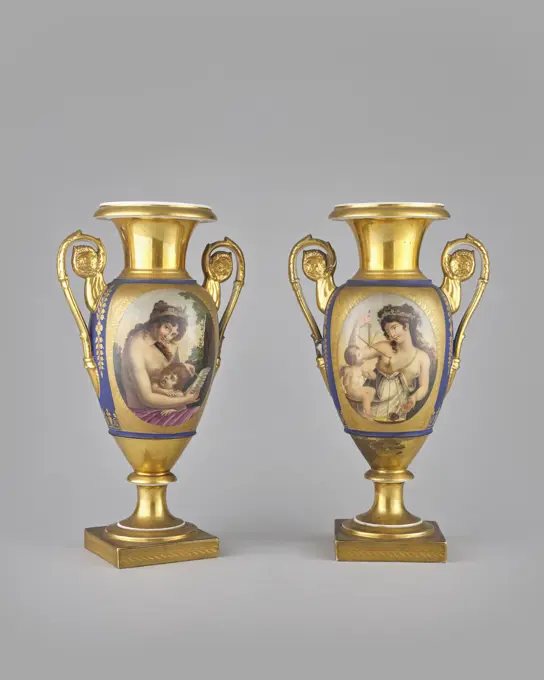
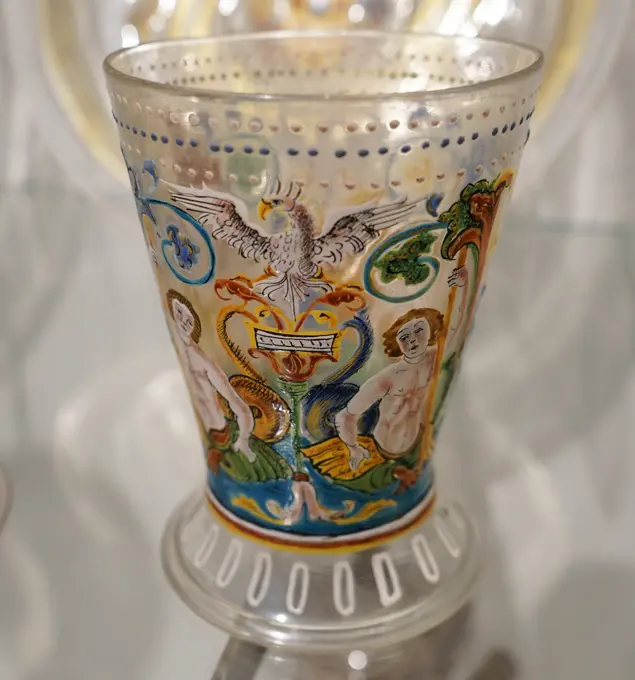
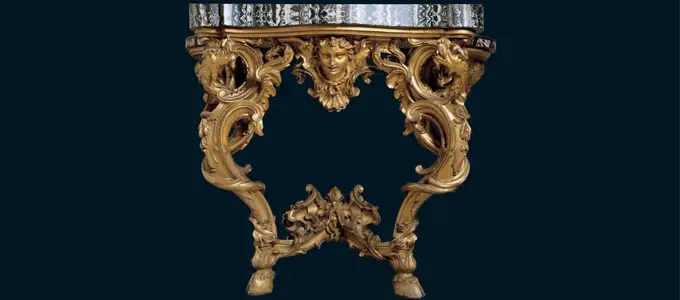
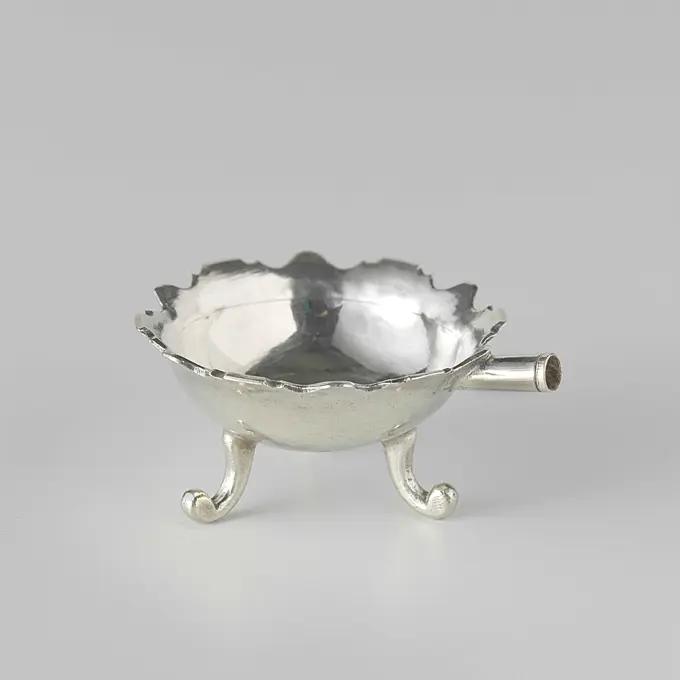
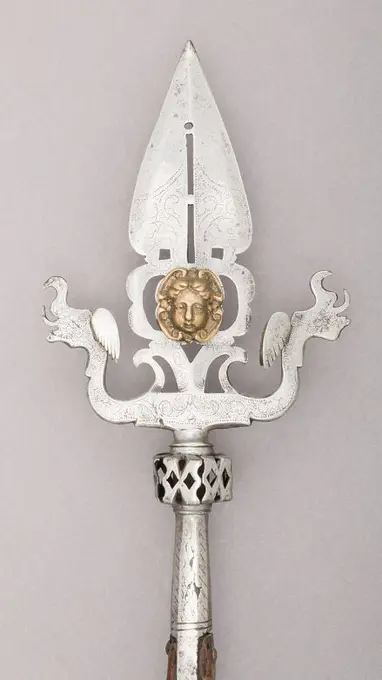
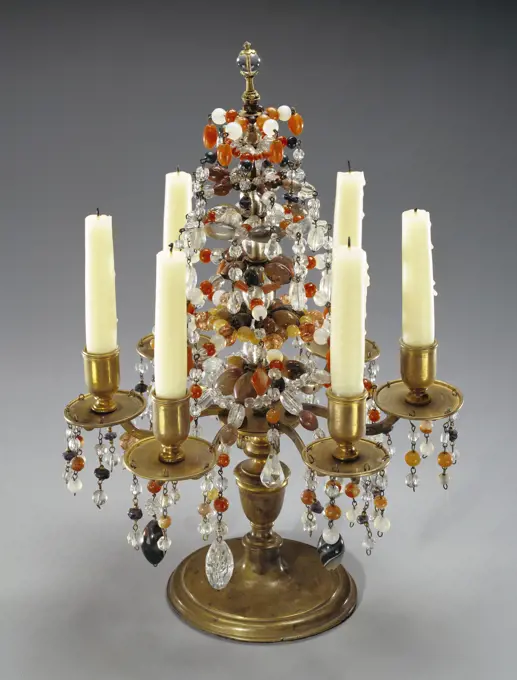
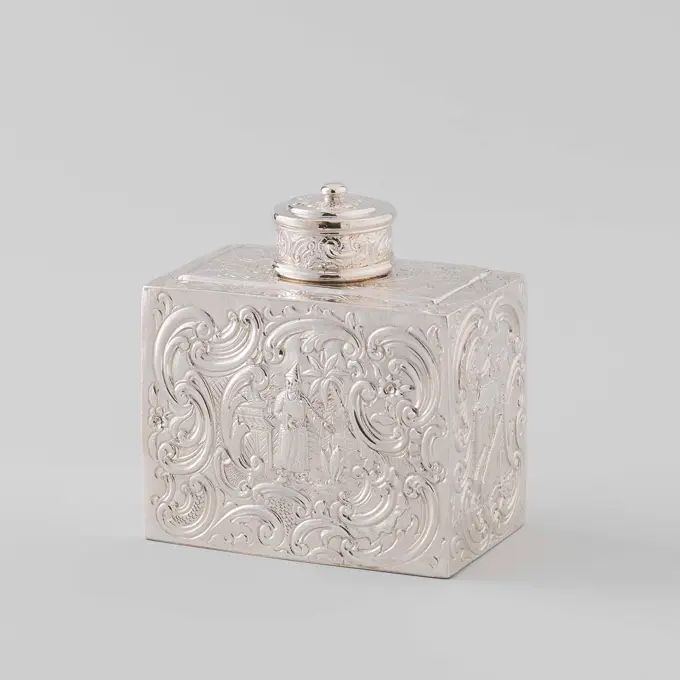
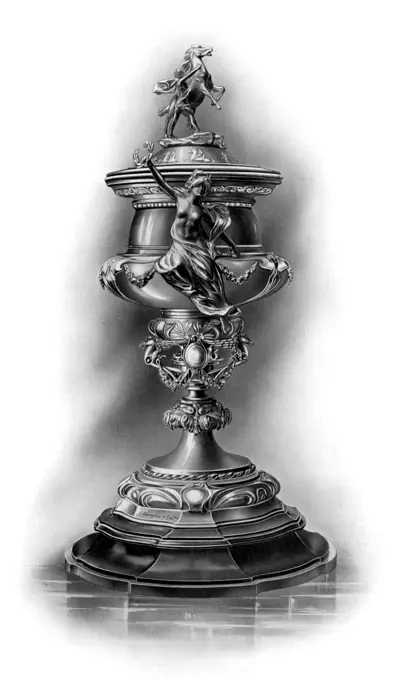
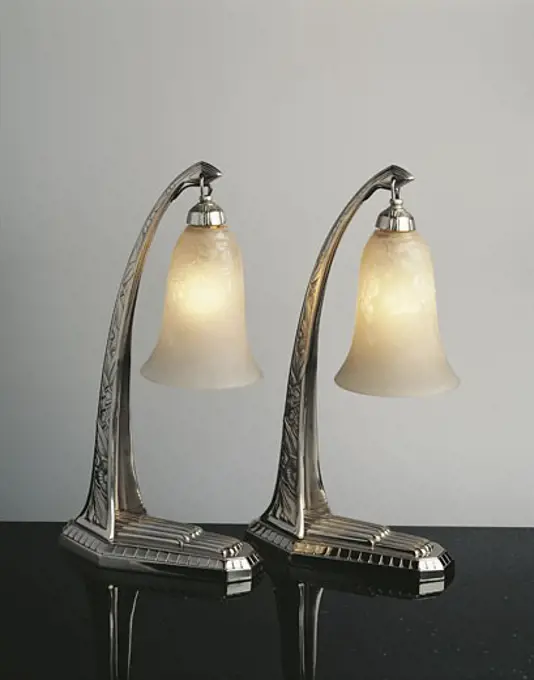
Sugar Bowl 1835-45 Robert and William Wilson. Sugar Bowl 7996Cup in the form of pineapple; Müllner, Michael (Fl. 1612-1650); the 1920s (1625-00-00-1635-00-00);Szwarc, Szymon (1884-197.) - collection, pineapple (TYPE TYPE), baroque (style), woodwoods, flower, birds, grapes, vines, purchase (provenance)Chalice early 17th century Spanish. Chalice 191935Tobacco spot from tin garlands and mascarons. Tobacco spot from tin, rectangular in shape. There is a pot on the profiled foot, the bottom of which goes out. The short sides have been rolled out from the middle. Both the short and long sides have on the lower half cannelures and above that a mascaron in the middle of Guirlandes. The lid is decorated with a few flower and rank motifs in boxes. The cap is decorated with two mascaroons.Water vessel;  19th century (1868-00-00-1901-00-00);Robert Timbrell, Two-Handled Cup and Cover, 1696/97, silver.Reliquary. Culture: China. Dimensions: H. 19 in. (48.3 cm); W. 7 1/8 in. (18.1 cm); D. 7 1/8 in. (18.1 cm). Museum: Metropolitan Museum of Art, New York, USA.Toilet box (one of a pair) ca. 1743-45 Johann Conrad Lotter German. Toilet box (one of a pair) 231576Terrine, Arnoldus van Geffen, 1766 Round terrine with scalloped bottom edge. The terrine has a lid with also a scalloped edge. The button of the lid is a flying bird. The terrine has two raised handles. The Terrine is on a corresponding dish (BK-NM-1177-153-A) The terrine is marked: stk. = Amsterdam, Jrl. = G (1766) and Mt. = Arnoldus van Geffen. The terrine with dish is the same as two copies with invnrs. BK-NM-11177-252 and BK-NM-11177-253. Amsterdam silver (metal) Round terrine with scalloped bottom edge. The terrine has a lid with also a scalloped edge. The button of the lid is a flying bird. The terrine has two raised handles. The Terrine is on a corresponding dish (BK-NM-1177-153-A) The terrine is marked: stk. = Amsterdam, Jrl. = G (1766) and Mt. = Arnoldus van Geffen. The terrine with dish is the same as two copies with invnrs. BK-NM-11177-252 and BK-NM-11177-253. Amsterdam silver (metal)Goldsmith's art, Germany, 17th century. Nautilus salt cellar supported by two gilded bronze sea horses and surmounted by figure of god Neptune and two Puttos. Gilded bronze mount. Height cm. 33.Standing cup with cover and stand ca. 1735 Meissen Manufactory German Commissioned by Augustus the Strong, Elector of Saxony and King of Poland, to commemorate the state visit to Dresden in January 1728 of the king and queen of Prussia, parents of Frederick the Great. The queens initials, SD for Sophie-Dorothea, are three times displayed. The larger finial figure of Athena is closely related to a silver statuette in the Electoral collections at Dresden, made by Philipp Kuesel of Augsburg before 1700. The turquoise ground has reserves with gold-lace borders painted by Heroldt with colorful chinoiserie figures in idyllic landscapes. This splendid cup illustrates that interesting phase of early Meissen production when the compelling influence of all things Chinese had been superseded by a temporary dependence on silver shapes; the lure of the Orient continued in the painted decoration.. Standing cup with cover and stand 204644Urn. Biconical ossuary, 8-9th c. BC. Etruscan art. Jewelry. ITALY. LAZIO. Rome. National Etruscan Museum of Villa Julia.Vase with cover (Vase en ivoire) (one of a pair). Culture: French, Paris. Dimensions: H. 15 x W. 9 x D. 6-1/2 in. (38.1 x 22.9 x 16.5 cm). Date: ca. 1786.Ivory-turning had been a fashionable pastime at European courts during the sixteenth and early seventeenth centuries, and it was revived in France and elsewhere during the second half of the eighteenth century. Louis XV worked the lathe himself, and his daughters received instruction in this art form. His grandson the dauphin, the future Louis XVI, also took lessons, as did his brothers. A group of ivory vases was recorded at the Chteau de Versailles on the eve of the Revolution, possibly created by members of the royal family. It is more likely, however, that Michel Voisin (1729-1786), turning master to Louis XVI, or his son François was responsible for these precious, lacelike objects. A series of engraved designs by the younger Voisin, entitled Nouveau Cahier de vases, composés par Voisin Fils, includes a vase that is similar to Perfume bottle;  1. PO. 19th century (1801-00-00-1850-00-00);Goldsmith's art, Italy, 16th century. Gasparo Miseroni (active about 1550-1575), Cup in rock crystal and enamelled gold. Height 22.5 cm. Openwork gold lid.Silversmith: Anthony Huijs, Silver almond bin on four legs, almond container holder silver, sawn (openwork wall) Oval tray with convex outer wall swiveling upwards on four hoof-shaped legs bottom bottom (knocked in) serving HuysTea and Coffee Service c 1840-1868 Baltimore. Silver . Samuel Kirk & Son (Baltimore, Md.)Sugar Bowl Sugar Bowl; Designed by Hugo Leven (German, 1874-1956); Manufactured by J. P. Kayser & Sohn (Germany); pewterHostie box. Hostie box of silver, on three legs. Engraved on the lid: Christ on the Cross and Mary Magdalene.Subtot of inkstel, the two Scheepjes (Possible), c. 1750 - c. 1782 Subtotel of combined watch stand, ink set and candle holder. Painted. Delft . Subtotel of combined watch stand, ink set and candle holder. Painted. Delft .Scent bottle ca. 1760-1800 British, Staffordshire. Scent bottle. British, Staffordshire. ca. 1760-1800. Enameled copper. Enamels-PaintedSugar Bowl, c. 1879. Tiffany & Co. (American, New York, est. 1837). Silver inlaid with copper and gold; overall: 6.4 x 8.2 cm (2 1/2 x 3 1/4 in.).Tobacco Comfore, Pieter van Summer Wil (i) (attributed to), c. 1730 Round, shallow tobacco plum on three legs that walk through to the edge of the container and run into profiled buttons. The legs are bent in under the tank. The Komfoor has an impetus for a handle that is, however, missing. The KUMFoor is marked: stk. = Amsterdam, size = attributed to Pieter van Somerwil I and an ax. Amsterdam silver (metal) Round, shallow tobacco plum on three legs that walk through to the edge of the container and run into profiled buttons. The legs are bent in under the tank. The Komfoor has an impetus for a handle that is, however, missing. The KUMFoor is marked: stk. = Amsterdam, size = attributed to Pieter van Somerwil I and an ax. Amsterdam silver (metal)Anonymous, covered urn in porphyry (main title). Porphyry, gilded bronze. Petit Palais, Museum of Fine Arts of the City of Paris.Allegorical Bust of 'America', soft paste porcelain (blanc de chine), vitreous enamel, bronze, gold, France, mid- 18th century, ceramics, Decorative Arts, bust, bust. Augustus the Strong gave this vase to the Russian court in 1728. The coat of arms of the tsar of Russia is painted on the vase.Magdalene, Minton and Company, British, 1793 - 1968, glazed earthenware, Font with cover of gothic arches formed from radiating cyma curves which result in a peaked dome shape. Segments of the dome are adorned with foliate patterns. The font is further decorated with tresfoils around the body of the basin and quatrefoils at the lip of both the basin and the lid. The font rises on a stepped plinth and an octagonal base., ca. 1840, ceramics, Decorative Arts, Portable Font and Cover, Portable Font and CoverSnuff Box, c. 1750. Russia, late 18th century. Gold-mounted bloodstone, diamonds;Table Bell, Arnoldus van Geffen, 1737 Half -ball -shaped table bell with handle. The bell has a profiled edge and the handle is baluster -shaped. The table bell is marked: stk. = Amsterdam, Jrl. = (1737), Mt. = Arnoldus van Geffen. Amsterdam silver (metal) Half -ball -shaped table bell with handle. The bell has a profiled edge and the handle is baluster -shaped. The table bell is marked: stk. = Amsterdam, Jrl. = (1737), Mt. = Arnoldus van Geffen. Amsterdam silver (metal)Pair of Candlesticks. Eastern Mediterranean, late 15th - early 16th century. Metal. Brass inlaid with silverCardReceiver.  Manufacturer: Rogers, Smith and Company, American, 1857-1918Crystal Vase Crystal vase on a glass studio background Copyright: xZoonar.com/AndreyxSkatx 12330227. .Candlestick of silver with trunk in the form of a wrinkled tree trunk with three winding branches with oval leaves and candle holder in flower crown., Jan Kemaer (Possible), 1784 Silver candlestick. A winding tree trunk rises from a leaf rosette, which divides into three winding branches with oval leaves. The candle holder is caught in a flower crown. Dordrecht silver (metal) Silver candlestick. A winding tree trunk rises from a leaf rosette, which divides into three winding branches with oval leaves. The candle holder is caught in a flower crown. Dordrecht silver (metal)Candelabrum 1810-20. Candelabrum. 1810-20. Gilt bronze. Made in FranceStripAnonymous. Fountain basin with three orders. Earthenware. 1789-1792. Paris, Carnavalet museum. 72437-45 Basin, Crown, Crosse, Painted Decor, Epee, Revolutionary Faience, Fontaine, Object, Revolution 1789, French Revolution, three orders, 18th 18th 18th 18th centuryPair of Stirrups 19th century Argentinian This pair of stirrups is of a type called in Spanish estribos de campana, or bell stirrups. Extremely popular in Argentina, they evolved from 18th-century baroque stirrups imported from Spain. The richest of them are usually chiseled in silver, while more modest examples like this pair were simply made of cast iron. Pair of Stirrups. Argentinian. 19th century. Iron alloy. Equestrian Equipment-StirrupsKandelaar, multi -colored painted with abstract motifs, N.V. Haagsche Plateel Factory Rozenburg, 1888 Candlestick of earthenware with painted ornament in yellow, blue, green and manganese. Marked with WG with a sign between; The Hague; D; W.D. And another sign. The Hague earthenware Candlestick of earthenware with painted ornament in yellow, blue, green and manganese. Marked with WG with a sign between; The Hague; D; W.D. And another sign. The Hague earthenwarePair of Altar Candlesticks. UnknownCenterpiece. Culture: British. Dimensions: H. 16 in. (40.6 cm); Diam. 11 1/2 in. (29.2 cm). Maker: Benjamin Smith, II (active ca. 1790-1830). Date: 1821-22. Museum: Metropolitan Museum of Art, New York, USA.Pottery, Gold, garnets, 2nd century AD, Russia, Moscow, History Museum,Anonymous. "Candelabra with two branches (of a pair)". Golden bronze. 1701-1800. Paris, Museum of Romantic Life. Candle holder, candle, calear, lighting, light, lighting, 18th 18th 18th 18th 18th 18th 18th centuryChalice from the Beth Misona Treasure, c. 500-700. Early Byzantium, Constantinople or Syria, Byzantine period, 6th-7th Century. Silver; overall: 17 x 14.2 cm (6 11/16 x 5 9/16 in.).. The spice trade was the most important goal of the journeys to Asia. Pepper, nutmeg, mace and cinnamon were very costly commodities. Accordingly, they were offered at table in an opulent manner. This spice box is in the shape of the Mauritius, one of the ships that had already successfully sailed to Asia before the VOC was founded. Its lid (the deck) conceals little compartments for different spices.Plates 1887-1897 France. Pewter . Jules-Paul BrateauGirandole 1835-40 American. Girandole. American. 1835-40. Bronze. Possibly made in Baltimore, Maryland, United StatesSwan candelabrum (one of a pair) swan, ca. 1745-50; gilt-bronze mount, ca. 1750 Meissen Manufactory In eighteenth-century France, luxury merchants known as marchand-merciers combined expensive porcelain from Meissen with French gilt-bronze mounts to create distinctive forms of opulence, seen in this extravagant pair of candelabra featuring swans floating amidst flowering branches of gilt bronze.. Swan candelabrum (one of a pair). German, Meissen with French mount. swan, ca. 1745-50; gilt-bronze mount, ca. 1750. Hard-paste porcelain with gilt-bronze mount. Ceramics-PorcelainTable bell, Johannes Adrianus van Geffen (attributed to), c. 1766 - c. 1795 Hexagonal table bell with handle. The handle runs point. The surfaces of the bell are engraved. The table bell is marked: sword and an unreadable sign. Amsterdam silver (metal) Hexagonal table bell with handle. The handle runs point. The surfaces of the bell are engraved. The table bell is marked: sword and an unreadable sign. Amsterdam silver (metal)Silver candlestick, Francois Marcus Simons, 1803 Candlestick with foot. Marked and dated. The Hague silver (metal) casting Candlestick with foot. Marked and dated. The Hague silver (metal) castingPart Bloempyramid of Delft pottery, Anonymous, c. 1700 Square pedestal of flower pyramid from Faience. Rest on four legs, has a profiled base and cornice and is decorated with landscapes, in which bridges and Pagoden following Chinese porcelain. The upper surface of the pedestal is plain blue and carries a section of four legs stuck to it, which is also connected to the pedestal by bust figures. Delft . Square pedestal of flower pyramid from Faience. Rest on four legs, has a profiled base and cornice and is decorated with landscapes, in which bridges and Pagoden following Chinese porcelain. The upper surface of the pedestal is plain blue and carries a section of four legs stuck to it, which is also connected to the pedestal by bust figures. Delft .Candlestick of brass. The object, which is completely poured into a whole, has a round foot, a slightly bol and baluster-shaped stem, a round fat catcher and a candle pin profiled with the impetus. Inside, the round hollow strain is marked by four grooves at mutual distance, serving to provide the lathe. The object shows small differences with Candlestick BK-NM-2289-b.Pedestals with five-light candelabra ca. 1785 French. Pedestals with five-light candelabra 209019Cáliz, siglo XV. Museo parroquial de Longares.Silver openwork basket: bonbon box, bonbon container tableware holder silver, cast sawn engraved Openwork box with oval floor plan walls slightly pointed upwards ascending on the narrow sides (boat shaped) bottom bottom (debossed): servingVase 1830-70 American This vase was pressed in two pieces, and a flat disk was used to join the bowl to the stem. This technique is believed to have been largely confined to New England glasshouses. By 1875, a Pittsburgh firm, Atterbury and Company, had developed a process for pressing such forms in a single mold.. Vase 9555Russian Traditional Water Boiler Russian traditional water boiler on isolated background Copyright: xZoonar.com/AndreyxSkatx 9861072Leaf belonging to ink set. Silver ink set. The leaf is straight on the back and at the front. The inkwell and sand spreader are melon. The pear-shaped table bubble is applied between the two melons.Pair of lidded alabaster vases. UnknownSilversmith's Art, 19th century. Silver candlesticks with the mark of the goldsmith BC. Neaples, 1820.THE BEAUFORT CUP, WON AT THE BATH RACES, UK, 1866Jar And Lid; glassCandlestick, c. 1736-1796, 8 3/4 x 5 1/8 in. (22.2 x 13.02 cm), Porcelain, China, 18th-19th centuryKandelaber of white marble and gilded bronze, with three arms in the form of branches with leaves, ending in rose buttons, stopped by winged putto, anonymous, c. 1900 - c. 1915 Kandelaber of white marble and gilded bronze, with three arms in the form of branches with leaves, ending in rose buttons that serve as a candle holder. They are stopped by a winged putto. The pedestal consists of a round drum, resting on a square plinth piece. The Kandelaber is equipped for electricity. See also: BK-1978-47-B. France (possibly) marble (rock). bronze (metal). glass. gilding (material) gilding Kandelaber of white marble and gilded bronze, with three arms in the form of branches with leaves, ending in rose buttons that serve as a candle holder. They are stopped by a winged putto. The pedestal consists of a round drum, resting on a square plinth piece. The Kandelaber is equipped for electricity. See also: BK-1978-47-B. France (possibly) marble (rock). bronze (metal). glass. gilding (material) gildiCup from a tea service for twelve, 1807-08, Christophe-Ferdinand Caron; Manufacturer: Sèvres Porcelain Factory, French (Sèvres), French, 1774-1831, 4 5/16 x 4 1/2 x 3 3/8 in. (10.95 x 11.43 x 8.57 cm), Hardpaste porcelain, gilt, France, 19th centuryUnknown, pair of vases (title of the whole). Painted and golden porcelain. Petit Palais, Museum of Fine Arts of the City of Paris.Decorated 16th century glassware. Dated 16th CenturyWall table, by Rome workmanship, 18th Century, wood carved and gilded, top veneered and Aquitaine marble. Italy: Lazio: Rome: National Gallery of Ancient Art: Galleria Nazionale d'Arte Antica. Whole artwork. Console wall table gold marble racemes volutes decoration black backgroundAndiron, one of a pair, 16th century, 31 1/2 x 16 1/2in. (80 x 41.9cm), Brass, iron, Italy, 16th centuryMand, anonymous, c. 1775 - c. 1800 Openwork bread basket in Louis XVI style. The basket has two handles and is on four legs. Garlandes run around the sawing work. The bread basket is marked: twice size = cs in crowned heart. Netherlands silver (metal) Openwork bread basket in Louis XVI style. The basket has two handles and is on four legs. Garlandes run around the sawing work. The bread basket is marked: twice size = cs in crowned heart. Netherlands silver (metal)Spice box 1730 Nicolas II Boullet The hinged compartments of this box contained dry spices for the table such as cloves, pepper, mustard, and salt. At the center is a cylindrical grater that could hold a nutmeg to be freshly ground over an otherwise bland meal. Such boxes, with their bold moldings and faceted profiles, might have been supplied as part of a large table centerpiece, or surtout. The other components of a surtout include a large central vessel with branches for candles, matching cruets for oil and vinegar, and four spice boxes. The perfectly symmetrical table arrangement emphasized the geometric form of the boxes.. Spice box 200270Crystals engraved gift jug with handles in the form of dragons, from the Louvre, Charles Thurston Thompson, 1866 - 1890 photomechanical print  Louvre Museum paper  container of glass: bottle, jar, vase Louvre MuseumCANDELABROS DE PLATA SOBREDORADA DEL S XVIII. Location: IGLESIA DE SANTA MARIA DEL CAMPO. Coruña. SPAIN.TrophyBronze, partly gold-plated candlestick. The widened base of the cylinder-shaped pedestal is decorated with palmets. Under and above the cylinder-shaped part, stylized flower drinks on pointilled soil, between which four dancing putti with a garland. On top of it is a globe, on which a male winged figure in floating position, dark green patient. In the outer hand, he holds a spring, in the other a candle holder with five arms in richly decorated floral form and with palmets.Candelabrum 1795-1810 British. Candelabrum. British. 1795-1810. Colorless, opalescent and amethyst glass, gilt bronze. Made in EnglandClose-up of a perfume bottle, FranceTobacco cup. Round tobacco bomb on three outs of bent legs and a starter for a handle. The handle is missing. The edge of the komfoor is serrated, inside in the bin is a six-lasting star in a circle engraved. The Komfoor has been marked: STK. = Amsterdam, JRL. = W (1756), Mt. = Arnoldus van Geffen and a sword.Decorative stake in memory of Johann Steiner and Emmerrez Landmann under Stolp on a round foot, c. 1910 - c. 1915  Decorative stake of gold -colored flowers, branches and leaves and colored stones. Top a blue and white bow and white (sides) Flowers. A paper medallion with the handwritten text Johann Steiner, Emmerrez Landmann 1854. Two prayer prints separately in box.  Paper. Silk. Pedimate: Wood (Plant Material)Cruet Holder or MagicCaster.   Maker: Roswell Gleason, American, 1799-1887Decorative olive lamp; XIX W (1801-00-00-1900-00-00);Linstock. Culture: Italian. Dimensions: L. 85 1/2 in. (217.2 cm); L. of head 12 3/4 in. (32.4 cm); W. 6 3/4 in. (17.2 cm); Wt. 4 lb. 14 oz. (2210 g). Date: 17th century. Museum: Metropolitan Museum of Art, New York, USA.Girandole; Paris, France; about 1680 - 1690; Gilt bronze with beads and drops of rock crystal, coral, jasper, amethyst, carnelian, agate, and other hardstones; 38.1 x 25.4 x 12.7 cm (15 x 10 x 5 in.)Wandfontein, anonymous, c. 1650 - 1700 Half cylindrical fountain with folding lid and a tap. On the back wall is an open -up masterpiece with volutes and a bearing eye. The wall and lid are decorated with engraving work. The fountain is marked twice with a boar head. Netherlands silver (metal) Half cylindrical fountain with folding lid and a tap. On the back wall is an open -up masterpiece with volutes and a bearing eye. The wall and lid are decorated with engraving work. The fountain is marked twice with a boar head. Netherlands silver (metal)Rectangular tea bus, decorated on all sides with driven chinoiseries. Rectangular tea bus from silver. All sides decorated with driven chinoiseries in the middle of seed beads. On the Upperlat, tendrils and seeds and seeds are selected, as well as on the wall of the lid that is finished at the top with a Rocaille rosette and a button. Brands: Amsterdam, small lion, annual letter E (1764), Master's sign of Hendrik Swiering van Swol (Foot 217).The Grand National Trophy, 1906 (1908-1909).Artist: Elkington & CompanyClose-up of an illuminated lamp, Luneville, Meurthe-et-Moselle, Lorraine, FranceSnuffers andStand.   Maker: Myer Myers, American, 1723-1795Guz do półoficjalnej czapki urzędnika piątej rangi. unknown, craftsmanPair of Chalices from St. Andrews Protestant Episcopal Church, Baltimore.   Maker: Cooper and Fisher, American, 1854-1862Vase ca. 1815-20 Manufactured by Marc Schoelcher French With lavish gilded decoration and delicately painted landscapes, this pair of vases is among the most ornate known with a history of American ownership.. Vase 16745Four candlesticks possibly 1774-75 John Carter II. Four candlesticks 208865. Round eating sign with scalloped edge. Guird builds are engraved on the edge. A flower is engraved in the middle of the board. The sign has been labeled: stk. = Amsterdam, jrl. = X (1782) and mt. = Foot 430. The plate is a copy from a set consisting of 36 identical plates (BK-NM-11177-189 up to / m. NM-11177-224).Bottle. Bottle belonging to an oil and vinegar set (BK-NM-11177-122). The bottle is octagonal and has a long, narrow neck. The bottle has a spout and a knob-shaped lid. The bottle is together with three identical bottles (BK-NM-11177-122-C, BK-NM-11177-1222-E, BK-NM-11177-122-F) on a plateau (BK-NM-11177-122 -B) In a basket (BK-NM-11177-122-A).Dish (without image) with head with portraits of a woman and a man, 1850 - 1949 photograph. object Saucer (without image) with head with portraits of a woman and a man  .Saltcellar 18th century German. Saltcellar 192072Sugar Box ca. 1720 Simeon Soumaine Rare survivals in early American silver, this pair of octagonal tea caddies and matching sugar box emulate contemporary English design. They also evoke the passion for tea-drinking and its costly accessories that became as fashionable in the Colonies as they were abroad. Each vessel is engraved with the arms and crest of the Bayard family of New York. Although only one tea caddy entered the Metropolitans collection in 1964 (64.249.5a,b), the set was reunited in 2015 with the purchase of the matching caddy and sugar box (2015.93.1a,b-2a,b).. Sugar Box 677865Glover Johnson, Set of Three Casters, 1721/22, silver.Glass; Heidelbacher Hütte (glassworks;-); 1624 (1624-00-00-1624-00-00);Herby, Silesia (Habsburgs - 1526-1740)19th Century Victorian botanical jewellery