Epic Tales of Southeast Asia

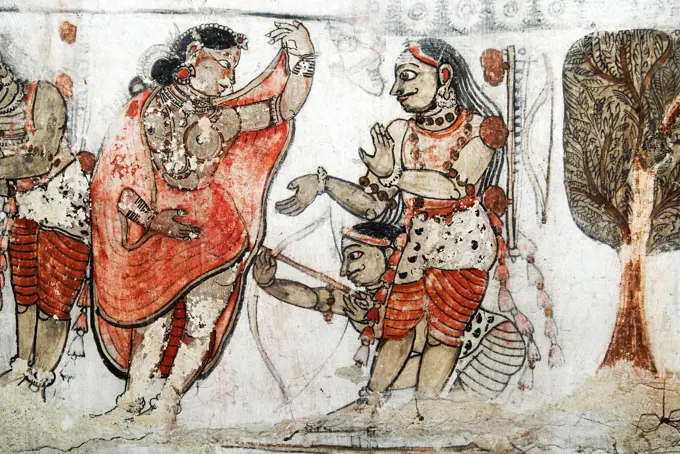
Illustrations depicting scenes from the Ramayana and traditional Indian art, showcasing vibrant historical narratives and cultural rituals.

An Indian marriage painting from Lucknow, 18th century. Artist: Unknown
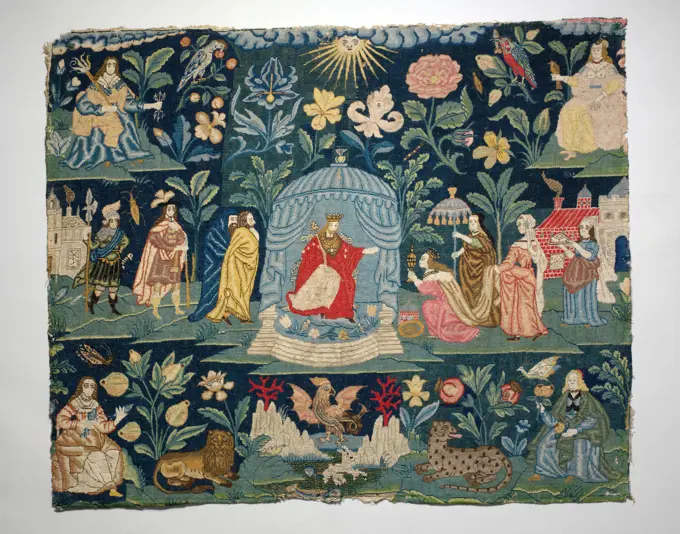
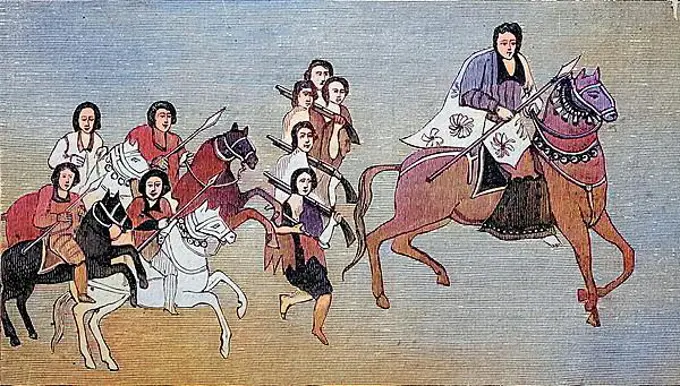
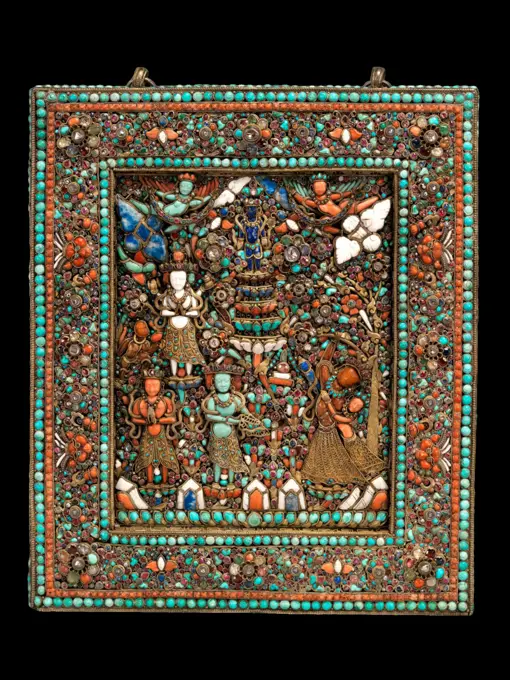
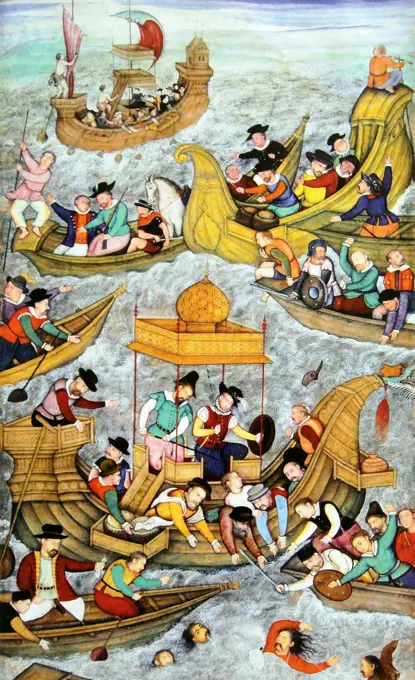
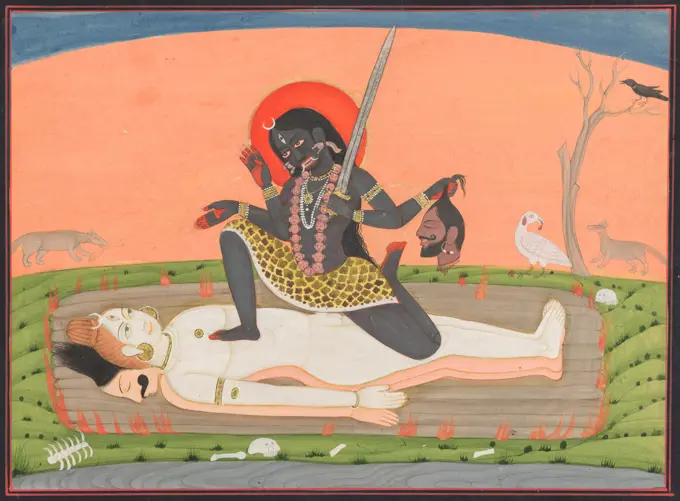
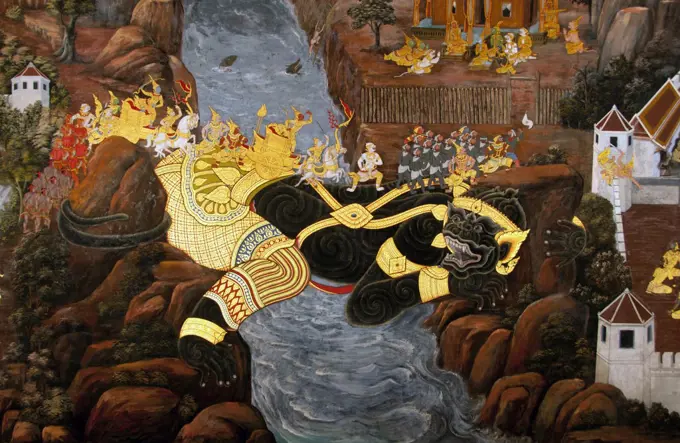
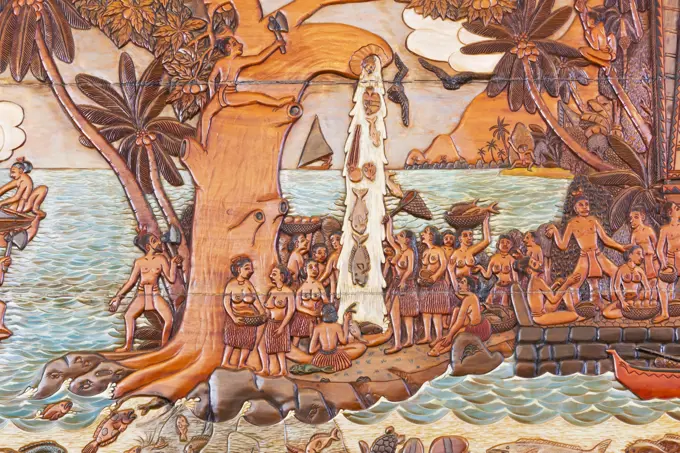
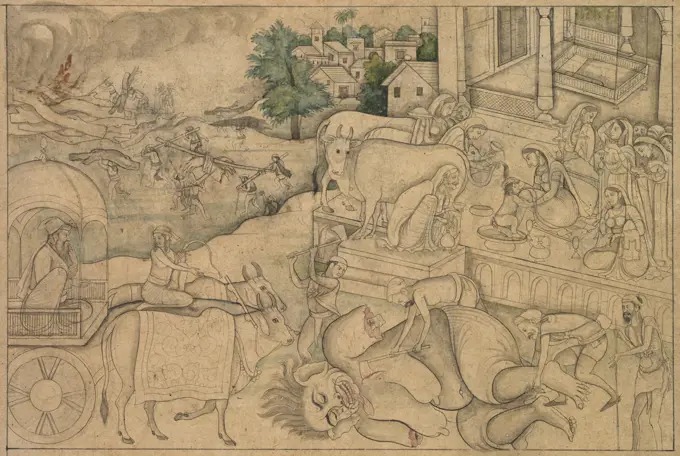
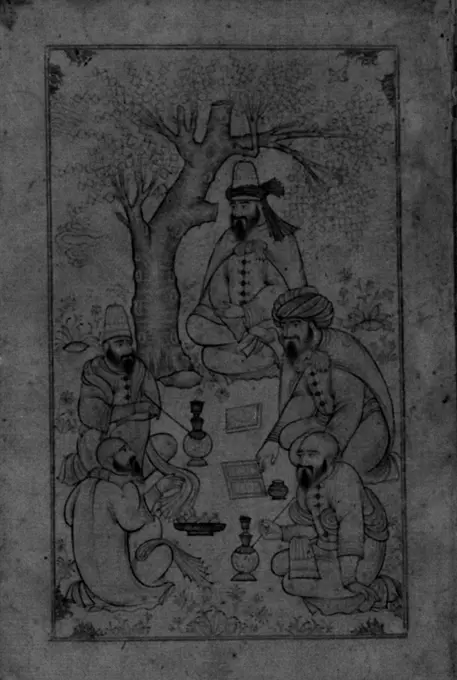
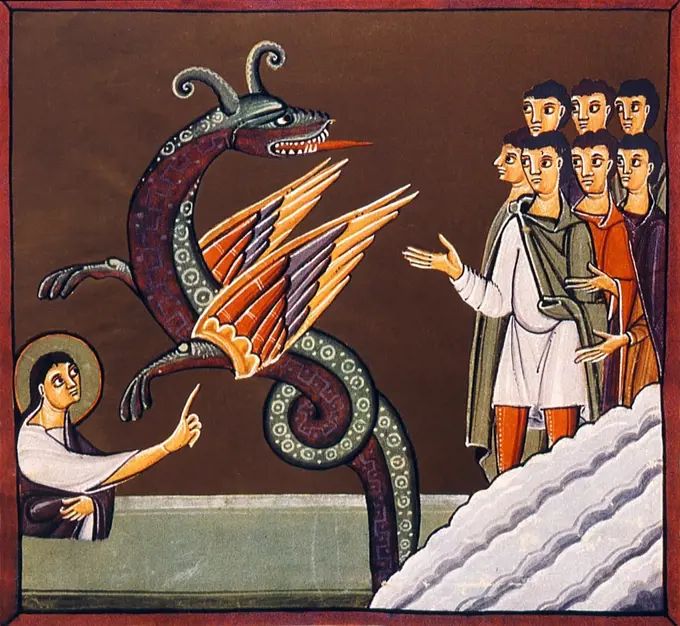
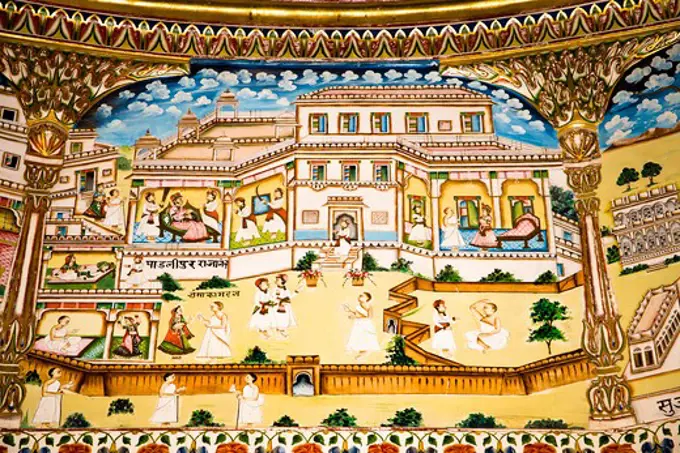
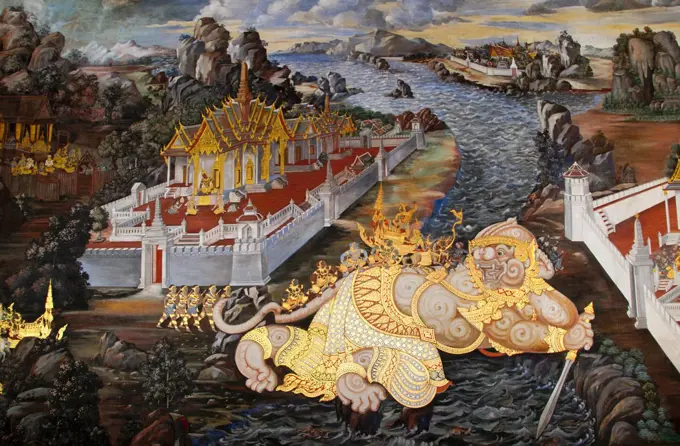
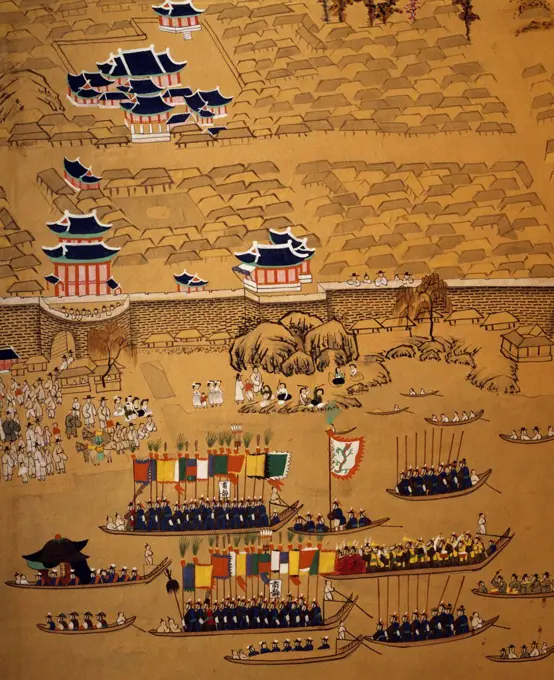
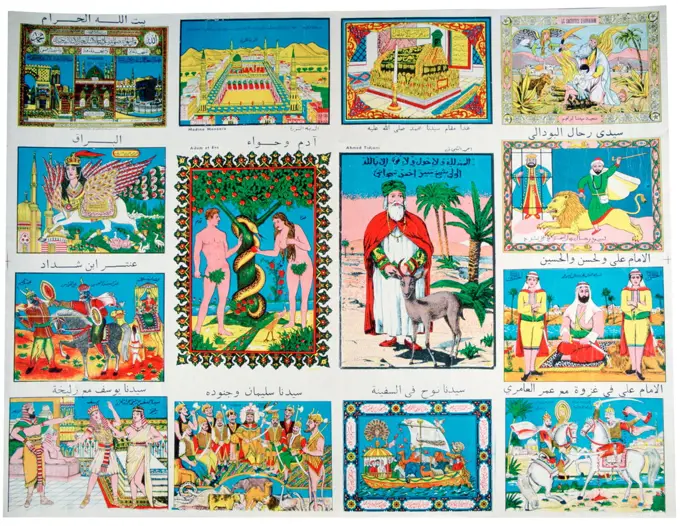
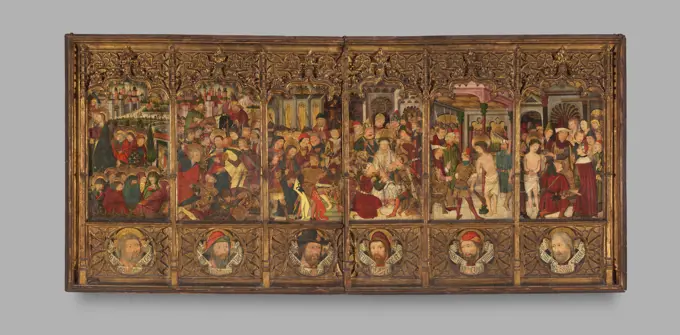
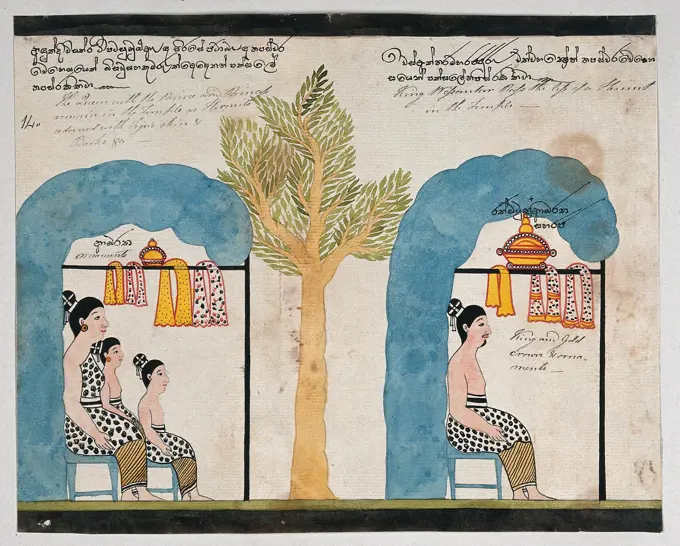
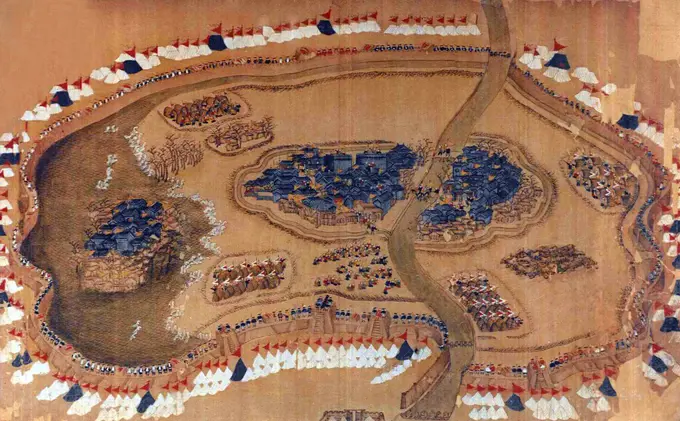
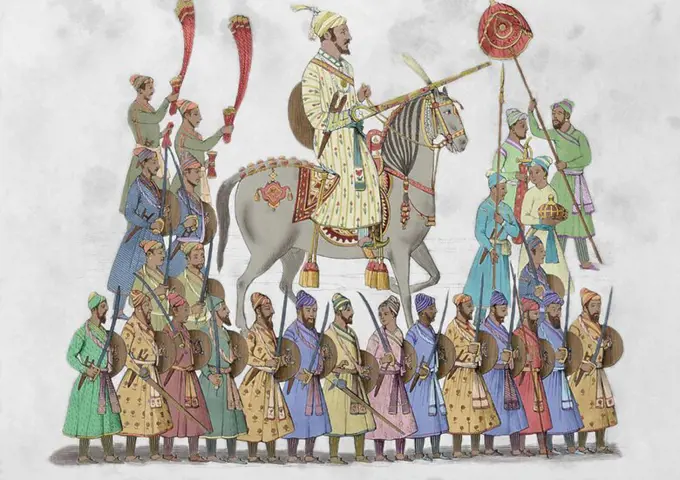
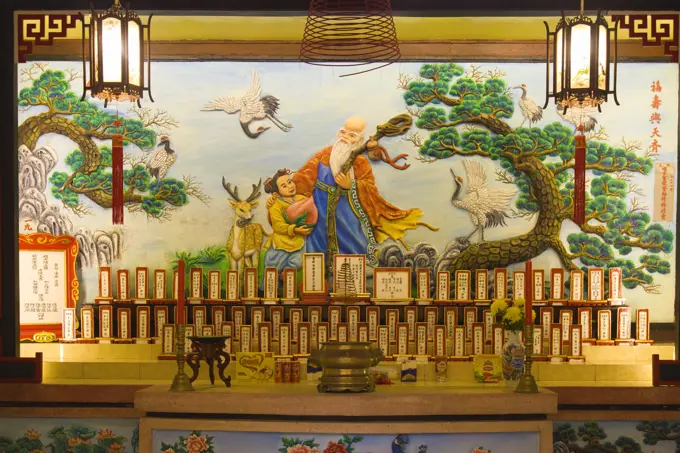
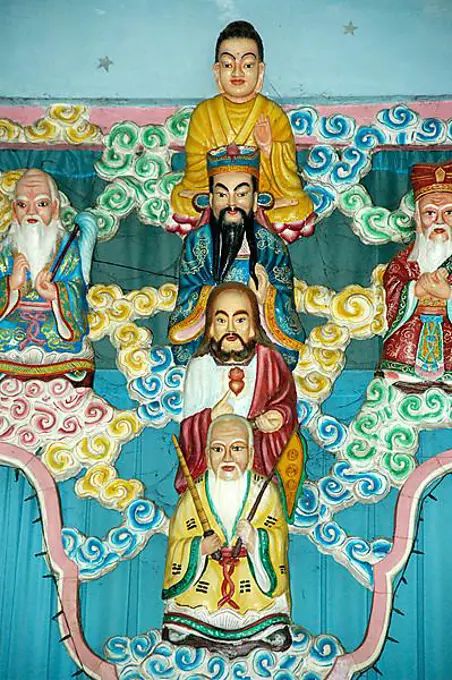
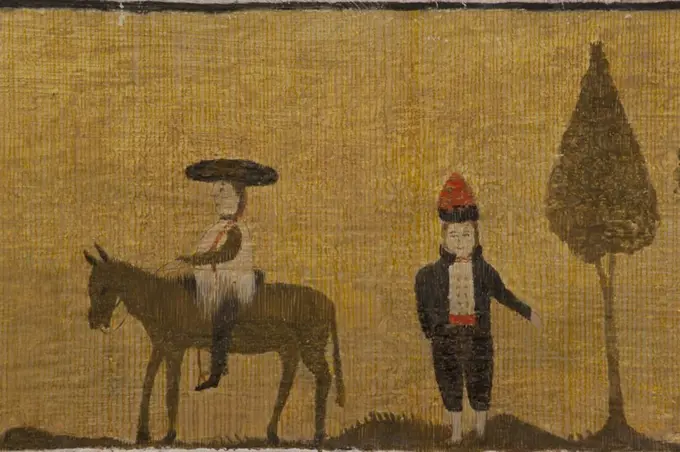
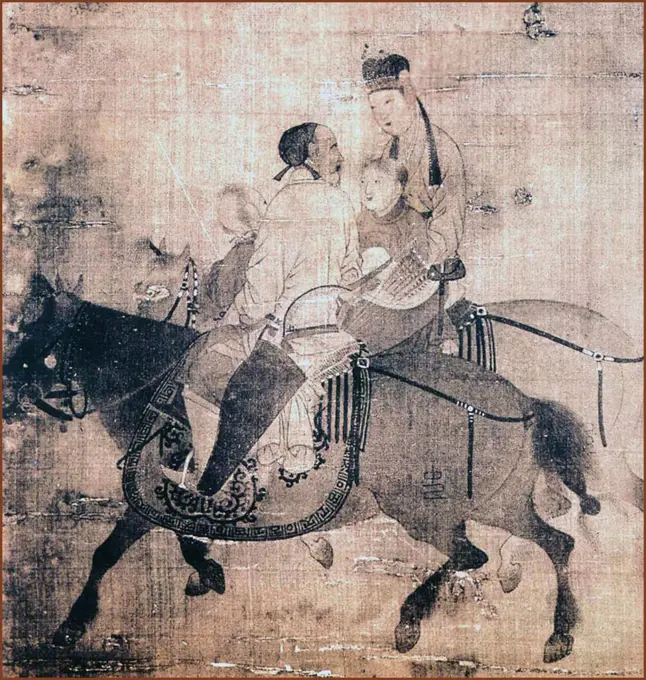
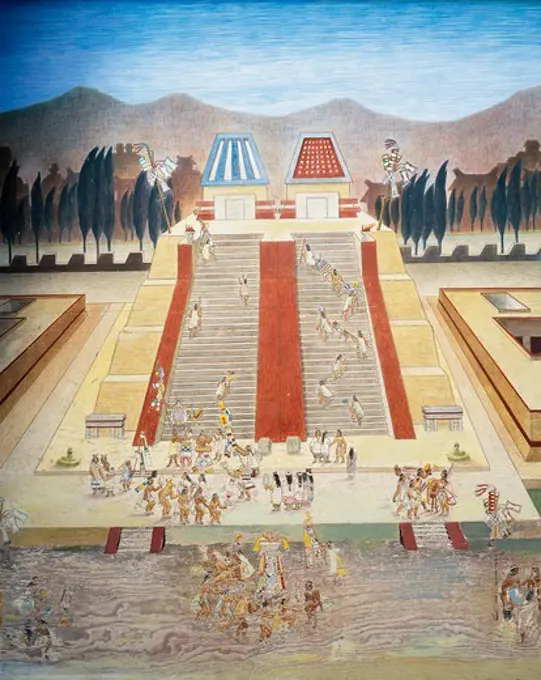
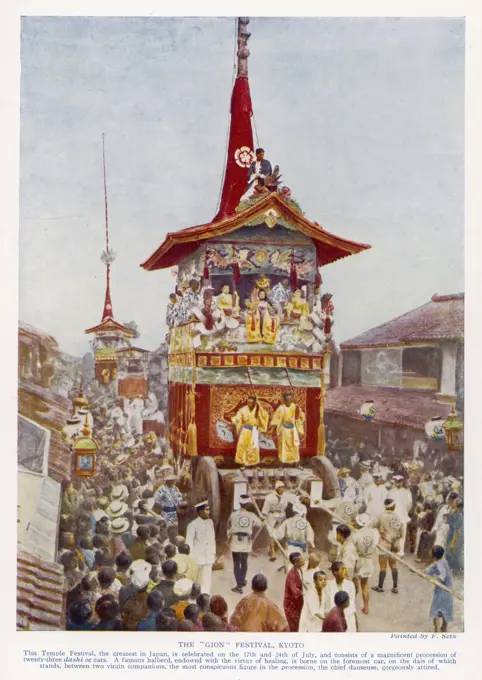
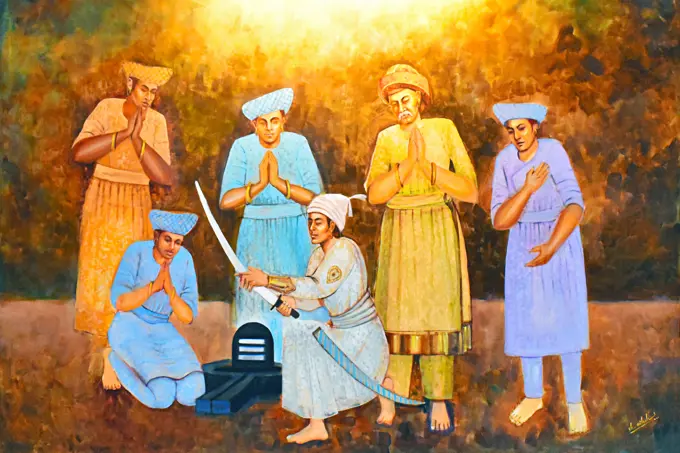
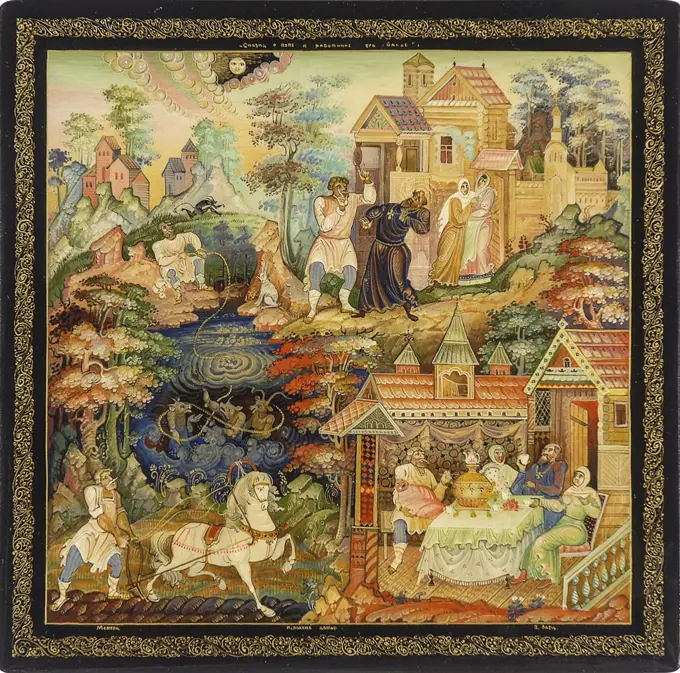
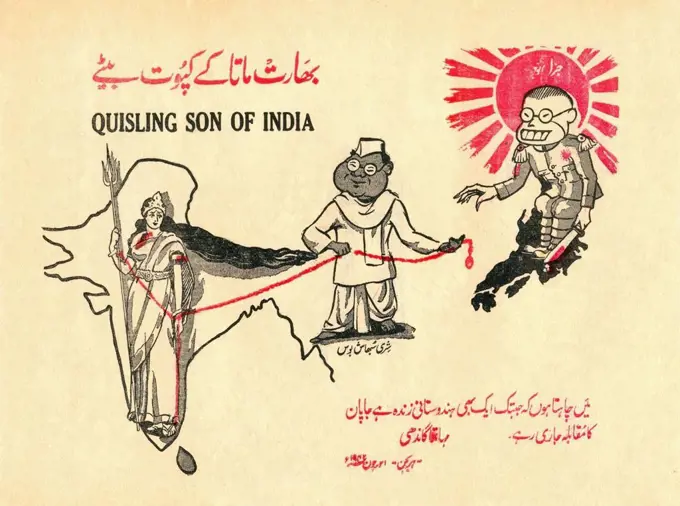
Hinduism, hindu art, himalayan academy art, religion, spirituality, artist S. Rajam, arjuna, bow, arrow, indian art, hindu, art, religion, hindu religion, hindu belief Copyright: xHimalayanxAcademy/DinodiaxPhotoxMantle ("The Paracas Textile") Nasca. Mantle ("The Paracas Textile"), 100-300 C.E. Cotton, camelid fiber, 24 5/8 × 58 11/16 in. (62.5 × 149 cm).  This extraordinarily complex mantle, or cloak, is one of the most renowned Andean textiles in the world. It was most likely used as a ceremonial object. The ninety figures decorating the border, created by needle knitting, have been interpreted as a microcosm of life on Perus South Coast two thousand years ago, with a particular focus on agriculture. Many of the images illustrate native flora and fauna as well as cultivated plants. Costumed figures may represent humans impersonating gods and acting as intermediaries between the real and supernatural worlds. Severed human trophy heads are shown as germinating seeds, suggesting the practice of ritual sacrifice and the interconnected cycles of birth and death. Este extraordinariamente complejo manto, o capa, es uno de los textiles andinos más conocidos en el mundo. Fue usado probablemente como The Meeting of King Solomon and the Queen of Sheba, with the Four Elements ca. 1700 British. The Meeting of King Solomon and the Queen of Sheba, with the Four Elements 229008Four Deities with Horses Unidentified. Four Deities with Horses 36040Enthronement of a Mongol ruler. Left part of a double-page illustration of Rashid-al-Din's Jami' at-tawarih, 1st quarter of 14th century.Abyssinia, Abyssinian prince travelling, 1869, today Ethiopia, Historical, digitally restored reproduction of a 19th century originalGenealogical Painting. Nepal, Bhaktapur (), 1782. Paintings. Mineral pigments, ink, and gold on cotton clothKani Naizen (1570 - 1616) was a Japanese painter of the Kani school, particularly known for his screen paintings (byi bu) of Namban (Southern Barbarians, i.e. Europeans). The Nanban trade (Nanban bi eki, 'Southern barbarian trade') or the Nanban trade period (Nanban bi eki jidai, 'Southern barbarian trade period') in Japanese history extends from the arrival of the first Europeans - Portuguese explorers, missionaries and merchants - to Japan in 1543, to their near-total exclusion from the archipelago in 1614, under the promulgation of the 'Sakoku' Seclusion Edicts.The Degaldoruwa Buddhist temple is a cave temple and was built originally in 1771 CE by King Kirti Sri Rajasinha (1747 - 1782), a member of the Madurai royal family. The beautiful frescoes, painted by the samanera (unordained monk) Devaragamapola Silvatenna in 1771-72, capture 18th century Kandyan life with amazing detail and vivaciousness. Some paintings depict the king and the royal family. The artist-monk started a trend, and the Dambulla Caves were subsequently redecorated in the same style as were other temples. Kandy is Sri Lanka's second biggest city with a population of around 170,000 and is the cultural centre of the whole island. For about two centuries (until 1815) it was the capital of Sri Lanka.Geburt des Buddha - Nepalesische Antike Malerei mit Türkis und Koralle An antique Nepalese painting depicting the birth of the Buddha, adorned with turquoise and coral, and framed in silver and gold. Copyright: xZoonar.com/GallóxGusztávx 22550064Artist S. Rajam, vedas, hindu belief, hindu, hinduism, art, himalayan academy art, agriculture, village, ancient, sun, shiva, blessings, crop, harvest, linga, crystal linga, worship Copyright: xHimalayanxAcademy/DinodiaxPhotoxIndia / Portugal: 'Death of Sultan Bahadur in front of Diu during negotiations with the Portuguese, 1537'. Painting from the 'Akbarnama', late 16th century. Qutb-ud-Din Bahadur Shah (c. 1506-1537), born Bahadur Khan, was a Sultan of the Muzaffarid Dynasty who ruled over the Gujarate Sultanate in India. Fighting off his brothers to succeed his father, he expanded his kingdoms through military expeditions, but came under attack from the growing Mughal Empire. Gujarat fell in 1532, but Bahadur regained his kingdom in 1536 with Portuguese aid. He was subsequently killed by the Portuguese a year later when trying to renege from his alliance, murdered on a Portuguese ship during negotiations.Examining Antiques at Literati Gathering 18th century Wang Li Mu. Examining Antiques at Literati Gathering 40444Kali on Shiva, from a Tantric Devi Series, c. 1810. India, Himachal Pradesh, Pahari Kingdom of Mandi. Gum tempera and gold on paper; sheet: 20.3 x 26 cm (8 x 10 1/4 in.). The goddess Kali kneels in the posture reserved for wrathful deities ready for battle. In one hand she holds the sword she used to sever the demon head she triumphantly grasps in another hand. As the personification of divine energyshakti in SanskritKali appears active, while the male principle, personified as her consort Shiva, is like a corpse (shava). The scene is set in a cremation ground, complete with vultures, jackals, and bones. Contemplation of paintings such as this assists followers in overcoming fear of death. In this image, the dead body is overlaid with the dual principles of the divine in Hindu thought: male and female, passive and active, matter and energy, white and black, Shiva and Shakti.The Tea Horse Road (Cha Ma Dao) was a network of mule caravan paths winding through the mountains of Yunnan, Sichuan and Tibet in Southwest China. It is also sometimes referred to as the Southern Silk Road and Ancient Tea and Horse Road. From around a thousand years ago, the Ancient Tea Route was a trade link from Yunnan, one of the first tea-producing regions, to India via Burma, to Tibet, and to central China via Sichuan Province. In addition to tea, the mule caravans carried salt. It is believed that it was through this trading network that tea (typically tea bricks) first spread across China and Asia from its presumed origins in Pu'er county, near Simao Prefecture in Yunnan.Angels bring food to Jesus in the wilderness, from a Mirat al-quds of Father Jerome Xavier, 1602-1604,    Indian and South East Asian ArtThe Ramayana is a story as old as time and - at least in the Indian subcontinent and across much of Southeast Asia - of unparalleled popularity. More than two thousand three hundred years ago the scholar-poet Valmiki sat down to write his definitive epic of love and war. The poem Valmiki composed is styled the Ramayana, or 'Romance of Rama' in Sanskrit. In its present form, the Sanskrit version consists of some 24,000 couplets divided into seven books. The Ramakien is the Thai version of this epic and has an important influence on Thai literature, art and drama. It is regarded as the National Epic of Thailand. Wat Phra Kaew (Temple of the Emerald Buddha); full official name Wat Phra Si Rattana Satsadaram is regarded as the most sacred Buddhist temple in Thailand. It is located within the precincts of the Grand Palace. The Grand Palace served as the official residence of the Kings of Thailand from the 18th century onwards. Construction of the Palace began in 1782, during the reign of KiWall painting from the Ramayana epic in the Silver Pagoda or Preah Vihear Preah Keo Morakot, Phnom Penh, Phnom Penh Province, Cambodia, AsiaWood carving depicting ancient people's lifestyle, PalauThai massage, like Traditional Thai Medicine more generally, is a combination of influences from Indian, Chinese, Southeast Asian cultural spheres and traditions of medicine. The art as it is practiced today is the product of a 19th century synthesis of various healing traditions from all over the kingdom. Even today, there is considerable variation from region to region across Thailand, and no single routine or theoretical framework is universally accepted among healers. Originally built in the 16th century, Wat Pho is Bangkok's oldest temple. King Rama I of the Chakri Dynasty (17361809) rebuilt the temple in the 1780s. Officially called Wat Phra Chetuphon, it is one of Bangkok's best known Buddhist temples and is nowadays a major tourist attraction, located directly to the south of the Grand Palace. Wat Pho is famed for its Reclining Buddha and renowned as the home of traditional Thai massage.Cremation of the Demoness Putana, from a Krishna-Lila, c. 1790. Northern India, Himachal Pradesh, Kangra, 18th century. Opaque watercolor on paper; overall: 20.9 x 31.2 cm (8 1/4 x 12 5/16 in.). In the foreground the grotesque oversized corpse of Putana is being cut up with much difficulty by themen of Vraj, the cowherd village where the Hindu god Krishna lived in his infancy and youth. Herforearms and hands are already being conveyed to the massive pyre at the upper left. Krishnas fosterfather Nanda, the elder of the village, has come in a bullock cart to survey the situation, putting hisfinger to his mouth in the gesture of astonishment.17th century murals fresco paintings of Ramayana epic in Kokarneswarar temple ceiling at Thirukokarnam, Pudukkottai, Tamil Nadu, South India, India, AsiaFrescoes in the Kyauk Tawgyi Pagoda in Amarapura at the end of U'bein's Bridge, land scene, people and oxen, Burma, Myanmar, Asia 1982Four people sitting in front of palaceKrishna Lifting Mount Govardhan. Date/Period: 1800. Painting. Height: 270 mm (10.62 in); Width: 370 mm (14.56 in). Author: UNKNOWN.Traditional Chinese mural on temple wallA Gathering of Dervishes A Gathering of Dervishes, mid-17th century or later. Ink and light color wash on paper, Image: 9 1/16 x 5 7/8 in. (23 x 14.9 cm).  Khalwa (Arabic for seclusion”) in a natural setting was required of all dervishes, who might spend up to forty days in isolation as part of the requirements of the Path. In the outdoor gathering depicted here, the tall hat worn by some members of the group identifies them as Sufis. It is distinguished by its vertical grooves, which typically number twelve, referencing the twelve imams believed by Shica Muslims to be the rightful successors to the prophet Muhammad. Variations on the hat also indicate ranks within a dervish order; the more senior mystics, for example, wrap lengths of cloth around their caps to form a turban. Sufi dervishes were a popular artistic subject in seventeenth-century Safavid Iran, when single-page drawings and paintings were collected as a newly affordable and respectable art form. Arts of the Islamic WorldPainting of the old monastery infrastructure on Phyang Monastery, Leh, Ladakh, India. Painting of the old monastery infrastructure on Phyang Monastery, Leh, Ladakh, India. Copyright: xZoonar.com/RealityImagesx 22018095Buddhist Deity, Anonymous, 1900 - 1970 Indian miniature. drawing A male figure on a bull, in his lifted right hand he holds a doll or statue, a chalice -like object in his left hand. An image from a series of three on which Buddhist gods occur. Tibet paper brushPage from a Book of Omens. Culture: India. Dimensions: 4 1/4 x 4 11/16 in. (10.8 x 11.9 cm). Date: ca. 1800. Museum: Metropolitan Museum of Art, New York, USA.The Bamberg Apocalypse, 1000-1020, is held in the Bamberg State Library, Germany. It was commissioned by Otto III (Holy Roman Emperor 980-1002) and contains 57 gilded miniatures produced in the scriptorium at Reichenau.Thai painting of Thai culture of food offering to monkMiniature Painting on Paper, Dev shakha, naltdwara school Copyright: xBhagwandasxRupani/DinodiaxPhotoxColourful painting on interior wall, Bhandasar Jain Temple, Bikaner, Rajasthan, IndiaDoor holders wear gifts in the palace, the Großwesir and the Wesir on the way to the palace. Sheet 6 of the picture sequence about the customs of the Turks of Zacharias Wehhe, 1581-1582 (copy of a contemporary. Originals from Constantinople). Ink, water and top colors, z. T. silver and gold habit; 36 x 168 cm. Dresden: Slub mscr.dresd.j.2.aThe Ramayana is a story as old as time and - at least in the Indian subcontinent and across much of Southeast Asia - of unparalleled popularity. More than two thousand three hundred years ago the scholar-poet Valmiki sat down to write his definitive epic of love and war. The poem Valmiki composed is styled the Ramayana, or 'Romance of Rama' in Sanskrit. In its present form, the Sanskrit version consists of some 24,000 couplets divided into seven books. The Ramakien is the Thai version of this epic and has an important influence on Thai literature, art and drama. It is regarded as the National Epic of Thailand. Wat Phra Kaew (Temple of the Emerald Buddha); full official name Wat Phra Si Rattana Satsadaram is regarded as the most sacred Buddhist temple in Thailand. It is located within the precincts of the Grand Palace. The Grand Palace served as the official residence of the Kings of Thailand from the 18th century onwards. Construction of the Palace began in 1782, during the reign of Kifine arts, Thailand, painting, Rama on his chariot, Wat Phra Kaew Temple, 19th century,The 1910 caption for this image reads: "Parade of the Grand Mogul with Kaiser Akbar the Great 1542-1605  - an Indian miniature from a handdone image from the Mahabarata. Original in the library at Jaipur." Jaipur (formerly Jeypore) is the capital and largest city of the Indian state of Rajasthan.Parsuram cursing Shakuntala scene from Kalidas Sanskrit epic play Abhigyan Shakuntalam carved on wall in zoo ; Calcutta now Kolkata ; West Bengal ; IndiaAsia, Cambodia, Kratie Province, painting on temple wall depicting Khmer Rouge persecution of Buddhist monksHand-painted lantern plate with carnivalesque procession, slide plate slideshope images glass paper, Hand-painted slides with top and bottom edges of white-red checkered paper. Image of carnivalesque procession Left man urging his snail to speed. Middle: man with party hat carrying strangely dressed woman on wheelbarrow Right: man riding rooster and blowing horn at the same time optics magic lantern magic lantern toy projecting carnivalKristall, Pfau, Mor, Chowk, Stadt, Palast, Udaipur, Rajasthan, Kunstwerk, Skulptur, dekorativ, aufwendig, Erbe, königlich, kulturell, Ausstellung, Museum, traditionell, künstlerisch, elegant, Design, lebhaft, farbig, Erhaltung, Denkmal, historisch, Pfau, Crystal peacock in the Mor Chowk, City Palace, Udaipur, Rajasthan LicenseRF Copyright: xZoonar.com/RealityImagesx 23322583The boats that opened the procession, detail of a screen with eight panels depicting the governor's visit to P'yongyang, North Korea's capital today. Korean civilization, Choson period, 19th century.King Sanjaya redeems the children of Vessantara, paying to the brahmin the weight of the girl in gold. Watercolour.3-Flint Feathered Serpent gives birth to a girl child. Mixtec Codex- Codex Zouche, MEXICO.Bahuchara Mata painting, jodhpur, rajasthan, India, Asia Copyright: xAnilxDave/DinodiaxPhotoxAPR 5 Luang Prabang, Laos - Golden Buddism Mural art and mosaic wall at Main hall of Main hall of Wat Xieng thong, Luang Prabang, LaosHell and beings from hell, representation on a thangka, scroll painting of Tantric Buddhism, meditation, mandalaOld buddhist fresco Buddhist fresco at the wall of tibetan monastery Copyright: xZoonar.com/NatalliaxYaumenenkax 4752476Life of Buddha. The birth of infant Siddhartha as a prince who pointing to the North, walked seven steps on lotuses. Wat Maniratanaram monastery. Wall fresco. Phnom Penh. Cambodia.Ring Race of Christian II ("Rinklenen ...") to Fastnacht 1607Wszyscy Święci w MNK unknownTwo men carrying a covered palanquin. Gouache painting on mica by an Indian artist.Eight-day procession led by King Jeongjo, King Shooting Arrows at Deukjung Pavilion. Joseon Era KoreaMantle ("The Paracas Textile") Nasca. Mantle ("The Paracas Textile"), 100-300 C.E. Cotton, camelid fiber, 24 5/8 × 58 11/16 in. (62.5 × 149 cm).  This extraordinarily complex mantle, or cloak, is one of the most renowned Andean textiles in the world. It was most likely used as a ceremonial object. The ninety figures decorating the border, created by needle knitting, have been interpreted as a microcosm of life on Perus South Coast two thousand years ago, with a particular focus on agriculture. Many of the images illustrate native flora and fauna as well as cultivated plants. Costumed figures may represent humans impersonating gods and acting as intermediaries between the real and supernatural worlds. Severed human trophy heads are shown as germinating seeds, suggesting the practice of ritual sacrifice and the interconnected cycles of birth and death. Este extraordinariamente complejo manto, o capa, es uno de los textiles andinos más conocidos en el mundo. Fue usado probablemente como The Israelites and the Philistines battle for the Ark of theCovenant.  Artist: Herbert J. Gute, American, 1908-1977Rong Thanh Temple. Life of the Buddha. Prince Siddhartha Gautama became a champion of swordplay, wrestling and archery.  Tan Chau. Vietnam.Murals depicting Ramayana and Mahabharat on ceiling in Chennakeshavaraya temple  Adiyamankottai near Dharmapuri Copyright: xMxAmirtham/DinodiaxPhotoxPictures  on the wall of chinese temple in Dusit park, Bangkok, ThailandIndian musicians and singers. Gouache drawing.Nationalist Islamic series of illustrations (north African) circa 1930. Depicts scenes from the Koran including the life of Mohammed; Adam and Eve, Joseph in Egypt, Abraham sacrificing Isaac, the Kabbah in Mecca, Noah and the Flood and Ahmad Tijani(1735-1815), founder of the Tijaniyya Sufi orderS.S. Lurline Matson Lines. 1957. Buttolph, Frank, 1850-1924. Menus. Rare Book DivisionAltarpiece (retablo) with Scenes from the Passion second half 15th century Attributed to Master Morata Spanish Forming the left side of a large fixed altar are scenes representing the events preceding the Crucifixion of Jesus. From left to right, they are: the Agony in the Garden, the Betrayal, Christ before Caiaphas, Christ Crowned with Thorns, the Flagellation, and Christ before Pilate. In medallions are heads of apostles with scrolls inscribed (in Latin) with the opening phrases of the Apostles Creed, a statement that summarizes Christian belief (I believe in God, the Father almighty, creator of heaven and earth / And in Jesus Christ, his only son, Our Lord / Who was conceived of the Holy Spirit, born of the VirginMary / [of the father almighty, from there he will come to judge the living and the dead / I believe in the Holy Spirit / the holy Catholic Church, [the communion of saints). The right side of the altar would have continued the story of the Passion, leading to the ResurPaintings of village scenes with Buddha in Thailand, Wat bang riang, Thub Pat/ Paintings, Wat bang riang, Thub Pat, Phang Nga, Thailand, AsiaPrince Vessantara and his family live as hermits in separate temples. Watercolour.Ramayana epic murals paintings in Ramasamy Vishnu temple in Kumbakonam, Tamil Nadu, India, Asia. Painting potraying women about to deliver a baby in standing posture, AsiaLeft, a knife sharpener sharpening a knife; right, a sword sharpener, sharpens a sword. Gouache painting by an Indian artist.Tajikistan: Men bearing offerings. Restored painting of a mural from the Buddhist temple of Ajina Tepa, 7th-8th century CE, Dushanbe National MuseumThe Taiping Rebellion was a widespread civil war in southern China from 1850 to 1864, led by heterodox Christian convert Hong Xiuquan, who, having received visions, maintained that he was the younger brother of Jesus Christ, against the ruling Manchu-led Qing Dynasty. About 20 million people died, mainly civilians, in one of the deadliest military conflicts in history. Hong established the Taiping Heavenly Kingdom with its capital at Nanjing. The Kingdom's army controlled large parts of southern China, at its height containing about 30 million people. The rebels attempted social reforms believing in shared 'property in common' and the replacement of Confucianism, Buddhism and Chinese folk religion with a form of Christianity. The Taiping troops were nicknamed 'Longhairs' (simplified Chinese: 毛; traditional Chinese: 長毛; pinyin: Chángmáo) by the Qing government. The Taiping areas were besieged by Qing forces throughout most of the rebellion. The Qing government crushed the rebellion witIndia. Maratha Empire. Founded by King Shivaji on 17th century. Engraving, 19th century. Colored.Vietnam, Hoi An,  Hainan Chinese Temple,Colourful figures of Buddha, Mohammed and Jesus Christ in the Cao Dai Temple in Go Dao near the city of Ho Chi Minh, Saigon, Vietnam, Southeast Asia, AsiaA local festival, detail from A village festival, late 16th century Flemish tapestry cartoon by Cornelius Mattens, Manufacture of Brussels. Belgium, 16th century.The tomb of the Muhammad, the prophet at Medina. Chromolithograph by an Indian artist, 1900s.Frescos, Iglesia de Sant Miquel de Balansat, siglo XIV.Es Amunts.Eivissa.Ibiza.Balearic islands.Spain.Cai Wenji was born shortly before 178 CE in what is now Qi County, Kaifeng, Henan. In 195, the chaos after Chancellor Dong Zhuo's death brought Xiongnu nomads into the Chinese capital and Cai Wenji was taken as prisoner to the northern lands. During her captivity, she became the wife of the Xiongnu chieftain Liu Bao and bore him two sons. It was not until twelve years later that Cao Cao, the new Chancellor of Han, ransomed her in the name of her father. When Cai Wenji returned to her homeland, she left her children behind at the frontier. The reason Cao Cao needed her back, was that she was the only one remaining of her clan and he needed her to placate the spirits of her ancestors. Cai Wenji's father Cai Yong was an established writer, but his works were lost in the ravages of war. At Cao Cao's request, Cai Wenji was able to recite from memory up to four hundred out of four thousand of her father's lost works. Later in her life, she wrote two poems describing her turbulent years. Her Chariot festival procession with red and black chariot drawn by dozens of men, with attendants. 1780 - 1858. Drawings. The Miriam and Ira D. Wallach Division of Art, Prints and Photographs: Art & Architecture Collection. Rites and ceremonies,India, Transportation , IndiaENTRADA DE CRISTO EN BRUSELAS - 1888-1889 - OLEO/LIENZO -. Author: JAMES ENSOR (1860-1949). Location: PRIVATE COLLECTION. Brüssel. Belgien.Reconstruction of consecration ceremony of the Templo Mayor (Great Temple) in the main square of TenochtitlanGod shiva in vrindavan wall painting, uttar pradesh, india, asia Copyright: xArunxMishra/DinodiaxPhotoxPuerto Vallarta, Mexico, Mexican, stained glass, children, animals, birds, playing. (Editorial Use Only)Clark's O.N.T. Spool Cotton , Children, Armor, Daggers & swords, Thread, Cotton, 19th Century American Trade CardsOutside the Mosque by Martha Walter, watercolor, 1935, 1875-1976, USA, Pennsylvania, Philadelphia, David David GalleryBrahma Worships Krishna, Page from a Dispersed Ramayana Series Indian. Brahma Worships Krishna, Page from a Dispersed Ramayana Series, ca. 1800. Opaque watercolor on paper, sheet: 9 3/8 x 15 in. (23.8 x 38.1 cm).   Asian Art ca. 1800Mural from the Ramayana epic, mural, Silver Pagoda, Royal Palace, Phnom Penh, Cambodia, AsiaThe 'Gion' festival takes  place at Kyoto every July         Date: 1913Gemälde von Swaraj Shapath, das Shivaji bei der Ablegung eines Eids zur Errichtung von Hindavi Swaraj Selbstverwaltung im Rairshwara-Tempel, National War Memorial Southern Command Museum, Pune, zeigt. Painting of Swaraj Shapath, depicting Shivaji taking an oath to establish Hindavi Swaraj self-rule at Rairshwara Temple, National War Memorial Southern Command Museum, Pune. Copyright: xZoonar.com/RealityImagesx 22399177A well-dressed Hindu ascetic or holy man receiving gifts from a richly dressed woman. Gouache painting by an artist of Thanjavur (Tanjore), ca. 1800 ().This painting, by an unknown Burmese artist, is from a watercolour sketch album dating from c.1897 that includes illustrations of Buddhist monks, the Buddha, monasteries, cremations and domestic scenes. Legend attributes the first Buddhist doctrine in Burma to 228 BCE when Sohn Uttar Sthavira, one of the royal monks to Emperor Ashoka the Great of India, came to the country with other monks and sacred texts. However, the era of Buddhism truly began in the 11th century after King Anawrahta of Pagan (Bagan) was converted to Theravada Buddhism. Today, 89% of the population of Burma is Theravada Buddhist.Paintings of village scenes with Buddha in Thailand, Wat bang riang, Thub Pat/ Paintings, Wat bang riang, Thub Pat, Phang Nga, Thailand, AsiaThe Tale of the Priest and of his Workman Balda (Casket), Zayetz, Pyotr Fyodorovich (*1951)Artist Manivelu, artha, wealth, money, hindu belief, hindu, hinduism, art, himalayan academy art, commerce, production Copyright: xHimalayanxAcademy/DinodiaxPhotoxChorten in Ladakh by Vereshchagin, Vasili Vasilyevich (1842-1904)/ State Tretyakov Gallery, Moscow/ 1875/ Russia/ Oil on canvas/ Russian Painting of 19th cen./ 22,3x29/ Architecture, InteriorTwo men reciting the Ramayana to an audience. Gouache painting on mica by an Indian artist.India: 'Quisling Son of India'. British propaganda leaflet aimed at Indian National Army soldiers showing a 'traitorous' Subash Chandra Bose delivering India to a bloodthirsty Japan. How many INA soldiers were familiar with Vidkun Quisling c.1941-44.