Exquisite Historical Wooden Furniture

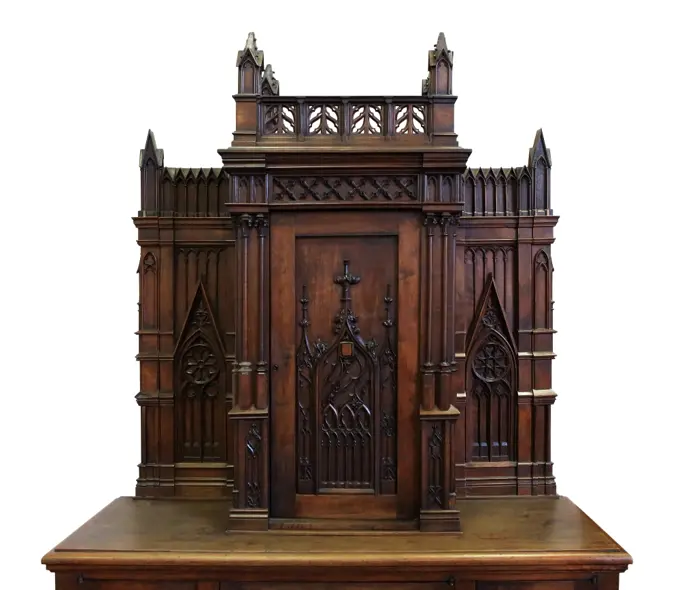
A collection of ornate wooden furniture pieces, showcasing craftsmanship from various periods, featuring intricate carvings, gilded details, and rich materials like walnut and ebony.

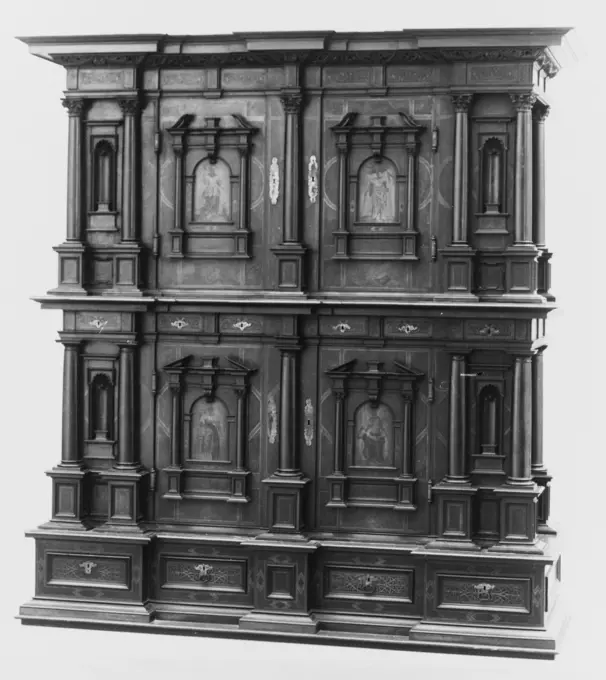
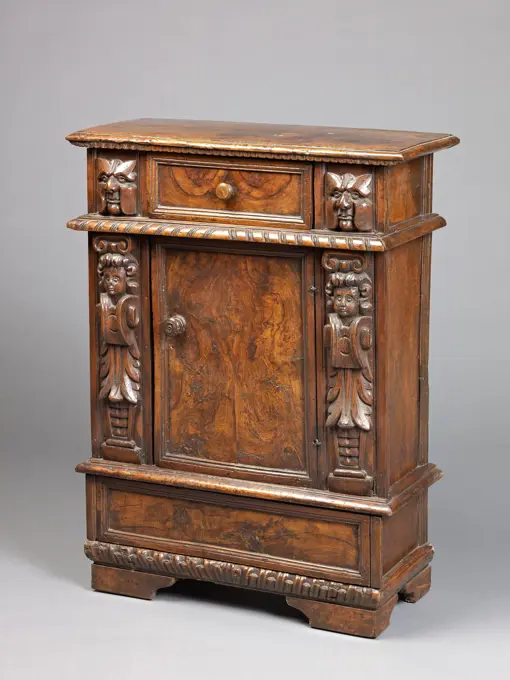
Cupboard consisting of a base cabinet and slightly recurring upper cupboard with corner styles that end in carved figures, art dealership E.J. van Wisselingh, c. 1910 Cabinet of Coromandelhout consisting of a lower and slightly recovering top cabinet. The base cabinet has two doors with two drawers above it. The doors each consist of panels within a framework of which the styles cut with leaf capitals contain. Both on the left and the right sides of the drawers, the oak ends of the dovetail connections of the lady construction can be seen, namely three squares above each other. The drawers contains copper fittings in the form of key plates and rods with maskerons. The corner styles at the front of the cabinet end at the height of the middle in a sculpted figure with staff. The slightly recurring upper cabinet consists of two doors with a hood consisting of two lists above it. The doors each consist of four panels, the two of which are approximately three times as large at the bottom as
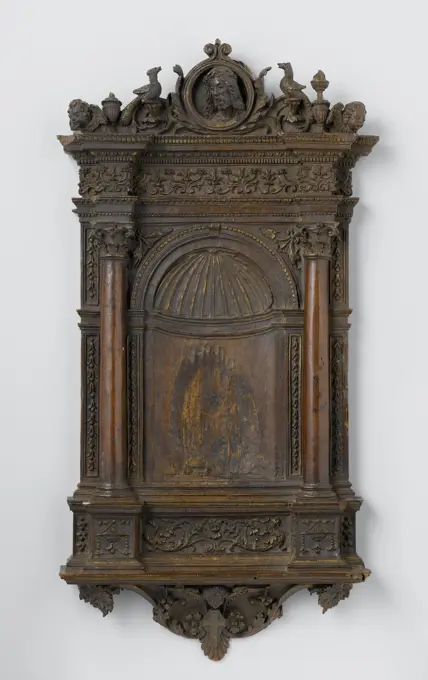
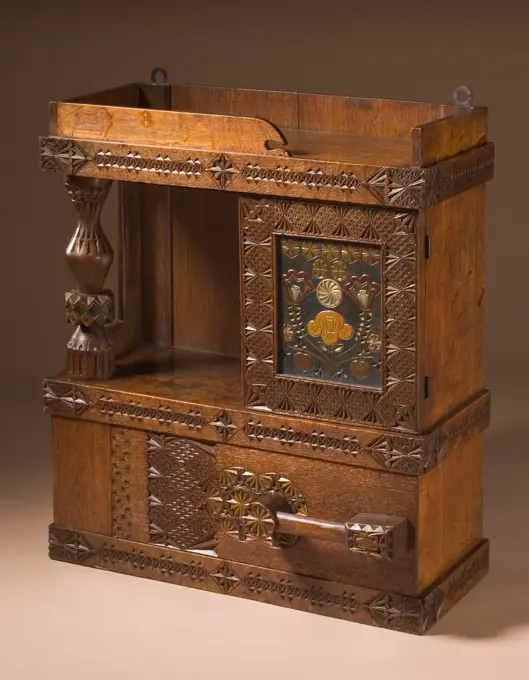
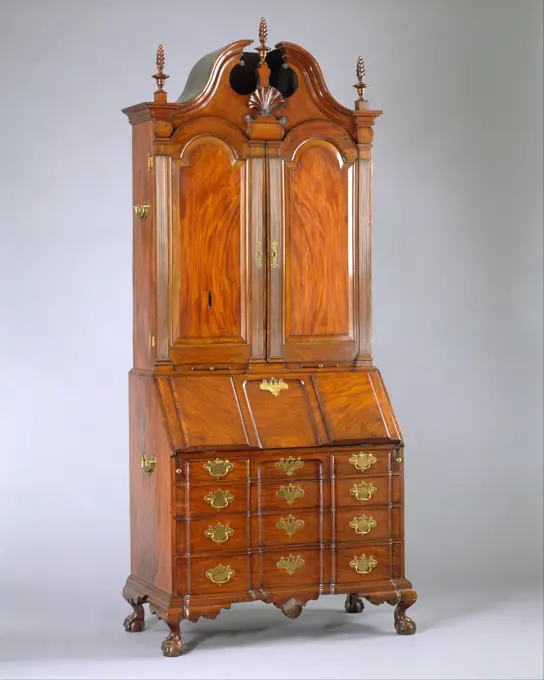
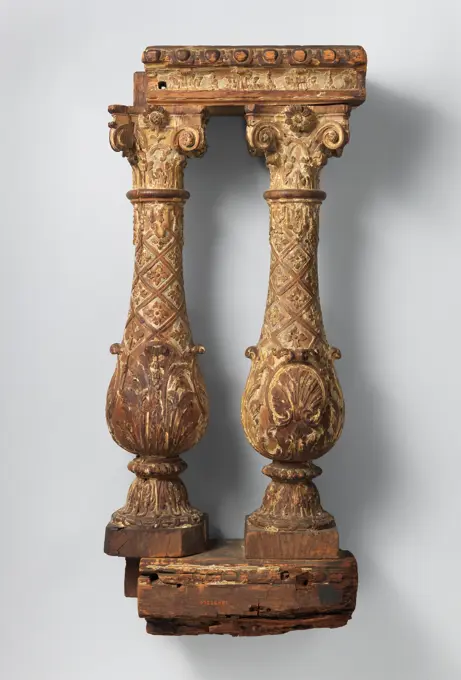
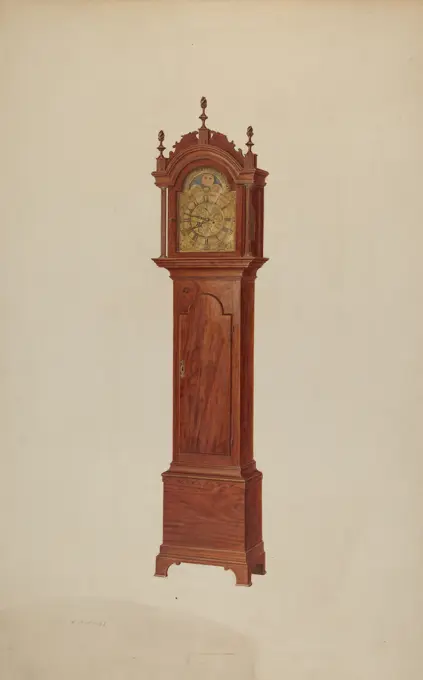
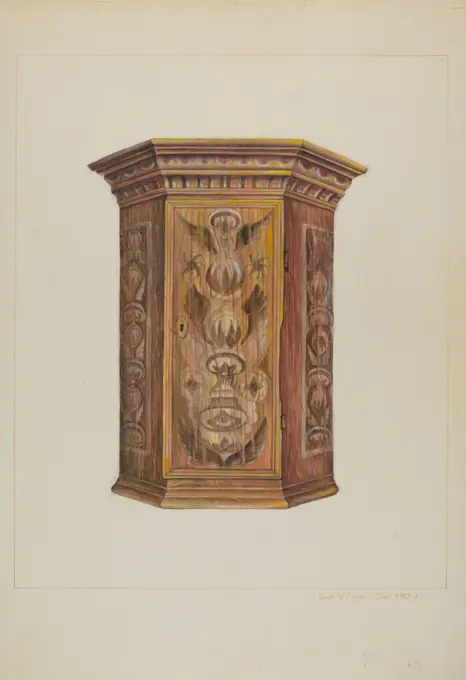
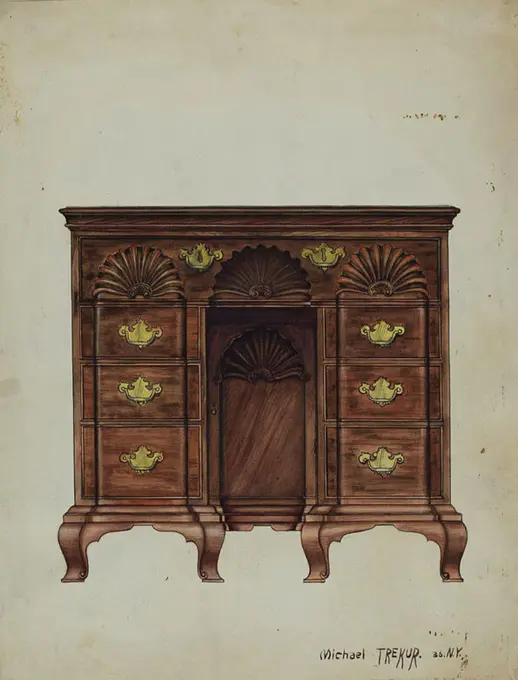
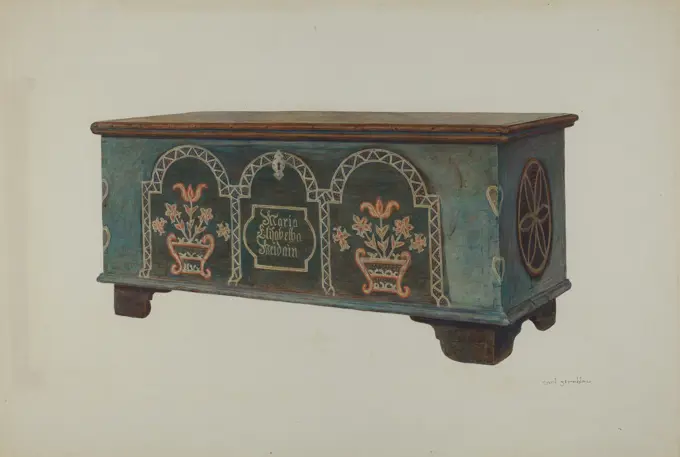
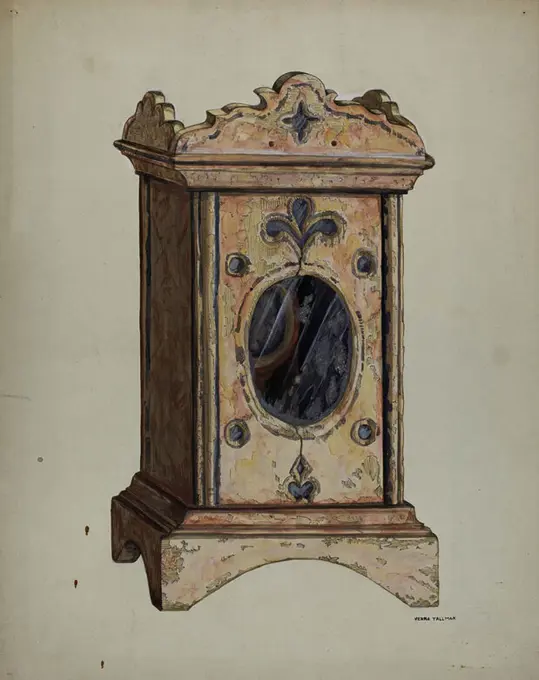
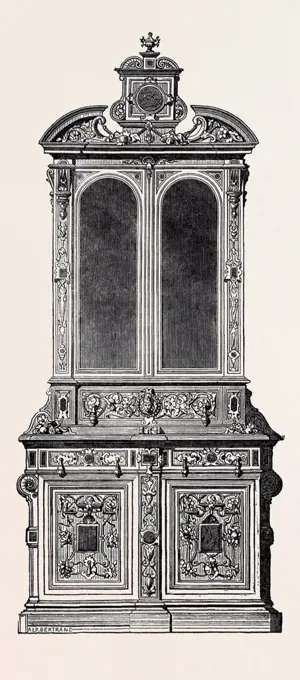
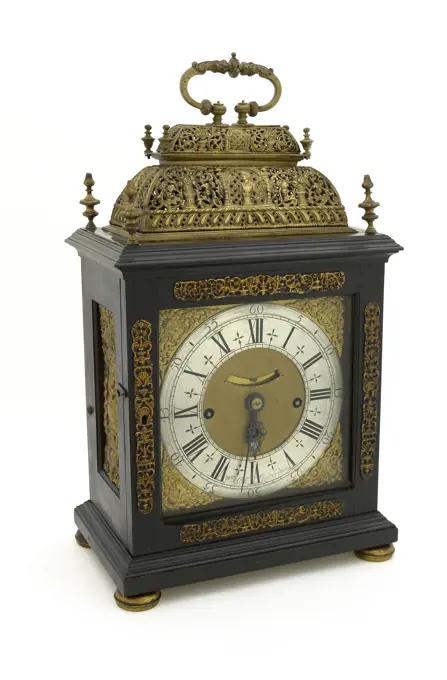
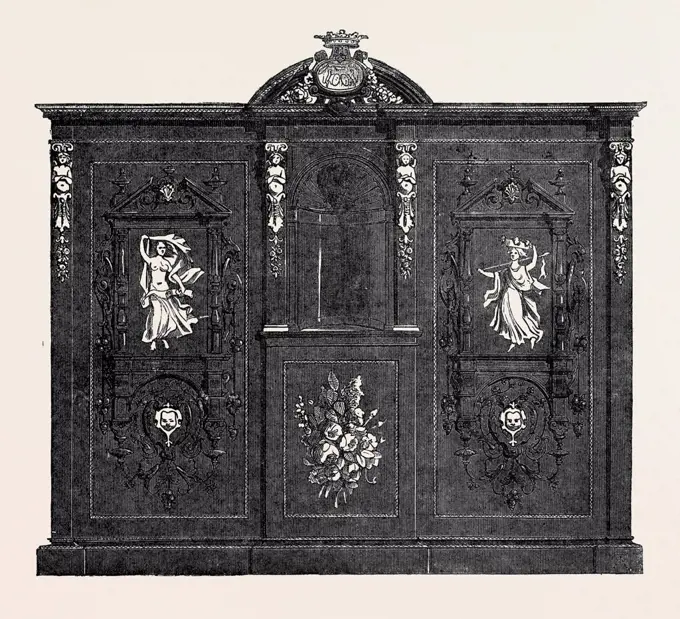
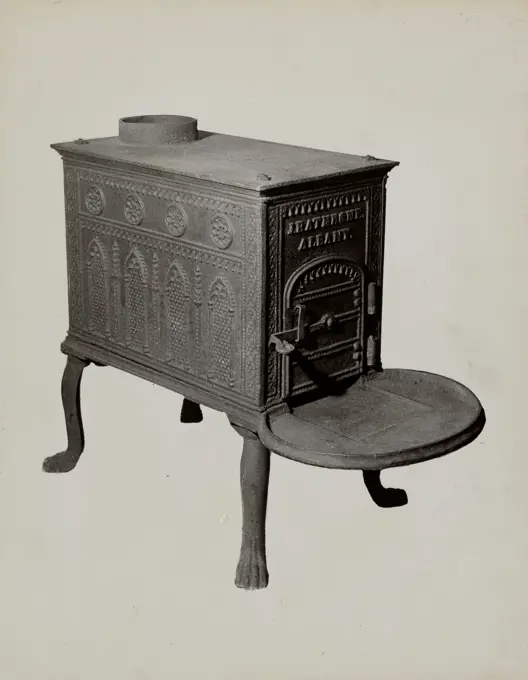
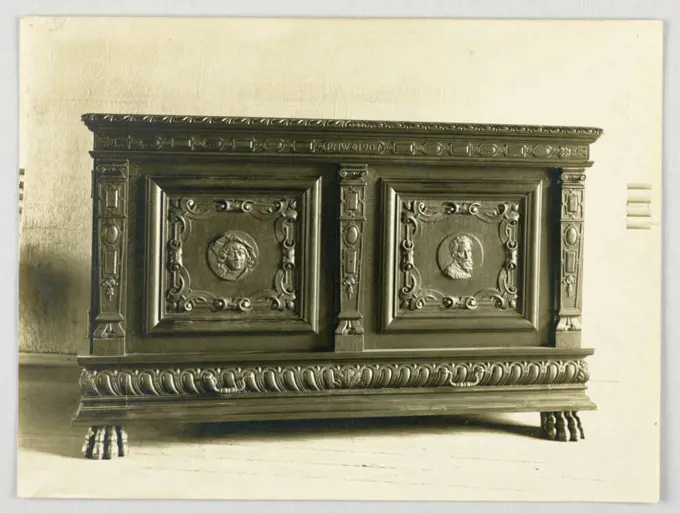
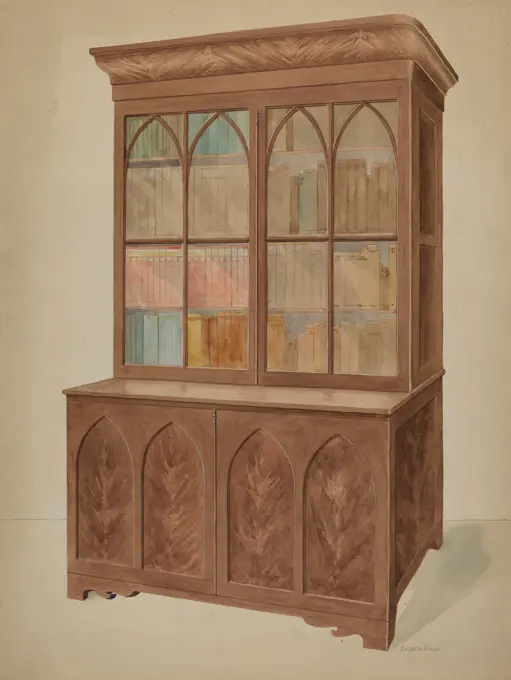
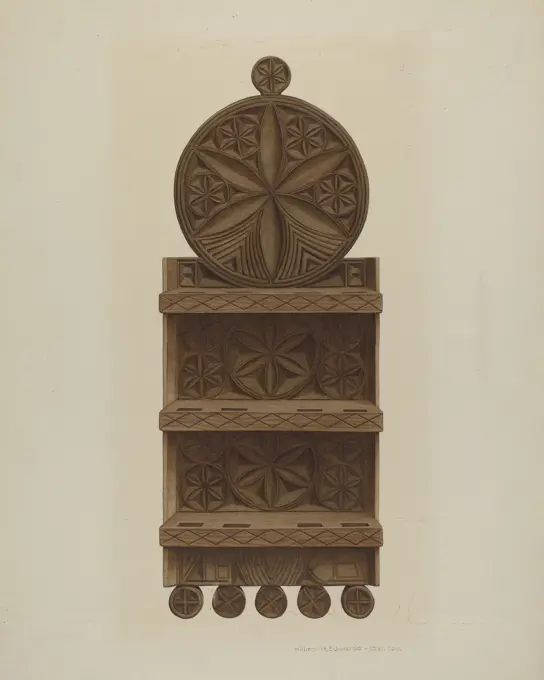
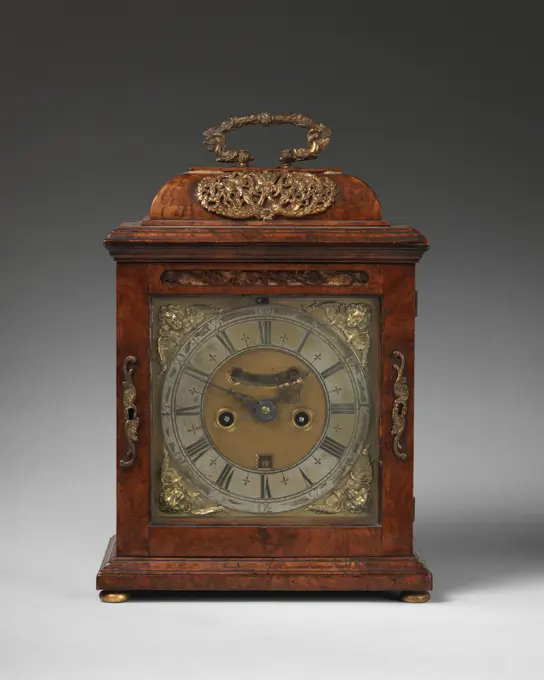
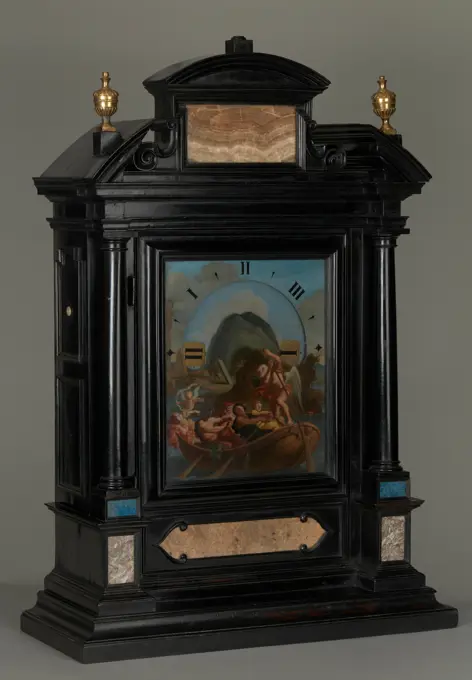
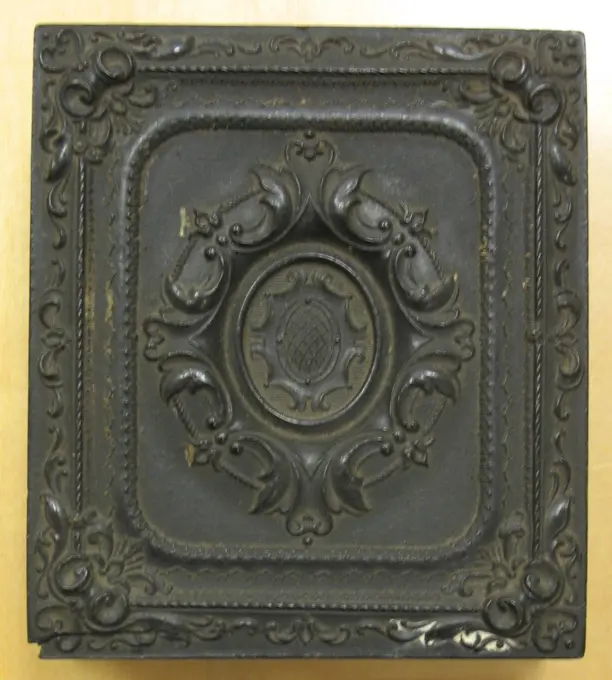
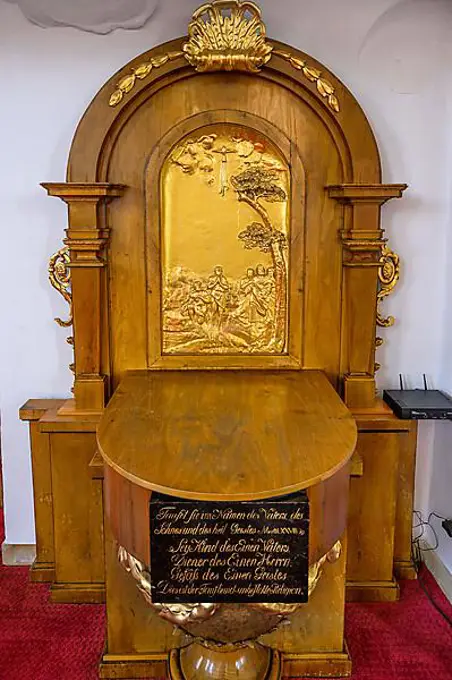
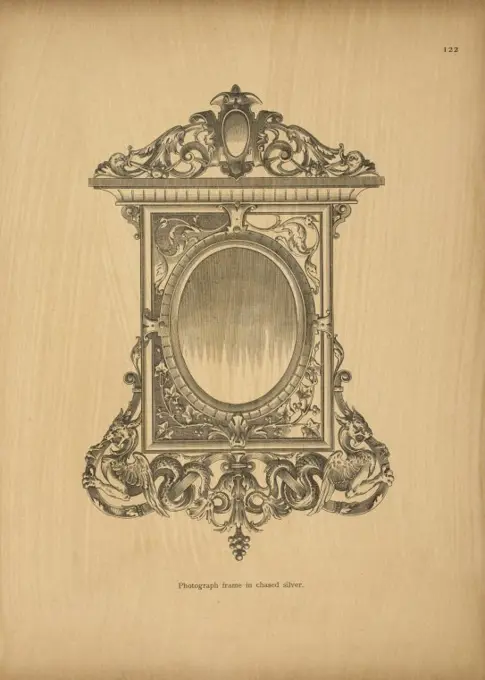
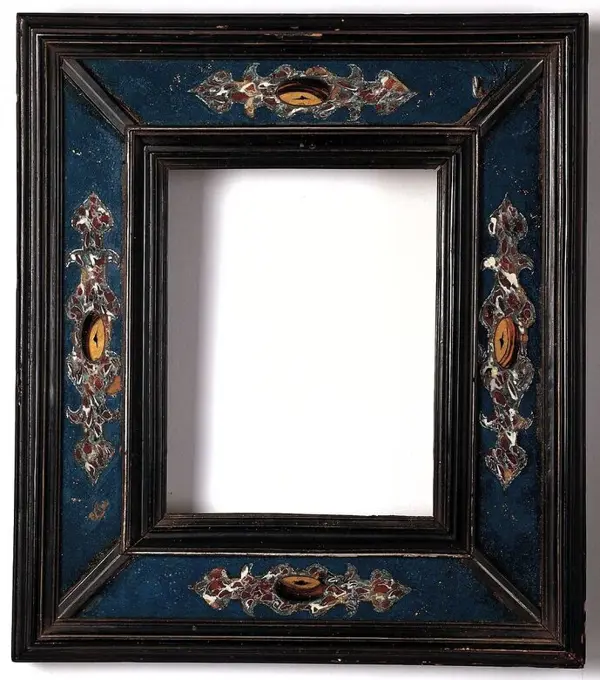
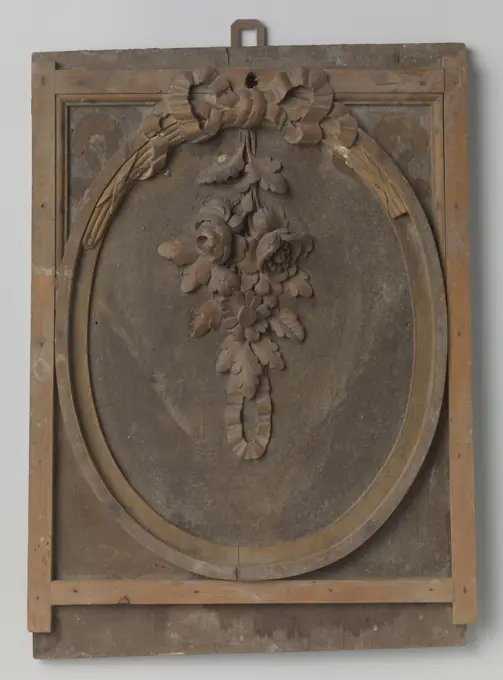
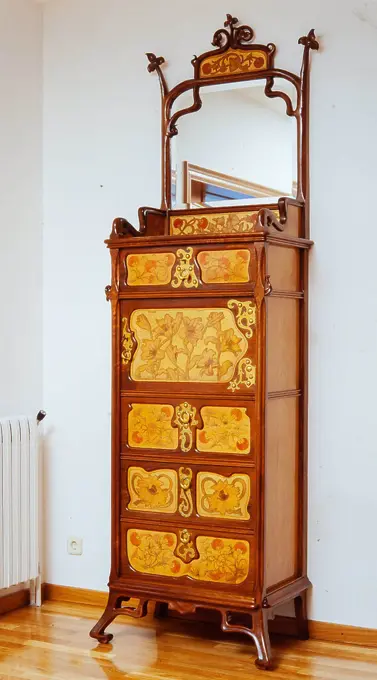
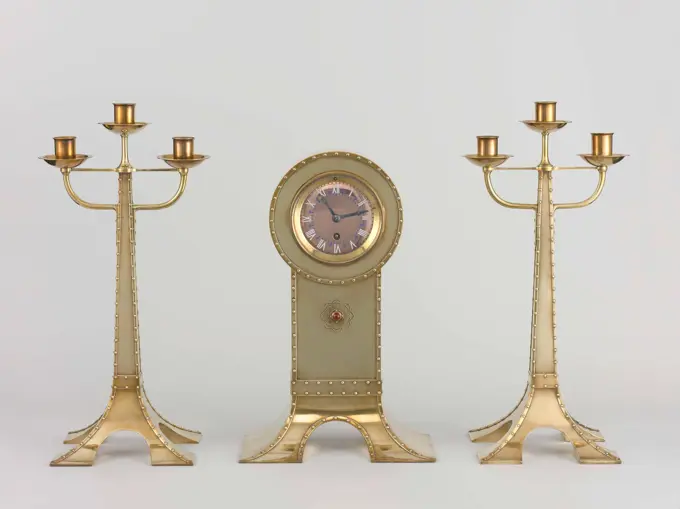
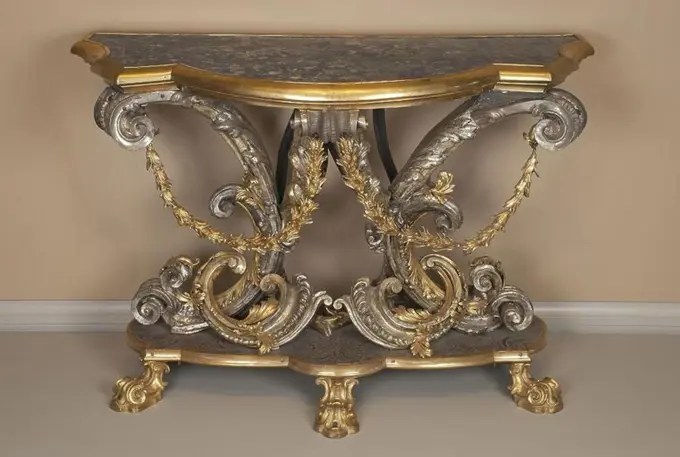
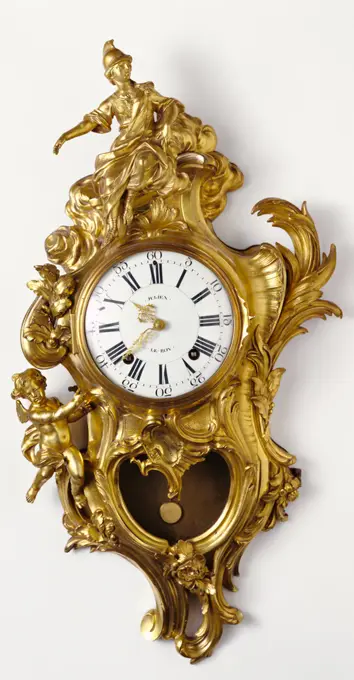
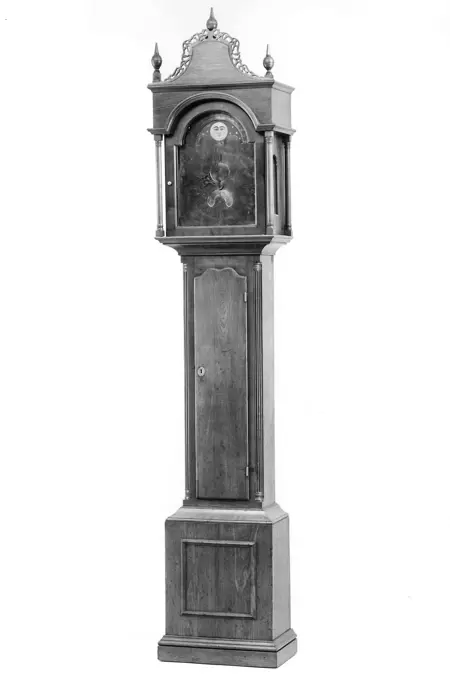
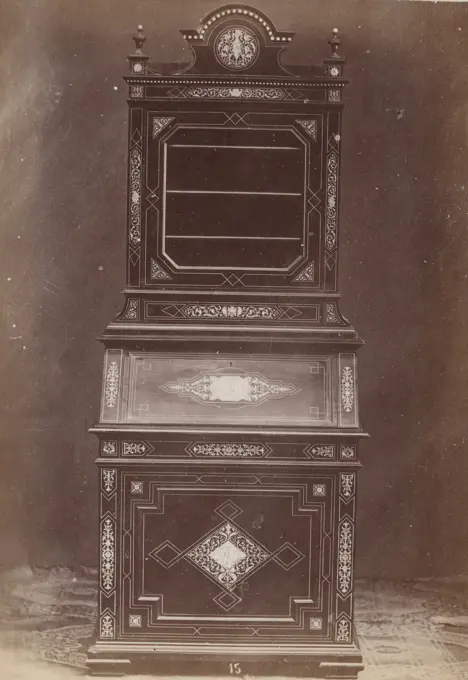
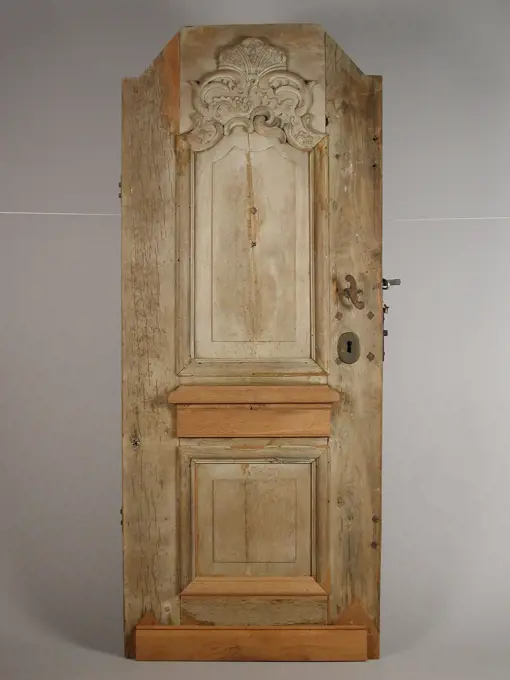
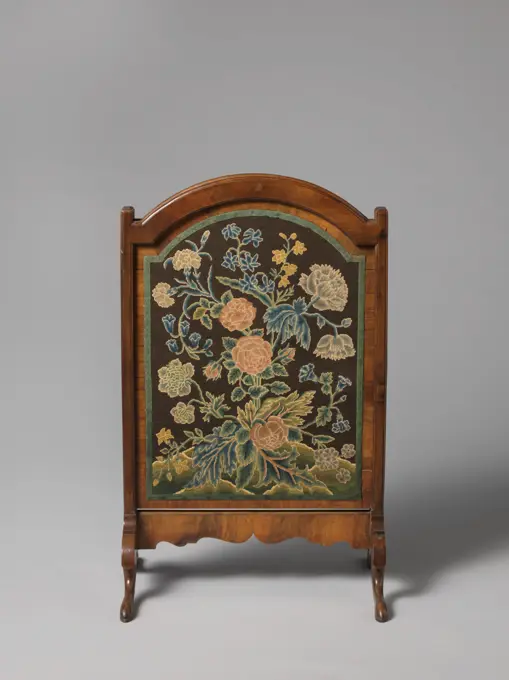
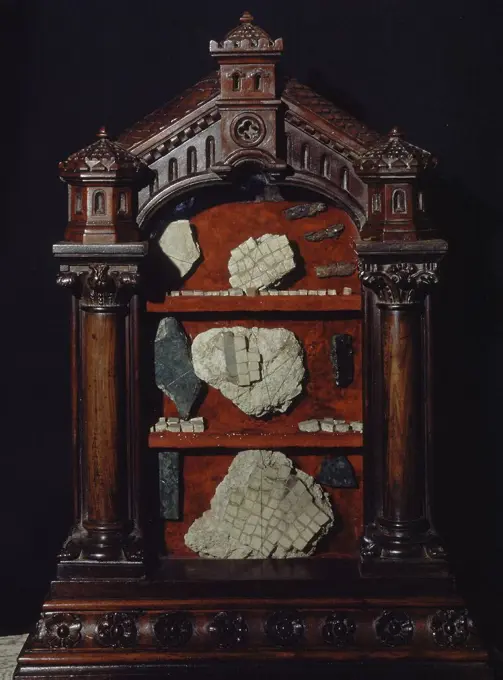
RELOJ BRACKET S XVIII-LONDRES. Location: PRIVATE COLLECTION. MADRID. SPAIN.Hall Tree, of Mahogany. Dated: 1937. Dimensions: overall: 35.6 x 24.3 cm (14 x 9 9/16 in.) Original IAD Object: 8'2 1/2"high; 44 1/4"wide. Medium: watercolor, colored pencil, graphite, and heightening on paper. Museum: National Gallery of Art, Washington DC. Author: Randolph F. Miller.Tabernakeldeur with coat of arms of the piccolomini, anonymous, 1485 - 1500 Tabernakeldeur van Notenhout. Two Corinthian half -columns on a recovered base flank a niche and support the main frame. The Frisian and the basement are decorated with leaf and floral motifs. Hining bells have been applied on either side of the half -columns. In the middle, the attachment shows a Christ head within a uivally medallion, surrounded by leaf vines and flanked by a bird, vase with flame and a cherub head. At the bottom a cherub above a coat of arms with the coat of arms of the Piccolomini. Siena wood (plant material). walnut (hardwood). gilding (material) gilding Tabernakeldeur van Notenhout. Two Corinthian half -columns on a recovered base flank a niche and support the main frame. The Frisian and the basement are decorated with leaf and floral motifs. Hining bells have been applied on either side of the half -columns. In the middle, the attachment shows a Christ head within a uivally medallion, suCabinet, anonymous, c. 1670 - c. 1690 Kunstkast Lijmed with Note and Ebony, ivory and turtle on a pine core and decorated with marble-painted pictures and gilded copper. In the middle a porch with doors and all-round drawers, on which Old Testament scenes are painted. As a crown, a balustrade serves with an attachment and female figures and dolphins. The chassis rests on four sculpted figures, alternating black men and women representing. Painted with scenes from the Old Testament: Aaron in the Tabernacle, Judah and Tamar, the death of firstborn, the return of the spies, Rebecca and Eliezer, Balaam and the David, David and Abigaïl, the invention of Mosaus, Esau sells his first -earned , Lot and his daughters, Moses and the burning blackbos, Hagar and Ismaël, Moses receives the legislative tables, the worship of the Golden Calf, the establishment of the copper snake, Noah's prayer after the flood, Noah sees the rainbow, Adam with Eva and Seth (), Abraham and Lot on the Berg en Kain and Étagère. Elena Polenova (Russia, 1850-1898)Abramtsevo Art Colony (founded 1874). Russia, designed 1885, made circa 1900. Furnishings; Furniture. OakCupboard consisting of a base cabinet and slightly recurring upper cupboard with corner styles that end in carved figures, art dealership E.J. van Wisselingh, c. 1910 Cabinet of Coromandelhout consisting of a lower and slightly recovering top cabinet. The base cabinet has two doors with two drawers above it. The doors each consist of panels within a framework of which the styles cut with leaf capitals contain. Both on the left and the right sides of the drawers, the oak ends of the dovetail connections of the lady construction can be seen, namely three squares above each other. The drawers contains copper fittings in the form of key plates and rods with maskerons. The corner styles at the front of the cabinet end at the height of the middle in a sculpted figure with staff. The slightly recurring upper cabinet consists of two doors with a hood consisting of two lists above it. The doors each consist of four panels, the two of which are approximately three times as large at the bottom asHerman O Stroh, Eli Terry Clock, 1940 Eli Terry ClockPedestal Woman of Algiers 1862 Charles-Henri-Joseph Cordier French In his unpublished memoirs Charles Cordier cites the law of April 27, 1848 that abolished slavery in France and its colonies, writing: "My art incorporated the reality of a whole new subject, the revolt against slavery and the birth of anthropology." In pioneering ethnography as a subject for sculpture in the nineteenth century, Cordier aimed to illustrate what he described as "the idea of the universality of beauty." His busts often paired couples of the opposite sex but of the same race. This rare instance of matched busts of women (see also La Capresse des Colonies, 2006.112) was desired by the purchaser, a gaming club in Marseilles, that also commissioned the sumptuous Second-Empire pedestals from Cordier. The busts revel in the period taste for polychromy in sculpture, an international phenomenon sparked by artistic debates about the painting of ancient statuary and inspired by ancient Roman and Renaissance sculpShelf Clock. Dated: c. 1938. Dimensions: overall: 53.2 x 41.3 cm (20 15/16 x 16 1/4 in.) Original IAD Object: 38" x 17" x 4 3/4". Medium: watercolor, colored pencil, gouache, pen and ink, and graphite on paperboard. Museum: National Gallery of Art, Washington DC. Author: Lawrence Phillips.. Various stylistic periods are here combined in a single piece of furniture. The inlay technique combining wood with metal revives the technique known as boullework, named after the renowned 17th-century French cabinetmaker André Charles Boulle, while the motifs - cuirasses, lances and banners - reflect the 19th-centurys enthusiasm for the Middle Ages.Desk and bookcase ca. 1779 Workshop of Nathaniel Gould American Stately proportions, carefully chosen figured mahogany, and a lustrous old finish combine to make this the finest of the Salem secretaries with blocked drawers, arched door panels, and a broken-scroll pediment. The desk bears a remarkable inscriptionNathaniel Gould not his workthe latter part presumably penned by the talented journeyman who made the masterpiece and did not want his master to get credit for it!. Desk and bookcase 3155Cabinet second half 16th century with later alterations French. Cabinet. French. second half 16th century with later alterations. Walnut, marble. Woodwork-FurniturePair of balusters late 17th century French. Pair of balusters 189735 French, Pair of balusters, late 17th century, Carved and originally painted and gilded, oak, Height (each): 34 in. (86.4 cm). The Metropolitan Museum of Art, New York. Gift of J. Pierpont Morgan, 1906 (07.225.483a, b)Francis Borelli, Tall Clock, c 1939 Tall ClockOne of a pair of lamps with archaic-style calligraphy second half 18th century China The removable sides of the lamps are jade plaques in carved wood frames, each inscribed at the top with a group of nine characters that can be read in any order. The various readings are transcribed in the middle of the plaques in different fanciful "archaic" scripts, with a note at the bottom giving the supposed source and date of each particular script. The main frame of the lamps are of zitan, a fine grained hardwood, and the ornaments are of boxwood an ivory. (One of a pair; see 20015.500.5.1). One of a pair of lamps with archaic-style calligraphy. China. second half 18th century. Jade (nephrite), wood, and ivory. Qing dynasty (1644-1911). JadeSamuel W Ford, Wall Cupboard, 1935 1942 Wall CupboardPedestal 15th century North or Central European Because relatively little ironwork survives, it is easy to forget its importance during the Middle Ages, yet we know it figured in the decoration of any building of significance. Marked by bold and legible forms, this work may have served as a stand for a tabernacle within a church.. Pedestal. North or Central European. 15th century. Wrought Iron. Metalwork-IronSecretary. Dated: c. 1937. Dimensions: overall: 33 x 2.4 cm (13 x 15/16 in.) Original IAD Object: 5'1"high; 31"wide; 22"deep. Medium: watercolor, colored pencil, pen and ink, and graphite on paper. Museum: National Gallery of Art, Washington DC. Author: Randolph F. Miller.Writing cabinet ca. 1770 British. Writing cabinet 203843Dressing Table. Dated: 1936. Dimensions: overall: 30.1 x 23.1 cm (11 7/8 x 9 1/8 in.) Original IAD Object: 34"x36"x20 1/2". Medium: watercolor, colored pencil, pen and ink, graphite,and some heightening on paper. Museum: National Gallery of Art, Washington DC. Author: Michael Trekur.Cabinet in miniature of oak with two drawers between the doors in the top and bottom cabinet, anonymous, c. 1850 - c. 1900 Cabinet in miniature of oak, decorated with ebony. The high base cabinet and the lower top cabinet have two doors; Two drawers have been installed in between. The plinth list is strongly switched on the corners and in the middle and showing the styles from bottom to top a mirror, karyatide, field with ebben frame with diamond head and a cherub head. The sides of the base cabinet show four framed panels and those of the upper cabinet a inlaid motif. Mirrors and edges on the doors; Furthermore, grunting and cutting. Northern Netherlands wood (plant material). oak (wood). ebony (wood) Cabinet in miniature of oak, decorated with ebony. The high base cabinet and the lower top cabinet have two doors; Two drawers have been installed in between. The plinth list is strongly switched on the corners and in the middle and showing the styles from bottom to top a mirror, karyatiShelf Clock. Dated: c. 1938. Dimensions: overall: 54.8 x 45.5 cm (21 9/16 x 17 15/16 in.) Original IAD Object: 31"high; 8"wide. Medium: watercolor, colored pencil, and graphite on paperboard. Museum: National Gallery of Art, Washington DC. Author: Frank Wenger.Tabernacle frame early 17th century Italian, Marches. Tabernacle frame. Italian, Marches. early 17th century. Carved, gilt and painted poplar. FramesMirrored cabinet. The cabinetmaker wanted to give this large, heavy cabinet a Rococo shape, but did not succeed in avoiding straight angles and mouldings. Because the silver is marked with a year letter’, this piece of furniture can be dated rather precisely.Bookcase - Gothic Type. Dated: c. 1937. Dimensions: overall: 67 x 50.8 cm (26 3/8 x 20 in.) Original IAD Object: 83"high, 54"wide, 14"deep. 20"deep at bottom.. Medium: watercolor, colored pencil, graphite and some heightening on paperboard. Museum: National Gallery of Art, Washington DC. Author: Eileen Knox.Wall Light. UnknownFireplace clockCarl Strehlau, Pa German Chest, c 1940 Pa. German ChestMonstrance. Dated: c. 1937. Dimensions: overall: 35.6 x 27.9 cm (14 x 11 in.) Original IAD Object: 6 1/2"square; 13"high. Medium: watercolor, colored pencil, graphite, and heightening on paper. Museum: National Gallery of Art, Washington DC. Author: Verna Tallman.Bookcase. Culture: American. Dimensions: 55 x 46 x 15 5/8 in. (139.7 x 116.8 x 39.7 cm). Date: 1765-75. Museum: Metropolitan Museum of Art, New York, USA.Armoire, one of a pair, c. 1800, 68 x 26 1/2 x 26 1/2 in. (172.7 x 67.3 x 67.3 cm), Painted pine, United States, 18th-19th century, The original red and blue painted surface on this corner armoire makes it a rare survival of French Canadian inspired furniture from the mid-Mississippi River valley during the early years of American settlement. Also called a bonnetiére, this single-door armoire has a history of ownership in Calhoun County, Illinois, just north of the 18th-century French and French Canadian settlements of St. Louis, Missouri, and Cahokia, Illinois. The craftsman who built it incorporated diamond motifs and paint colors used in French Canadian furniture since the early 1600s. Similar to other French Canadian furniture makers in the mid-Mississippi Valley, the craftsman was probably a trained carpenter, suggested in the thick boards of pine and heavily reinforced joints used to construct the armoire.Garden bench in Marot style (back), anonymous, c. 1700 - c. 1750 The high back has a midfield, under and above, that hunted hunting trophes, hung on ribbons, shown, above which an alt'nrums, tied together from below. Put on both sides. To crown acanthus leaves in the midst of two broken volutes. furniture worker: Netherlandsdesigner: The Hague wood (plant material). pine (wood) The high back has a midfield, under and above, that hunted hunting trophes, hung on ribbons, shown, above which an alt'nrums, tied together from below. Put on both sides. To crown acanthus leaves in the midst of two broken volutes. furniture worker: Netherlandsdesigner: The Hague wood (plant material). pine (wood)Old antique clocks close up and blurred background clocksWALNUT WOOD CABINET, BY JEANSELMEWilliam Gib, Black table-topper with double-basket and in richly engraved backplate, clock clock timepiece measuring instrument wood oak brass steel textile, Rectangular base on four gilded brass reversed bowl-shaped feet with edge in the middle. At the bottom profiled frame around. On the front and rear square door with square glass pane. On the wood of the doors around the glass four driven gilt brass ornaments with rocaille vases and other symmetrical motifs. Along the top surface double profiled frame with four pinnacles on the corner points in the form of an urn with flame. Centrally on the upper surface so-called 'double basket' of driven and ajour sawn gilded brass with on the corner points of the upper part four small pinnacles also urns with flame and as crown an ornamented handle. The basket with the busts of Roman emperors in an arch with twisted columns with vases on both sides with flowers on an edge of drop-shaped ornaments. We find the arches with twisting pillars and thCabinet 16th century German, Augsburg. Cabinet 209101Banjo Clock. Dated: c. 1939. Dimensions: overall: 50.8 x 36.9 cm (20 x 14 1/2 in.) Original IAD Object: 32 1/2"high; width of dial, 8"; width, base-10". See d.s. for dets. Medium: watercolor, colored pencil, gouache, pen and ink, and graphite on paperboard. Museum: National Gallery of Art, Washington DC. Author: Frank M Keane.BOOKCASE IN EBONY, BY RIVART AND ANDRIEUX, GREAT EXHIBITIONCoal Stove. Dated: c. 1940. Dimensions: overall: 38.9 x 35.1 cm (15 5/16 x 13 13/16 in.) Original IAD Object: 17 1/4" high; 16 1/4" long; 10 1/2" wide. Medium: watercolor, gouache, and pen and ink on paper. Museum: National Gallery of Art, Washington DC. Author: Frank Gray.Iron Hinges on Door. Dated: c. 1936. Dimensions: overall: 34.3 x 26.7 cm (13 1/2 x 10 1/2 in.) Original IAD Object: 36" long. Medium: watercolor, colored pencil, gouache, pen and ink, and graphite on paper. Museum: National Gallery of Art, Washington DC. Author: Bertha Semple.Charles Von Urban, Box Stove, c 1937 Box StoveDoors. Dated: c. 1936. Dimensions: overall: 36 x 25.3 cm (14 3/16 x 9 15/16 in.). Medium: watercolor and heightening on paper. Museum: National Gallery of Art, Washington DC. Author: Alfred Koehn.Longcase clock, anonymous, c. 1715 - c. 1725 Standing clock of oak wood completely glued with turtle, brass, tin and mother -of -pearl in the so -called Boulletechniek. The straight pedestal carries the cupboard whose sides bend in and out of and out of them under and above; A lying oval -shaped opening with glass at the front. The vaulted removable hood with openwork copper Fries opens from the front with a door, amidst two pilasters and has been crowned with a piedestal with wooden atlas figure; A polychromed wooden figure on both front corners. Amsterdam wood (plant material). oak (wood). ebony (wood). walnut (hardwood). brass (alloy). tin (metal). mother of pearl. glass gilding Standing clock of oak wood completely glued with turtle, brass, tin and mother -of -pearl in the so -called Boulletechniek. The straight pedestal carries the cupboard whose sides bend in and out of and out of them under and above; A lying oval -shaped opening with glass at the front. The vaulted removable hoCassone in Renaissance Style, A.N. Davenport Co., Photograph, 1907, furniture, Photograph, PhotographFerdinand Cartier, Shelf Clock, c 1940 Shelf ClockEileen Knox, Bookcase  Gothic Type, c 1937 Bookcase - Gothic TypeWilliam H Edwards, Pa German Spoon Rack, c 1942 Pa. German Spoon RackSmall cabinet late 19th or early 20th century (using older parts) Italian (Northern). Small cabinet 461485Tall Case Clock c 1765-1775 Philadelphia. Mahogany and tulip wood, brass, iron, and glass . John Wood Jr.RELOJ DE SOBREMESA NOCTURNO ITALIANO S XVII, ENCARGO DEL CARDENAL FARNESE A LOS HERMANOS CAMPANY DE. Location: MUSEE D'ARTS DECORATIFS. MADRID. SPAIN.Table clock tiled and key Weyer, Johann GeorgTable or bracket clock ca. 1700 Clockmaker: Joseph Windmills. Table or bracket clock. British, London. ca. 1700. Walnut, walnut veneer, gilt bronze. HorologyTall CaseClock.   Maker: Moses Ogden, American, 1736-1814Alfred H Smith, Shaker Cabinet with Drawers, c 1936 Shaker Cabinet with DrawersNight clock unknown, Nannoni, Michael AndreasCorner board right, part of a buffetnis, anonymous, c. 1750 Corner board right, part of a buffetnis Northern Netherlands oak (wood) Corner board right, part of a buffetnis Northern Netherlands oak (wood)Reliquaries in the choir, St., Saint, SaintMary Jane Walker and Joseph Walker, Parents of Donors Unknown. Mary Jane Walker and Joseph Walker, Parents of Donors, n.d. Tintype, Image (sight, each): 2 1/2 x 2 in. (6.4 x 5.1 cm).   Photography n.d.Pier table and mirror.This pier table and mirror were made for Shardeloes House in Buckinghamshire, the home of the wealthy landowner William Drake. Beginning in 1758, Drake had his country house remodelled in the Neoclassical style after a design by the eminent Scottish architect Robert Adam. The renovation took some time; only around 1775 were two of these pier tables and mirrors for the large sitting room delivered by the London firm of cabinetmakers Linnell.Baptismal font with metal relief, St. Martin's parish church in Oberguenzburg, Allgaeu, Bavaria, Germany, EuropePhotograph frame in chased silver.. Drawings, Design drawings. 1880 - 1883. The Miriam and Ira D. Wallach Division of Art, Prints and Photographs: Art & Architecture Collection. Patterns (Design elements), Decoration and ornament, Silverwork, Victorian, Goldwork, Picture framesCassetta frame (pair with 1975.1.2169). Culture: Italian, Rome. Dimensions: 28.1 x 24.5, 14.9 x 11.4, 16.4 x 12.7 cm.. Date: 1880-1900, style early 17th century. Museum: Metropolitan Museum of Art, New York, USA.Sculpture model, anonymous, 1800 - 1900 Sculpture model: cutting, test model or example in the form of an oval list in a rectangular frame. In the oval a festoon of flowers and leaves on a strict ribbon. Netherlands linden. spruce (wood) cutting / gluing Sculpture model: cutting, test model or example in the form of an oval list in a rectangular frame. In the oval a festoon of flowers and leaves on a strict ribbon. Netherlands linden. spruce (wood) cutting / gluingWardrobe clock housing;  1725-1740 (1725-00-00-1740-00-00);Joan Busquets i Jané / Chifonier, siglo XX. Colección privada.Maker Unknown, Desk and Bookcase, c. 1770, mahogany and brass.Grandfather Clock. Dated: c. 1939. Dimensions: overall: 50.7 x 40.7 cm (19 15/16 x 16 in.) Original IAD Object: 8'6"high; 21"wide; 10"deep. See data sheet for details.. Medium: watercolor, gouache, colored pencil, and graphite on paperboard. Museum: National Gallery of Art, Washington DC. Author: Amos C. Brinton.. The design of this ensemble is sober and rational, the distinctive style of the influential Dutch architect Berlage.Connecting elements, such as rivets, are clearly visible and accentuate both the construction and the form. The broad, splayed feet resemble the base of the Eiffel Tower, completed in 1889, which was the shining example of engineering of its time.Console Table. Italy, Rome. Date: 1735-1745. Dimensions: 94 × 141 × 64.1 cm (37 × 55 1/2 × 25 1/4 in.). Gilded bronze, lapis lazuli, chased and silvered copper, unidentified soft wood. Origin: Rome. Museum: The Chicago Art Institute, Chicago, USA.Wall Clock.Fries van Eikhout, Anonymous, c. 1550 - c. 1599 Frisian van Eikhout, symmetrically decorated with carved acanthus drinks and amorettes, two of whom hold a laurel wreath in the middle. Frisian shows fire damage. The field within the laurel wreath is now empty. Northern Netherlands wood (plant material). oak (wood) Frisian van Eikhout, symmetrically decorated with carved acanthus drinks and amorettes, two of whom hold a laurel wreath in the middle. Frisian shows fire damage. The field within the laurel wreath is now empty. Northern Netherlands wood (plant material). oak (wood)Grandfather's Clock. Dated: c. 1937. Dimensions: overall: 28 x 22.7 cm (11 x 8 15/16 in.) Original IAD Object: 7'high; 19"wide; 10"deep. Medium: watercolor, colroed pencil, pen and ink, and graphite on paper. Museum: National Gallery of Art, Washington DC. Author: Frederick Jackson.J Herman McCollum, Comb and Brush Case, c 1940 Comb and Brush CaseTable clock, Jan van Ceulen, c. 1700 - c. 1725 Table clock, brown turtle with silver decorations, also on the sides, bronze dial, in the middle, finely engraved, in the lower corners of silver decorations, number ring of silver, full date statement, upper moon stand, back plate of the timepiece nicely engraved, sling directly connected to with The spoon run, playing with nine calls, plays ten arias. Signed: J. v. Ceule le Ieune, Hagae. The Hague wood (plant material). oak (wood). silver (metal). brass (alloy). textile materials gilding Table clock, brown turtle with silver decorations, also on the sides, bronze dial, in the middle, finely engraved, in the lower corners of silver decorations, number ring of silver, full date statement, upper moon stand, back plate of the timepiece nicely engraved, sling directly connected to with The spoon run, playing with nine calls, plays ten arias. Signed: J. v. Ceule le Ieune, Hagae. The Hague wood (plant material). oak (wood). silver (metal). brasPair of wall lanterns. Culture: British. Dimensions: 34 × 17 3/4 × 11 in. (86.4 × 45.1 × 27.9 cm). Date: ca. 1755-60. Museum: Metropolitan Museum of Art, New York, USA.Safe Bank. Dated: c. 1940. Dimensions: overall: 22 x 29.8 cm (8 11/16 x 11 3/4 in.) Original IAD Object: 4 1/8" high; 2 11/16" wide; 2 1/2" deep. Medium: watercolor, gouache, pen and ink, and graphite on paper. Museum: National Gallery of Art, Washington DC. Author: William O. Fletcher.Table clock in a wardrobe of walnut with brass batter, Johan Bernardus Vrijthoff, c. 1764 - c. 1797 Table clock in a wardrobe of walnut with brass batter. The timepiece is marked: Jan.B. Vrijthoff Hage. The Hague wood (plant material). walnut (hardwood). brass (alloy). glass Table clock in a wardrobe of walnut with brass batter. The timepiece is marked: Jan.B. Vrijthoff Hage. The Hague wood (plant material). walnut (hardwood). brass (alloy). glassTall CaseClock.   Maker: Eli Terry, American, 1772-1852Antique Golden Kaminsimswr frame with Gothic design Antique Golden Kaminsimswr frame with Gothic DesignBasketCaja con incrustaciones. Siglo XVIII. M.A.D.B.No 15 Mobile Avorio, photograph, foto, foto's, height mm, width mm, photographer, 1870 - 1878, third quarter 19th century, fourth quarter 19th century, albumen print, albumendrukDisplay Cabinet; Unknown, Three wood carvings by Albert Jansz. Vinckenbrinck (Dutch, about 1604 - 1664,1665); Augsburg, Germany; about 1630; Ebony and other tropical and European woods, porphyry, gemstones, marble, pewter, ivory, bone, tortoiseshell, enamel, mirror glass, brass, and painted stone; 73 x 57.9 x 59.1 cm, 53.0709 kg (28 3,4 x 22 13,16 x 23 1,4 in., 117 lb.);Mantel 16th century Italian. Mantel 189167 Italian, Mantel, 16th century, Verona marble, Overall: 68  104  31 in. (172.7  264.2  78.7 cm). The Metropolitan Museum of Art, New York. Rogers Fund, 1906 (06.1336)Birdcage, Carved and joined mahogany, metal wire, sheet metal, Octagonal form of wood and metal wire; ogee arches springing from clustered columns on the eight corners; one side with hinged door. Ogee domed top with pierced imbrication and leafy finial. Bottom of sheet metal. Two perches and a swing in interior., England, ca. 1765, containers, Decorative Arts, BirdcageDoor with carving Louis XV, door building part wood oak, handle and bolt) Oak panel door style Louis XV The top line of the door is decorated with carving in rococo style The door is equipped with heavy locks and latch: probably an outside door In the middle of the upper panel slightly above the middle was an oval metal button. The door has been restored after 1928: number of frames and damaged areas have been replaced by new wood and the door handle is new. In 1928 the door with pieces of wood was straightened at the top now these pieces have been removed Rotterdam Charlois close residential area exterior street Louis XV Louis XV Louis Quinze rococo Door coming from house in Charlois.ancient vintage brass pendulum clock isolated on whiteMiniature Tall Clock. Dated: c. 1938. Dimensions: overall: 44.9 x 35.1 cm (17 11/16 x 13 13/16 in.) Original IAD Object: 47 1/2"h; 11 1/2"wide; 5 3/4"deep. Medium: watercolor, colored pencil, graphite and some heightening on paperboard. Museum: National Gallery of Art, Washington DC. Author: Isadore Goldberg.Fire screen, anonymous, 1750 Fire screen made of walnut on an oak core, with extendable plate of tapisserie. The styles and sloring feet are smooth. The sill is accolade shaped and the upper sill, in flat arch. The tapisserie shows a colorful smell on black soil, green deposited. The back is carved with green linen Northern NetherlandsNetherlands wood (plant material). oak (wood). walnut (hardwood). linen (material) embroidering Fire screen made of walnut on an oak core, with extendable plate of tapisserie. The styles and sloring feet are smooth. The sill is accolade shaped and the upper sill, in flat arch. The tapisserie shows a colorful smell on black soil, green deposited. The back is carved with green linen Northern NetherlandsNetherlands wood (plant material). oak (wood). walnut (hardwood). linen (material) embroideringClock (Japan); wood, lacquer, gildingOld rusted and broken public water tap isolated on white with clipping pathClock 16th century German, Augsburg. Clock. German, Augsburg. 16th century. Gilt bronze. HorologyStanding clock, mitigated with black -stained pear wood, Julien le Roy, 1700 - 1725 Standing clock glued with black-stained nut or pear wood on oak core and decorated with copper piping and batter. The clock rests on a herm-shaped pedestal, with a door at the front, and has a vase-shaped contour with gilded bronze batter from Acanthus leaf on the corners and lying C-Voluten and Palmet as a crown. The door has a round glass window above which a women's mask for a shell surrounded by volutes, and including clocks on a ribbon in gilded bronze. Marked twice. France wood (plant material). oak (wood). pear (wood). brass (alloy). bronze (metal). tin (metal). glass gilding Standing clock glued with black-stained nut or pear wood on oak core and decorated with copper piping and batter. The clock rests on a herm-shaped pedestal, with a door at the front, and has a vase-shaped contour with gilded bronze batter from Acanthus leaf on the corners and lying C-Voluten and Palmet as a crown. The door hARQUETA CON MATERIAL ARQUEOLOGICO DE LA CRIPTA. Location: CATEDRAL-INTERIOR. SANTIAGO DE COMPOSTELA. A CORUÑA. SPAIN.Table clock in a wardrobe of walnut with brass fittings. Table clock in a wardrobe of walnut with brass fittings. The timepiece has been marked: Jan.B. Vrijthoff Hage.Old wooden secretaire on the white background.Painted and carved wooden window with nine windows, the top three framed with garlands, window window wood paint, d 3.0Frame with barets and three miniatures of orders: Virtuti Militari, Honorary Legia and the Kingdom of both Sicily, with whom, according to tradition, Prince Józef Poniatowski (1763 1813) fell under Leipzig on October 19, 1813 unknownDecorative Clock and Sideboard At The Hermitage, St. Petersburg RussiaGriffiths, R., Argall, Frederick, Moody, J., various manufacturers, Photo album with 24 photographs, English and American, inside front cover - pasted, Photo album with 24 photographs on 12 pages with insert passe-partouts. The album contains portraits only. The photographs are by various manufacturers, including J. Moody, R. Griffiths and Frederick Argall, some photographs are anonymous. The majority of the photographs were taken in England (particularly Cornwall), with some photographs taken in San Jose, California., photo album, insert album, photographs, Dienst Verspreide Rijkscollectties, Inv.nr: A741, height 147 mm, width 117 mm, thickness, 30 mm, width 250 mm, compiler, 1860 - 1900, leather, cardboard, paper, papier, photographic paper, fotopapier, metal, albumen print, albumine print, hand colouring, colour on cut, photographer