Fine Ceramics & Dishware

A selection of elegant dishware and ceramics with intricate designs from Japanese and European origins, showcasing craftsmanship from historical contexts.
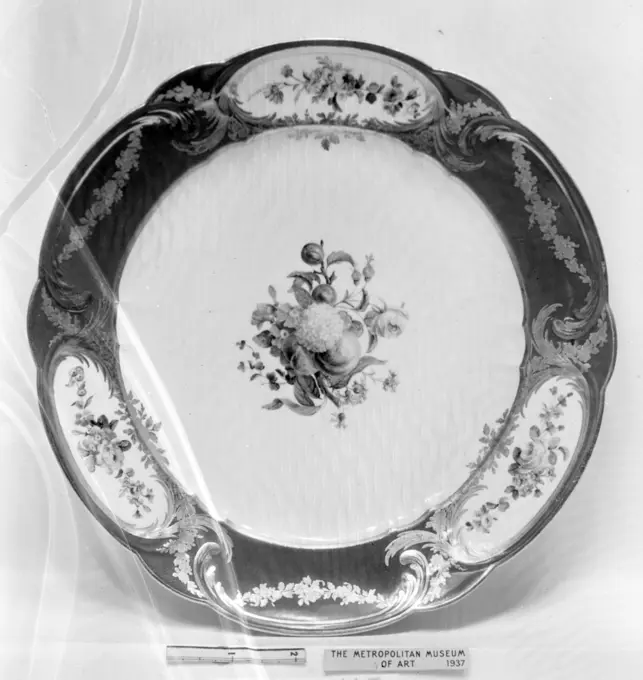
Plate (Assiette à palmes) (1 of 102) (part of a service) 1786 Sèvres Manufactory French. Plate (Assiette à palmes) (1 of 102) (part of a service). French, Sèvres. 1786. Soft-paste porcelain. Ceramics-Porcelain
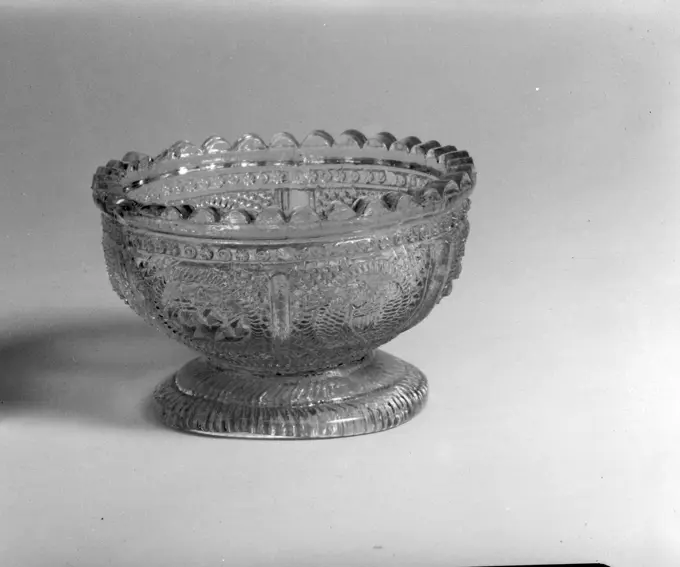
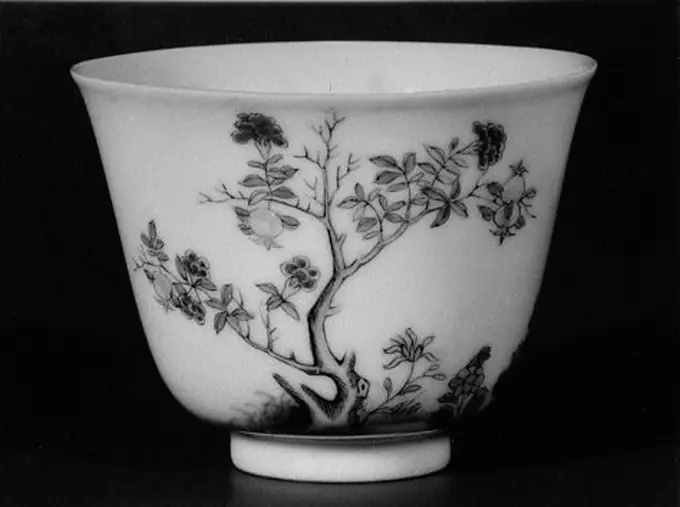
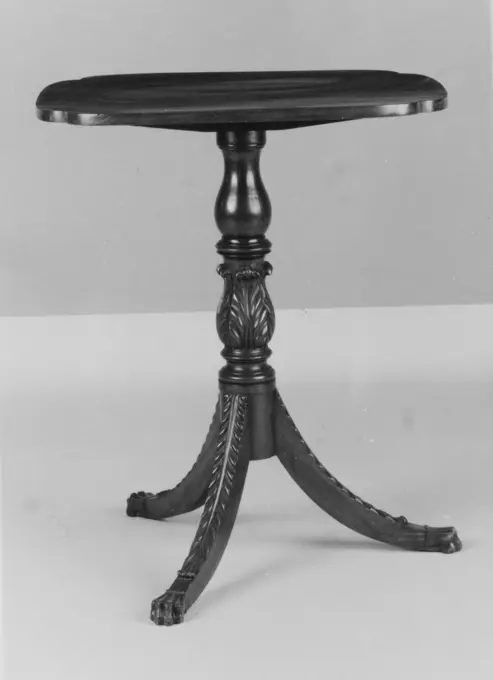
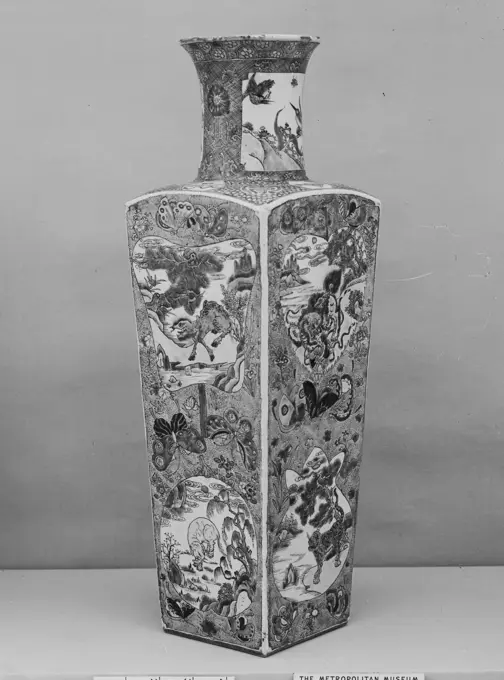
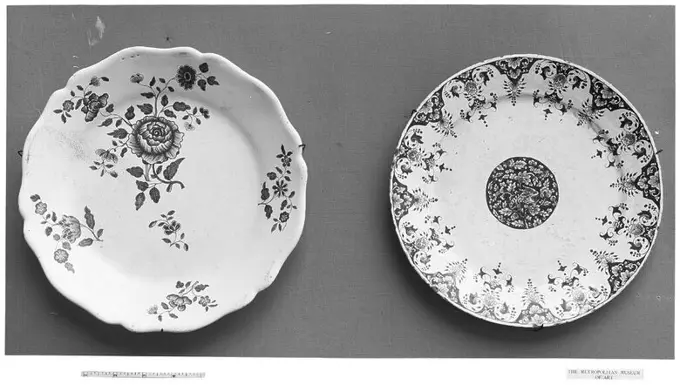
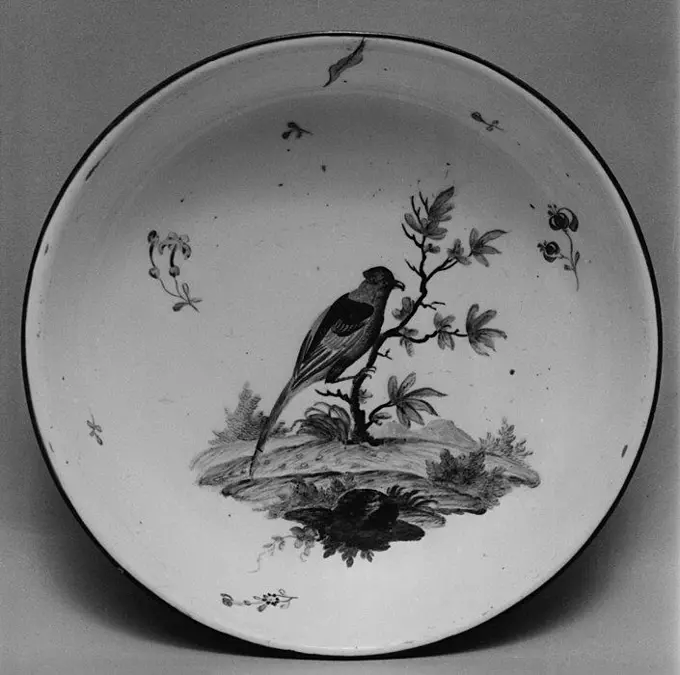
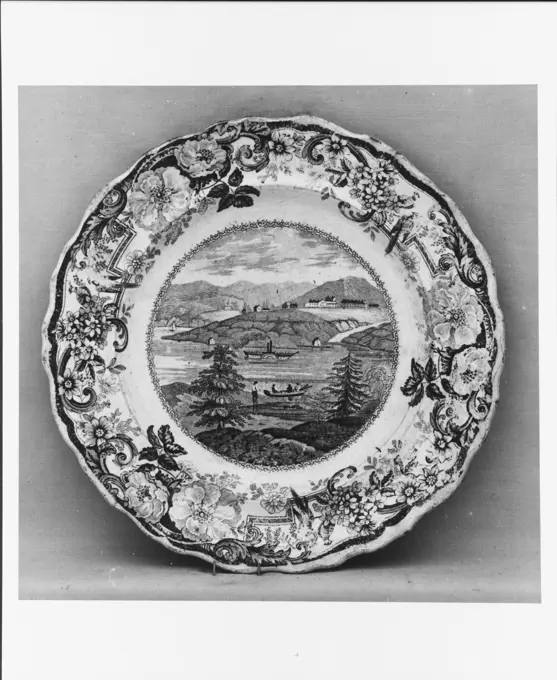
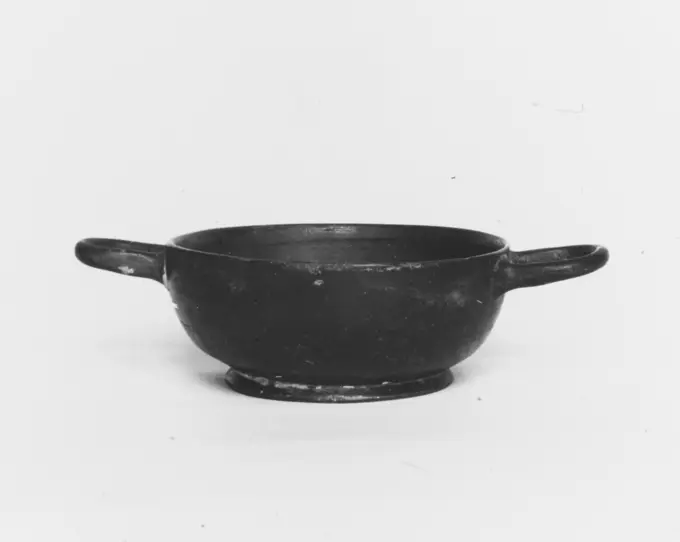
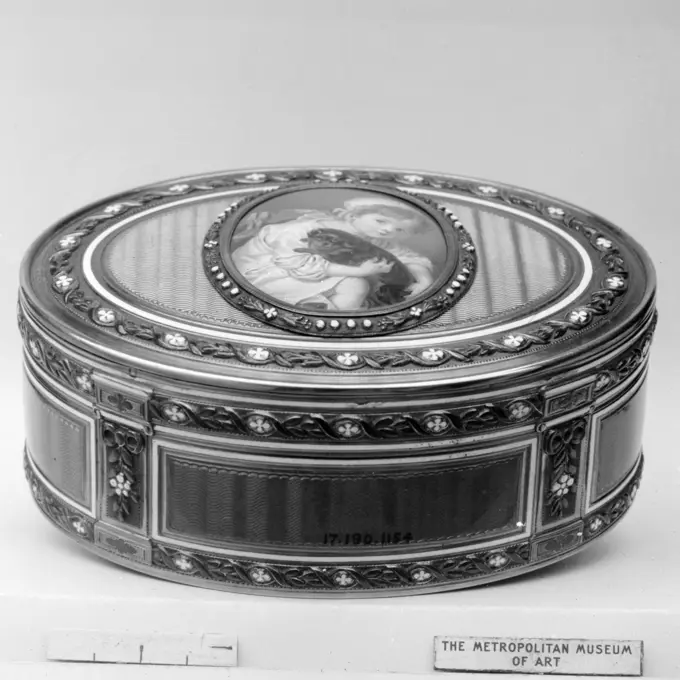
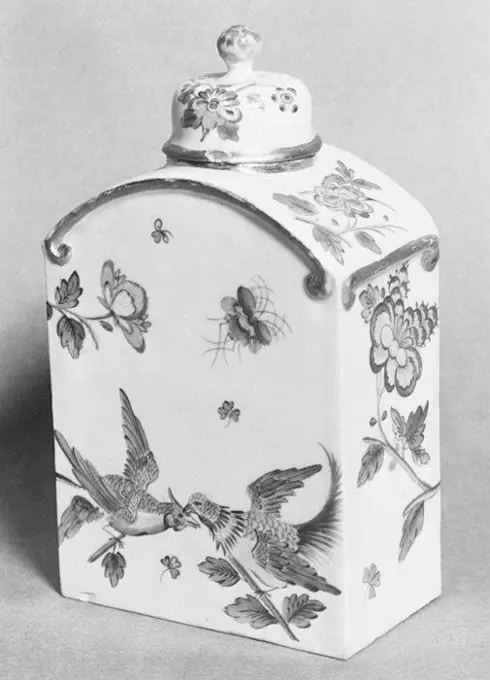
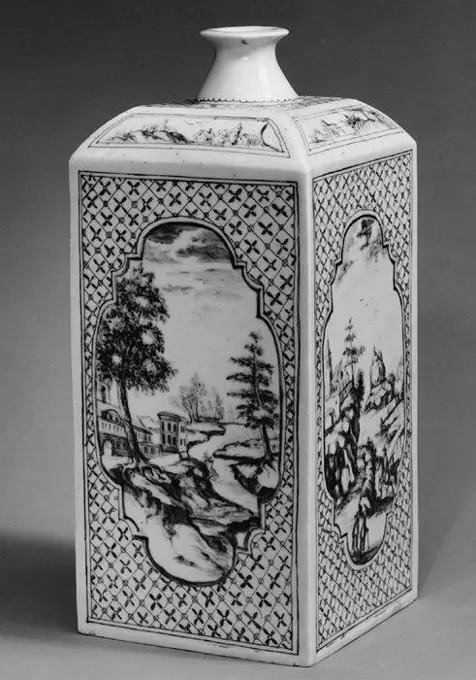
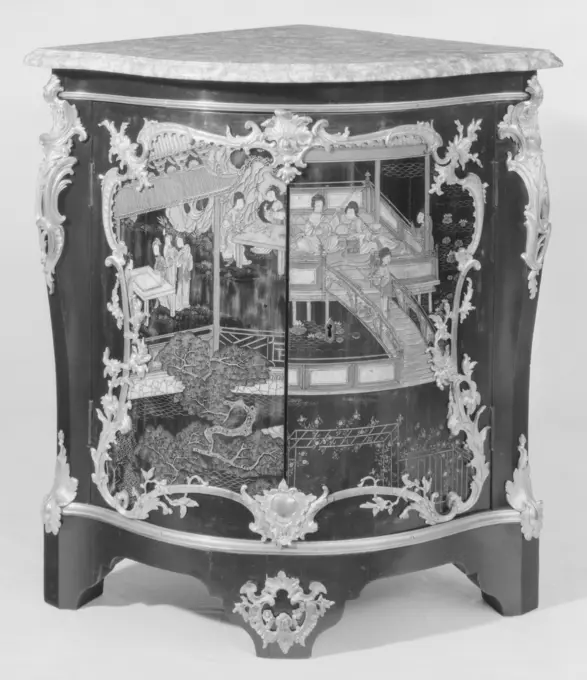
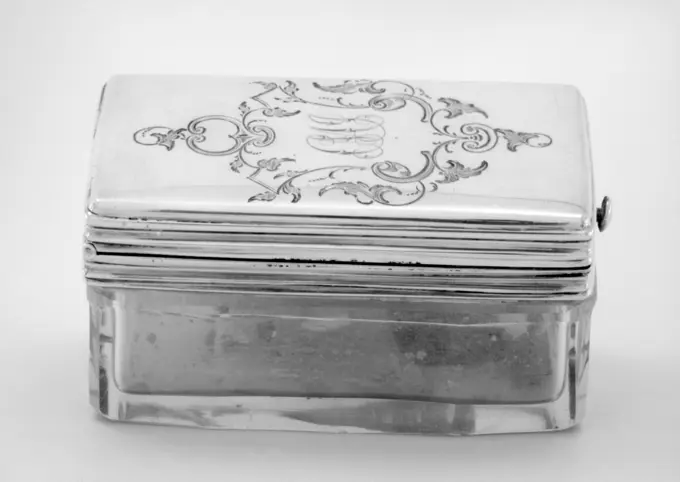
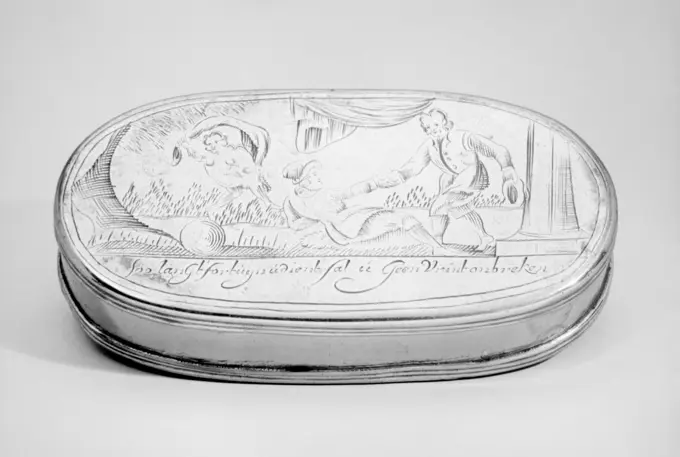
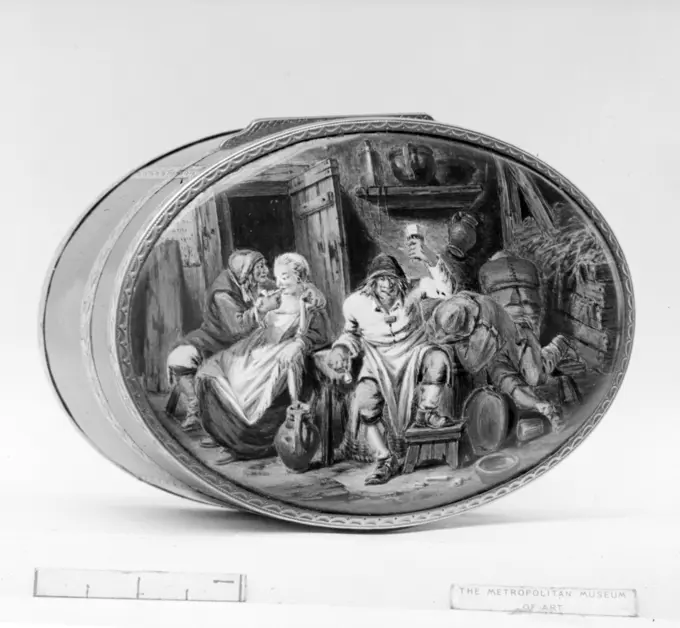
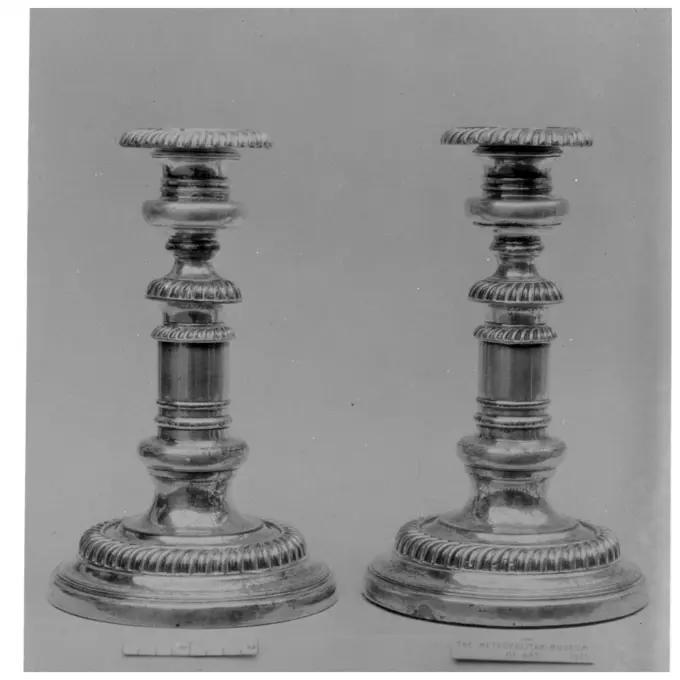
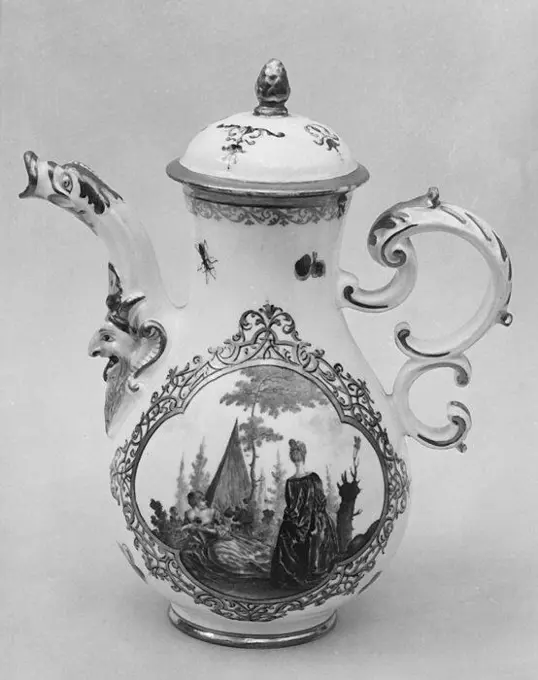
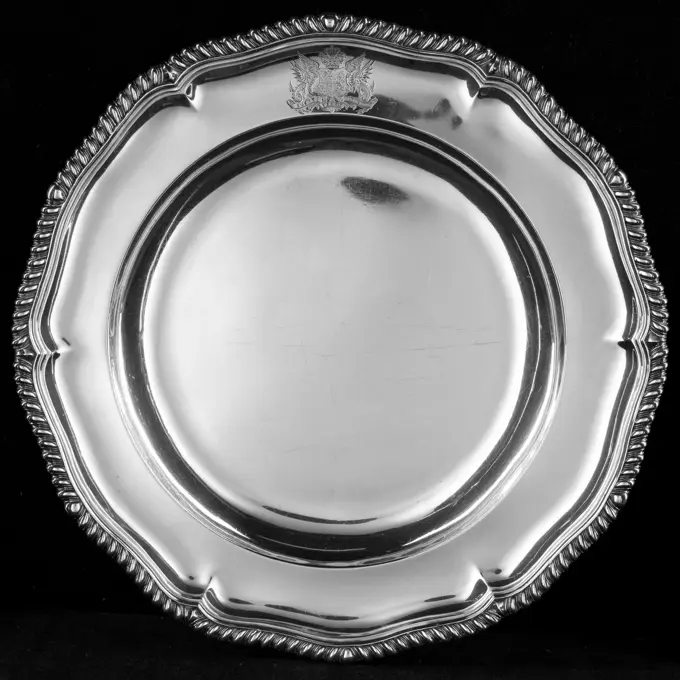
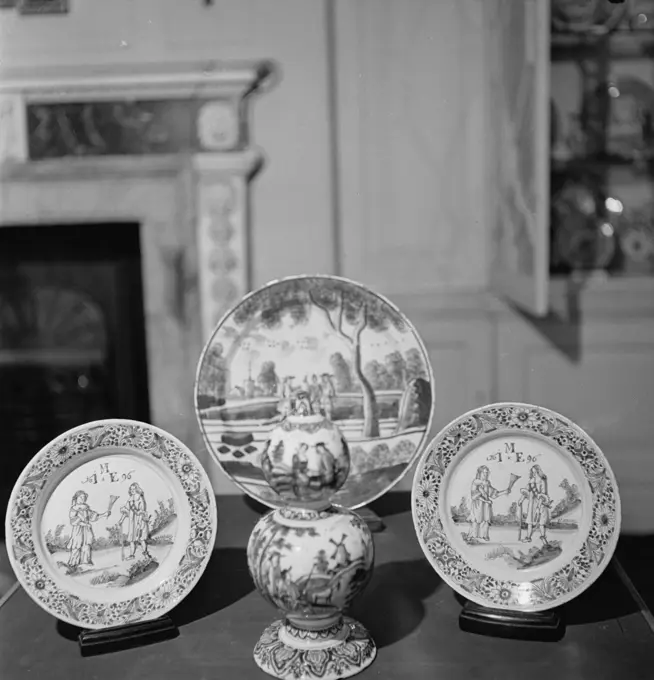
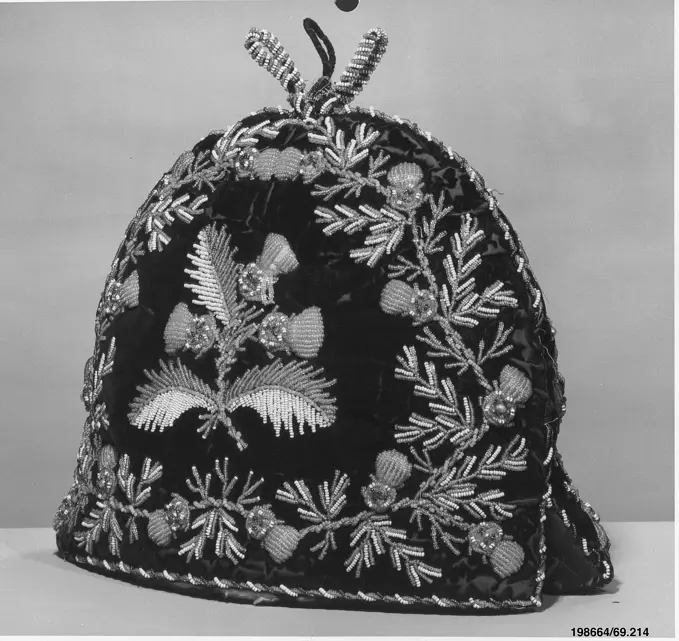
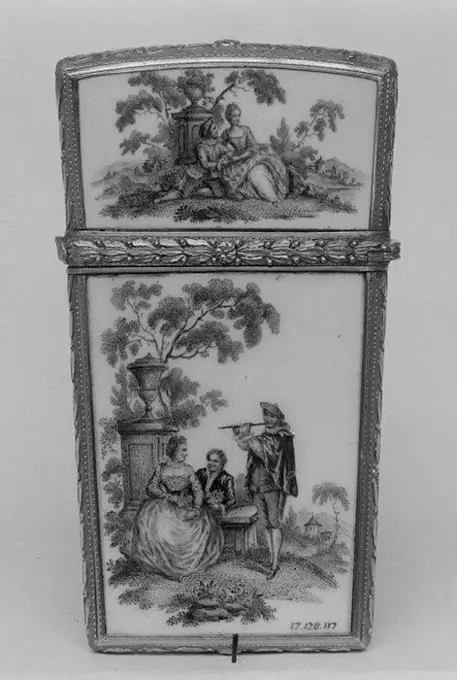
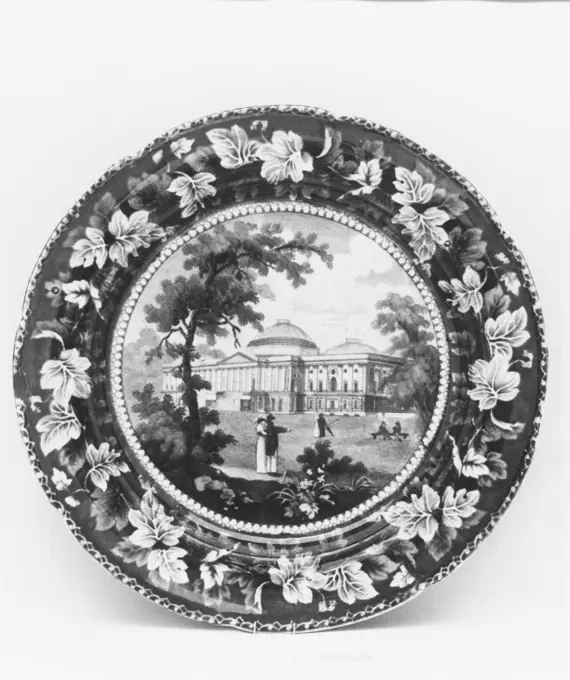
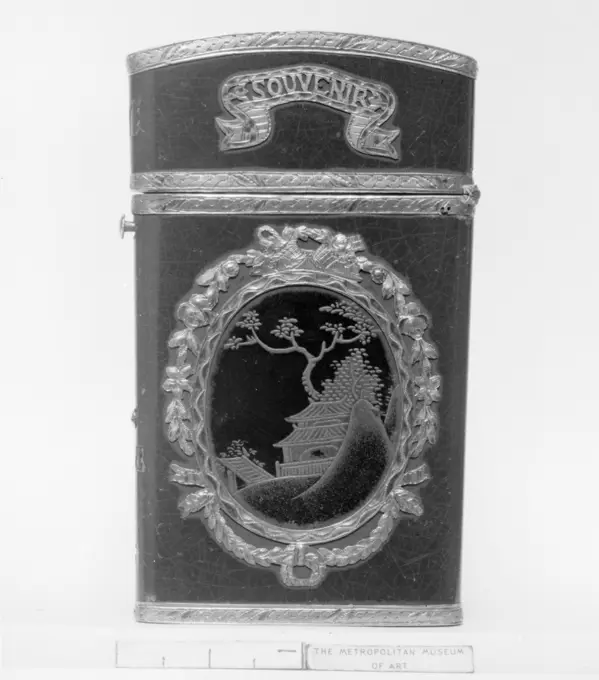
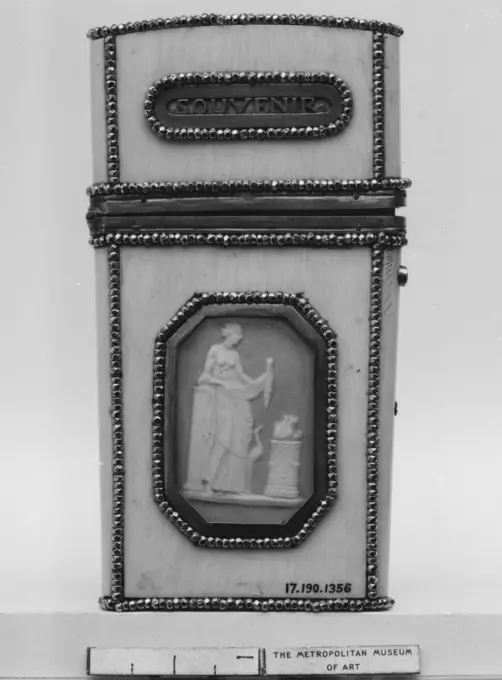
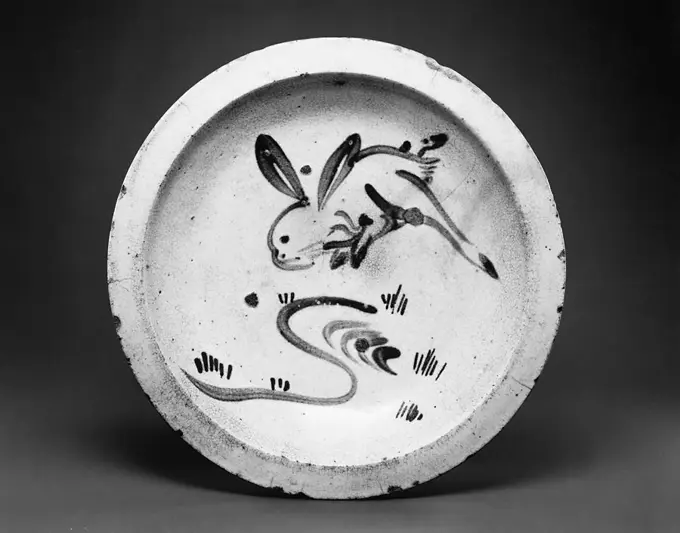
Tureen with cover 1785-1800 Chinese, for Indian market. Tureen with cover 201018Saucer (part of a service) 1790-1800 Chinese, probably for British market. Saucer (part of a service) 201085Salt 1830-40 American. Salt. American. 1830-40. Lacy pressed glass. Made in New England, United StatesDish 1830-35 American. Dish. American. 1830-35. Lacy pressed glass. Made in New England, United StatesCup 1720-25 Meissen Manufactory German. Cup 205938Ornament China. Ornament 60859Cup (one of a pair) China. Cup (one of a pair) 50779Bowl with Black and White Geometric Decoration 9th century This large bowl excavated from Nishapur is an example of the remarkable uses to which slip painting was put in eastern Iran during the tenth and eleventh centuries. This decorative technique, in which solutions of colored and semi-fluid clay called slips are used to coat earthenware vessels, was employed throughout the Islamic Near East but was particularly popular in greater Iran. Here, the reddish color of the earthenware body is completely masked by a coating of thick white engobe. On top of this, a simple geometric pattern was painted in another jet-black slip around the edge of the rim. A single black dot adorns the middle of the bowl at its base. The potters artful juxtaposition of black on white and the selection of rhythmic decorations that emphasize the bowls round form spoke to the sensibilities of collectors and archaeologists alike in the early twentieth century, making this type of ware one of the most popular amBeaker ca. 1730 Bohemian. Beaker. Bohemian. ca. 1730. Zwischengold glass. GlassBowl ca. 1740-50 Meissen Manufactory German. Bowl 199228Jar with cover ca. 1735-40 Chantilly. Jar with cover 188998 Factory: Chantilly, French, Jar with cover, ca. 173540, Tin-glazed soft-paste porcelain, Height (with cover): 3 3/4 in. (9.5 cm). The Metropolitan Museum of Art, New York. Rogers Fund, 1906 (06.357a, b)Commemorative jar with cover dated 1747 Dutch, Delft This covered jar was presumably made to commemorate the accession of William IV of Orange to the Stadhoudership in May, 1747. His wife, whom he married in 1734, was Anna (1702-1759), Princess Royal, daughter of George II of England. A Delftware tea caddy in the Museum's collection (1977.22.2) commemorates the same event.. Commemorative jar with cover 203282Plate - "View of Washington". Dated: c. 1936. Dimensions: overall: 20.3 x 25.4 cm (8 x 10 in.) Original IAD Object: 7 3/8" in diameter. Medium: black and white photograph. Museum: National Gallery of Art, Washington DC. Author: Helmut Hiatt.Tilt-top Tea Table 1800-1830 American. Tilt-top Tea Table. American. 1800-1830. Mahogany. Made in New York, United StatesVase with Animals and Mythical Creatures early 18th century China Porcelains painted with enamels in which the color green predominates are often classified as famille verte, based on the writings of the nineteenth-century French collector and connoisseur Albert Jacquemart (1808-1875). It should be noted that French terms such as famille verte are used only in Western and not in Chinese scholarship and have, therefore, not been used here.. Vase with Animals and Mythical Creatures. China. early 18th century. Porcelain painted with colored enamels over transparent glaze (Jingdezhen ware). Qing dynasty (1644-1911), Kangxi period (1662-1722). CeramicsBasket 1880-90. Basket. 1880-90. Pressed purple marble glass. Made in EnglandPlate. Culture: French, Rouen. Dimensions: Diameter: 10 in. (25.4 cm). Date: 1720-50.Faience, or tin-glazed and enameled earthenware, first emerged in France during the sixteenth century, reaching widespread usage among elite patrons during the seventeenth and early eighteenth centuries, prior to the establishment of soft-paste porcelain factories. Although characterized as more provincial in style than porcelain, French faience was used at the court of Louis XIV as part of elaborate meals and displays, with large-scale vessels incorporated into the Baroque garden designs of Versailles. Earlier examples of French faience attest to the strong influence of maiolica artists from Italy. Later works demonstrate the ways in which cities such as Nevers, Rouen, Lyon, Moustiers, and Marseille developed innovative vessel shapes and decorative motifs prized among collectors throughout Europe.While faience can be created from a wide mixture of clays, it is foremost distinguished by the milky opaBasin 1756-85 John Skinner. Basin. American. 1756-85. Pewter. Made in Boston, Massachusetts, United StatesSaucer (part of a service) ca. 1770 Frankenthal Porcelain Manufactory. Saucer (part of a service) 196954Plate ca. 1825-ca. 1834 James and Ralph Clews British. Plate 6122Skyphos late 5th century B.C. Greek, Attic Obverse, stamped palmettes.. Skyphos. Greek, Attic. late 5th century B.C.. Terracotta; black-glaze. Classical. VasesDeep Dish with Egret Design Japan. Deep Dish with Egret Design 52242Richard Rugg, Salver, 1762/63, silver.Jug in the style of Worcester 19th century Probably by Edmé Samson. Jug in the style of Worcester 199051Vase. Culture: China. Dimensions: H. 14 in. (35.6 cm). Museum: Metropolitan Museum of Art, New York, USA.Tea caddy 19th century Royal Porcelain Manufactory Danish. Tea caddy 187699Snuffbox with portrait of a child holding a dog 1782-83 David Lhonorey In eighteenth-century Europe, Paris led the production of high-quality luxury goods. Parisian goldsmiths made a wide range of small, personal articles such as snuffboxes; étuis to hold sealing wax, tweezers, or utensils for sewing; souvenirs, which contained thin ivory tablets for note taking; and shuttles for knotting lace. Gold snuffboxes and boxes decorated with portrait miniatures were prized and frequently given as royal gifts, often to ambassadors or members of the court in lieu of cash payments for their services. Coveted and admired, these boxes were produced from a variety of materials. The best were skillfully made of gold and embellished with diamonds, enameled decoration, lacquer, and other luxurious materials. By the middle of the century, the taking of snuff had become an entrenched social ritual, and the snuffbox, too, had become an important social prop. Snuffboxes were considered highly fashionable Cup and Saucer 1750-75 Worcester Factory. Cup and Saucer. British. 1750-75. Porcelain (soft-paste). Made in Worcestershire, EnglandTureen with cover (part of a service) ca. 1790 Chinese, for British market. Tureen with cover (part of a service) 201199Dish with The Nativity ca. 1550 German, Silesia. Dish with The Nativity 201754Slop Bowl ca. 1780 French, possibly. Slop Bowl. French, possibly. ca. 1780. Porcelain. Possibly made in Paris, FranceCup with figures 18th century China. Cup with figures. China. 18th century. Porcelain painted in overglaze polychrome enamels (Jingdezhen ware). Qing dynasty (1644-1911). CeramicsWine Cup 18th century India. Wine Cup. India. 18th century. Nephrite. Mughal period. JadeMirror 17th century French. Mirror 196716Bowl. Culture: China. Dimensions: H. 3 5/8 in. (9.2 cm); W. 7 1/8 in. (18.1 cm). Museum: Metropolitan Museum of Art, New York, USA.Tea caddy ca. 1760-65 Fürstenberg Porcelain Manufactory. Tea caddy 199180Platters (3) ca. 1770 Chinese, for European market. Platters (3) 187704 Chinese, Platters (3), ca. 1770, Hard-paste porcelain, (.65a): L. 14 3/16 in. (36.0 cm.); W. 12 in. (30.5 cm.) (.65b): L. 15 7/8 in. (40.3 cm.); W. 13 3/4 in. (34.9 cm.) (.65c): L. 12 5/8 in. (32.1 cm.); W. 10 1/2 in. (26.7 cm.). The Metropolitan Museum of Art, New York. Gift of Henry G. Marquand, 1894 (94.4.65ac)Cachepot 1775-1800 British (American market). Cachepot. British (American market). 1775-1800. Earthenware. Made in Staffordshire, EnglandBottle possibly 18th century Austrian, possibly Vienna. Bottle 204844Probably Charles Townsend, Sugar Bowl, c. 1775, silver.Cup and saucer ca. 1750 Mennecy. Cup and saucer 195216Ishizara Plate with Design of Willow Branch mid-18th-early 19th century Japan. Ishizara Plate with Design of Willow Branch 52312Corner cabinet (encoignure) (one of a pair) ca. 1745-49 Bernard II van Risenburgh In January 1750 and April 1751, the Parisian marchand-mercier Lazare Duvaux (ca. 1703-1758) sold two pairs of corner cabinets for 580 and 650 livres, respectively.1 Veneered with Coromandel lacquer and mounted with gilt bronze, they were fitted with Antin marble tops. Although the descriptions are too brief to permit a positive identification with the Museum’s pair, whose tops, moreover, are of a different type of marble (perhaps replacements), these entries in the famous dealer’s account book offer a good idea of the considerable cost of such corner cabinets. Furthermore, based on his sale records for the period 1748-53, it appears there was a demand for case furniture embellished with Coromandel lacquer. Duvaux sold several such pieces to his frequent customer Madame de Pompadour, the king’s mistress. Distinguished by designs that are not painted on the surface but incised and filled with colored lacqFoliate Dish. Culture: China. Dimensions: H. 1 in. (2.5 cm); Diam. 5 in. (12.7 cm); Diam. of base 2 1/16 in. (5.2 cm). Museum: Metropolitan Museum of Art, New York, USA.Box 16th century Swiss. Box. Swiss. 16th century. Wood, painted. Woodwork-FurnitureMug ca. 1790 Chinese, for British or American market. Mug. Chinese, for British or American market. ca. 1790. Hard-paste porcelain. Ceramics-Porcelain-ExportSoup Plate 1800-1830 Chinese. Soup Plate. Chinese. 1800-1830. Porcelain. Made in ChinaCrystal box with hinged cover (part of a set) 1848-49 Johann Bernhard Hertz (Hentz) The firm of Nicholls & Plincke was founded by members of the relatively large community of English silversmiths and craftsmen working in Saint Petersburg. After 1840 it was one of the most important retailers of luxury items before Carl Fabergé overshadowed all competitors. Several contemporary Saint Petersburg newspapers praised the high-quality products of the magasin anglais Nicholls & Plincke.According to the donor's family tradition, this rare set with more than fifty items bearing the monogram CMI was "originally made for and used by Colin Macrae Ingersoll 1819-1903, when he accompanied his father, Ralph Isaacs Ingersoll 1788-1872, to the Court of Czar Alexander II of Russia, where the latter served President James Knox Polk 1795-1849 as Minister Plenipotentiary from 1846 to 1848.. The family story has always been that the set and case were made for stagecoach travel in Russia."Plain silJar with cover 1780 Japan. Jar with cover 47414Spice box first half 18th century possibly German, Bamberg. Spice box 192884Pair of beaker vases ca. 1730 Meissen Manufactory German. Pair of beaker vases 203135Vase China Qing dynasty (1644-1911), Kangxi period (1662-1722) View more. Vase. China. Nephrite, light gray with a delicate greenish tint. Qing dynasty (1644-1911), Kangxi period (1662-1722). JadeSpoon tray ca. 1750 British, Staffordshire. Spoon tray 191895Dish 1745-46 Paul de Lamerie British. Dish 195271Saucer ca. 1725-35 Saint-Cloud factory. Saucer 188632 Factory: Saint-Cloud, French, active by 16931766, Saucer, ca. 172535, Soft-paste porcelain, Diameter: 5 3/8 in. (13.7 cm). The Metropolitan Museum of Art, New York. Gift of Alfred Duane Pell, 1902 (02.6.71)Cake basket 1763-64 John Langford. Cake basket 197711Duck China. Duck. China. Nephrite, gray of many shades speckled and veined with black. Qing dynasty (1644-1911), Kangxi period (1662-1722). JadeSugar box Ebenezer Roe 1711-12Snuffbox with peasant scenes 1760-61 French, Paris In eighteenth-century Europe, Paris led the production of high-quality luxury goods. Parisian goldsmiths made a wide range of small, personal articles such as snuffboxes; étuis to hold sealing wax, tweezers, or utensils for sewing; souvenirs, which contained thin ivory tablets for note taking; and shuttles for knotting lace. Gold snuffboxes and boxes decorated with portrait miniatures were prized and frequently given as royal gifts, often to ambassadors or members of the court in lieu of cash payments for their services. Coveted and admired, these boxes were produced from a variety of materials. The best were skillfully made of gold and embellished with diamonds, enameled decoration, lacquer, and other luxurious materials. By the middle of the century, the taking of snuff had become an entrenched social ritual, and the snuffbox, too, had become an important social prop. Snuffboxes were considered highly fashionable accessories, with soCross-bar of armoire first half 16th century French. Cross-bar of armoire. French. first half 16th century. Carved oak. WoodworkSaltcellar 1835-40 American. Saltcellar. American. 1835-40. Lacy pressed aquamarine glass. Made in New England, United StatesFan ca. 1770-90 German. Fan 209961Kiln Waster. Culture: China. Dimensions: H. 3 1/4 in. (8.3 cm); Diam. of rim: 3 3/4 in. (9.5 cm); Diam. of foot: 2 1/4 in. (5.7 cm). Date: 12th-13th century. Museum: Metropolitan Museum of Art, New York, USA.Meissen Porcelain Manufactory, Cup and Saucer, c. 1745, hard-paste porcelain.. Tobacco or sirih cover decorated with floral motifs, vaulted lid, octagonal shape, ignite a floral ornament on soil and two inscriptions.Tobacco box 18th century Dutch Oval box; its lid shows a landscape scene with two men shaking hands; one of them is reclining. At the left the personification of fortune can be seen, standing on a globe and holding a billowing sail. Inscribed below: Soo lang t' fortuijn u dient sal u geen vrint onbreken (As long as fortune is with you, you won't lack friends).The underside carries another outdoor scene. A distressed-looking man, his head in his hand, is seated next to a tree. His friend and the figure of fortune are shown leaving him. Inscribed below: Maar als t' fortuijn eens keert dan is u vrint geweken (But when fortune turns around your friend will be gone).With lined rims, molded edges, and plain sides. A tobacco box with the same inscription but with slightly different illustrations is in the collection of Het Nederlands Openluchtmuseum, Arnhem. A similar text was used as a porch inscription in Gronichem (Gorinchem); see Hieronymus Sweerts, Koddige en ernstige opschriften op luyfSaucer (part of a service) 1760-70 Decoration possibly by James Giles. Saucer (part of a service) 201316Candlestick. Dimensions: H. 7 7/8 in. (20 cm). Date: 1750-60. Museum: Metropolitan Museum of Art, New York, USA.Snuffbox with portrait of a woman ca. 1790 G.R.C.. Snuffbox with portrait of a woman. Miniature by or in the style of George Engleheart (British, Kew 1750-1829 Blackheath). Swiss. ca. 1790. Gold, enamel, pearls; ivoryMug ca. 1760 British, Staffordshire. Mug 199571Snuffbox with genre scene 1761-62 Possibly by Jean-Lambert Payen In eighteenth-century Europe, Paris led the production of high-quality luxury goods. Parisian goldsmiths made a wide range of small, personal articles such as snuffboxes; étuis to hold sealing wax, tweezers, or utensils for sewing; souvenirs, which contained thin ivory tablets for note taking; and shuttles for knotting lace. Gold snuffboxes and boxes decorated with portrait miniatures were prized and frequently given as royal gifts, often to ambassadors or members of the court in lieu of cash payments for their services. Coveted and admired, these boxes were produced from a variety of materials. The best were skillfully made of gold and embellished with diamonds, enameled decoration, lacquer, and other luxurious materials. By the middle of the century, the taking of snuff had become an entrenched social ritual, and the snuffbox, too, had become an important social prop. Snuffboxes were considered highly fashionable accessMirror Case 19th century China. Mirror Case 68553Fan 18th century Dutch. Fan 209762Candlestick ca. 1810 Watson and Bradbury. Candlestick. British, Sheffield. ca. 1810. Sheffield plate. Metalwork-SilverplateCoffeepot ca. 1740-45 Meissen Manufactory German. Coffeepot 199218Vignette F American. Vignette F, 1840s-1850s. Watercolor and graphite, 5 3/4 x 3 7/16 in. (14.6 x 8.7 cm).   American Art 1840s-1850sBox with Medallion Top 1760-1883. Box with Medallion Top 902Plate. Dated: c. 1936. Dimensions: overall: 20.3 x 25.4 cm (8 x 10 in.) Original IAD Object: 10 1/4" in diameter. Medium: black and white photograph. Museum: National Gallery of Art, Washington DC. Author: Helmut Hiatt.Two-handled cup 1719-20 Probably by William Archdall. Two-handled cup. Irish, Dublin. 1719-20. Silver. Metalwork-SilverShowcase with objects of ceramics, including plates, dishes, mules and a seated figure; Vitters crafts. This is the design of the display case before emptying in October 1959. In the middle above each other two dishes of faience with flower vase and birds, from the Delft Plateel Brak the Greek A. There around four plates of Faience with the coat of arms of Jan van Beuningen , by an anonymous manufacturer.Plate, one of a pair, 1892, James Garrard; Retailer: Garrard & Co., London, est. 1735, 1 x 12 1/8 x 12 1/8 in. (2.5 x 30.8 x 30.8 cm), Silver, England, 19th centuryTrinket Box ca. 1780 American. Trinket Box. American. ca. 1780. Cedar. Made in Pennsylvania, United StatesAnefo photo collection. Hie Holland England / Anefo London series. Delft Porcelain, Loaned Mr. Vanderkar, exhibited Netherlands House, Charles Street, London exhibition Delft Pottery .. 1943. Britain, LondonTea cozy British or Scottish 19th centurySouvenir 18th century French In eighteenth-century Europe, Paris led the production of high-quality luxury goods. Parisian goldsmiths made a wide range of small, personal articles such as snuffboxes; étuis to hold sealing wax, tweezers, or utensils for sewing; souvenirs, which contained thin ivory tablets for note taking; and shuttles for knotting lace. Gold snuffboxes and boxes decorated with portrait miniatures were prized and frequently given as royal gifts, often to ambassadors or members of the court in lieu of cash payments for their services. Coveted and admired, these boxes were produced from a variety of materials. The best were skillfully made of gold and embellished with diamonds, enameled decoration, lacquer, and other luxurious materials. By the middle of the century, the taking of snuff had become an entrenched social ritual, and the snuffbox, too, had become an important social prop. Snuffboxes were considered highly fashionable accessories, with some merchants advertisiWatch late 18th century Watchmaker: Pierre Gregson. Watch. Swiss, Geneva. late 18th century. Gold, enamel, diamonds. HorologyIce Cream Server. Culture: American. Dimensions: 1 9/16 x 11 1/8 x 2 5/8 in. (4 x 28.3 x 6.7 cm); 3 oz. 15 dwt. (116 g). Maker: Tiffany & Co. (1837-present). Date: ca. 1870. Museum: Metropolitan Museum of Art, New York, USA.Engraved Plate 1800-83. Engraved Plate 3536Butterfly 18th century China. Butterfly. China. 18th century. Jadeite, pearl, gold filigree. JadeVase 1880-90. Vase. 1880-90. Pressed purple marble glass. Made in EnglandPlate ca. 1825-ca. 1827 Possibly Ralph Stevenson & Williams. Plate. British (American market). ca. 1825-ca. 1827. Earthenware, transfer-printed. Made in Staffordshire, EnglandMedallion 1810 British. Medallion 229517Souvenir 1771-72 French, Paris In eighteenth-century Europe, Paris led the production of high-quality luxury goods. Parisian goldsmiths made a wide range of small, personal articles such as snuffboxes; étuis to hold sealing wax, tweezers, or utensils for sewing; souvenirs, which contained thin ivory tablets for note taking; and shuttles for knotting lace. Gold snuffboxes and boxes decorated with portrait miniatures were prized and frequently given as royal gifts, often to ambassadors or members of the court in lieu of cash payments for their services. Coveted and admired, these boxes were produced from a variety of materials. The best were skillfully made of gold and embellished with diamonds, enameled decoration, lacquer, and other luxurious materials. By the middle of the century, the taking of snuff had become an entrenched social ritual, and the snuffbox, too, had become an important social prop. Snuffboxes were considered highly fashionable accessories, with some merchants advertiPlate - "Octagon Church, Boston". Dated: c. 1936. Dimensions: overall: 20.3 x 25.4 cm (8 x 10 in.) Original IAD Object: 9 3/4" in diameter. Medium: black and white photograph. Museum: National Gallery of Art, Washington DC. Author: Helmut Hiatt.Medallion China. Medallion. China. Nephrite. Qing dynasty (1644-1911), Qianlong period (1736-95). JadeSouvenir ca. 1780-90 Porcelain plaque made at Sèvres Manufactory French In eighteenth-century Europe, Paris led the production of high-quality luxury goods. Parisian goldsmiths made a wide range of small, personal articles such as snuffboxes; étuis to hold sealing wax, tweezers, or utensils for sewing; souvenirs, which contained thin ivory tablets for note taking; and shuttles for knotting lace. Gold snuffboxes and boxes decorated with portrait miniatures were prized and frequently given as royal gifts, often to ambassadors or members of the court in lieu of cash payments for their services. Coveted and admired, these boxes were produced from a variety of materials. The best were skillfully made of gold and embellished with diamonds, enameled decoration, lacquer, and other luxurious materials. By the middle of the century, the taking of snuff had become an entrenched social ritual, and the snuffbox, too, had become an important social prop. Snuffboxes were considered highly fashionableTobacco box ca. 1760 Johann Heinrich Giese. Tobacco box 187167Ishizara Plate with Rabbit Design late 18th century Japan. Ishizara Plate with Rabbit Design 53641Plate 1842-45 American or British. Plate. American or British. 1842-45. Lacy pressed glass. Possibly made in England; Possibly made in United StatesPair of vases. Culture: Italian, Venice. Dimensions: Height: 15 in. (38.1 cm). Date: 18th century. Museum: Metropolitan Museum of Art, New York, USA.