My Boards
View Pictures
  • My Boards

Galaxies and Star Clusters

Astrophotography capturing the beauty of galaxies and star clusters. The images feature an array of stars against dark, cosmic backdrops, evoking a sense of wonder.

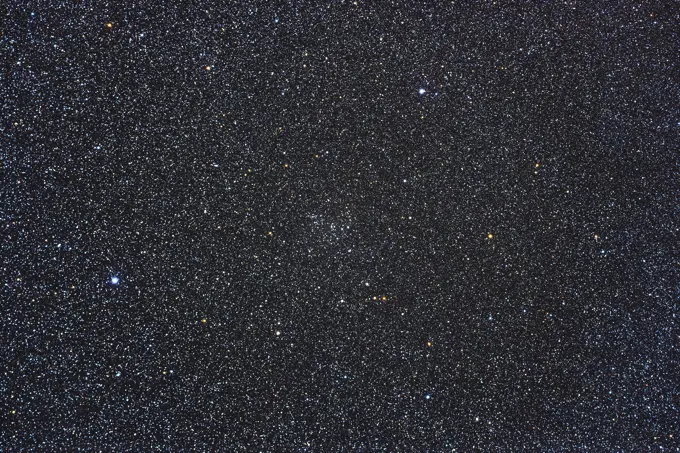
The loose and sparse star cluster NGC 7243 in Lacerta the Lizard,
149 assets in this story
6145-45262546
This frame from an animation shows the merger of two white dwarfs. A white dwarf is an extremely dense remnant of a star that can no longer burn nuclear fuel at its core. This is another way that a type Ia supernova occurs. Stellar explosions forge and distribute materials that make up the world in which we live, and also hold clues to how fast the universe is expanding. By understanding supernovae, scientists can unlock mysteries that are key to what we are made of and the fate of our universe. But to get the full picture, scientists must observe supernovae from a variety of perspectives, especially in the first moments of the explosion. That's really difficult -- there's no telling when or where a supernova might happen next. An animation is available at
6145-45258897
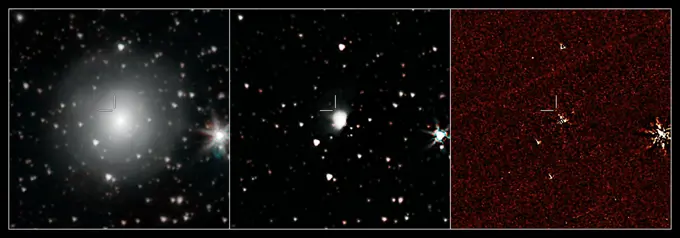
NASA's Spitzer Space Telescope has provisionally detected the faint afterglow of the explosive merger of two neutron stars in the galaxy NGC 4993. The event, labeled GW170817, was initially detected in gravitational waves and gamma rays. Subsequent observations by dozens of telescopes have monitored its afterglow across the entire spectrum of light. The event is located about 130 million light-years from Earth. Spitzer's observation on September 29, 2017, came late in the game, just over 6 weeks after the event was first seen. But if this weak detection is verified, it will play an important role in helping astronomers understand how many of the heaviest elements in the periodic table are created in explosive neutron star mergers. The left panel is a color composite of the 3.6 and 4.5 micron channels of the Spitzer IRAC instrument, rendered in cyan and red. The center panel is a median-filtered color composite showing a faint red dot at the known location of the event. The right panel
4239-69144834
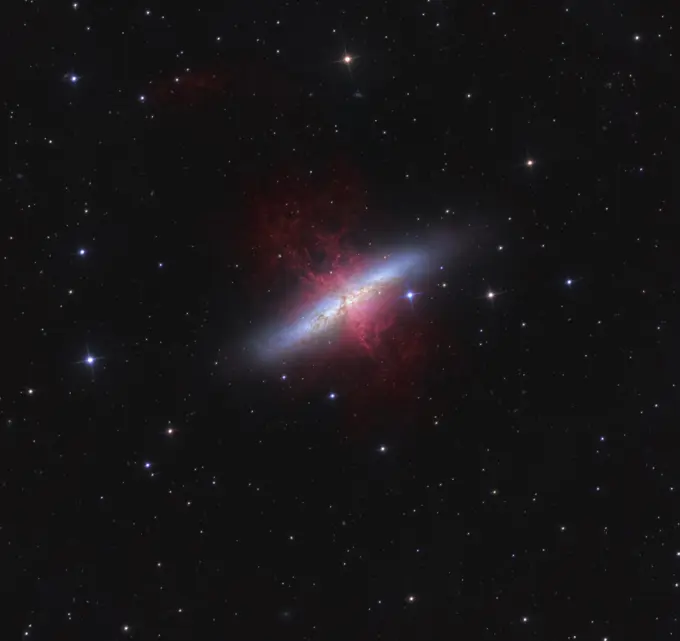
Messier 82, a starburst galaxy in the constellation Ursa Major.
4239-57494199
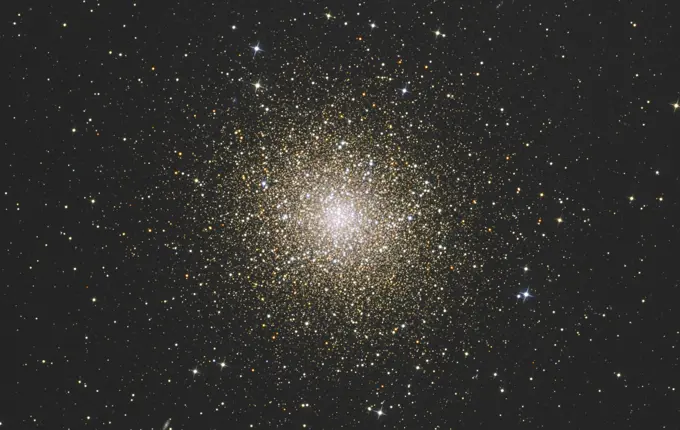
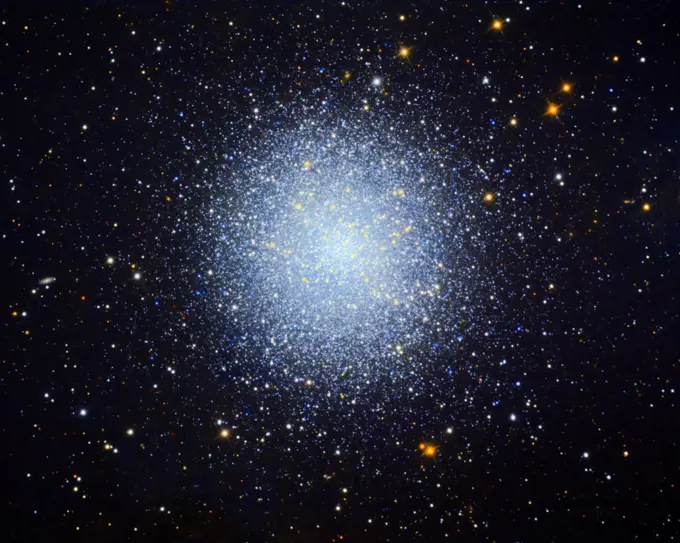
Hercules Globular Cluster, Messier 13.
6145-44591542
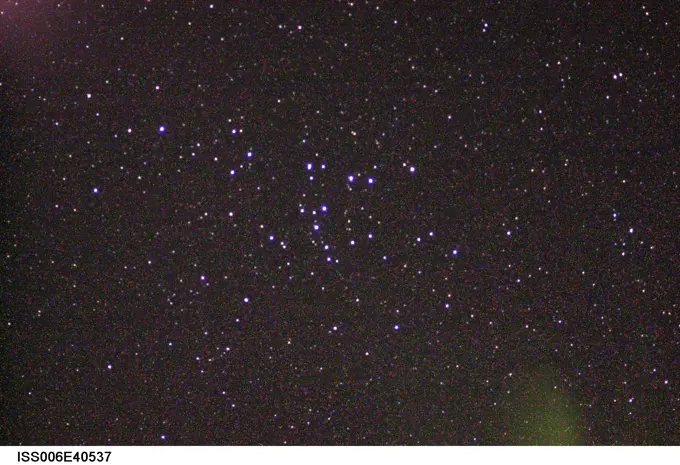
ISS006-E-40537 (March 2003) --- The Coma Cluster, a collection of stars which are visible to the naked eye in the constellation Coma Berenices, is visible in this view photographed by astronaut Donald R. Pettit, Expedition Six NASA ISS science officer, on board the International Space Station (ISS). The Coma Cluster is visible as a faint fuzzy patch between the constellations Leo and Virgo. The naked eye cannot resolve the individual stars, but collectively, they merge into a fuzzy flow in this part of the sky.
4239-57495463
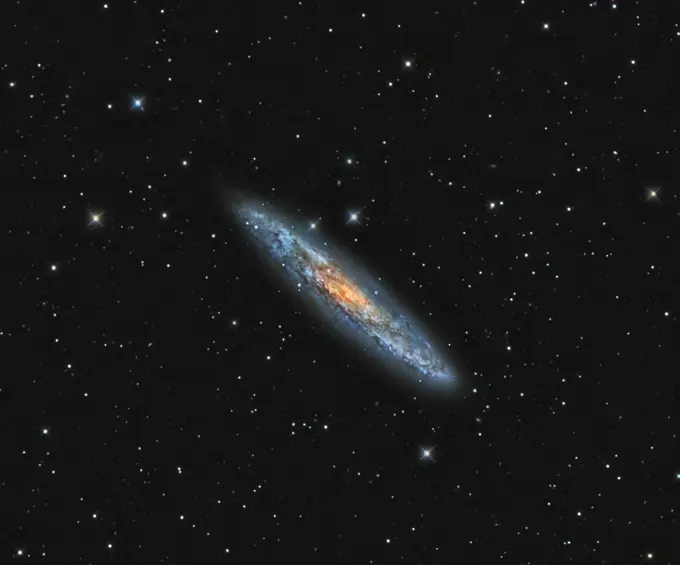
NGC 253, the Sculptor Galaxy.
4239-57493133
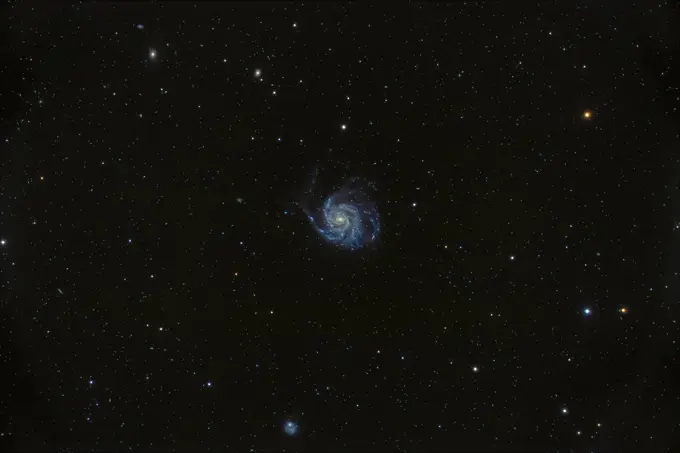
Messier 101, the Pinwheel Galaxy.
4239-69153651
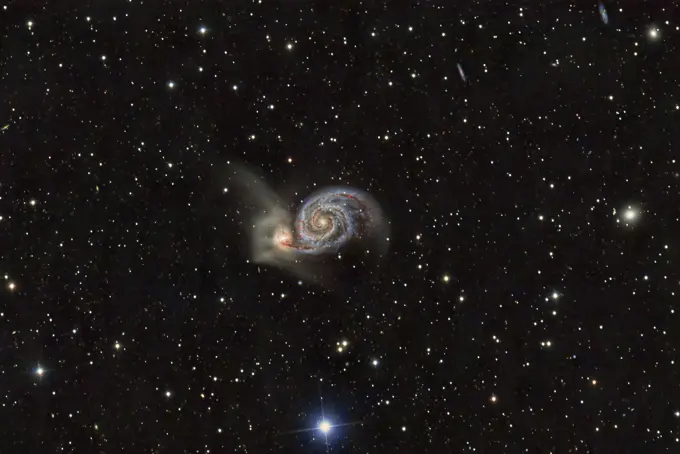
The Whirlpool Galaxy, NGC 5194, and its companion galaxy, NGC 5195.
6145-44630856
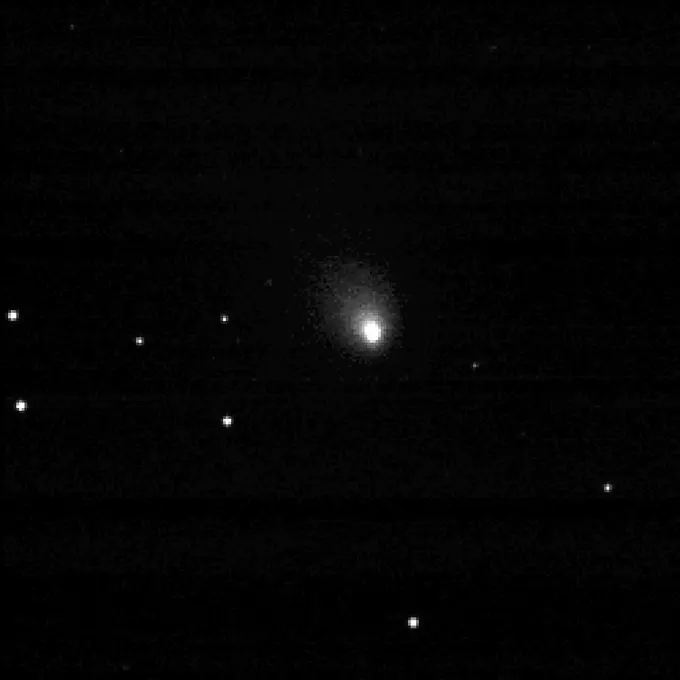
Taken on April 25, 2005, sixty-nine days before it gets up-close-and-personal with a comet, NASA's Deep Impact spacecraft successfully photographed its quarry, comet Tempel 1, at a distance of 39.7 million miles.
4389-374
A Comet in the Night
6145-44626437
This image shows six of the three-dozen 'ultraviolet luminous galaxies' spotted in our corner of the universe by NASA's Galaxy Evolution Explorer. These massive galaxies greatly resemble newborn galaxies that were common in the early universe.
4239-57493744
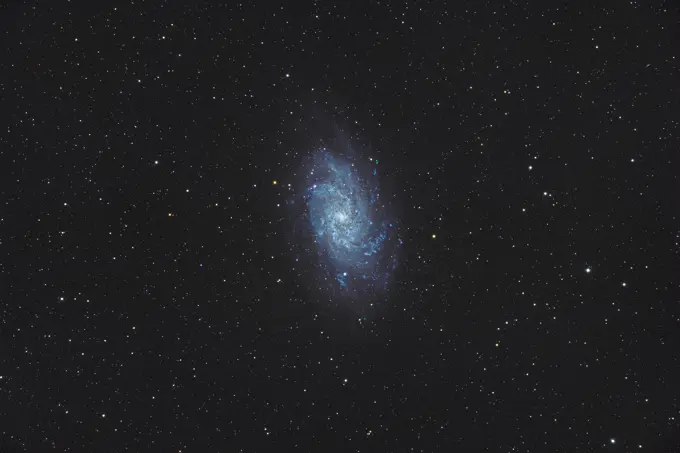
The Local Group spiral galaxy, Messier 33 in Triangulum.
6145-45297721
This visible-light image of the Fireworks galaxy (NGC 6946) comes from the Digital Sky Survey and is overlaid with data from NASA's NuSTAR observatory (shown in blue and green). Blue light indicates X-rays captured during the first of two observations by NuSTAR, in May 2017. Green light indicates X-rays seen less than two weeks later in the second observation. This means that the source of the green spot to the lower left of the galactic center began radiating in the time between those two observations. Two bright sources near the top of the image show a combination of blue and green, indicating those sources were visible during both observations. The X-ray data don't have the same spatial resolution as the visible-light image, so the X-ray sources appear larger.
4239-57494173
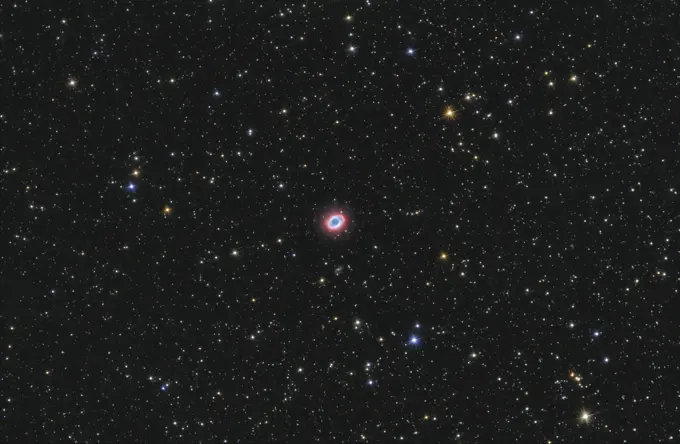
The Ring Nebula is a planetary nebula in the constellation of Lyra.
4239-57495488
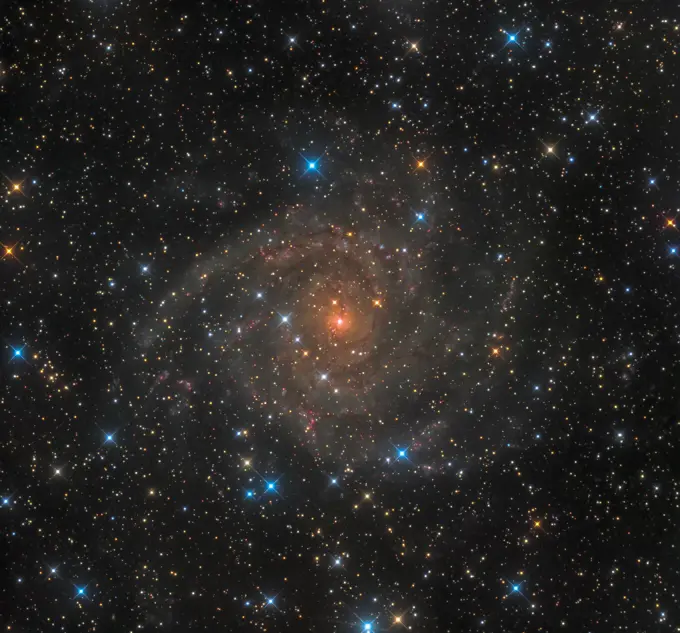
Intermediate spiral galaxy IC 342.
1815R-13619412
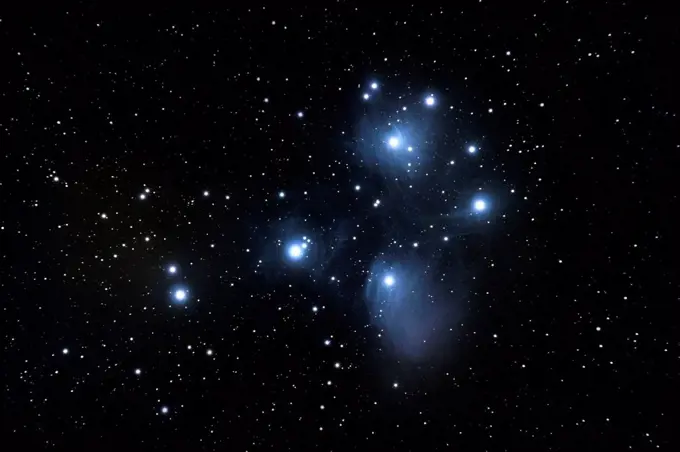
M45 pleiades open star cluster
1828R-5882
Galaxy
6145-44846313
This composite image was taken by NASA's Stardust navigation camera 42 hours before its encounter with comet Tempel 1. The spacecraft is due to encounter the comet in the evening hours of Feb. 14, 2011.
4239-57495830
Herschel's Jewel Box open cluster in the constellation Crux.
4239-57492762
A close-up of Castor in Gemini, taken in moonlight.
1848-64912022
Space galaxy Edge Background. Elements of this image furnished by NASA. Retouched image
4239R-1328
The Wild Duck Cluster, also known as Messier 11, in the constellation Scutum
6145-44548705
These six narrow-angle color images were made from the first ever 'portrait' of the solar system taken by NASAs Voyager 1, which was more than 4 billion miles from Earth and about 32 degrees above the ecliptic.
1746-111337751
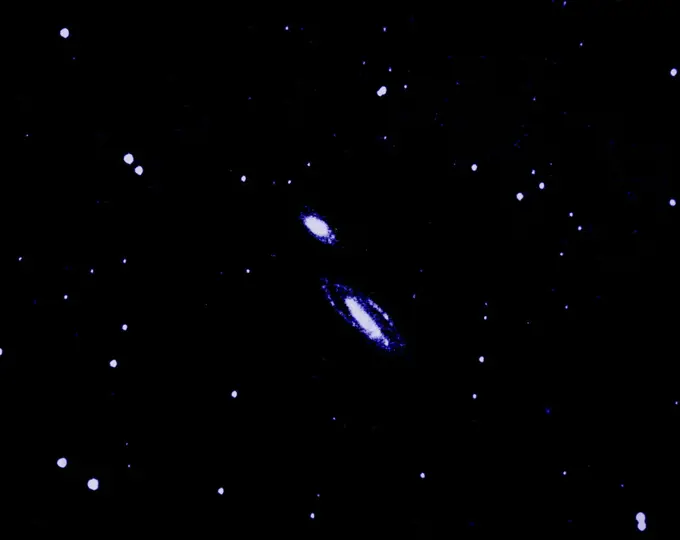
Colour photograph of a pair of  spiral galaxies (NGC 5857 and NGC 5859) in constellation Bootes. Photographed at the Lick Observatory in Sacramento. Dated 20th century
6145-45260676
NASA image release December 14, 2010 A delicate sphere of gas, photographed by NASA's Hubble Space Telescope, floats serenely in the depths of space. The pristine shell, or bubble, is the result of gas that is being shocked by the expanding blast wave from a supernova. Called SNR 0509-67.5 (or SNR 0509 for short), the bubble is the visible remnant of a powerful stellar explosion in the Large Magellanic Cloud (LMC), a small galaxy about 160,000 light-years from Earth. Ripples in the shell's surface may be caused by either subtle variations in the density of the ambient interstellar gas, or possibly driven from the interior by pieces of the ejecta. The bubble-shaped shroud of gas is 23 light-years across and is expanding at more than 11 million miles per hour (5,000 kilometers per second). Astronomers have concluded that the explosion was one of an especially energetic and bright variety of supernovae. Known as Type Ia, such supernova events are thought to result from a white dwarf star
4239-57493754
Messier 57, the Ring Nebula in Lyra.
1606-67410
17P/Holmes comet
4329-147
The great globular cluster in Hercules is one of the most awe-inspiring sights in a large telescope. In this rare image special techniques were used to keep the color of the stars all the way down to the core.
1525-25141561
space nebula. a nice large image of a cloudy nebula in space
6145-44631118
This ultraviolet image from NASA's Galaxy Evolution Explorer is of a small area of the Virgo Cluster of galaxies.
6145-44844731
This composite image is the first taken by NASA's Stardust spacecraft's navigation camera. The observations were made on Jan. 18 and 19, 2011. Stardust will fly within about 200 kilometers (124 miles) of the comet's nucleus.
4239-57495480
Intermediate spiral galaxy Messier 100 in Coma Berenices constellation.
6145-44805567
Comet Siding Spring appears to streak across the sky like a superhero in this new infrared image from NASA's Wide-field Infrared Survey Explorer. The comet, also known as C/2007 Q3, was discovered in 2007 by observers in Australia.
1746-111906791
Photograph of galaxy H.1. Dated 20th century
6145-44605694
This image of the Globular cluster Messier 2 (M2) was taken by NASA's Galaxy Evolution Explorer on August 20, 2003. This image is a small section of a single All Sky Imaging Survey exposure of only 129 seconds in the constellation Aquarius.
1746-28997441
Early 20th century telescope image of a nebula (French astronomer). Dated 20th Century
4239-57492765
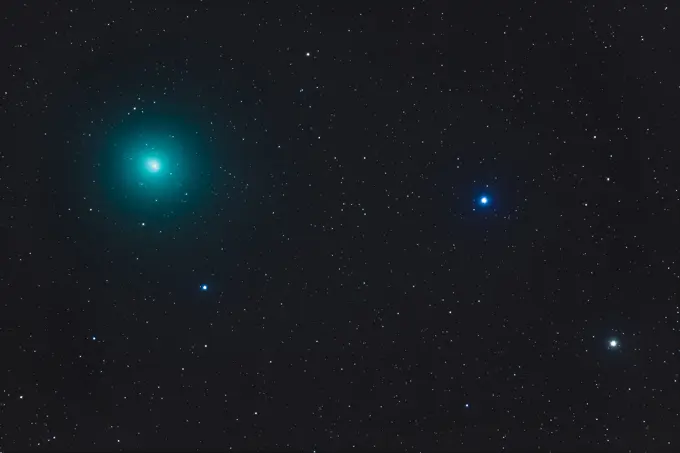
Comet Wirtanen 46P at perihelion.
1815R-13619420
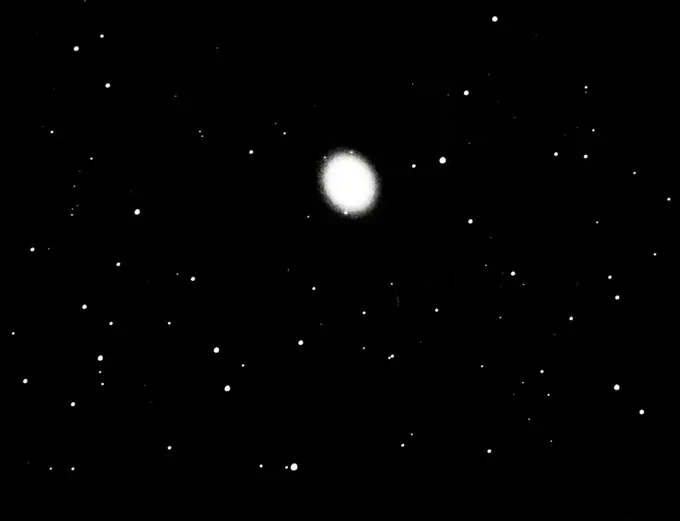
M27 Dumbell nebula , planetary nebula
4239-57494095
NGC 7293, the Helix Nebula.
255-29057912
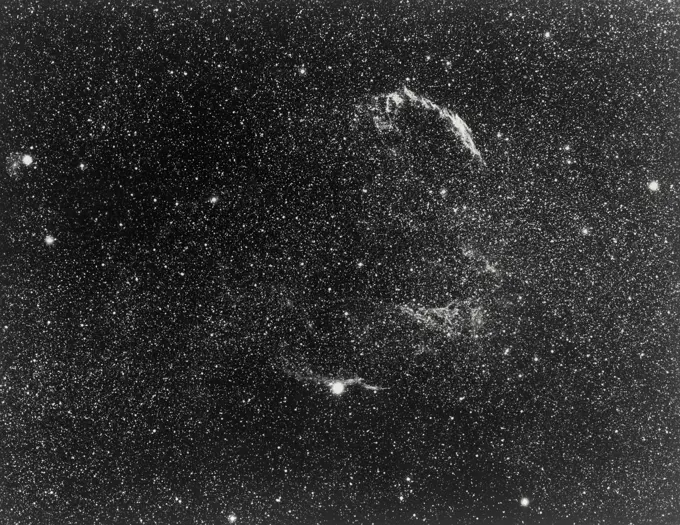
Vintage Photograph. Filamentary nebula in cygnus shows the Wole loop taken with 18 in Schmidt telescope
6145-45297958
Those aren't Klingon vessels. Appearing as strings of orange dots, the brightest sets of dots belong to asteroids Klotho and Lina. Both orbit out in the main asteroid belt between Mars and Jupiter, while smaller, more distant asteroids can also be seen passing through the image.
6145-45259418
This frame from a sequence of four images taken during one night of observation by NASA's Catalina Sky Survey near Tucson, Arizona, shows the speck of light that moves relative to the background stars is a small asteroid that was, at the time, about as far away as the moon. This asteroid, named 2014 AA, was the second one ever detected on course to impact Earth. It was estimated to be about 6 to 10 feet (2 to 3 meters) in diameter, and it harmlessly hit Earth's atmosphere over the Atlantic Ocean about 20 hours after its discovery in these images. The images were taken Jan. 1, 2014. They provide an example of how asteroids are typically discovered by detection of their motion relative to background stars. An animation is available at
1746-111906782
Photograph of a spiral galaxy in coma bernices seen edge-on, showing central plane of obscuring matter. Photographed by James Edward Keeler with the Crossley 36-inch reflector at Lick Observatory. James Edward Keeler (1857-1900) an American astronomer. Dated 20th century
6145-45232134
Bright Comet ISON Date: 19 Nov 2013Comet ISON shines brightly in this image taken on the morning of 19 Nov. 2013. This is a 10-second exposure taken with the Marshall Space Flight Center 20" telescope in New Mexico. The camera there is black and white, but the smaller field of view allows for a better "zoom in" on the comet's coma, which is essentially the head of the comet.
1525-27022751
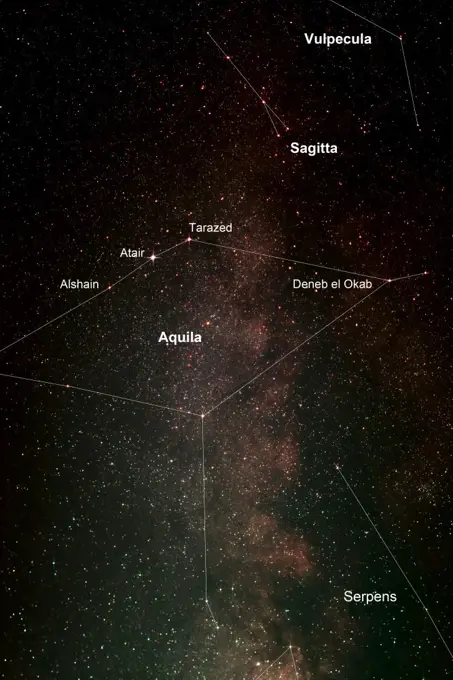
Nightsky With Aquila and Milky Way
6145-45256618
P/2013 P5 on September 10, 2013. --- This NASA Hubble Space Telescope set of images reveals a never-before-seen set of six comet-like tails radiating from a body in the asteroid belt, designated P/2013 P5. The asteroid was discovered as an unusually fuzzy-looking object with the Panoramic Survey Telescope and Rapid Response System (Pan-STARRS) survey telescope in Hawaii. The multiple tails were discovered in Hubble images taken on Sept. 10, 2013. When Hubble returned to the asteroid on Sept. 23, the asteroid's appearance had totally changed. It looked as if the entire structure had swung around. One interpretation is that the asteroid's rotation rate has been increased to the point where dust is falling off the surface and escaping into space where the pressure of sunlight sweeps out fingerlike tails. According to this theory, the asteroid's spin has been accelerated by the gentle push of sunlight. The object, estimated to be no more than 1,400 feet across, has ejected dust for at leas
6145-44831205
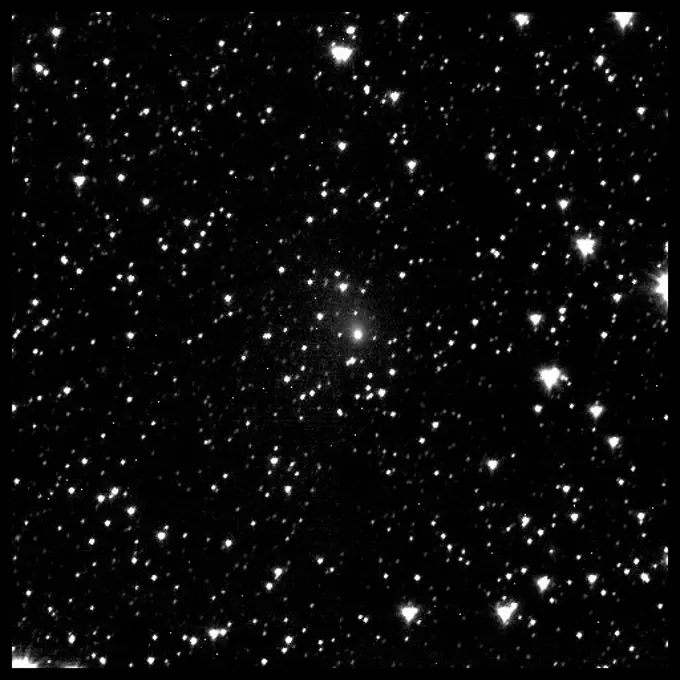
This first image of comet 103P/Hartley 2 was taken from NASA's Deep Impact spacecraft 60 days prior to the spacecraft's flyby of the comet.
1525-27022747
Astro Photo: Starfield with Cassiopeia and Milky Way
1525-27547653
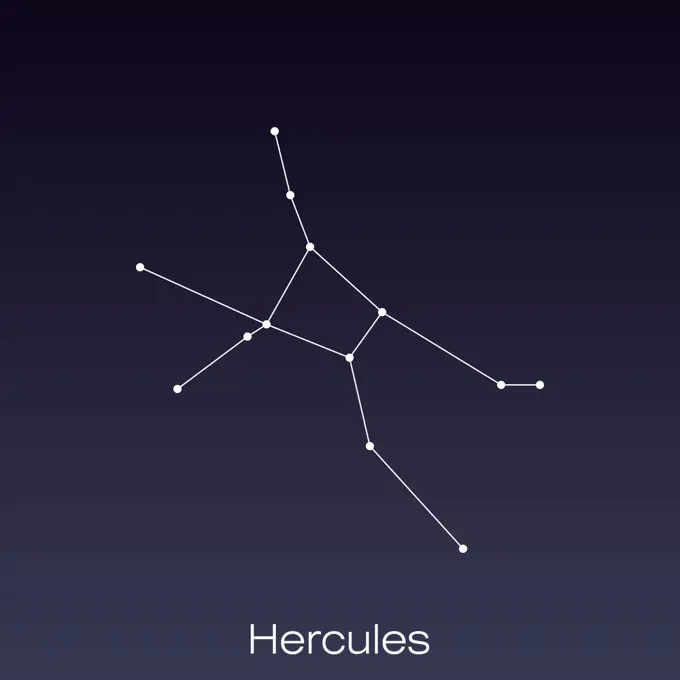
Hercules constellation as it can be seen by the naked eye.. constellation as it can be seen by the naked eye.
PREVIOUS
of 2
NEXT
2401 S. Ervay, Suite 206
Dallas, Texas 75215
United States
Get Started
Free ResearchMy BoardsMy Cart
For Creators
How To License Your ContentContributor PortalFrame of Mind
Resources
API accessPricing
Contact
+1 866 236 0087help@viewpictures.co.uk Contact form
©2026 View Pictures. All Rights Reserved. -A
This site is protected by reCAPTCHA and Google Privacy Policy and Terms of Service apply.