My Boards
View Pictures
  • My Boards
← Artworks

Greek Mythology on Vases

An assortment of ancient Greek vases showcasing mythological stories involving figures like Herakles, characterized by intricate shapes and dramatic scenes.

Storage Jar with Dionysos; Athens, Greece; about 510 B.C; Terracotta; 40.4 × 26.2 cm (15 7,8 × 10 5,16 in.)
176 assets in this story
4443-21961458
Oil Jar with Paris and Helen; Painter of the Frankfort Acorn, and Phintias; Athens, Greece; about 420 - 400 B.C; Terracotta; 18.4 × 10.6 cm (7 1,4 × 4 3,16 in.)
6145-30370962
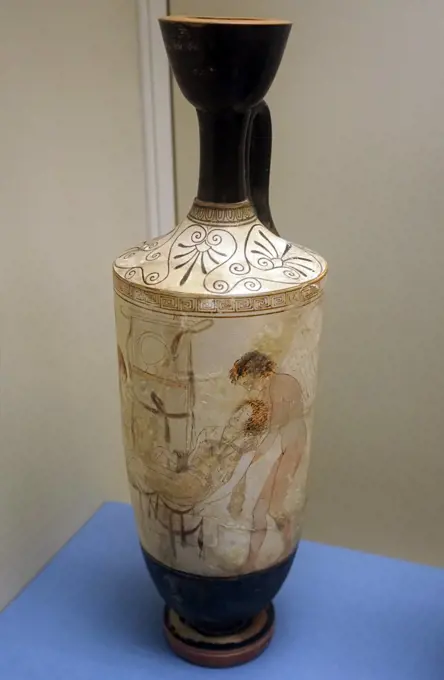
Black-figureLekythos. Artist: Phanyllis Group B, Group of the Arming Lekythoi
4409-17546797
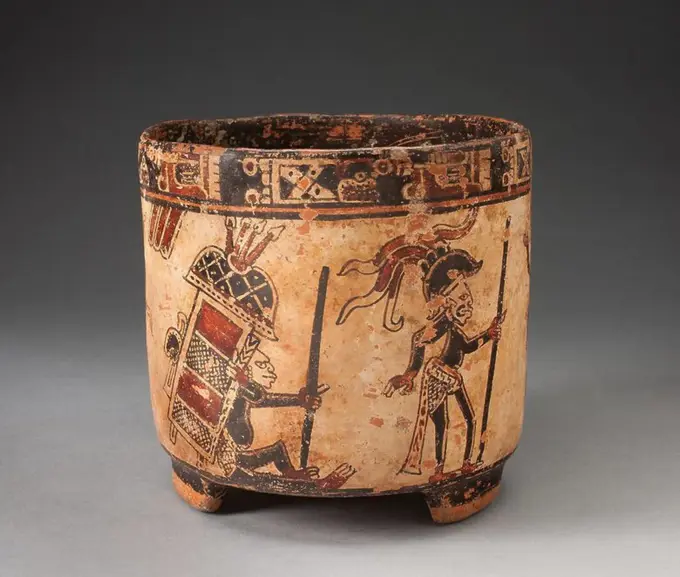
Tripod Vessel Depicting Monkey Hunters and Traders. Classic Maya; Ulúa River Valley, Honduras or Petén region, Guatemala. Date: 850 AD-950 AD. Dimensions: 17.8 x 19.1 cm (7 x 7 1/2 in.). Ceramic and pigment. Origin: Honduras. Museum: The Chicago Art Institute, Chicago, USA.
4409-64544
ARTE ANTIGUO. Zona Mediterranea. Grecia. Cerámica decorada con panteras. Pinturas negras. Utilizada con fines sacrificales. Influencia fenicia. Museo Carlsberg Glyptotek. Copenhague. Dinamarca.
4443-21195551
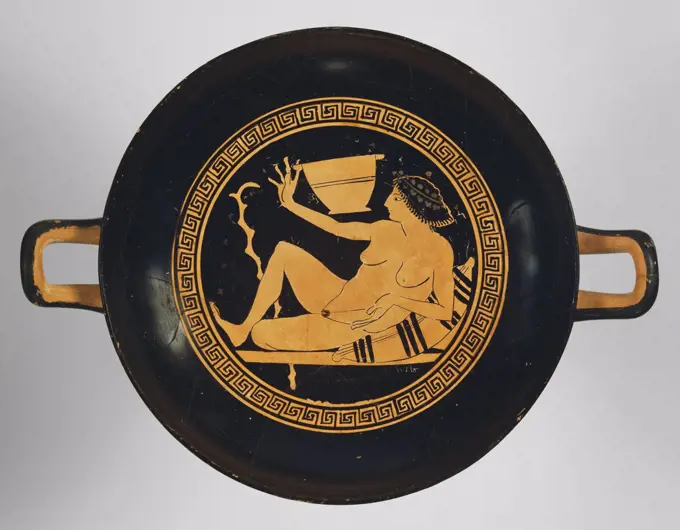
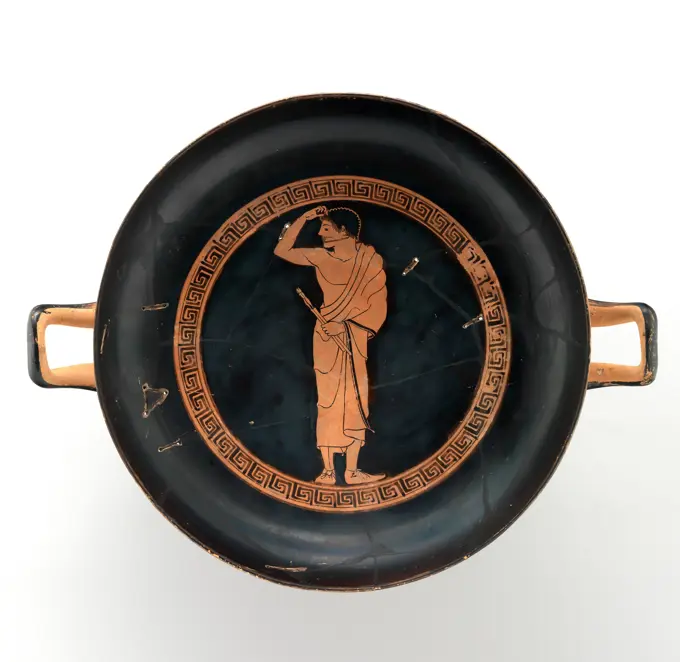
Attic Red-Figure Kylix; Attributed to Onesimos, Greek (Attic), active 500 - 480 B.C.; Athens, Greece, Europe; about 500 B.C.; Terracotta; Object: H: 8.5 x Diam.: 28 cm (3 3/8 x 11 in.)
6145-29796853
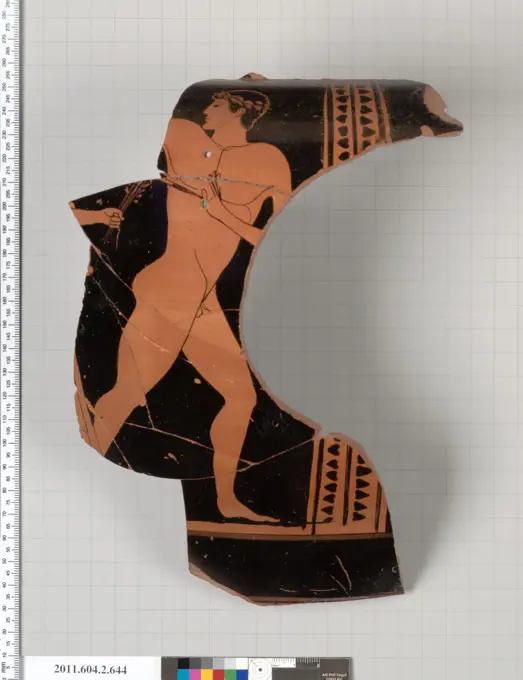
Terracotta mug ca. 460 B.C. Attributed to the Group of Philadelphia 2272 Jumper with halteres (jumping weights)Gymnastic training was an essential part of a boy's education. It was important for citizens to be in good physical condition, as they could be called upon for military service. Athletes who competed in the Panhellenic games at Olympia, Delphi, Nemea, and Isthmia, as well as those held by other cities, such as the Panathenaic games of Athens, specialized in certain events and worked intensively with professional trainers.. Terracotta mug. Greek, Attic. ca. 460 B.C.. Terracotta; red-figure. Classical. Vases
6145-44278605
Attic Red-Figure Lebes Gamikos. Unknown
4409-77944266
Ancient Athens. West Slope style kantharos decorated with torches, grapes and cornucopia. 275-260 BC. Museum of the Ancient Agora. Athens, Greece.
6176-67078373
Herakles and Stymphalian Birds, Labours of Heracles, c500 BC.  Artist: Unknown.
6145-29706650
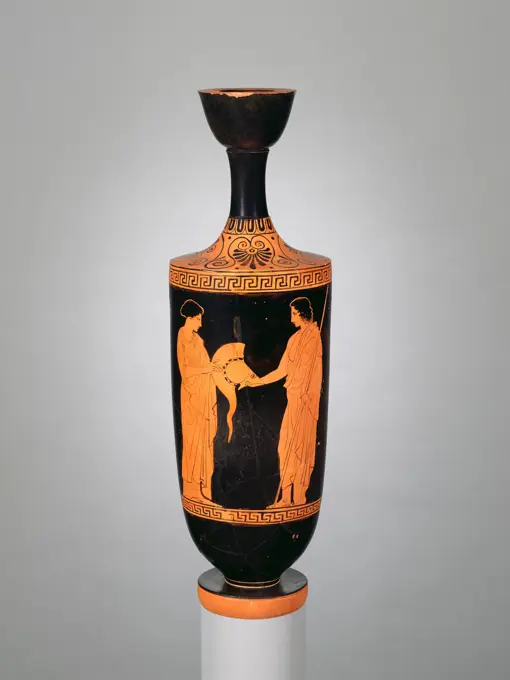
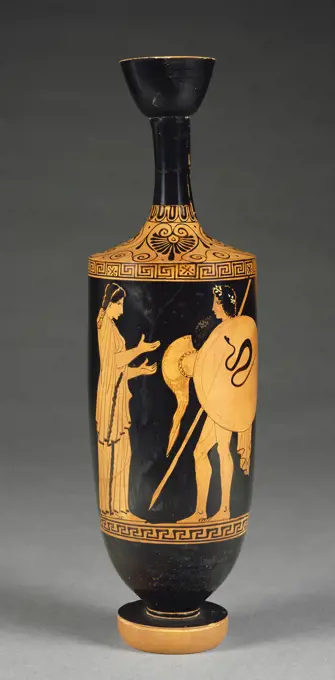
Terracotta lekythos (oil flask) ca. 440-430 B.C. Attributed to the Phiale Painter Youth armingThe sureness and fluency of the Phiale Painter's drawing is evident in this representation. The placement of the helmet within a large area of black glaze in the center of the composition effectively suggests that the warrior may not return. By contrast with many lekythoi of the second quarter of the fifth century B.C. that are entirely covered with glaze, the clay-colored shoulder with black-figure decoration presents a lighter aspect.. Terracotta lekythos (oil flask). Greek, Attic. ca. 440-430 B.C.. Terracotta; red-figure. Classical. Vases
4443-21960118
Wine Cup with Pentathletes; Attributed to Carpenter Painter (Greek (Attic), active 515 - 500 B.C.); Athens, Greece; 510 - 500 B.C; Terracotta; 11 × 38.1 × 33.5 cm (4 5,16 × 15 × 13 3,16 in.)
6145-59129447
Campania Caserta Capua Museo Campano025. Hutzel, Max 1960-1990 Medieval: Byzantine architectural fragments; parchment fragments with miniatures (12th century) from Montecassino; painted wooden crucifix (13th century); Carolingian crucifixes; Bishop's miter (11th century) of gold and silver damask; fresco (13th century). Post-medieval: Architecture (15th century). Formerly the Palazzo Antignano. Unusual Catalan/Moorish-style portal; Paintings on panel and canvas (15th-18th centuries); marble intarsia (16th century); marble sculpture: busts of Christ and Mary (17th century); sculpture of saints in marble and in wood (15th century); painted and gilded sculpture in wood; marble grave sculpture (16th century); sarcophagus with allegorical carvings; gold reliquary "Rosa d'Oro"; crucifix made of elephant tusk Specific Location: Pianterreno Antiquities: Italic sculpture (seated women holding babies); inscription. Photo campaign #1: 533 photos. Roman relief and sculpture; cinerary urns; Greek a
4443-21960030
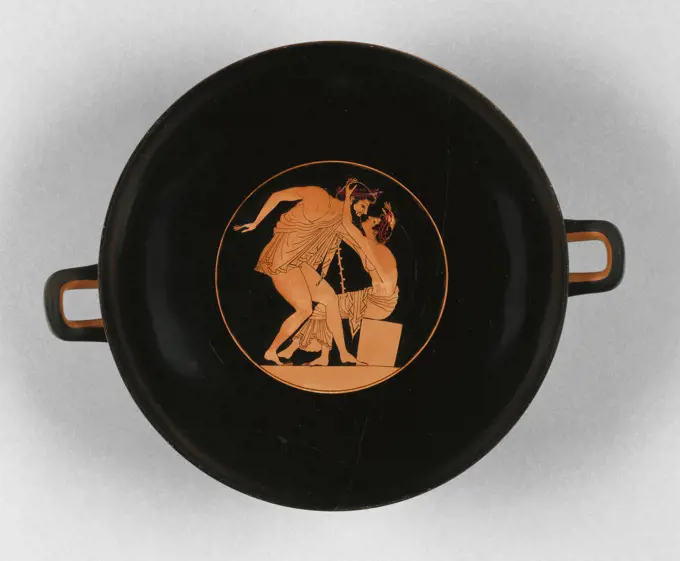
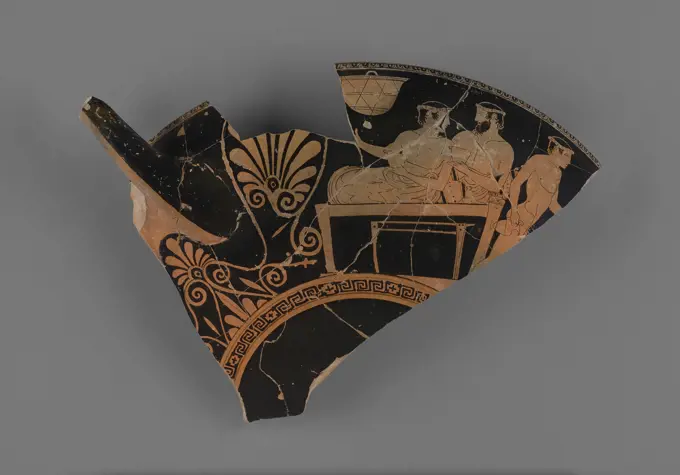
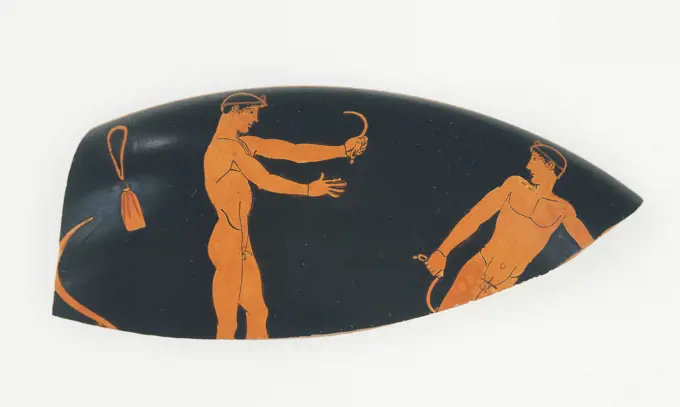
Attic Red-Figure Kylix Fragment; Attributed to Euaion Painter (Greek (Attic), active about 460 - 440 B.C.); Athens, Greece; about 450 B.C; Terracotta; 20.4 × 29 cm (8 1,16 × 11 7,16 in.)
6145-30178110
Stamnos (Mixing Jar) 480 BCE-470 BCE Athens. On the front of this vase are three women. The woman in the centre is spinning. She wears a simple earring (as do the other women) and a decorated peplos under her himation; there is a band round her head, as her long hair flows over her shoulders. Partly behind her and to the left is a chair (klismos). On the right is a heron facing to the right. A woman on the right holds out a small seed for the hero,n which lifts its head slightly. On the left, a woman holds out a mirror in her left hand and a flower in her left. The flanking women wear chitons and himatia; that on the right has similar hair to the central figure, while the woman on the left wears a sakkos. Written in the field in added white kale (orthograde) and kale (retrograde).On the other side of the vase is a man and two women. On the left, a woman in chiton and himation moves away to the left, but turns her head back to the right. She seems to hold a section of her himation up in
4409-17299223
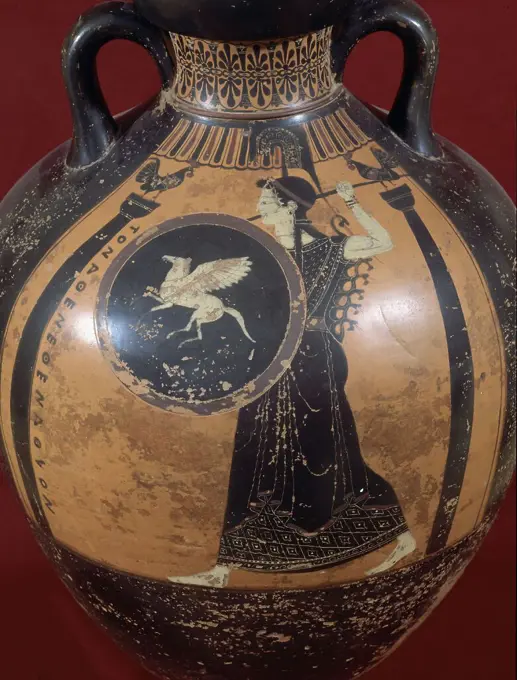
ANFORA GRIEGA PANATENAICA (ATICA) ATENEA - 480 AC. Location: MUSEO ARQUEOLOGICO NACIONAL-COLECCION. MADRID. SPAIN. PEGASO. ATENEA PARTHENOS.
6176-66095370
Shown here are vases dating to mid to end of sixth century (500s BC) and they reflect the new style of red-figured vases. The red-figure techniquewas invented around 530 B.C., quite possibly by the potter Andokides and his workshop. It gradually replaced the black-figure technique as innovators recognized the possibilities that came with drawing forms, rather than laboriously delineating them with incisions.
6145-29761432
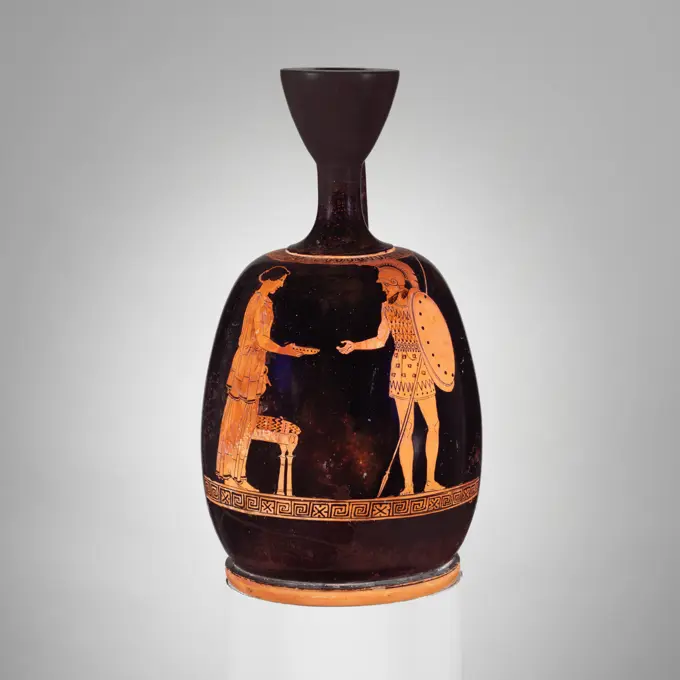
Terracotta squat lekythos (oil flask) ca. 440 B.C. Attributed to the Achilles Painter Warrior departingThe squat lekythos became a significant shape favored by the best Attic painters of the second half of the fifth century B.C., as the pieces in this gallery attest. The shape seems to have been used for red-figure decoration as the standard lekythos was increasingly decorated in the white-ground techniquea development in which the Achilles Painter played a major role. This example is larger than the usual squat lekythos. The potting and decoration are especially fine.. Terracotta squat lekythos (oil flask). Greek, Attic. ca. 440 B.C.. Terracotta; red-figure. Classical. Vases
4220-21826504
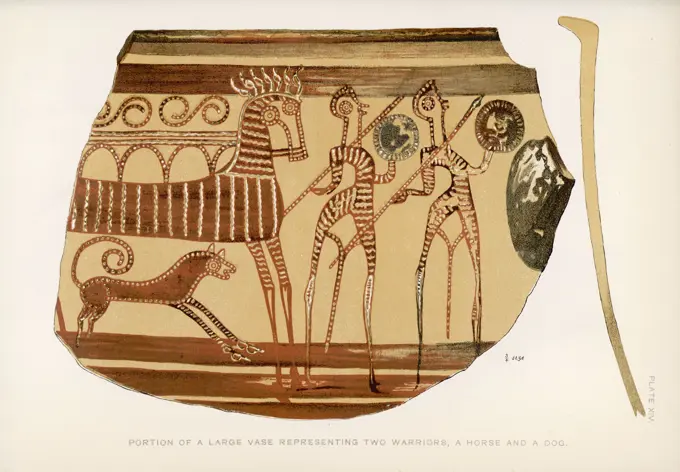
The design on a Greek vase, depicting two warriors with a horse and a dog.  It was found in Tiryns, an archaeological site in Mycenae.       Date: BCE
6145-29149968
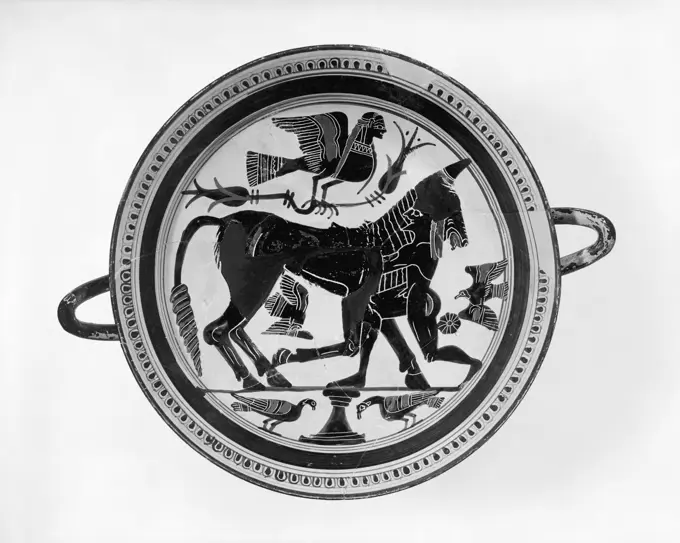
Terracotta kylix (drinking cup) ca. 550 B.C. In the manner of Arkesilas Painter One of the twelve labors that Herakles, greatest of the Greek heroes, had to perform for his master, King Eurystheus, was the capture of a wild Cretan bull. Here, the hero rushes at the beast, while a siren perches above on a branch.. Terracotta kylix (drinking cup). Greek, Laconian. ca. 550 B.C.. Terracotta; black-figure. Archaic. Vases
1746-19669916
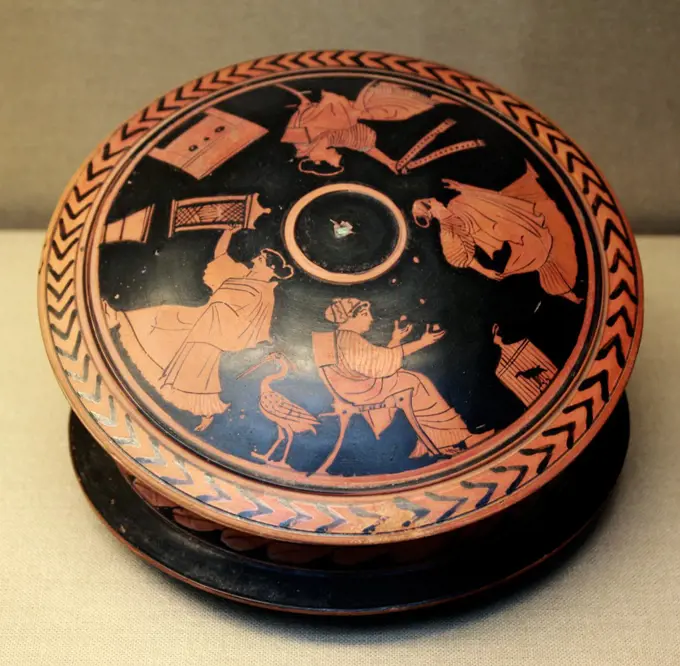
Greek 'pyxis' or trinket-box adorned with red figures. Showing a woman holding a 'sprang' frame. Made in Athens around 470 BC.
4443-21946342
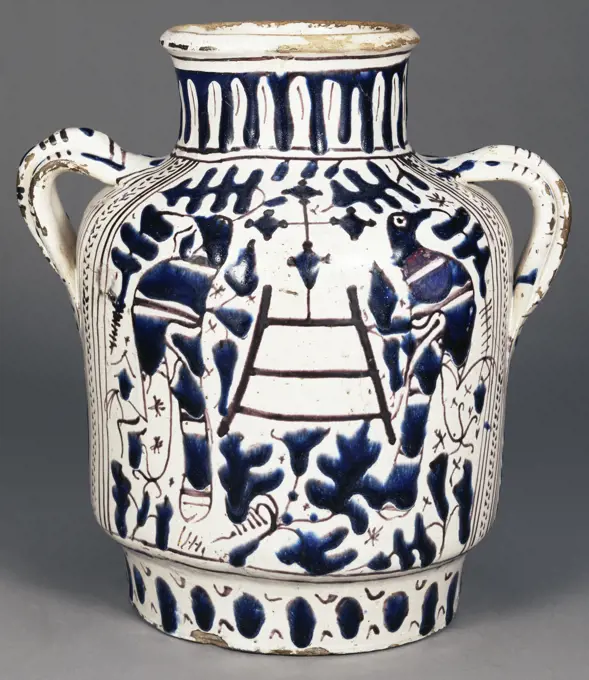
Relief-Blue Jar with Harpies and Birds; Probably the Workshop of Piero di Mazzeo (Italian, born 1377,1387); Florence or possibly Siena, Tuscany, Italy; about 1420 - 1440; Tin-glazed earthenware; 31.1 × 14.3 × 29.8 cm (12 1,4 × 5 5,8 × 11 3,4 in.)
1788-15918
Black-figure pottery, Attic hydria, detail with women drawing water from fountain
4443-21961331
Attic Red-Figure Cup Fragment; Follower of Makron (Greek (Attic), active about 490 - 480 B.C.); Athens, Greece; about 460 - 450 B.C; Terracotta; 13.2 cm (5 3,16 in.)
6145-29718211
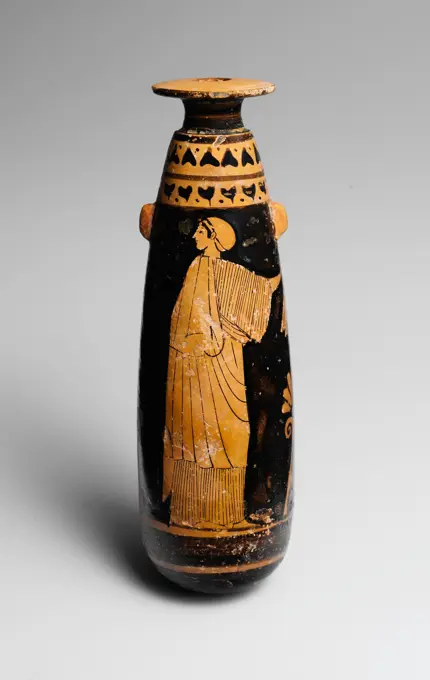
Terracotta alabastron (perfume vase) ca. 480 B.C. Attributed to the Painter of Palermo 1162 Woman and Nike at altar, each with phiale.Offering libations seems to have been an important role for women. Here a Nike (personification of victory), who looks very much like an Athenian lady with wings, and a mortal counterpart flank an altar. Each holds a phiale (libation bowl). It is likely that the sacrifice is for the successful return of a warrior or athlete.. Terracotta alabastron (perfume vase). Greek, Attic. ca. 480 B.C.. Terracotta; red-figure. Classical. Vases
7125-70425931
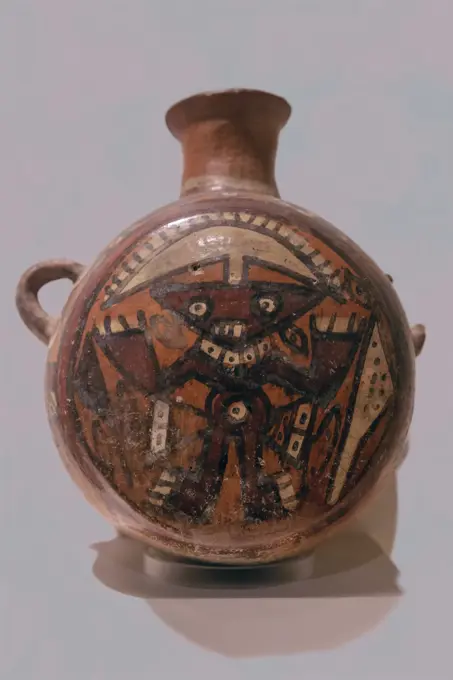
Pre-Colombian ceramic art in Larco Museum, Lima, Peru.
6145-29796175
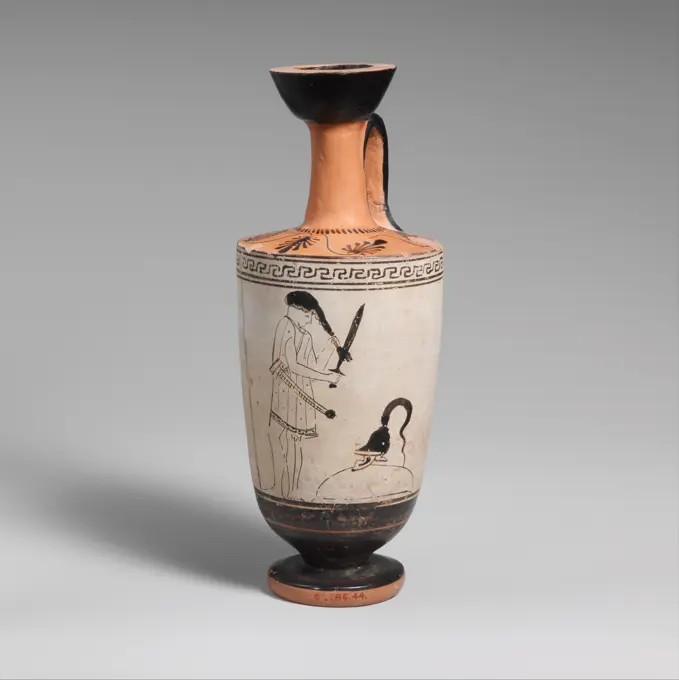
Terracotta lekythos (oil flask) ca. 470-460 B.C. Attributed to the Painter of the Yale Lekythos Young warrior cutting his hair with swordThere were several important ceremonies in which it was customary for boys and girls to sacrifice a lock of their hair, but this image of a young warrior cutting his hair before battle may reflect instead a scene in The Seven against Thebes, a tragedy by Aeschylus produced in Athens about 470 B.C. The seven heroes knew that only one of them would survive battle. Each cut a lock of his hair and tied it to the chariot that would carry home the survivor. This lekythos was probably made as a tomb gift. It may represent one of the seven heroes, or it may reflect the heroic death of an Athenian youth.. Terracotta lekythos (oil flask) 247924
6145-29192646
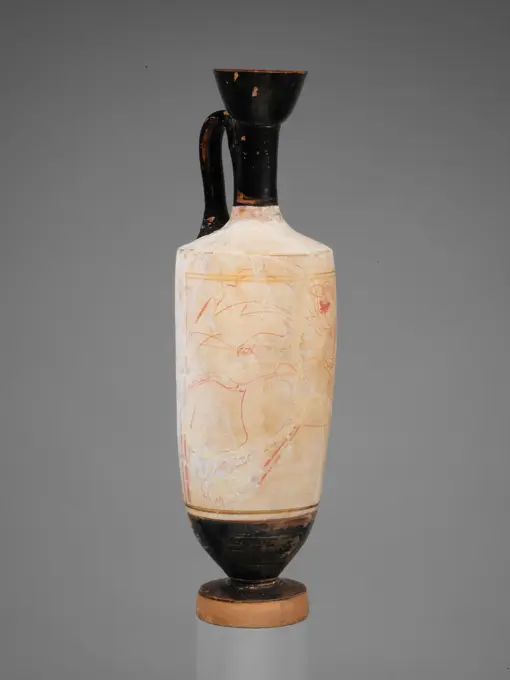
Terracotta lekythos (oil flask) ca. 430-420 B.C. Attributed to the Reed Painter Horseman and tombHorsemen and chariots have a long tradition in Greek funerary iconography. In this very late manifestation, the rapidity but surety of execution heightens the question of whether the scene is to be understood literally or whether the horseman is a representation of the deceased.. Terracotta lekythos (oil flask). Greek, Attic. ca. 430-420 B.C.. Terracotta; red-figure, white-ground. Classical. Vases
7155-70378874
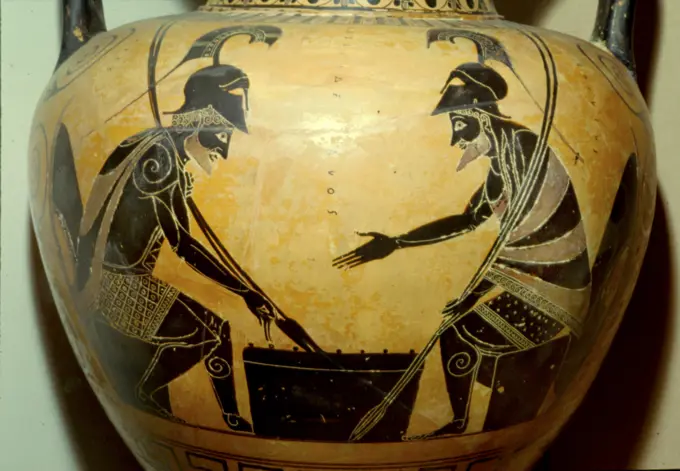
Achilles and Ajax play board game. Vase painting. 520 BC. GREECE.
6145-29706522
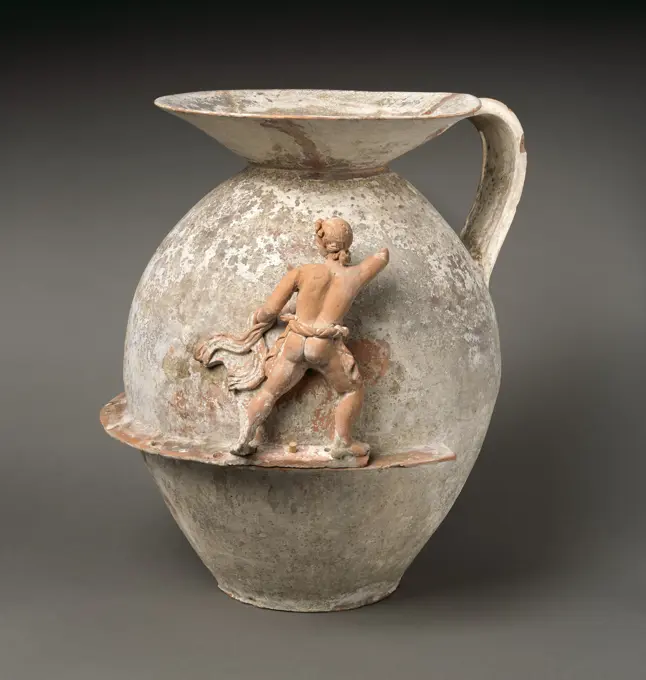
Terracotta funnel-jar late 4th-early 3rd century B.C. Greek, South Italian, Apulian, Canosan In its shape and decoration, this piece differs significantly from the vases of Greek derivation with which it was found. With its rotund, closed body and oblique neck, it is related to the indigenous Italic, Daunian form exhibited in the neighboring gallery of South Italian art. Instead of painted decoration, mold-made figures were fastened with pegs to the flange that serves as a ground-line. The surviving example belongs to a representation of the death of the Niobids. The reliefs shown close by were acquired with the vase but do not belong to it. This work was found in the same burial as the loutrophoroi 06.1021.245 and 06.1021.249; the pyxis 06.1021.253a, b; and the two-handled vase 06.1021.246a, b.. Terracotta funnel-jar. Greek, South Italian, Apulian, Canosan. late 4th-early 3rd century B.C.. Terracotta. Early Hellenistic. Vases
6145-29162880
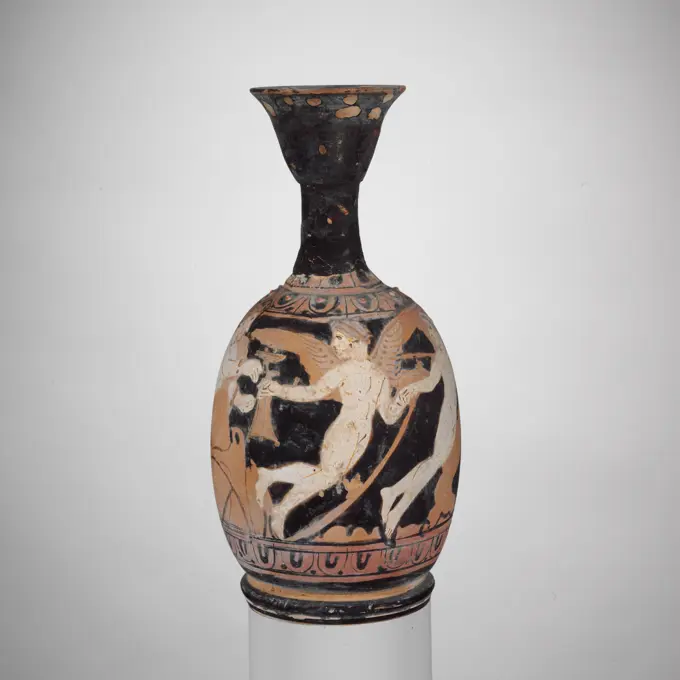
Terracotta squat lekythos (oil jar) early 4th century B.C. Greek, Attic Aphrodite in a chariot drawn over the sea by two Erotes.. Terracotta squat lekythos (oil jar) 247363
4435-4839
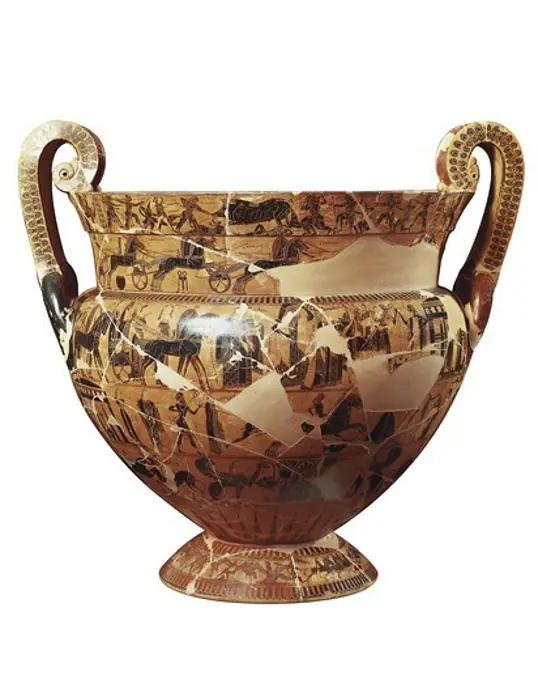
Franois Vase. 570 BC. Black-figure Attic volute krater, made by the potter Ergotimos and the painter Klitias. Archaic Greek art. Ceramics. ITALY. TUSCANY. Florence. National Museum of Archaeology. Proc: ITALY. TUSCANY. SIENA. Chiusi.
4409-42467
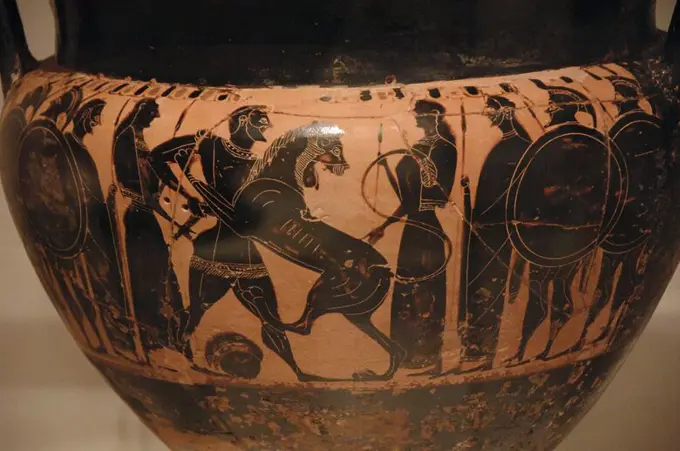
Krater painted with black figures representing one of the twelve labors of Hercules. First job: kill the Nemean lion and take their skin. It comes from Thespiai. Painter of Louvre. Dated between 550-540 B.C. National Archaeological Museum. Athens. Greece.
6145-29229578
Terracotta kylix (drinking cup) 520-500 B.C. Greek, Attic Interior, in black figure, horse and rider wearing chlamys and petasos, holding spear. Terracotta kylix (drinking cup). Greek, Attic. 520-500 B.C.. Terracotta; bilingual. Archaic. Vases
6145-29167284
Terracotta kylix (drinking cup) ca. 490 B.C. Attributed to the Antiphon Painter Interior, youth wearing phorbeia (lip band) and holding double flute (aulos); inscribed the boy is fairExterior, youthsThe scenes here depict young Athenian men engaged in pursuits characteristic of their age and status. Music was an integral part of education, with the flute and the lyre as the primary instruments. The youth on the interior must just have stopped playing because he still wears the phorbeia. His companions on the outside converse and occupy themselves with a hare.. Terracotta kylix (drinking cup) 246136
6145-29202291
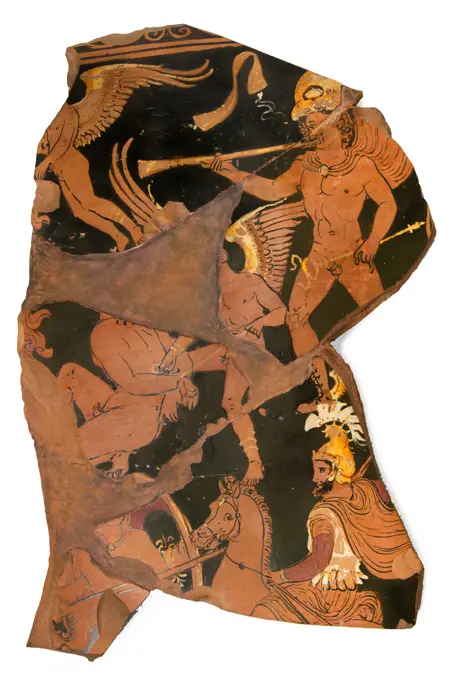
Fragment of a terracotta volute-krater (bowl for mixing wine and water) last quarter of 4th century B.C. Attributed to the Baltimore Painter Upper body of a warrior on horsebackWhile the Baltimore Painter's large vases sometimes appear overblown, a fragment such as this demonstrates his sure use of line and color.The piece is augmented by 19.192.81.10, .11, .19.. Fragment of a terracotta volute-krater (bowl for mixing wine and water). Greek, South Italian, Apulian. last quarter of 4th century B.C.. Terracotta; red-figure. Late Classical. Vases
4443-21195393
Lakonian Black-Figure Kylix; Attributed to the Hunt Painter, Greek (Lakonian), active 565 - 530 B.C.; Sparta, Greece, Lakonia, Europe; about 530 B.C.; Terracotta; Object: H: 13 to 13.5 x Diam.: 19.5 to 19.9 cm (5 1/8 to 5 5/16 x 7 11/16 to 7 13/16 in.)
6145-29730265
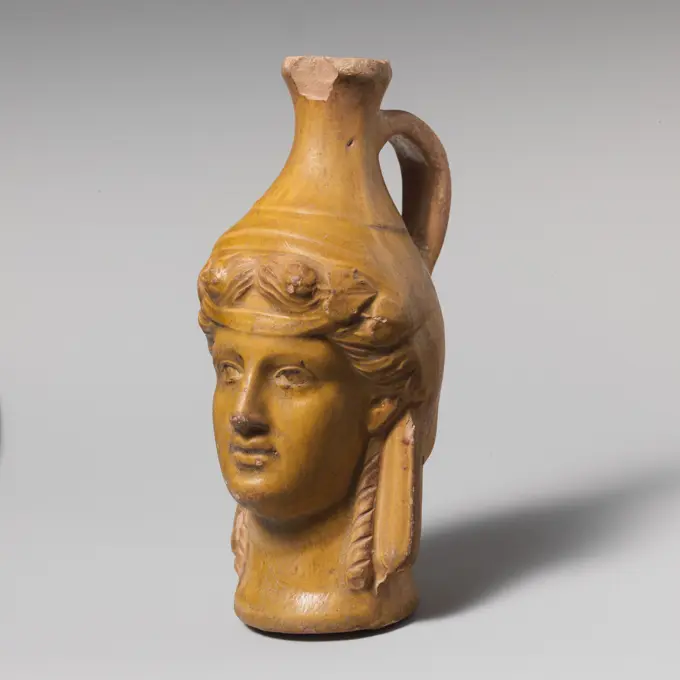
Terracotta jug in the form of Dionysos 1st century B.C. Greek or Roman Vases modeled into human or animal form were made throughout the Hellenistic period with head-shaped flasks and beakers being especially popular. This example is unusual because of its fine yellow glaze and the detailed features of the head, which represents the god Dionysus.. Terracotta jug in the form of Dionysos 254484 Greek or Roman, Terracotta jug in the form of Dionysos, 1st century B.C., Terracotta, h. 5 7/8 in. (14.9 cm). The Metropolitan Museum of Art, New York. Fletcher Fund, 1942 (42.11.46)
4409-17419918
Terracotta pyxis (box). Culture: Greek, Attic. Dimensions: H.: 3 1/4 in. (8.3 cm)Diam.: 4 in. (10.2 cm). Date: ca. 420-410 B.C..Aphrodite attended by ladiesThe representation here shows the typical Athenian lady surrounded by attendants holding caskets and vases for oil. Its significance is altered by the inscripitions, which identify Aphrodite as the seated figure and her companions as Peitho (Persuasion), Hygeia (Health), Eudaimonia (Good Fortune), Eukleia (Good Repute), Eunomia (Good Order), Paideia (Culture). The pyxis was undoubtedly a wedding gift. Museum: Metropolitan Museum of Art, New York, USA.
6145-44301695
Attic Black-Figure Pelike. Attributed to Theseus Painter (Greek (Attic), active about 510 - about 490 B.C.)
6145-59156181
Lazio Roma Cerveteri Museo Nazionale Cerite2. Hutzel, Max 1960-1990 Antiquities: General views of museum interior and collection of ancient funerary items. Most prints are of terracotta vessels. Some headless statues and a detail of two heads and an antefix. (9th to 1st century B.C.) German-born photographer and scholar Max Hutzel (1911-1988) photographed in Italy from the early 1960s until his death. The result of this project, referred to by Hutzel as Foto Arte Minore, is thorough documentation of art historical development in Italy up to the 18th century, including objects of the Etruscans and the Romans, as well as early Medieval, Romanesque, Gothic, Renaissance and Baroque monuments. Images are organized by geographic region in Italy, then by province, city, site complex and monument.
6145-59195570
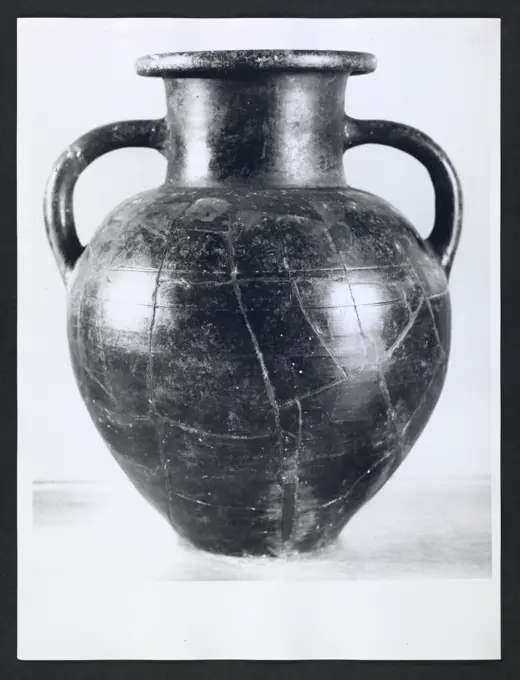
Tuscany Livorno Castiglioncello Archaeological Museum. Hutzel, Max 1960-1990 Antiquities: Photos of a terracotta vase with details. General Notes: No Hutzel photo campaign notes. Negatives are missing. German-born photographer and scholar Max Hutzel (1911-1988) photographed in Italy from the early 1960s until his death. The result of this project, referred to by Hutzel as Foto Arte Minore, is thorough documentation of art historical development in Italy up to the 18th century, including objects of the Etruscans and the Romans, as well as early Medieval, Romanesque, Gothic, Renaissance and Baroque monuments. Images are organized by geographic region in Italy, then by province, city, site complex and monument.
6145-29725934
Plate ca. 500 B.C. Greek, Attic Herakles with bow, club, and sword.. Plate. Greek, Attic. ca. 500 B.C.. Terracotta; black-figure. Archaic. Vases
6145-48829033
Attic Red-Figure Cup Fragment. Follower of Makron (Greek (Attic), active about 490 - 480 B.C.)
6145-29230916
Terracotta fragment of a column-krater (bowl for mixing wine and water) second quarter of the 5th century B.C. Greek, Attic At the shoulder, a band of tongues; left hand, holding ears of wheat and part of lower drapery of a figure to right; wreathed athlete looking over his right shoulder, holding his javelin in his right hand, with his left arm bent and his hand below his pectoral muscles; the panel is comprised of ivy; below the panel, a red line above the rays (only the tip of one ray is preserved); two holes from an ancient repair is visible on the upper torso of the wreathed athlete. Terracotta fragment of a column-krater (bowl for mixing wine and water). Greek, Attic. second quarter of the 5th century B.C.. Terracotta; red-figure. Classical. Vases
4435-4893
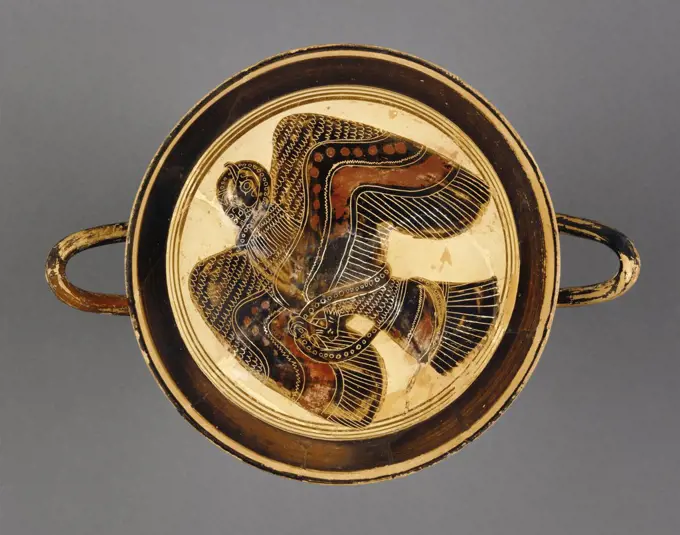
Black-figure amphora. 5th c. BC. Depiction of a harpy. Classical Greek art. Ceramics.
4443-21957488
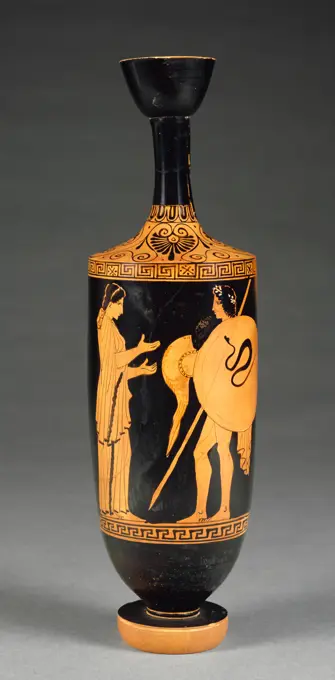
Oil Jar with a Departing Warrior; Phiale Painter (Greek (Attic), active about 450 - 425 B.C.); Athens, Greece; about 450 B.C; Terracotta; 34.5 cm (13 9,16 in.)
6145-29283270
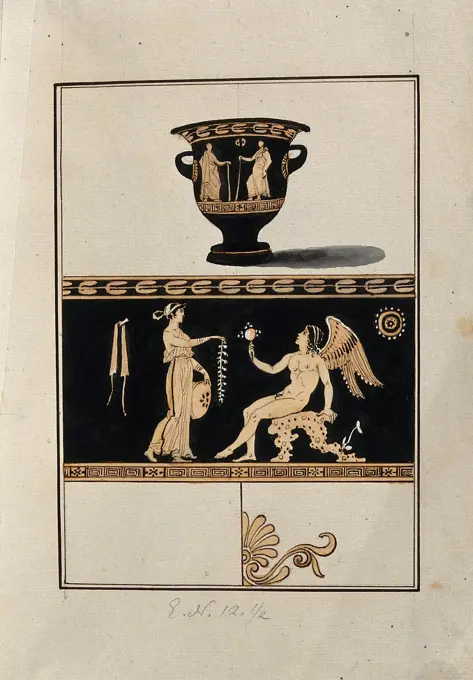
Above, red-figured Greek wine-mixing bowl (bell-krater); below, detail of the decoration showing a seated winged figure and a woman holding various objects. Watercolour by A. Dahlstein, 1760/1780 ().
6145-29726646
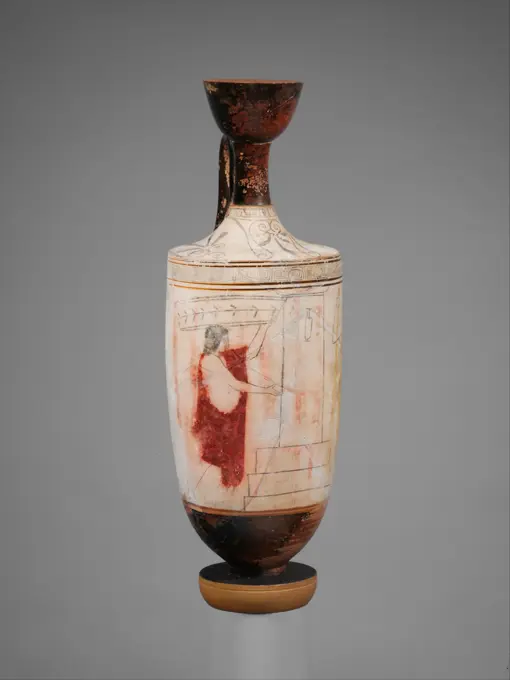
Terracotta lekythos (perfume flask) ca. 460 B.C. Attributed to the Sabouroff Painter Woman and youth at a tombThere are many aspects of these funerary representations that are not clear, such as the relationship of the two figures here. On the other hand, they illuminate many practical details concerning objects of daily life and how they were handled. Note the young woman carrying the large basket on her head.. Terracotta lekythos (perfume flask) 254669 : Attributed to the Sabouroff Painter, Terracotta lekythos (perfume flask), ca. 460 B.C., Terracotta, H. 13 3/8 in. (34 cm). The Metropolitan Museum of Art, New York. Rogers Fund, 1951 (51.11.4)
6145-29117584
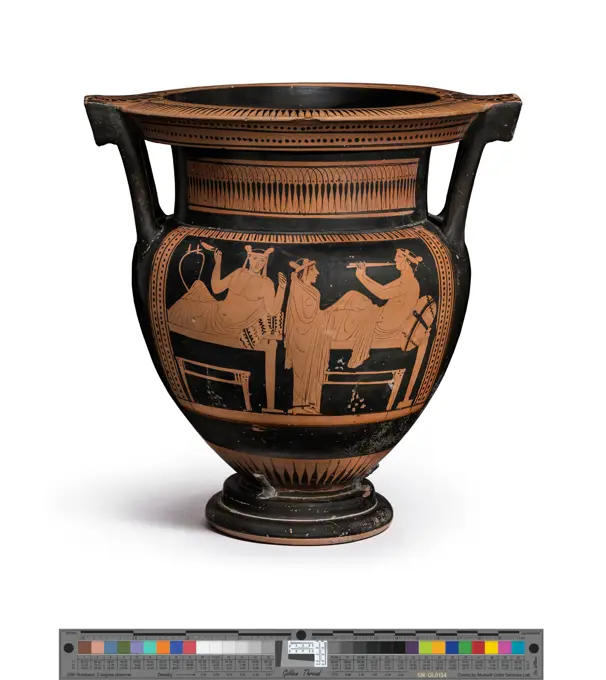
Red-Figure Column-Krater with (A) Symposium and (B) Three Youths
6145-59135703
Campania Salerno Nocera Inferiore Museo dell'Agro Nocerino00. Hutzel, Max German-born photographer and scholar Max Hutzel (1911-1988) photographed in Italy from the early 1960s until his death. The result of this project, referred to by Hutzel as Foto Arte Minore, is thorough documentation of art historical development in Italy up to the 18th century, including objects of the Etruscans and the Romans, as well as early Medieval, Romanesque, Gothic, Renaissance and Baroque monuments. Images are organized by geographic region in Italy, then by province, city, site complex and monument.
6145-30155005
Bowl Depicting a Bird with Outstretched Wings 1300-1400 Arizona. From the 13th century through the start of the 17th, new polychrome ceramic traditions developed in the Cibola region of western New Mexico and east-central Arizona. Although each ceramic style was distinct, they were closely related in that they all were painted using black, white and red pigments and feature a single, bold motif. A large abstracted bird with outstretched wings fills the interior of this Four Mile Polychrome bowl.. Ceramic and pigment . Cibola
4409-154141
VASIJA DE TALAVERA - SIGLO XVII - CAZADORES. Location: MUSEO ARQUEOLOGICO NACIONAL-COLECCION. MADRID. SPAIN.
6145-52505745
Style attique a figures rouges Attic red-figure vase still image. 1926. The Miriam and Ira D. Wallach Division of Art, Prints and Photographs: Picture Collection. Pottery , Greece, Pottery, Greek, Antiquities, Mythology, Greek, Dionysus (Greek deity), Vases, Greek, Vases
6145-48830509
Attic Red-Figure Lekythos. Phiale Painter (Greek (Attic), active about 450 - 425 B.C.)
1746-21125605
Thanatos and Hypnos carry a dead warrior, after having died in battle. Dated 5th Century BC
1746-21112140
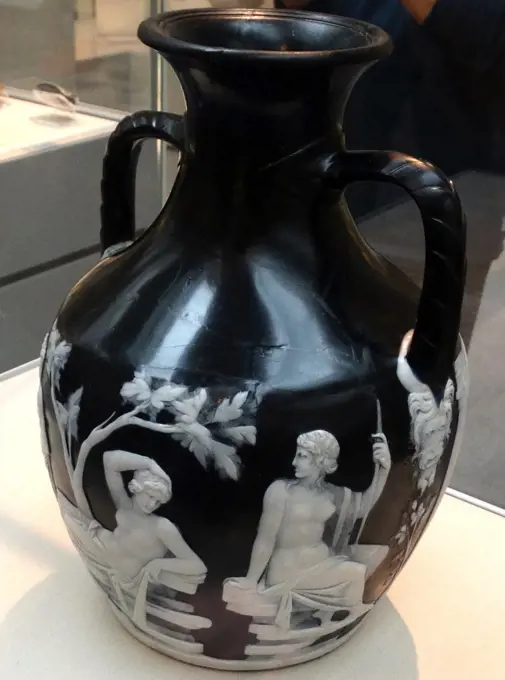
The Portland Vase. Cameo glass, probably made in Rome about 15 BC - AD 25. The Portland Vase is one of the finest surviving pieces of Roman glass, and is named after the Dukes of Portland who owned it from 1785 to 1945.
4409-17423136
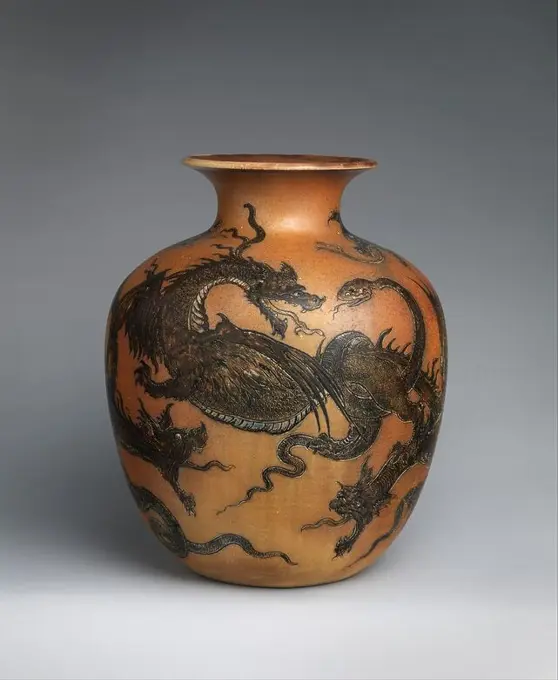
Pot with dragons. Culture: British, Southall, London. Dimensions: Overall (confirmed): 14 5/16 × 11 7/8 × 11 7/8 in. (36.4 × 30.2 × 30.2 cm). Maker: R. W. Martin and Brothers (British, 1873-1915). Date: 1894.Determined that pottery vessels should be regarded as true works of art, avant-garde ceramicists in France in the last decades of the nineteenth century transformed their craft into an intellectual and emotional endeavor. The pioneers of this revival were Jean Carriès, Ernest Chaplet, Théodore Deck, and Auguste Delaherche. These revolutionary artist-potters embraced artisanal traditions while pursuing lost techniques through exhaustive experimentation. Reacting to what they viewed as an excessive and improper use of ornament, they celebrated the simplicity and sincerity of their medium, following the tenets of the Art Nouveau style taking place in Europe. Based on the principles of the British Arts and Crafts movement, Art Nouveau artists sought to reform the decorative arts by em
1746-19669551
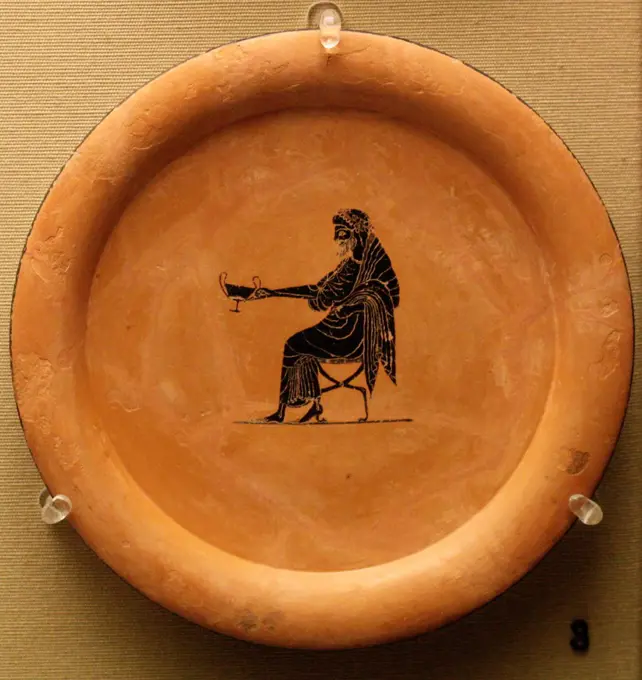
Black-figured plate: Dionysus, god of wine, seated holding out a drinking-cup. Made in Athens about 320-500BC attributed to the painter Psiax
6145-29126407
Cylinder Vessel with Palace Scene
6145-52335417
Glasgefäß.. Prints. 1912. The Miriam and Ira D. Wallach Division of Art, Prints and Photographs: Art & Architecture Collection
6145-29735927
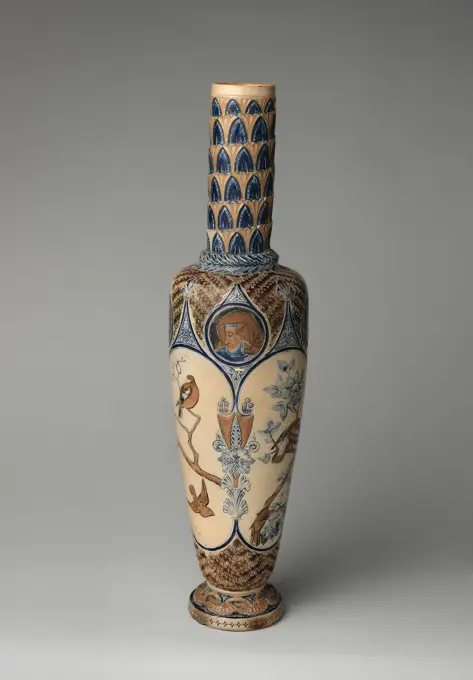
Vase with birds and portrait 1876 R. W. Martin and Brothers British Determined that pottery vessels should be regarded as true works of art, avant-garde ceramicists in France in the last decades of the nineteenth century transformed their craft into an intellectual and emotional endeavor. The pioneers of this revival were Jean Carriès, Ernest Chaplet, Théodore Deck, and Auguste Delaherche. These revolutionary artist-potters embraced artisanal traditions while pursuing lost techniques through exhaustive experimentation. Reacting to what they viewed as an excessive and improper use of ornament, they celebrated the simplicity and sincerity of their medium, following the tenets of the Art Nouveau style taking place in Europe. Based on the principles of the British Arts and Crafts movement, Art Nouveau artists sought to reform the decorative arts by emphasizing uniqueness and a return to craftsmanship. Artist-potters found inspiration in Asian ceramics, particularly Japanese stoneware (a ha
6145-44300099
Attic Red-Figure Cup Fragment. Attributed to the Kleomelos Painter (Greek (Attic))
6145-29193169
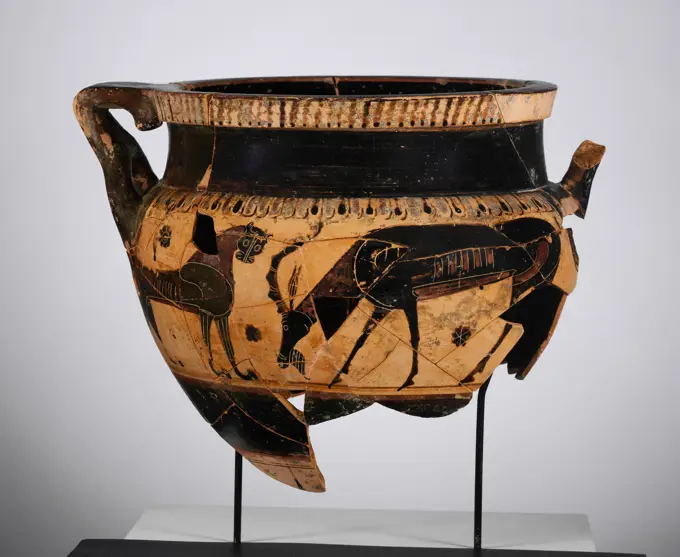
Terracotta krater (bowl for mixing wine and water) of Chalcidian shape ca. 580-550 B.C. Greek, Corinthian Obverse, swan between griffin birdsReverse, panther facing goatThe vase is of particular interest for its handles, identified as being of Chalcidian type. This is the earliest preserved example in Corinthian pottery and is roughly contemporary with the earliest Attic example, attributed to Sophilos and exhibited on the main floor in the Belfer Court (1977.11.2).. Terracotta krater (bowl for mixing wine and water) of Chalcidian shape 255650
4409-17385922
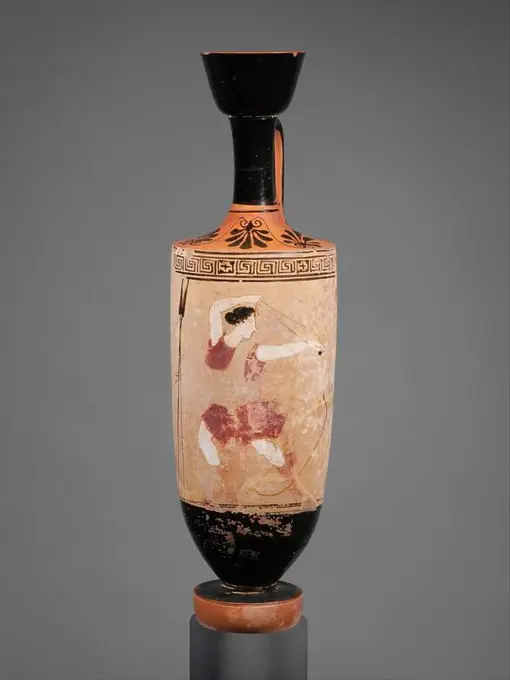
Terracotta lekythos (oil flask). Culture: Greek, Attic. Dimensions: H. 12 7/8 in. (32.7 cm). Date: ca. 440 B.C..Amazon using a slingshotThe Klügmann Painter is distinguished from his contemporaries by his depictions of mythological figures and scenes from daily life rather than funerary subjects. Museum: Metropolitan Museum of Art, New York, USA.
6145-29174674
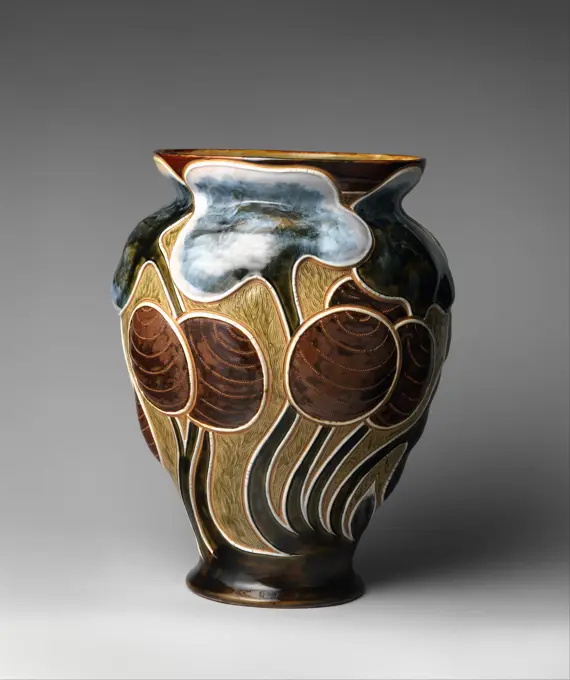
Vase ca. 1895 Doulton Manufactory British Determined that pottery vessels should be regarded as true works of art, avant-garde ceramicists in France in the last decades of the nineteenth century transformed their craft into an intellectual and emotional endeavor. The pioneers of this revival were Jean Carriès, Ernest Chaplet, Théodore Deck, and Auguste Delaherche. These revolutionary artist-potters embraced artisanal traditions while pursuing lost techniques through exhaustive experimentation. Reacting to what they viewed as an excessive and improper use of ornament, they celebrated the simplicity and sincerity of their medium, following the tenets of the Art Nouveau style taking place in Europe. Based on the principles of the British Arts and Crafts movement, Art Nouveau artists sought to reform the decorative arts by emphasizing uniqueness and a return to craftsmanship. Artist-potters found inspiration in Asian ceramics, particularly Japanese stoneware (a hard, dense type of pottery)
4409-6854
BACI-GRAN DE MANISES S XV-SERIE FLORES DE PUNTO-DECORADO CON PAJARO. Location: MUSEO DE CERAMICA-CERAMICA VALENCIANA. Barcelona. SPAIN.
6145-30177802
Plate Depicting Hummingbird in Interior, Broken and Partially Repaired 180 BCE-500 CE Peruvian South Coast. Ceramic and pigment . Nazca
6145-59196306
Tuscany Siena Montalcino Museo Civico9. Hutzel, Max 1960-1990 Medieval: Entire manuscript. Manuscripts. Post-medieval: Sculpture and ceramics from local workshops (2nd half 12th century; Sienese maiolica; 14th century weapons German-born photographer and scholar Max Hutzel (1911-1988) photographed in Italy from the early 1960s until his death. The result of this project, referred to by Hutzel as Foto Arte Minore, is thorough documentation of art historical development in Italy up to the 18th century, including objects of the Etruscans and the Romans, as well as early Medieval, Romanesque, Gothic, Renaissance and Baroque monuments. Images are organized by geographic region in Italy, then by province, city, site complex and monument.
1746-19984914
The Portland Vase. Cameo glass, probably made in Rome about 15 BC - AD 25. The Portland Vase is one of the finest surviving pieces of Roman glass, and is named after the Dukes of Portland who owned it from 1785 to 1945.
1746-19669548
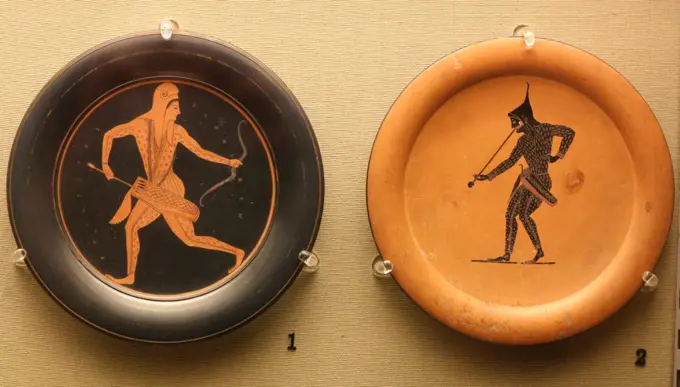
On the right: Black-figured plate: an archer blowing a trumpet. Made in Athens about 520-500 BC; attributed to the painter Psiax. On the left: Red-figured plate, with an archer. Made in Athens about 520-500 BC; signed by Epikleitos as painter
4409-17413717
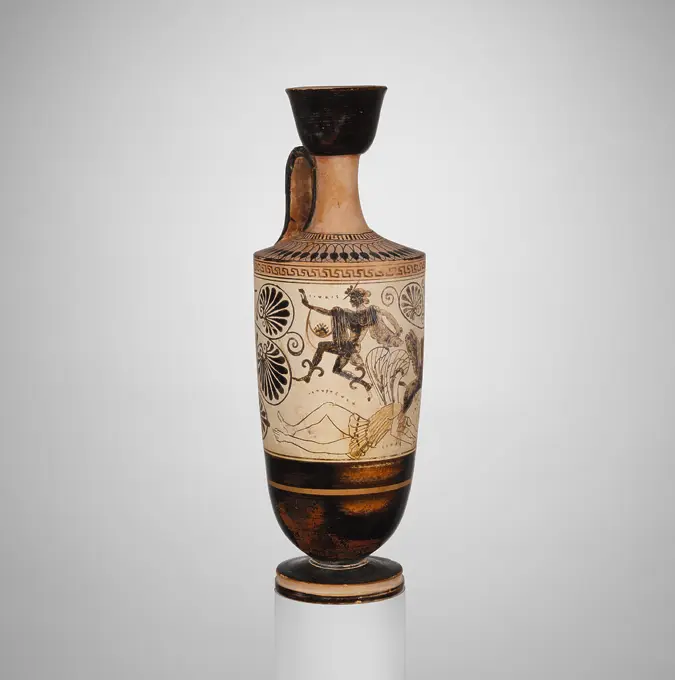
Terracotta lekythos (oil flask). Culture: Greek, Attic. Dimensions: 9 5/8in. (24.5cm). Date: ca. 500 B.C..Perseus flying away with the head of Medusa, while Pegasos springs from her severed neckPerseus, son of the god Zeus and the human princess, Danae, was given the task of beheading Medusa, one of the three Gorgons, whose faces were so horrible that seeing them turned men to stone. With the help of a magic cap and winged shoes given to him by Athena, Perseus became invisible and flew to the place where the three sisters were asleep. There he cut off Medusa's head. On this vase, Perseus flees with the head in a sack as the immortal winged horse Pegasos springs from the body of the dead Gorgon. Perseus and the horse are shown in the traditional black-figure manner, while the Gorgon is drawn in outline, probably influenced by the newly developed red-figure technique. Museum: Metropolitan Museum of Art, New York, USA.
4409-17393753
Terracotta lekanis (dish). Culture: Greek, South Italian, Apulian. Dimensions: H. 4 3/4 in. (12.1 cm)diameter 13 5/8 in. (34.6 cm). Date: ca. 325-300 B.C..Frontal head of a womanFemale heads decorate vases of many shapes. They are particularly suited to a circular format, as evidenced also by the heads of goddesses, nymphs, and other mythological ladies on the coinage of South Italian and Sicilian cities such as Metapontum, Thurii, Terina, and Syracuse. Museum: Metropolitan Museum of Art, New York, USA.
1746-21124295
Ancient Greek red on black mug depicting an Athlete. Dated 460 BC
1746-19670560
Red-figured kylix (drinking-cup) showing a youthful Apollo seated at an altar with a stringed instrument known as a kithara. Greek, made in Athens about 480-470 BC. The kithara was stringed instrument heavier and more solemn in tone than the lyre. Professional singers (kitharodes) used it to accompany their performances.
6145-29117696
Vessel with Depiction of Scribes. Guatemala or Mexico, Northern Peten or Southern Campeche, Maya, 650-800 CE. Ceramics. Slip-painted ceramic
6145-30177503
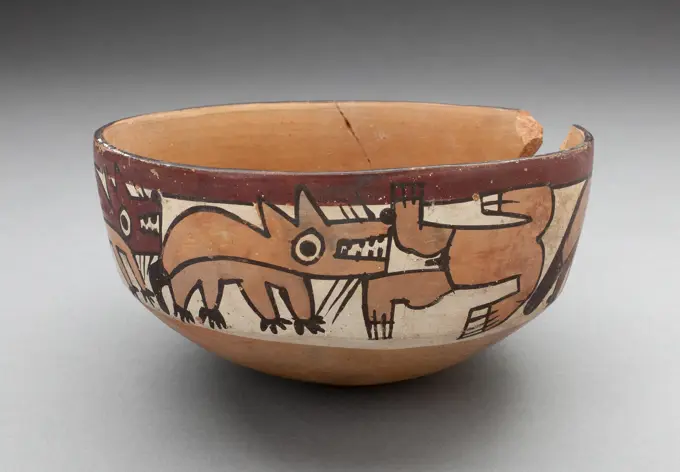
Bowl Depicting Coyotes Attacking Human Made 180 BCE-500 CE Peruvian South Coast. Ceramic and pigment . Nazca
PREVIOUS
of 2
NEXT
2401 S. Ervay, Suite 206
Dallas, Texas 75215
United States
Get Started
Free ResearchMy BoardsMy Cart
For Creators
How To License Your ContentContributor PortalFrame of Mind
Resources
API accessPricing
Contact
+1 866 236 0087help@viewpictures.co.uk Contact form
©2026 View Pictures. All Rights Reserved. -A
This site is protected by reCAPTCHA and Google Privacy Policy and Terms of Service apply.