Historic Architectural Prints

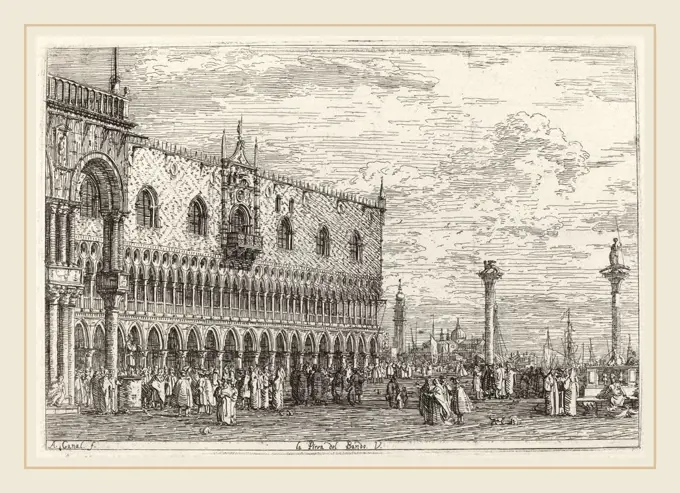
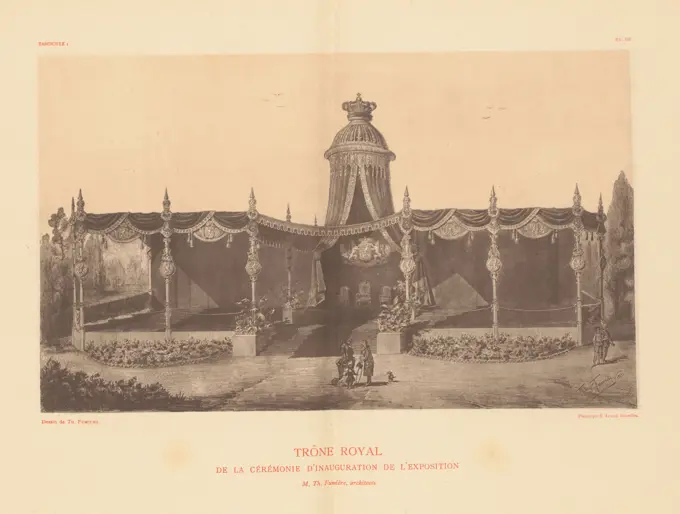
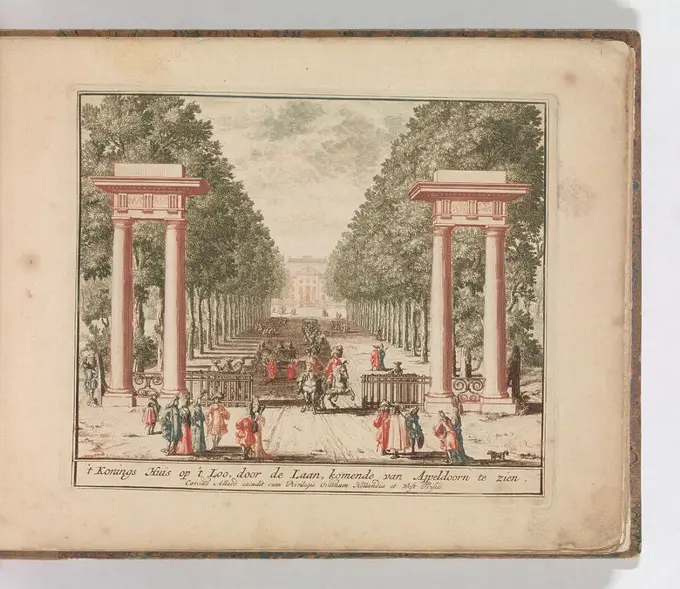
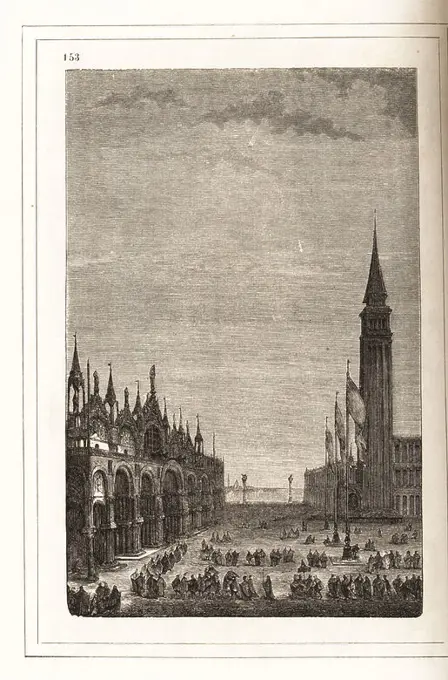
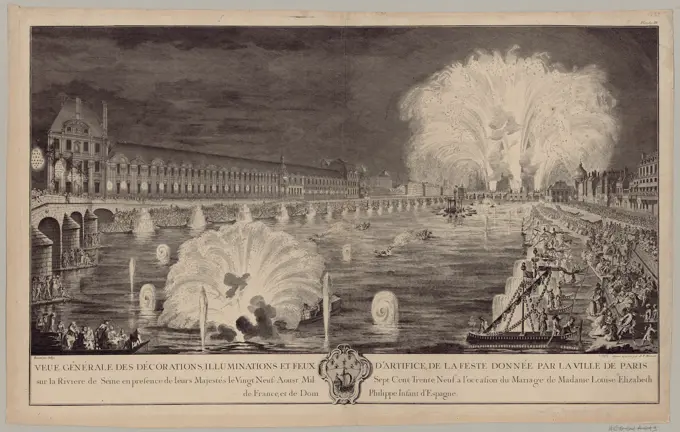
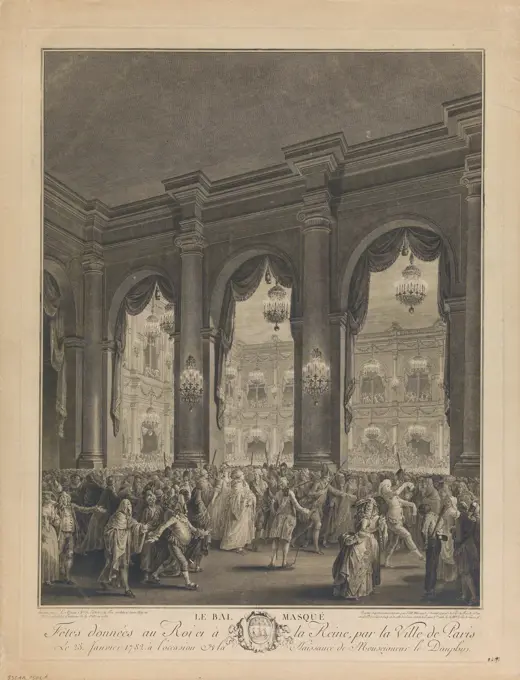
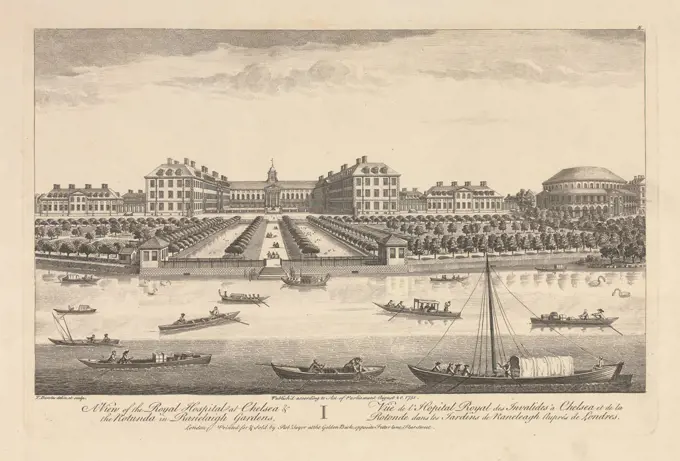
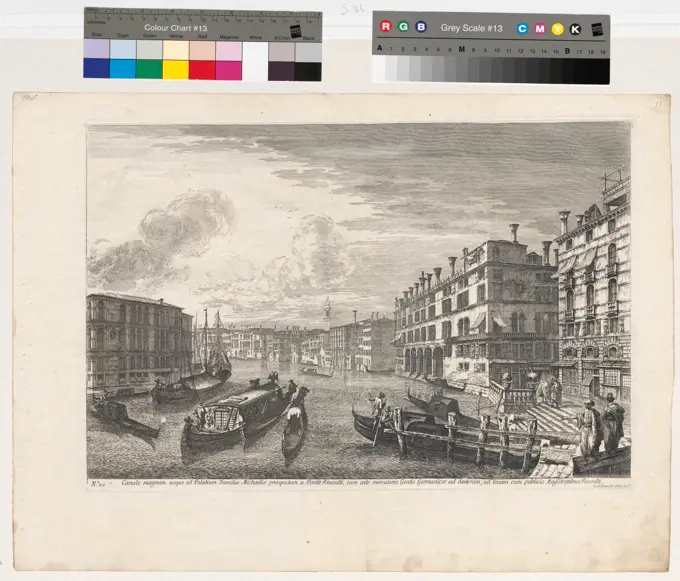
Etchings and engravings showcasing grand architecture and gardens, primarily focused on historical royal occasions and landmarks from the 17th and 18th centuries.

Benedizione de' cavalli, nel giorno di San Antonio in Roma, circa 1820. ca. 1820 Church of S. Antonio all'Esquilino The piazza is crowded with figures and horses, festooned with flowers, ribbons and feathers and gathered before the church of S. Antonio all'Esquilino for the blessing of the horses. Title and publisher from inscription in pencil. Attributed to Salvatore Busuttil in pencil inscription. Imprint: Rome, Giacomo Antonelli al corso alle convertite, #179 B. Illegible inscription in the lower right hand corner of the image: J. Feri  f. Rome. With Pecci-Blunt's collector's mark, in black ink, in the lower right hand corner and one on the verso in the center. Anna Laetitia Pecci-Blunt collected prints, published works, drawings and paintings thematically focused upon the city of Rome. Her collection included views, plans, maps of Rome and depictions of the inhabitants of the city in popular costume. As intense urban development under Mussolini transformed Rome in the 1930's, inter
Benedizione de' cavalli, nel giorno di San Antonio in Roma, circa 1820. ca. 1820 Church of S. Antonio all'Esquilino The piazza is crowded with figures and horses, festooned with flowers, ribbons and feathers and gathered before the church of S. Antonio all'Esquilino for the blessing of the horses. Title and publisher from inscription in pencil. Attributed to Salvatore Busuttil in pencil inscription. Imprint: Rome, Giacomo Antonelli al corso alle convertite, #179 B. Illegible inscription in the lower right hand corner of the image: J. Feri f. Rome. With Pecci-Blunt's collector's mark, in black ink, in the lower right hand corner and one on the verso in the center. Anna Laetitia Pecci-Blunt collected prints, published works, drawings and paintings thematically focused upon the city of Rome. Her collection included views, plans, maps of Rome and depictions of the inhabitants of the city in popular costume. As intense urban development under Mussolini transformed Rome in the 1930's, inter