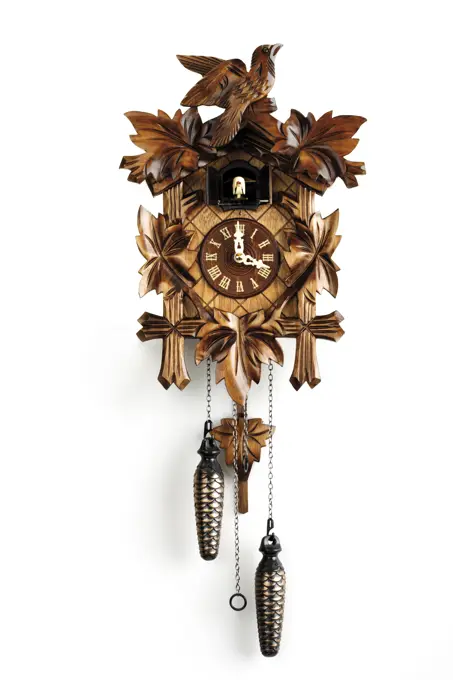
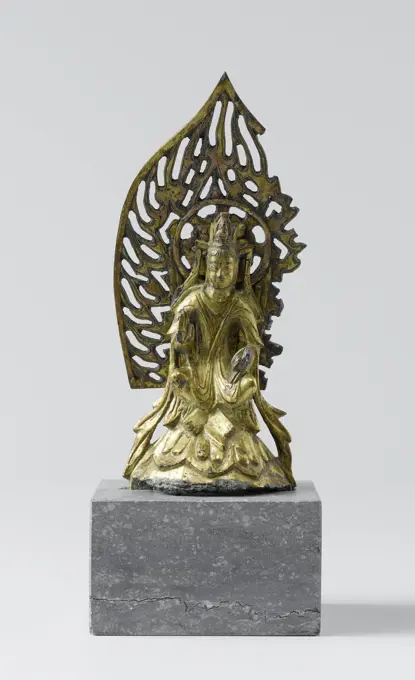
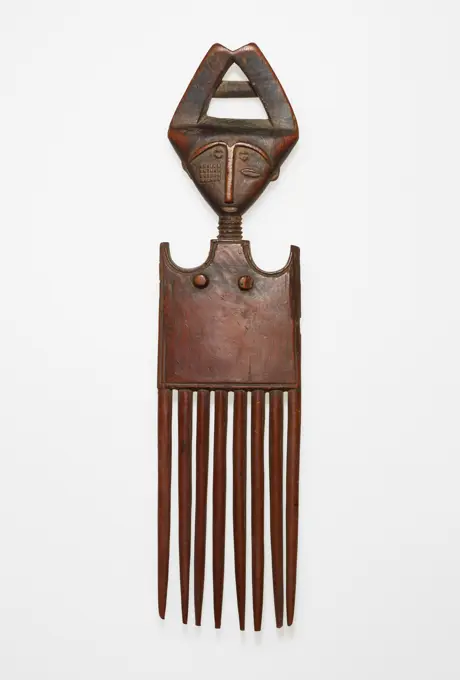
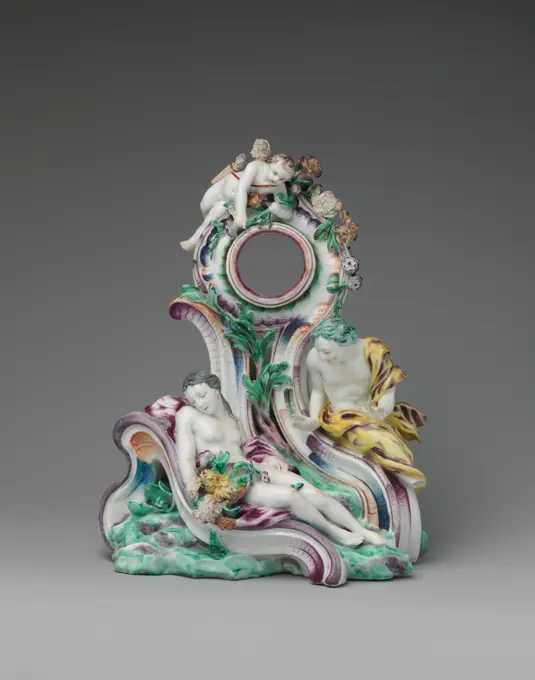
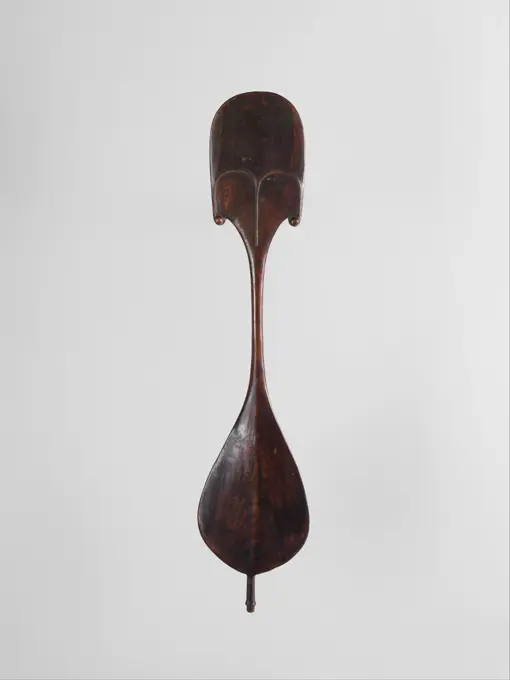
Historic Candle Holders

Elegant antique candle holders and andirons featuring intricate designs and details, showcasing craftsmanship from various periods.

Arm with candle holder of candle crown of two heights, each with eight arms, 1525 - 1550 Candle arm belonging to a candle crown of two heights with maria figure at the top. The arm is bent twice and is decorated with four grapes bunches and five vine leaves. The round fat catcher is decorated at the bottom with six round lobes. The candle holder is six -flat, opened, placed on three vertical styles, transferring to a threaded protrusion. This is the second arm of the upper ring, numbered with 2 round points. The candle holder is unnumbered. Southern Netherlands brass (alloy) casting Candle arm belonging to a candle crown of two heights with maria figure at the top. The arm is bent twice and is decorated with four grapes bunches and five vine leaves. The round fat catcher is decorated at the bottom with six round lobes. The candle holder is six -flat, opened, placed on three vertical styles, transferring to a threaded protrusion. This is the second arm of the upper ring, numbered with 2
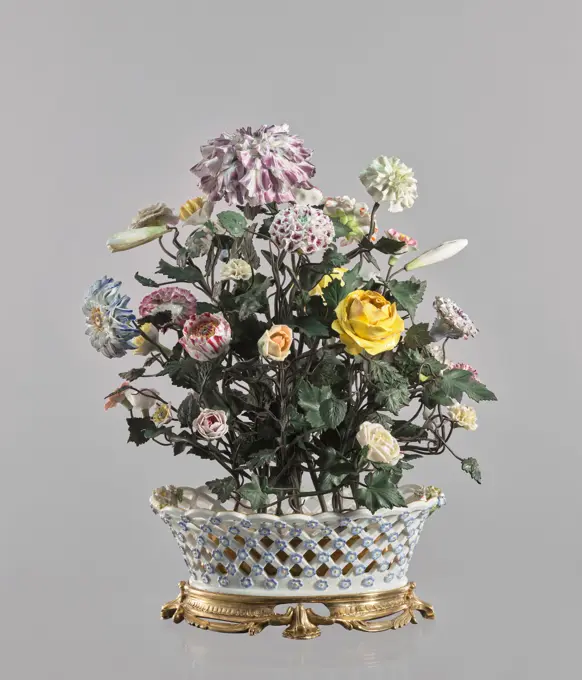
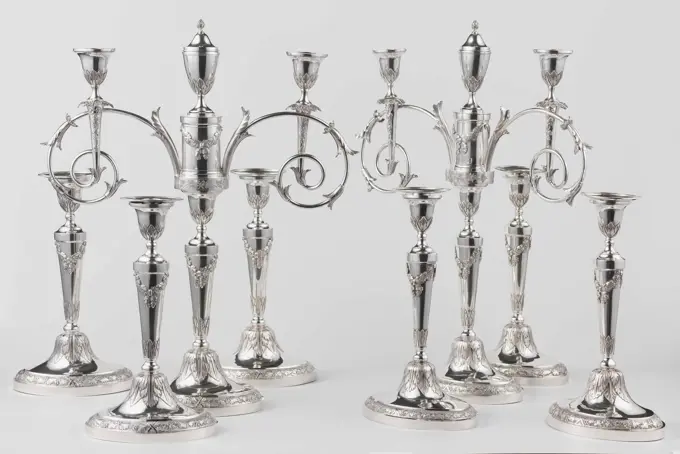
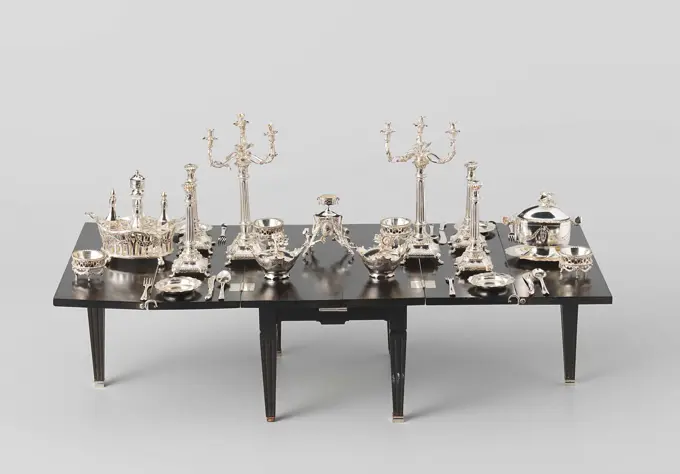
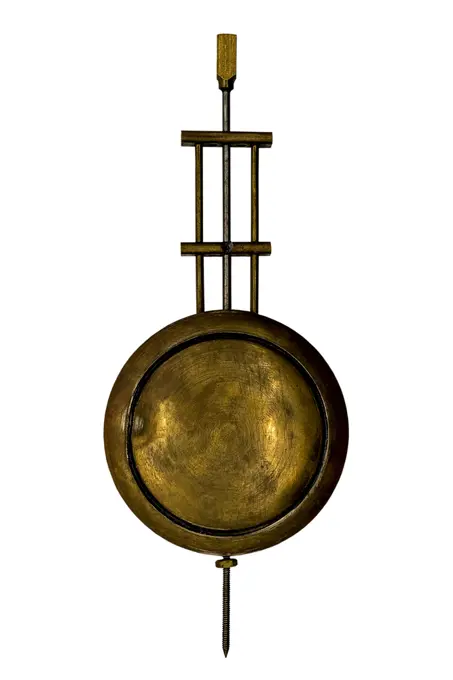
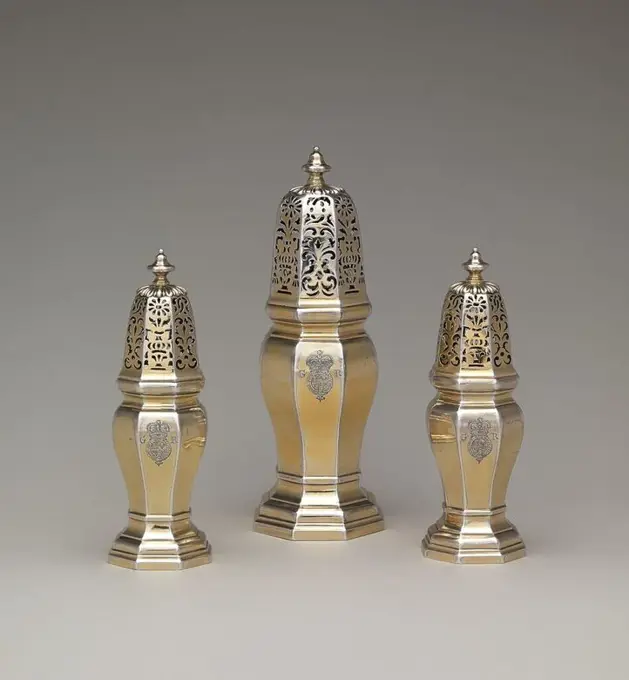
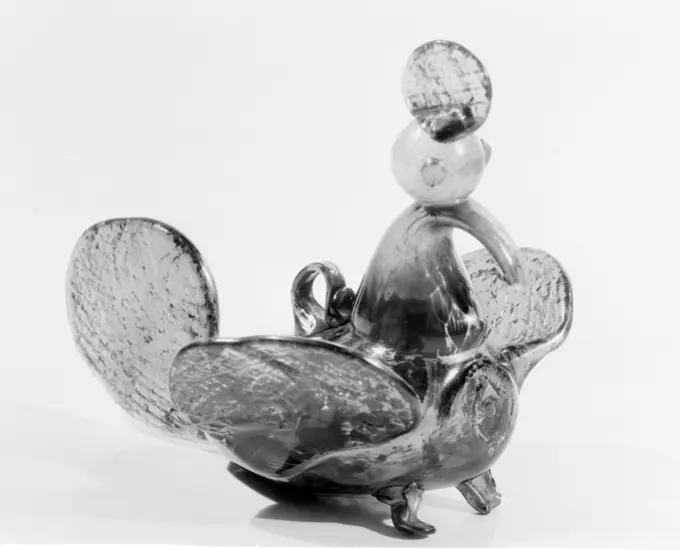
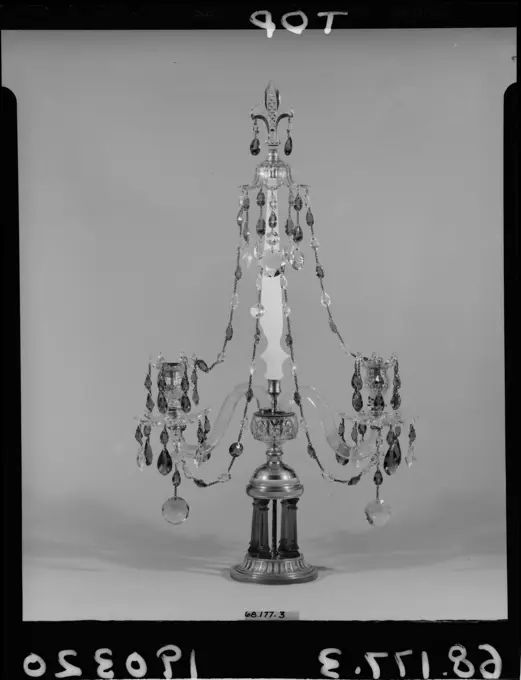
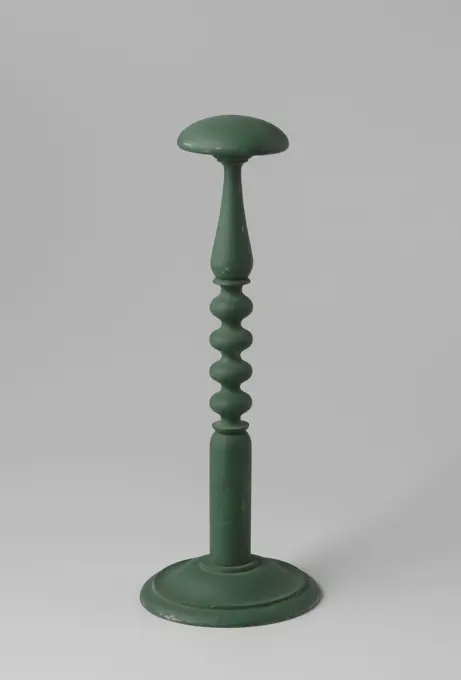
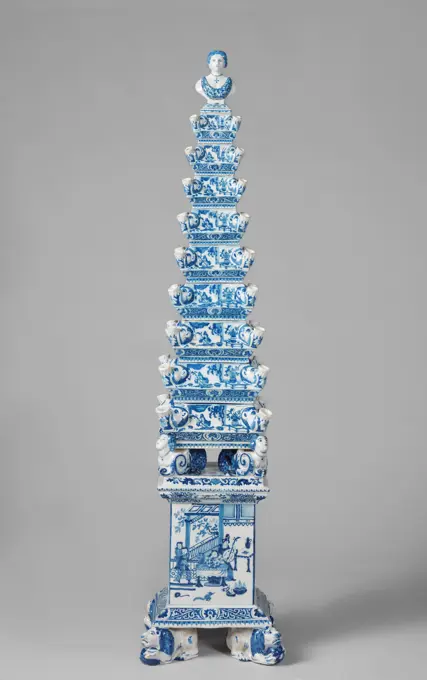
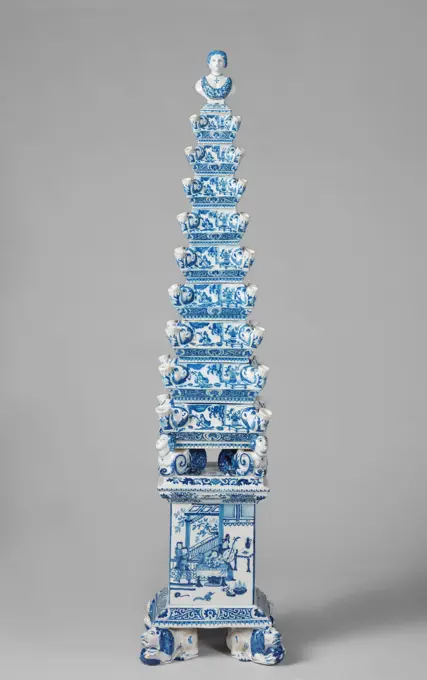
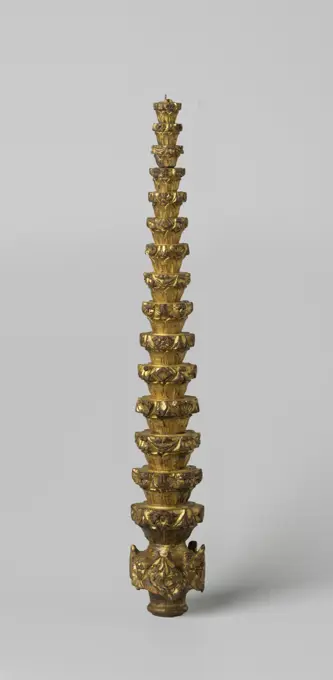
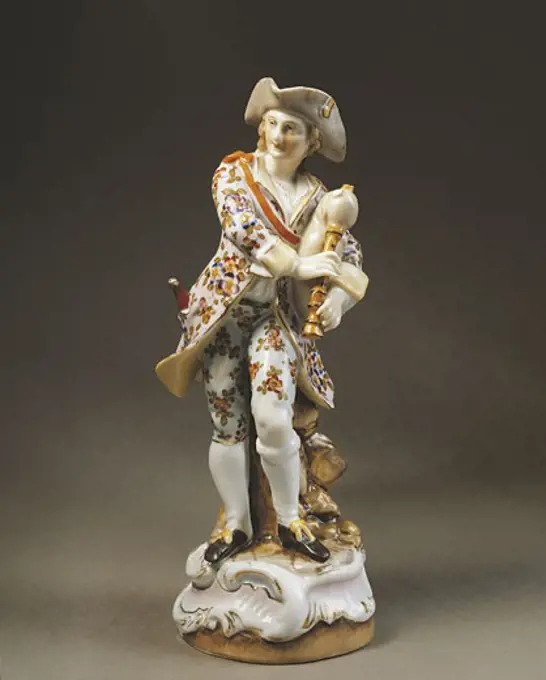
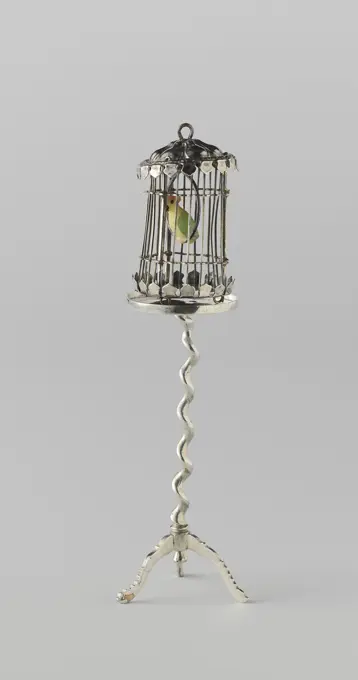
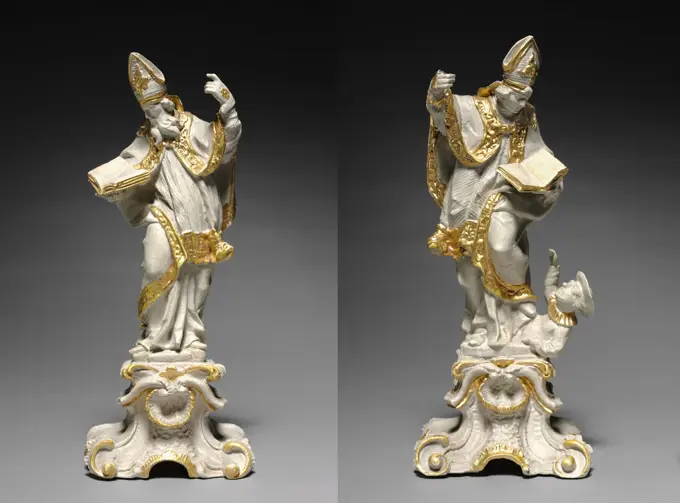
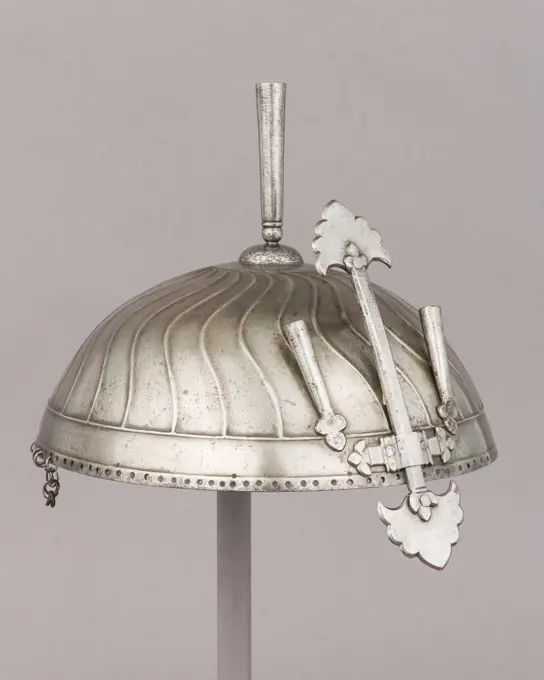
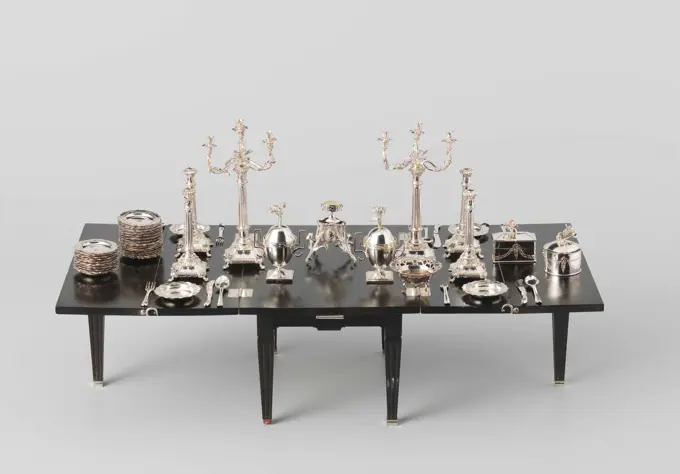
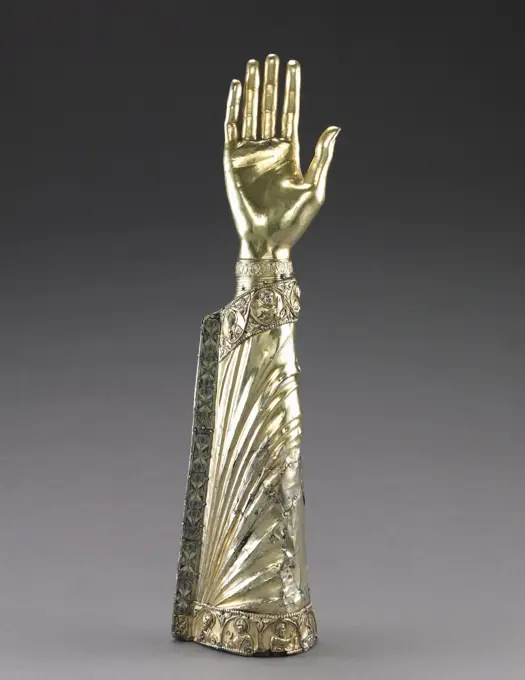
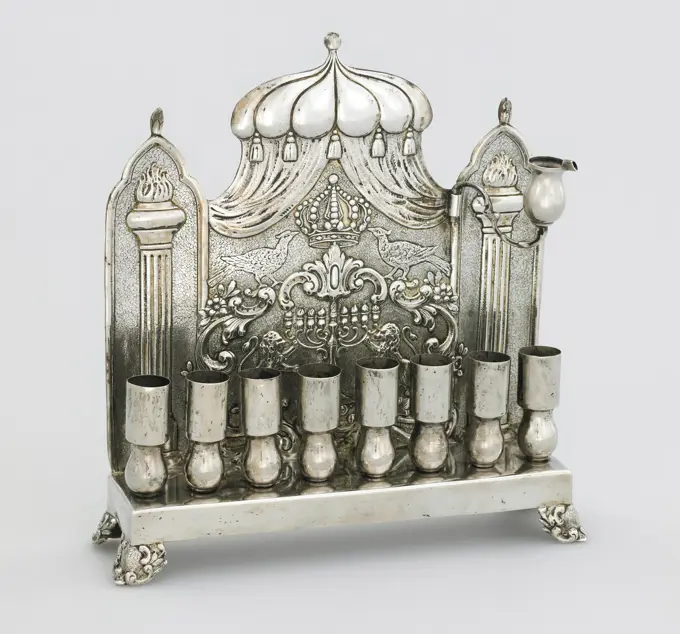
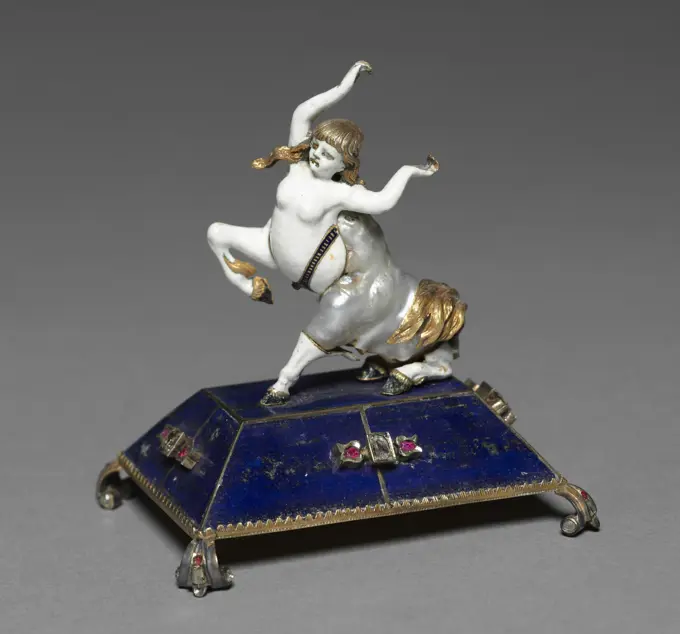
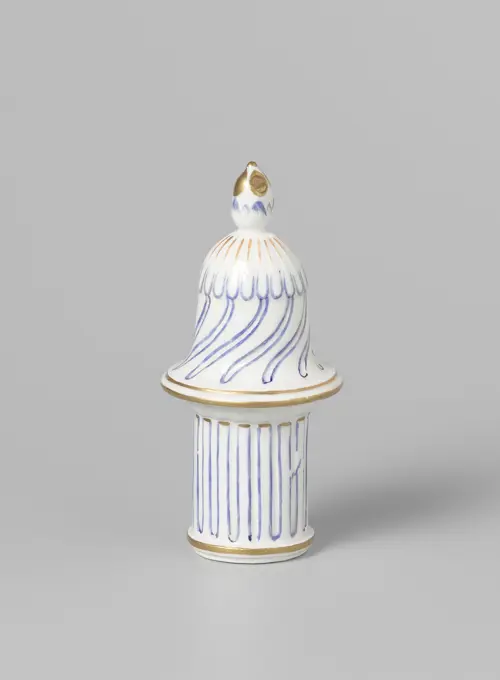
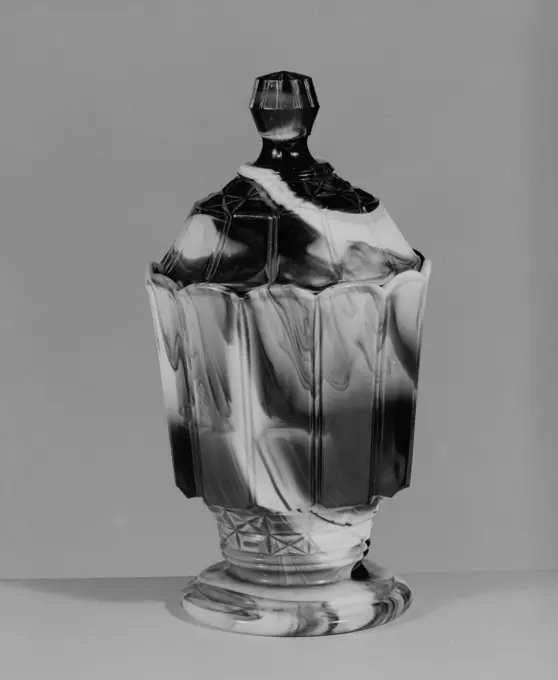
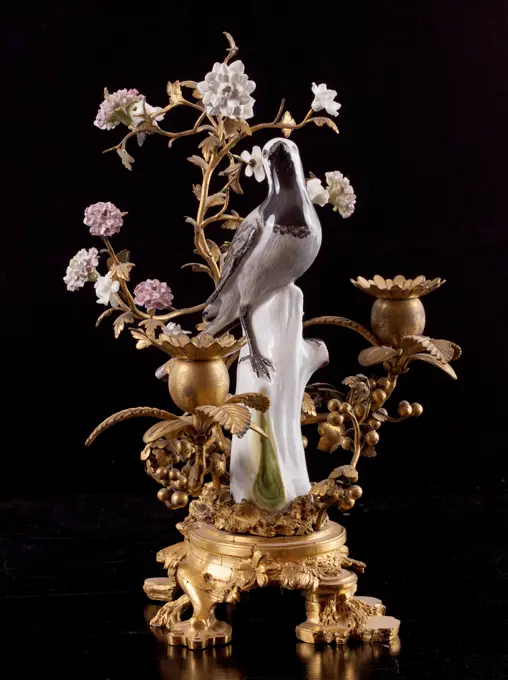
Candelabra with two branches lined with a bird and flowers. Chiseled and gilded bronze, Saxony porcelain. Between 1715 and 1774. Paris, Cognacq-Jay museum. Candelabre, furniture, animal motif, bird, saxe porcelain, 18th 18th 18th 18th 18th 18th 18th centuryPorcelain bouquet - in the basket, oval basket in the binding from the brother; Koenigliche Porcellain Fabrique, Meissen (1710-1763); 3. W. 18th century (1750-00-00-1775-00-00), 3. Candlestick with foot. Signature and dated.Plate. Round eating sign with scalloped edge. Guirlandes are engraved on the edge. A flower is engraved in the middle of the board. The plate has been marked: stk. = Amsterdam, jrl. = X (1782) and mt. = Foot 430. The plate is a copy of a set consisting of 36 identical plates (BK-NM-11177-189 up to / m. NM-11177-224).Show table on a trunk on three S-shaped legs, anonymous, c. 1825 - c. 1874 Bone chess table, the rectangular leaf rests on a trunk on three S-shaped legs. Rings are attached to the four corners of the board. There are chess pieces on the plate. Germany bone (material) Bone chess table, the rectangular leaf rests on a trunk on three S-shaped legs. Rings are attached to the four corners of the board. There are chess pieces on the plate. Germany bone (material)old fashioned pendulum isolated on white background brass colored stained and tarnishedFish-Shaped Lamp. This lamp is cast in the form of a gigantic fish. It could be filled with oil and lit by a wick sticking out of its mouth. The young woman is the heroine Shri Tanjung who rode to heaven on a fish after being falsely accused and murdered by her jealous husband. This scene from Javanese literature was often used to describe the journey of the soul after death.Candlestick, Francois Marcus Simons, 1803 Candlestick with foot. Marked and dated. The Hague silver (metal) casting Candlestick with foot. Marked and dated. The Hague silver (metal) castingChair. Chair with smooth, folk-shaped seat and volutely front legs. The open backrest is crowned by a crest. The center of the backrest is formed by a rosette and leaf garlands. The chair is marked: STK. = Amsterdam, JRL. = 1779, Mt. = Jan Bronnet. The chair belongs to five identical copies (BK-NM-11177-169, BK-NM-11177-171 T / M BK-NM-11177-174)Set of three casters. Culture: British, London. Dimensions: Overall (.71, confirmed): 6 5/8 x 2 1/4 x 2 1/4 in., 11 oz. 4 dwt. (16.9 x 5.7 x 5.7 cm, 349g);Overall (.72, confirmed): 6 5/8 x 2 5/16 x 2 1/8 in., 12 oz. (16.9 x 5.9 x 5.4 cm, 374g);Overall (.73, confirmed): 8 11/16 x 3 x 3 in., 18 oz. 15 dwt. (22 x 7.6 x 7.6 cm, 583.5g). Maker: Lewis Mettayer (British, active 1700, died 1740). Date: 1714/15.Used for serving sugar, dry mustard, and pepper, sets of three casters were standard components of an eighteenth-century silver table setting. Like the dessert dishes above, this set was part of the large service made for Sir Paul Methuen's embassy to Spain. Museum: Metropolitan Museum of Art, New York, USA.Ornament in the form of a bird 19th century Italian. Ornament in the form of a bird. Italian. 19th century. Glass. GlassOdd Fellows ceremonial sceptre, 1856, 25 1/4 x 11 1/2 x 6 in. (64.14 x 29.21 x 15.24 cm), Wood, pigment, United States, 19th centuryBouquet;  approx. 1700 (1696-00-00-1705-00-00);Chess piece king isolated on a white background Double Cup 16th century German. Double Cup. German. 16th century. Silver, gilt. Metalwork-SilverCandelabrum 1795-1810 British. Candelabrum. British. 1795-1810. Colorless, opalescent and amethyst glass, gilt bronze. Made in EnglandHat standard, c. 1915 - c. 1935 Hat standard of dull green painted wood. Medium high, made up of a right shaft part, a ris of four knots and a baluster, foot with profile. Netherlands wood (plant material) Hat standard of dull green painted wood. Medium high, made up of a right shaft part, a ris of four knots and a baluster, foot with profile. Netherlands wood (plant material)Flower pyramid, the metal pot (attributed to), after Lambertus van Eenhoorn, c. 1692 - c. 1700 Segment of flower pyramid of faience, blue painted in the glaze. Music figures and figures with scale. Delft . Segment of flower pyramid of faience, blue painted in the glaze. Music figures and figures with scale. Delft .Bloempiramide, Royal Tichelaar Makkum, 2003 - 2004 Segment of flower pyramid of faience, blue painted in the glaze. Music figures and figures with scale. Makkum tin glaze Segment of flower pyramid of faience, blue painted in the glaze. Music figures and figures with scale. Makkum tin glazeOil and vinegar set of tin with two bottle holders. Oil and vinegar set of tin with two bottle holders. The rings of the bottle holders are separated by two flat surfaces with a stamped ornament. The openwork handle is located on the upper plane. The whole is on six legs.Terrine. Round terrine with scalloped bottom edge. The dish has a lid with a scalloped edge as well. The button of the lid is a flying bird. The terrine has two raised handles. The scale is on a dish. The terrine was marked: STK. = Amsterdam, JRL. = B (1761), Mt. = Arnoldus van Geffen. The terrine with saucer is equal to two copies with Invnrs. BK-NM-11177-153-A and BK-NM-11177-153-B, BK-NM-11177-252.Oil and vinegar set with four bottles. Oil and vinegar set in Louis XVI style. In a basket (BK-NM-11177-122-A) is an openware plateau with column (BK-NM-11177-122-B), in which four octagonal bottles are (BK-NM-11177-122-CT / M BK -NM-11177-122-F). The oil and vinegar set has been labeled: STK. = Amsterdam, JRL. = Z (1784) and MT. = Hendrik Duller.Carrot of a flagpole, c. 1700 - c. 1800  Gilded root with 16 sections. Four putti with the arms up on the damaged lower section. The others with stylized plant motifs. The third, eighth and thirteenth sections with four cups. At the bottom of a round hole; Upstairs crown broken down, making an iron pin visible. Netherlands wood (plant material). gilding (material). iron (metal) cutting / gildingIron candelabrum early 3rd century B.C. Etruscan The upper part of a simple type of candelabrum.. Iron candelabrum 247081Close-up of a figurine of a bagpipes player, FranceGuéridon, Pieter of Summer Wil (i) (attributed to), 1759 Round Guéridon on a high twisted leg that ends in a tripod at the bottom. The Guéridon is marked: stk. = Amsterdam, Jrl. = Z (1759) and Mt. = Pieter van Somerwil I. On the Guéridon there is a bird cage (BK-NM-11177-155-A). Amsterdam silver (metal) Round Guéridon on a high twisted leg that ends in a tripod at the bottom. The Guéridon is marked: stk. = Amsterdam, Jrl. = Z (1759) and Mt. = Pieter van Somerwil I. On the Guéridon there is a bird cage (BK-NM-11177-155-A). Amsterdam silver (metal)Censer (Italy); bronzeROYAL THAMES YACHT CLUB PRIZE CUP PRESENTED BY HER MAJESTYBishop Saint Statuette Pair, c. 1740-1750. Attributed to Ferdinand Tietz (Austrian, 1708-1777). Painted and gilded wood; overall: 33 x 13.7 x 8.2 cm (13 x 5 3/8 x 3 1/4 in.).Casque 17th - 18th century Indian, North Indian. Casque 34279Paint crown of iron, anonymous, c. 1600 - c. 1699 Paint crown made of iron.  iron (metal) Paint crown made of iron.  iron (metal)Guild Plaque for a Beer Brewer. Bavaria, Germany. Date: 1790. Dimensions: 34.9 × 34 × 7.6 cm (13 3/4 × 13 3/8 × 3 in.). Pewter. Origin: Bayern. Museum: The Chicago Art Institute, Chicago, USA. Author: John Rote.Molenbeker. Bell-shaped chalice, the upper part of which exhibits light relief. Filigraanglas a fili and a retortoli. Mill of silver, an unreadable brand on one of the wicks.Mother and Child, 20th century, 18 x 9 x 3 5/8 in. (45.7 x 22.9 x 9.2 cm) including base, Wood, Ghana or Burkina Faso, 20th centuryCandlestick 1840-60 American. Candlestick 1244Candlestick (one of a pair). England, Staffordshire. Date: 1810-1820. Dimensions: H. 21.6 cm (8 1/2 in.). Lead-glazed earthenware with lustre decoration. Origin: Staffordshire. Museum: The Chicago Art Institute, Chicago, USA.Music Box early 19th century French or Swiss Gold music box in the shape of a fitted necessaire, featuring four reserves, three decorated with flowers, one blank for engraving initials, vertical blue enamel stripes and bands of half pearls.. Music Box. French or Swiss. early 19th century. Various materials. Switzerland; France. IdiophoneWheeled bronze wagon built for a cauldron 12-11 th century BC from Larnaka Cyprus, Greek.Presentation lantern, 19th century, Kelly & Co., American, 12 x 7 3/8 x 7 7/8 in. (30.48 x 18.73 x 20 cm) (overall, without handle extended), Nickel, glass, United States, 19th centuryMoor with cockatoo. Figure of painted porcelain. The image represents a seated moor with a cockatoo on its high-raised right hand. The Moor leans against the trunk of a palm tree. The figure has been marked.Clock. Meissen Porcelain Manufactory; German, founded 1710; Modeled by George Fritzsche (German, 1681-1709); Painted in the manner of Johann Gregor Höroldt (German, active 1720-56; 1763-65). Date: 1727-1730. Dimensions: 20.8 × 43.8 × 20.3 cm (8 3/16 × 17 1/4 × 8 in.). Hard-paste porcelain, polychrome enamels, and gilding. Origin: Meissen. Museum: The Chicago Art Institute, USA.Girl, sleeping boy and dog. Group presenting a girl and a sleeping little boy with a dog. A vase on a pedestal behind the figures. No brand.Parasol. Culture: American. Department Store: Stern Brothers (American, founded New York, 1867). Date: 1876.This parasol is an early artifact of the Stern Brothers store at their original address in the prestigious Ladies Mile, where the finest ladies commodities in New York were sold. The coordination of colors is particularly effective, and the green and purple of the canopy is repeated in the color of the glass stones in the handle. Museum: Metropolitan Museum of Art, New York, USA.Nécessaire ca. 1760-1800 British, Staffordshire. Nécessaire. British, Staffordshire. ca. 1760-1800. Enameled and gilt copper. Enamels-PaintedLoop Suspension Bell (Niuzhong) 550 BCE-450 BCE China. Bronze .Plateau, Hendrik Duller, 1784 Plateau from a basket of an oil and vinegar set. The plateau is open and has a square column in the middle, which is crowned by a cup. There is a lid with a button on the cup. The column is engraved with garlands. There are four bottles in the plateau. Amsterdam silver (metal) Plateau from a basket of an oil and vinegar set. The plateau is open and has a square column in the middle, which is crowned by a cup. There is a lid with a button on the cup. The column is engraved with garlands. There are four bottles in the plateau. Amsterdam silver (metal)Cuckoo clock, close-upThe bodhisattva Maitreya, anonymous, 500 - 525 Maitreya, seated on a lottery thronule with a halo behind him; Hanging crossed legs. China bronze (metal). gilding (material) gilding Maitreya, seated on a lottery thronule with a halo behind him; Hanging crossed legs. China bronze (metal). gilding (material) gildingComb, 20th century, 8 9/16 x 2 3/16 x 3/4 in. (21.75 x 5.56 x 1.91 cm), Wood, Ghana, 20th century, Hairstyles have long reflected personal aesthetics in African and African-American cultures. And when adorned with extensions, beads, pins, or combs, they can indicate a persons status, ethnic origin, gender, profession, or even what phase of life theyre in. These three combs, from West and Central Africa, show how African artists turn even everyday objects into accomplished carvings.Tintinnabulum, by Unknown artist, 1st Century b.C., 1st Century, Bronze. Italy: Campania: Naples: National Archaeological Museum: 27837. Whole artwork. Phallus-shaped tintinnabulum bellsFlower pyramid, attributed to De Metaale Pot, c. 1692 - c. 1700Watch stand ca. 1750-60 Possibly Tournai When not being worn on an individual, a pocket watch could be placed on a stand, transforming it from a personal item into a household one, like a mantel clock. Watch stands were produced at porcelain and pottery factories throughout Europe and were also made in other materials, such as gilded bronze and wood. First appearing in the seventeenth century, they gained popularity in the eighteenth and nineteenth centuries when watch ownership became more common.. Watch stand 201735. Round eating sign with scalloped edge. Guird builds are engraved on the edge. A flower is engraved in the middle of the board. The sign has been labeled: stk. = Amsterdam, jrl. = X (1782) and mt. = Foot 430. The plate is a copy from a set consisting of 36 identical plates (BK-NM-11177-189 up to / m. NM-11177-224).Plate. Round eating sign with scalloped edge. Guirlandes are engraved on the edge. A flower is engraved in the middle of the board. The plate has been marked: stk. = Amsterdam, jrl. = X (1782) and mt. = Foot 430. The plate is a copy of a set consisting of 36 identical plates (BK-NM-11177-189 up to / m. NM-11177-224).Arm Reliquary of the Apostles, c. 1190. Germany, Lower Saxony, Hildesheim, Romanesque period, late 12th century. Gilt silver, champlevé enamel, oak; overall: 51 x 14 x 9.2 cm (20 1/16 x 5 1/2 x 3 5/8 in.).Campania Caserta Capua Museo Campano, Italy, 20th century, photo, photography, Europe. Rectangular tea bus with an elevated, round lid. A landscape with Chinese is shown on every wall. The corners of the top are decorated with leaf motifs. There is a rosette on the top of the lid. The tea bus has been marked: STK. = Amsterdam, Mt. = Cornelis Coutrier and an ax.Hanukkah lamp, c. 1880, 8 5/8 x 8 3/8 x 2 7/16 in. (21.91 x 21.27 x 6.19 cm), Silver, GermanyBliżej Kultury unknownDance Paddle (Rapa) early 19th century Rapa Nui people Essential to many dances and ceremonies, dance paddles (rapa) were usually carried in pairs to accent the movements of performers who spun them on their axes to the rhythm of a chanted accompaniment. Rapa were used by both men and women, although the sexes seldom performed together. Men also reportedly used rapa in funerary rituals, during which they kept a vigil over the body of a slain comrade. Their bodies covered in black ash, the mourners carried dance paddles as they intoned sacred chants intended to assist them in avenging the victim's death.Rapa portray highly stylized human figures, reduced to two blade-like lobes representing the head and abdomen. The facial features are reduced to a single brow-line that incorporates the nose and extends down either side of the head to two small hemispherical knobs that represent ear ornaments.. Dance Paddle (Rapa) 312002Key handles from the 16th century  /  Schlüsselgriffe aus dem 16. Jahrhundert, Historisch, historical, digital improved reproduction of an original from the 19th century / digitale Reproduktion einer Originalvorlage aus dem 19. Jahrhundert. Pair of Candlesticks 1691-1692 England. Silver . E.S.Lambertus van Eenhoorn (1651-1721). Dutch artist. Pair of Flower Pyramids, Attributed to De Metaale Pot. Delft, c. 1710-1720. Rijksmuseum. Amsterdam. Holland.Automaton clock in the form of an eagle ca. 1630 German, Augsburg European clocks were often, and from the outset, associated with the creation of automatamoving, mechanized figures or contrivances. Seventeenth-century Augsburg clockmakers specialized in small domestic examples. Here, when the clock strikes the hour, the scepter moves, and on the quarter hours the eagle opens and shuts its beak and rolls its eyes. The eagle emblem of the Habsburgs had special meaning for inhabitants of Augsburg, a free city with a direct allegiance to the Habsburg Holy Roman emperors.. Automaton clock in the form of an eagle. German, Augsburg. ca. 1630. Case: gilded brass on base of ebony and ebony veneered on fruitwood; Movement: brass and iron. HorologyNight watch. On a plate there is a man with a knee pants and a hat. In his right hand he holds a raised stick. A bird or a star has probably been stuck on the stick. A zig-zag line is engraved along the edge of the plate. The image is marked: stk. = Amsterdam, jrl. = K (1769), mt. = Arnoldus van Geffen and a crowned v in a shield.Double vase China. Double vase 606762005.4366.1 thru .10. Japanese Suit of Armour. Made in Japan, maker unknownPeter Archambo I, Pair of Wall Sconces, 1730/31, silver.Gold star Festive gold ornament isolated with clipping path included Copyright: xZoonar.com/Baloncicix 7070830Wooden polychromed sign 'in the green glasses' ,, 1780 - 1850  Hat -shaped wooden polychromed plate with a performance in relief. Under a glasses, two gentlemen in the midst of baskets and boxes with ownership brands, including 'P i' and 't K' against a green background. The right figure carries a vest and leaves 18th Eews/ 19th century jacket, the left a kind of habit. The show is framed by tumbles with fruits. Below that, the inscription 'In the green glasses' hits. Netherlands wood (plant material)   Batavian RepublicFemale Centaur, late 1800s. Austria, Vienna, late 19th century. Enamel, pearl, on lapis lazuli stand set with diamonds and rubies mounted in silver gilt; overall: 8.6 x 8.6 x 5.8 cm (3 3/8 x 3 3/8 x 2 5/16 in.).Candelabrum (one of a pair) 18th century Derby Porcelain Manufactory. Candelabrum (one of a pair) 201803Bottle c 1867-1875 Glassboro. Glass . Whitney Brothers Glass WorksLid, part of a candlestick vase, manufacture Oud-Loosdrecht, c. 1778 - c. 1782 Porcelain lid, decorated with a laurel wreath in relief. The twisted godrons on the lid and the cannelures of the candle holder are bordered in blue. Golden piping along the edges. The button of the lid is decorated in blue and gold; Below that a jet wreath in gold (largely worn out, so that the red -brown underpainting is visible). Loosdrecht porcelain Porcelain lid, decorated with a laurel wreath in relief. The twisted godrons on the lid and the cannelures of the candle holder are bordered in blue. Golden piping along the edges. The button of the lid is decorated in blue and gold; Below that a jet wreath in gold (largely worn out, so that the red -brown underpainting is visible). Loosdrecht porcelainNight watch. Night watch: An elongated album is a man with a stitch and in his right hand. A bird or a star has probably been on the stick. A zig-zag line is engraved along the edge of the plate. The image is marked: STK. = Amsterdam, JRL. = U (1779) and Mt. = John of Geffen and a written letter V.Swing used for a Krishna Festival. India, Rajasthan, 18th-19th century. Sculpture. Wood with paintTurk with a pipe ca. 1765 Chelsea Porcelain Manufactory. Turk with a pipe. British, Chelsea. ca. 1765. Soft-paste porcelain. Chelsea Porcelain Manufactory (British, 1745-1784, Gold Anchor Period, 1759-69). Ceramics-PorcelainCovered Sugar Bowl 1870-90 Challinor, Taylor and Company. Covered Sugar Bowl. American. 1870-90. Pressed purple marble glass. Made in Tarentum, Pennsylvania, United StatesBord, anonymous, 1782 Round eating plate with scalloped edge. Shiringes are engraved on the edge. A flower is engraved in the middle of the plate. The board is marked: stk. = Amsterdam, JRL. = X (1782) and Mt. = Foot 430. The board is a copy from a set consisting of 36 identical plates (BK-NM-111177-189 to BK- NM-11177-224). Amsterdam silver (metal) Round eating plate with scalloped edge. Shiringes are engraved on the edge. A flower is engraved in the middle of the plate. The board is marked: stk. = Amsterdam, JRL. = X (1782) and Mt. = Foot 430. The board is a copy from a set consisting of 36 identical plates (BK-NM-111177-189 to BK- NM-11177-224). Amsterdam silver (metal)Bord, anonymous, 1782 Round eating plate with scalloped edge. Shiringes are engraved on the edge. A flower is engraved in the middle of the plate. The board is marked: stk. = Amsterdam, JRL. = X (1782) and Mt. = Foot 430. The board is a copy from a set consisting of 36 identical plates (BK-NM-111177-189 to BK- NM-11177-224). Amsterdam silver (metal) Round eating plate with scalloped edge. Shiringes are engraved on the edge. A flower is engraved in the middle of the plate. The board is marked: stk. = Amsterdam, JRL. = X (1782) and Mt. = Foot 430. The board is a copy from a set consisting of 36 identical plates (BK-NM-111177-189 to BK- NM-11177-224). Amsterdam silver (metal)Lock. Culture: European. Dimensions: Overall (a.): 5 1/8 x 3 3/8 in. (13 x 8.6 cm). Date: 15th-16th century.The decoration of Gothic iron locks and keys was often elaborate and of the highest standard of workmanship. The motifs were frequently drawn from Gothic architecture, reproducing on a miniature scale complicated tracery patterns and even tiny statuettes. A number of these tiny locks were compound, with some of the mechanisms concealed from view, and required two or even three keys used in sequence to open them. It has been suggested that the greatly expanded use of locks on doors, or coffrets and other types of storage chests was a result of the increasing urbanization of life and the new emphasis on material wealth and private ownership which developed in the late Middle Ages. Museum: Metropolitan Museum of Art, New York, USA.Tassel, Medium: silk, metal thread, copper discs, wooden core, Skirt of red silk threads with four ornamental strings. Head is turned in a vase shapes, painted gold and partly covered by gilt braid in woven design. Loop of woven braid in silk and metal threads., Italy or Spain, 18th century, trimmings, TasselMilk jug. Round milk jug on a wide fleet. The can have a wide belly and a narrower neck with a spout. The S-shaped handle is wounded with a floral rank. The wall has ripened veins and is engraved with flowers and leaf. The milk jug has been marked: Mt. = Hendrik Duller. The milk jug is saved as part of a tea service (BK-NM-11177-142).Cup and saucer. Funnel shaped tea cup on a dish. The dish has an upright edge, is unfamiled and marked: mt. = Foot 430. The tea cup has been engraved along the top edge and has not been marked. The head and saucer are stored as part of a tea set (BK-NM-11177-142). The tea service has a total of twelve head and saucers that are equal to this instance.Jewelry Comb "Bathing Najades". Acquired by the artist at the World's Fair 1900 in ParisPole screen ca. 1765 British. Pole screen. British. ca. 1765. Mahogany, needlework. Woodwork-FurnitureIron forged wall brace ..Hospital bed. Fontana, Jakub (1710-1773), designer, Redler, Jan Chryzostom (fl. ca 1743-1773), woodcarverJoann-Joachim Kaendler (1706-1775). The Garland. Porcelain, 1762. Paris, Cognacq-Jay museum. 79169-12 Sitting, courtier, courtyard, flower, gallantry, garland, sheep, porcelain, statuette, 18th 18th 18th 18th 18th 18th century, couplegraph candlestick hand drawn. market data, analysis chart, stock currency graph candlestick vector sketch. isolated color illustration. graph candlestick sketch hand drawn vectorChessmen (32) and box probably first half 19th century German A somewhat baffling combination of pieces: both sides have as king St. George killing the dragon, but without a saddle or reins; as queen a mounted barbarian with a bearskin instead of a saddle and carrying a spear. Bishops are griffins with their right claws resting on a miter. The silver knights are mounted figures in armor, carrying lances; black knights are foot soldiers in armor, with the cross of St. George on their shields and breastplates. The silver rooks are camels, and the black rooks are rhinoceroses, both with towers on their backs. Running stags are the silver pawns, and the blck pawns are bears at bay. The figures are probably south German, with stands possibly added in England. There are no hallmarks on the silver.The set is said to have been given by George III to one of his physicians, Dr. Tyler, and the shape of the stands is explained as that of pillboxes. Early nineteenth-century pillboxes, however, werePair of Pedestals. Attributed to André-Charles Boulle (French, 1642 - 1732, master before 1666)Man tapping a wine vessel from Faience, Anonymous, c. 1750 - c. 1790 Man tapping a ton from Faience. Delft . Man tapping a ton from Faience. Delft .Hand Seal, after 1903. Firm of Peter Carl Fabergé (Russian, 1846-1920). Purpurine mounted in gold, jade, diamonds; overall: 4.7 x 4 x 3.2 cm (1 7/8 x 1 9/16 x 1 1/4 in.).Pair of porcelain figure-group candlesticks. Dated 1769MeisjesPortras, c. 1750 On a pedestal. Paris gypsum On a pedestal. Paris gypsumFigure of a dancing Colombina (also: Pole). Reinicke, Peter (1715-1768), sculptor, Koenigliche Porcellain Fabrique, Meissen (1710-1763), factory. On base.Wall flower holder ca. 1755 British, Staffordshire. Wall flower holder. British, Staffordshire. ca. 1755. Salt-glazed stoneware. Ceramics-PotteryCrib collection, large Nativity Scene from circa 1850, Bavarian National Museum, Munich, Bavaria, Germany, Europe