Historic Candle Holders

Elegant antique candle holders and andirons featuring intricate designs and details, showcasing craftsmanship from various periods.

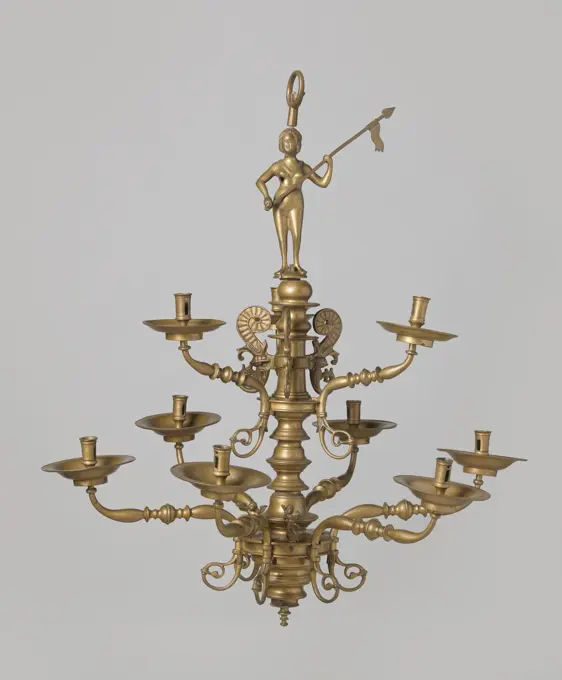
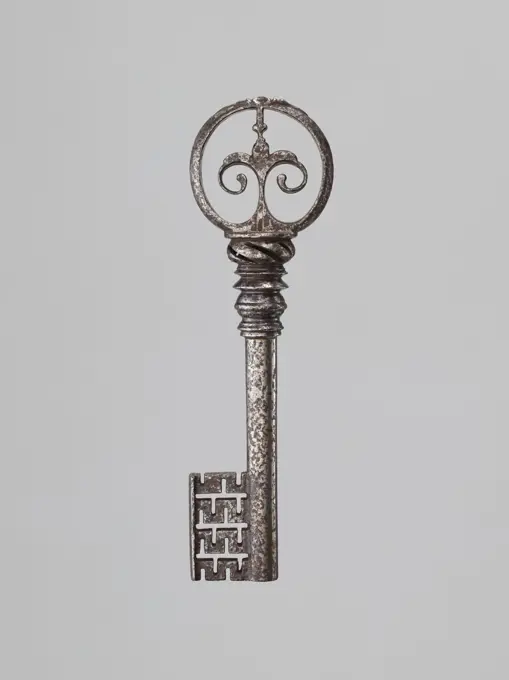
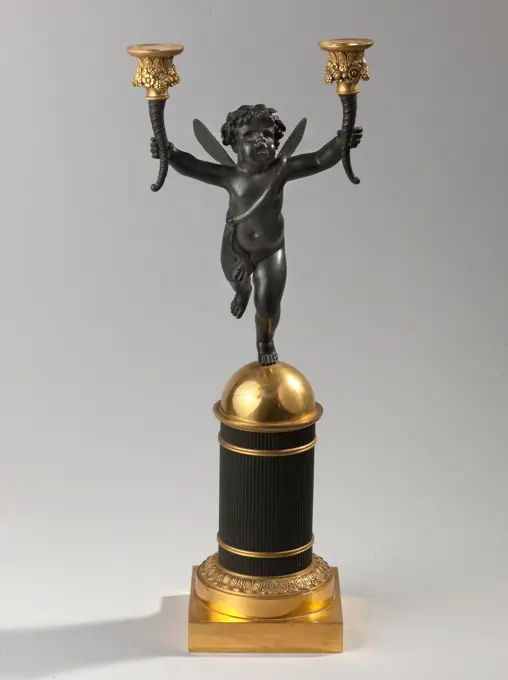
Arm with candle holder of candle crown of two heights, each with eight arms, 1525 - 1550 Candle arm belonging to a candle crown of two heights with maria figure at the top. The arm is bent twice and is decorated with four grapes bunches and five vine leaves. The round fat catcher is decorated at the bottom with six round lobes. The candle holder is six -flat, opened, placed on three vertical styles, transferring to a threaded protrusion. This is the second arm of the upper ring, numbered with 2 round points. The candle holder is unnumbered. Southern Netherlands brass (alloy) casting Candle arm belonging to a candle crown of two heights with maria figure at the top. The arm is bent twice and is decorated with four grapes bunches and five vine leaves. The round fat catcher is decorated at the bottom with six round lobes. The candle holder is six -flat, opened, placed on three vertical styles, transferring to a threaded protrusion. This is the second arm of the upper ring, numbered with 2
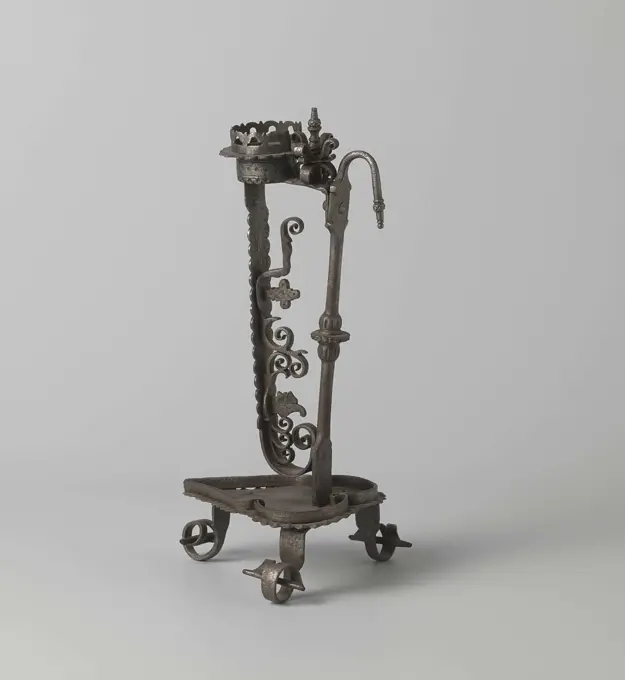
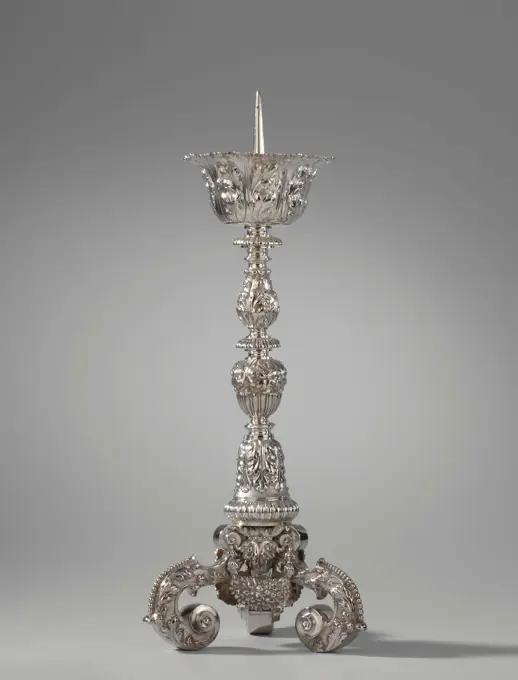
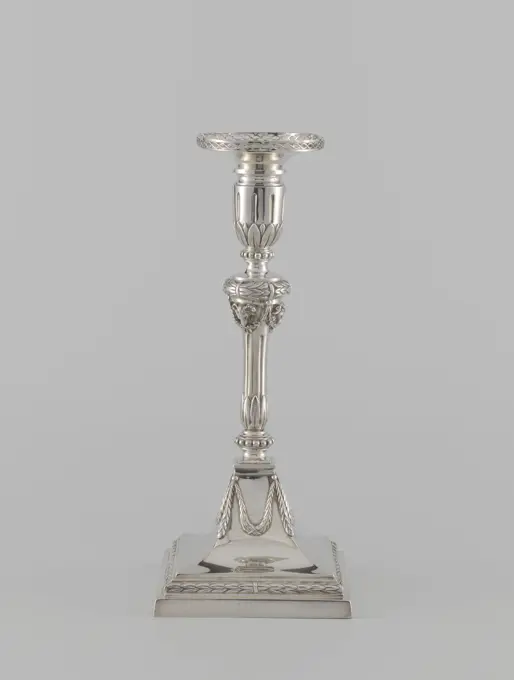
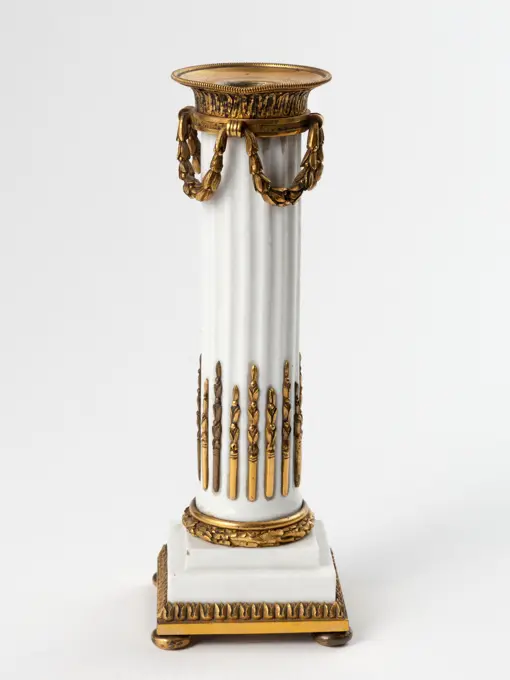
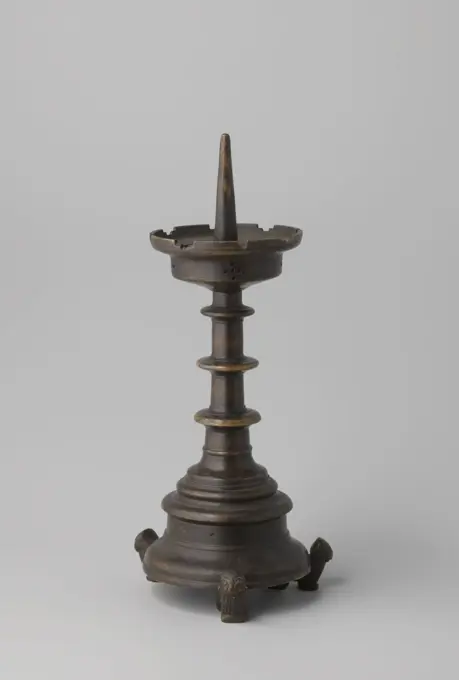
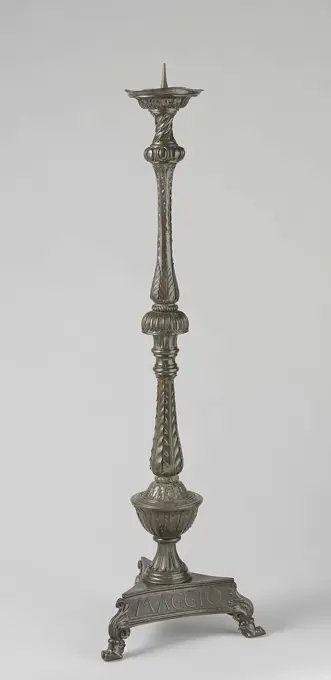
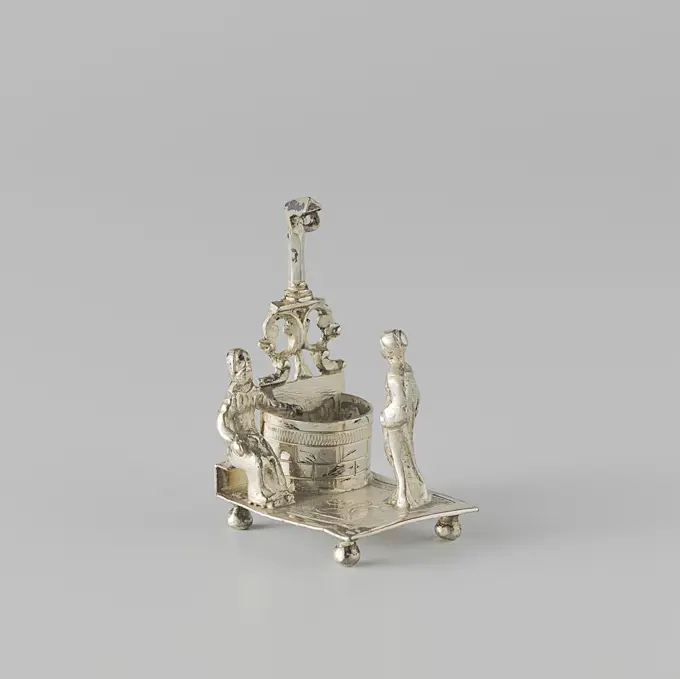
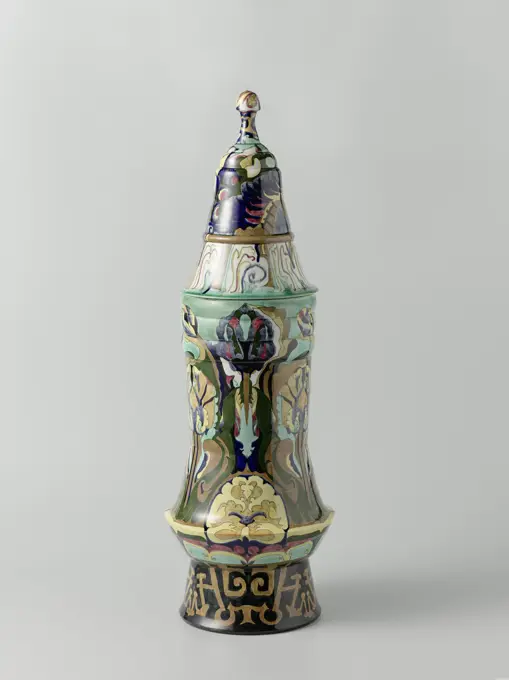
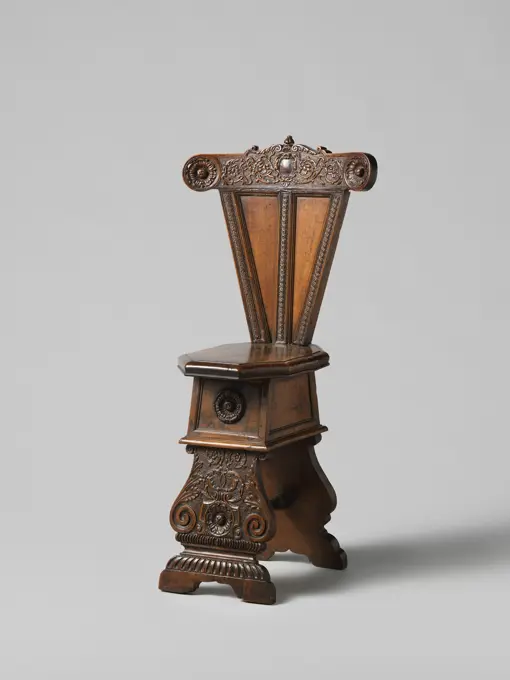
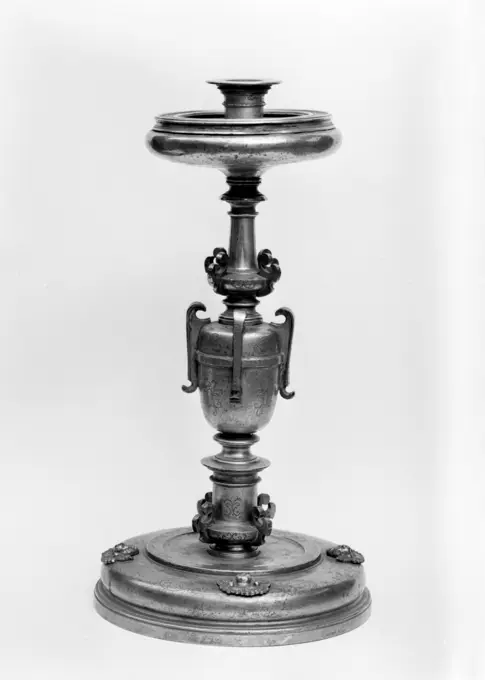
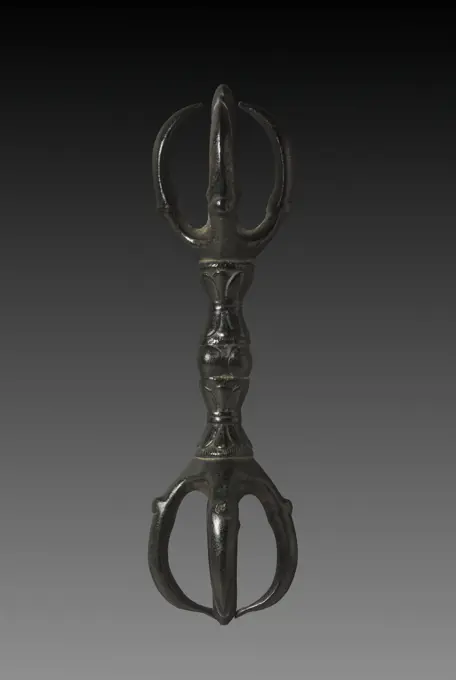
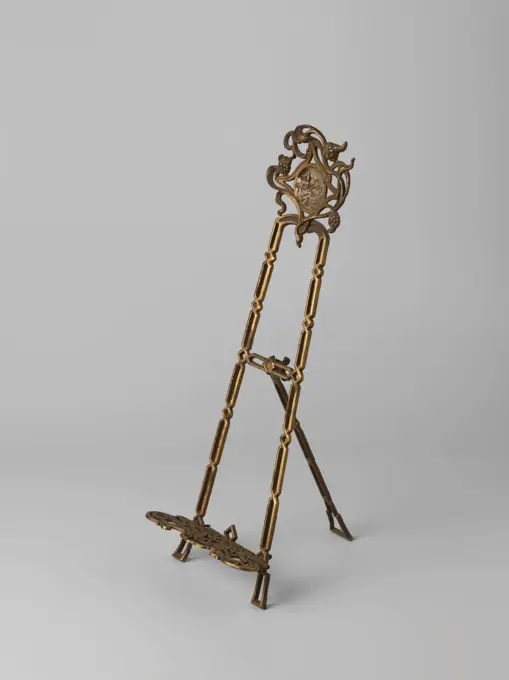
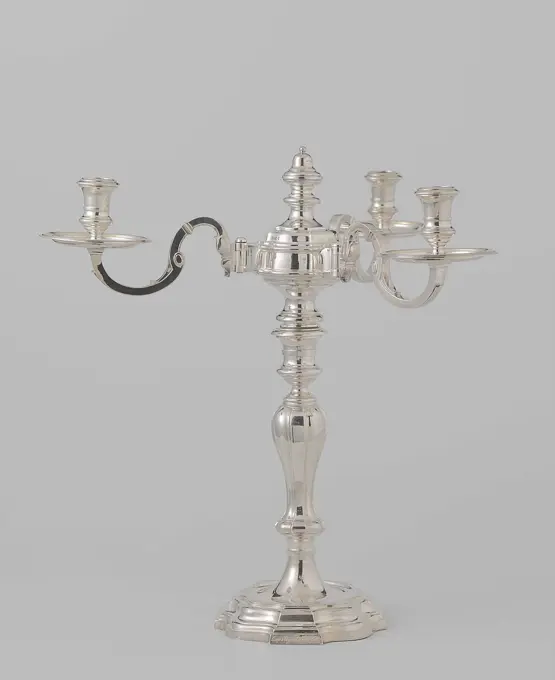
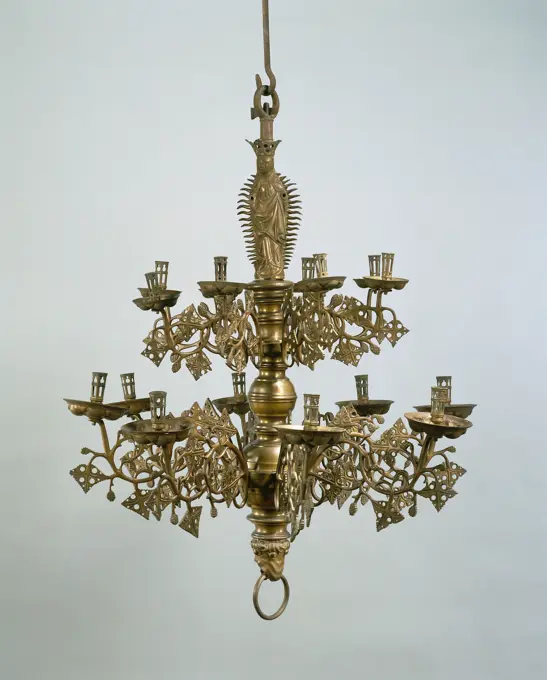
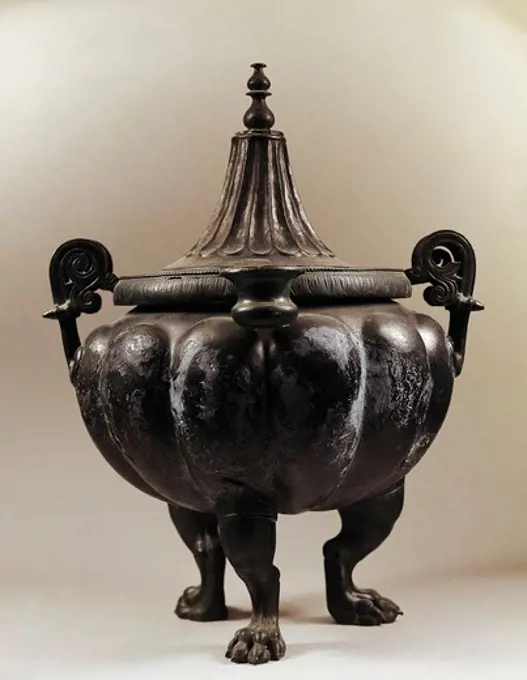
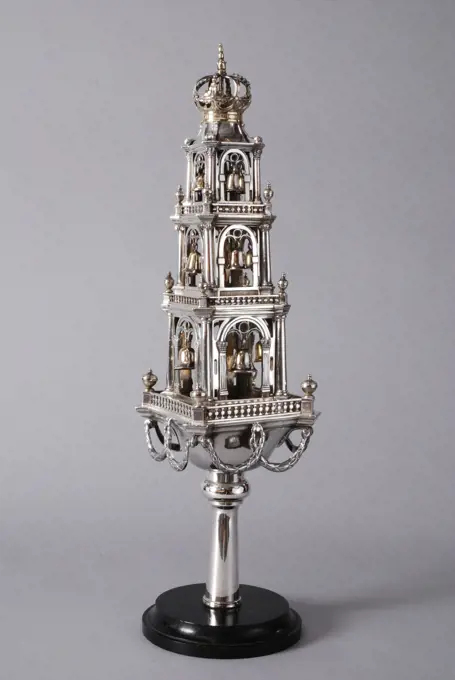
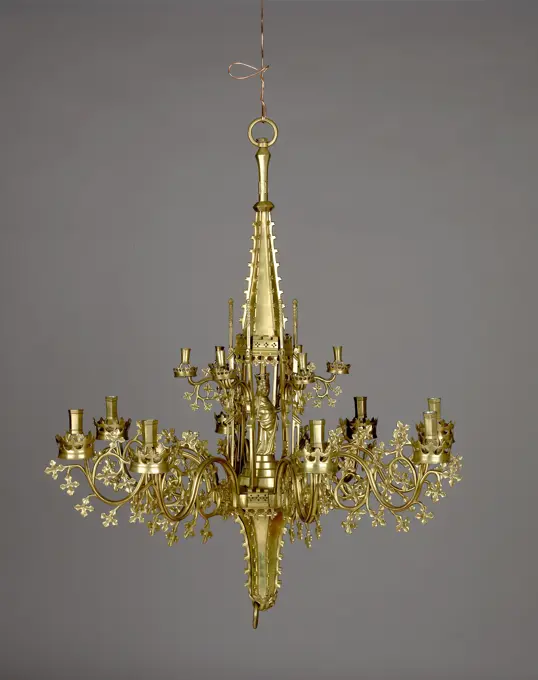
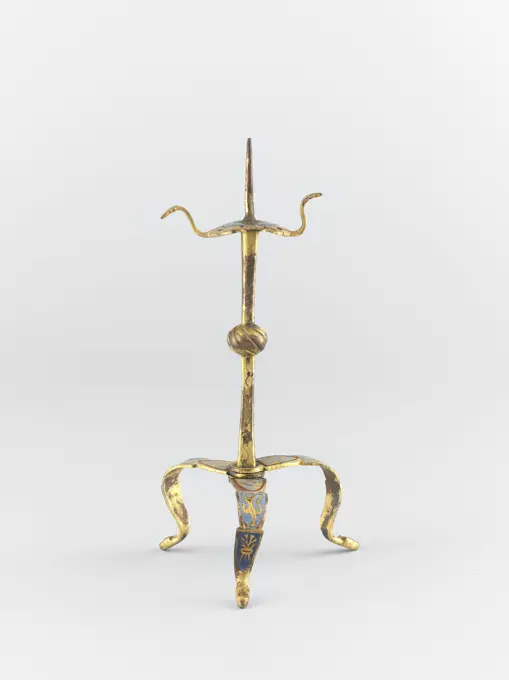
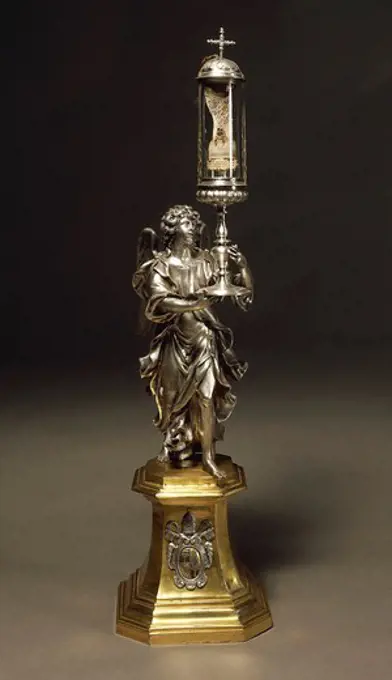
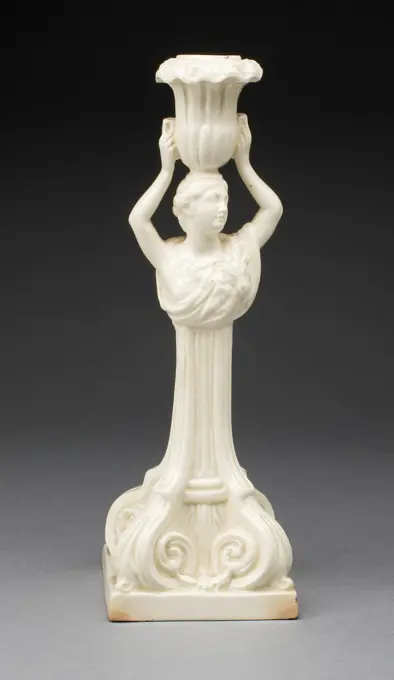
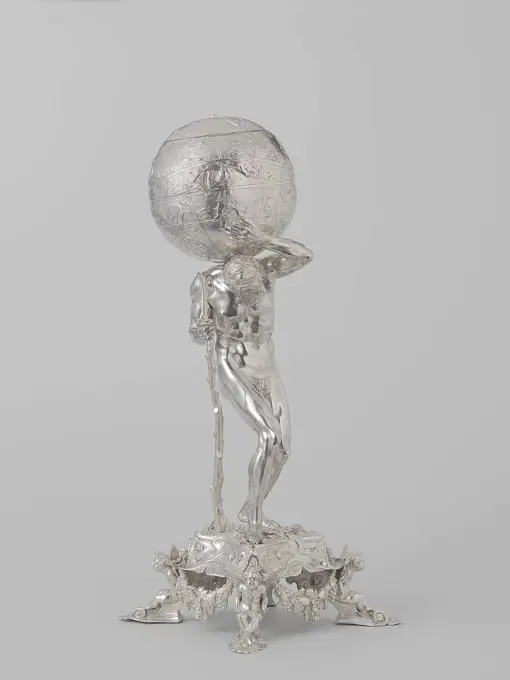
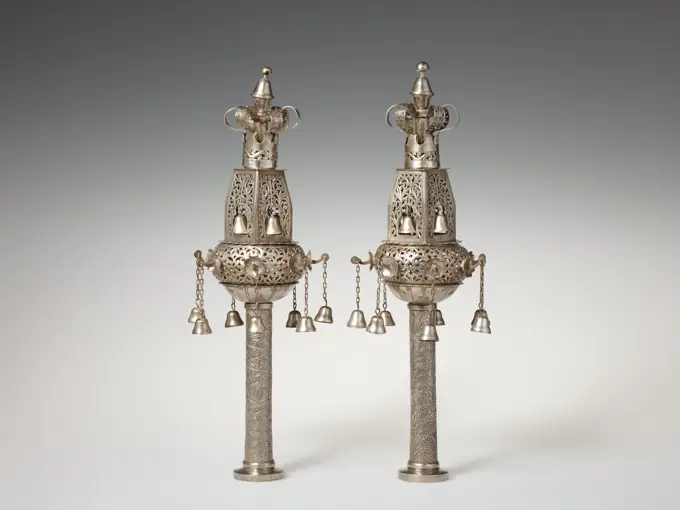
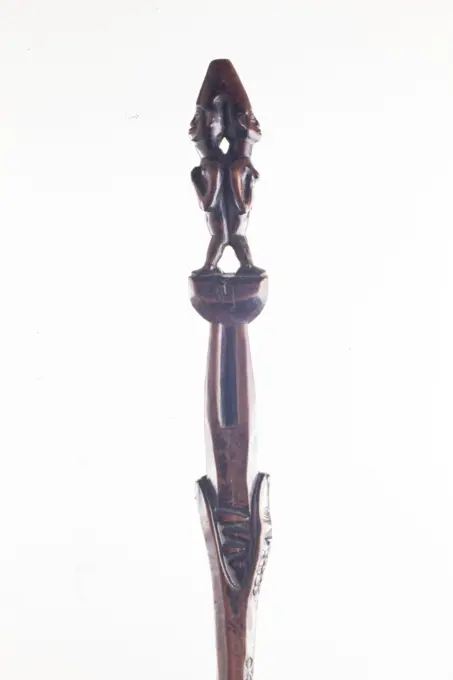
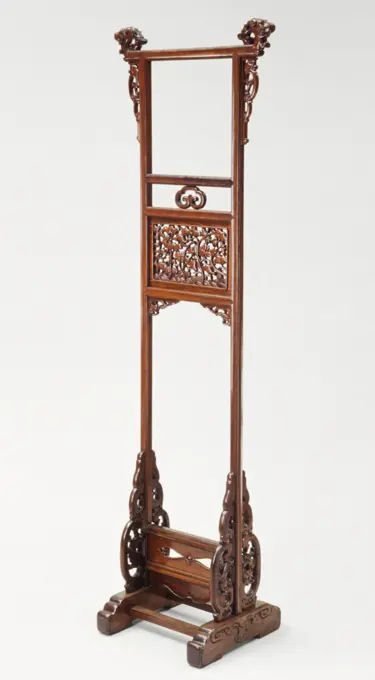
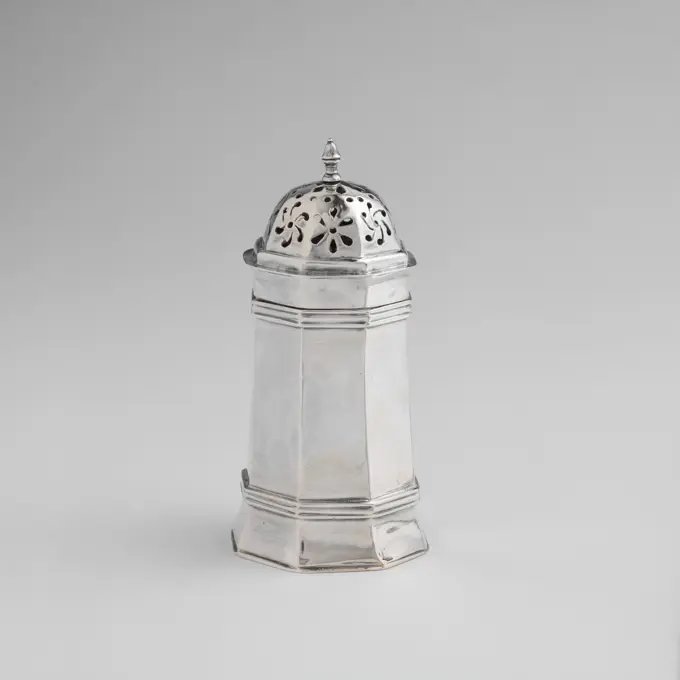
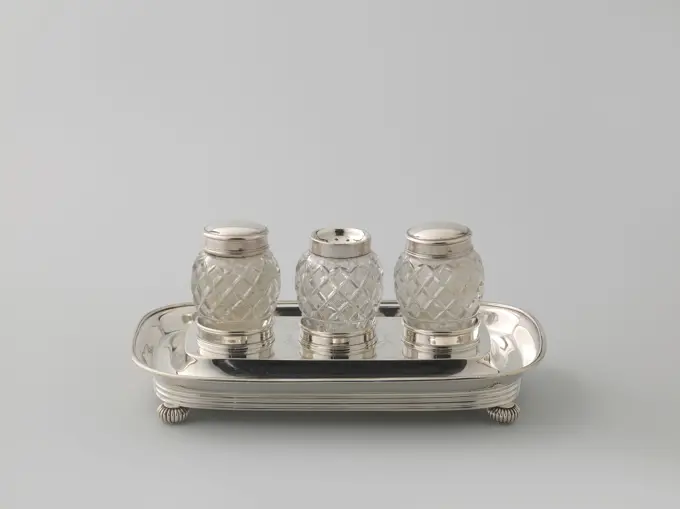
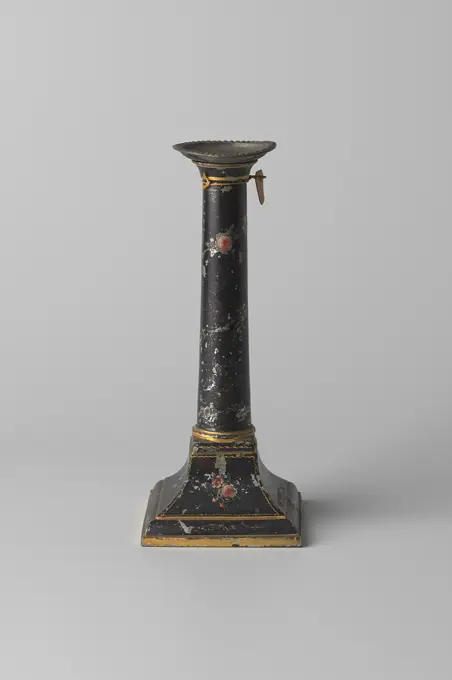
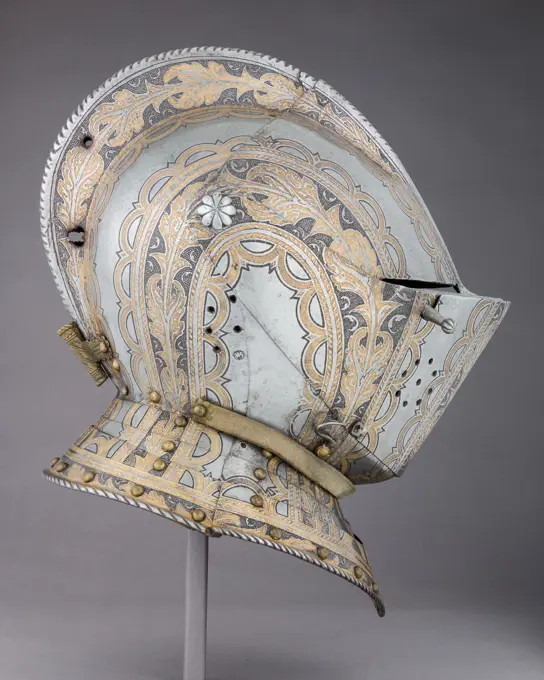
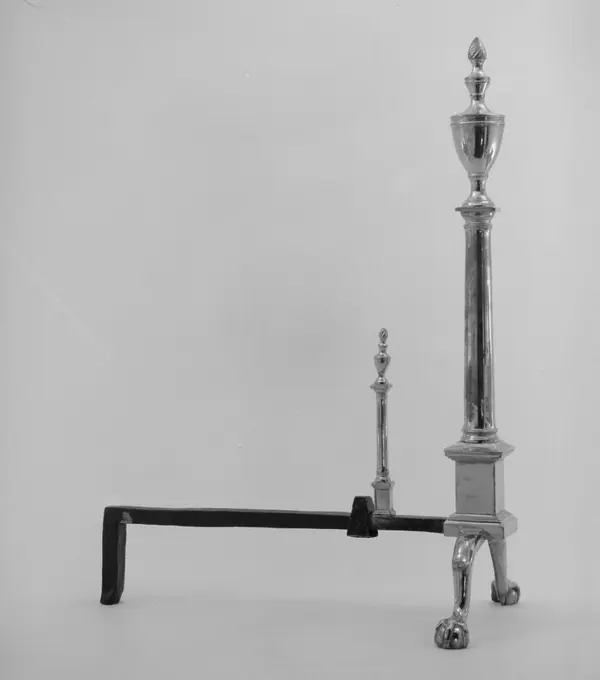
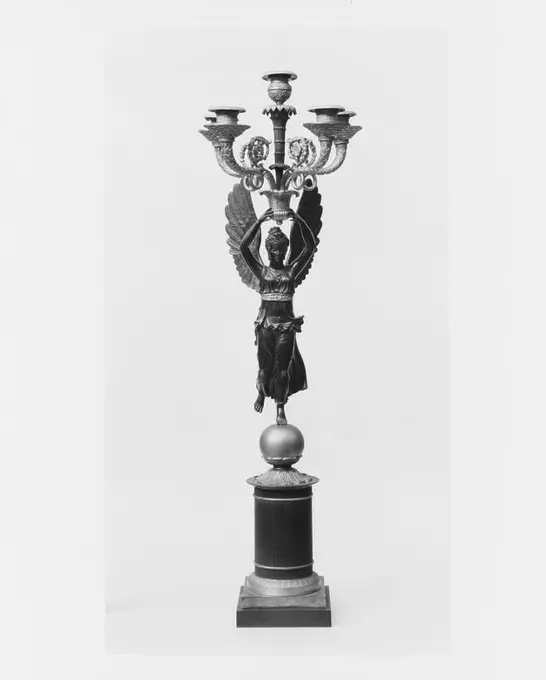
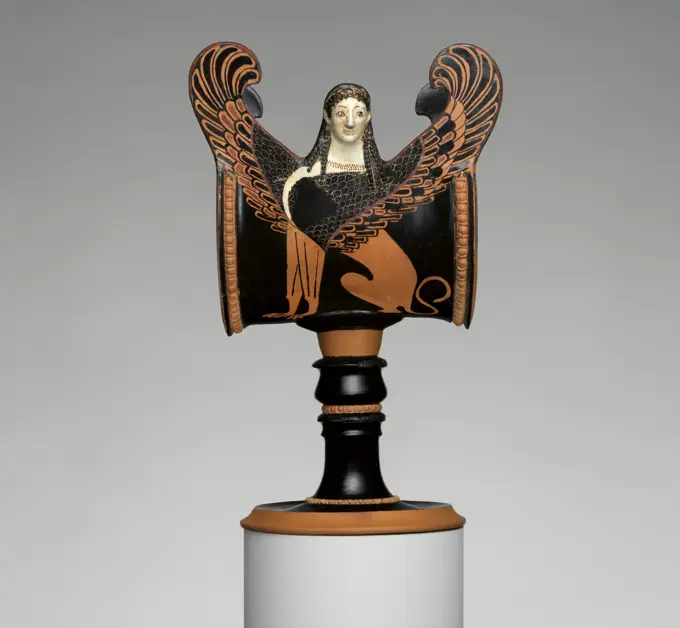
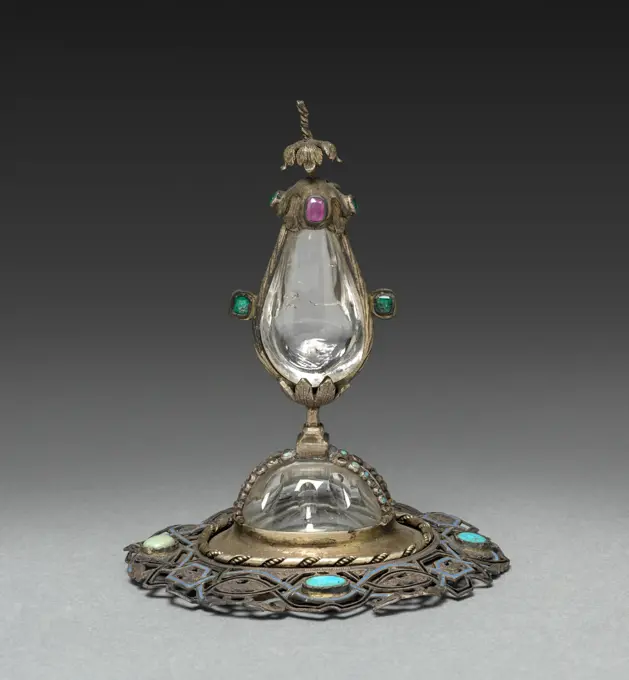
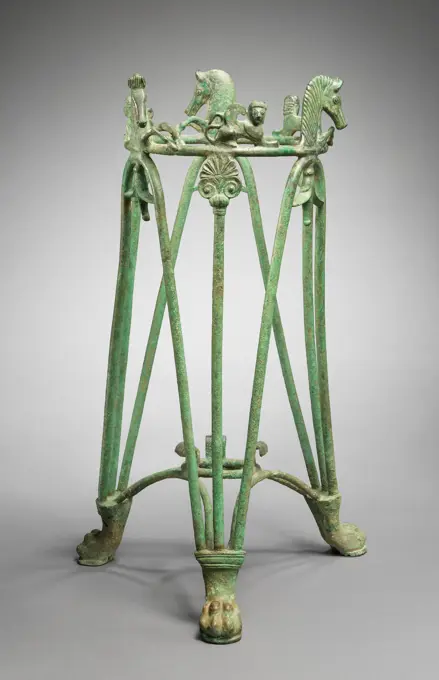
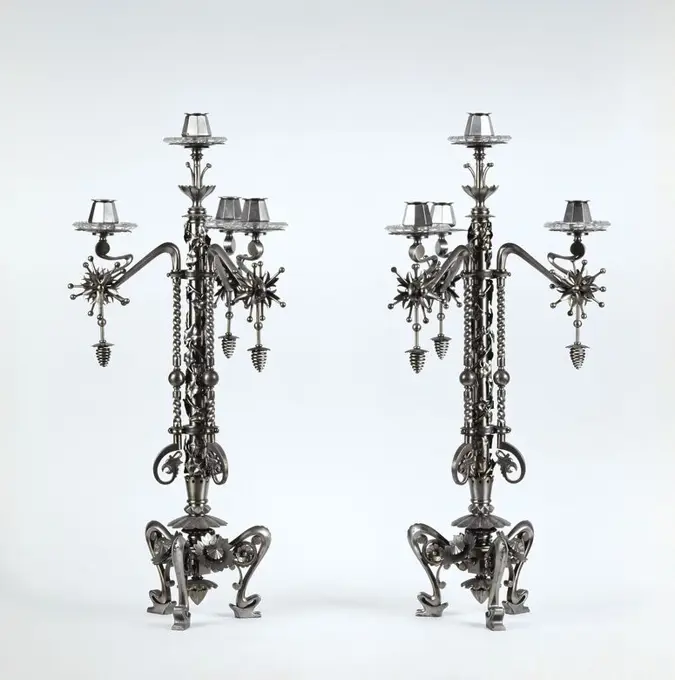
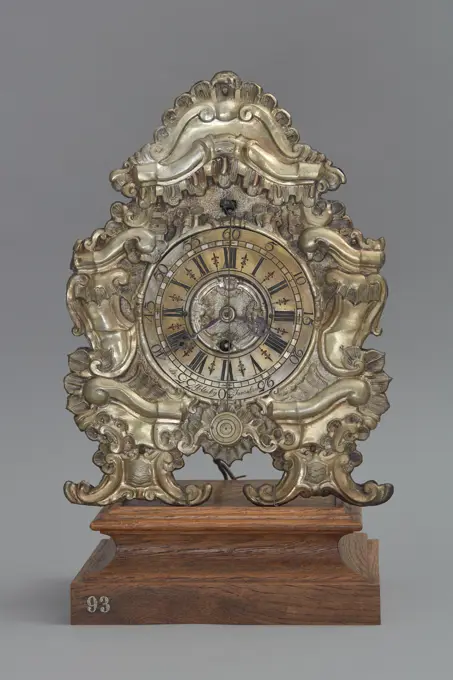
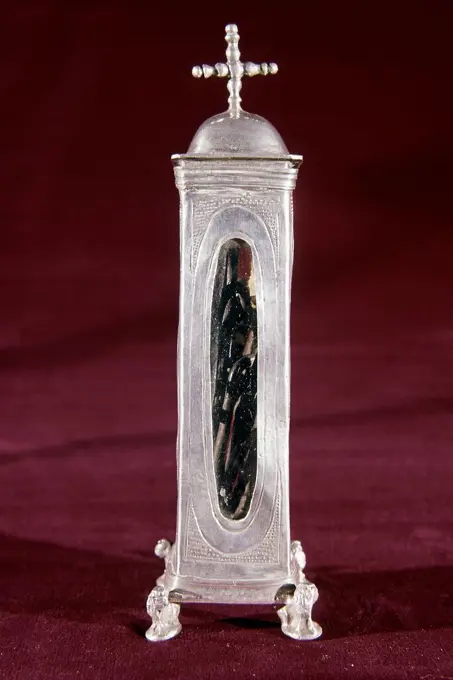
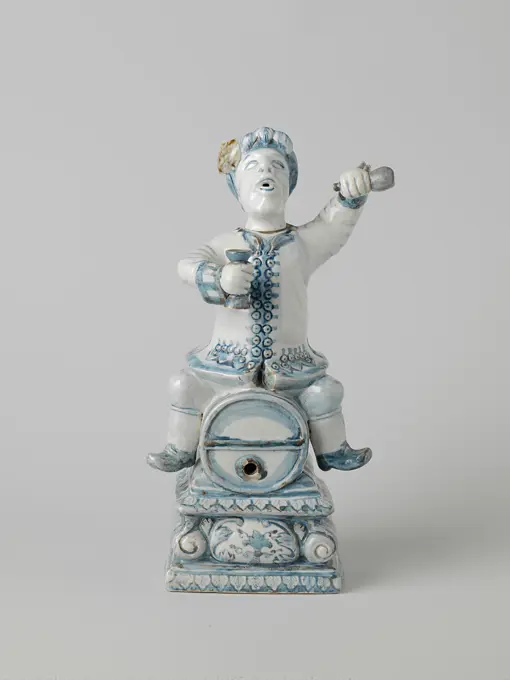
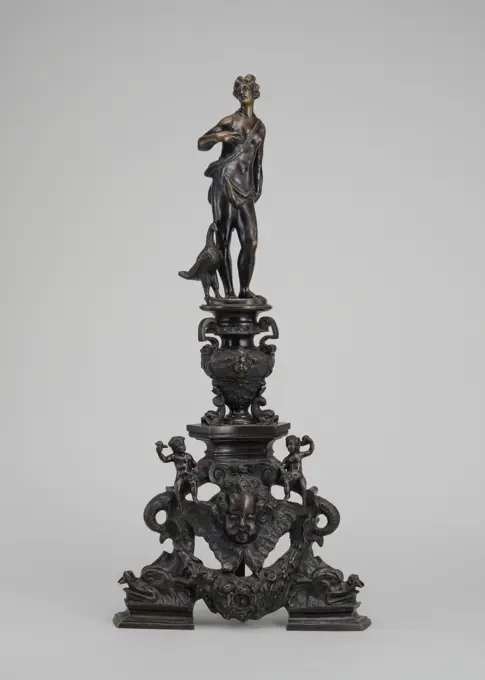
Italian 17th 19th Century, Andiron with Figure of Juno, 17th 19th century Andiron with Figure of JunoArm with candle holder of candle crown of two heights, each with eight arms, 1525 - 1550 Candle arm belonging to a candle crown of two heights with maria figure at the top. The arm is bent twice and is decorated with four grapes bunches and five vine leaves. The round fat catcher is decorated at the bottom with six round lobes. The candle holder is six -flat, opened, placed on three vertical styles, transferring to a threaded protrusion. This is the second arm of the upper ring, numbered with 2 round points. The candle holder is unnumbered. Southern Netherlands brass (alloy) casting Candle arm belonging to a candle crown of two heights with maria figure at the top. The arm is bent twice and is decorated with four grapes bunches and five vine leaves. The round fat catcher is decorated at the bottom with six round lobes. The candle holder is six -flat, opened, placed on three vertical styles, transferring to a threaded protrusion. This is the second arm of the upper ring, numbered with 2Candlestick with spring mechanism. Candlestick of wrought iron on three flat legs, which curl down inside. Above it riveted a leaf-shaped flat plate with a raised edge, which serves as a fat catcher. In addition to the point of point of the leaf shape, the stem is riveted, which is top and top plate, and between in round with a flat, minted disk between two channeled bulb shapes in the middle. At the top of the trunk curls something, creating a small handle. Riveted to the trunk is the candle holder with a crowny ornament. At the bottom of the trunk the spring is riveted, ending in the candle holder and decorated with some curls and other ornaments between the spring and the trunk. D.M.V. The spring is adjustable the height of candle.. The round candlestick rests on three four-sided, volull-like legs. The sides of the legs have deepened, punched fields and are decorated with acanthus leaves; A cord of smaller pearls runs over the front of each leg, resting on a leaf curl. The legs are connected to the top by straight rods, with the eye extracted from leaves, culot-like motif. Of the upper curls of the vultuts, flower festivals depend (on b one renewed). The strain is made of a clock-shaped, a vase-shaped and a baluster-shaped component. The convex bottom of the bell shape is decorated with varied wide and narrow godruns. In addition, this part shows two layers of acanthus leaves placed on a punched soil. Clock and vase form are separated by a multi-profiled connector. The vase is divided into an understood and a top, similarly decorated as the bottom edge and the upper part of the bell shape. The Baluster is almost completely caught in from above curly acanthus leaves and is closed on top and bottom by profiled por. Candlestick of silver. The six-spectant, vaulted foot runs into the strain, which is taught above the nodus. At the foot festivals, connected by a rest of lobe ornament. The nodus and trunk are decorated with driven flowers and tendrils. The loose fat catcher is unfiled.Bone of the plaque decorative;  2 after. XVII century (1650-00-00-1700-00-00);Child Op Schommel, Gijsbert Barbiers (attributed to), c. 1822 - c. 1827 There is a swing on an elongated plate on which a woman sits. A diamond pattern is engraved in the plate. The image is marked with twice a dolphin and a master sign. Utrecht silver (metal) There is a swing on an elongated plate on which a woman sits. A diamond pattern is engraved in the plate. The image is marked with twice a dolphin and a master sign. Utrecht silver (metal)Candlestick of silver with square base and round trunk, candle holder and loose fat catcher., Johannes Henricus Pluygers, 1783 Candlestick consisting of a square base and a round trunk, candle holder and loose fat catcher. Marked and dated. The Hague silver (metal) casting Candlestick consisting of a square base and a round trunk, candle holder and loose fat catcher. Marked and dated. The Hague silver (metal) castingCandlestick, Cornelis Knuysting (possibly), 1789 - 1791 Silver candlestick, in Louis XIV style. The channeled trunk runs out wider upwards and is closed by a rosette list on which three garlands hang. Rotterdam silver (metal) Silver candlestick, in Louis XIV style. The channeled trunk runs out wider upwards and is closed by a rosette list on which three garlands hang. Rotterdam silver (metal)Candelabrum 16th century Italian. Candelabrum. Italian. 16th century. Wood. Woodwork-FurnitureJean-Baptiste Locré (1726-1810). Torch. White porcelain, chiseled and golden bronze. 1785. Paris, Carnavalet museum. Bronze gilded, gilding, torch, 18th 18th 18th 18th 18th 18th 18th centuryCandlestick with profiled foot and trunk, resting on three lions, anonymous, c. 1850 - c. 1900 The candlestick is composed of the following parts: the foot and the trunk, which are cast in one whole, the fat catcher, the candle pin and the three pedestals. The foot is hollow from the inside to the bottom knot. The profiled Konian foot turns into the round trunk with three knots. This is located at the fat catcher with on top of the large unprovilated candle pin. The round -deepened fat catcher has a flat lying edge, which turns into a narrow raised edge with eight uneven tilts. Four decorations have been installed in the raised edge of the fat catcher, consisting of a perforation in the form of a five pass. Foot, trunk and fat catcher are decorated with grooved rings. The candlestick has three cams at the bottom of the inside, in which iron bolts are attached, in which the lions are clank that serve as pedestals. West-Europa brass (alloy). iron (metal) casting The candlestick is composAn Italian inscription on this candlesticks base states: ‘May and June 1468. Carlo di Niccola di Messer Vieri de Medici was then gonfaloniere, the highest office in Florence. He commissioned the candlestick from the renowned sculptor Verrocchio to commemorate the peace of 1468, marking the end of the war against Venice. The candlestick stood in the town hall of Florence.Sconce;  And PO .Xix w. (1801-00-00-1850-00-00);Candlestick; brassButton, 1800s. Balkans, 19th century. Silver; average: 8.3 cm (3 1/4 in.).Rod with figure of candle crown, c. 1525 - c. 1575 The object consists of two iron rods, two copper spikes and the following parts of yellow copper: the hanging ring, the figure of a naked woman with spear and penny. The round hanging ring turns into an eight -fold tube. The standing naked female figure stands on a ground with a hole in the middle (in order to be able to attach a key in the iron rod) and a notch on the edge. She holds a spear with a penny. She wears a chain around her neck (). The hair is draped around her head. A short iron rod is applied to the head, on which the hanging ring fits. The trunk is carefully profiled with a stand ring with notches for the three decorative pieces at the top, then a stand ring with notches for the three upper arms, then a stand ring with notches for the lower six arms and with six holes in the placement of the one on one Bol sitting trumpet. All notches and holes are marked with one, two or more triangular markings. Three holes were drilleChrist and the Samaritan woman, Anonymous, c. 1600 - c. 1700 On a rectangular plate is a semicircular, cylindrical well. Next to the well is a man with a beard. His left hand is on the edge of the well. Opposite the man is a woman. Christ presents Christ with the Samaritan woman. The plate is on four Bolpoten, has an engraved Zig-Zag line along the edge and has engraved leaves in a corner. The image is marked with an illegible brand. Netherlands silver (metal) On a rectangular plate is a semicircular, cylindrical well. Next to the well is a man with a beard. His left hand is on the edge of the well. Opposite the man is a woman. Christ presents Christ with the Samaritan woman. The plate is on four Bolpoten, has an engraved Zig-Zag line along the edge and has engraved leaves in a corner. The image is marked with an illegible brand. Netherlands silver (metal)Garniture of five vases, Theo Colenbrander, 1886 Vase with lid from a series of five pieces, design Colenbrander. Marked: WG with the letter F in between with an extra crossbar, hedge and b (= 1886). The Hague earthenware Vase with lid from a series of five pieces, design Colenbrander. Marked: WG with the letter F in between with an extra crossbar, hedge and b (= 1886). The Hague earthenwareSgabello with octagonal seat, anonymous, c. 1500 - c. 1600 Chair of Notenhout, resting on a stand placed in spread, front and rear board, connected by a twisted sport. The front board is decorated with grunts, acanthus voluten and vines and a circle rosette. The wide seating rules are slippery; The front line has a circle rosette. The seat is octagonal. The back has the shape of an inverted similar triangle with two flat panels. The upper sill is decorated with circle rosettes, rolling cartouche with a button, and acanthus voluten and ranks. Italy wood (plant material). walnut (hardwood) Chair of Notenhout, resting on a stand placed in spread, front and rear board, connected by a twisted sport. The front board is decorated with grunts, acanthus voluten and vines and a circle rosette. The wide seating rules are slippery; The front line has a circle rosette. The seat is octagonal. The back has the shape of an inverted similar triangle with two flat panels. The upper sill is decorated witSgabaLo with octagonal seat. Chair of walnut, resting on a, placed in spread, front and backboard, connected by a twisted sport. The front plate is decorated with graces, acanthus volutes and drinks and a circular rosette. The wide seat rules are smooth; The rule has a circular rosette. The seat is octagonal. The back has the shape of a reverse-like triangle with two flat panels. The upper sill is decorated with circular rosons, roller-cartouche with button, and acanthus volutes and drinks.Candle of candle crown, c. 1475 - c. 1485 Candle arm belonging to a candle crown of three heights with Maria Chapel in the middle. The arm is bent twice and has eleven leaves. The fat catcher rests at the end, which has a vertical serrated edge with cruciferous motifs on the underside. The candle holder is six-flagged with a perforated side on the front and back and has a vertical ring-shaped lower piece. This is the fourth arm of the middle ring (center of the bars), numbered with 4 dots. Southern Netherlands brass (alloy) casting Candle arm belonging to a candle crown of three heights with Maria Chapel in the middle. The arm is bent twice and has eleven leaves. The fat catcher rests at the end, which has a vertical serrated edge with cruciferous motifs on the underside. The candle holder is six-flagged with a perforated side on the front and back and has a vertical ring-shaped lower piece. This is the fourth arm of the middle ring (center of the bars), numbered with 4 dots. Southern Gold head of a pin with the figure of Nike (Victory) 1st century A.D. Roman The pin is modern.. Gold head of a pin with the figure of Nike (Victory) 250651 Roman, Gold head of a pin with the figure of Nike (Victory), 1st century A.D., Gold, H.: 1 7/8 in. (4.8 cm). The Metropolitan Museum of Art, New York. Rogers Fund, 1917 (17.230.126)Candlestick 17th century Spanish. Candlestick 198949Five-pronged Vajra Pestle (Gokosho), 900s. Japan, Heian period (794-1185). Bronze; overall: 15 cm (5 7/8 in.).Photo album stand, 1880 - 1920 stand (support object)   iron (metal)Candlestick, worn by three fantasy animals. The object is composed of the following parts: the foot, the trunk and the fat catcher, which are cast in one whole, the candle pin and the three pedestals. The trunk is massive. The profiled konian foot is about in the round trunk with one button. The fat catcher and the candle pin connect this. The round-deepened fat catcher has four decorations in the upright wall, consisting of a perforation in the form of a three-pass. Foot, trunk and fat catcher are decorated with fine grooved rings. The candlestick has three cams on the inside, to which the three pedestals are arranged in the form of fantasized animals. These are not originally.Candelabrum (Netherlands); Designed by Jan Eisenloeffel (1876 - 1957); brass; 38 x 25.5 x 13.8 cm (14 15/16 x 10 1/16 x 5 7/16 in.)Pair of Two-Light Candelabra Candelabra; Attributed to Mennecy Porcelain Manufactory (France); France; soft paste porcelain; bronze, goldRelicario, siglo XIV, Nº Inv. 31.33. Catedral de Santa Tecla de Tarragona.. The candelabers (BK-NM-12502 and BK-NM-12503) consist of a candlestick and a tightener with three hinged arms. The profiled, rejuvenating foot is octagonal in diameter, with alternating straight and corrugated sides. In the flat top there is a round floor from which it also rises round, rubbed by a ring articulated top. Then the baluster-shaped strain, standing on a widened spherical base. The trunk is also octagonal; The alternating straight and pumping sides correspond to that of the foot. The vase-shaped, profiled candle holder is in diameter again. The thrilled body of this is led by a ring. In the candle holder, the attachment consists of a hexagonal core that has varied straight and corrugated sides, and three arms connected by hinges with the straight sides of the core. The profiled core, which drops first and then rejuvenates, rests on a round, cured foot and is crowned by a round, multi-profiled button with a clock-shaped closure. The arms built up from two C-voltages are sq. Candlestick of silver, with vaulted foot standing on 3 bolballs. The trunk has been taught. Decorated with flower drinks.Wall Fountain, 1774-1793; tin-glazed earthenwareMontrans from the R.K. Church in Vessem, Noord-Brabant, Anonymous, c. 1550 - c. 1600 The object consists of the following parts: the foot, which turns into the lower half of the trunk, the nodus, the upper half of the trunk, the bottom of the holder, the host standard (the lunula), the frames and the two vertical connecting pieces (the buttresses), then the crown, consisting of a lid on which a tower striker composed of ten parts is placed. The parts are largely assembled and secured with pens. The bottom of the holder is sounding. The sea -lobby foot runs at the bottom in a wide flat edge. She moves upwards into the six -square trunk, which in the middle has a coarse with six unprocessed facets decorated Nodus. Both trunk sections are interrupted by six -sided knots. The cylinder frames have two edges, in which cross -flower profiles are cut out. Each supporting is decorated with a curl, pinnacles and a window trailing decorated with highly. Three connecting pieces have the shape of s. Large arm of candle wreath.Screen to  1820s (1801-00-00-1900-00-00);Arm of a candle crown in three heights, Anonymous, 1717 chandelier The S-shaped arm is equipped with a ridge on the tribe side to secure it with a pin in the stand ring. At the trunk, the arm is decorated at the end and to the center with two stylized dolphin heads and with curls, the shape of which is derived from the lobe ornament. To the outside, the arm ends in a thickening, in which a hole provided with a thread is applied to attach the candle holder to the fat catcher. The arm is cast using the same model as the other arms of the wreath. The candle holder is cylinder -shaped with profiled excellent edge and with a baluster foot, which turns into a threaded end, in which the center hole at the bottom. The fat catcher is deepened twice at the top towards the center. At the bottom it is profiled around the hole in the somewhat spherical center and the edge is ribbed. The fat catcher has been cast using the same model as the other fat catchers of this wreath. The pin is equipped withKey European 19th centuryRoman civilization, bronze vessel, from Pompei, ItalyCandlestick, c. 1740. Juste-Aurèle Meissonnier (French, 1695-1750). Gilt metal; overall: 29.6 x 18.5 x 16.9 cm (11 5/8 x 7 5/16 x 6 5/8 in.).Silversmith: Hendrik Vrijman, Ornamental tower for thorarol, three floors in the shape of the superstructure of the tower of the Westerkerk in Amsterdam, ornamental tower silver wood, cast Tower consisting of three floors in the shape of the superstructure of the tower of the Westerkerk in Amsterdam (architect Hendrik de Keyser) resting on cushion shaped extension ending in smooth handle with nodus sliding over pin of wooden round foot vaulted roof with volute on the corners gilded crown on top Pincushion-shaped attachment (smashed in) synagogue wetsrol Hendrik de Keyser religious ceremony thora tora jew Judaism judaica religion migration Purchasing with support Vereniging Rembrandt and contribution of the Government.Lamp with Kinnara. Indonesia, Eastern Java, 13th-14th century. Furnishings; Lighting. Copper alloyChandelier with tabernacle (Kapellenkrone) ca. 1450-70 South Netherlandish, Dinant () The branches and shaft of the chandelier have been correspondingly numbered with a system of drill holes. The branches and nozzles are similar in shape to those of a large tabernacle-chandelier from the church of Saint James at The Hague and now in the Rijksmuseum, Amsterdam.. Chandelier with tabernacle (Kapellenkrone) 460975Claughter on three legs in the shape of a dragon unknownPair of candlesticks Russian 18th-19th century View more. Pair of candlesticks. Russian. 18th-19th century. Brass. Metalwork-BrassLamp 1830-38 Allen Porter. Lamp 4714Lid of a jar. Vaulted lid with faceted, pear-shaped button on three discs. A engraved flower and leaf garland on the lid.Travel candlestick on Trievoet, decorated with three weapons, Anonymous, c. 1275 - c. 1325 Travel candlestick of gilded copper and email Champlevé. The square trunk, decorated with a twisted Nodus, thickened at the base, is based on three legs, which are rotatable around a pivot and can be pushed over each other. They are each decorated with three triangular coats of arms: one banned of gold and lazuur, drilled with throat, one of laze with climbing Golden Lion, one of laze with golden flower. The fat catcher with candle pen is partially enamelled with blue. Limoges bronze (metal). gilding (material). gilding Travel candlestick of gilded copper and email Champlevé. The square trunk, decorated with a twisted Nodus, thickened at the base, is based on three legs, which are rotatable around a pivot and can be pushed over each other. They are each decorated with three triangular coats of arms: one banned of gold and lazuur, drilled with throat, one of laze with climbing Golden Lion, one of Goldsmith's art, 16th century. Reliquary of Saint Lawrence, 1500-1550.Silversmith's art, Italy, 17th century. Silver and gilded bronze Saint George and the Princess, late 1600, attributed to Lorenzo Vaccaro (1655-1706).Two Candlestands, anonymous, c. 1685 - c. 1700 furniture Torchère from Gilded Lindenhout. The foot consists of three rays -placed broken volutes, decorated with standing Acanthus leaf and covered by three lambrequins. In the middle part of the three -sided, openwork shaft, which plays upwards, a bell cord hangs; On the sides there are three consoles decorated with a grinding list decorated with Acanthusblad, which carry the upper part of the shaft upwards upwards. The round, chalice -shaped light holder is covered flat. BK-14302-B. Paris wood (plant material). gilding (material). linden. walnut (hardwood) gildingCandlestick Made 1780-1800 Yorkshire. Lead-glazed earthenware (creamware) .. The figure of Hercules was modelled by the German artist Christophe Jamnitzer, a well-known sculptor in silver. A few decades later the figure was incorporated on another precious object, whose richly decorated base and beaker followed his ideas. Since the beaker bears Venetian city hallmarks, this version was probably made there.Stand 1880-85 American. Stand 14291Rimmonim (Torah finial) (one of a pair), c. 1920, 13 3/4 x 4 3/4 in. (34.9 x 12.07 cm), Silver, Morocco, 20th century, The abstracted plant motifs, arabesques, and C-scrolls that decorate this pair of rimmonim, or Torah finials, are typical of those found in Moroccan metalwork. These would be placed on the staves of a Torah protruding from the top of a hard-sided tik, or Torah container, such as the one also seen in this case.Candlestick. Palissy, Bernard (1510-1589), authorArm with candle holder of candle crown of two heights with six arms each, c. 1475 - c. 1500 Candle arm belonging to a candle crown of two heights with maria figure at the top. The arm is bent twice and is decorated with two grape bunches and two vine leaves. The round fat catcher has openwork, serrated vertically placed edges at the bottom, to mask the confirmation on the arm. This is done by a round iron pin, which is screwed into the end of the arm. This is the second arm of the upper ring, numbered with 2 vertical notches. The fat catcher is numbered with 2 vertical notches. Southern Netherlands brass (alloy). kaarsenpin: iron (metal) casting / forging Candle arm belonging to a candle crown of two heights with maria figure at the top. The arm is bent twice and is decorated with two grape bunches and two vine leaves. The round fat catcher has openwork, serrated vertically placed edges at the bottom, to mask the confirmation on the arm. This is done by a round iron pin, which is screwArm with candle holder of candle crown of two heights with six arms each, c. 1475 - c. 1500 Candle arm belonging to a candle crown of two heights with maria figure at the top. The arm is bent twice and is decorated with four grapes bunches and five vine leaves. The round fat catcher has openwork, serrated vertically placed edges at the bottom, to mask the confirmation on the arm. This is done by a round iron pin, which is screwed into the end of the arm. This is the first arm of the bottom ring, numbered with 1 vertical notch. The fat catcher is numbered with 1 vertical notch. Southern Netherlands brass (alloy). kaarsenpin: iron (metal) casting / forging Candle arm belonging to a candle crown of two heights with maria figure at the top. The arm is bent twice and is decorated with four grapes bunches and five vine leaves. The round fat catcher has openwork, serrated vertically placed edges at the bottom, to mask the confirmation on the arm. This is done by a round iron pin, which is scrDog Supporting an Escutcheon, from the Top of a Balustrade or the Backrest of the Stadholders Chair in the Rolzaal in the Hof van Holland, The Hague, Joost Janszoon, Jan de Paep, 1511 Sculpture of animal or human with weapon board, sitting on a column. The statue is part of eleven images (BK-NM-144-1 to BK-NM-144-12).  wood (plant material). oak (wood). paint (coating) Sculpture of animal or human with weapon board, sitting on a column. The statue is part of eleven images (BK-NM-144-1 to BK-NM-144-12).  wood (plant material). oak (wood). paint (coating)Silversmith: Douwe Eysma, Silver handbell, handbell sound silver, communication sound mealOboe, MA, c. 1700 - c. 1749 Hobe of Palmhout with three round brass valves. The third and fourth gap are double. There is a resemblance to Stanesy's Hobos. Marked: star / illegible / Mon / star. France boxwood. kleppen: brass (alloy) Hobe of Palmhout with three round brass valves. The third and fourth gap are double. There is a resemblance to Stanesy's Hobos. Marked: star / illegible / Mon / star. France boxwood. kleppen: brass (alloy)Staff, 20th century, 50 5/8 x 2 1/4 x 1 1/2 in. (128.6 x 5.7 x 3.8 cm), Wood, raffia, brass, Democratic Republic of the Congo, 20th centuryInkwell (one of a pair) Surmounted by Finial Figures Representing History 17th century or later Possibly Northern Italian. Inkwell (one of a pair) Surmounted by Finial Figures Representing History 203945Towel Rack, early 18th century, 74 1/4 x 16 3/4 x 16 5/16 in. (188.6 x 42.55 x 41.43 cm), Huanghuali hardwood, China, 18th century, Sets of bedroom furniture, including towel racks, wash basin stands, storage trunks, dressing tables, mirror stands, and canopy beds were standard items in an aristocratic womans dowry (gifts a brides family contributed to her marriage). This freestanding hardwood towel rack, which exhibits exceptionally refined work, is the only example of this type known to exist. The top rail is decorated at each end with lingzhi motifs, the fungus of immortality. Both sides of the central panel feature exquisitely carved scenes of mandarin ducks in lotus ponds. The presence of these ducks, which mate for life, suggests a wish for a long, happy marital union.Pepper Box 1750-75 Jonathan Otis. Pepper Box 1473Pot van Inktstel, Theodorus Gerardus Bentvelt, 1824 Ton -shaped pot of colorless glass, decorated with a sharpened diamond pattern. The middle jar has a fixed silver lid, in which a pattern is sawn from a stylized flower surrounded by stars. The middle jar is intended for sand. The three holders are secured by means of a long pin under the bottom of the leaf. Around the middle holder is the inscription: Last gift from my clean: mother, died 25 Aug: 1824. Amsterdam glass. silver (metal) Ton -shaped pot of colorless glass, decorated with a sharpened diamond pattern. The middle jar has a fixed silver lid, in which a pattern is sawn from a stylized flower surrounded by stars. The middle jar is intended for sand. The three holders are secured by means of a long pin under the bottom of the leaf. Around the middle holder is the inscription: Last gift from my clean: mother, died 25 Aug: 1824. Amsterdam glass. silver (metal)Bronze perfume dipper 4th-3rd century BC. Etruscan The pin is surmounted by a statuette of a woman.. Bronze perfume dipper 251421 Etruscan, Bronze perfume dipper, 4th3rd century BC., Bronze, Other: 10 1/2 in. (26.7 cm). The Metropolitan Museum of Art, New York. Rogers Fund, 1923 (23.160.88)Folding chair. unknown, authorLluís Masriera / Candelero con reloj, 1891-1905. Colección privada. Author: LLUÍS MASRIERA I ROSÉS.Roy Williams, Candlestick, c 1937 CandlestickKey;  XVII century (1601-00-00-1700-00-00);Candlestick; Schmidt, Samuel Gotthelf (1752 or 1753-1827); 1790-1800 (1790-00-00-1800-00-00);Anonymous. "Putto candelabra". Golden bronze, black patina bronze, wood. Paris, Museum of Romantic Life. CandlesticksCandlestick, dropped, decorated with fine flower bouquets. A lacquered candlestick, around on square pedestal, with fine flower bouquets. Belongs to BK-NM-5460.Pair of Taper Holders 1723-1724 England. Silver . Matthew CooperMiniature chandelier (one of a pair) early 18th century Italian or German. Miniature chandelier (one of a pair) 202760Pair ofCandlesticksClose-Helmet ca. 1560 Italian. Close-Helmet 27159Image of cast silver, representing the holy Leonardus with staff, broken buoy and chain, anonymous, c. 1480 - c. 1500 Image of cast silver, representing the holy Leonardus with staff, broken buoy and chain. The statue stands on a high, tube with threads with thread. Northern Netherlands (possibly) silver (metal) Image of cast silver, representing the holy Leonardus with staff, broken buoy and chain. The statue stands on a high, tube with threads with thread. Northern Netherlands (possibly) silver (metal)Flip Glass (lid), late 1700s. America, late 18th century. Glass; overall: 33.7 x 16.5 cm (13 1/4 x 6 1/2 in.).Bronze statuette of a draped youth 5th century B.C. Etruscan Draped; perhaps a lighting utensil attachment.. Bronze statuette of a draped youth 252926 Etruscan, Bronze statuette of a draped youth, 5th century B.C., Bronze, H.: 3 11/16 in. (9.4 cm). The Metropolitan Museum of Art, New York. Fletcher Fund, 1927 (27.122.11)Andiron. Culture: American. Dimensions: 31 1/2 x 14 x 23 1/2 in. (80 x 35.6 x 59.7 cm). Maker: Attributed to Paul Revere Jr. (American, Boston, Massachusetts 1734-1818 Boston, Massachusetts). Date: ca. 1780. Museum: Metropolitan Museum of Art, New York, USA.Candelabrum. Dimensions: H. 30 15/16 in. (78.6 cm). Date: 1810-20. Museum: Metropolitan Museum of Art, New York, USA.Terracotta stand ca. 520 B.C. Greek, Attic A significant amount of Attic pottery was produced for the export to Etruria. Indigenous Etruscan shapes were reinterpreted in Athenian workshops; the Hellenized variants then sold to Etruscan patrons in the west and often buried in their tombs. The Etruscan prototypes generally exist in the sturdy black ware called bucchero. This pair of stands represents the phenomenon of adaptation with a shape unique in Attic vase-painting. They probably held floral or vegetal offerings.. Terracotta stand. Greek, Attic. ca. 520 B.C.. Terracotta; red-figure. Archaic. VasesBlood Reliquary (lid), 1500s. Italy (), 16th century. Gilt silver; overall: 35.6 cm (14 in.); diameter of base: 10 cm (3 15/16 in.); average: 4.7 x 6 cm (1 7/8 x 2 3/8 in.).Cigar and Tobacco Stand. Stockholm, Sweden; Attributed to Adolf Lindberg (Swedish, 1839-1916). Date: 1859-1872. Dimensions: Overall: 60.9 x 58.4 x 66 cm (24 x 23 x 26 in.). Ebony and other woods, silver liner, decorations of mother-of-pearl, gilded brass, blue glass, and blue velvet. Origin: Sweden. Museum: The Chicago Art Institute, Chicago, USA.. Candle arm belonging to a candle wreath of two heights with maria figure at the top. The arm is bent twice and is decorated with four grape fees and five winger leaves. The round fat catcher has opened, knurled vertically placed edges on the bottom, to mask the attachment to the arm. This is done by a round iron pin, which has been screwed into the end of the arm. This is the second arm of the lower ring, numbered with 2 vertical notches.Bronze rod tripod stand early 6th century B.C. Greek The tripod stands on feline-paw feet. Atop the central rod of each leg is a palmette, and above this, on the upper ring, a couchant sphinx. Large horse protomes, which includes the forelegs as well as the head, decorate the upper rim above each of the inverted U-shaped intermediate rods. Below each horse protome is a lotos blossom. The stand would have supported a bronze vessel.Rod tripod stands have a long history in the eastern Mediterranean region. The earliest examples occurred on Cyprus in the thirteenth century B.C., and the type continued to be produced there and elsewhere in the succeeding centuries. The Cypriot version has a wide distribution: it has been found on Cyprus, Crete, the Cyclades, mainland Greece, Sardinia, and Italy. This stand is an early example of a later, ornate type of Greek manufacturing. Cast in several pieces and then soldered and jointed together, it is a highly accomplished piece of metalwork. A relateTip TopTableGas Chandelier ca. 1850 Probably designed by Henry N. Hooper and Company. Gas Chandelier. American. ca. 1850. Glass, brass. Probably made in Boston, Massachusetts, United StatesFrancesc Vidal i Jevelli. Candelabros. Hierro plateado. 74 x 34 cm.Stun ,, 1700 - 1800 An iron sign, formed from two one above the other, counter-sided C-Voluten that end up in a curl and up in a large flower, facing one silk. The volute is decorated with leaves and three tendrils. Part of the flower is made of wood, completely gilt. Coming from the collection of Dr. F. Mannheimer. Italy iron (metal). wood (plant material) gilding An iron sign, formed from two one above the other, counter-sided C-Voluten that end up in a curl and up in a large flower, facing one silk. The volute is decorated with leaves and three tendrils. Part of the flower is made of wood, completely gilt. Coming from the collection of Dr. F. Mannheimer. Italy iron (metal). wood (plant material) gildingCandlestick from a five piece garniture, early 19th century, 8 1/2in. (21.6cm), Porcelain, China, 19th centuryPrzeszo Przyszoci Gilesky, B.Handle in the shape of a gnarled club and lion, symbols of Hercules, detail of a silver circular mirror, Pompeii, Campania, Italy. Roman civilisation, 1st century AD.. Collar cover on a six-edged foot. The base is from below wide and runs upwards diagonally, and then run out in a six-edged container. The profiled strain of the candlestick is in the container. The candlestick is not noticed.Nursery Lights, Lamps & LightingRELICARIO CON UN TROZO DE LA CADENA DE SAN PEDRO - SIGLO XVII. Location: CONVENTO DE LAS CLARISAS / MUSEO DE ARTE SACRO. MONFORTE DE LEMOS. LUGO. SPANIEN.Pair of wall sconces 1795-1810 American or British. Pair of wall sconces. American or British. 1795-1810. Gilded gesso on pine. Possibly made in England; Possibly made in United StatesSpirit Keg in the shape of a dutchman sitting astride a barrel. Genkar of porcelain, painted in underglaze blue. The jug is in the form of a husband Dutch man sitting on a ton, a bottle of persistent in his raised left hand and a glass in his other hand. The head is separate from the body and serves as a cap; On the head a sprung hat. At the front of the ton is a hole made for a (missing) brass tap. The ton rests on a pedestal with with plot ornaments in European style; The pedestal is decorated with leaf raft. Blue White.