Historic Helmets Collection

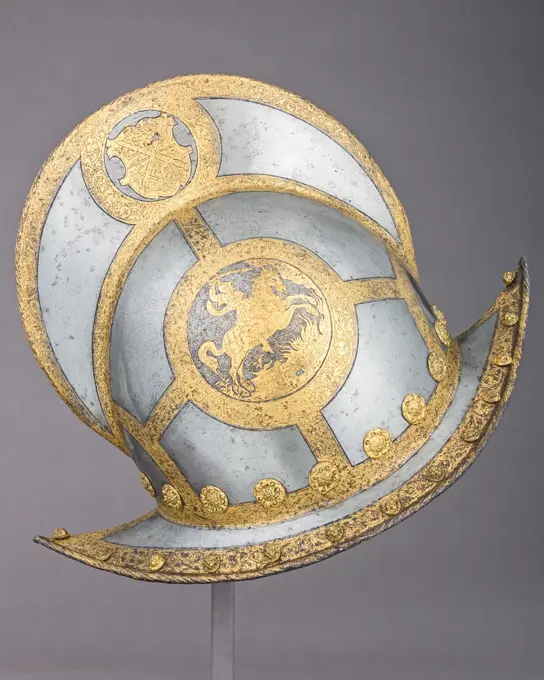
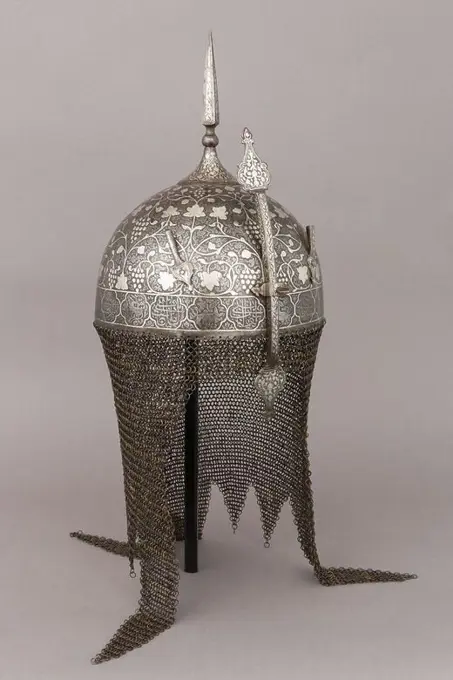
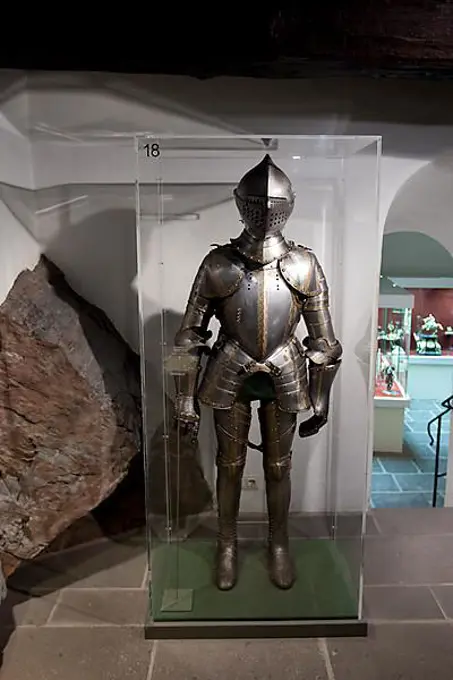
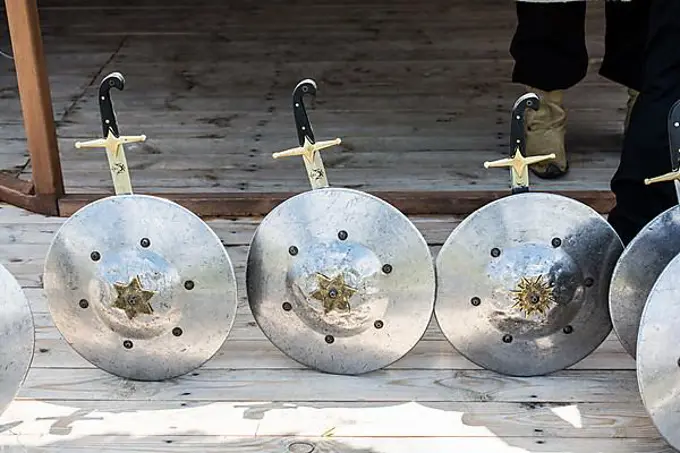
A display of ornate historical helmets from different cultures, showcasing intricate designs and craftsmanship from various periods.
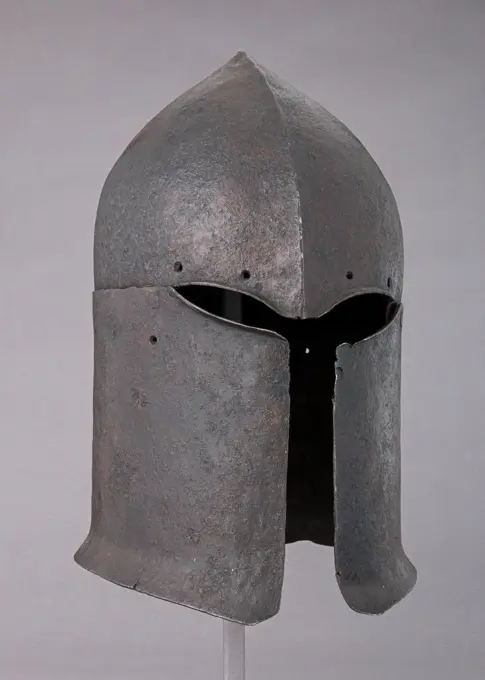
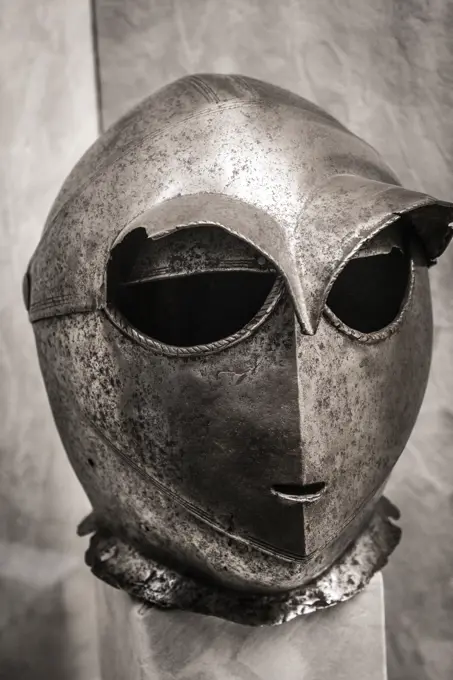
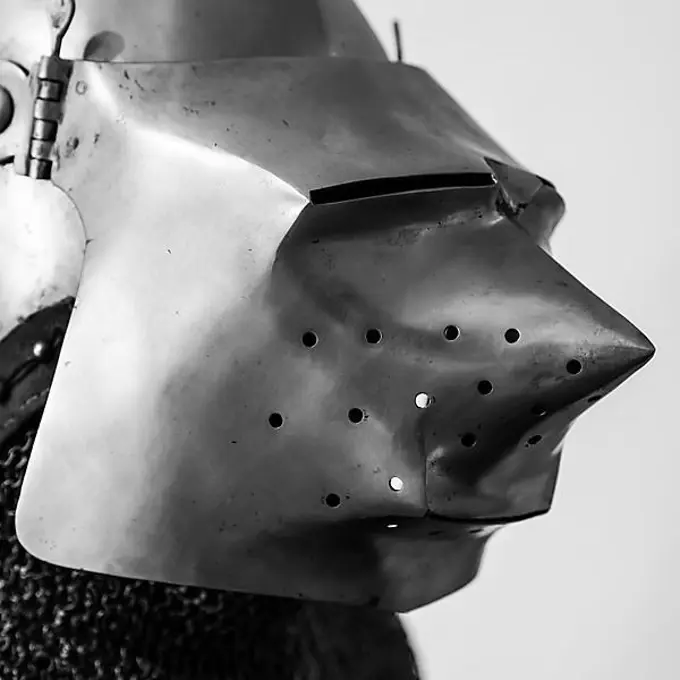
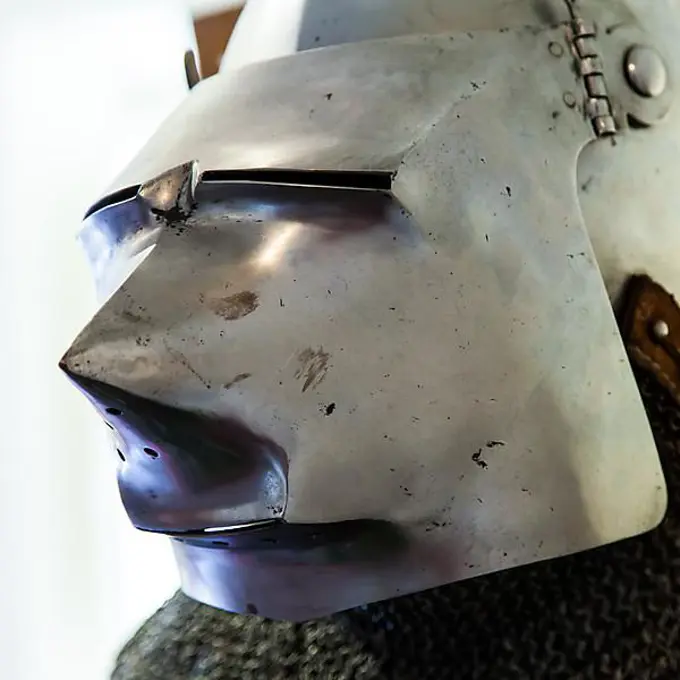
Great Sallet possibly 1420-50 Italian Apparently the forerunner of the one-piece barbute that appeared in Italy about 1440 these distinctive two-piece sallets are known only from Chalcis and other Aegean sites.. Great Sallet 23237
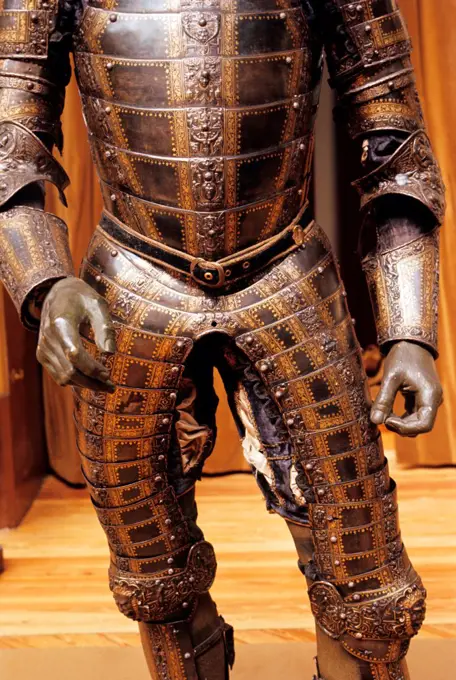
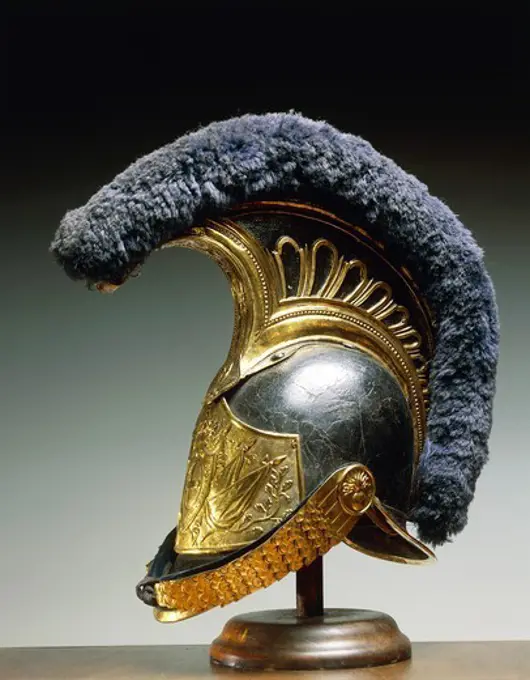
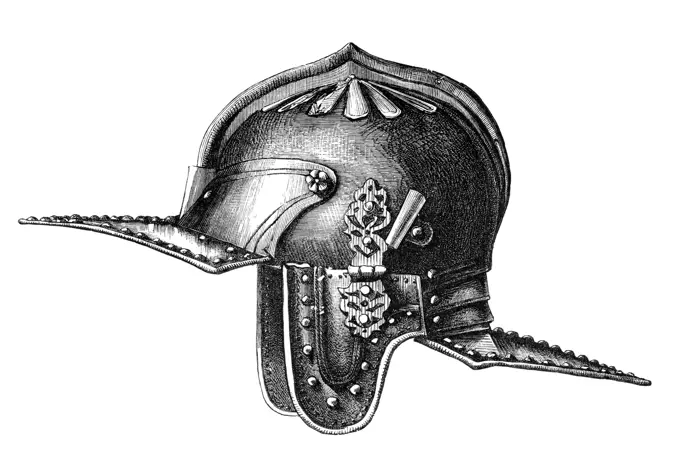
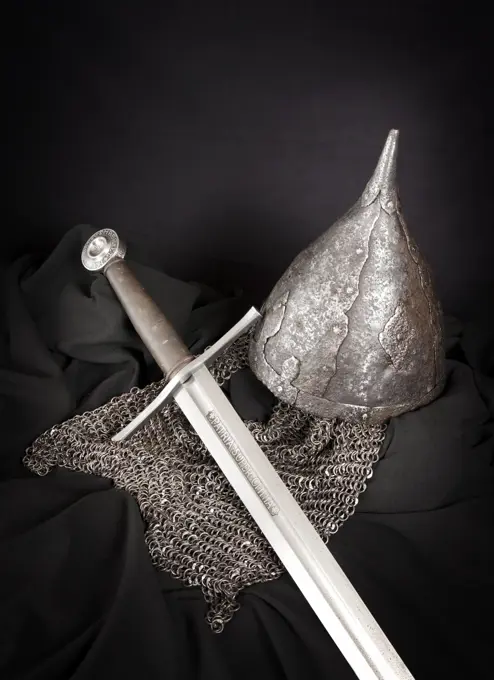
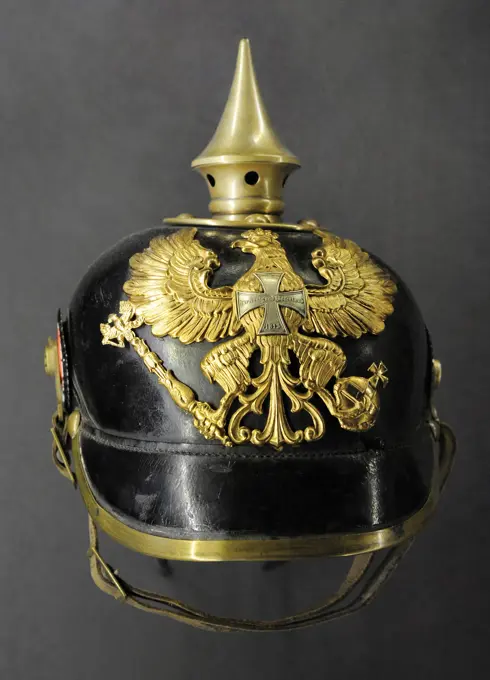
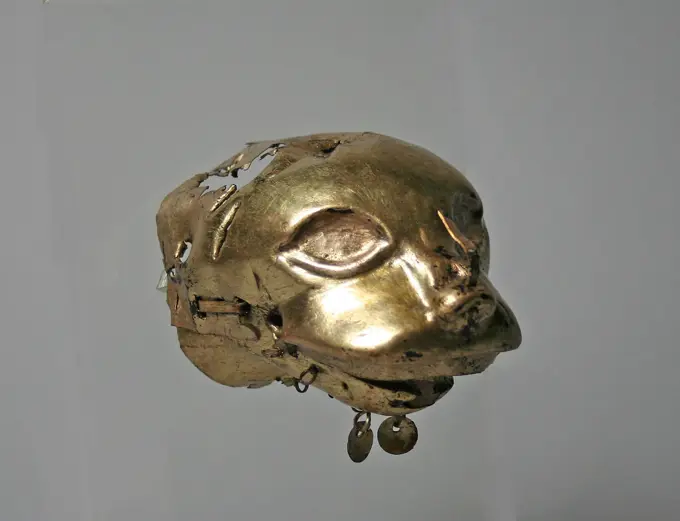
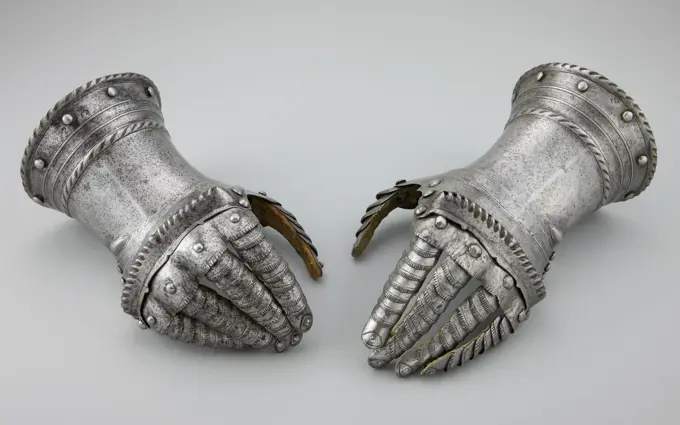
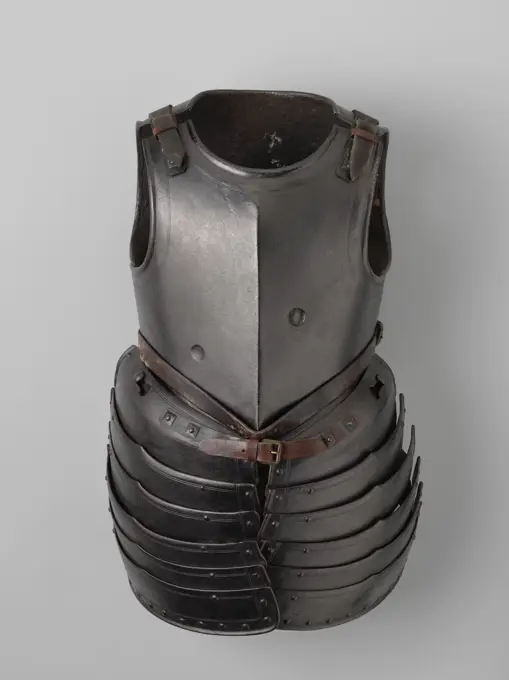
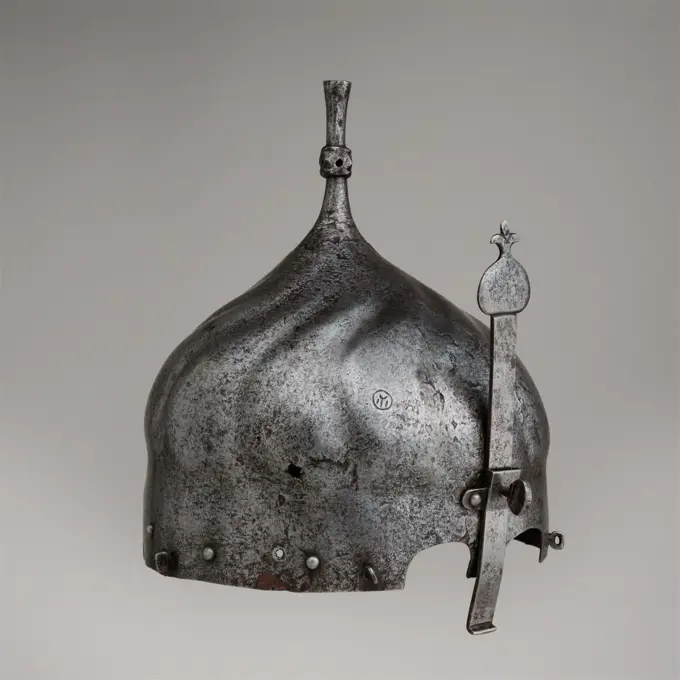
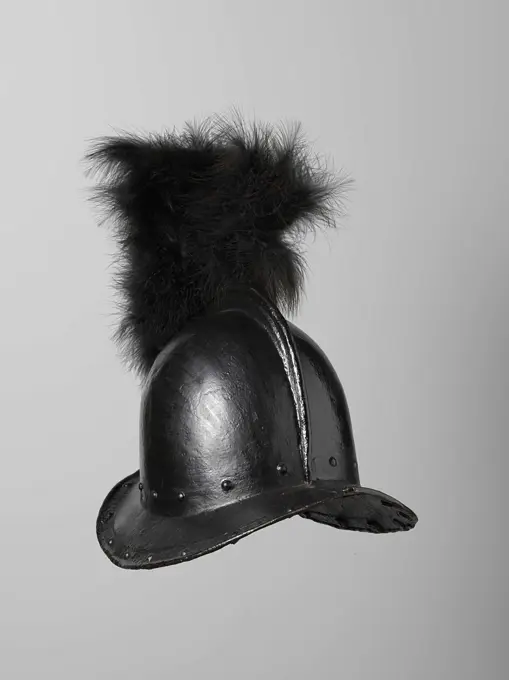
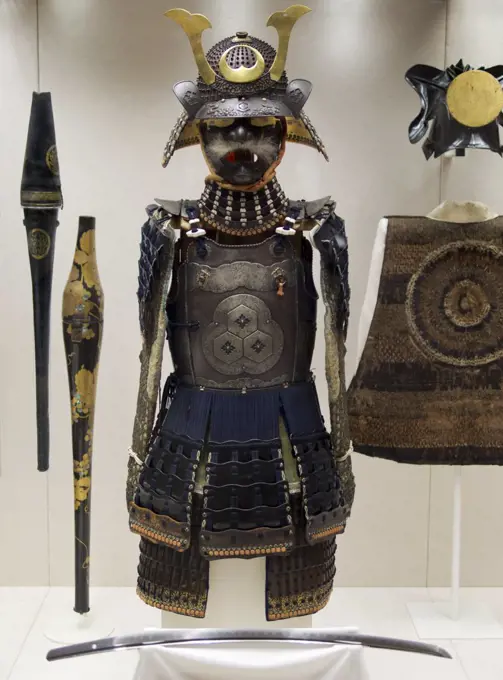
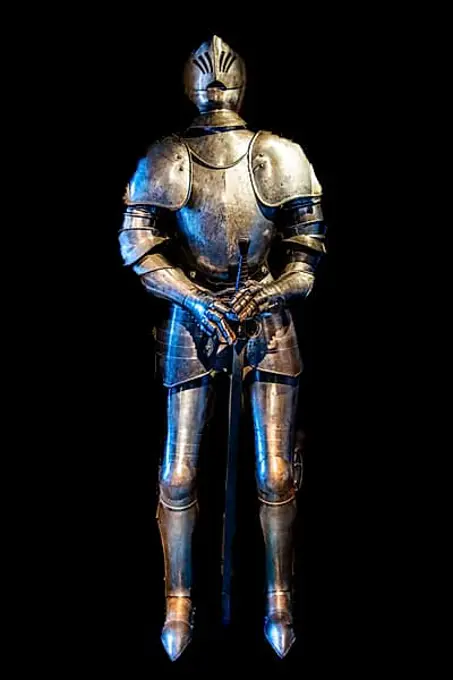
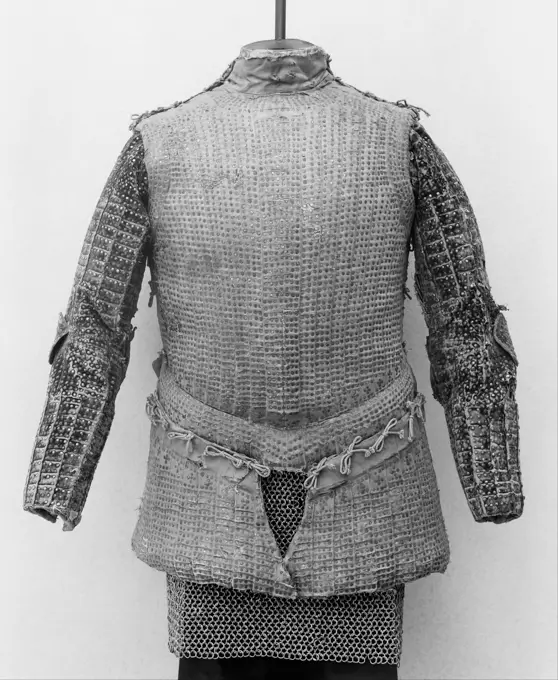
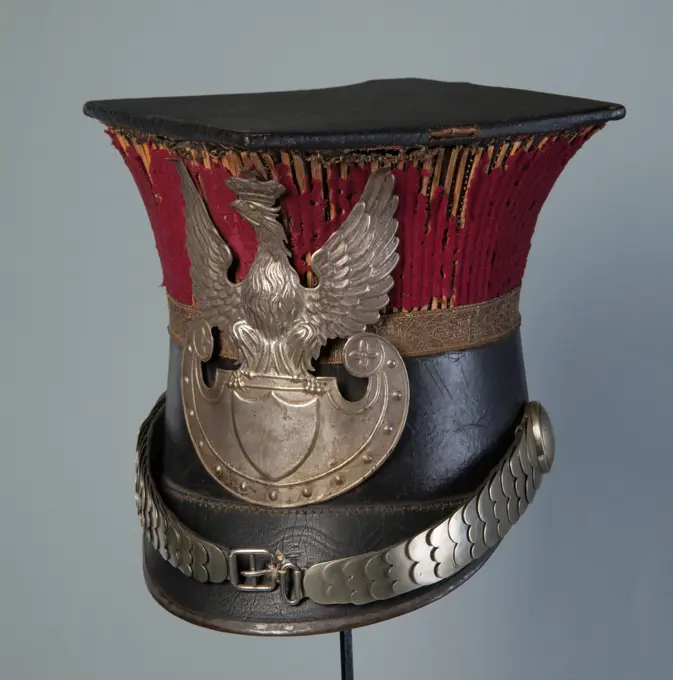
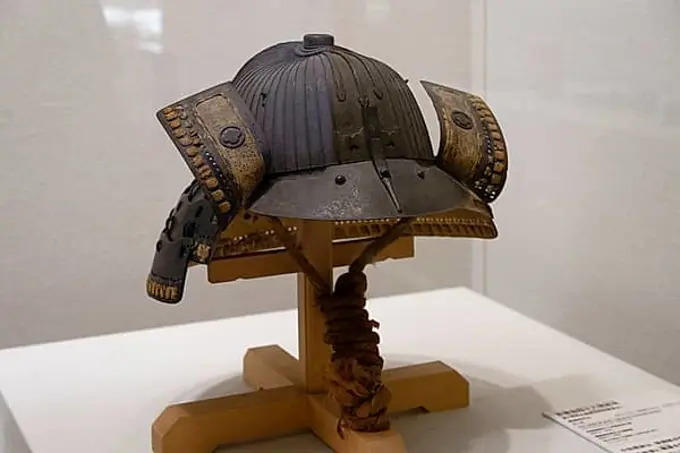
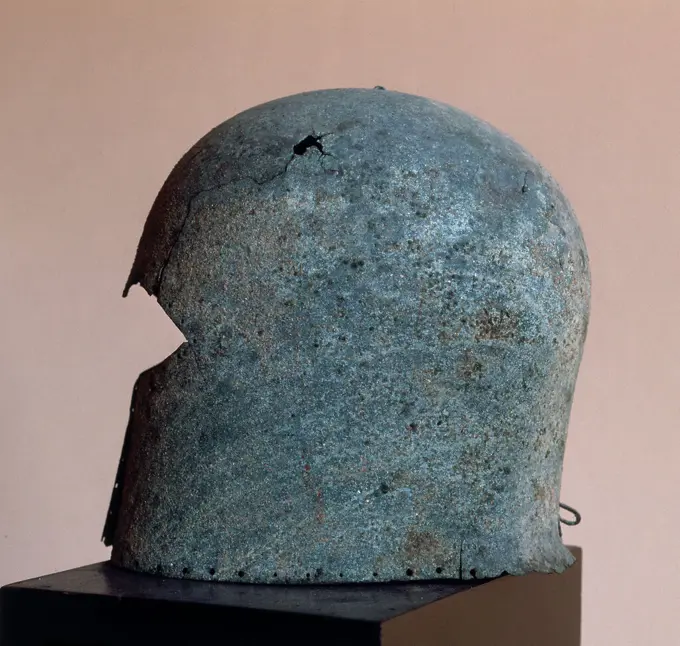
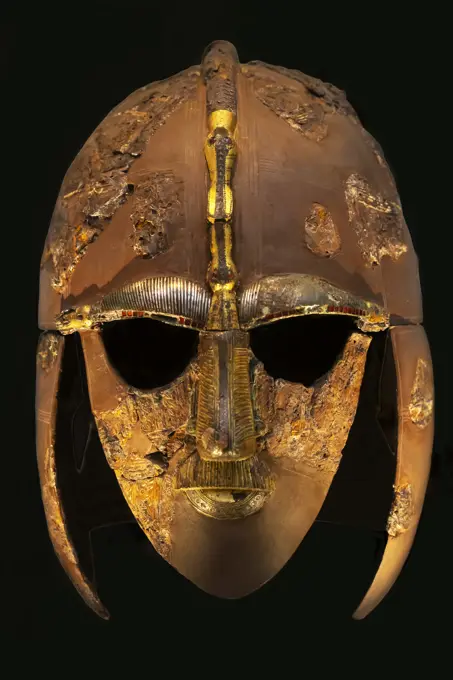
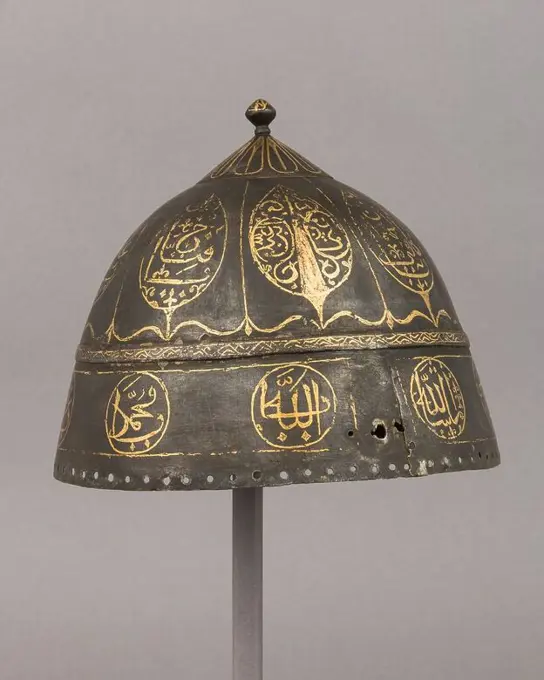
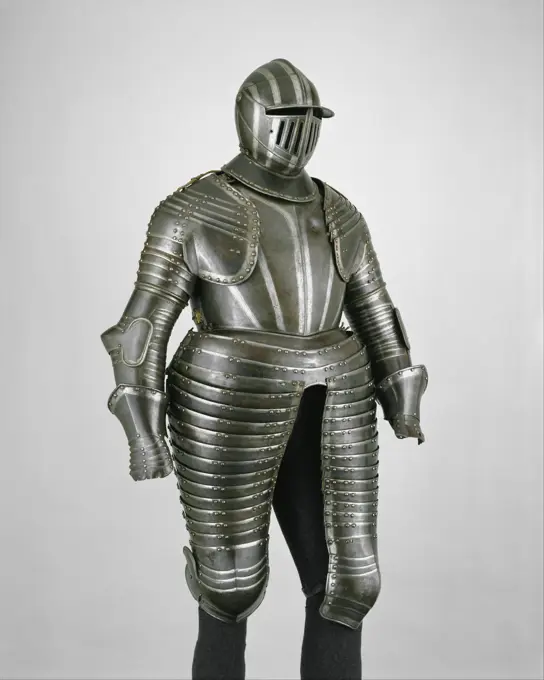
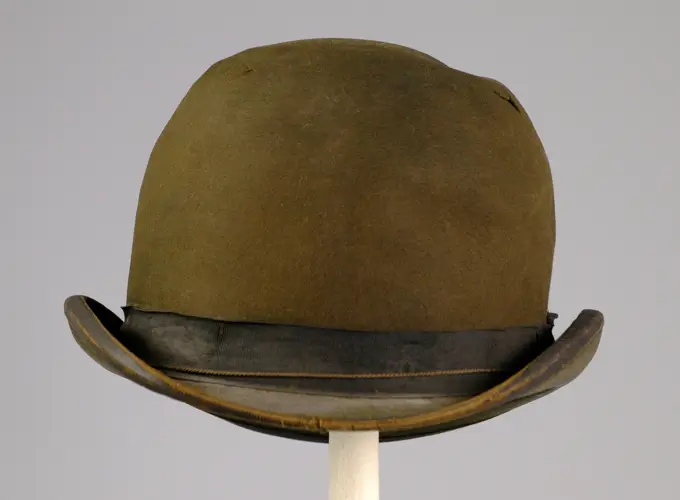
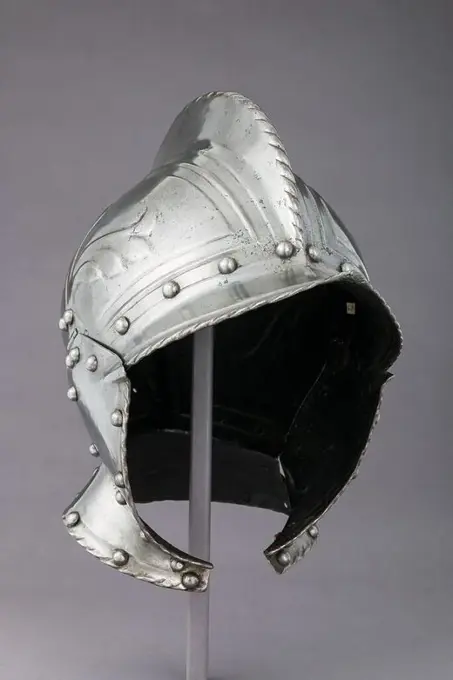
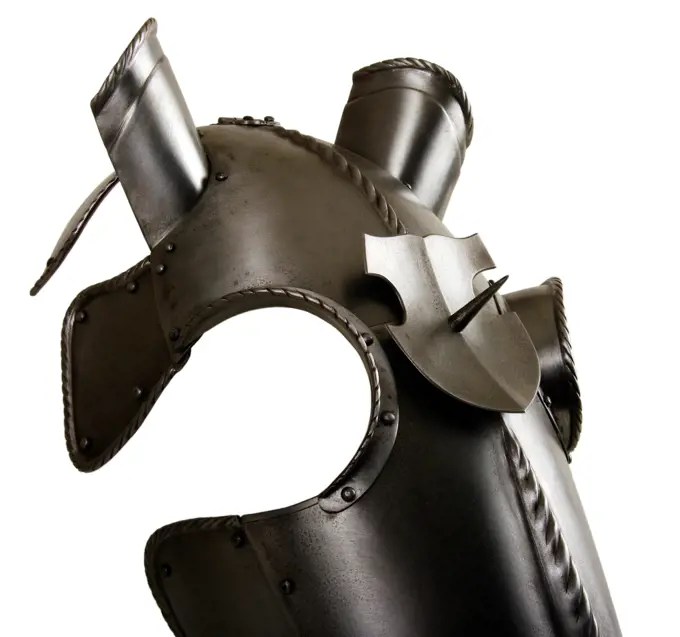
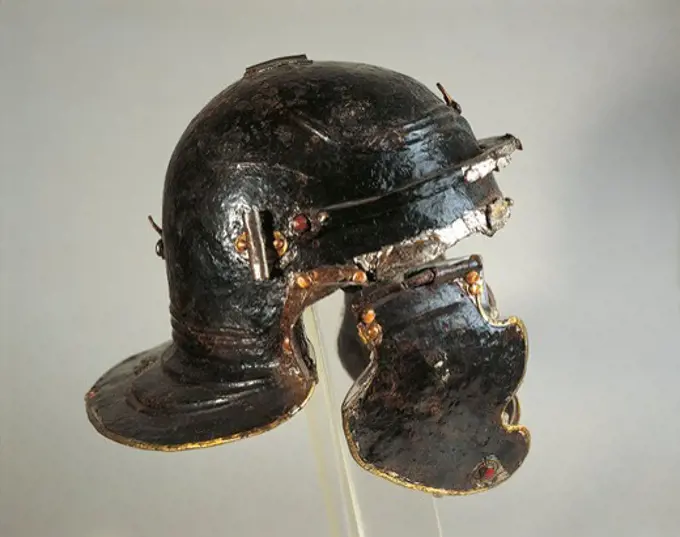
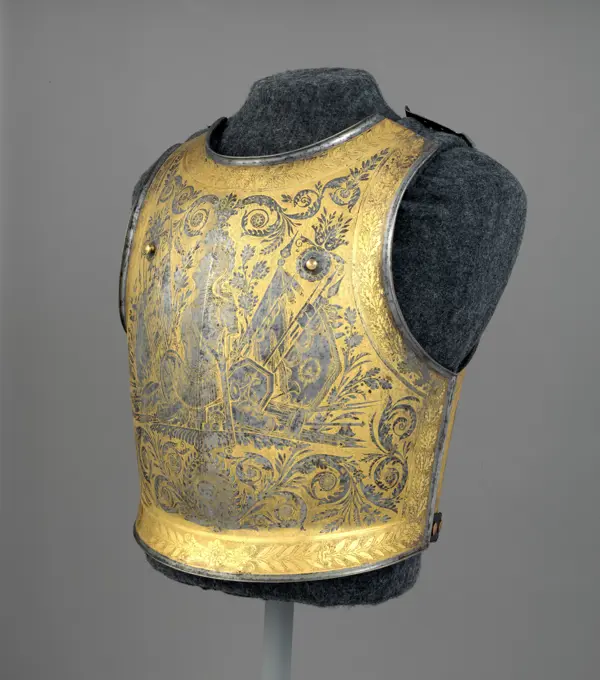
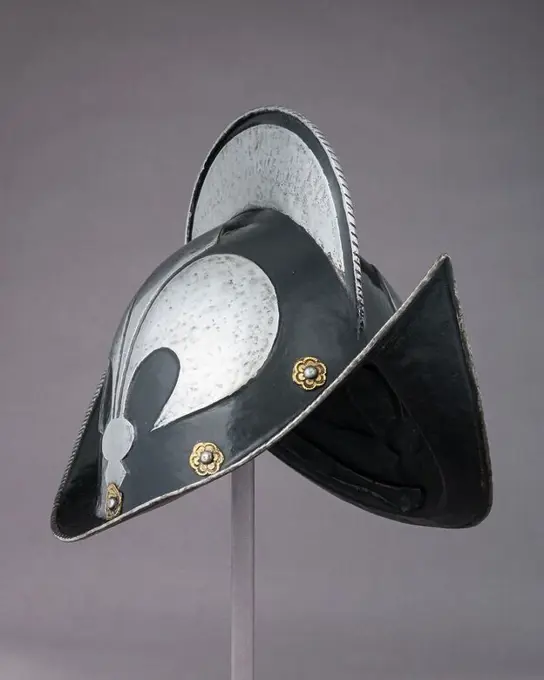
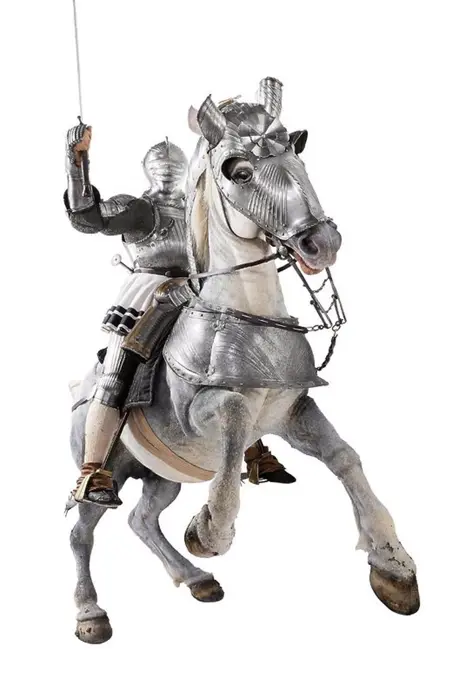
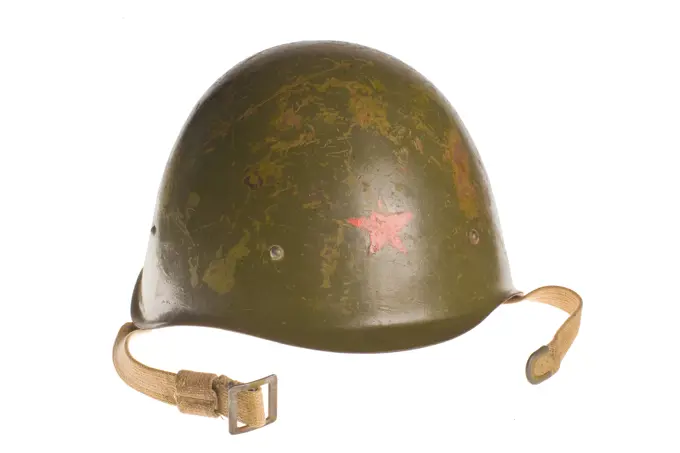
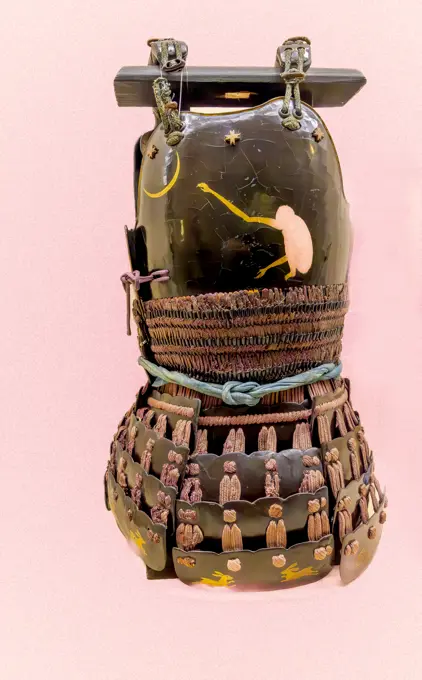
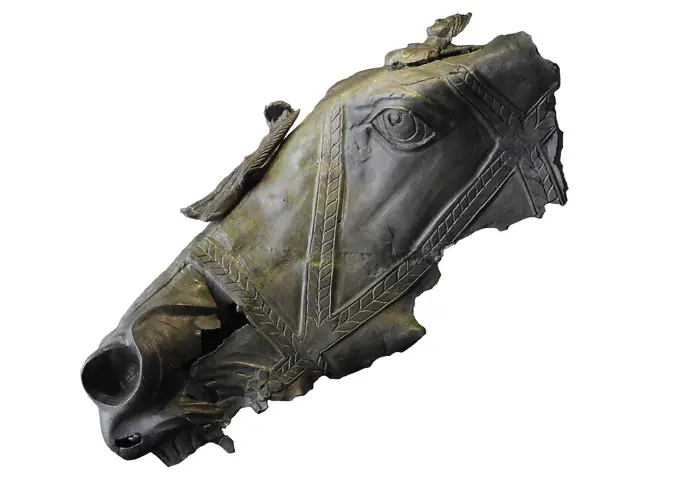
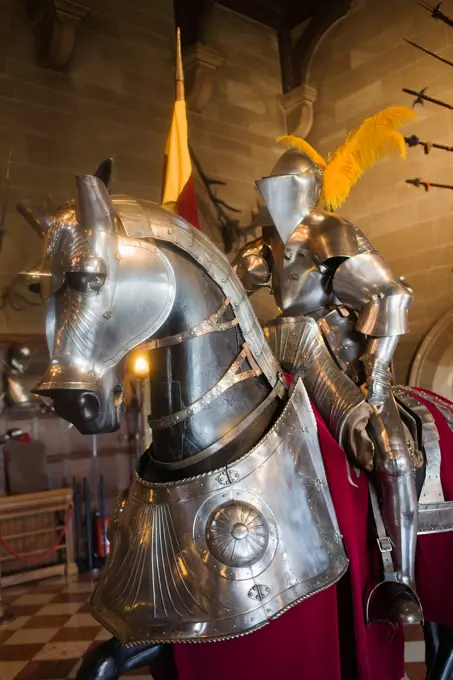
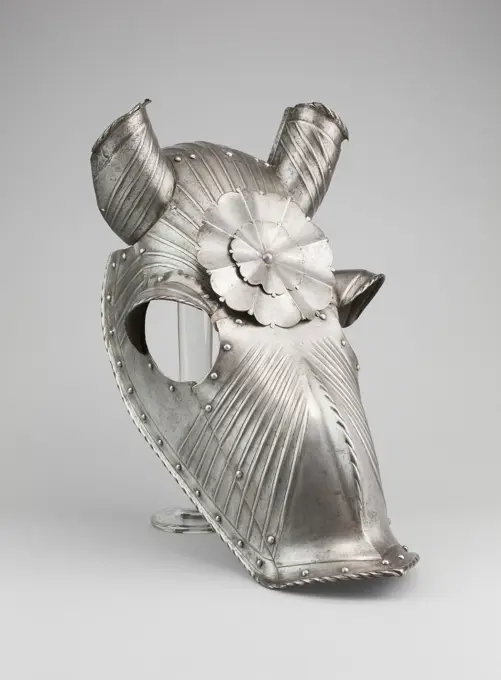
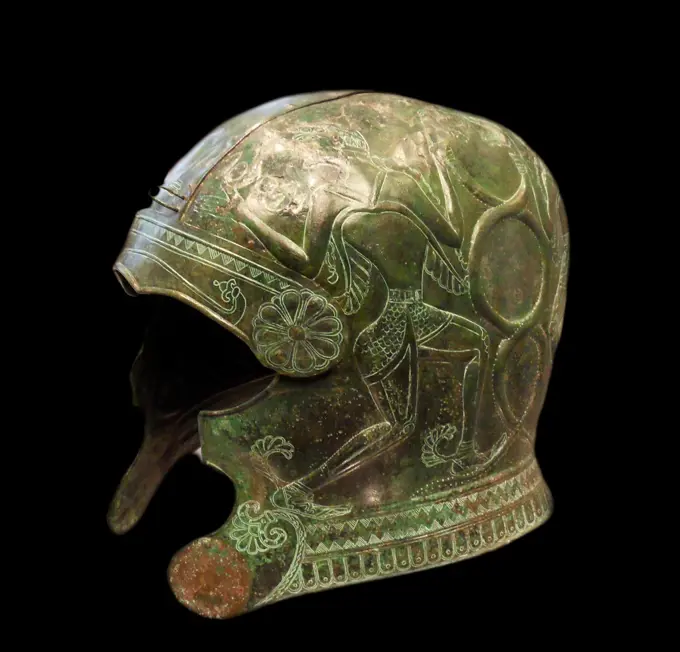
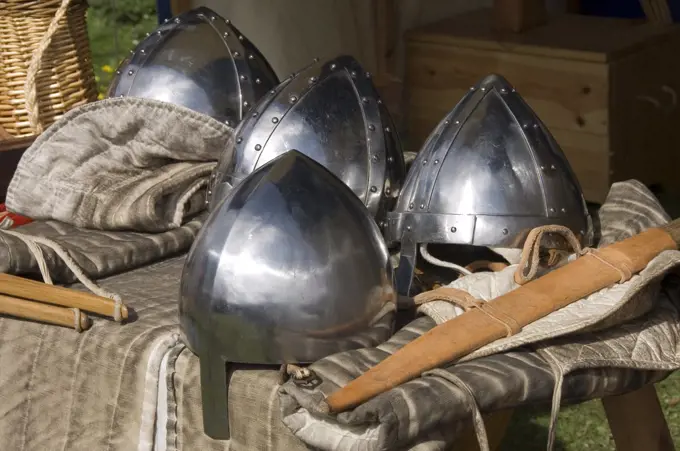
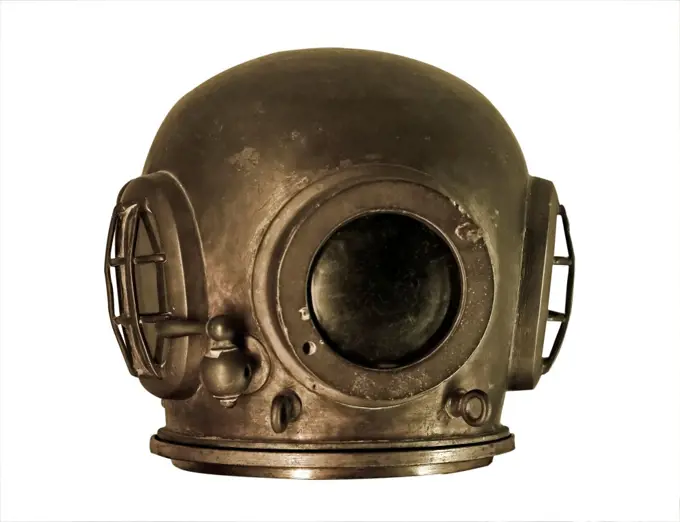
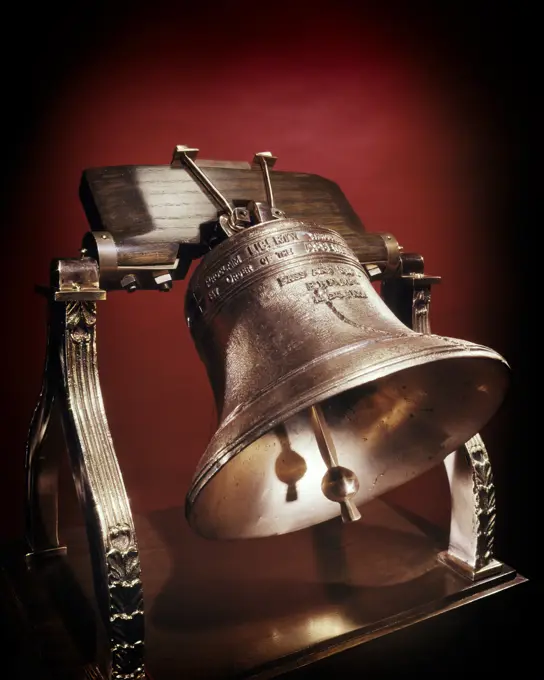
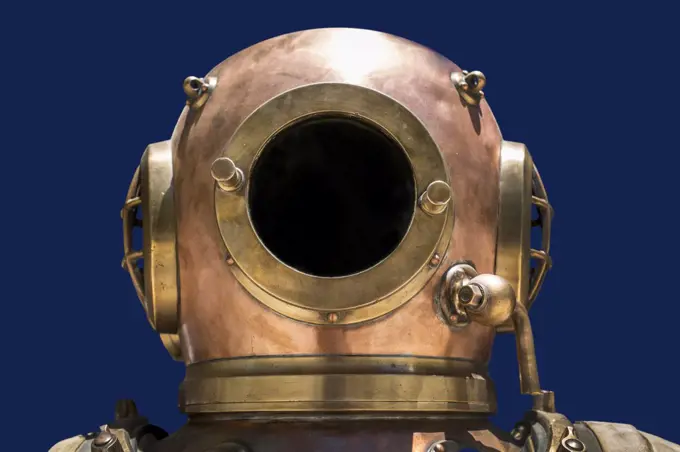
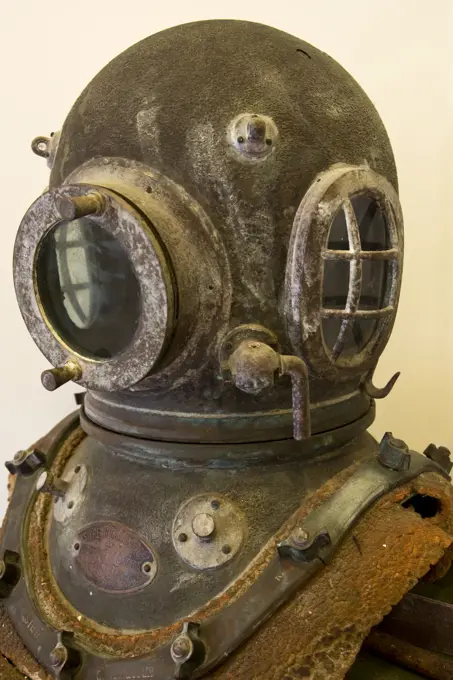
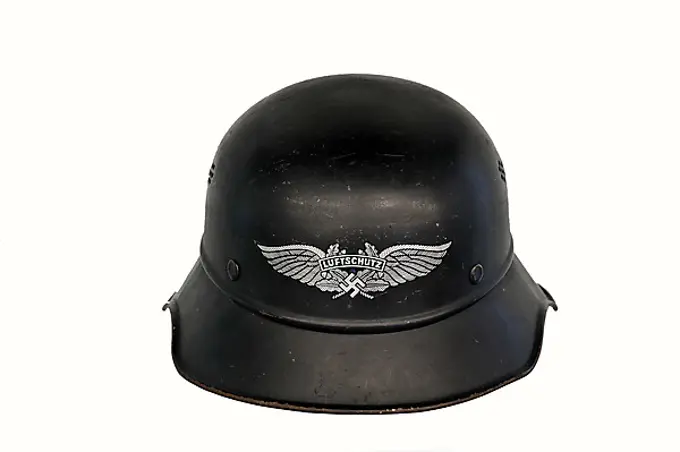
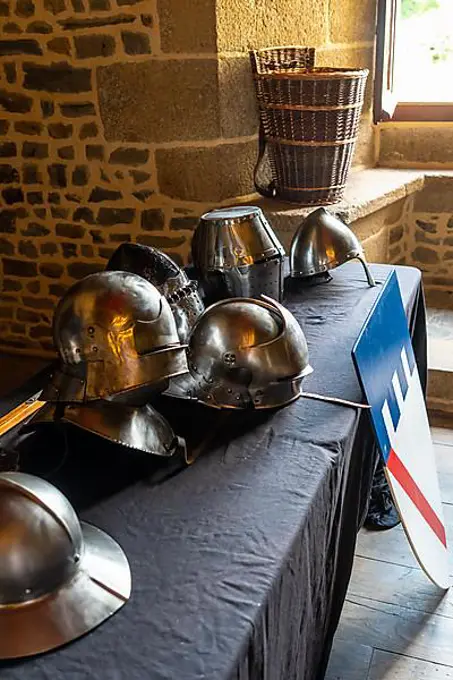
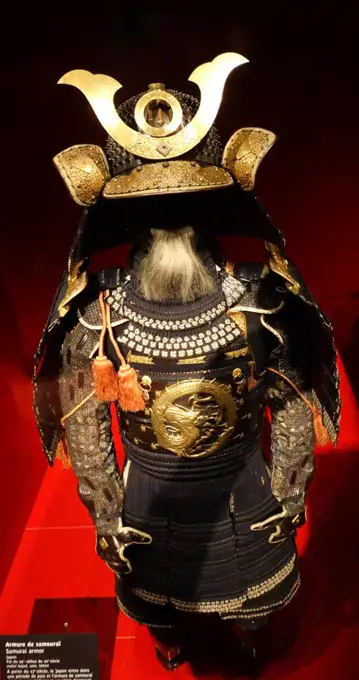
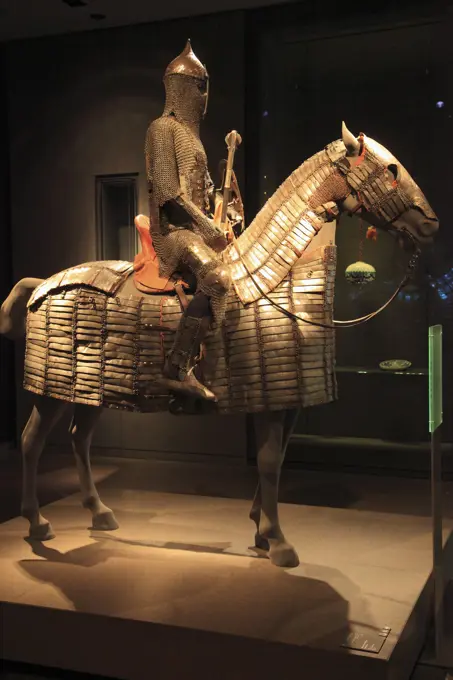
Helmet 18th-19th century Bhutanese. Helmet 32135Armor for Heavy Calvary (Cuirassier). Italian; Milan. Date: 1605-1615. Dimensions: H. 127 cm (50 in.). Steel and leather. Origin: Milan. Museum: The Chicago Art Institute, Chicago, USA.Close-up of the magnificent, lavishly decorated armour (cuirass and cuisses) of Philip II, first King of Spain from 1556 to 1598. Madrid (Spain), 1966.Militaria, Italy, 19th century. Leather and gilded metal helmet worn by the Piedmont dragoons, 1814.17th-century helmet said to have belonged to Oliver Cromwell. from the book The British Army. 1868. Historical. digitally restored reproduction from a 19th-century originalArmour Armour of the medieval knight. Metal protection of the soldier against the weapon of the opponent Copyright: xZoonar.com/ValeryxxSibrikovx 6496739Shaffron (Head Defense) for a Camel possibly 17th century Turkish Camels were used in the Middle East not only for transport but also for battle. Judging from its sharply angled profile, this shaffron of steel plate was probably intended for a war camel. By contrast, shaffrons for horses have flat profiles.. Shaffron (Head Defense) for a Camel 31874lace headpiece, 17th century, Álava Armory Museum, Vitoria, Basque Country, SpainCuirass with helmet, by Unknown, 16th Century, steel foil. Italy, Veneto, Venice, Ducal Palace, Council of Ten Arms Rooms. Detail. Cuirass thin plates iron helmet visor nails.First World War (1914-1918). German army helmet "Pickelhaube", model 1895. Latvian War Museum. Riga. Latvia. Pair of Pauldrons (Shoulder Defenses) ca. 1550 German. Pair of Pauldrons (Shoulder Defenses) 35877Armor for the Joust. Italian. Date: 1540-1570. Dimensions: H. 182.9 cm (72 in.). Steel. Origin: Italy. Museum: The Chicago Art Institute, Chicago, USA.Feline Ornament 6th-7th century Moche (Loma Negra). Feline Ornament 315203Pair of Fingered Gauntlets Made 1510-1530 Flanders. Steel and leather .Armour of Piet Heyn, c. 1600 - in or before 1629  The harness, consisting of a breastplate, back plate, two thigh pieces, a ring collar and a lost helmet, is in all probability the harness that on July 4, 1629 at the funeral of Piet Hein in the Oude Kerk in Delft in a weapon cabinet above his grave was placed. Netherlands iron (metal)   Old churchHelmet 16th century Turkish. Helmet 32064Gladiator parade helmet made of bronze from Pompeii, Naples province, Italy, Roman civilizationDutch helmet pattern 1923 unknown labelDutch peak jars, black. Dutch peak jars, iron, blackened, composed of two halves with valve that is curved from the front and back of a little. On the high helmet bulb a comb that ends at the rear in the poultry. Around the basis of the limbler fourteen rivets. Eighteen rivets around the valve. A black plume is attached in the Poultry. There is a round hole at the front. Inside of the helmet is in the helmet globe the slot of the middle bone.Helmet from Sutton Hoo. Anglo-Saxon. 7th cent. AD. England.Fearsome samurai armour and katana exhibited at the British Museum. Hand protection medieval knight. Element protective armorArms Museum, Castle of San Giusto, medieval castle and fortress, 15th-16th century, Colle di San Giusto, Trieste, harbour town on the Adriatic, Friuli, Italy, Trieste, Friuli, Italy, EuropePair of Mitten Gauntlets. Spanish. Date: 1490-1530. Dimensions: L. 33.0 cm (13 in.). Steel and leather. Origin: Spain. Museum: The Chicago Art Institute, Chicago, USA.Brigandine ca. 1540-50 Italian. Brigandine. Italian. ca. 1540-50. Textile, tinned iron, gilt brass. BrigandinesTuscany, Italy. Detail of an original Medieval armourLviv Herbal Guard cap unknownTuscany, Italy. Detail of an original Medieval armourInterior view, Helmet, Odawara Castle, Odawara, Kanagawa Prefecture, JapanCASCO GRIEGO DEL SIGLO VII-VISTA LATERAL. Location: MUSEO DE CADIZ-ARQUEOLOGIA. Cadiz. SPANIEN.Sutton Hoo Helmet, Anglosaxon, circa 600 AD, British Museum, London, England, UKHelmet. Culture: Arabian. Dimensions: H. 6 7/8 in. (17.5 cm); Diam. 8 1/4 in. (21 cm); Wt. 15.6 oz. (442.3 g). Date: ca. 1734. Museum: Metropolitan Museum of Art, New York, USA.Cuirassier Armor ca. 1610-30 Italian, Milan or Brescia The construction and build of this armor are typical of a cuirassiers harness, a type developed toward the end of the sixteenth century in response to the growing use and efficiency of firearms. The advent of firearms caused armorers to increase the thickness and weight of plates and to supplement them with separate reinforcing plates. Before an armor of this type was finished, it was fired at with a pistol or musket to test its effectiveness against bullets, and the bullet dents were left as a guarantee of the strength and quality of its steel. This particular armor retains two reinforces with such dents, a rarely encountered plate for the back of the helmet bowl, and a plackard for the breastplate; it formerly possessed a third plate for the front of the visor. Weighing more than eighty-six pounds, it is one of the heaviest field armors known.Although generally conforming to the construction of cuirassier harnesses worn throughoDerby ca. 1865 Russian. Derby. Russian. ca. 1865. Wool, silkBurgonet. Culture: Italian. Dimensions: H. 12 1/2 in. (31.8 cm); W. 7 9/16 in. (19.2 cm); D. 11 1/2 in. (29.2 cm); Wt. 3 lb. 11 oz. (1673 g). Date: mid-16th century. Museum: Metropolitan Museum of Art, New York, USA.Iron helmet Iron helmet of the medieval knight. Very heavy headdress Copyright: xZoonar.com/ValeryxxSibrikovx 2454295Horse Armour. One of only three complete horse armours, this is one of the best preserved. Made from carbon steel, copper alloy and leather.Armour for a head of a horse of the medieval knightFrance, Besancon, Iron, copper and silver helm found in the amphitheatre of BesanconRound funeral stitch of black hair felt, decorated with black ostriches and a black lis over an orange bow, G. Nijman, c. 1789 - c. 1810 Funeral stitch of black hair felt. Model: two -pointed, with round ball. The blades are trimmed with black ostriches. One leaf is high; The other leaf is lower and decorated with an orange bow over which a black lis has been put, which is fixed with a black knot. Black moiré lining. Kalverstraat whole:. Decoration:. lining; Strik: Silk. Headband: Leather Funeral stitch of black hair felt. Model: two -pointed, with round ball. The blades are trimmed with black ostriches. One leaf is high; The other leaf is lower and decorated with an orange bow over which a black lis has been put, which is fixed with a black knot. Black moiré lining. Kalverstraat whole:. Decoration:. lining; Strik: Silk. Headband: LeatherCuirass ca. 1825 Manufactured at Coulaux Frères, Manufacture Royale d'Armes de Klingenthal This is one of only two known cuirasses with rich etched and gilt ornamentation dating from the restoration of the French monarchy, and a very rare example of nineteenth-century luxury armor. Forged and decorated in the Royal manufactory of Arms at Klingenthal in Alsace, it was probably specially ordered by François Marie Louis Victor, baron de Latour-Foissac (1784-1851) in anticipation of the coronation of Charles X of Bourbon (1757-1836, reigned 1824 to 1830) on May 29, 1825, in Reims. As the colonel of the Regiment of the Queens Cuirassiers, Latour-Foissac was the commander of the detachment that would escort the royal carriage during the solemn procession to Reims cathedral. Because of his age and declining health, however, Latour-Foissac, a seasoned veteran from the French Revolutionary and Napoleonic wars, obtained permission to retire from active duty on May 23, 1825, only two days beforChinese bronze axe-head, 11th century BC. Artist: UnknownHalf-Armor (Composed) dated 1562 (helmet ca. 1560) German. Half-Armor (Composed). German. dated 1562 (helmet ca. 1560). Steel, leather, copper alloy. Armor for Man-1/2 ArmorMorion for the Bodyguard of the Prince-Elector of Saxony ca. 1570 German, Nuremberg The electors of Saxony appear to have been the only German princes in the sixteenth century to outfit their bodyguards with matching equipment. The guards' helmets are etched and gilt on one side with the coat of arms of the dukedom of Saxony and on the other side with the crossed swords that signify the duke's office as archmarshal of the Holy Roman Empire. Originally, the gilt decoration was contrasted with black painted surfaces (some now polished bright). The black and gold derived from the Saxon coat of arms and were also the colors of the guards' uniforms. This helmet and a similar one also in the Metropolitan Museum's collection (acc. no. 14.25.633) were made by armorers in Nuremberg.. Morion for the Bodyguard of the Prince-Elector of Saxony 22238Morion. Culture: German. Dimensions: H. 10 1/2 in. (26.7 cm); W. 10 1/2 in. (26.7 cm); D. 13 1/4 in. (33.7 cm); Wt. 2 lb. 9 oz. (1156 g). Date: 16th century. Museum: Metropolitan Museum of Art, New York, USA.Helmet, Arm Guard, and Shield. Culture: Indian. Dimensions: Helmet (a); H. including mail 25 1/4 in. (64.1 cm); H. including nasal 16 in. (40.6 cm); H. excluding mail and nasal 10 1/2 in. (26.7 cm); W. 8 1/2 in. (21.6 cm); D. 9 1/4 in. (23.5 cm); Wt. 3 lbs. 13.3 oz. (1737.8 g). Date: 1751. Museum: Metropolitan Museum of Art, New York, USA.Elements of a Half Armor 16th century and later German, Nuremberg. Elements of a Half Armor. German, Nuremberg. 16th century and later. Steel. Nuremberg. Armor for Man-1/2 ArmorArmory of Burg Eltz Castle, Wierschern, Rhineland-Palatinate, Germany, EuropeHorse Helmet. Iran, 224-651. Tools and Equipment; horse trappings. BronzeIron winged helmet of the armoured riders of Johann Sobiesky, 1673, Armour, Historic, digitally restored reproduction of a 19th century original, exact date unknownField Armor for Man. South German, Nuremberg. Date: 1500-1530. Dimensions: H. 188 cm (74 in.). Steel, iron, brass, leather, and textile. Origin: Nuremberg. Museum: The Chicago Art Institute, Chicago, USA.Green Russian Soviet army helmet of times of the second world war isolated on a white background with clipboard. Green Russian Soviet army helmet of times of the second world war isolated on a white background with clipboard. ,model released, Symbolfoto ,property released Copyright: xZoonar.com/SergeyxxKozoderovx 2141095 ,model released, Symbolfoto ,property releasedArmour of Henry Frederick, Prince of Wales (1594-1612) the elder son of King James I & VI and Anne of Denmark. Dated 17th CenturyAntique Samurai armor. Osaka Castle Museum.Horse Trappings 14th century Spanish. Horse Trappings. Spanish. 14th century. Copper alloy, gilded copper and traces of enamel. Made in Catalonia, Spain. Metalwork-CopperElements of a Horse Armor 16th century German. Elements of a Horse Armor 34873Detail of a horse head belonging to a statue created to decorate a public space. 1st century AD. Bronze. From Pollentia (Alcudia, Majorca, Balearic Islands). National Archaeological Museum. Madrid. Spain.England,Warwickshire,Warwick,Warwick Castle,Display of Knight and Horse ArmourShaffron 1510-1530 Southern Germany. Steel .Ritter Armour of the medieval knight. Metal protection of the soldier against the weapon of the opponent Copyright: xZoonar.com/ValeryxxSibrikovx 3115143Right Gauntlet, c.1550-1570. Germany, 16th century. Iron, steel, leather and brass rivets; overall: 34.5 x 20 x 31.2 cm (13 9/16 x 7 7/8 x 12 5/16 in.).bronze helmet from Crete, Greece. Late 7th century BCEngland, North Yorkshire, Helmsley. Medieval helmets and sheaths on a table.Pair of Greaves (Lower Leg Defenses) ca. 1550 to 1575 Italian This pair of greaves (lower leg defenses) is part of an unusually large armor garniture (acc. no. 27.159.1) from the armory of the Dos Aguas family in Valencia, Spain. The garniture contains pieces for use in battle and for the tilt in both the Italian and German fashions. The tilt was a tournament fought on horseback between two opponents armed with lances and separated by a lengthwise barrier.The armor as mounted is equipped with a helmet and vambraces (arm defenses) for the tournament. The buffe (chin defense), second breastplate (27.159.2), and manifer (reinforced left gauntlet) (27.159.6) would have been added to make the armor ready for exchange pieces for different forms of the tournament. For the German tilt, the trellised targe (shield) (27.159.7), small elbow defense (27.159.5), and small stomach defense (27.159.3) were added. For the Italian tilt, these elements were replaced by the form-fitting reinforce coveringisolated diving helmetLabor Inspectorate Photo Collection. 10x15 safety helmet. February 19521970s SOUVENIR REPLICA MODEL OF RINGING LIBERTY BELL PROCLAIM LIBERTY THROUGHOUT THE LAND PHILADELPHIA PA USAVintage Copper and brass diving helmetArmour of King Charles I of England (1600-1649) monarch of the three kingdoms of England, Scotland, and Ireland. Dated 17th CenturyArmours. Italy. 16th century. The Knights' Hall. The State Hermitage Museum. Saint Petersburg. Russia.Medieval head helmetsArmor for Man and Horse with Horse Trappings. Culture: German. Dimensions: Wt. of armor for man 61 lb. 11 oz. (28.05 kg); Wt. of armor for horse 63 lb. 13 oz. (29.00 kg); 29.158.4aa (shaffron); H. 27 in. (68.6 cm); W. 13 in. (33 cm); D. 15 in. (38.1 cm); Wt. 8 lb. 0.6 oz. (3645.7 g). Date: ca. 1515 and later. Museum: Metropolitan Museum of Art, New York, USA.Tobacconist's Figure - Turk, 1750-1850. Pinto Collection - Purchased from Edward H Pinto, 1965.. This figure was made to sit on the counter of a tobacconist shop (originally holding a pipe, but this is missing). It was used to advertise Turkish tobacco which became popular in the UK in the mid nineteenth century, as a result of the Crimean war. Sadly, most shop figures are unsigned, but it is widely believed that the craftsmen who made figures like these, were also responsible for large sculptural work such as ships' figureheads and fairground animals.Iron helmet Iron helmet of the medieval knight. Very heavy headdress Copyright: xZoonar.com/VALERY-SIBRIKOVx 7138911Chestpanzer with figurative representations. The breastplate is decorated with figurative representations in flat relief and fine ziselier work. Sea loans round the chest muscles, on them are crest-like lions. Grab and in the so-called Kneebaufscheema warriors on the rib arch complete the rich jewelry. The general stylization of breast modeling is adhered to the large-scale plastic of the time, which is also referred to as so-called Daedal art. This breastpanzer comes from a larger find complex of helmets, tanks and Mitren found in 1964 in Aphrati (Ant. Arkades) in the southern Central Creta. They were deposited in monumental clay vessels in a cult or assembly building. The more extensive part of the find is today in the Metropolitan Museum of Art in New York.In Cretan works is more likely to observe an eastern influence, the island of Crete played a significant role in the mediation of Eastern art traditions to the west. As the Erika Simon recently reported, The weapons of Arkades werPortions of a Jousting Half Armor. Culture: German. Dimensions: Wt. 48 lb. 13 oz. (22.14 kg); mail sleeve (29.156.67o): L. 27 5/8 in. (70 cm); W. 13 in. (33 mm.); Diam. (outside) of links 13/32 in. (10.5 mm.); Diam. (inside) of links 5/16 in. (7.9 mm); Diam. (outside) of earlier solid links 7/16 in. (10.7 mm); Diam. (inside) of earlier solid links 1/4 in. (6.5 mm); Diam. (outside) of riveted links 13/32 in. (10.5 mm); Diam. (inside) of riveted links 9/32 in. (7.4 mm); mail sleeve (29.156.67p): L. 22 in. (56 cm); W. 13 in. (33 cm); Diam. (outside) of links 13/32 in. (10.7 mm); Diam. (inside) of links 9/32 in. (7.2 mm).. Date: ca. 1500 and later. Museum: Metropolitan Museum of Art, New York, USA.ARMADURA DE FELIPE III NIÑO-MILAN HACIA 1585-ACERO,PLATA,ORO,LATON.TEJIDO. Author: LUCIO PICININO (-1570) ATRIBUIDO. Location: PALACIO REAL-REAL ARMERIA DE MADRID. MADRID. SPAIN.weapons arms helmets medieval combat helmet German 15th 16th century,Armor for combat. Plate armour for man and horse. Europe. Metropolitan Museum of Art. New York. USA.Japan, Kanazawa, Nagamachi, samurai district, Nomura House, interior,Saddle and horse tack owned by Hetman Stefan CzarneckiCannons owned by the Van Reigersberg family. These cannons bear the coat of arms of the Van Reigersberg family of Zeeland and the inscription Semper idem’ (always the same). Their presumed owner was Johan van Reigersberg, committee member for Zeeland in the Admiralty of Amsterdam and dike reeve of the Beemster polder. The cannons probably stood in his house, Molembaix, in Walcheren. The cannon decorations and herons and water plants on the carriages allude to the family name.Incense burnerPolice riot helmet, X-raybraune Gummi Gasmaske mit Filter braune Gummi Gasmaske mit Filter Copyright: xZoonar.com/Dr.xNorbertxLangex 14714664Marienburg Castle, interior, knight's armour, Pattensen, Lower Saxony, Germany, EuropeKnights armor and weapons. Edinburgh Castle, Scotland.Hanged Metallic Armors in Line in front of Red and Yellow Tent.. Hanged Metallic Armors in Line in front of Red and Yellow TentKnight's helmet with open visor, 14th century, Fashion history, Costume history, Historical, Digitally restored reproduction of an original 19th century patternHunting equipmentShako, Álava Armory Museum, Vitoria, Basque Country, Spain.French Polynesia, Cook Islands, Rarotonga. An antique diver's helmet.Air raid helmet from 1940-1945, "Feuer und Flamme - Die Feuerwehr von 1850 bis heute", an exhibition of 150 years of Lauf Fire Department, Lauf Industrial Museum, Lauf an der Pegnitz, Middle Franconia, Bavaria, Germany, EuropeKnights and medieval armor in the castle of Fougeres. Brittany region, Ille et Vilaine department, France, EuropeJapanese Samurai Armour made from lacquered wood. Dated 19th CenturyLeather Helmet with Auspicious Symbols 15th-17th century Tibetan. Leather Helmet with Auspicious Symbols 26638Six helmets leaf, a star, a heraldic lily, a bell and three fruit bunches, monogrammist Ta, 1593 drawing   prepared paper. deck paint brush helmetGlass Fragment 1700 North French. Glass Fragment. North French. 1700. Glass. Glass-StainedQatar, Doha, Museum of Islamic Art, armour for horse and rider,Shiny steel shields and knives in the view