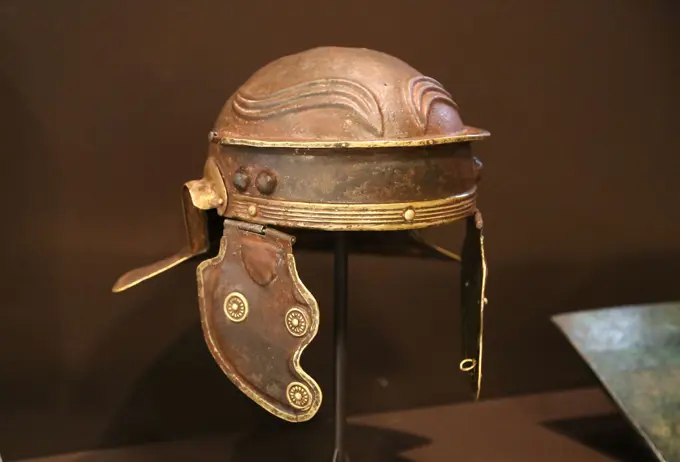
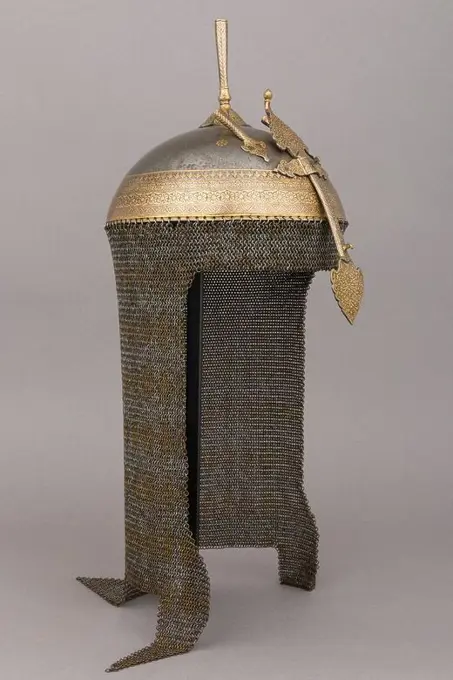
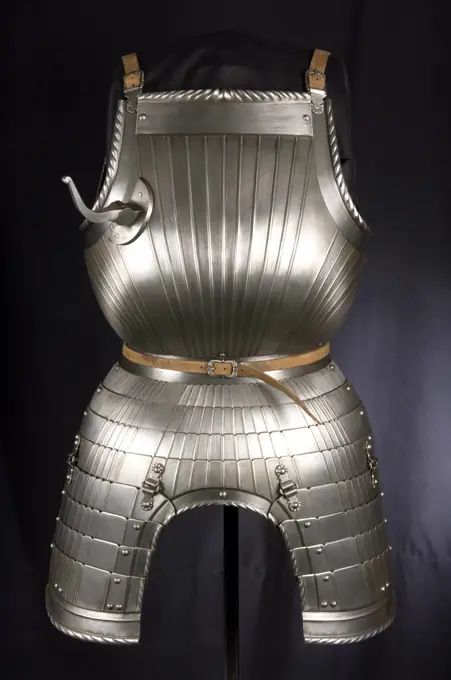
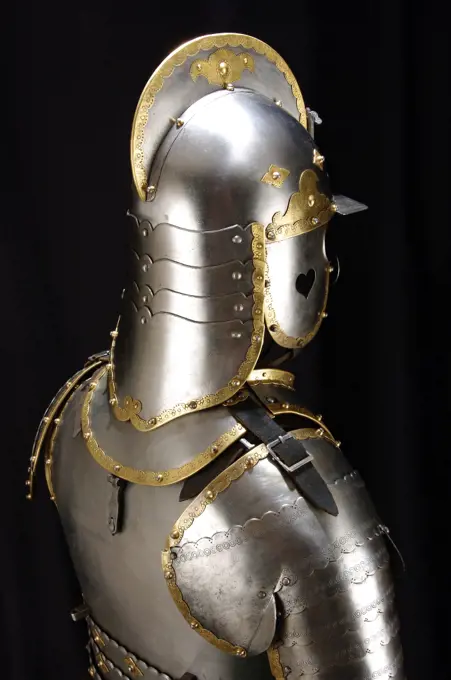
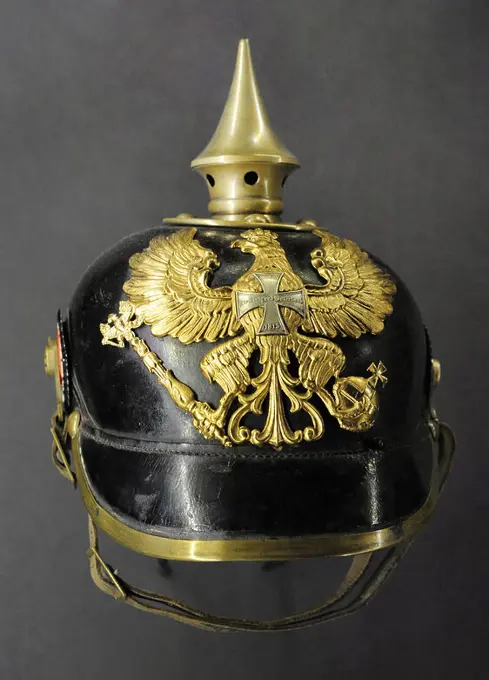
Historic Helmets Collection

A display of ornate historical helmets from different cultures, showcasing intricate designs and craftsmanship from various periods.
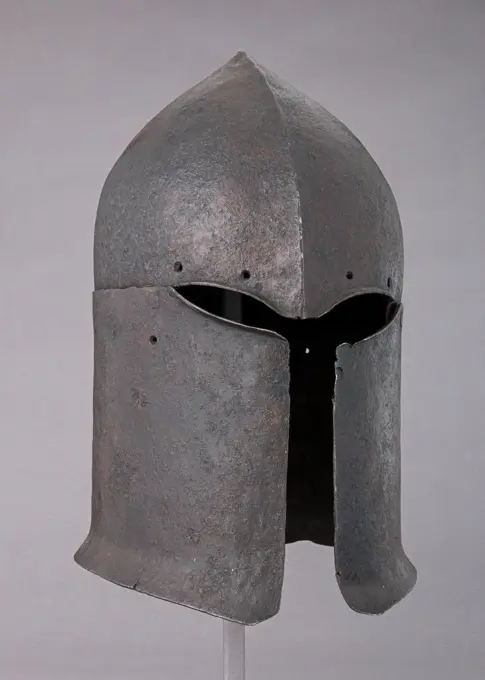
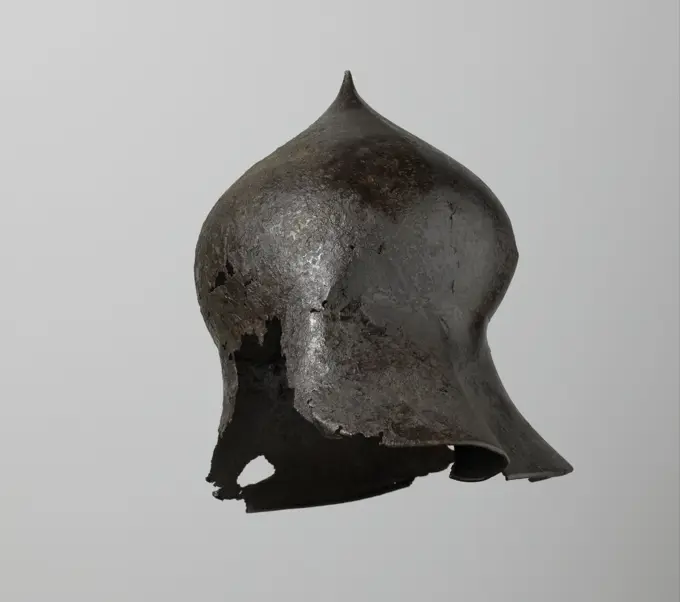
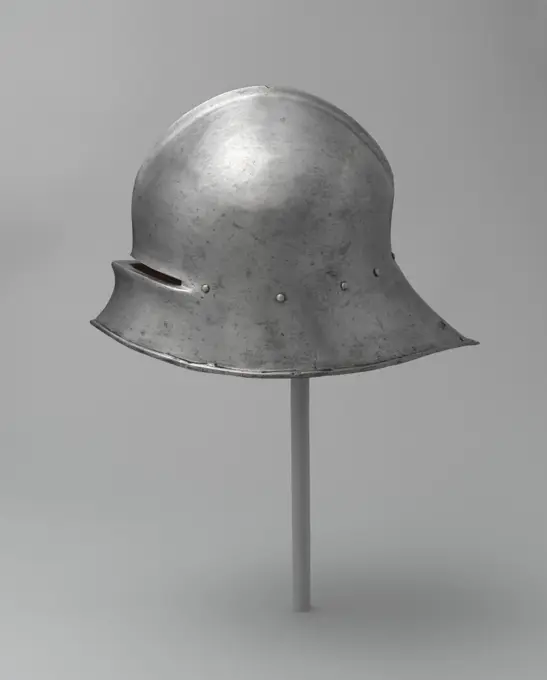
Great Sallet possibly 1420-50 Italian Apparently the forerunner of the one-piece barbute that appeared in Italy about 1440 these distinctive two-piece sallets are known only from Chalcis and other Aegean sites.. Great Sallet 23237
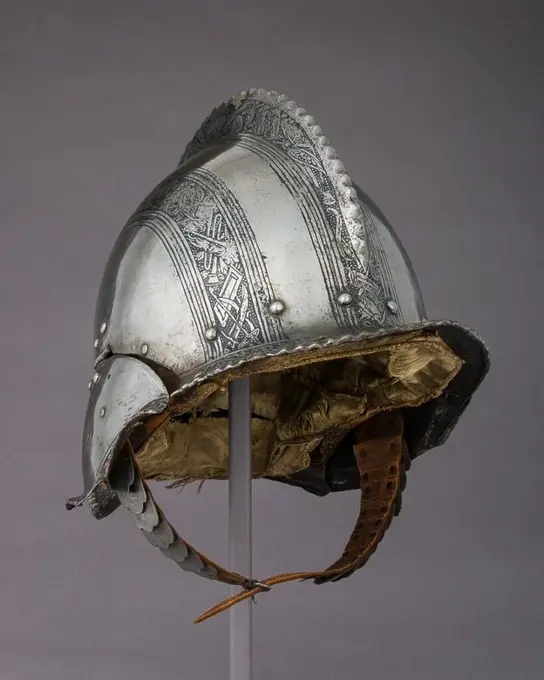
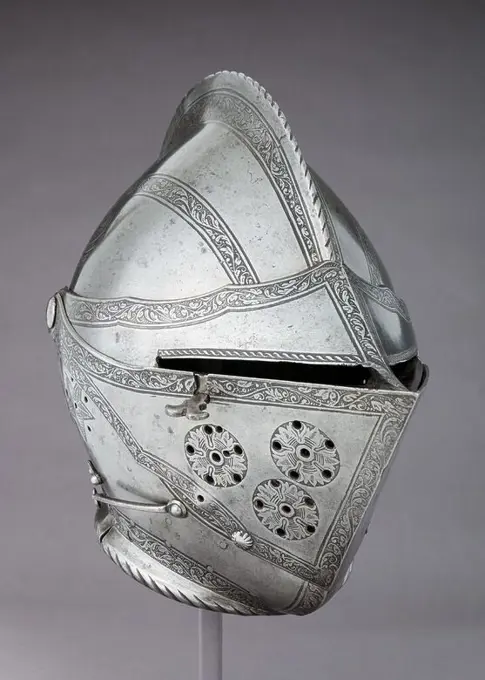
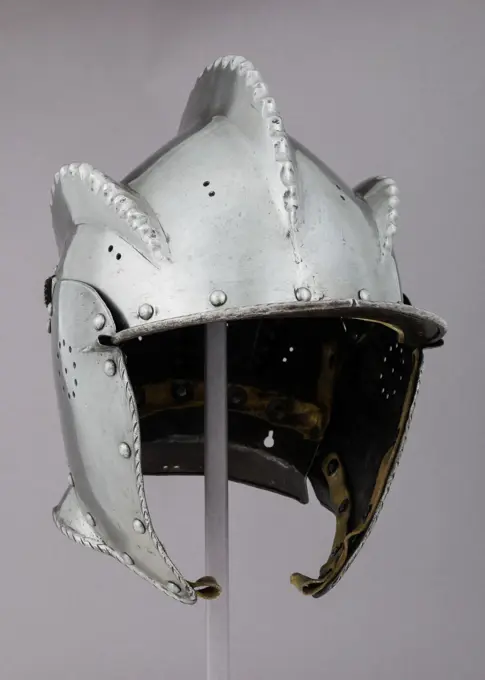
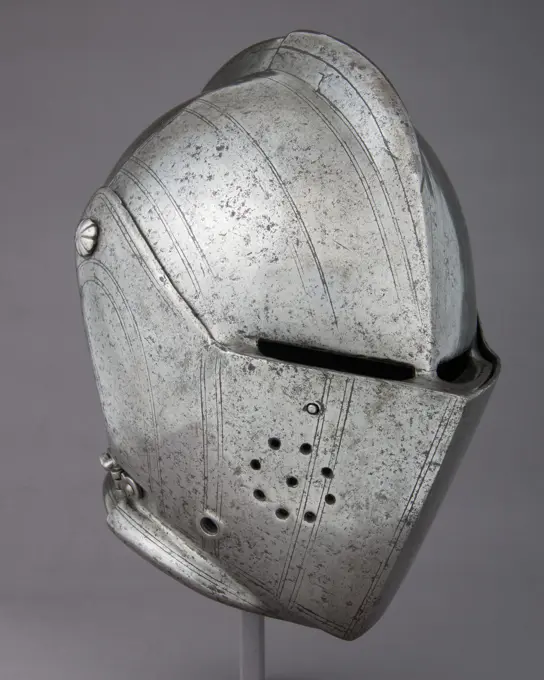
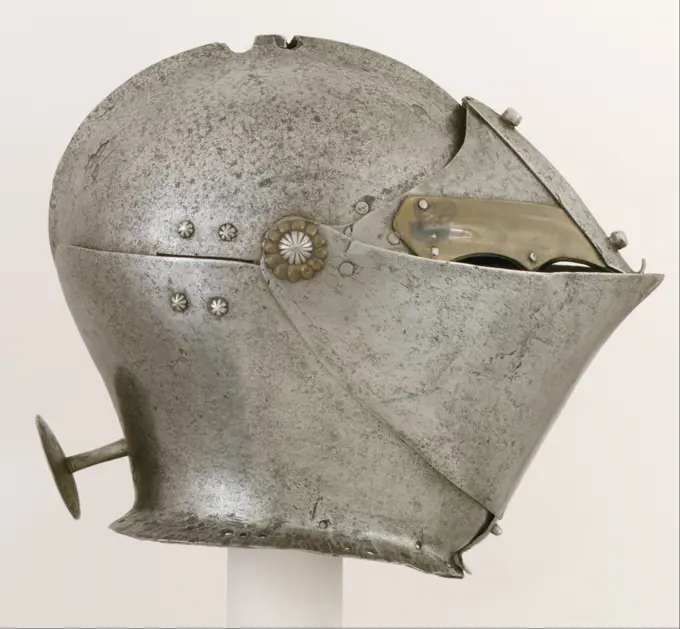
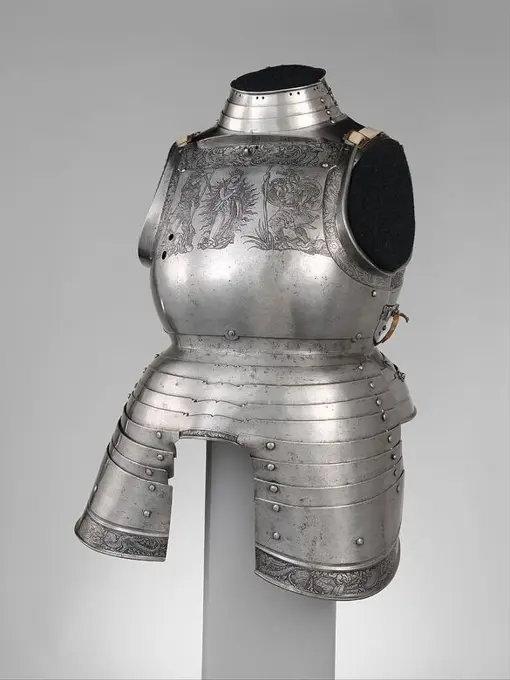
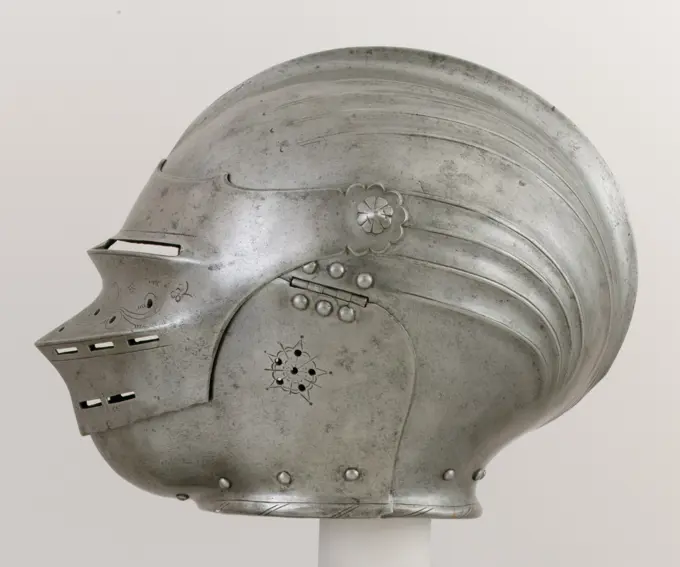
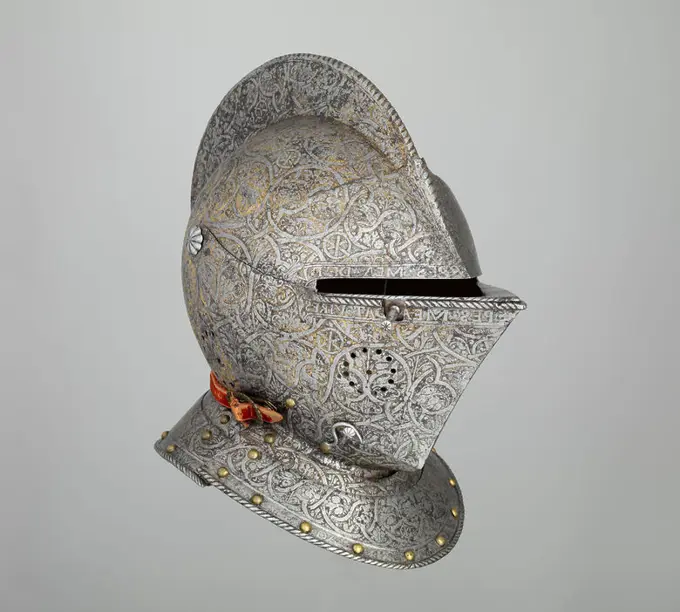
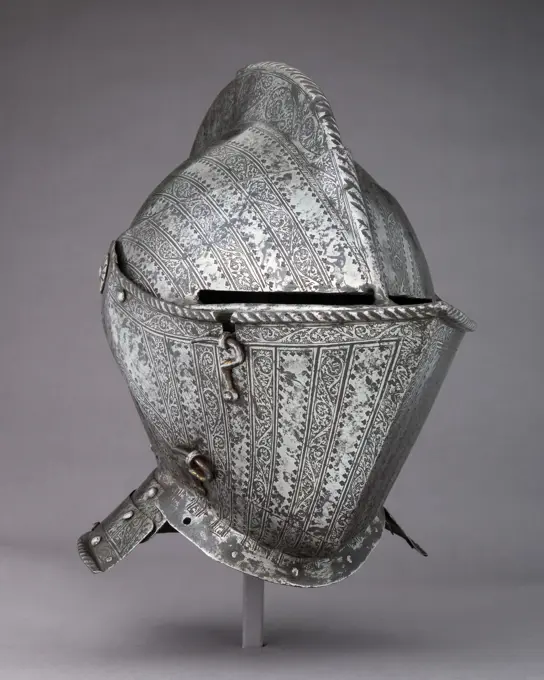
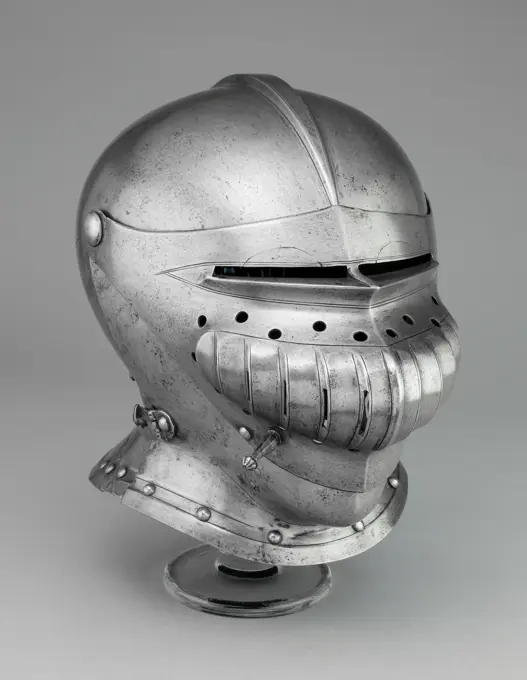
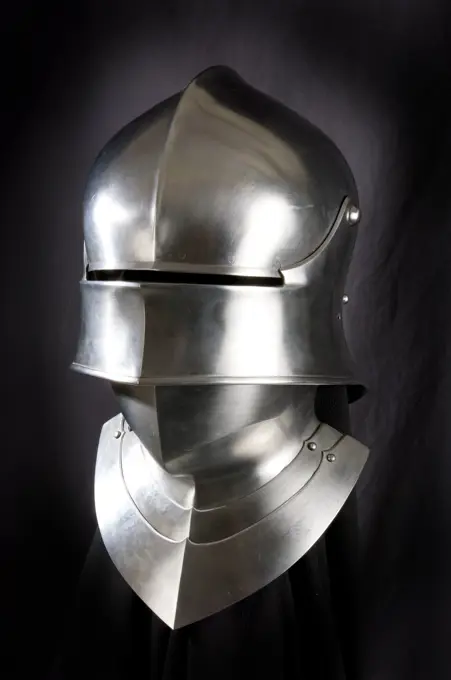
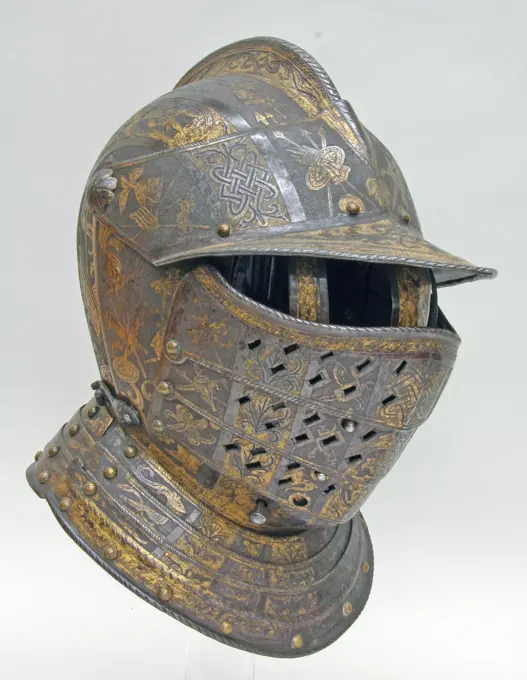
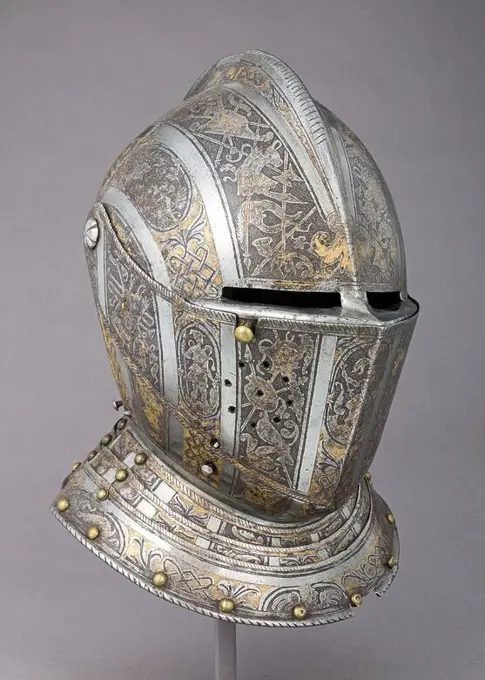
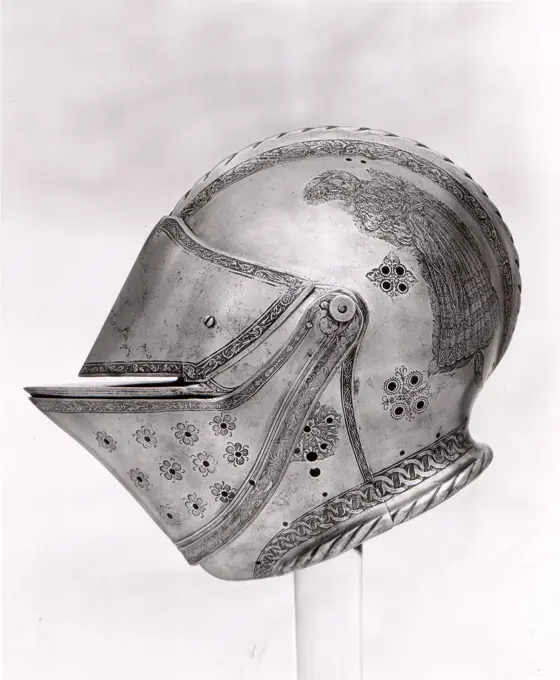
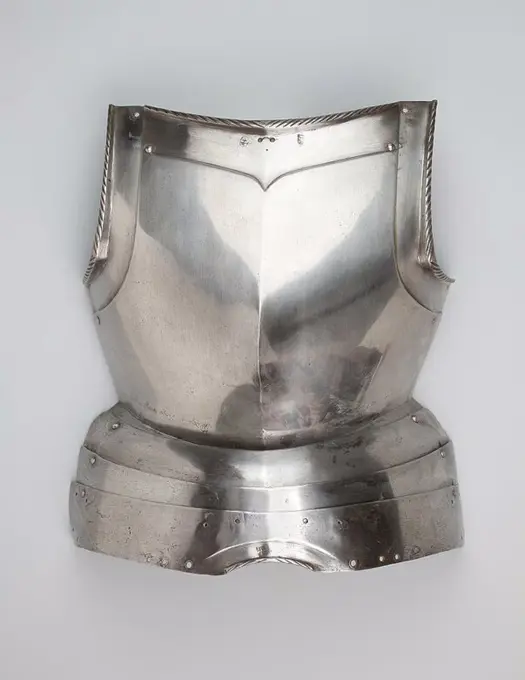
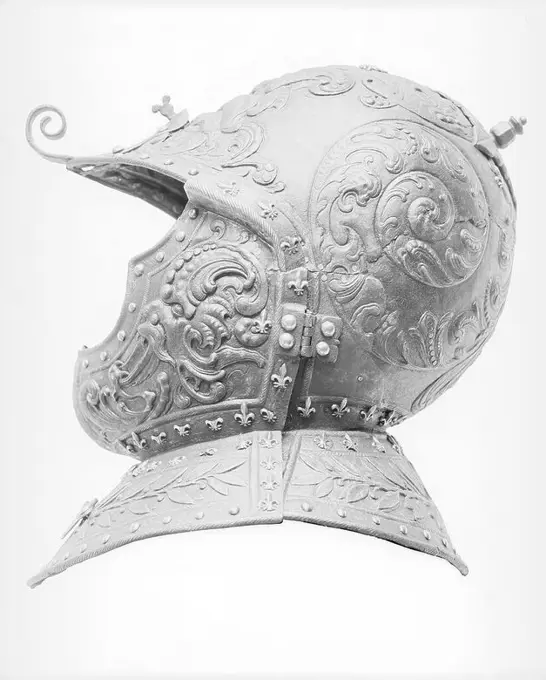
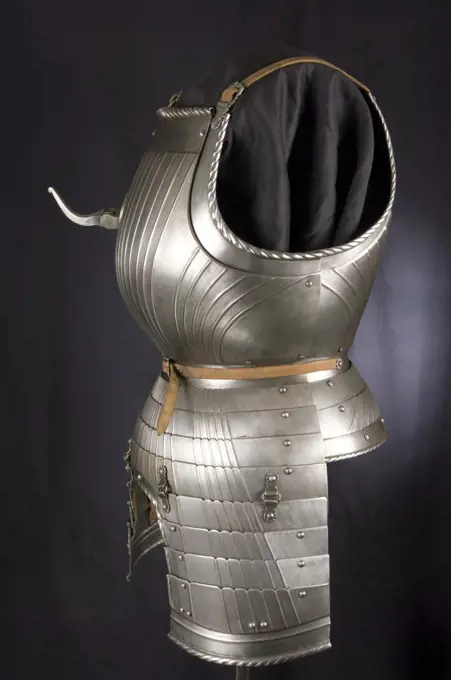
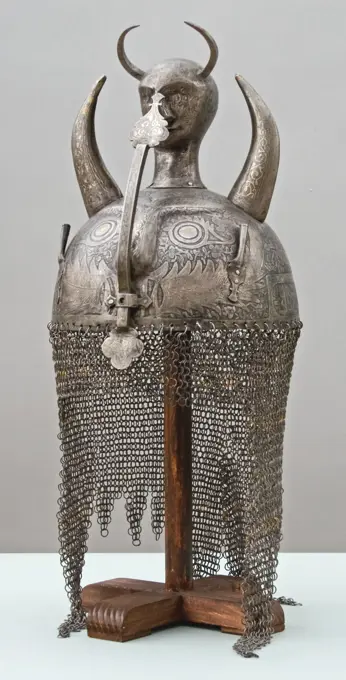
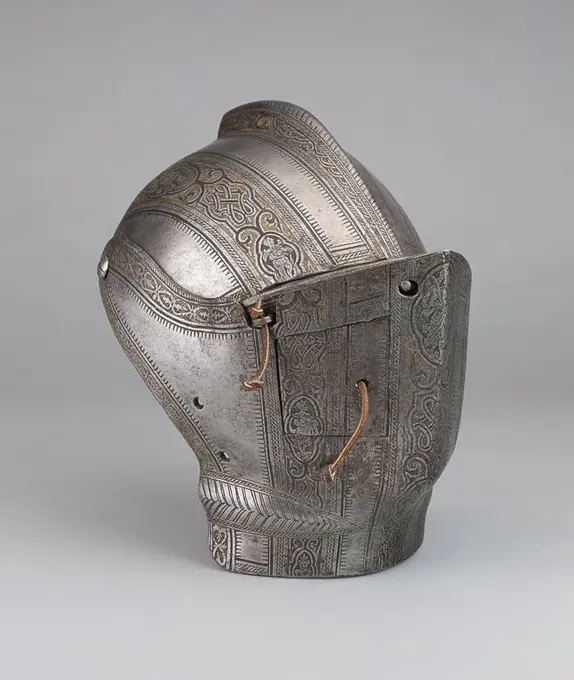
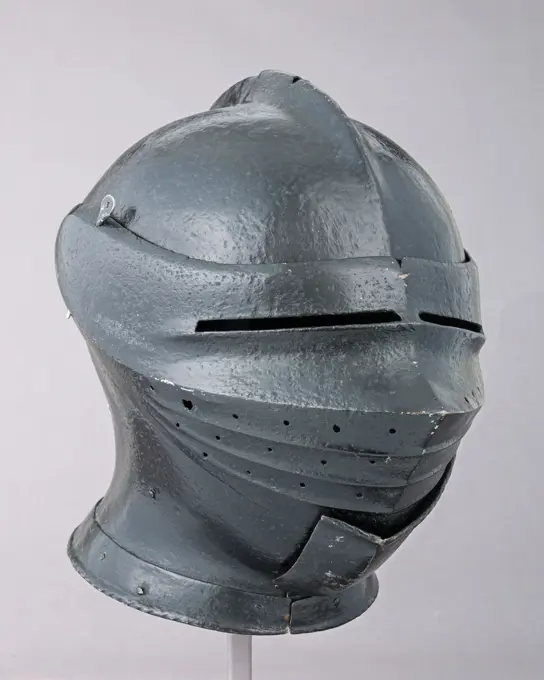
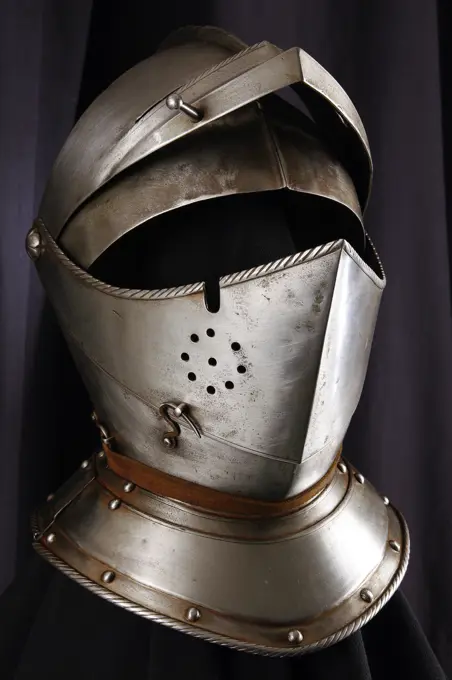
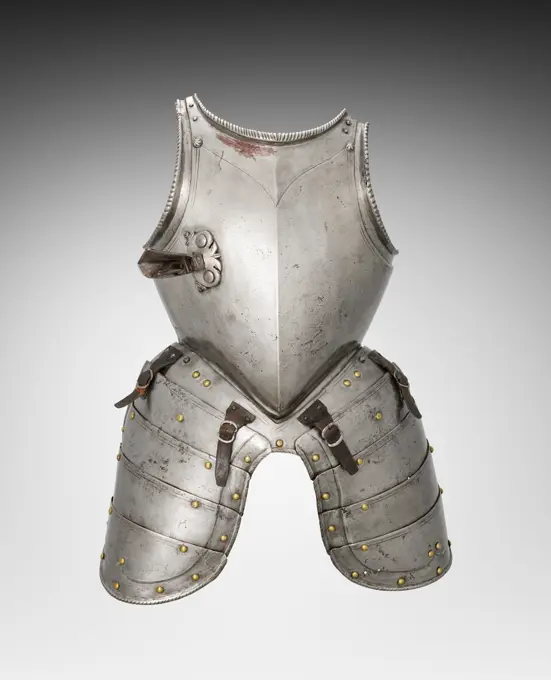
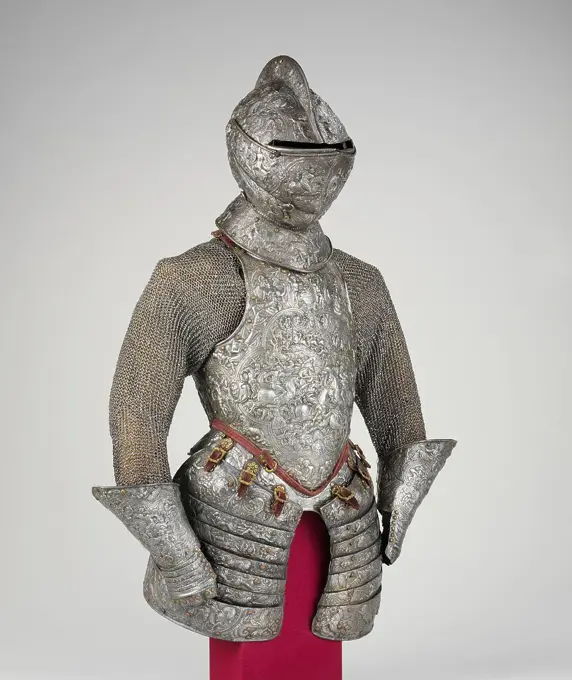
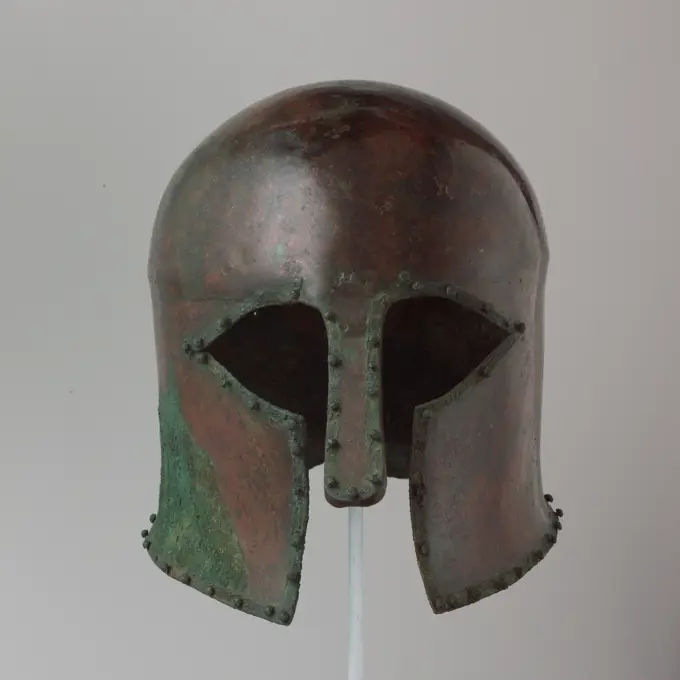
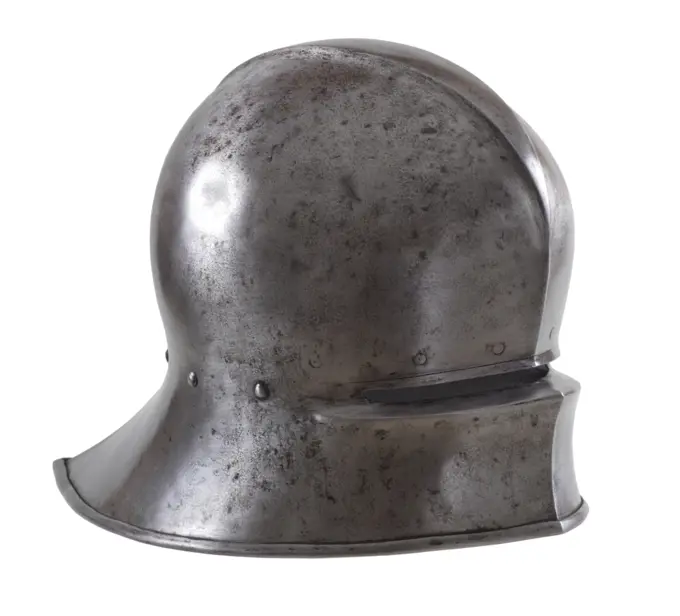
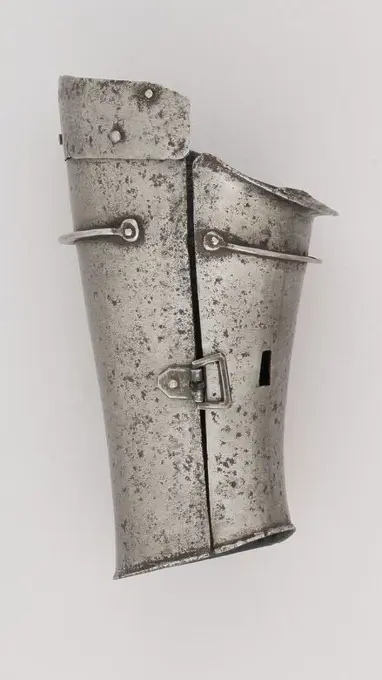
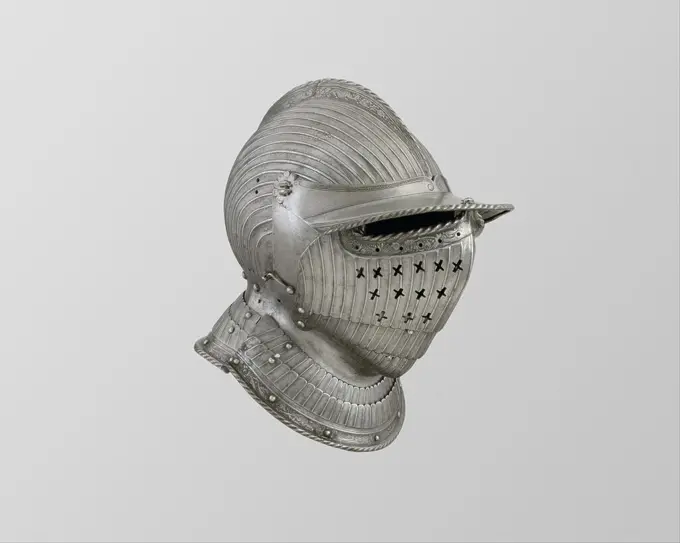
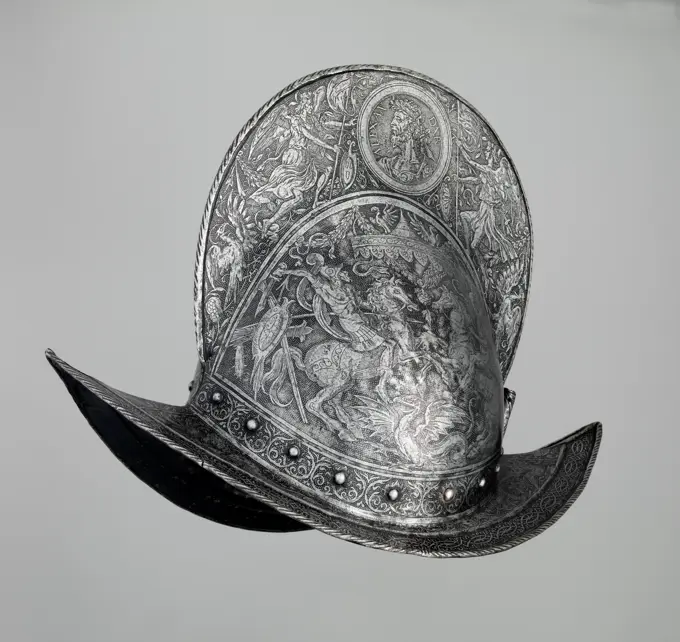
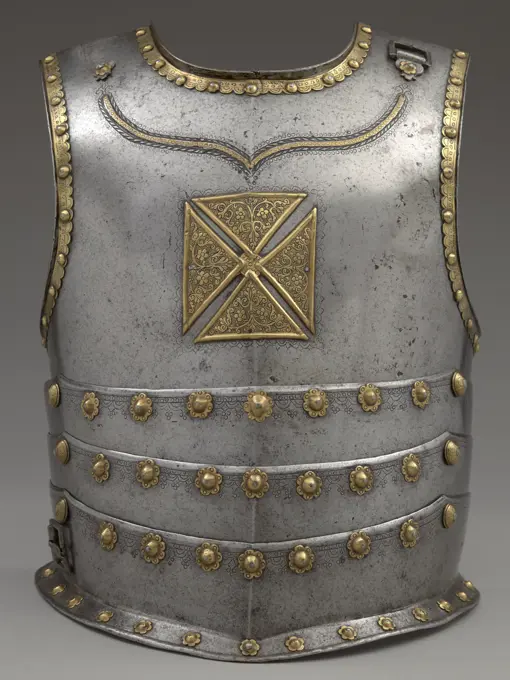
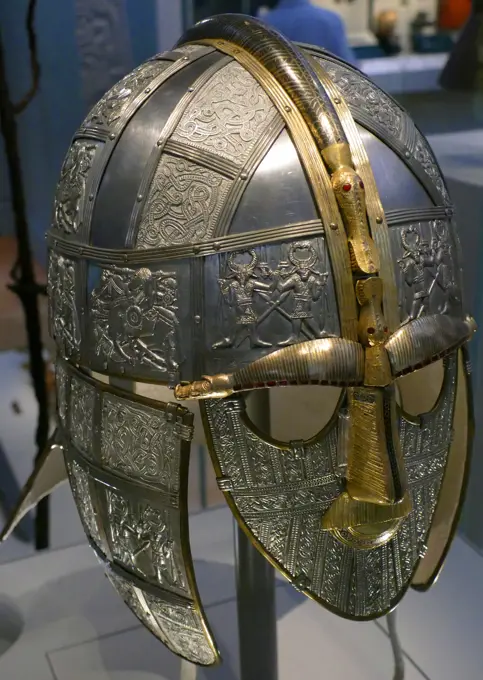
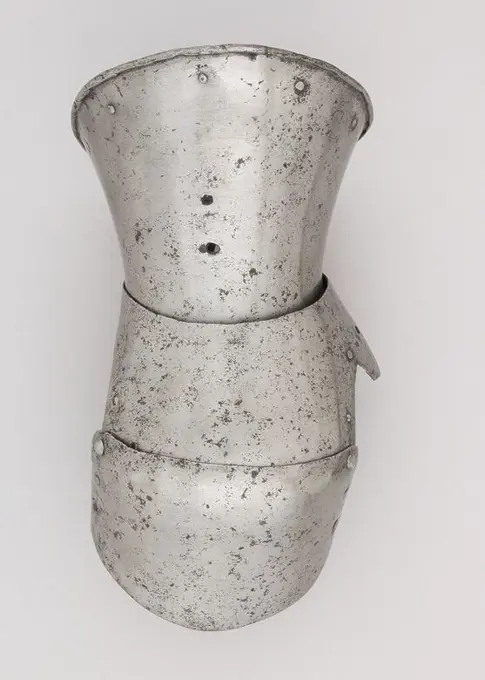
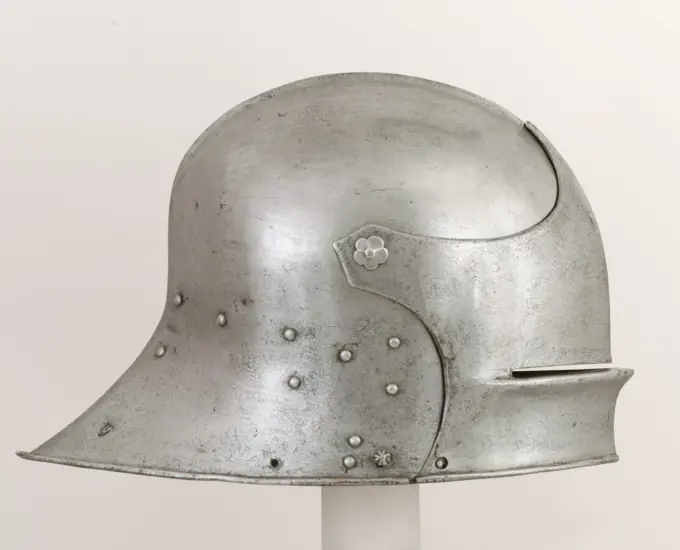
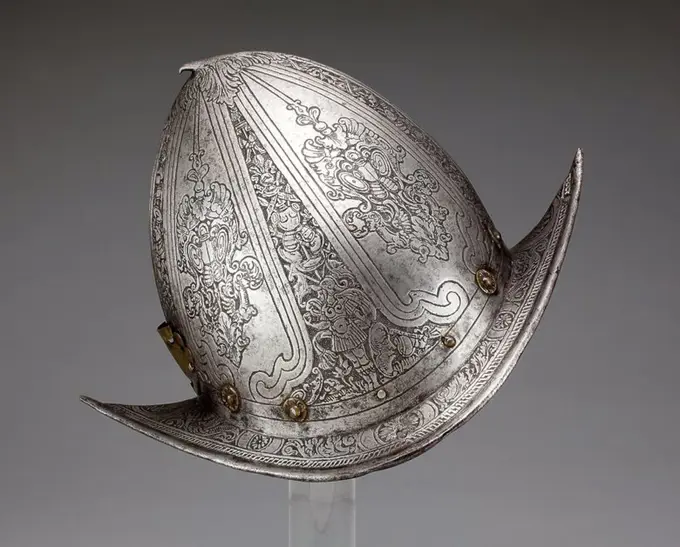
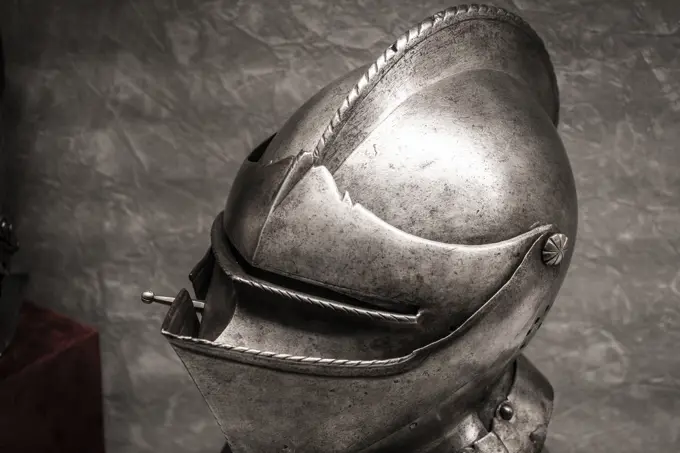
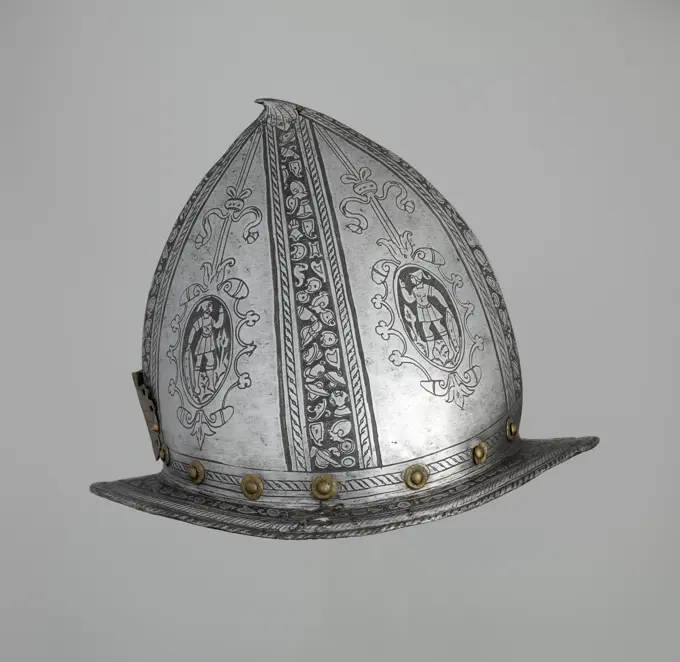
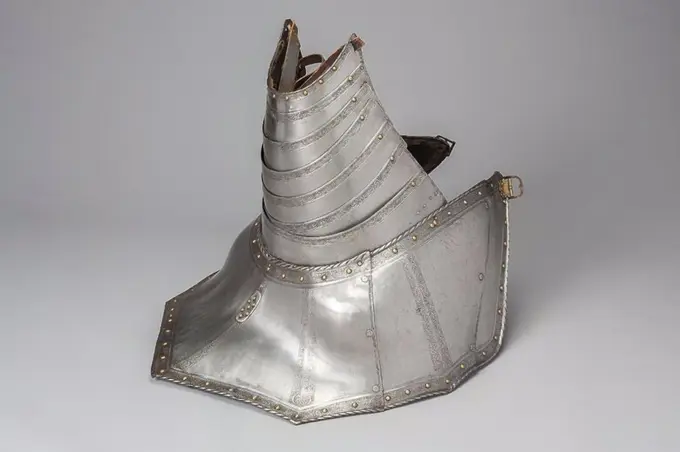
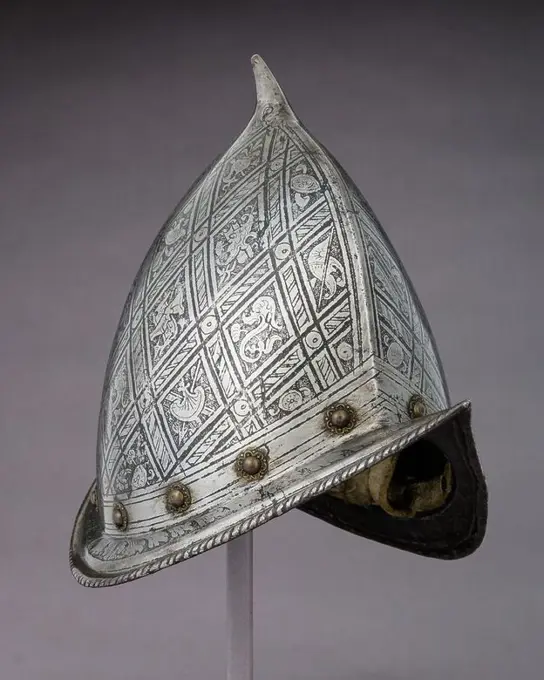
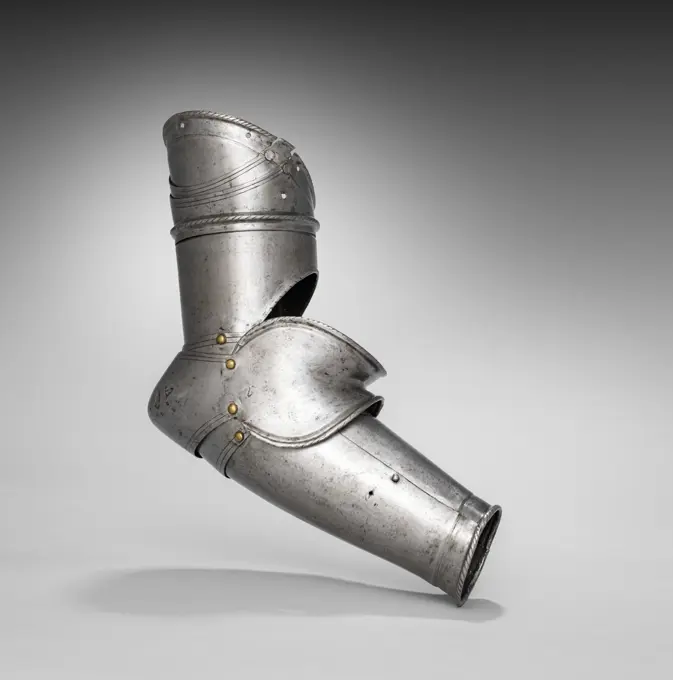
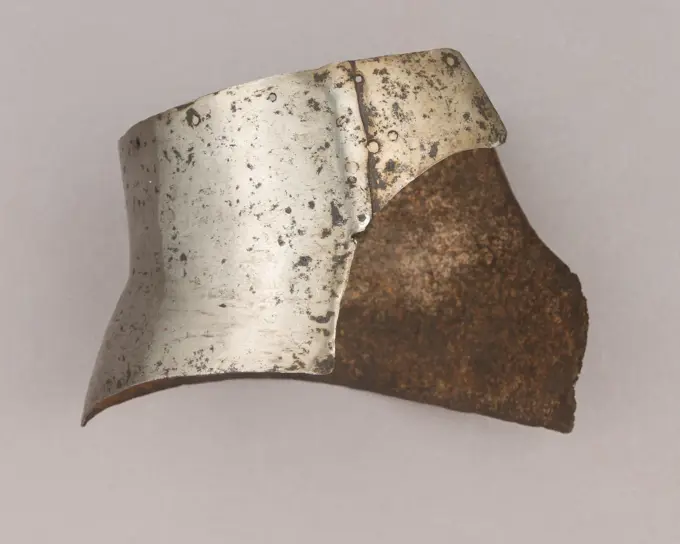
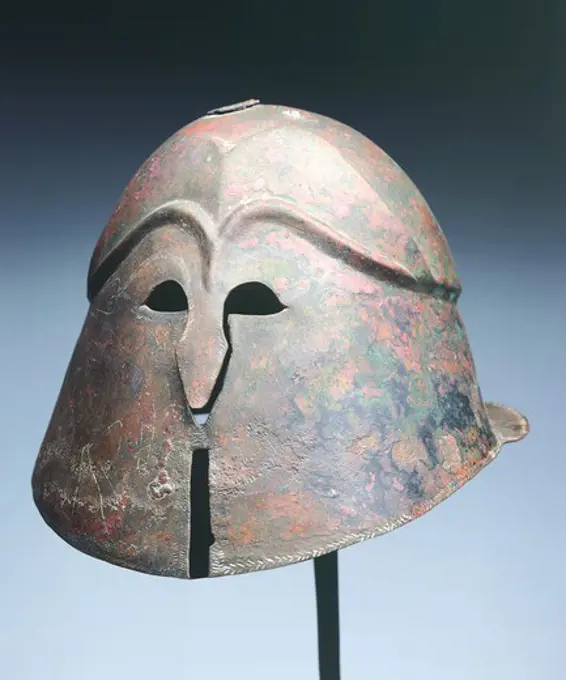
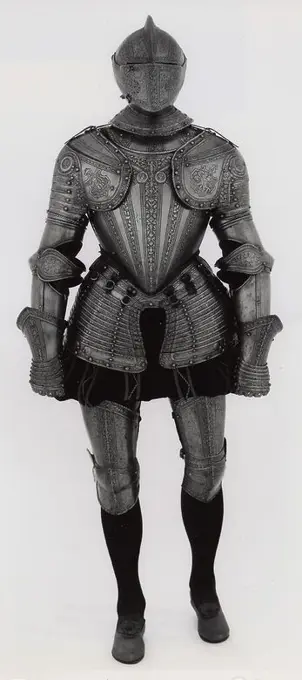
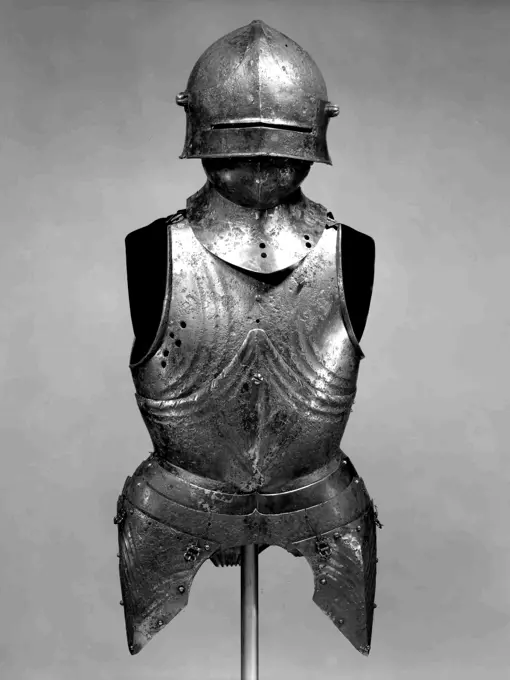
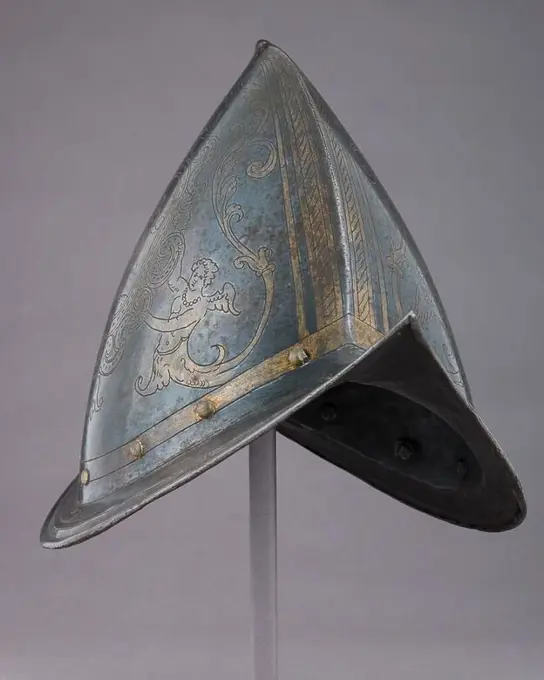
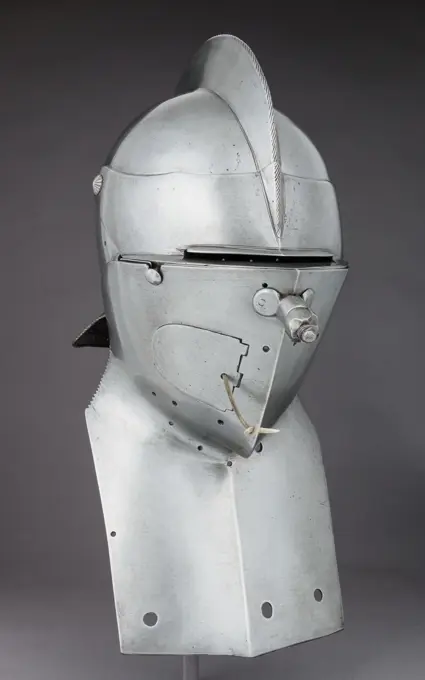
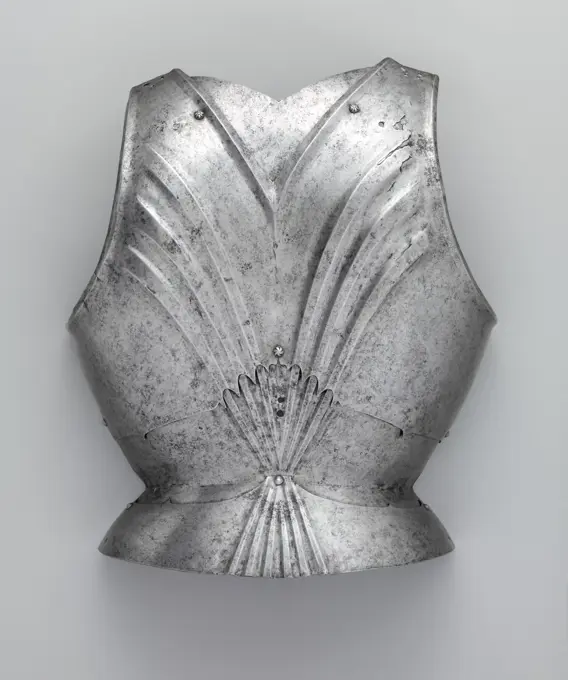
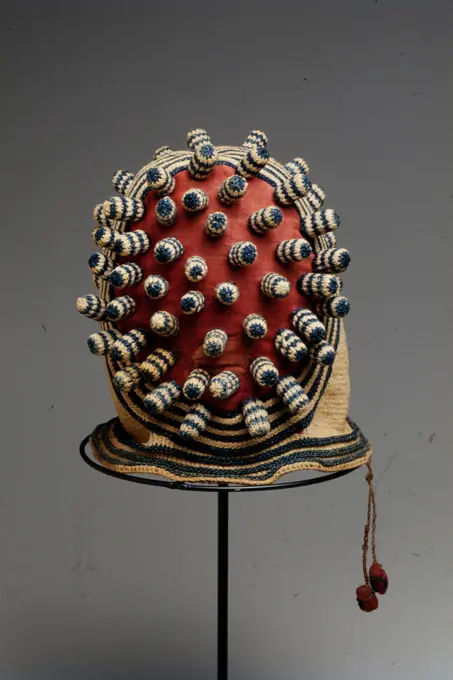
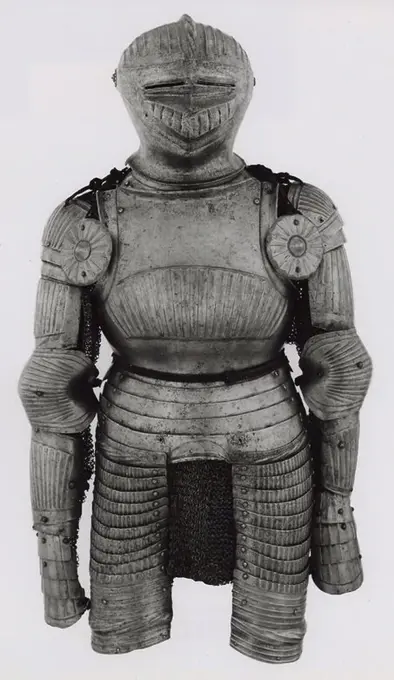
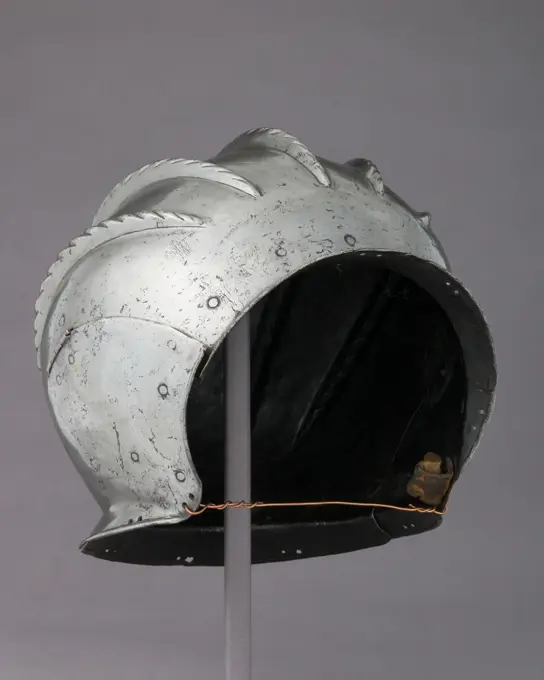
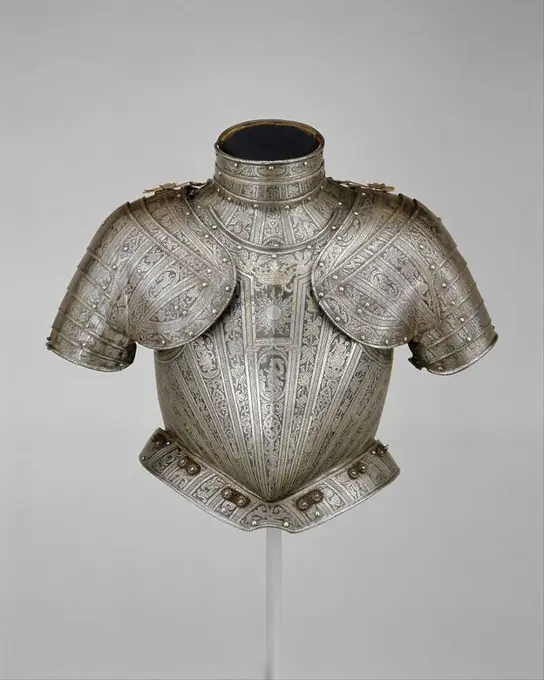
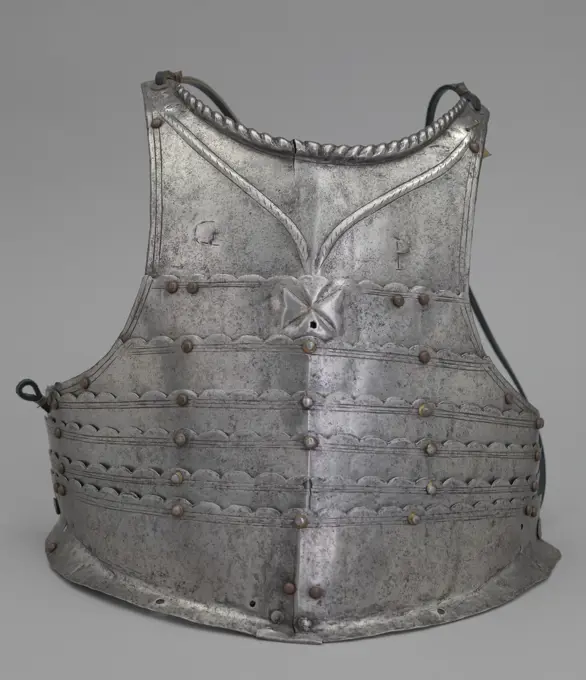
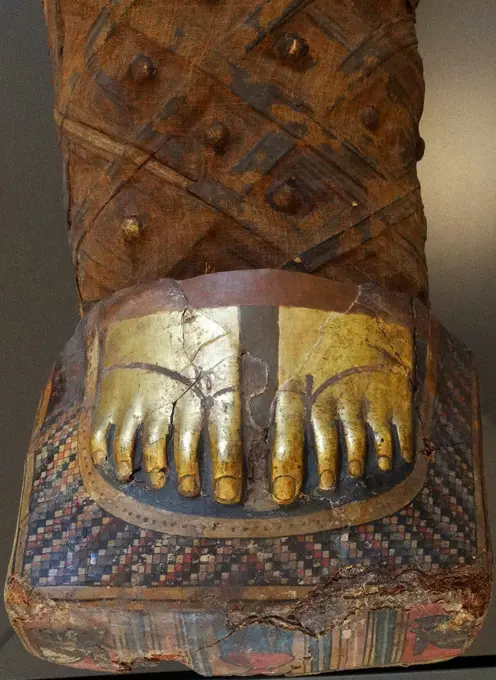
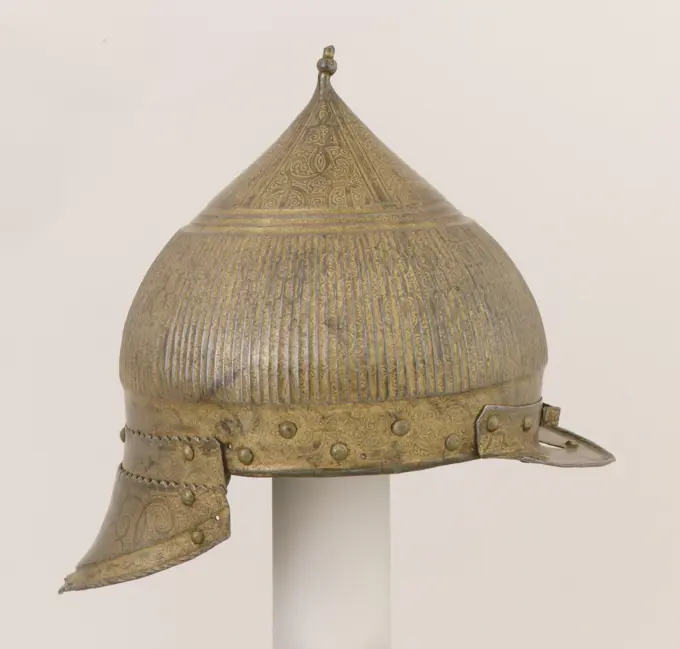
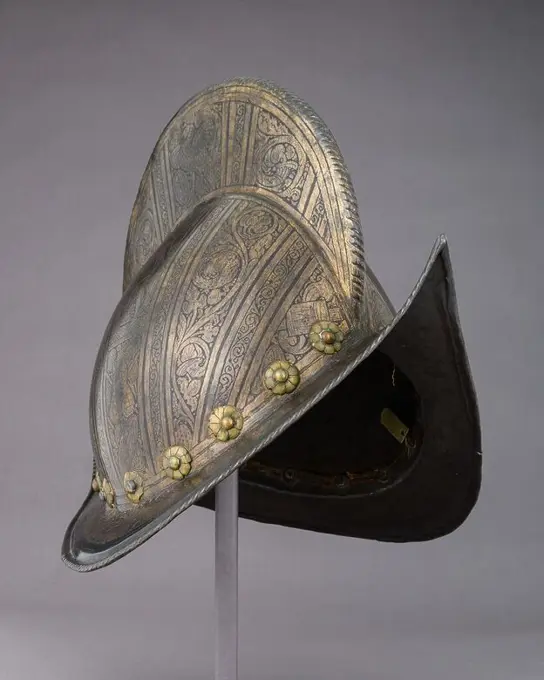
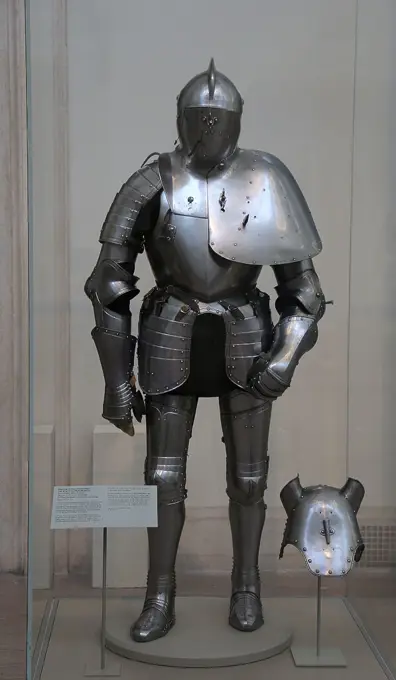
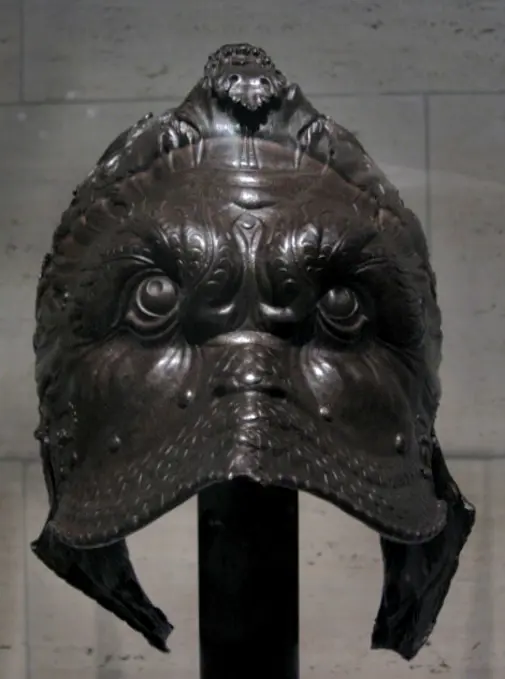
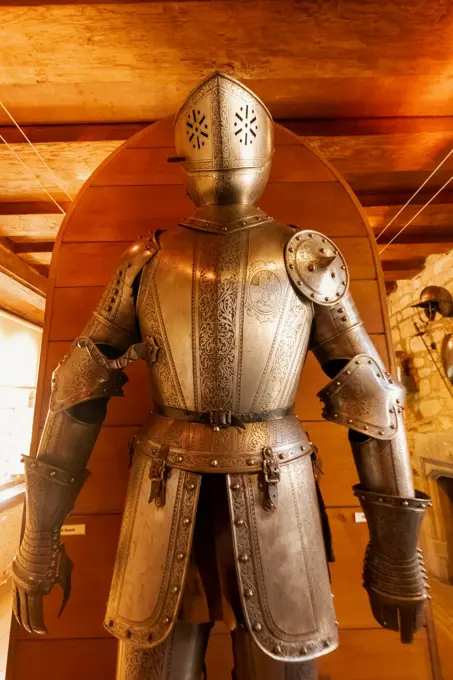
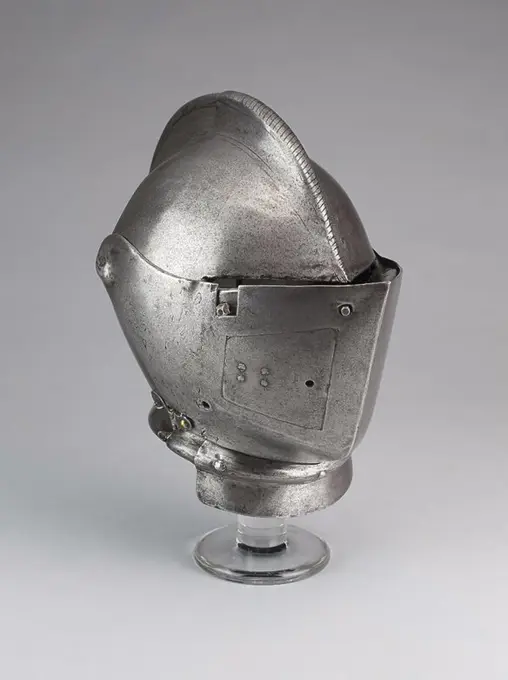
Barbute with Nasal. Culture: Italian. Dimensions: H. 9 5/8 in. (24.4 cm); W. 7 1/2 in. (19.1 cm); D. 11 3/4 in. (29.8 cm); Wt. 3 lb. (1361 g). Date: ca. 1450. Museum: Metropolitan Museum of Art, New York, USA.Burgonet. Culture: South German. Dimensions: H. 9 1/4 in. (23.5 cm); W. 8 in. (20.3 cm); D. 13 5/8 in. (34.6 cm); Wt. 4 lb. 4 oz. (1928 g). Date: ca. 1560. Museum: Metropolitan Museum of Art, New York, USA.Close-Helmet. Armorer: Attributed to Kunz Lochner (German, Nuremberg, 1510-1567). Culture: German, Nuremberg. Dimensions: H. 12 3/4 (32.4 cm); W. 8 1/8 in. (20.6 cm); D. 13 in. (33 cm); Wt. 6 lb. 9 oz. (2975 g). Date: 1550. Museum: Metropolitan Museum of Art, New York, USA.Burgonet ca. 1540-50; cheekpieces replaced, 1932 Replacement cheek-pieces made by Leonard Heinrich German This burgonet belongs to a series of virtually identical examples having three raised and engrailed combs that were worn by the guards attached to a noble German or Austrian house. Several helmets bear the mark of Augsburg and that of Desiderius Helmschmid (1513-1579), the city's leading armorer in this period (this particular helmet is unmarked). Pairs of holes in the bowl suggest that the surface was covered with fabric, stitched in place, leaving only the tall combs exposed. The forging of a helmet bowl with three tall combs from a single plate of steel required considerable skill; the challenge was also met by Italian armorers, who created triple-combed burgonets for the Farnese guard (see acc. no. 04.3.219). (The cheekpieces are modern replacements made by the Museum's armorer Leonard Heinrich in 1932.). Burgonet 26506Barbute with Hinged Nasal ca. 1450 Italian, probably Milan Barbutes with hinged nasals are recorded in Italian paintings and miniatures, but only two helmets with surviving nasals are known, both from Chalcis.. Barbute with Hinged Nasal 23235Armet French late 16th centuryBurgonet Made 1550-1580 Southern Germany. Steel .Sallet (Barbuta). Master Z O (Italian); Milan. Date: 1440-1490. Dimensions: H. 28 cm (11 in.)Wt. 5 lb. 8 oz. Steel. Origin: Milan. Museum: The Chicago Art Institute, Chicago, USA. Author: Master ZO.Armet ca. 1490, with later additions Italian, Milan The medieval English custom of hanging a helmet over a tomb as part of the deceased's funerary "achievement" continued well into the seventeeth century. Thanks to this practice, numerous early helmets have been preserved. Like many "church helmets," this example is composite, being made up of old, reused parts assembled somewhat haphazardly for mortuary use. The bowl, which originally was fitted with a brow reinforce, and the cheekpieces are Italian. The right side of the bowl at the back bears faint traces of three Milanese armorers' marks: a crown surmounting letters and, struck twice below, a split-legged cross enclosing two letters. (The visor and upper bevor are adapted from other helmets and the rondel is modern.). Armet 26454Cuirass and Tassets (Torso and Hip Defense). Armorer: Attributed to Kolman Helmschmid (German, Augsburg 1471-1532). Culture: German, Augsburg. Decorator: Etching attributed to Daniel Hopfer (German, Kaufbeuren 1471-1536 Augsburg). Dimensions: H. 41 1/2 in. (105.4 cm); Wt. 19 lb. 8 oz. (8845 g). Date: ca. 1510-20.The decoration of this armor is an outstanding example of German figural etching, inspired by contemporary print sources, as it was used to embellish armor. The etching has been attributed to Daniel Hopfer, a noted printmaker and armor etcher. Hopfer may have pioneered the technique of making prints from an etched metal plate, which revolutionized printmaking in the sixteenth century.The figures on the breastplate depict major Christian saints and include the Virgin and Child flanked by Saint George and Saint Christopher. On the backplate, Saint Anne with the Virgin and Child is flanked by Saint James the Great and Saint Sebastian. The figure of Saint Sebastian pierced by arrArmet ca. 1510-15 German White retaining earlier armet construction, with hinged cheekpieces closing in front of the chin, this helmet also exhibits features current in the early sixteenth century: fluted surfaces, the lower edge of the helmet embossed so as to turn on the rim of the gorget, and a small "sparrow's-beak" visor. A Moor's head stamped on the right side of the visor may be a mark of ownership, perhaps referring to the partician Tucher family of Nuremberg, rather than the personal mark of the armorer. (The right cheeckpiece is a restoration.). Armet. German. ca. 1510-15. Steel. HelmetsGreat Sallet possibly 1420-50 Italian Apparently the forerunner of the one-piece barbute that appeared in Italy about 1440 these distinctive two-piece sallets are known only from Chalcis and other Aegean sites.. Great Sallet 23237Close Helmet of Claude Gouffier (1501-1570). Culture: French. Dimensions: H. 15 3/4 in. (40 cm); W. 8 1/4 in. (21 cm); D. 14 1/2 in. (36.8 cm); Wt. 6 lb. 5 oz. (2863 g). Date: ca. 1555-60.This is an excellent example of a French heavy cavalry helmet of the mid-sixteenth century. Its elaborate decoration includes the monogram of Claude Gouffier (1501-1570), Master of the Horse (Grand Écuyer) for Henry II and Charles IX. This monogram is also on a knee piece from the armor of Gouffier's in the Metropolitan Museum's collection (acc. no. 1994.390). Museum: Metropolitan Museum of Art, New York, USA.Closed vizier helmet from rider harnas. Closed vizier helmet with two star-shaped air openings at the front; decorations with copper rosettes; Vederbos holder is engraved at the rear. Note: Part of Inv. Nr. Ng-NM-528.Close-Helmet for the Field ca. 1560-70 Italian In the 1560s it became fashionable in Italy to cover an armor with multiple narrow bands of foliate ornament, a practice carried to the extreme in this example. The presence of a large reinforcing brow plate on a close-helmet of this date is highly unusual, but it is found on similarly decorated armors made for the court of Ferrara. (The front collar lames are missing.). Close-Helmet for the Field 26510Helmet 16th-18th century Tibetan. Helmet 27749Close Helmet Made 1500-1530 Southern Germany. Steel .Armour Armour of the medieval knight. Metal protection of the soldier against the weapon of the opponent Copyright: xZoonar.com/ValeryxxSibrikovx 2418496Close Helmet with Falling Buffe ca. 1590-95 Attributed to Pompeo della Cesa Italian. Close Helmet with Falling Buffe. Italian, Milan. ca. 1590-95. Steel, gold. Milan. HelmetsClose Helmet. Armorer: Attributed to Pompeo della Cesa (Italian, Milan, ca. 1537-1610). Culture: Italian, Milan. Dimensions: H. 11 5/8 in. (29.5 cm); W. 9 1/2 in. (24.1 cm); D. 11 in. (27.9 cm); Wt. 5 lb. 14 oz. (2665 g). Date: ca. 1585. Museum: Metropolitan Museum of Art, New York, USA.Armet ca. 1525 Attributed to Kolman Helmschmid German. Armet. German, Augsburg. ca. 1525. Steel, gold. Augsburg. Armor for ManBreastplate. South German, Nuremberg; Mark breastplate: City of Nuremberg mark; Armorer's mark; Mark fauld: Vienna Arsenal mark. Date: 1560-1570. Dimensions: Wt. 6 lb. 11 oz. Steel and leather. Origin: Nuremberg. Museum: The Chicago Art Institute, Chicago, USA.Burgonet. Culture: French. Dimensions: H. 14 in. (35.6 cm); W. 10 1/4 in. (26 cm); D. 12 5/8 in. (32.1 cm); Wt. 4 lb. 13 oz. (2190 g). Date: ca. 1630.This is a rare, late example of French embossed armor. The gilt fleur-de-lis rivet heads along the edges, the fleur-de-lis plate at the apex of the bowl, and the laurel branches around the collar suggest it was made for Louis XIII of France (reigned 1610-43). Museum: Metropolitan Museum of Art, New York, USA.Helmet with Cheek pieces. 750-775 AD. The Coppergate Helmet. York.Coppergate Helmet- saxon Helmet. 750-775 AD ENGLAND.Iron helmet Iron helmet of the medieval knight. Very heavy headdress Copyright: xZoonar.com/VALERY-SIBRIKOVx 7538319Medieval helmet on a black background, Muiden Castle; Muiden, NetherlandsIron helmet of the medieval knight. Very heavy headdress.Armor of the Medieval Knight. Metal protecting the soldier from enemy weaponsPersian szyszakPortions of a Jousting Helmet. Italian; Milan. Date: 1560-1590. Dimensions: H. 40.6 cm (16 in.). Steel, gilding, and leather. Origin: Milan. Museum: The Chicago Art Institute, Chicago, USA.Armet ca. 1500-1510 British or Flemish This helmet is one of the most complete and best-preserved examples of a distinctly English or Flemish armet.. Armet 22901Armour Armour of the medieval knight. Metal protection of the soldier against the weapon of the opponent Copyright: xZoonar.com/ValeryxxSibrikovx 2416564Breastplate, c. 1560-1580. South Germany, 16th century. Steel, leather straps, brass rivets; overall: 42.3 x 32 x 14.2 cm (16 5/8 x 12 5/8 x 5 9/16 in.). This armor was developed for the joust-a sporting combat between two mounted contestants. Although all of the elements of this armor date from the same period, they are not all from the same suit. This armor is thus called "composed." It also shows the asymmetry of jousting armor. The participants rode along a wall-like barrier known as a "tilt" with their left sides facing one another. Consequently, armor on that side of the body had to be thicker. Note the large plate (grandguard) over the left shoulder for extra protection. Also, the breathing holes in the helmet were placed on the right side (farthest from an opponent's lance) to avoid injuries from splinters. The bracket attached to the right breastplate is called the lance-rest, a shock-absorbing support designed to accommodate the lance when "couched" under the right armpit.CASCO CON MASCARA (KABUTO) VISTA LATERAL. Location: PALACIO REAL-REAL ARMERIA DE MADRID. MADRID. SPAIN.Defense for the Lower Left Forearm (Vambrace) ca. 1400-1425 Italian This piece is notable for the early presence of stop-ribs, the two curved struts riveted to the outer and inner plates. These were designed to stop the point of a weapon from sliding into a vulnerable joint or gap between the plates.. Defense for the Lower Left Forearm (Vambrace). Italian. ca. 1400-1425. Steel. Armor PartsPortions of a Ceremonial Armor. Culture: French. Dimensions: Wt. 17 lb. 7 oz. (7910 g). Date: ca. 1575-80.This armor was severely damaged by fire in the 1870s, destroying its gorget (collar) and arm defenses and melting off the gilding that originally covered all its exterior surfaces. Despite this damage, the remaining parts are important as examples of French ceremonial armor from the period of Henri III (reigned 1574-89). The embossed decoration consists of battle scenes of soldiers wearing Classical armor. Museum: Metropolitan Museum of Art, New York, USA.Armour Armor of the Medieval Knight. Metal protecting the soldier from enemy weapons Copyright: xZoonar.com/ValeryxxSibrikovx 2415927Bronze helmet of Corinthian type early 6th century B.C. Greek The helmet represents a characteristic form of the late seventh and early sixth century B.C. Unusual, however, is the interior, because it shows three sections that have been joined together--the calotte, the lower wall, and the nose-piece. The projections along the edges are the remains of rivets that would have secured an added material such as bone or ivory.. Bronze helmet of Corinthian type. Greek. early 6th century B.C.. Bronze. Archaic. BronzesIron helmet of the medieval knight. Very heavy headdressPrehistory, France, Bronze Age. Bronze helmet, height cm. 31. From Chalon-sur-Saone.Defense for the Lower Left Forearm (Vambrace). Culture: Italian. Dimensions: H. 8 1/8 in. (20.6 cm); W. 5 in. (12.7 cm); D. 4 1/4 in. (10.8 cm); Wt. 1 lb. 4.1 oz. (569.8 g). Date: ca. 1400-1425.This piece is notable for the early presence of stop-ribs, the two curved struts riveted to the outer and inner plates. These were designed to stop the point of a weapon from sliding into a vulnerable joint or gap between the plates. Museum: Metropolitan Museum of Art, New York, USA.Helmet 18th-19th century Indian. Helmet 32060Closed Burgonet. Armorer: Attributed to Kolman Helmschmid (German, Augsburg 1471-1532). Culture: German, Augsburg. Dimensions: H. 14 5/8 in. (37.1 cm); W. 9 in. (22.9 cm); D. 12 7/8 in. (32.7 cm); Wt. 6 lb. 10 oz. (3004 g). Date: ca. 1525-30.This helmet combines features common to burgonets, notably the projecting peak and falling buffe, with close-helmet construction, in which all elements of the face defense pivot together at the sides of the bowl. Closed burgonets in the fluted style are particularly rare. This finely made example is etched in the manner of Daniel Hopfer (1471-1536) of Augsburg and may have been made by Kolman Helmschmid, the leading armorer of his generation, with whom Hopfer seems to have been associated. Museum: Metropolitan Museum of Art, New York, USA.Comb Morion ca. 1560-65 German, Brunswick This helmet is an outstanding example of parade armor made in northern Germany for the court of Duke Heinrich the Younger of Brunswick-Wolfenbüttel (r. 1514-68) and his son Julius (r. 1568-89). Characteristic of the Brunswick school is the prominent and finely etched figural decoration, with historical, mythological, and biblical subjects.The etching on this morion is exceptionally accomplished and includes (on the raised comb) portrait medallions of Alexander the Great and Antonia Sabina Augusta, wife of the Roman emperor Hadrian. The classical subjects, complex design, and horror vacui typify the northern Mannerist aesthetic. The decoration on the left side includes a shield emblazoned with three small shieldsthe emblem of the guild of Saint Luke, the painter's guild to which many etchers belonged. The quality and originality of the etching suggest that this helmet may have been the artist's "masterpiece," submitted to the guild by the etchePrzeszo Przyszoci unknownreconstruction of the Sutton Hoo helmet, a decorated Anglo-Saxon helmet discovered during the 1939 excavation of the Sutton Hoo ship-burial. Buried around 625 AD. it is believed to have been the helmet of King Raedwald; for whom its elaborate decoration may have given it a secondary function almost akin to a crown.Gauntlet for the Right Hand. Culture: Italian. Dimensions: L. 9 1/4 in. (23.5 cm); W. 5 in. (12.7 cm); D. 5 1/4 in. (13.3 cm); Wt. 1 lb. 0.9 oz. (479.1 g). Date: ca. 1440-50. Museum: Metropolitan Museum of Art, New York, USA.Isenhut, anonymous, 1525 - 1550  Isenhut helmet, iron, black, beaten out of a plate. Helmet has a wide hanging valve. On the helmet is a narrow edge in longitudinal direction and center piece in a striker. At the base of the helmet ball, a border runs in a width direction all around. The helmet concerns a soil find. On the valve a circular hole, probably this is a carrier hole. Netherlands (possibly) iron (metal) forging / striking (metalworking)  GorinchemSallet ca. 1470-80 Attributed to Hans Blarer the Younger German During the fifteenth century, the city of Basel, which became part of the Swiss Confederation in 1501, was a thriving center for armor making. Despite this fact, almost no armor from Basel can be identified today.The maker's mark on this helmet allows it to be recognized as the only known surviving helmet made by an armorer of Basel. It also demonstrates that armor from Basel could be of comparable quality to that from such well-known centers as Innsbruck, Augsburg, and Nuremberg, examples of which are also displayed in gallery 373.. Sallet. German, Basel. ca. 1470-80. Steel. Basel. HelmetsMorion. Northern Italian. Date: 1570-1590. Dimensions: H. 22.9 cm (9 in.) Wt. 2 lb. 14 oz. Steel, brass, and leather. Origin: Northern Italy. Museum: The Chicago Art Institute, Chicago, USA.engole helmet, 16th century, Álava Armory Museum, Vitoria, Basque Country, SpainCabasset ca. 1550-75 Italian This cabasset is part of an unusually large armor garniture (acc. no. 27.159.1) from the armory of the Dos Aguas family in Valencia, Spain. The garniture contains pieces for use in battle and for the tilt in both the Italian and German fashions. The tilt was a tournament fought on horseback between two opponents armed with lances and separated by a lengthwise barrier.The armor as mounted is equipped with a helmet and vambraces (arm defenses) for the tournament. The buffe (chin defense), second breastplate (27.159.2), and manifer (reinforced left gauntlet) (27.159.6) would have been added to make the armor ready for exchange pieces for different forms of the tournament. For the German tilt, the trellised targe (shield) (27.159.7), small elbow defense (27.159.5), and small stomach defense (27.159.3) were added. For the Italian tilt, these elements were replaced by the form-fitting reinforce covering the left half of the torso and left shoulder (mezzo sovrapetPeytral and Lower Neck Defense of a Horse Armor. Southern German. Date: 1525-1575. Dimensions: . Steel. Origin: Augsburg. Museum: The Chicago Art Institute, Chicago, USA.Iron Age Helmet found in the Thames, London. Bronze. 1st cent. AD. England.Morion-Cabasset. Culture: Italian. Dimensions: H. 11 in. (27.9 cm); W. 8 3/8 in. (21.3 cm); D. 14 in. (35.6 cm); Wt. 3 lb. 7 oz. (1555 g). Date: ca. 1575. Museum: Metropolitan Museum of Art, New York, USA.Helmet (Shokakutsuki Kabuto) in the Style of ca. 5th-6th Century ca. 1900 Japanese. Helmet (Shokakutsuki Kabuto) in the Style of ca. 5th-6th Century. Japanese. ca. 1900. Iron. HelmetsProper Right Arm (Vambrace, Rerebrace and Couter), c. 1560-80. South Germany, 16th century. Steel, leather straps, brass rivets; overall: 44.2 cm (17 3/8 in.). This armor was developed for the joust--a sporting combat between two mounted contestants. Although all of the elements of this armor date from the same period, they are not all from the same suit. This armor is thus called "composed." It also shows the asymmetry of jousting armor. The participants rode along a wall-like barrier known as a "tilt" with their left sides facing one another. Consequently, armor on that side of the body had to be thicker. Note the large plate (grandguard) over the left shoulder for extra protection. Also, the breathing holes in the helmet were placed on the right side (farthest from an opponent's lance) to avoid injuries from splinters. The bracket attached to the right breastplate is called the lance-rest, a shock-absorbing support designed to accommodate the lance when "couched" under the right arClose Helmet. Domenico dei Barini, called Negroli; Italian, Milan, 1492--c. 1516. Date: 1500-1525. Dimensions: H. 25.4 cm (10 in.) Wt. 5 lb. 2 oz. Steel. Origin: Milan. Museum: The Chicago Art Institute, Chicago, USA.Ritter Armour of the medieval knight. Metal protection of the soldier against the weapon of the opponent Copyright: xZoonar.com/ValeryxxSibrikovx 3126703Armour Armour of the medieval knight. Metal protection of the soldier against the weapon of the opponent Copyright: xZoonar.com/ValeryxxSibrikovx 2425274Lower Plate of a Bascinet early 15th century Italian This is part of a large find of medieval armor discovered in 1840 in the ruins of the fortress of Chalcis, on the Greek island of Euboea (then a Venetian colony called Negroponte). The fortress had been captured and destroyed by the Turks in 1470. Now divided largely between the Ethnological Museum, Athens, and The Metropolitan Museum of Art, the Chalcis hoard contains many rare and unusual elements of fourteenth- and fifteenth-century armor. Of particular importance are the variety of headpieces and the many fragments of brigandines (armor for the torso constructed of small plates riveted to layers of fabric), some of which retain portions of their original velvet covering. The Chalcis armor provides a unique picture of the armament used in the Aegean, one of the easternmost military outposts of the Venetian empire.. Lower Plate of a Bascinet. Italian. early 15th century. Iron. Helmets PartsApulo-corinthian helmet from Dendera (Egypt). Greek Civilization, 4th Century BC.Composite Field Armor. Italian, Milanese. Date: 1560-1600. Dimensions: H. 182.9 cm (72 in.). Steel, brass, and leather. Origin: Italy. Museum: The Chicago Art Institute, Chicago, USA.Helmet (Kabuto) 17th century Japanese. Helmet (Kabuto). Japanese. 17th century. Iron, leather, lacquer. HelmetsSallet ca. 1480 Caspar Rieder Austrian. Sallet. Austrian, Mühlau. ca. 1480. Steel, leather, textile (linen, cotton). Mühlau. HelmetsHelmet 17th century probably Caucasian or Russian. Helmet. probably Caucasian or Russian. 17th century. Steel, copper. HelmetsRight Shoulder and Arm Defense. Armorer: Attributed to Wolfgang Grosschedel (German, Landshut, active ca. 1517-62); Attributed to Franz Grosschedel (German, Landshut, recorded 1555-79). Culture: German, Landshut. Dimensions: Shoulder defense (a); H. 8 1/2 in. (21.6 cm); W. 9 in. (22.9 cm); D. 8 3/4 in. (22.2 cm); Wt. 34.1 oz. (966.7 g); shoulder defense (a) and arm defense (b); H. approx. 28 in. (71.1 cm); W. approx. 10 in. (25.4 cm); Wt. 5 lb. 9 oz. (2523.1 g). Date: ca. 1555-60. Museum: Metropolitan Museum of Art, New York, USA.British helmet of civil defense in the MK2 type G. A. Dunn & Co LtdHelmet (Hachi). Culture: Japanese. Dimensions: 10 in. (25.4 cm) x 12 in. (30.5 cm).. Date: early 19th century. Museum: Metropolitan Museum of Art, New York, USA.Elements of an Armor ca. 1480-90 German or Austrian Few complete armors have survived from the fifteenth century, making this one important despite its fragmentary condition. It was reportedly found in an Austrian church. The pieces were probably assembled in the late fifteenth or early sixteenth century as a pious gift to be hung over the tomb of a knight. All the elements are characteristic of armor worn in central Europe and parts of western Europe in the late Gothic period. These include the separate head and neck defenses consisting of sallet and bevor, breastplate and backplate of overlapping sections, and cusped and channeled surfaces. The backplate is notable for its elegant silhouette and its fluting that imitates gathered folds of fabric.. Elements of an Armor 22906Morion-Cabasset. Culture: Italian. Dimensions: H. 10 3/8 in. (26.4 cm); W. 9 1/2 in. (24.1 cm); D. 13 1/2 in. (34.3 cm); Wt. 3 lb. 3 oz. (1446 g). Date: ca. 1570. Museum: Metropolitan Museum of Art, New York, USA.Sallet and Buffe for a Rennzeug in the Saxon Fashion ca. 1570-1600 German The long-tailed German sallet was out of fashion as a field helmet by the early sixteenth century, but it continued to be used thereafter for the Scharfrennen, a joust fought between two contestants with sharp (rather than blunted) lances in an open field. Specially designed armors for this contest, known as Rennzeuge, included sallets bolted at the front to a buffe--a large rigid defense covering the lower face and neck--which in turn was bolted to the breastplate so that the head and upper body remained immobile. This sallet and buffe belong to a distinctive series of Rennzeuge made for use in the Saxon court at Dresden. Although unmarked, they are thought to have been made by the court armorers at Annaberg, in the Saxon territories. Two complete harnesses of this type are in the Metropolitan Museum's collection (acc. nos. 29.92.3, .4).. Sallet and Buffe for a Rennzeug in the Saxon Fashion 26519Armor with helmet and breastplate An antique European armor with helmet and breastplate isolated against white background. Copyright: xZoonar.com/JFsxPicxFactory xThielemannx 10024428Falling Buffe for a Helmet. Armorer: Attributed to Wolfgang Grosschedel (German, Landshut, active ca. 1517-62); Attributed to Franz Grosschedel (German, Landshut, recorded 1555-79). Culture: German, Landshut. Dimensions: H. 7 1/2 in. (19.1 cm); W. 6 1/2 in. (16.5 cm); Wt. 1 lb. 1 oz. (481.9 g). Date: ca. 1555-60. Museum: Metropolitan Museum of Art, New York, USA.Backplate ca. 1475 German. Backplate. German. ca. 1475. Steel. Armor Parts-BackplatesHeaddress, 20th century, 7 x 6 3/4 x 6 3/4 in. (17.78 x 17.15 x 17.15 cm), Cotton and raffia; single loop interlacing, Cameroon, 20th century, The ashetu - or prestige hat - is prevalent in the Grasslands of Cameroon. The large, blue and white burls are stiffened with wooden pegs and divided by concentric circles into two orange lobes on either side of the head. In this region, men once wore wrapped, tufted hairstyles to indicate their high social status. The projections on the ashetu mimic this hairstyle. Men wear prestige hats to ceremonies and rituals to express their standing and authority in the community.Infantry Armor. German, possibly Cologne. Date: 1500-1525. Dimensions: H. 137.2 cm (54 in.). Steel and leather. Origin: Cologne. Museum: The Chicago Art Institute, Chicago, USA.Burgonet ca. 1550 German. Burgonet 26545Portions of an Armor for Vincenzo Luigi di Capua (d. 1627). Armorer: Pompeo della Cesa (Italian, Milan, ca. 1537-1610). Culture: Italian, Milan. Dimensions: H. as mounted 19 in. (48 cm). Date: ca. 1595.These elements form part of a light-cavalry or infantry armor made for the Neapolitan nobleman Vincenzo Luigi di Capua (d. 1627), count of Altavilla and prince of Riccia. The breastplate bears his personal impresa (emblem), a sunburst above the motto Nulla Quies Alibi (No Repose But Here).Pompeo della Cesa, whose etched signature "Pompeo" is found near the top of the breastplate in the center, was the foremost Milanese armorer of the late sixteenth century. His patrons included Philip II of Spain, who also ruled as duke of Milan; Alessandro Farnese, duke of Parma; and Emanuele Filiberto, duke of Savoy. Pompeo probably headed a large workshop and also acted as a contractor in cooperation with other shops to fill particularly large commissions. The decoration includes bands of trophies altGalea. The roman soldier's helmet. Centurion. Roman Hispania. Replica. National Archaeological Museum, Madrid. Spain.Helmet (Kulah Khud). Culture: Persian. Dimensions: H. including mail 21 1/2 in. (54.6 cm); H. including nasal 10 in. (25.4 cm); H. excluding mail and nasal 6 in. (15.2 cm); Diam. 7 1/2 in. (19.1 cm); Wt. 3 lbs. 4.4 oz. (1485.5 g). Date: 18th century. Museum: Metropolitan Museum of Art, New York, USA.Armor Armor of the Medieval Knight. Metal protecting the soldier from enemy weapons Copyright: xZoonar.com/ValeryxxSibrikovx 2415940Amure Avec Poulaines Armor Antiques Musee de L'Armee, Paris, France Armour of the medieval knight. Metal protection of the soldier against the weapon of the opponentItalian high crested burgundy, 16th century, Álava Armory Museum, Vitoria, Basque Country, Spain.Morion ca. 1600 German, Nuremberg The electors of Saxony appear to have been the only German princes in the sixteenth century to outfit their bodyguards with matching equipment. Silvered morions of this type were probably worn by the officers of the bodyguards of the prince-electors of Saxony.. Morion 27158Przeszo Przyszoci unknownMummy of a two year old boy from Fayum; Egypt 100 AD Roman periodCorinthian Helmet, 500-475 BC. Greece. Bronze with silver inlay; overall: 21.5 cm (8 7/16 in.).Burgonet in Oriental Fashion (Zischägge) ca. 1560 German, probably Nuremberg Despite the persistent threat of Turkish invasion in the sixteenth century, the courts in eastern and Central Europe were attracted to the exotic and colorful costumes and military equipment of their Ottoman enemies. Tournaments and parades in Turkish, or related Hungarian, fashion were held at the Hapsburg courts in Vienna and Prague by the mid-sixteenth century. This helmet provides evidence of that taste, as its fluted conical bowl, peak with sliding nasal (missing), large shaped cheekpieces (missing), and articulated neck plates (several missing) were copied directly from contemporary Turkish models. The surfaces are etched and gilt overall with decoration based on "Moresque" ornament of Oriental inspiration. A similar burgonet dated 1561, coming from the armory of the Prices Radziwill, is in Wawel Castle, Cracow.. Burgonet in Oriental Fashion (Zischägge). German, probably Nuremberg. ca. 1560. Steel, gold,Morion. Culture: Italian. Dimensions: H. 11 13/16 in. (30 cm); H. of comb 3 3/8 in. (8.6 cm); W. 10 1/16 in. (25.6 cm); D. 14 1/2 in. (36.8 cm); Wt. 3 lb. 2 oz. (1417 g). Date: ca. 1575. Museum: Metropolitan Museum of Art, New York, USA.Jousting Armor and Matching Half-Shaffron. Steel, copper alloy, leather weight. From German. 1580-90. Metropolitan Museum of Art. New York. USA.Negroli  Helmet in the Form of a Dolphin Mask Helmet (burgonet) in the Form of a Dolphin MaskArmor. Turkey, 15th-16th century. Arms and Armor; armor. Steel, forgedZischägge (Helmet) Made 1620-1640 Germany. Steel, brass, gilding, and textile .Light for a Lighthouse, Boulton & Watt (possibly), c. 1818  So-called Argandse Lamp, consisting of a lamp holder with oil reservoir and a parabolic mirror, all attached to a brass bracket. The oil reservoir, applied to the mirror to the back, is an elegant designed and partially gilded vase with a float at the bottom, standing in a cylinder and connected to the lamp via a supply. The lamp holder has a small oil receptor at the bottom; The glass is missing. The parabolic mirror is made of copper, the mirror surface cashed in. manufacturer: United Kingdomafter design by: France brass (alloy). bronze (metal). copper (metal) gildingEngland, Kent, Hever, Hever Castle, Exhibit of French 16th century Style Suit of ArmourClose Helmet for the Joust. Italian; Milan. Date: 1570-1600. Dimensions: H. 22.2 cm (8 3/4 in.). Steel. Origin: Northern Italy. Museum: The Chicago Art Institute, Chicago, USA.First World War (1914-1918). German army helmet "Pickelhaube", model 1895. Latvian War Museum. Riga. Latvia.