My Boards
View Pictures
  • My Boards

Historic Indian Artwork

Intricate paintings from the Mughal period, depicting divine stories and figures in vibrant colors and detailed settings, showcasing epic tales and mythological scenes.
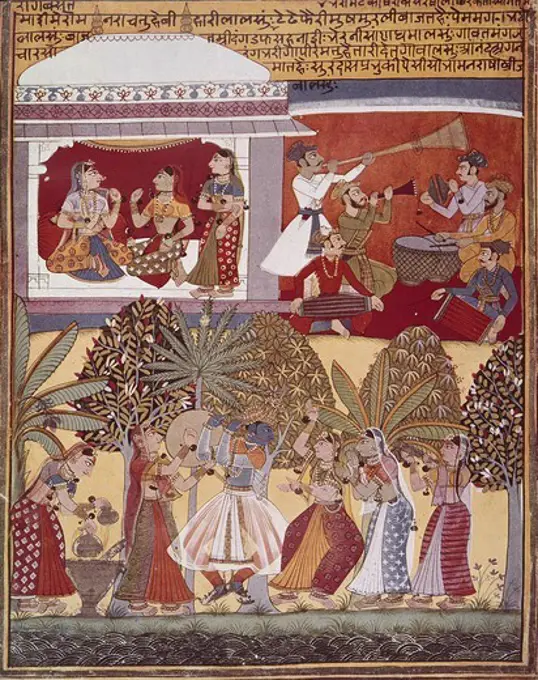
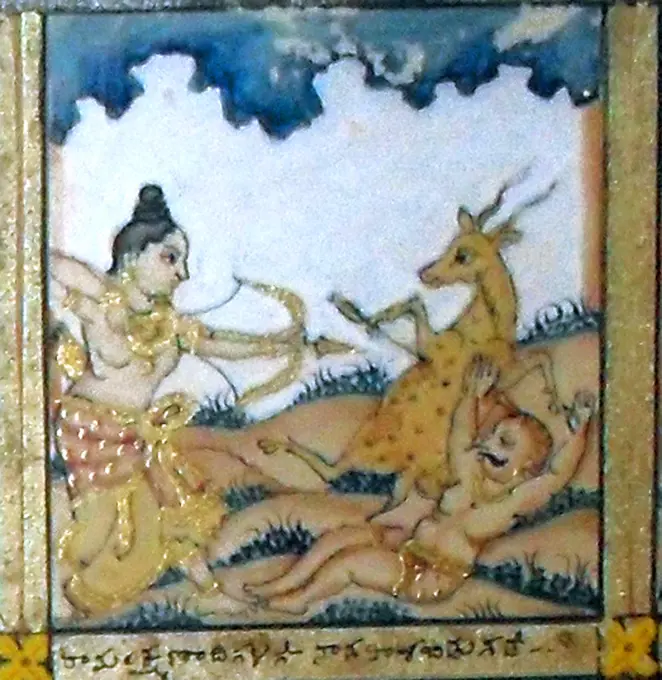
INDIA. Calcutta. Krishna's dance. Illustration from 'Surdas of Sur-Argar', 17th c. Hindu art. Miniature Painting.
248 assets in this story
6145-59274547
Shri Nath -ji, with a Frisian of Dieren, Anonymous, 1700 - 1949 Indian miniature. drawing In a gray -colored temple, two men in white robes are left and right of a kind of altar in red and gold with a niche behind it in which an image of a deity with a red and gold -negotiated canvas; The niche is framed by an arc in which figures of people and animals can be discovered; The man on the left keeps a scented oil lamp forward, the man on the right holds a kind of parasol, in front of the image on the altar is a bowl with two green fruits and a small bowl with a red cloth over it. The show is framed by two narrow edges in white and yellow, in between thin red framework lines and then framed by a wider black border on which two white framework lines; The outer edge is damaged. Nathdwara paper brush
1746-19665156
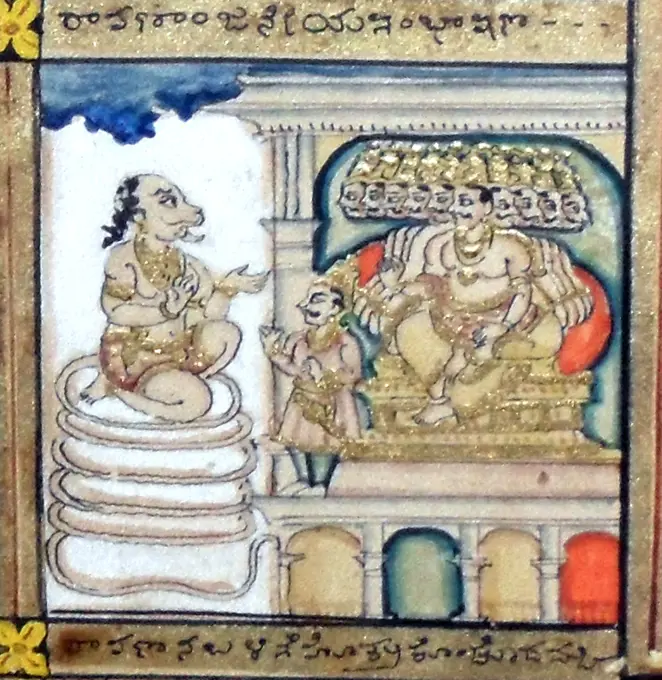
Detail from a 19th century enamel and glazed picture depicting the Hindu legend of the Ramayana. The Ramayana is one of the two epic Hindu poems, the other being the Mahabharata. The Ramayana describes a love story between Rama, an ancient King, and Sita, who is captured by Ravan, the King of Ceylon. Rama lays siege to Ceylon and wins back Sita
6145-29284785
Shiva with his wife Parvati sitting on a white horse. Gouache painting on mica by an Indian artist.
1746-19665127
Detail from a 19th century enamel and glazed picture depicting the Hindu legend of the Ramayana. The Ramayana is one of the two epic Hindu poems, the other being the Mahabharata. The Ramayana describes a love story between Rama, an ancient King, and Sita, who is captured by Ravan, the King of Ceylon. Rama lays siege to Ceylon and wins back Sita
1899-18853359
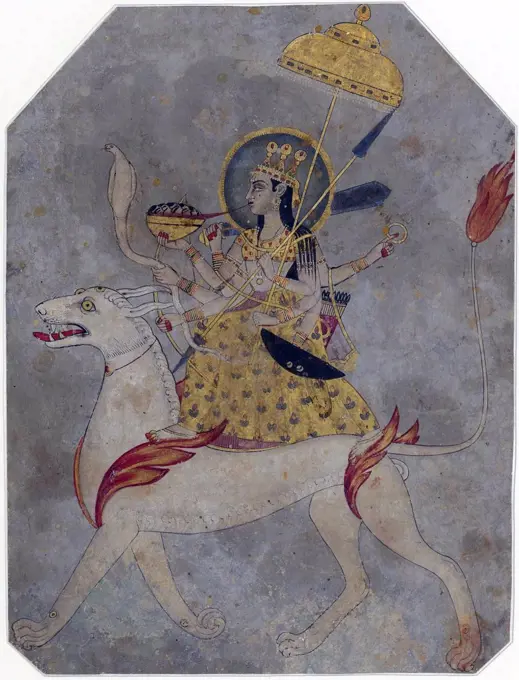
Durga (Hindustani pronunciation: d̪uːrgaː; Sanskrit: दुर्गा); meaning 'the inaccessible' or 'the invincible')  is a popular fierce form of the Hindu Goddess or Devi. She is depicted with multiple (variously, up to ten) arms, carrying various weapons and riding a ferocious lion or tiger. She is often pictured as battling or slaying demons, particularly Mahishasura, the buffalo demon. For the Goddess-worshipping Shaktas, Durga is sometimes equated with Mahadevi, the Supreme Goddess. Her triumph as Mahishasura Mardini, Slayer of the buffalo Demon is a central episode of the scripture Devi Mahatmya. Her victory is celebrated annually in the festivals of Navaratri and Durga Puja.
1899-18792341
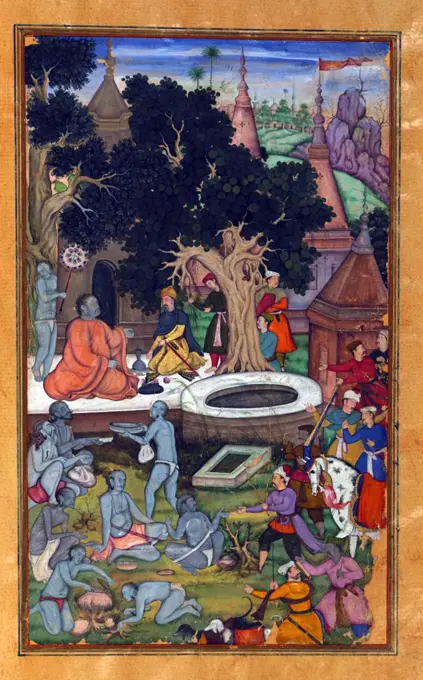
Bāburnāma (Chagatai/Persian: بابر نامہ;´, literally: 'Book of Babur' or 'Letters of Babur'; alternatively known as Tuzk-e Babri) is the name given to the memoirs of ahīr ud-Dīn Muḥammad Bābur (1483-1530), founder of the Mughal Empire and a great-great-great-grandson of Timur. It is an autobiographical work, originally written in the Chagatai language, known to Babur as 'Turki' (meaning Turkic), the spoken language of the Andijan-Timurids. Because of Babur's cultural origin, his prose is highly Persianized in its sentence structure, morphology, and vocabulary, and also contains many phrases and smaller poems in Persian. During Emperor Akbar's reign, the work was completely translated to Persian by a Mughal courtier, Abdul Rahīm, in AH 998 (1589-90 CE).
7155-70375457
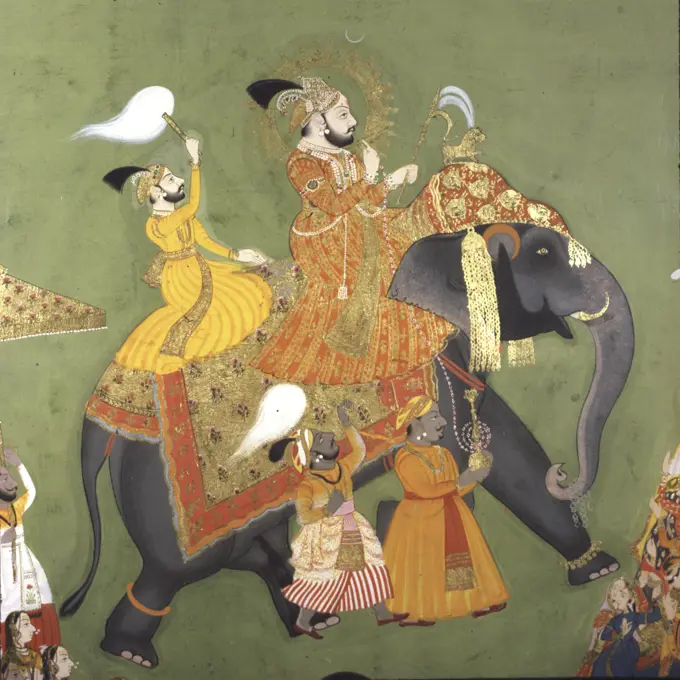
Maharaja Jagat Singh II of Mewar riding in procession on an elephant, with family and leading Sirdars. Udaipur c.1745 18th century Indian Manuscript India. NOTE: This image avail up to 100MB
6145-29708270
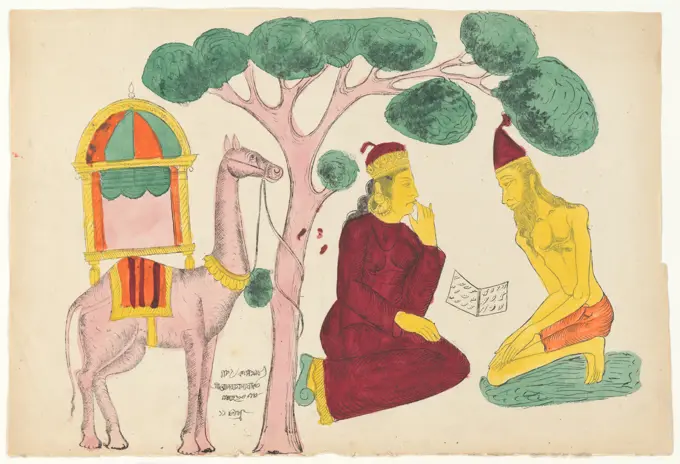
Layla Visiting Majnun in the Desert August 26, 1856 Becharam Das Dutta This early and remarkable print depicts the tragic story of Layla and Majnun, a romance much beloved in both the Persian and Indian worlds. The story recounts the deep love of a 7th century Bedouin poet Qays, nicknamed Majnun (crazy’), and his childhood love, the beautiful Layla. The artist, one of the pioneers in the use lithography in Calcutta, depicts an imagined encounter of the ill-fated lovers. Layla, dressed in fine clothes, is seen visiting the emaciated Majnun. She holds her hand to her mouth, signaling her distress at seeing her lover in this state. An open book of prayer lies before them, with pseudo-Persian writing. They are seated beneath a spreading tree to which Layla’s camel is tethered. The remainder of the picture is plain, with no suggestion of the harsh desert landscape and the wild animals that befriended Majnun—that typically appear in paintings of this subject. The drawing technique imitates
4435-5767
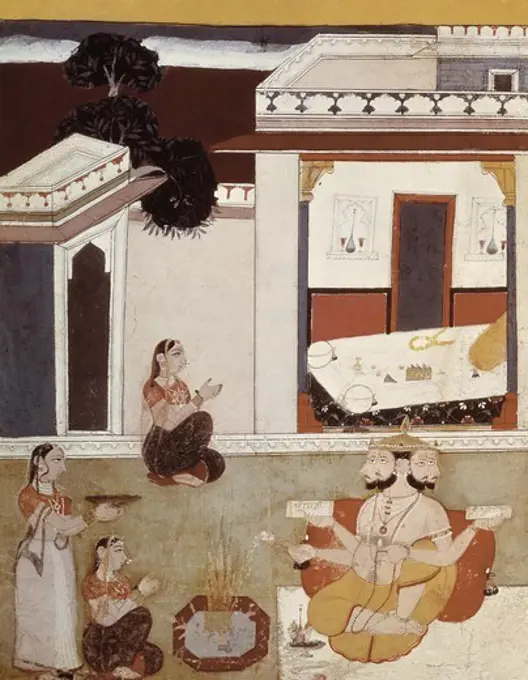
Woman Making an Offering to Brahma. 1720. Hindu art. Miniature Painting. FRANCE. ëLE-DE-FRANCE. Paris. Guimet Museum. Proc: INDIA. RAJASTHAN.
6176-66904823
Krishna Returns with the Cowherds to Braj, from a Bhagavata Purana, circa 1830
6145-45885009
The apostle Paul.
4409-17487149
Raja Dharma Mitra offering food to Tirthankara Shantinatha. Date/Period: Between 1850 and 1870. Author: UNKNOWN.
6145-29200179
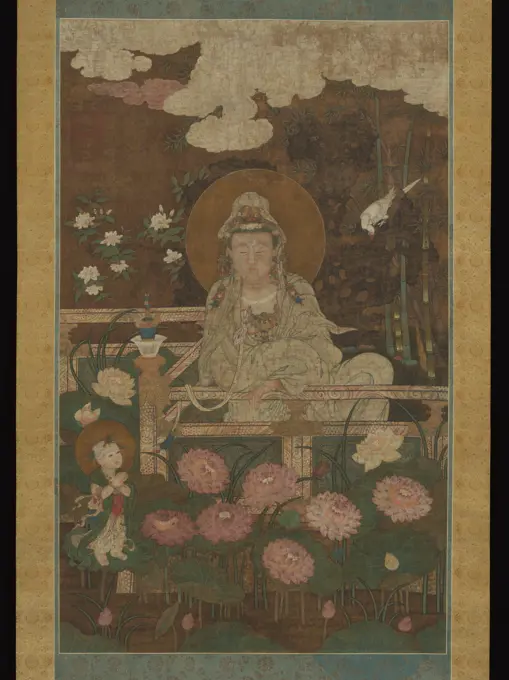
Guanyin as the Nine-Lotus Bodhisattva 1593 Unidentified artist In the summer of 1586, nine lotus flowers in the Ming imperial palace issued double blooms, a rare occurrence that was seen as an auspicious omen. That the flowers bloomed in the residence of the Empress Dowager Cisheng, mother of the emperor, was particularly favorable, for Cisheng was a devout Buddhist who had dreamed of her own incarnation as Guanyin. This painting is one of several Cisheng commissioned to celebrate the occasion. The composition, which places the boy pilgrim Shancai (Sudhana, in Sanskrit) before a maternal bodhisattva in a palace setting, strongly suggests that we are meant to see Cisheng as Guanyin. The square red seals in the upper left belong to Cisheng and her son, Emperor Wanli.. Guanyin as the Nine-Lotus Bodhisattva. Unidentified artist , late 16th century. China. 1593. Hanging scroll; ink and color on silk. Ming dynasty (1368-1644). Paintings
6145-29246861
Left, a calligrapher; right, a man wearing traditional clothes from Lucknow. Gouache painting by an Indian artist.
1899-18853437
The Nizam of Hyderabad, was a former monarchy of Hyderabad State, now divided into the states of Andhra Pradesh, Karnataka and Maharashtra on a linguistic basis. From 1724, Nizam, shortened from Nizam-ul-Mulk, meaning Administrator of the Realm, was the title of the native sovereigns of Hyderabad State who belonged to the Asaf Jah dynasty. The dynasty was founded by Mir Qamar-ud-Din Siddiqi, a viceroy of the Deccan under the Mughal emperors from 1713 to 1721. He intermittently ruled after Aurangzeb's death in 1707 and under the title Asaf Jah in 1724, the Mughal Empire crumbled and the viceroy in Hyderabad, the young Asaf Jah, declared himself independent. From 1798 Hyderabad was one of the princely states of India, but it retained control of its internal affairs. Seven Nizams ruled Hyderabad for two centuries until Indian independence in 1947. The Asaf Jahi rulers were great patrons of literature, art, architecture, culture, jewellery collection and rich food. The Nizams ruled until 1
6188-64595049
Miniature Painting on Paper, Ragini dhana shri, naltdwara school Copyright: xBhagwandasxRupani/DinodiaxPhotox
4409-28962144
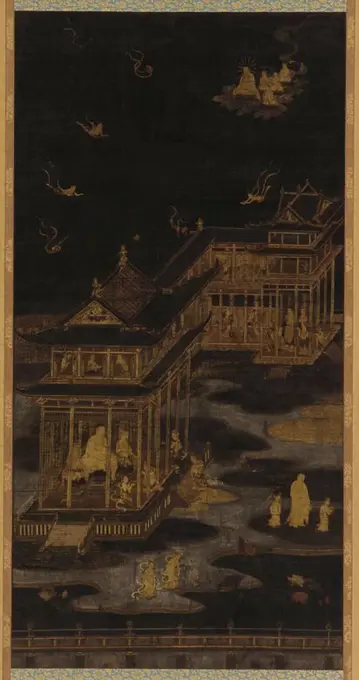
Paradise of Amida Buddha (Amitabha). Origin: Japan. Color and gold on silk. Date: 794-1185. Period: Heian period. Museum: Freer Gallery of Art and Arthur M. Sackler Gallery.
4409-20888575
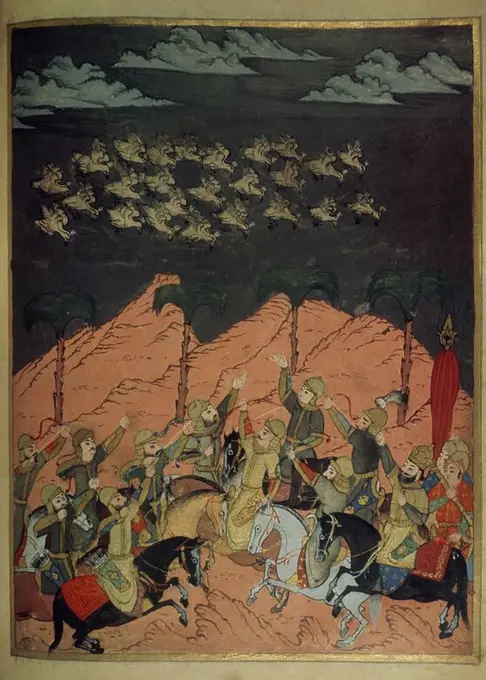
When Abrahah's forces neared the Kaaba, Allah commanded birds to destroy Yemenis' army, raining down pebbles on it from their beaks. Abrahah retreated towards Yemen. Persian miniature. Topkapi Museum. Istanbul, Turkey.
6145-52340649
Revellers with minstrels at Musalla. Bjerregaard, C. H. A. (Carl Henrik Andreas), 1845-1922. Illustrations, Drawings. 1902. General Research Division. Omar Khayyam, Sufism in literature, Eating & drinking, Musicians , Iranian
6145-29288635
Indian weaver at his loom. Gouache drawing.
6145-29934205
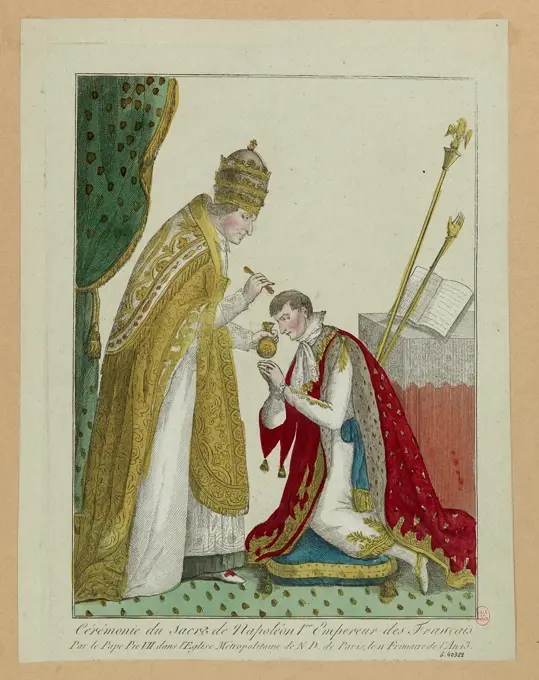
Ceremony of the Sacre of Napoleon I Emperor of the French / by Pope Pié VII in the Metropolitan Church of N. D. de Paris, the 11 Frimary of the year 13.
1899-18711997
Commissioned by Nuruddin Muhammad Jahangir, fourth Mughal emperor of Hindustan in Northern India, ca. 1620. These two courtiers were awarded prestigious titles for their valour and military success in the Mughal army. They are garbed in sumptuous clothing, as though standing at court in front of the emperor. On the left, Sundar Das received the title Raja Bikramajit, 'which among the Hindus is the highest'; he offers a gemstone between thumb and forefinger to curry the emperors favour. Maharaja Bhim Kunwar stands at right, equally well dressed: his richly embroidered pants and sash were gifts from the emperor, seeking to keep him in service.
6188-64596630
Miniature Painting on Paper, Ragini desh Vairada, naltdwara school Copyright: xBhagwandasxRupani/DinodiaxPhotox
4409-28962060
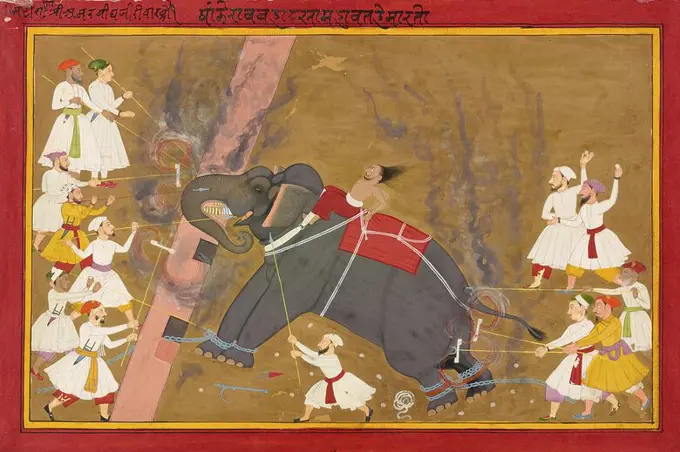
Numerous attendants using firecrackers attempt to control a chained elephant. His mahout grips the elephant with his feet and hands as his hair sticks out in fright. Date: ca. 1700. Opaque watercolor on paper. Origin: Mewar, Rajasthan state, India. Museum: Freer Gallery of Art and Arthur M. Sackler Gallery.
1746-19665157
Detail from a 19th century enamel and glazed picture depicting the Hindu legend of the Ramayana. The Ramayana is one of the two epic Hindu poems, the other being the Mahabharata. The Ramayana describes a love story between Rama, an ancient King, and Sita, who is captured by Ravan, the King of Ceylon. Rama lays siege to Ceylon and wins back Sita
6188-64619387
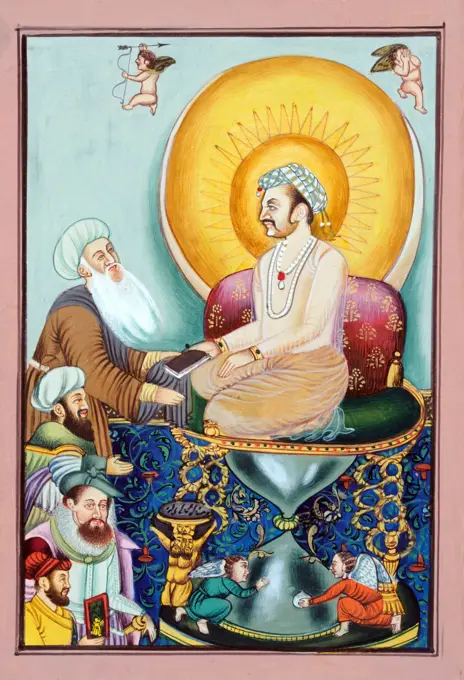
Miniature Painting of Abul Fazl Presenting Akbar Name to Mughal Emperor Akbar Copyright: xBhagwandasxRupani/DinodiaxPhotox
1746-21103200
ottoman illustration of a concert in a garden 18th century
1899-18717820
The Nizams were the rulers of Hyderabad under the Asaf Jahi dynasty from c. 1719 until its integration into the Indian Union in September 1948 following independence from the British. The Nizams were renowned as great patrons of literature, art, architecture, culture, jewellery collection and rich food.
6145-29071409
Hours of Queen Isabella the Catholic, Queen of Spain: Fol. 126v, Nativity, c. 1500. Master of the First Prayerbook of Maximillian (Flemish, c. 1444-1519), and Associates. Ink, tempera, and gold on vellum; codex: 22.5 x 15.2 cm (8 7/8 x 6 in.).
6145-29780476
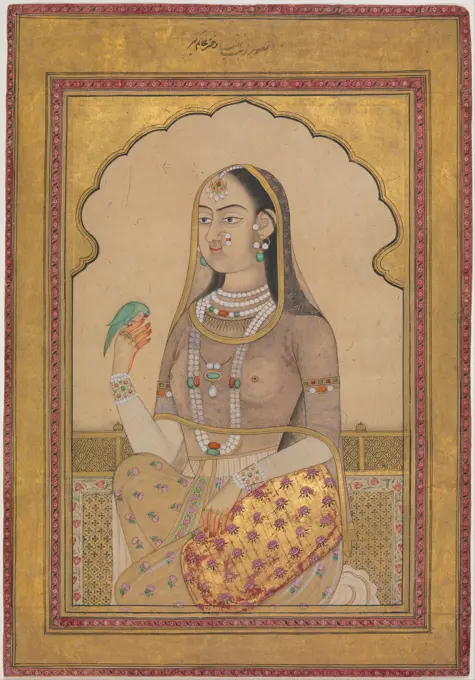
A Bejewelled Maiden with a Parakeet ca. 1670-1700 This young beauty seen through a cusped arch has been idealized as the daughter of the Mughal emperor Aurangzeb. The convention of a woman holding a parakeet is seen in Deccani painting and textiles and is also known from a long-standing tradition in Indian sculpture; here the prominent use of gold is typical of Deccani taste. The bird sits on the maidens henna-reddened fingers, each one of which is separately adorned by a diamond ring.. A Bejewelled Maiden with a Parakeet 457771
6188-64596618
Miniature Painting on ivory, Lady enjoying drink Copyright: xBhagwandasxRupani/DinodiaxPhotox
6145-29256328
A Rajput attendant blowing a horn (). Gouache painting by an Indian painter.
6188-64562561
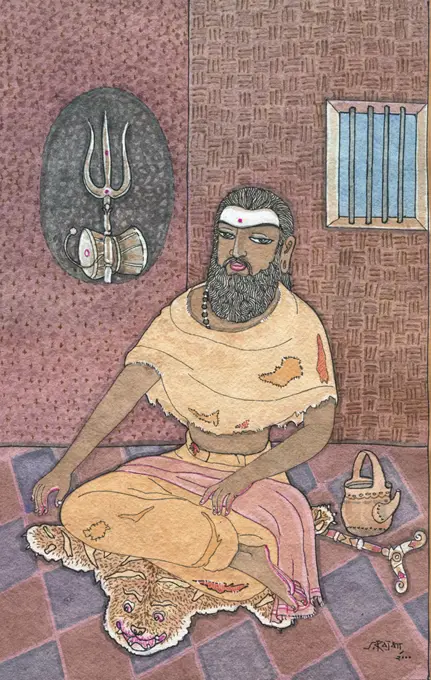
Artist S. Rajam, saint, sadhu, swami, sannyasin, monk, devotion, meditation, hindu belief, hindu, hinduism, art, yoga, himalayan academy art, chellapaswami, trident, trishula, drum, tiger skin, rags, mendicant, beggar, guru, wisdom Copyright: xHimalayanxAcademy/DinodiaxPhotox
4409-20918769
IMAGEN DE HASSAN-ORIGEN DE MAHOMA. Location: SANTUARIO CHITA. QUM. IRAN. Hassan. Ali.
6145-29263712
Indian laundry couple with the man ironing clothes. Gouache drawing.
1746-19665138
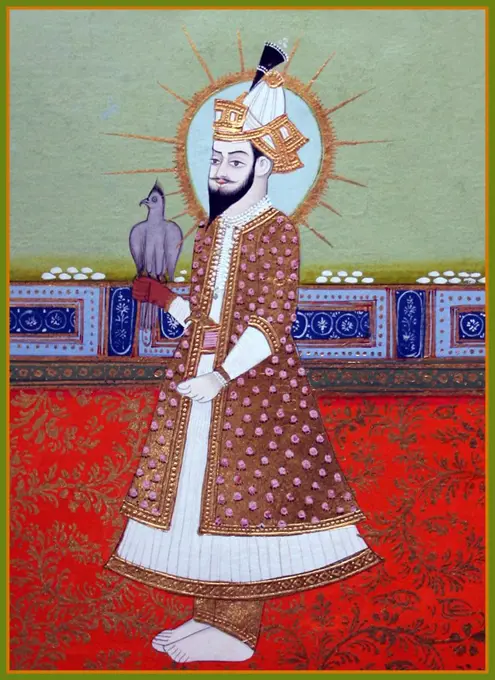
Detail from a 19th century enamel and glazed picture depicting the Hindu legend of the Ramayana. The Ramayana is one of the two epic Hindu poems, the other being the Mahabharata. The Ramayana describes a love story between Rama, an ancient King, and Sita, who is captured by Ravan, the King of Ceylon. Rama lays siege to Ceylon and wins back Sita
6145-29252195
Page 150: a man seated with Sikh worshippers. Watercolour drawing.
1899-18792358
Nasir ud-din Muhammad Humayun (Persian: نصیر الدین محمد همایون; full title: Al-Sultan al-'Azam wal Khaqan al-Mukarram, Jam-i-Sultanat-i-haqiqi wa Majazi, Sayyid al-Salatin, Abu'l Muzaffar Nasir ud-din Muhammad Humayun Padshah Ghazi, Zillu'llah; 7 March 1508 - 22 February 1556) was the second Mughal Emperor who ruled present day Afghanistan, Pakistan, and parts of northern India from 1530-1540 and again from 1555-1556. Like his father, Babur, he lost his kingdom early, but with Persian aid, he eventually regained an even larger one. On the eve of his death in 1556, the Mughal empire spanned almost one million square kilometers. He succeeded his father in India in 1530, while his half-brother Kamran Mirza, who was to become a rather bitter rival, obtained the sovereignty of Kabul and Lahore, the more northern parts of their father's empire. He originally ascended the throne at the age of 22 and was somewhat inexperienced when he came to power. Humayun lost his Indian territories to the P
4443-21200288
Tashrih al-aqvam, some of the sects, castes, and tribes of India, 1825.
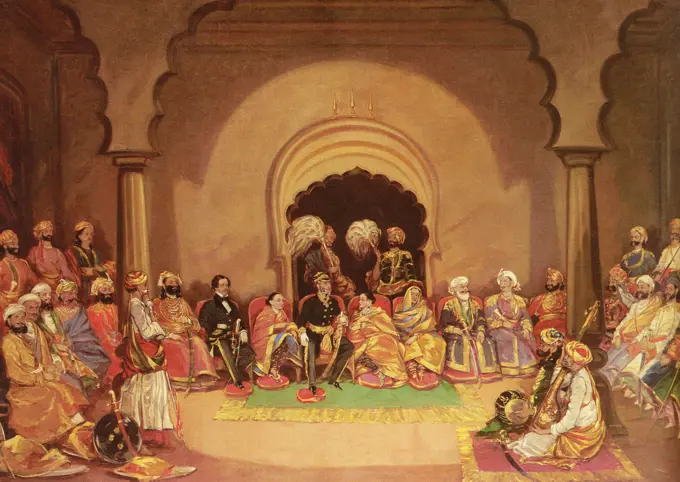
6188-64602059
Durbar with Viscount Hardinge Governor General of Bengal  India Copyright: xJehangirxSorabjee/DinodiaxPhotox
6145-29759333
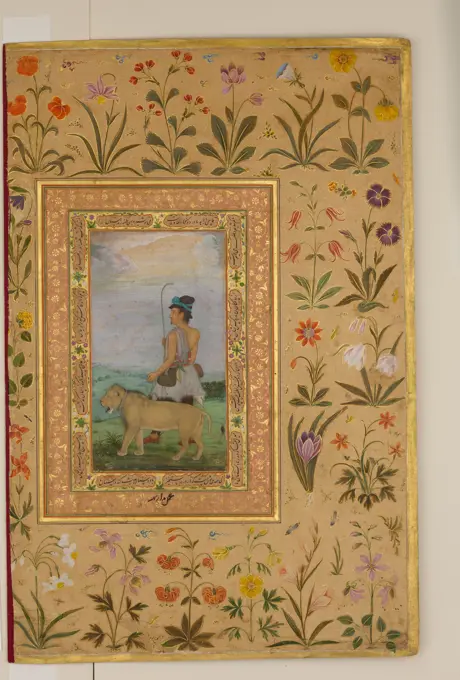
"Dervish With a Lion", Folio from the Shah Jahan Album verso: ca. 1630; recto: ca. 1500 Painting by Padarath During the reigns of Jahangir and Shah Jahan, devotees were favorably received, and often indulged, at court. The dervish depicted here has accoutrements associated with a mystic of the time such as a satchel, fur skirt, and distinctive head gear. He also has the dedicatory scars from self-inflicted burns on his upper arm. The floral borders in the Shah Jahan Album, many created by Daulat, combine real and imagined plants with insects, birds, and cloud bands.. "Dervish With a Lion", Folio from the Shah Jahan Album 451259
6145-29265601
Two Indian women dressed in different clothes. Gouache painting by an Indian artist.
6145-29281331
A western () woman in a Indian dress holding a sheet of paper. Gouache painting by an Indian painter.
6188-64519879
Radha Krishna miniature painting on ivory Copyright: xBhagwandasxRupani/DinodiaxPhotox
4128R-14059786
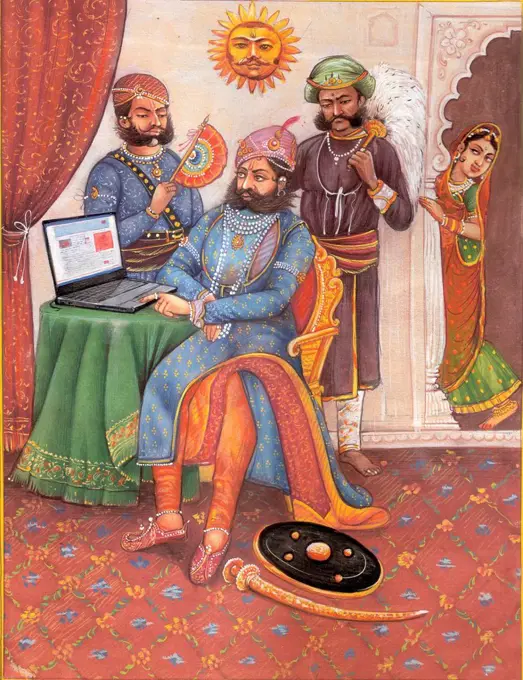
Rajasthani king using a laptop, illustration
6176-66099547
A scribe (left) pens what he is being told to write by clients who have come to him in Tunis in Tunisia.
1899-19137362
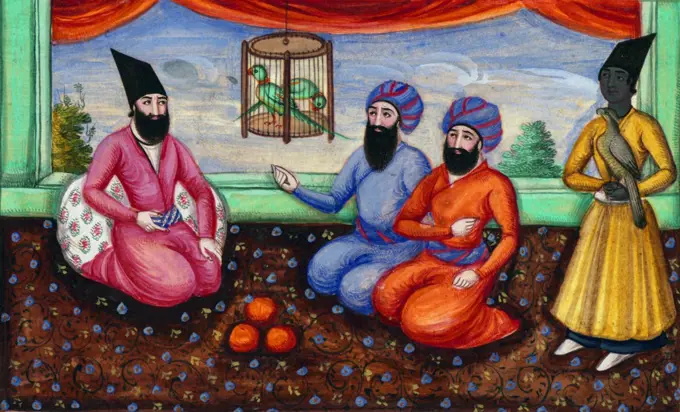
Persia/Iran: Detail from the illuminated manuscript 'The Lights of Canopus' (Anwar-i Suhayli) depicting a noble man entertaining guests, by Mirza Rahim, 19th century, Iran
4408-8807
Indian Harem, World Fashion - Racinet
PREVIOUS
of 3
NEXT
2401 S. Ervay, Suite 206
Dallas, Texas 75215
United States
Get Started
Free ResearchMy BoardsMy Cart
For Creators
How To License Your ContentContributor PortalFrame of Mind
Resources
API accessPricing
Contact
+1 866 236 0087help@viewpictures.co.uk Contact form
©2026 View Pictures. All Rights Reserved. -B
This site is protected by reCAPTCHA and Google Privacy Policy and Terms of Service apply.