Historic Military Illustrations

Illustrated scenes of military actions from the 19th century, featuring soldiers on horseback, uniforms, and battle settings across various conflicts.

Before the Battle of Lützen on November 6, 1632, Gustav II Adolf, the Swedish king and leader of the Protestant forces in the Thirty Years' War, was ready for a decisive confrontation against the imperial troops under Albert of Wallenstein, school painting, authentic reproduction of a school mural, around 1911, exact date unknown, historical
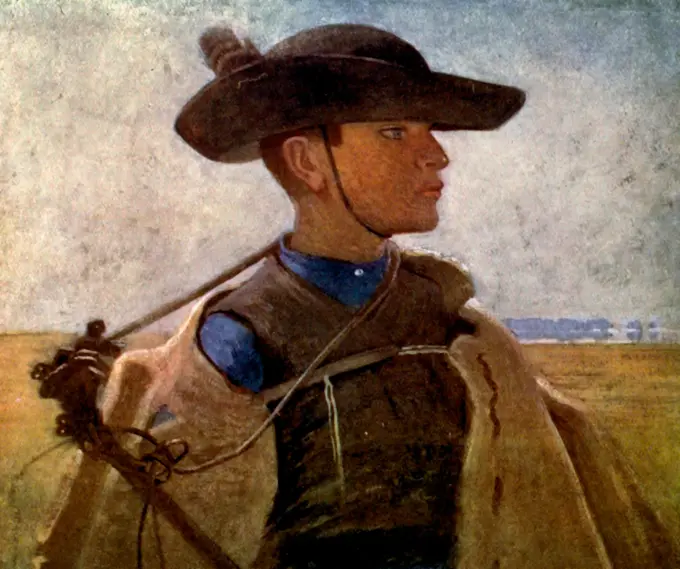
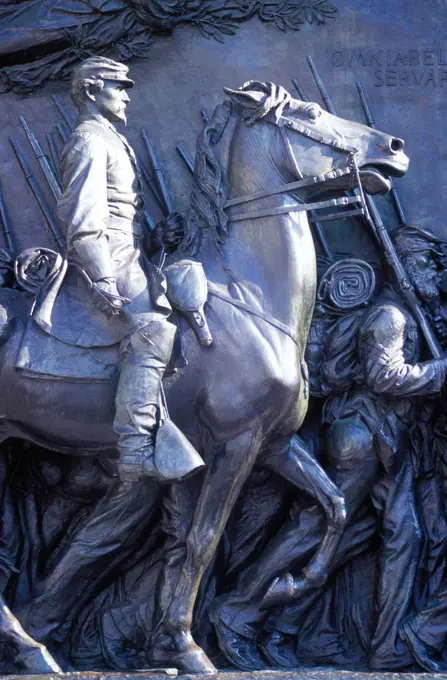
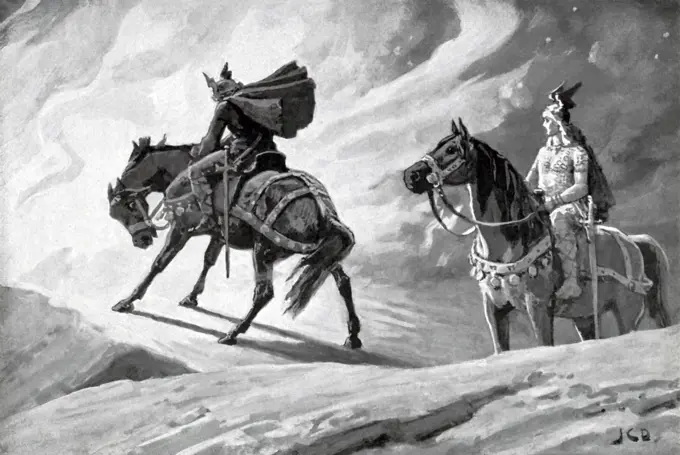
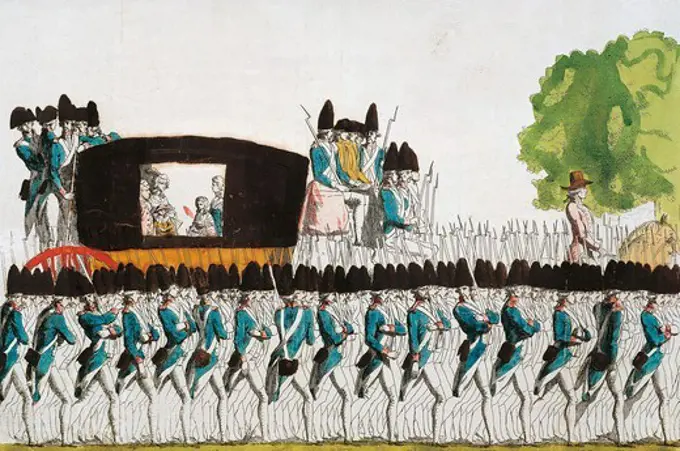
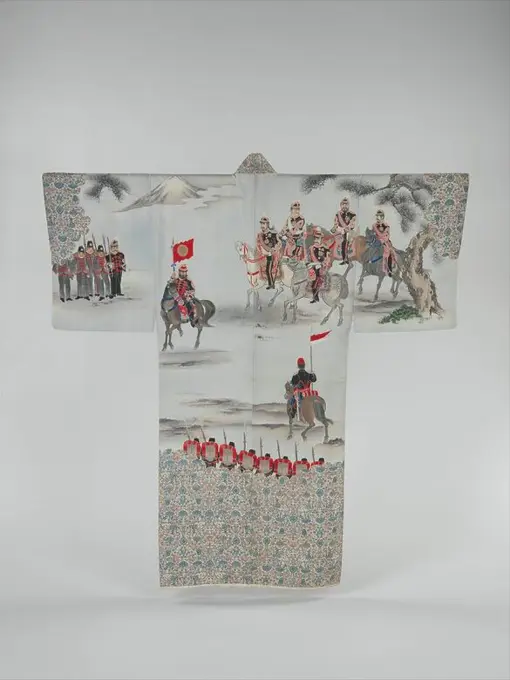
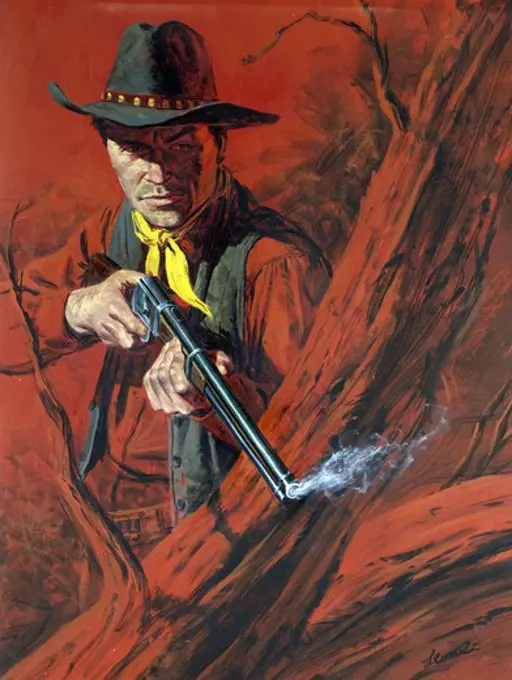
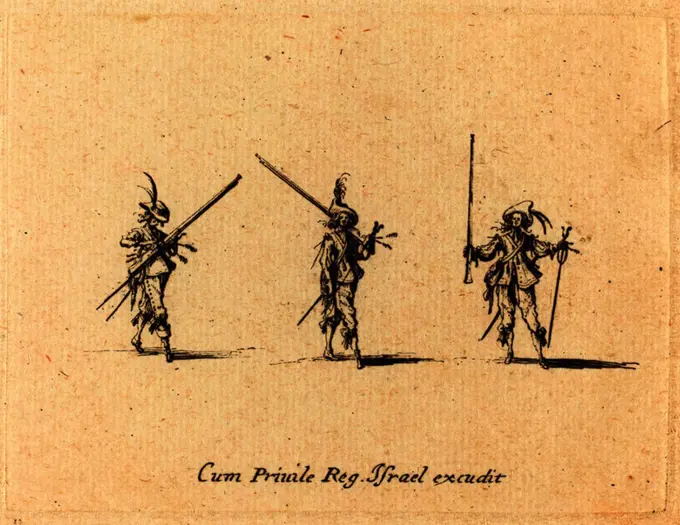
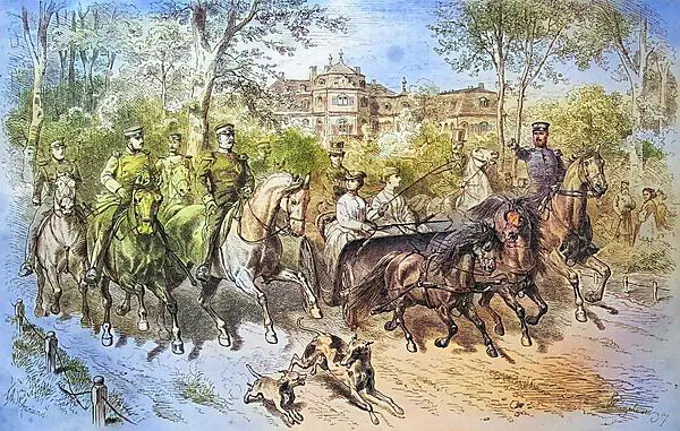
Prince Frederick, Prince Karl Fuerst of Romania, Fuerst of Hohenzollern-Sigmaringen, Princess Maria Graefin of Flanders, Hereditary Prince of Hohenzollern, Hereditary Prince Leopold of Hohenzollern-Sigmaringen, Historical engraving, 1869, Historical, digitally restored reproduction from a 19th century original, coloured, exact date unknown, In the Court Garden of Duesseldorf, from the leftCharles George Gordon (1833-1885), oficial del ejército británico. Cromo litográfico de época.G. F. Gonzaga, Savoy Cavalry Charge, 1942.Two sepoys (soldiers) in a dress introduced by the English. Gouache painting by an Indian artist.The Yellow Riders, by George Hendrik Breitner, 1885-86, Dutch painting, oil on canvas. They were an elite mounted artillery corps (BSLOC_2016_2_205)A Young Magyar Csikos - Mounted Horse Herdsman of Hungary, Austria-Hungary, circa 1910USA, Massachusetts, Robert Gould Shaw Memorial, commemorates the 54th Massachusetts Regiment.Cowboys fighting in a riverFrancis Marion (born 26 February 1732 in Georgetown, Province of South Carolina, died there on 27 February 1795) was a sailor in front of the American War of Independence, and served as a lieutenant colonel in the Continental Army, after a painting by Alonzo Chappel (1828-1878), Historical, digitally restored reproduction from a 19th century originalFirst Blood for the Blue Grass Club 1871-1896 United States. Color lithograph on newsprint . Augustus HoppinMamalukes Exercising the Spear, HuntingPrince Siegfried (also known as Sigurd), the famed hero of Germanic mythology, was the son of King Siegmund of the Netherlands. His wife was Kriemhild, the heroine of the Nibelungenlied. In Germanic legends she is also called Gudrun, and in Wagner's Der Ring des Nibelungen she is known as Gutrune. In Norse mythology she was the sister of Gunnar. Revenge, intrigue, sibling rivalry all play a role in Gunnar's killing of Siegfried. In this painting by J.C. Dollman, Gunnar and Siegfried travel to Brunhilde's castle (Brunhilde is a Valkyrie and a shieldmaiden) where Gunnar plans to woo the maiden, but they are stopped by a ring of fire (seen here). Gunnar cannot make it through, Siegfried assumes his shape and does. He keep his identity secret and later Gunnar marries Brunhilde.U.S. Army Pursuing Indians, 1876, U.S. ArmyThe return of the royal family to Varennes, 25 May 1791. French Revolution, France, 18th century.Series of manoeuvre pictures, Cossacks with their horses in defensive position, digitally restored reproduction of a collector's picture from c. 1900, Liebig collector's picture, exact date unknownViews of the horse through history in silhouette by Captain Harry Lawrence Oakley including a knight on horseback at the Battle of Crecy, Roundheads and Cavaliers fighting it out at the Battle of Marston Moor, the Battle of Balaclava, horses used in the First World War and a more tranquil and bucolic purpose for the horse - on a farm, ploughing furrows.  1941Group of cowboys shooting guns by horsesMan's Under-Kimono (Nagajuban) with Scene of the Russo-Japanese War featuring General Nogi. Culture: Japan. Dimensions: Overall: 50 1/2 x 51 in. (128.3 x 129.5 cm). Date: early 20th century.A nagajuban is an informal robe often decorated with eye-catching designs. This piece may be a one-of-a-kind commemorative garment related to Japan's victory in the Russo-Japanese War of 1904-5. The scene refers to the lengthy Japanese siege of Port Arthur, an engagement lasting from August 1, 1904 to January 2, 1905, when the Russian general, Anatoly Stessel, surrendered to General Nogi Maresuke. After the war, General Nogi was celebrated as a national hero. Some scholars see such commemorative clothing as precursors of the more overtly propagandistic Japanese garments of the 1930s and World War II years. Museum: Metropolitan Museum of Art, New York, USA.Cowboy holding used shotgun behind treeDrill with the Musket. Dated: 1634/1635. Medium: etching. Museum: National Gallery of Art, Washington DC. Author: JACQUES CALLOT.Plate 1 features pictures of soldiers, trees and horses.         Date: 1880