Historic Pottery and Ceramics

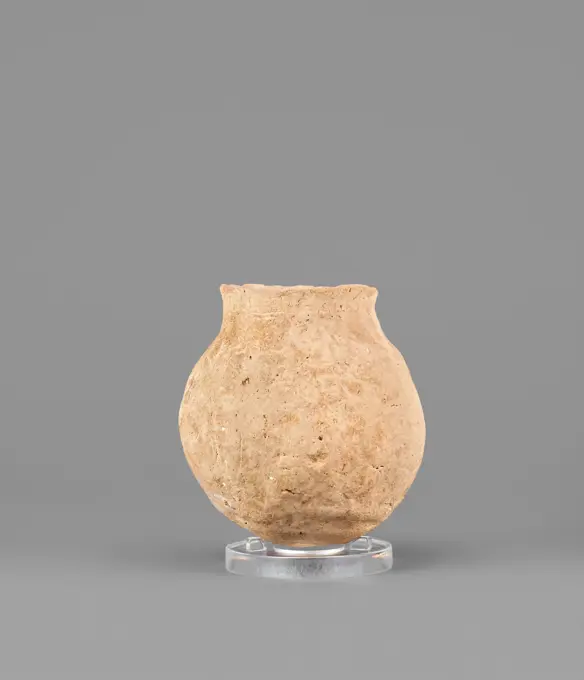
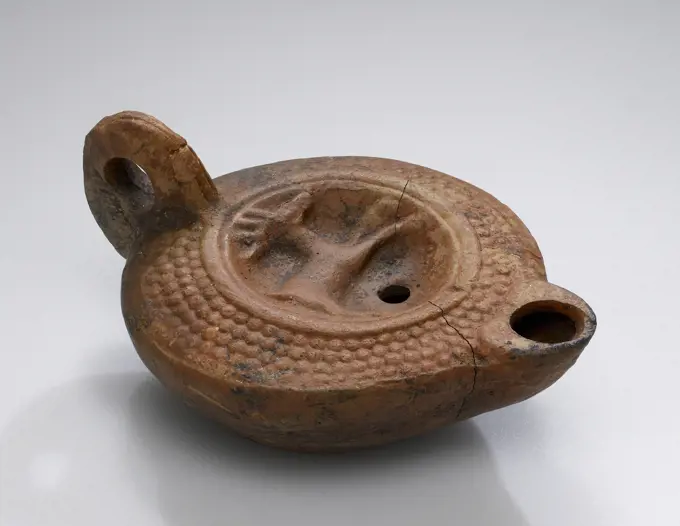
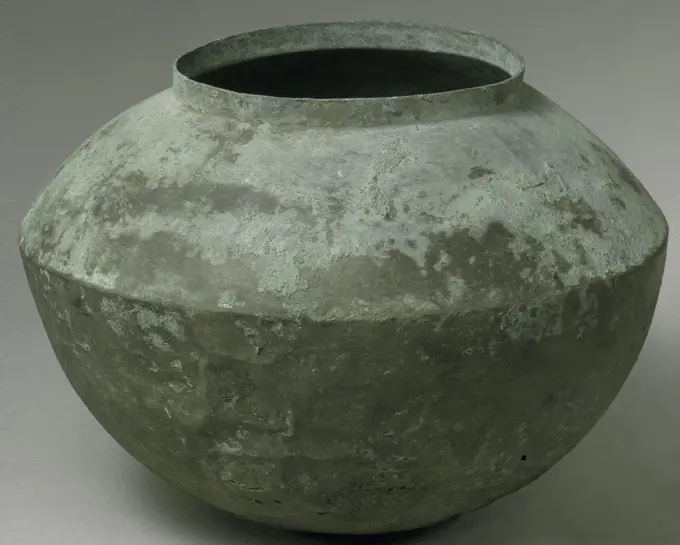
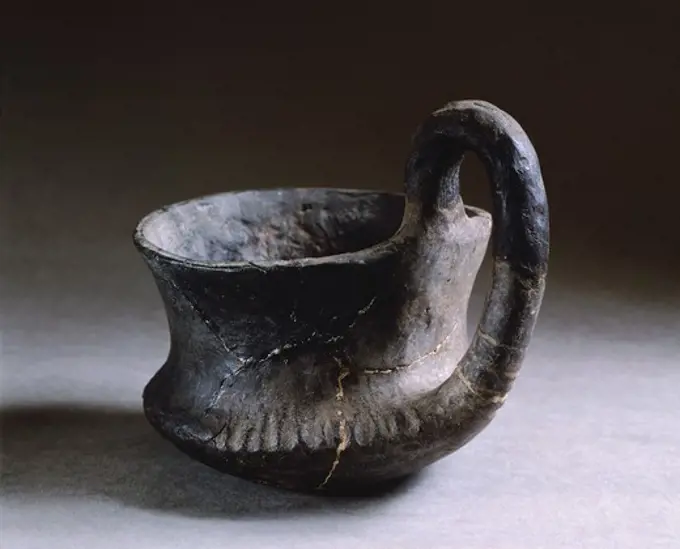
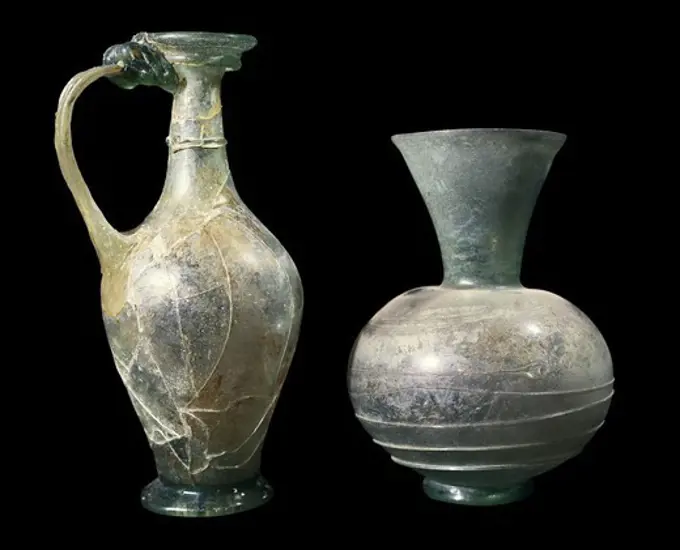
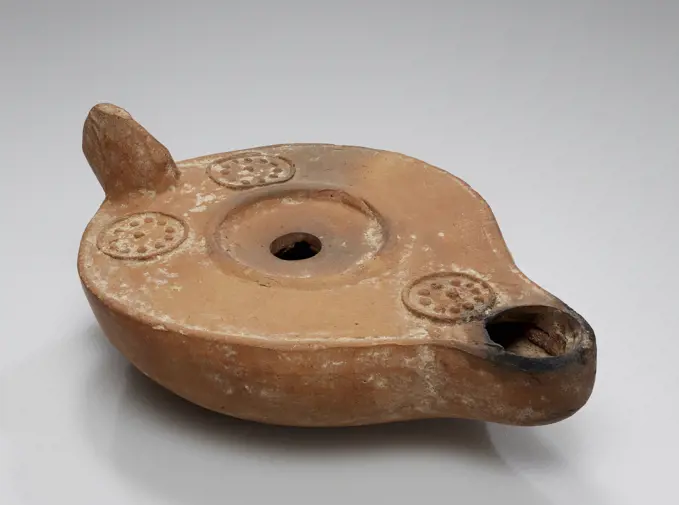
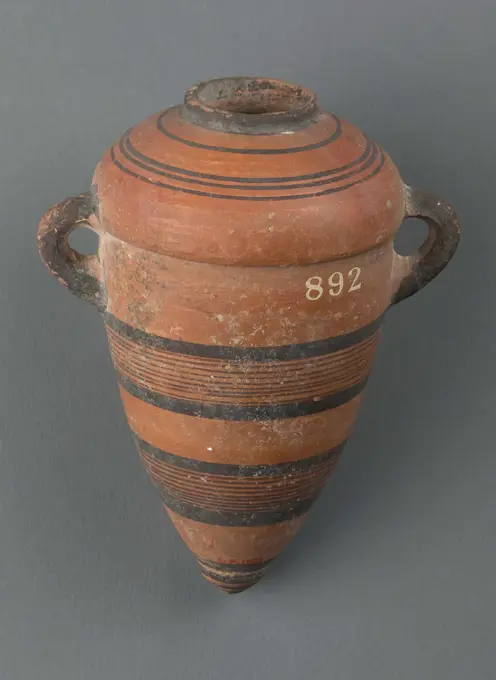
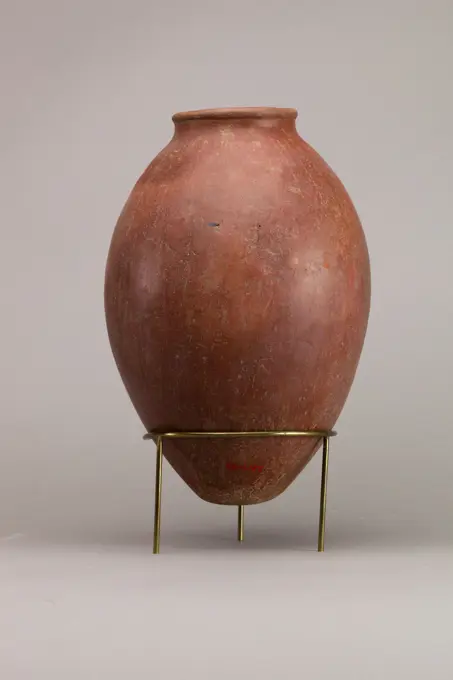
An assortment of ancient pottery including jars and flasks from different cultures, highlighting unique shapes, textures, and historical significance.
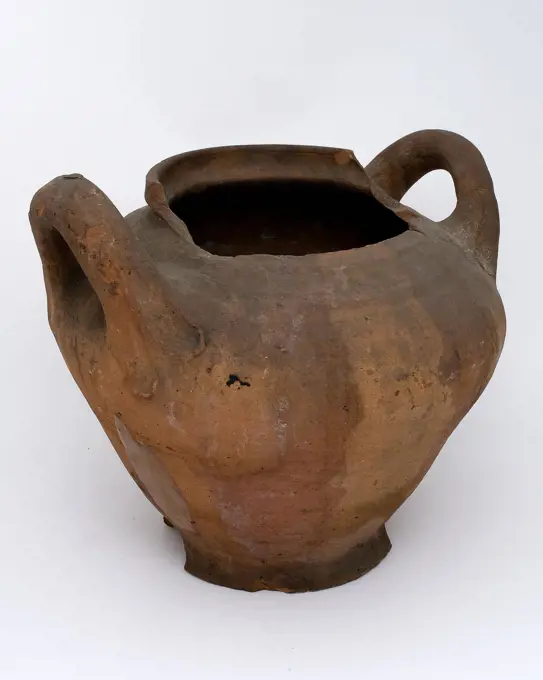
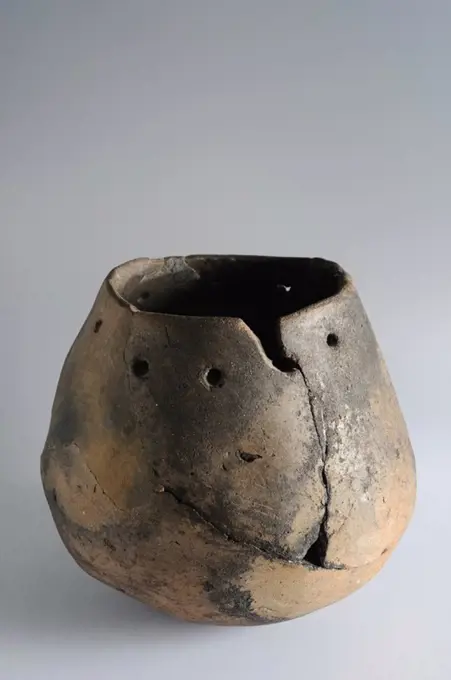
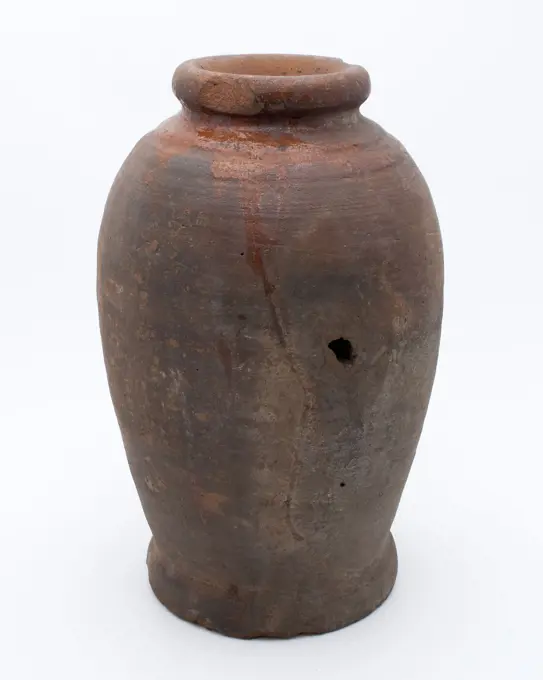
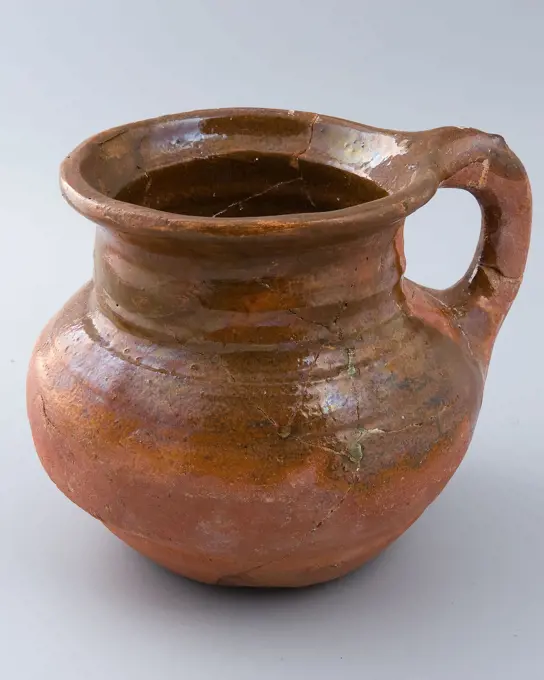
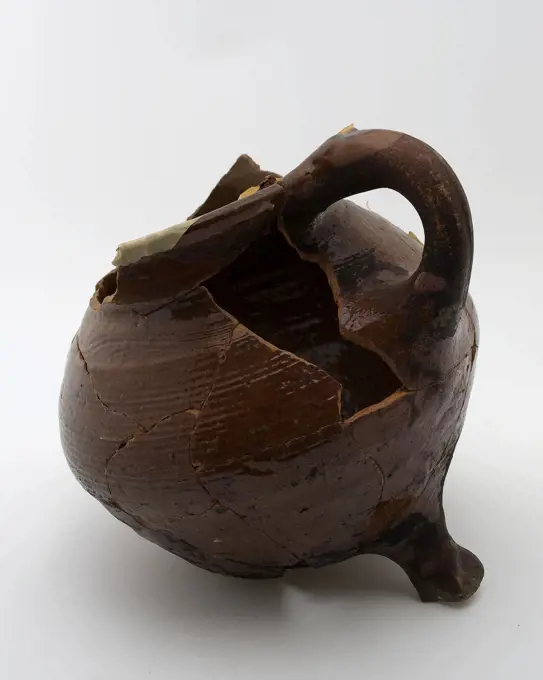
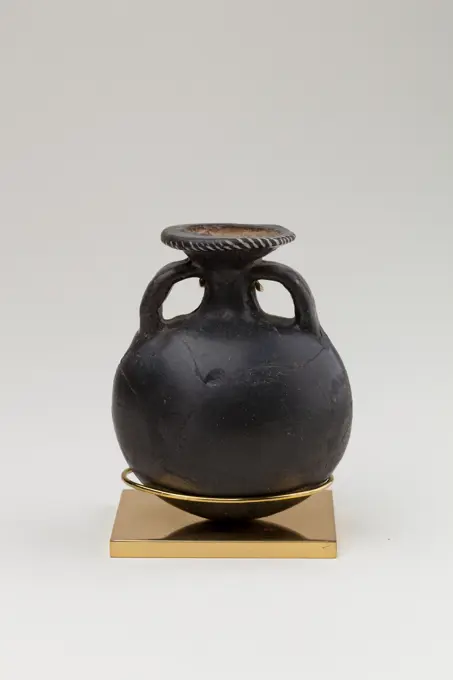
Pottery cover on stand, with two lying, high ears, unglazed, aspot cover pot holder soil find ceramic pottery, hand-turned baked Pottery cover up red shard unglazed two upwardly hung horizontally placed sausage stand. Sphere model narrowing downwards. Small neck opening with short, upright top edge Top edge with collar on the outside Glaze tears on the underside archeology indigenous pottery extinguish heating fireplace
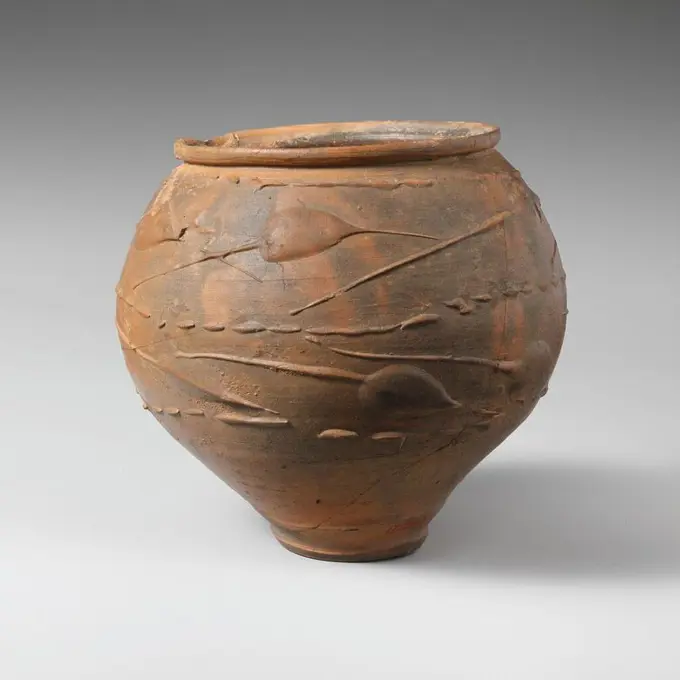
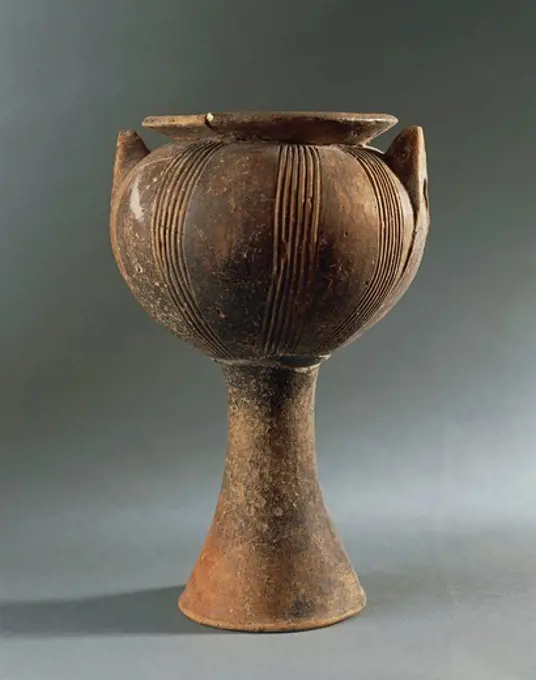
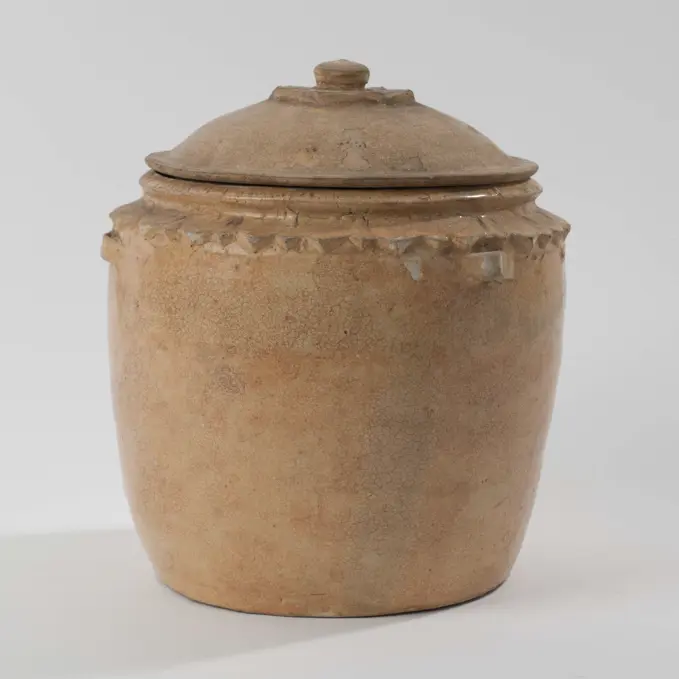
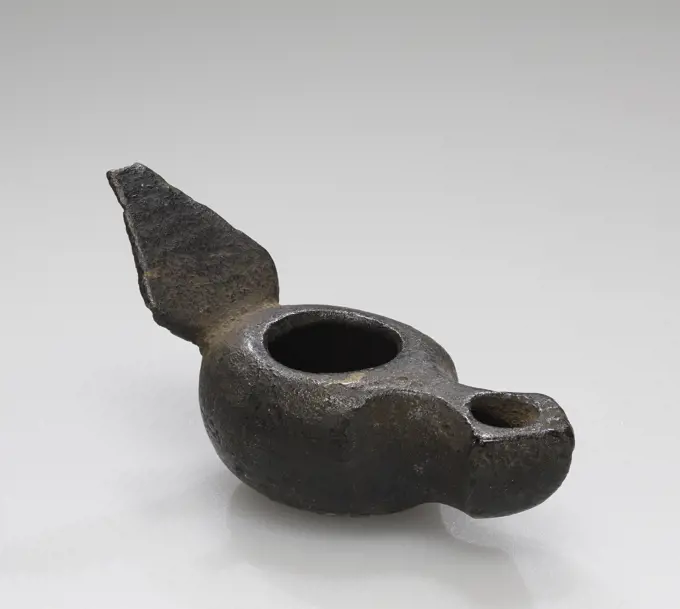
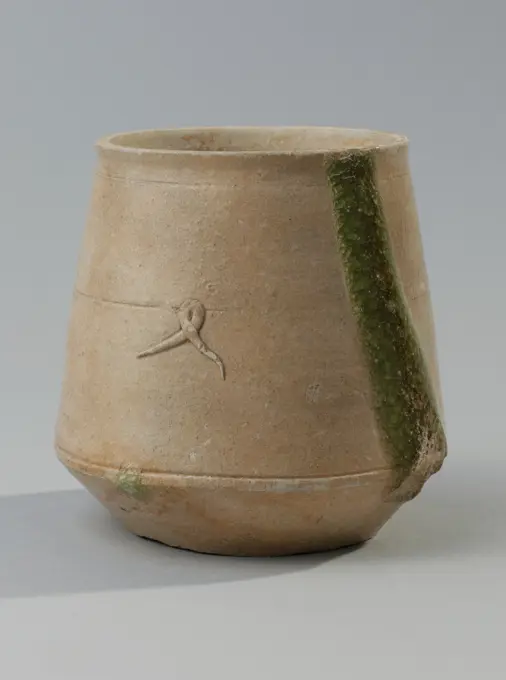
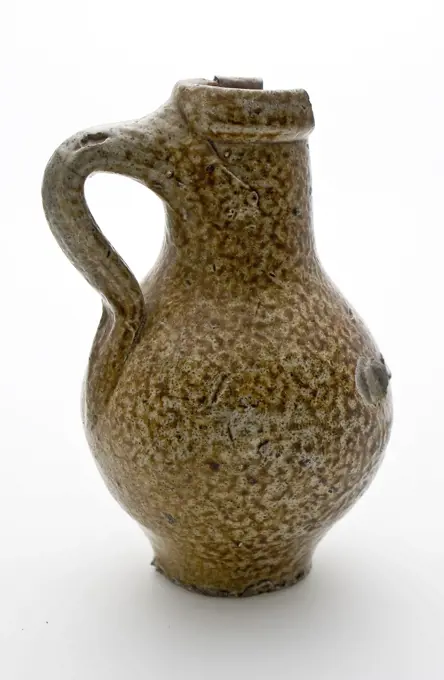
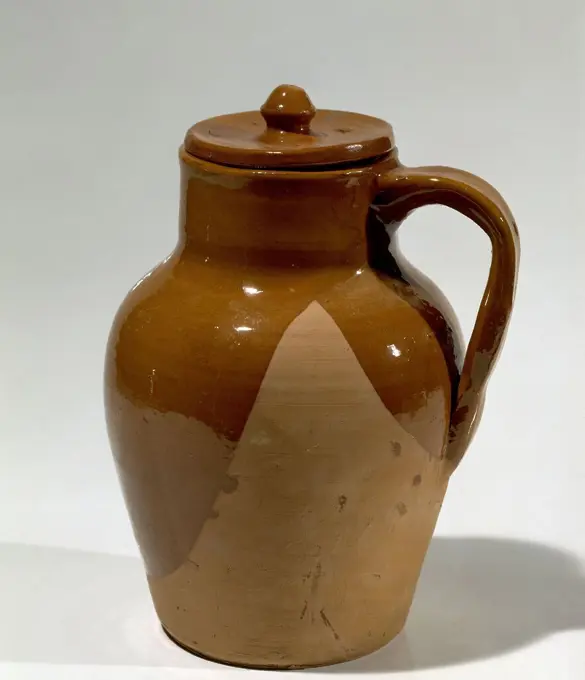
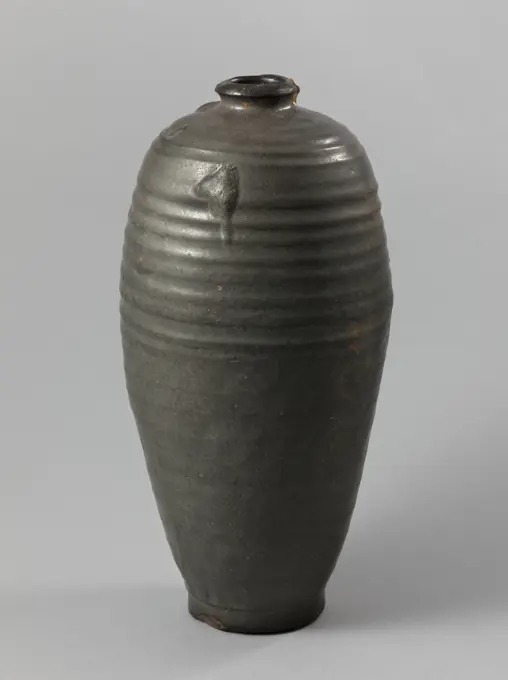
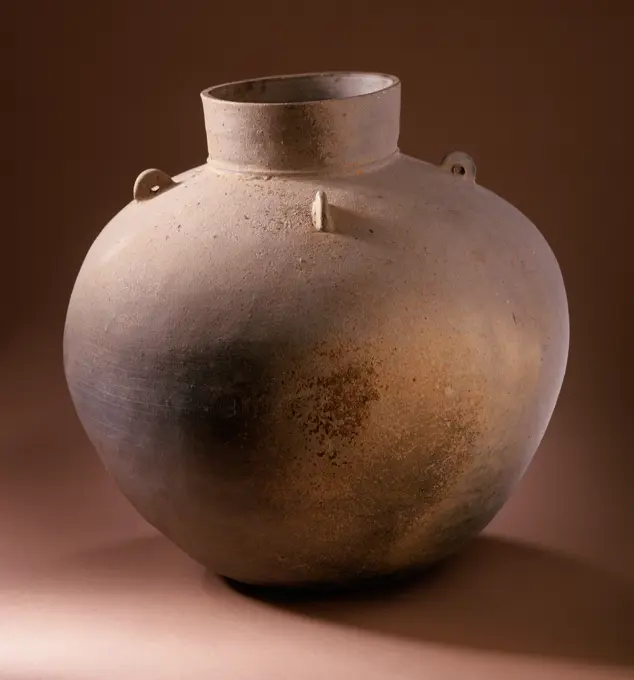
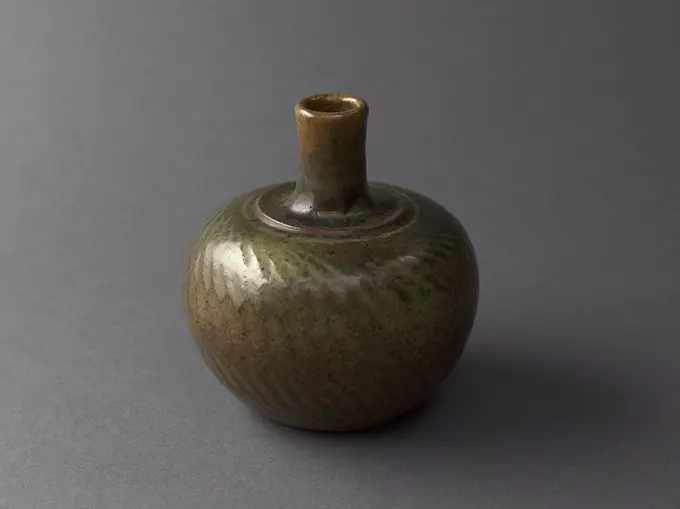
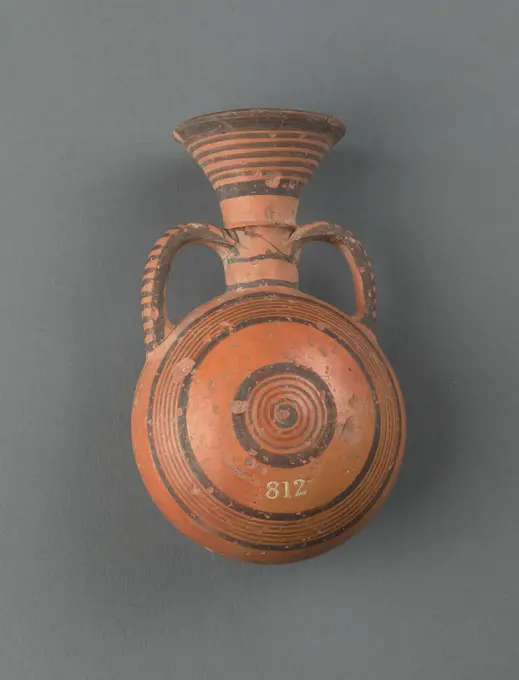
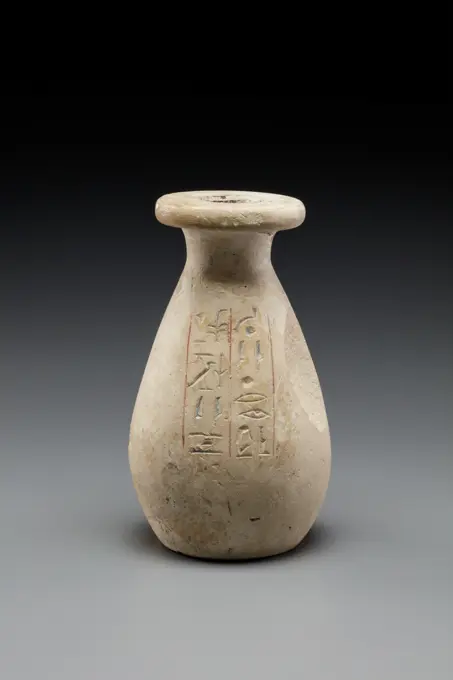
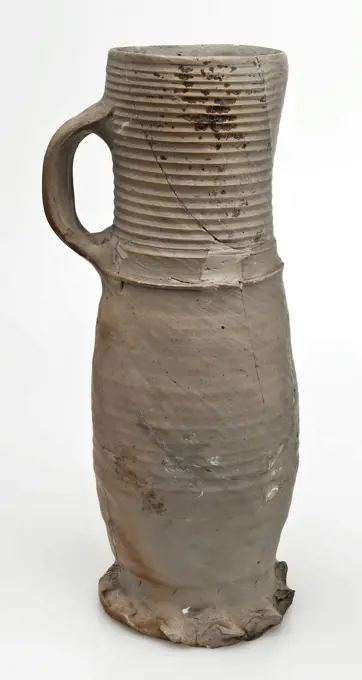
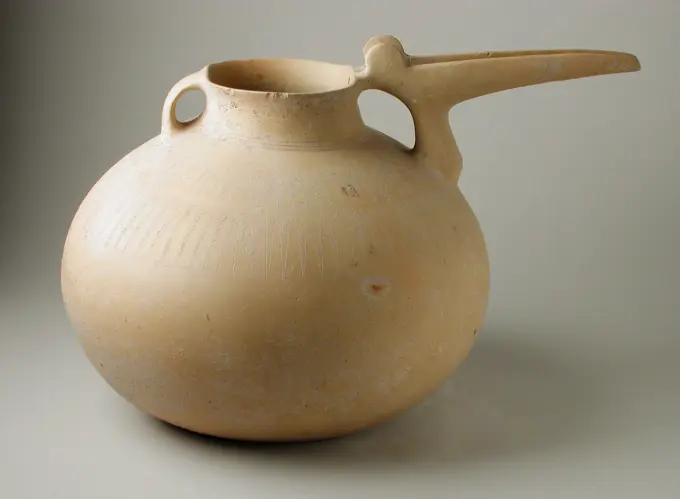
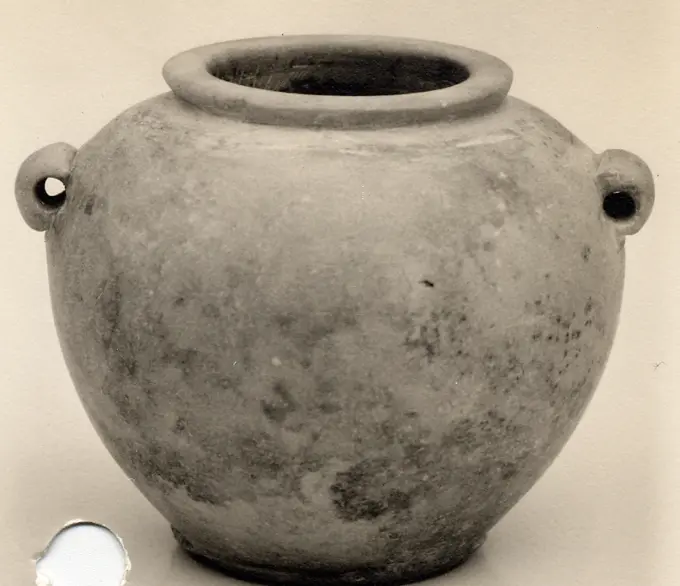
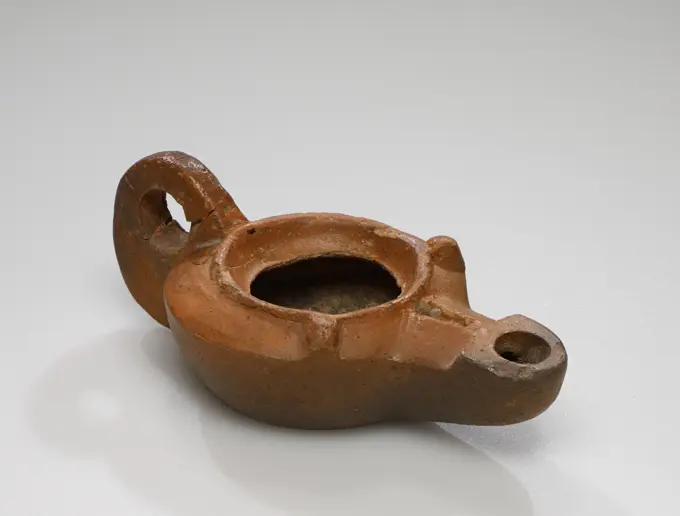
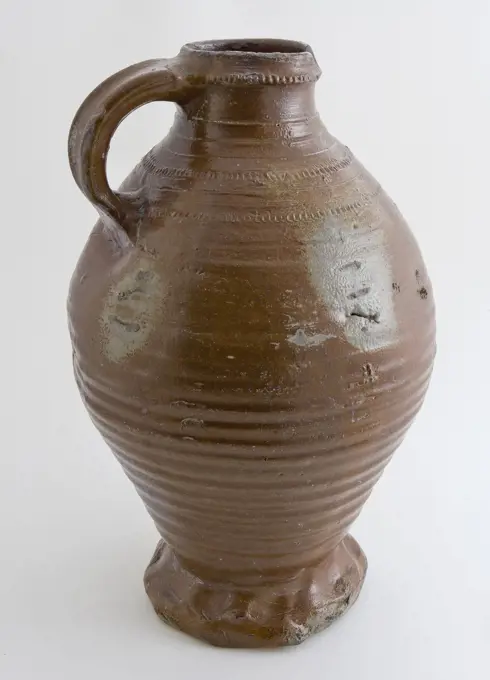
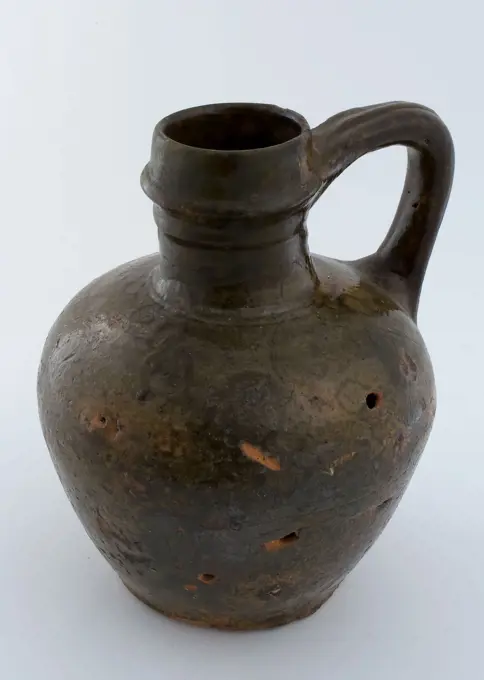
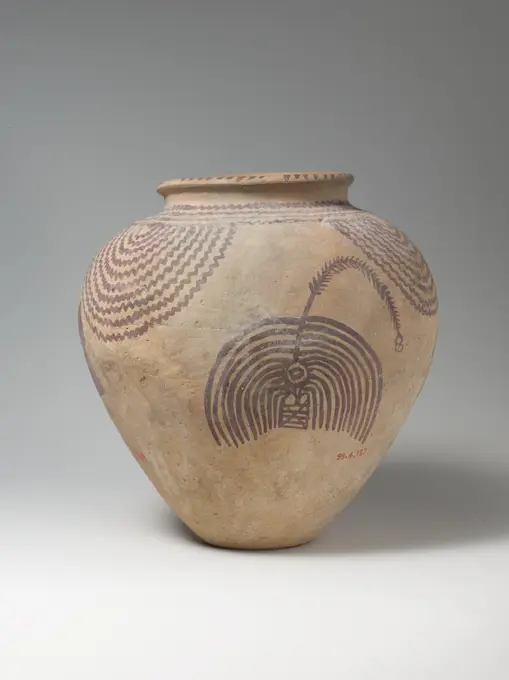
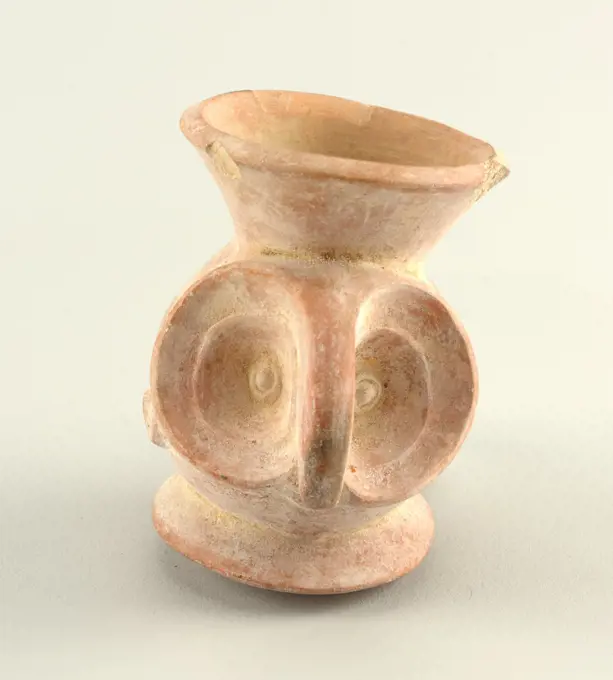
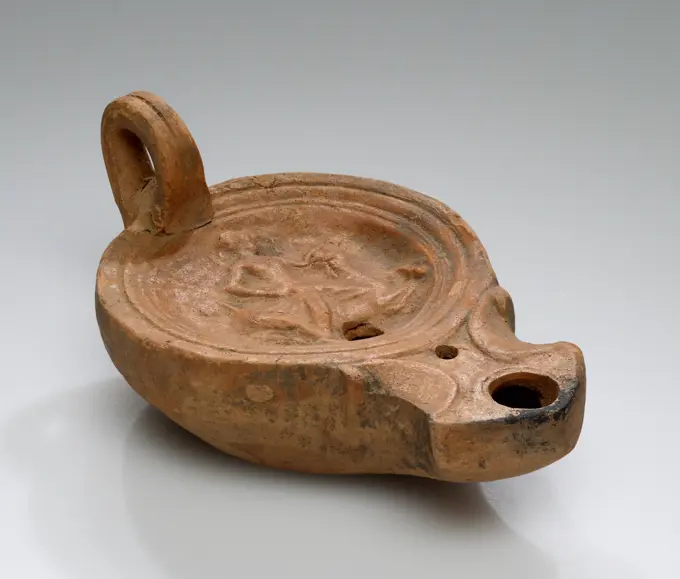
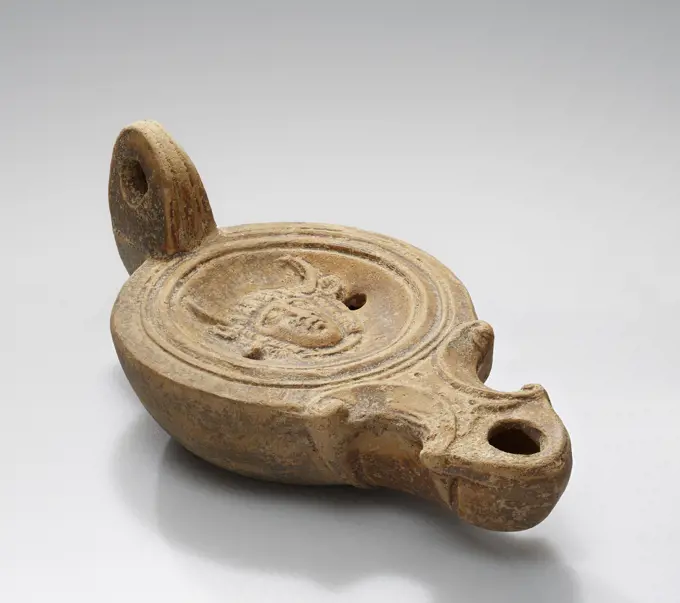
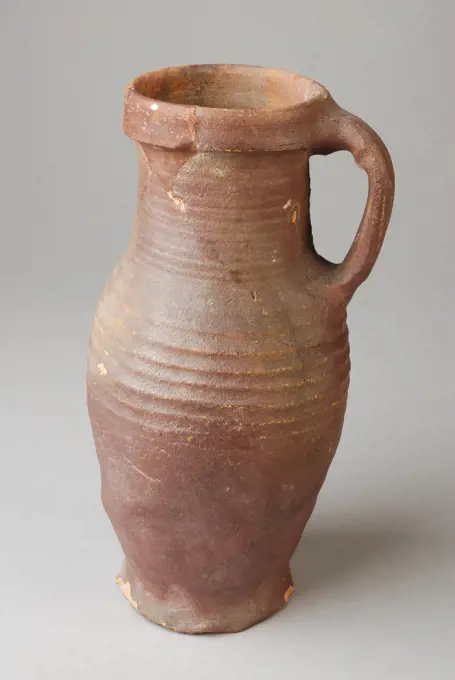
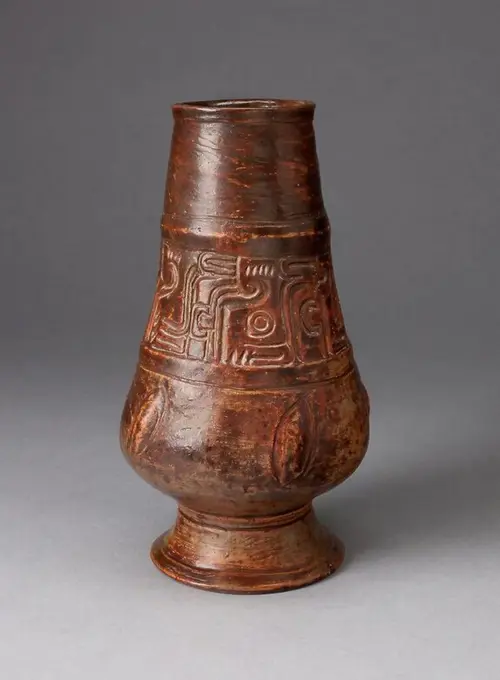
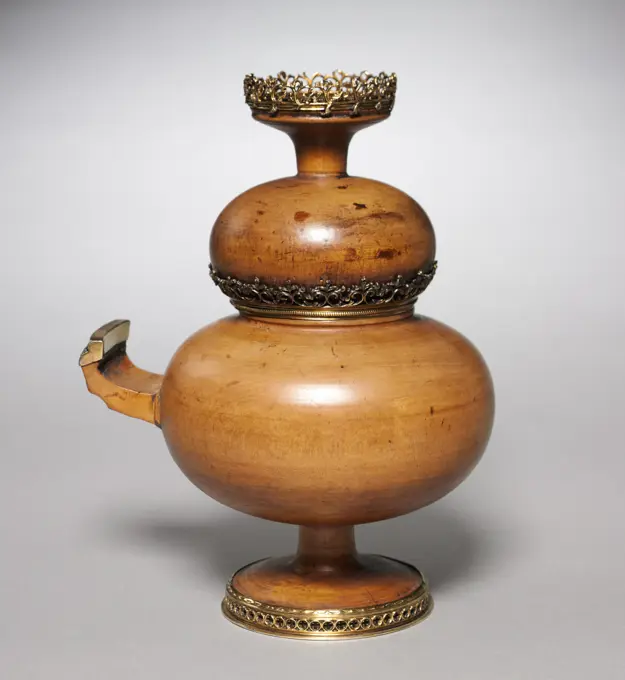
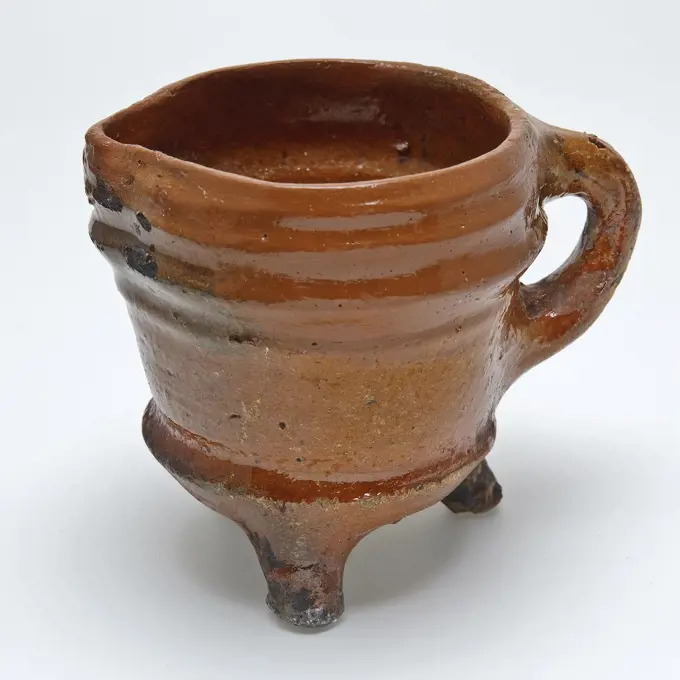
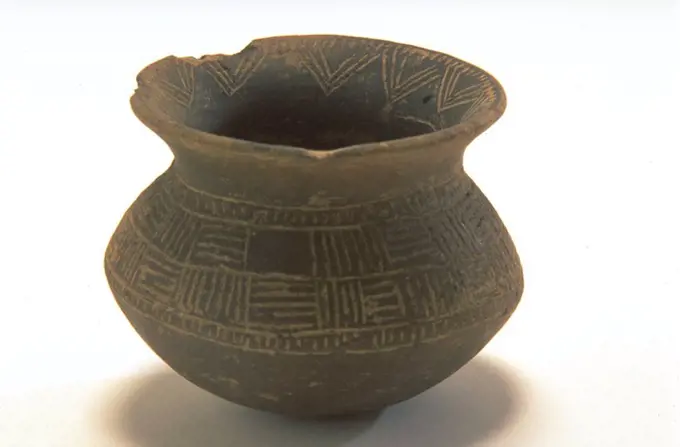
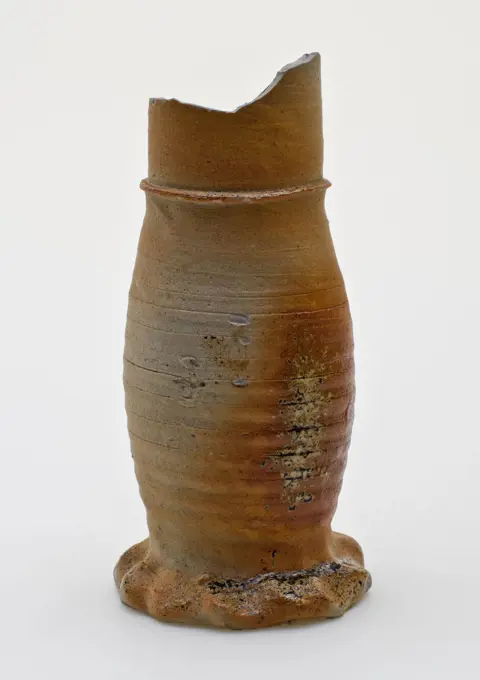
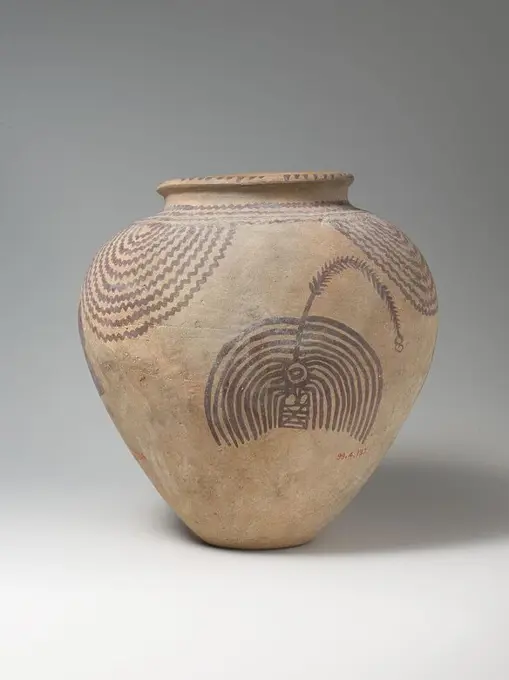
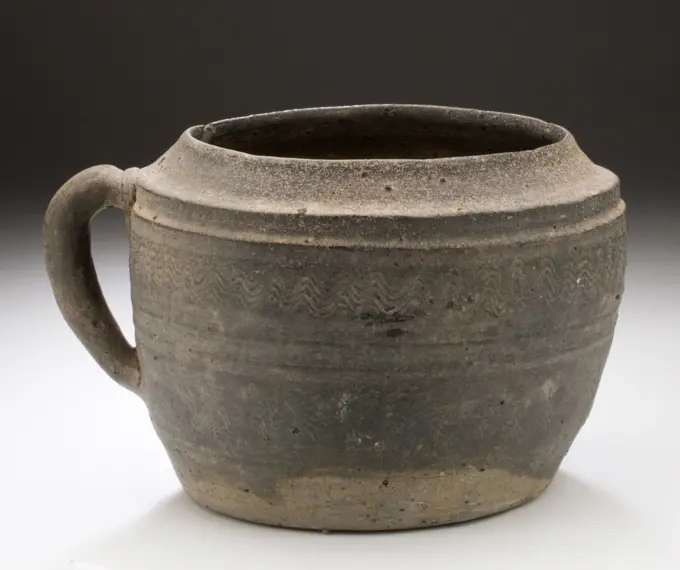
Jar with HandleGray stoneware jug with pinched foot, ledge around the neck, jug crockery holder soil find ceramic stoneware glaze salt glaze, hand turned glazed baked stoneware jug gray shard gray salt glaze wide bandoor protruding ring around the neck below the mouth rim rotations neck and stomach pinched foot. Egg shaped model archeology import pottery pouring serve store packagingTerracotta beaker with barbotine decoration. Culture: Roman. Dimensions: H. 4 1/8 in. (10.5 cm); diameter 4 7/16 in. (11.2 cm). Date: 2nd century A.D..Orange glazed bowl with barbotine leaf and interrupted line pattern. Museum: Metropolitan Museum of Art, New York, USA.ancient oriental metal jug on dark background. antique bronze tableware. ancient metal utensilsBowl ca. 650-500 B.C. Etruscan Coarse clay with incised decoration.. Bowl. Etruscan. ca. 650-500 B.C.. Terracotta; impasto. Orientalizing. VasesPot 4th-7th century Coptic. Pot 476301Prehistory, Italy. Pantalica culture. Ceramic cup with flared cylindrical base. From Sicily Region.Urns. GRS. Vietnam. Paris, Muse Cernuschi. Urns Asian art, art of extreme orient, art of Vietnam, Vietnamese art, GRES, dishesJug. Culture: French. Dimensions: Overall: 4 1/2 x 5 1/8 x 6 3/4 in. (11.5 x 13 x 17.2 cm). Date: 15th century. Museum: Metropolitan Museum of Art, New York, USA.Lamp, Lower Rhineland, Germany; 1st - 2nd century; Bronze; 2.8 × 1.8 × 5.9 cm (1 1,8 × 11,16 × 2 5,16 in.)Terracotta jug ca. 3000-2000 B.C. Anatolian This vase was probably imported to Cyprus from western Anatolia.. Terracotta jug. Anatolian. ca. 3000-2000 B.C.. Terracotta; hand-made. Early Bronze Age. VasesVessel, 15th century, 6 5/16 x 5 11/16 x 5 11/16 in. (16.03 x 14.45 x 14.45 cm), Ceramic, Peru, 15th centuryJARRA PARA AGUA VIDRIADA EN AMARILLO - S XX ARTE POPULAR. Location: BARRIO TRIANA. Sevilla. Seville. SPAIN.Cantaro, Miravet. Museu Català de les Arts i Tradicions Populars.CERAMICA DE ZAMORA (MOVEROS).. Fragment of a bowl of quartz frying. Gray yellow shard on a white engobe. On the bottom a flowering plant in a medallion in red and blue, with black outlines have been painted. On the inner wall a band with braid in the same colors. Outside a dessess of oval interlocking black lines along the blue border. The foot is unglazed. The fragment is found in Cairo.Storage Jar. Culture: China. Dimensions: H. 25 3/4 in. (65.4 cm); Diam. at rim 8 3/4 in. (22.2 cm). Museum: Metropolitan Museum of Art, New York, USA.. Egg-shaped pot of stoneware, covered with a white sludge and a green glaze. The lower part of the pot is unglazed. On the upper part and the shoulder incing bands with dots, rosettes, cranes and a meander pattern. The budget decoration is filled with a white sludge (Mishima technique). Above the foot two ingredcation lines. Karatsu.Ceramic pot , handmade and decorated with a series of perforations on the edge and concave base. 20.5 cm x 16 cm. Chalcolithic period from the archaeological site of " Esgaravita" in Alcalá de Henares - " Burgo de Santiuste Museum " (Madrid). SPAIN.Gobelet ". Land couverting. EPOOK of TRIEJA Chi Chi Chi Chi (ie - Seecle verse). Parigi, Cernalchi 144391-8 Asian art, covered, Giao chi, cup, terracottaOvoid Ewer with Flaring, Beak-Shaped Spout, Floral Medallion, and Zipper-like Band with Palmette 700 CE-799 CE China. Stoneware with underglaze molded and applied decoration .Dish;  around 1550 1069 BC ; New PAStoneware drinking cup, head with wide bandoor, belly model on foot, drinking cup drinking utensils holder soil find ceramics stoneware glaze salt glaze, hand turned glazed baked Stoneware drinking cup with ear Ball model on base with stand. Profile rings around foot and round neck edge. No clear top edge Wide vertical bandoor slightly higher than the cup. Gray and brown glazed. Turning lips over the belly Restoration is repainted partly over the existing glaze archeology indigenous earthenware import drink beer wine table serveStoneware jug with band ear and tail, small and ball-shaped model, jug holder soil find ceramic stoneware clay engobe glaze salt glaze, hand turned glazed baked stoneware jug gray shard salt glaze brown brindled thickened round neckline sausage ear with tail. Small model ball-shaped belly archeology import pottery oil packaging preserveTerracotta jug Roman Red-glazed jug with one handle.. Terracotta jug. Roman. Terracotta; red-glazed. Imperial. VasesPottery pot on stand, baluster shape, used in the sugar industry, sugar pot pot holder soil find ceramic earthenware glaze lead glaze, hand-turned glazed earthenware pot on stand. Baluster shape with round shoulder and narrow neck opening. Thick round neckline. Pivot tapes on the shoulder Red chippings internal glazed In this sugar cones were made archeology indigenous earthenware sugar confectionery craftsmanship sugar industryPUCHERO CON TAPA-CERAMICA PARA FFUEGO-ARTE POPULAR S XX. Location: ALFARERIA. Toledo. SPAIN.Meiping. Grès à couvere brunette. Par musée musée malée. 78844-29 Asian art, ancient ceramic, gres, container, terracotta, vase. Pottery jar decorated with some incubate lines and indents. Unglazed.Jar with Four Shoulder Lugs. Korea, Silla, Three Kingdoms Period (18 BCE - 668 CE), 5th-7th century. Furnishings; Serviceware. Wheel-thrown stoneware with ash glazeAlabastron with Inscription. Egyptian. Date: 664 BC-404 BC. Dimensions: 27.6 × 30.5 × 30.5 cm (10 7/8 × 12 × 12 in.). Calcite ("Egyptian alabaster"). Origin: Egypt. Museum: The Chicago Art Institute, Chicago, USA. Author: Ancient Egyptian.Jean-Joseph Carriès (1855-1894). "Small bottle pot", green background and brown. Ceramics in enameled sandstone, between 1875 and 1894. Numbered in black ink "1429". Museum of Fine Arts of the City of Paris, Petit Palais. Small bottle pot Bottle, bottle, brown, ceramic, ceramic, emaille, enamel, ink, gres, green, ink, brown, black, number, number, pot, stoneware, green, blackPottery chamber pot with roughly shaped body, standing sausage ear, pot holder sanitary earthenware ceramic earthenware glaze lead glaze, hand-turned glazed baked Pottery chamber pot with roughly shaped body. Turning lenses over the entire height. Above the edge excellent standing sausage ear Straight neck with protruding upper edge Internal fully glazed exterior only on the shoulder and the rim. Soil has been renewed Restoration is color-repainted archeology underground pit Rotterdam City Triangle Groenendaal indigenous earthenware sleeping night room hygiene disposal Soil discovery: underground pit Groenendaal cesspool. Found 1975-09-11.Flask. Culture: British. Dimensions: Overall: 7 1/8 x 5 1/2 in. (18.1 x 14 cm). Date: 1400-1600.This unusually shaped container probably required a cord, threaded through the two piercings, to facilitate pouring or to suspend it for storage. Museum: Metropolitan Museum of Art, New York, USA.Flask 850-750 B.C. Cypriot. Flask. Cypriot. 850-750 B.C.. Terracotta. Cypro-Geometric III. VasesDummy Jar Inscribed for Sennefer and Senetnay ca. 1427-1400 B.C. New Kingdom This jar is a model made of solid stone that was intended as a piece of burial equipment. The inscription names the Royal Nurse Senetnay who lived into the reign of her nursling, Amenhotep II. As wet-nurse of a king, she was granted burial in the royal cemetery now called the Valley of the Kings. The tomb originally intended for Senetnay is unknown, but some of her funerary equipment, including this jar and several others in the collection, was discovered in an unused royal tomb, KV 42, in 1900. Burial equipment inscribed for other non-royal individuals was also found in KV 42 and it is likely that the contents of a number of robbed tombs had been reburied here for safe-keeping in ancient times.For more information on the contents of KV 42, see the Curatorial Interpretation below.. Dummy Jar Inscribed for Sennefer and Senetnay. ca. 1427-1400 B.C.. Limestone. New Kingdom. From Egypt, Upper Egypt, Thebes, ValleyTerracotta beaked jug ca. 1700-1600 B.C. Cycladic, Melian On each side of the upper body, a bird.. Terracotta beaked jug 248514Vessel, 5th-6th century, 12 1/2 in. (31.8 cm), Clay, pigments, Peru, 5th-6th centuryGray stoneware jug be frowned orange flamed, jug be found on the floor ceramic stoneware, hand-turned baked coarse slightly crooked stoneware with pivoting ring protruding edge under the ear pinched foot orange flamed color Slim jug with cylindrical neck archeology Valckensteyn Poortugaal Albrandswaard indigenous pottery import drinking drink serving kitchen Soil discovery: ease of the main tower Valckensteyn castle in Poortugaal now Albrandswaard 1961.Bird-beak Libation Vessel. 8th-6th century B.C.. Furnishings; Serviceware. CeramicSmall jar ca. 3100-2649 B.C. Early Dynastic Period. Small jar 543943Large Martaban Jar with Dragons and Geometric DecorationJar 13th-14th century French. Jar 465873 French, Jar, 13th14th century, Earthenware with slip decoration, Overall: 5 1/16 x 5 1/4 in. (12.9 x 13.4 cm). The Metropolitan Museum of Art, New York. Gift of J. Pierpont Morgan, 1917 (17.194.2186)Tokoname-Ware Jar 1301-1400 Japan. Stoneware with ash glaze .Pottery cooking jug, grape-model, sausage ear, on three legs, grape cooking pot tableware holder utensils earthenware ceramics earthenware glaze lead glaze, hand-turned glazed baked Pouch-shaped three legs standing ear Clear turns in the middle of the belly Red earthenware glazed. Bottom light traces of archeology Rotterdam railway tunnel indigenous earthenware food preparation cooking food kitchen Soil discovery: railway tunnel Rotterdam.Lamp. UnknownLamp. UnknownDark brown stoneware jug with three feet with radial stamping, water jug jug holder kitchenware floorfound ceramics stoneware clay engobe, hand turned stamped glazed fried Stoneware jug gray shard brown loam glaze or engobe bandoor protruding ring with radstamp decoration under the mouth rim at the top of the belly two rings with radstamp decoration rings around the belly pinched foot. Misbaksel; the jug is leaky low on the shoulder is small crack. Egg shaped model on strong standring archeology import pottery serve serve water wash food prepare kitchenPottery pot on stand, baluster shape, used in the sugar industry, sugar bowl pot holder soil find ceramic earthenware glaze lead glaze, hand-turned glazed earthenware pot on stand. Baluster shape with round shoulder and narrow neck opening. Thick and round neck edge. Red shard internal glazed Here sugar cones were made archeology indigenous earthenware sugar confectionery sugar industryPottery jug on small stand, standing ear, ringed neck, jug holder tableware earthenware pottery earthenware glaze salt glaze, hand-turned glazed baked Pottery jug on low stand ring. Spherical body with round shoulder and gradually narrowing to the foot Fully glazed Minimal cuff around the neck underneath some rotating feathers. Standing ear attached to cuff and shoulder. Gaps in the body may be caused by digging up with pinch or prick. Well-worn stand and bottom has finally worn through Restoration is repainted archeology underground pit Rotterdam City Triangle Groenendaal pottery drinking serve transporting packing Soil discovery of metropolis Groenendaal (from canal dredger) 1976-09-20.Stirrup Spout Vessel with Fineline Quadruped Motif Made 100 BCE-500 CE North Coast. Ceramic and pigment . MocheAmfora with sancai glaze, anonymous, 618 - 960  China stoneware. earthenware. vitrification  China stoneware. earthenware. vitrificationLamp. Unknown 青銅提梁壶 China.  青銅提梁壶 61106Pottery chamber pot with sausage ear on stand with soul, pot holder sanitary earthenware ceramic earthenware glaze lead glaze, hand-turned glazed fired One ear collapsed bottom clear rotations outstanding top with rim Red pottery outside here and there glaze and dark metallic stains Inside lime scale archeology Rotterdam railway tunnel indigenous earthenware bed room drainage Soil discovery: railway tunnel Rotterdam.TINAJA CON DEGORACION INCISA SIN VIDRIAR - ARTE POPULAR - SIGLO XX. Location: ALFARERIA. Cifuentes. Guadalajara. SPAIN.Aryballos Shaped LekythosLamp, North Africa; 1st - 4th century; Terracotta; 3 x 8 x 11 cm (1 3,16 x 3 1,8 x 4 5,16 in.)Naczyńko baniaste. nieznany warsztat północno mezopotamski, workshopJar 13th-14th century French. Jar. French. 13th-14th century. Earthenware with slip decoration and partial glaze. CeramicsLamp, South Anatolia, Anatolia; 1st - 4th century; Terracotta; 3 x 6.9 x 9.1 cm (1 3,16 x 2 11,16 x 3 9,16 in.)Bronze cauldron 7th century B.C. Cypriot Round-bottomed cauldrons of this type would have required a tripod if used in life. They have been found in tombs containing cremated remains. The shape may have been introduced from Greece, where it is attested in the ninth and eighth centuries B.C.. Bronze cauldron 244515Amphora with dragon-shaped handles 7th century China The long neck and rounded body of this amphora reflects a shape found earlier in the Mediterranean region and in west Asia,and produced in both glass and metal. The lively dragon-shaped handles, however, are Chinese additions.. Amphora with dragon-shaped handles 49553Celtiberian jug, 4th-1st century BC, Cerro de San Miguel, Arnedo, Museum of Romanization, Calahorra, La Rioja, Spain, Europe.Vase with handle on the side, Emilia-Romagna, Italy. Terramare Civilization, 10th Century BC.JARRA DE MESA Y BOTIJO DE GALLO - SIN VIDRIAR - PROCEDEN DE ZAMORA. Location: MUSEO DEL PUEBLO ESPAÑOL. MADRID. SPAIN.Jar with Motifs of Plants and Water ca. 3450-3300 B.C. Late Naqada II. Jar with Motifs of Plants and Water. ca. 3450-3300 B.C.. Pottery, paint (Decorated ware). Late Naqada II. From Egypt, Northern Upper Egypt, Abadiya, Cemetery R, Tomb R40H, EEF excavations 1898-99Vessel, Earthenware, slip, Globular body with wide, flaring rim. At front, the face of an owl, with large eyes, a long beak and small ears. Rounded foot. Traces of slip decoration., Peru, 500-1000, ceramics, Decorative Arts, VesselJar. Gray dough terracotta, gilding; incised and relief decor. Cernuschi Museum, Asia Museum of Asia in the city of Paris.Lamp. UnknownExhibit at new wing of Olympia Archaeological Museum, also known as Historical Museum of Olympic Games, Olympia, GreeceLamp, North Africa, Africa; 1st century B.C. - 4th century A.D; Terracotta; 3.3 x 8.3 x 14.7 cm (1 5,16 x 3 1,4 x 5 13,16 in.)Flask; Eastern Mediterranean; perhaps 7th - 9th century; Glass; 10 x 6 cm (3 15,16 x 2 3,8 in.)Jar 12th century. Jar. 12th century. Earthenware; glazed. Made in Syria, Raqqa. CeramicsProto-stoneware jug, purple-brown engobe, pinched foot, jug crockery holder soil find ceramic stoneware clay engobe, twisted stoneware jug. Drinking jug. Proto-stoneware Scraped pottery Purplish engobe Cylindrical can be something bellied of model. Thickened upper edge triangular section Pinched foot archeology Capelle aan den IJssel House in Capelle castle crockery kitchenware tableware Soil discovery: canal between donjon and house in Capelle Capelle aan den IJssel 1964.Pottery cooker on three legs, grape-model with sausage ear, comb decoration over the shoulder, grape cooking pot tableware holder utensils earthenware ceramics earthenware glaze lead glaze, hand-turned glazed baked Pottery cooking jug on three legs Grape-model. Double conical shape Over the shoulder wide band of rings above it wavy line applied with comb comb decoration Outstanding funnel-shaped upper edge. Standing sausage ear. Red shard sparsely glazed. Beroet at the bottom archeology Geervliet Bernisse indigenous pottery cooking kitchen nutrition food preparation Soil discovery: Geervliet pit 1 underlayer demolition Trouw.Covered Bowl, 6th-8th century, 3 1/2 x 4 5/16 in. (8.89 x 10.95 cm), Glazed porcelain, China, 6th-8th centuryFooted Jar Incised with Pseudo-Gylphs. Maya; Mexico or Guatemala. Date: 250 AD-600 AD. Dimensions: . Ceramic and pigment. Origin: Mexico. Museum: The Chicago Art Institute, Chicago, USA.Jug, miniature. Culture: Cypriot. Dimensions: 4 5/8in. (11.8cm).Miniature jug with long neck and one handle. Museum: Metropolitan Museum of Art, New York, USA.Jar withLotus. Miniature stupa, lower portion roughly shaped, tapered down, upper half is the actual stupa.Oil Lamp with Molded Foliage Design. Israel, 3rd century B.C.. Furnishings; Lighting. CeramicDouble Cup (Mazer), c. 1530. Germany, 16th century. Maple wood with gilt-silver mounts; part 2: 17.4 cm (6 7/8 in.). A characteristic form of drinking vessel made of close-grained wood, especially maple, was developed in Germany as early as the thirteenth century. It consisted of a larger cup with a foot and a handle and a smaller cup on top. The upper one served as a lid but could also be removed and used as a separate drinking vessel. In this example the smaller upper cup is inset with a memorial portrait medallion of Albrecht Dürer made in the year of his death, 1528. The medal is the work of Matthes Gebel who was active in Nuremberg and Augsburg as a medallist from 1523 to his death in 1574. The reverse of the medal is set into the base of the larger lower cup.Pottery cup or jug on three legs, conical in shape with round bottom, grape cooking pot tableware holder utensils earthenware ceramics earthenware glaze lead glaze, hand turned glazed baked Pottery cup jug or cooking jug. Varying wall below and above an outstretched rib Slightly profiled straight wall with sneb schenklip Fully glazed except the bottom of the bottom Red shard Standing ear slightly under the edge attached archeology inn The Heart Geervliet Bernisse indigenous pottery cooking kitchen preparing food Soil discovery: Geervliet Dorpsplein 1 demolition Trouw put 5 city inn 't Hart 1985.Vase ca. 1295-1070 B.C. New Kingdom, Ramesside Egyptian glassmaking, which had reached a high level of virtuosity in late Dynasty 18, continued to be practiced in the Ramesside Period; however, the quality, as well as quantity, of it production dropped off sharply in Dynasty 20. The design of this bottle is characteristic of its time, as it is often monochrome, with only a "rope" made of stained glass rods in contrasting colors attached to its rim.. Vase 546257URNA. EDAD DEL BRONCE CAMPOS DE URNAS S VII a.C. (DEPOSITO: MUSEO ARQUEOLOGICO NACIONAL).Fragment jacoba jug, drinking jug of stoneware on pinched foot, brown flamed, Jug or jacobakan jug crockery holder soil find ceramic stoneware glaze salt glaze, hand turned glazed fried straight neck slightly wider belly with twists on pinched foot Completely orange-red flamed partially sintered on stomach and foot Light gray shard. Salt glaze archeology Rotterdam Kralingen-Crooswijk Kralingen East Honingerdijk indigenous pottery import drinking wine serve beer serving Soil discovery: Honingerdijk Rotterdam 1985-05-10.Roman vases. Roman art. Late Empire. Glass and Crystal. FRANCE. ALSACE. BAS-RHIN. Strasbourg. Archaeological Museum. Proc: FRANCE.Oil LampLamp, North Africa; 1st - 4th century; Terracotta; 2.9 x 8.2 x 12.2 cm (1 1,8 x 3 1,4 x 4 13,16 in.)Lamp. UnknownAmphoriskos 850-750 B.C. Cypriot. Amphoriskos. Cypriot. 850-750 B.C.. Terracotta. Cypro-Geometric III. VasesRed polished ware jar ca. 3850-2960 B.C. Predynastic Period. Red polished ware jar. ca. 3850-2960 B.C.. Pottery. Predynastic Period. From Egypt, Northern Upper Egypt, Abadiya, Cemetery B, Tomb B186, EEF excavations 1898-99Abruzzo, L'Aquila, Albe, S. Pietro, Italy, 20th century, photo, photography, EuropeJar with Motifs of Plants and Water. Dimensions: H: 21 cm (8 1/4 in.); diam: 20 cm (7 7/8 in.). Date: ca. 3450-3300 B.C.. Museum: Metropolitan Museum of Art, New York, USA.Stoneware jug on pinched foot, cylindrical neck with rings, jug crockery holder soil find ceramic stoneware clay engobe, hand-turned baked stoneware can be pinched. Gray shard. brown flamed with salt glaze. Cylindrical neck with twists Rotating from the shoulder Standing ear inclined. Fairly crude earthenware archeology indigenous pottery import serve drink serve serveLamp, North Africa; 1st - 4th century; Terracotta; 2.6 x 7.3 x 10 cm (1 x 2 7,8 x 3 15,16 in.)AskosCup 4th-5th century. Cup 452039Wine Vessel (Hu) late 9th-early 8th century B.C. China As the Shang animal mask lost its symbolic meaning under the Zhou, it dissolved into an ornamental pattern, as here, where an eye” is encircled by curving hooked lines.. Wine Vessel (Hu) 44516