Historic Pottery and Ceramics

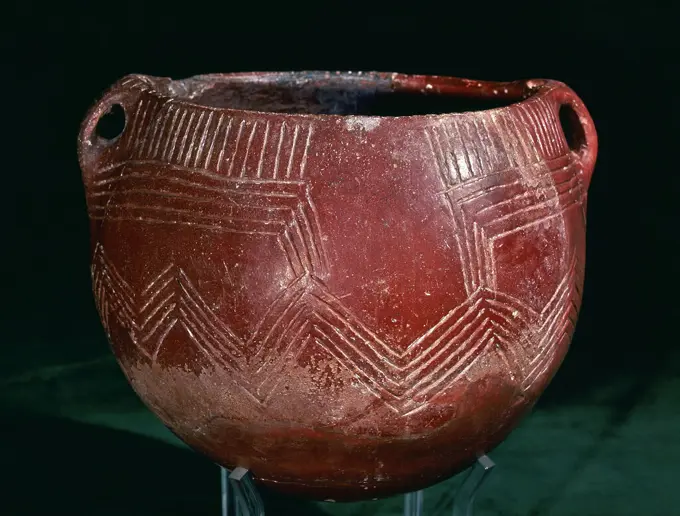
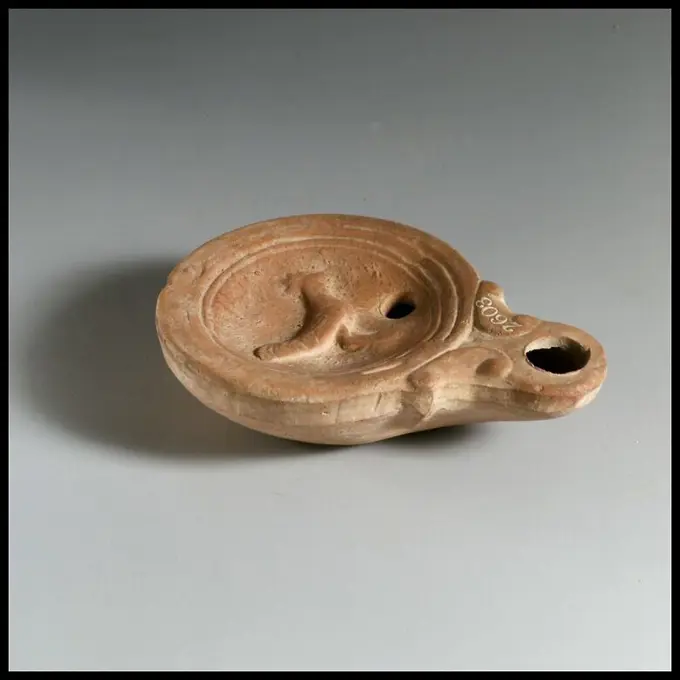
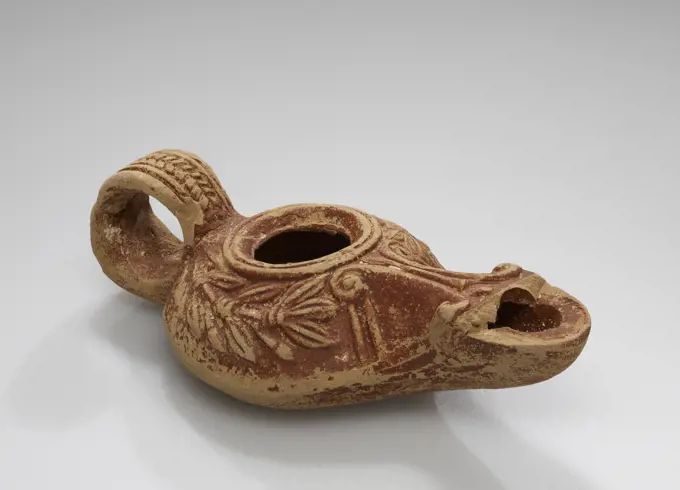
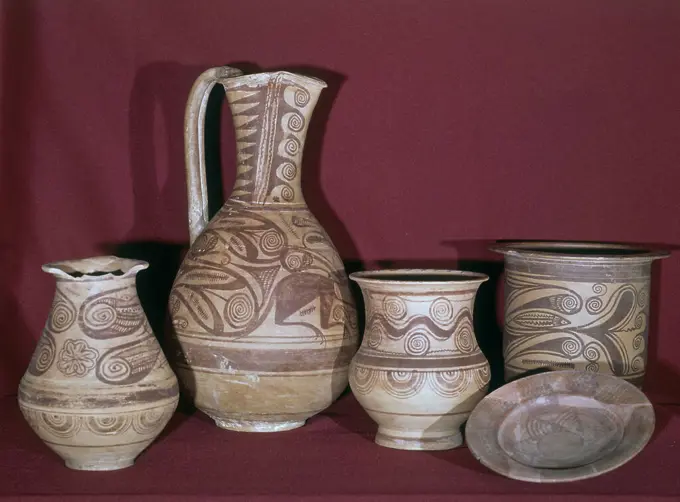
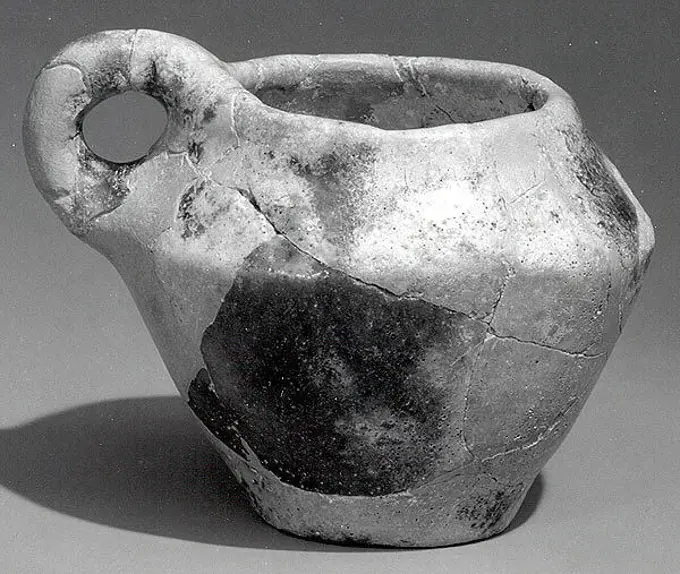
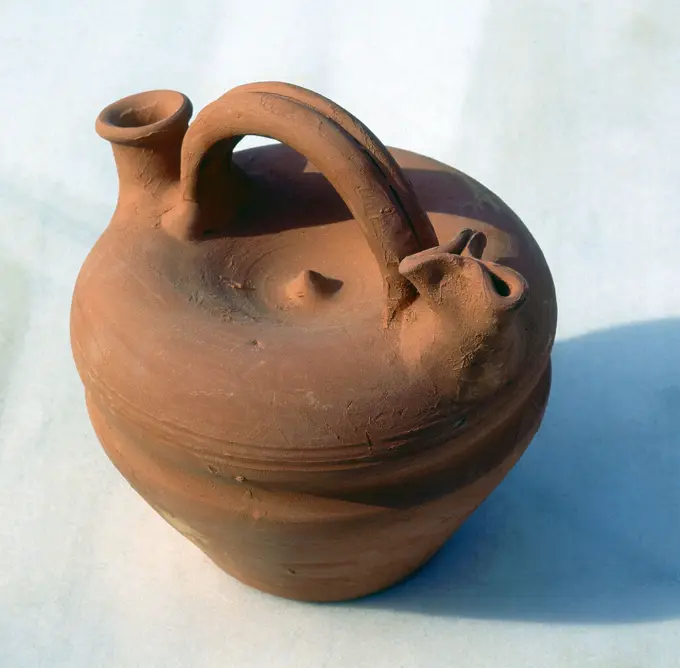
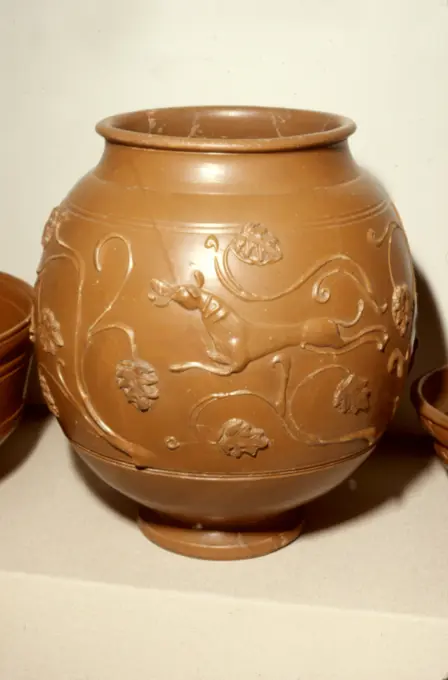
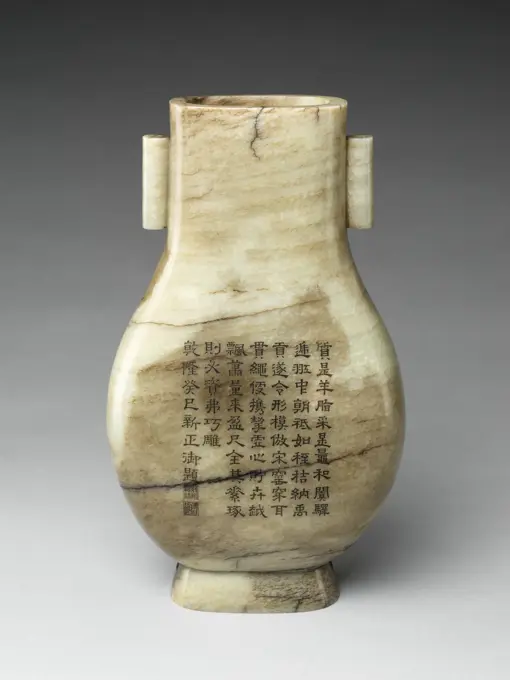
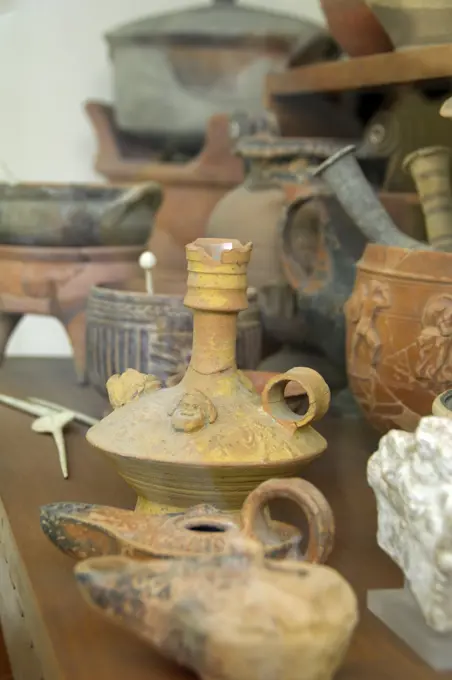
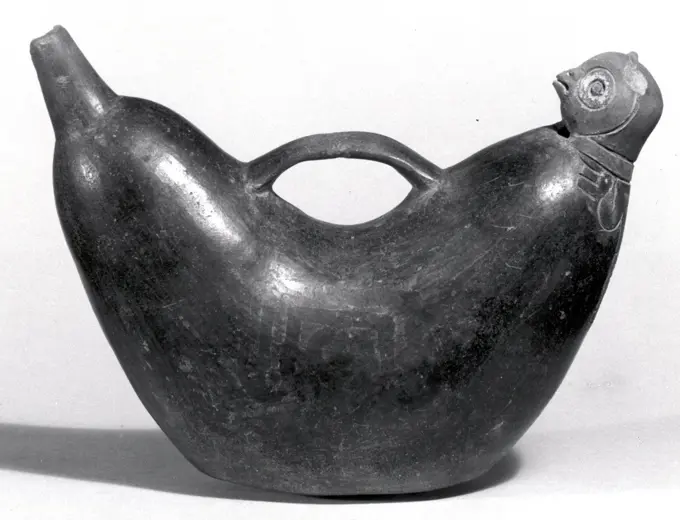
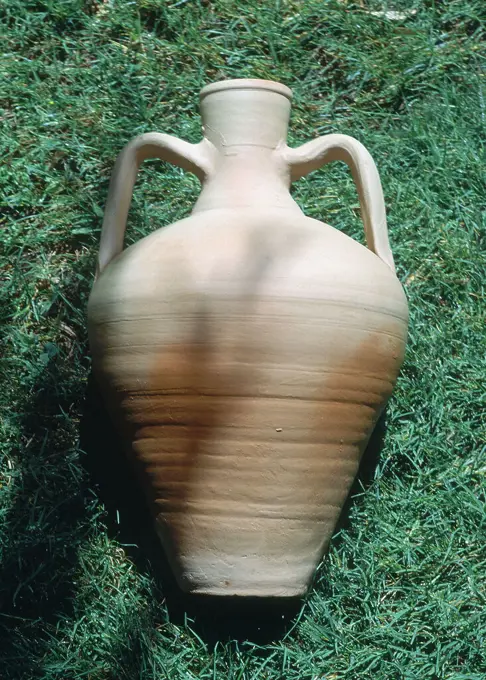
An assortment of ancient pottery including jars and flasks from different cultures, highlighting unique shapes, textures, and historical significance.
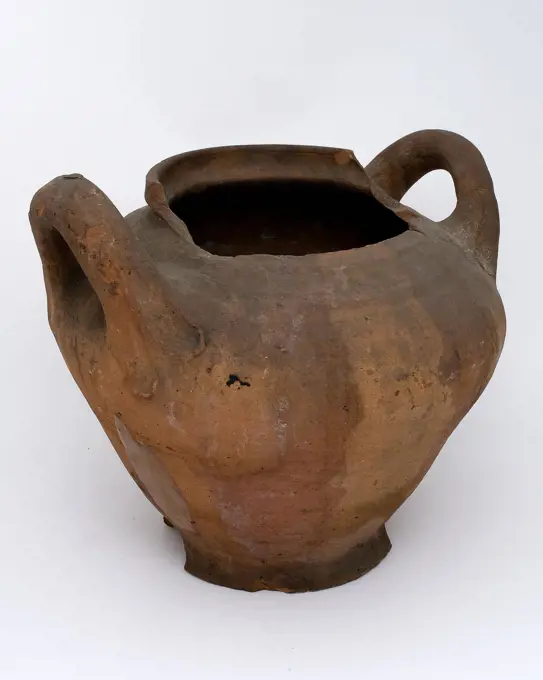
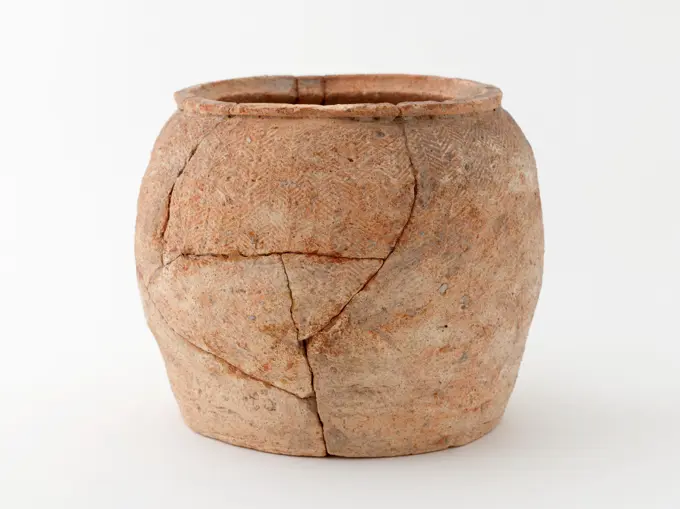
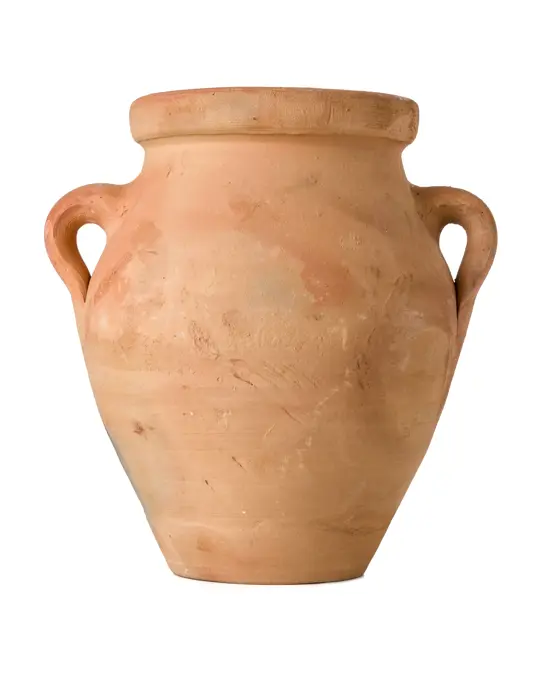
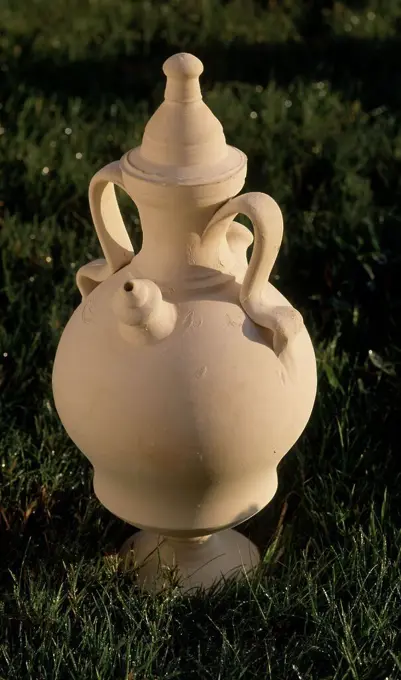
Pottery cover on stand, with two lying, high ears, unglazed, aspot cover pot holder soil find ceramic pottery, hand-turned baked Pottery cover up red shard unglazed two upwardly hung horizontally placed sausage stand. Sphere model narrowing downwards. Small neck opening with short, upright top edge Top edge with collar on the outside Glaze tears on the underside archeology indigenous pottery extinguish heating fireplace
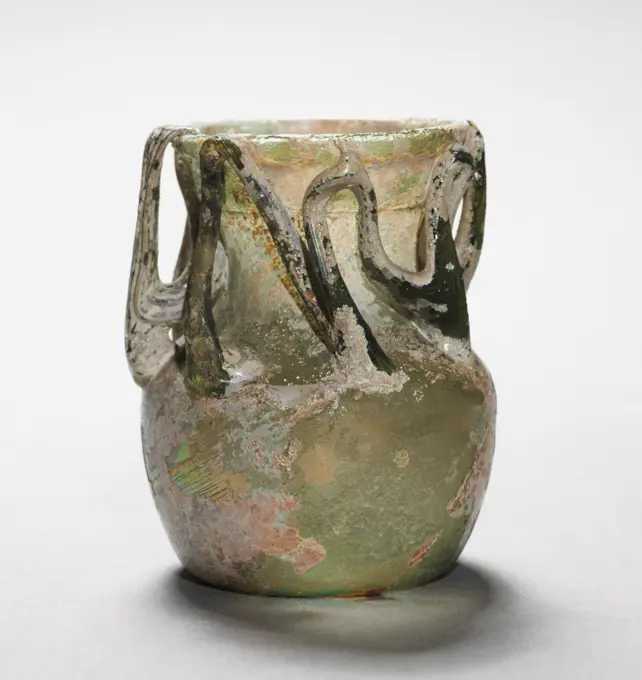
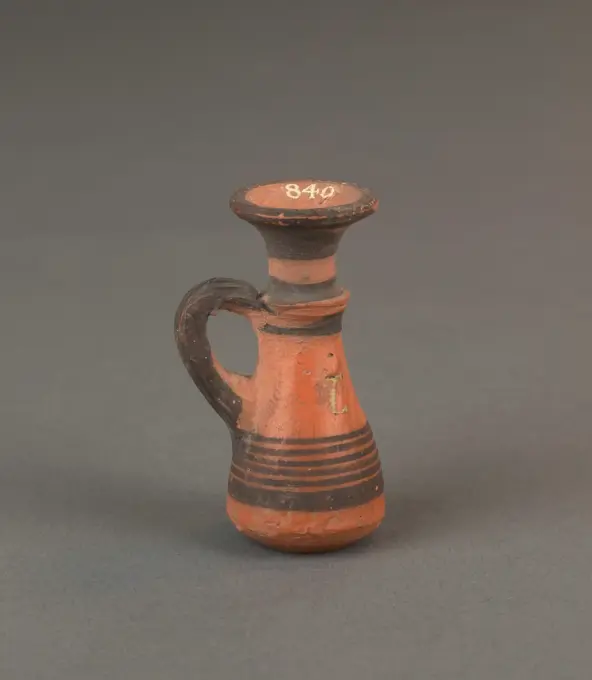
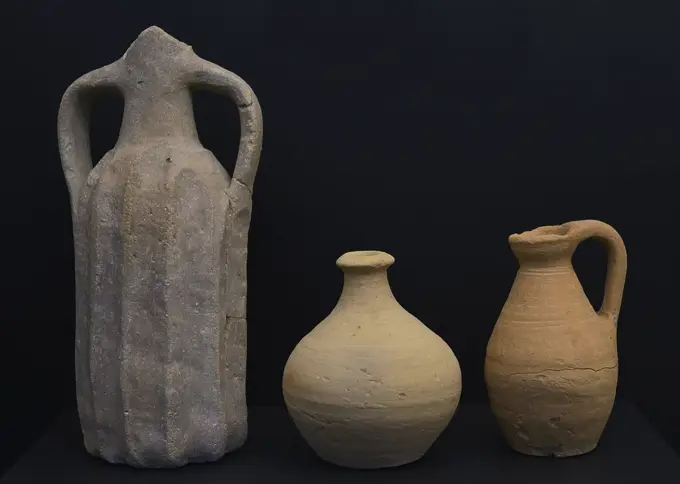
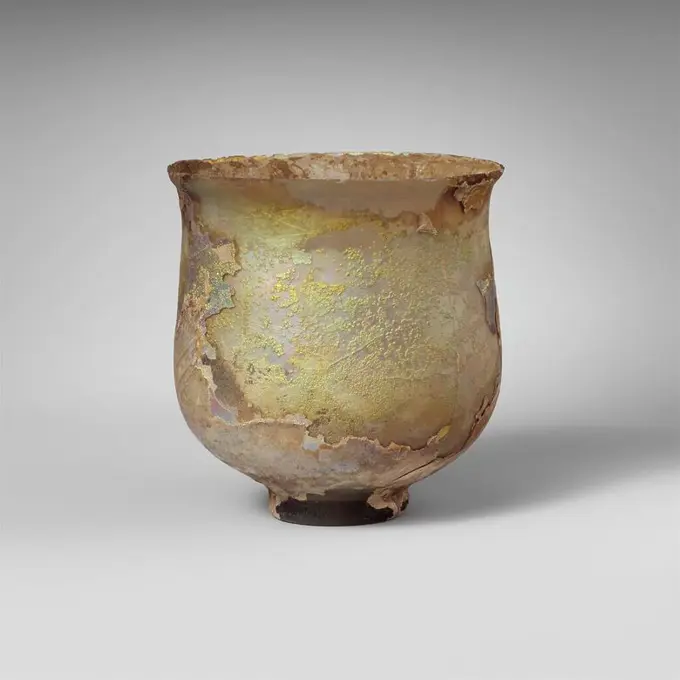
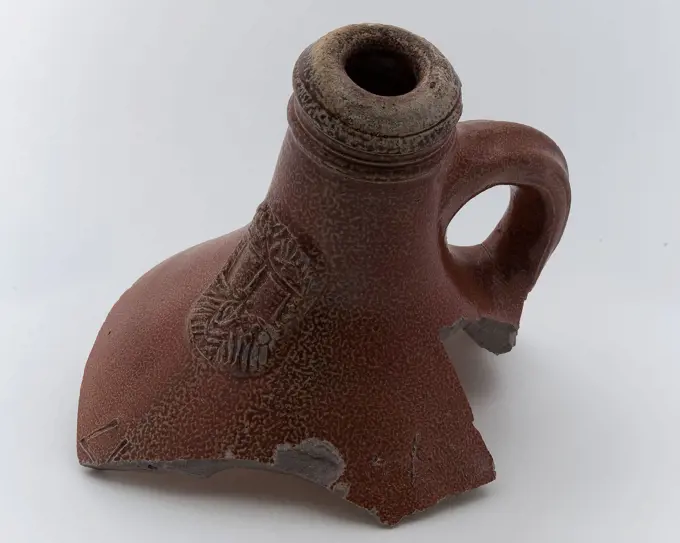
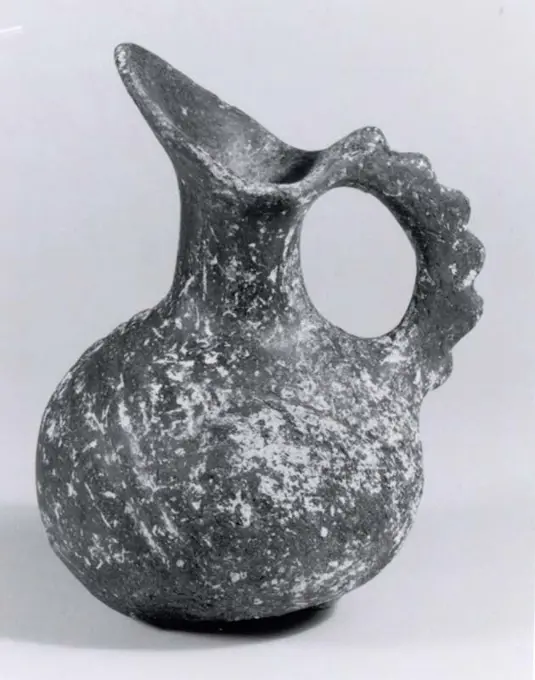
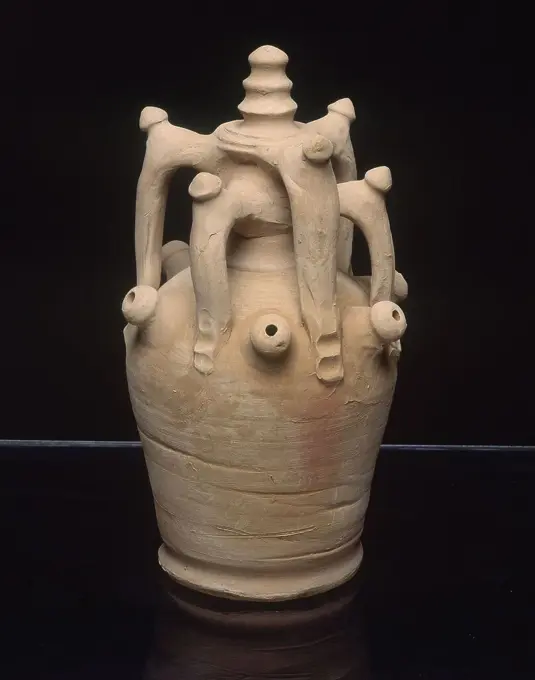
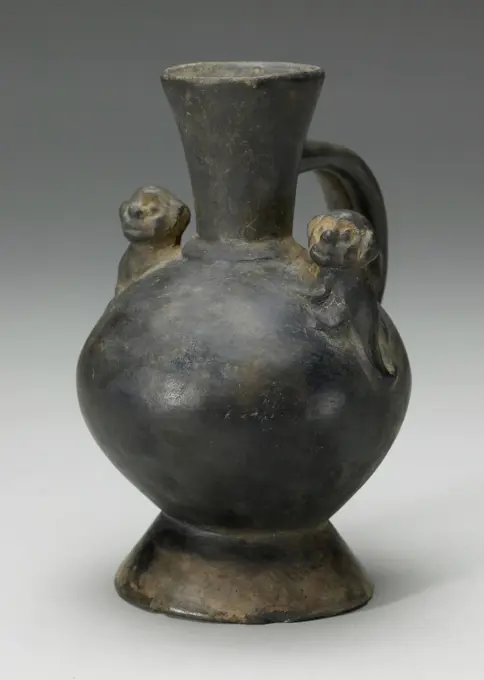
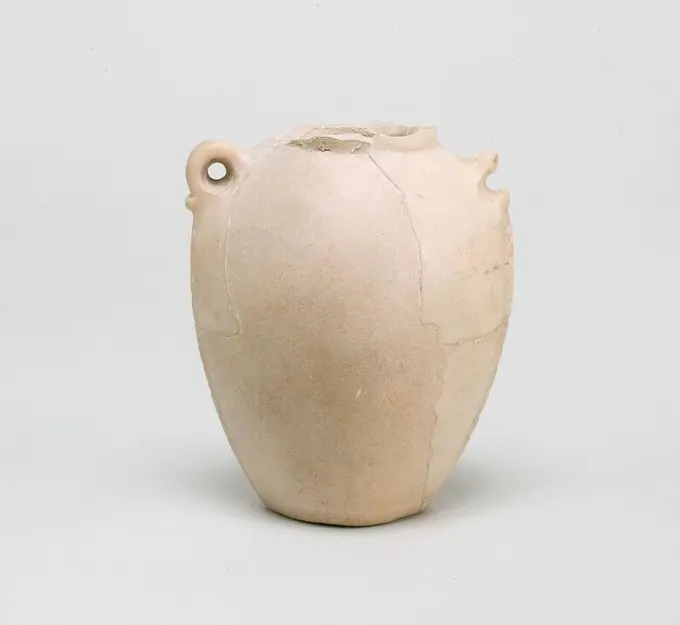
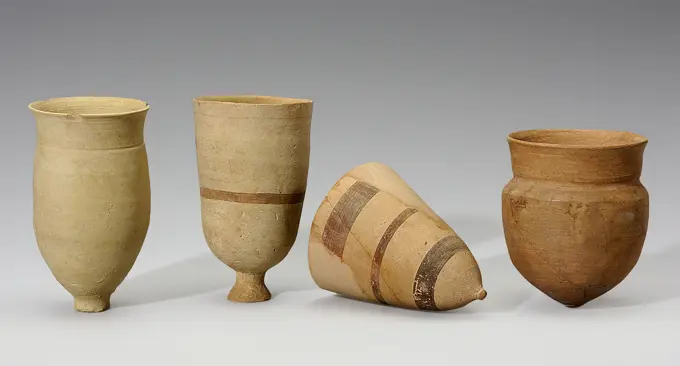
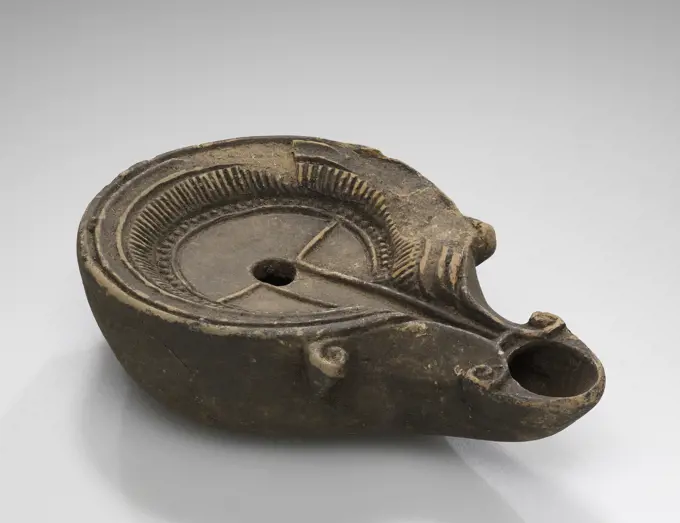
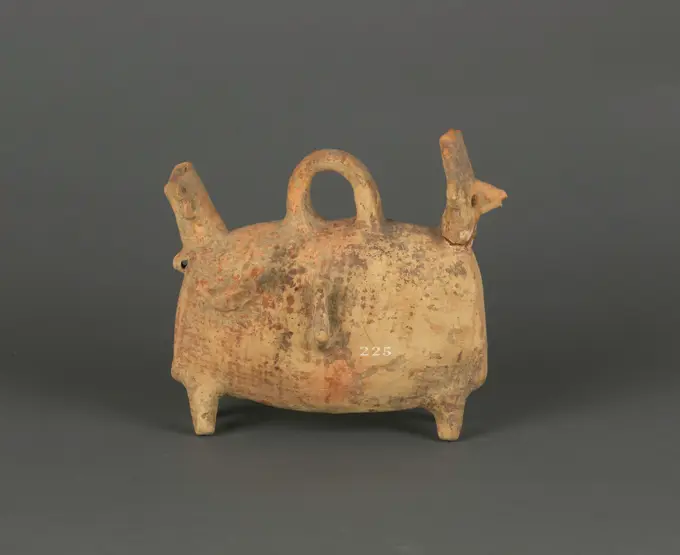
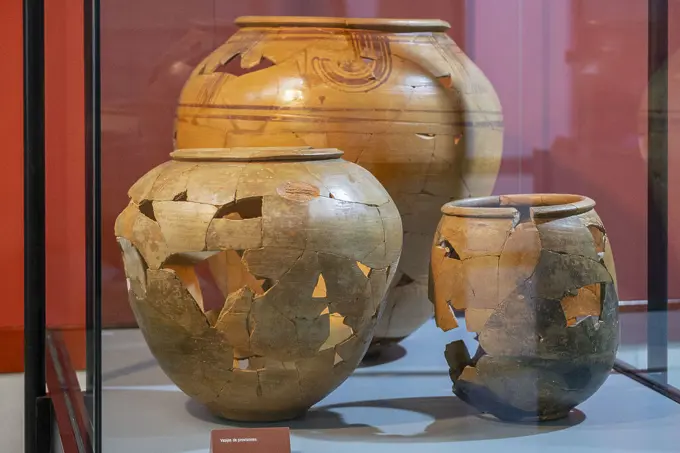
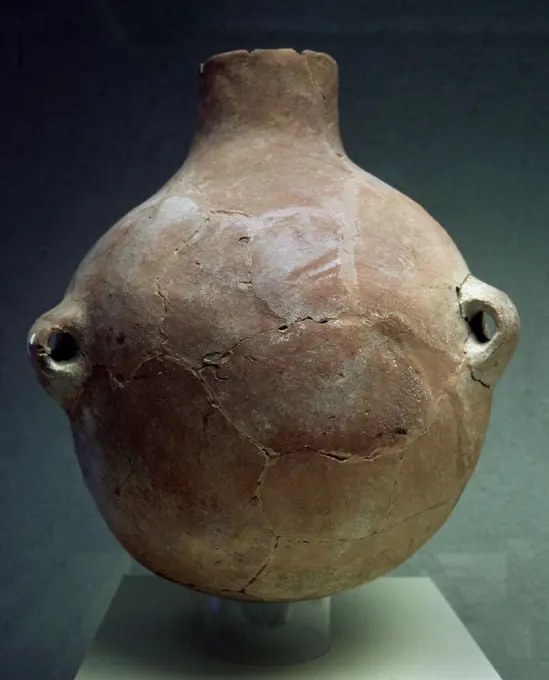
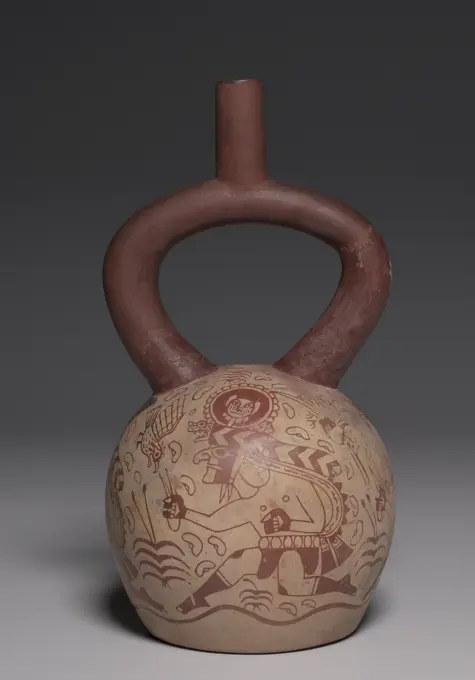
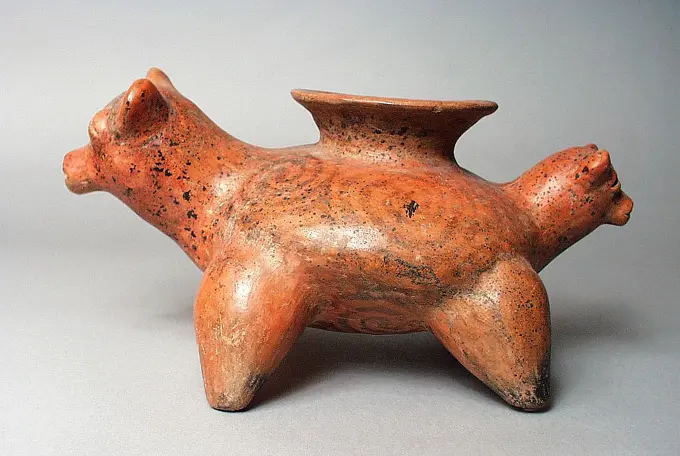
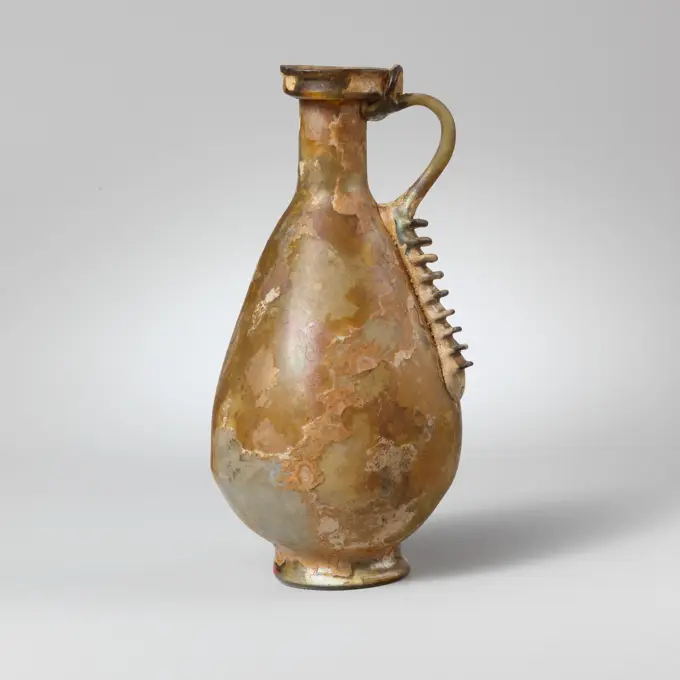
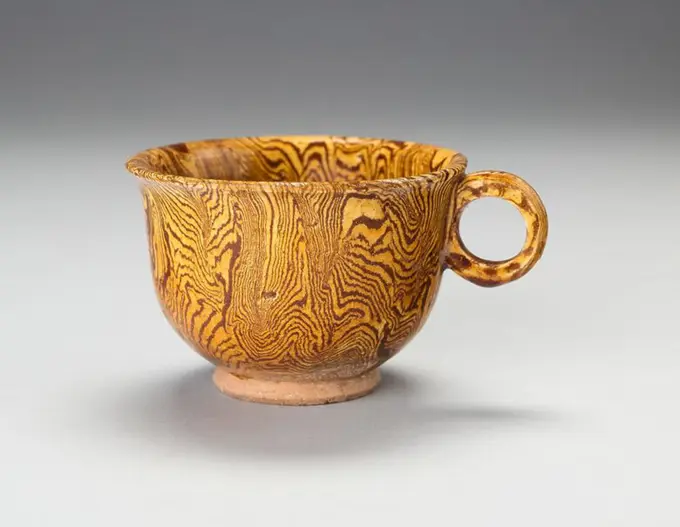
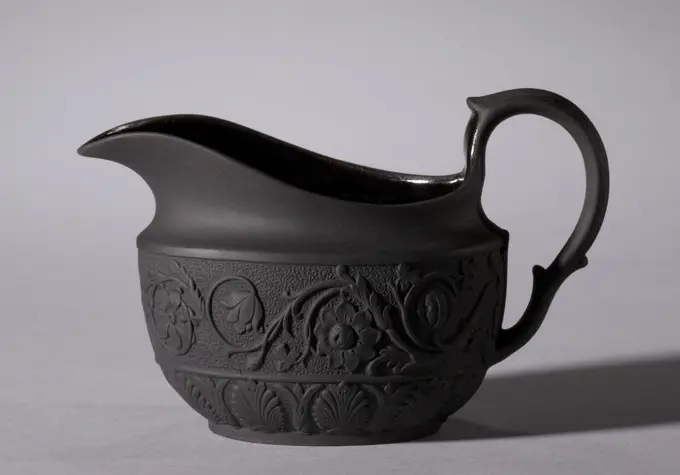
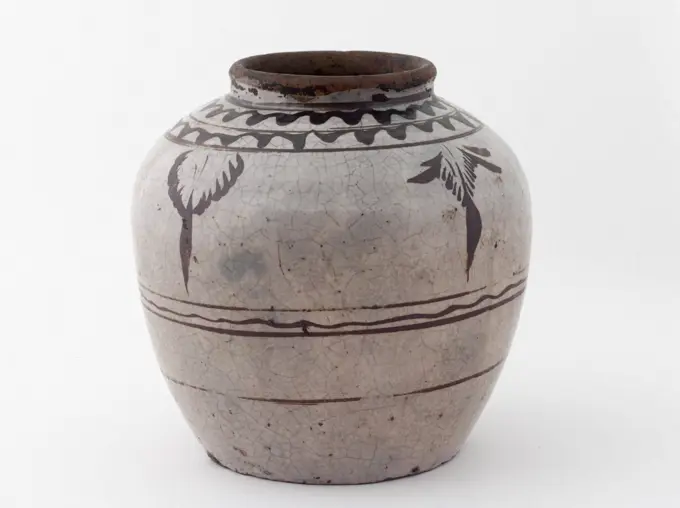
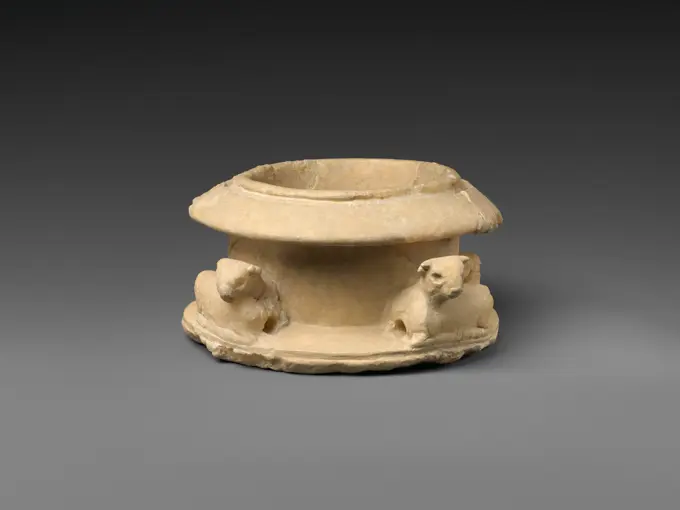
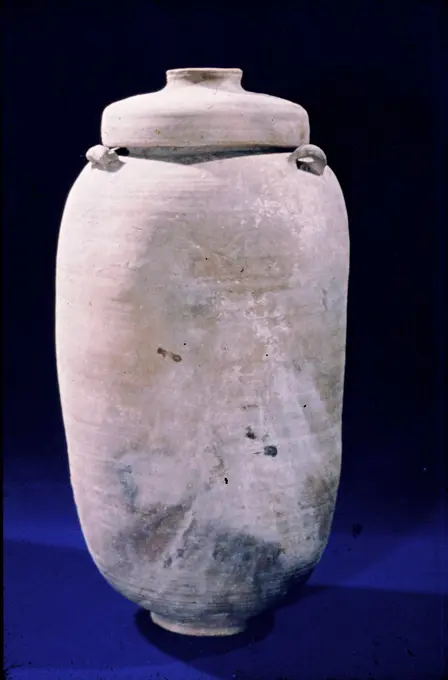
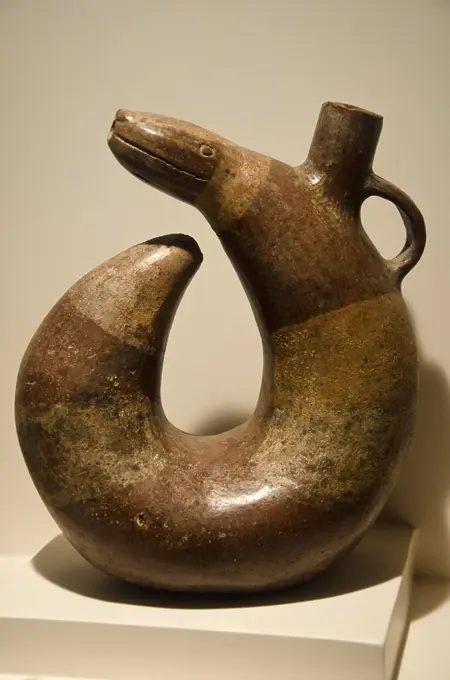
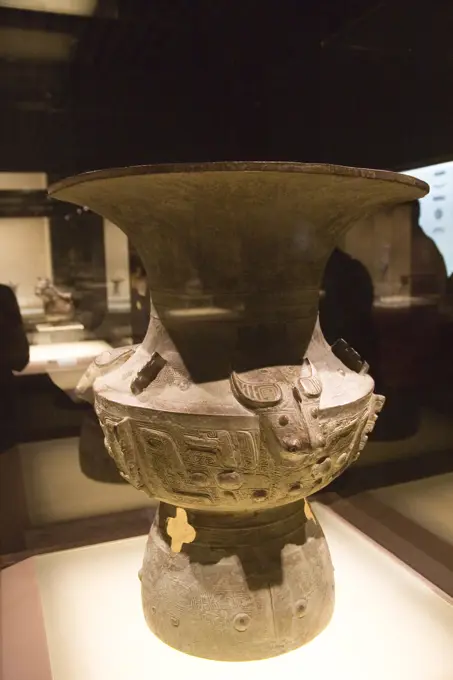
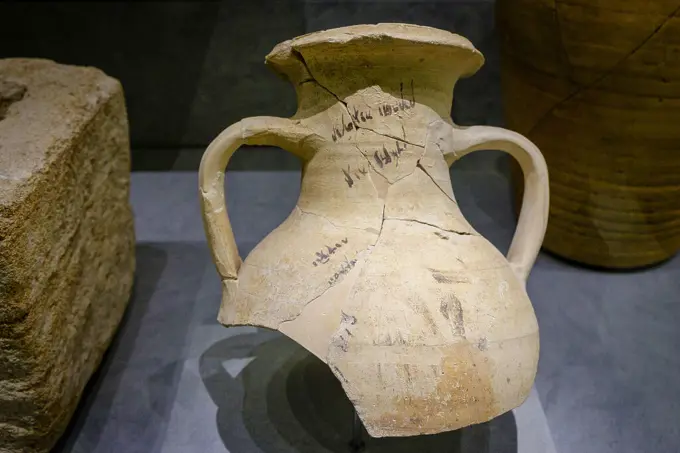
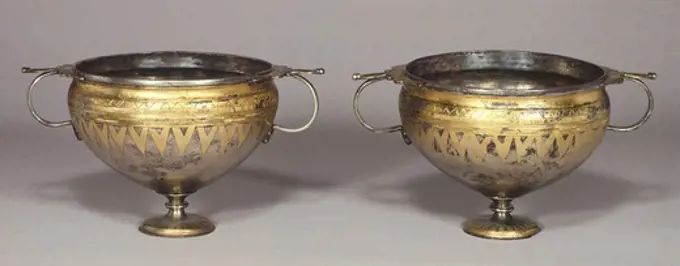
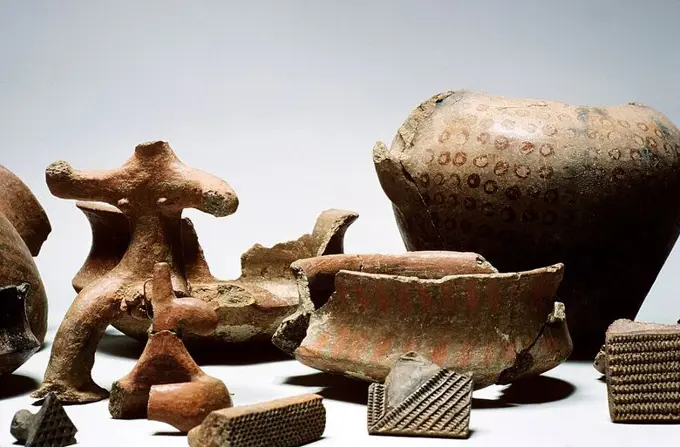
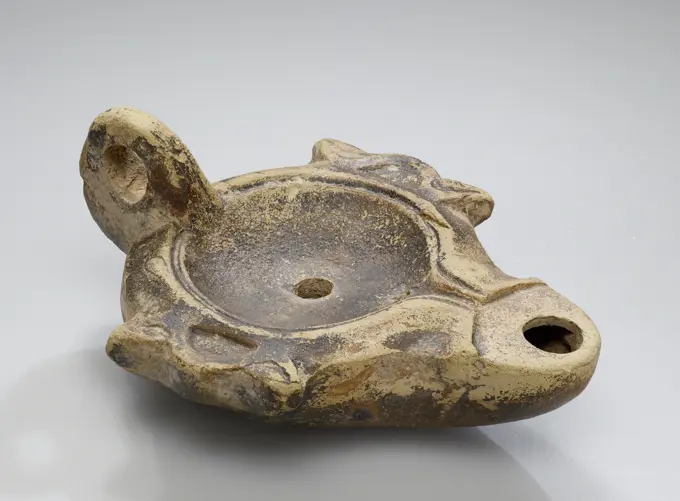
Lamp. UnknownVase, 100-300. Italy, Roman, 2nd-3rd Century. Glass; overall: 8.4 x 6.4 cm (3 5/16 x 2 1/2 in.).Juglet 750-600 B.C. Cypriot. Juglet. Cypriot. 750-600 B.C.. Terracotta. Cypro-Archaic I. VasesPottery. From left to right: jug with cylindrical and ribbed body, 8th-9th centuries, from Toledo's Vega Baja archaeological site; globular-bodied bottle, 4th-5th centuries, from the Roman villa of Carranque (province of Toledo), bitronconical jug handled, 7th century, unknown provenance. Museum of Visigoth Councils and Culture. Toledo, Castile-La Mancha, Spain.Jar, before 1550. Colombia. Black ware; overall: 14 x 7.3 x 7.3 cm (5 1/2 x 2 7/8 x 2 7/8 in.).Anonymous, Jarre (username), 0960. CERUNUSCHI Museum, Museum of Arts in Asia in the city of Paris.Glass beaker. Culture: Roman. Dimensions: 3 3/8 in. (8.5 cm)Other: 3 5/16 in. (8.4 cm)Diam. of rim: 3 5/16 in. (8.5 cm)Diam. of foot: 1 7/16 in. (3.6 cm). Date: ca. 3rd century A.D..Colorless with light green tinge.Rim short and everted, cracked off and ground; cylindrical body with sides expanding slightly downwards, then curving in sharply to integral, thick pad base; flat bottom with central circular indent.Traces of horizontal cut line on upper part of body.Broken and repaired, with two chips in rim and large cracks in body; pinprick bubbles; deep pitting, thick creamy brown weathering, and brillant iridescence on exterior; soil encrustation and thick weathering on interior. Museum: Metropolitan Museum of Art, New York, USA.PUCHEROS DE ARCILLA ROJA VIDRIADOS-PROC SALVATIERRA DE LOS BARROS-BADAJOZ. Location: MUSEO DEL PUEBLO ESPAÑOL. MADRID. SPAIN.Pottery strawberry pot, red shard, internally glazed, sausage ear, on stand, strawberry pot pottery container holder earth discovery ceramic earthenware glaze leadglaze, hand turned glazed baked Pottery strawberry jar red shard inside covered with lead glaze sausage ear hole in the bottom standring black spots on the underside and side in large black letters on the outside PD archeology indigenous pottery serving prepare food kitchen cooking foodNeck of Bartmann jug, also called Bellarmine jug, with ear and Bartmann jug, also called Bellarmine jug, marked, Bartmann juggeruik tableware holder soil find ceramic stoneware, hand turned stamped glazed glazed baked Gray-brown neck shoulder fragment of Bartmann jug On the neck small Bartmann jugappliqué Under the appliqué part of presumably: 4 archeology Rotterdam rail tunnel indigenous pottery import store store transport cellar warehouse archaeological find in the soil: rail tunnel Rotterdam.Clarinet (Barrel), Heinrich Borders, c. 1800 Ton or Baril from a Palmhout clarinet. Corning with a ton or baril with invnr. BK-NM-11430-123-A. Dresden boxwood (hardwood). ivory Ton or Baril from a Palmhout clarinet. Corning with a ton or baril with invnr. BK-NM-11430-123-A. Dresden boxwood (hardwood). ivorySpouted jar ca. 2700-2400 B.C. Yortan. Spouted jar 325244Globular jar ". Terracotta. Vietnam-Xe-Xive s. Paris, Cernuschi museum. 72187-11 Globular jar, Vietnamese object, terracotta"GARGOLA" - BOTIJO TRAMPA QUE CARGA POR ABAJO SIN VIDRIAR - SIGLO XX. Location: ALFARERIA. Castellón. SPAIN.Lamp, anonymous, 1300 - 1600 Hanging lamp with spout; Simple bracket, rear bowl decorated with upward motif. Indonesia bronze (metal) Hanging lamp with spout; Simple bracket, rear bowl decorated with upward motif. Indonesia bronze (metal)Vessel, 900-1470, 7 in. (17.8 cm), Ceramic, Peru, 10th-15th centuryCANTARO SEMIVIDRIADO-S XX ARTE POPULAR. Location: ALFARERIA. BURGOS. SPAIN.Lamp. UnknownLamp. UnknownJar. Dimensions: h. 10 cm (3 15/16 in). Dynasty: Dynasty 18. Reign: reign of Amenhotep III. Date: ca. 1390-1353 B.C.. Museum: Metropolitan Museum of Art, New York, USA.Cup; Unknown, unknown Magnijski workshop, unknown workshop Rediumasrian, unknown New Sasyr workshop; 1. PO. 2 thousand BC (-2000-00-00--1501-00-00), XV-XIV century BC ; Madyanian period (-1500-00-00--1301-00-00), XIV-XIII century BC ; Dennutasrian period (-1400-00-00--1201-00-00), IX-VII century BC ; New Easyrian period (-900-00-00--601-00-00);Kalah, Northern Mesopotamia, Mitannia, Zofia Chrapkiewicz-Gutkowska, Ceramics of Manny, palace ceramics, cups, cups on the legBottle late 13th-early 14th century Korea. Bottle 57436Terracotta Megarian bowl. Culture: Greek, Boeotian. Dimensions: d. 5 9/10 in (15.01 cm). Date: 2nd century B.C..All but one of the figures on this bowl are inscribed. From left to right, the Cretan king Idomeneus attacks Phaistos as he steps into his chariot. To right of this vignette, Athena and Ares sit on rocks, facing a personification of the river Skamandros, while observing a fight between Agammenon and a now nameless Trojan foe. The subject matter on this bowl closely follows an episode in book V of Iliad, in which Athena exhorts Ares, the god of war, to remain neutral during the specific duals of the Trojan conflict that took place between the characters mentioned above. As in Homer's text, the two Olympians observe the fighting from the banks of the river Skamandros, a detail that confirms the subject matter depicted on the bowl. Museum: Metropolitan Museum of Art, New York, USA.Lamp, South Anatolia, Anatolia; 1st century B.C; Terracotta; 3.5 × 7.8 × 12 cm (1 3,8 × 3 1,16 × 4 3,4 in.)TINAJA SIN VIDRIAR-CERAMICA POPULAR S XX. Location: ALFARERIA. TERUEL. SPAIN.Lamp 8th-9th century. Lamp 448994Askos in the form of an animal 1900-1600 B.C. Cypriot. Askos in the form of an animal. Cypriot. 1900-1600 B.C.. Terracotta. Middle Cypriot. VasesVessel with a hieratic inscription;  around 2686- 2181 BC ; Old state (-2686-00-00--2181-00-00);vasijas de provisiones, ceramica celtiberica, museo Numantino de Soria, Soria, Comunidad Autónoma de Castilla, Spain, Europe.Lamp. UnknownLi, Hollow-Legged Tripod, late 2nd or early 1st millennium BC. China, Inner Mongolia, lower stratum of the Xiajiadian culture, late 2nd or early 1st millennium BC. Dark gray earthenware; overall: 22.9 x 17 cm (9 x 6 11/16 in.).VASO NEOLITICO CON ASAS DE OREJAS PROCEDENTE DE SIMAS DE BENAOCAZ - V MILENIO AC. Location: MUSEO DE CADIZ-ARQUEOLOGIA. SPAIN.Vessel with Running Figures, 450-550. Peru, North Coast, Moche style (50-800). Earthenware with colored slips; overall: 29 x 15.6 cm (11 7/16 x 6 1/8 in.).Lazio Frosinone Casamari Museo Archeologico0. Hutzel, Max 1960-1990 Post-medieval: paintings on canvas, paintings on wood, wooden church furnishings Governing Body: Abbazia di Casamari General Notes: This record is for the pinacoteca which is part of the Museo Archeologico, housed within the Abbey of Casamari. Hutzel assigned it a separate numbering sequence. German-born photographer and scholar Max Hutzel (1911-1988) photographed in Italy from the early 1960s until his death. The result of this project, referred to by Hutzel as Foto Arte Minore, is thorough documentation of art historical development in Italy up to the 18th century, including objects of the Etruscans and the Romans, as well as early Medieval, Romanesque, Gothic, Renaissance and Baroque monuments. Images are organized by geographic region in Italy, then by province, city, site complex and monument.Two Joined DogsBOTIJA O CANTARO EN CERAMICA NEGRA SIN VIDRIAR - PROCEDE DE QUART (GERONA). Location: MUSEO DEL PUEBLO ESPAÑOL. MADRID. SPAIN.Jar ca. late 8th millennium B.C.. Jar 327121Vase, 20th century, 5 3/4 x 11 1/4 x 4 3/4 in. (14.6 x 28.58 x 12.07 cm), Ceramic, Democratic Republic of the Congo, 20th centuryWater Dropper in the Form of a Chicken. Korea, Joseon (1392-1910), 19th century. Tools and Equipment; water droppers. Molded and carved stoneware with brown glazeGlass jug mid-1st century A.D. Roman Colorless with pale blue green tinge; handle in same color.Rim folded out, down, up, and out, forming a downward flange and stepped profile; short cylindrical neck with faint horizontal tooling marks around base; piriform body, with slight horizontal bulge at point of greatest diameter; low integral foot ring, concave bottom; rod handle attached to top of body with long tail extending down side and pinched to form nine semicircular projections, drawn up, out, and round in a curve, and trailed on to top of neck and outer edge of rim with vertical, flat thumb-rest.Intact; few bubbles; dulling, iridescence, and thick creamy brown weathering, with small areas of soil encrustation. Inside bottle, numerous solidified lumps of earth.. Glass jug 245654Islamic jar Islamic jar, 10th century,, Hospitalet Vell site, Manacor History Museum, Manacor, Mallorca, Balearic Islands, Spain Copyright: xZoonar.com/TOLOxBALAGUERx 21395680CAFETERA DE BARRO ROJO VIDRIADA. Location: ALFARERIA. VALL DE UXO. Castellón. SPAIN.VASO GLOBULAR DE ZUHEROS CON DECORACION A LA ALMAGRA PROCEDENTE DE LA CUEVA MURCIELAGOS - ALBUÑOL (GRANADA) - NEOLITICO. Location: MUSEO ARQUEOLOGICO-COLECCION. CORDOBA. SPAIN.Bowl 12th century Korea. Bowl. Korea. 12th century. Stoneware with inlaid decoration under celadon glaze. Goryeo dynasty (918-1392). CeramicsLamp; Greece (Corinth); 4th century; Terracotta; 2.1 × 5.6 × 6.6 cm (13,16 × 2 3,16 × 2 5,8 in.)CANDIL DE BRONCE. Location: ALHAMBRA-MUSEO-METALISTERIA. GRANADA. SPAIN.Lamp, 1-200. Parthian, 1st-2nd Century. Terracotta; overall: 2.6 cm (1 in.).Geometric amphora. Athens, national museum. Location: MUSEO ARQUEOLOGICO-CERAMICA. ATHENS. GREECE.Terracotta lamp. Culture: Roman, Cypriot. Dimensions: Overall: 7/8 x 3 5/16 in. (2.2 x 8.4 cm). Date: 1st century B.C.-1st century A.D.. Museum: Metropolitan Museum of Art, New York, USA.Anonymous / "Cántaro para agua", 16th Century (Previous to 1567).Lamp, Anatolia; 1st century B.C. - 1st century A.D; Terracotta; 2.7 × 5.3 × 10.2 cm (1 1,16 × 2 1,16 × 4 in.)Anonymous almohade / "Tinaja estampillada e incisa", S. XIII.CERAMICA IBERICA - SIGLO III AC PROCEDENTE DE LA NECROPOLIS DE CABECICO DEL TESORO EN VERDOLAY (MURCIA). Location: MUSEO ARQUEOLOGICO-COLECCION. MURCIA. SPAIN.Measure. Culture: British. Dimensions: Overall: 1 7/8 × 1 1/4 in. (4.8 × 3.2 cm). Date: 18th century. Museum: Metropolitan Museum of Art, New York, USA.A terracotta amphora on a white background A terracotta amphora on a white background Copyright: xZoonar.com/BorisxZerwannx 8745154Jug with coats of arms and a pelican among griffins, Jan Baldems Mennicken (attributed to workshop of), 1599 Jug of stoneware on a high base with a cylindrical body with round, slightly narrower shoulder and wide neck. The C-shaped ear is attached to the neck and shoulder. Profiles on the neck, belly and foot. Covered with a brown Engobe. On the belly in relief a printed and laid bond with medallions. The middle medallion with a pelican that feeds the boy from her own chest, flanked by griffins. The other two medallions contain the weapons of Saxony and Van Brunswijk. Between the medallions the inscription 'Ivger Gesel Halt dich Werm Verfvl Nit deinen Drim Bist den Frvwen Nit SV HVLT So Stet DV WVL' and the date '1599'. The lower part of the abdomen runs slanted to the foot and is divided into entered courses with a stamped flower branch. The shoulder with the same decoration, but here the flower branch is interspersed with a lot of cut. On the neck a band with leaf vines interrupted bDouble Spout and Bridge Bottle with Falcon 7th-5th century B.C. Paracas. Double Spout and Bridge Bottle with Falcon 308623Italy, Lombardy, Bronze greaves, leg armor worn below knee, from Golasecca CultureRing-Handled Cup. China. Date: 618 AD-907 AD. Dimensions: H. 9.5 cm (3.75 in.). Marbled earthenware with clear glaze. Origin: China. Museum: The Chicago Art Institute, Chicago, USA.Creamer, c. 1810. Elijah Mayer (British, c. 1770-1805). Black basalt; overall: 10.5 x 10.1 x 7.7 cm (4 1/8 x 4 x 3 1/16 in.).Jar ". Sandstone with a creamy slip and a decor painted in brown under transparent cover. Paris, Cernuschi museum. Chinese art, Chinese Ceramic, GRES, JARREJar, 4th century, 9 7/8 x 4 3/8 x 6 1/4 in. (25.08 x 11.11 x 15.88 cm), Clay, pigments, Peru, 4th centuryCup decorated with lotus leaves and the wine jug decorated with figures of boys picking grapes, celadon ceramic with engravings, Korea. Korean Civilisation, Goryeo dynasty, 10th-14th century.Cup ca. 9th century B.C. Iran. Cup 325796Campania Caserta Capua Museo Campano076. Hutzel, Max 1960-1990 Medieval: Byzantine architectural fragments; parchment fragments with miniatures (12th century) from Montecassino; painted wooden crucifix (13th century); Carolingian crucifixes; Bishop's miter (11th century) of gold and silver damask; fresco (13th century). Post-medieval: Architecture (15th century). Formerly the Palazzo Antignano. Unusual Catalan/Moorish-style portal; Paintings on panel and canvas (15th-18th centuries); marble intarsia (16th century); marble sculpture: busts of Christ and Mary (17th century); sculpture of saints in marble and in wood (15th century); painted and gilded sculpture in wood; marble grave sculpture (16th century); sarcophagus with allegorical carvings; gold reliquary "Rosa d'Oro"; crucifix made of elephant tusk Specific Location: Pianterreno Antiquities: Italic sculpture (seated women holding babies); inscription. Photo campaign #1: 533 photos. Roman relief and sculpture; cinerary urns; Greek aFurniture leg, lion's paw ca. 18th century B.C. Old Assyrian Trading Colony. Furniture leg, lion's paw 323524Stirrup Spout Vesselvaso de cerámica pintada de tradicion indigena, Necrópolis de Carratiermes, siglo I .a.C - I d.C. museo del Yacimiento arqueológico de Tiermes, Soria, comunidad autónoma de Castilla y León, Spain, Europe.Abruzzo Alba Fucens General views. Hutzel, Max 1960-1990 Roman republican veteran colony, castrum plan, 1st century BC forum, amphitheatre, various civic and religious buildings, architectural fragments, community fountain; German-born photographer and scholar Max Hutzel (1911-1988) photographed in Italy from the early 1960s until his death. The result of this project, referred to by Hutzel as Foto Arte Minore, is thorough documentation of art historical development in Italy up to the 18th century, including objects of the Etruscans and the Romans, as well as early Medieval, Romanesque, Gothic, Renaissance and Baroque monuments. Images are organized by geographic region in Italy, then by province, city, site complex and monument.BOTIJO - S XX ARTE POPULAR. Location: EXTERIOR. LA ESCALA. GERONA. SPAIN.Roman British pot. Samian ware. 2nd cent. AD. London.Covered jar with incised flowerpetals, anonymous, c. 900 - c. 999 Spreading pot of stoneware with a spherical body, covered with a green glaze. Two rows on the wall of the pot with entered petals. Celadon (YUE). China stoneware. glaze engraving / vitrification Spreading pot of stoneware with a spherical body, covered with a green glaze. Two rows on the wall of the pot with entered petals. Celadon (YUE). China stoneware. glaze engraving / vitrificationRound pottery lid with ear, lid closure earth discovery ceramic earthenware, hand-turned baked lid red earthenware with braces no glaze thickened edge Almost flat model archeology Valckensteyn Poortugaal Albrandswaard indigenous pottery close up cooking kitchen dinnerware kitchenware tableware Soil discovery: moat at kitchen castle Valckensteyn at Poortugaal now Albrandswaard 1961Terracotta oil lamp. Culture: Roman. Dimensions: Overall: 1 x 4 1/2 in. (2.5 x 11.4 cm). Date: 2nd half of 1st century A.D..Loeschcke Type 4. Mold-made. Discus: myrtle wreath; a single filling hole at center, with a band of lines and grooves toward edge. Volutes flanking nozzle. Base ring, encircled by two grooves, and a flat base.Intact. Museum: Metropolitan Museum of Art, New York, USA.Archaic-style vase with poem composed by the Qianlong Emperor late 18th century China This massive jade vase is handsomely incised with a poem composed by the Qianlong Emperor in 1773. The poem clearly indicates that the work was based on a Song-dynasty (960-1279) ceramic vase with an unadorned surface. More fascinating is that the jade vase features subtle crackling like that observed on high-quality Song celadon-glazed ware.. Archaic-style vase with poem composed by the Qianlong Emperor. China. late 18th century. Jade (nephrite). Qing dynasty (1644-1911), Qianlong period (1736-95). JadeBronze ritual food vessel from the Western Zhou Dynasty. Dated 10th Century BCLamp. Culture: Roman. Dimensions: Length: 3 5/8 in. (9.2 cm)Height: 1 in. (2.5 cm). Date: 1st century B.C.-1st century A.D.. Museum: Metropolitan Museum of Art, New York, USA.Bowl 12th-13th century. Bowl 451386Jar fragment with reclining bulls ca. 2600-2500 B.C. Sumerian. Jar fragment with reclining bulls. Sumerian. ca. 2600-2500 B.C.. Gypsum alabaster. Early Dynastic IIIa. Mesopotamia, NippurScroll Jar. Contained Dead Sea Scrolls at Qumran. ISRAEL.Ceramic vessel Vicús culture 100 BC-400 AC Perú.ALCUZA SEMIVIDRIADA-DET ASAS-ARTE POPULAR S XX. Location: MUSEO PROVINCIAL. Pontevedra. SPAIN.Two-thousand-five-hundred- year-old Shang bronze wine vessel was a burial gift, Shanghai Museum collection. Shang Bronze (15-13 Century B.C.), Shanghai MuseumCANTARO U OLLA DE BOCA ANCHA DESDE DONDE SALEN LAS DOS ASAS - SIN VIDRIAR. Location: ALFARERIA. NIÑODAGUIA. Orense. SPAIN.BOTIJO DE ARCILLA LLAMADA GREDA-SIN VIDRIAR-ARTE POPULAR S XX. Location: ALFARERIA. LA RAMBLA. CORDOBA. SPAIN.Jar used as a cinerary urn and decorated with proper names in neo-Punic script, 200-100 BC, Archaeological Museum of Ibiza and Formentera, Spain.Silver gilt cups, from the burial of Dollerup, Denmark. Jewellery. Viking Civilization, 1st-2nd Century.Bronze circular mirror 2nd half of the 4th century B.C. Greek The mirror was reportedly found with the bronze perirrhanterion (sprinkler) that is displayed in the main Greek galleries.. Bronze circular mirror 255768CUEVA PINTADA DE GALDAR: RESTOS Y PIEZAS DE CERAMICA. VASIJAS Y FIGURAS. GALDAR, GRAN CANARIA, ESPAÑA.Europe, Greece, Cyclades, Delos. Delos Archaeological Museum, artifacts found on Delos. (Editorial Usage Only)Bird-Head Vessel 5th-4th century B.C. Paracas. Bird-Head Vessel 308362BOTIJO DE DOS ASA CON CUELLO ANCHO Y ALTO-ARTE POPULAR S XX. Location: ALFARERIA. Nijar. Almería. SPAIN.Vase known as ""Askos Benacci""Lamp. UnknownStirrup Spout Vessel Depicting Costumed Runners 100 BCE-500 CE Chicama River Valley. Ceramic and pigment . Mocheglazed earthenware jar at Shakespeare's birth place, Stratford-Upon Avon, England. 16th centuryAceitera. Museu Català de les Arts i Tradicions Populars.Guttus;  III century A.C. (201-00-00-300-00-00);Axle-Cap, one of a pair, 5th-4th century BCE, 3 3/8 × 3 3/8 × 2 11/16 in., 1.3 lb. (8.57 × 8.57 × 6.83 cm, 0.6 kg), Bronze, China, 5th-4th century BCERoman vessel in the shape of a stretched ram. 2nd century. From North of Asia Minor. Roman-Germanic Museum. Cologne. Germany.