My Boards
View Pictures
  • My Boards

Historic Religious Illustrations

A collection of ancient miniature paintings depicting significant religious events, figures, and narratives, featuring bold colors and intricate designs.

Christ's entry into Jerusalem. Syriac Bible, 13th cent. from Iran.
181 assets in this story
1746-30020308
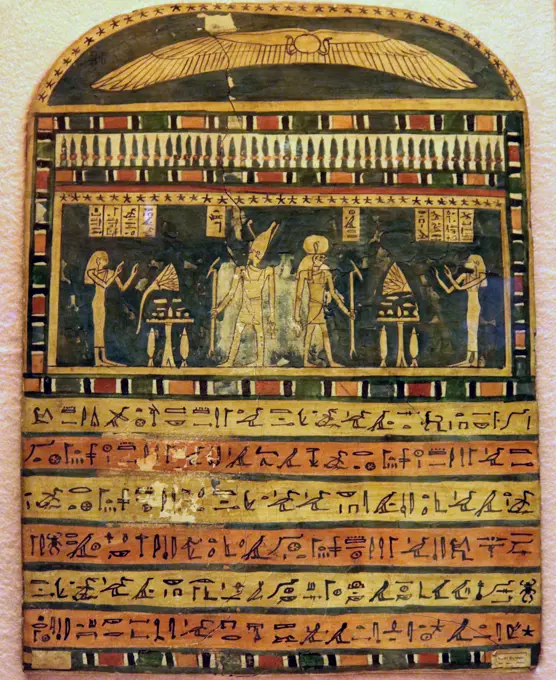
Stele of Tabethet (ancient Egyptian noblewoman). Shows the goddess Maat and the judgement in the afterlife. 26th dynasty. 664-525 BC
1788-56350
The Martyrdom of St Margaret, the saint Imprisoned for being Christian, reredos of the altar of St Margaret, 12th century, panel painting. Catalan Romanesque art.
1848-55044711
Old Bible at Lake Tana, Ethiopia, Africa
4409-38522
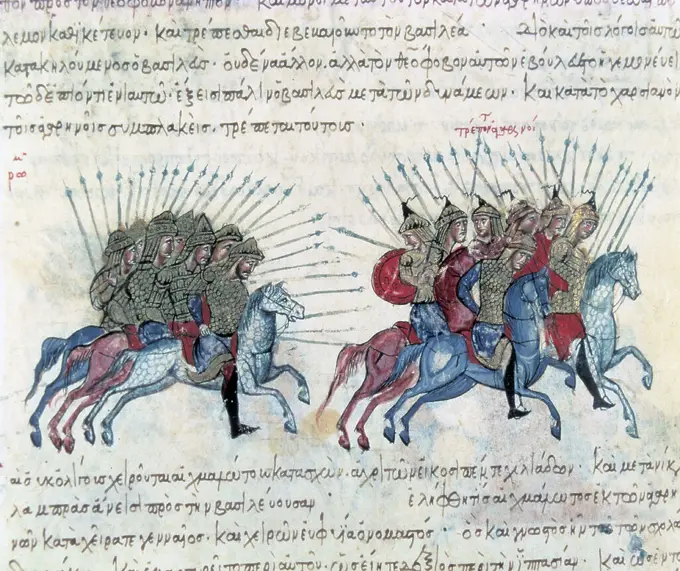
John Skylitzes. Synopsis of Histories. War with the Arabs. Codex of the 12th century. National Library. Madrid. Spain.
1899-18719101
Laozi (Lao Tzu, c. 6th century BCE, left), meeting with Confucius (Kong Zi, K'ung-tzu, K'ung-fu-tzu, 551- 479 BCE) in a Han Dynasty (206 BCE- 220 CE) fresco from Dongping County, Shandong Province. The fresco, painted with blue, green, black and red colours is found on the walls of a tomb at an old residential yard in Dongping county, southwestern Shandong, and is estimated to be about 2,000 years old.
1746-19665142
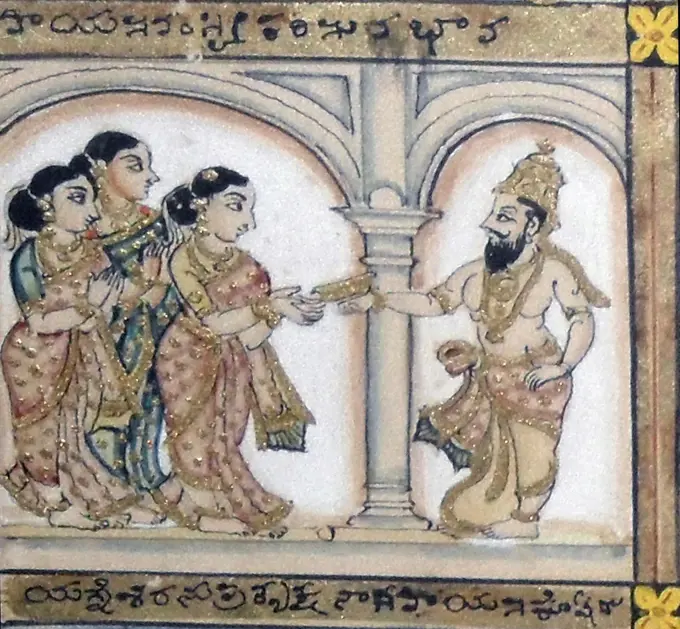
Detail from a 19th century enamel and glazed picture depicting the Hindu legend of the Ramayana. The Ramayana is one of the two epic Hindu poems, the other being the Mahabharata. The Ramayana describes a love story between Rama, an ancient King, and Sita, who is captured by Ravan, the King of Ceylon. Rama lays siege to Ceylon and wins back Sita
4443-21193773
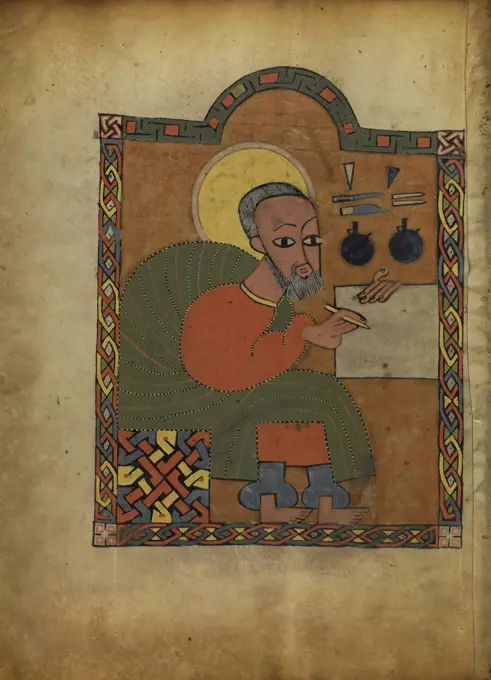
Saint John; Unknown; Ethiopia, Africa; about 1504 - 1505; Tempera on parchment; Leaf: 34.5 x 26.5 cm (13 9/16 x 10 7/16 in.)
1899-19136648
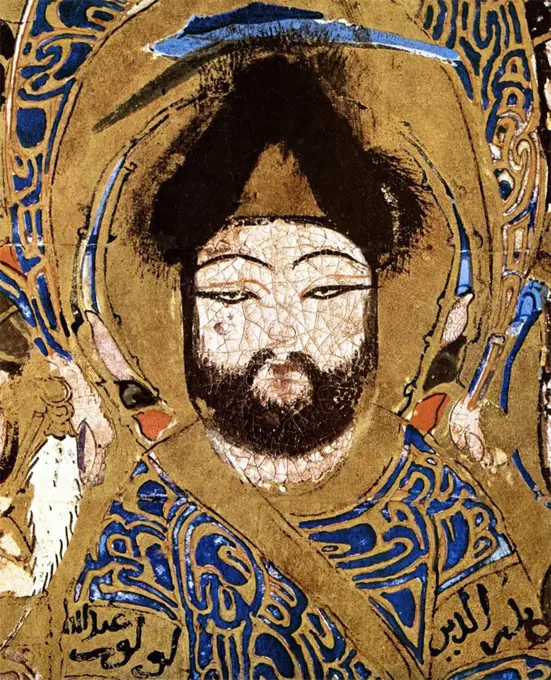
Iraq: An enthroned Muslim ruler (detail), from Abu'l-Faraj al-Isfahani's Kitab al-Aghani (Book of Songs) Mosul, 1219 CE
1788-32643
Muhammad the Prophet and Abu Bakar on the road to Medina, Arabic miniature, 14th century.
4409-17504592
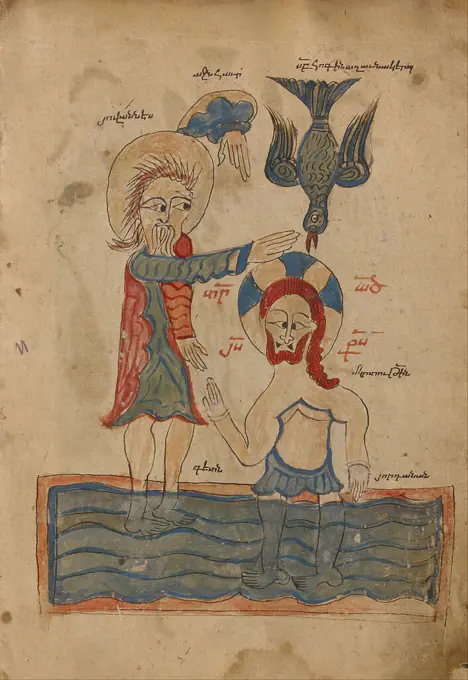
The Baptism of Christ. Date/Period: 1386. Folio. Black ink and watercolors on paper bound between wood boards covered with dark brown kidskin. Height: 240 mm (9.44 in); Width: 165 mm (6.49 in). Author: UNKNOWN.
4409-17451361
Christ Appearing to Mary Magdalene. Dated: 1460/1470. Medium: woodcut, hand-colored in green, gray, olive, red lake, and gold. Museum: National Gallery of Art, Washington DC. Author: German 15th Century.
1899-18787907
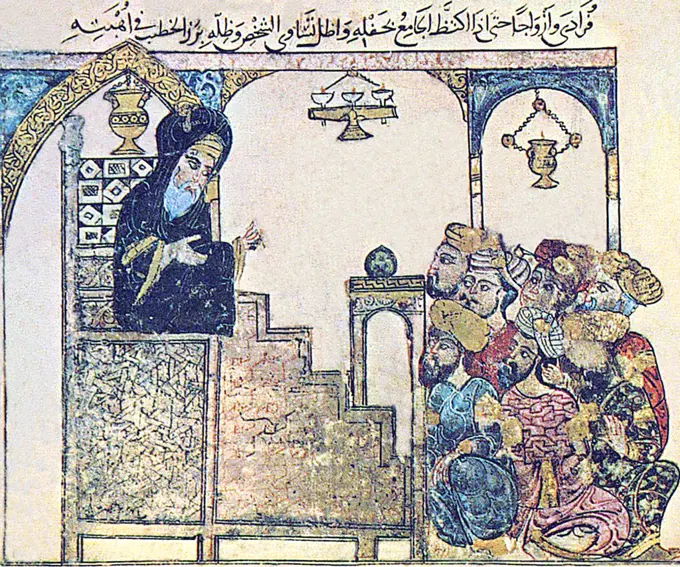
Yahya ibn Mahmod al-Wasiti was a 13th-century Arab Islamic artist. Al-Wasiti was born in Wasit in southern Iraq. He was noted for his illustrations of the Maqam of al-Hariri. Maqama (literally 'assemblies') are an (originally) Arabic literary genre of rhymed prose with intervals of poetry in which rhetorical extravagance is conspicuous. The 10th century author Badi' al-Zaman al-Hamadhani is said to have invented the form, which was extended by al-Hariri of Basra in the next century. Both authors' maqamat center on trickster figures whose wanderings and exploits in speaking to assemblies of the powerful are conveyed by a narrator. Manuscripts of al-Hariri's Maqamat, anecdotes of a roguish wanderer Abu Zayd from Saruj, were frequently illustrated with miniatures.
1788-30690
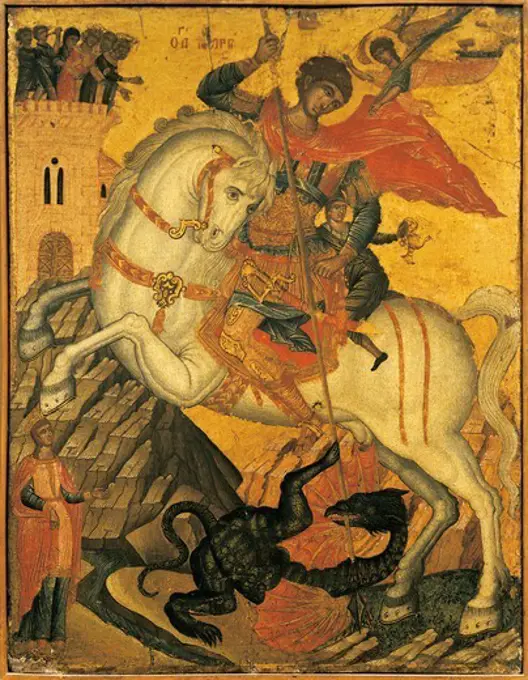
St George and the Dragon, by an anonymous artist from a Venetian Cretan school, 17th Century.
4069-5214
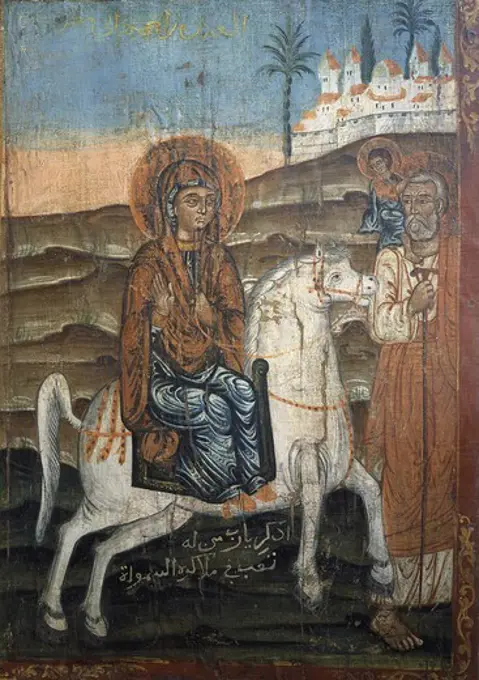
The Flight into Egypt, 18th century icon panel with Arabic text
6145-29761204
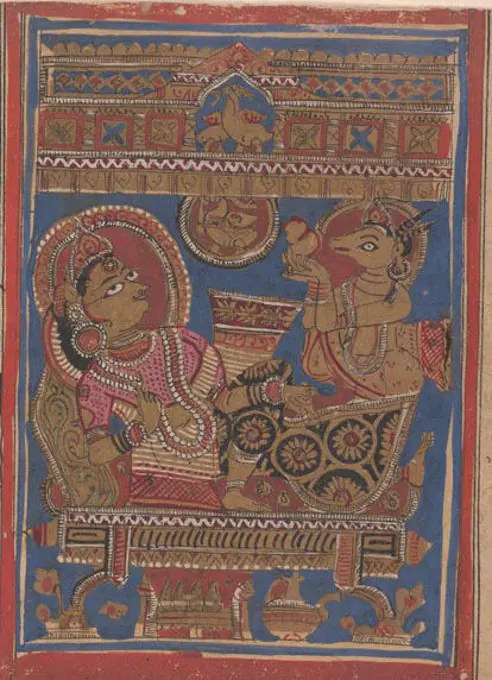
Harinaigamesin Brings the Embryo to Queen Trisala: Folio from a Kalpasutra Manuscript 15th century India (Gujarat) The jina Mahavira was conceived by a Brahmani woman, and Indra determined that the embryo should be transferred to the royal woman Queen Trisala. He appointed the deerheaded divinity Harinaigamesin, Indra's ambassador and chief of infantry, to perform this delicate task. Embryos were exchanged between the two women, and Mahavira was brought full term and born to King Siddharta and Queen Trisala.. Harinaigamesin Brings the Embryo to Queen Trisala: Folio from a Kalpasutra Manuscript 74978
6145-29857203
German 15th Century, Christ Appearing to Mary Magdalene, 1460 1470 Christ Appearing to Mary Magdalene
1899-18788847
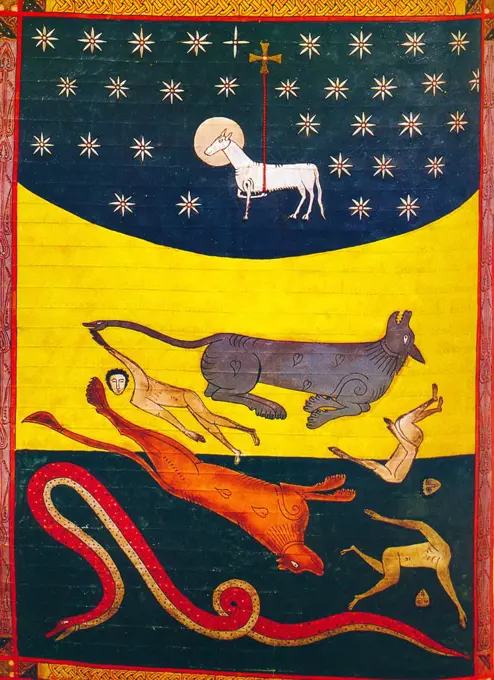
The Beatus of Leon is an 11th century illuminated manuscript of the Commentary on the Apocalypse by Beatus of Liebana. The manuscript was made for King Ferdinand 1 (c.1015-1065) and Queen Sancha of Leon. It contains 98 miniatures painted by Facundus. The Apocalypse of John is the Book of Revelation, the last book of the New Testament.
1788-33896
Prince Arechi seated on his throne, miniature from The Codex Matritensis leges langobardorum (Madrid codex Lombard Laws), manuscript, 11th Century.
6145-48890132
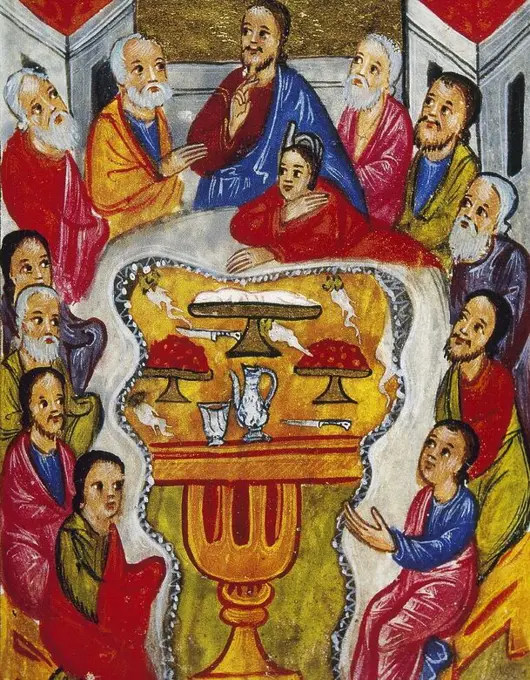
The Seventy-two Disciples. Unknown
1899-18788535
Shahab-ud-din Muhammad Khurram Shah Jahan I (1592 -1666), or Shah Jahan, from the Persian meaning king of the world, was the fifth Mughal ruler in India and a favourite of his legendary grandfather Akbar the Great. He is best known for commissioning the Phadshahnamah as a chronicle of his reign, and for the building of the Taj Mahal in Agra as a tomb for his wife, Mumtaz Mahal. Under Shah Jahan, the Mughal Empire attained its highest union of strength and magnificence. The opulence of Shah Jahans court and his famous Peacock Throne was the wonder of all the European travelers and ambassadors. His political efforts encouraged the emergence of large centers of commerce and crafts-such as Lahore, Delhi, Agra and Ahmedabad-linked by roads and waterways to distant places and ports. He moved the capital from Agra to Delhi. Under Shah Jahan's rule, the Red Fort and Jama Masjid in Delhi were built, the Shalimar Gardens of Lahore, sections of the Lahore Fort and his father's mausoleum.
1899-18788079
Ali ibn Abi talib (c.598-661 CE). The son of Abu Talib, Ali was also the cousin and son-in-law of the Prophet, Muhammad, ruling over the Islamic Caliphate from 656 to 661, and was the first male convert to Islam. Sunnis consider Ali the fourth and final of the Rashidun (rightly guided) Caliphs, while Shia regard Ali as the first Imam and consider him and his descendants the rightful successors to Muhammad, all of which are members of the Ahl al-Bayt, the household of Muhammad. This disagreement split the Ummah (Muslim community) into the Sunni and Shia branches.
4409-153395
SAN DEMETRIO DE TESALONICA - SIGLO XVI/XVII. Author: ESCUELA STROGANOV (S XVI-XVII). Location: GALERIA TRETYAKOV. MOSKAU. RUSSIA.
6145-30187096
Presentation of Offerings, from a Set of Initiation Cards (Tsakali) 1301-1500 Tibet. Ink and watercolor on paper .
6145-29878947
American 20th Century, Plate 33  The Holy Trinity  From Portfolio Spanish Colonial Designs of New Mexico, 1935 1942 Plate 33: The Holy Trinity: From Portfolio Spanish Colonial Designs of New Mexico
6145-48889109
Saint Mark. Unknown
6145-29851899
Spanish 15th Century, Massacre of the Firstborn and Egyptian Darkness, c 1490 Massacre of the Firstborn and Egyptian Darkness
4435-9951
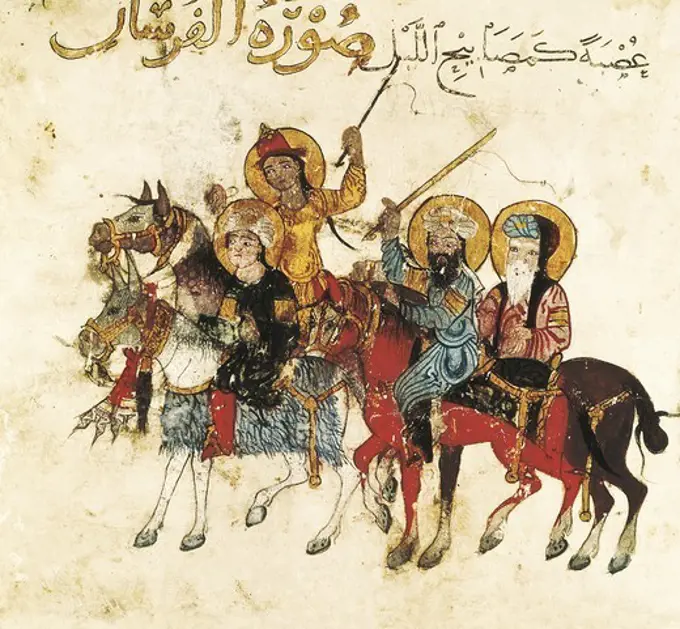
Al-Hariri of Basra (1054-1122). Arab erudite and poet.; Yahya ibn Mahmud al-Wasiti. The Maqamat' (The Assemblies of al-Hariri), characteristic genre of the medieval arabic literature. Edition carried out in Bagdad and illustrated by al-Wasiti (1237). Knights in the surroundings of Cairo. Islamic art. Miniature Painting. FRANCE. LE-DE-FRANCE. Paris. National Library.
4409-17337767
Book of hours. Christian devotional book. Miniature, 15th century. Resurrection of the dead. Conde Museum. Chantilly. France.
1899-18787769
A scene from the Isra and Mi'raj, the two parts of a Night Journey that, according to Islamic tradition, the Islamic prophet Muhammad took during a single night around the year 621. It has been described as both a physical and spiritual journey. A brief sketch of the story is in sura (chapter) 17 Al-Isra of the Qur'an, and other details come from the Hadith, supplemental writings about the life of Muhammad. In the journey, Muhammad travels on the steed Buraq to 'the farthest mosque' where he leads other prophets in prayer. He then ascends to heaven where he speaks to God, who gives Muhammad instructions to take back to the faithful on Earth about the number of times to offer prayers each day.
6145-45364755
Archangel Michael
1788-32789
Game with sticks, drawing on parchment from an Arabic manuscript from the Fatimid period.
4443-20265933
Abruzzo, L'Aquila, Fossa, S. Maria delle Grotte, Italy, 20th century, photo, photography, Europe
4409-17266931
CODICE TRUJILLO DEL PERU - TOMO II E 121 - MOTILONES DE LAMAS CUANDO ANDAN DE CAZA - ACUARELA - SIGLO XVIII. Author: MARTINEZ COMPAÑON BALTASAR. Location: PALACIO REAL-BIBLIOTECA. MADRID. SPAIN.
4443-22023183
Saint Luke; Ethiopia; about 1480 - 1520; Tempera on parchment; Leaf: 34.5 x 25.6 cm (13 9,16 x 10 1,16 in.)
4430-3702
fine arts, middle ages, Armenia, Armenian dignitary with gospel book, miniature, 9th century, Freer Gallery, Washington DC,
1788-34187
Christ teaching, miniature from a liturgical parchment book, Coptic manuscript, 18th-19th Century.
4069-592
China, the Empress from A. Racinet Historical Costumes Vol 2 Paris 1888
6145-30165329
Image from a Set of Initiation Cards (Tsakali) 1301-1500 Tibet. Ink and watercolor on paper .
6145-29784092
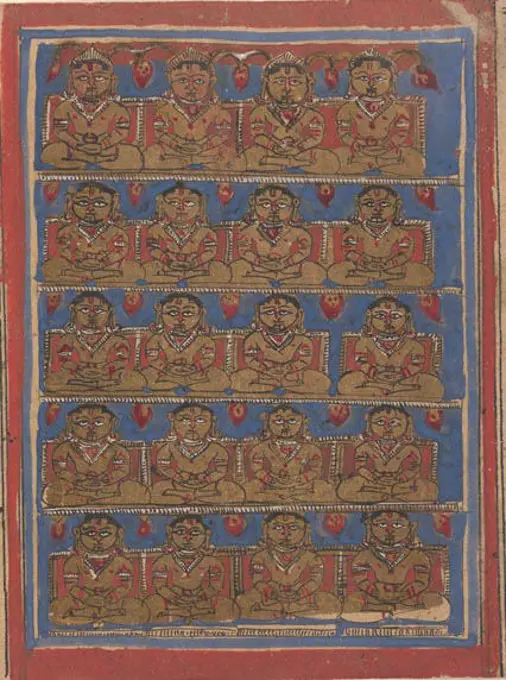
Twenty Tirthankaras: Folio from a Kalpasutra Manuscript 15th century India (Gujarat) The Kalpasutra singles out for special mention four tirthankharas: the first, original jina, Rsabhanatha, and the last three, Neminatha, Parshvanatha, and Mahavira. They are given extensive biographies, especially Mahavira. The twenty in between are grouped together, as depicted serially here. Their biographical information is not provided, but the cosmic lapse of time between each of their appearances on earth is. They are shown seated in meditation, bejeweled, and framed by a pair of pendant red lotus buds, perhaps denoting their perfected being and siddha status.. Twenty Tirthankaras: Folio from a Kalpasutra Manuscript 74997
1899-18788134
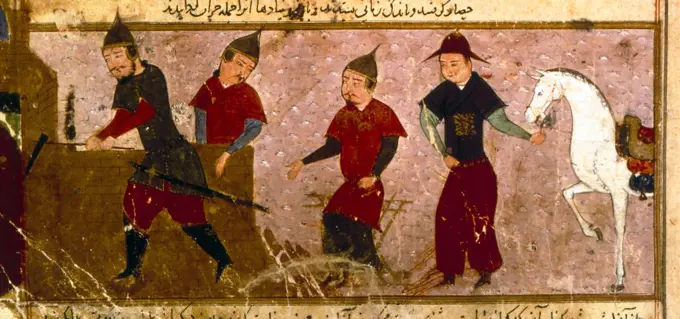
The Jamia al-tawarikh, ('Compendium of Chronicles') or Universal History is an Iranian work of literature and history written by Rashid-al-Din Hamadani at the start of the 14th century.
1899-18792057
Yahy ibn Mahmûd al-Wsitî was a 13th-century Arab Islamic artist. Al-Wasiti was born in Wasit in southern Iraq. He was noted for his illustrations of the Maqam of al-Hariri. Maqāma (literally 'assemblies') are an (originally) Arabic literary genre of rhymed prose with intervals of poetry in which rhetorical extravagance is conspicuous. The 10th century author Badī' al-Zaman al-Hamadhāni is said to have invented the form, which was extended by al-Hariri of Basra in the next century. Both authors' maqāmāt center on trickster figures whose wanderings and exploits in speaking to assemblies of the powerful are conveyed by a narrator. Manuscripts of al-Harīrī's Maqāmāt, anecdotes of a roguish wanderer Abu Zayd from Saruj, were frequently illustrated with miniatures.
1899-18792589
The Tacuinum (sometimes Taccuinum) Sanitatis is a medieval handbook on health and wellbeing, based on the Taqwim alsihha تقويم الصحة ('Maintenance of Health'), an eleventh-century Arab medical treatise by Ibn Butlan of Baghdad. Ibn Butln was a Christian physician born in Baghdad and who died in 1068. He sets forth the six elements necessary to maintain daily health: food and drink, air and the environment, activity and rest, sleep and wakefulness, secretions and excretions of humours, changes or states of mind (happiness, anger, shame, etc). According to Ibn Butln, illnesses are the result of changes in the balance of some of these elements, therefore he recommended a life in harmony with nature in order to maintain or recover one’s health. Ibn Butln also teaches us to enjoy each season of the year, the consequences of each type of climate, wind and snow. He points out the importance of spiritual wellbeing and mentions, for example, the benefits of listening to music, dancing or ha
4409-11876
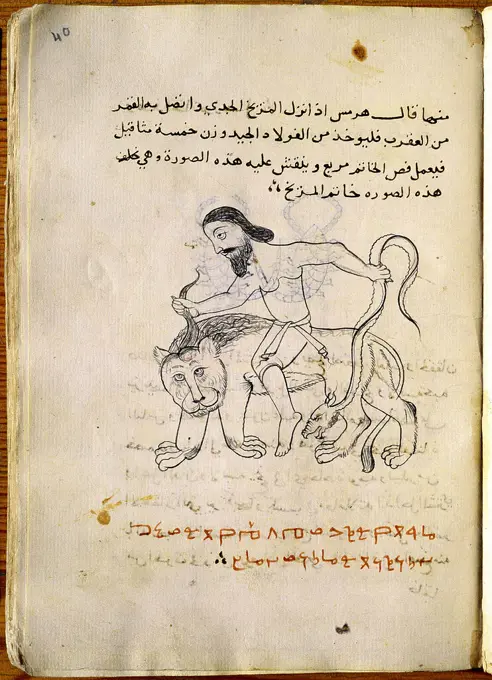
LIBRO DE PICATRIX DE MAGIA Y ASTROLOGIA DEL SIGLO XI - MANUSC.947-FOL 40R-GAYAT AL-HAKIM-HOMBRE CABALGA SOBRE UN LEON-S XIV COPIA. Author: MASLAMA AL-MAYRITI (950-1007) ASTRONOMO ASTROLOGO. Location: MONASTERIO-BIBLIOTECA-COLECCION. SAN LORENZO DEL ESCORIAL. MADRID. SPAIN.
1899-18712487
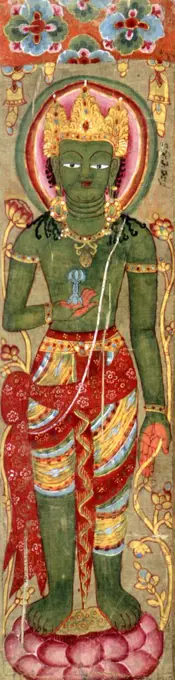
Vajrapāṇi (from Sanskrit vajra, 'thunderbolt' or 'diamond' and pāṇi, lit. 'in the hand') is one of the earliest bodhisattvas of Mahayana Buddhism. He is the protector and guide of the Buddha, and rose to symbolize the Buddha's power. Vajrapani was used extensively in Buddhist iconography as one of the three protective deities surrounding the Buddha. Each of them symbolizes one of the Buddha's virtues: Manjusri (the manifestation of all the Buddhas' wisdom), Avalokitesvara (the manifestation of all the Buddhas' compassion) and Vajrapani (the manifestation of all the Buddhas' power). This painting in the Khotanese or West Tibetan style represents Vajrapani in mixed Central asian and Indian style.
6188-64596616
painting of mughal emperor with his wife in love scene, india Copyright: xBhagwandasxRupani/DinodiaxPhotox
4409-36029
Tacuinum Sanitatis. Medieval Health Handbook, dated before 1400, based on observations of medical order detailing the most important aspects of food, beverages and clothing. Marriage picking fleur-de-lis and put them on a flowerpot. Folio 38v.
7155-70383942
Spanish Conquistadors ill-treating the Native Indians. Mexico. 14th cent.
1788-33184
Physician and botanist Pedanius Dioscorides, miniature from an Arabic manuscript, Syria, 13th Century.
4409-17430823
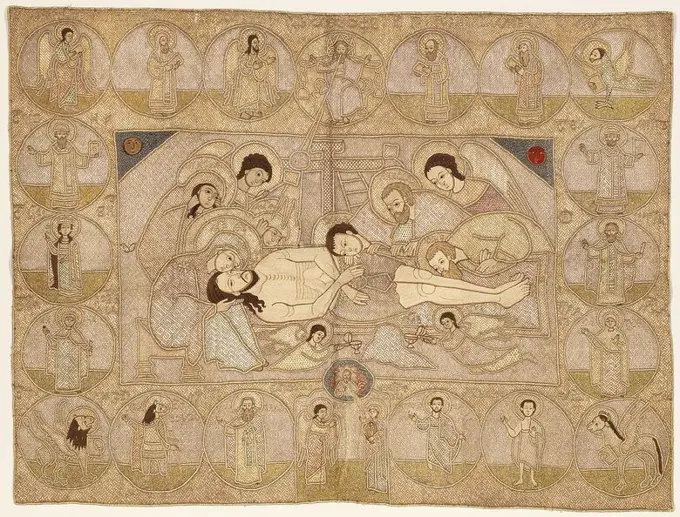
Epitaphios (Plashchanitsa). Culture: Russian, Moscow or environs. Dimensions: 24 1/4 × 32 in. (61.6 × 81.3 cm). Date: third quarter 17th century.The central scene of the Lamentation of Christ is bordered by a series of saints in roundels, with a particular focus on saints of the Moscow region, including four Metropolitans of Moscow and the important monastic leaders Sergius and Cyril. Also notable is the depiction in the left border of the sainted Tsarevich Dmitri Ivanovich, whose cult flourished following the transfer of his remains to Moscow in 1606. Museum: Metropolitan Museum of Art, New York, USA.
4409-17546501
The Victory Banner (Dhwaja), from a Set of Initiation Cards (Tsakali). Tibet. Date: 1299-1499. Dimensions: 16 x 14.5 cm (6 1/4 x 5 3/4 in.). Ink and watercolor on paper. Origin: Tibet. Museum: The Chicago Art Institute, Chicago, USA.
1890-72615
Temple doors, Thian Hock Keng Temple, the oldest and most important Hokkien temple in Singapore, known as the Temple of the Goddess of the Sea, Singap...
1899-18792193
The Astana Graves (Chinese: , Pinyin: Asitanà Gumù) are a series of underground tombs located 6km from the ancient city of Gaochang, and 42km from Turpan, in Xinjiang, China. The tombs were used by the inhabitants of Gaochang, both commoners and locals, for about 600 years from 200 CE - 800 CE. The complex covers 10 square kilometres and contains over 1,000 tombs. Different plots for separate castes and families are marked by gravel dividers. Due to the arid environment many important artifacts have been well preserved at the tombs, including natural mummies. A typical tomb is entered by a 10 metre sloping staircase. The tombs are not very large, usually only 2 metres high. Some tombs also have murals inside. The deceased were laid on a small raised platform in the back of the tomb, surrounded by possessions and even food. Their faces were covered by cloths, some of which have distinct Persian motifs. A small funeral brick was placed to next to each body, on which was written the
1899-18853338
Commonly known as Rana Sanga, the Rajput Maharana Sangram Singh (born April 12, 1484) was the ruler of Mewar, which was located within the geographic boundaries of present-day India's modern state of Rajasthan. He ruled between 1509 and 1527. A scion of the Sisodia clan of Suryavanshi Rajputs, Rana Sanga succeeded his father Rana Raimal as king of Mewar in 1509. He fought against the Mughals in the Battle of Khanwa, which ended with Mughal victory, dying shortly thereafter, on March 17, 1527.
1746-29951355
19th century Ethiopian Coptic Christian prayer book. Illustration showing a young priest. circa 1870
1746-19664881
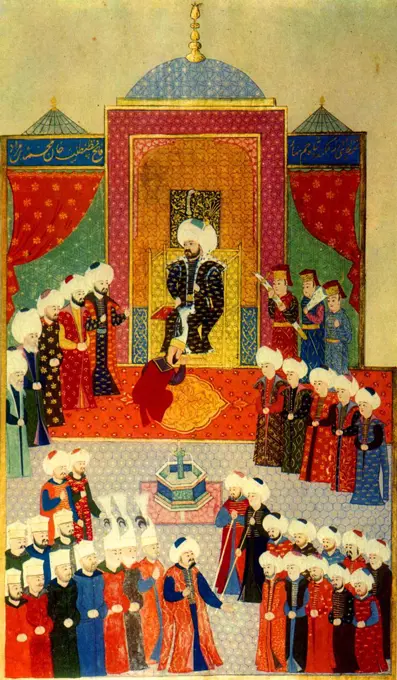
Mehmet II (March 30, 1432  May 3, 1481) (also known as el-F?ti? the Conqueror Sultan of the Ottoman Empire (Rûm until the conquest) for a short time from 1444 to September 1446, and later from February 1451 to 1481. English: Accession of Mehmet II in Edirne 1451.
4409-17422551
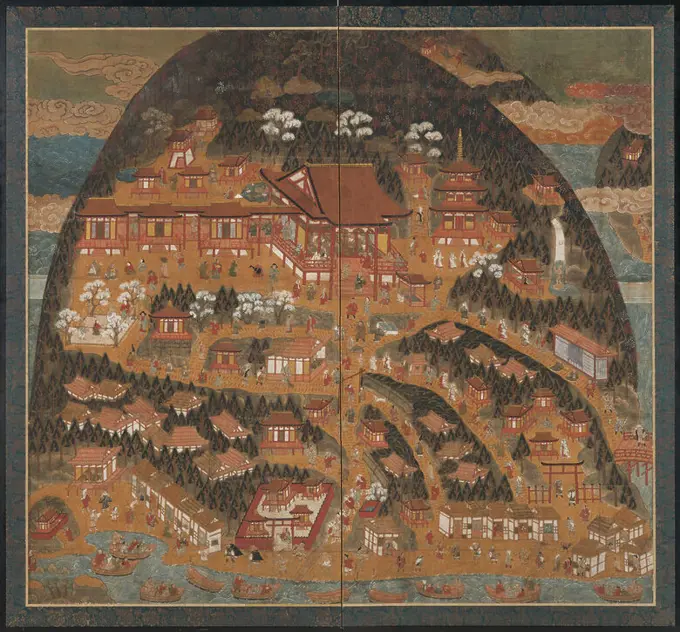
Chomeiji Temple Pilgrimage Mandala (Chomeiji sankei mandara zu byobu). Culture: Japan. Dimensions: Image: 58 3/8 × 63 3/8 in. (148.3 × 161 cm). Date: second quarter of the 16th century.This painting captures the activities of a spring day at Chomeiji Temple, situated on a hill overlooking Lake Biwa, just east of Kyoto. A wealth of genre detail relates the activities of temple monks and of the visitors of all walks of life who visited the temple to make offerings to the central object of worship--an eleven-headed Kannon, the bodhisattva of compassion. Pilgrimage mandalas (sankei mandara) relate the miraculous stories and seasonal activities of famous temples or shrines. Itinerant storytellers used them in a form of storytelling known as "picture-narration" (etoki). This particular example was no doubt used by temple-affiliated storytellers to help raise funds for the rebuilding of the Chomeiji Temple complex after it was razed by fire in 1516. Museum: Metropolitan Museum of Art, New Y
1899-18788058
Abu Ishaq Ibrahim ibn Muhammad al-Farisi al Istakhri and Suwar al-Aqaaleem ('Shapes of the Climes').
4409-17521072
Presentation of Offerings, from a Set of Initiation Cards (Tsakali). Southern Tibet. Date: 1301-1500. Dimensions: 16 x 14.5 cm (6 1/4 x 5 3/4 in.). Ink and watercolor on paper. Origin: Tibet. Museum: The Chicago Art Institute, Chicago, USA.
1525-25393196
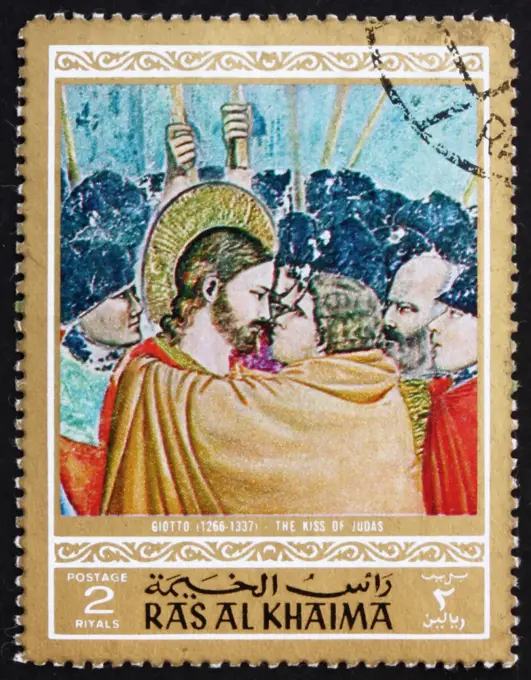
RAS AL-KHAIMAH - CIRCA 1970: a stamp printed in the Ras al-Khaimah shows The Kiss of Judas, Painting by Giotto di Bondone, Life of Jesus Christ, circa 1970
6145-30163102
The Victory Banner (Dhwaja), from a Set of Initiation Cards (Tsakali) 1299-1499 Tibet. Ink and watercolor on paper .
1443-1490
Jewish book illustration,, Bohemia, 1813., Page from a liturgical Psalm book., Jewish Museum, Prague, Czech Republic
7155-70376062
Prayer page for the first day of Succoth, Hebrew manuscript depickting a lulav (palm branch), etrog (citrus fruit), Upper Rhine, 14th. c.
4409-67612516
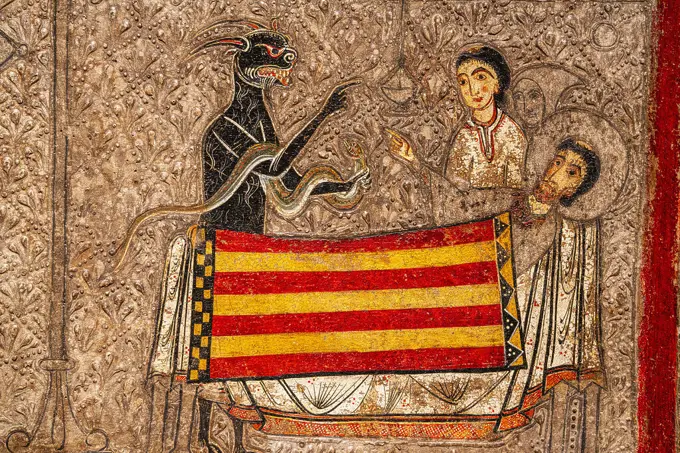
devil tempting two apostles, Altar of Ix, 12th century, tempera and remains of colored metal leaves on wood, Church of San Martín d Ix, Upper Cerdanya, MNAC, Barcelona, Catalonia, Spain.
4266-21643216
Murals of the Betania Monastery of the Nativity of the Mother of God. From Le Caucase Pittoresque, Gagarin, Grigori Grigorievich (1810-1893)
900-102688
The Holy Family  5th C. Artist Unknown
1848-56110811
Painted door, guardians inside the taoist Thian Hock Kheng Temple, Telok Ayer Street, Singapore, Southeast-Asia, Asia
6145-30187109
Presentation of Offerings, from a Set of Initiation Cards (Tsakali) 1301-1500 Tibet. Ink and watercolor on paper .
6145-59059252
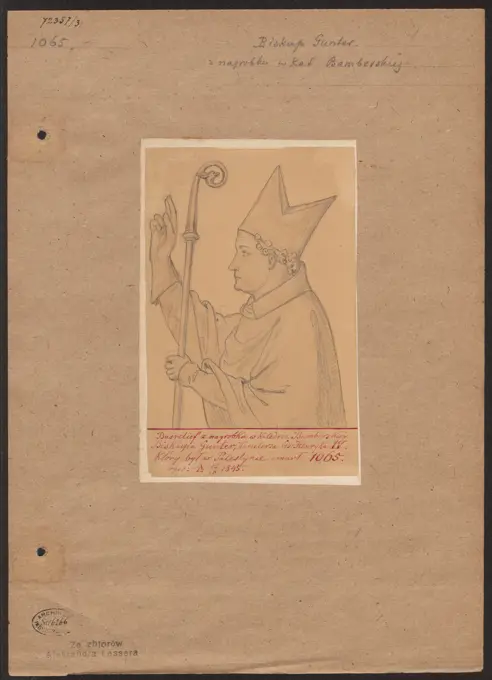
Bishop of Bamberg Günter giving a boundary, seen from the profile, according to the tombstone found in the tombstone in the cathedral in Bamberg; Lesser, Aleksander (1814-1884); 15.10.1845 (1845-00-00-1845-00-00);Günter (bishop of Bamberg - -1065), Günter (bishop of Bamberg - -1065) - iconography, Lesser, Aleksander (1814-1884), Lesser, Aleksander (1814-1884) - collections, Lesser, Wiktor Stanisław Zygmunt (baron - 1853-1935), Lesser, Wiktor Stanisław Zygmunt (Baron - 1853-1935) - collection, bishops, gift (provenance), clergy, personalities, foreign personalities, sculpture (artist), tombstone, German sculpture, rulers
1899-18792186
Nūḥ (Arabic: نوح), or Noah in English, is a prophet of Islam. Nuh was sent to his people as a messenger, to rid them of idolatory. Those who disbelieved in him were punished by a great flood, while Nuh was inspired to build an ark to escape the flood with the believers. According to a hadith, Nuh was born 1056 years after Adam. Noah (or Noe, Noach; Hebrew: נֹחַ, וֹחַ, Modern Noaẖ Tiberian Nōăḥ; Arabic: نُوح Nūḥ; Greek: Νωέ; Macedonian: Ноа) was, according to the Hebrew Bible, the tenth and last of the antediluvian Patriarchs. The biblical story of Noah is contained in chapters 6-9 of the book of Genesis, where he saves his family and representatives of all animals from the flood by constructing an ark. He is also mentioned as the 'first husbandman' and in the story of the Curse of Ham. Noah is the subject of much elaboration in later Abrahamic traditions. Noah is also mentioned several times in the Qur'an.
1746-19632915
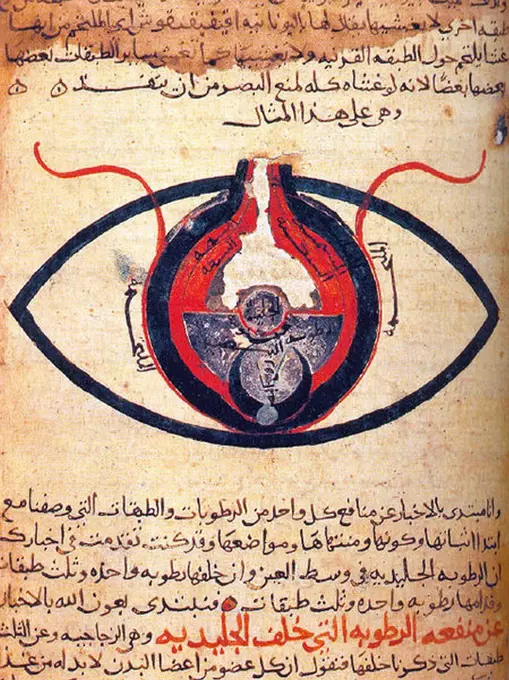
The eye according to Hunain ibn Ishaq also called Johannitius (809-873) Baghdad physican and philosopher. Manuscript c1200.
1788-51270
The Flight into Egypt of the Holy Family. Ethiopia, 20th century.
1899-71293
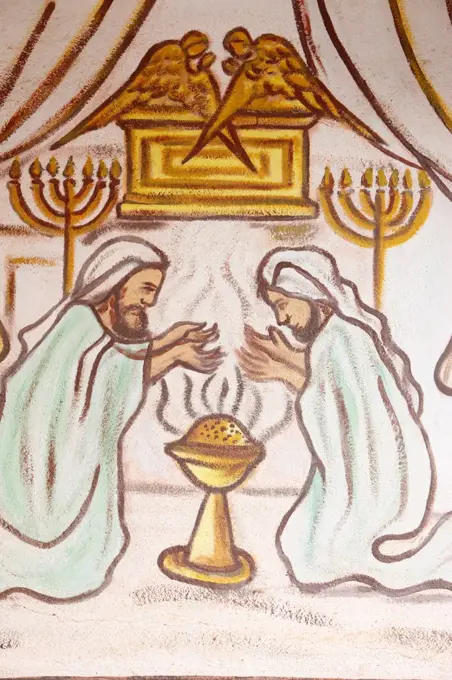
Painting in Our Lady of Togo church, Sacred Arch, menoras & perfume altar
6145-29202667
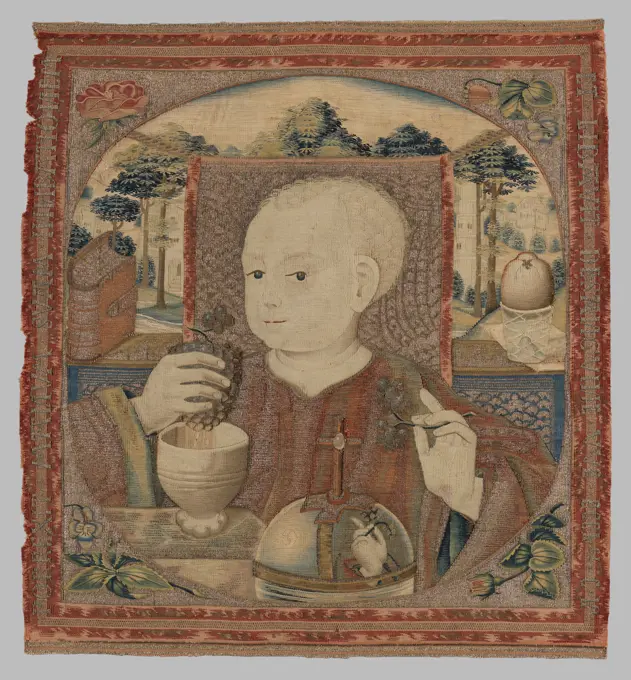
The Christ Child Pressing the Wine of the Eucharist ca. 1500 South Netherlandish. The Christ Child Pressing the Wine of the Eucharist. South Netherlandish. ca. 1500. Linen warp; wool, silk, and gilt weft yarns. Textiles-Tapestries
4220-21839279
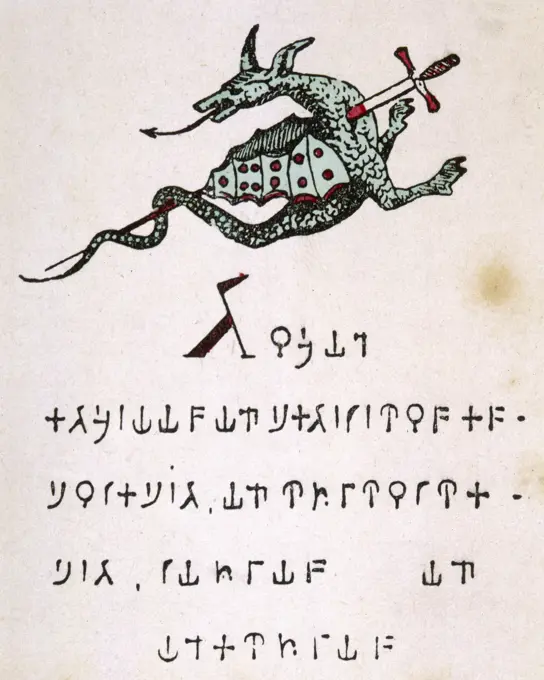
This prayer will defend you  against evil spirits and  demons : if they can't read  it, they can take warning from  the picture !      Date: 1908
4409-9654
CAPITULOS DEL DEUTERONOMIO-HEBRAICO. Location: CATEDRAL-INTERIOR. CORDOBA. SPANIEN.
4292-137781
Burmese manuscript showing tattoo paterns
1899-18717943
The Madrid Skylitzes is a heavily illustrated illuminated manuscript of the Synopsis of Histories by John Skylitzes, which covers the reigns of the Byzantine emperors from the death of Nicephorus I in 811 to the deposition of Michael IV in 1057. The manuscript was produced in Sicily in the 12th century, and is now at the Biblioteca Nacional de Espana in Madrid, so is known as the Madrid Skylitzes.
4409-17485907
Moses and Aaron with the Tablets of the Law. Date/Period: 1692. Oil painting. Height: 990 mm (38.97 in); Width: 780 mm (30.70 in). Author: UNKNOWN.
6145-29174751
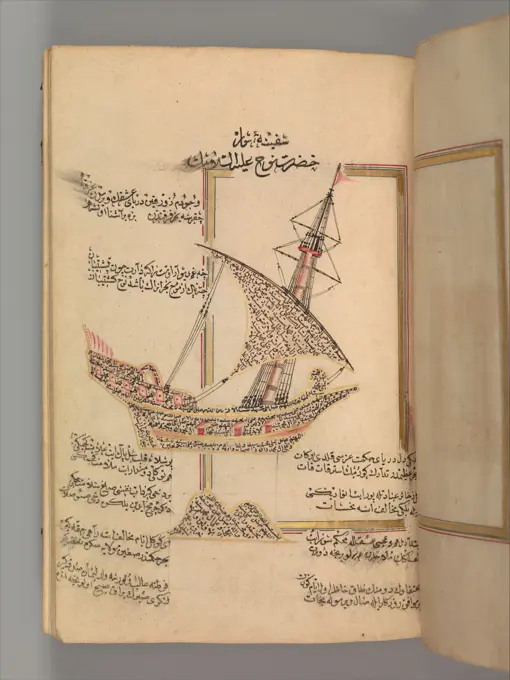
Prayer Book dated A.H. 1180/ A.D. 1766 'Abd al-Qadir Hisari This small prayer book, or du'anama, belongs to a corpus of illustrated devotional texts produced in the Ottoman Empire in the eighteenth and nineteenth centuries. Unlike most prayer books created at the time, this one contains twenty-nine drawings of traditional Islamic themes and subjects, which are outlined in gold and filled with prayers in ghubar naskh, an especially fine or "dust-like" variety of the naskh script. These include representations of the Ka'ba, the footprints (kadem) of the Prophet Muhammad, the Seal of Solomon, the bifurcated sword of 'Ali (zu'l fiqar), Noah's Ark, the lamp of the Prophet, the trumpet of the Archangel Israfil, and the cave from the story of the Seven Sleepers in the Qur'an, among others. The manuscript is signed and dated by the calligrapher, a prominent mid-eighteenth-century master known for his calligrams and pictorial calligraphic compositions, such as the galleon with inscriptions refe
4435-6731
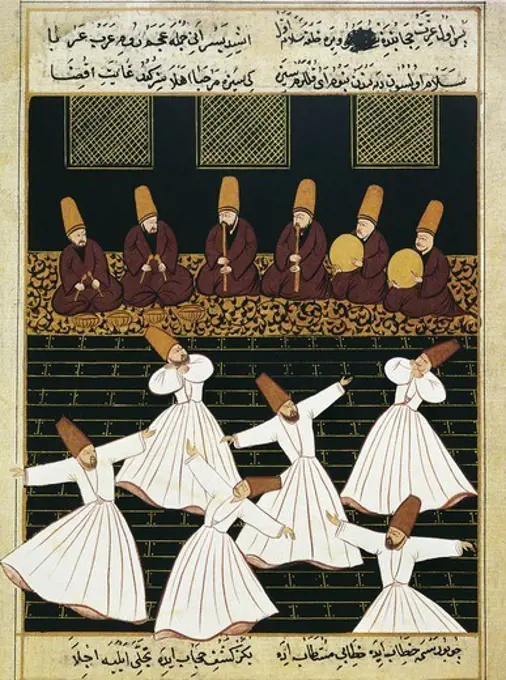
Whirling Dervishes (16th c.). Ottoman art. Miniature Painting. TURKEY. THRACE. Istanbul. Library of Ahmed III (Topkapi Palace).
4069-3859
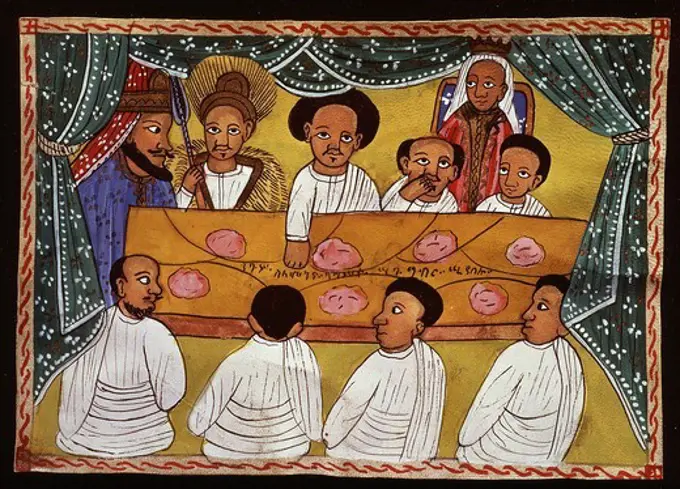
Banquet given by Solomon for the Queen of Sheba, 19th century Ethiopian
PREVIOUS
of 2
NEXT
2401 S. Ervay, Suite 206
Dallas, Texas 75215
United States
Get Started
Free ResearchMy BoardsMy Cart
For Creators
How To License Your ContentContributor PortalFrame of Mind
Resources
API accessPricing
Contact
+1 866 236 0087help@viewpictures.co.uk Contact form
©2026 View Pictures. All Rights Reserved. -A
This site is protected by reCAPTCHA and Google Privacy Policy and Terms of Service apply.