Historic Ship Models

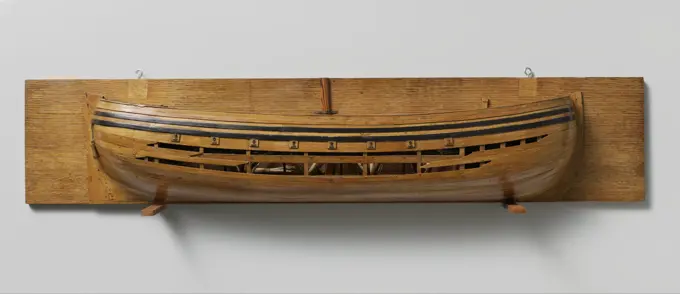
Collection of intricately crafted ship models showcasing various designs, including fireships and jolly boats, made from wood and featuring detailed structures.

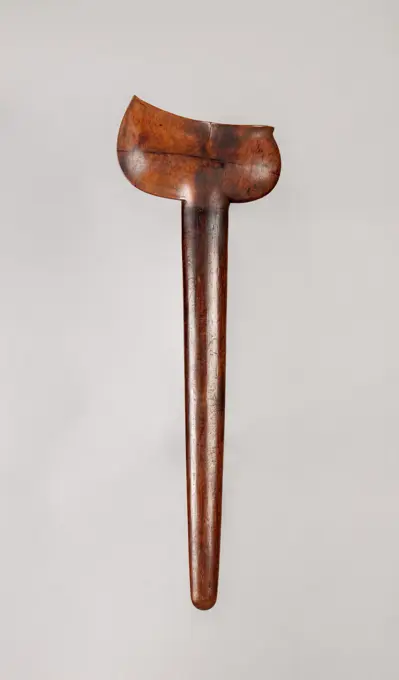
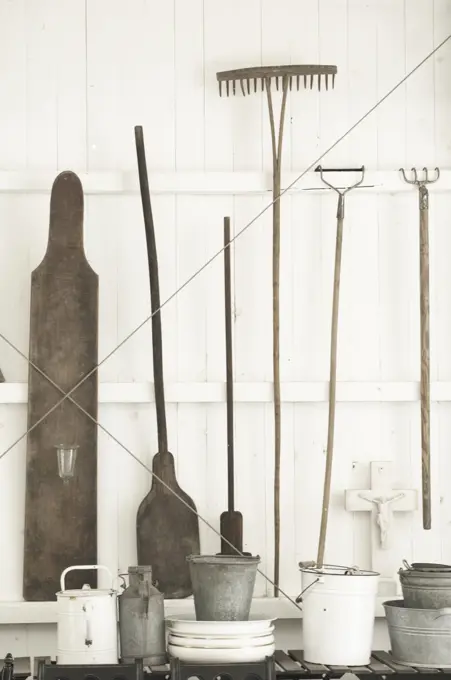
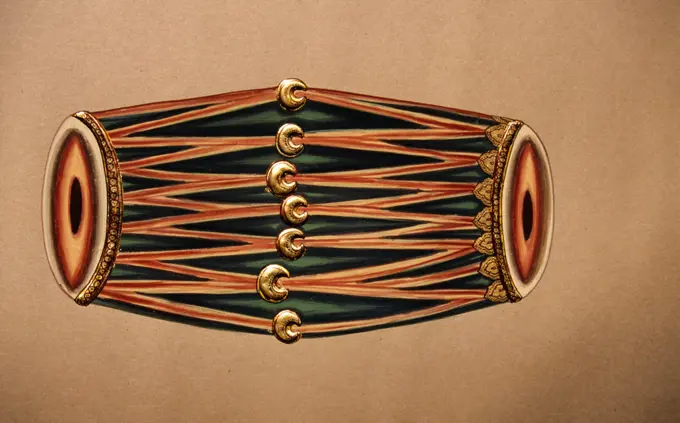
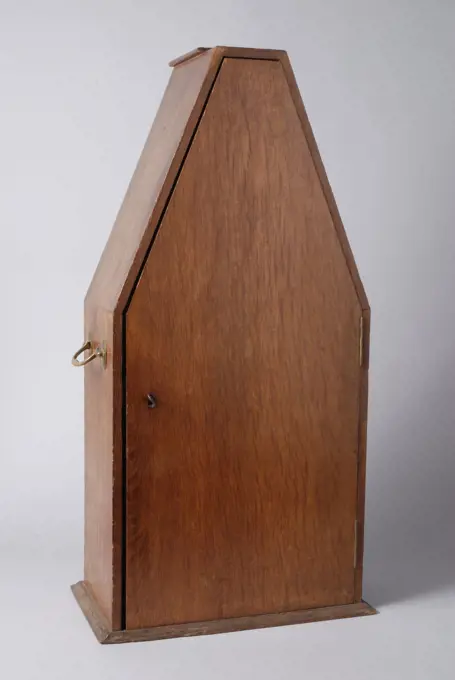
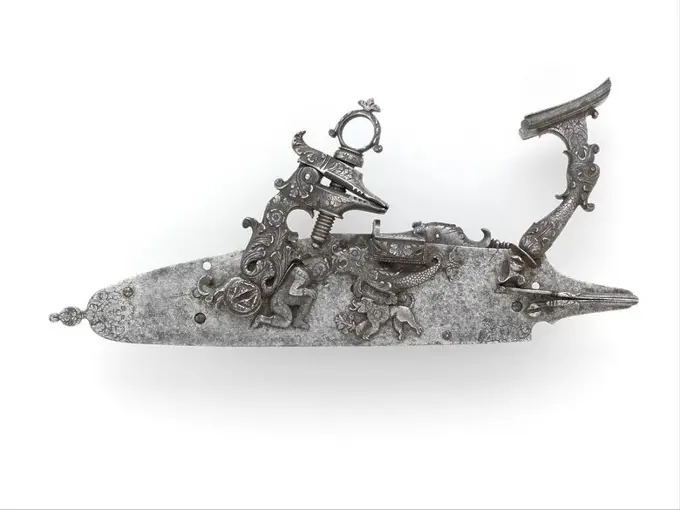
Coconut-grater stool, mid 20th century, 7 1/16 x 22 x 5 3/4 in. (17.94 x 55.88 x 14.61 cm) (unfolded), Wood, metal, Tanzania, 20th century, Youd be hard-pressed to identify this mysterious, almost dangerous-looking object—unless youre familiar with coconut grating along the Swahili coast of East Africa. Then its fairly straightforward: you sit on the stool and scrape the inside of an opened coconut on the protruding metal blade. The coconut shavings are collected and later pushed through a sieve to make coconut milk. The X-shape of the stool resembles a Quran stand, while the geometric designs show both Arab and Indian influences on Swahili culture.
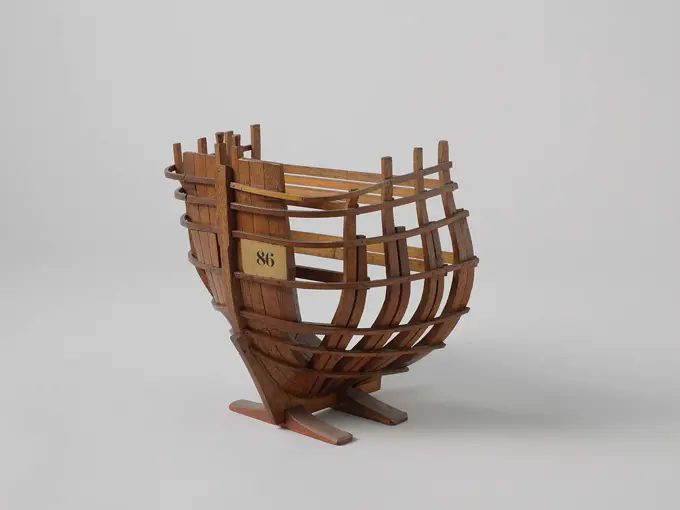
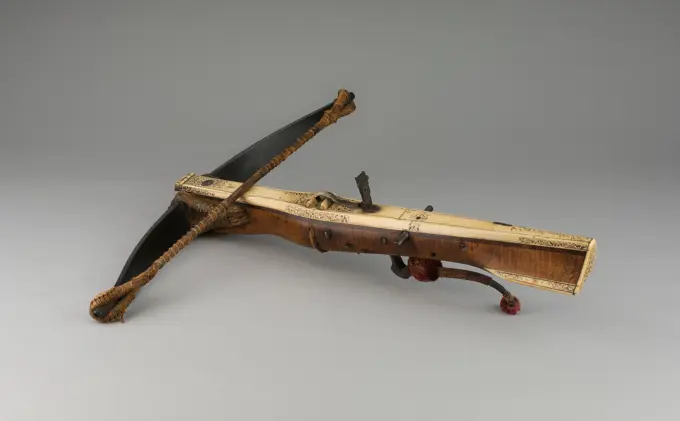
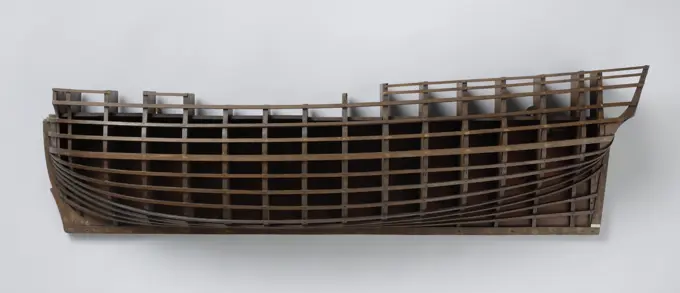
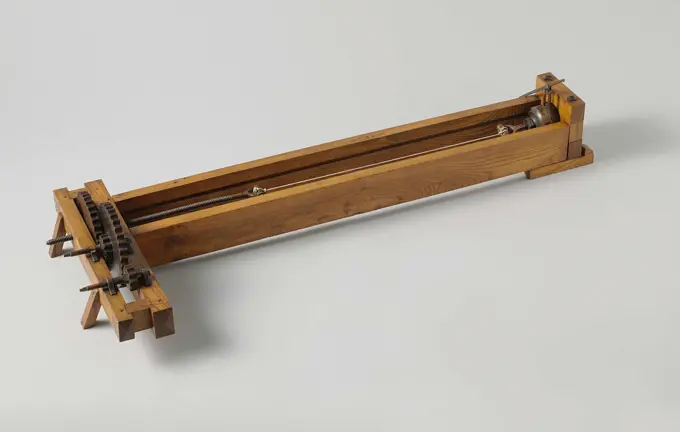
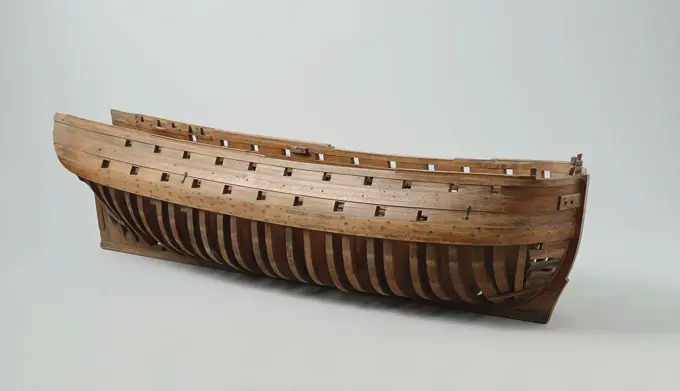
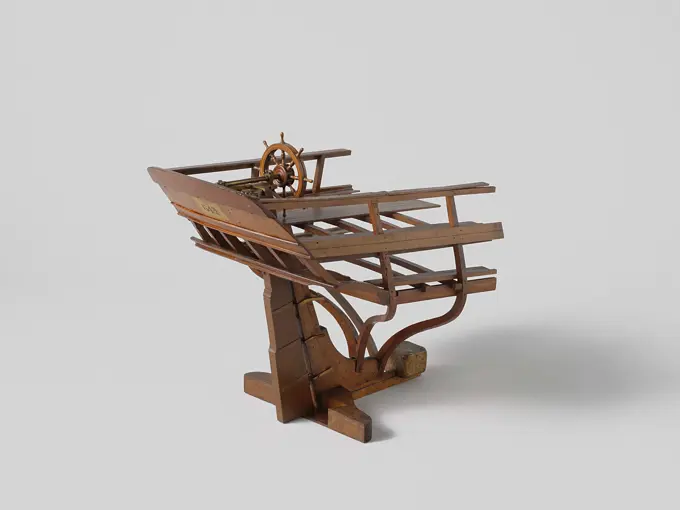
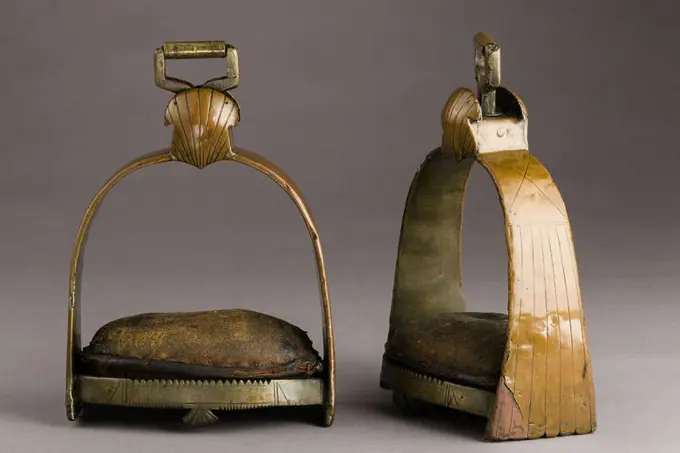
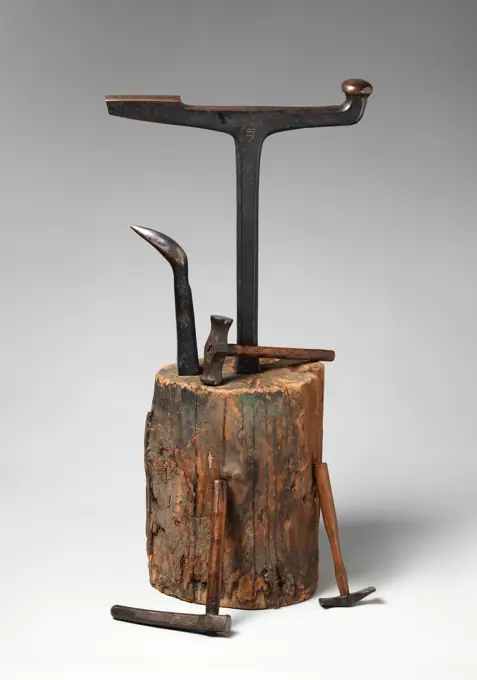
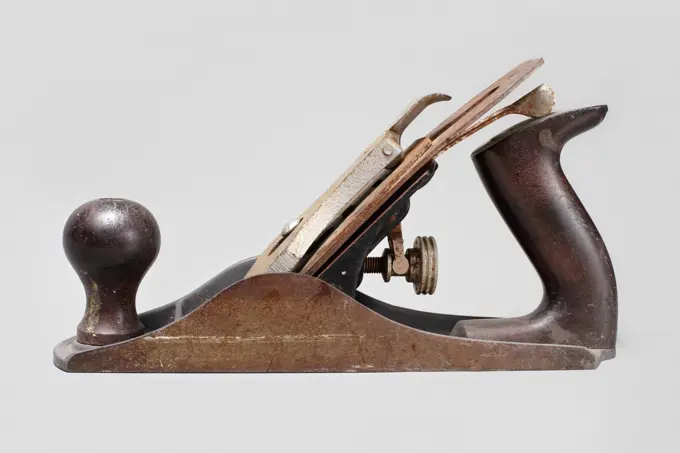
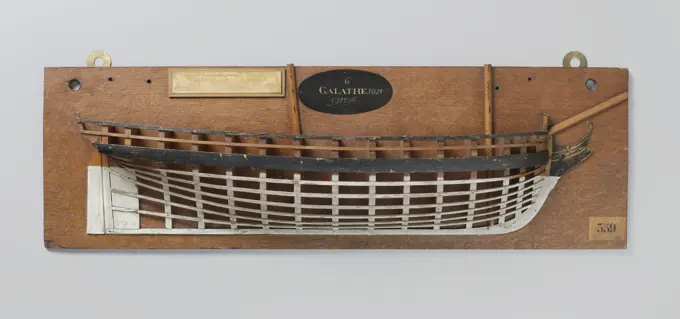
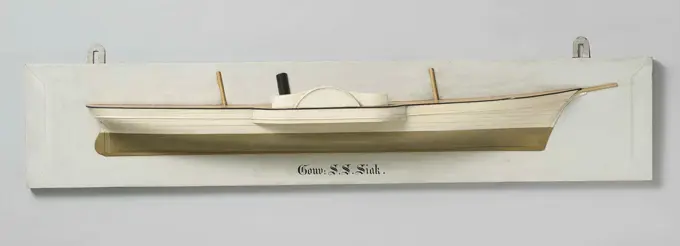
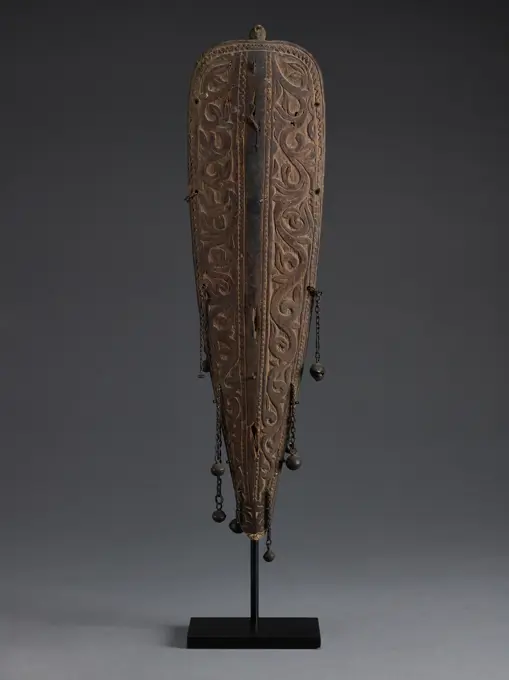
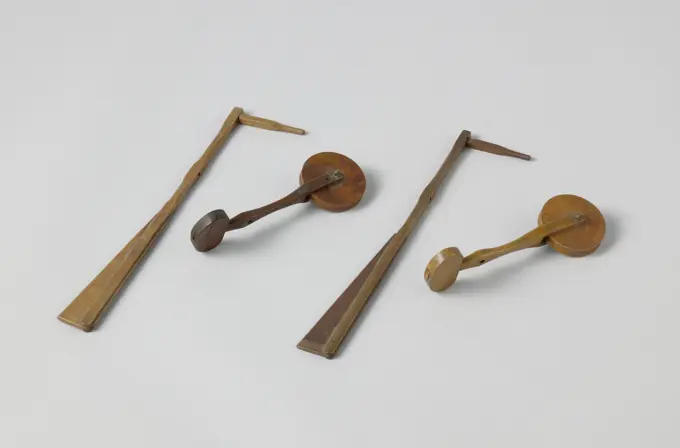
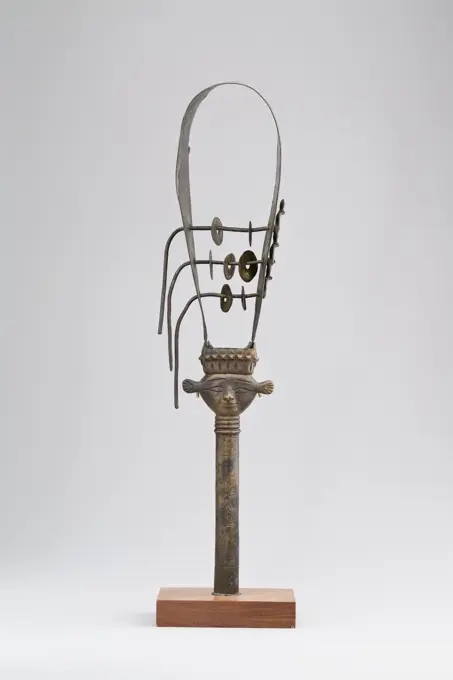
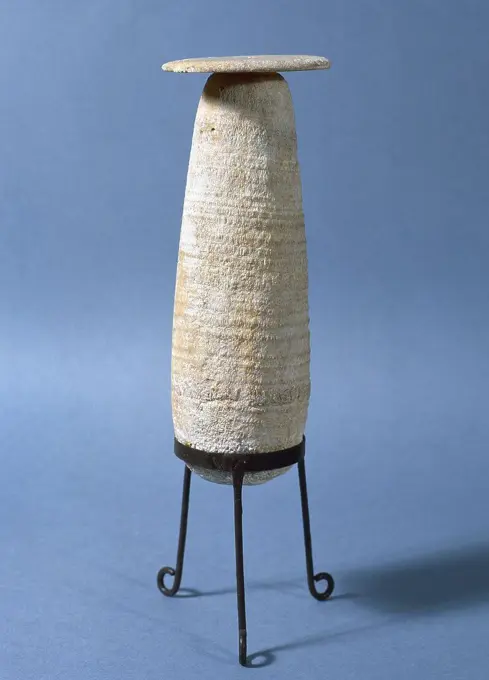
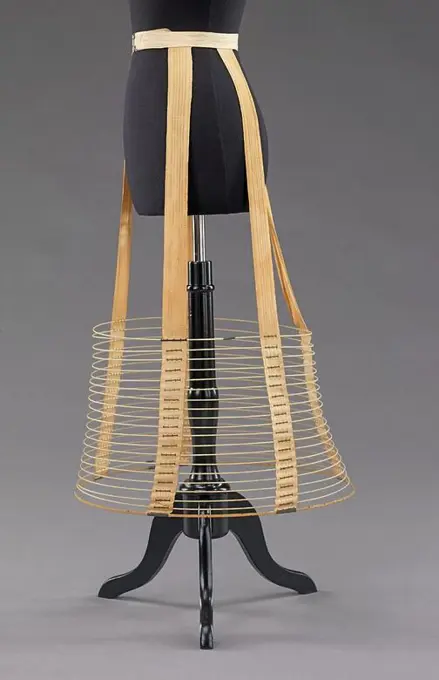
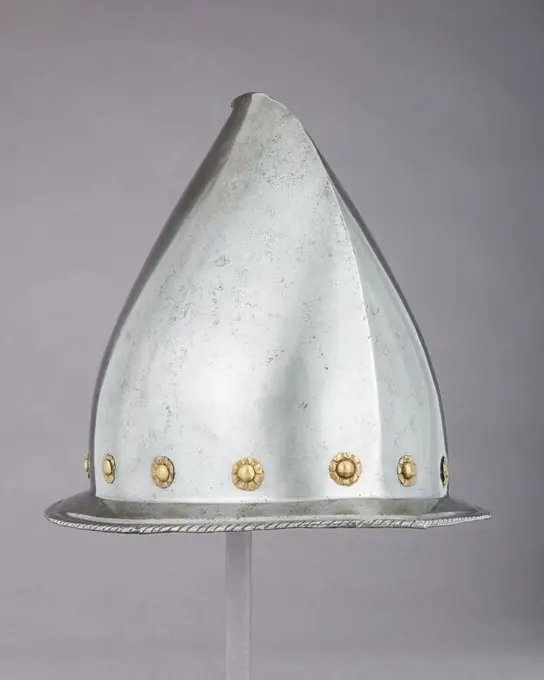
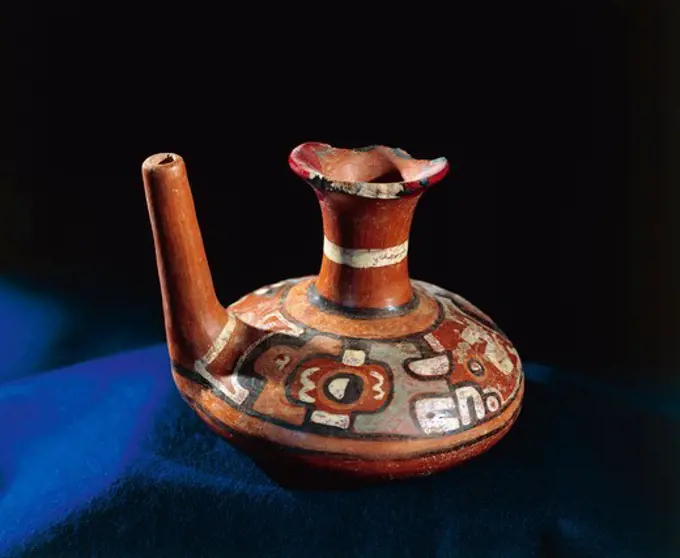
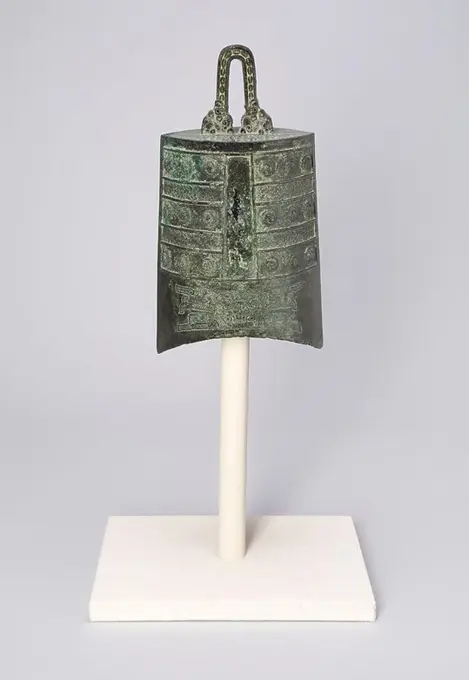
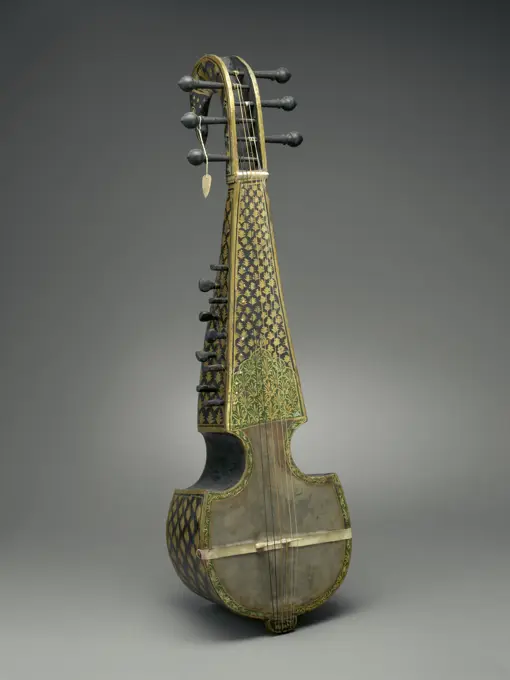
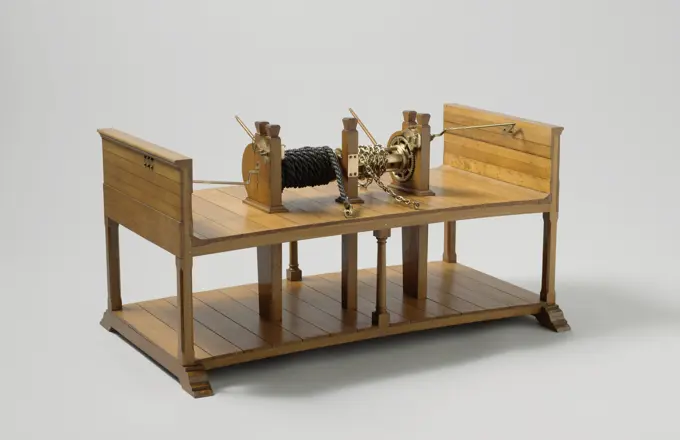
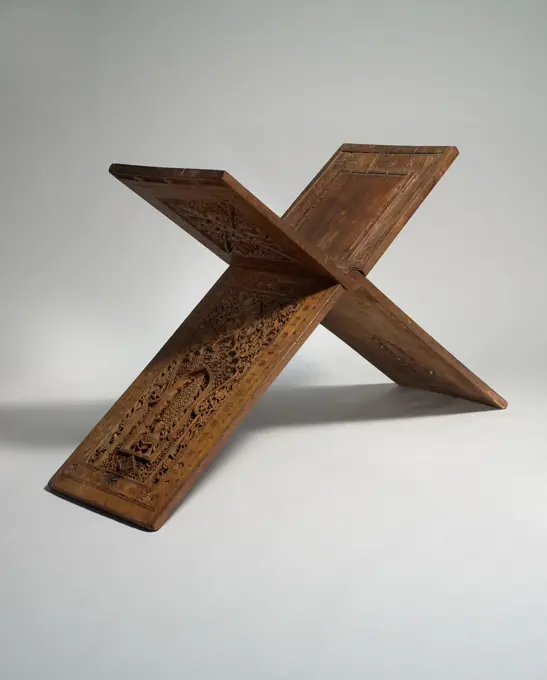
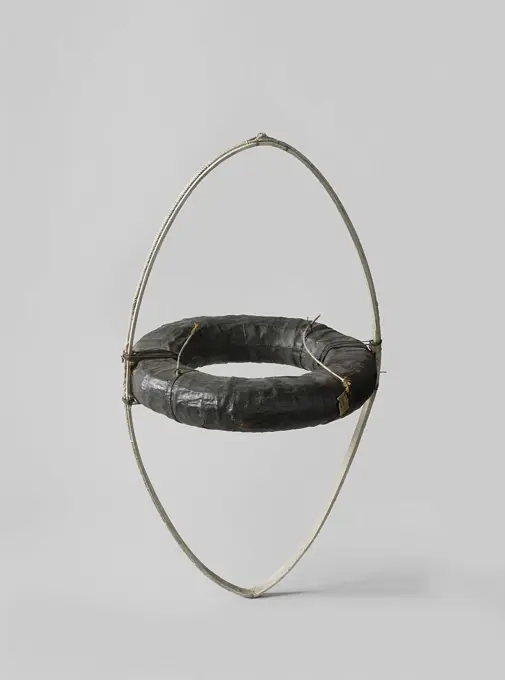
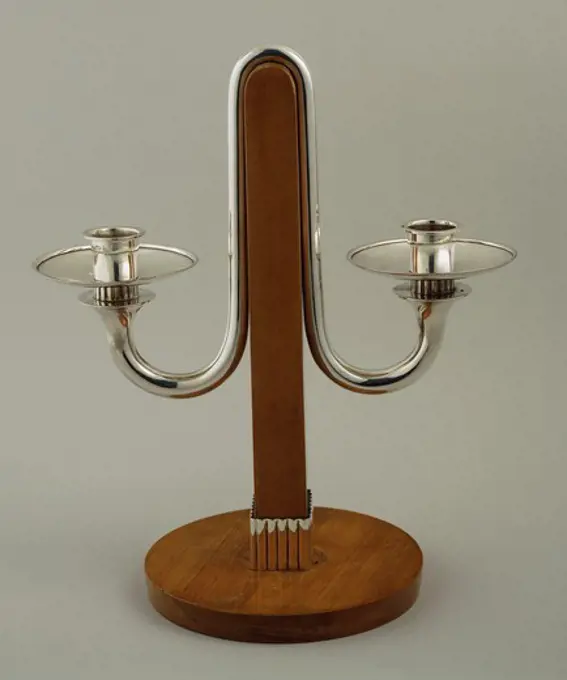
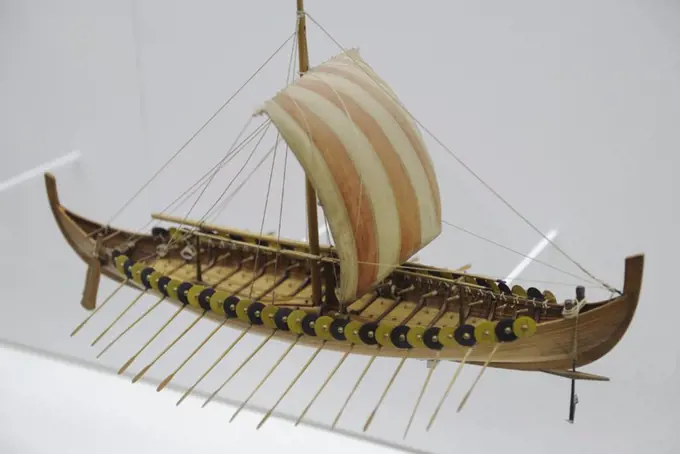
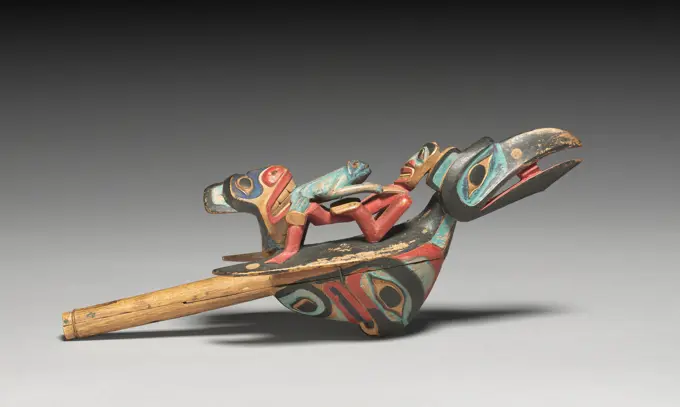
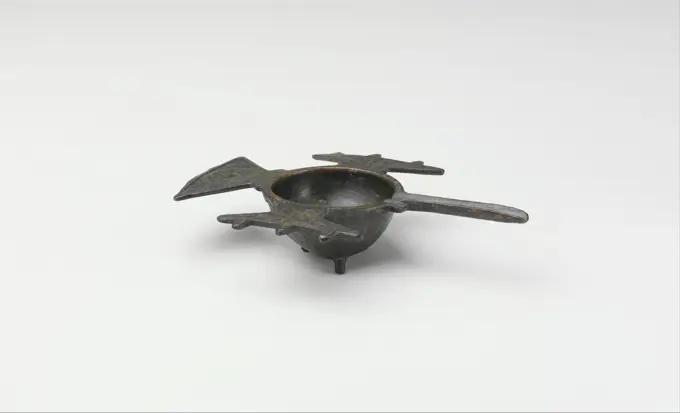
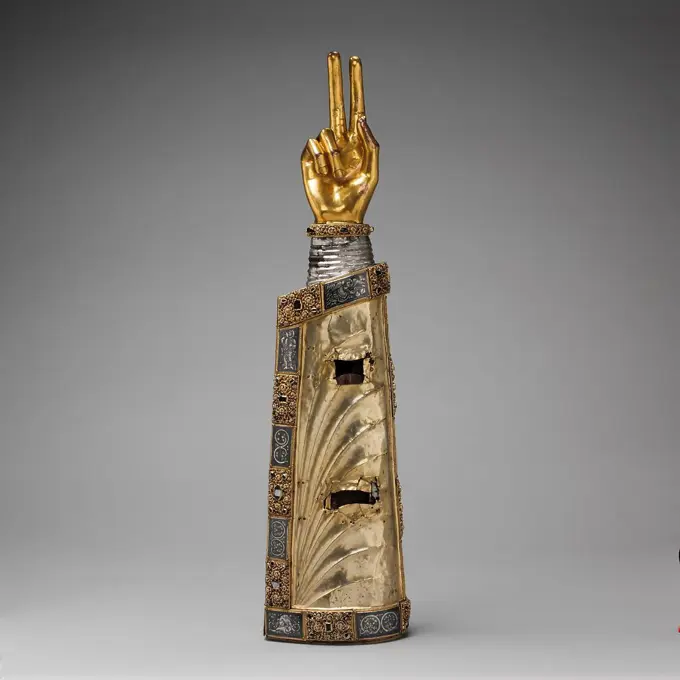
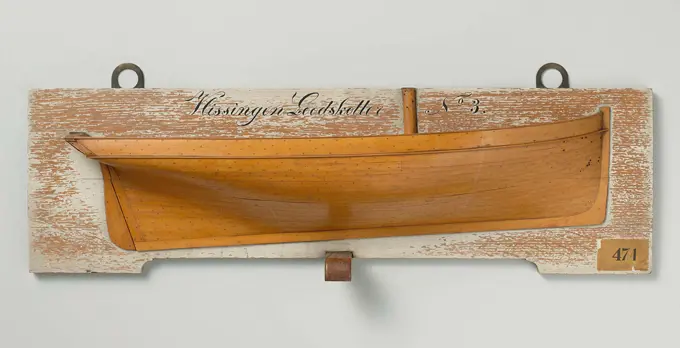
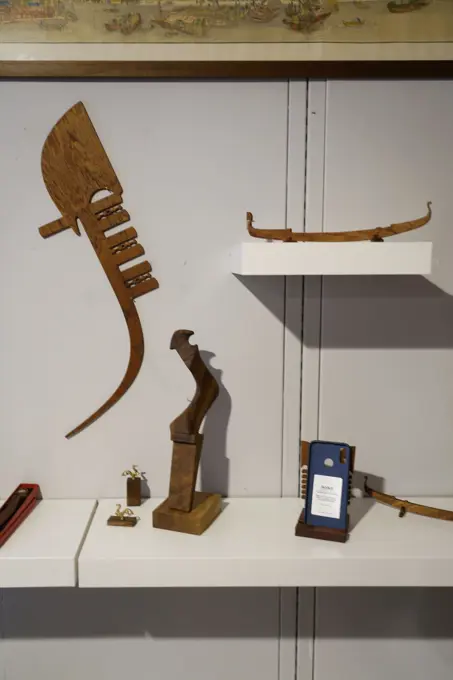
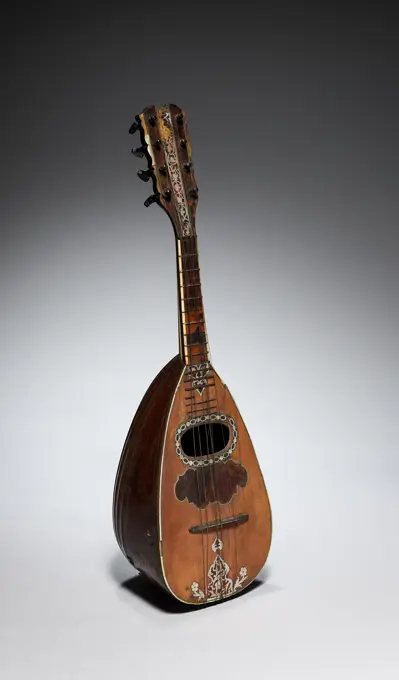
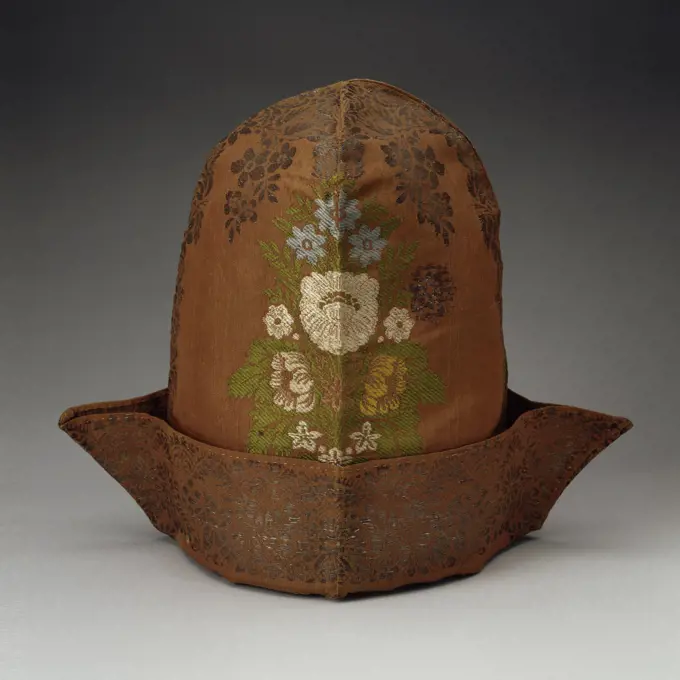
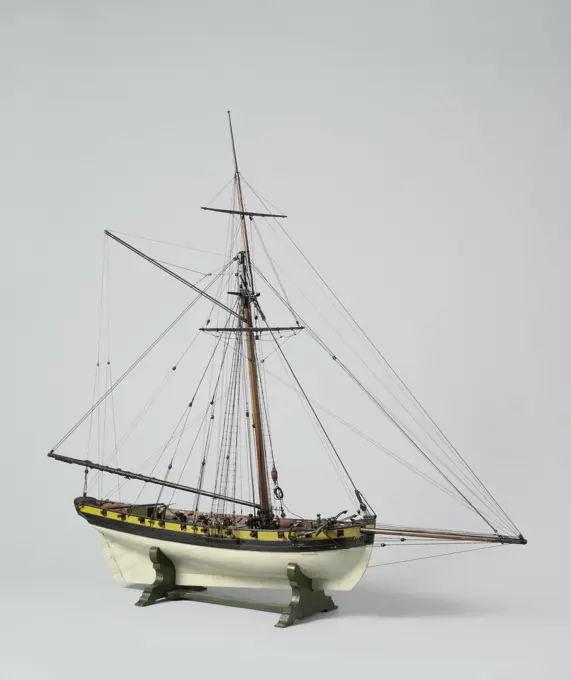
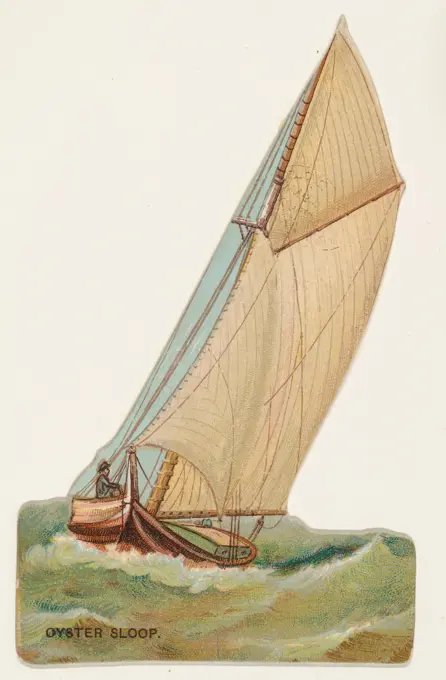
Half Model of a Fireship, anonymous, 1770 - 1800 ship model. half model. builder's model Completely planks of a cheating model (starboard) of a one -mast flat bottom. The skin is partially left open to show the interior. Four levels: very low lower deck with flammable material spread over it; slightly higher a running corridor along the board and a gutter with flammable material to the lower deck; half -deck and baking deck supported by cover stans, a chimney on the baking deck; Upper Campanje. There are deck beams over the pit. A small gate in the fore ship, a large gate in the round stern; Eight rowing types. The Zeeg runs forward and back, triple barwood. Run with flat bottom. Netherlands wood (plant material). brass (alloy). paint (coating)Model of A 20-inch Mortar on a Turntable, Rijkswerf Rotterdam, 1834 demonstration model Model of a cross -section of a ship with a 20 -inch mortar on rotary bed. The mortar, 5.1 cm for a long time and with a 15 mm caliber, has a round kulas and a dolphin on top. The chair consists of two parallel cheeks and two calves, causing brass assen; The axes have no wheels, but the chair slides into a sliding sled that is placed on a turning circle. This sledge has a slight slope and rolls on the bottom of its movement on the let -down turning clines on the deck, and a brass pivot bolt. The ship's part has a deck, supported with brass knees and brass cover stans under the mortar rack. Rotterdam wood (plant material). brass (alloy)Model of the Outer Sill of the Lock at Flushing, Rijkswerf Vlissingen, 1847 - 1848 builder's model Model of the outdoor threshold of the Zeedoksluis in Vlissingen that the improvements and repair work performed in 1847-1848 shows on the lock floor. The stones of the lock floor are each presented by a loose and numbered piece of wood, which can all be removed as with a puzzle. The model also shows details of the pile foundation. Scale 1:50 (scale on model). Flushing wood (plant material). brass (alloy)   FlushingModel of a Jolly Boat, anonymous, 1756 ship model. fully rigged model. show model Polychromed clamping model of a witnessed sloop. Netherlands wood (plant material). oak (wood)SpoonModel of A 74-Gun Ship of the Line, Rijkswerf Vlissingen (Possible), c. 1833 demonstration model Construction model, vertically cut in the length, the halves based on braces on a ground board. Spant model without skin or shelling, intended to show the differences in the construction of cross -context according to Sir Robert Seppings (port half) and Cornelis Soetermeer (starboard half). With Soetermeer's system, the pulling parts of Seppings' cross bandage are left out of the spacious and replaced by metal strips outside on the wooden under the skin. On portboard, the fore ship only has vertical filling pieces, horizontal tires on starboard. Round stern with Wulf and Hek of two floors, without details or side galleries. Ninety -ninety gun gates spread over three decks. Five decks: cow bridge deck, lower, intermediate and upper deck and upper championship: lower and intermediate deck have a diagonal order in the web, the deck beams of all decks except the cow bridge are supported by brasModel of a Figurehead, anonymous, 1800 - 1850 scale model Model of a sheg image on Scheg, on a ground board. The figure consists of a men's head, which is crowned with a laurel wreath by a harpij above him; The harpij also blows on a trumpet, which, however, is missing S bute with the right arm. The Scheg and the floor board are decorated with leaf work in relief. The figure represents Van Oldenbarneveldt, crowned by fame. Netherlands wood (plant material)  Historical Persons. Hunger; 'Fama', 'Good fame', 'Chiara fame' (Ripa)Model of a Ship's Bow in frames. Technical model of a fore ship over the length of four trusses of creation. Two apostles; three clamp plates on either side; under the tire vertical spheres; Curved steep. Two decks are schematically indicated. Four trusses of creation, one detailed (5 parts). Seven sents. One stut has been demolished.Crossbow 1660-1700 Germany. Wood, steel, staghorn, cord, and silk fiber .Coconut-grater stool, mid 20th century, 7 1/16 x 22 x 5 3/4 in. (17.94 x 55.88 x 14.61 cm) (unfolded), Wood, metal, Tanzania, 20th century, Youd be hard-pressed to identify this mysterious, almost dangerous-looking object—unless youre familiar with coconut grating along the Swahili coast of East Africa. Then its fairly straightforward: you sit on the stool and scrape the inside of an opened coconut on the protruding metal blade. The coconut shavings are collected and later pushed through a sieve to make coconut milk. The X-shape of the stool resembles a Quran stand, while the geometric designs show both Arab and Indian influences on Swahili culture.Pair of wall pedestals British ca. 1775 View more. Pair of wall pedestals. British. ca. 1775. Mahogany and mahogany veneer inlaid with boxwood. Woodwork-FurnitureStanding hanger;  1. W. 20th century (1901-00-00-1925-00-00);Model of a car on four wheels, Anonymous, 1700 - 1800 Model of a car on four wheels, with cut walls. The car is painted paint -colored and deposited with vermilion. Toys. Northern Netherlands (possibly)Netherlands (possibly) wood (plant material). vermilion (pigment). rope Model of a car on four wheels, with cut walls. The car is painted paint -colored and deposited with vermilion. Toys. Northern Netherlands (possibly)Netherlands (possibly) wood (plant material). vermilion (pigment). ropeHalf Model of a 74-Gun Ship of the Line, anonymous, c. 1750 - c. 1800 ship model. half model. builder's model Mallen model (port) of a ship, small back plate. No guns, no decks except baking deck, half -deck and upper campaign indicated by Gillingen. Get mirror, Hol Wulf, no details of fence or side gallery; No rudder. Seeping backwards. The sentences between the lower mountain wood and the reehout are wider than those of the underwater ship. Span, swept a stern. Netherlands (possibly) wood (plant material)Model of a Whaleboat, anonymous, 1750 - 1850 ship model Model of an overnail twelve -frierms double bank whale sloop on standard. The vessel is a pointed hole with raised floor, the middle parts of which are missing. All dids are also missing. On the board twelve and another four on one side. The middle floor bar has an eye. unknown wood (plant material)Model of A Lifeboat Release, Rijkswerf Vlissingen (Possible), After Clifford, 1857 - c. 1858 demonstration model Model of a part of a ship's wall with a sloop on two nail dravits. The hoist, which runs from a roasting spindle under the middle doft over a number of discs, is incomplete and the effect remains unclear. model maker: Flushingafter design by: United Kingdom wood (plant material). brass (alloy). ropeModel reconstruction of a single-masted ship excavated at Capelle, Johannes Petrus Scholten (attributed to), 1822 ship model. hull model. reconstruction model Quite coarse model of a one -mast ship without rig. It is an overnail flat -bottomed pointed hole with straight, falling Stevens. Field beams indicate a head deck, and the model has a front and back pile with shutters. There is a roasting spindle on the back pile, two pump pipes on the forecourt. In the spacious, a part is shot shot. The Zeeg rises to both ends, the model has one barkhout. A mast track, a mast holder and chain putters of the rig are indicated. The model is a reconstruction of the vessel that was discovered on 22 February 1822 in Capelle in the Langstraat and then dug up. It is made entirely of material from the original ship. Reconstruction model. Waalwijk wood (plant material). iron (metal)   Geertruidenberg. CapelleClub -Model of A Carriage For A 30-Pounder Carronade, Rijkswerf Hellevoetsluis, 1854 demonstration model Model of a slider for a carronade of 30 pounds with baking sink and stelwig. The body consists of two beams in a longitudinal direction with batter and rings, located on two heavy cross beams. The beams in the longitudinal direction are completed at the front; On top are the ears with tapas on the front and behind batter with the track in front of the Eleveers screw. Two slats are installed diagonally over the beams in the middle, between which an asymmetrical stelwig runs. The transverse beams stand out outside the Langsbalken for extra stability and are on friction closses to limit the recuula. Two small rollers on a hinge against the rear can, with the help of the baking sucker, boost the back of the canvas; The Affuit then also rests on two wooden rollers, which are applied for the front crossbar, and is so easy to roll on board. Scale 1: 5 (derived). model maker: Hellevoetsluisafter Model of An Apparatus for Testing The Strength or Rope. Model of a device to test the strength of rope, incomplete: the base board and different parts are missing. It consists of a framework with a rollerwork (ratio 12.25 / 1) on one side with a screw end, a hydraulic pump on the other side. The rope is pulled between the two and pulled out with the wheeler. The pump is a cylinder with piston and an outlet on top. In addition to the exhaust, a lever is mounted on a support. Glue residues show that the same kind of support was seated on the Cylinder House.Model or a 44-gun ship of the line.Rull model of a biplane, above the water line. 42 guns are applied over the length of two decks. Fence, mirror and wull are missing.Garlopa, cepillo de carpintero, siglo XVII. Museu Comarcal de Manresa.Mandwieg with red and green cord side embroidered ornament, anonymous, 1785 - 1815 Mander with red and green cord side embroidered ornament. Ringers of wickers rings hanging on the top edge. Northern Netherlands . Mander with red and green cord side embroidered ornament. Ringers of wickers rings hanging on the top edge. Northern Netherlands .Model or steering gear. Technical model of a stern with wrinkled mirror and hollow wulf and two decks; The model is balanced with a lead weight. Right stir with a died quadrant on the square rooster head at the rear. The steering wheel has a shaft secured with the end in the mirror bar; A small gear on this axis grabs in the rudder quadrant.Two Models of Buoyys, 's Rijks General Concrete Warehouse (Possibly), 1873 demonstration model Two identical models of a buoy with a conical body with a sharp bottom end and flat round top, where a pole protrudes. Like a barrel, she is composed of stuff and hoops. At the bottom of a long point is an eye for the anchor chain. Marked with crossed anchors. Scale 1:10 (archive). Enkhuizen (Possible) wood (plant material). iron (metal)Model or a hanging knee. Removable model of a composite cover, incomplete. It consists of five parts: wall piece and cover carrier are connected to each other by a dovetail connection, in the angle reinforced by a corner part with two dovetail connections; On both sides, a pickled iron crocher (one missing). Scale 1: 12.5 (Scale on model).Model or A Time Signal. Model of a signal pole on a wooden base plank. The model consists of a pole with four cross-placed round metal gratings at the top, attached to a vertical shelf. The gratings can be operated with a mechanism halfway through the vertical shelf: by a lever with weight, locked up as the gratings in vertical position, let go of the gratings in horizontal position. The pole can also be shot with a chain that runs over discs, but not before the signal mechanism has been removed.Model of A Coastal Defense Vessel. Block model of the trunk with round wood, incomplete. The gladeberous vessel has twelve gunpaints on the open upper deck, a straight falling defer and a round stalk with vertical stern. Stir stir with roerkwadrant and brass helper, steering wheel with trommel from Wesselinck, keel with heeling. All deck equipment has been worked out into extremely detail, such as anchor, stoppers, pumps, cling, harness winches, separate conveniences and gratings. The wide hull has the shape of a peaked round truss combined with a flat seam, a barque and a reehout. The round timber is that of a two-castor shoe without booms (loose peling) and with a breek. Scale 1:40 (derived).Pair of Stirrups. Culture: German. Dimensions: Stirrup (cc); H. 9 1/4 in. (23.5 cm); W. 6 3/8 in. (16.2 cm); D. 4 3/4 in. (12.1 cm); Wt. 3 lb. 0.5 oz. (1375 g); stirrup (dd); H. 9 1/2 in. (24.1 cm); W. 6 3/8 in. (16.2 cm); D. 4 1/2 in. (11.4 cm); Wt. 2 lb. 13.3 oz. (1284.2 g). Date: 17th century.The large size of these stirrups is unusual for the period. They may have been used by a postilion, a driver riding one of the carriage horses. However stirrups for this purpose typically had simpler designs. Indeed, to prevent their legs being crushed between the two horses or the central wooden shaft, postilion riders wore heavy oversized reinforced boots, and they consequently needed larger spurs and stirrups. The small leather cushions are also unusual, and may be later additions. Museum: Metropolitan Museum of Art, New York, USA.Half Model of an Admiralty Yacht.Completely decorated and polychromed block model (port) of a one-mast flat bottom yacht. One deck with cabin behind. Four round gates in the fore ship. Climbing lion as shipment, dolphin on the bow. Flat mirror with one gate, hollow wulf with praise, fence with putti, trophies and a coat of arms with lion with sword and arrows beam; sitting woman with lance and shield as an angular figure, side gallery with three windows and praise; Wide stir with helm stick sailing under the floor of the cabin. One peace with four puttings, two puttings for baking stages and fittings for a sword on the boois. On deck a roasting pill, a chimney and different shutters. Side forward and back ascending, one bark wood and one Reehout.Scabbard, 1800s. Java. Wood; overall: 46.1 cm (18 1/8 in.); blade: 36.5 cm (14 3/8 in.).Balance - Fairbanks Scales Fairbanks ScalesHalf Model of A Screw Steamer, Rijkswerf Amsterdam, c. 1859 - c. 1861 ship model. half model. builder's model Polychromed and fully plants Mallen model (starboard) of a three -mast screw steam ship with eleven gun ports. The Schegbeeld is a gilded curl. Elliptical fence with national weapon; side gallery; Stir with round stirring king and rounded Roerblad; The model has a screw cooker the Mangin screw with screw light appliance, coming under a small campaign deck. Sailing more emerging than back. Stretch around. The model is equipped with all rest and puts. Scale 1:50 (scale on model). Amsterdam wood (plant material). brass (alloy)  ship-model Shimonoseki, Street ofHalf model or a paddle steamer, Rijkswerf Vlissingen, c. 1844 - c. 1848 ship model. half model. builder's model Polychromed, fully planked Mallen model (starboard) of a two -mast paddling steam ship. The model shows two guns. The Schegbeeld is a gilded curl. Elliptical gate; Stir with round stirring king (Soetermeer's version), rudder leaf rounded. Radber cupboard covered with inverted lifeboat. Completely flat siege, two barkhouts and a reehout. Stretch around. Scale 1:40 (derived). Flushing wood (plant material). brass (alloy)Bowl -Model of an Optical Telegraph, anonymous, c. 1830 demonstration model. instruction model Model of an optical telegraph, on square ground board. A mast has been put on a pedestal, which is waiting at the corners of the ground board. The mast has three ra's, upwards and shorter, with round braided discs at the ends. These can be placed in horizontal and vertical position with levers on the pedestal. At the top of the mast a flagpan with Dutch tricolor. Netherlands wood (plant material). brass (alloy). rope. textile materialsArmorer's Shaping Stake 18th-19th century German or French This shaping stake is among the 644 pieces that make up the very specialized outillage (set of tools) brought from Paris to New York by the armorer Daniel Tachaux (1857-1928) in 1909, when he was hired to repair and maintain the Museums arms and armor collection. Hammer heads and stakes of many different sizes, shapes, and weights are necessary to create the complex forms of different weapons and pieces of armor. Tachaux trained in Paris under the German armorer Ludwig Klein (about 1830-1882) and inherited his teachers tools, which he combined with his own. The set, possibly the most complete of its kind in existence, was purchased by the Metropolitan Museum in 1912 at the request of the Arms and Armor Department's founding curator Bashford Dean.. Armorer's Shaping Stake. German or French. 18th-19th century. Iron. MiscellaneousCage crinoline mid-19th century American or European. Cage crinoline 114257Hobelwerkzeug Old hand plane tool on gray background Copyright: xZoonar.com/J.xSandvikx 1288581ancient Asian stringed musical instrument on black background with backlight. tuning peg . national musical instrument of AsiaWooden ship toy model on white table against white backgroundHalf Model of a 16-Gun Brig, anonymous, c. 1796 ship model. half model. builder's model Polychromed mold model (starboard) of a two -mast. Get mirror, Hol Wulf, no details of fence or side gallery; Straight with square stirring king. Sail to front and behind something rising, one barkhout. Something peaked around. Scale approx. 1:55 (scale on model). Rotterdam (possibly) wood (plant material)   Rotterdam. East-IndiaA sitar Outrigger Canoe Model, 20th century, 29 1/2 x 2 3/4 in. (74.93 x 6.99 cm) (object part, Paddle), Wood, coconut fibers, Papua New Guinea, 20th centuryHalf model or a paddle steamer. Polychromed stack model (steering board) of a two-t-shirts. The model has a clip test. Elliptical fence with stir with round robe (American rudder) and rounded leaf. One closed radio cupboard in the side, a chimney on deck. The Zeeg opens forward; The underwater ship is a round trip with flat bottom.Wheellock Rifle German, Dresden early 18th century View more. Wheellock Rifle. German, Dresden. early 18th century. Steel, wood (fruitwood), enamel, gold. Dresden. Firearms-Guns-WheellockFuneraryShieldParts of a Model of a Rowing Mechanism, Jochem Pietersz. Asmus, 1797 - 1810 demonstration model Parts of a very incomplete model of a rowing or wrigguel, consisting of two pairs of identical parts. The first pair are rowing germs or stirring, with a hole in the standard at half -height, and a kind of tile stick that can move vertically. The other parts consist of a forked piece of wood with a large disc in the fork, and at the other a kidney -shaped piece of wood; This part also has a hole in the middle. This inventory number originally also contained some models of masts, round wooden, seals and donkey heads that have not been found. The parts of the rowing tool were found separately and without inventory number, so that the identification is purely on assumption. However, the parts clearly form two pairs and are of the same make. Amsterdam wood (plant material). brass (alloy)Model of a Rudder with Rapson Slide, anonymous, c. 1839 - c. 1850 demonstration model Model of the top of a rudder with round stirring king and parts of an elliptical fence, on ground board. The Roerkoning is bent and has an octagonal top, so that it can be blocked with a locking plate. Two brackets at the top of the head hold a short stirpen. The lower stirpen, which runs below deck, has a sliding iron band with two rotating blocks at the end: this is the 'Rapson-Slide'. Both stir pins are made of iron. Rotterdam (possibly) wood (plant material). brass (alloy). iron (metal)Sistrum of the Chantress Tapenu ca. 1186-600 BC New Kingdom-Late Period A sistrum is an ancient Egyptian percussion instrument that was shaken during religious ceremonies and when coming into the presence of a deity. It is thought to have imitated the sound of papyrus stalks being shaken, echoing an ancient rite connected with the myth in which the god Horus was raised in secret in a papyrus marsh. The handle of this sistrum is made in the form of the "Bat emblem" which was associated with the goddess Hathor, who was the patroness of music.The arc of the sistrum is decorated with a vulture whose spread wings hold extended feathers. On the sides of the arc, just above where the arc fits into the handle, are images of the goddess Meret. The handle of the sistrum names the Chantress of Sobek of Kheny, Tapenu, justified. Kheny is the ancient town of the area of Gebel Silisila, the great sandstone quarry site, in Upper Egypt. Many manifestations of Sobek, the crocodile god, were worshipped Amulet, 1-200. Parthian, 1st-2nd century. Carved bone; overall: 10.2 cm (4 in.).Equatorial sundial. unknown, watchmakerEgyptian alabaster to perfume. 5th century BC. From Empuries. Girona Archaeological Museum. Spain.Cage crinoline. Culture: American. Date: ca. 1875.The first bustle phase, from 1869-77, required skirt supports to accomplish the desired silhouette. This particular example of a cage crinoline would simply keep the skirt away from the body and hold its cylindrical shape. A separate bustle would need to be worn to push the skirts up and out over the back of the wearer's skirt. Museum: Metropolitan Museum of Art, New York, USA.Strainer. Dated: c. 1941. Dimensions: overall: 45.3 x 30.4 cm (17 13/16 x 11 15/16 in.) Original IAD Object: 5 7/8" in diameter; 3" high; 14 3/4" long. Medium: watercolor and graphite on paper. Museum: National Gallery of Art, Washington DC. Author: Isidore Danziger.Shield 18th-19th century Philippine, Luzon. Shield. Philippine, Luzon. 18th-19th century. Wood. ShieldsCabasset. Culture: Italian. Dimensions: H. 9 1/2 in. (24.13 cm); W. 9 1/4 in. (23.5 cm); D. 11 1/2 in. (29.21 cm); Wt. 2 lb. 5 oz. (1049 g). Date: ca. 1600. Museum: Metropolitan Museum of Art, New York, USA.Apotropaic rod Middle Kingdom ca. 1878-1640 B.C. Composed of four joining segments, this so-called magic rod is the only completely preserved example of its type. Perhaps related to the four "birthing bricks" arranged for the protection of mother and child during delivery, the rod was used to ward off harmful spirits. Some of the protective motifsfeline predators, crocodiles, toads, a turtle, wedjat eyes, and baboons with flaming torcheswere also depicted on apotropaic wands and feeding cups, objects with the same defensive function.Half Model of a 6-Gun Brig, anonymous, c. 1806 - c. 1807 ship model. builder's model. half model Polychromed mold model (starboard) of a two -mast. Get mirror, Hol Wulf, no details of the fence, no side gallery; Straight with square stirring king. Zeeg rising backwards, one barkwood and one reehout. Peaked around. Rotterdam (possibly) wood (plant material)Comb;  VI-VII century (501-00-00-700-00-00), VI-VII century (401-00-00-700-00-00);Deposit of the University of Warsaw from 1937-1939, geometric decorations, carved decorations, combs, toiletries, craftsmanship, woodcarvingShelf Industry school in. JózefMorion ca. 1575 French. Morion 27150Pattens, or overshoes.To protect delicate fabric-covered shoes from the mud and filth of the street, all kinds of overshoes were worn. This pair has wooden soles which stand on a metal ring. It would have required quite a skilful act of balance to walk on them.ancient Asian stringed musical instrument on black background with backlight. national musical instrument of AsiaModel of a 44-Gun Frigate at a Careening Wharf, Cornelis over de Linden, 1837 - 1842 scale model. demonstration model Polychromed model of a kielkade with a hooded frigate, in the form of a box. The foundation of the quay can be viewed by removing loose parts. Five of the six Cape Standers are used to Kielen the ship, and with a keelmast it is prevented that the ship turns. The ship model balances with two small wheels, one against the vented life and one at the rear, on two brass support beams under the boards that represent the water: attached to the keel with two strings and that end up under the coffin, the model can be straightened . For this, the shelves that propose the water must be removed and laid down again that they fit for the changed position of the ship model. The ship model is a block model of the frigate IJssel of 44 pieces with reduced rig, the large mast and breeding mast strengthened for the keels. It has forty gun gates spread over two decks. Three decks in total: Griffin - a pedestal under the coffin of Jan Klemens Branicki (1689-1771), the Grand Hetman of the Crown S Kowski, Jan (CA 1730 1780)Gender Varken, Arnoldus van Geffen, 1764 Pig on leather. There is a lamppost on an elongated plate with an engraved diamond pattern. A ladder rests against the pole, on which a gender pig hangs. The image is marked: stk. = Amsterdam, Jrl. = E (1764), Mt. = Arnoldus van Geffen and an ax. Amsterdam silver (metal) Pig on leather. There is a lamppost on an elongated plate with an engraved diamond pattern. A ladder rests against the pole, on which a gender pig hangs. The image is marked: stk. = Amsterdam, Jrl. = E (1764), Mt. = Arnoldus van Geffen and an ax. Amsterdam silver (metal)Pendant, wood, painted and gilded, fragment, possibly Italy, possibly late 18th century, Decorative Arts, PendantHalf Model of an 80-Gun Ship of the Line.Polychromed mold model (starboard) of a three-master. No gunpaints, no decks indicated; Half-deck can be distinguished by the gillings. Wrecked mirror, hollow wulf, no fence or side gallery; Stir straight with square roofing. Rearly ascending Sea, two mountain wooden and one Reehout. Round underwater ship. Scale approx. 1:55 (derived).Bolivia, Tiwanaku, Pre-Inca civilization, painted ceramic vessel with black outline (V period)Loop Suspension Bell (Niuzhong). China. Date: 550 BC-450 BC. Dimensions: 27.0 × 15.5 cm (10.6 × 6.1 in.). Bronze. Origin: China. Museum: The Chicago Art Institute, Chicago, USA.Model of a Jury Rudder, anonymous, 1820 - 1870 demonstration model Model of an emergency rudder in which the steng as a roerk king and the Roerblad is composed of bunches that are held together by planks; This model has special brass stir -hooking. Netherlands (possibly) wood (plant material). brass (alloy)Sarod ca. 1885 Indian (northwest) When this sarod of north India was made in the late 19th century, singers used it to accompany themselves and the fingerboard was yet to be covered by a metal plate. The instrument has been evolving since 1820 when it began to be popular. Today, along the sitr, it is one of north India's favorite instruments. Listen to experts illuminate this artwork's story Listen Play or pause #9351. Sarod Supported by Bloomberg Philanthropies We're sorry, the transcript for this audio track is not available at this time. We are working to make it available as soon as possible.. Sarod. Indian (northwest). ca. 1885. Dun wood, parchment, wire & gut. India. Chordophone-Lute-plucked-unfrettedGourd-Shaped Wall Basket for Flowers. Culture: Japan. Dimensions: H. (with handle) 20 1/2 in. (52.1 cm); W. 8 1/2 in. (21.6 cm). Date: second half of the 19th century. Museum: Metropolitan Museum of Art, New York, USA.Model of A Windlass, Rijkswerf Amsterdam, 1836 - 1837 demonstration model Model of a roasting spindle in a wooden frame that represents two decks. The cheeks with two servants each form the roasting spindle, continuous to the lower deck. On the inside of the cheeks there is a needlework that is driven on each side between cheeks and ship's wall with a crank; The crank can be put in two positions, in accordance with the two speeds of the Raderwerk. The drum has four holes for wind trees on each side; The starboard half of the drum is equipped for rope with four wooden molars, which is on port for chain and has four metal choosing. In the middle is a strut with two piles that grab in the gear part of the drum to prevent the walking. Scale 1:10 (according to Obreen). Amsterdam wood (plant material). brass (alloy). iron (metal). ropeCastanets, anonymous, anonymous, 1800 - 1885 Castagnets, a pair of brown wood. Italy (possibly)Spain (possibly) wood (plant material). rope Castagnets, a pair of brown wood. Italy (possibly)Spain (possibly) wood (plant material). ropeStand for a Qur'an Manuscript dated A.H. 761/ A.D. 1360 Zain() Hasan Sulaiman Isfahani Three layers of superb carving combining vegetal motifs and calligraphic inscriptions cover the surface of this Qur'an stand. The inscriptions include decorative arrangements of the words Allah, 'Ali, and Muhammad, and blessings upon the Prophet and the Twelve Imams. In addition, they provide us with the information that the stand was made by Hasan [ibn Zain ibn Sulaiman alIsfahani for endowment to a madrasa, or theological college, in the year 1360. Listen to experts illuminate this artwork's story Listen Play or pause #6674. Stand for a Qur'an Manuscript Supported by Bloomberg Philanthropies We're sorry, the transcript for this audio track is not available at this time. We are working to make it available as soon as possible.. Stand for a Qur'an Manuscript. dated A.H. 761/ A.D. 1360. Wood (teak); carved, painted, and inlaid. Made in Iran. WoodModel of A Life Buoy. Model of a rescue buoy with hoop, incomplete. The buoy is a ring made of biping covered with bladder and tarpaulin; A hoop is attached to the ring, in which a drowners can keep up. A number of strings or light sticks must be attached to the buoy with cork or other floating material at the end, which spread in the water so that the drunk can pull the buoy to themselves faster; Only two sticks are retained. At the top of the hoop, a flag must stand for maximum visibility of the buoy in the water. Scale 1: 2 (estimation).Silversmith's Art, Italy 20th century. Eros Genazzi, Silver and wooden two-branched candlestick, end of 1930's.Close-up of a an antique compassZapatos de clavos. Museu Català de les Arts i Tradicions Populars.Model of Steering Gear, Rijkswerf Rotterdam (Possible), c. 1822 demonstration model Table model that shows part of a deck with handlebar, incomplete. The square Roerkop has a steering quadrant, the teeth of which grab in a transverse screw without the end; With gears, the movement of the steering wheel is transferred to this screw without the end. Under the screw without end, a dial of an axiometer has been applied, the radiator of which is missing. model maker: Rotterdam (possibly)after design by: United Kingdom wood (plant material)   EnglandModel or a 74-gun ship of the line. Extensive detailed structural model of the hull in two stacked halves, with loose round wood. Four and seventy gunposes spread over three decks; Five decks in total, of complete shelling and many tools provided, some parts numbered. On the elaborated galleon a crowned lion as a sheek image, four conveniences, a sea horse and fish between the sloops. Wrecked mirror and hollow wulf with two ports, fence and side gallery of two floors, completely decorated with carving of allegorical figures, praise and weapent trophies. Straight stir with so-face clamping, with square rotating king and holes for two stirring pins; Steering wheel on the half-deck for the keeper. The seam runs to both ends, two bark woods and two reans. Round underwater ship. All rests with mufflers are arranged. Scale approx. 1:33 (derived).Viking Ship. Gokstad Ship, approx. 900 A.D. Was found in a burial place nera Gokstad, Norway. Replica. Scale: 1:50. Deutches Museum. Munich. Germany.Diaper basket. Rectangular diaper basket on four legs and with four handles. The basket has been processed with simulated braid and has been marked: STK. = Amsterdam and an unreadable sign.Rattle, early 1900s. America, Native North American, Northwest Coast, Haida, 19th century. Wood, pigment; overall: 31.8 x 9.3 x 11.2 cm (12 1/2 x 3 11/16 x 4 7/16 in.).Cosmetics Mortar 10th-12th century Objects like this, with a small well, flanged handles and a long horizontal spout, have been theorized to be many different thingsfrom lamps to baby feeders. It seems most likely, however, that the hemispherical body was used for as a mortar for crushing cosmetic materials, which would then have been poured down the spout into small flasks.. Cosmetics Mortar 449632Arm Reliquary. Culture: South Netherlandish. Dimensions: 25 1/2 x 6 1/2 x 4 in. (64.8 x 16.5 x 10.2 cm). Date: ca. 1230.This container for the precious remains of a saint adopts the form of the relics it likely once held--fragments of a saint's arm. When the reliquary was set on an altar, the sacred bones could be perceived in the two windows, once covered with crystal, which are cut into the silver. When carried in procession, the imposing image of the saint's arm raised in blessing could be seen easily by the faithful, even from a distance. The rich combination of materials used for the sleeve of the saint's vestment typifies goldsmith's work produced in the Meuse Valley, now a part of modern Belgium, and is related to the style of Brother Hugo of Oignies, a celebrated thirteenth-century artist. Museum: Metropolitan Museum of Art, New York, USA.Half Model of a Pilot Cutter.Completely covered block model (starboard) of a one-mast cutter. Vertical defit. Elliptical fence with flat fence board, decorated with praise; Stir with round roaring (American rudder) and rounded stir sheet. The Zeeg opens forward, one bark wood. V-shaped underwater ship. Scale 1:40 (according to Obeen).Traditional carpentry workshop, Sestiere San Polo district, Venice, Veneto, Italy, EuropeChess table on a trunk on three S-shaped legs. Leg chucking table, the rectangular leaf rests on a trunk on three S-shaped legs. Rings are attached to the four corners of the board. Seven chess pieces are on the board.Model of a Buoy.model of a buoy with a conical body with sharp ends and round of diameter. Such as a barrel she is composed of dolls and hoops. On top is an eye, as well as at the bottom of a long point for the anchor chain. Marked with crossed anchors. Model belongs to series of six buoys of different formats. Scale 1:10 (Archives).Gartengeräte gartengeräte,harke,besen,eimer,verschiedene,töpfe,pflegen,schuppen,gerätechuppen,ordnung,holzwand,spaten,kannen,garten, ,property released Copyright: xZoonar.com/ElkexxScherpingx 12876252 ,model released, Symbolfoto ,property releasedMiniature Painting On Paper Indian classical Musical Instrument MridangamVan Gastel, Brown wooden case for monstrance, sheath holder wood metal, religion church Roman Catholicism liturgy RotterdamSnaphaunce Lock. Culture: Italian. Dimensions: L. 8 1/4 in. (21 cm); Wt. 1 lb. 0.4 oz (464 g). Date: 17th century. Museum: Metropolitan Museum of Art, New York, USA.Mandoline, 1785. Giovanni Battista (Italian). overall: 57.5 x 17.2 cm (22 5/8 x 6 3/4 in.).Nightcap, Medium: silk, metallic yarn (metal foil wound around silk core) and flat foil strips Technique: plain weave with discontinuous supplementary wefts (brocading) Label: silk and metallic brocade, Tall man's nightcap with deep bicorne cuff in salmon-colored ribbed silk, brocaded with a symmetrical floral design in silver metallic yarns and blue, green, yellow, pink, and white silks., France or Italy, 18th century, costume & accessories, NightcapModel of a 20-Gun Cutter, anonymous, 1775 - 1800 ship model. fully rigged model. show model Polychromed, witnessed block model of a cutter of 20 pieces. It has eighteen pieces (two missing) on the open deck. The pre -stem is bent. Flat mirror, cave wulf polychrome painted with draperies, closed fence polychrome painted with sitting woman with anchor for sea with ship; Straight with square stirring king and tile stick on deck, strong stern. The Zeeg comes up slightly to both ends, one barkhout. The underwater ship is a sharp peaked around with a large steering burden. The model has two anchors, a roasting spindle, two pumps and different shutters. The rig is a one -mast gaffel rig and has a breefok. Netherlands (possibly) wood (plant material). iron (metal). bronze (metal). brass (alloy). rope. textile materials  ship-modelOyster Sloop, from the Types of Vessels series (N139) issued by Duke Sons & Co. to promote Honest Long Cut Tobacco 1889 Issued by W. Duke, Sons & Co. Die-cut trade cards from the "Types of Vessels" series (N139), issued in an unnumbered set of 25 cards in 1889 by W. Duke Sons & Co. to promote Honest Long Cut Tobacco. The card versos have "Honest Long Cut" text printed in either green or blue. Knapp is the lithographer of the green backs and Giles is the lithographer of the blue backs. Because all but one card in the series are affixed to the original album page, card versos are not visible.. Oyster Sloop, from the Types of Vessels series (N139) issued by Duke Sons & Co. to promote Honest Long Cut Tobacco. Original lithograph by Knapp & Company (American, New York). 1889. Commercial color lithograph. Issued by W. Duke, Sons & Co. (New York and Durham, N.C.)