Historic Silverware Dishes

An assortment of elegant silver and tin dishes and salvers, highlighting ornate designs and historical craftsmanship, suitable for display and dining.

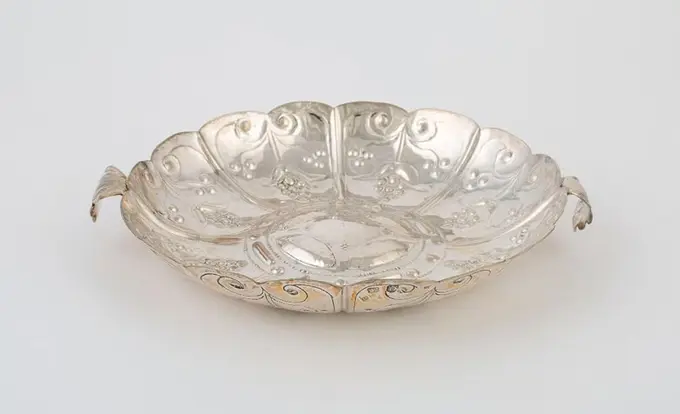
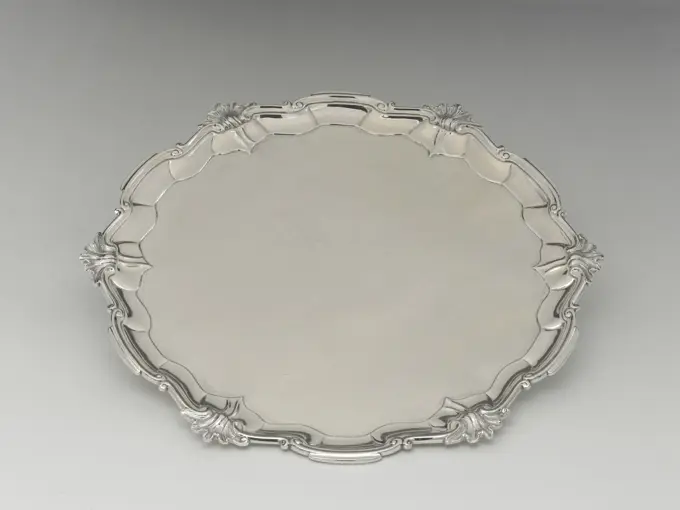
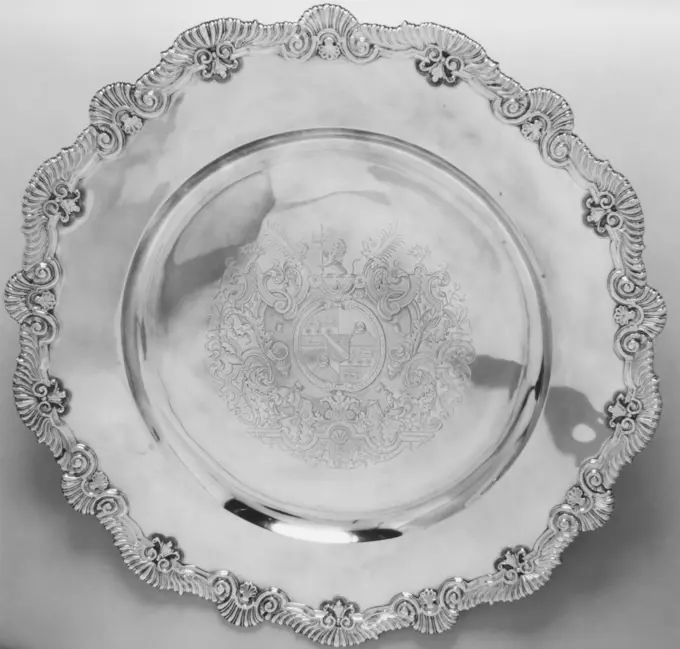
District tray; Mappin & webb LTD (company Z Otnicz, Platernicza, seller; Fl. 1859-); 1922/23 (1922-00-00-1923-00-00);
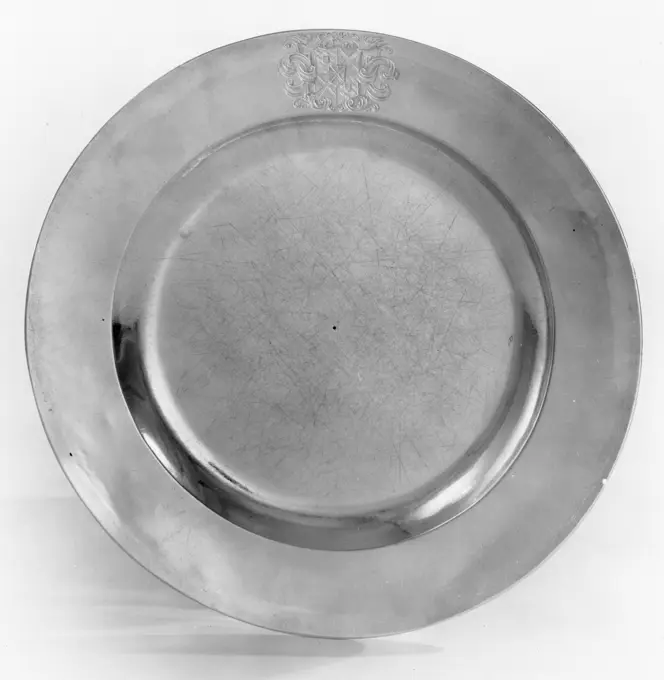
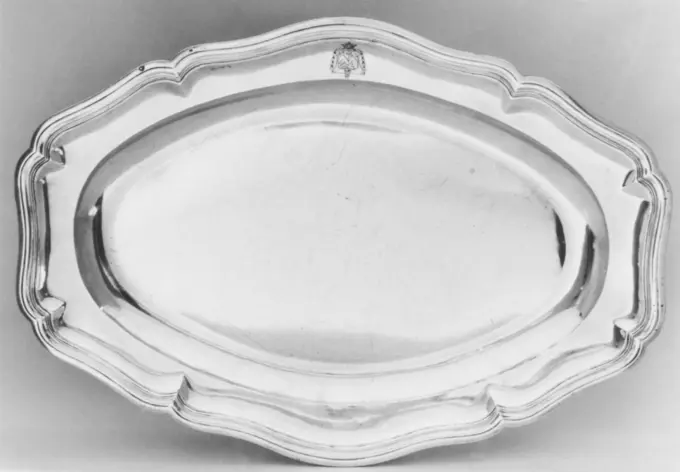
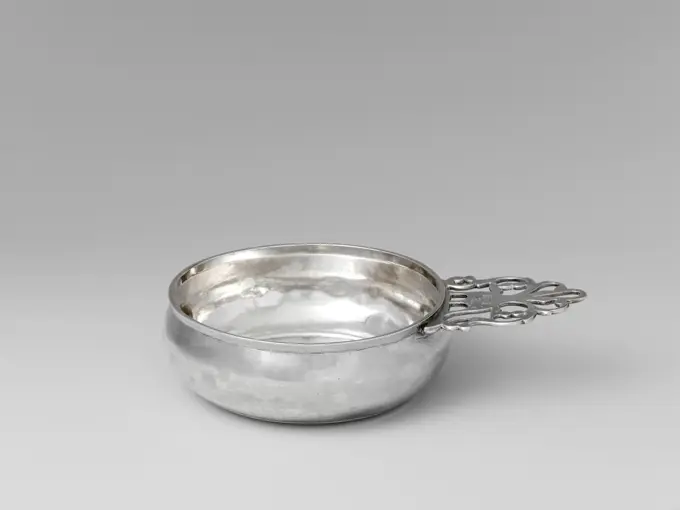
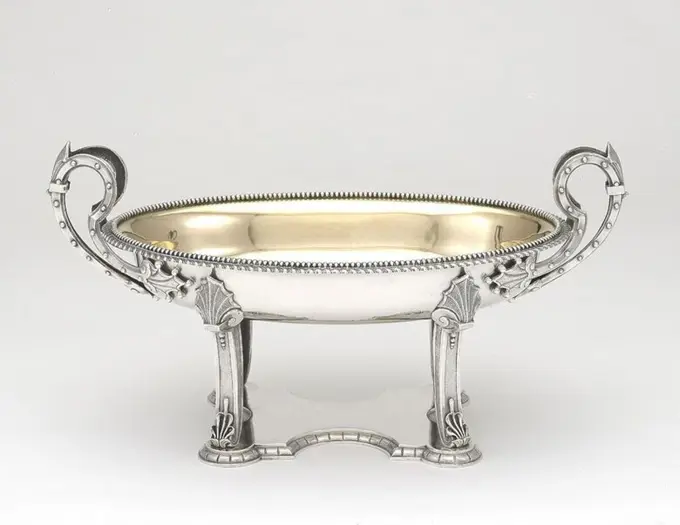
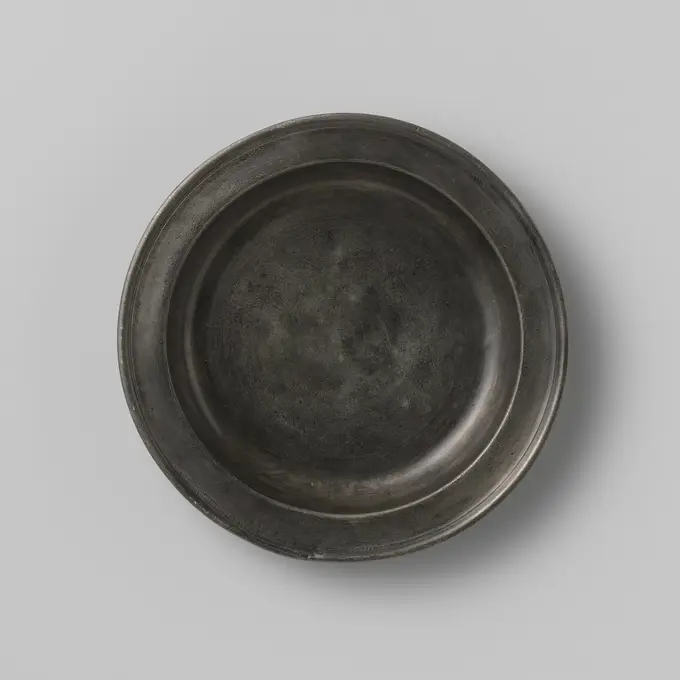
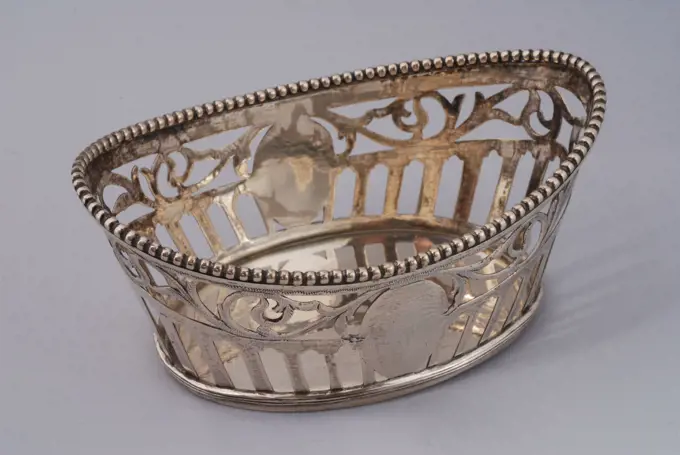
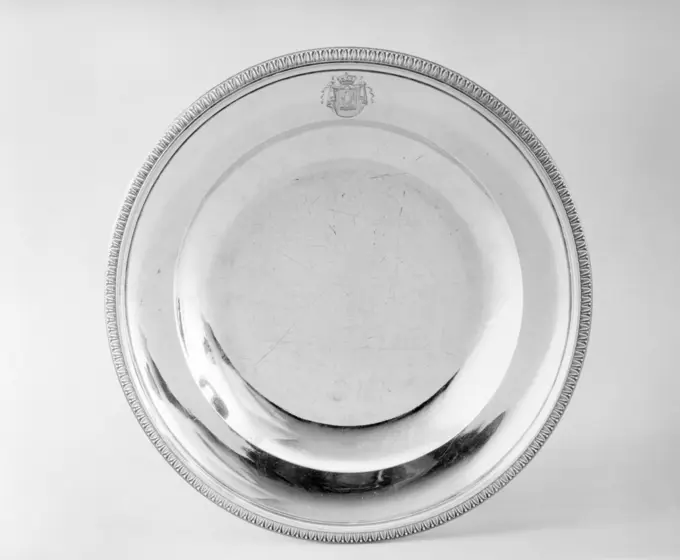
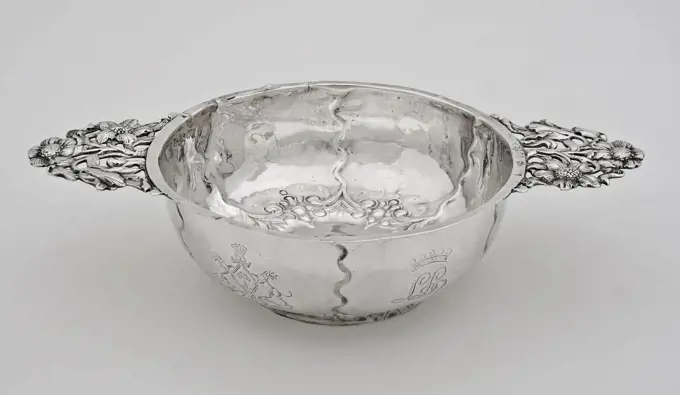
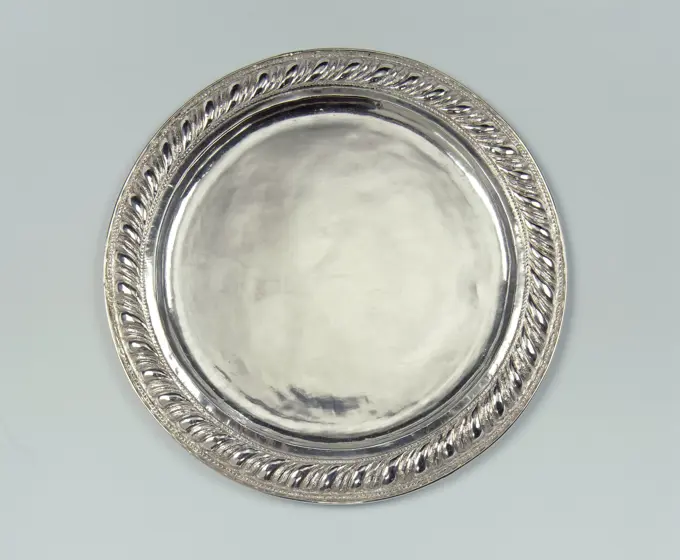
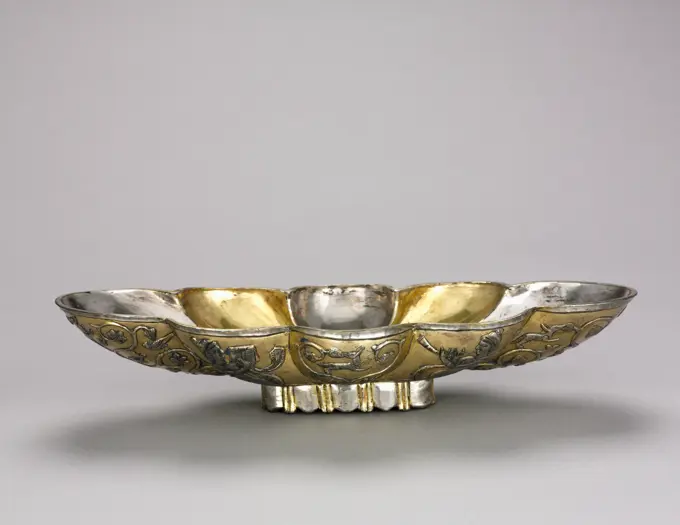
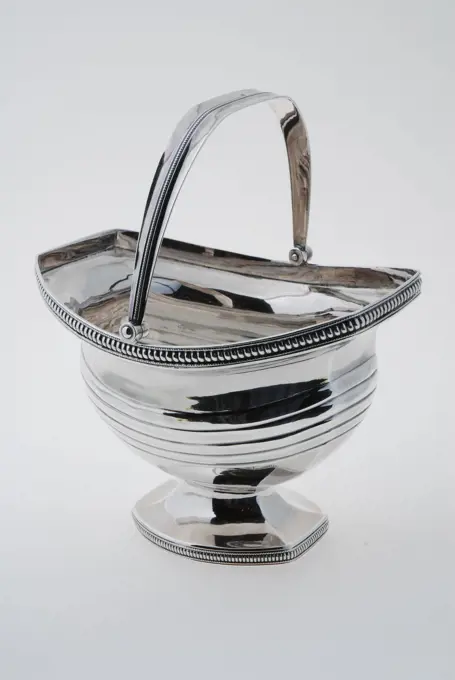
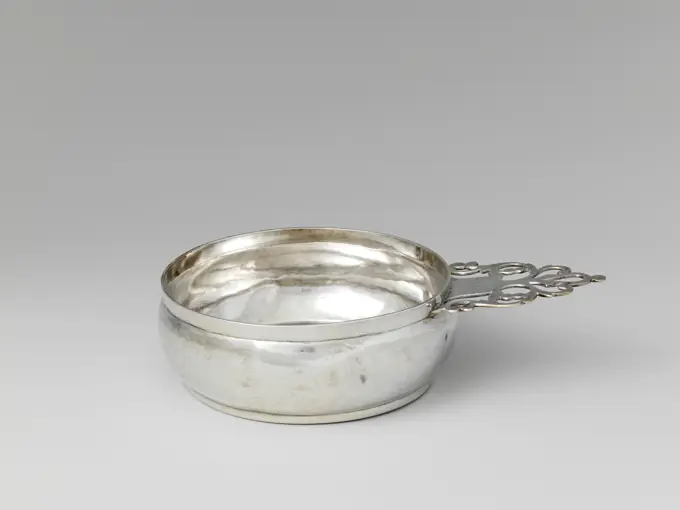
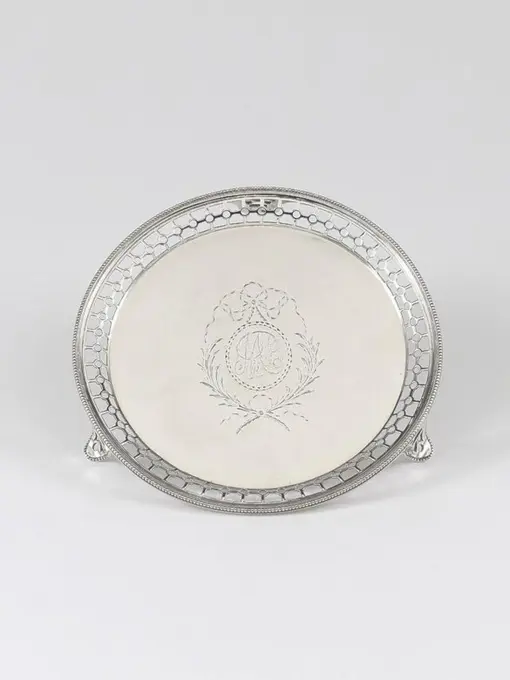
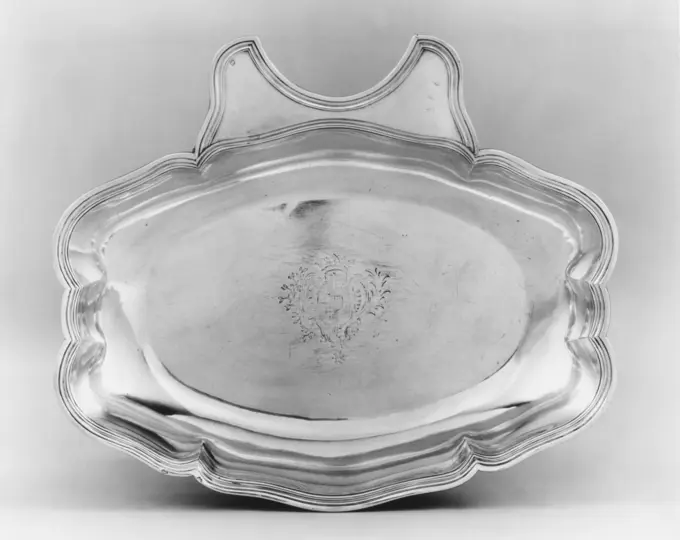
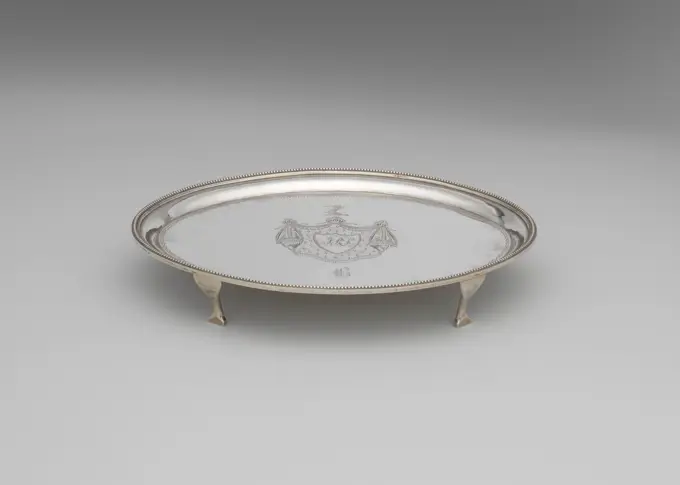
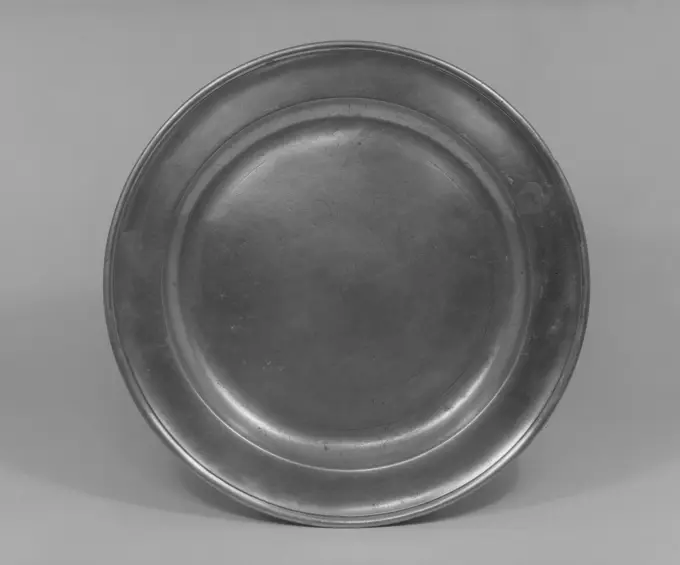
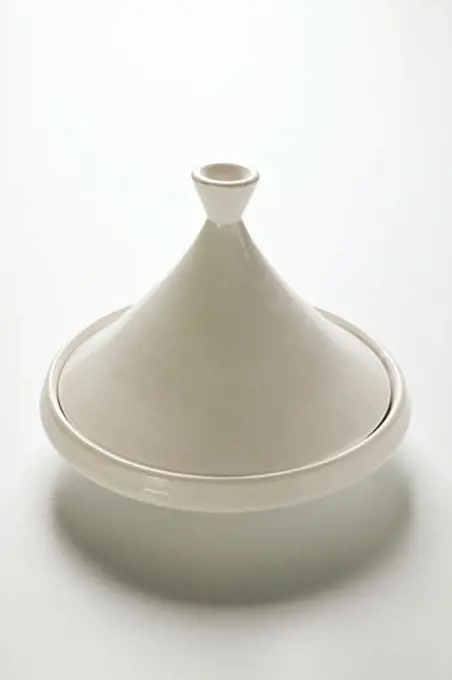
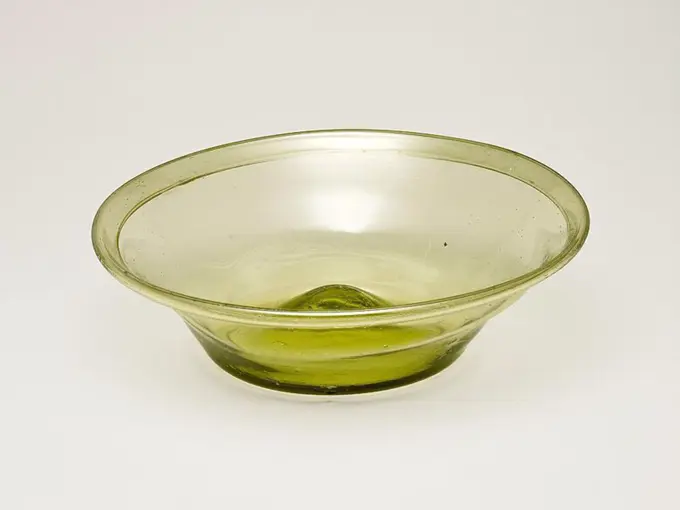
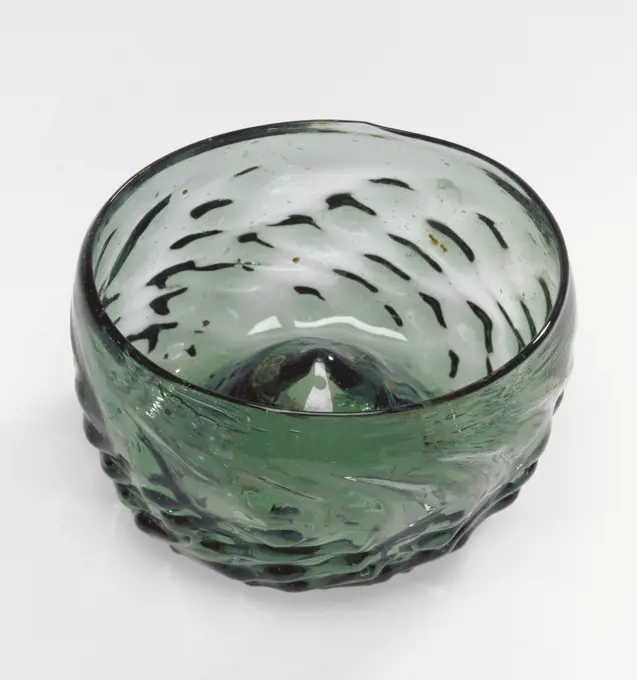
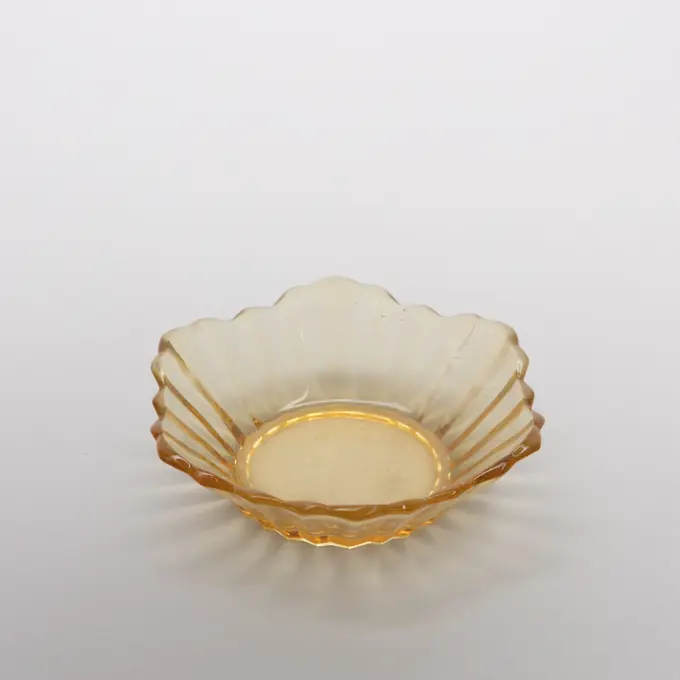
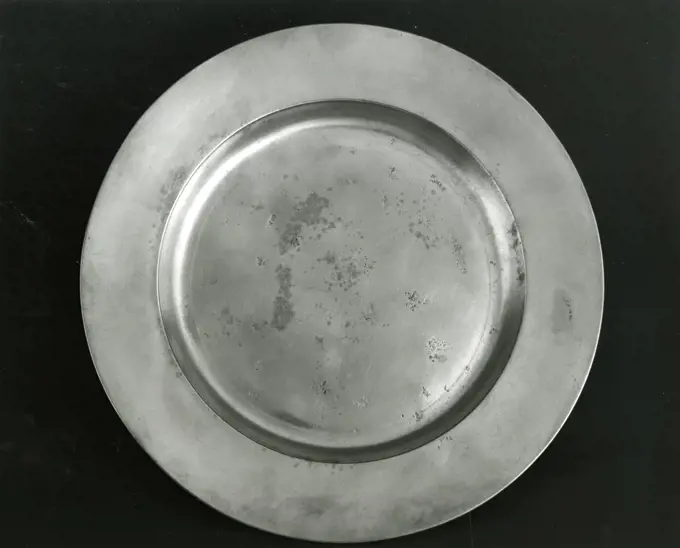
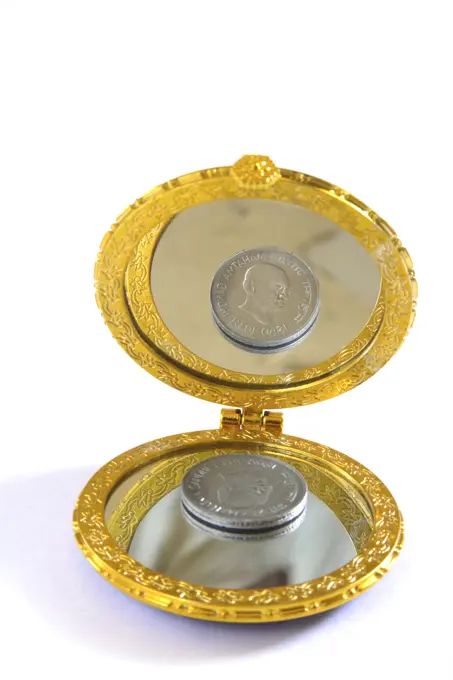
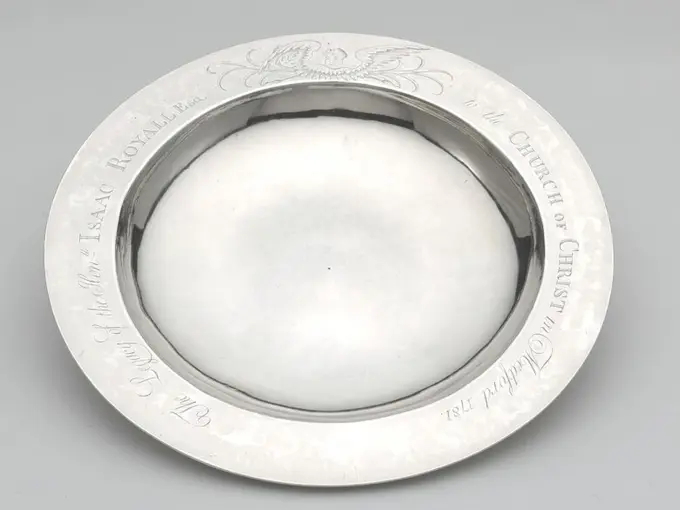
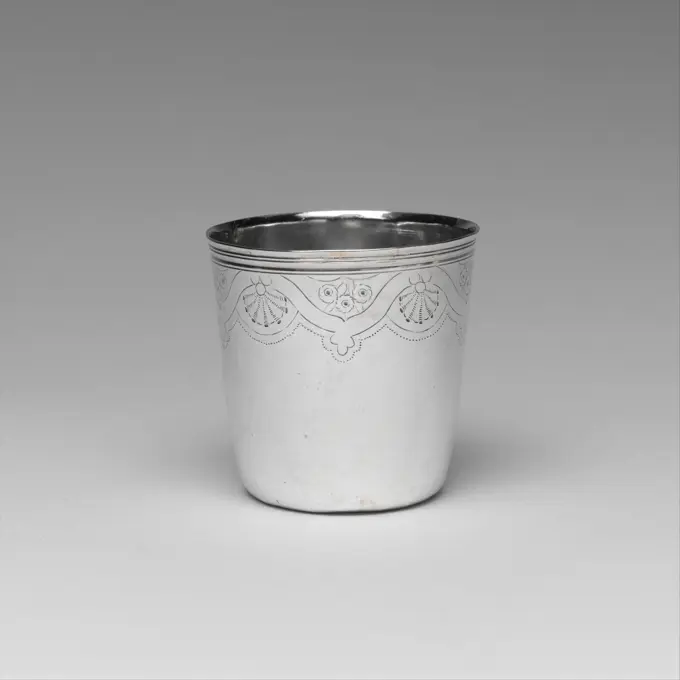
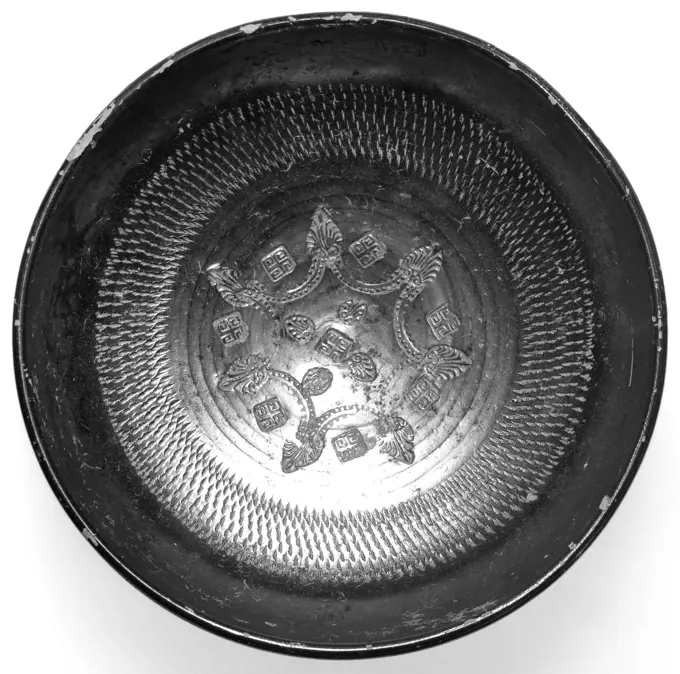
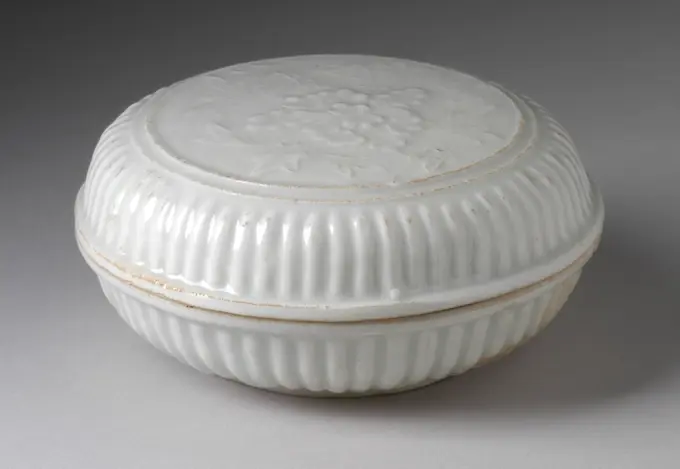
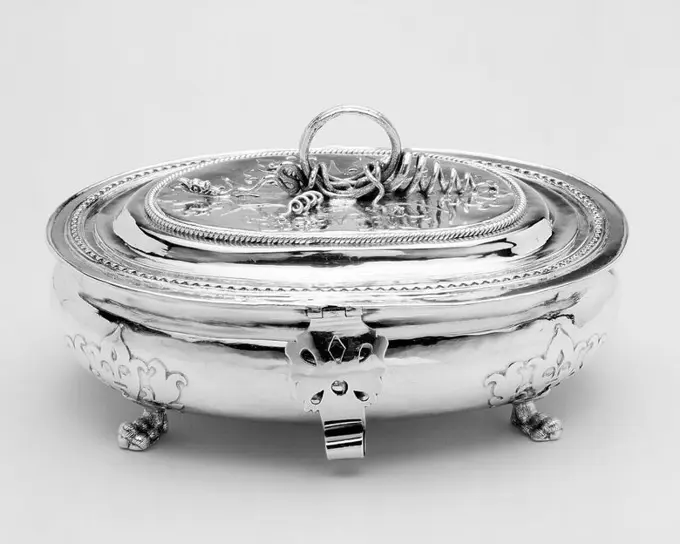
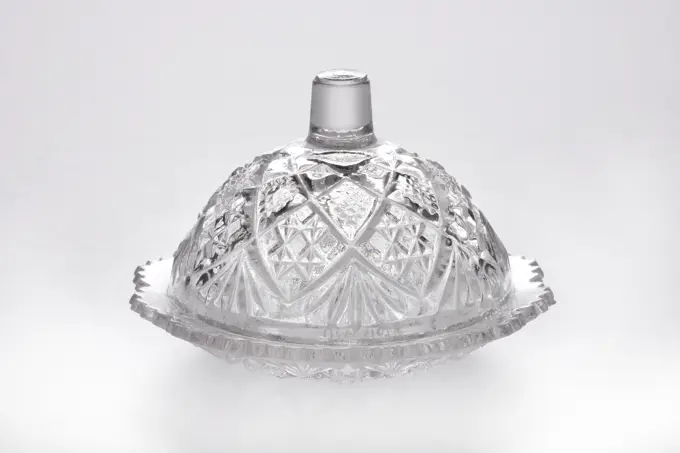
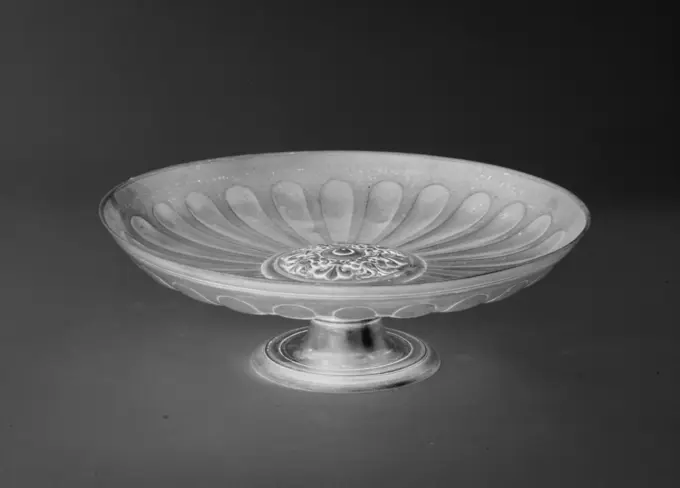
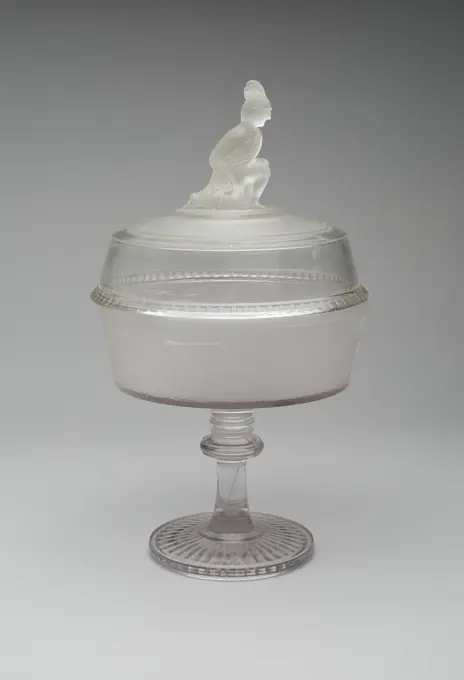
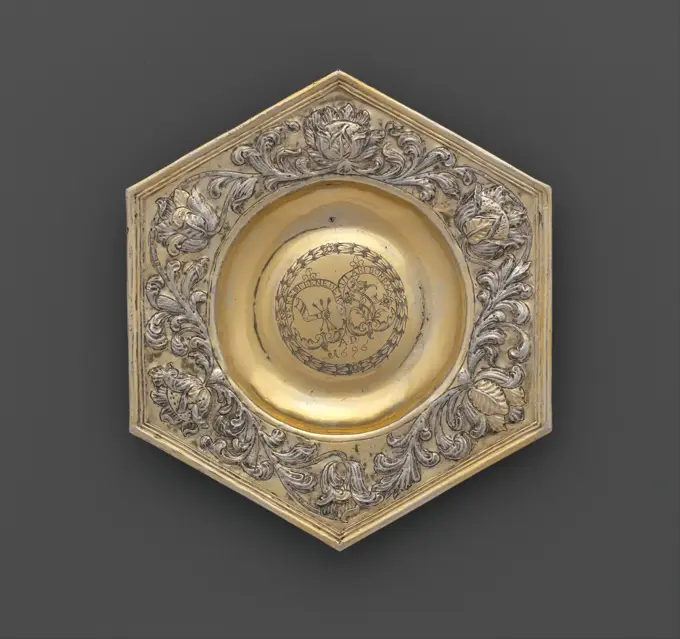
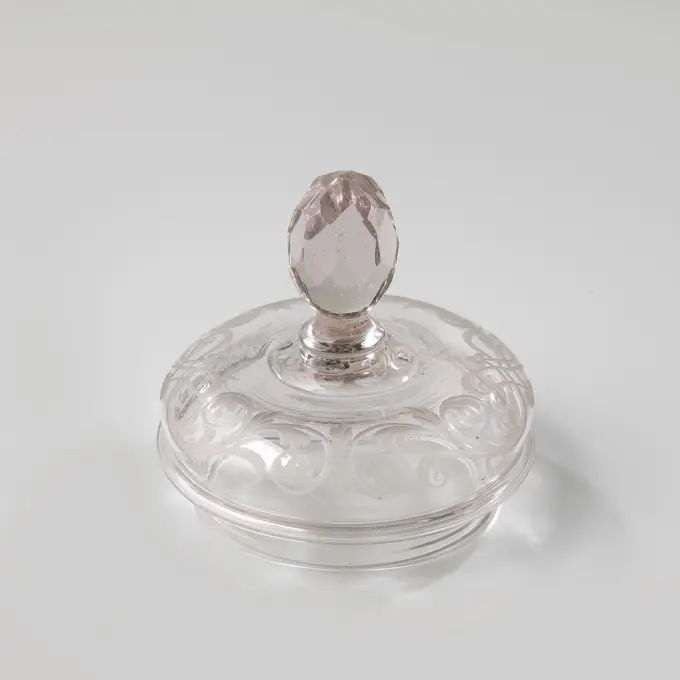
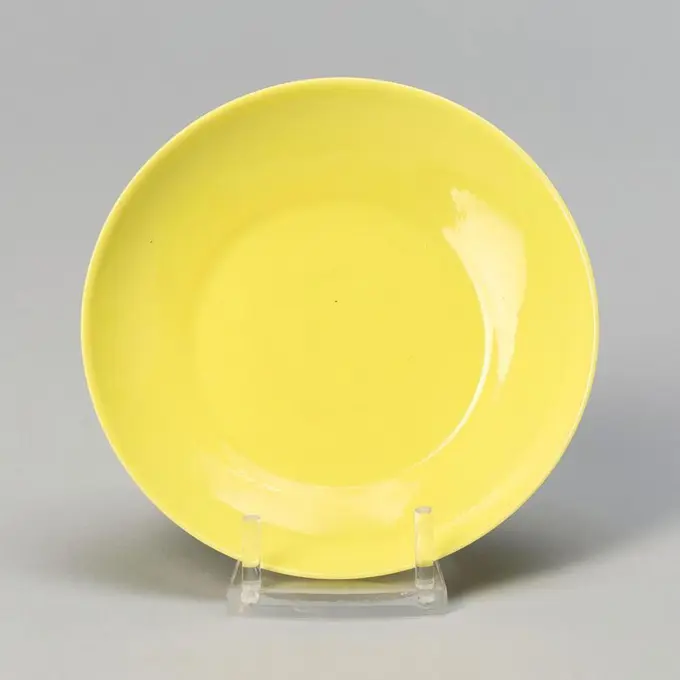
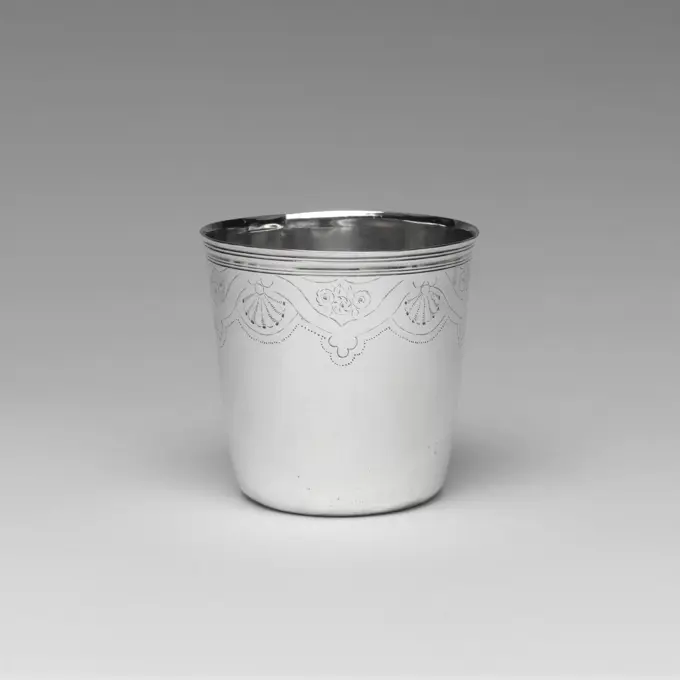
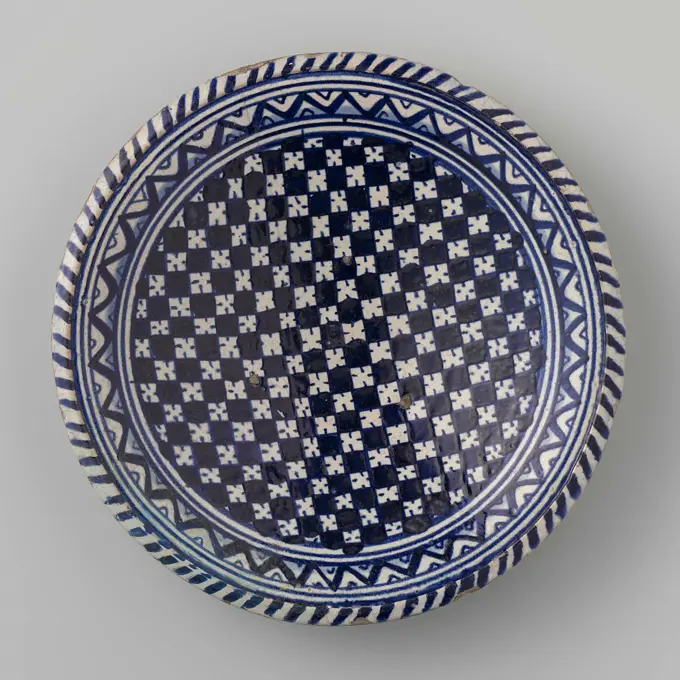
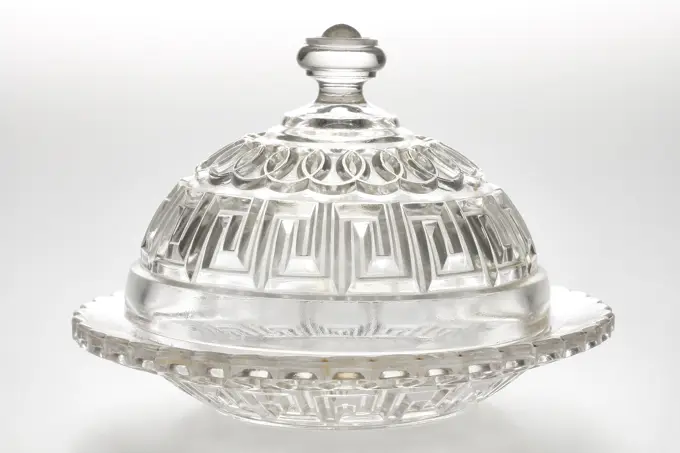
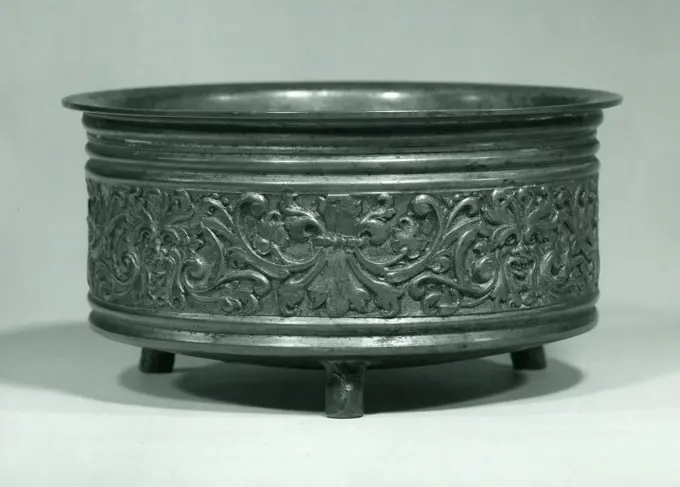
Sweetmeat Dish. London, England. Date: 1631-1632. Dimensions: 3.2 × 22.2 × 19.4 cm (1 1/4 × 8 3/4 × 7 5/8 in.). Silver. Origin: England. Museum: The Chicago Art Institute, Chicago, USA. Author: W. Maunday.Salver c 1755-1765 New York City. Silver . Myer Myers (Designer)Oval dish with scalloped edge. Oval dish of tin. The edge is scalloped and profiled.Footed Salver 1700-1715 John Coney. Footed Salver 7096PlateOval bowl; Smith, Benjamin & James (Fl. 1809-1812); 1811/12 (1811-00-00-1812-00-00);Robert Cooper John White, Dinner Plates (set of twenty-two), 1719/20, silver.Piet Heyn Dish, Anonymous, 1684 - 1687 dish Scale of silver. A sailing ship is engraved in turbulent sea on the flat. On the Umbo the initials of the West India Company (as GWC). Master sign: a lily in shield. The Hague silver (metal)  sailing-ship, sailing-boatSalt cellarDistrict tray; Mappin & webb LTD (company Z Otnicz, Platernicza, seller; Fl. 1859-); 1922/23 (1922-00-00-1923-00-00);Joseph Warner, Bowl, c. 1770, silver.Subtotel of a butter fleet, Orivit, c. 1900 Subtotle of a butter fleet in Tin. The edge is decorated with three floral motifs and their winding stems, which merge with a profiled band. Germany tin (metal) Subtotle of a butter fleet in Tin. The edge is decorated with three floral motifs and their winding stems, which merge with a profiled band. Germany tin (metal)Silversmith's Art, Italy 20th century. Silver and glass food tray. Alessi manufacturing, 1927.Platter 1782-83 Antoine Théry. Platter 200188Pair of Platters 1800-1812 Paris. Silver gilt . Jean Baptiste Claude OdiotPorringer 1725-50 Jonathan Clarke. Porringer 6675Plate 1771-72 Edme-Pierre Balzac. Plate 200063Large Bowl with Lotus Scrolls (interior) and Overlapping Petals (exterior) 1100-1127 China. Ding ware; porcelain with underglaze carved decoration .Footed salver, 1662-1663, RF, English, (name and dates unknown), 4 1/4 x 16 in. (10.8 x 40.64 cm), Silver, England, Charles IICompote. Peter L. Krider; American, 1821-1895; Philadelphia, Pennsylvania. Date: 1866. Dimensions: 19.1 × 37.5 × 20 cm (7 1/2 × 14 3/4 × 7 7/8 in.). Silver. Origin: Philadelphia. Museum: The Chicago Art Institute, Chicago, USA.Plate of tin. Deep, round plate of tin. The edge has profiled.Silversmith: Rudolph Sondag, Silver basket, bonbon box, bonbon container tableware holder silver, sawn cast Oval tray with profiled bottom edge cut-away walls with smooth medallions between bars and sparsely chased acanthus tendrils applied bead edge along boat-shaped top edge bottom underside (debossed) servingBasket; E.S. Barnsley & Co. (Birmingham; Wytwórnia Z Otnicz; 1895-1921), Barnsley, Edward Souter; 1921 (1921-00-00-1921-00-00);Plate (part of a dining service) ca. 1805 Martin-Guillaume Biennais French. Plate (part of a dining service) 231701Silver brandy bowl, brandy bowl bowl holder silver, ears) 23,0, stamped decoration engraved cast Round low bowl with narrow flat top edge on constricted stand ring two cast in ears top edge at one of the ears (set in) ) heraldry drink kingSilver leaf with decorated edge, anonymous, c. 1699 - c. 1799 Round leaf of silver, with a decorated edge. Used to be used by official visits in Makassar (Ujung Pandang) of local princes and queens. Sulawesi (possibly) silver (metal) Round leaf of silver, with a decorated edge. Used to be used by official visits in Makassar (Ujung Pandang) of local princes and queens. Sulawesi (possibly) silver (metal)Salt stand, Glass, Round body on short foot; lip turned-in and cut with fluting, sides cut with 6 panels of diamonds. Stand is shallow dish with wide lip cut with flutes, rayed flutes cut on bottom., Ireland, ca. 1820, glasswares, Decorative Arts, Salt stand. Oval cooler on four legs. The vessel consists of a convex belly, a smooth wall and a vaulted, widening upper part. On the top edge two sloping upright ears. Signature and dated.Bowl, 300-500. Iran, Sasanian, 4th-6th Century. Silver; overall: 6.4 x 14 cm (2 1/2 x 5 1/2 in.).Gerardus Peeters, Four-piece tea set, silver sugar bowl with handle, sugar bowl holder service silver, Four-piece tea set consisting of teapot milk jug tea caddy and sugar bowl. Boat shaped convex profile edges around body (Biedermeier) BiedermeierKolsty salt shaker; Malcz, Karol (1797-1867); 1930s (0-00-00-0-00-00);Porringer 1800-1850 William Moulton, IV. Porringer 6706Salver. Joseph Richardson, Jr.; American, 1752-1831; Nathaniel Richardson; American, 1754-1827; Philadelphia, Pennsylvania. Date: 1788-1790. Dimensions: 3.2 × 19.3 cm (1 1/4 × 7 5/8 in.). Silver. Origin: Philadelphia. Museum: The Chicago Art Institute, Chicago, USA.Plate -Cake stand -Cup ca. 1870-90 Italian, Milan. Cup. Italian, Milan. ca. 1870-90. Rock crystal, gold, enamel, jewels. Natural Substances-Rock CrystalBasin with shaving attachment 1745-46 and 1760-61 Basin made by Jean Fauche. Basin with shaving attachment 200195Stand 1790-1800 Daniel Van Voorhis. Stand 7885Platter (one of a set, of graduated sizes) 1786-88 Jacques Bernier. Platter (one of a set, of graduated sizes) 200336Dish ca. 1752-63 John Will. Dish 3313White tajine dishBowl. American; Ohio, probably Kent or Mantua. Date: 1820-1840. Dimensions: 7.9 × 24.1 cm (3 1/8 × 9 1/2 in.). Blown glass. Origin: Ohio. Museum: The Chicago Art Institute, Chicago, USA. Author: Mantua Glass Works.Anthony Bright, Porringer, c. 1740-1750, silver.Quadrangular Platter with Birds (One of a Pair) Platter; Manufactured by Derby Porcelain Factory (England, GB, United Kingdom); England; soft paste porcelain, vitreous enamel, goldDishRing.   Maker: Myer Myers, American, 1723-1795Nappy - Beaded Grape PatternDrinking Bowl (Maigelein); Germany; 15th century; Mold-blown dark green glass; 4.9 x 9 cm (1 15,16 x 3 9,16 in.)Cover for a Sugar Bowl, c. 1800. William Haverstick (American, 1756-1823). Silver; overall: 22.7 x 11.8 cm (8 15/16 x 4 5/8 in.).Possibly Boston and Sandwich Glass Works, Sugar Bowl and Cover, c. 1830-c. 1840, colorless lead glass.Terrine. Round terrine with scalloped bottom edge. The terrine has a lid with a scalloped edge as well. The button of the lid is a flying bird. The terrine has two raised handles. The terrine is on a corresponding dish (BK-NM-11177-153-a) The terrine is marked: stk. = Amsterdam, jrl. = G (1766) and mt. = Arnoldus van Geffen. The terrine with saucer equals two copies with Inputs. BK-NM-11177-252 and BK-NM-11177-253.Covered Tureen, 1753. Edward Wakelin (British, 1784). Silver; overall: 24.3 x 40.4 x 22.8 cm (9 9/16 x 15 7/8 x 9 in.). A very successful silversmith, Edward Wakelin may have been more a businessman than a craftsman or designer.water in a bowl on a white backgroundSet: Salader Smaller Glassworks J. Stolle NiemenCandy dish, glass, Cut glass candy dish with handle, 19th century, glasswares, Decorative Arts, Candy dishJohn Tuite, Salver, 1728/29, silver.Maker: Samuel Hamlin, Sr., American, 1746-1801, Maker or: Samuel Ely Hamlin, American, 1774-1864, Plate, Pewter, 11/16 in. (1.8 cm), Made in Hartford, Connecticutor made in Middletown, Connecticutor made in Providence, Rhode Island, American, 18th-19thcentury, Containers -MetalsNappy - Sunburst pattern Burlington Glass Works Burlington Glass WorksCatering - farting;  20th century (1901-00-00-2000-00-00);Soup plate - P. T. Legare-Limitee Quebec Demandez Notre Catalogue Alfred Colley Limited Alfred Colley LimitedSaucepan, Frederik van Strant (II), 1739 Saucepan with pour and a start for the wooden stem. The saucepan is marked: stk. = Amsterdam, Jrl. = E (1739), Mt. = Frederik van Strant II. Amsterdam silver (metal). ebony (wood) Saucepan with pour and a start for the wooden stem. The saucepan is marked: stk. = Amsterdam, Jrl. = E (1739), Mt. = Frederik van Strant II. Amsterdam silver (metal). ebony (wood)Concept, aks or parchain image reflected shadow Indian currency five rupees coins India Copyright: xNirmalaxMishra/DinodiaxPhotoxCommunion Dish. Benjamin Burt; American, 1729-1805; Boston, Massachusetts. Date: 1781. Dimensions: 3.2 × 32.4 × 32.4 cm (1 1/4 × 12 3/4 × 12 3/4 in.); 780.6 grams. Silver. Origin: Boston. Museum: The Chicago Art Institute, Chicago, USA.Tumbler 1797 Paul Revere Jr. American This set of four tumblers or small drinking cups (58.3.1-.4) was made for the Salem, Massachusetts merchant Elias Hasket Derby (1739-1799) and descended in his family. They are among the "12 Silver tumblers" that Revere supplied to Derby in 1797. Their plain, slightly rounded bodies with engraved borders were made to match a set of four cups already owned by Derby, marked by the Parisian silversmith Denis Colombier in 1789. The similarities are striking, although the French originals are more intricately engraved. These objects illustrate both the influence of French design on late eighteenth-century American taste and the role of the patron in commissioning silver. One of the Colombier beakers (67.94) also belongs to the Museum, offering the opportunity to compare copies to their original source.. Tumbler 426Salver 1710-11 David Willaume I British. Salver 205670Campanian Black Bowl; Campania, South Italy, Europe; 323 - 31 B.C; Terracotta; 6.7 x 18.2 cm (2 5,8 x 7 3,16 in.)Philip Brugier, Bowl, 1739/40, silver.Lidded Box (He) with Floral Spray. China, Yuan dynasty, 1279-1368. Furnishings; Accessories. Qingbai ware, wheel-thrown stoneware with molded and impressed design, and pale blue glazeDram Cup ca.1700 Benjamin Wynkoop. Dram Cup 9985Basin ca. 1810-20 Nast. Basin 194473Epergne. Schaffgotschowie (Śląsk ; szlifiernia dworska ; XVII), factoryOutcoat of a butter dish. Outlet of a tin butter dish. The scalloped rise is decorated with two floral motifs and their stems, which winds around.Plate. Thomas Badger; American, 1764-1826. Date: 1784-1794. Dimensions: Diam. 21.6 cm (8 1/2 in.). Pewter. Origin: Boston. Museum: The Chicago Art Institute, Chicago, USA.Sugar box. Culture: British, London. Dimensions: Width: 8 in. (20.3 cm). Date: 1673-74.Sugar boxes came into general use in the late seventeenth century. They were a parallel development along with the introduction of chocolate, coffee, and tea, which were all bitter drinks. Museum: Metropolitan Museum of Art, New York, USA.Four -sided bowls; Bradbury, Thomas & Sons (sheffield; company z Otnicz; Fl. CA 1769-1943); 1903/04 (1903-00-00-1904-00-00);Round platter. Bandau, Johann Georg I (fl. 1768-1816), goldsmithButter dish - Roden Brothers (1891-1953) Roden Brothers (1891-1953)Covered dish. Culture: American. Dimensions: 4 5/16 x 4 x 6 3/8 in. (11 x 10.2 x 16.2 cm). Date: 1835-40.The Gothic-arch pattern pressed into this covered dish reflects the Gothic revival of the 1830s and 1840s. Museum: Metropolitan Museum of Art, New York, USA.Salver on pedestal foot second half 16th century Italian, probably Rome. Salver on pedestal foot 205072Vegetable dish, cover and plate, Lead-glazed earthenware ('cream ware'), Oval body on rising, irregular foot. Body has two handles formed by bound branches. Raised decoration of leaves on sides, extending from either side, and on the foot. Cover rises in center to a handle in the form of a bud and leaf, and is modelled in scrolls on each end. Plate has a raised border of scrolls picked out in gold. Overglaze black transfer decoration of male and female peacocks, foliage and flowers on each piece. Ladle opening in cover., Leeds, England, ca. 1790, ceramics, Decorative Arts, Vegetable dish, cover and plateCovered Compote in the Pioneer Pattern 1870 Philadelphia. Glass . Gillander and Sons Glass WorksTwo Salts 1825-1835 Lunéville. Glass . Baccarat GlassworksSalver, silver, London, England, 1697, metalwork, Decorative Arts, SalverBenjamin Halsted Myer Myers, Porringer, c. 1756-66, silver.Modern black podium on white background. 3D renderingHexagonal dish 1696 Hungarian, Transylvania The center of each dish in this set (acc. nos. 2010.110.42-49) bears an engraved laurel wreath encircling a coat of arms. Small differences in these arms could be the result of different masters working quickly to complete what was probably a much larger set for a wedding that was fast approaching. The bold blossoms in the six corners symbolize both the wish for abundance throughout marriage and the transitory glories of earthly existence. Salgo acquired two of these dishes at a later date from the others, but all eight pieces belonged to the same set of fourteen dishes that were once part of the Andrássy treasury.LiteratureEuropean Silver. Sale cat., Sothebys, Geneva, November 15, 1983, p. 19, no. 53.European Silver. Sale cat., Sothebys, Geneva, November 14, 1984, n.p., no. 34.Judit H. Kolba. Hungarian Silver: The Nicolas M. Salgo Collection. London, 1996, p. 86, no. 64.ExhibitedRégi ezüstkiállításának leíró lajstroma. Exh. cat. Museum of Nappy - Starflower pattern Burlington Glass Works Burlington Glass WorksBowl ca. late 8th-7th century B.C. Assyrian. Bowl. Assyrian. ca. late 8th-7th century B.C.. Bronze. Neo-Assyrian. IranLid of a jar, anonymous, c. 1750 - c. 1780 Facetted lid with oval, faceted button on a disc. Growing leaf ornaments on the lid. Silesia (Possible) glass glassblowing Facetted lid with oval, faceted button on a disc. Growing leaf ornaments on the lid. Silesia (Possible) glass glassblowingSaucer. China. Date: 1723-1735. Dimensions: H. 1.7 cm (11/16 in.); diam. 9.5 cm (3 3/4 in.). Porcelain painted in overglaze enamel. Origin: China. Museum: The Chicago Art Institute, Chicago, USA.Tumbler 1797 Paul Revere Jr. American This set of four tumblers or small drinking cups (58.3.1-.4) was made for the Salem, Massachusetts merchant Elias Hasket Derby (1739-1799) and descended in his family. They are among the "12 Silver tumblers" that Revere supplied to Derby in 1797. Their plain, slightly rounded bodies with engraved borders were made to match a set of four cups already owned by Derby, marked by the Parisian silversmith Denis Colombier in 1789. The similarities are striking, although the French originals are more intricately engraved. These objects illustrate both the influence of French design on late eighteenth-century American taste and the role of the patron in commissioning silver. One of the Colombier beakers (67.94) also belongs to the Museum, offering the opportunity to compare copies to their original source.. Tumbler 428Milk crownDish (without image), Anonymous, 1850 - 1949 photograph. object Dish (without image)  .. Folding table on a tripod. The oval leaf has a processed edge and an engraved decoration of sunflowers and tendrils. The leaf rests on three cast gridides, which passes into the tripod. The table is marked: STK. = Amsterdam, Mt. = Frederik from STRANT I and an ax.Toy butter dish - Inconnu / UnknownLobed Dish with Lotus Scrolls. China. Date: 1300-1350. Dimensions: H. 1.6 cm (5/8 in.); diam. 5.8 cm (2 1/4 in.). Luanbai (eggshell white) ware; porcelain with underglaze molded decoration. Origin: China. Museum: The Chicago Art Institute, Chicago, USA.Dish, painted with a blue-white diamond pattern surrounded by concentric circles within which a zigzag motif. Round deep dish of blue painted majolica. The dish is painted with a blue-white diamond pattern. Concentric circles are painted around this pattern within which two circles are a zig-zag line. The dish has a narrow bent edge on which stripes are painted.Dish with Mythical Bovine (Xiniu) Amid Waves Viewing the Moon and Constellations 1100-1199 China. Ding ware; porcelain with underglaze mold-impressed decoration; metal rim .Butter dish - Greek Key & Wedding Ring PatternCandlestick with baluster tribe and round, bowl -shaped foot, Jacob Feetererse (attributed to), c. 1900 - c. 1923 The round candlesticks have a vaulted foot with a deepened top, in which a square nut is sunk. The trunk is screwed in here. The trunk is made up of a baluster contained between diabolo and printed spherical elements. The candle holder is diabolo-shaped. Amsterdam silver (metal) The round candlesticks have a vaulted foot with a deepened top, in which a square nut is sunk. The trunk is screwed in here. The trunk is made up of a baluster contained between diabolo and printed spherical elements. The candle holder is diabolo-shaped. Amsterdam silver (metal)Bowl decorated with frieze of grotesques second half 16th century Italian, Padua. Bowl decorated with frieze of grotesques 461199