Historic Textile Fragments

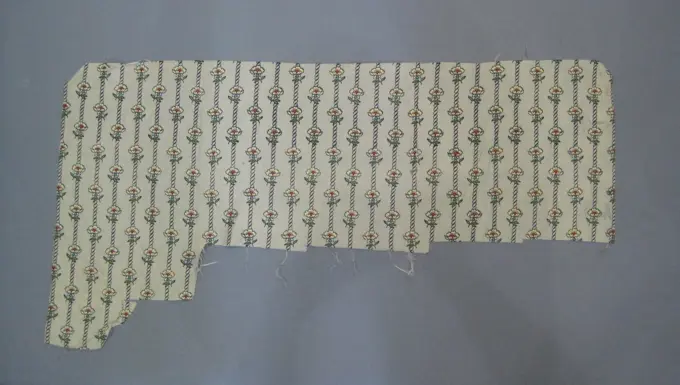
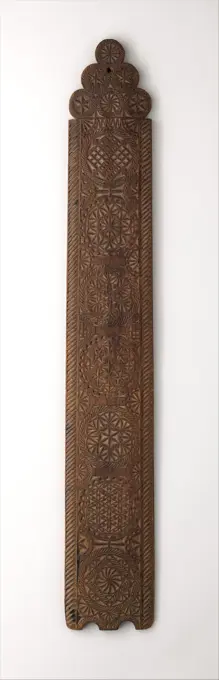
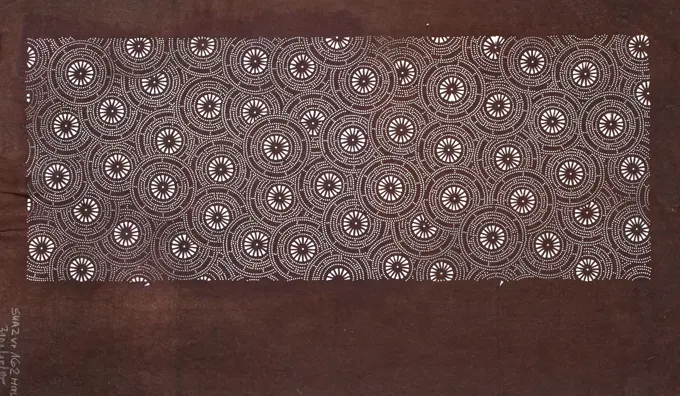
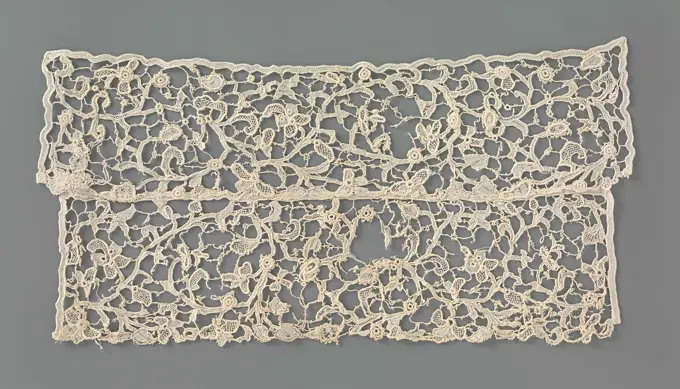
Collection of intricate textile pieces from various periods, showcasing patterns and styles in fabric design from Italy and Japan.

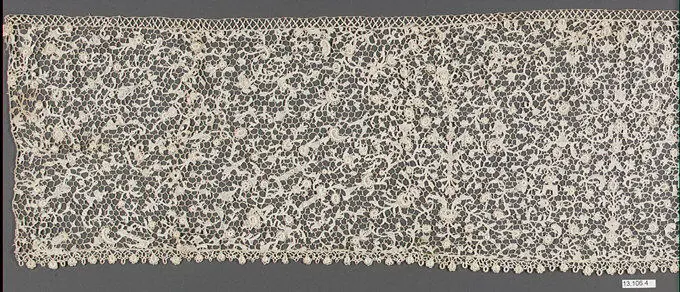
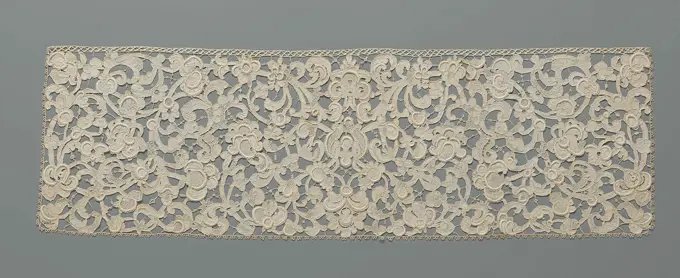
Dassle slip of needle side with diamond -shaped tifles, anonymous, c. 1700 - c. 1724 Dassle slip of natural -colored needle side: flat Venetian side or point de France. On a coarse hexagonal Maas soil there is a symmetrical decor compared to two intersecting axles. There is a large diamond shape in the heart, which comes back on the left and right outside. They are connected by a smaller window in which a equal -armed cross. The large windows show four of C-Voluten formed, illegible monograms (). The intervening field is filled with spiral vines with small flowers and buttons. On three sides a straight line with dots, alternately large and small. Italy (possibly) linen (material) flat Venetian (needle point) Dassle slip of natural -colored needle side: flat Venetian side or point de France. On a coarse hexagonal Maas soil there is a symmetrical decor compared to two intersecting axles. There is a large diamond shape in the heart, which comes back on the left and right outside. They are
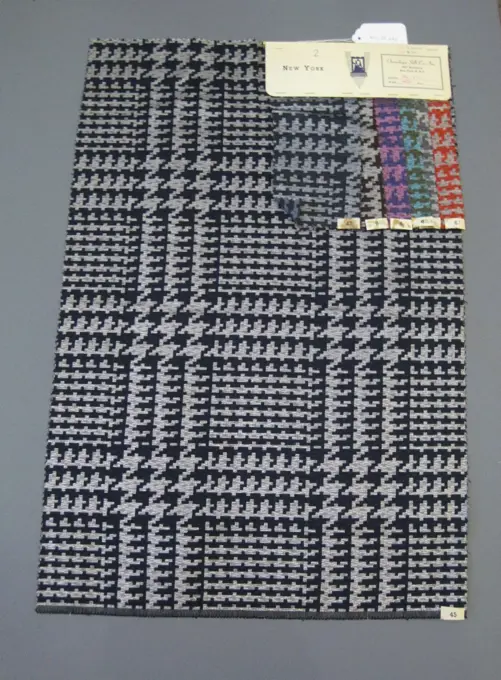
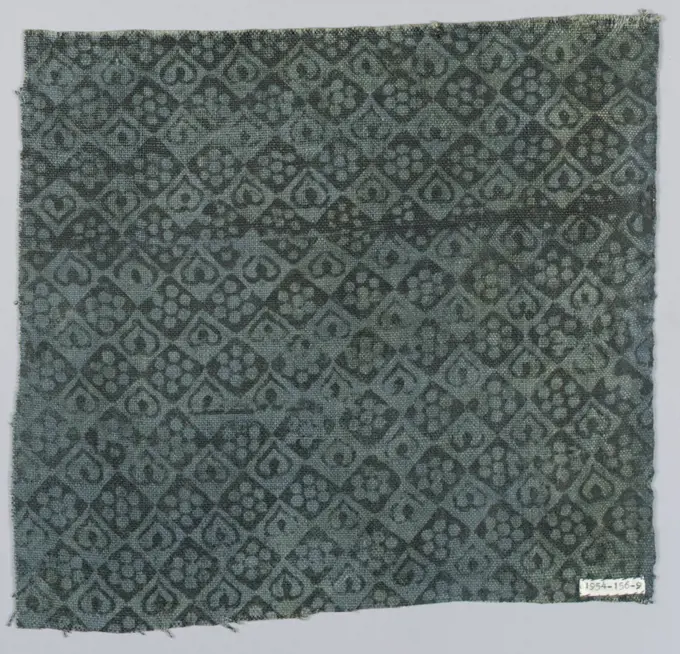
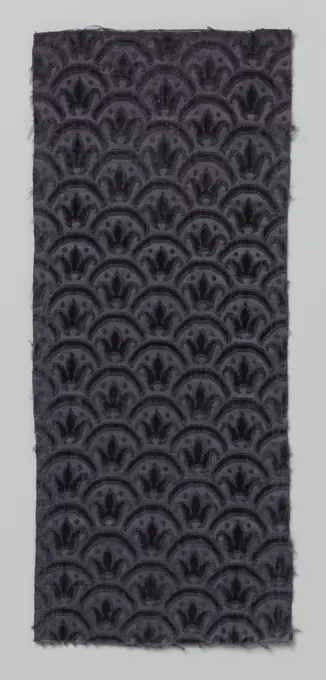
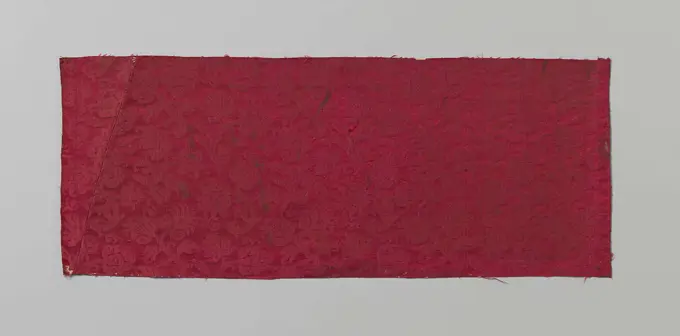
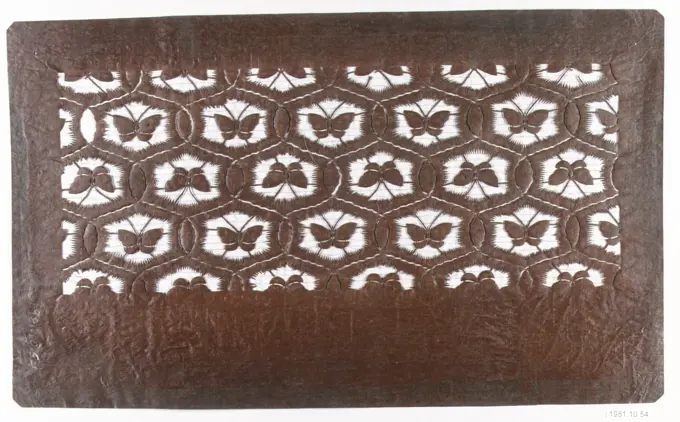
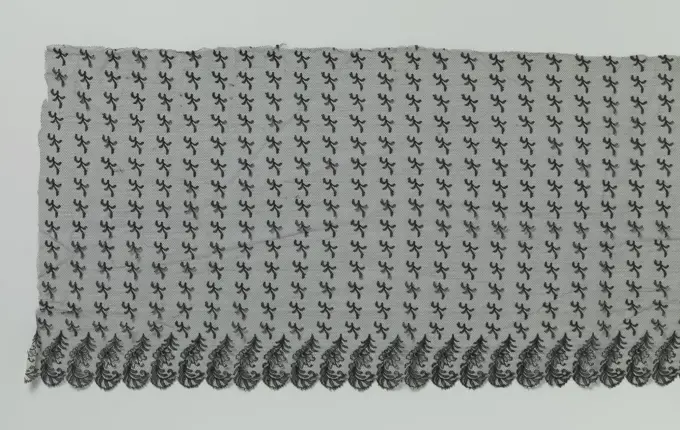
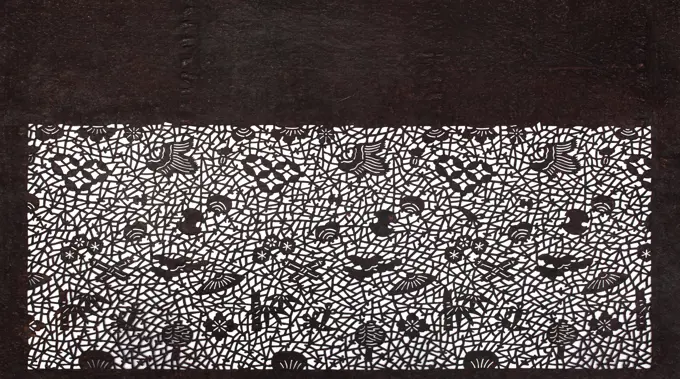
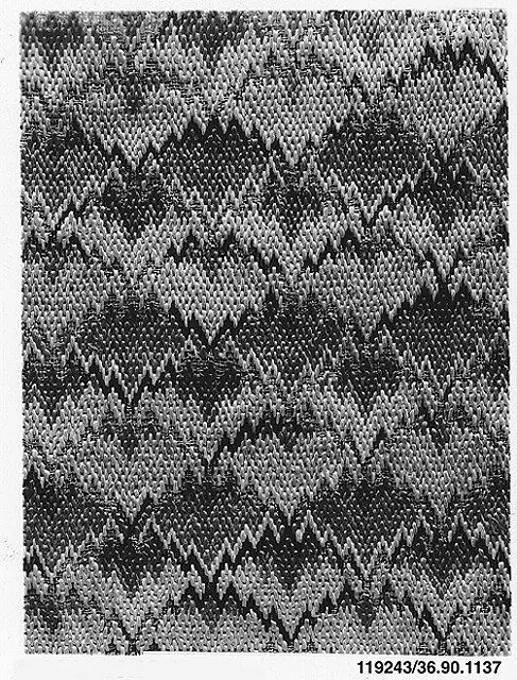
Fragment late 16th century Italian. Fragment 230461Dassle slip of needle side with diamond -shaped tifles, anonymous, c. 1700 - c. 1724 Dassle slip of natural -colored needle side: flat Venetian side or point de France. On a coarse hexagonal Maas soil there is a symmetrical decor compared to two intersecting axles. There is a large diamond shape in the heart, which comes back on the left and right outside. They are connected by a smaller window in which a equal -armed cross. The large windows show four of C-Voluten formed, illegible monograms (). The intervening field is filled with spiral vines with small flowers and buttons. On three sides a straight line with dots, alternately large and small. Italy (possibly) linen (material) flat Venetian (needle point) Dassle slip of natural -colored needle side: flat Venetian side or point de France. On a coarse hexagonal Maas soil there is a symmetrical decor compared to two intersecting axles. There is a large diamond shape in the heart, which comes back on the left and right outside. They arePiece 18th-19th century Japan. Piece 65853Piece 18th-19th century Japan. Piece 67542Textile Swatches Onondaga Silk Company, Inc. (1925-1981). , 1948-1959. 58 wool, 42 silk, 26 1/2 x 18 in. (67.3 x 45.7 cm).    1948-1959"Hopi Brocade" Style Dance Sash, c. 1880-1900. America, Native North American, Southwest, Pueblo (Hopi), Post-Contact, Transitional Period. Plain weave with supplementary weft wrap; wool (homespun and Germantown); overall: 116 x 25 cm (45 11/16 x 9 13/16 in.).Textile, Medium: cotton Technique: roller printed on plain weave, Small piece of blue fabric printed with with a black allover sprig-like design. The reverse has a sticker with the Swedish opera singer Jenny Lind. She first came to the United States in 1850 at the invitation of the showman P. T. Barnum., USA, ca. 1850, printed, dyed & painted textiles, TextileFlounce second half 17th century French or Italian. Flounce 219508Fragment, Medium: linen Technique: resist printed on plain weave, Fragment printed on both sides in black over a greenish-blue ground. Design on one side shows open flower faces with pointed leaves, stems and foliage curving around flower heads to form active open frame. On reverse side a small block design framing small flower head alternating with one selvage present., Russia, late 17th-early 18th century, printed, dyed & painted textiles, FragmentFragment purple velvet with palmets, anonymous, c. 1550 - c. 1650 A fragment of a purple velvet. The drawing in shaved and drawn pole shows scaly gembles placed between which palmets. Note: A weaving error under the 5th report from the top right. Europe silk. satin. velvet (fabric weave). ciselé velvet A fragment of a purple velvet. The drawing in shaved and drawn pole shows scaly gembles placed between which palmets. Note: A weaving error under the 5th report from the top right. Europe silk. satin. velvet (fabric weave). ciselé velvetBlade with an oval motif, anonymous, 1750 - 1900  Leaf with vertical job pattern with oval motif with dots. Probably half a cover.  paper. block printing (relief printing process) fantasy ornamentTextile (USA); cottonSatin Textile, late 1600s. Italy, late 17th century. Plain compound satin; silk and linen; overall: 78.7 x 29.2 cm (31 x 11 1/2 in.).Textile, Medium: cotton Technique: block printed, Fragment with a white ground printed in a pattern of vertical stripes containing a meandering floral vine between guard borders of red and white checks., Jaipur, India, late 18th-early 19th century, printed, dyed & painted textiles, TextilePiece 18th century French. Piece 223573Fragment; silkTextile, Medium: piña (pineapple) fiber, cotton Technique: plain weave, Square comprised of six stitched fragments has hemmed edges. Cream pineapple fiber ground with plaid of orange pineapple fiber and white cotton., Philippines, 19th century, woven textiles, TextileGreen fabric sampleSewing or dust patch made of linen and cotton with seven stops or intermediate sinks and seven splits with crocheting in the points, unnoticed, G. Glass, c. 1888 - c. 1894 Sewing juice of linen and cotton. Marked. Manufactured at the Normal School in Deventer for the "Useful Certic Works" deed. Deventer linen (material). cotton (textile) crocheting Sewing juice of linen and cotton. Marked. Manufactured at the Normal School in Deventer for the "Useful Certic Works" deed. Deventer linen (material). cotton (textile) crochetingRugs and Carpets - China. Tibet. 19th century. Khaden carpetFragment 16th century Northern Italian. Fragment 230496Textile Swatches Onondaga Silk Company, Inc. (1925-1981). , 1948-1959. 56 metal and synthetic film yarn, 44 silk, a: 47 3/4 x 18 in. (121.3 x 45.7 cm).    1948-1959Fragment of a printed cotton with flower drinks and irregular stains in purple on white ground. Fragment of printed cotton. On the white cotton, purple flower drinks are printed between whom purple irregular stain patterns.Back wrapper. Photographs, Photograms, Book covers. 1849-11 - 1850-06. Spencer Collection. Plants in artTapis (Ceremonial or Wedding Skirt) Made 1801-1900 Indonesia. Cotton, silk and gilt or silvered-paper-strip-wrapped silk, warp-faced, weft-ribbed plain weave with supplementary patterning wefts; embroidered with back, surface satin, stem and trammed loop stitches; mica and mirrors .Textile Swatch Textile Swatch, 1950s to 1960s. Silk, 26 3/4 x 14 3/4 in. (67.9 x 37.5 cm).    1950s to 1960sPiece of fabric. unknown, authorMangle-board 1728 Dutch. Mangle-board 191715Fragment of a cotton bedtijk.fragment of a cotton bed linen, blue with a white diamond.Headscarf, Anonymous, 1900 - 1999 Headscarf with geometric motifs. Noord-sumatra cotton (textile) Headscarf with geometric motifs. Noord-sumatra cotton (textile)Piece 19th century Japan. Piece 66262Dying template katagami with a motif that follows the crisades with chrysanthemum rosettes;  beginning of the 19th century (1701-00-00-1900-00-00);ISE-CATAGAMI, ornaments, templates, purchase (provenance)Verdubbelde strook naaldkant met ronde bloemen.Doubled strip natural-colored coniferous lace: Venetian rosary. The strip is made up of two strips sewed together. Pattern with varied flowers to narrow tendrils. Striking are the seemingly randomly scattered, round flowers with double relief. Open bars soil with picoted bars. Both strips are finished on three sides with a straight, a little wavy band. The bottom is scalloped.Fragment (Japan)Jabot van naaldkant met symmetrisch patroon van voluutranken en bloemen.Jabot of natural colored Venetian needle side "Gros Point". Rectangular model. Symmetrical pattern from the center axis with plotors, flowers and leaves. The motifs are connected to each other with picoted bars. The full work was made with feston stitches decorated with recesses, embossed contours and raised cordons. The Jabot is finished at the top with edge of a clust side. The other three sides are finished with a picro edge with arcs.Pair of Lappets Made 1725-1729 France. Linen, bobbin straight lace of a type known as Valenciennes with five hole and snowflake mesh grounds .Chasuble Fragments; silk, metallic yarnsFragment, Medium: cotton Technique: block printed on plain weave, Half-drop repeat of four leaves on a medium purple background., France, early 19th century, printed, dyed & painted textiles, FragmentFragment of two pieces of red silk-sealed pieces. Fragment of two pieces of Red Silk Sewn Together with Repaived Pattern of Flower and Leafwork.Fragment 16th century Italian. Fragment 230631Shaker Textile. Dated: c. 1936. Dimensions: overall: 23.5 x 17 cm (9 1/4 x 6 11/16 in.). Medium: watercolor and graphite on paperboard. Museum: National Gallery of Art, Washington DC. Author: Elizabeth Moutal.Coverlet Made 1840 Illinois. Cotton and wool, plain weave with supplementary patterning wefts (overshot); two loom widths joined; fringed . Sarah Douglas Smith (Weaver)Stencil 19th century Japan. Stencil 70711Textile Sample from Sample Book. Culture: Japan. Dimensions: 3 7/8 × 1 5/8 in. (9.8 × 4.1 cm). Date: 19th century. Museum: Metropolitan Museum of Art, New York, USA.Shaker Case. Dated: c. 1936. Dimensions: overall: 28.9 x 17.2 cm (11 3/8 x 6 3/4 in.). Medium: watercolor, pen and ink, and graphite on paper. Museum: National Gallery of Art, Washington DC. Author: Betty Fuerst.Strip of black machine side with a underside of J-shaped feathered leaves with flour, anonymous, c. 1885 - c. 1895 Strip of black machine side: Machinal Chantilly side. The repeating pattern consists of fourteen rows of the branches and a row of hanging feathered leaves with one flower along the bottom edge. The feathered leaves hang down like a J, the flower is located halfway through the stick of the J and cuts the leaves. The bends of the J-shaped leaves form the scrap edge along the underside of the strip, which is finished with picots. The top of the strip is cut straight and not finished. Calais cotton (textile) Strip of black machine side: Machinal Chantilly side. The repeating pattern consists of fourteen rows of the branches and a row of hanging feathered leaves with one flower along the bottom edge. The feathered leaves hang down like a J, the flower is located halfway through the stick of the J and cuts the leaves. The bends of the J-shaped leaves form the scrap edge along tSari, c. 1930s, 206 x 47 in. (523.24 x 119.38 cm), Silk and metal threads; woven, India, 20th centuryFabric swatch Red fabric swatch cut with pinking shears zig zag scissors Copyright: xZoonar.com/ClaudioxDiviziax 6561775Fragments, Medium: silk Technique: supplementary warp forming raised pile (velvet), Tile pattern of eight-pointed stars and interlocked squares in tan., Spain, 17th century, woven textiles, FragmentsTextile FragmentFragment (USA)TAPIZ. Author: PEREIRA TOYI. Location: PREMIO NACIONAL DE TAPICES. Aranjuez. MADRID. SPAIN.Textile Fragment with Sailing Ships ca. 1600 This fully reversible fragment of a complex doubleweave textile shows sailing ships, swimming ducks, and leaping fish on a minuscule scale in white or red, respectively. The sailors appear to be European, reflecting a typical Safavid motif, which developed as a result of the extensive maritime trade between Europe and Asia.. Textile Fragment with Sailing Ships 450495Vintage looking Fabric swatch Vintage looking Red fabric swatch cut with pinking shears zig zag scissors Copyright: xZoonar.com/ClaudioxDiviziax 9742340Napkin; linen; 1900-18-2Blades jewelry with pattern of cracked stone, anonymous, c. 1850 - c. 1950 decorated paper Fragments of blades decorative paper printed with a line pattern such as cracked stone. Six fragments printed in gray, one printed in green.  paper  ornament derived from objectsHindu ornamentCoverlet (Fragments) Made 1801-1900 United States. Cotton, linen, and wool, plain weave with supplementary patterning wefts (overshot) .Piña Cloth, mid-19th century. Philippines, mid-19th century. Piña fiber; overall: 27.5 x 51 cm (10 13/16 x 20 1/16 in.).Head Band, 20th century, 2 7/8 x 34 1/2 in. (7.3 x 87.6 cm), Cotton, China, 20th centuryNapkin of linen with peel pattern ,, 1734 Napkin of white linen with peel pattern "Oranjeboom", brand WG 60 1734. Northern Netherlands (Possible) linen (material) Napkin of white linen with peel pattern "Oranjeboom", brand WG 60 1734. Northern Netherlands (Possible) linen (material)Kitchen towel isolated on white background. TableclothStorage Bag Fragment mid-19th century. Storage Bag Fragment 452601Fragment (USA)Servet van Pellendem, c. 1600 - c. 1699 Pellendam napkin. The napkin includes a napkin with invnr. BK-1980-108-A. The napkin is marked: Ve 14. Eastern Netherlands (possibly) linen (material) Pellendam napkin. The napkin includes a napkin with invnr. BK-1980-108-A. The napkin is marked: Ve 14. Eastern Netherlands (possibly) linen (material)Fragment ca. 1800 Italian. Fragment. Italian. ca. 1800. Silk. Textiles-VelvetsBorderTablecloth of linen with inserts from edge embroidery and rounded around with a strip of clamping side with wheels and dots. Tablecloth of linen with natural-colored inserts from edge embroidery: fillet edge. The rug is finished with a strip of natural colosside: Cluny side. Square model with a square insert in every corner and a square insert in the middle in the middle. Pattern fillet edge: crossed rosettes in filet node: a knotted network with square meshes. Close edge pattern: Switched wheels (spokes in shape stroke) and dots (power bowl) in the dick side. The rug is decorated with a narrow edge open sewing: work with pulled out wires. This same kind of open sewing also comes back around the square inserts.Predicted cloth of mixed side in U-shape for an antispendium, anonymous, c. 1875 - c. 1909 Predicted cloth of natural -colored mixed side: Venetian ribbon side. U-shaped model. On a hexagonal Maas soil with picots, there is an asymmetrical spiral drink in the horizontal part. The sloping rank, which starts in the lower corners of the standing parts, turns into a spiral drink. The left leg of the U is symmetrical to the right. Flowers and arabesk leaves are, as it were, strung to these tenders. The flowers are in the form of a palmet, a pomegranate and a rosette. Straight finish with alternating large and small triangles. Italy cotton (textile) mixed lace / Venetian tape lace (mixed lace) Predicted cloth of natural -colored mixed side: Venetian ribbon side. U-shaped model. On a hexagonal Maas soil with picots, there is an asymmetrical spiral drink in the horizontal part. The sloping rank, which starts in the lower corners of the standing parts, turns into a spiral drink. The left leg ofSample 1883-1900 Associated Artists. Sample 14029Veil 19th century British. Veil 102587Fichu or so -called tip cloth with bobbin with openwork riverès, anonymous, c. 1770 - c. 1774 Fichu of natural -colored batist with bobbin: Mechelen side. Square model that was folded like a triangle. Finishing with rolling soaps and on two sides with lace that is wrinkled in the tip (`the tip '). Kant pattern: A wavy openwork slender with simple flowers and leaves moves in a repeating rhythm over the length of the strip. Zaanse regional. Mechelen cotton (textile). buckram bobbin lace / Mechlin (lace) Fichu of natural -colored batist with bobbin: Mechelen side. Square model that was folded like a triangle. Finishing with rolling soaps and on two sides with lace that is wrinkled in the tip (`the tip '). Kant pattern: A wavy openwork slender with simple flowers and leaves moves in a repeating rhythm over the length of the strip. Zaanse regional. Mechelen cotton (textile). buckram bobbin lace / Mechlin (lace)Fabric swatch Red fabric swatch cut with pinking shears zig zag scissors Copyright: xZoonar.com/ClaudioxDiviziax 6589862Loper, composed of three-sewing fragments with different designs. Loper, made from three intermediates and edges of countless fragments composed of countless fragments with two different designs of numerous fragments. Dessin Midfield: Flower branches placed in rows, flanked by slightly different flower branches, from which similar slightly different flower branches; Between the rows downwards in driving placed around and other flower branches in brown / purple on golden yellow fond. Dessin side pieces similar but slightly larger. Pink linen lining. Rear lining written: A1-3 / 6 550, and 47579b. Potted paper on which the letters AB. Condition: Midfield reasonable; Side pieces bad.Textile Swatches Onondaga Silk Company, Inc. (1925-1981). , 1948-1959. Silk, 47 1/4 x 17 1/2 in. (120 x 44.5 cm).    1948-1959Head Scarf, 28 1/2 x 12 3/8 in. (72.39 x 31.43 cm) (without fringe), Cotton, ChinaPanel (see also 1975.1.1932) late 19th-early 20th century Chinese. Panel (see also 1975.1.1932). Chinese , Qing Dynasty. Chinese. late 19th-early 20th century. Red silk.. Textiles-WovenPiece 18th century French. Piece 216977Field of sixty -three tiles, anonymous, c. 1675 - c. 1725 Field of 63 tiles (9 x 7) each with a blue painted landscape with a building or figure within a squared surrounded by a band of sprinkled purple. In the corners, a sprinkled square. Netherlands earthenware. tin glaze majolica Field of 63 tiles (9 x 7) each with a blue painted landscape with a building or figure within a squared surrounded by a band of sprinkled purple. In the corners, a sprinkled square. Netherlands earthenware. tin glaze majolicaWoven Covering for Chair Seat. Dated: 1935/1942. Dimensions: overall: 18.5 x 14.6 cm (7 5/16 x 5 3/4 in.). Medium: watercolor, graphite, and pen and ink on paper. Museum: National Gallery of Art, Washington DC. Author: Elizabeth Moutal.Panel, 19th century, L.83-3/8 x W.28-¼ in., satin, mirror pieces; needlework, India, 19th centuryFront of Mail Breech 1400-1500 Europe. Steel .Tapestry; Oskar Potocki studio (Buczacz; Tkacka Studio; 1879-1913); End of the 19th century (1890-00-00-1900-00-00);Makatis, Buczackie tapestry, fabrics, decorative fabrics, purchase (provenance)Textile (England); cottonFragments of a Dish ca. 1390-1353 B.C. New Kingdom. Fragments of a Dish. ca. 1390-1353 B.C.. Glass. New Kingdom. From Egypt, Upper Egypt, Thebes, Malqata, Palace of Amenhotep III, MMA excavations, 1910-12. Dynasty 18Pillowcase with a Pleated Flounce, c. 1932 Pillowcone of linen in flat binding, with a pleated strip. The top is decorated with apply leaves and a bet with the initials BU (Brusse-Urtebise). Belgium: Noord-Brabant linen (material) embroidering Pillowcone of linen in flat binding, with a pleated strip. The top is decorated with apply leaves and a bet with the initials BU (Brusse-Urtebise). Belgium: Noord-Brabant linen (material) embroideringFragment, Medium: cotton Technique: discontinuous and interlocked warps and wefts, Fragment of mummy cloth., south central coast, Peru, before 16th century, woven textiles, FragmentTunic 1st-7th century Siguas. Tunic 319252Dedicated vignette with cupid (fragment);  19th century (1801-00-00-1886-00-00);print on fabric, ribbonsTextile Swatches Onondaga Silk Company, Inc. (1925-1981). , 1948-1959. 71 wool, 26 silk, 3 nylon, 23 x 18 in. (58.4 x 45.7 cm).    1948-1959Green ribbon Ribbon of green fabric detail Copyright: xZoonar.com/ClaudioxDiviziax 8032703Mail Breeches 1450-1500 Germany. Steel .Dying template katagami; Dese from the motifs of brown and symbolic Buddhist woven in the g irregular retirement;  19th /20th century (1701-00-00-1900-00-00);Drabik, Cezary (Fl. Ca 1960 - 1980) - collection, bamboo, Japanese (culture), katags, plant motifs, templates, Japanese art, purchase (provenance)Sampler (Italy); cotton; Warp x Weft: 14 x 20.5 cm (5 1/2 x 8 1/16 in.); Bequest of Mrs. Henry E. Coe; 1941-69-236Piece 18th century possibly Italian. Piece 224229Textile Swatch Textile Swatch, 1950s to 1960s. Silk, 20 x 7 in. (50.8 x 17.8 cm).    1950s to 1960sPiece French 19th centuryFragment; silk, metallicPiece 16th-17th century Italian. Piece 223568(SIN TITULO). Author: JUAN USLE. Location: GALERIA SOLEDAD LORENZO. MADRID. SPAIN.