Historic Textile Patterns

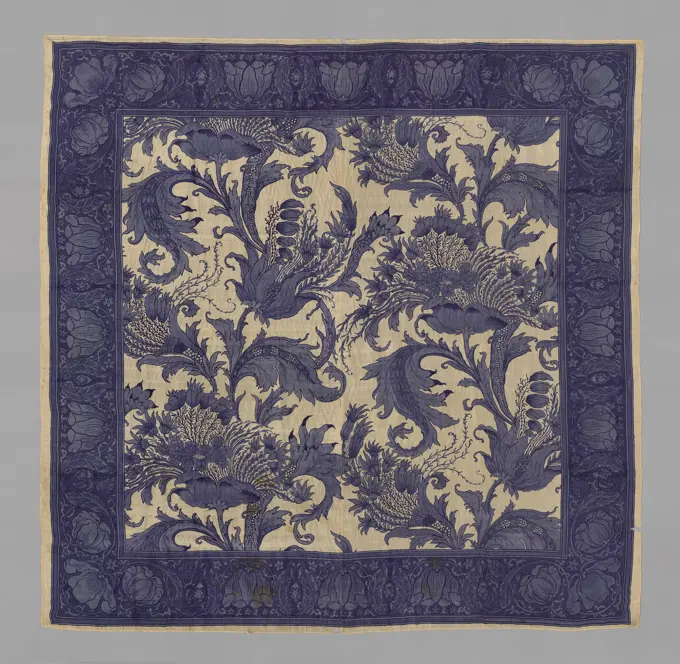
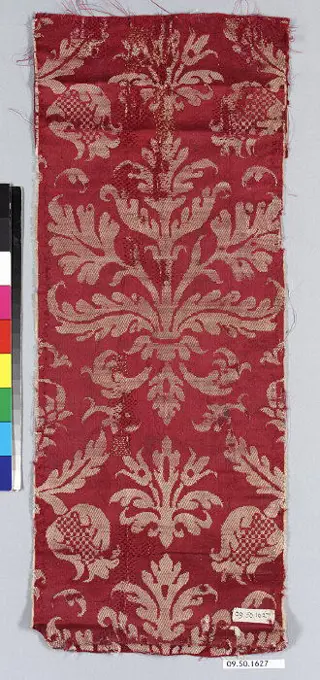
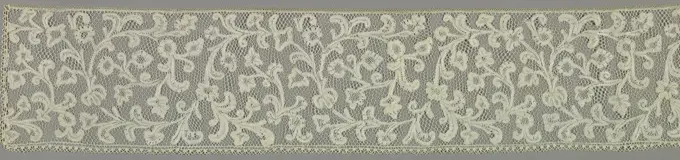
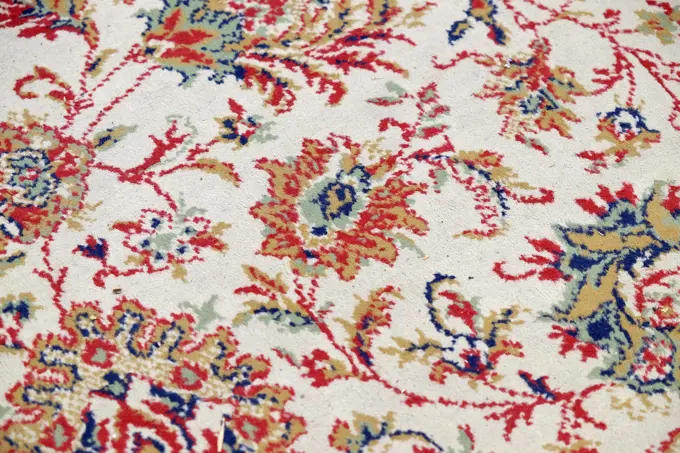
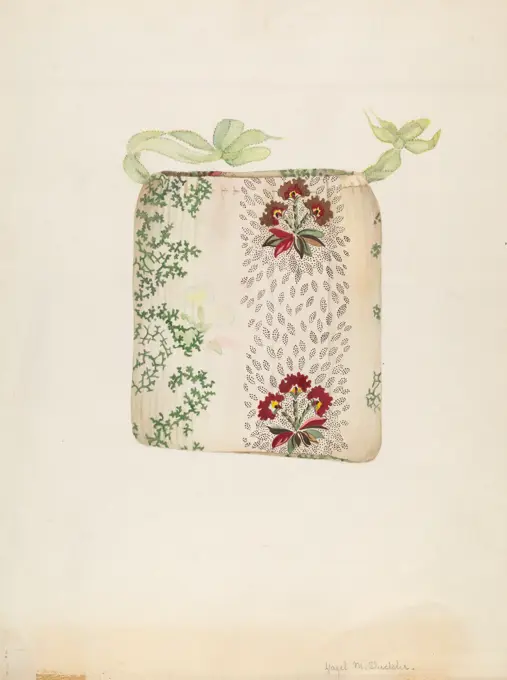
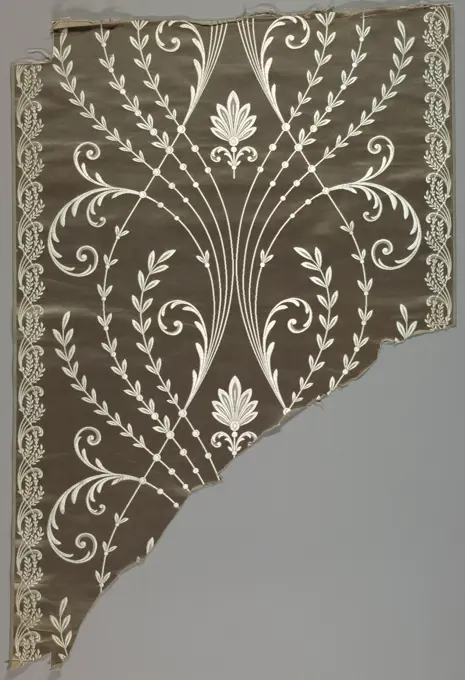
An assortment of ornate fabric and wallpaper designs from various centuries, featuring floral motifs and intricate detailing in soft colors.

Textile, Medium: silk Technique: compound weave with supplementary warp, Skirt panel of deep blue silk with close-set, parallel serpentine flowering branches with small birds and large bouquets in between. Two selvedges, each with pink and yellow satin stripe., Spain, 18th century, woven textiles, Textile
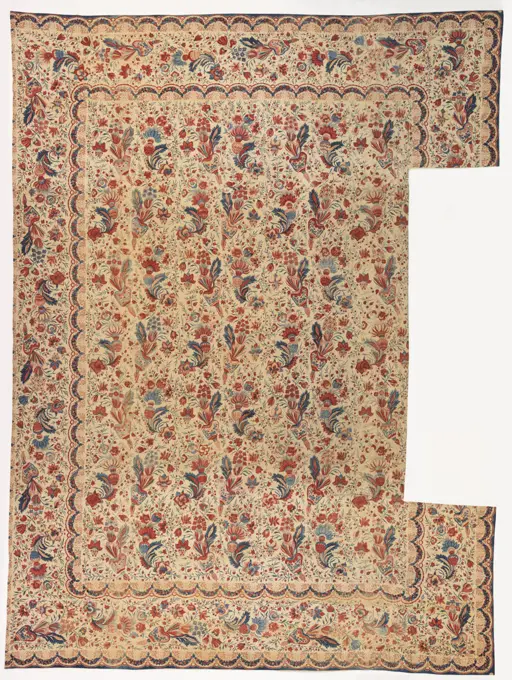
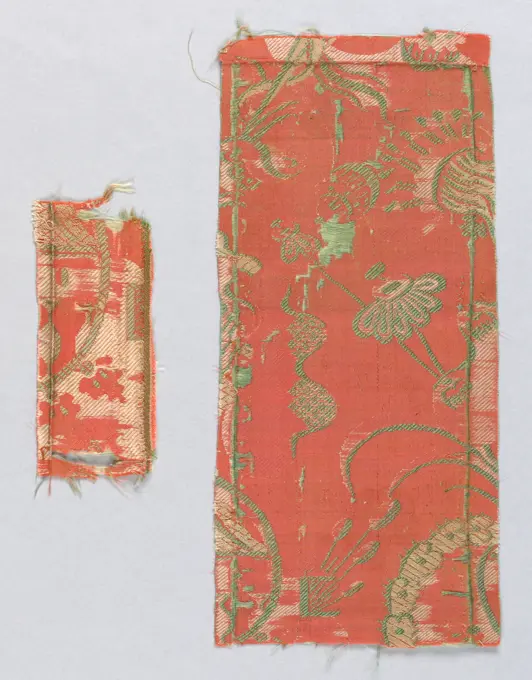
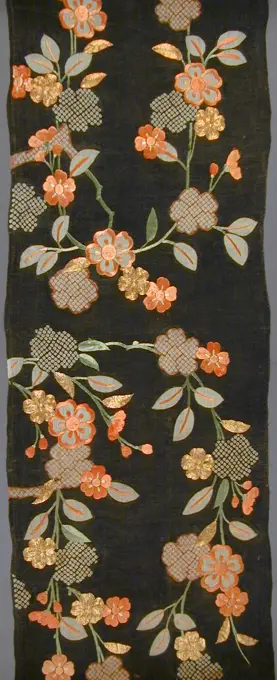
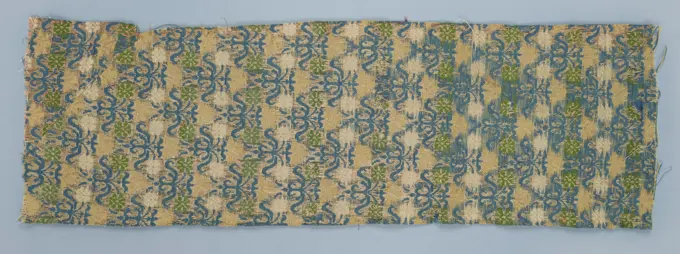
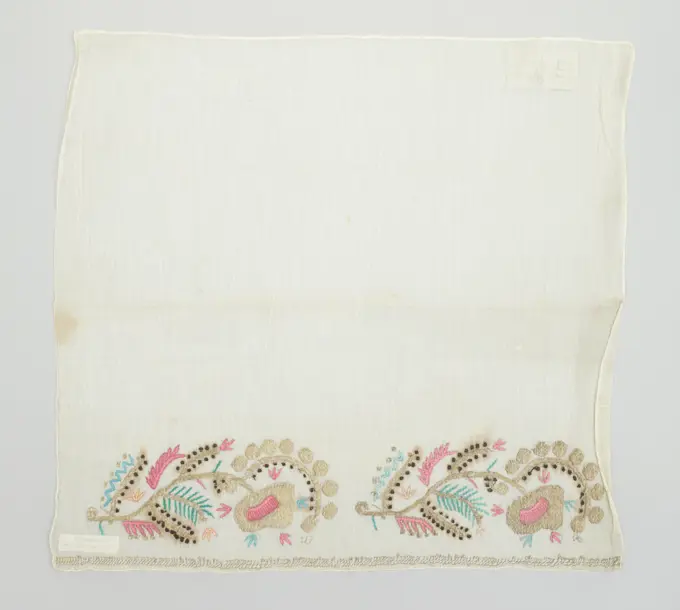
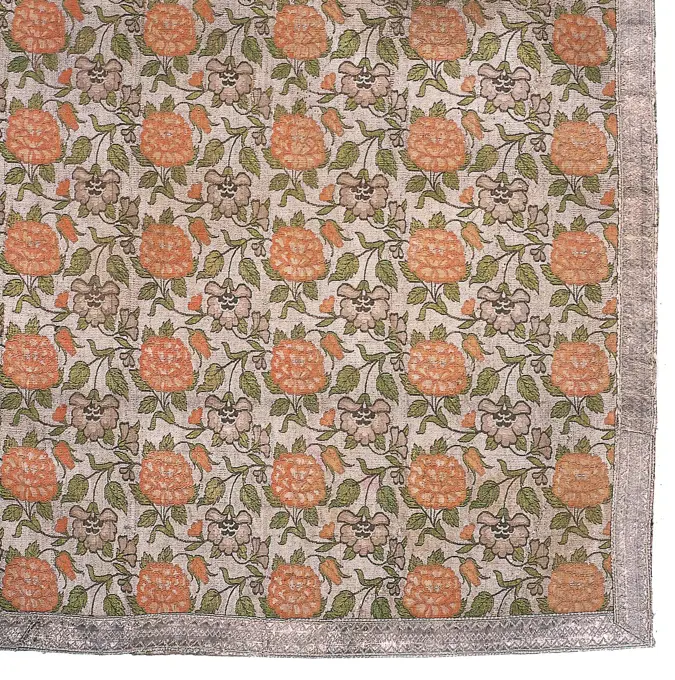
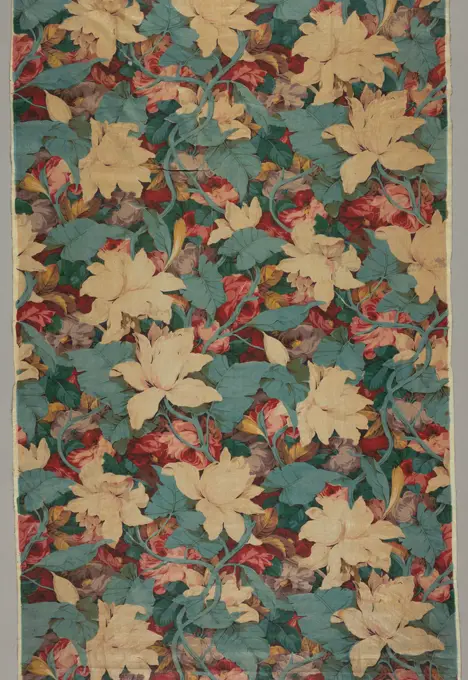
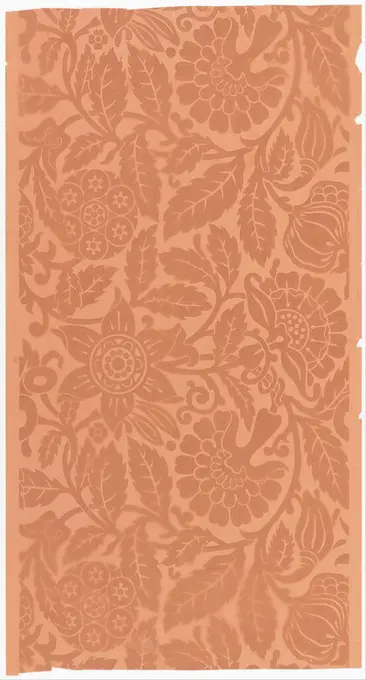
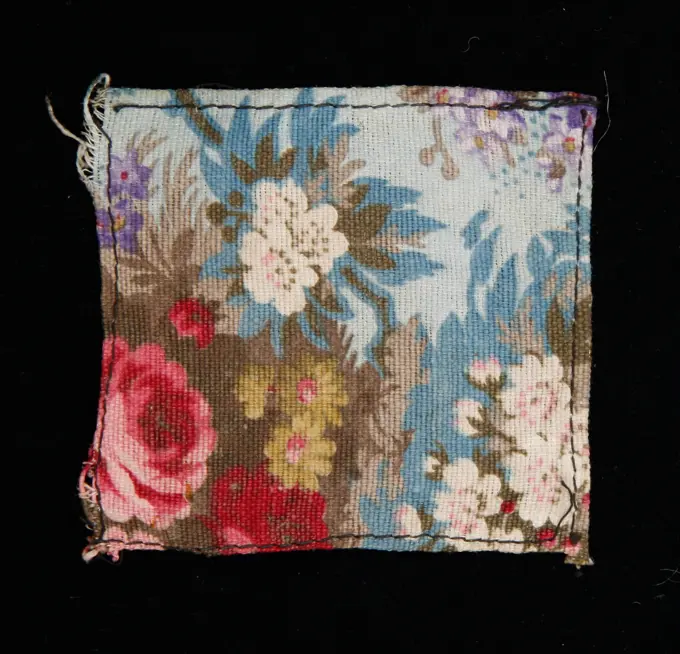
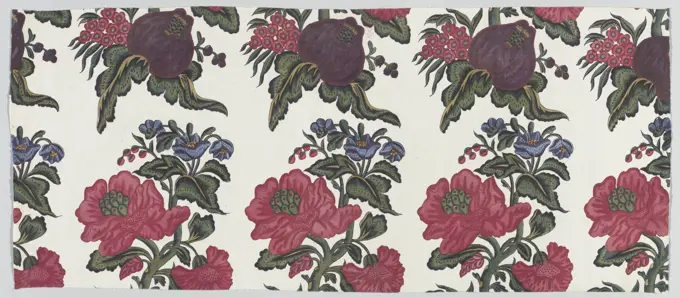
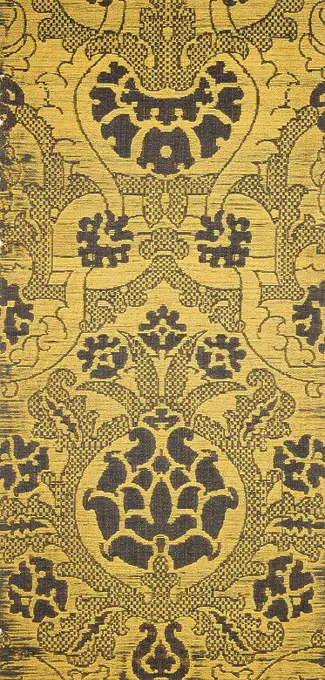
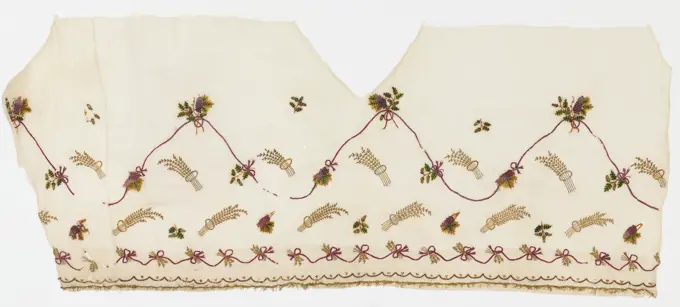
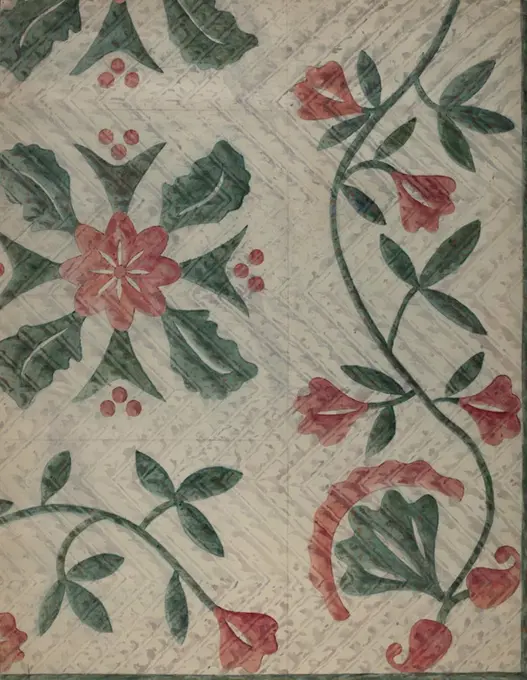
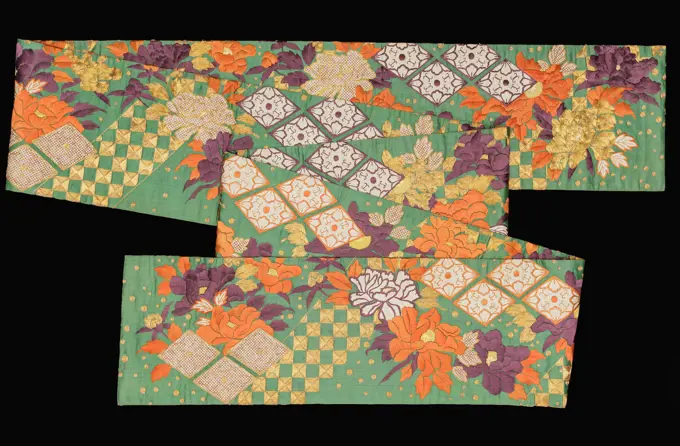
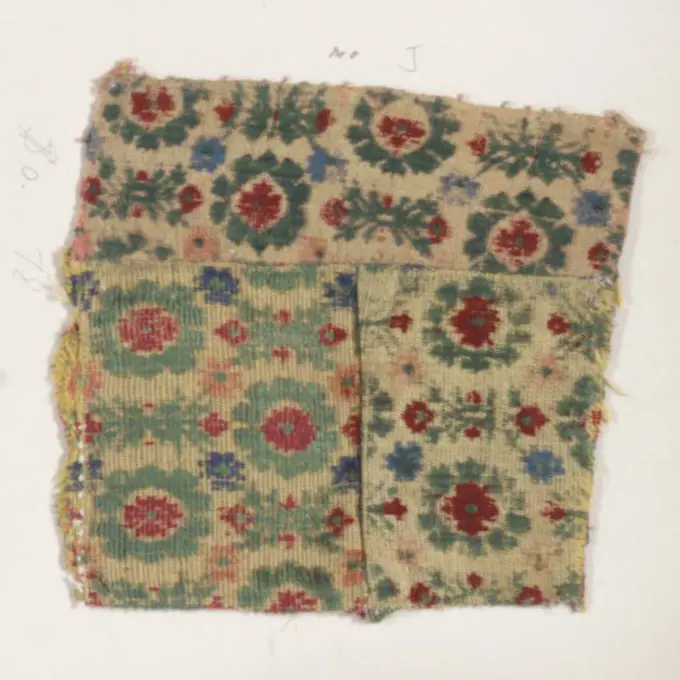
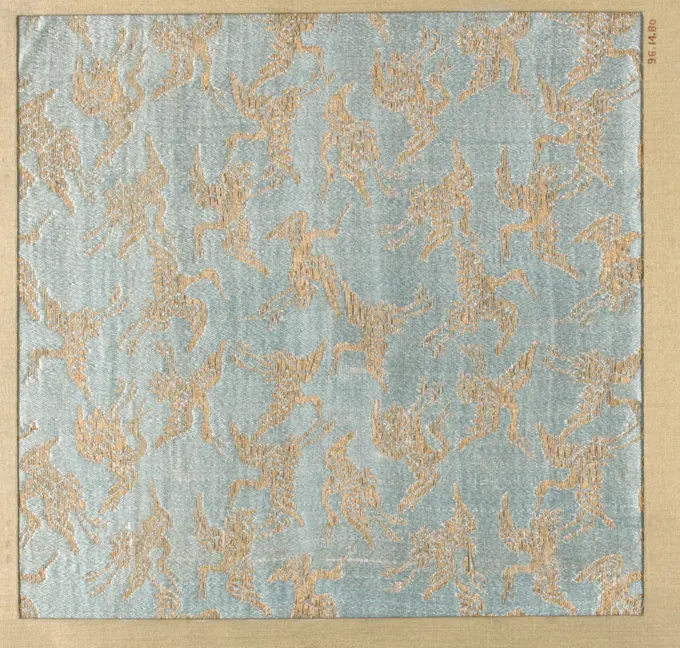
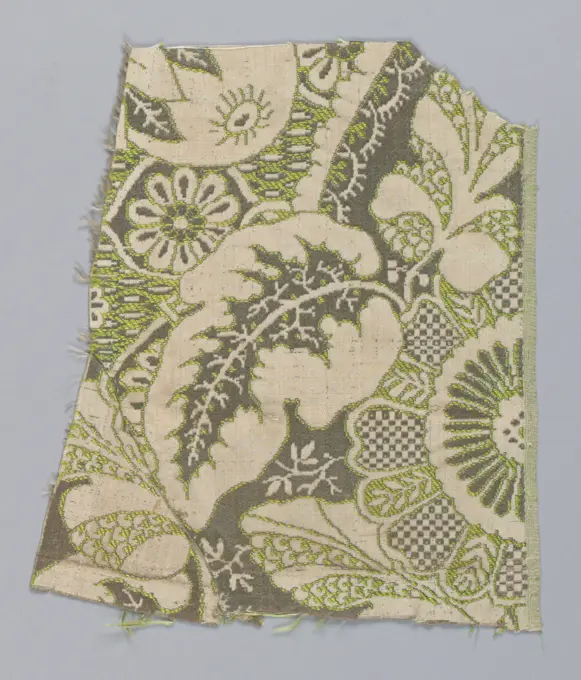
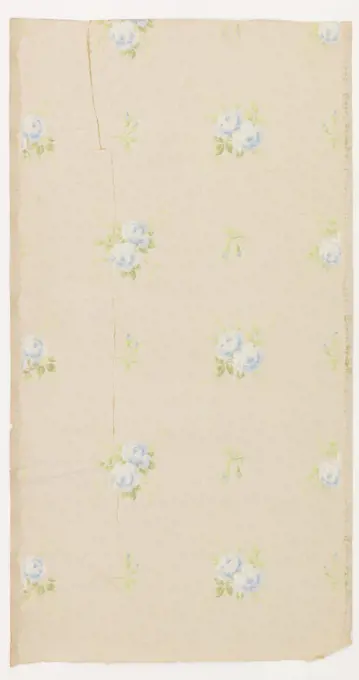
Fragment zijdeweefsel met bizar patroon.Fragment silk tissue, consisting of two pieces sewn together. Broched and launched Lamas Liséré. Dessin: bizarre pattern of veerous with geometric motifs. Stuffed leaves and fruit shapes (pomegranates) In Écru (ground tissue), green (liséré), écru (launch), pink (launch) and gold thread (golden slat round sides core) on green soil.Fragment (France); silk, metallic yarnsCeiling Paper (USA); Manufactured by Howell and Brothers; machine-printed paper, liquid mica; 91.5 x 49 cm (36 x 19 5/16 in.)Fragment of fabric brocaded with silver unknownSample (USA); Manufactured by Orinoka Mills (United States); 1989-80-52Textile, Schwartz-Huguenin, Medium: cotton Technique: printed on plain weave, A) Ground molotte printed in grey in zig-zag and meandering ivy pattern; over-printed with detached flower clusters in pink, blue, yellow and green. B) Similar ground, smaller vine; over-printed with large floral sprays and detached rosebuds in reds, pinks, yellow, blue and greens., mid-19th century, printed, dyed & painted textiles, TextileHanging, Medium: cotton Technique: mordant painted and resist-dyed (chintz), Hanging with part of one border cut out to shape it to coverlet use. Two large curving sprays with various large, carefully shaded flowers and large curving jagged leaves, and smaller, more delicate subsidiary sprays of flowerets, buds, berries-- one spray terminating in a fantastic bulging decorated jar with a leaf base, and one confined to two places by dotted bands-- alternate vertically in the wide border and horizontally and vertically in the rectangular body of the coverlet, filling both areas with an air of finality and grace., Wide guard borders set off the main border on inner and outer edges with continuously scalloping festoons, from which branch off at each high point delicate lobed leaves scrolling inward and with a filling of wavy lines suggesting seaweed. Shades of red and blue, and a soft aubergine from a combination of the two, with touches of a much-faded yellow; the outlines are red and paleFragment (Spain); silkTextile; cottonKatabira (Summer Kimono) Fragment with Weeping Cherry Blossoms. Japan, Edo period (1615-1868), 1667-1725. Textiles. Ramie (choma) plain weave, paste-resist dyed (...) and stenciled imitation tie-dyed (kata kanako shibori), with silk and gilt-paper-wrapped-silk thread embroideryFragment, Medium: silk, metallic thread Technique: woven, Oval shapes containing bouquets of tulips and carnations., Turkey, 16th-17th century, woven textiles, FragmentFragment of semi silk fabric unknownEmbroidered kerchief trimmings unknownFragment 18th century Italian. Fragment 230388Tapestry;  XVII century (1601-00-00-1700-00-00);Tarasowicz, Helena and Konstanty - collection, gift (provenance), MakatyTextile (England); cotton; Warp x Weft: 308 x 90 cm (10 ft. 1 1/4 in. x 35 7/16 in.) Repeat H: 100.3 cm (39 1/2 in.)Textile, Schwartz-Huguenin, Medium: cotton Technique: printed by engraved roller and block printed; highly glazed, Sample in similar pattern to A with grey striped ground, vermicular pattern in grey, blue vine and white flowers, and stripe over-printed with close clusters of pink and red carnations, and smaller flower, rgeen foliage., mid-19th century, printed, dyed & painted textiles, TextileTextile (England); cottonCushion Cover (China); silkDress of écru cotton with woven white relief motifs with three very large rosette flowers, upstairs two winter baskets; Upper dick edge and at the bottom of Pundrand ...Fragment; linen (ivory), silk (lt. rust, tan/ivory), wool (red, green)Fragment, Medium: silk Technique: raised pile of supplementary warp (cut and uncut) in satin foundation, Elongated palmettes and scrolls in red. Floral forms have zigzag motifs., Italy, possibly 18th century, woven textiles, FragmentFragment of pearl -colored silk with purple stripes, anonymous, 1750 Fragment of pearl -colored silk with purple stripes, on which white garlands such as lace and colored bouquets. The side shines. The Netherlands.  silk Fragment of pearl -colored silk with purple stripes, on which white garlands such as lace and colored bouquets. The side shines. The Netherlands.  silkbrocaded silk fragment, Medium: silk Technique: compound weave with discontinuous supplementary weft, Cream-colored fragment with floral sprigs in blue, light green, yellow, orange, and red., France, 18th century, woven textiles, brocaded silk fragmentFragment (France); silkTextile, Medium: silk Technique: cut voided supplementary warp pile (velvet) in plain weave foundation, Fragment of woven velvet with a small-scale symmetrical design of a bird, flowers and scrolls in green and pink pile on a white foundation., Italy, 16th century, woven textiles, TextileTwo textile fragments. Textile fragments, two embroidery of flowers and leaves with kirikane on brown fond.Piece 1775-80 French. Piece 221986Fragment, Medium: cotton Technique: relief printed on plain weave, Rectangular fragment in off-white with a design of vertical stripes and flowers. Stripes have a pattern of imbricated leaves while white areas have flower sprays and curling vines., France, late 18th century, printed, dyed & painted textiles, FragmentSidewall. Date/Period: 1880-90. Sidewall. Machine-printed. Height: 940 mm (37 in); Width: 500 mm (19.68 in). Author: UNKNOWN.Coverlet Made 1840-1845 Ohio. Cotton and wool, plain weave with plain interlacings of secondary binding warps and patterning wefts (Beiderwand); woven on loom with Jacquard attachment; two loom widths joined; fringed .Textile; wool; Warp x Weft: 63.2 x 52 cm (24 7/8 x 20 1/2 in.); 1958-109-1Tablecloth or Bedcover probably titled Ragged Poppy Made 1902 London. Silk, plain weave; block printed . John Scarratt Rigby (Designer)Textile; silk, metallic yarns; Repeat H: 50.2 cm (19 3/4 in.); 1976-65-11Fragment Made 1601-1700 Spain. Brocaded silk, plain cloth .Fragment, silk woven, Floral sprays in white on cerise background., China, late 19th century, woven textiles, FragmentMedieval ornamentTable cloth, doll's clothes, 1920s, New Zealand, by Florence Hall, Miss Margaret Hall. Gift of Betty McFadgen on behalf of Rori Hall, 2004.Textile (France); Manufactured by Schwartz-Huguenin; cottonCarpet Fragment (USA); woolFragment of silk fabric  colourful and naturaIIstic flower pattern unknownPiece 17th century Spanish. Piece 216650Fragment sits with a pattern of a branch with large fruit and flowers, anonymous, c. 1735 - c. 1740 Motive of large pomegranates, flowers and leaves in different shades of red, purple, blue, yellow and green on white stock. Eastern textile. Coromandelkust cotton (textile) Motive of large pomegranates, flowers and leaves in different shades of red, purple, blue, yellow and green on white stock. Eastern textile. Coromandelkust cotton (textile)Fragment. Spain. Date: 1525-1575. Dimensions: 63.9 x 36 cm (25 1/8 x 14 1/8 in.). Silk, satin weave with twill interlacings of secondary binding warps and patterning wefts. Origin: Spain. Museum: The Chicago Art Institute, Chicago, USA.Textile (England); Probably Harry Napper (English, 1860 - 1940); cottonBorder, Manchine printed on paper., Twisted ribbon and rose design with band of circles along top and bottom edge. Ribbon has gold floral motifs, and large yellow rose alternates with smaller red flowers., USA, 1880-90, Wallcoverings, BorderBorder; cotton foundation, wool and metallic embroidery, sequinsFragment, Medium: silk, linen or cotton Technique woven, Plant forms within diamond grid in yellow and tan., 17th century, woven textiles, FragmentQuilt. Dated: c. 1937. Dimensions: overall: 67.8 x 52.7 cm (26 11/16 x 20 3/4 in.). Medium: watercolor and graphite on paper. Museum: National Gallery of Art, Washington DC. Author: Katherine Hastings.Fragments (France); silk, metallic threadTextile Swatches Onondaga Silk Company, Inc. (1925-1981). , 1948-1959. Silk, 23 3/4 x 17 in. (60.3 x 43.2 cm).    1948-1959Frieze (USA); Manufactured by Maxwell & Co., S.A. (United States); machine-printed paper; 85.5 x 49 cm (33 11/16 x 19 5/16 in.)Machine-made Openwork Samples (USA); cardboard, linen, silk, metallic; 1971-26-2-39Border (USA); Manufactured by Hobbs, Benton & Heath; machine-printed paper; 93 x 49.5 cm (36 5/8 x 19 1/2 in.)Samurai-Class Womans Sash (kakeshita obi) with Peonies and Geometric Patterns. Japan, mid-Edo period (1615-1868), late 18th century. Costumes; Accessories. Silk satin (shusu) with stenciled imitation tie-dye (kata kanoko) and silk and gold-leaf-paper-wrapped-silk-thread embroideryTextile; cottonTextile (Italy); silk, metallic threadLength of Textile, 1723-1774. France, 18th century, Period of Louis XV (1723-1774). Plain compound cloth, brocaded; silk; overall: 88.6 x 54.6 cm (34 7/8 x 21 1/2 in.).White House furniture and furnishings. White House furnishings. Close-up of antique rug. White House, Washington, D.C.Band, Medium: linen Technique: bobbin lace, discontinuous tape, Lace in pattern of stem forming a continuous scroll with leaves and flowers growing from it., Milan, Italy, 17th century, lace, BandSidewall. Date/Period: Ca. 1785. Sidewall. Block-printed on joined sheets. Author: UNKNOWN.Handmade woven rug, oriental craft Handmade woven rug, oriental craft Copyright: xZoonar.com/ZvonimirxAtletix 22911885Textile (France); cotton; 1953-126-2-bFragment (Italy); silkHazel Sheckler, Cotton Bag, c 1937 Cotton BagFragment; silk wovenPanel from a Skirt Made 1701-1800 China. Silk, satin weave; painted .Fragment 18th century Italian. Fragment 230399Fragment, Medium: cotton Technique: printed, Fragment with a design of pink flowers and brown leaves, scrolls and irregular black forms on a white ground., England or USA, ca. 1850, printed, dyed & painted textiles, FragmentPiece 18th-19th century Japan. Piece 67667Sidewall - Fragment (USA); machine printed; in 7.5x10.5 envelopePiece 18th century Italian. Piece 216440Batik Sample, 27 1/4 x 27 1/4 in. (69.22 x 69.22 cm), Cotton; dyed, ChinaPiece 18th-19th century Japan. Piece 65812Frieze (USA); Manufactured by Maxwell & Co., S.A. (United States); machine-printed paper; 224 x 49.5 cm (88 3/16 x 19 1/2 in.)Fragment (France); silkCeiling paper, Carey Bros. W.P. Mfg. Co., Philadelphia, Pennsylvania, founded 1882, Machine-printed paper, liquid mica, Non-directional design of alternating large and small floral sprigs. Printed in blue, white, and green on a background of stylized floral motifs printed in white mica., Philadelphia, Pennsylvania, USA, 1905-1915, Wallcoverings, Ceiling paperSample early 19th century French. Sample 224719Border, Medium: silk embroidery on linen foundation Technique: embroidered in running and chain stitches on plain weave, Narrow strip cut from a bed curtain, with design of pairs of leaves in red, green, purple and grey on natural., Greece (Islands), 18th century, embroidery & stitching, BorderFragment multicolored, striped brochure silk, anonymous, c. 1750 - c. 1800 A fragment of green silk tissue with white stripes. A row of small red flower branches runs on the white stripes. A pattern of white flower branches, birds and butterflies runs on the green stripes. Spain (possibly) silk A fragment of green silk tissue with white stripes. A row of small red flower branches runs on the white stripes. A pattern of white flower branches, birds and butterflies runs on the green stripes. Spain (possibly) silkFrieze, Cresswell & Washburn Ltd, Philadelphia, Pennsylvania, 1880 - 1900, Machine-printed paper, Clusters of ferns in different shades of green, twigs, sprays, flowers and berries on a band of green, pink, and light blue bead-like moulding., Philadelphia, Pennsylvania, USA, 1905-1915, Wallcoverings, FriezeTwo textile fragments. Textile jacks, two on one leaf, embroidery on red fond.Man's Tie 20th century Japan. Man's Tie 70794Handkerchief French late 19th centuryFragments, Medium: silk Technique: plain weave with discontinuous supplementary wefts, Turquoise fragments with a pattern of lace festoons and detached floral bouquets., France, 18th century, woven textiles, FragmentsHandkerchief, Medium: linen Technique: plain weave center, bobbin lace (late Valenciennes ground), Handkerchief of linen with wide border of late Valenciennes lace in design of curving band with floral ornaments., France, late 19th century, lace, HandkerchiefSidewall (USA); Manufactured by W.H. Mairs & Co.; machine-printed paper, liquid mica; 91.5 x 49.5 cm (36 x 19 1/2 in.)Textile; Manufactured by Cheney Brothers (United States); silkTextile 19th century Japan. Textile. Japan. 19th century. Textiles-WovenTextile, Schwartz-Huguenin, Medium: cotton Technique: printed by engraved roller and/or block printed on plain weave; highly glazed, Three samples, same design, different colors. A) Grey ground, probably printed by 'Molette,' in minute geometric patterns with areas of foliage in grey, with white flowers; floral pattern of rose clusters printed over ground, probably by block. B) Green ground, roses red-violet. C) Grey ground, flowers blue with grey foliage. Highly glazed, Mulhouse, Alsace, France, 1851-63, printed, dyed & painted textiles, TextileFragment; silk, metal-wrapped silk-core yarnsFragment 18th century Italian. Fragment 230363Textile; silkPillow Cover Made 1601-1700 Italy. linen and silk .Bliżej Kultury unknownSampler, Medium: silk embroidery, linen foundation Technique: double running, cross and surface buttonhole stitches on plain weave, Eleven cross borders of floral and geometric ornament; alphabet and 'I. H.', England, late 17th century, embroidery & stitching, SamplerFragments From A Chasuble; silk, metallicPiece second quarter 19th century Spanish. Piece 223030Textile with peony on itWall tile, Lead-glazed earthenware, Similar to 1951-66-2, Ottoman Empire (present day Syria), late 16th-early 17th century, tiles, Decorative Arts, Wall tile