Historic Textile Patterns

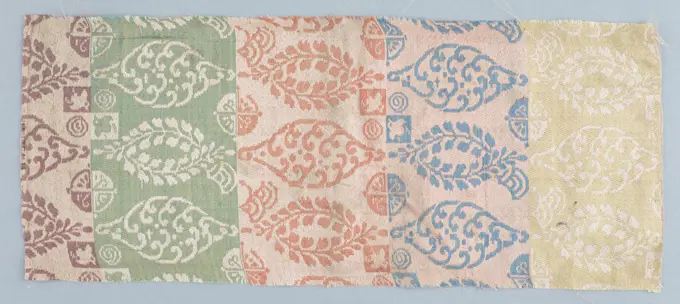
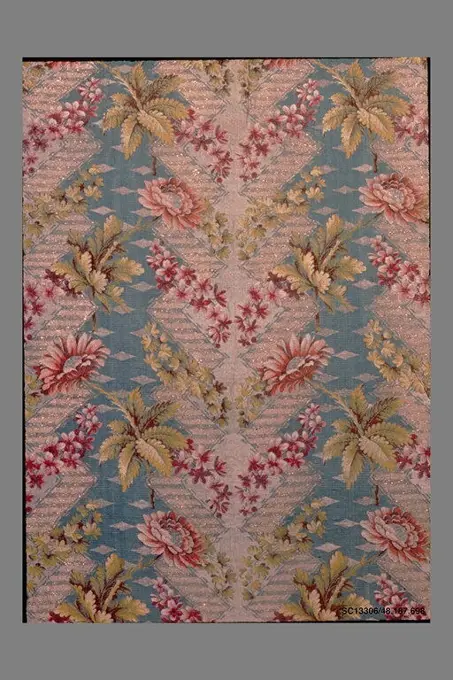
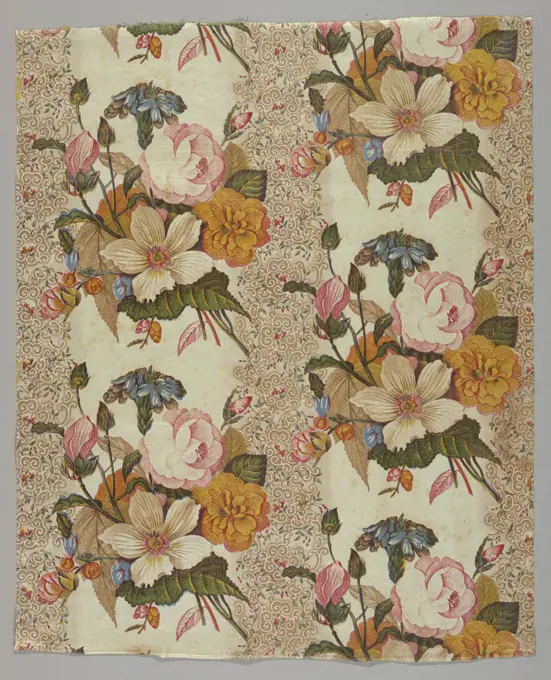
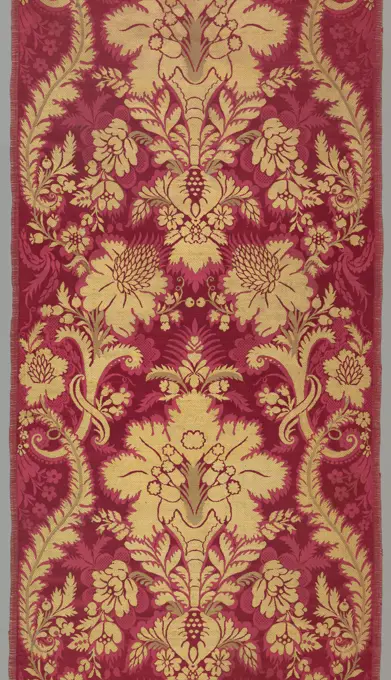
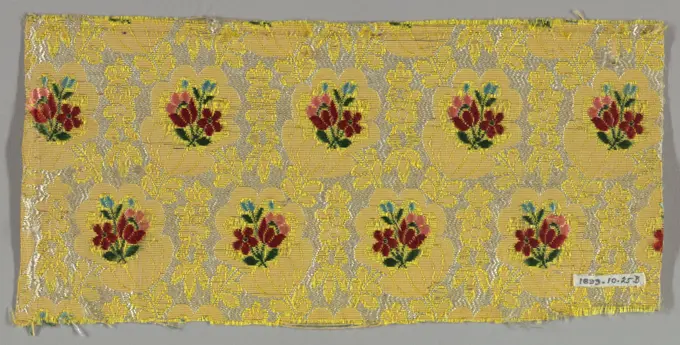
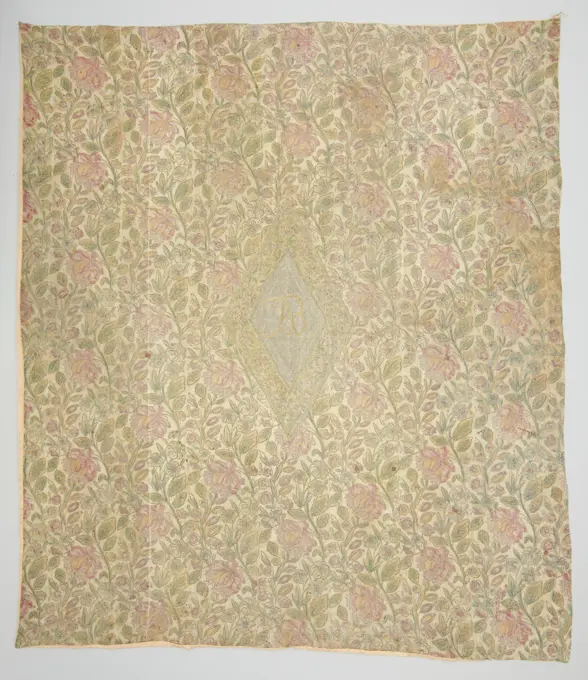
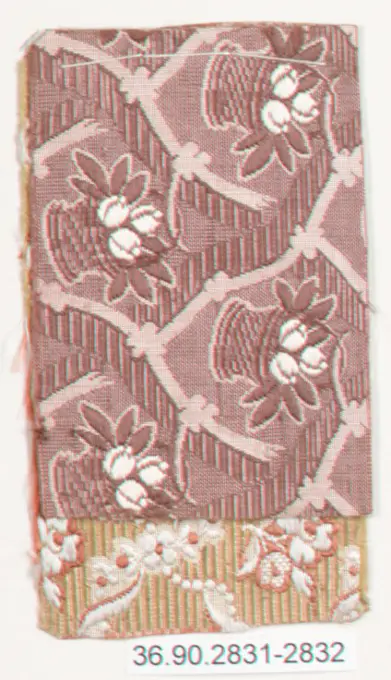
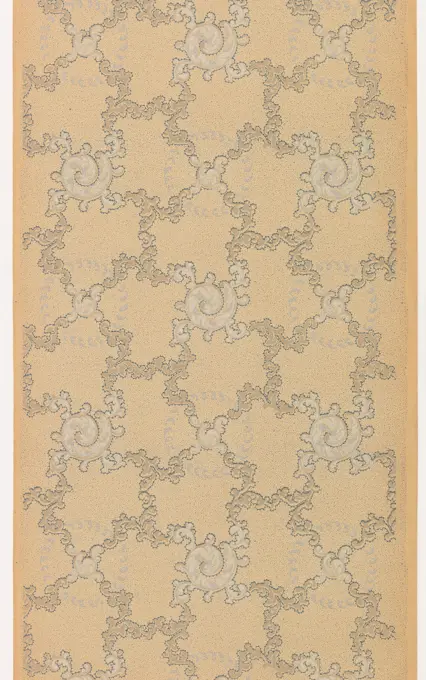
An assortment of ornate fabric and wallpaper designs from various centuries, featuring floral motifs and intricate detailing in soft colors.

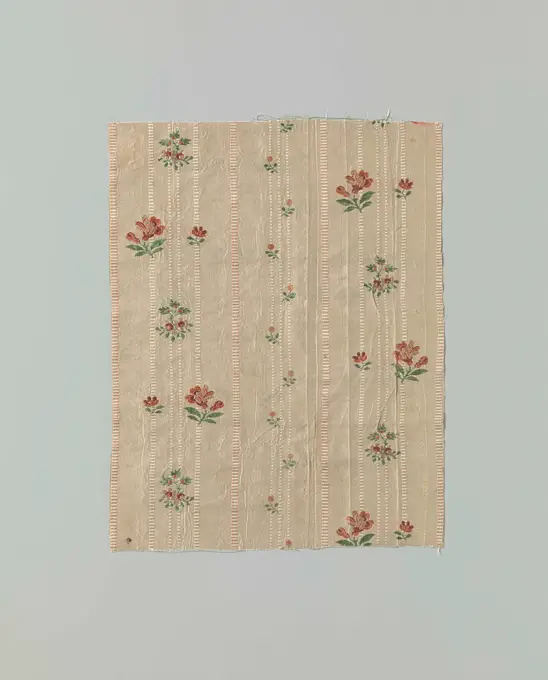
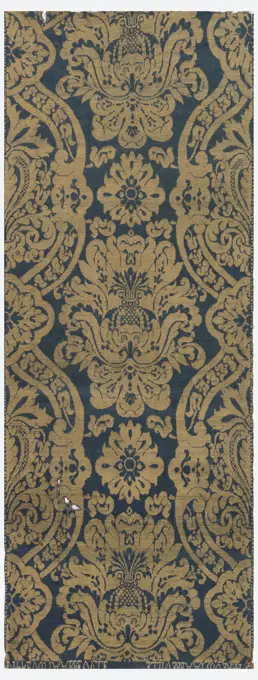
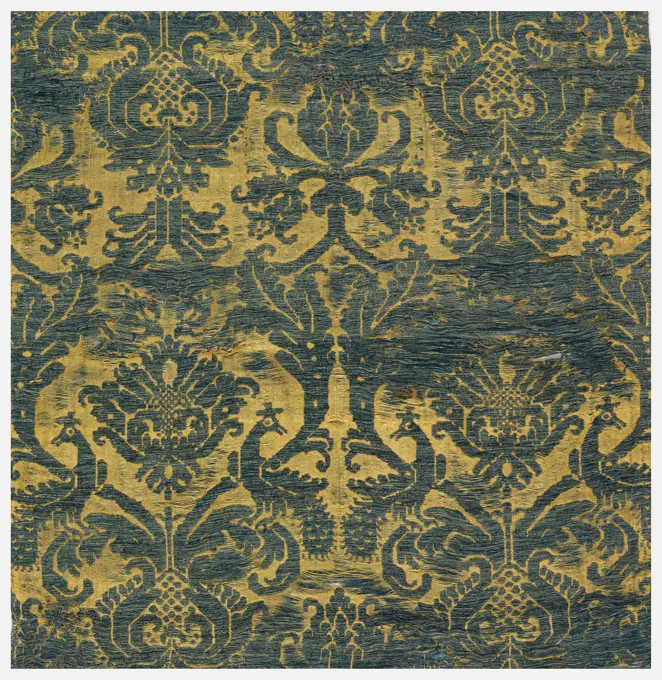
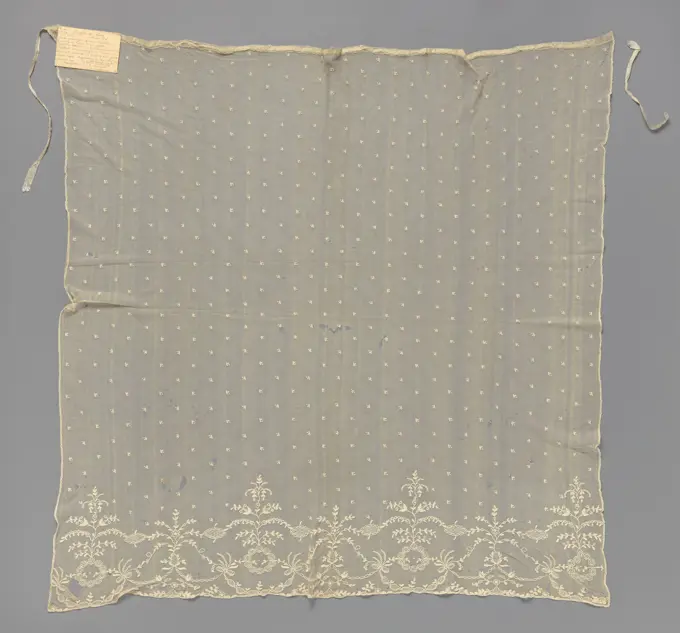
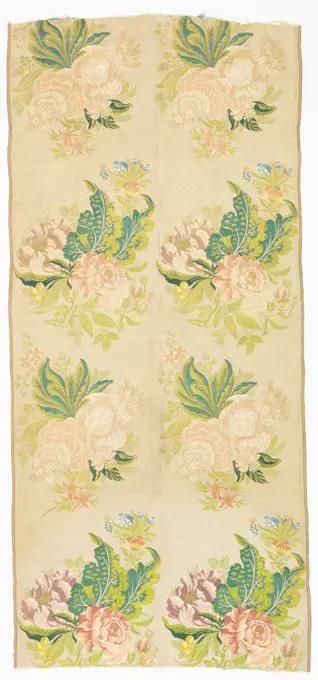
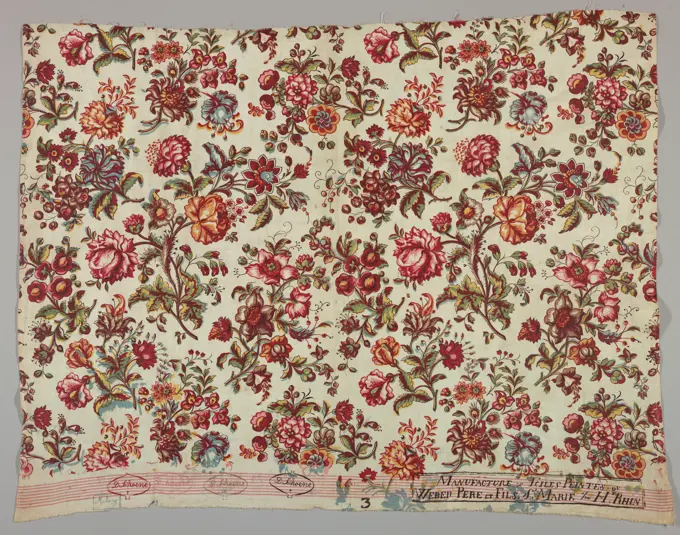
Textile, Medium: silk Technique: compound weave with supplementary warp, Skirt panel of deep blue silk with close-set, parallel serpentine flowering branches with small birds and large bouquets in between. Two selvedges, each with pink and yellow satin stripe., Spain, 18th century, woven textiles, Textile
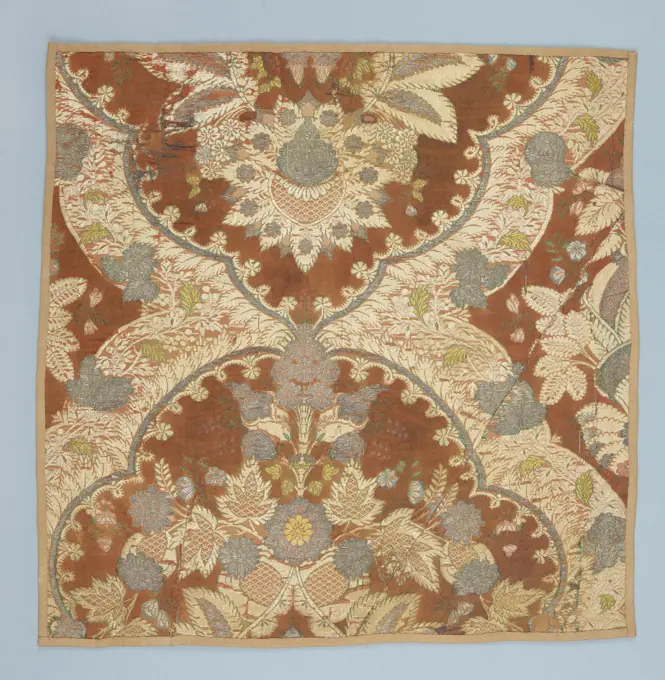
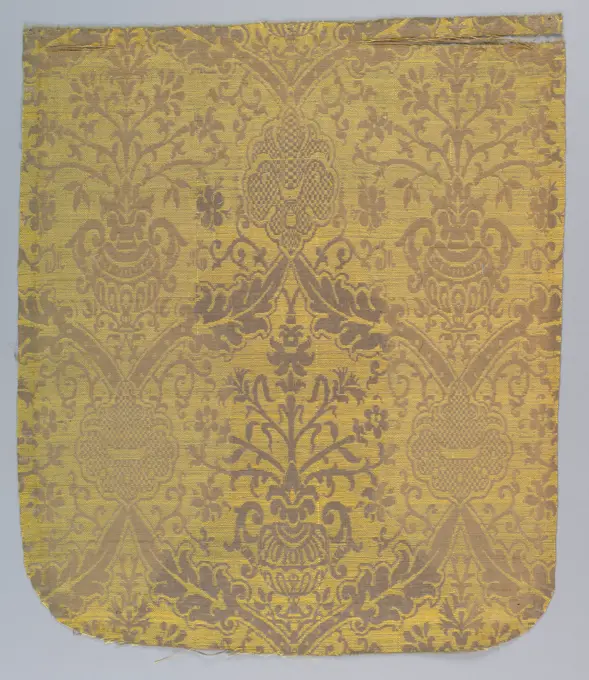
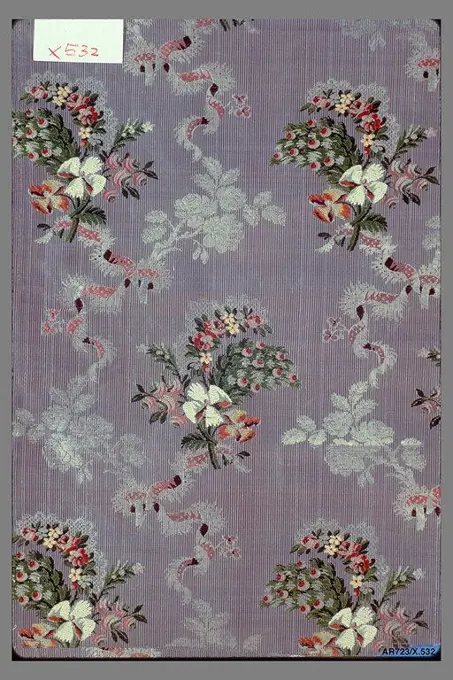
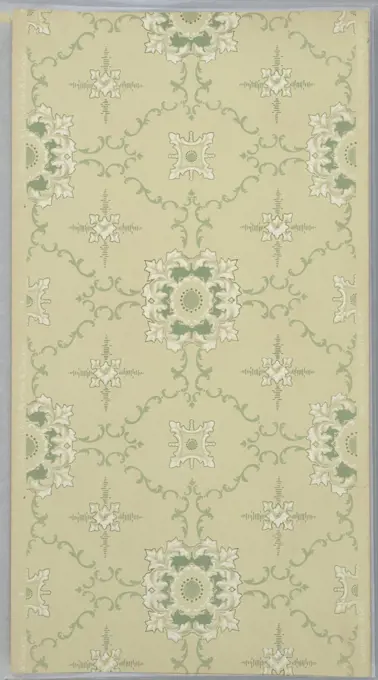
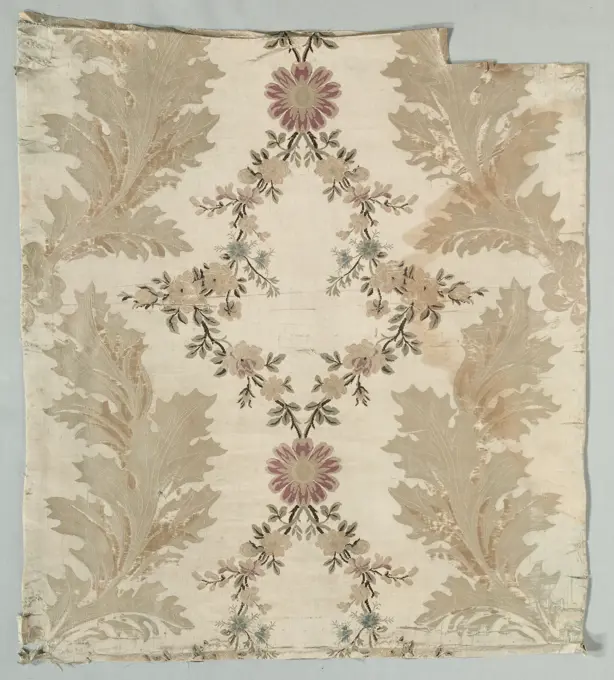
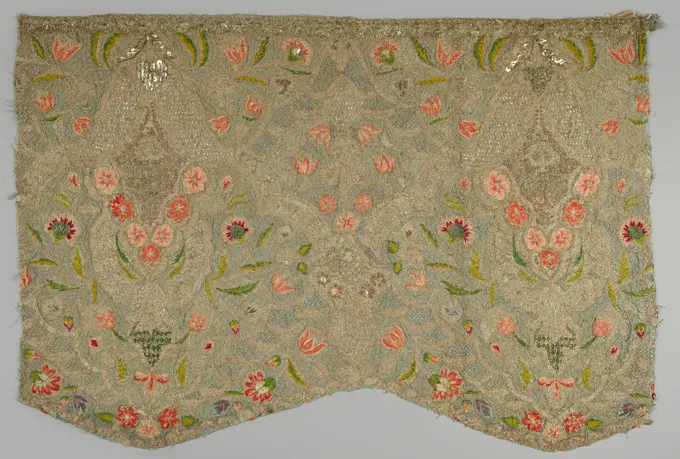
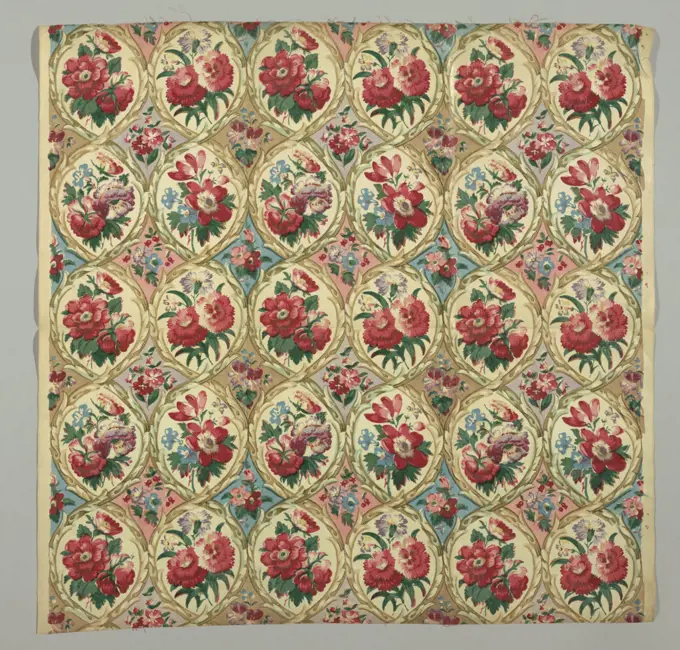
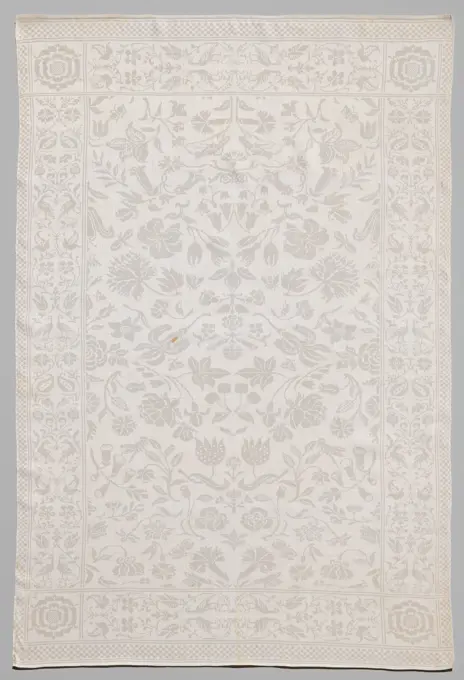
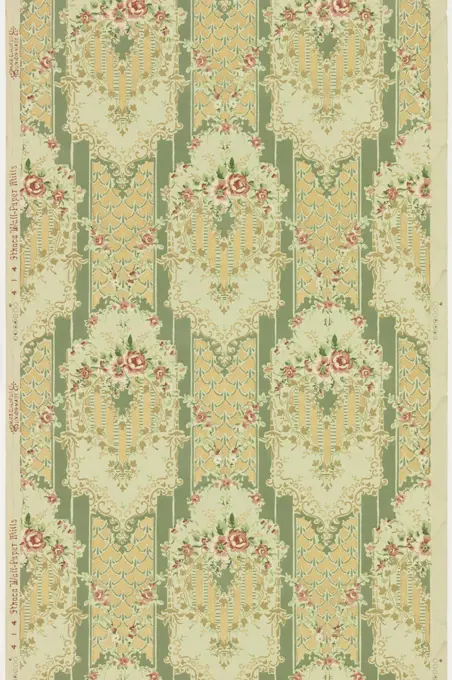
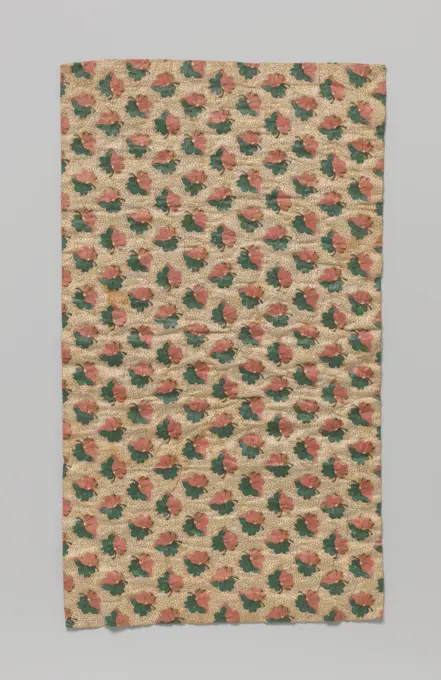
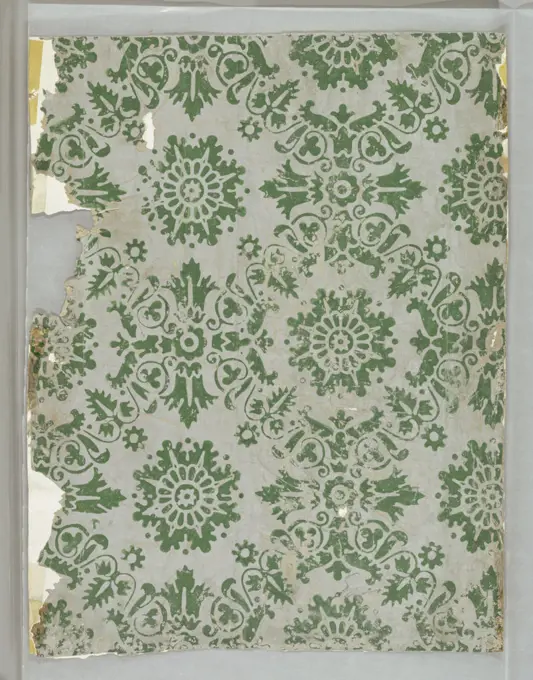
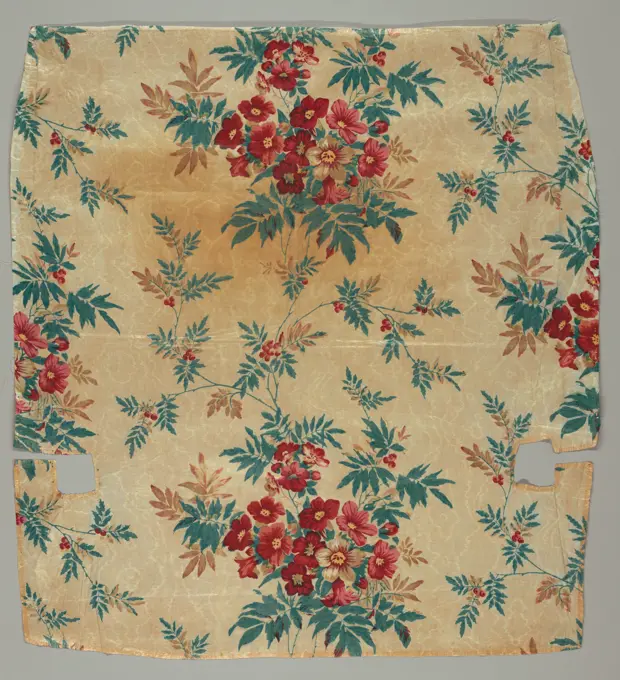
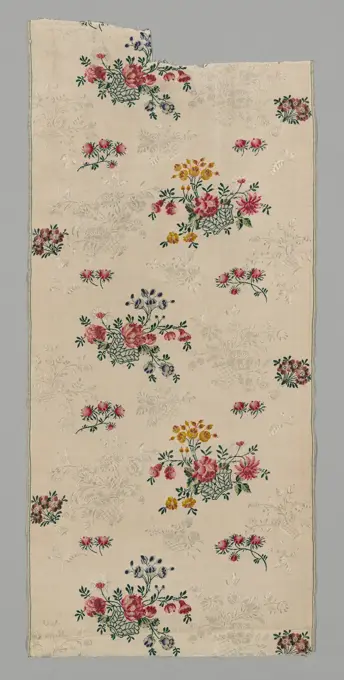
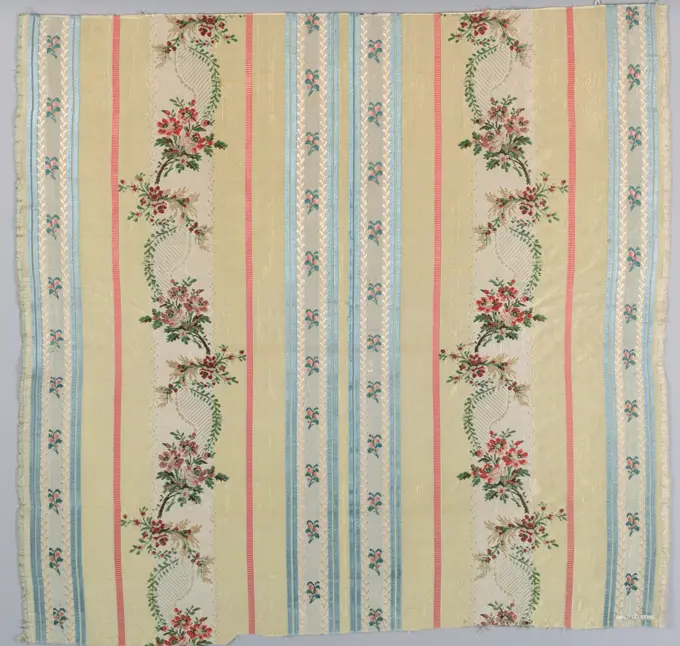
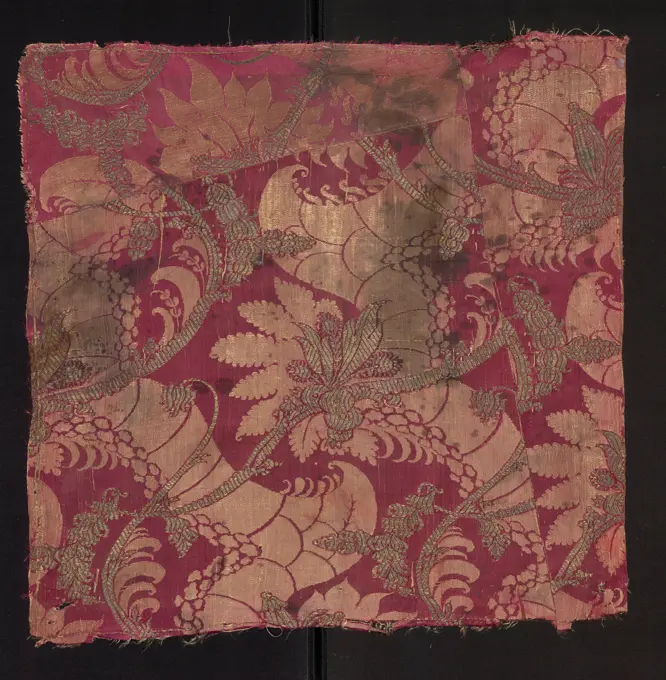
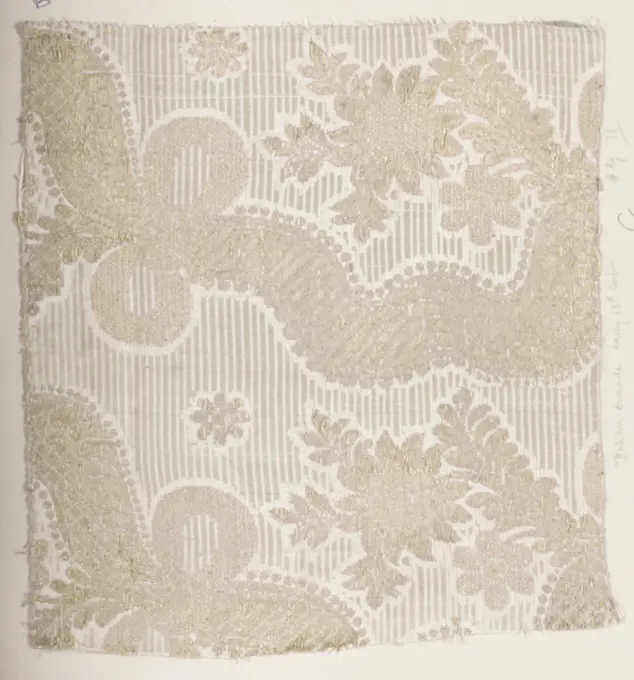
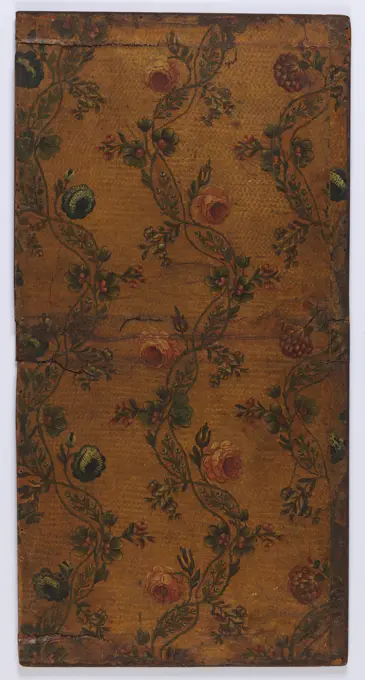
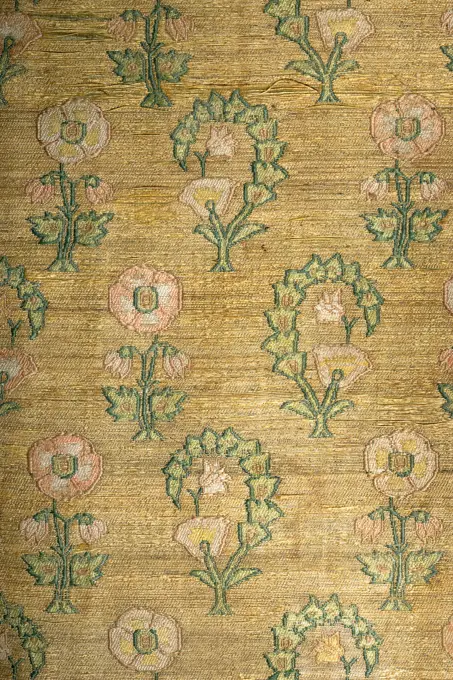
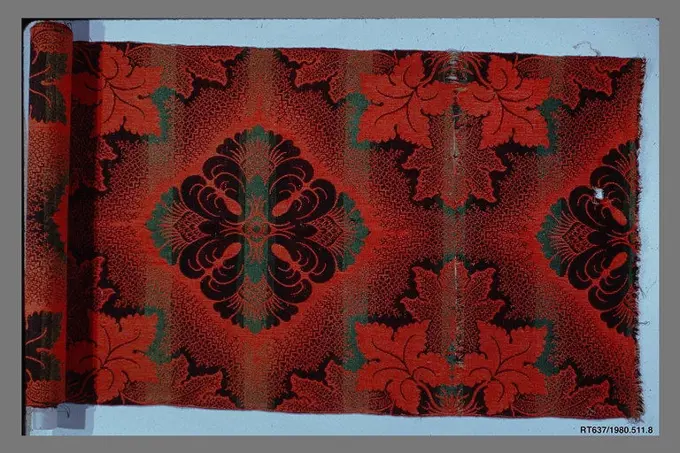
Length of Textile, 1723-1774. France, 18th century, Period of Louis XV (1723-1774). Brocade; silk and metal; overall: 118.1 x 54.3 cm (46 1/2 x 21 3/8 in.).Ceiling paper, Cresswell & Washburn Ltd, Philadelphia, Pennsylvania, 1880 - 1900, Machine-printed paper, liquid mica, Pink floral bouquets with bows connected by rope-like ribbon between which is a small pink floral motif. Cream ground. Printed in pinks, greens, golden yellow and white liquid mica. Printed in selvedge: 'C&W' pattern number '268', Philadelphia, Pennsylvania, USA, 1905-1915, Wallcoverings, Ceiling paperPiece mid-18th century British, London, Spitalfields. Piece. British, London, Spitalfields. mid-18th century. Silk and metal thread. Textiles-WovenTextile, Medium: cotton Technique: printed by engraved roller on plain weave; glazed, Cotton, printed, probably by roller, in small all-over pattern of pink morning glories and leaves. The green is the chemical or 'direct' green. Glazed., England, ca. 1850-1899, printed, dyed & painted textiles, TextileSarasa Made 1701-1800 Japan. Cotton, plain weave; stenciled; mordant-dyed; painted .Sidewall (USA); Manufactured by Maxwell & Co., S.A. (United States); machine-printed paper, liquid mica; 84.5 x 49 cm (33 1/4 x 19 5/16 in.)Fragment 16th century Spanish. Fragment. Spanish. 16th century. Silk, metal thread. Textiles-WovenTextile, Medium: silk Technique: compound weave with supplementary warp, Skirt panel of deep blue silk with close-set, parallel serpentine flowering branches with small birds and large bouquets in between. Two selvedges, each with pink and yellow satin stripe., Spain, 18th century, woven textiles, TextileTextile, Medium: linen warp, cotton weft Technique: block printed on plain weave, Curving stem with flowers and leaves on a picottage and vermicular background. Black, mustard, red, and blue., France, 1775-85, printed, dyed & painted textiles, TextileTextile (France); silk, metallic threadTextile; cottonUchishiki (Altar Cloth) Made 1801-1825 Japan. Fancy compound satin, silk and gilt paper .Fragment, Medium: silk, cotton Technique: two integrated structures; plain weave plus plain weave, Beige and white floral forms in half-drop arrangement on green background., 17th century, woven textiles, FragmentTextile, Medium: silk, wool Technique: two intercrossed plain weave structures (double cloth), Symmetrical pattern of yellow florals and exotic birds on red silk ground., possibly Italy, possibly Spain, mid- 16th-17th century, woven textiles, TextileFragment of a bedspread of Eastern textile with embroidery ,, 1690 - 1710 Fragment of a multi-colored tambourated Indo-Persian bedspread, decorated with volutes and flowers. India silk. cotton (textile) embroidering Fragment of a multi-colored tambourated Indo-Persian bedspread, decorated with volutes and flowers. India silk. cotton (textile) embroideringTextile (France); cotton; Warp x Weft: 57.9 x 74.9 cm (22 13/16 x 29 1/2 in.)Fragment of silk fabric  lace pattern unknownFragment Made 1540-1560 Turkey. Silk, ìgoldî metal-wrapped silk threads, warp float-faced satin foundation weave with a supplementary twill weave and supplementary brocading wefts bound in a twill order .Ribbon French 19th century View more. Ribbon. French. 19th century. Textiles-TrimmingsFragment; silk, linen (); Warp x Weft: 53 x 45 cm (20 7/8 x 17 11/16 in.)Breadth 18th century French. Breadth 230899Ceiling paper, Maxwell & Co., S.A., Chicago, Illinois, USA, Machine-printed paper, Alternating large and small acanthus medallions, enframed and/or separated by acanthus scrolls. Printed in green and white mica on light green ground., USA, 1905-1915, Wallcoverings, Ceiling paperTextile; silk; Warp x Weft: 66.5 x 53 cm (26 3/16 x 20 7/8 in.) Repeat H: 33 cm (13 in.)Length of Brocaded Textile, c. 1775. France, 18th century, Period of Louis XVI (1774-1793). Lampas weave, brocaded; overall: 54 x 48.6 cm (21 1/4 x 19 1/8 in.).Textile, Medium: cotton Technique: block printed on plain weave, Fragment of printed cotton with a half-dropped repeat of a curving vine with large blossoms in black, blue and two reds on a white ground with black picotage., 1750-1800, printed, dyed & painted textiles, TextileCover or Hanging Made 1601-1700 Turkey. Embroidered .Textile, Medium: cotton Technique: block printed on plain weave with a resist medium; then immersion dyed in blue, Fragment of a large scale vertically symmetrical pattern with an urn of flowers within a grid based upon an ogee., France, late 18th century, printed, dyed & painted textiles, TextileTextile ; silk, metallic yarnsTextile, Medium: silk, metallic Technique: 41 satin damask with discontinuous supplementary weft patterning (brocade) Label: Silk damask brocaded with silk and metallic yarns, Length of woven silk in the so-called bizarre style, with fantastic vegetal forms on sinuous branches in gold brocade with touches of red, on a cream-colored satin damask ground., Italy or France, ca. 1700, woven textiles, TextileCoverlet, mid 19th century. America, New York , mid 19th century. Double wool weave: wool and cotton; average: 225.1 x 167.6 cm (88 5/8 x 66 in.).Fragment of embroidery  imitation of the so called lace ornamentation” pattern unknownTextile, Medium: cotton Technique: printed on plain weave, glazed, Ogival lattice framework with small bouquets of carnations in reds and blues on a white ground; in interstices the ground alternates pink and blue, with small floral sprays., England, late 19th century, printed, dyed & painted textiles, TextileSampler (Mexico); silk and metal embroidery on linen foundationTextile; cottonNapkin with a flower pattern, anonymous, c. 1650 Linnamast napkin with flower pattern. Midfield: loose flowers on branch. The symmetrical pattern shows no repetition. Among other things: Carnation, Lelie, Papaver, Iris, Roos, Kievitsbloem, Ranonkel, Rozavop, Campanulas, TROS cherry, Digitalis, Krekel, Lubel, Bij, Chapel and Butterflies. Standing and lying edges: Spitsboogranken with two birds and flowers. Hoek: rosette. Double line as a frame. Northern Netherlands linen (material) damask Linnamast napkin with flower pattern. Midfield: loose flowers on branch. The symmetrical pattern shows no repetition. Among other things: Carnation, Lelie, Papaver, Iris, Roos, Kievitsbloem, Ranonkel, Rozavop, Campanulas, TROS cherry, Digitalis, Krekel, Lubel, Bij, Chapel and Butterflies. Standing and lying edges: Spitsboogranken with two birds and flowers. Hoek: rosette. Double line as a frame. Northern Netherlands linen (material) damaskSidewall, Ithaca Wall-Paper Mills, Ithaca Wall-Paper Mills, inc. 1900-1907, Machine-printed paper, liquid mica, Bands of diaper or scale-pattern with large floral medallions. Medallions have pink roses, foliate vining, scrolls, stripes and torches. Connecting the medallions are rose swags. Between bands are two thick green stripes and three thin green stripes. Printed in pinks, greens, tan and metallic gold on light green ground. Printed in right selvedge: 'Ithaca Wall-Paper Mills' 'M.P & C.M. of US' 'Union Made' 'AFOL' or 'AOFL' pattern number '414'., Ithaca, New York, USA, 1905-1915, Wallcoverings, SidewallFragment of fabric unknownSamples, Orinoka Mills, (Philadelphia, Pennsylvania, USA), a. Green ground with weft strips of color for floral motif., b. Light brown ground with weft strips of color for floral motif., USA, ca. 1910, woven textiles, SamplesPiece ca. 1830 British. Piece. British. ca. 1830. Cotton. Textiles-PrintedTextile (England); cottonFragment Made 1625-1675 Italy. Linen and wool, plain weave; tied and free double cloth .Piece ca. 1730 Italian. Piece 227392Textile, Medium: cotton Technique: engraved and relief roller printed on plain weave; red, brown and black printed by engraved roller; yellow and blue printed by a relief roller, Polychrome panel with a vertical arrangement of flower bouquets of roses and passion flowers with foliage. Set off against vertical background stripes of small S-curves within foliage. Staggered repeat., England, ca. 1835, printed, dyed & painted textiles, TextileTextile; silk; Warp x Weft: 246.4 x 55.2 cm (8 ft. 1 in. x 21 3/4 in.) Repeat H (pattern): 67 cm (26 3/8 in.)Fragment of cotton fabric  flower vase pattern in net composition unknownPiece 18th century Japan. Piece 71685Fragment; silk, cotton, and metalWall hanging, printed unknownFragment (China); silk; Bequest of Richard Cranch Greenleaf in memory of his mother, Adeline Emma Greenleaf; 1962-56-188-a,bPiece French 19th centuryRectangular cloth with leaf pattern, Susanna Maria van Pabst Rutgers-Linse, c. 1836 - c. 1898  Netherlands textile materials  Netherlands textile materialsSidewall, Block-printed, Rosettes in diaper-like framework. Printed in green on gray ground., USA, 1800-1850, Wallcoverings, SidewallTextile (England); medium:cottonTwo Lengths of Textile, 1500s. Italy or Spain, 16th century. Damask, silk; overall: 54.2 x 56 cm (21 5/16 x 22 1/16 in.).Fragments; silk, cotton, metallic yarnsFragment early 18th century Italian, Venice. Fragment 230532Fragment early 18th century Italian. Fragment 230203Length of Silk Damask Textile, 1700s. Italy, 18th century. Damask, silk; average: 81.3 x 57.1 cm (32 x 22 1/2 in.).Panel (From a Dress) Made 1740-1750 England. Silk, plain weave with patterning and brocading wefts .Napkin from white Linnamast ,, c. 1767 - c. 1816 White Linningenendamasten Napkin with a pattern of thrown rosette branches and rosez button in connection, brand WS 24. Netherlands (possibly) linen (material) damask White Linningenendamasten Napkin with a pattern of thrown rosette branches and rosez button in connection, brand WS 24. Netherlands (possibly) linen (material) damaskFragment, 1800s. China, 19th century. Silk; overall: 16 x 14.7 cm (6 5/16 x 5 13/16 in.).Kloskant Albesto smoke with two alternating oval cartouches and berry branches, anonymous, c. 1750 - c. 1774 Strip of natural -colored bobbin: old Brussels bobbin. The strip is used or intended for an albe (underwear from a priest). The repeating pattern exists two different oval cartouches with a flower branch in the center. One cartouche is larger and covers, with the double frame at the top, almost the entire width of the strip. Under the smaller cartouche are comparable bent berry branches that are in the double list at the top of the large cartouche. The cartouches alternate. In addition to the berry branches, the cartouches are surrounded by leaves, rosette flowers, flower stems and C-volutes. Along the underside of the strip is a succession of berries, berry branches, flowers and leaves, under arches that are formed by flower and leaf branches. The motifs are made in netslag and linen battle with openwork edges and without contour threads, but with drowned relief contours, so -cFragment, Medium: silk Technique: 5-harness satin damask, Red and cream-colored fragment with a design of a rayed sun with a crown., Italy or Spain, 16th century, woven textiles, FragmentBook cover with overall red floral pattern 18th century Anonymous. Book cover with overall red floral pattern. Anonymous , 18th century. 18th century. Relief print (wood or metal). PrintsCrewel wool fragment, Medium: wool on cotton Technique: stem and satin embroidery; french knots and several varieties of cross-stitches on plain weave, Floral pattern embroidered in stem, French knots and several varieties of cross-stitches., France, ca. 1740, embroidery & stitching, Crewel wool fragmentCover;  beginning of the 18th century (1701-00-00-1710-00-00);Textile LengthTextile (England); 1983-85-7Fragment multicolored striped brochure side. Fragment multicolor silk tissue. A cream-colored ground has stripes in white and pink with sprinkled flower branches.Textile, Medium: cotton Technique: printed on plain weave, Series of borders with blue flowers., England, 1840s, printed, dyed & painted textiles, TextileMachine-made Openwork Samples (USA); cardboard, linen, silk, metallic; 1971-26-2-31Fragment; 1910-42-1Textile, Medium: linen, cotton Technique: lampas: plain weave foundation. Supplementary weave is plain weave with no interlaced connection., The pattern is yellow on blue., France, late 17th century, woven textiles, TextileFragment of the fabric;  around 1712 (1710-00-00-1712-00-00);Goldberg-Górska, Jadwiga (1890-1968)-collection, gift (provenance), fabrics, silk fabrics, silk fabrics of the 18th century, bizarre designsFragment 18th century Italian. Fragment 230351Textile; Manufactured by Schwartz-Huguenin; cottonMildred E Bent, Applique Quilt, 1935 1942 Applique QuiltTextile; Manufactured by Schwartz-Huguenin; cottonLeather (Holland); leather, silvered, varnished and painted; 127 x 65 cm (50 x 25 9/16 in.); 1913-34-8Tapestry;  18th century (1701-00-00-1800-00-00);Krzeszowice, collection, MakataLinnamast napkin with a naturalistic flower pattern, Anonymous, 1732 - 1734 Napkin made of white linen with a naturalistic flower pattern. From a dash of large flowers and leaves in the middle, both downwards and upwards a bunch of branches with large flowers and leaves and (bottom) a gourd -like fruit. The branches first bend to the edge but come together again in a flower, from which fine tendrils spring that fill the cartouches formed by the swing of the branches. Branches along the self -sides also seem to grow from the middle branches. Between the heavy, naturalistic flowers and leaves very fine flowers, clays and twigs with small leaves that ventilate the whole. Brand: Overhoeks with cross stitch: HD and 36. Flanders (Possible) linen (material) Napkin made of white linen with a naturalistic flower pattern. From a dash of large flowers and leaves in the middle, both downwards and upwards a bunch of branches with large flowers and leaves and (bottom) a gourd -like fruit. The branchSidewall (USA); Manufactured by Carey Bros. W.P. Mfg. Co.; machine-printed paper; 95 x 47.5 cm (37 3/8 x 18 11/16 in.)Woven carpet piece 1835-40 British, probably. Woven carpet piece 13583Fragment (Spain); silk, linenVeil or apron of lace plaque on mechanical tulle with a floral border under spreading motif, anonymous, c. 1830 Veil worn on a canopy hat or an apron of a Frisian costume of natural -colored lace -ups: Lierse side (tambouring work on mechanical tulle). Rectangular model, with a natural satin ribbon through a hem on the short top. At the bottom of the veil, the tambouring work has a repeating pattern with two varied thin flower branches with fine flowers and leaves. The flower branches are symmetrical and stand upright. The slightly large branch originates from a circular motif made with ten small circles. The slightly smaller branch originates a small oval. Under the branches and connected to circle and oval, an ongoing pattern of garlands with ovals and bows. The flower branches are semi -recreation connected by an oval motif between two side branches. The rest of the veil is decorated with a scatter motif. The long (standing) sides are finished with a narrow edge of lace -ups: a succTextile, Medium: cotton Technique: block and roller printed, glazed, Flowering branches in shades of red, green, yellow, and blue on a pale green ground., France, 1850-1900, printed, dyed & painted textiles, TextileFrieze, Janeway & Co. Inc., New Brunswick, New Jersey, 1848 - 1914, Machine-printed paper, Printed two across. Alternating larger and smaller foliate medallions, oulined with scrollwork and squiggles., New Brunswick, New Jersey, USA, 1905-1915, Wallcoverings, FriezeDress of Eastern textile with multi -colored embroidery ,, c. 1800 - c. 1899 Dress of multi -colored tambourized cotton, decorated with flower vines and ornament, lined with cotton. India cotton (textile). silk embroidering Dress of multi -colored tambourized cotton, decorated with flower vines and ornament, lined with cotton. India cotton (textile). silk embroideringPiece of fabric. unknown, authorTextile (France); silkFragment Made 1650-1700 Germany. Linen and wool, plain weave with supplementary weft .Piece 1750-60 French. Piece 223343Fragments of silk fabric  a pattern of asymmetrical flower branches in the rows passing unknownSidewall (USA); Manufactured by Maxwell & Co., S.A. (United States); machine-printed paper, liquid mica; 93.5 x 49.5 cm (36 13/16 x 19 1/2 in.)Chef De Piece (France); Company: Weber Pere et fils; cotton; Warp: 67.5 cm (26 1/2 in.) Weft: 86.5 cm (34 in.). Both selvedges present. Pattern: Height of repeat: 47 cm (18 1/2 in.) Width of repeat: 42 cm (16 1/2 in.). Arranged as a straight repeat.Fragment, Medium: silk Technique: damask, Long vertical strip with large repeat of a spray with flowers and fruit in a faded coral color., 18th century, woven textiles, FragmentPatchwork fragment, Medium: cotton Technique: patchwork, A triangular fragment made up of three types of printed cotton: brown with blue and white leaves; brown with tan and white geometric forms; and tan with a pattern of white dots., USA, mid- 19th century, embroidery & stitching, Patchwork fragmentFragment; silk, metallic thread; Bequest of Richard Cranch Greenleaf in memory of his mother, Adeline Emma Greenleaf; 1962-56-128Textile (Iran); silk, metallic threadsCeiling Paper (USA); Manufactured by Maxwell & Co., S.A. (United States); machine-printed paper, ungrounded; 92 x 49 cm (36 1/4 x 19 5/16 in.)