My Boards
View Pictures
  • My Boards

Historical American Dresses

Collection of elegant vintage dresses from the 19th century, showcasing intricate designs, rich fabrics, and a timeless aesthetic.
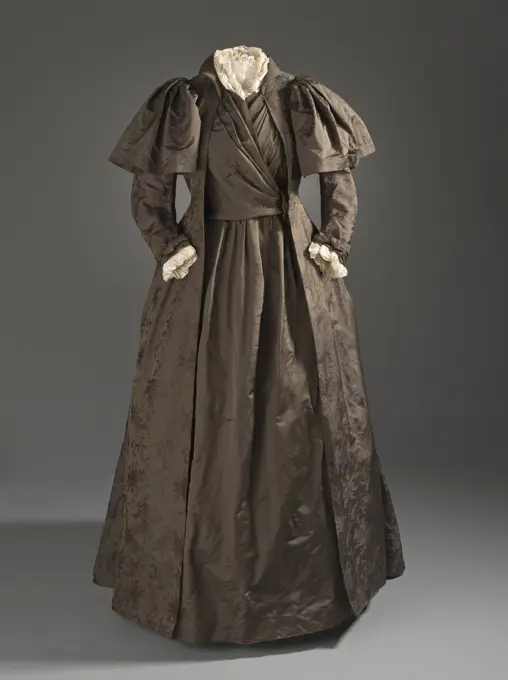
Woman's Tea Gown. Liberty & Co. (England, London, founded 1875)Liberty & Co. (England, London, founded 1875). England, London, circa 1895. Costumes; principal attire (entire body). Silk twill with supplementary weft-float patterning
365 assets in this story
6145-29782033
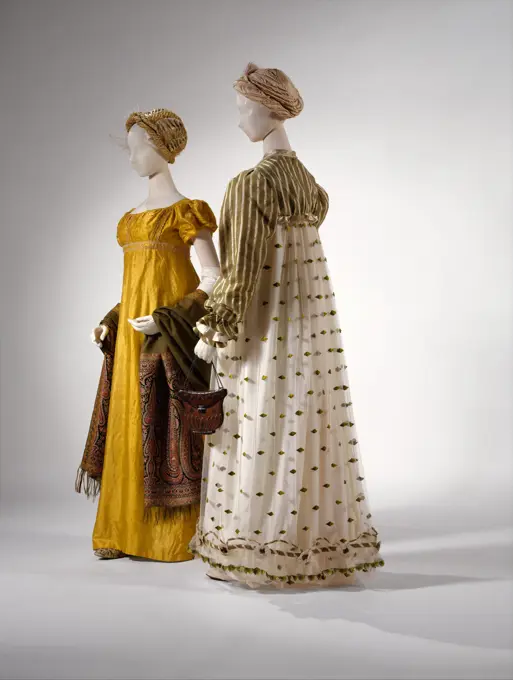
Dress 1814 British In the early years of the nineteeth century, the high-waisted Empire-style dress was rendered more solid through the use of heavier fabrics and more trimmings. The circa 1820 dress in the front of this image reveals the impulse toward embellishment of the simple chemise of the 1800s. Embroidery in lime green gives more weight to the skirt while the satin spencer provides a base for ribbons and ruffles. Behind this, the 1812-14 dress (1985.222.2a, b) is also more solid, made of silk and trimmed with silk lace. The puffed sleeves are made more substantial through the addition of cording. The weight of fabric and trimming negates the body-conscious line of the earlier sheer cotton and linen dresses. Into the 1820s, plain gowns such as these would be accented with more and more applied decoration.. Dress. British. 1814. silk
6145-29803809
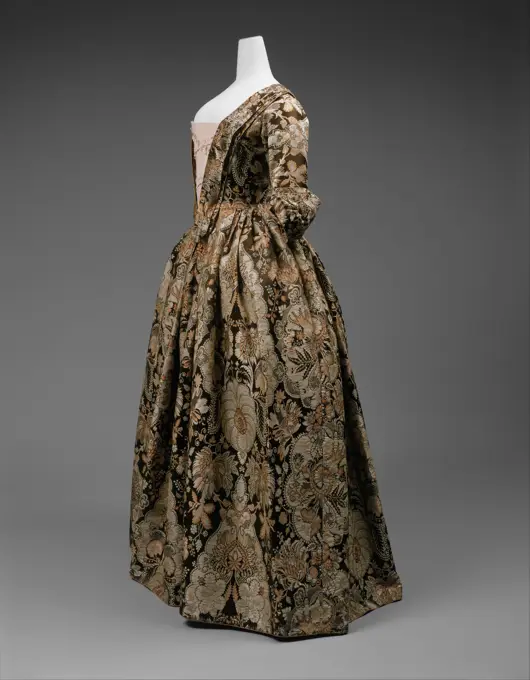
Dress ca. 1725 British A Spitalfields silk dress with a dome-shaped skirt conforms not only to the silhouette of the 1730s but also to the interaction between silks and laces during that time, especially evident in Spitalfields manufacture. The silk pattern is like that of lace. While such interaction seems hard to imagine between worker and pattern book, clothing is a place where the various media ultimately converge. Eighteenth-century dress, in particular, was a Gesamtkunstwerk of artisanal and dressmaking skills. While most eighteenth-century dresses have been altered in some way for subsequent use, fashion historian Janet Arnold has noted that this one shows no sign of ever having been altered and is thus in its perfect original state.. Dress. British. ca. 1725. silk
4409-17424366
Ensemble. Culture: American. Date: ca. 1843. Museum: Metropolitan Museum of Art, New York, USA.
6145-46643614
. Women's figure of faience, painted multi-colored in the glaze. On a rectangular, yellow pedestal is a woman with black shoes and a white skirt, the shadow of which are shaded with blue. A blue jak is worn over the skirt, part of which is covered by a white pointed cloth. The left hand holds a slip of the white boother, while a green cushion is worn under the same arm. The hairwrong is visible under the closely subsequent hat that is indicated by brown lines.
4409-29053155
Vestido femenino, siglo XVIII, MTIB88002. Museu Textil i d'Indumentaria de Barcelona.
1788-27626
Fashion, 20th century. Women's suit, 1910. Costume made for Luchino Visconti's movie based on novel Death in Venice, 1971.
6145-54598582
Woman's Brocade Dress, 1845.  Brocaded silk & taffeta .
6145-29773512
Afternoon jacket 1895 House of Worth French Every element of this Worth jacket is of the highest quality, as expected of the preeminent house in the 1890s. Worth studied and often reinterpreted historical fashions as can be seen here in the back configuration, collar and overall decorations which evoke 17th-century menswear.Charles Frederick Worth was born in England and spent his young adulthood working for textile merchants in London while researching art history at museums. In 1845 he moved to Paris and worked as a salesman and a dressmaker before partnering with Otto Bobergh to open the dressmaking shop, Worth and Bobergh, in 1858. They were soon recognized by royalty and major success followed. In 1870 Worth became the sole proprietor of the business. At his shop, Worth fashioned completed creations which he then showed to clients on live models. Clients could then order their favorites according to their own specifications. This method is the origin of haute couture. Worth design
1788-27448
Fashion, France, 19th century. Dress in white gauze embroidered with silver belonged to Empress Josephine.
6145-29813013
Dress 1817 Italian. Dress 90504
6145-29734082
Dress 1805-10 American. Dress. American. 1805-10. silk, linen
6145-29874396
Joseph L Boyd, Brown Silk Afternoon Dress, c 1936 Brown Silk Afternoon Dress
6145-29195267
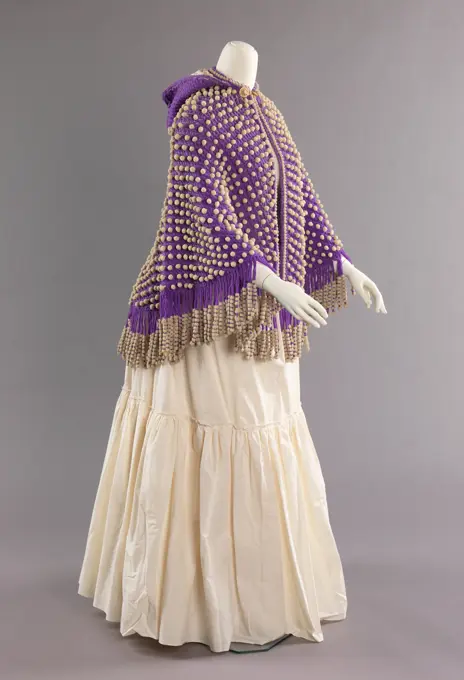
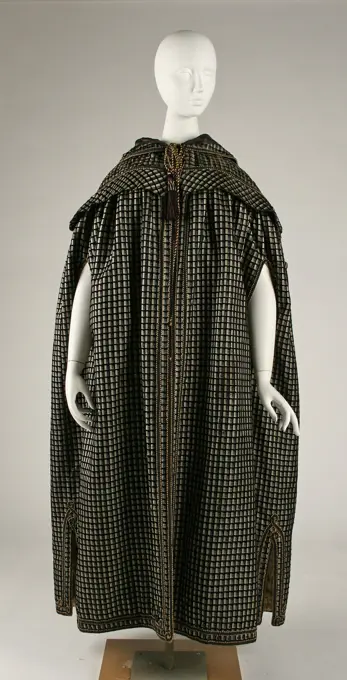
Cape 1873 American This intriguing cape was exhibited at the Vienna Universal Exhibition in 1873. Its elaborate knitting techniques and unique overall appearance enforce the importance of handmade crafts and decorations which were becoming progressively important nearing the end of the 19th century.. Cape 157591
6145-29807734
Bodice 1775-85 probably French. Bodice 81533
6145-29815843
Dress 1750-75 European. Dress 81655
4409-29053144
Vestido de novia diseñado por Carolina Montagne, 1905-1907, MTIB88114. Museu del Disseny de Barcelona.
6145-59045207
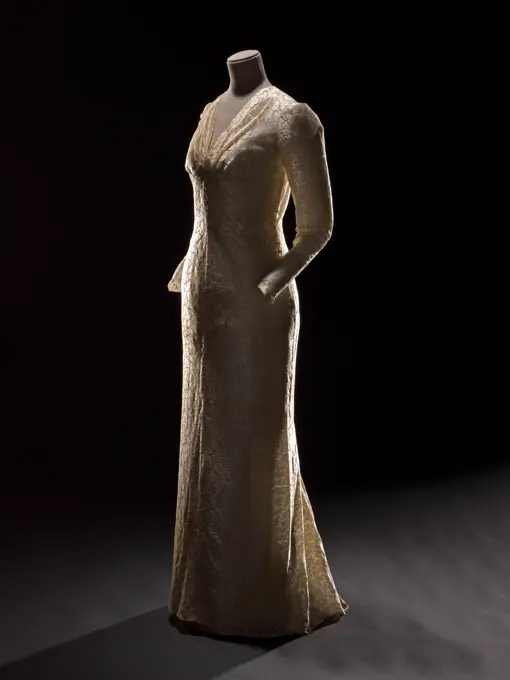
Wedding dress (overview). Grift: O'Roy. Mechanical Calais lace, silk. 1937. Galliera, fashion museum of the city of Paris. Lace of Calais Mecanic, feminine, woman, married, silk, dress
4409-17385965
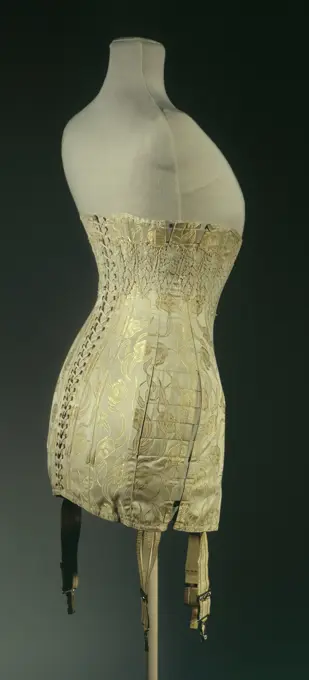
Corset. Culture: American. Manufacturer: Worcester Corset Company (American, 1872-1901). Date: 1876.In 1950, E.A. Meister, then president of the Royal Worcester Corset Co., donated a collection of 171 corsets to the Brooklyn Museum in the memory of Isidor Roth, his father-in-law and former president of the company,who had assembledthe collection. The stated dual purpose of the donation was to honor Mr. Roth for his outstanding contributions to the growth of the field of corsetry and to establish a place where the collection could be used as a resource for the history of corsetry.Overall, the collection of corsets represents prime examples of the stylistic and technological developments which took place from1745-1939. It represents not only the changing silhouette of the past 200 years but also the innovative culture of the corset industry, where solutions to further comfort and increasing flexibility were continually being sought. Known first as The Worcester Skirt Company, the compa
6145-59490689
Riding Habit, anonymous, c. 1826  Amazon costume of dark green (merino) Wool with twill binding. The tailored, short body has a flat, round collar, long gigot or sheep leg sleeves, an incomplete lap in the middle and a closure in the middle front. The long, dragging skirt ran with a lot of extra space for driving with a ladies' saddle. Model body (A): Close tightly around the upper body. The upper body had to be Stay stable and sitting straight in the position. At the front left and judges three, vertical coumenades. The back has a seam in the middle with a coupe or taillen council from the sleeve on either side. The recommended sheep leg sleeves are sliced diagonally on the wire with cut -off, semi -circular cuffs, ending over the hand. For extra freedom of movement, two, triangular skewers are applied in the arm hole under the armpit, which end up in a point on either side of the seam. In the lower sleeve and at the elbow, extra space ensures the easy bending of the arms when riding.
6145-59490700
Skirt (b) of dark green sheet, dragging and with a lot of extra space for driving with a ladies' saddle, anonymous, c. 1826  Model: An Amazon was on her skirt in the saddle, which was tailor -made to the size of the buttocks. The skirt shows more wear spots on the left than on the right side on the seat. The stirrup was also on the left. From the hip, Spieen Spieen were applied in the side seam. In the middle of wear in the fabric because of the folds when sitting. The skirt has a clocking model with a high waist, scored waistband and straight, with silk -lined shoulder straps. The front was sliced and put on the waistband smoothly. A side pocket in the side seams at the hip; Following the saad with scalloped 'valve' on which eleven buttons (ten false with a real one, which provides the closure). The back property is wrinkled with fine pleats on the waistband. Split middle behind with a closure by means of two metal hooks and eyes (new). At the bottom of the split a silk siege and a si
4409-30433270
Vestido de seda diseñado por Charles Frederick Worth, 1865-1868, MTIB 88096-0. Museu del Disseny de Barcelona.
6145-59043931
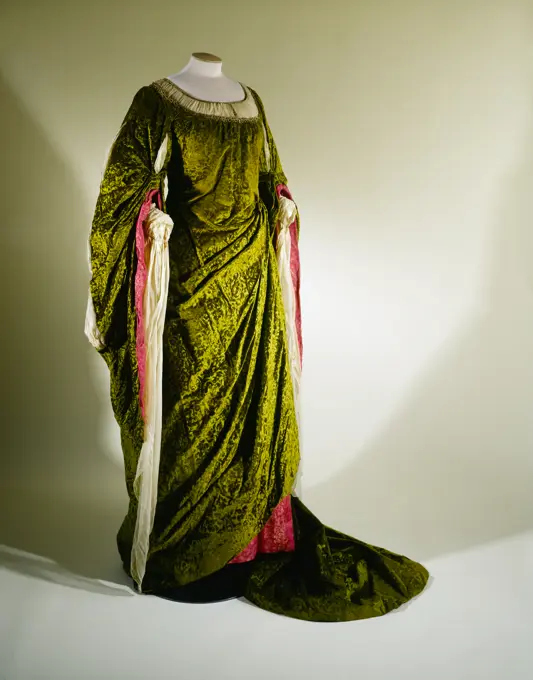
Lucrèce Borgia ", Green velvet dress with golden silk skirt gold (view three quarter left), 1918. Galliera, fashion museum of the city of Paris. Scene costume, feminine, woman, red silk, velvet, green, room, dress
6145-29760800
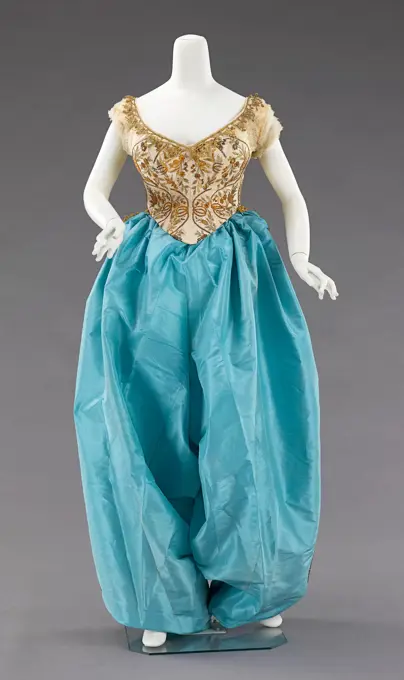
Fancy dress costume ca. 1870 House of Worth French This Turkish style costume exhibits the European and American fascination with Turkish dress which stems from the 18th century and endured throughout the 19th and early 20th centuries. This trend culminated in 1911 with Paul Poiret's "harem" pants and Turkish themed fancy dress ball, "1002nd Night." This style of pants also saw widespread use in the early 19th century for water exercises. This particular pair of Turkish trousers combined with its elaborately embroidered fashionable bodice, is appropriate for a fancy dress ball and indicates the lengths that people would go to for this type of costume event. Owning an expensive Worth fancy dress ball ensemble would have been the epitome of distinction and extravagance. Charles Frederick Worth was born in England and spent his young adulthood working for textile merchants in London while researching art history at museums. In 1845 he moved to Paris and worked as a salesman and a dressmak
4409-17407477
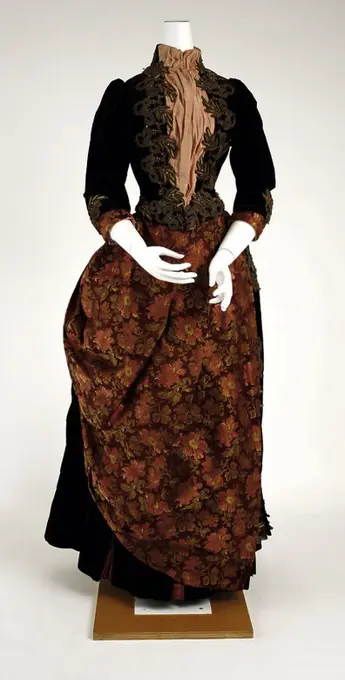
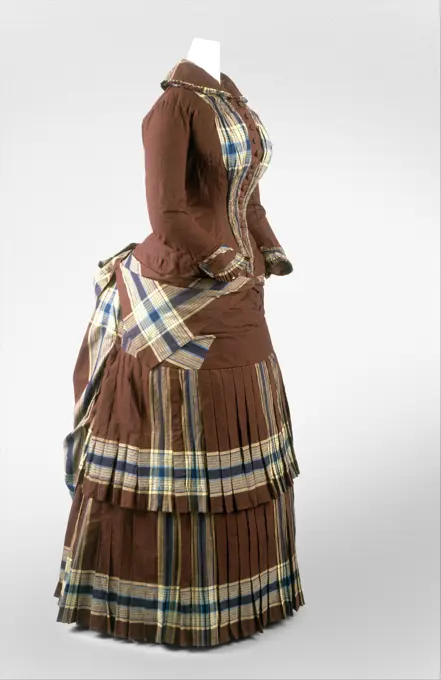
Walking dress. Culture: probably American. Date: 1885-90. Museum: Metropolitan Museum of Art, New York, USA.
6145-29139931
Corset ca. 1885 P.D.. Corset 157894
6145-59043986
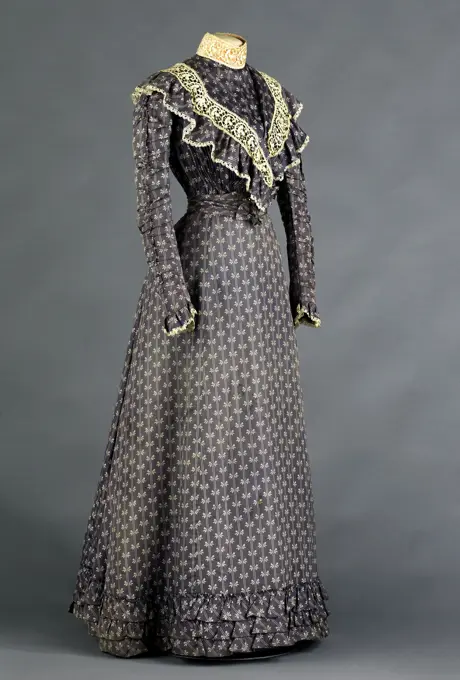
Dress, around 1898. Galliera, fashion museum of the city of Paris. Feminine, haute couture, female model, dress
6145-58996176
Practical fashion. Day dress. Dark blue silk groove printed with white vegetable strips, lace with crazy cotton spindles, ribbon of crush cotton mechanical lace, pink silk velvet ribbon, blue wool mesh braid. Blue silk taffeta lining and chipped with ecru cotton. 1897-1898. Galliera, fashion museum of the city of Paris. 78698-7 1900, white vegeta strip, lace, braid, haute couture, print, female mode, practical mode, female model, pattern, dress dress
4409-17371356
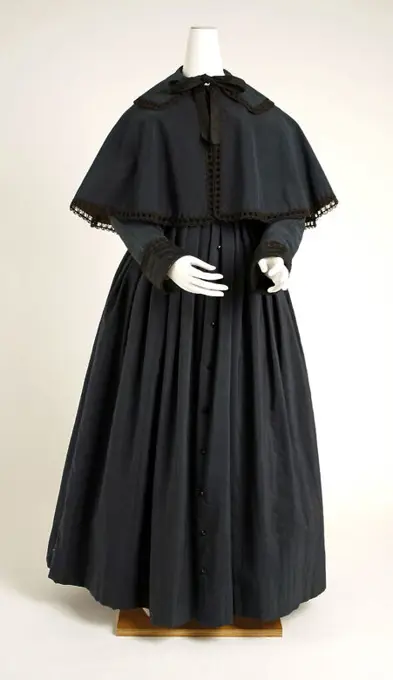
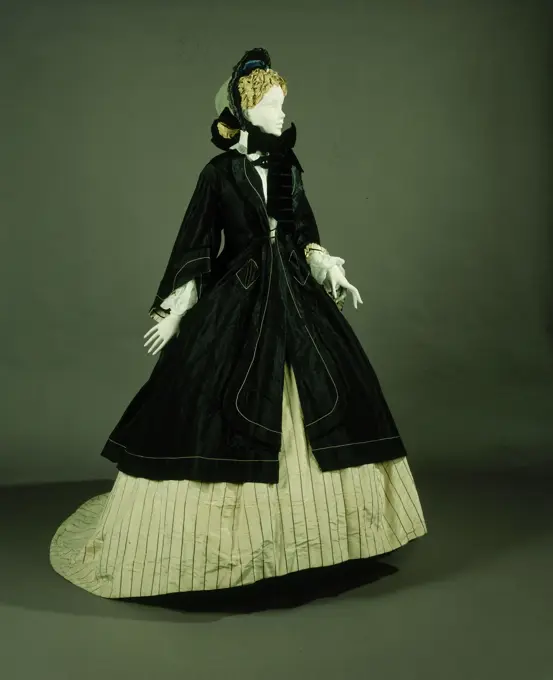
Mourning dress. Culture: American. Date: 1850-55.By the late Middle Ages in Europe, black had connotations of mourning, though it could also suggest worldly elegance and luxury, in part due to the costliness of black dye. Broadly worn as the color of grief during the nineteenth century, black could be perceived as both humble and sober or sophisticated and becoming. A shade of true deep black that did not quickly fade toward blue or brown was the mark of a fine-quality textile and the ideal for mourning attire. In their 1856 catalogue, Besson and Son's Mourning Store of Philadelphia assured prospective buyers of the quality of their black goods, promising only "what is of the proper shade of black." This simple afternoon dress, appropriate for the third, or ordinary, period of mourning, is composed of a taffeta woven with narrow horizontal bands and dots in soft black. Museum: Metropolitan Museum of Art, New York, USA.
4409-17415325
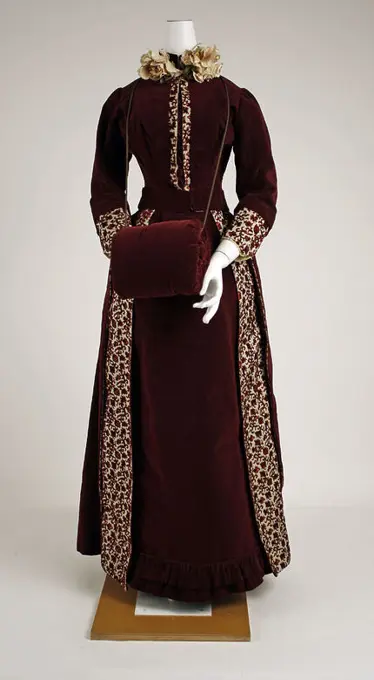
Ensemble. Culture: American. Date: 1889. Museum: Metropolitan Museum of Art, New York, USA.
6145-29747669
Dress 1823 American. Dress 108377
6145-29804317
Cape 1870s French. Cape 108004
6145-29728094
Dress ca. 1863 French. Dress 82121
6145-46162396
Boy's vest with front closure with 12 buttons of purple ribbed changing side and metal wire, two fake bags and pointed collar of brown linen and green silk with gold thread. A sea green boy's vest (Carmagnole) with gold gallon.
6145-58877398
Suit: coat, breaches and waistcoat, anonymous, c. 1740 - c. 1765 Jacket or skirt. Model: Kneelang and straight cut off at the bottom. Tilted front buildings with system of deep folds in the side seams, on which a number of dust -covered knots. Split in the middle behind, for decoration on either side flanked by narrow panel with wide, fested button holes. Along the front buildings 17 wide, founded button holes (of which the top ten usable) and knots covered with dust. Round neck without collar. A wide pocket valve with deep side pockets on every front. Wide sleeves with wide, beaten cuffs; Both equipped with wide founded buttonholes and nodes covered with fabric. Lined with cream -colored, clung silk. Made from a complex silk tissue with a white stock on which (originally) black and golden flowers with purple leaves. France (possibly)Netherlands (possibly) whole: Silk. Buttons: Wood (plant material). Lining: Silk cutting Jacket or skirt. Model: Kneelang and straight cut off at the bott
6145-58877399
Suit: coat, breaches and waistcoat, anonymous, c. 1740 - c. 1765 Sleeve vest or kamizool. Model: front and back properties reach halfway through the thighs. The front buildings are cut away to the waist and equipped with 16 knots and wide buttonholes, the bottom of which is completely closed. On the hips side pockets with pocket valves. The seam between the backs is partly open and on either side with festonated round nestle holes to make the vest tighter or wider at firsting. The Obderest part of the backs is equipped with a siege of the same fabric as the front buildings. Lined with white molton. Made from a complex silk tissue with a white stock on which (originally) black and golden yellow flowers with purple leaves. France (possibly)Netherlands (possibly) Fronts: Silk. Back (part): Silk. back:. Buttons: Wood (plant material). lining: cutting Sleeve vest or kamizool. Model: front and back properties reach halfway through the thighs. The front buildings are cut away to the waist and
4409-17436409
Court train. Culture: French. Date: ca. 1809.This court train is said to have been worn by Armandine-Marie-Georgine de Serent at Napoleon's Marriage to Marie-Louise in 1810. In 1808, the wearer had married the prince de Leon, chamberlain to the emperor, and this costume closely follows the ettiquette for ladies at court, as established by the designs of the painter Jean-Baptiste Isabey for Napoleon's coronation as emperor in 1804. The heavy train hangs from shoulder straps and is secured at the front with a belt. The standing lace collar, or cherusque, part of Isabey's design and reminiscent of 16th-century costume , was de rigueur, and the embroidery also follows the regulations set down in 1804. The border does not exceed the four-inch width prescribed for a woman who was neither a princess of the Empire nor a close female relative of the emperor or empress. Museum: Metropolitan Museum of Art, New York, USA.
6145-46116032
JAK or CARACO of silk with white flowers on grass green Fond, square neck, half-length sleeves with 'manches à racquette', fronts with ribs and busque, linen lining. JAK or CARACO from silk with a grass green fond and white flowers, with square neck, semi-length sleeves with 'manches à racquette', front properties with ribs and busque, linen lining. Model: Piled houses composed of two parts, one of which is part without a shoulder seam through in the back. The back cover consists of one piece of silk. At the straight zoom, a partially folded lap has been put in the middle behind in an oval-like form. On both fronts are placed in the middle of the blind closure, of six with a green silk, placed two vertical busks of 6 mm, which are equipped at the top and bottom. This nail leather runs along the entire bottom of the ribs and around armholes. The outskirts tapered to the middle are worked in a coarse linen fabric and has two, equally placed, horizontal ribs. On the rides a band of coarse
6145-59506205
A Creole, c. 1810 - in or before 1839  A loose figure from a diorama by Gerrit Schouten, representing a Creole woman, standing. Holding both hands in front of her breasts. The woman wears a long pleated skirt, red with a floral pattern in blue and white. She wears a white solid shawl (pangi) over this skirt. She is wearing bracelets, a necklace and a headscarf her upper body is uncovered. She is barefoot. Suriname paper. glue. paint (coating) painting  Suriname
6145-29196682
Standing woman 1744-49 Imperial Porcelain Manufactory. Standing woman 203210
6145-29135746
Woman's Corset. England, circa 1890. Costumes; underwear (upper body). Cotton plain weave with silk embroidery, linen lace with silk satin ribbon trim, and metal
6145-59016537
Mariano Fortuny (1871-1949). Undressed. Black silk gauze, golden painting, cord in black silk son and gold metal threads, glass pearls. Beginning of the years 10. Galliera, fashion museum of the city of Paris. 101981-2 Haute couture, female mode, female model
6145-43550391
Doll
4409-17350083
Coat. Culture: British. Date: ca. 1833.In the early years of the nineteenth century, there was a profound harmony between men's and women's silhouettes in dress. In the Empire style, the high waists and puffed chests of menswear match the silhouette of women's clothing. In the 1830s, menswear accommodated the gigot sleeve of womenswear in its use of a new fullness at the sleeve cap. The typical men's ensemble of tailcoat, waistcoat, and trousers prevailed by the 1820s and 1830s, as breeches were supplanted by long trousers. Museum: Metropolitan Museum of Art, New York, USA.
6145-29139145
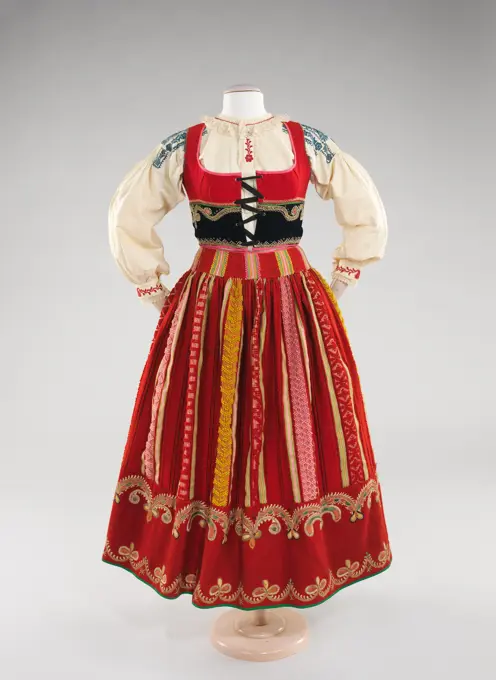
Ensemble fourth quarter 19th century Portuguese This object was collected by Stewart Culin (1858-1929) during a collection expedition in 1922. Culin was the Brooklyn Museum's first Curator of Ethnology, serving from 1903 to 1929. Possessing an insatiable curiosity and appetite for collecting objects of all kinds, Culin conducted over twenty worldwide collecting expeditions between 1901 and 1928. The trips covered American Indian territories, New England, Asia, India, Great Britain, and all of Eastern and Western Europe. The seven expeditions between 1917 and 1928 were specifically focused on collecting regional textiles and costumes from Eastern and Western Europe and, to a lesser extent, New England. Culin's goals for these trips were not just to expand the Museum's holdings, but also to preserve their cultural contexts. He did so through amassing photographs, notebooks, and ephemera which documented the social, commercial, and cultural circumstances surrounding their acquisition. His
6145-29779211
Dress 1873-79 American. Dress 104700
6145-58857247
Dress (Mantua) with Train, anonymous, 1759 Sleep of light blue ripszijde horing with a wedding gown. Two -lane straight drag with rounded corners. Feeded for the lower half with calandered white linen. Decorated with embroidered flower vines. France 1579. France (possibly) silk. embroidering Sleep of light blue ripszijde horing with a wedding gown. Two -lane straight drag with rounded corners. Feeded for the lower half with calandered white linen. Decorated with embroidered flower vines. France 1579. France (possibly) silk. embroidering
4409-29053159
Vestido estilo Watteau de seda salmón labrado con franja de oro y adornado con frisos de puntas y borlas de plata, siglo XVIII, MTIB88011. Museu del Disseny de Barcelona.
6145-58874699
Pop of wood with glass eyes and hairstyle of human hair, dressed in a dress (demi-parure) of floral sits, consisting of an overjapon and a tablier, anonymous, c. 1760 The doll has an oval face with pointed nose, small chin, almond -shaped eyes with black glass pupils (whites of glass or porcelain) And a narrow, horizontal elevation for the mouth. The wooden face is covered with plaster over which a hub with chalk glue and then with a light yellow oil paint with varnish and pink blushes on the cheeks. Around the eyes painted brown dot with a red point in the corners of the corners and brown eyebrows (line with vertical stripes). The forearms and hands are made of wood, but the upper arms consist of filled linen. Model clothes: The Robe a la Francaise has a manteau (open overjapon) with half long sleeves with cuffs and eventail (from the front short and from behind) and an open skirt, including a tablier (front). A loose watteau fold from the neck, which is not fixed at the waist. The sk
6145-29176579
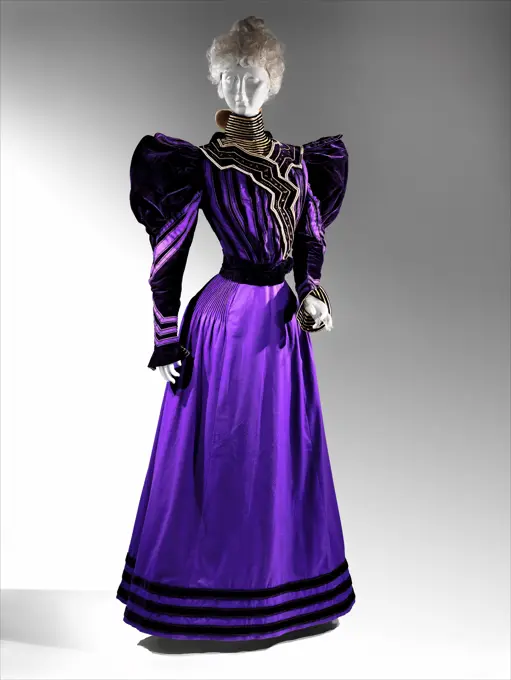
Suit 1894-96 James McCreary and Co., N.Y. American This half-mourning dress of vivid purple accented with boldly arranged black and white trimming, exhibits the full gigot sleeve that defined mid-1890s fashions. The ensemble was purchased from James McCreery & Co., a New York department store that maintained a mourning-goods section that offered textiles as well as made-to-order and ready-made garments. The availability of an expanding range of ready-made goods for women was facilitated by the invention of the sewing machine, increasing standardization of dress patterns, and the rise of department stores that capitalized on these innovations. Fashion magazines often cited well-known retailers of mourning goods, including McCreery, as sources of information on current mourning styles and standards of etiquette.. Suit 106673
6145-59044074
Coat. Taffeta of black silk, embroidery at the point of chain, black silk lace, white bubbed in the sleeves. Around 1864. Galliera, fashion museum of the city of Paris. Embroidery point of chain, lace, female, woman, coat, black silk taffeta
6145-58990620
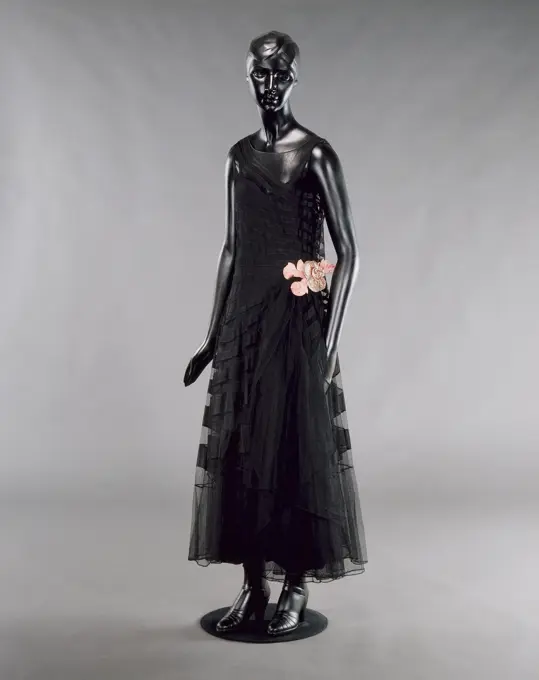
Lanvin Jeanne Evening Dress in black silk tulle, pink in stitching pink fault, glitter embroidery, summer 1929 (3/4 face view) 1929 Galliera silk, fashion museum of the city of Paris. 26124-7 FEMININE, HAUTE-COUTURE
6145-29152898
Suit 1891-92 American. Suit. American. 1891-92. wool
6145-29727514
Dress ca. 1804 French. Dress 84317
6145-29781267
Dress ca. 1882 French The late nineteenth century in fashion is governed by both the somewhat typical constructions of lace and silk eveningwear, and the fairly new and "modern" representations of women's sport and travel clothing. While most intriguing are the avant-garde developments of the Bloomer pants and the many adaptations of the women's riding habit, which incorporated menswear affectations into both its ornamentation and its construction, the women's walking costume is one of the most difficult ensembles to find currently in pristine condition. Partially because few women felt compelled to include such a pedestrian costume in their trousseaus, and partially due to the natural deteriorations caused by light, moisture and old age, the well-kempt walking costume of the 1880s and 1890s can be found in few modern costume collections. The construction of the ensemble's bustle is squarely in congruence with the trendy shape of the second bustle period, and the Curaisse-shaped infra-
4409-164650
Female dress, 18th century. Museum: Museu Textil i d'Indumentaria, Barcelona.
6145-29724566
Dress 1833-37 American. Dress 174647
1788-28354
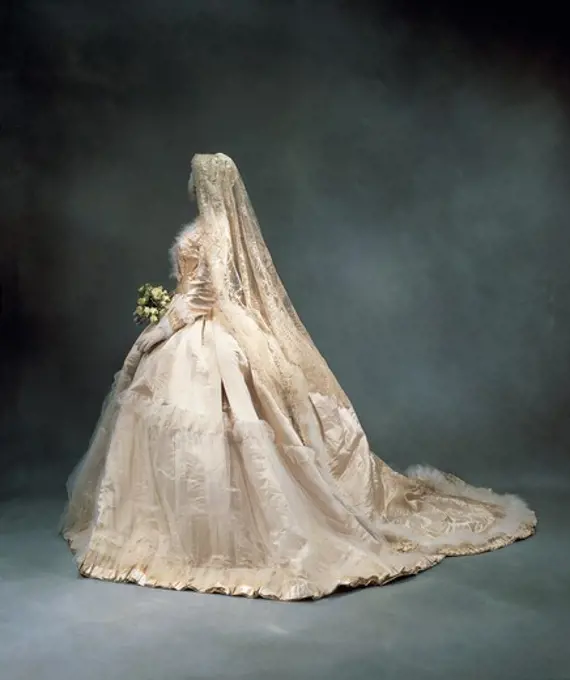
Fashion, England, 19th century. Charles Frederick Worth (1825-1895), Ball dress in satin and cream color tulle, turned into a wedding dress by adding a corset and a veil, 1865.
4409-17271902
VESTIDO DE LA REINA MARIA CRISTINA. Location: MUSEO DEL PUEBLO ESPAÑOL. MADRID. SPANIEN.
6145-29137060
Woman's Dress. Probably India for the Western market, circa 1800. Costumes; principal attire (entire body). Cotton plain weave (muslin) with silk embroidery
6145-58990086
Yellow corset, around 1908 (profile). Galliera, fashion museum of the city of Paris. 25960-20 Corset, feminine, yellow, lacet
6145-58844753
Pop, representing a Miss, Anonymous, c. 1676 Pop, representing a lady, dressed in a dress consisting of three parts, a breastpiece of plain cream side, a skirt of plainly pink-red colored satin, about which the overjapon with short sleeves of cream-colored silk dammerg.  wax. tule (grass material). pearl. linen (material). kleding: silk. leather.. metal. bobbin lace / damask Pop, representing a lady, dressed in a dress consisting of three parts, a breastpiece of plain cream side, a skirt of plainly pink-red colored satin, about which the overjapon with short sleeves of cream-colored silk dammerg.  wax. tule (grass material). pearl. linen (material). kleding: silk. leather.. metal. bobbin lace / damask
4443-19552691
Judy, Painted wood, cotton, other materials, Brightly painted head in red-ribboned black bonnet. Mulberry printed dress, white apron, and brightly printed drawers. Black hose and shoes. Lace at neck and knees., England, late 19th century, theater, Decorative Arts, Puppet, Puppet
1848-54700829
Portrait of a pretty woman with a severe hairstyle and a long dark dress
6145-58996683
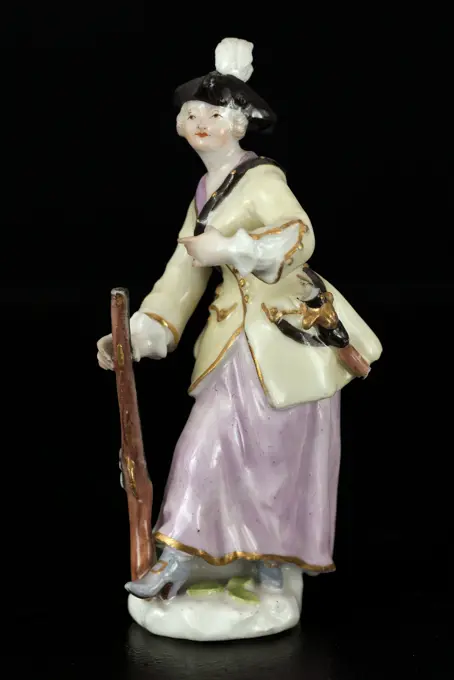
Anonymous. Young woman in hunting costume, based on her rifle. Porcelain, 1755. Paris, Cognacq-Jay museum. 79169-17 Weapon, hunting costume, standing, woman, rifle, porcelain, statuette, hold, hunting outfit, 18th 18th 18th 18th 18th 18th 18 century
4409-17407043
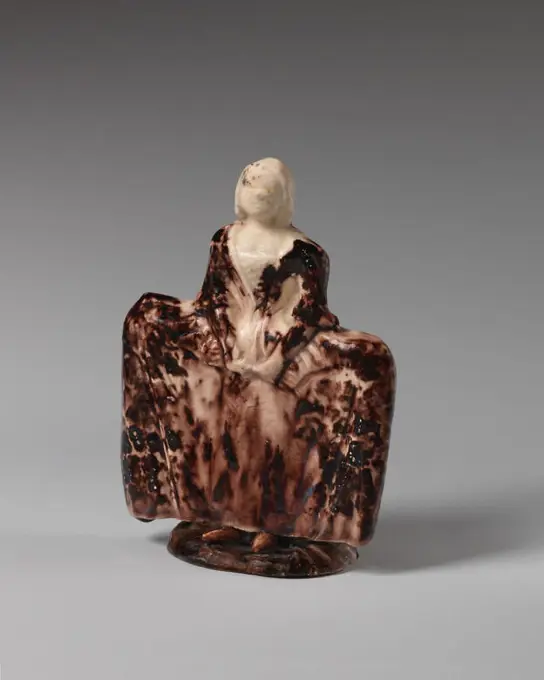
Woman wearing skirt with panniers and sack back. Culture: British, Staffordshire. Dimensions: Height: 4 1/4 in. (10.8 cm). Factory: Thomas Whieldon factory, Stoke-on-Trent, Fenton Vivian, Staffordshire. Date: ca. 1750. Museum: Metropolitan Museum of Art, New York, USA.
PREVIOUS
of 4
NEXT
2401 S. Ervay, Suite 206
Dallas, Texas 75215
United States
Get Started
Free ResearchMy BoardsMy Cart
For Creators
How To License Your ContentContributor PortalFrame of Mind
Resources
API accessPricing
Contact
+1 866 236 0087help@viewpictures.co.uk Contact form
©2026 View Pictures. All Rights Reserved. -B
This site is protected by reCAPTCHA and Google Privacy Policy and Terms of Service apply.