Historical Artifacts

A variety of historical items such as a bronze cannon, photography lens, and pottery, highlighting craftsmanship and cultural significance.
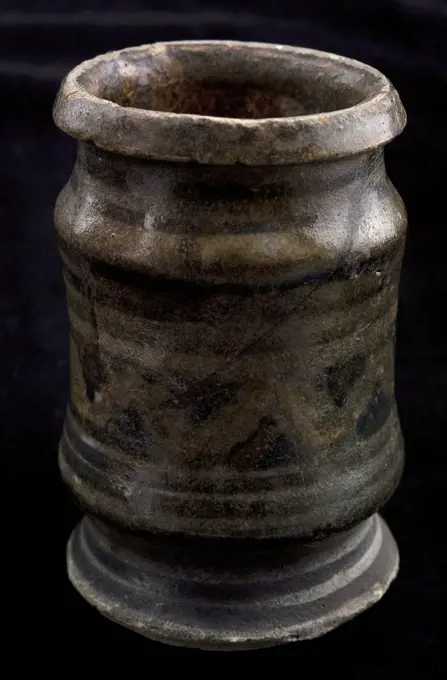
Majolica albarello, ointment jar with polychrome decor in blue and yellow, albarello holder earthenware pottery earthenware glaze tin glaze leag glaze, hand-turned baked glazed decorated baked Albarello with three necking. Cylindrical pot on stand with soul. Yellow shard glazed except the bottom of the bottom and the neck edge Polychrome decor consisting of yellow zigzag line with blue triangles in the middle and further blue bands Probably dark discolored by staying in the soil archeology health care indigenous pottery packing ointment medicine drug pharmacy craft
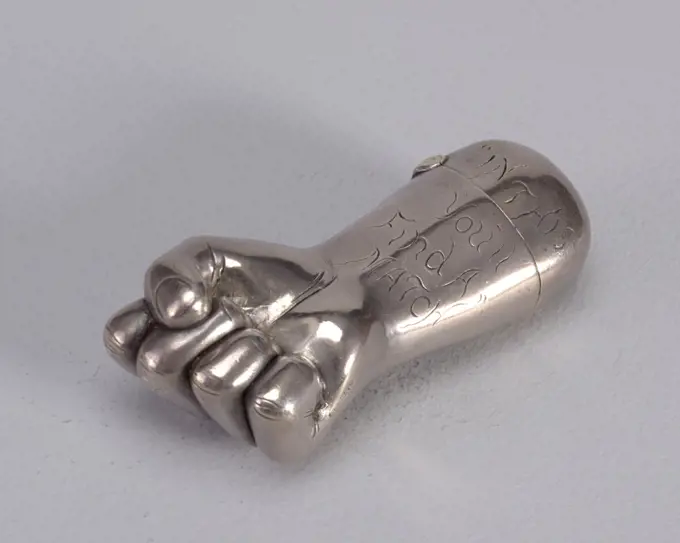
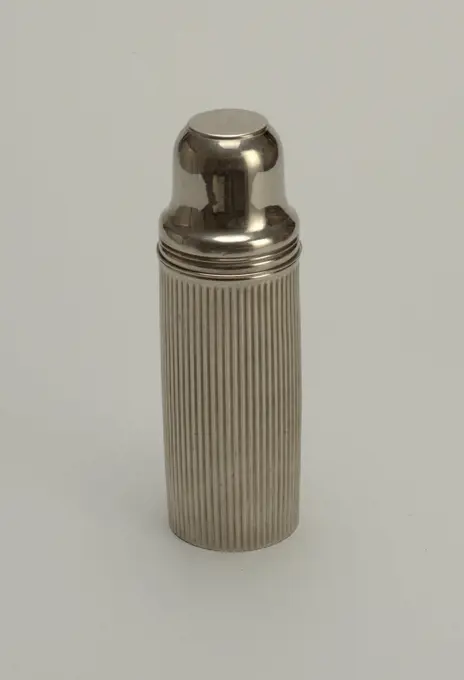
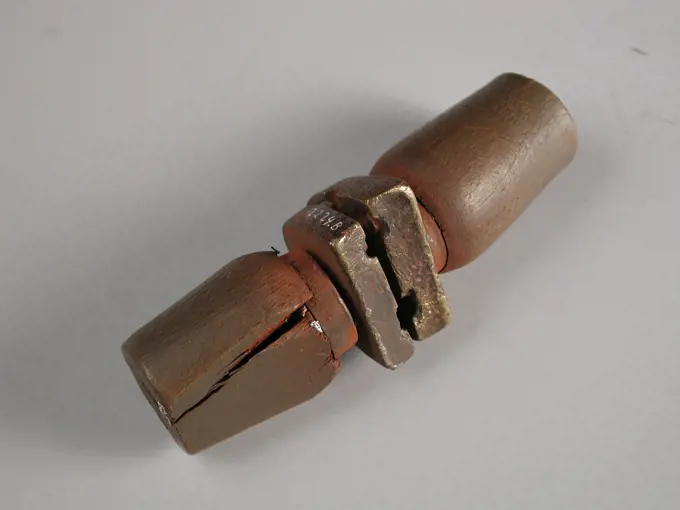
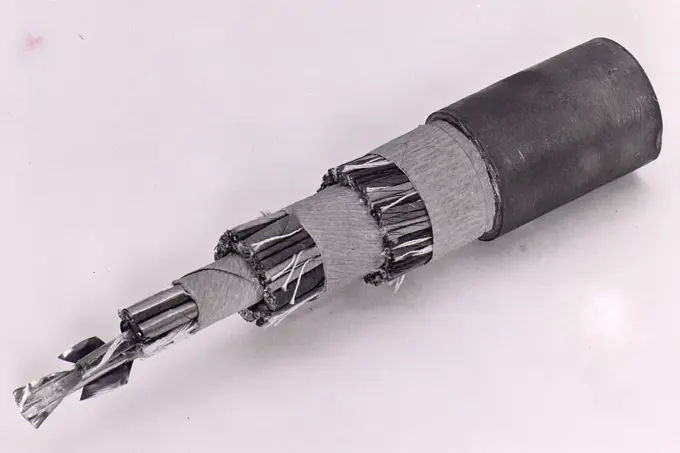
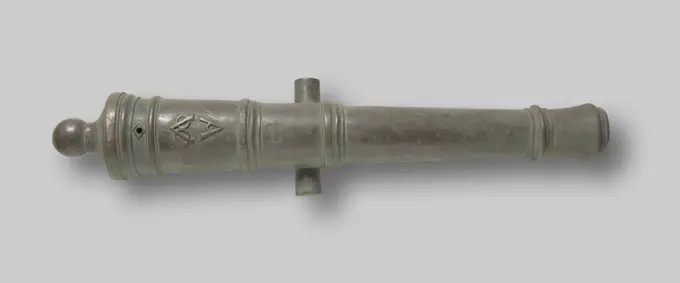
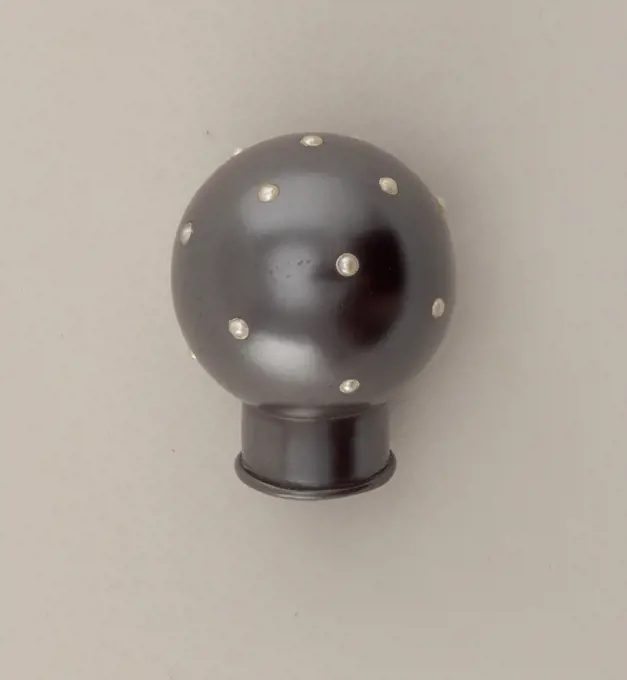
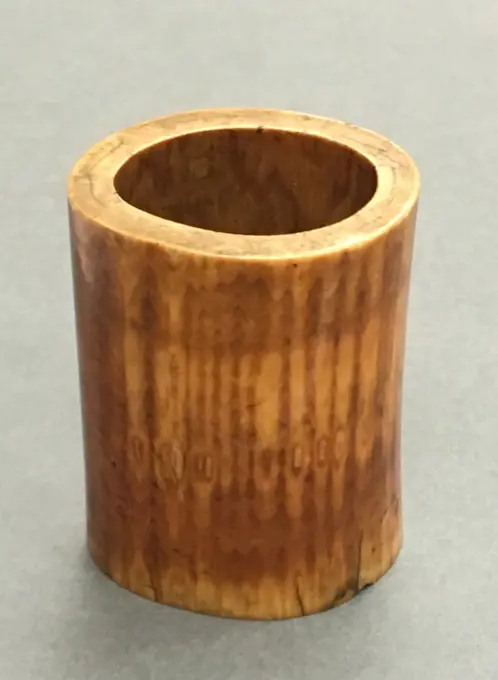
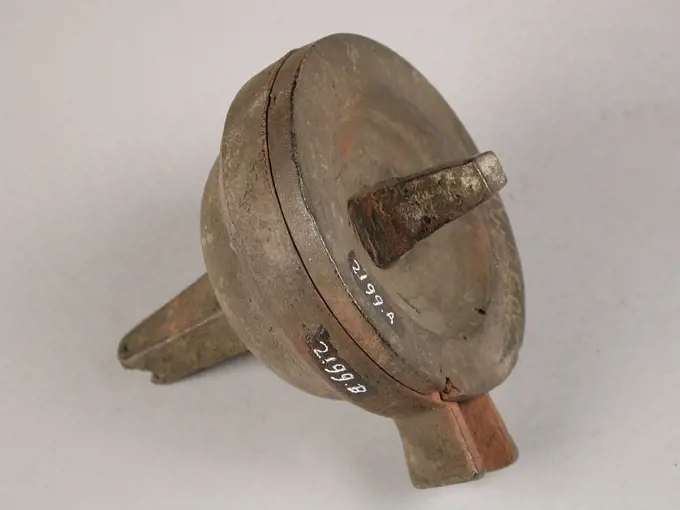
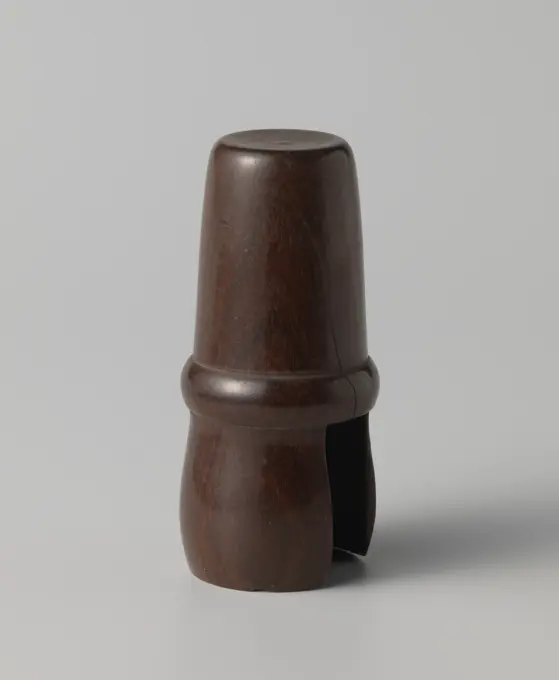
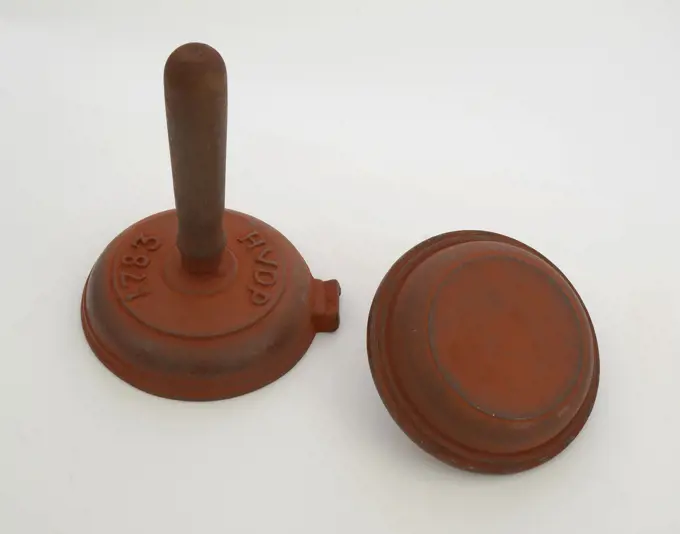
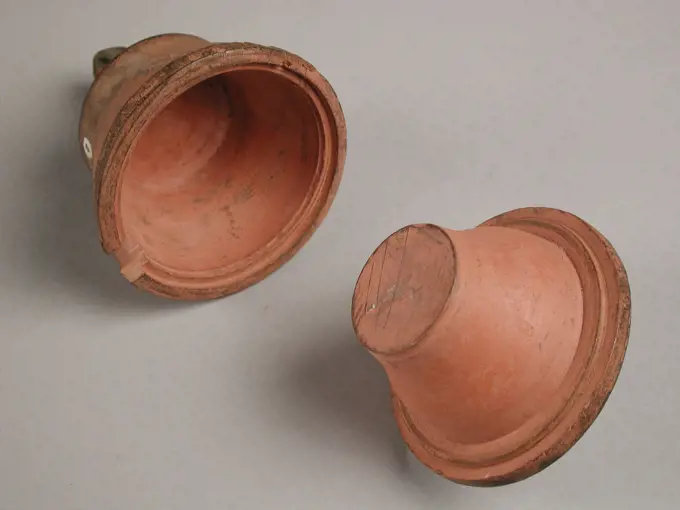
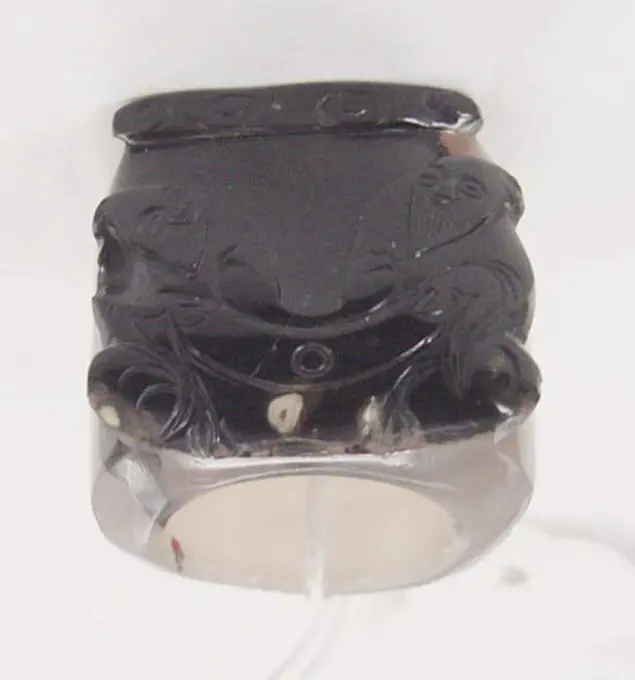
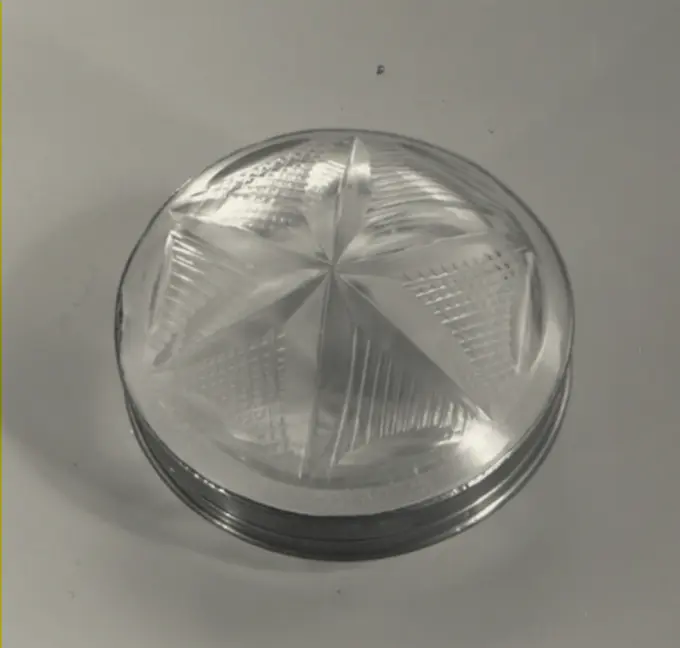
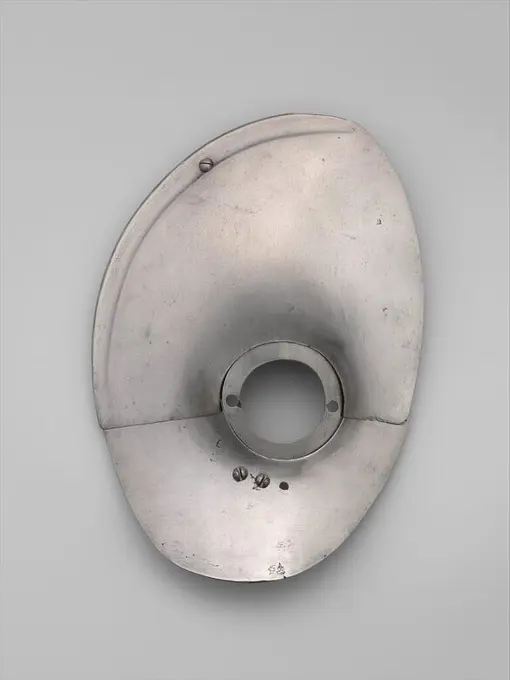
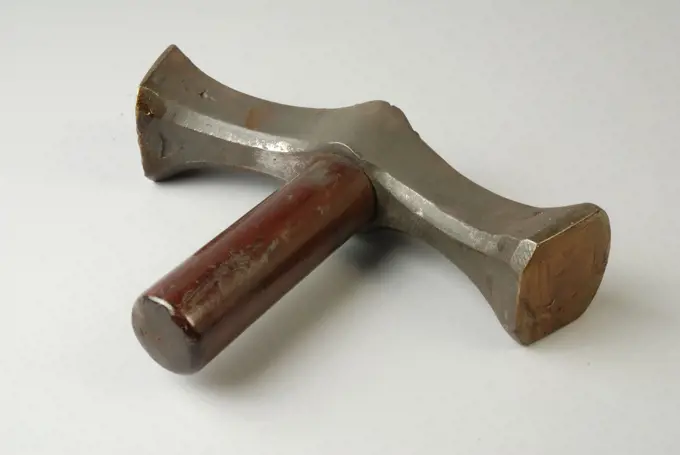
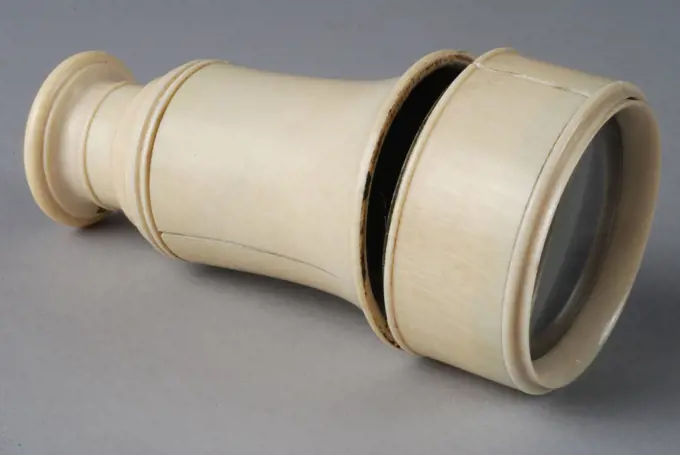
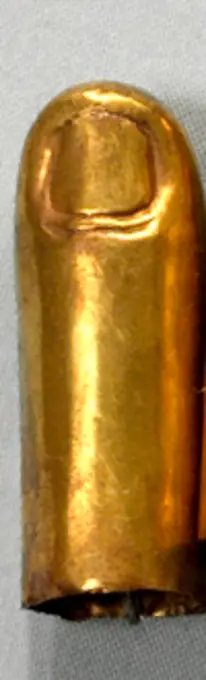
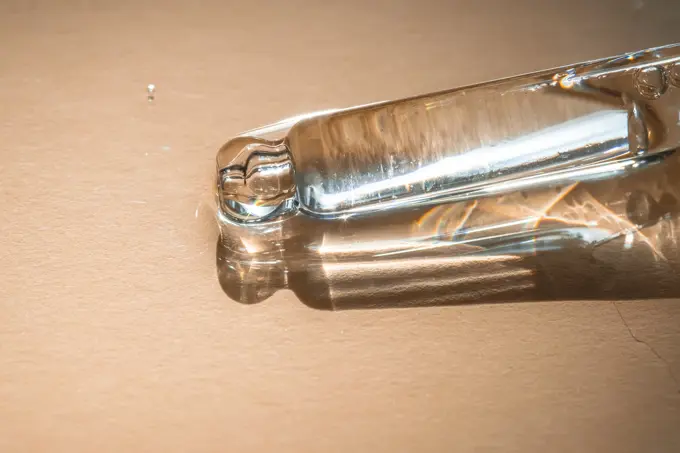
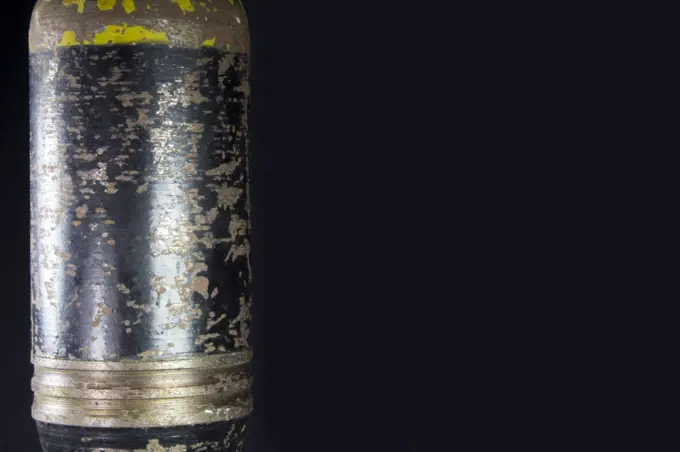
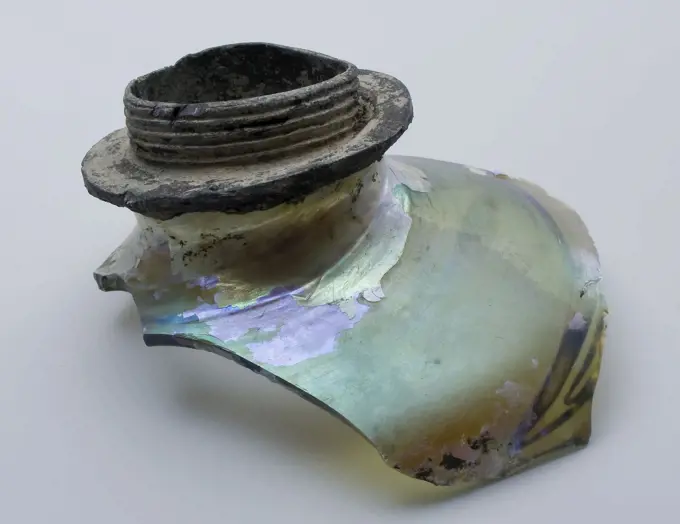
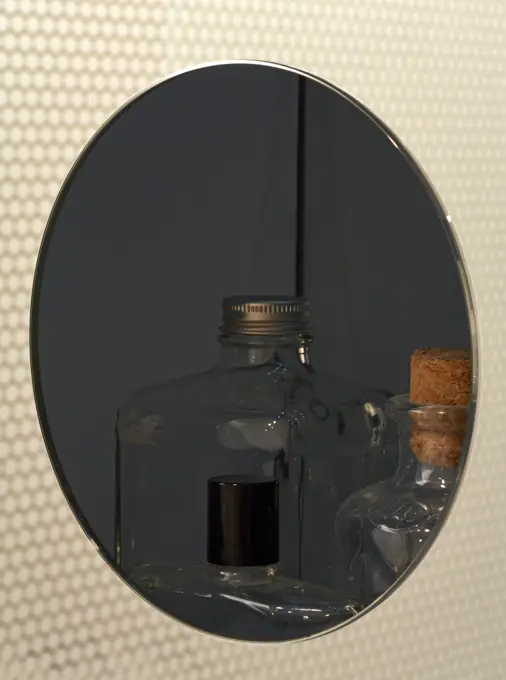
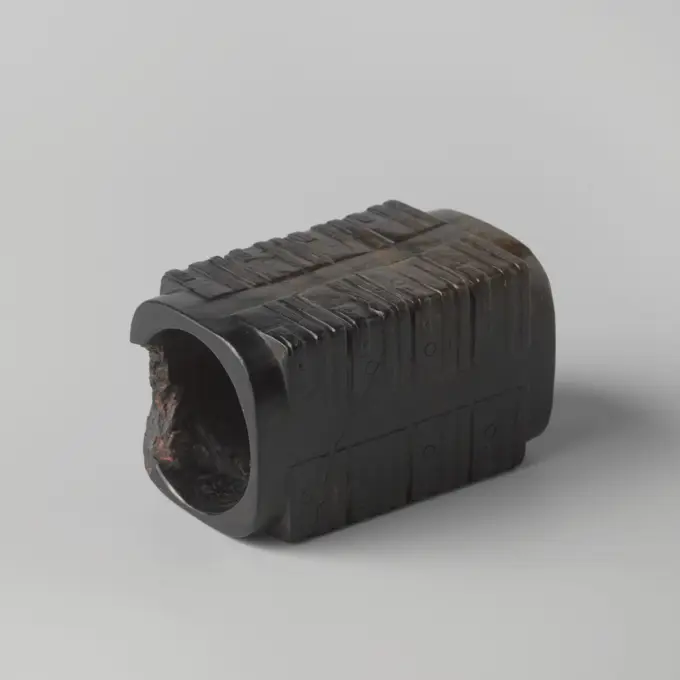
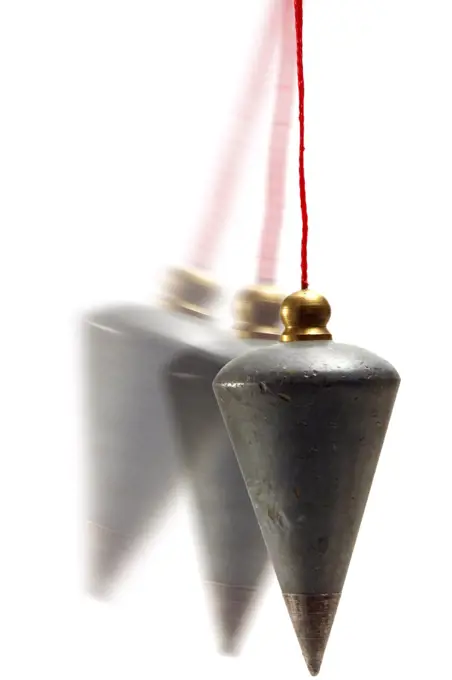
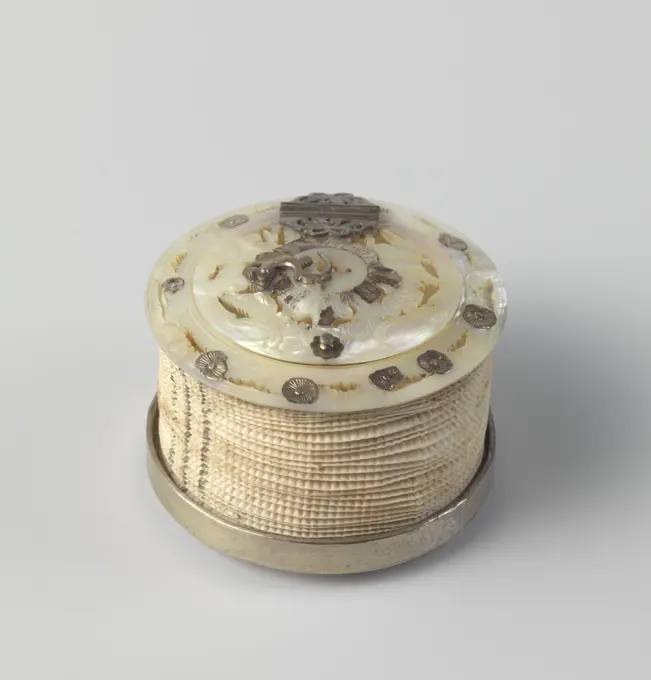
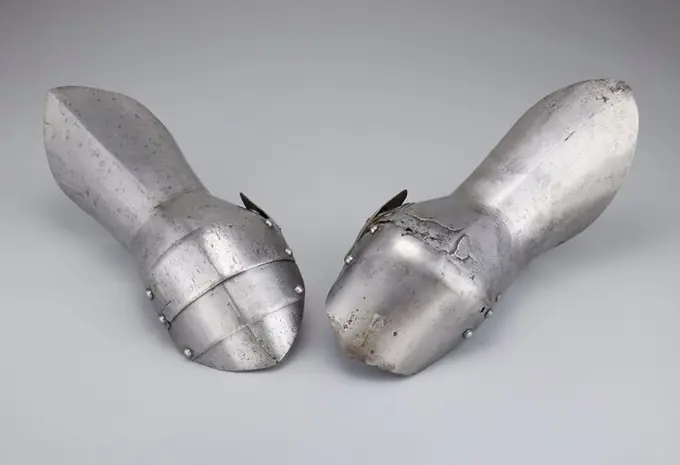
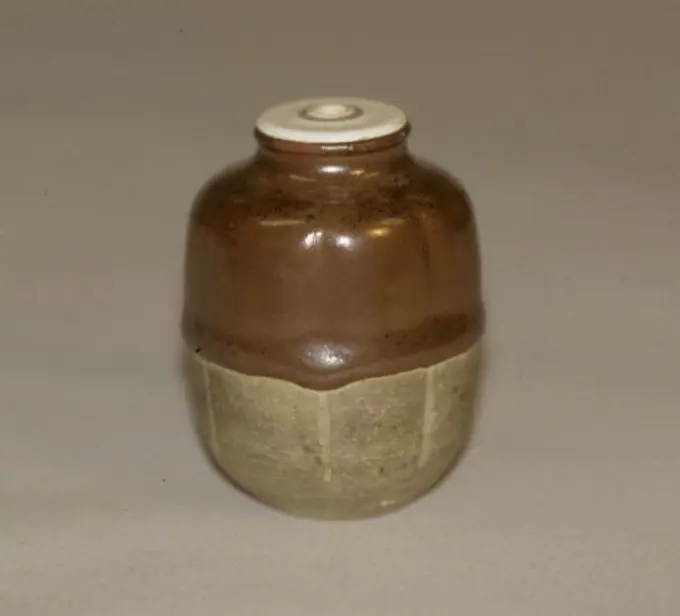
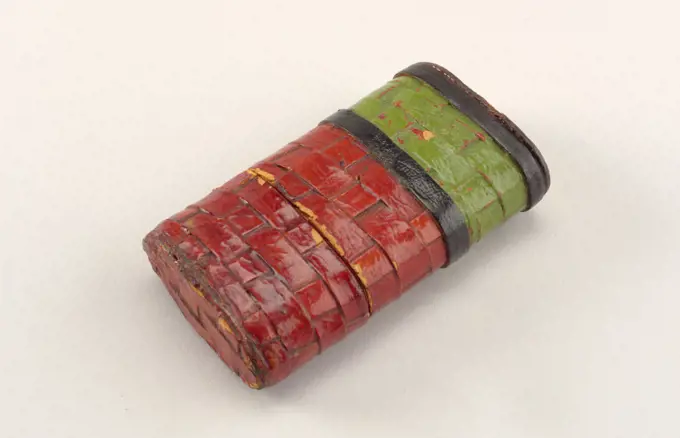
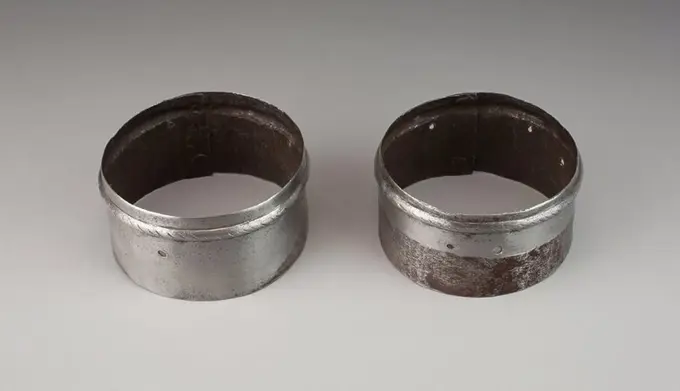
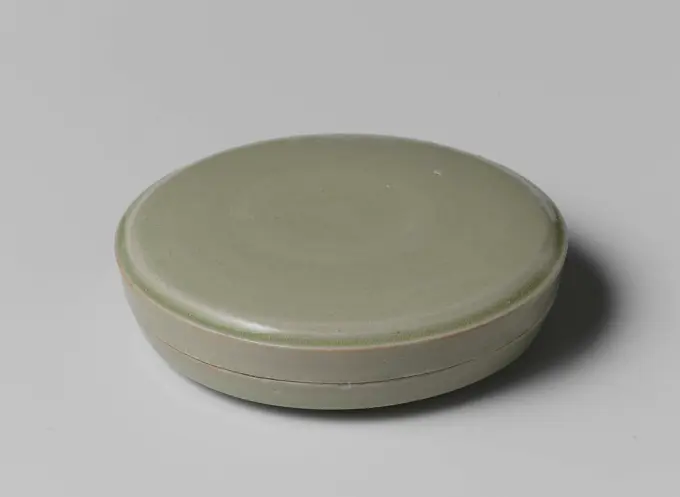
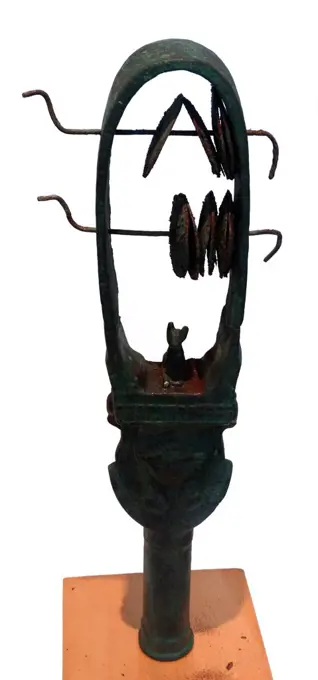
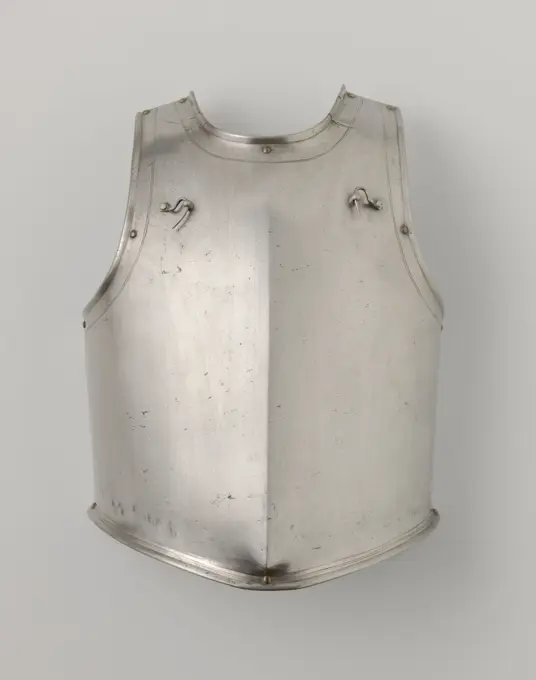
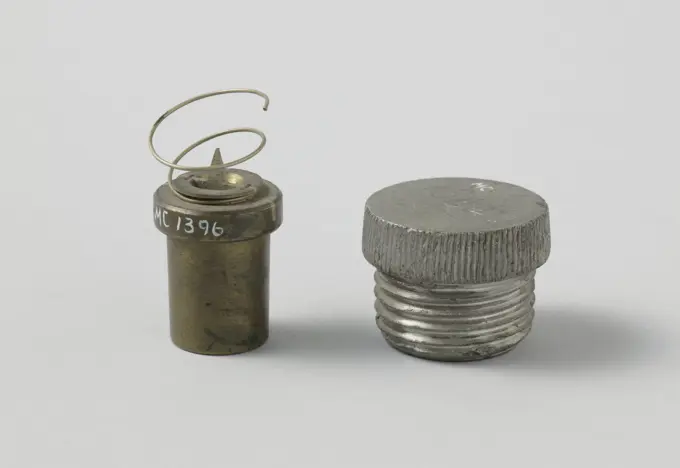
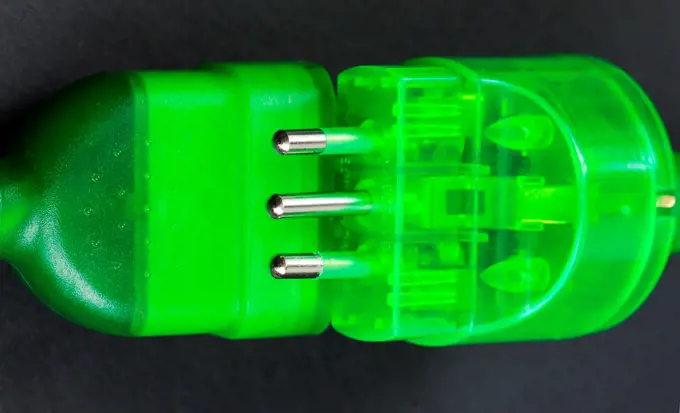
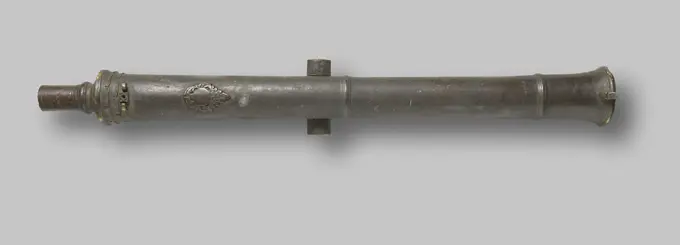
Lantaka.Bronze front loader on Mik. The round loop has a trumpet-shaped mouth and the rear is thicker; Hollow tail in front of a wooden rug. On either side of the Zundhole a button for a zund cover. An empty oval cartouche before the Zundgat. The highest jewel strap and Kulas are decorated with a simple motif. Just behind the mouth a direction button. The eyes of the mik are completely forged around the taps, so that the piece cannot be lifted out of the mik.Ear Ornament 15th-16th century Aztec. Ear Ornament 313281Euryskop lens No. 21597 by Voigtländer & Sohn, glass and brass construction, circa 1880, used as optical lens for photography.Bronze Kanon, VOC Hoorn, Jan Nicolaas Derck, 1700 - 1764 cannon Bronze cannon with round somewhat flattened smooth round grape, two fractures, tapping and no dolphins. On the bottom piece a coat of arms containing the coat of arms of the VOC and the H of the city of Hoorn. The Zundgat is nailed (closed by hit a nail in it). Hoorn (North Holland) bronze (metal) castingOpen an empty tin can  on gray background'In This You'll Find a Match', Cast and engraved silver, In the form of a clenched fist and forearm, the front, or inside of forearm, inscribed 'In This You'll Find A Match,' the reverse, outside of forearm, inscribed 'Quarter mile run, BAC (partly decipherable monogram), Aug.30,90.' Lid (top of forearm) hinged on left. Striker on top of lid., ca. 1890, containers, Decorative Arts, Matchsafe, MatchsafeUniversal, Landers Frary & Clark, American, 1865 - 1965, Plated metal, glass, rubber, Cylindrical, fluted metal body, horizontal ridges at top; tapering, flat-topped, cylindrical metal cup inverted over bottle mouth to serve as cap; cap unscrews and lifts off to reveal small cylindrical rubber stopper, with circular metal top and hinged togle latch, set snuggly into circular mouth of interior glass vacuum bottle., New Britain, Connecticut, USA, ca. 1917, metalwork, Decorative Arts, Flask, FlaskBottle (USA); glass, gold plate, metalTwo-piece bronze mold for earpiece, cast molding tool tools base metal bronze, cast Two-piece bronze mold for casting small earpiece in question mark with scaly decoration Rotterdam tin foundry tin stain tin Meeuws Druy craft Shapes are from from the originally 18th century Rotterdam tinnegieter J Druy. The large molds that were not signed or dated were the property of the tinker guild and were rented to the small tin caster.Majolica albarello, ointment jar with polychrome decor in blue and yellow, albarello holder earthenware pottery earthenware glaze tin glaze leag glaze, hand-turned baked glazed decorated baked Albarello with three necking. Cylindrical pot on stand with soul. Yellow shard glazed except the bottom of the bottom and the neck edge Polychrome decor consisting of yellow zigzag line with blue triangles in the middle and further blue bands Probably dark discolored by staying in the soil archeology health care indigenous pottery packing ointment medicine drug pharmacy craftKlen coaxial cable. 4 Tues and 2 layers of reciprocations.Bronze cannon VOC A (Msterdam), Cipriaen Jansz. Crans, 1748 cannon Bronze cannon VOC A. made for the Chamber of Amsterdam of the East Indian Company. Marked for the tapping piece. Amsterdam bronze (metal) casting  Lombok. AmsterdamOpera Glasses (France); Made by Lemaire; mother-of-pearl, aluminum, metal, optical glassHandle, Steel, pearls, Umbrella or cane handle, USA, ca. 1900, metalwork, Decorative Arts, Handlebell on a white backgroundClassic Electrical Fuses 63/500 ampere/voltGunpoint Gunpoint isolated on a white background Copyright: xZoonar.com/OlgaxPopovax 1689526Armour of the medieval knight. Metal protection of the soldier against the weapon of the opponentBrush pot late 19th-20th century China. Brush pot. China. late 19th-20th century. Ivory. IvoriesTwo-piece bronze mold for lid of jug, mold casting tool tools base metal bronze, molded turned Two-piece bronze mold for casting lid decorated with tapes and on top of button for jug top: 2834 212 Rotterdam tin casting tin tin Meeuws Druy craft Forms come from the originally 18th century Rotterdam tinnegieter J Druy. The large molds that were not signed or dated were the property of the tinker guild and were rented to the small tin caster.Clarinet Mouthpiece Cover. Clarinet mouthpiece cap to protect wicker. Horse with five cover pieces (BK-NM-11430-124-A T / M BK-NM-11430-124-F).Two-piece bronze mold for lid, cast molding tool tools base metal bronze h 10.0, cast turned Two-piece bronze mold for casting lid top: 2834 4 Rotterdam tin foundry tin pewter Meeuws Druy craft Forms originate from the 18th century Rotterdam tinnegieter J Druy. The large molds that were not signed or dated were the property of the tinker guild and were rented to the small tin caster.Explosive Projectile for Whale Killing, Louis François Devisme, 1840 - 1870 bullet (ammunition) Exploding bullet, incomplete. It has a cylindrical house of brass, where a movable chimney is screwed into the more or less pointed top. A battle hat must be placed on the chimney, which bumps into a crossbar inside the house when the point touches an object. The load of the bullet must be inserted along the bottom; The Afsluitkop for this is missing. Outside the bullet runs a lead ring of pulling fields to make the bullet suitable for pulled guns. Paris brass (alloy). lead (metal). iron (metal)Ring probably 19th century Chinese This collection of largely ethnographic jewelry includes examples from cultures in South America, North America, Europe, Asia, and Africa and dates from the Pre-Columbian period to the twentieth century. Owned by renowned art collector and fashion enthusiast Muriel Kallis Newman, the collection represents her knowledge and appreciation of a wide range of jewelry design and making traditions. Numerous items in her collection are composite artifacts made from various cultures and time periods reappropriated as modern jewelry creations by or for Muriel. It is important to note that Newman wore many of the pieces in the collection, interpreting them to suit and express her own singular, often avant-garde style.. Ring 141617Hendrik van der Pol, Two-piece bronze mold for base of jug or pot with initials HVDP and 1783, cast molding tools tools base metal bronze wood iron, cast turned Two-piece bronze mold for pouring foot for pot or pot. signed, and year 1783 (Hendrik van de Pol) Rotterdam tin foundry tin stain tin Meeuws Druy craft Shapes are from the originally 18th century Rotterdam tinnegieter J Druy. The large molds that were not signed or dated were the property of the tinker guild and were rented to the small tin caster.A bottle of bubble bathTwo-piece bronze mold with flat bottom and S-shaped side, cast molding tool tools base metal bronze, molded turned Two-part bronze shape with flat bottom and S-shaped side possible for top of jug top, Rotterdam tingieterij tin stew tin tableware Meeuws Druy craft Forms come from the originally 18th century Rotterdam tinnegieter J Druy. The large molds that were not signed or dated were the property of the tinker guild and were rented to the small tin caster.Bamboo cup of teaRing probably 19th century Chinese This collection of largely ethnographic jewelry includes examples from cultures in South America, North America, Europe, Asia, and Africa and dates from the Pre-Columbian period to the twentieth century. Owned by renowned art collector and fashion enthusiast Muriel Kallis Newman, the collection represents her knowledge and appreciation of a wide range of jewelry design and making traditions. Numerous items in her collection are composite artifacts made from various cultures and time periods reappropriated as modern jewelry creations by or for Muriel. It is important to note that Newman wore many of the pieces in the collection, interpreting them to suit and express her own singular, often avant-garde style.. Ring 141622Box And Cover (Ireland); glassRing probably 19th century Chinese This collection of largely ethnographic jewelry includes examples from cultures in South America, North America, Europe, Asia, and Africa and dates from the Pre-Columbian period to the twentieth century. Owned by renowned art collector and fashion enthusiast Muriel Kallis Newman, the collection represents her knowledge and appreciation of a wide range of jewelry design and making traditions. Numerous items in her collection are composite artifacts made from various cultures and time periods reappropriated as modern jewelry creations by or for Muriel. It is important to note that Newman wore many of the pieces in the collection, interpreting them to suit and express her own singular, often avant-garde style.. Ring. Chinese. probably 19th century. jadeOrange push pin. Closeup of orange thumbtackBronze front canon, part right, Maritz et Fili, 1845 cannon Share right of the front length cutting edge. Ring -shaped grape with ridge on it, slightly bent. There is a hole in the ridge. Zundgat with rectangular recess. In the riser (behind Zundgat) hole with slit slit. Foundry brand between kulas band and first break. Weapon for first break and tap. Basic of (broken) dolphin is still visible. There is a ridge for the tap (1 piece) on top of the barrel. The loop was not drilled over the entire length. On the barrel (between first band and tap) engraved the right part of crowned weapon built from leaves and the letter W. The Hague bronze (metal) castingVamplate (Hand Guard for a Lance). Armorer: Matthes Deutsch (German, Landshut, documented 1485-1505). Culture: German, Landshut. Dimensions: H. 16 3/8 in. (41.5 cm); W. 11 3/8 in. (28.9 cm). Date: ca. 1490.The vamplate, for a lance used in the Scharfrennen (a joust fought on horseback with sharpened lances), has an upper plate designed to break away on impact, signaling to the judges and the audience a well-aimed hit. Museum: Metropolitan Museum of Art, New York, USA.Set of twelve miniature meat plates ca. 1720-30 David Clayton British. Set of twelve miniature meat plates. David Clayton (British, active 1689). British, London. ca. 1720-30. Silver. Metalwork-Silver-MiniaturePair of Cuffs 14th-16th century Veraguas () Ancient Americans used gold primarily to make objects that adorned the head, neck, and upper torso. Headresses, pectorals, pendants, and ornaments for ear and nose are the most common forms; those for arms, hands, and legs number only a few. Pairs of gold cuffs for arms, and occasionally those for ankles, have been found in Isthmian and Colombian tombs. Arm cuffs - some cover the full length of the lower arm - are plain or embellished with a variety of repoussée patterns that are worked the length of the cuff on both sides of the opening.. Pair of Cuffs 320332Empty open tin can, studio shot, cutoutCamshaft.Close up of a liquid soap dispenserTinker hammer, hammer from casting, hammer tool kit metal iron wood veneer, forged Hammer Short round wooden handle. Elongated and curved head with two striking surfaces constricted on both sides of the handle. The striking surfaces have bevelled corners and are slightly round at the top. Decorated with double grooves over the head. Struck marks struck initials of the owner: TG (badly readable) tin foundry tin pewter craft craft driving hammer polishing hammer metal processing Meeuws Originating from collection Meeuws.Inkpot. unknown, authorGlassReballio, Extendable, ivory viewer with two lenses, monocular viewer ivory metal brass glass wood ebony textile felt stretched, rotated cut Extendable ivory viewer with two lenses in six parts, Eyepiece (eyepiece) encased in ebony and brass setting., intermediate piece of ivory and blackened brass with two threads. C: brass tube with thread on which D: brass ring with gray felt inside ivory edge and double thread is pushed which is screwed in E: the cylindrical ivory house is blackened inside which tapers out so that F: the lens fixed in brass and ivory screwed on can be Ebony eye ring: * REBALLIO & SON OPT * ROTTERDAM binoculars optical instrument Rotterdam ReballioFOIL BEARING TEST JOURNALMilk canFinger stall ca. 1479-1425 B.C. New Kingdom. Finger stall 547662Electric battery, studio shot.Disposable cups, plastic cups, transparent, 0, 2 litres, drinking cups, disposable cups, plastic wasteA pipette of cosmetic gel on a beige background. Demonstration of the texture of the product.Yeah one hundred; Malcz, Karol (1797-1867), Gerlach (Warsaw; 1760-), Silver Products Factory K.F. Malcza (Warsaw; Sreber label; 1828-1864); 1825-52 (1852-00-00-1852-00-00);Spa water bottle with flattened, spherical body, anonymous, c. 1600 - c. 1800 Light inserted soul, sideways flattened body transferred to a straight neck. On the bottle a label with the inscription: flat, green glasses -fine -flesch, found 3 Novb. 1879 in the soil in the Z.W. tower v.d. Groote Hofzaal Binnenhof The Hague, when making the excavation for the interior staircase. There was matte around it. Southern Netherlands glass glassblowing Light inserted soul, sideways flattened body transferred to a straight neck. On the bottle a label with the inscription: flat, green glasses -fine -flesch, found 3 Novb. 1879 in the soil in the Z.W. tower v.d. Groote Hofzaal Binnenhof The Hague, when making the excavation for the interior staircase. There was matte around it. Southern Netherlands glass glassblowinga mortar bomb macro black and yellow very old and rustyFragment of shoulder, neck and closure of square (stock) bottle, cellar bottle bottle holder soil find glass tin, free blown and molded Fragment of shoulder neck and closure of square bottle (cellar bottle) in clear green glass with tin thread for tin lid (missing). Remains of vertically ascending wall to convex shoulders and short flared neck with pewter thread for tin screw lid that is missing archeology Rotterdam City Triangle Groenendaal store packaging transport Soil discovery: Mariniersweg Groenendaal Rotterdam 1983.Solenoid.Fragment Copper Steel from the wreck of the East Indians Hollandia, Anonymous, 1700 - in Or Before 1743  Varied parts or fragments, shafts; cylindrical, moulded with ring-shaped bands, flat top with short spindle, flat base with flattened tenon. Netherlands copper (metal)   SecondJar still bank, early to mid 20th century, 4 1/2 x 3 5/16 x 3 5/16 in. (11.43 x 8.41 x 8.41 cm), Ceramic, United States, 20th centuryTwo wall guns (jingals), anonymous, c. 1725 - c. 1760 musketoon Heavy whale with two support points and engraved fittings. The gun is intended to be placed on three -foot. The loop is modeled. Miquelet lock with three outer feathers. Walk, loading stick and lock forged, sheet metal of brass and iron and drawer with cut decoration and residues of paint. Sri Lanka iron (metal). wood (plant material). brass (alloy)   KandyOjime 19th century Japan. Ojime. Japan. 19th century. Edo period (1615-1868). OjimeSweden, Blekinge, Blekinge, Karlskrona, Karlskrona, external marina (depicted, town).Sweden, Blekinge, Blekinge, Karlskrona, Karlskrona, External War Gogs (depicted, City)Antique yellow iron Kettle isolatedBarrel still bank, 20th century, 2 7/8 x 1 13/16 x 1 13/16 in. (7.3 x 4.6 x 4.6 cm), Wood, United States (probably), 20th centuryScent Flask (USA); glass, gold mountsCasters And Lids (England); Made by Samuel Welder; silverBathroom shelves detail. Sun Rain Room, London, United Kingdom. Architect: Tonkin Liu, 2017.Cong van jade, anonymous, 1600 - 1699 Cong van Jade; Grave gift, symbol of earth, used for sacrificial ceremony in Zhou period. This cong is late imitation. China jade (rock) Cong van Jade; Grave gift, symbol of earth, used for sacrificial ceremony in Zhou period. This cong is late imitation. China jade (rock)Plumb-line, close-upLantern, anonymous, c. 1750 - c. 1756 An ivory lantern with a mother -of -pearl openwork lid and bottom. Marked. Paris mother of pearl. silver (metal). paper gilding An ivory lantern with a mother -of -pearl openwork lid and bottom. Marked. Paris mother of pearl. silver (metal). paper gildingMetal pot with a cork lidSack isolated on the white backgroundStudio shot of flat silver band on display standBronze voorladelkanon, part right. Share the right of the longitudinal section of front loader. Ring-shaped grape with cam on it, something bent. There is a hole in the ridge. Zundgat with rectangular recess. In the bumping bottom (behind Zundgat) hole with slot slanted slot. Foundry brand between Kulasband and first break. Weapon for first fracture and tap. Basis of (degraded) dolphin is still visible. For the tap (1 piece) on top of the loop is a ridge. The loop is not drilled over the entire length. On the course (between first band and tap) Engraved the right part of crowned weapon made up of leaves and the letter W.golden sewing thimble isolated on white backgroundFan. >>Pair of Mitten Gauntlets. Italian, possibly Spanish. Date: 1470-1490. Dimensions: L. 30.5 cm (12 in.). Steel and leather. Origin: Italy. Museum: The Chicago Art Institute, Chicago, USA.Canister (one of three) Made 1704-1706 Dublin. Silver . Edward Workman (Silversmith)Gallipot, 1723-1735, H.8 in., Porcelain with cherry red glaze, China, 18th centuryTea Jar 1650 Japan. Tea Jar 62772Prison Cell Entrance, Painted and varnished cardboard, thread, sandpaper, Oblong, curved vertical sides, featuring woven and applied strips of cardboard, painted and varnished to resemble a bricked prison cell entrance. Rectangular, recessed doorway has grid of fine threads, simulating cell bars, black cornice-like band over door, number 43 painted in yellow at left of doorway; lower third of wall area woven and painted green, bordered above and below with black bands, upper 2/3 of wall area woven and painted red. Slip-top cover (upper third of box) when closed meets black overdoor band, lid may also be removed entirely. Striker of sandpaper on box bottom., probably Europe, late 19th century, containers, Decorative Arts, Matchsafe, MatchsafeStainless steel Tiffin box with container on gray background Copyright: xVirenxDesai/DinodiaxPhotoxPair of Turning Rerebrace Plates. German. Date: 1500-1600. Dimensions: Diameter: 11.43 cm (4 1/2 in.); 10.8 cm (4 1/4 in.). Steel. Origin: Germany. Museum: The Chicago Art Institute, Chicago, USA.(SIN TITULO) - 2000. Author: VICTORIA CIVERA REDONDO 1955/. Location: GALERIA SOLEDAD LORENZO. MADRID. SPAIN.Charcoal iron of the Amsterdam type, Anonymous, c. 1690 - c. 1710 Charcoal iron of the Amsterdam type. The folding top is locked by a hook. The handle is made of wood and the sole in wrought iron, which is clank to the other copper iron. The sole ends in the front hemisphere. Amsterdam iron (metal). copper (metal). wood (plant material). rosewood (wood) Charcoal iron of the Amsterdam type. The folding top is locked by a hook. The handle is made of wood and the sole in wrought iron, which is clank to the other copper iron. The sole ends in the front hemisphere. Amsterdam iron (metal). copper (metal). wood (plant material). rosewood (wood)Button or Bead 9th-10th century The dot-in-circle motif recalls designs presumed to be of magical significance, most likely an abstract eye to ward off the evil-eye, which serves an apotropaic function. Easily reproduced with a tool and visible in many cultures and times, this symbol may have lost its meaning, and become simply a decorative pattern, or may have one that we have not yet discovered.. Button or Bead 450046. Round box of stoneware, covered with a green glaze. On the underside six unglazed fields. Celadon (Yue).Gift Tapp. >>cafe Picture of a metalic cofee pot Copyright: xZoonar.com/rgbx 851757Hammer and nail, Sweden.Basin.   Maker: John Skinner, American, 1720-1792Ear Spool before 16th century Mexican. Ear Spool 318655Castor and Salt Dish. Gorham Manufacturing Company; American, founded 1831; Providence, Rhode Island. Date: 1870. Dimensions: Castor: 10.5 × 3.5 cm (4 1/8 × 1 3/8 in.); salt: 3.8 × 5.6 cm (1 1/2 × 2 3/16 in.). Silver. Origin: Providence. Museum: The Chicago Art Institute, Chicago, USA.Button or Bead 9th-11th century. Button or Bead 455225Detail of manual crank music box in natural light on wood surfaceManual Meat Grinder Hand Powered Manual Grinder For Mincing Meat Copyright: xZoonar.com/MarkoxBericx 13456766Ancient Egyptian, handle of a sistrum. Bronze. Late Period (715-332 BC). a Sistrum was a musical instrument of the percussion family, chiefly associated with ancient Iraq and Egypt.Breastplate of Kuras, carried according to tradition by Ritmeester Falaiseau, Before 1660 - Before 1700  Breastplate of Kuras, carried according to tradition by Ritmeester Falaiseau at the siege of Den Bosch in 1629. Iron, blank, the edges of the arm and neck-cuts are fluing around. At the height of the arm cut, two pins that have been pinsed to which two iron rotating hooks are attached. Straight middle bone with a small bulge at the bottom. Double decorative lines and copper rivets on parallel on the edges. The inside is painted black. Netherlands brass (alloy). iron (metal)   the BoschPass Glass with Jack of Hearts. Germany, 1700-1730. Furnishings; Serviceware. Glass, enamelRing 19th century. Ring 446857Percussion Fuse for a 12-cm Breech-Loading Gun, anonymous, 1870 - 1880 percussion tubes Two parts of a percussion tube; The tube itself and possibly more parts are missing. A part consists of a fairly massive brass cylinder with at one end the rooster, and a spring on it. The other part is a heavy screw cap. Switzerland brass (alloy). iron (metal). lead (metal)Green electrical plug and socketVase 18th century European. Vase. European. 18th century. Glass. Glass