My Boards
View Pictures
  • My Boards
← Religion & Culture

Historical Asian Portraits

Portraits of royal and religious figures from Asian history, showcasing traditional attire and regal presence in detailed artworks.
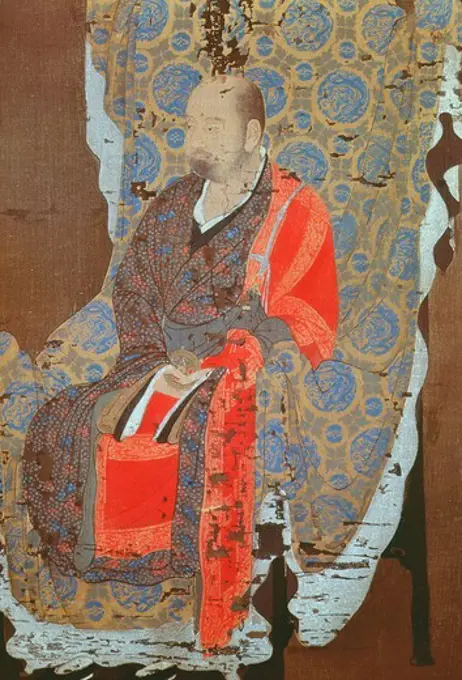
Pu Kung, priest
Pu Kung, priest
126 assets in this story
1899-18711557
Emperor Ruizong of Tang was the eighth son of Emperor Gaozong and the fourth son of Emperor Gaozong's second wife Empress Wu (later known as Wu Zetian). In February 684, Li Dan's mother Empress Wu demoted his older brother Emperor Zhongzong (Li Xian) who had attempted to rule free of his mother, and named him emperor (as Emperor Ruizong). Emperor Ruizong, however, was a puppet under control of his mother and did not have any real power. In October 690 he ceded the imperial throne to his mother, who installed herself as Empress regnant - the only woman in Chinese history ever to rule as emperor. In 705, a coup overthrew Wu Zetian and restored Emperor Zhongzong to the throne. The five years of Emperor Zhongzong's reign were dominated by Zhongzong's empress consort, Empress Wei. In the beginning of July 710, Emperor Zhongzong died, allegedly poisoned by Empress Wei who then named Zhongzong's youngest son Li Chongmao the Prince of Wen emperor (as Emperor Shang). A mere two weeks later, Li
6176-66917739
Taizu, better known as Genghis Khan, 14th century
1899-18788728
Saichi (September 15, 767 June 26, 822) was a Japanese Buddhist monk credited with founding the Tendai school in Japan, based around the Chinese Tiantai tradition he was exposed to during his trip to China beginning in 804. He founded the temple and headquarters of Tendai at Enryaku-ji on Mt. Hiei near Kyoto. He is also said to have been the first to bring tea to Japan.
1899-18787648
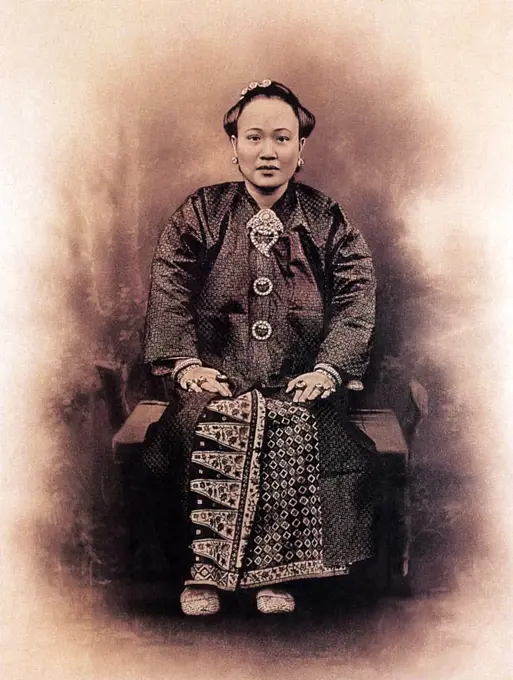
Peranakan Chinese and Baba-Nyonya are terms used for the descendants of late 15th and 16th-century Chinese immigrants to the Malay-Indonesian archipelago of Nusantara during the Colonial era. Members of this community in Malaysia identify themselves as 'Nyonya-Baba' or 'Baba-Nyonya'. Nyonya is the term for the females and Baba for males. It applies especially to the ethnic Chinese populations of the British Straits Settlements of Malaya and the Dutch-controlled island of Java and other locations, who adopted partially or in full Malay-Indonesian customs to become partially assimilated into the local communities. While the term Peranakan is most commonly used among the ethnic Chinese for those of Chinese descent also known as Straits Chinese, it may also be applied to the Baba-Yaya community in Phuket and other provinces of southern Thailand.
1899-18718549
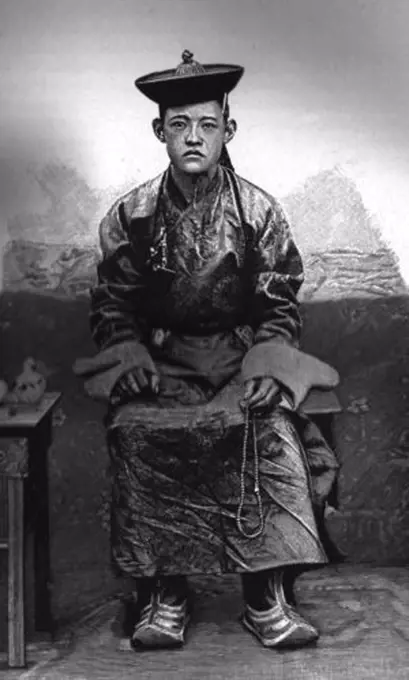
The Panchen Lama is the highest ranking Lama after the Dalai Lama in the Gelugpa (Dge-lugs-pa) sect of Tibetan Buddhism (the sect which controlled western Tibet from the 16th century until the imposition of Chinese sovereignty in 1951). The successive Panchen lamas form a tulku reincarnation lineage which are said to be the incarnations of Amitabha Buddha. The name, meaning 'great scholar', is a Tibetan contraction of the Sanskrit pandita (scholar) and the Tibetan chenpo (great). The Panchen Lama traditionally lived in Tashilhunpo Monastery in Shigatse.
6145-30189202
Daruma 1545-1555 Japan. Zen rose to prominence in Japan in the 13th century, after receiving support from the ruling Kamakura shogunate. In this sect of Buddhism, images of patriarchs were especially revered because the relationships between masters and disciples are of primary importance to the transmission of Zen teachings. Zenís semilegendary founder, Daruma (A.D. c. 470ñc. 543), came from southern India and crossed the Yangzi River in China, where he meditated in a cave at the Shaolin monastery for nine years. In this Japanese painting, his facial features are Indian, and his head is covered as befits a southern Indian monk.According to an inscription on the back of this painting, it was originally in the possession of Shorinji temple in Okayama prefecture.. Hanging scroll; ink, colors, and gold on silk .
1899-18718545
The Panchen Lama is the highest ranking Lama after the Dalai Lama in the Gelugpa (Dge-lugs-pa) sect of Tibetan Buddhism (the sect which controlled western Tibet from the 16th century until the imposition of Chinese sovereignty in 1951). The successive Panchen lamas form a tulku reincarnation lineage which are said to be the incarnations of Amitabha Buddha. The name, meaning 'great scholar', is a Tibetan contraction of the Sanskrit pandita (scholar) and the Tibetan chenpo (great). The Panchen Lama traditionally lived in Tashilhunpo Monastery in Shigatse.
1899-18788566
Dance in Burma can be divided into dramatic, folk and village, and nat dances, each having distinct characteristics. Although Burmese dance has been influenced by the dance traditions of its neighbours, in particular Thailand, it retains unique qualities that distinguish it from other regional styles, including angular, fast-paced and energetic movements and emphasis on pose, not movement. Various types of Burmese music use an array of traditional musical instruments, assembled in an orchestra known as hsaing waing which the Burmese saing saya Kyaw Kyaw Naing has made more widely known in the West. Traditional folk music is atypical in Southeast Asian music, as it is characterized by sudden shifts in rhythm and melody as well as change in texture and timbre. Classical traditions of Burmese music are found in the Mahagita, an extensive collection of classical songs and are typically divided into indoor and outdoor ensembles. These songs tend to be about various legends in Pali and subse
1899-67416621
Chinese emperor in 1840s - the Daoguang Emperor who ruled from 1820 to 1850. He was the eighth emperor of the Manchu Qing Dynasty and the sixth Qing emperor to rule China. During his reign was the First Opium War and the beginning of the Taiping Rebellion. The Nanking Treaty between China and the British Empire that put an end to the First Opium War was signed in 1842.
1899-18855662
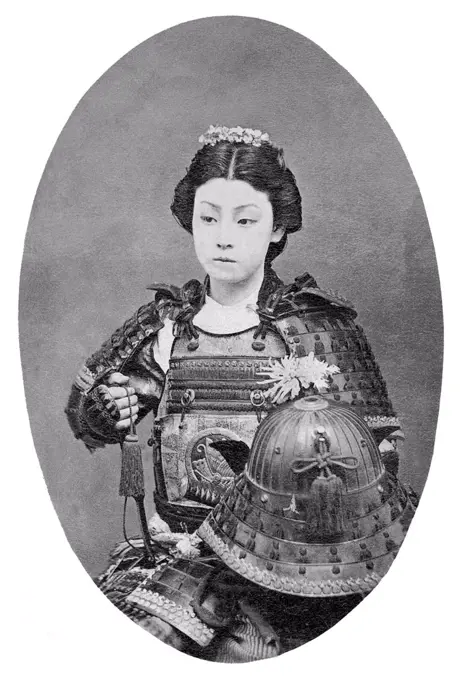
An onna-bugeisha () was a type of female warrior belonging to the Japanese upper class. Many wives, widows, daughters, and rebels answered the call of duty by engaging in battle, commonly alongside samurai men. They were members of the bushi (samurai) class in feudal Japan and were trained in the use of weapons to protect their household, family, and honour in times of war.  They also represented a divergence from the traditional 'housewife' role of the Japanese woman. They are sometimes referred to as female samurai. Significant icons such as Empress Jingu, Tomoe Gozen, Nakano Takeko, and Hj Masako are famous examples of onna bugeisha.
1899-18791997
The British conquest of Burma began in 1824 in response to a Burmese attempt to invade India. By 1886, and after two further wars, Britain had incorporated the entire country into the British Raj. To stimulate trade and facilitate changes, the British brought in Indians and Chinese, who quickly displaced the Burmese in urban areas. To this day Rangoon and Mandalay have large ethnic Indian populations. Railways and schools were built, as well as a large number of prisons, including the infamous Insein Prison, then as now used for political prisoners. Burmese resentment was strong and was vented in violent riots that paralysed Rangoon on occasion all the way until the 1930s. Burma was administered as a province of British India until 1937 when it became a separate, self-governing colony. Burma finally gained independence from Britain on January 4, 1948.
1606-189749
Thailand, Bangkok, Chinatown, Thian Fa Chinese Medicine Hospital, Wall Mural Depicting Chinese Mythology in the Kuan Yim Temple
1788-9628
China - Kiangsu sheng - Nanking. Confucian temple 'Fuzimiao'.  Statue of Confucius, detail of sculpture
1899-18853286
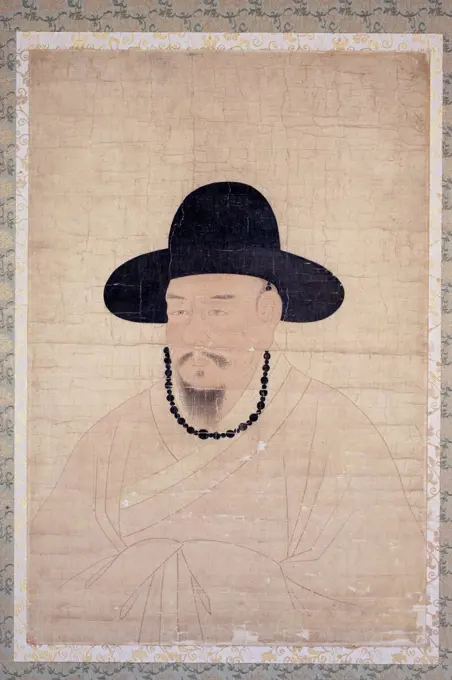
Kim Si-seup's ancestors originally came from Gangneung, Gangwon-do, but Kim himself was born in Seoul. Throughout his life, Kim Si-seup (시습) maintained a special bond with the Gangwon area and compiled a book of poetry called Tangyugwandongnok which was based on family history and experiences he had in the area. Kim was an extremely gifted child and had picked up reading ability at eight months of age. At five years of age, he was able to read and comprehend 'The Great Learning' and the 'Doctrine of the Mean'. Kim was a devout Buddhist and at twenty-one years of age he decided to leave government service and become a priest.
1899-18718439
Mongolian Buddhism: The Bogd Khan was simultaneously religious and secular head of the Mongolian state until the 1920s. Ikh Huree, as Ulaanbaatar was then known, was the seat of the preeminent living Buddha of Mongolia (the Jebtsundamba Khutuktu, also known as the Bogdo Gegen and later as Bogd Khan), who ranked third in the Lamaist-Buddhist ecclesiastical hierarchy, after the Dalai Lama and the Panchen Lama.
6176-67077078
Confucius (551-479 BC), Chinese philosopher. Artist: Unknown
6176-66091428
Student, Japan. Old 19th century engraved illustration Travel to Japan by Aime Humbert  from El Mundo en La Mano 1879
4186-61428867
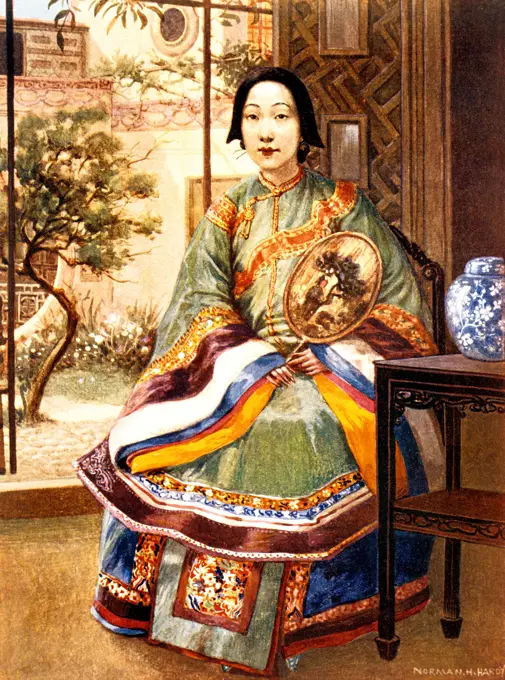
1900s 1902 ILLUSTRATION OF CHINESE WOMAN WEARING COLORFUL NATIVE DRESS HOLDING FAN WOMEN OF WORLD SERIES BY NORMAN H. HARDY
1899-18712161
Li Guangdi (1642-1718), courtesy name Jingqing and sobriquet Hou'an, was a Chinese neo-Confucianist who served in the Imperial court of the Kangxi Emperor.
1848-53224888
Colorful portrait of Cixi, concubine of the emperor and Empress Dowager, Qing Dynasty, New Summer Palace, Beijing, China, Asia
1848-19251756
Kleidung, Mode in China, um das 19. Jahrhundert, von links, ein Richter in einfacher Unterwäsche mit Strohhut, ein chinesischer Mandarin, dann ein Cha...
1899-18792951
Kisaeng (also spelled gisaeng), sometimes called ginyeo, were female official prostitutes or entertainers. Kisaeng are artists who work to entertain others, such as the yangban aristocracy and kings. First appearing in the Goryeo Dynasty, kisaeng were legally entertainers of the government, required to perform various functions for the state. Many were employed at court, but they were also spread throughout the country. They were carefully trained, and frequently accomplished in the fine arts, poetry, and prose, although their talents were often ignored due to their inferior social status. Women of the kisaeng class performed various roles, although they were all of the same low status in the eyes of yangban society. Aside from entertainment, these roles included medical care and needlework. In some cases, such as at army bases, kisaeng were expected to fill several such roles. Kisaeng, both historic and fictional, play an important role in Korean conceptions of the traditional culture
1525-22093493
Sejong the Great (1397-1450) on 10000 Won 2000 Banknote from South Korea. Fourth king of Joseon during 1418-1450.
1899-19136126
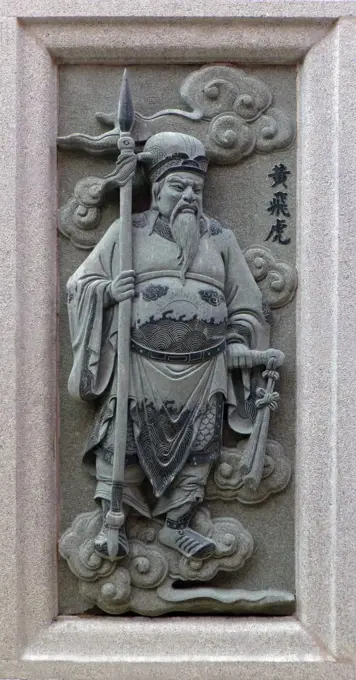
Malaysia/China: Carving of Huang Feihu, depicting his role in the 16th Century Ming Dynasty novel Fengshen Yanyi ('Investiture of the Gods'). From Ping Sien Si Temple, Pasir Panjang Laut
1899-18713440
Somdet Chao Phraya Borom Maha Prayurawongse or Dis Bunnag (1788-1855) was a prominent political figure in Siam during the mid-19th century. He acted as regent for King Mongkut (Rama IV) kingdom-wide. He led Siamese fleets in the Siamese-Vietnamese Wars and became a Somdet Chao Phraya - the highest title the nobility could attain with equal honor to that of royalty. Dis Bunnag was born in 1788 to Bunnag and Lady Nuan (who was Queen Amarindra's sister). His father, Bunnag, or Chao Phraya Akka Mahasena, was the Samuha Kalahom and Buddha Yodfa Chulaloke's (Rama I) trusted general. Dis entered the palace as a royal page - the traditional way to enter Siamese bureaucracy. Dis swiftly rose through the ranks and became the Minister of Krom Tha and emerged as a powerful noble under the government of Buddha Loetla Nabhalai (Rama II). As Dis had played a great role in the ascension of Mongkut, he was bestowed the title of Somdet Chao Phraya Borom Maha Prayurawongse and became Mongkut's regent kin
1899-19135292
Burma/Myanmar: Queen Supayalat in the royal palace at Mandalay c.1880
PREVIOUS
of 2
NEXT
2401 S. Ervay, Suite 206
Dallas, Texas 75215
United States
Get Started
Free ResearchMy BoardsMy Cart
For Creators
How To License Your ContentContributor PortalFrame of Mind
Resources
API accessPricing
Contact
+1 866 236 0087help@viewpictures.co.uk Contact form
©2026 View Pictures. All Rights Reserved. -A
This site is protected by reCAPTCHA and Google Privacy Policy and Terms of Service apply.