Historical Book Fittings

Metal and decorative fittings for bookbinding, featuring engraved designs and ornate details, indicative of craftsmanship from historical periods.

Batter of a Missaalband, Anonymous, c. 1450 - c. 1500 Ten fittings of a missal band, from brass. The ten volumes are cut from copper plate, driven, engraved and sponed. A copper button with seven facets has sounded on each of them. They are equipped with holes on the corners or along the edge to be able to stock nails, with which they were contested on the book band. Four corner pieces have a rim turned backwards on two sides. The remaining four have that only on the top or bottom (these were placed against the back of the book). Two sides of each corner piece are trimmed with an open edge of cross flowers. The field in the middle is taken by three stilled tiflines. The ornament on the center pieces consists of a plant with three leaves and two flowers in a pot on the corners. The four parts in between are taken by fantasy drugs. Germany (possibly) brass (alloy) cutting / engraving Ten fittings of a missal band, from brass. The ten volumes are cut from copper plate, driven, engraved an
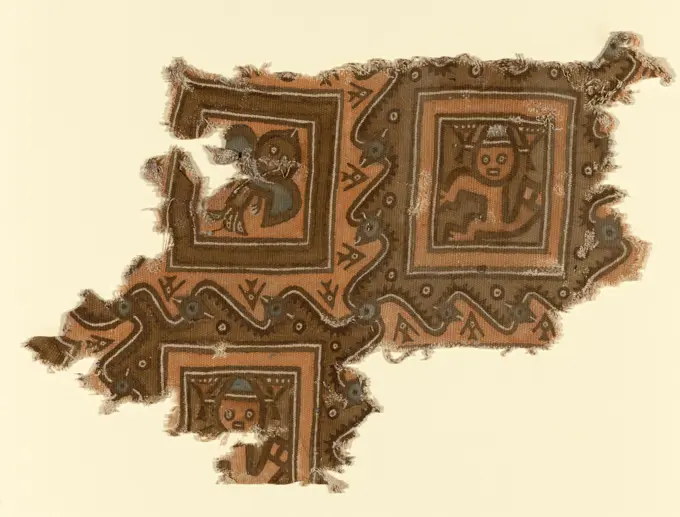
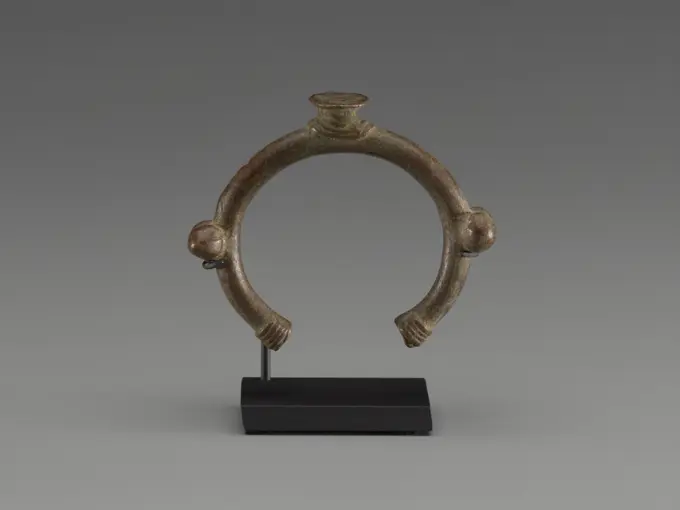
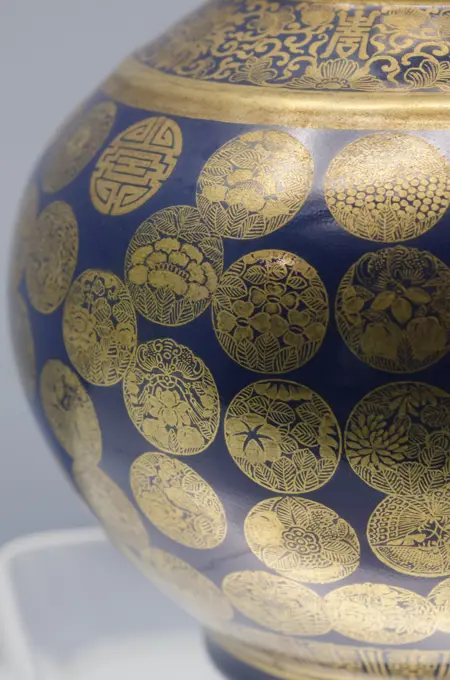
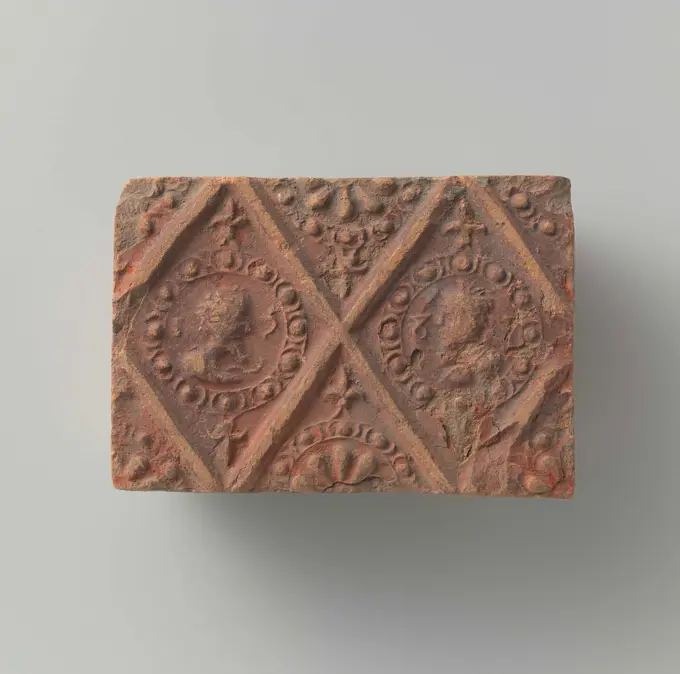
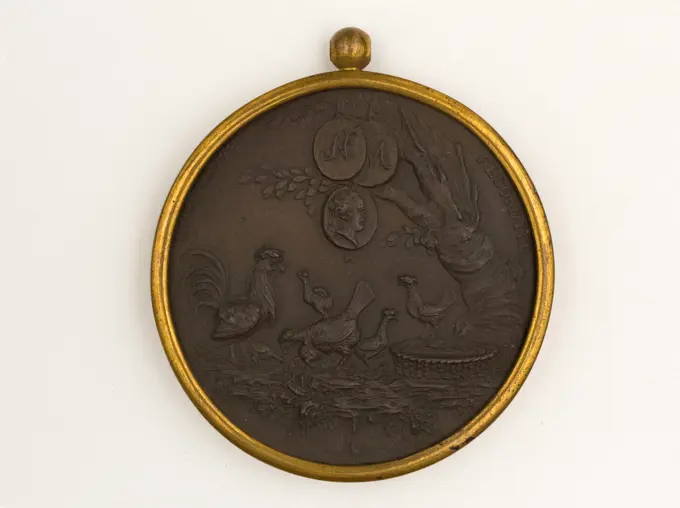
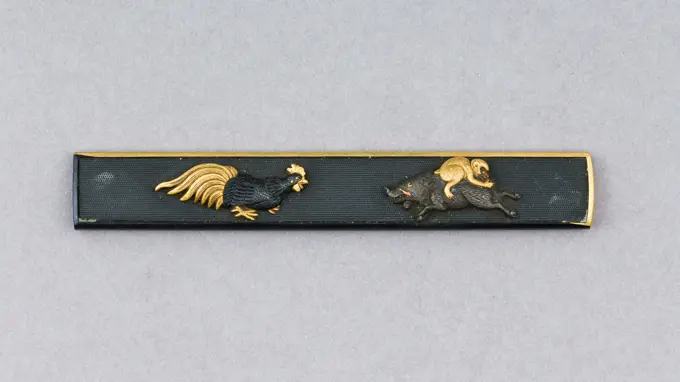
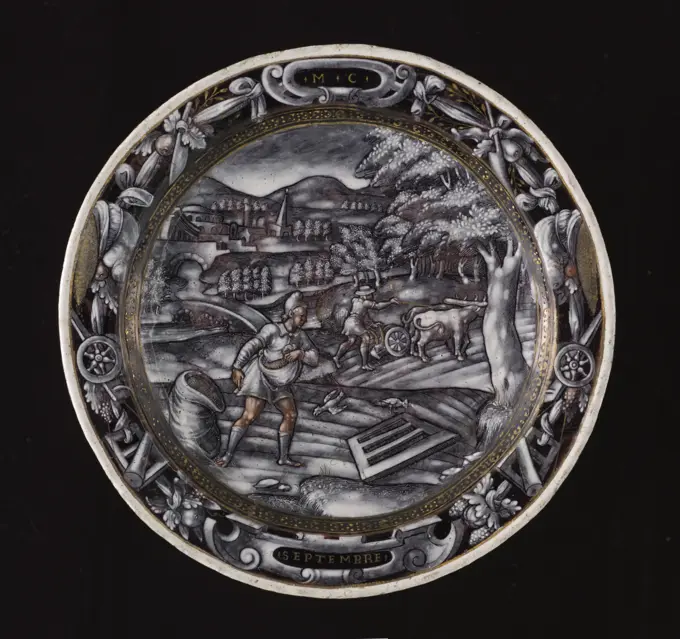
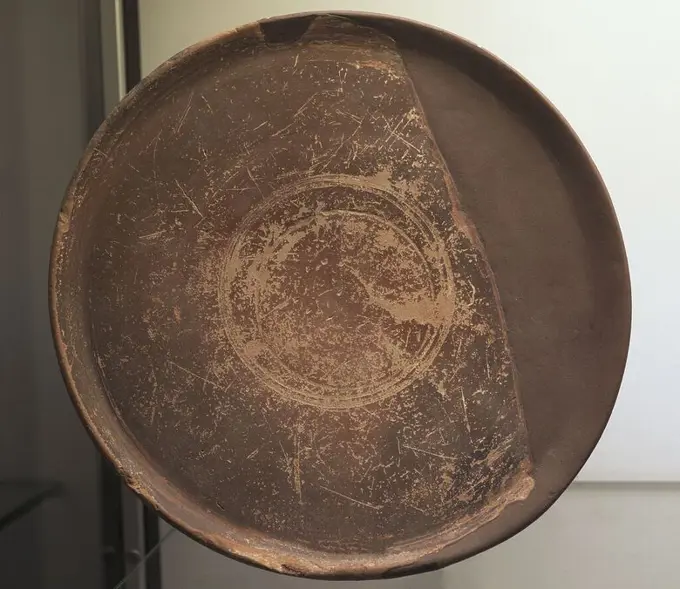
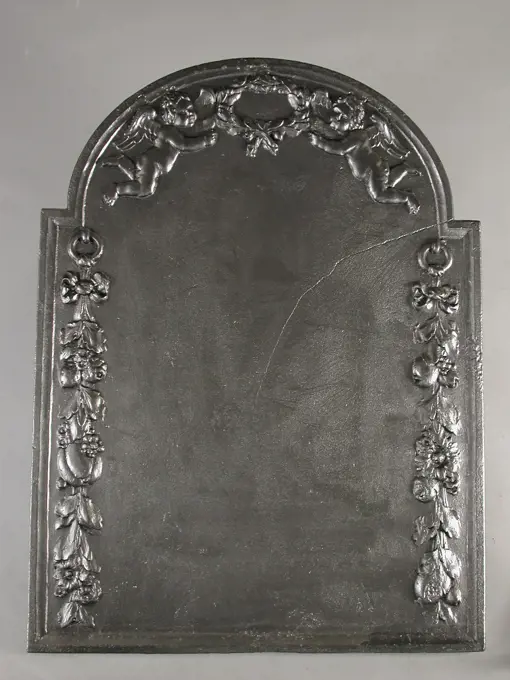
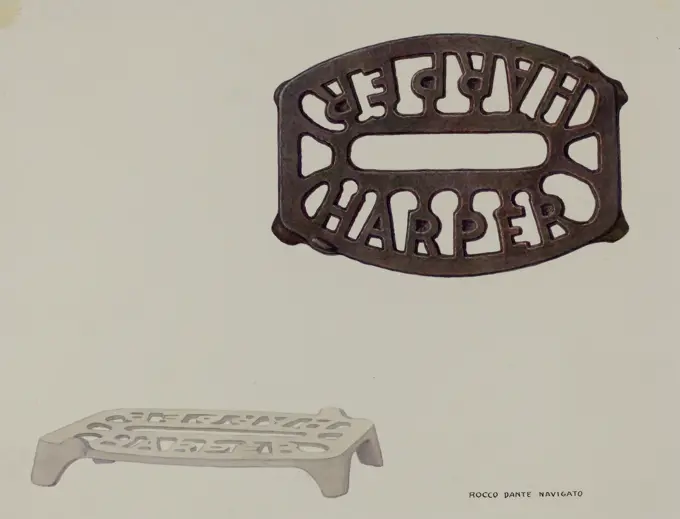
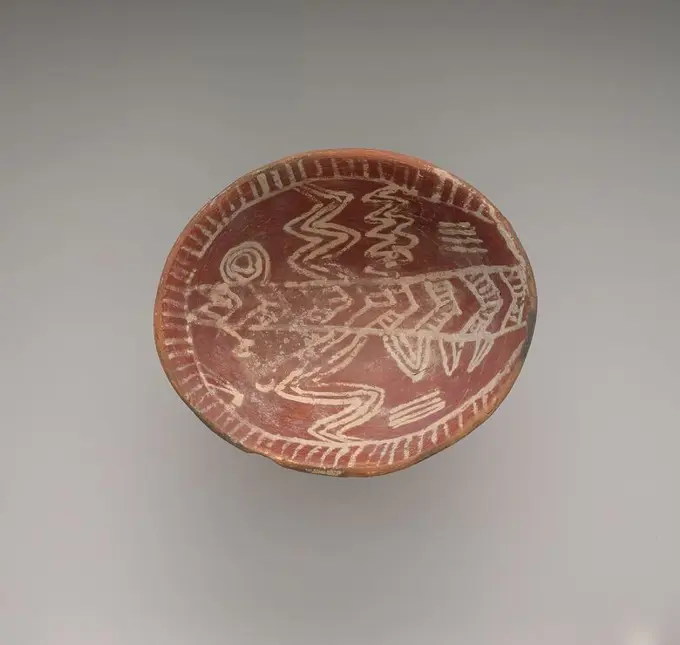
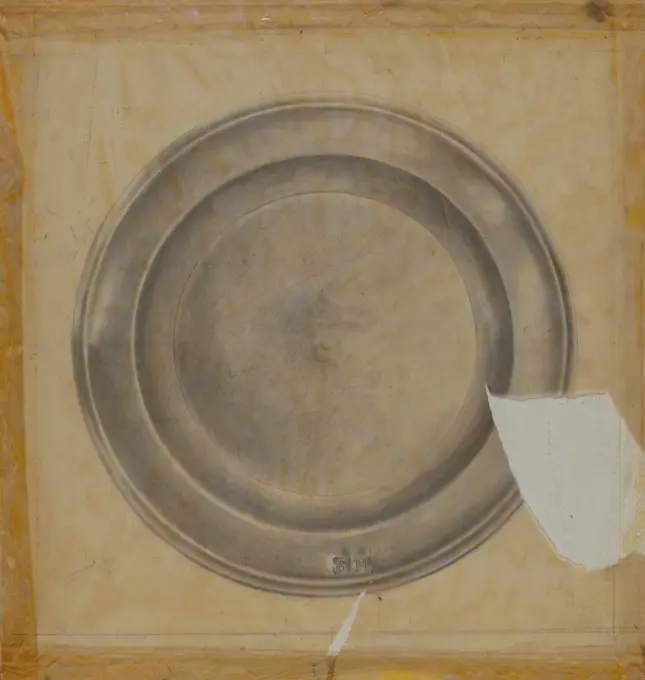
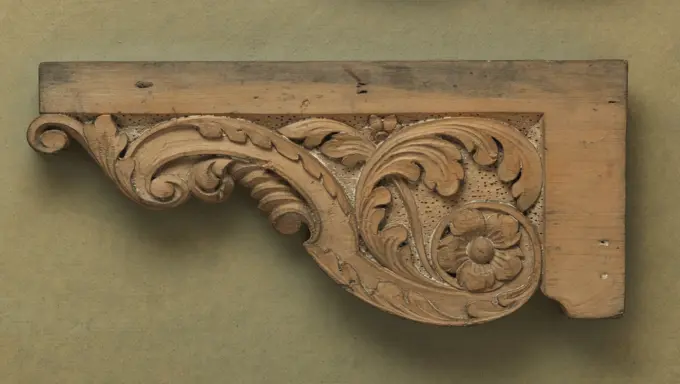
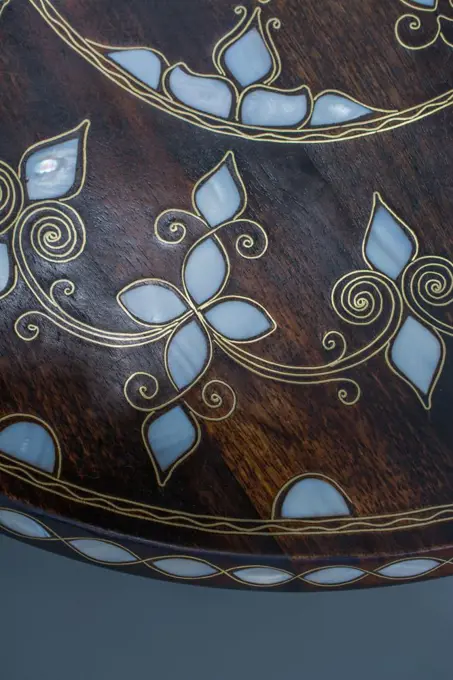
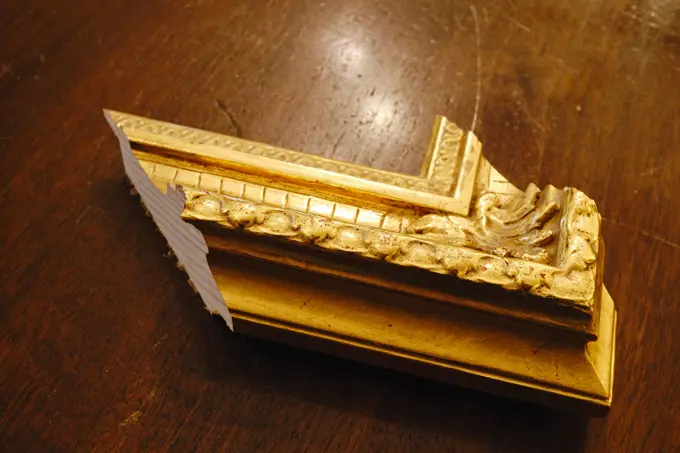
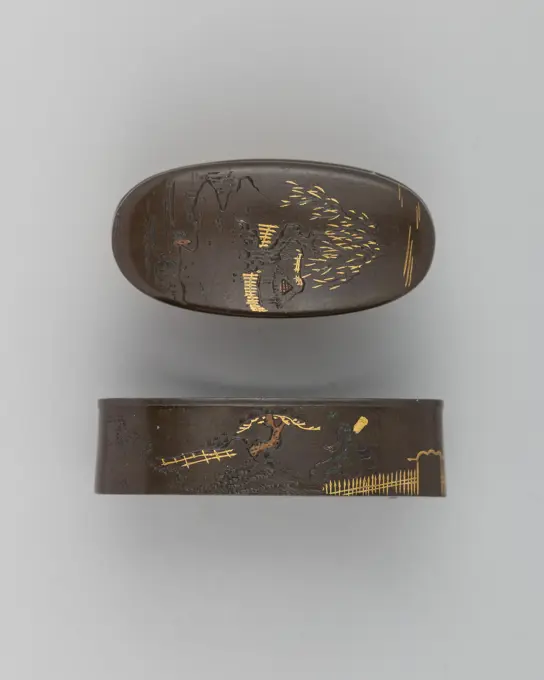
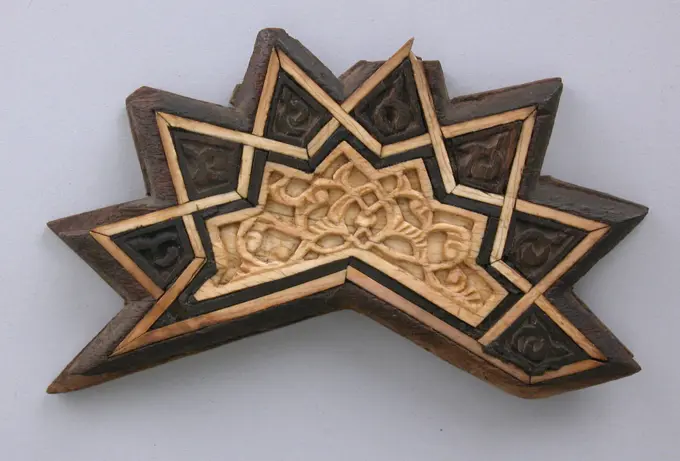
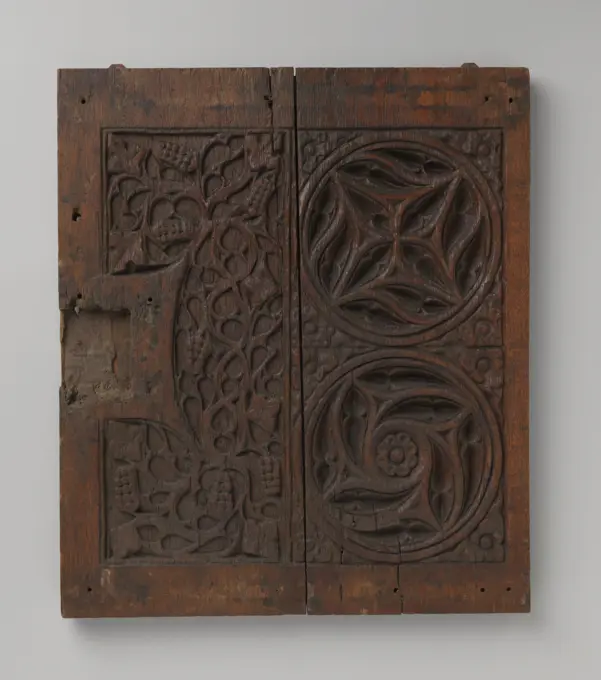
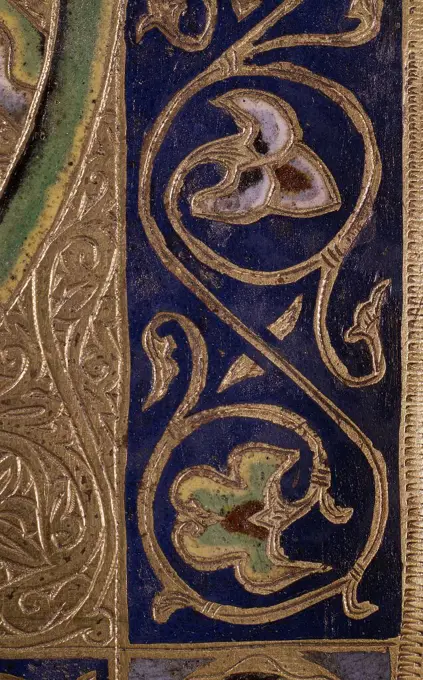
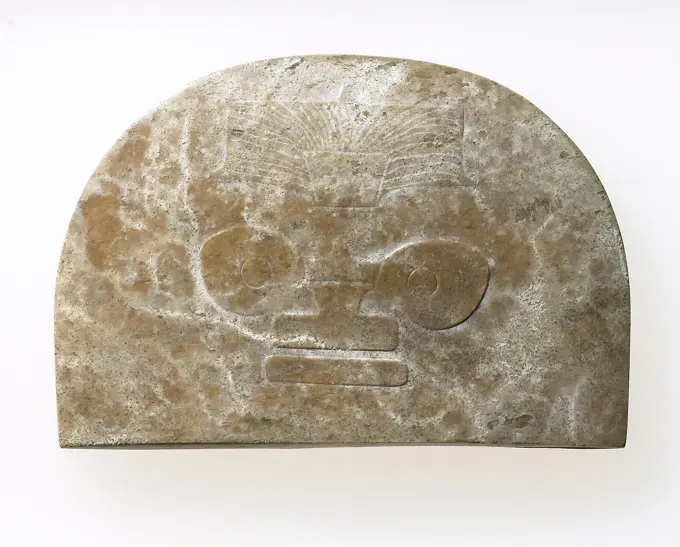
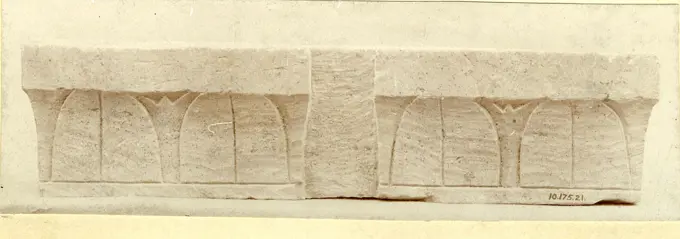
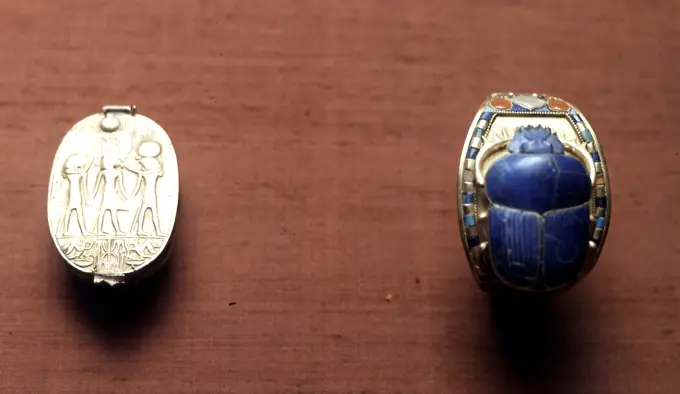
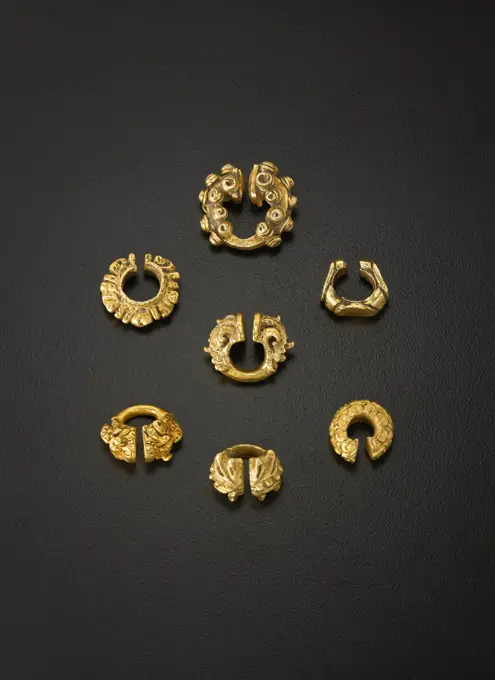
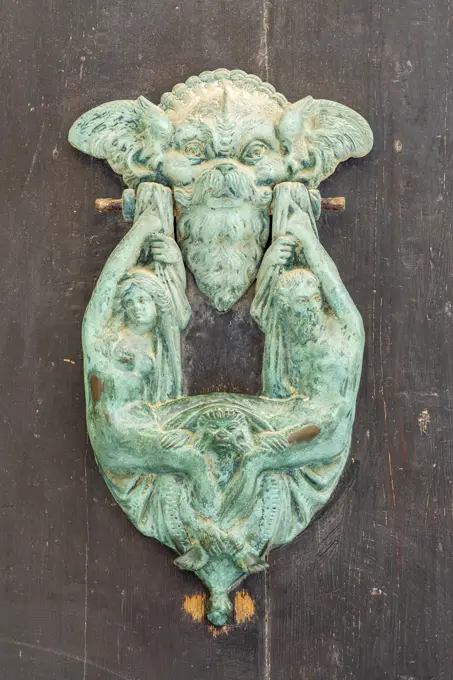
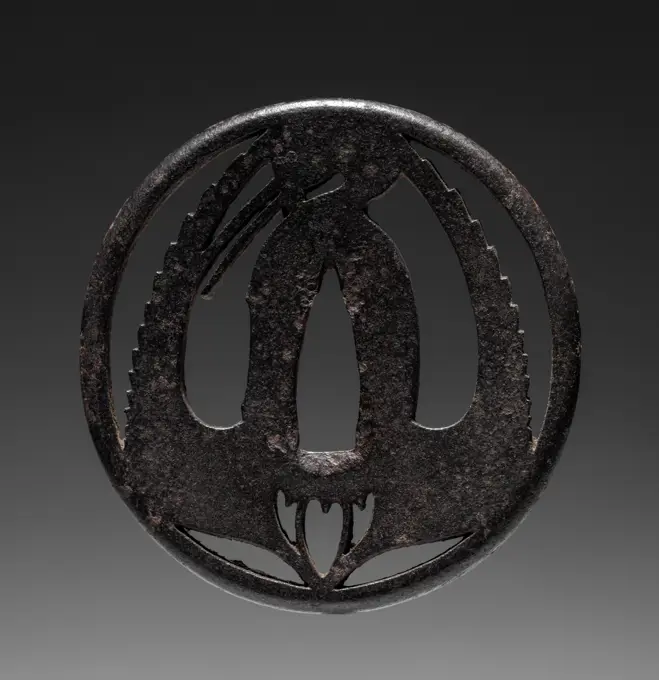
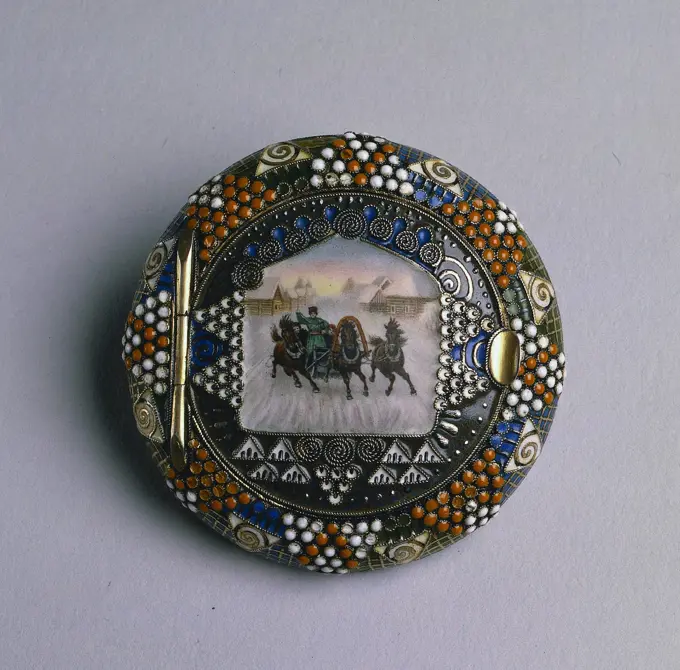
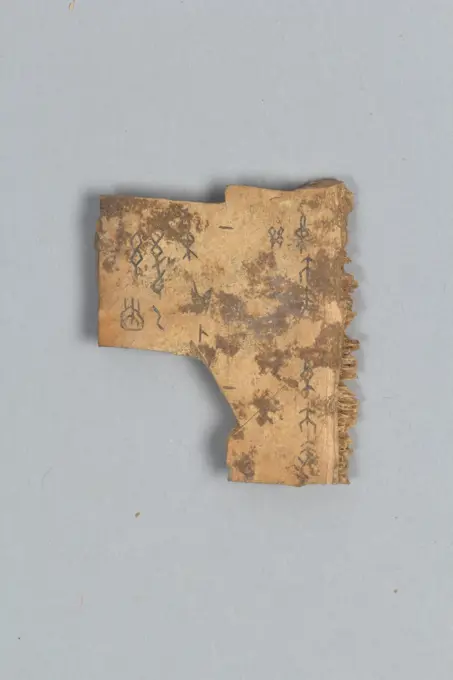
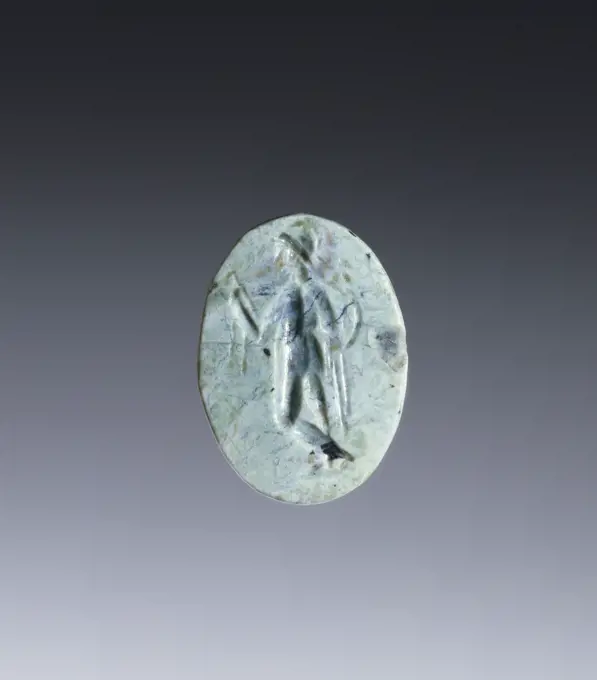
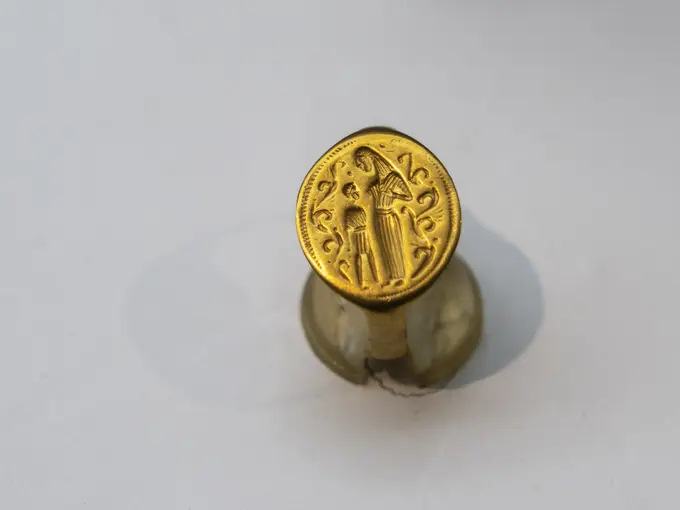
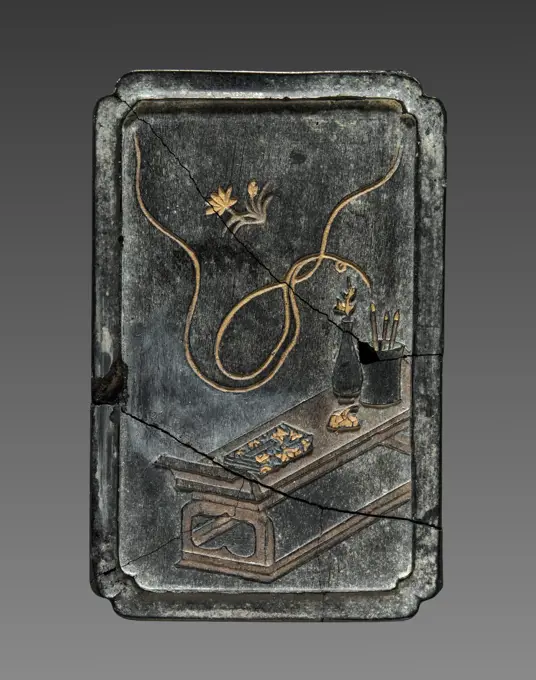
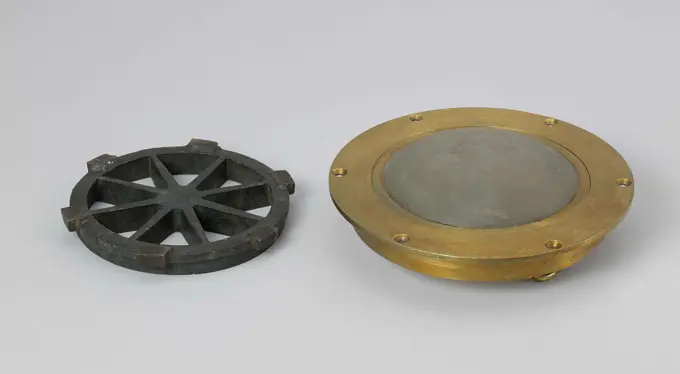
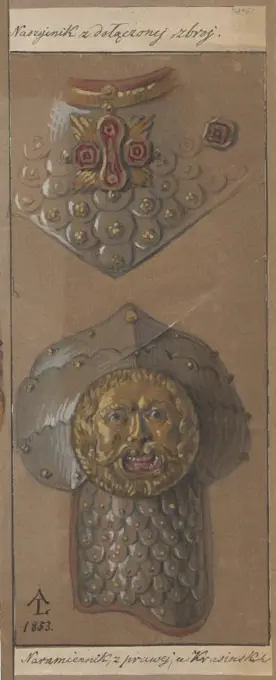
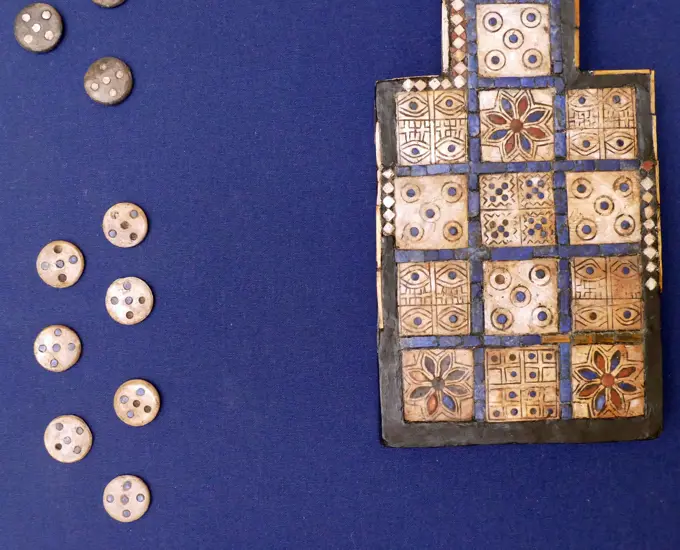
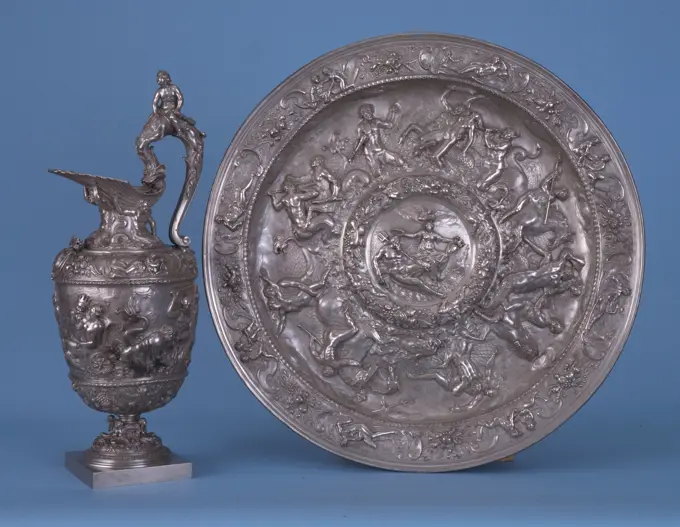
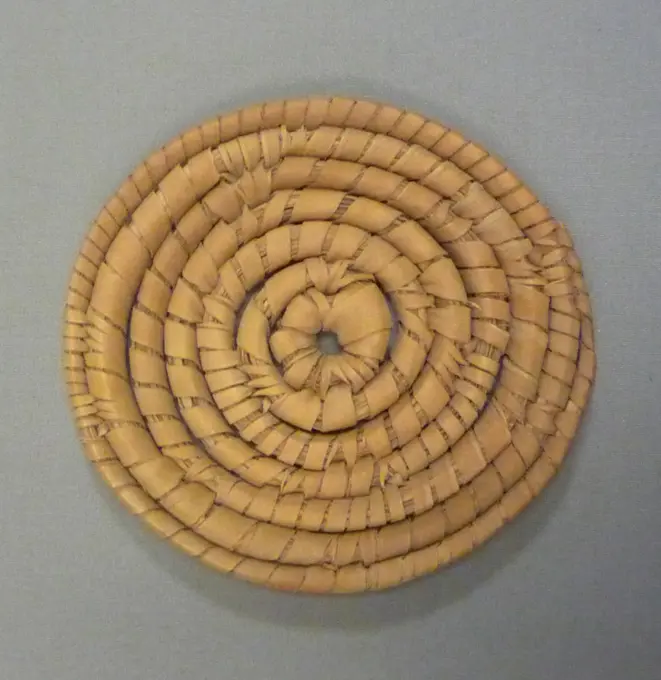
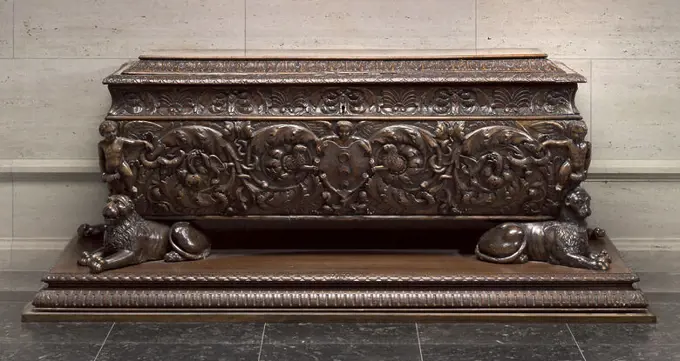
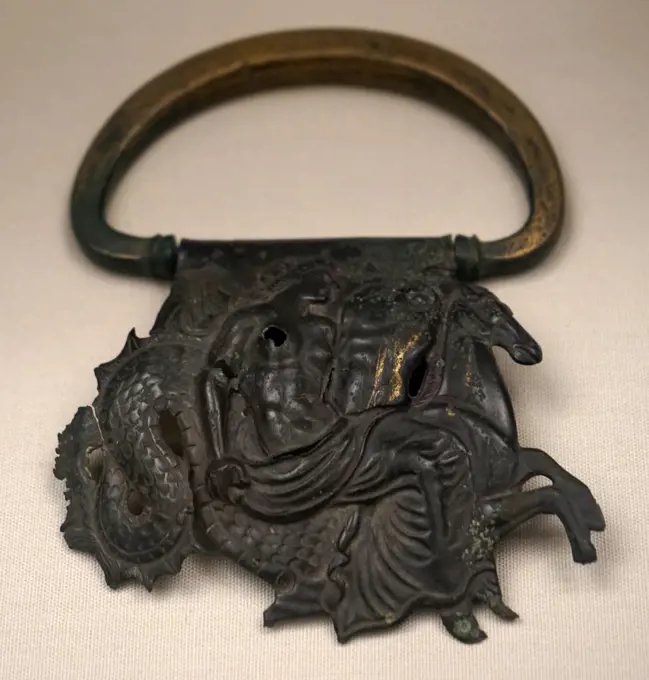
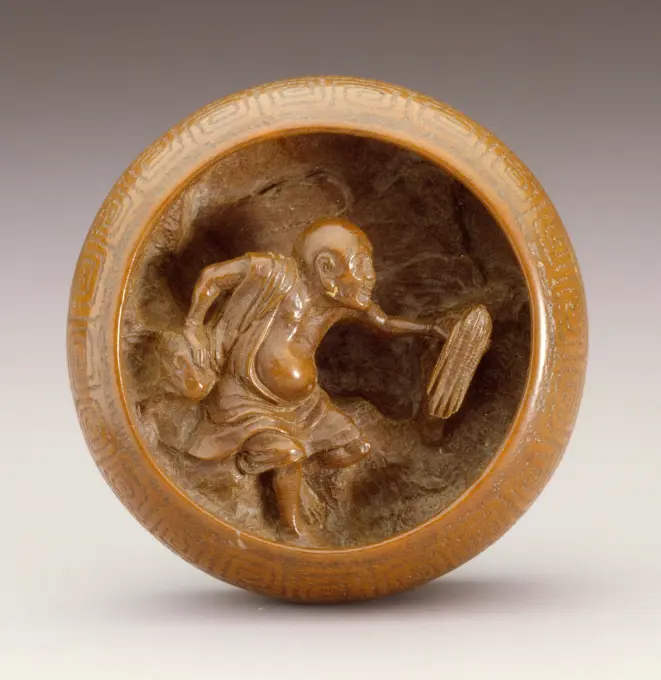
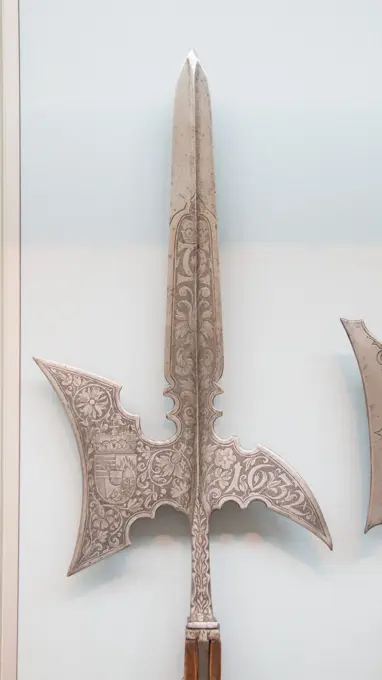
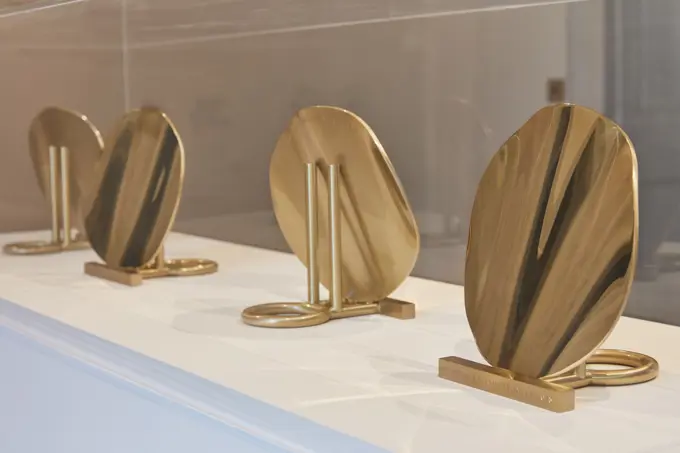
Dishwill made of earthenware with blue glaze, with multicolored drawing of plants, anonymous, 1500 - 1799   earthenware. glaze   earthenware. glazeFacing brick with inscription anno. ,, c. 1661  Lying rectangle with a wide shaded edge within which the inscription Anno. The facing brick belongs to two facing bricks (KOG-ALS-144-1 with D Loosman and KOG-ALS-144-3 with 1661). Netherlands (possibly) .Mirror with eight-point design 1st century China. Mirror with eight-point design 61029Fragment Made 1000-1476 Peru. Cotton, plain weave; painted . ChancayBraceletDetail of the coloured glass and mirror work in the audience chamber in the palace, The City Palace, Jaipur, Rajasthan state, India, AsiaChina, Shanghai, Shanghai Museum. Ancient china and porcelain collection. Blue glazed vase with golden medallion design, Jingdezhen ware, circa Qing Dynasty AD 1875-1908.Fireplace with two royal busts. A fireplace of baked earth with two royal bubbles a man and a woman. Dated. Coming from the crowded outside place Beukenrijk in Maartensdijk.Writing Casket (lid), c. 1525. Workshop of Severo da Ravenna (Italian, c.1496-c.1543). Bronze; The interior is divided into four compartments for storing writing implements and sand for blotting.The happy fertility Renaud Jean-Martin, said Renaud de Sarreguemines (1746-1821). Medallion: allegory (rooster, hens), monograms N, M, R .. The happy fertility. Terracotta, light brown color matte, with metal strapping.Square Tube (Cong) with Masks. China, probably Jiangsu Province, Neolithic period, Liangzhu culture, middle phase, about 2600-2400 B.C.. Sculpture. Abraded jadeMemorial by Gary Breeze and Martin Cook to the victims of the 2002 bombing in Kuta, Bali, Indonesia in London, England, United Kingdom, EuropeSword-Hilt Collar and Pommel (Fuchigashira). Culture: Japanese. Dimensions: Fuchi (a); H. 1 1/2 in. (3.8 cm); Wt. 0.7 oz. (19.8 g); kashira (b); H. 1 3/8 in. (3.5 cm); Wt. 0.5 oz. (14.2 g). Date: ca. 1615-1868. Museum: Metropolitan Museum of Art, New York, USA.Knife Handle (Kozuka) ca. 1615-1868 Japanese A kozuka is a handle of a by-knife that is part of a sword mounting. It is kept in a slot on the reverse of a katana scabbard, often with a matching kōgai (hairdressing tool).. Knife Handle (Kozuka) 34574Engraved Gem. UnknownGold bowl with decorations influenced by Egyptian, Syrian and Mycenaean style, from Ugarit, Ras-Shamra, SyriaVerbrauchssteuerbox der iberischen Kultur Excise box of Iberian Culture, Valladolid Museum - Provincial Museum of Antiquities, Autonomous Community of Castile and Leon, Spain Copyright: xZoonar.com/BartomeuxBalaguerxRotgerx 22539475Calendar Plate for September (Sowing). Martial Courteys (France, Limoges, circa 1544-1592). France, Limoges, circa 1565-1575. Furnishings; Serviceware. Grisaille enamel, flesh tones, touches of color, and gold on copperCampanian ceramics. Reconstructed patera. 2nd-1st centuries BC. Dredging of the Port of La Corua, Galicia, Spain. Archaeological and History Museum (San Anton Castle). A Corua, Galicia, Spain.Fireback with garlands and putti, without show, fire place, Rectangular arch at the top. At the top two putti holding laurel wreath. On the sides flower hangers to warm the living environment interiorCast pendant bead. UnknownSword Guard (Tsuba) with Dragon, Lion, and Sea Monster, c. 1615-1868. Japan, possibly Edo period (1615-1868). Iron; overall: 7.6 x 8 cm (3 x 3 1/8 in.).Heavy duty towing and recovery chainGenova Municipal Cemetery, Mallorca, Balearic Islands, Spain.Peru, gold earring, 400 - 900 A.DInkwell. Dated: c. 1936. Dimensions: overall: 21.3 x 28.3 cm (8 3/8 x 11 1/8 in.). Medium: watercolor and graphite on paperboard. Museum: National Gallery of Art, Washington DC. Author: Gertrude Lemberg.Rocco Navigato, Trivet, c 1937 TrivetWhite cross-lined bowl with four legs. Dimensions: H: 15.6 cm (6 1/8 in.); diam: 19.7 cm (7 3/4 in.). Date: ca. 3700-3500 B.C.. Museum: Metropolitan Museum of Art, New York, USA.Buckle, 1800s-1900s. China, 19th-20th century. White jade; overall: 17.6 cm (6 15/16 in.).Angel wing of brass. Gutted right wing, with a row of five feathers, with five long feathers above. IIV numbered on the mounting piece.Bell BREAK (Inscription: Captm Eccle)  Zygmuntów Tower, Wawel Cathedral, KrakowHarry Goodman, Pewter Plate, 1935 1942 Pewter PlateSword Guard (Tsuba) with Plum, 1615-1868. Japan, Edo period (1615-1868). Iron; diameter: 7.7 cm (3 1/16 in.).Pre-Columbian Art. Colombia. Anthropomorphic pendant. 5th10th century. Gold. It comes from the Department of Tolima. Metropolitan Museum of Art. New York. United States.Square Plaque. Culture: Vicús. Dimensions: Height 3-1/4 in. (8.2 cm). Date: 3rd century B.C.-A.D. 2nd century. Museum: Metropolitan Museum of Art, New York, USA.Bracket 18th century British. Bracket. British. 18th century. Deal. WoodworkForty Stuiver, emergency coin from Amsterdam, beaten during the siege from the silver of the Nieuwe Kerk, Anonymous, 1578 - 1631 coin. siege coin Unilateral, diamond -shaped emergency coin with beveled corners. Front: three stamps above each other; From bottom to top: mint masters: letters P and G; city coat of arms: crowned coat of arms; year above letters X and L. downside: Blanco Amsterdam silver (metal) striking (metalworking)  AmsterdamTable Screen, 1736-1795. China, Qing dynasty (1644-1911), Qianlong reign (1736-1795). Jade; overall: 15.9 cm (6 1/4 in.).Ottoman art example of Mother of Pearl inlaysSand Dollar Urchin (Mellita tenuis), Captiva Island, Florida, USAWIen, Austria - April 29, 2025 C. Bühlmayer - K.u.K. Hofvergolder. WIen Wien Austria *** WIen, Austria April 29, 2025 C Bühlmayer K u K Hofvergolder WIen Vienna Austria PUBLICATIONxNOTxINxAUTPlate with engraved decorations for an earthenware pot with lid. Plate of copper with engraved performances. On one side with engraved decorations for a pot with lid. In the upper right corner the text: Jedo NO 2. The rear shows the breakdown of the front. In the top right corner: 2725.Sword-Hilt Collar and Pommel (Fuchigashira) late 18th century Japanese A fuchigashira is a pair of matching sword fittings comprising the fuchi (collar at the base of the grip of the sword hilt) and kashira (pommel cap at the end of a sword hilt).. Sword-Hilt Collar and Pommel (Fuchigashira). Japanese. late 18th century. Bronze, copper-gold alloy (shakud), gold, copper. Sword Furniture-Fuchi-KashiraPanel 13th-14th century There are two panels of this design; mirror images of each other (07.236.66 and 07.236.67). They were probably part of the the same object, with other geometric elements filling in the negative space created between the two pieces. The craftsman deliberately used a darker wood for the inlay, both carved and unadorned, to heighten the contrast with the ivory. Apart from the more elaborate arabesque in the ivory, the four-sided wood inlay is carved with a simple tendril. Also worth noting is the way in which the plain ivory strips are laid out to give the impression of two intertwined stars. Similar elements of design are seen in another panel in the collection (07.236.101).. Panel 445084Door of a cupboard of oak, anonymous, c. 1500 - c. 1525 Door of an oak cupboard, which was demolished in 1931/1932. The door shows a stabbed tracing with rosettes in the corners and around the saved space for the lock plate. The door was part of a cupboard that was demolished in 1931/1932. Northern Netherlands wood (plant material). oak (wood) Door of an oak cupboard, which was demolished in 1931/1932. The door shows a stabbed tracing with rosettes in the corners and around the saved space for the lock plate. The door was part of a cupboard that was demolished in 1931/1932. Northern Netherlands wood (plant material). oak (wood)PLACA - DETALLE - SIGLO XII - ESMALTE DE LIMOGES - COBRE - CINCELADO, DORADO Y ESMALTE EXCAVADO - CONJUNTO Nº 3406. Author: TALLER DE LIMOGES. Location: MUSEO LAZARO GALDIANO-COLECCION. MADRID. SPAIN. JESUS. CRISTO EN MAJESTAD. MAJESTAS DOMINI.Ornament decorated with human and beast masks, 3300-2000 BCE, 2 1/8 x 3 1/4 x 3/16 in. (5.4 x 8.26 x 0.48 cm), Calcified tan-grey jade, China, 33rd-21st century BCE, The semicircular ornament bears a depiction of a stylized human face with only a pair of eyes but detailed, striated hair. Below is a beast mask dominated by two large almond-shaped eyes with pupils, a broad nose, and a mouth. This ornamentation is typical of divine figures on jades from the Neolithic Liangzhu culture, which flourished in the present-day lower Yangzi River delta. The design on this jade is a simpler form with neither bodies of humans nor beasts. Two pairs of holes along the edge of the plain back allowed it to be attached to other objects. Several semicircular ornaments with similar designs unearthed from Fanshan, the Neolithic site in Zhejiang, were found located near the deceaseds head, an indication that they might have served as hair ornaments.Showcase with various small images; Vitters crafts. This is the device of the display case before emptying in October 1959.Smok - panneau. unknown, craftsmanFragment of saucer dish, dark blue ground, on the mirror polychrome flower (daffodil), plate crockery holder soil find ceramic earthenware glaze tin glaze, total, hand turned hand shaped glazed decorated fried Dish on stand with tilted flag. Noppenrand and corrugated outside edge. Dark blue background with polychrome flower in white manganese purple and yellow underside glazed in light blue. Stand ring with two hanging holes. Cooked on prunes. Yellow shard. Glaze flaws in the mirror archeology native pottery food serve serving table decorateCapital 6th century. Capital 446108Tutenkhamun treasure. Scarab bracelet.Againhaan, c. 1400 - c. 1950 Showing belonging to the tower cross of iron. unknown iron (metal). copper (metal) gilding Showing belonging to the tower cross of iron. unknown iron (metal). copper (metal) gildingMirror, c. 470-460 BC. Greece, Sicyon(), 5th Century BC. Bronze; diameter: 15.3 cm (6 in.); overall: 38.8 cm (15 1/4 in.).Box with Ink Cakes: Blue Ink Cake in Shape of a Gui Scepter, 1795-1820. China, Qing dynasty (1644-1911), Jiaqing reign (1795-1820). Ink cake; case: 26.4 x 19.1 cm (10 3/8 x 7 1/2 in.); lid: 26.5 x 19.2 cm (10 7/16 x 7 9/16 in.).Unidentified soldier in Confederate uniform holding saber and revolver. Liljenquist Family Collection of Civil War Photographs , pp/liljconfed. Confederate States of America, Army, People, 1860-1870, Soldiers, Confederate, 1860-1870, Military uniforms, Confederate, 1860-1870, Handguns, 1860-1870, Daggers & swords, 1860-1870, United States, History, Civil War, 1861-1865, Military personnel, Confederate.Carved EarOrnamentMalta, Mdina. Green patina on knocker with spirits and gods.Italy, Tuscany, Lucca. Old antique door knocker on an old wooden door in the historic town of Lucca.Sword Guard, 1615-1868. Japan, Edo period (1615-1868). Iron; diameter: 7 cm (2 3/4 in.).Pill or Snuff Box, 1906-16. Attributed to Feodor Ivanovich Rückert (Russian, 1840-1917), House of Fabergé (Russian, 1842-1918). Silver gilt and enamel; diameter: 5.8 cm (2 5/16 in.).Fragment of Divining Bone China. Fragment of Divining Bone. China. Shell. Shang dynasty (ca. 1600-1046 B.C.). Shellgold sheets with embossed decoration, Giribaile, Vilches, Iberian culture, Iberian Museum of Jaén, Andalusia, Spain.Engraved Gem; 1st century; Silicate; 0.9 × 0.7 × 0.2 cm (3,8 × 1,4 × 1,16 in.)South African Coin defaced by Anglo-Boer War POW'sPiece of asbestos, decorated with two fish, anonymous, c. 1900 - c. 1920 Piece of asbestos, decorated with two fish in the colors brown, gray, white and gold. Netherlands asbestos. paint (coating) Piece of asbestos, decorated with two fish in the colors brown, gray, white and gold. Netherlands asbestos. paint (coating)Embroidered finger;  18th century (1701-00-00-1800-00-00);Gold ring with seal Gold ring with seal, -Annulus Aureus De Ilipla-, 5th-4th centuries BC. Turdetan era, Niebla, Huelva Museum, Huelva, Andalusia, Spain Copyright: xZoonar.com/BartomeuxBalaguerxRotgerx 21720816Ceremonial Uniform: Front Metal Plate, 1644-1911. China, Qing dynasty (1644-1911). Metal (brass); lined in blue silk; overall: 14.6 x 14.6 x 2.9 cm (5 3/4 x 5 3/4 x 1 1/8 in.).Ojime. Culture: Japan. Dimensions: H. 9/16 in. (1.4 cm); Diam. 5/8 in. (1.6 cm). Date: 19th century. Museum: Metropolitan Museum of Art, New York, USA.Hanukkah lamp, c. 1800, 9-9/16 x 6-1/8 x 10-5/16 in. (24.3 x 15.6 x 26.2 cm), Copper alloy, Poland, 18th-19th centuryCarnavalet museum, medal collection Right an Athenian sitting on the right on a rock observes a woman crouching on the ground, drawing the contours of her shadow on the stylus on a wall; Reverse registration on four lines.Ink Cake, late 19th Century. China, Qing dynasty (1644-1911). Ink cake; overall: 3.6 cm (1 7/16 in.).Photo album (empty), Anonymous, 1860 - 1900  Photo album with 48 pages with a rectangular or oval passe-partout on each page, with golden lines framed, for a carte-de-visiting.  cardboard. paper. wood (plant material). metalDeck Light.Round patent glass with loose grid that can replace the glass. The brass flange is screwed onto the cover with six screws, inserted the glass along the underside with the matte convex side, and locked up with a bayonet closure with six cams in the flange; Two brackets serve as handles. The cast iron lattice is flat with six spokes. Glass (A), brass flange (B) and grid (C).Button, Paper, metal foil, thread, paillettes, Folding envelope of paper with tie closure; used as a case for ten circular buttons., On card 14, France, late 18th century, costume & accessories, Decorative Arts, ButtonIberian period coins, Iberian culture, Iberian Museum of Jaén, Andalusia, Spain.Necklace and epaulette from karacena (light) armour, from the armoury of the Krasińscy counts in Warsaw. Lesser, Aleksander (1814-1884), draughtsman, cartoonistRoof-end tile, 8th-10th century, Unknown Korean, 5 5/8 × 5 3/4 × 1 3/8 in. (14.29 × 14.61 × 3.49 cm), Stoneware, Korea, 8th-10th centuryThe royal game of Ur, or game of twenty squares, is a game of ancient Mesopotamia. It is known by two plateaux, discovered in royal tombs of Ur by Leonard Woolley in the 1920s. dated about 2600 BC. BC,Porringer.   Maker: Johannes Nys, American, 1671-1734The Lomellini Ewer and Basin, 1618-1620. Made in ItalyVilnius "embroidered and colled anmedia in silverMantel Looking Glass. Dated: c. 1937. Dimensions: overall: 34.8 x 37.8 cm (13 11/16 x 14 7/8 in.) Original IAD Object: 4'6"high; 5'4"wide. Medium: watercolor, gouache, colored pencil, and graphite on paperboard. Museum: National Gallery of Art, Washington DC. Author: ARTHUR JOHNSON.Loop . 2 rows of stones.Lyre-Shaped Belt Buckle. Culture: Hispano-Visigothic. Dimensions: Overall: 1/16 x 5 13/16 x 1 7/8 x 7/16 in. (0.2 x 14.8 x 4.8 x 1.1 cm). Date: 600-700.Composed of three separately cast elements--tongue, loop, and plaque--this buckle's configuration evokes the designation "lyre shaped." Aside from the tongue, the borders of the lyre design are in the highest relief, and portions of them are chased with diagonal striations. The smooth inner edges of the borders slope down to the depressed areas, which are filled with deeply engraved lines and punched circles that represent highly abstracted foliate designs. The loop is chased with hatching and the end of the tongue with cross-hatching. The recessed reverse of the plate is fitted with five cast lugs for attachment to a now-lost belt. Museum: Metropolitan Museum of Art, New York, USA.Pre-Columbian Jewelry Moche culture 100 AC-800 AC Perú.Button, Pearl, shell, brass, copper, glass, Flat circular button with shanks, varying., On card 31, France, 19th century, costume & accessories, Decorative Arts, ButtonModel Tray from a Foundation Deposit for Hatshepsut's Temple ca. 1479-1458 B.C. New Kingdom. Model Tray from a Foundation Deposit for Hatshepsut's Temple. ca. 1479-1458 B.C.. Basketry (grass). New Kingdom. From Egypt, Upper Egypt, Thebes, Deir el-Bahri, Temple of Hatshepsut, Foundation Deposit 2b (B), MMA excavations, 1921-22. Dynasty 18Walnut Cassone made for Strozzi Family. Dated: first half 16th century. Dimensions: overall: 191.5 x 64.2 x 69.7 cm (75 3/8 x 25 1/4 x 27 7/16 in.). Medium: walnut and poplar. Museum: National Gallery of Art, Washington DC. Author: Florentine 16th Century.Large Dish of Coloured Limestone 2686 B.C. EgyptSword Guard (Tsuba). Culture: Japanese. Dimensions: H. 2 5/8 in. (6.7 cm); W. 2 in. (5.1 cm); thickness 3/16 in. (0.5 cm); Wt. 2.8 oz. (79.4 g). Date: ca. 1615-1868. Museum: Metropolitan Museum of Art, New York, USA.Bronze handle of a vessel decorated with repousse relief. Dated 350 BCDecorative element;  19th century () (1801-00-00-1900-00-00);Rakan; A Principle Disciple of the Buddha, in a Monk's Begging Bowl. Yūkōsai (Japan, active late 19th century). Japan, late 19th century. Costumes; Accessories. Wood with gold leafHalberd of Prince Karl Eusebius of Liechtenstein (1611-1684) dated 1632 German The halberd head--consisting of an axe blade with strongly concave cutting edge, a wide double-edged thrusting blade with strong mid-ridge, and a down-curved apical beak--is almost completely covered with etched decoration. On one side of the axe blade is etched the arms of the Princes Liechtenstein, and on the other an oval medallion with the emblem of a hammer-wielding hand striking a pointed anvil, the personal device of Carl Eusebius (1611-1684), Prince of the Empire and Regent of the House of Liechtenstein, and the inscription VIRTUTE ELUDITUR ICTUS ("Through virtue he eludes the blow"). On the thrusting blade is the monogram of Prince Carl Eusebius, and on the beak is the date 1632. Both the armorial shield and the monograms are surmounted by the cap of state of a prince of the Empire. The angles between the three blades--axe spike, and beak--are decoratively cusped; the socket is square in cross sectiWeather Vane Finial. Dated: c. 1938. Dimensions: overall: 32 x 49.7 cm (12 5/8 x 19 9/16 in.) Original IAD Object: 31 1/4" long. Medium: watercolor, graphite, and pen and ink on paper. Museum: National Gallery of Art, Washington DC. Author: Nicholas Acampora.Anonymous. Round box forming drum, in gold lacquer imitating wood; Interior containing tray and 8 small perfume boxes in gold lacquer. Together. Lacquer. Museum of Fine Arts of the City of Paris, Petit Palais. Round box, wood imitation, lacquer object, gold, perfume, drumMedals by Shimmel and Madden. London Design Biennale 2018, London, United Kingdom. Architect: Various , 2019.Miniature Vessel Made 1368-1644 China. Bronze with inlay .