Historical Cutlery

Collection of antique cutlery including knives, forks, and spears from various cultures and eras, highlighting intricate designs and craftsmanship.
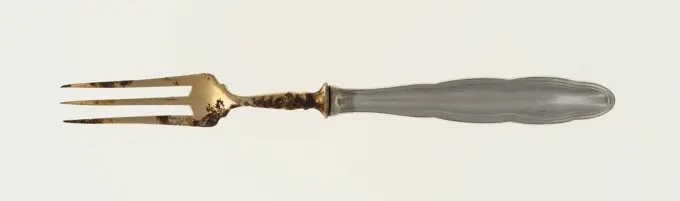
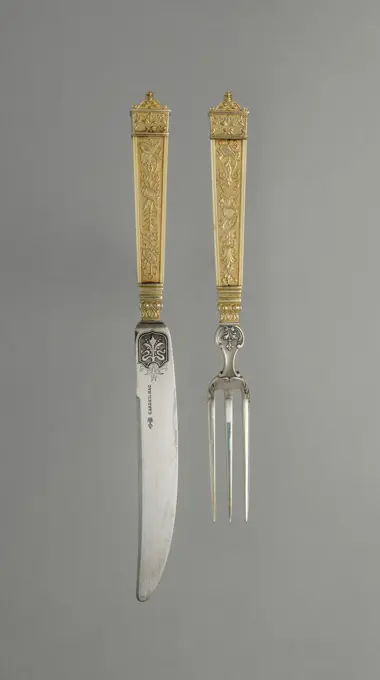
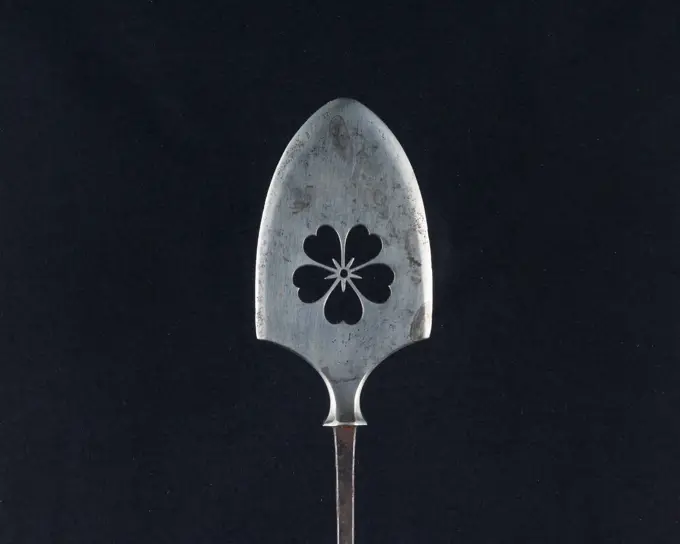
Dessert fork; Würtembergische metallwarefabrik - WMF (Germany; Wytwónia Z Otnarz; 1880-1914); after 1880 (1890-00-00-1914-00-00);
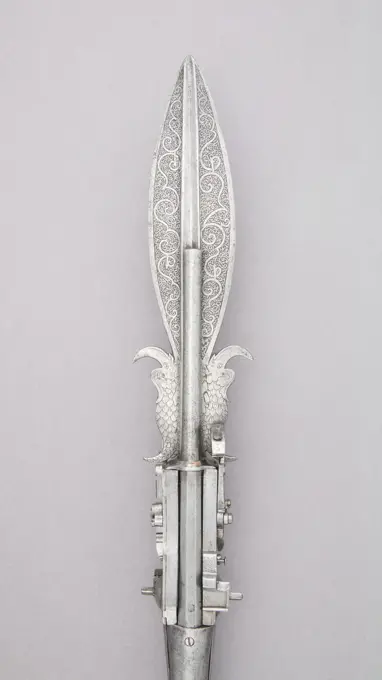
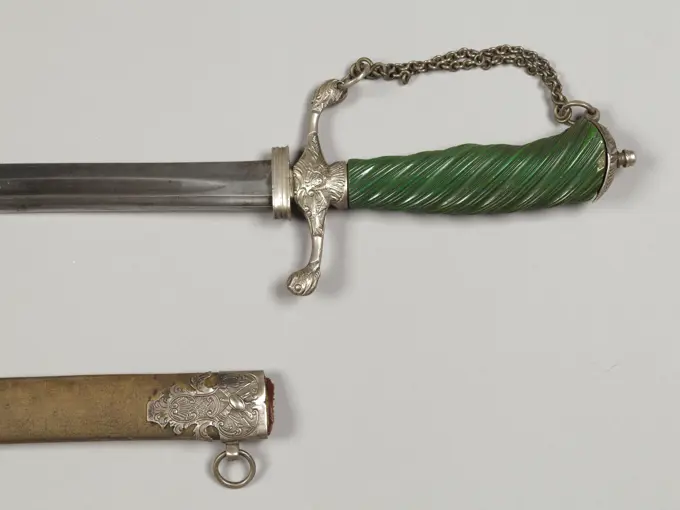
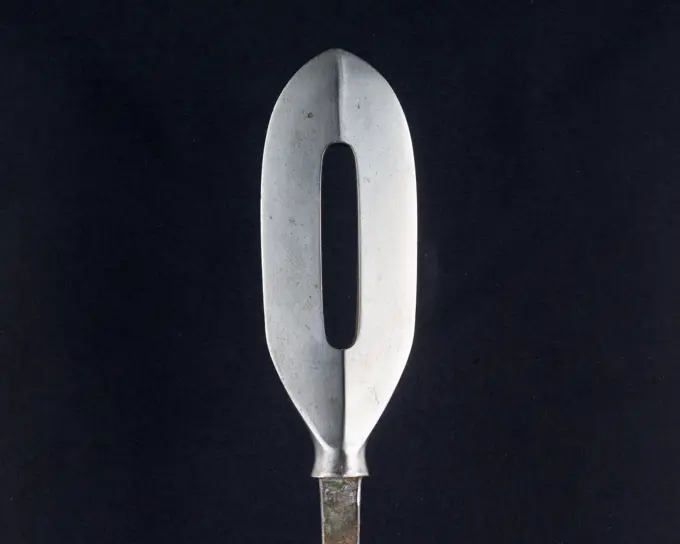
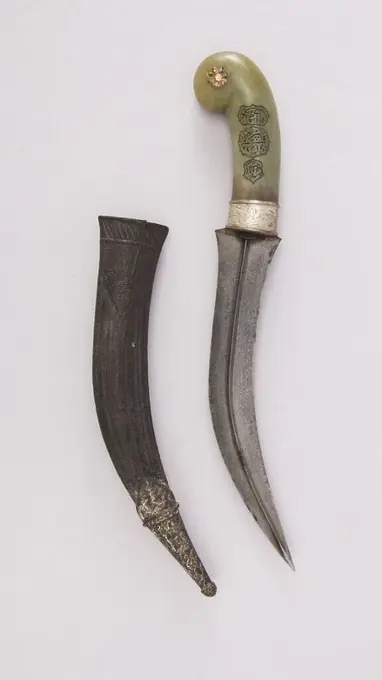
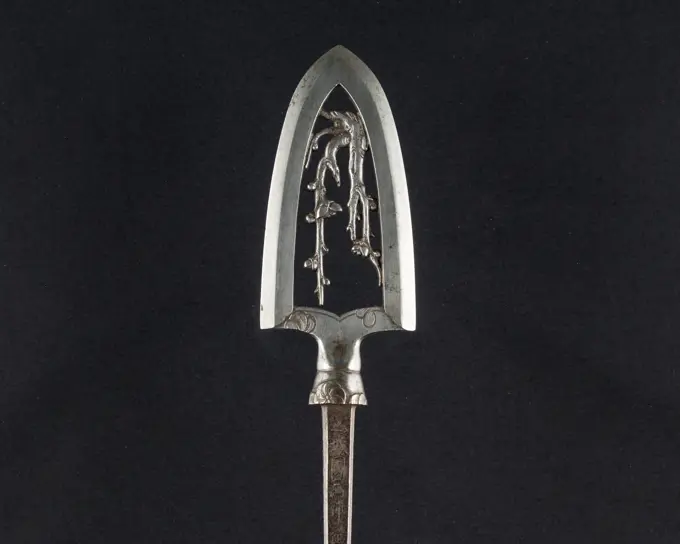
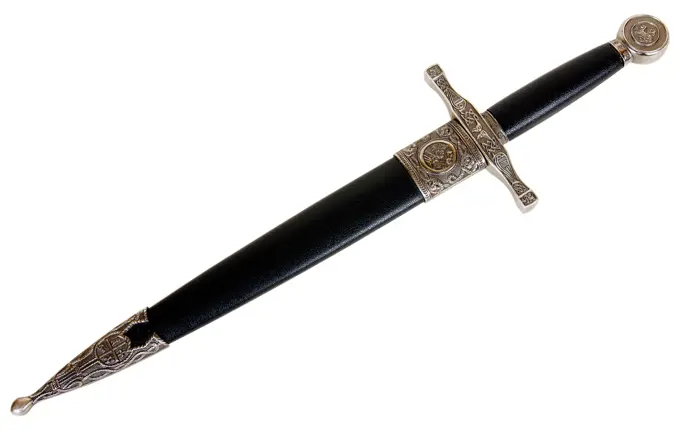
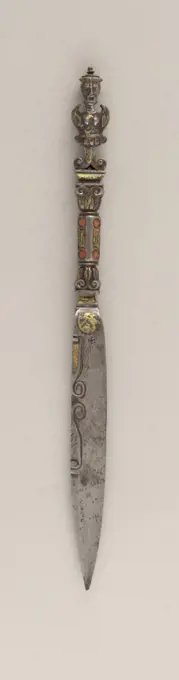
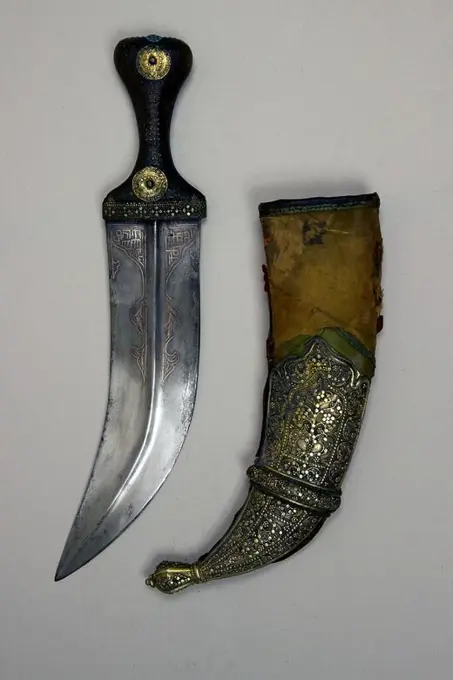
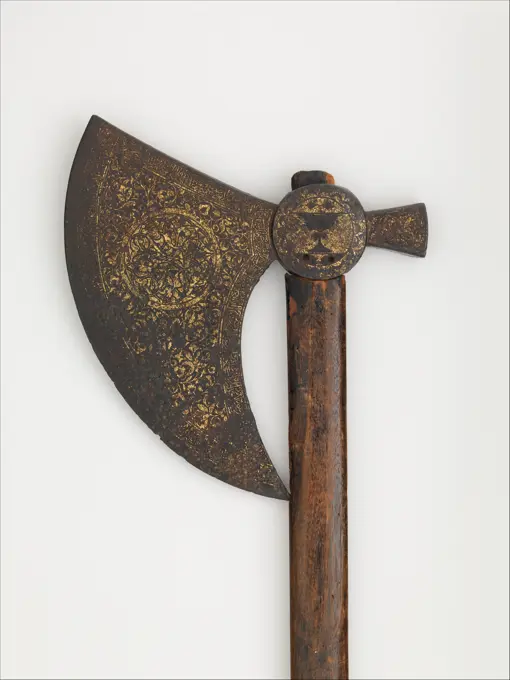
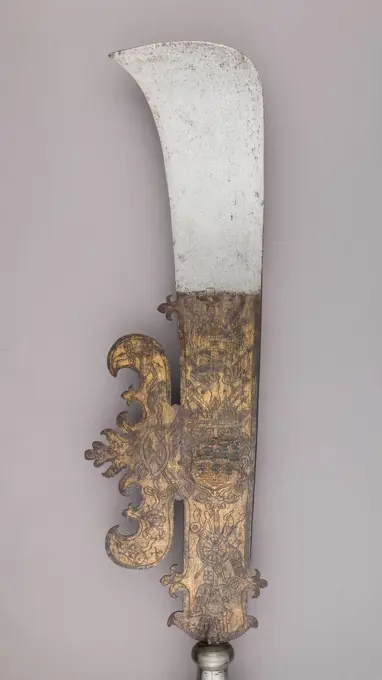
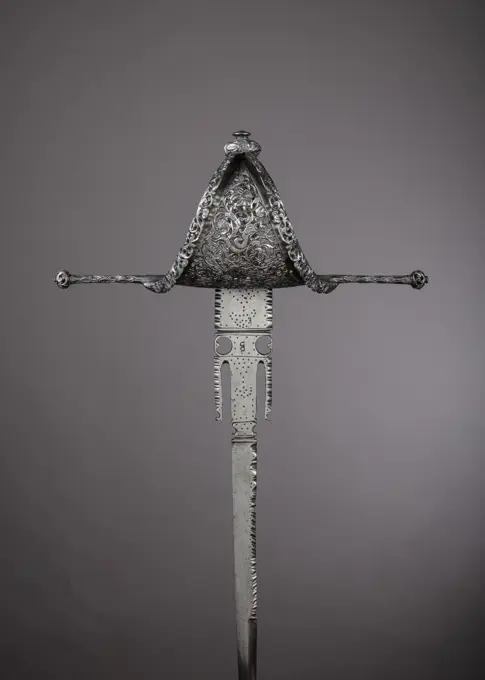
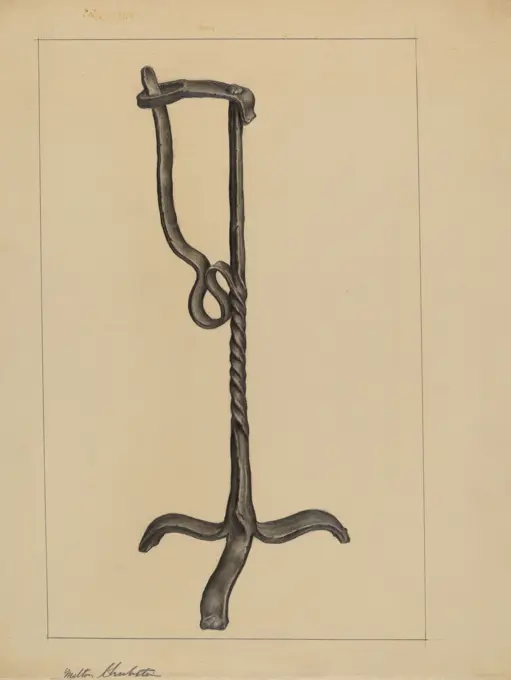
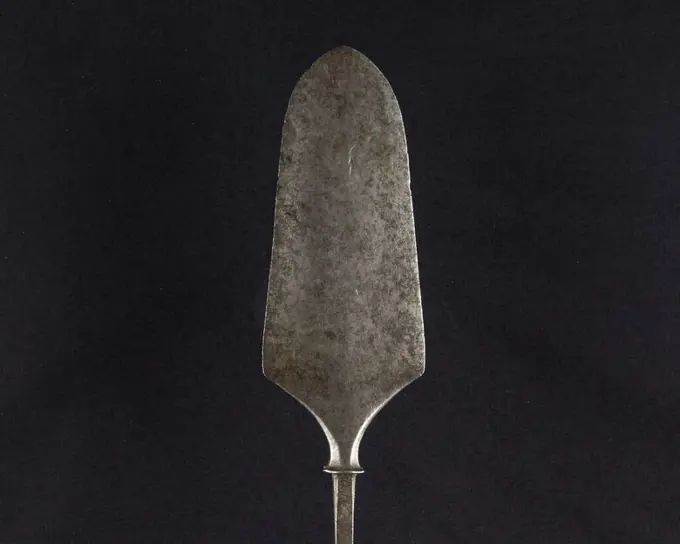
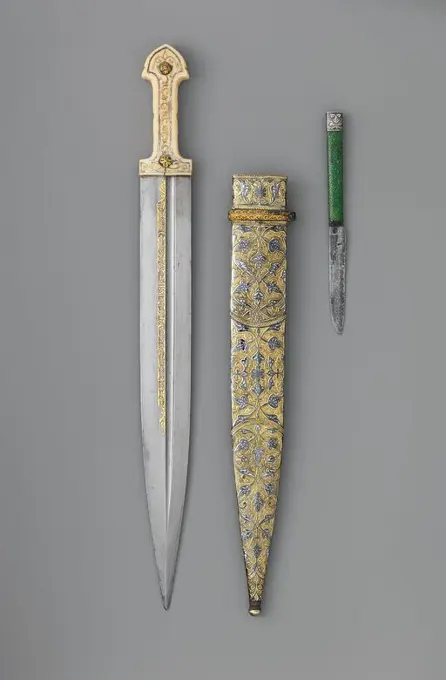
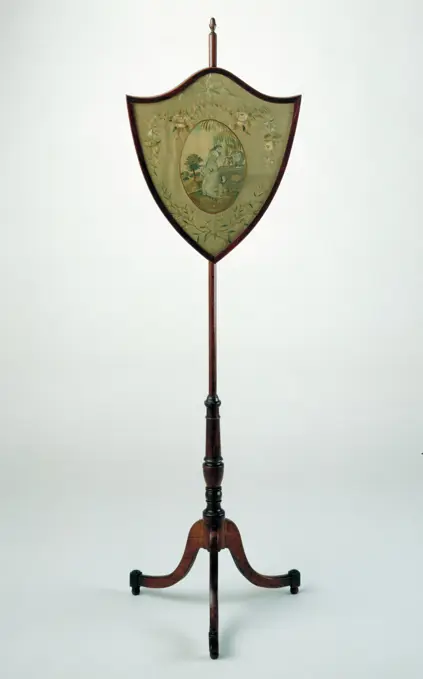
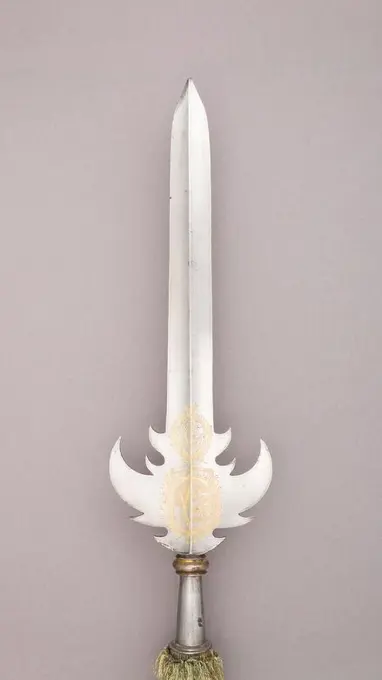
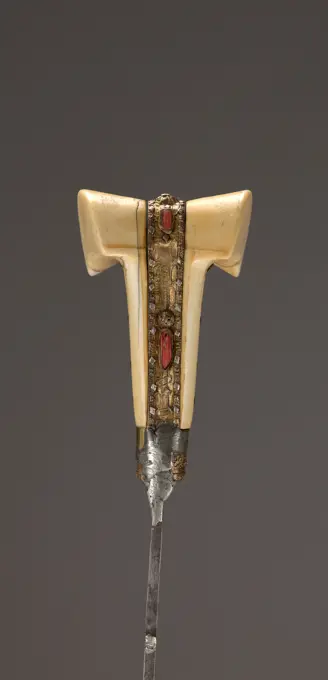
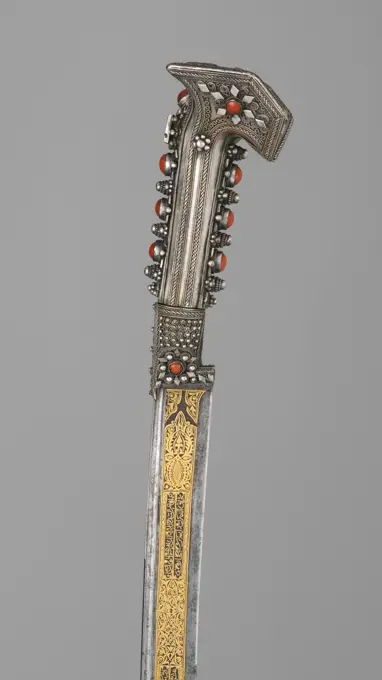
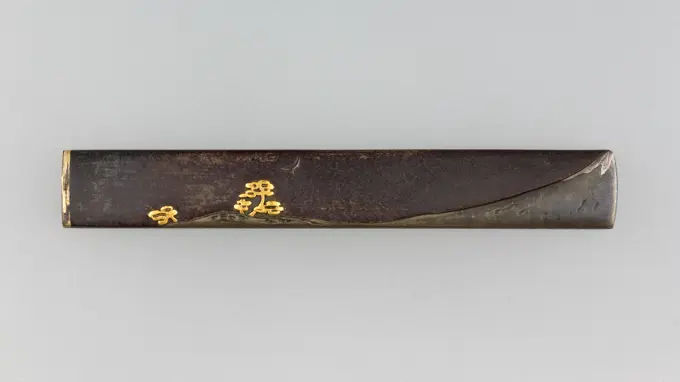
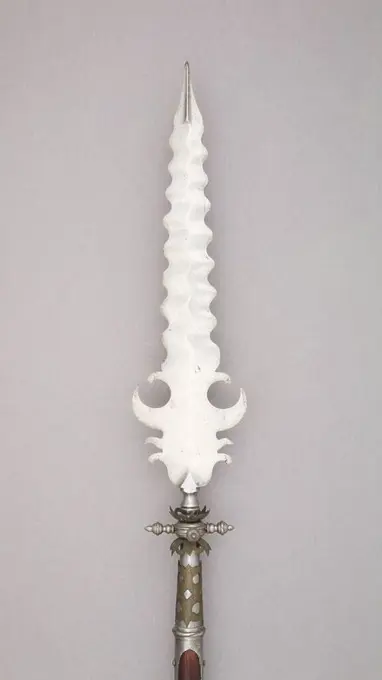
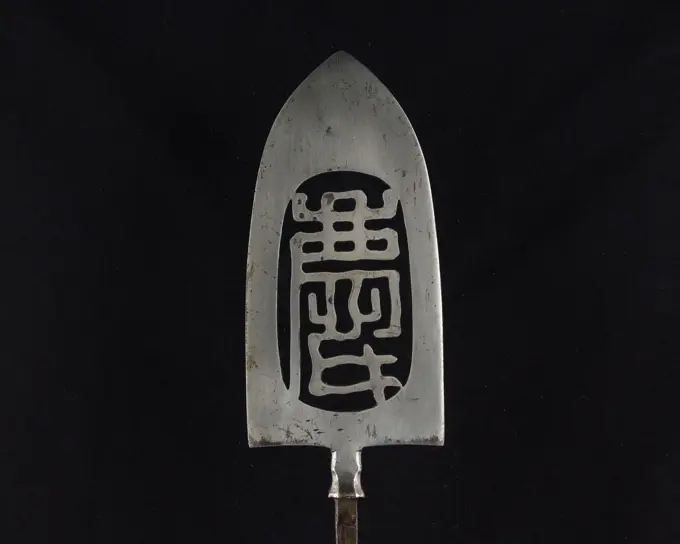
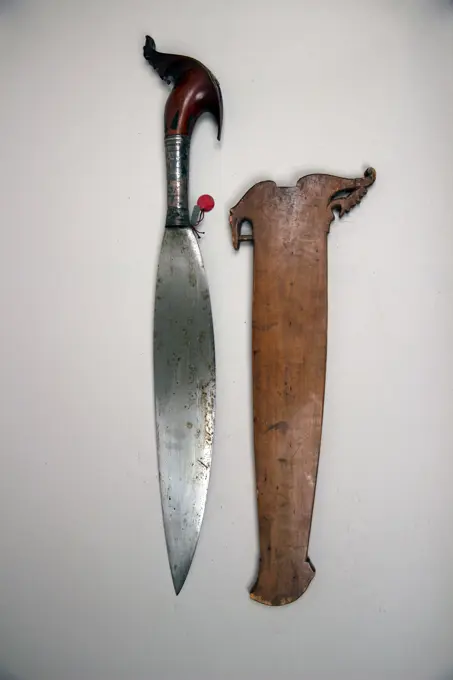
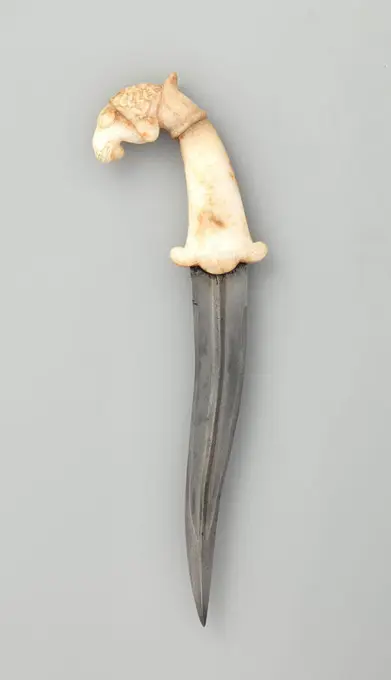
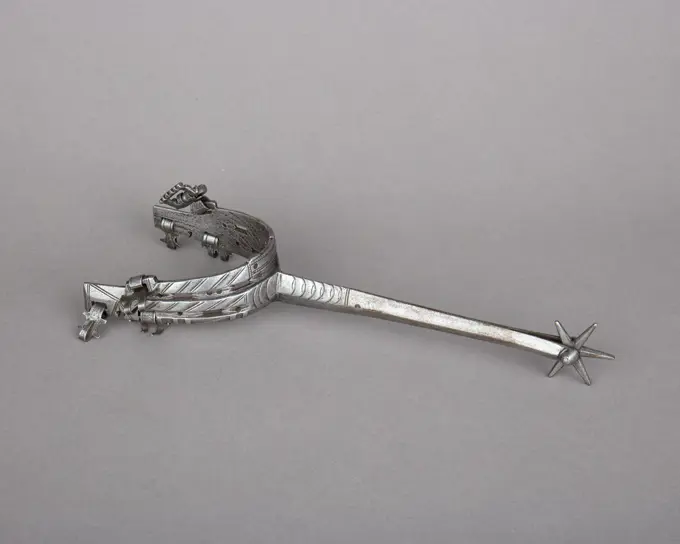
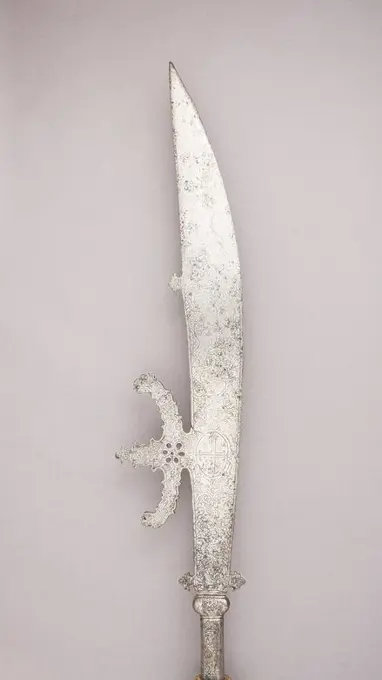
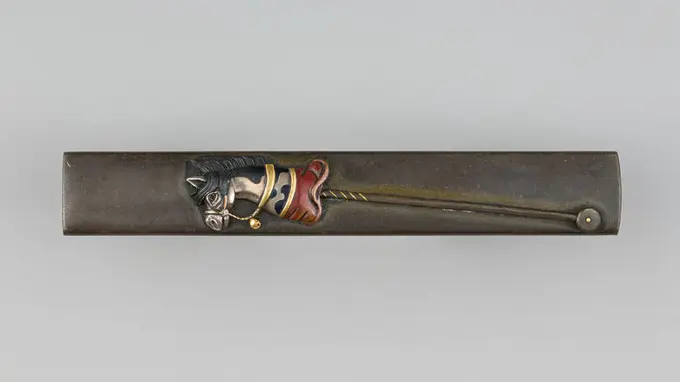
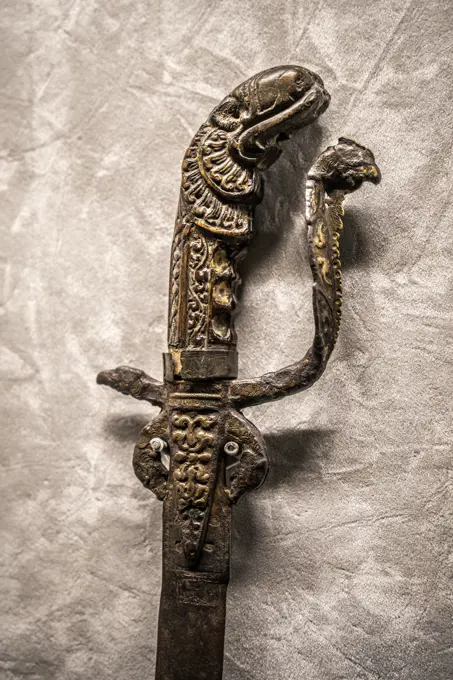
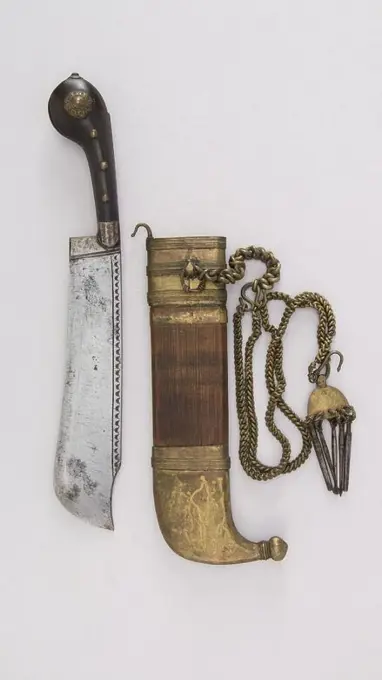
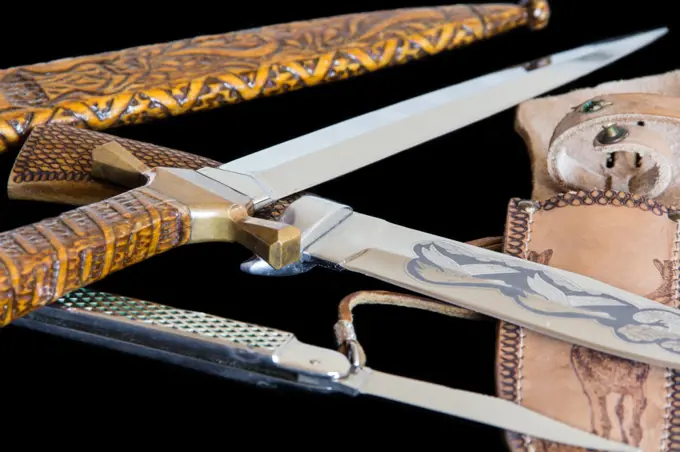
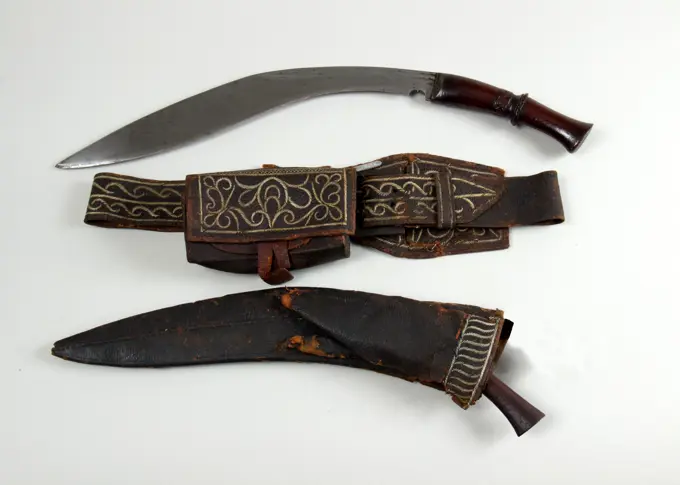
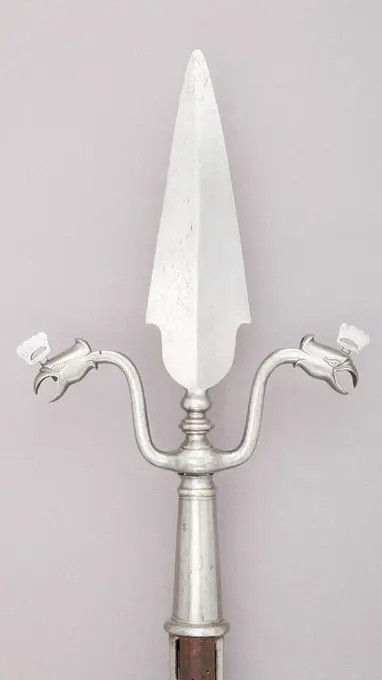
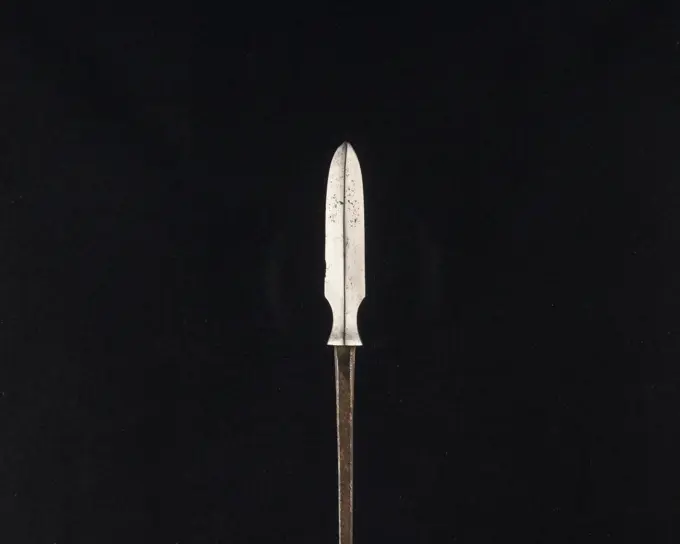
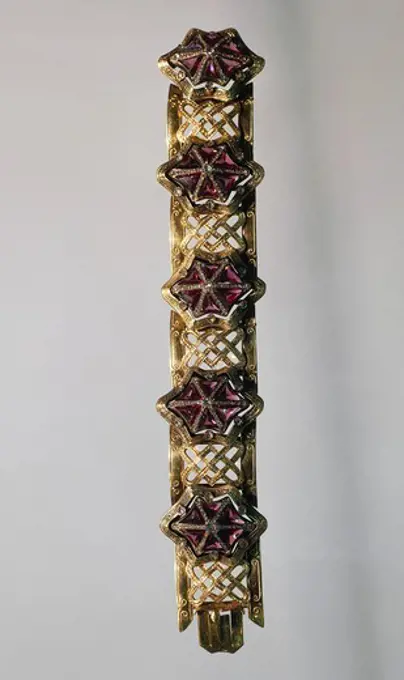
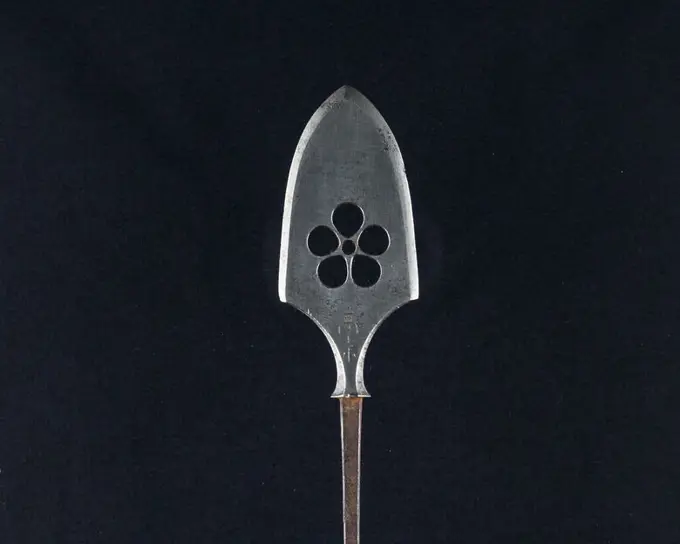
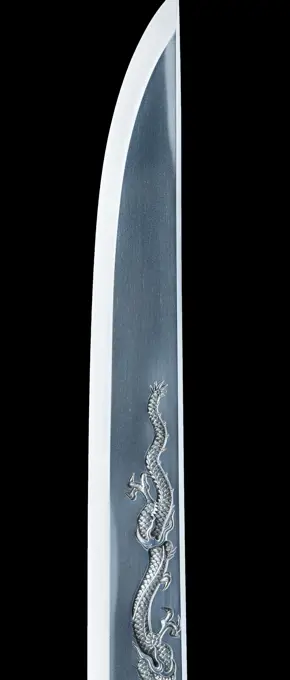
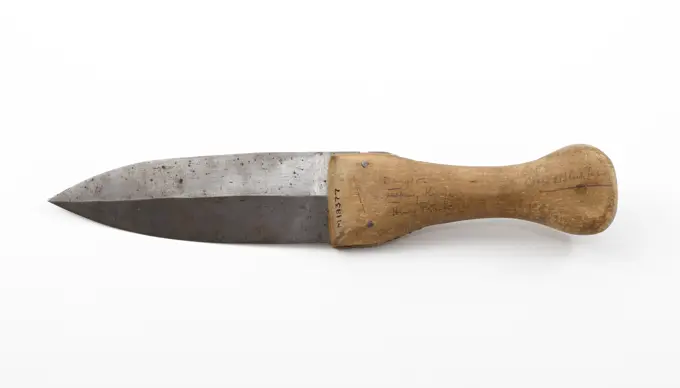
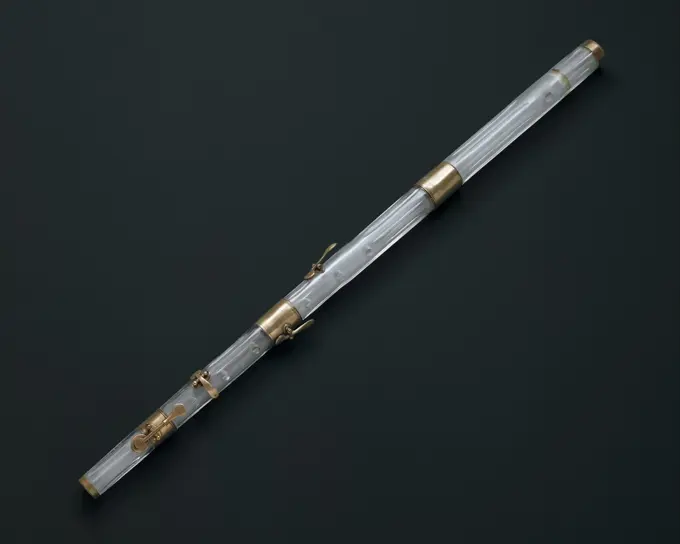
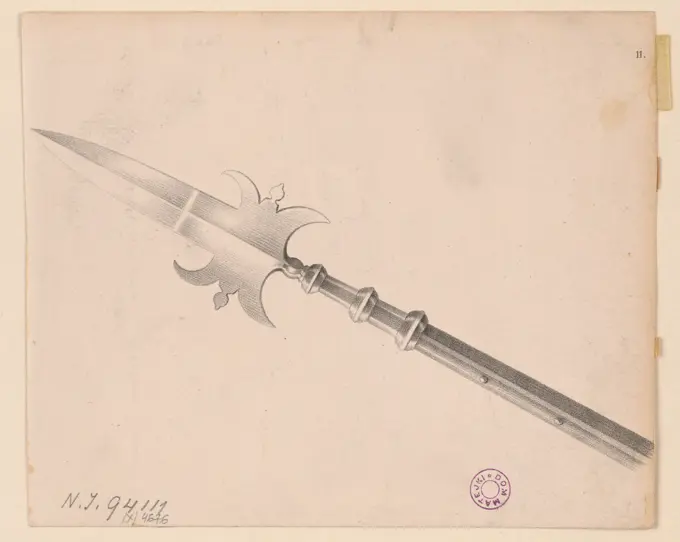
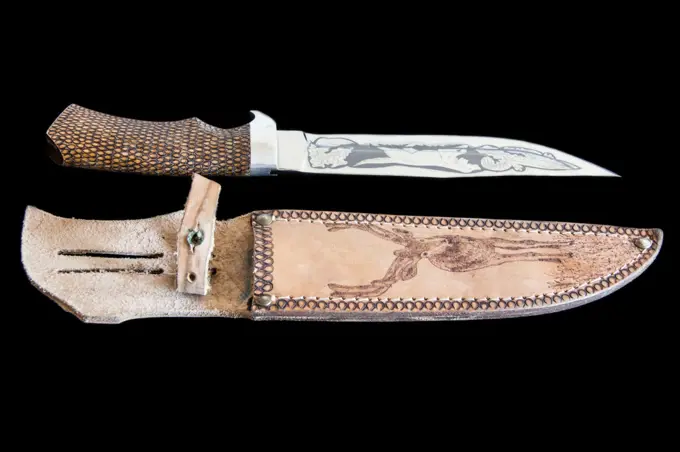
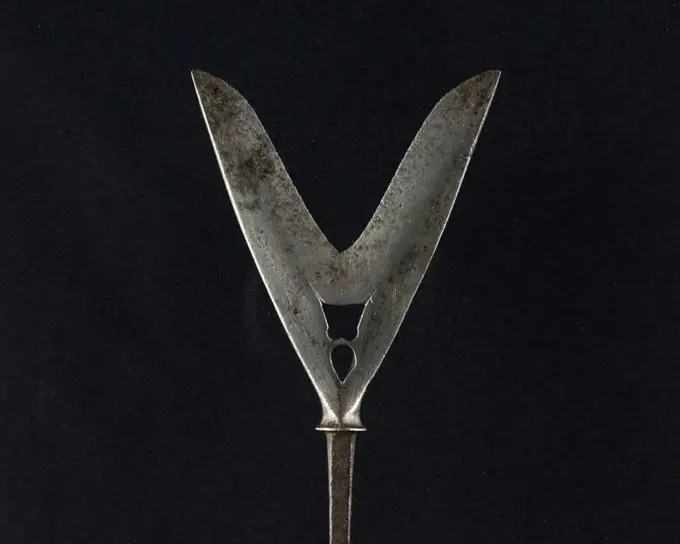
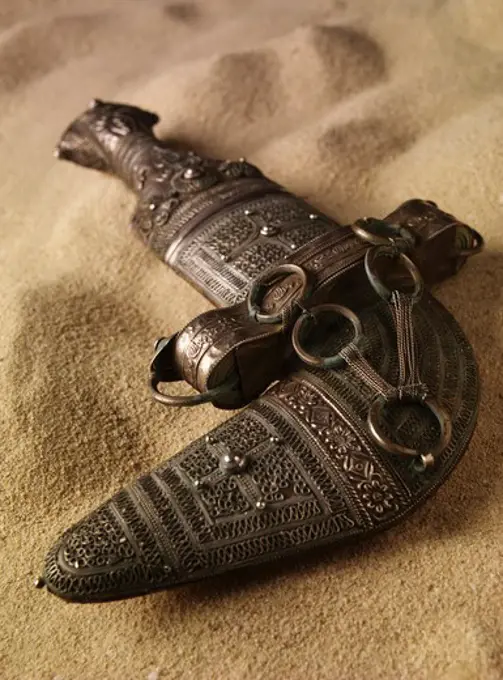
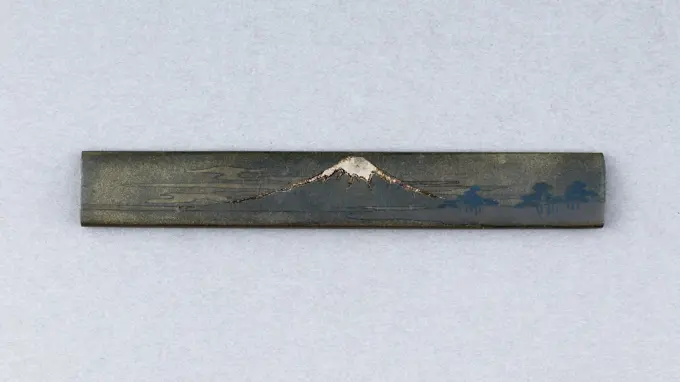
Table knife 18th century French. Table knife. French. 18th century. Steel, agate, bronze. Metalwork-SteelHalberd ca. 1620 Flemish. Halberd 25845Boar Spear with Double Barrel Wheellock Pistol late 16th century German The blade is lanceolate in its forward part, entirely covered with etched decoration of interlaced strapwork, and with two curved parrying hooks shaped as dolphins in its rearward section. The blade is placed between two pistol barrels, its median ridge is eliminated and changed into a shallow channel on either side aligned with the bore of the barrels. Between the blade and the heavy cylindrical socket are attached the two wheellocks with covered wheels. The folding triggers are halfway down the shaft, inserted into long steel straps covering the pulls of the mechanisms. The shaft is plain and smooth, with a large conical steel mount on its butt end.It has generally been speculated that the combination of board spear and pistol was designed to be used to break the onrush of the charging board or the rampant bear, and the double pistols could be fired before the animal was received on the blade. However, the blade Officer's cutlass with scabbard of Captain James Cook (1725-1788) Dealtry / Royal ExchangeDagger (Katar) with Sheath. Culture: Indian, Rajasthan; sheath, South Indian. Dimensions: L. with sheath 11 in. (27.9 cm); L. without sheath 10 1/4 in. (26 cm); W. 2 1/2 in. (6.4 cm); Wt. 4.3 oz. (121.9 g); Wt. of sheath 2.7 oz. (76.5 g). Date: 18th-19th century. Museum: Metropolitan Museum of Art, New York, USA.Knife 18th-19th century Philippine, Luzon or Visayan Islands. Knife. Philippine, Luzon or Visayan Islands. 18th-19th century. Steel, horn, brass. KnivesArrowhead (Yanone) 18th century Japanese Although today Japanese warriors are renowned most for their swordsmanship, archery, especially from horseback, has been an essential part of samurai warfare and culture for centuries. Arrows were fitted with heads of varying shape according to their intended use in war, the hunt, or target practice. Arrowheads made for use on the battlefield incorporated different designs intended for specialized purposes such as the piercing of armor or to cause maximum damage to horses and unarmored personnel.Large arrowheads, pierced and elaborately chiseled with landscapes, birds, flowers, dragons, and Buddhist divinities, were created to be admired for the beauty of their metalwork and design rather than for use in archery. Such highly elaborate examples may have been made for presentation or as a votive offerings to a shrine.. Arrowhead (Yanone). Japanese. 18th century. Steel. Archery Equipment-ArrowheadsDagger (Jambiya) with Sheath. Culture: Indian. Dimensions: H. with sheath 13 7/8 in. (35.2 cm); H. without sheath 12 3/4 in. (32.4 cm); L. of blade 8 1/2 in. (21.6 cm); W. 2 5/8 in. (6.7 cm); Wt. 10.8 oz. (306.2 g); Wt. of sheath 2 oz. (56.7 g). Date: 18th century. Museum: Metropolitan Museum of Art, New York, USA.Arrowhead (Yanone) dated 1645 Japanese Although today Japanese warriors are renowned most for their swordsmanship, archery, especially from horseback, has been an essential part of samurai warfare and culture for centuries. Arrows were fitted with heads of varying shape according to their intended use in war, the hunt, or target practice. Arrowheads made for use on the battlefield incorporated different designs intended for specialized purposes such as the piercing of armor or to cause maximum damage to horses and unarmored personnel.Large arrowheads, pierced and elaborately chiseled with landscapes, birds, flowers, dragons, and Buddhist divinities, were created to be admired for the beauty of their metalwork and design rather than for use in archery. Such highly elaborate examples may have been made for presentation or as a votive offerings to a shrine.. Arrowhead (Yanone). Japanese. dated 1645. Steel. Archery Equipment-ArrowheadsSmallsword ca. 1780-85 Attributed to John Bland British This unusual Neoclassical hilt combines fashionable cut-steel beads with panels of blued and gold-encrusted steel. It is attributed to the London sword-cutler John Bland, who retailed several hilts of similar workmanship.. Smallsword 22930Hunting cordlas Alaterre, Julian (fl. 1750 1800)Hair Parter 19th century European (Medieval style). Hair Parter 465940 Italian (), Zezzo, 14th century style, Ivory, Overall: 12 x 1 1/16 x 1 in. (30.5 x 2.7 x 2.5 cm). The Metropolitan Museum of Art, New York. Anonymous gift in memory of the late J. Pierpont Morgan, 1918 (18.71)dagger Souvenir medieval dagger. An exact copy made of modern materials Copyright: xZoonar.com/ValeryxxSibrikovx 2421169Fork, silver, Three-tine square fork pivots horizontally on a tubular sleeve chased with two rounded bands., London, England, 1886, cutlery, Decorative Arts, ForkKnife, Steel, gilding, agate, Small knife with leaf-shaped blade. Upper rib on side with engraved scroll device, a gilded crest at bolster, reverse with gilded engraved fleur-de-lis. Handle decorated with volute scrolls, capital, and an octagonal column inlaid with coral dots, scroll capital. End of handle in the form of a winged figure; oriental male on front, grotesque female on reverse. Traces of gilding on handle., possibly France, 1550-1600, cutlery, Decorative Arts, KnifeDagger (Jambiya) with Sheath and Belt. Culture: Arabian. Dimensions: H. with sheath 13 in. (33 cm); H. without sheath 12 9/16 in. (31.9 cm); W. 3 3/4 in. (9.5 cm); Wt. 6.5 oz. (184.3 g); Wt. of sheath 7.2 oz. (204.1 g); Wt. of belt 10.3 oz. (292 g). Date: 18th-19th century. Museum: Metropolitan Museum of Art, New York, USA.War Fan (Gunbai) with Concealed Spear Blade 18th century Japanese Military commanders used a type of fixed fan, called a war fan (gunbai), to signal soldiers on the battlefield. The silver mounts of this example are engraved with flowers against a stippled background, and the lower section of the shaft, which is detachable, is mounted with a concealed steel bladean unusual feature that would have appealed to Western collectors.. War Fan (Gunbai) with Concealed Spear Blade. Japanese. 18th century. Wood, silver, steel, lacquer, silk. MiscellaneousKnife with Porcelain Handle, steel, silver, porcelain, Sabre-shaped blade, plain bolster. Silver ferrule, banded. White pistol- shaped handle with raised scrollwork, floral sprays on front and back in blue, yellow, red, green, pink and purple., possibly Germany, 1780, cutlery, Decorative Arts, knife, knifeAx ca. 1450-1500 Syrian The Mamluk sultans and emirs employed a special corps of ax-bearers, probably in imitation of the Varangian (Viking) guard of the emperors of Byzantium. The cup decorating the socket of this ax is the insignia of a Mamluk emir and indicates that he held the important ceremonial office of cupbearer to the sultan.. Ax 24857Cup-Hilted Rapier Made 1640-1670 Italy. Steel, iron, and wood .Cutting knife;  XIX W (1801-00-00-1900-00-00);Sword of Winthrop Sargent (1753-1820), First Governor of Northwest Territories Made 1790-1820 England. Steel, brass, and ivory .Dessert Knife and Fork , c. 1880. Maison Cardeilhac (French). Gilt silver and ivory;Knife Handle (Kozuka). Culture: Japanese. Dimensions: L. 3 13/16 in. (9.7 cm); W. 9/16 in. (1.4 cm); thickness 1/4 in. (0.6 cm); Wt. 1.2 oz. (34 g). Date: ca. 1615-1868. Museum: Metropolitan Museum of Art, New York, USA.Fauchard early 17th century Italian, Venice. Fauchard 35948Parrying Dagger ca. 1650-75 Italian, possibly Naples From the early sixteenth century onward, the practice of wearing a sword or rapier with civilian dress made duels between unarmored opponents more common. Lacking the armor or shield worn in battle, combatants had to block or parry an attack by other means. Methods of defense included the use of a dagger or a buckler (small shield) held in the left hand and an increased reliance on parries made with the rapier itself. During the sixteenth and seventeenth centuries, distinct schools of fencing developed rapidly in Italy, France, Germany, and Spain. Instruction in the art and science of fencing became an indispensable part of a noblemans education. Consequently, accomplished fencing masters were hired to teach at the principal courts and universities of Europe. From about 1525 to about 1625, the rapier was worn regularly in tandem with a parrying dagger. They were sometimes made and decorated as a set. By the mid-seventeenth century, Sword Short silver sword isolated included clipping path Copyright: xZoonar.com/MarkoxBericx 6936608Milton Grubstein, Rush Light Holder, c 1937 Rush Light HolderArrowhead (Yanone). Culture: Japanese. Dimensions: L. 13 3/8 in. (34 cm); L. of head 4 5/8 in. (11.7 cm); W. 1 3/4 in. (4.5 cm); Wt. 2.9 oz. (82.2 g). Date: 18th century. Museum: Metropolitan Museum of Art, New York, USA.With his right hand, he holds the bishop's staff, on his left he wears a whom.Dagger (Katar) 1701-1800 India. Steel and gold .Dagger (Qama) with Sheath and Knife. Culture: Caucasian. Dimensions: Dagger (a); L. with sheath 19 1/4 in. (48.9 cm); L. without sheath 19 1/16 in. (48.4 cm); L. of blade 14 3/4 in. (37.5 cm); W. 1 3/4 in. (4.5 cm); D. 15/16 in. (2.4 cm); Wt. 12.8 oz. (362.9 g); Wt. of sheath 4.5 oz. (127.6 g); knife (c); L. 7 1/2 in. (19.1 cm); L. of blade 3 11/16 in. (9.4 cm); W. 9/16 in. (1.4 cm); D. 5/16 in. (0.8 cm); Wt. 0.8 oz. (22.7 g). Date: dated, 1856-57, 1861. Museum: Metropolitan Museum of Art, New York, USA.Federal Fire Screen, c. 1790-1800, 58 1/4 x 17 x 17 1/4in. (148 x 43.2 x 43.8cm), Mahogany with needlepoint insert, United States, 18th-19th centuryPartisan. Culture: German, Saxony. Dimensions: L. 8 ft. 5 in. (101 cm); L. of head 23 3/4 in. (60.3 cm); W. 7 in. (17.8 cm); Wt. 6 lb. 0.5 oz. (2735.7 g). Date: 1670. Museum: Metropolitan Museum of Art, New York, USA.Arrowhead (Yanone). Culture: Japanese. Dimensions: L. 6 1/2 in. (16.5 cm); L. of head 2 5/8 in. (6.7 cm); W. 1 1/8 in. (2.9 cm); Wt. 0.7 oz. (19.8 g). Date: 18th century. Museum: Metropolitan Museum of Art, New York, USA.Islamic art. Candlestick ordered by Badr al-Din Lu'lu, ruler of Mosul (1233--1258). 13th century. Iraq. The State Hermitage Museum. Saint Petersburg. Russia.Przeszo Przyszoci unknownMinoan gold votive double-axe, 16th century BC. Artist: UnknownYatagan with Scabbard dated A.H. 1238/A.D. 1822 Anatolian or Balkan This type of weapon, with a double-curved blade and a bifurcated pommel, is known as a yatagan. It was commonly used in Anatolia and the Balkans during the eighteenth and nineteenth centuries by the sultan's elite corps, or Janissaries, and was carried in the waistband. This piece, with a blade elaborately decorated in gold and corals set into the handle, was probably made for presentation.. Yatagan with Scabbard. Anatolian or Balkan. dated A.H. 1238/A.D. 1822. Steel, silver, gold, coral. SwordsModel of the old dagger with a white background, souvenirPartisan early 18th century Swiss. Partisan 26715Ceremonial SwordKnife Handle (Kozuka) 18th century Japanese A kozuka is a handle of a by-knife that is part of a sword mounting. It is kept in a slot on the reverse of a katana scabbard, often with a matching kōgai (hairdressing tool).. Knife Handle (Kozuka) 29919Smart dagger of the medieval soldier. It was used for huntingSword with Scabbard. Culture: Bhutanese. Dimensions: L. with sheath 21 in. (53.5 cm); L. without sheath 18 1/4 in. (46.4 cm); W. 1 3/4 in. (4.5 cm); Wt. 12.4 oz. (351.5 g); Wt. of sheath 4.3 oz. (121.9 g). Date: 19th century. Museum: Metropolitan Museum of Art, New York, USA.Cavagnole Game Piece; wood, carved, painted, gildedPAREJA DE PISTOLAS S XVII FABRICACION INGLESA. Location: PRIVATE COLLECTION. MADRID. SPANIEN.Partisan. Culture: French. Dimensions: L. 89 1/8 in. (226.4 cm); L. of head 21 3/4 in. (55.2 cm); W. 4 1/4 in. (10.8 cm); Wt. 3 lbs. 11.8 oz. (1695.3 g). Date: ca. 1690. Museum: Metropolitan Museum of Art, New York, USA.Knife with Floral Porcelain Handle, Chantilly Porcelain Manufactory, French, active ca. 1725 - ca. 1789, porcelain, vitreous enamel, steel, silver, Blade has slightly bent upper edge, lower edge tapering towards the point. Drop bolster, plain silver ferrule with horizontal band. Tapering, octagonal white porcelain handle decorated with kakiemon design in yellow, blue and green (underglaze) and brown-red (overglaze). Top of handle rounded, silver cap., France, 1725-1750, cutlery, Decorative Arts, knife, knifeEurope, England. Witham shield. La Tene. 2nd cent. BC. Celts thought Coral ornament magic.Steel Knife with Ivory Handle 14th century Italian. Steel Knife with Ivory Handle 463513Arrowhead (Yanone) ca. 1615-1868 Japanese Although today Japanese warriors are renowned most for their swordsmanship, archery, especially from horseback, has been an essential part of samurai warfare and culture for centuries. Arrows were fitted with heads of varying shape according to their intended use in war, the hunt, or target practice. Arrowheads made for use on the battlefield incorporated different designs intended for specialized purposes such as the piercing of armor or to cause maximum damage to horses and unarmored personnel.Large arrowheads, pierced and elaborately chiseled with landscapes, birds, flowers, dragons, and Buddhist divinities, were created to be admired for the beauty of their metalwork and design rather than for use in archery. Such highly elaborate examples may have been made for presentation or as a votive offerings to a shrine.. Arrowhead (Yanone). Japanese. ca. 1615-1868. Steel. Archery Equipment-ArrowheadsKnife (Barong) with Sheath 18th-19th century Philippine, Mindanao. Knife (Barong) with Sheath 31676Watch Fob (USA); Made by Marcus and Co., New York; leather, gold, stoneDagger (Khanjar). Culture: Indian. Dimensions: L. 13 3/8 in. (34 cm); L. of blade 8 1/16 in. (22 cm). Date: 17th-18th century.The sheep's head pommel of this dagger is extremely distinctive and rare. The great majority of Indian and Persian khanjar daggers have smooth hilts and rounded pommels. While there are also many examples with zoomorphic pommels, the majority take the form of a horse's head, or, occasionally, a lion's head. In addition, the animal elements of most zoomorphic khanjar hilts are rendered in a very refined, delicate, and stylized manner. In contrast to this, the carving of the sheep's head on this dagger is done in a very lively, naturalistic, and animated style, giving the hilt an immediate visual appeal as a piece of sculpture. The hilt is marble, which is also unusual, most khanjar daggers having jade hilts. The blade is gently recurved, with a raised medial ridge and a thickened tip that is a flattened lozenge in cross-section. Museum: MetrSpanish sword collection detail, sigle XVIRowel Spur (Right), in the Style of the 16th Century 19th century European This long rowel spur, made in the 19th century, was made to imitate a ca. 1500 German example.. Rowel Spur (Right), in the Style of the 16th Century. European. 19th century. Iron. Equestrian Equipment-SpursKnife (possibly Netherlands); steel, silver, agate; L x W: 20.1 x 1.3 cm (7 15/16 x 1/2 in.); The Robert L. Metzenberg Collection, gift of Eleanor L. Metzenberg; 1985-103-122Magical cartoon dwarf broadsword blade. Vector fairytale short sword, fantasy knife of magic weapon with wooden handle and guard decorated gemstones. Game cold weapon, double edged sword icon. Magical broadsword, fantasy short sword or knifeFauchard. Culture: Italian, Venice. Dimensions: L. 8 ft. 11 in. (271.8 cm); L. of head 33 7/16 in. (85 cm); W. 7 1/16 in. (18 cm); Wt. 8 lbs. 8.2 oz. (3861.2 g). Date: ca. 1540. Museum: Metropolitan Museum of Art, New York, USA.Knife Handle (Kozuka). Culture: Japanese. Dimensions: L. 3 13/16 in. (9.7 cm); W. 9/16 in. (1.4 cm); thickness 1/4 in. (0.6 cm); Wt. 1.4 oz. (39.7 g). Fittings maker: Inscribed by Iwama Masayoshi (Shoro) (Japanese, 1764-1837). Date: late 18th-early 19th century. Museum: Metropolitan Museum of Art, New York, USA.War axe and mace on a wooden backgroundKastane, 18th century, Sri Lanka, Álava Armory Museum, Vitoria, Basque Country, Spainlombardy  italy   cross castellanza blur   abstract   rusty brass brown knocker in a  door curch  closed woodRoman belt buckle made of bronze from the Archaeological site of Complutum in Alcalá de Henares ( Madrid ). SPAIN.Knife Handle (Kozuka). Culture: Japanese. Dimensions: L. 3 13/16 in. (9.7 cm); W. 9/16 in. (1.4 cm); thickness 1/4 in. (0.6 cm); Wt. 1.3 oz. (36.9 g). Date: ca. 1615-1868. Museum: Metropolitan Museum of Art, New York, USA.Hair Pin 18th-19th century China. Hair Pin 60804Punch Dagger (Katar) with Sheath. Culture: Indian, Mughal. Dimensions: L. 14 in. (35.6 cm); L. of blade 7 1/4 in. (18.4 cm); W. 3 3/16 in. (8.1 cm); Wt. 15.2 oz. (430.9 g). Date: late 17th-18th century.Daggers of this ancient Indian type are known variously as a katar (piercing dagger) or jamadhar (death tooth). Gripped in the fist, they were intended to deliver a deadly punching blow and were used in both war and the hunt. The blade of this example is notable for the delicately chiseled figures of elephants and horses engaged in the hunt. Museum: Metropolitan Museum of Art, New York, USA.Knife (Pichangatti) with Sheath. Culture: Indian, Kodagu (Coorg). Dimensions: H. with sheath 12 1/4 in. (31.1 cm); H. without sheath 11 1/4 in. (28.6 cm); W. 1 3/4 in. (4.5 cm); Wt. 10.5 oz. (297.7 g); Wt. of sheath 8.7 oz. (246.6 g). Date: 18th-19th century. Museum: Metropolitan Museum of Art, New York, USA.Pair of Knives with Sheath 16th-19th century Javanese. Pair of Knives with Sheath 31654Photo of cold weapon on black backgroundSAHUMADOR - CERAMICA POPULAR CON RELIEVES. Location: MUSEO DE AMERICA-COLECCION. MADRID. SPAIN.Knife (Kukri) with Sheath, Small Knife, Belt, Pouch and Box 19th century Indian or Nepalese. Knife (Kukri) with Sheath, Small Knife, Belt, Pouch and Box. Indian or Nepalese. 19th century. Steel, wood, leather, quill. KnivesView from above at knife, fork and sharpenerObject ID #18804045; silver; L x W: 12.8 x 4 cm (5 1/16 x 1 9/16 in.); The Robert L. Metzenberg Collection, gift of Eleanor L. Metzenberg; 1985-103-254-fLinstock. Culture: German. Dimensions: L. 87 in. (221 cm); L. of head 15 1/4 in. (38.7 cm); W. 8 5/8 in. (22 cm); Wt. 5 lbs. 2 oz. (2320 g). Date: 17th century. Museum: Metropolitan Museum of Art, New York, USA.Arrowhead (Yanone) 18th century Japanese Although today Japanese warriors are renowned most for their swordsmanship, archery, especially from horseback, has been an essential part of samurai warfare and culture for centuries. Arrows were fitted with heads of varying shape according to their intended use in war, the hunt, or target practice. Arrowheads made for use on the battlefield incorporated different designs intended for specialized purposes such as the piercing of armor or to cause maximum damage to horses and unarmored personnel.Large arrowheads, pierced and elaborately chiseled with landscapes, birds, flowers, dragons, and Buddhist divinities, were created to be admired for the beauty of their metalwork and design rather than for use in archery. Such highly elaborate examples may have been made for presentation or as a votive offerings to a shrine.. Arrowhead (Yanone). Japanese. 18th century. Steel. Archery Equipment-ArrowheadsObject ID #18804247; steel, horn, gilding; L x W: 23 x 2.1 cm (9 1/16 x 13/16 in.); The Robert L. Metzenberg Collection, gift of Eleanor L. Metzenberg; 1985-103-283-hGoldsmith's art, 19th century. Gold, almandine garnets and diamonds French bracelet, around 1840.Arrowhead (Yanone). Culture: Japanese. Dimensions: L. 9 3/4 in. (24.8 cm); L. of head 3 in. (7.6 cm); W. 1 1/4 in. (3.2 cm); Wt. 1.2 oz. (34 g). Date: 18th century. Museum: Metropolitan Museum of Art, New York, USA.Arrowhead (Yanone) 18th century Japanese Although today Japanese warriors are renowned most for their swordsmanship, archery, especially from horseback, has been an essential part of samurai warfare and culture for centuries. Arrows were fitted with heads of varying shape according to their intended use in war, the hunt, or target practice. Arrowheads made for use on the battlefield incorporated different designs intended for specialized purposes such as the piercing of armor or to cause maximum damage to horses and unarmored personnel.Large arrowheads, pierced and elaborately chiseled with landscapes, birds, flowers, dragons, and Buddhist divinities, were created to be admired for the beauty of their metalwork and design rather than for use in archery. Such highly elaborate examples may have been made for presentation or as a votive offerings to a shrine.. Arrowhead (Yanone). Japanese. 18th century. Steel. Archery Equipment-ArrowheadsItalic civilizations, 8th century b.C. Bronze sword and scabbard. From the necropolis of Mandrione di Cavalupo, province of Viterbo.Blade and Mounting for a Dagger (Tant) blade, dated 1870; mounting, 19th century Blade inscribed by Gassan Sadakazu Japanese In 1876, the Japanese government issued an edict abolishing the wearing of the sword in Japan. Sadakazu is one of the few swordsmiths to continue working after that date. He kept the craft alive by making replicas of ancient blades. The blade of this dagger is made in the style of Umetada Myoju, a swordsmith active in the late sixteenth or early seventeenth century. The inscription indicates that Sadakazu did the engraving himself. The fittings are by Katsumori, a student of Kan Natsuo (1829-1898), the last great maker of sword fittings.. Blade and Mounting for a Dagger (Tant). Japanese. blade, dated 1870; mounting, 19th century. Steel, wood (rosewod), copper-gold alloy (shakud), copper-silver alloy (shibuichi), gold, silver. DaggersOld tools, goldsmith s handmaid tools Copyright: xAnilxDave/DinodiaxPhotoxKnife -Transverse Flute in D-flat 1813 Claude Laurent French Claude Laurent, a Parisian watchmaker and mechanic, invented the technology to produce glass flutes that became an early 19th century novelty. He used lead crystal and other types of glass to make white, cobalt blue, and uranium green flutes. This fragile white crystal flute has four brass keys but Laurent manufactured more complicated key systems including one invented by Theobald Boehm (1794-1881), "the father of the modern flute." "Crystal flutes" went out of style after Laurent's death but his innovative use of pillars to mount the keys became an industrial standard. Listen to experts illuminate this artwork's story Listen Play or pause #Caprice in A Major , Op. 12, by Friedrich Kuhlau played by David Hart. Recorded January 17, 1978, for "Lend Us Your Ears" Radio Program. Supported by Bloomberg Philanthropies We're sorry, the transcript for this audio track is not available at this time. We are working to make it available as sosword hilt with bridge garrison, 16th century, Álava Armory Museum, Vitoria, Basque Country, Spain.Bliżej Kultury unknownhunting knife on the background of hemp ropePhoto of cold weapon on black backgroundArrowhead (Yanone). Culture: Japanese. Dimensions: L. 10 3/8 in. (26.4 cm); L. of head 3 1/8 in. (7.9 cm); W. 2 3/4 in. (7 cm); Wt. 1.6 oz. (45.4 g). Date: 18th century. Museum: Metropolitan Museum of Art, New York, USA.Khanjar on a sandSmall (10 cm) (4 inch) hand operated ice auger used in ice fishingornate frame with armsWhite katana over black tissue, vertical imageKnife Handle (Kozuka) ca. 1615-1868 Japanese A kozuka is a handle of a by-knife that is part of a sword mounting. It is kept in a slot on the reverse of a katana scabbard, often with a matching kgai (hairdressing tool).. Knife Handle (Kozuka). Japanese. ca. 1615-1868. Copper-silver alloy (shibuichi), silver, copper-gold alloy (shakud). Sword Furniture-KozukaKnife Handle (Kozuka). Culture: Japanese. Dimensions: L. 3 3/4 in. (9.5 cm); W. 9/16 in. (1.4 cm); thickness 1/4 in. (0.6 cm); Wt. 1.2 oz. (34 g). Date: ca. 1615-1868. Museum: Metropolitan Museum of Art, New York, USA.Silversmith's art, Italy, 16th century. Silver knives by Lombard silversmith.old glass inkwell with a quill pen and abacus on a wooden tableGermany, Hessen, Frankfurt, File in factory