Historical Decorative Objects

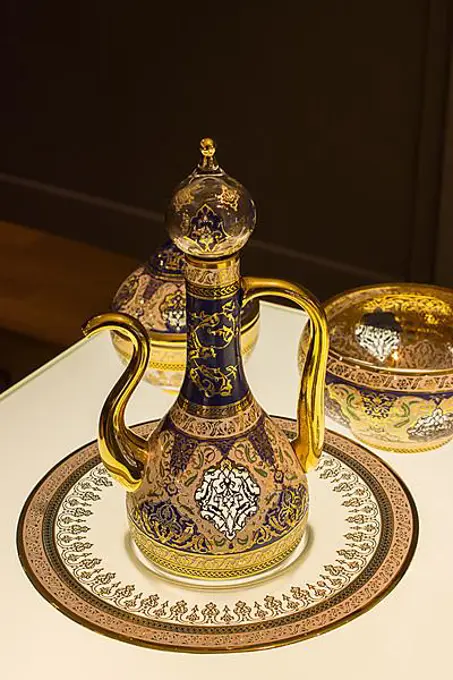
An array of ornate historical vessels, including ewers and goblets, showcasing intricate designs and finishes from various centuries.

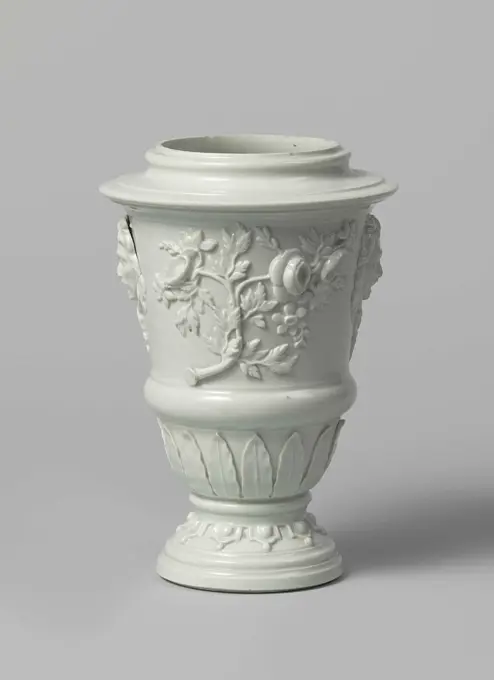
Vase, painted with flowerguirles and lion heads, manufacture Oud-Loosdrecht, c. 1778 - c. 1782 Vase of porcelain, painted with multicolored flowerguirles. The lion heads in brown, red and black with gold ring in the mouth. Golden piping along various edges. Loosdrecht porcelain Vase of porcelain, painted with multicolored flowerguirles. The lion heads in brown, red and black with gold ring in the mouth. Golden piping along various edges. Loosdrecht porcelain
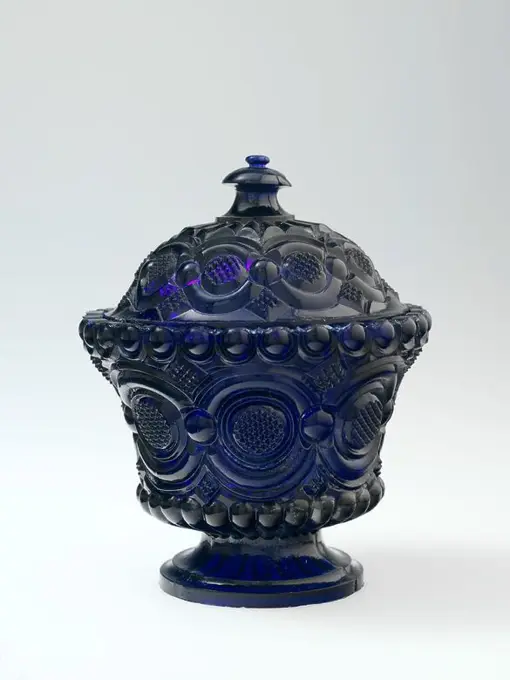
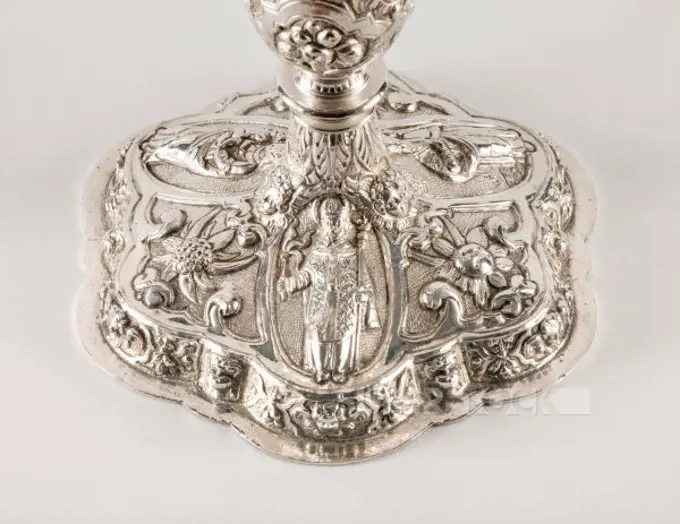
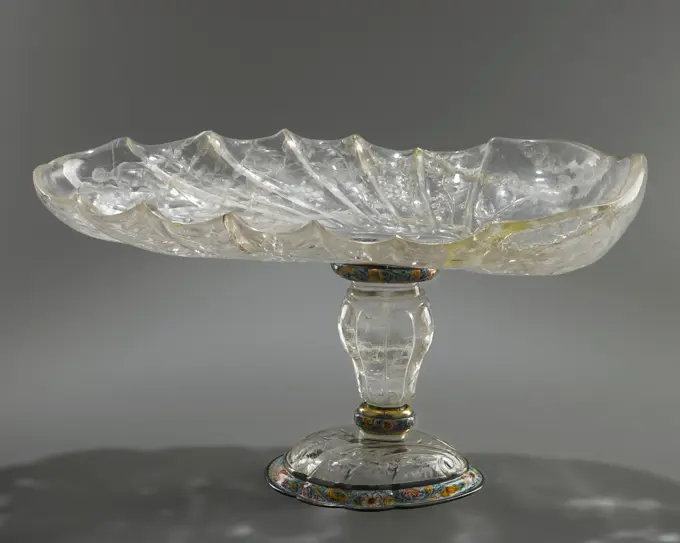
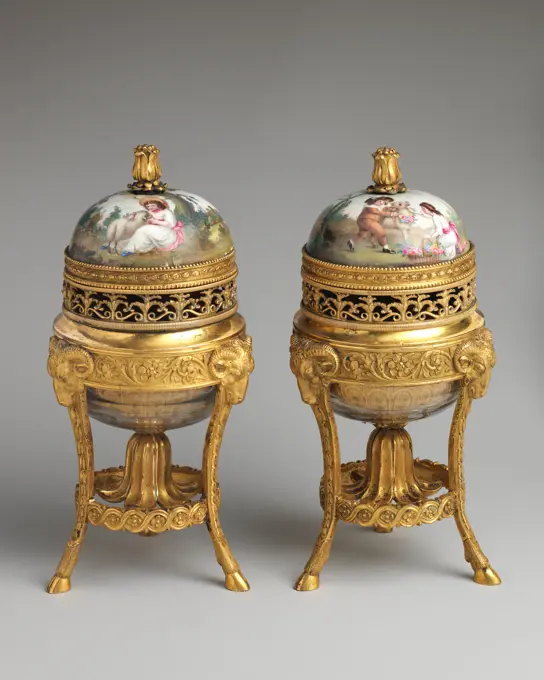
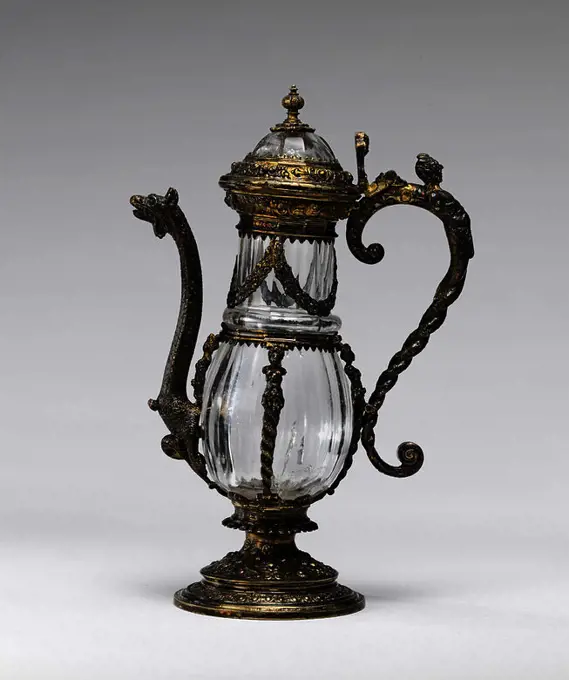
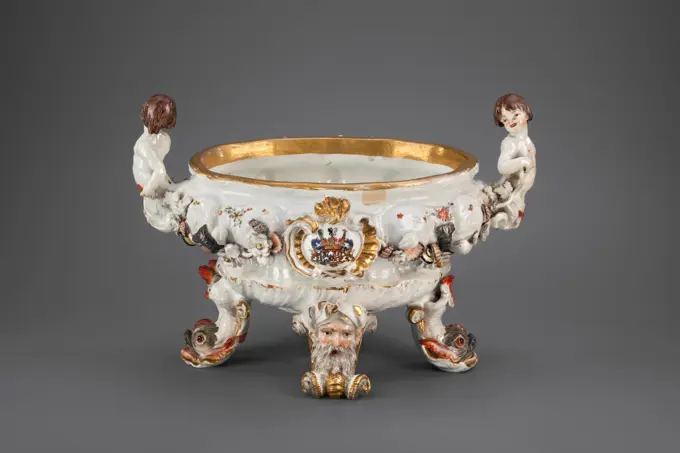
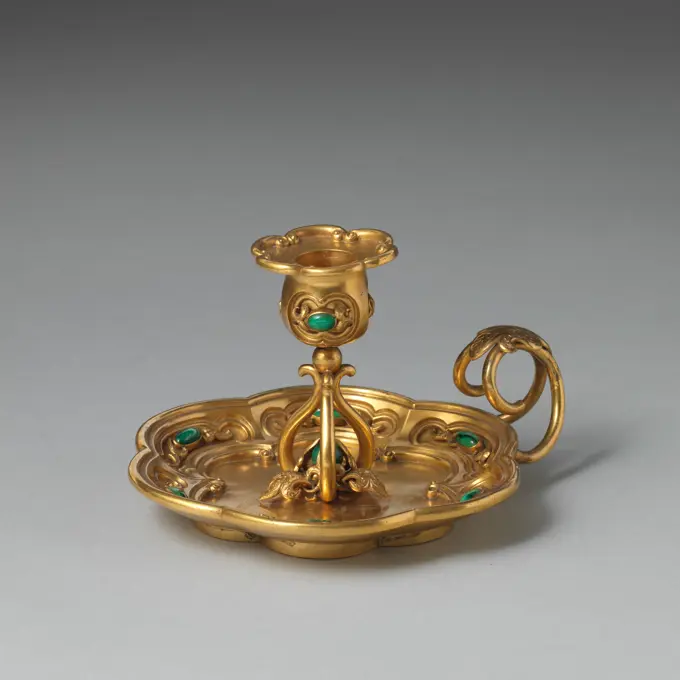
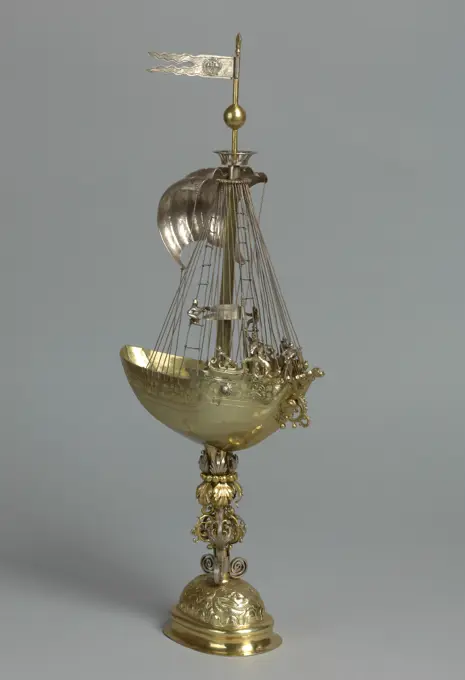
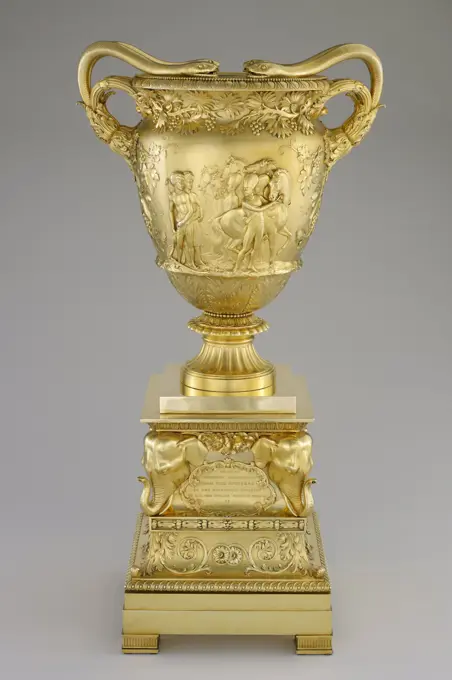
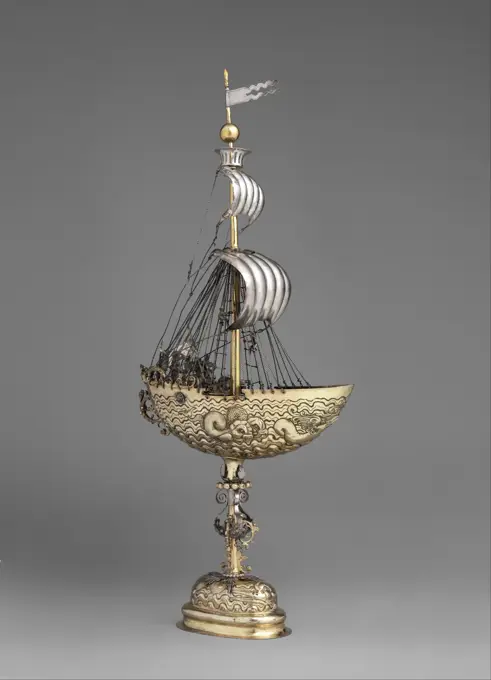
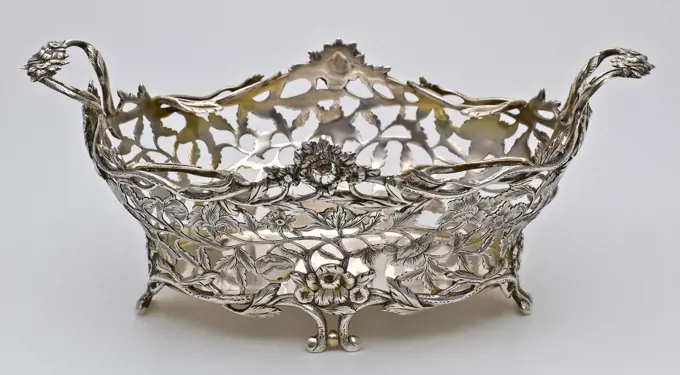
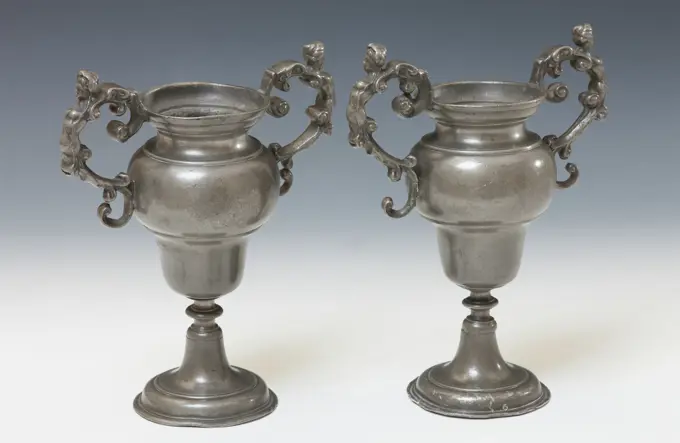
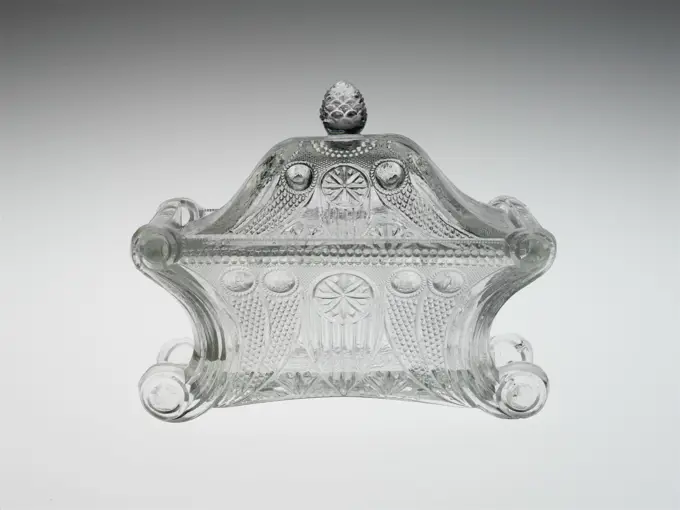
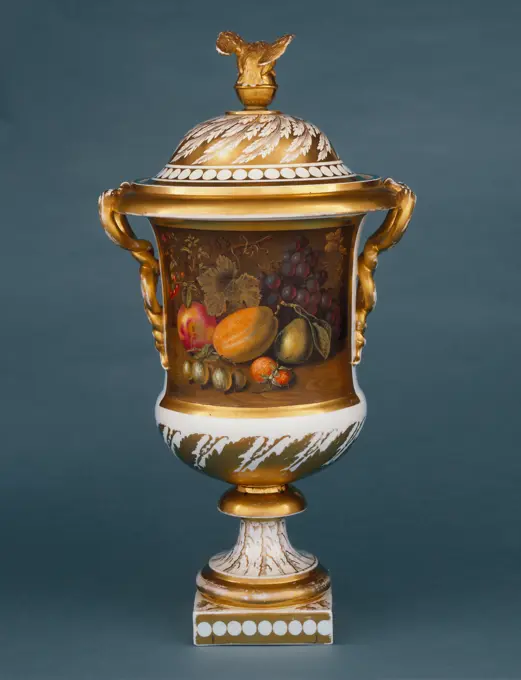
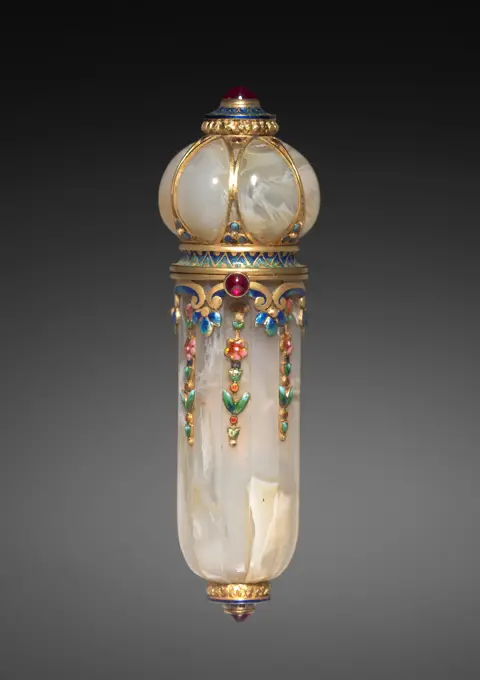
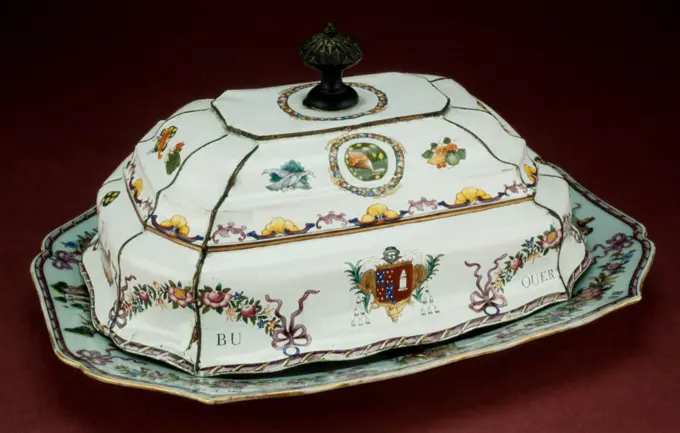
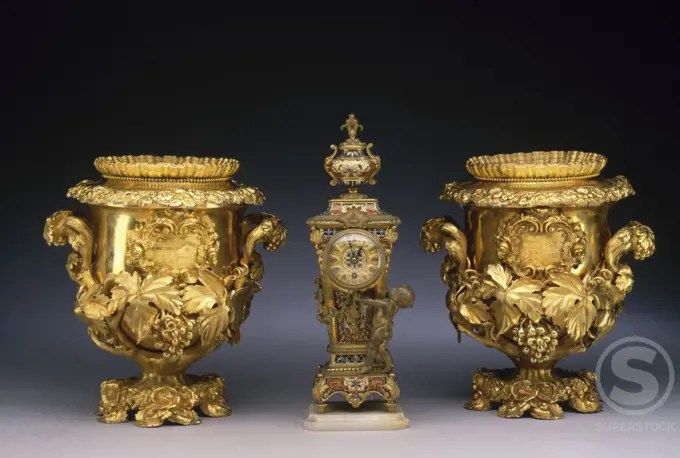
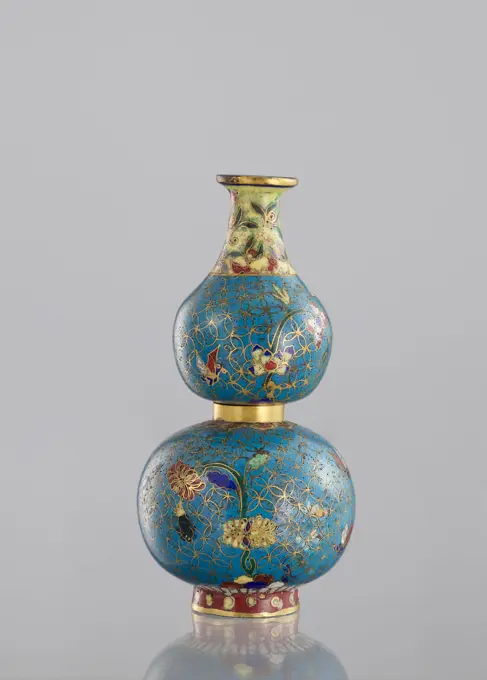
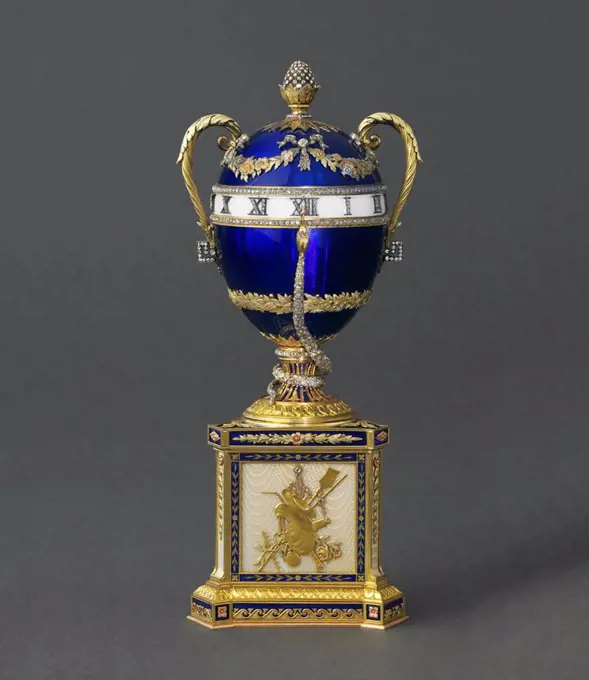
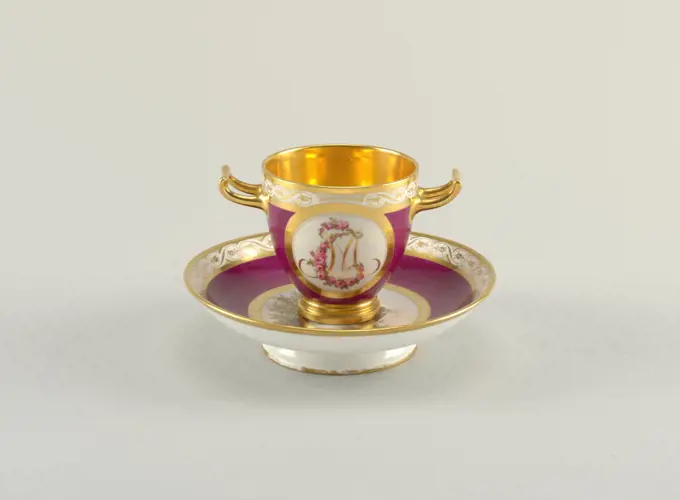
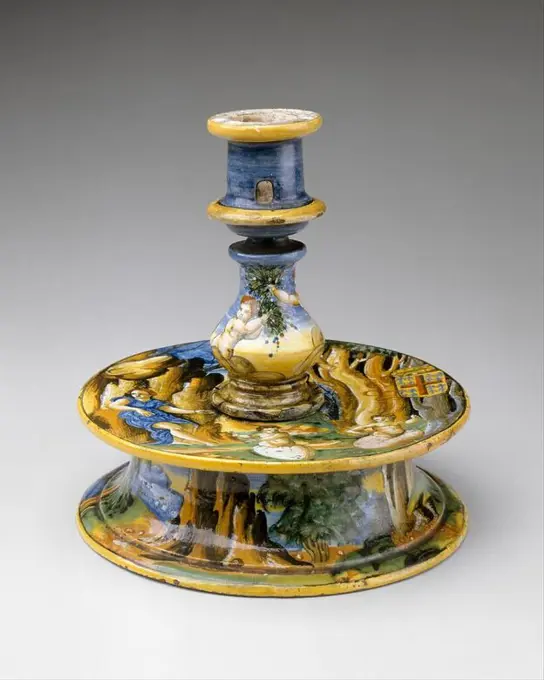
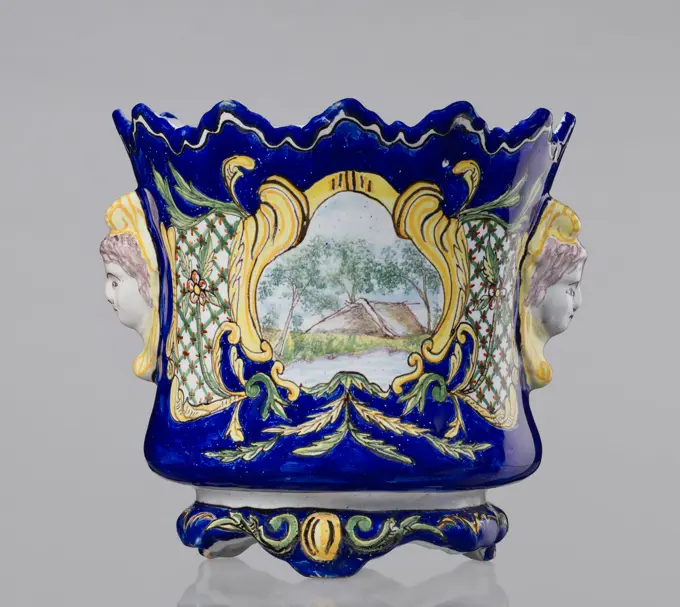
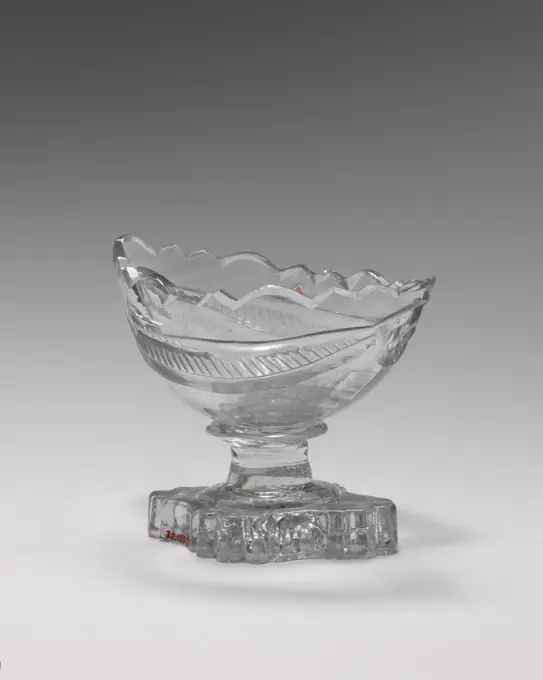
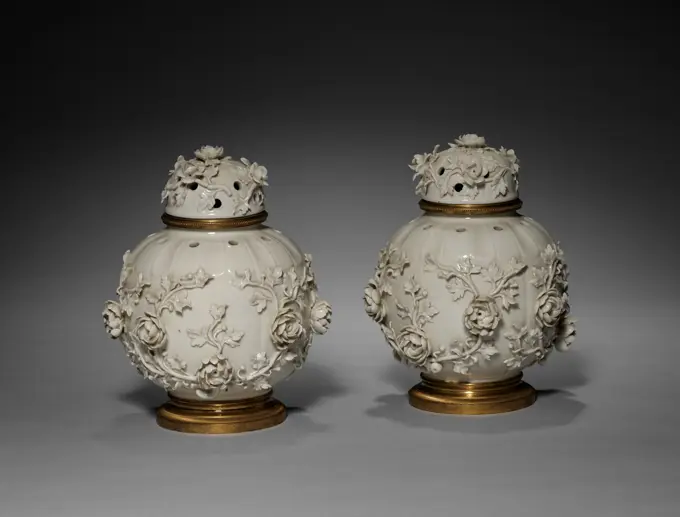
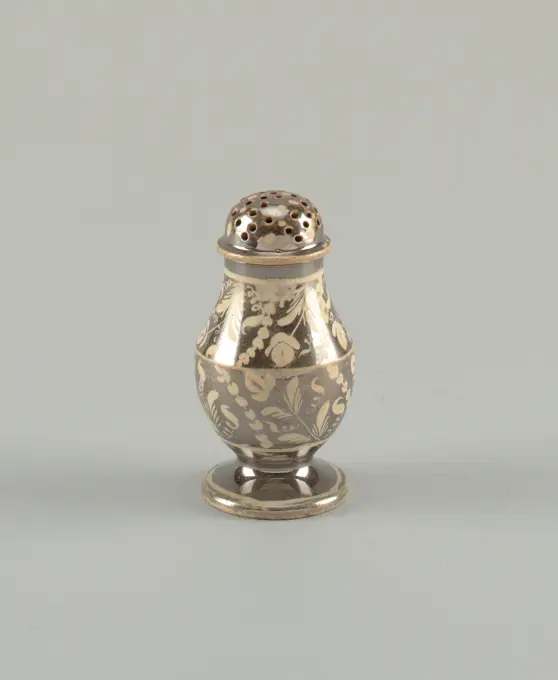
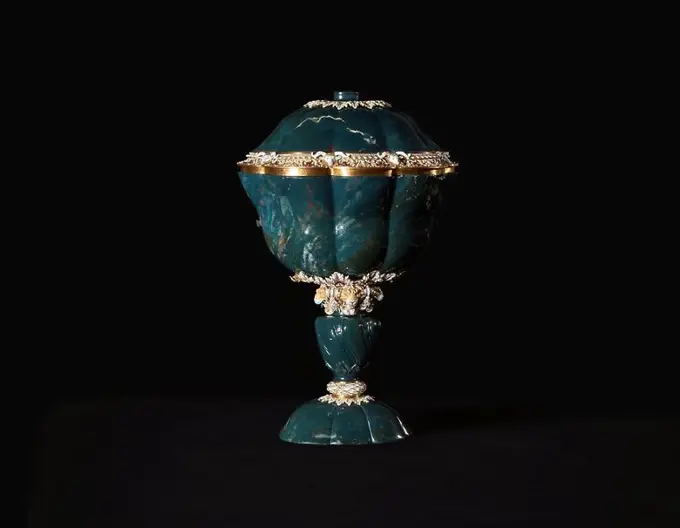
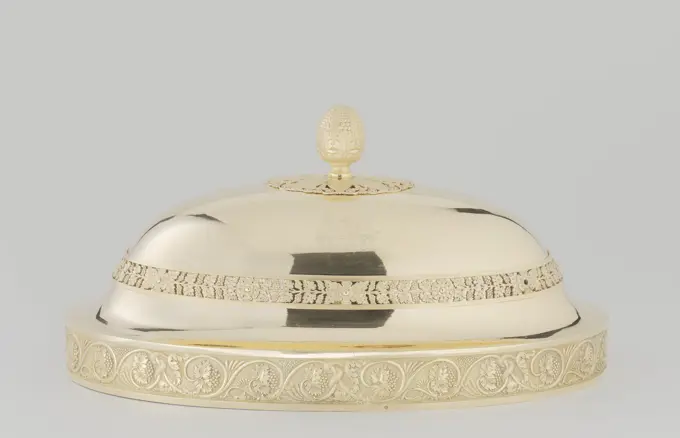
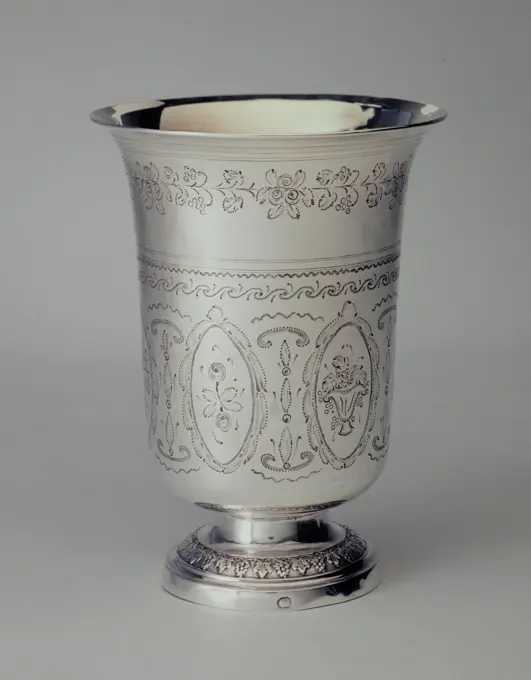
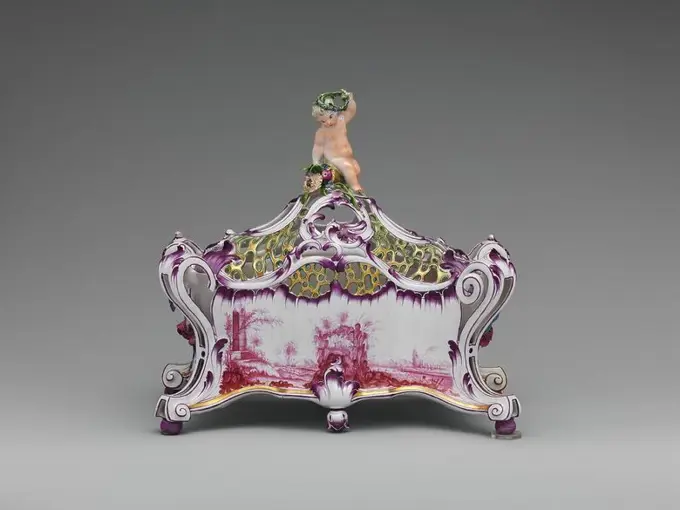
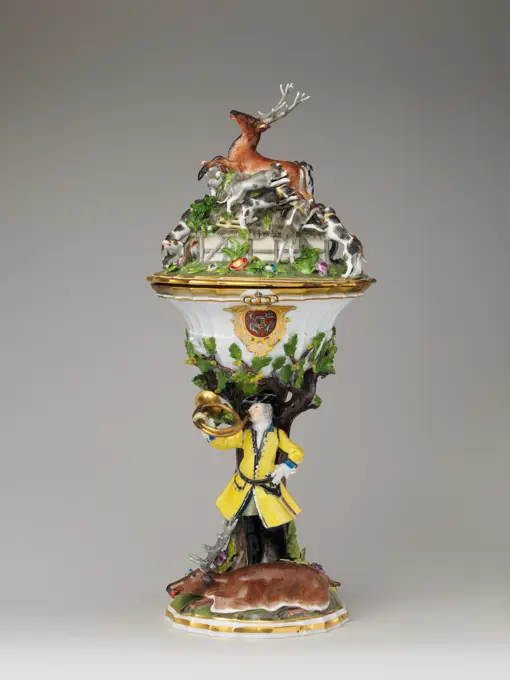
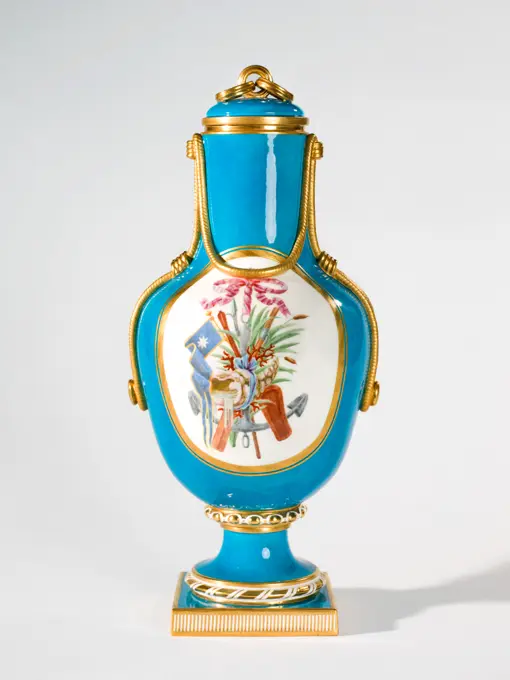
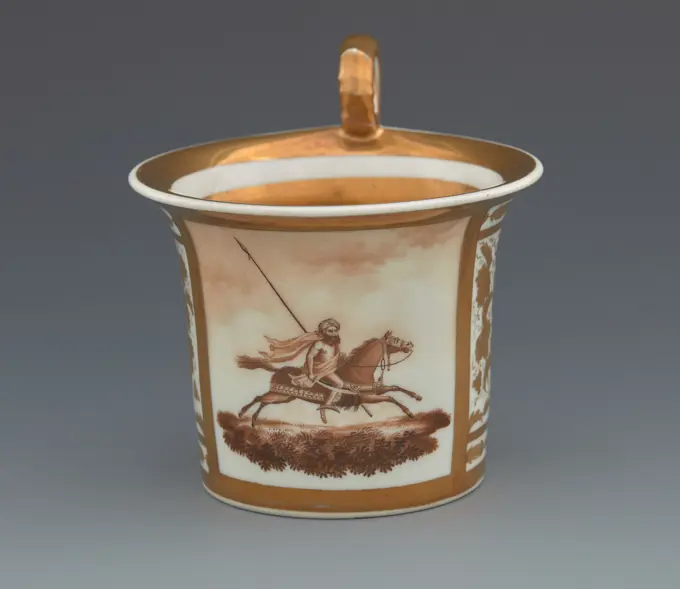
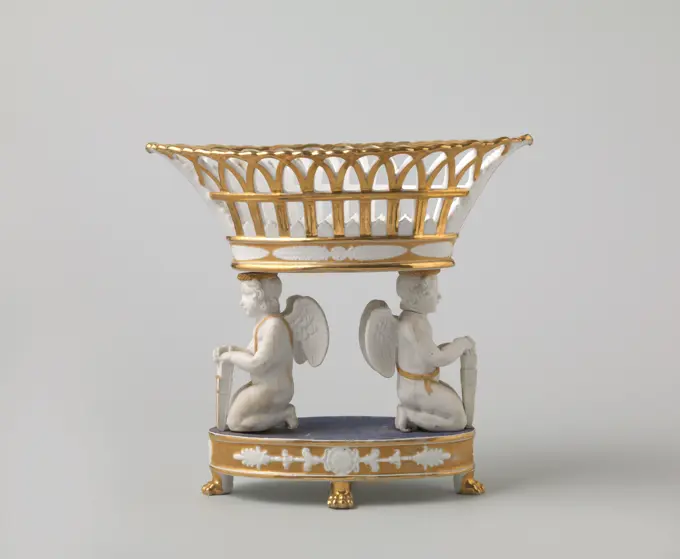
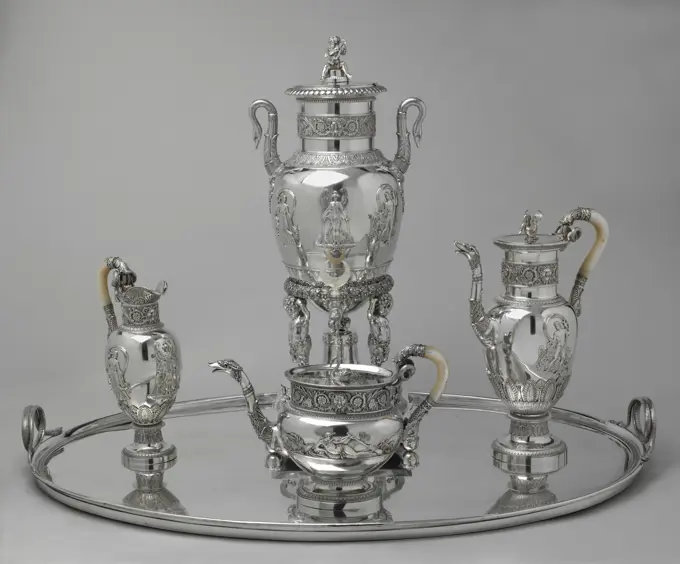
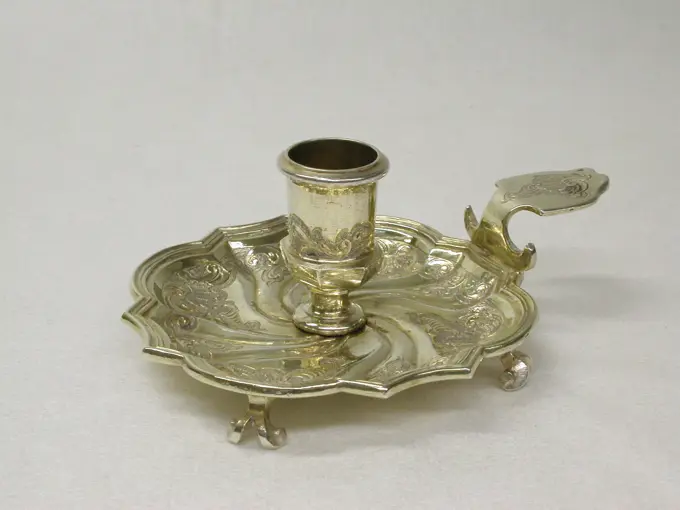
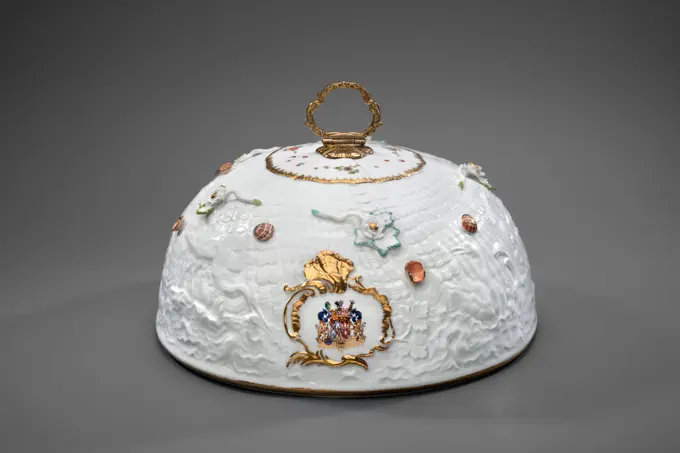
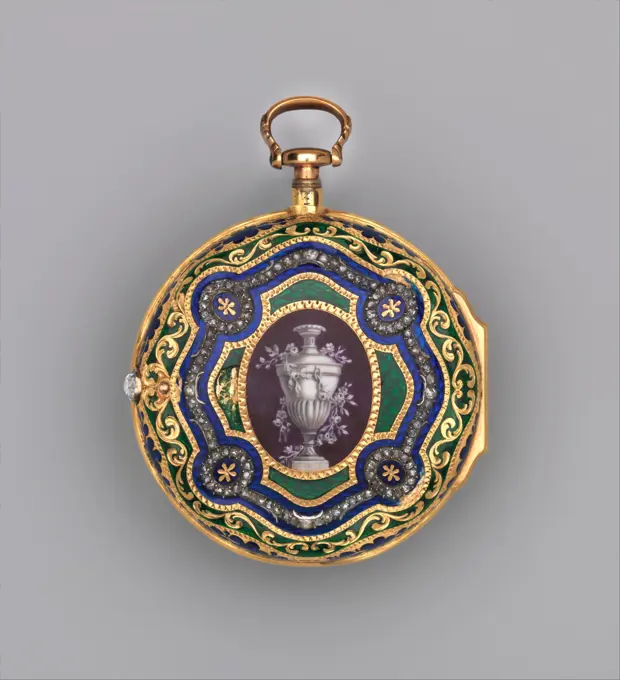
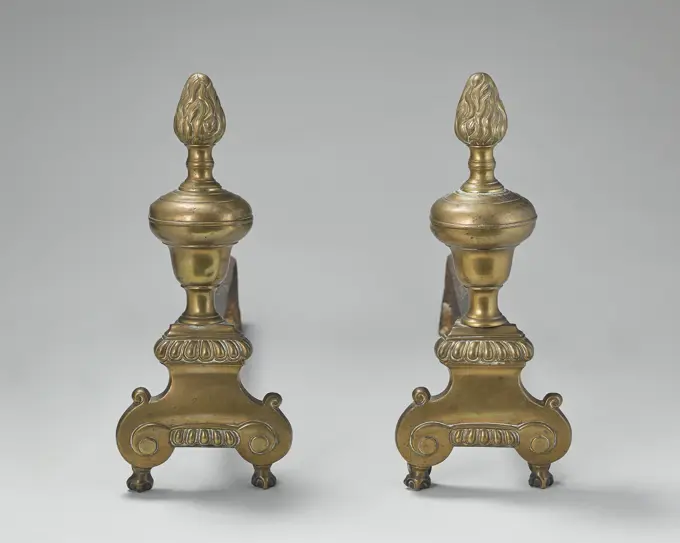
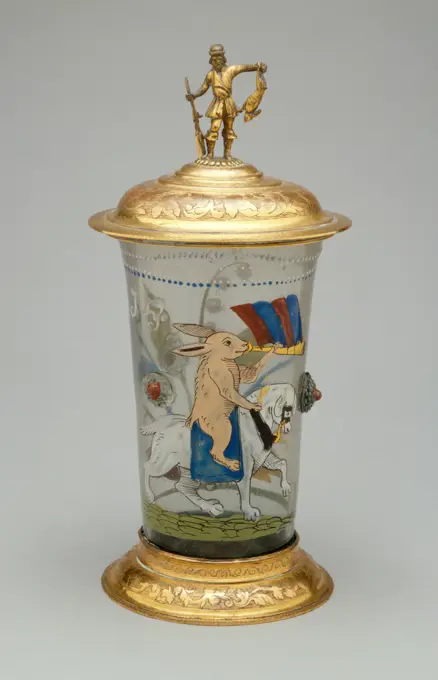
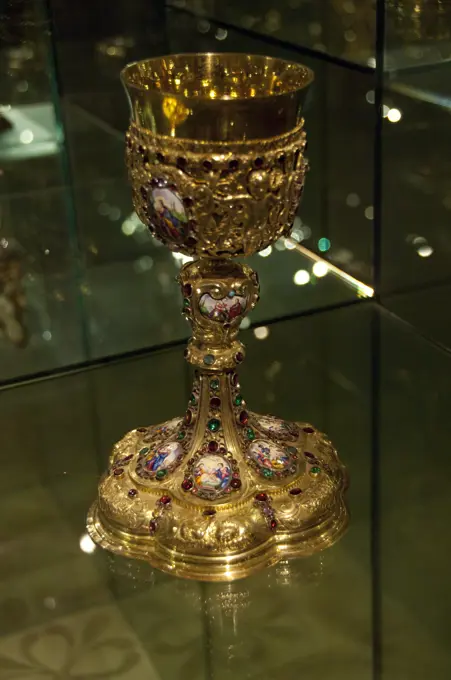
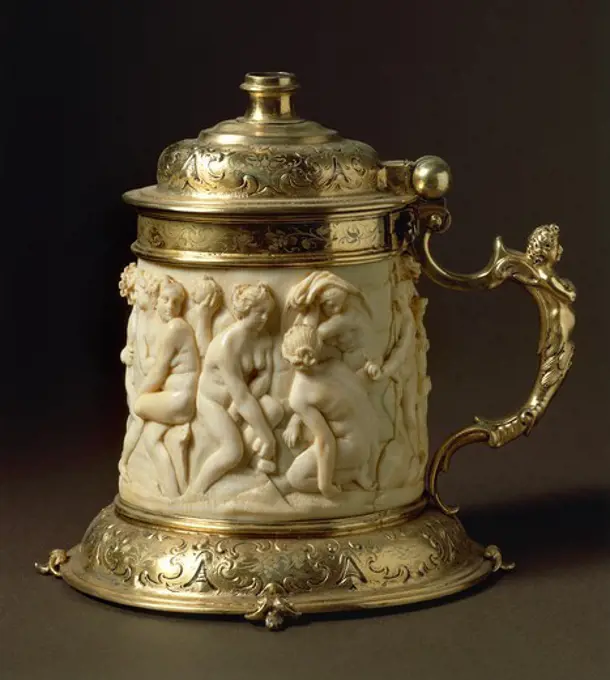
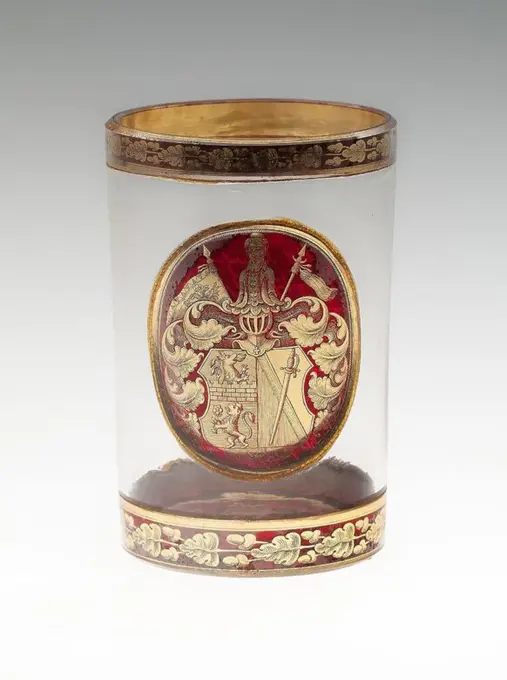
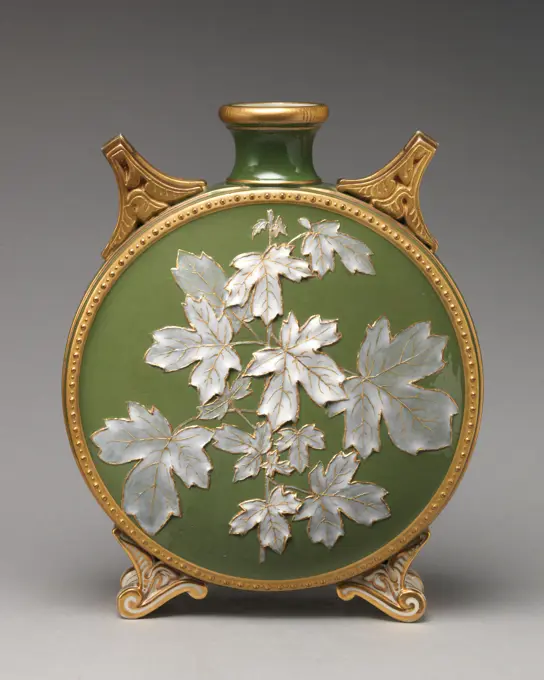
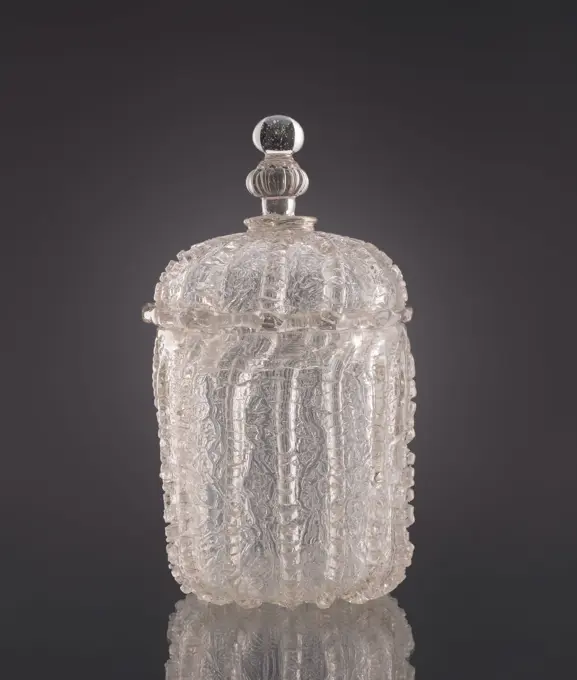
Sweetmeat Compote 1850-70 Bakewell, Pears and Company. Sweetmeat Compote 2529Goblet and saucer 1804 Imperial Porcelain Manufactory The panels of different colors that decorate this goblet and stand reflect the range of principal colors used by the Vienna factory, as indicated by the inscription on the foot.. Goblet and saucer. Austrian, Vienna. 1804. Hard-paste porcelain. Ceramics-PorcelainCovered Sugar Bowl. Culture: American. Dimensions: H. 6 in. (15.2 cm). Date: 1835-50. Museum: Metropolitan Museum of Art, New York, USA.Silver chiselded liturgical object, detail from the base depicting a bishop, Lombardy, Italy.Plateau; Schaffgotschowie ( L Sk; Court grinder; XVII); 2. W. 17th century (1626-00-00-1650-00-00);Bachanalies (iconogr.), Schaffgotschów - collections, feast of gods on Olympus (iconogr.), Bachanalia, baroque (style), garlands, birds, putta, purchase (provenance)Strooibus, Francois Marcus Simons, 1803 Round spray bus with loose lid. Marked and dated. The Hague silver (metal) casting Round spray bus with loose lid. Marked and dated. The Hague silver (metal) castingBulgaria, Amphora-rython (drinking vessel) with a bearded Silenus, Heracles (Hercules) and the Seven against Thebes, Centaur-shaped handles, from the Panagjuriste treasure, embossed goldPair of cassolettes 1787 Mounts by Matthew Boulton British. Pair of cassolettes. British, Soho near Birmingham. 1787. Enamel on copper, gilt bronze. Metalwork-Gilt BronzeEwer and Cover. Dated: 14th century (crystal); c. 1600 (mounts); before 1905 (spout). Dimensions: overall (height): 16.5 cm (6 1/2 in.) overall (diameter of base): 6.1 cm (2 3/8 in.). Medium: rock crystal and gilded silver and copper. Museum: National Gallery of Art, Washington DC. Author: Venetian or Parisian 14th Century (crystal); London 17th Century (mounts); Western European 19th or 20th Century (spout).Unknown, vase. Small fire earthenware, polychrome enamels. Petit Palais, Museum of Fine Arts of the City of Paris.Waza from the "swan" service; Koenigliche Porcellain Fabrique, Meissen (1710-1763), Eberlein, Johann Friedrich (1695-1749), Kaendler, Johann Joachim (1706-1775); 1737-1741 (1737-00-00-1741-00-00);Bruehl, Henryk (1700-1763), swan service, coats of arms, soup vases, purchase (provenance)Globular-Shaped Box Decorated with Gems, 1700s. India, Mughal dynasty (1526-1756). Gold paste and clear and colored rock crystal; overall: 7 x 5.7 cm (2 3/4 x 2 1/4 in.).Flower vase. Gentili, Carmine (1678-1763), painterTaperstand (part of a set) 1851 Asprey British The set (1982.88.1-.8) was shown at the Crystal Palace exhibition in 1851. Except for the paper knife, each piece is engraved underneath with Asprey's name and address and the words Exhibition 1851. Listen to experts illuminate this artwork's story Listen Play or pause #417. The Great Exhibition Supported by Bloomberg Philanthropies We're sorry, the transcript for this audio track is not available at this time. We are working to make it available as soon as possible.. Taperstand (part of a set). British, London. 1851. Gilt bronze, malachite. Metalwork-Gilt BronzeShip shaped cup Esaias zur LindenWine Glass 1845-1885 Bohemia. Glass; blown, cut, stained red and engraved .Vase, 1822, Rundell, Bridge & Rundell, London, 1788-1843, 28 1/4 x 14 9/16 x 10 in. (71.76 x 36.99 x 25.4 cm), Silver-gilt, England, 19th century, This presentation vase was made in 1822 for Henry Russell II (1783-1852), the British representative at the court of Hyderabad from 1811-1820, as a gift from the officers of the Russell Brigade, which he had founded and sponsored. Its shape is based upon the Roman imperial Buckingham Vase, which was unearthed in 1769 and engraved by Piranesi in 1778. The Buckingham Vase had an immense influence on the decorative arts of the Neoclassical period, as also evidenced by the four wine coolers, which take inspiration from its shape, in the nearby window case. Rundell, Bridge and Rundell, the foremost silversmiths of their age, collaborated with three of the most celebrated English sculptors of the period to create this masterpiece: Sir Francis Chantrey provided the overall concept, Thomas Stothard modelled the two military reliefs on the vase, and Ship (Nef) ca. 1609-20 Esias zur Linden. Ship (Nef) 193468Pedestal with hooves (one of a pair) 18th or 19th century Italian A variegated marble pedestal of square-based and tapered form, featuring gilt metal hooves, paired with 2019.283.34.. Pedestal with hooves (one of a pair). Italian. 18th or 19th century. Colored marble and gilt metal. SculptureLidded Vase, anonymous, c. 1700 Egg -shaped lid pot of porcelain, painted in underly glaze blue and on the glaze red, black and gold. On the belly a continuous representation of various pavilions with women surrounded by a rock and large flowering plants (peony, carnation, prunus, chrysanthemum) in a fenced garden. On the shoulder a wide band with peony ranks interrupted by book -shaped cartouches with landscapes or flowering plants. Around the neck a band with leaf vines interrupted by groups of three prunus flowers. Around the foot and on the neck a tire with alternately a stylized flower livel and chrysanthemums in courses. The foot with a band with a cloud motif. The lid with the same decoration. The lid has been broken. Imari. Japan porcelain. glaze. cobalt (mineral). gold (metal) painting / gilding / vitrification Egg -shaped lid pot of porcelain, painted in underly glaze blue and on the glaze red, black and gold. On the belly a continuous representation of various pavilions withSpice attachment; Schlaubitz, Johann Gottfried (Fl. 1733-1771), Hecker, Christoph (Fl. 1751-1784); before 1771 (1746-00-00-1771-00-00);Silversmith: Johannes Jansen, Silver open-worked bonbon box, bonbon container tableware holder silver, sawn engraved cast Oval shape pivoting wall on four curling feet two handles bottom bottom (debossed)Flask 1725-1735 Bohemia. Glass with engraved gold leaf decoration .Silversmith's Art, France 19th century.  Gilded silver tureen and tray.Pair of altar vases Löbell, MichaelCovered Dish 1830-45 Probably Boston & Sandwich Glass Company. Covered Dish 2362Great Vase and Cover. Coalport Porcelain Works (England, Shropshire, circa 1796-1926)Thomas Baxter, Jr. (England, London, 1782-1821). England, circa 1810. Furnishings; Accessories. PorcelainInkstand ca. 1805 British. Inkstand 191271Perfume Vial, c. 1900. Tecla Firm (French). Agate with enamel, gold, rubies; overall: 8.3 x 2.5 cm (3 1/4 x 1 in.).Platter with cover, c. 1760-1770, H.7 x W.15 x D.12-1/8 in., Enamelled copper, China, 18th century, This rare survival of Chinese export enamelled copper formed part of a large dinner service commissioned by the Saldanha de Albuquerque family of Portugal. This service is one of the most unusual Chinese export services to have been produced during the eighteenth century. Typical services were decorated with family coats of arms, designs copied from European prints, Chinese-style figures or floral motifs. The Saldanha service, however, is decorated with appropriate food stuffs: a large ham replaces the usual coat of arms, surrounded by fruits, fowl and vegetables.Clock & Pair of Regency Wine Coolers Antiques Champleve enamel & bronze Small vase in the shape of double gourd. unknown, craftsmanFaberge egg by anonymous artist, painting, Private Collection, H 18, 3Cachet of gold, Anonymous, c. 1700 - c. 1750 Cachet (Breloque) of gold. The handle consists of two dolphins next to a mask. The seal stone is made of rock crystal with a feminine weapon (grapes and tree). Northern Netherlands gold (metal). Cachet (Breloque) of gold. The handle consists of two dolphins next to a mask. The seal stone is made of rock crystal with a feminine weapon (grapes and tree). Northern Netherlands gold (metal).Pair of Wine Coolers 1873 New York City. Executed in the ìneo-grecî style, this suite of silver was commissioned by the United States government and presented to Viscount díItajub· of Brazil in gratitude for his role in arbitrating grievances between the United States and Great Britain after the American Civil War. It was the first of three identical suites made by Tiffany and Company, as indicated on each piece by the ìNo. 1î stamped on the underside. Figures and symbols decorating these objects represent ancient Greek themes. The handles on the punch bowl (1985.221.3) portray Dionysus, the god of wine, and the wine coolers depict facemasks of Silenus, a woodland god and Dionysusís constant companion. The full-figure, chased plaques on the wine coolers represent Agriculture and Commerce and were meant to symbolize the continued stability and prosperity of the United States after the Civil War.. Silver . Tiffany and Company (Manufacturer)Cup and Saucer, Sèvres Porcelain Manufactory, French, established 1756 to the present, hard paste porcelain, vitreous enamel, gold, Cup with a gilded, receding foot. Two gilded, horizontal handles in the antique style. Decorated with a purple, gilt borders and two circular reserves with the monogram MC, the latter letter in the form of a garland of roses. Saucer has a tall foot and high sides., France, ca. 1800, ceramics, Decorative Arts, cup and saucer, cup and saucerPair of Candelabra. Designed by Filippo Pelagio Palagi (Italian, 1775 - 1860)Beaker 1766 Johan Leffler. Beaker 197435Candlestick (candeliere). Artist: workshop of Guido Durantino (Italian, Urbino, active 1516-ca. 1576). Culture: Italian, Urbino. Dimensions: Height: 8 1/16 in. (20.5 cm). Date: 1535. Museum: Metropolitan Museum of Art, New York, USA.Cache-Pot; Nieborów (Manufaktura Majoliki; 1881-1899); after 1885 (1885-00-00-1895-00-00);Salt late 18th century British or Irish. Salt. British or Irish. late 18th century. Glass. GlassSOPERA DE PLATA. Location: PRIVATE COLLECTION. MADRID. SPAIN.Pair of Potpourri Vases with Covers, c. 1860-1880. France. Blanc-de-chine porcelain; gilt bronze mounts; each: 25.4 x 20.3 cm (10 x 8 in.). These vases were likely made by the celebrated Parisian ceramics firm of Edmé Samson (1810-91). To cater to the resurgence in taste for 18th-century designs, the Samson firm specialized in making reproductions of rare 18th-century European porcelains, especially those from firms that had already copied Chinese porcelains. In this case, these vases are designs taken from models produced by the St. Cloud factory in the 1750s after earlier Qing dynasty Chinese ceramics. However, the telltale sign that these vases are made by Samson and not St. Cloud is that the originals would have been made from a soft-paste porcelain (fired at a lower temperature), while these examples are made of hard-paste porcelain (fired at the highest temperature).Perfume Bottle. India, Delhi, circa 1800. Furnishings; Accessories. Silver and yellow quartz (Citrine) inlaid with turquoise, diamonds, and rubies set in goldSugar Caster; molded tin-glaze earthenware, overglaze lustre; 11 x 5.5 cm (4 5/16 x 2 3/16 in.)Anonymous / 'Heliotrope cup with lioness heads'. Ca. 1665. Enamel, Bloodstone, Gold. Museum: Museo del Prado, Madrid, España.Goblet with cover ca. 1550-1600 Austrian, Hall. Goblet with cover 192369Silver table centrepiece with Chinese scenes, anonymous, c. 1880 - 1883 table piece Richly decorated silver table piece in 1883 offered to Mr. J.Th. Cremer. Star-shaped pedestal with 8 points on which an 8-corner part with 4 outing elephants and inscription. Between vase and pedestal 4 -bearing fish. On the vase performances from Chinese life. Two handles in the form of dragons. On top of loose lid crowned with a Chinese mandarin. China silver (metal)   China. SumatraFili Anka, Spodek; New brothers (porcelain factory; 1818-1850); 1 PO. 19th century (1801-00-00-1850-00-00);Cloches (dish covers), coolers, soup tureens, sauceboats, salt cellars, pepper and, mustard pots, Jean Baptiste Claude Odiot, c. 1819 Empire High -vaulted lid of gilded silver. Along the lid two imposed, openwork tires with grape vines. With accompanying dish with a narrow palmetrand. (BK-17031-A-2) Paris silver (metal). gilding (material) gilding Empire High -vaulted lid of gilded silver. Along the lid two imposed, openwork tires with grape vines. With accompanying dish with a narrow palmetrand. (BK-17031-A-2) Paris silver (metal). gilding (material) gildingPair of candlesticks. Culture: French. Dimensions: Overall (confirmed): 10 1/2 x 5 5/8 in. (26.7 x 14.3 cm). Date: ca. 1770-75. Museum: Metropolitan Museum of Art, New York, USA.Louis Tassin. "Cup". Money. 1809-1814. Museum of Fine Arts of the City of Paris, Petit Palais. 74383-7 Money, silverware, gobletCovered bowl. Culture: British, London. Dimensions: Overall (wt. confirmed): 6 × 5 9/16 in., 26.788oz. (15.2 × 14.1 cm, 759.512g). Maker: James Shruder (active 1737-49). Date: 1737/38. Museum: Metropolitan Museum of Art, New York, USA.sugar bowl, earthenware, Bowl with feet and lid, dark red-brown with allover white dots; applied twisted leaf and ribbon motifs; lid has yellow circles and finial of large green and white curls topped with green spherical knob., Switzerland, 18th century, ceramics, Decorative Arts, sugar bowlQatar, Doha, Museum of islamic Art, The Cavour Vase,Claret Jug, c. 1890, 9 1/4 x 6 3/4 x 4 in. (23.5 x 17.15 x 10.16 cm), Silver, India, 19th century, This highly embellished jug for claret, a French red wine, is a testament to an Anglo-Indian aesthetic. This style proved fashionable among British officers based on the subcontinent, Anglophile Indians, as well as markets abroad. The jugs central motif features a tree sprouting three elongated mangos, a shape known on the subcontinent as kunj. In Europe, this motif is better known as 'paisley,' after the Scottish city of Paisley, which, by the early 1800s, was an important center for manufacturing textiles inspired by or copied from patterns woven on the shawls produced in the Kashmir region.. Conical feet of gold-plated silver, which comprises the flattened nodus on the underside of the body with a sprayed edge. Sideways pear-shaped body and tapered neck, blown in the form with 16 vertical ribs. A second layer of glass has been placed around the body to reinforce. The mouth is caught in a gold-plated silver frame with a stripped edge. Flat, scalloped stop, with a chain attached to the frame. The underside of the foot and the stopper marked with a rosette (unknown master sign) and an N (Nuremberg). The Nuremberg frame approx. 1700.Sugar bowl, belonging to coffee and tea sets, painted with putti in ovals against red fond. Sugar bowl, belonging to a coffee and tea set, multi-colored painted with ovals in which Putti in brown on a ground against a red fond. Along the edges a golden flower and leaf drink. Flammed f of 1, 2, 3 and 10 separated by a lying indent in underglazing blue.Potpourri with cover. Culture: French, Niderviller. Dimensions: Overall: 8 × 9 1/2 × 5 in. (20.3 × 24.1 × 12.7 cm). Factory: Niderviller. Factory director: Period of Baron Jean-Louis de Beyerlé (French, 1754-70). Date: 1760-65.Niderviller, an area in the Lorraine region of France, came into prominence as a producer of enamel-decorated faience in the mid-eighteenth century when Baron Jean-Louis de Beyerlé purchased a factory there. Under Beyerlé and the chemist-painter François-Antoine Anstett, the factory produced an innovative range of models and colors in petit feu faience, or tin-glazed earthenware that was fired twice. Such forms were undoubtedly influenced by the factory's parallel forays into hard-paste porcelain production from 1760 to 1765. This potpourri with cover exemplifies the Rococo aesthetic that dominated the factory in the middle of the eighteenth century. The rose-hued imaginary landscape on the base is evocative of the designs of Jean Pillement, while the asymmetric. Silver evening extent and baptismal, consisting of: a large dish, two small dishes, four cups, a gag and a baptismal basin.Hunting cup with cover ca. 1741 Meissen Manufactory German Displaying the arms of the king of Poland and elector of Saxony, this is a splendid example of the creativity of a modeler who derived his basic direction from the silversmith and detailed form from the ivory carver.. Hunting cup with cover 205900Jean-Louis Morin (1732-1787). "Vase with celestial blue strings and its lid". Sèvres. Ceramics, tender dough porcelain, blue background, gilding, polychrome enamels. 1771. Museum of Fine Arts of the City of Paris, Petit Palais. 112503-17 Decorative art, French art, ceramic, sevre porcelain, container, German rebirth, vase, 18th 18th 18th 18th 18th 18th 18 centuryCup KorzecLovers with a birdcage 1736-38 Meissen Manufactory German. Lovers with a birdcage 203067Tazza 19th century, after 17th century original British, after Dutch, Amsterdam or Haarlem original This electrotype is after a seventeenth-century original in the treasure of the Kremlin, Moscow.. Tazza 186653. Ensemble of silver consisting of two candelabers, six candlesticks and a middle piece. Together with a liber amicorum. Neo Rococo.Dish on high foot with pierced sides, anonymous, c. 1800 dish Porcelain bowl on a high, spreading foot ending in a square pedestal and with an openwork wall with a serrated edge. Painted on the glaze in gold. Halfway through the openwork wall a closed band with flowers. The scale and the foot are connected by means of an iron pin. France porcelain. glaze. gold (metal) painting / gilding / vitrificationPair of Lidded Vases. UnknownInkwell with Floral and Animal Imagery. Dimensions: H. 3 5/8 in. (9.2 cm). Date: 16th century.This cylindrical dawat (inkwell) with a domed lid once fit into a metal penbox, where it was secured by a line of soldering along its seam. Inlaid silver forms the primary decoration of floral vines and animals, and engraved and chased floral patterns occupy the background. A piercing in the lid suggests that a ring may have once eased the opening and closing of the inkwell. Referenced in Persian poetry and histories as early as the tenth century, cylindrical inkwells with domed lids were produced in great numbers in twelfth to sixteenth century Iran. Museum: Metropolitan Museum of Art, New York, USA.Covered box in the shape of a conch, anonymous, c. 1800 - c. 1825 Box with lid made of porcelain, covered with underlaze brown and blue. The box is irregularly formed to a shell with smaller shells on it; The lid with the same decoration. Japan porcelain. glaze. cobalt (mineral) painting / vitrification Box with lid made of porcelain, covered with underlaze brown and blue. The box is irregularly formed to a shell with smaller shells on it; The lid with the same decoration. Japan porcelain. glaze. cobalt (mineral) painting / vitrificationSugar bowl with a putto in a medallion, Fürstenberg, c. 1785 - c. 1795 Porcelain sugar bowl with a cylindrical body, painted on the glaze in sepia and gold. On the belly a medallion with a putto twice, one picks up a shelf and the other inshalances its arrow. Above the medallions a garland with a bond with a leaf shelf above it. Marked on the bottom with F-I and N1. Fürstenberg porcelain. glaze. gold (metal) painting / gilding / vitrification Porcelain sugar bowl with a cylindrical body, painted on the glaze in sepia and gold. On the belly a medallion with a putto twice, one picks up a shelf and the other inshalances its arrow. Above the medallions a garland with a bond with a leaf shelf above it. Marked on the bottom with F-I and N1. Fürstenberg porcelain. glaze. gold (metal) painting / gilding / vitrificationTable ca. 1833-34 Royal Porcelain Manufactory, Berlin This dazzling table is made entirely of porcelain with the exception of the reeded gilt-metal rim with concave moldings around the circular porcelain top, the canted triangular gilt-metal base with low feet, and the gilt-bronze beaded molding encircling the porcelain curling-leaf decoration on top of the base. There is also an iron column that acts as a spine, disguised by four porcelain acanthus-leaf sleeves fitted one above the other, set off by gilded metal moldings. The gilding of the porcelain surface of the stand is daringly finished in different techniques that create delicate matt and brightly polished areas, producing the trompe l'oeil effect of a gilded cast-bronze support.1The fabrication of the Museum's spectacular table was made possible by new production and color technologies that were developed after 1832 at the Royal Porcelain Manufactory, Berlin, to attract royal patronage.2 The catalogue of the Academy ExhibitTeacup with a saucer. Królewska manufaktura porcelany w Kopenhadze (1760- ), manufactureDish or basket supported by two putti, anonymous, c. 1800 - c. 1810 Porcelain scale, painted in gold. The wall is open and at the bottom has a band with modeled leaf vines, saved in gold. Modeled, standing leaf motifs on this band. The dish is worn on the head by two kneeling putti in biscuit, based on a arrow case. The putti are placed on an oval pedestal on four claw legs. France porcelain. glaze. gold (metal) painting / gilding / vitrification Porcelain scale, painted in gold. The wall is open and at the bottom has a band with modeled leaf vines, saved in gold. Modeled, standing leaf motifs on this band. The dish is worn on the head by two kneeling putti in biscuit, based on a arrow case. The putti are placed on an oval pedestal on four claw legs. France porcelain. glaze. gold (metal) painting / gilding / vitrificationTray (part of a service) 1809-19 Marc Jacquart This tea and coffee service (38.12.1-.5) is distinguished both by the enormous scale of its pieces and the high quality of the cast and applied decoration. While its sugar bowl is missing, the service is an unusually grand survivor of silver from the Napoleonic period. The mother-of-pearl handles add to the impression of luxury but also serve a functional purpose, as they do not conduct the heat generated by the hot liquids that the vessels contained.. Tray (part of a service) 198024Lid of a jar, anonymous, c. 1725 - c. 1750 Vaulted lid with a twisted, pear -shaped button on four discs. On the lid an engraved leaf garland. Bohemia glass glassblowing Vaulted lid with a twisted, pear -shaped button on four discs. On the lid an engraved leaf garland. Bohemia glass glassblowing. Box with porcelain lid, covered with underglaze brown and blue. The box is shaped irregularly to a shell with smaller shells; The lid with the same decoration.Chamber candlestick ca. 1743-45 Abraham Drentwett IV. Chamber candlestick 231590Cover-KLOSZ for a platter; Koenigliche Porcellain Fabrique, Meissen (1710-1763), Kaendler, Johann Joachim (1706-1775), Eberlein, Johann Friedrich (1695-1749); 1737-1741 (1737-00-00-1737-00-00);Bruehl, Edmund (1888-1962)-collection, Henryk (1700-1763), Męrtlewicz, swan service, coats of arms, purchase (provenance)Cruet Set, 1817-1818. Paul Storr (British, 1771-1844). Silver; overall: 24.8 x 24.2 x 14 cm (9 3/4 x 9 1/2 x 5 1/2 in.).Inkwell. Iran or Afghanistan, late 12th-early 13th century. Metal. Bronze, cast, incised and inlaid with copper and silverWatch case probably ca. 1770 Case maker: possibly George Harrison In the second half of the eighteenth century, English watchmakers exported a large number of watches for use in Arabic-speaking territories. The numerals on the dials were not exactly those used in Arabic arithmetic, however, but were apparently adaptations made by European clockmakers.. Watch case. French, for Turkish market. probably ca. 1770. Partly enameled gold, outer case set with diamonds. HorologyVase ca. 1831-35 French This vase is part of a pair that feature two views of the New York City region copied from a portfolio of prints entitled "Views in New York and Its Environs" (1831-34). This vase, entitled "Elysian Fields, Hoboken," portrays a New Jersey park located directly opposite New York City that became a popular spot in the early nineteenth century. The other (17.144.2) shows lower Manhattan seen from the East River side of Governor's Island.. Vase. French. ca. 1831-35. Porcelain. Made in FranceAnonymous, pair of chenêts (title of the whole). Golden bronze, cast iron. Petit Palais, Museum of Fine Arts of the City of Paris.Pair of candlesticks 1735-50 Manner of Juste Aurèle Meissonnier French These candlesticks are freely adapted from the same design by Meissonnier as the candlestick in front of them. The different surface treatments, howeverpunched and matted or smooth and burnishedwould have resulted in different reflections of light.. Pair of candlesticks 206617Covered Beaker with Hare (Humpen). Bohemia (now Czech Republic), 1599. Furnishings; Serviceware. Glass, enamel, gilt, brass mountsBust of King-Stadtholder William III, attributed to De Metaale Pot, c. 1695 - c. 1700Nécessary of gold with a standing watch, anonymous, 1750 on the lid Necessary of gold, with a standing watch on the lid. The box is rectangular and rests on 4 volute feet. It is completely citized in relief with theater figures, trees and animals. Content: scissors, mirror, 2 bottles, knife, needle buyer, notebook, tweezers. France (possibly) gold (metal) Necessary of gold, with a standing watch on the lid. The box is rectangular and rests on 4 volute feet. It is completely citized in relief with theater figures, trees and animals. Content: scissors, mirror, 2 bottles, knife, needle buyer, notebook, tweezers. France (possibly) gold (metal)Soup tureen with a base and a lid. Baranówka (manufaktura porcelany ; 1804-post 1900 ), factoryJar with lid, with a pigeon and tools for distilling drinks (), Anonymous, c. 1755 Slightly curved foot. Strain made up of double baluster in which resp. A tear -shaped bubble and a multiple spiral. Conical chalice, arched lid with a convex button with air bubbles. Engraved performance on Kelk: surrounded by Rococo Ornament a pigeon on the ground, underneath a ton, well and hammer. On the reverse one with two sailing ships, a village and a forest. GUIRLANDES ABOUT RAND CHELL AND LID. Signed under Ton and Put: H: v. Gimnig Fec. glassblower: Southern NetherlandsHaarlem (possibly) glass Slightly curved foot. Strain made up of double baluster in which resp. A tear -shaped bubble and a multiple spiral. Conical chalice, arched lid with a convex button with air bubbles. Engraved performance on Kelk: surrounded by Rococo Ornament a pigeon on the ground, underneath a ton, well and hammer. On the reverse one with two sailing ships, a village and a forest. GUIRLANDES ABOUT RAND CHELL AND LID. SigBurial Jar for Wine Storage, one of a pair, 12th-13th century, Qingbai ware Porcelaneous stoneware with appliqué décor under pale blue-grey glaze combined with painted iron-brown details., China, 12th-13th centuryAustria, Wachau Valley, Melk. 900 year old baroque Melk Abbey (aka Benediktinerstift). Monastery art collection, gold chalice.Goldsmith's art, Germany, 17th century. Ivory and gilded silver tankard, Augsburg, circa 1645.Beaker. Austria, Gutenbrunn; Decorated by Johann Joseph Mildner (Austrian, 1765-1808). Date: 1797. Dimensions: 10.5 x 7 cm (4 1/8 x 2 3/4 in.). Glass with gold leaf decoration. Origin: Germany. Museum: The Chicago Art Institute, Chicago, USA.Moon flask with white grape leaf motifs 1880s Grainger. Moon flask with white grape leaf motifs. British, Worcester. 1880s. Porcelain. Ceramics-PorcelainVery old style glass ewer water jar in viewPair of andirons late 18th century British. Pair of andirons. British. late 18th century. Brass, iron. Metalwork-BrassBeaker and cover. Niderlandy, creatorVase. Meissen porcelain manufactory Meissen, c. 1715 Hard Paste PorcelainSgabello (one of a pair) ca. 1575-1600 Italian, Florence. Sgabello (one of a pair) 670538