Historical Decorative Objects

An array of ornate historical vessels, including ewers and goblets, showcasing intricate designs and finishes from various centuries.

Vase, painted with flowerguirles and lion heads, manufacture Oud-Loosdrecht, c. 1778 - c. 1782 Vase of porcelain, painted with multicolored flowerguirles. The lion heads in brown, red and black with gold ring in the mouth. Golden piping along various edges. Loosdrecht porcelain Vase of porcelain, painted with multicolored flowerguirles. The lion heads in brown, red and black with gold ring in the mouth. Golden piping along various edges. Loosdrecht porcelain
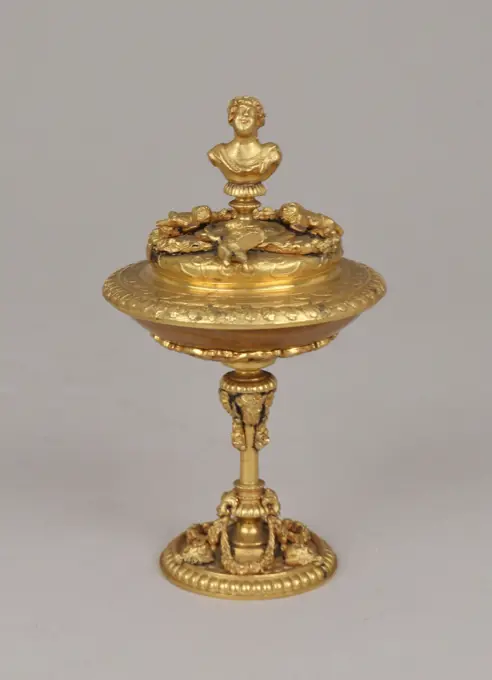
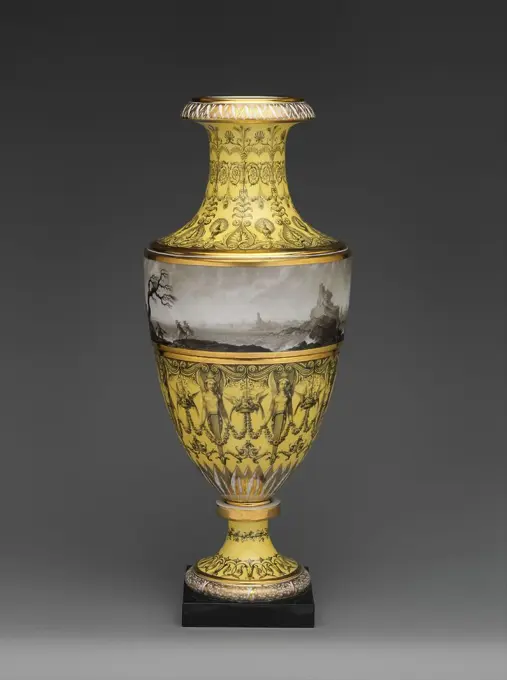
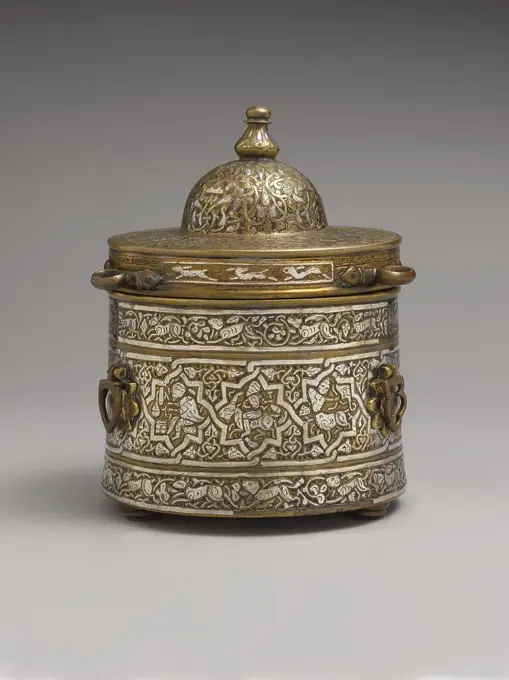
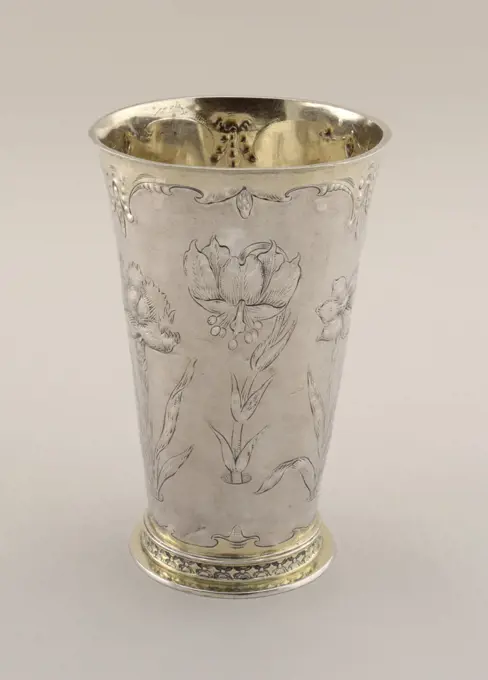
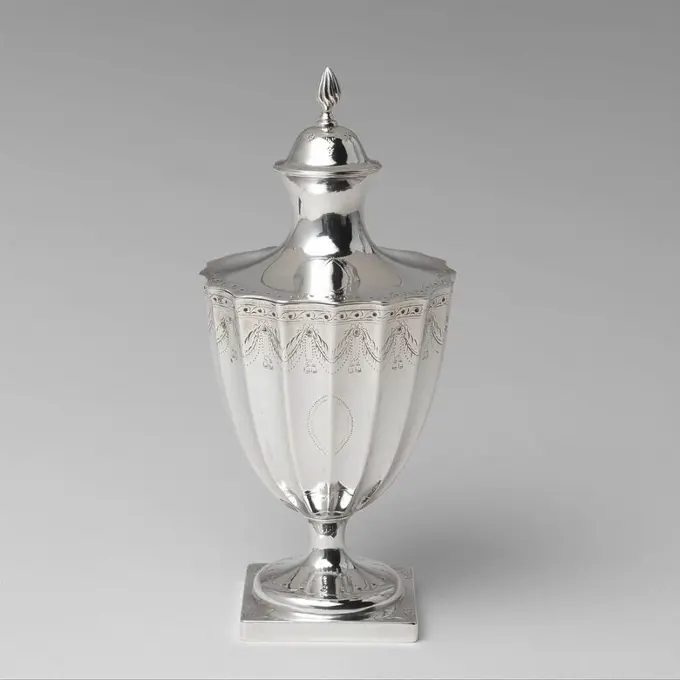
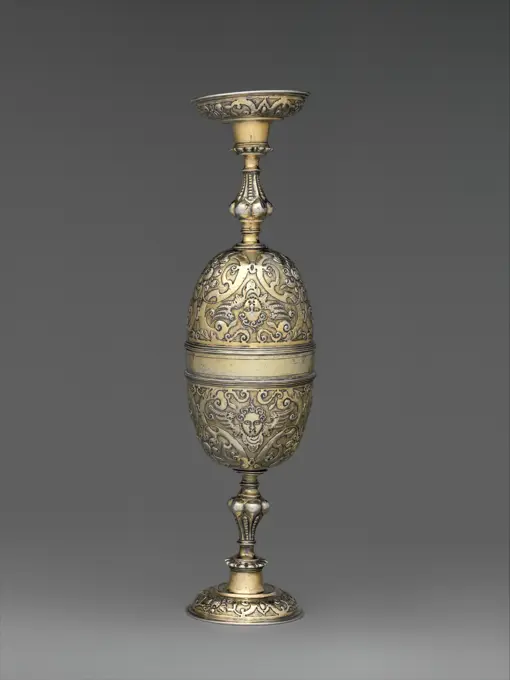
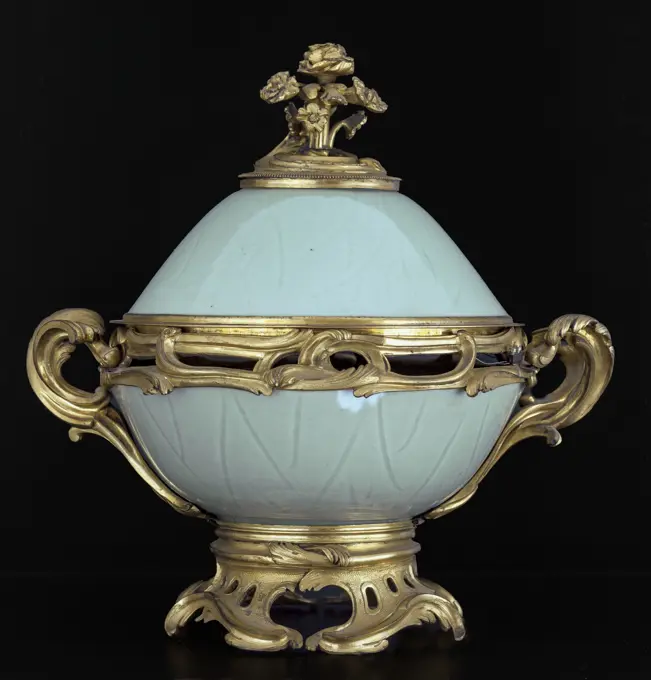
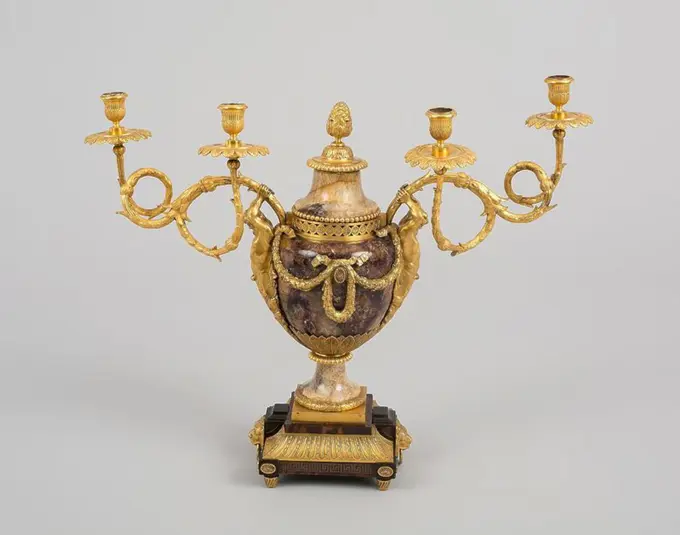
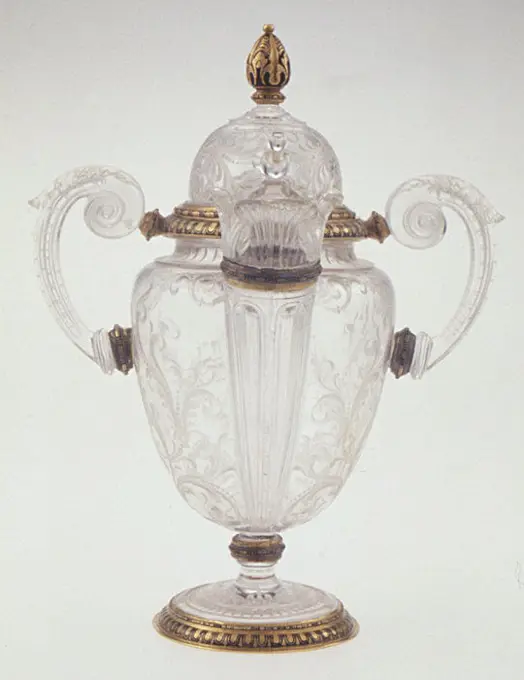
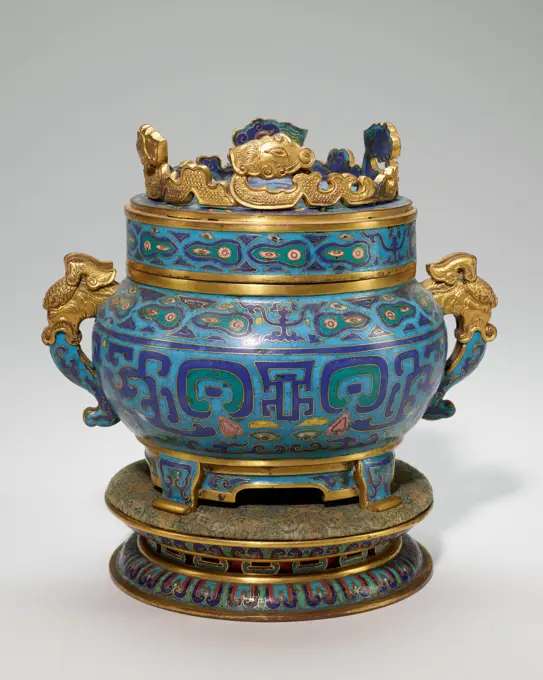
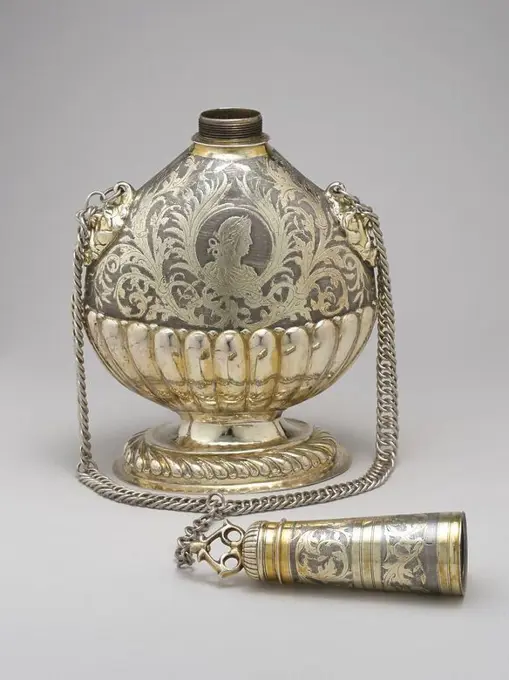
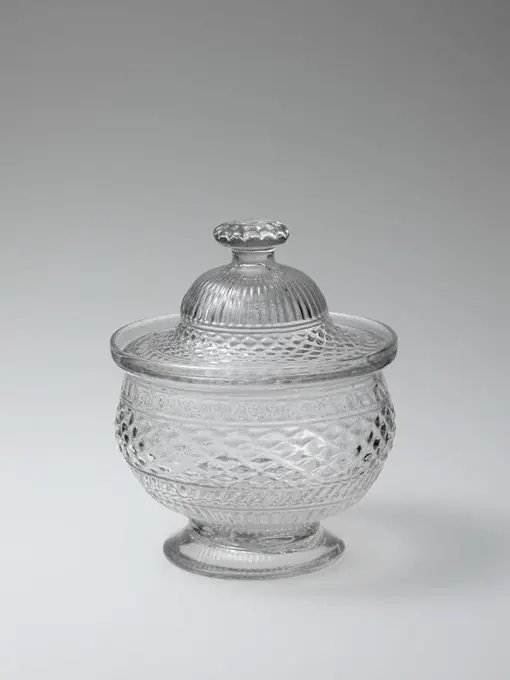
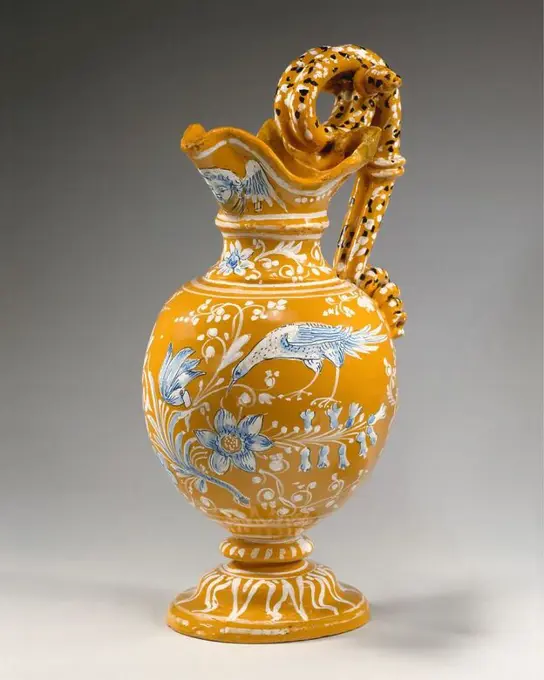
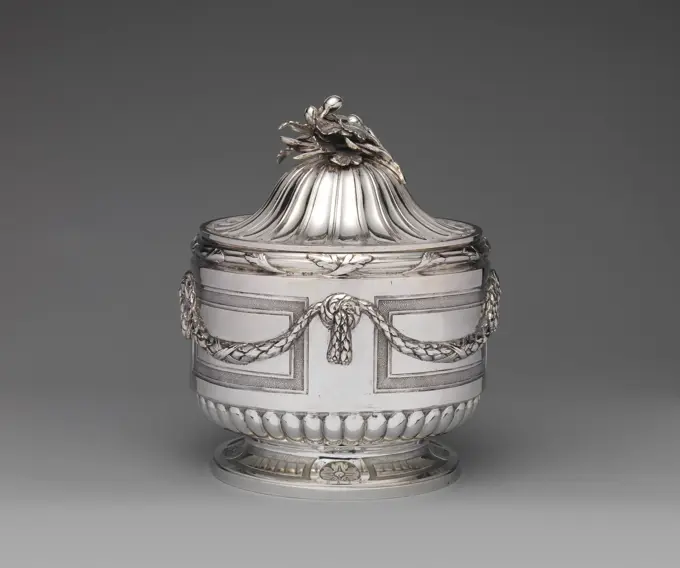
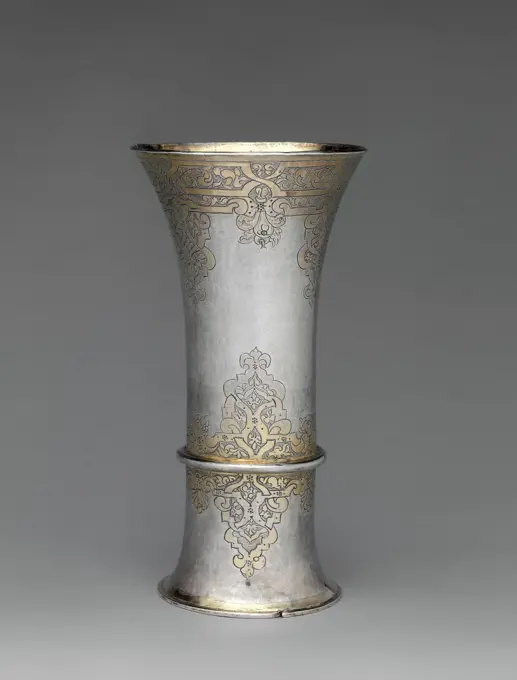
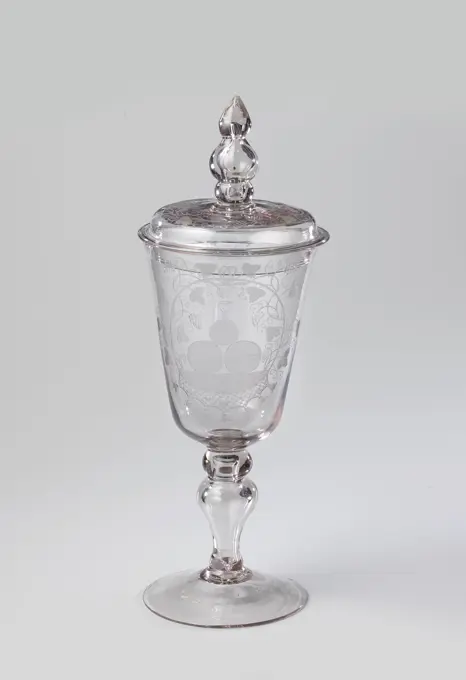
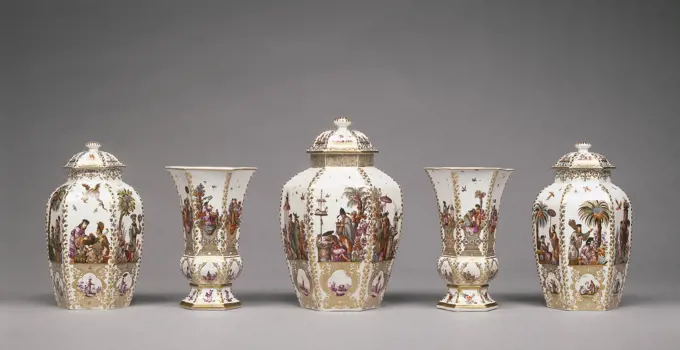
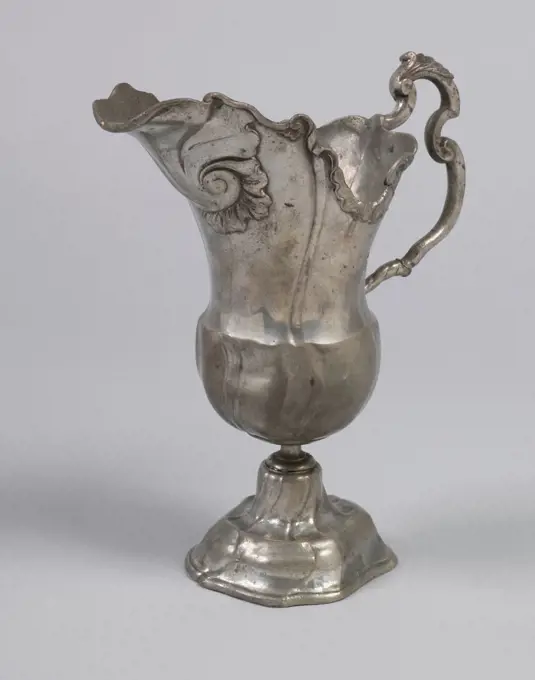
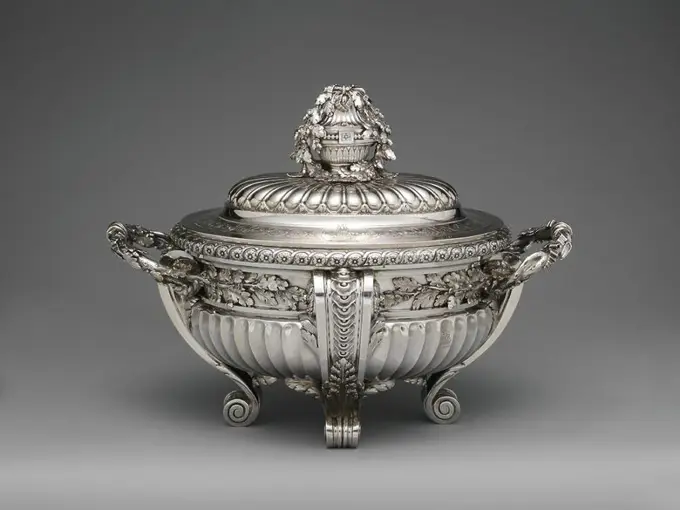
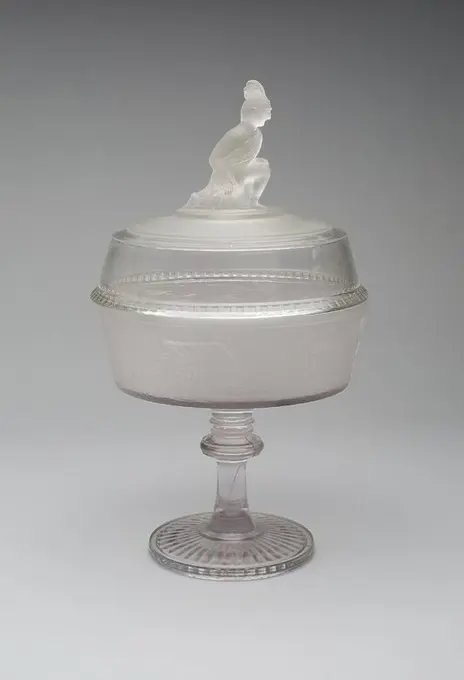
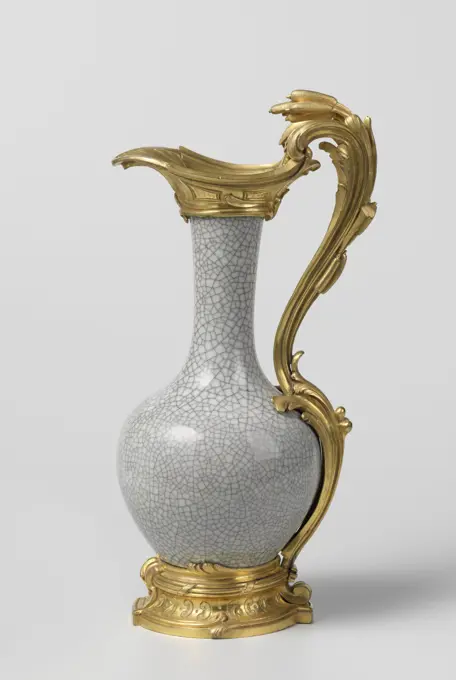
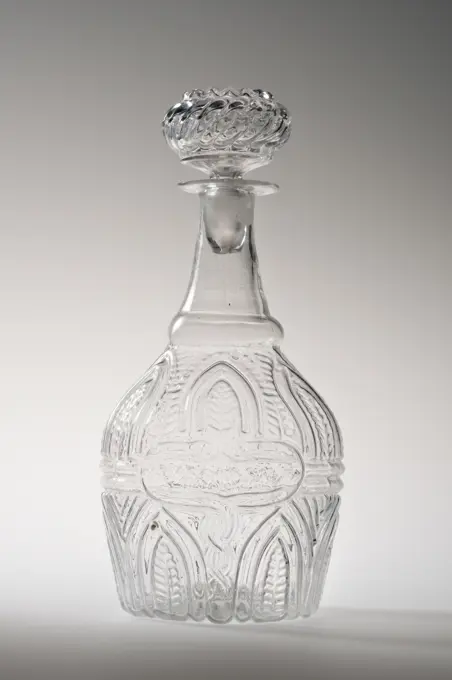
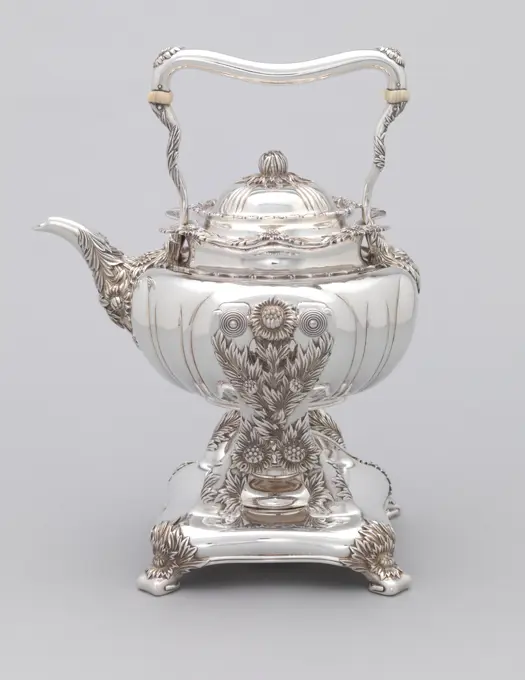
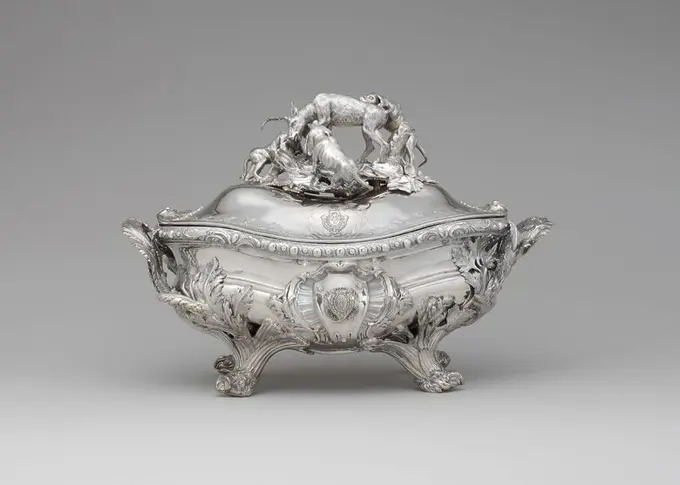
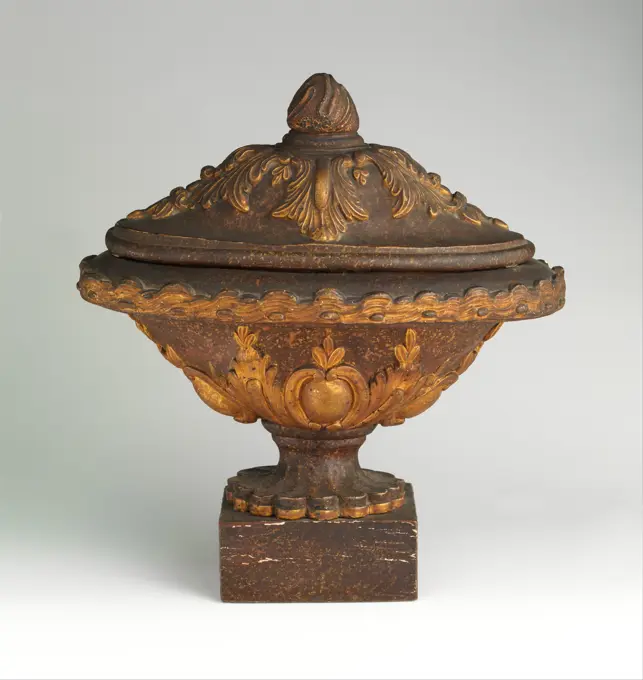
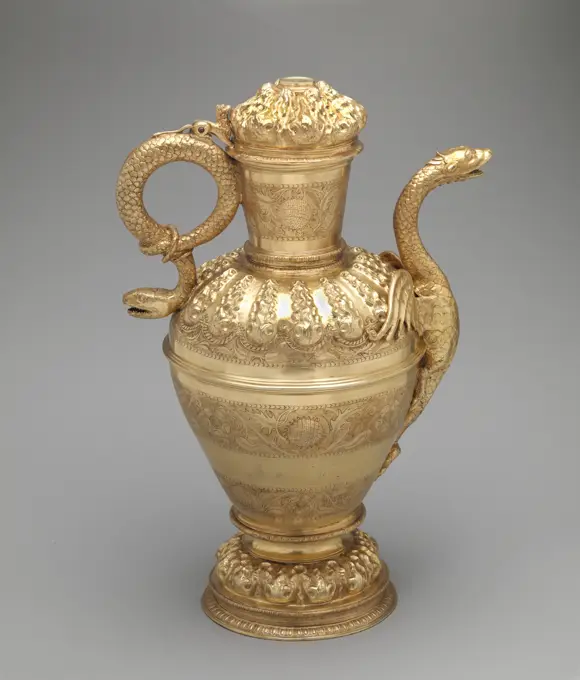
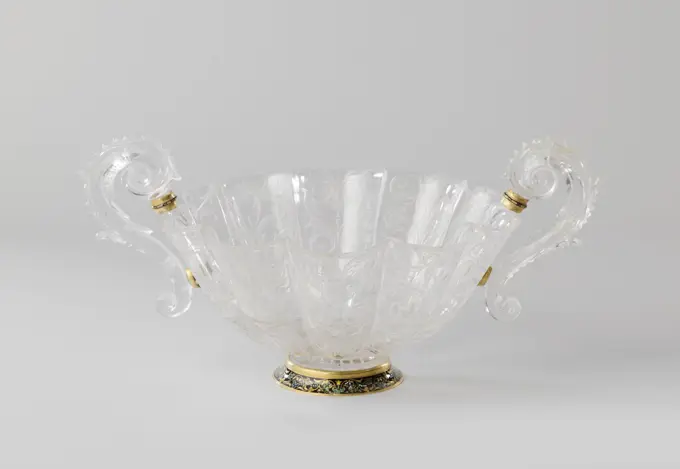
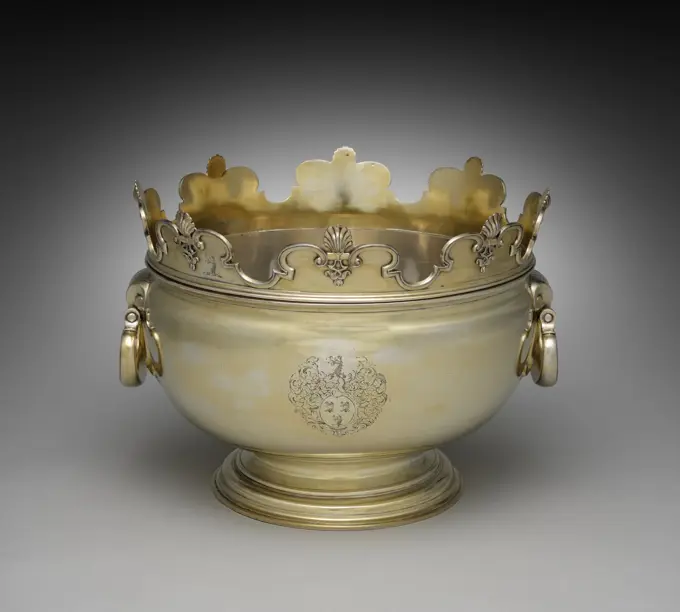
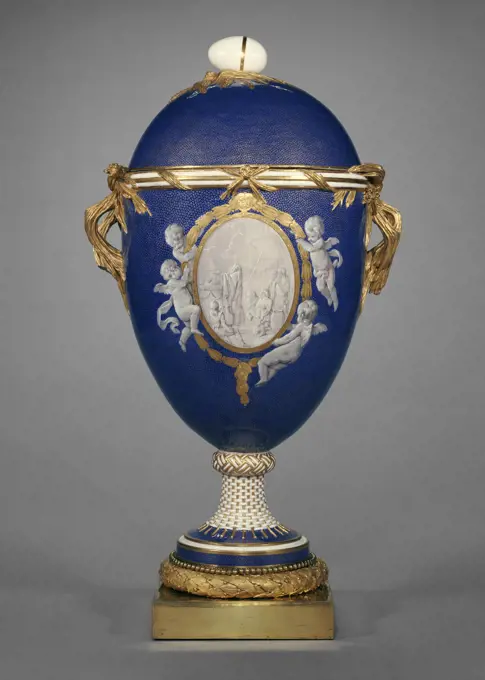
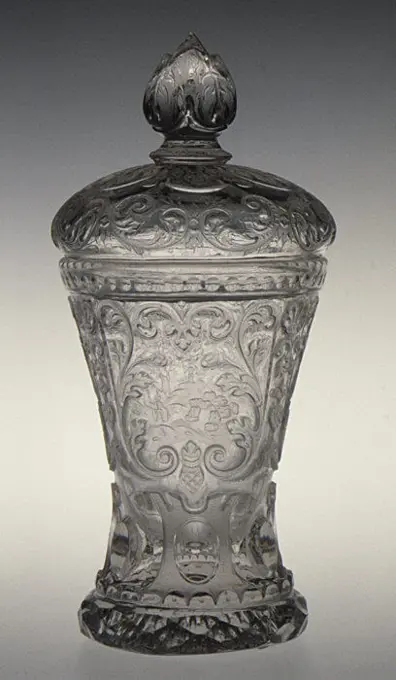
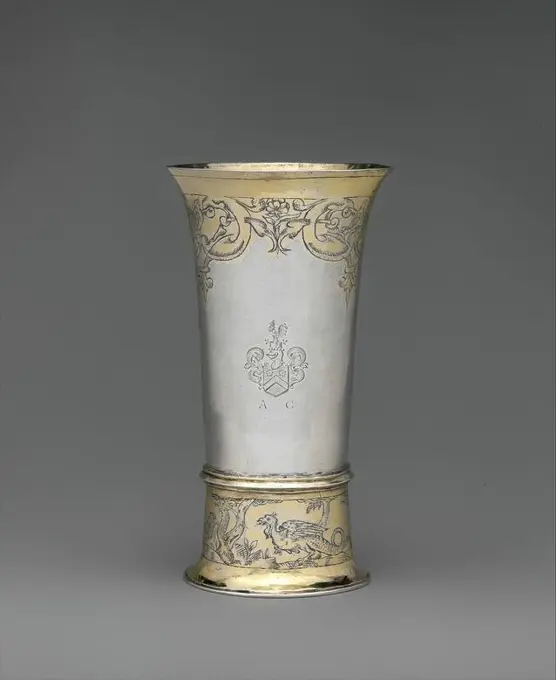
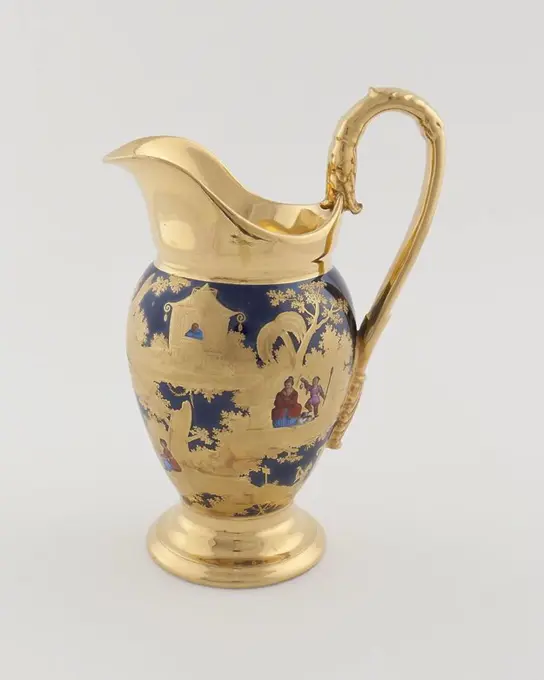
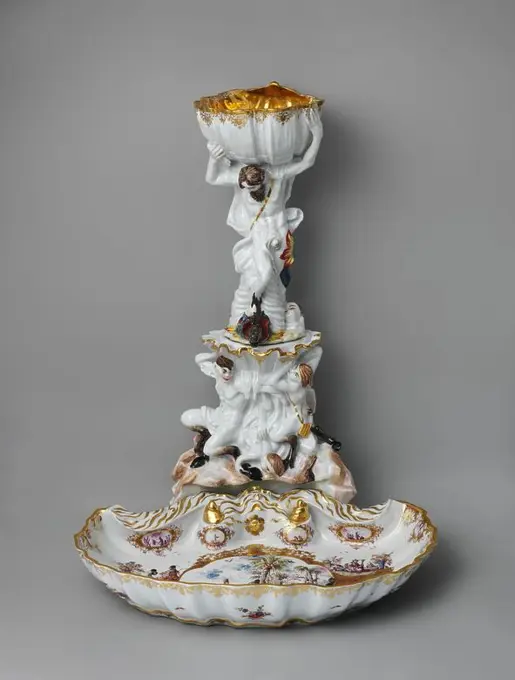
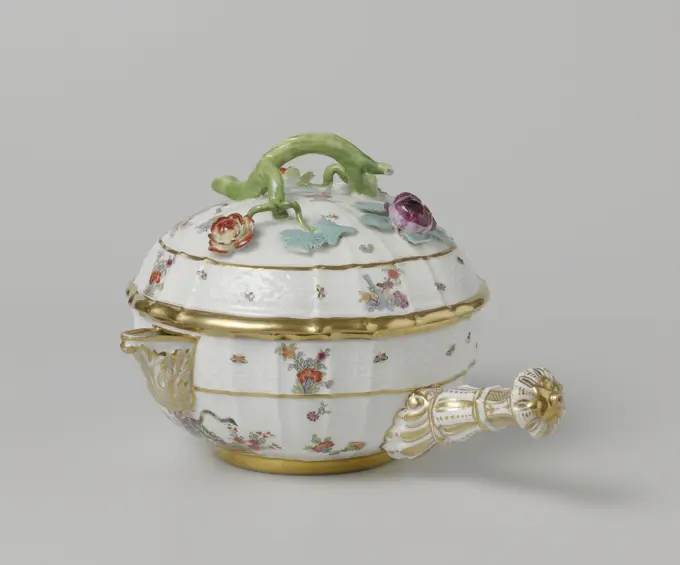
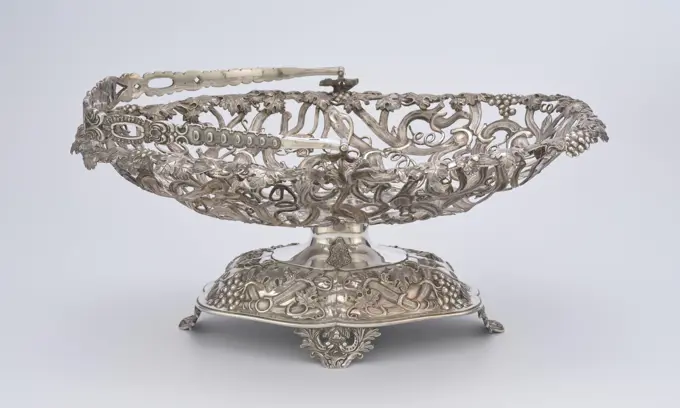
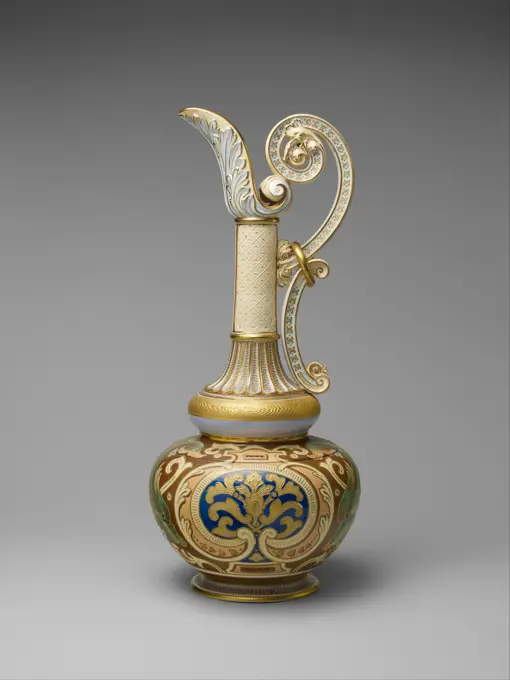
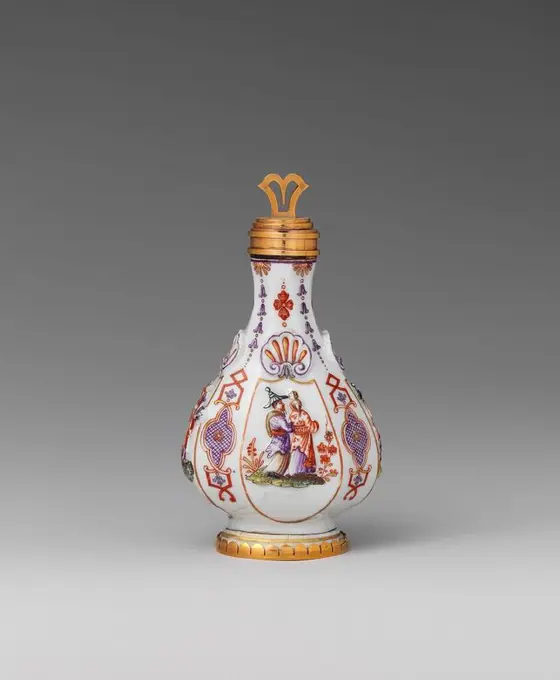
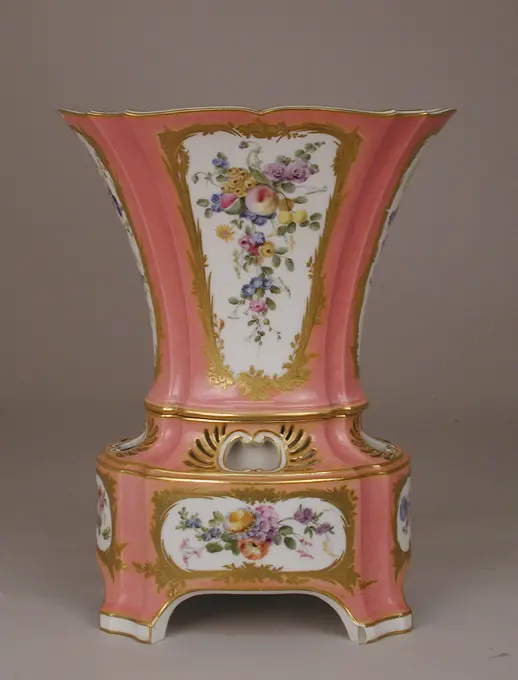
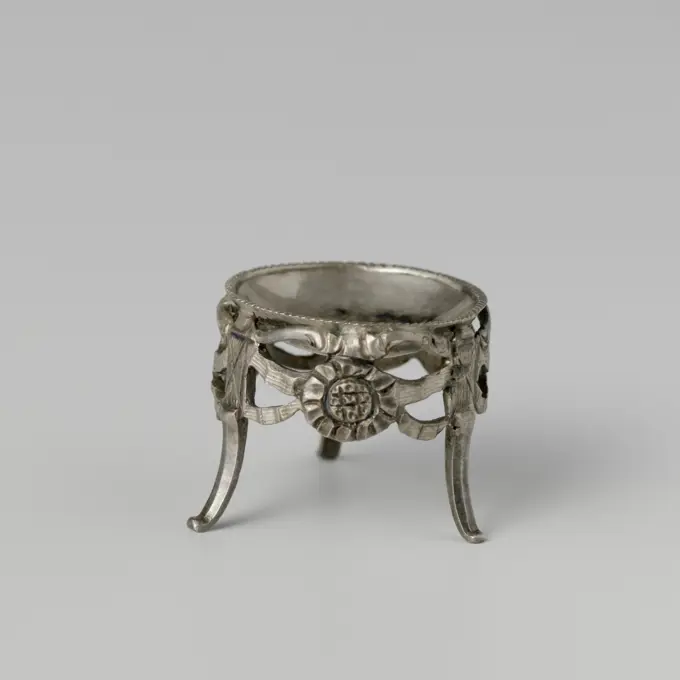
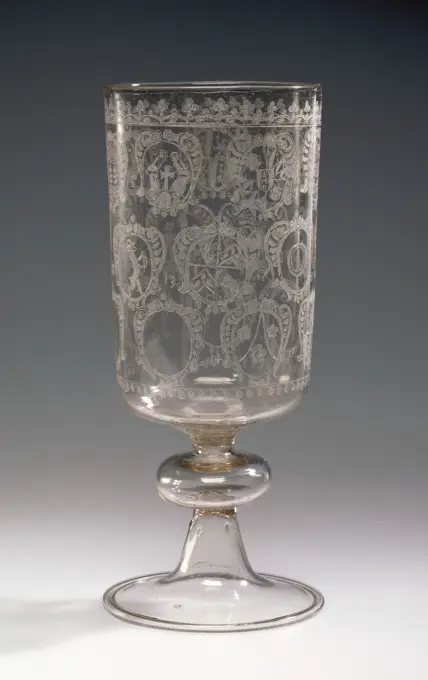
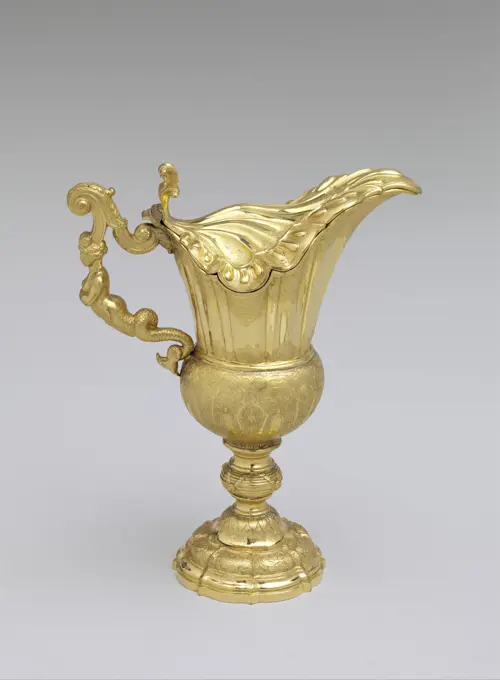
Ewer 19th century, after 1730-40 original After an original by Johann Ludwig Biller This electrotype is after an eighteenth-century original (1730-40) at the Winter Palace, St. Petersburg, at the time of reproduction. It belongs to a toilet service made for and presented to the Empress Anna Ivanovna.. Ewer 186510Covered Cup, 1688. Johann Andreas Thelot (German, 1655-1734). Silver and gilt silver; overall: 40 cm (15 3/4 in.). Thelot was one of the most important silversmiths active in Germany in the late 1600s and early 1700s. The decorations of this cup refer to the defeat of the Turks in Central Europe in the 1680s.. In 1782 the Russian crown prince -later Tsar Paul I -and his consort sojourned in Paris. They visited the porcelain factory in Sèvres, where King Louis XVI made them a generous gift of numerous pieces of porcelain. They themselves bough many items, including these two vases. The couple displayed them in their palace in Pavlovsk.Michiel de Ruyters goblet. A continuous scene represents the major episodes in the Dutch attack on the English naval base at Chatham. Two days after the fort at Sheerness had been captured on 20 June 1667, Dutch forces sailed up the Medway and destroyed the English fleet. The States of Holland rewarded Admiral Michiel de Ruyter with this lavish goblet. The lid bears the arms of Holland.Vase, painted with flowerguirles and lion heads, manufacture Oud-Loosdrecht, c. 1778 - c. 1782 Vase of porcelain, painted with multicolored flowerguirles. The lion heads in brown, red and black with gold ring in the mouth. Golden piping along various edges. Loosdrecht porcelain Vase of porcelain, painted with multicolored flowerguirles. The lion heads in brown, red and black with gold ring in the mouth. Golden piping along various edges. Loosdrecht porcelainTazza with cover 19th century, after 16th century original After an original by Benvenuto Cellini Italian This electrotype is after a sixteenth-century original in the Golitzin Collection, Moscow, at the time of reproduction.. Tazza with cover 186595Bowl with cover late 18th century possibly British. Bowl with cover. possibly British. late 18th century. Pewter. Metalwork-PewterIncense burner ca. 1675 T L British Scent was an important feature of grand European households in the seventeenth and eighteenth centuries. Foul-smelling air was associated with the spread of disease, so scented waters, fresh flowers, pot-pourris, and perfume burners were used to improve the atmosphere. A perfume burner like this one emitted the smoke of a pastille made from ingredients like rosewater, myrtle, and orange, which burned gently over a charcoal fire.. Incense burner 205007Vase with scenes of storm at sea. Culture: French, Paris. Dimensions: Overall (confirmed): 18 3/16 × 7 1/4 × 7 1/4 in. (46.2 × 18.4 × 18.4 cm). Manufacturer: Dihl et Guérhard (French, 1781-ca. 1824) (Manufacture de Monsieur Le Duc d'Angoulême, until 1789). Date: ca. 1790-95.These two vases were made at the time of the French Revolution, at a factory that was located in the heart of Revolutionary Paris. Decorated with landscapes depicting severe storms, the people in both landscapes are at the mercy of the wild forces of nature. These scenes, highly unusual for French porcelain, can be plausibly seen as reflections of the tumultuous period during which the vases were produced.Jeffrey H. Munger, 2014. Museum: Metropolitan Museum of Art, New York, USA.Inkwell with Zodiac Signs. Dimensions: H. 5 7/8 in. (14.9 cm)H. w/o lid: 3 5/8 in. (9.2 cm)Diam. 4 9/16 in. (11.6 cm). Date: early 13th century.One of the innovations of the Khurasani metalworkers is the development of animated inscriptions, in which parts of letters are transformed into animal or human figures. Here, the tall letters of the inscription on the lid are embellished with human heads. The use of animated inscriptions traveled westward, appearing on metalwork produced in western Iran, Iraq, and Syria, but was never adopted in other media. The body of the inkwell is decorated with the twelve signs of the zodiac. Museum: Metropolitan Museum of Art, New York, USA.Vase (one of a set of three). Culture: British, Chelsea. Dimensions: Height: 12 13/16 in. (32.5 cm). Factory: Chelsea Porcelain Manufactory (British, 1745-1784, Gold Anchor Period, 1759-69). Date: ca. 1761. Museum: Metropolitan Museum of Art, New York, USA.Sauce Tureen and Cover from the Hood Service 1807-1808 England. Sterling silver . Paul StorrCup of cup, anonymous, c. 1550 - c. 1575 Lid of rock crystal. The vaulted lid is crowned by an enamelled gold button. Malib gold (metal). Lid of rock crystal. The vaulted lid is crowned by an enamelled gold button. Malib gold (metal).Lidded vase, anonymous, c. 1670 - c. 1680 Pot of silver, with lid. Driven on both sides in high relief, Mars and Venus and the Sabinian virgin robbery respectively. On the lid a female figure and the Bacchuskind. A grape voucher as a button. England (possibly) silver (metal) Pot of silver, with lid. Driven on both sides in high relief, Mars and Venus and the Sabinian virgin robbery respectively. On the lid a female figure and the Bacchuskind. A grape voucher as a button. England (possibly) silver (metal)Beaker, Parcel-gilt silver, Flaring body with large vertically arranged stemmed flowers, repoussé and stippled. Scrolled band in Ohrmschel” style at top and bottom. Foot ring in lozenge pattern above flat foot, gilt as is the inside., Danzig (free city), Poland, 1650-75, metalwork, Decorative Arts, BeakerEwer -Inner box of a large (a) oval terrine in Louis XVI style, Philippus Priee, 1773 Inner box of a large (a) oval terrine, in Louis XVI style. Middelburg silver (metal) Inner box of a large (a) oval terrine, in Louis XVI style. Middelburg silver (metal)Sugar Bowl. Culture: American. Dimensions: Overall: H. 9 1/8 in. (23.2 cm); 14 oz. 2 dwt. (438 g)Lip: Diam. 4 1/4 in. (10.8 cm)Base: 2 7/8 x 2 7/8 in. (7.3 x 7.3 cm)Bowl: H. 5 3/4 in. (14.6 cm); 8 oz. 18 dwt. (276.4 g)Cover: 5 oz. 4 dwt. (161.6 g). Maker: Paul Revere Jr. (American, Boston, Massachusetts 1734-1818 Boston, Massachusetts). Date: ca. 1795.This matched set of covered sugar bowl and creamer is fashioned in the fluted Neoclassical style so popular with Revere's postwar clients. Urn-shaped sugar bowls, both plain and fluted, appear repeatedly in Revere's ledgers as "sugar urns" or "fluted sugar vases." The helmet-shaped creampot with high looped handle and square plinth also epitomizes Neoclassical taste. Each piece is engraved with bright-cut bands of tasseled swags and wavescroll ornament. According to family tradition, these objects were made as a gift for a Virginia bride. Museum: Metropolitan Museum of Art, New York, USA.Double cup ca. 1600 Hungarian Both parts of this double cup have tall lips that fit into one another. The cups can be stacked and displayed as a decorative object when not in use. The double-cup was a form produced only north of the Alps, and these ceremonial items served frequently as wedding gifts. The scrollwork and cherub ornament can be directly related to prints by Paulus Flindt (German, 1567-1611) His designs, published in Nuremberg and Vienna in various editions, were among the most influential decorative sources for European goldsmithing around 1600.LiteratureJudit H. Kolba. Hungarian Silver: The Nicolas M. Salgo Collection. London, 1996, p. 138, no. 116.ReferencesEva Toranová. Goldschmiedekunst in der Slowakei. Translated by Helene Katrinaková. Hanau, 1982, p. 96, no. 178.A similar double cup was sold at auction by Van Ham in Cologne, November 15, 2014, no. 1350.A cup with a similar vasiform stem was sold by Dr. Fischer Kunstauktionen in Heilbronn, May 12, 2012, no. 583.WolfAnonymous. Incense burner. Céladon, golden bronze, 1750. Paris, Cognacq-Jay museum. 78926-7 Anse, bronze gilded, burn-brurge, ceramic, ceramic, lid, gilding, flower, 18th 18th 18th 18th 18th 18th 18Standing cup. Culture: possibly Hungarian. Dimensions: Overall: 9 1/16 x 3 5/8 in. (23 x 9.2 cm). Date: early 17th century.Related vessels from Augsburg or Nuremberg date between 1580 and 1620. Standing cups like this one are often depicted in still-life paintings and in views of ceremonial buffets or stepped sideboards. These images underline the prestige of this type of drinking vessel, characterized by tapering sides, waisted domed foot, and a baluster stem. Many of these cups have lids, though there is no sign that this example ever had one. Having served a secular function, standing cups might quite often be later donated to Protestant churches to be used for the communion. A base metal weight has been added to this example to give it extra stability, perhaps an indication of its change of function.LiteratureEuropean Silver / Pices d'orfvrerie. Sale cat., Christie's, Geneva, November 18, 1981, p. 28, no. 61.Judit H. Kolba. Hungarian Silver: The Nicolas M. Salgo ColCandelabrum. Made by Matthew Boulton; English, 1728-1809; and John Fothergill; English, 1728-1782; Probably designed by Sir William Chambers; English, born Sweden, 1723-1796; Birmingham, England. Date: 1765-1775. Dimensions: 49.5 × 66 cm (19 1/2 × 26 in.). Derbyshire fluorspar and gilt bronze with tortoiseshell veneered wood. Origin: Birmingham. Museum: The Chicago Art Institute, Chicago, USA.Double-spouted vase with cover ca. 1870-90 After a design by Reinhold Vasters German Although not a literal copy of an Italian Mannerist object, the vase is strongly reminiscent of Milanese lapidary work of the late sixteenth century. It was, in fact, included in the 1893 Paris sale of the collection of Frédéric Spitzer as an Italian work of the sixteenth century, but Vasters's drawings of the vase unquestionably identify it as a work of the nineteenth century.. Double-spouted vase with cover 192701Chalice of Peter of Sassoferrato. Culture: Italian. Dimensions: Overall: 8 7/16 x 5 7/8 in. (21.7 x 14.9 cm)Base: 5 7/8in. (14.9cm). Date: ca. 1341-42.This opulent chalice, with richly colored and exquisitely drawn enamels, represents the Crucifixion, the Virgin, and Saints John the Evangelist, Louis of Toulouse, John the Baptist, and Anthony of Padua (). Seraphim decorate the spandrels and collar above. On the knop are Saints Michael, Francis, Mary Magdalene (), Catherine of Alexandria (), and Elizabeth of Hungary (). The inscription refers to the donor, Brother Peter of the Penitentiary, and the town of Sassoferrato in Umbria (Marche) and warns that the chalice should not be sold or destroyed. Brother Peter was appointed to the Sacred Order of the Penitentiary by Pope Benedict XII in December 1341. The cup is a replacement, perhaps of the fifteenth century. Museum: Metropolitan Museum of Art, New York, USA.Vase 1765-1775 Burslem. Earthenware (surface agateware) . Wedgwood Manufactory (Manufacturer)Urn and cover, c. 1815. Flight, Barr and Barr (British). Artificial porcelain; overall: 18.6 x 11.4 cm (7 5/16 x 4 1/2 in.).Censer, 18th century, 8 1/2 x 6 1/4 x 6 1/4in. (21.6 x 15.9 x 15.9cm), Cloisonné enamel, China, 18th centuryPilgrim flask. Culture: German, Leipzig. Dimensions: Overall (confirmed, wt. not confirmed): 16 5/16 x 8 3/8 x 5 1/4 in., 3.9lb. (41.4 x 21.3 x 13.3 cm, 1.75kg). Maker: I.P.S.. Date: ca. 1680-1700. Museum: Metropolitan Museum of Art, New York, USA.Vase on high trunk and belly in the form of flattened bulb. Decorated with four lions and shields and ornaments .. vase of stoneware. With wide foot edge and high trunk. The belly has the shape of a strongly flattened bulb. On the lid 4 lions with shields. The vase is decorated with stamped ornaments. On the belly also printed ornaments such as medallions and lion masks.Coupe of red -brown spotted chalcedone with foot of gold, anonymous, 1640 - 1660 Coupe, the vessel of red-brown-spotted chalcedone is worn by a Hercules figure, as well as the three-lobe vaulted foot of gold. On the foot multicolic flowers in translucid email; Under the barrel an enamelled flower in white and blue. Eastern Europe chalcedony. gold (metal). Coupe, the vessel of red-brown-spotted chalcedone is worn by a Hercules figure, as well as the three-lobe vaulted foot of gold. On the foot multicolic flowers in translucid email; Under the barrel an enamelled flower in white and blue. Eastern Europe chalcedony. gold (metal).Sugar Bowl. Culture: American. Dimensions: H. 5 3/4 in. (14.6 cm). Date: 1825-40. Museum: Metropolitan Museum of Art, New York, USA.Wine Glass and Cover 1700-1725 Bohemia. Glass with engraved gold leaf decoration .Ewer. Culture: French, Nevers. Dimensions: Height: 12 3/4 in. (32.4 cm). Date: ca. 1650-80.The decoration of birds and flowers on this ewer is inspired by Turkish pottery. Museum: Metropolitan Museum of Art, New York, USA.Box with cover 1777 Ignatz Krautauer. Box with cover 232200Footed beaker second half 16th century Attributed to Paulus Brölfft In terms of silver content, one of these beakers (see also 2010.110.72) was considered equal to ten of the Show-Thaler coins, though their overall value is amplified by ornament and craftsmanship. Transylvania, a Hungarian province, supplied much of Europes silver and gold at the time. Alchemists regarded silver as the moons metal, imbued with magic powers. It was also the currency of cash, in particular the Thaler: a coin minted throughout sixteenth-century Europe. In an era marked by constant threat of war, precious silver vessels were literally worth their weight in currency—easily melted down in times of need.[Elizabeth Cleland, 2017. Footed beaker 236986Cock of Bokaal, with three stacked wine barrels and the inscription: welvaaren.van.de.wyn.coopery, anonymous, c. 1725 - c. 1750 The lid also engraved. glassblower: GermanyNorthern Netherlands glass glassblowing The lid also engraved. glassblower: GermanyNorthern Netherlands glass glassblowing. Sugarbox of painted porcelain. The container has a high foot and is painted with Höroltt chinoiseries and port faces. The bin is noticed.Assembled Set of Five Vases; Decoration attributed to Johann Gregor Höroldt (German, 1696 - 1775), Meissen Porcelain Manufactory (German, active 1710 - present); Meissen, Germany; about 1730; Hard-paste porcelain, polychrome enamel decoration and gilding;Ewer, Pewter, Shaped octagonal foot (probably used with another vessel originally); body in two parts, the lower bowl-shaped, the upper flaring and having a shell and scroll relief around the irregular edge. Double-scrolled foliated handle., Germany, 18th-19th century, metalwork, Decorative Arts, EwerTureen with cover and liner. Culture: French, Paris. Dimensions: Overall: 12 1/4 × 15 1/2 × 9 7/8 in. (31.1 × 39.4 × 25.1 cm). Maker: Jacques-Nicolas Roettiers (1736-1788, master 1765, retired 1777). Date: 1775-76.This tureen is very similar to those in the Orloff service, and it is marked by the silversmith responsible for many pieces in that celebrated set, Jacques-Nicolas Roettiers (see also 48.187.386, .387). He was the son of a prominent silversmith, Jacques Roettiers (1707-1784), and he became one of the most accomplished practitioners of the Neoclassical style in silver. Roettiers's skill as a silversmith is evident in this tureen, which employs bold Neoclassical motifs such as rosettes, acanthus leaves, guilloche molding, and volute feet that are all integrated into a harmonious and elegant composition. The detail and crispness of the motifs are notable, and the finial is a masterful three-dimensional essay in the Neoclassical taste.The quality of the object is evident not onone Cafe, William (Fl. 1757-Ca 1802); 1763/64 (1763-00-00-1764-00-00);Liberty cup and saucer. Culture: American. Dimensions: Cup: H. 4 9/16 in. (11.6 cm); Diam. 4 9/16 in. (11.6 cm)Saucer: Diam. 6 7/8 in. (17.5 cm). Maker: Union Porcelain Works (1863-ca. 1922). Date: 1876. Museum: Metropolitan Museum of Art, New York, USA.Urn, late 1700s - 1800s. England, late 18th or 19th century. Earthenware; overall: 20.7 cm (8 1/8 in.).Westward Ho!/Pioneer pattern covered footed compote c 1876 Philadelphia. Glass . Gillinder and Sons (Manufacturer)Sugar Bowl. Denuelle Porcelain Manufactory (French, 1818-1829); France, Paris. Date: 1815-1825. Dimensions: H. 17 cm (6 11/16 in.). Hard-paste porcelain, polychrome enamels, and gilding. Origin: Paris. Museum: The Chicago Art Institute, Chicago, USA.Cup with cover late 15th or early 16th century Italian, Venice. Cup with cover 193540Candlestick Base late 13th-14th century. Candlestick Base 444596Perfume Sprinkler 18th century Perfume sprinklers such as these were filled with rosewater and sprinkled to scent a space during festive occasions. The lotus and other flowers in colorful enamel decoration reference the sweet smells found inside this elaborate bottle.. Perfume Sprinkler 452776. Can be made from stoneware with a spout and pewter lid. A maskon under the spout. On the right-walled center piece The bubbles of seven paralysis on their coats of arms and the year 1602.Pair of candlesticks third quarter 16th century Southern German. Pair of candlesticks 192695Lid and cobal of Zwischengoldglas, Anonymous, c. 1720 - c. 1740 Facetted lid, the button made up of a faceted nodus and cone. The medallion in the soil repeats itself in the lid. Kit edges around the medallion in the lid. Bohemia glass glassblowing / grinding / lacquering Facetted lid, the button made up of a faceted nodus and cone. The medallion in the soil repeats itself in the lid. Kit edges around the medallion in the lid. Bohemia glass glassblowing / grinding / lacqueringCovered Compote in the Pioneer Pattern. Gillinder and Sons, 1861-c. 1930; Philadelphia or Greenbsburg, Pennsylvania. Date: 1865-1875. Dimensions: 38.1 × 20.3 cm (14 1/4 × 8 in.). Glass. Origin: United States. Museum: The Chicago Art Institute, Chicago, USA. Author: Gillander and Sons Glass Works.Ewer, anonymous, c. 1725 - c. 1740 Egg -shaped vase of porcelain, covered with a crawl, gray glaze. The vase is caught in a later gilded bronze frame (ca. 1755-60) with leaf vines and flowers (Acanthus, Iris), making it possible to use the vase as a jug. Monochrome. Parismaker: China Porcelain. Glaze. frame: Bronze (metal). frame: Gold (Metal) painting / gilding / vitrification Egg -shaped vase of porcelain, covered with a crawl, gray glaze. The vase is caught in a later gilded bronze frame (ca. 1755-60) with leaf vines and flowers (Acanthus, Iris), making it possible to use the vase as a jug. Monochrome. Parismaker: China Porcelain. Glaze. frame: Bronze (metal). frame: Gold (Metal) painting / gilding / vitrificationFruit plane; Koenigliche Porcellain Fabrique, Meissen (1710-1763); after. XVIII (1745-00-00-1755-00-00);Maker Unknown, Decanter and Stopper, 1775-99, mold blown glass.. The turban shell is a marine snail found in the Pacific Ocean. The mythological god of the sea, Neptune, carries the snails shell on his shoulders. Surmounting the lid, a fierce triton with dripping hair and beard rises from the waves to defend himself against an invisible enemy.. The round, baluster shaped can rest on three legs. He has three faucets, two ears and a loose lid. The cast, curved legs end up at the bottom with convex ribs decorated volutes and split from above, where they can struted, in two volutes, the aimed forward and the other backwards. The legs are each decorated with two fields of consecutive grooves, between which a smooth bond on a punched soil. The forward-facing voluntarily on the top is decorated with leaf motifs. Around the convex belly a wide edge of alternating narrow Godruns and award-winning ribs on a punched ground. The edge is interrupted in three places through a cast, imposed by leaves surrounded men's head, which holds a tap in the mouth. Each crane consists of a round portion, a cube-shaped widening decorated with rosettes, and an octagonal, curved front piece, when turned on and at the opening surrounded by a profile. In widening, the tap fits with a cast grip in the form of a shell blowing maker, and a drop-shaped closuChrysanthemum Tea SetSugar Bowl and Cover. Boston and Sandwich Glass Factory (United States, Massachusetts, Sandwich, 1825-1888). United States, early 1830s. Furnishings; Serviceware. GlassTureen with cover. Culture: French, Paris. Dimensions: Overall: 10 1/4 × 9 1/8 × 15 3/8 in. (26 × 23.2 × 39.1 cm). Maker: Edme-Pierre Balzac (1705-ca. 1786, master 1739, recorded 1781). Date: 1757-59.This tureen belongs to a celebrated silver service that has a long and complex history. Its many components were produced over several decades, and despite the very high quality of all the silver in the service there are no stylistic features that tie the assemblage together. The early history of the service remains obscure; however, it has been suggested recently that a portion may have been purchased by the Saxon court minister Count Heinrich von Brühl (1700-1763), well known for commissioning the so-called Swan porcelain service from the Meissen factory. As the present service was eventually acquired by Louis-Jean-Marie de Bourbon, duc de Penthièvre, and inherited by his grandson Louis-Philippe, duc d'Orléans (1773-1850), who was king of the French from 1830 to 1848, it has become knowVase, painted with chinoiseries on a black stock, Meissener Porzellan Manufaktur, c. 1710 - c. 1715 Balus-shaped vase of red Böttger-SteenGoed. The vase has a constricted, profiled foot and a short neck. The lid is a copy in wood. The original lid is missing. The vase, with the exception of the inside, is covered with black glaze, on which in multicolored cold lacquer and gold images are painted: on one side Chinese figures sitting on chairs on a table, on the other side a fence for which a handle basket with flowers . On the sides a tree with Chinese figures and a dog and a plant, bowl, vase and crane. A golden band with hanging lace-like ornaments runs between the foot and the body, between the shoulder and the neck and on the flat foot edge. The constricted part of the foot is completely gilded. A few small restorations at the foot and the mouth edge. The painting is rather damaged. Float stoneware lacquering Balus-shaped vase of red Böttger-SteenGoed. The vase has a constricted, prancient oriental metal teapot on dark background. antique bronze tableware. ancient metal utensilsPair of vases with covers ca. 1830-50 French. Pair of vases with covers 189669 French, Pair of vases with covers, ca. 183050, Painted composition, .1 ab) 13 1/2 x 12 1/2 x 7 in. (34.3 x 31.8 x 17.8 cm); .2 ab) 13 1/4 x 12 3/4 x 7 in. (33.7 x 32.4 x 17.8 cm). The Metropolitan Museum of Art, New York. Gift of J. Pierpont Morgan, 1906 (07.225.410.1a, b, .2a, b)Custard Pot with Cover c 1790-1795 China. Porcelain .Bin of Kastanjevaas decorated with griffins. Bake from Kastanjevaas whose ears has the form of griffins.Gauntlet Sword (Pata) with Scabbard 18th-19th century hilt, Indian; blade, European. Gauntlet Sword (Pata) with Scabbard. hilt, Indian; blade, European. 18th-19th century. Steel, gold, silver, textile (velvet). SwordsGreat jug 19th century, after 1604-5 original Elkington & Co. British This electrotype is after a seventeenth-century original (1604/5) in the treasury of the Kremlin, Moscow. It was formerly in the collections of James I and Charles I, sold in 1626, acquired by Tsar Mikhail Romanov in 1629.. Great jug 186654Urn, late 1700s - 1800s. England, late 18th or 19th century. Earthenware; overall: 15 cm (5 7/8 in.).Footed dish, anonymous, c. 1650 Tien -lobe, deep scale of rock crystal with black enamelled, golden foot. The bowl is decorated with tendrils, fruit-trusses and birds in grinding work. Two S-shaped crystal ears. Malib gold (metal). Tien -lobe, deep scale of rock crystal with black enamelled, golden foot. The bowl is decorated with tendrils, fruit-trusses and birds in grinding work. Two S-shaped crystal ears. Malib gold (metal).Monteith Bowl, 1715-16. Benjamin Pyne (English, active 1693-1727). Silver gilt; diameter: 32.9 cm (12 15/16 in.); overall: 26.9 x 37.5 cm (10 9/16 x 14 3/4 in.). This bowls notched rim allows for glasses to be suspended in water for cooling and cleansing between courses during a long dinner. The rim can be removed and the bowl used for punch as well. A year before Benjamin Pyne began this bowl, he was appointed Subordinate Goldsmith to the King in preparation for George Is coronation (r. 1714-1727). Like much of his work, this Monteith bowl is characterized by its scale and simplicity.Lidded vase (with reserve scene of a male figure); Painting attributed to Jean-Baptiste-Etienne Genest (French, active 1752 - 1789), Sèvres Manufactory (French, 1756 - present); Sèvres, France; 1768 - 1769; Soft-paste porcelain, bleu Fallot ground color, grisaille enamel decoration, and gilding; gilt-bronze mounts; 45.1 x 24.1 x 19.1 cm (17 3,4 x 9 1,2 x 7 1,2 in.)Beaker with cover early 18th century Workshop of Friedrich Winter. Beaker with cover 195829Mount; L x W x D: 11 x 10 x 3.6 cm (4 5/16 x 3 15/16 x 1 7/16 in.)Footed beaker. Culture: Hungarian, Brass. Dimensions: Overall: 5 3/16 x 2 7/8 in. (13.2 x 7.3 cm). Maker: Johannes (Hans) Retsch , Sr. (master 1608, died 1645). Date: first half 17th century.Telling stories populated with mythological creatures--like those engraved on the base of this beaker--was a favorite pastime at social gatherings. Parts of Transylvania, the home of Wallachian Prince Vlad III the Impaler (1431-1476/77), the inspiration for Bram Stocker's Count Dracula, were allegedly inhabited by dragons and other highly dangerous creatures, among them wyverns and liver-eating eagles thought to hide and hunt among the precipices of the Balkan and Carpathian mountains.LiteratureTihamr Gyrfs. A brassai tvssg trtnete. Brass, 1912, p. 103, no. 149.Important English and Continental Silver and Objects of Vertu. Sale cat., Christie's, London, October 22, 1986, p. 29, no. 104.Judit H. Kolba. Hungarian Silver: The Nicolas M. Salgo Collection. London, 199Vase based on; Kinkôzan, Sôbei VII (1867-1927); 19th/20th century (1801-00-00-1900-00-00);Milk Jug. Denuelle Porcelain Manufactory (French, 1818-1829); France, Paris. Date: 1815-1825. Dimensions: H. 20 cm (7 7/8 in.). Hard-paste porcelain, polychrome enamels, and gilding. Origin: Paris. Museum: The Chicago Art Institute, Chicago, USA.Urn with cover mid-19th century probably Continental European. Urn with cover. probably Continental European. mid-19th century. Glass. GlassTable fountain. Culture: German, Meissen. Dimensions: Overall (assembled confirmed): 24 1/2 x 18 1/8 x 16 1/2 in. (62.2 x 46 x 41.9 cm); Other (54.147.65 a (fountain)): 13 1/4in. (33.7cm); Other (54.147.65 b (plinth)): 11 5/16 x 10in. (28.7 x 25.4cm); Other (basin confirmed): 3 1/8 x 18 3/8 x 13 5/8 in. (7.9 x 46.7 x 34.6 cm). Factory: Meissen Manufactory (German, 1710-present). Modeler: Johann Gottlieb Kirchner (German, Merseburg 1706-after 1738 Berlin, active at Meissen 1727-28 and 1731-33). Date: ca. 1727-32. Museum: Metropolitan Museum of Art, New York, USA.Terrine with lid and handle, multi-colored painted with a kakiemon decor, Meissener Porzellan Manufaktur, c. 1740 - c. 1745 Half -spherical terrine of painted porcelain. The terrine has a SNEB and a profiled handle. The semi -full lid has a button in the shape of a branch with leaves and flowers in relief. The terrine and the lid are ribbed and painted with a tiger around a bamboo stalk, sprinkled Indianic blums, butterflies and branches with birds. The edges are decorated with the 'Altbrandenstein' pattern. Float porcelain Half -spherical terrine of painted porcelain. The terrine has a SNEB and a profiled handle. The semi -full lid has a button in the shape of a branch with leaves and flowers in relief. The terrine and the lid are ribbed and painted with a tiger around a bamboo stalk, sprinkled Indianic blums, butterflies and branches with birds. The edges are decorated with the 'Altbrandenstein' pattern. Float porcelainFruit basket; Malcz, Karol (1797-1867), Silver Products Factory K.F. Malcza (Warsaw; Sreber label; 1828-1864); 1853 (1850-00-00-1855-00-00);Ewer 1886-90 Faience Manufacturing Company American At 22 inches high, this ewer is one of the five largest known vessels produced by the Faience Manufacturing Company, and this example displays one of at least four different motifs associated with this form. Rising from a bulbous double-gourd-form body, stacked elements that display classicizing ornament emphasize the ewer's elongated form. Opposing foliate scrolls, joined by an illusionistic gilt ceramic ring, form the dramatic handle. Meticulously painted polychromatic dolphins amid foliate scrolls and arabesques embellish the body.. Ewer 17794Caudle Cup. Manufacturing former loose ruderecht, c. 1774-1778Hard-Paste PorcelainPerfume burner (one of a pair) probably ca. 1770 Matthew Boulton British Called "sphinx" vases, the sphinx supports were probably based on a design by Sir William Chambers (1723-1796), architect to George III, who supplied Boulton with several models for gilt bronze in 1770.. Perfume burner (one of a pair) 204014Incense burner, Silvered brass, Platform resting on four ball feet; incurving corners with leaf ornaments. Gallery which is set back of flange on platform is pierced in leaf design with solid panels at corners. On the platform are two square blocks each supporting a round column with lion masks and removable covers. Between the columns and attached to them is a globe; the lower half soiled and decorated with overlapping leaves; the upper half hinged to form a cover, has pierced pattern of circles and leaves and the portrait of a man., Mexico, 1823, metalwork, Decorative Arts, Incense burnerScent bottle. Culture: Austrian, Vienna. Dimensions: Height: 3 3/8 in. (8.6 cm). Factory: Vienna. Factory director: Du Paquier period (1718-1744). Date: ca. 1730.Medieval travelers used leather pilgrim flasks to transport water. The form was appropriated in later centuries for large, opulent examples made in silver or glass. Employed on small scale, it was an appropriate choice for a luxury object intended to hold an expensive fragrance. This example is embellished with low-relief decoration, including shells and chinoiserie figures, and ornamental strapwork. Museum: Metropolitan Museum of Art, New York, USA.Carousel goblet. Bowl with lid of green glass, a so-called carouselbokaal. Muchic painted with email paint with weapons of emergency families from Germany and the Empire Austria-Hungary. Under the coats of arms the following inscriptions: Albrecht Erzherzogvon Oestreich; Fürstin Auersperg Colloredo; Ludwig victor erzherzog von oestreich; Grävinbuquoy von Oetingen Wallerstein; Wilhelm Erzherzog von Oestreich; Prinzessin Hohenlohe Trautmansdorff; Leopold Erzherzog von Oestreich; Baronin Stauffenberg Lobkowitz; Fürst Kinsky; Grävin Claudine Hohenstein; Fürst vincenz auersperg; Gräfin Claudine Hohenstein; Fürst vincenz auersperg; Gräfin Amalie Hohenstein; Prinz Lamoral Thurn Und Taxis; Fürstin Eleonore Schwarzenberg Liechtenstein. At the foot the inscription: Carroussel 1863. Ritter Pare.Sauce Tureen and Cover from the Hood Service 1807-1808 England. Sterling silver . Paul StorrEcuelle and lid, H. H. Isenheim, Pewter, Bowl with ornamental scroll handles. Cover has three medallions inscribed., Strasbourg, France, 19th century, metalwork, Decorative Arts, Ecuelle and lidVase 19th century Haviland & Co. American and French. Vase. French, Limoges. 19th century. Pottery. Haviland & Co. (American and French, 1864-1931). Ceramics-PotteryTeapot 1832-1835 Sèvres. Hard-paste porcelain with polychrome enamels and gilding . Manufacture nationale de SèvresJug (one of a pair) ca. 1680-90 Fehr. Jug (one of a pair). German, Frankfurt. ca. 1680-90. Tin-glazed earthenware; gilt-brass mount. Ceramics-PotterySamovar;  19th century (1801-00-00-1900-00-00);Cake basket 1765-66 William Plummer. Cake basket. British, London. 1765-66. Silver. Metalwork-SilverMass cup noroma;  approx. 1300 (1296-00-00-1305-00-00);Sławnikowice (parish church), Zgorzelec (Kaiser Friedrich Museum) - collections, Romanism, church equipment in SławnikowiceVase (vase hollandois nouveau ovale) (one of a pair) (part of a set) 1763 Sèvres Manufactory French This model of vase is made in two parts. The flared upper section would have contained earth for growing plants; the lower section held water. Small holes in the base of the upper section allowed the water to be absorbed. These two vases formed a garniture with the slightly earlier vase, "vase Boileau" (50.211.158a, b), and were owned by Prince Henry of Prussia.. Vase (vase hollandois nouveau ovale) (one of a pair) (part of a set). French, Sèvres. 1763. Soft-paste porcelain. Ceramics-PorcelainZoutvat, anonymous, c. 1775 - c. 1800 Salt barrel on three legs bent out. Between the legs is an openwork edge consisting of flowers and ribbons. The salt barrel is not marked. An identical salt vessel belongs to the salt barrel. Amsterdam silver (metal) Salt barrel on three legs bent out. Between the legs is an openwork edge consisting of flowers and ribbons. The salt barrel is not marked. An identical salt vessel belongs to the salt barrel. Amsterdam silver (metal)Goblet with the Arms of Bregenz and of Local Patricians. UnknownCovered Incense Burner China. Covered Incense Burner. China. Cloisonné enamel on copper. Qing dynasty (1644-1911), Kangxi period (1662-1722). CloisonnéOttavio Miseroni; Michel Debourg; Workshop of the Miseroni / 'Jade vessel in the form of a mask on four dolphins'. 1684 - 1687. Silver-gilt, Nephrite. Museum: Museo del Prado, Madrid, España.Vase. Kinkôzan, Sôbei VII (1867-1927), ceramist