Historical Decorative Trims

Intricate trims and decorative elements made from silk and metal, featuring designs of oak leaves, acorns, and other ornamental patterns from various historical periods.
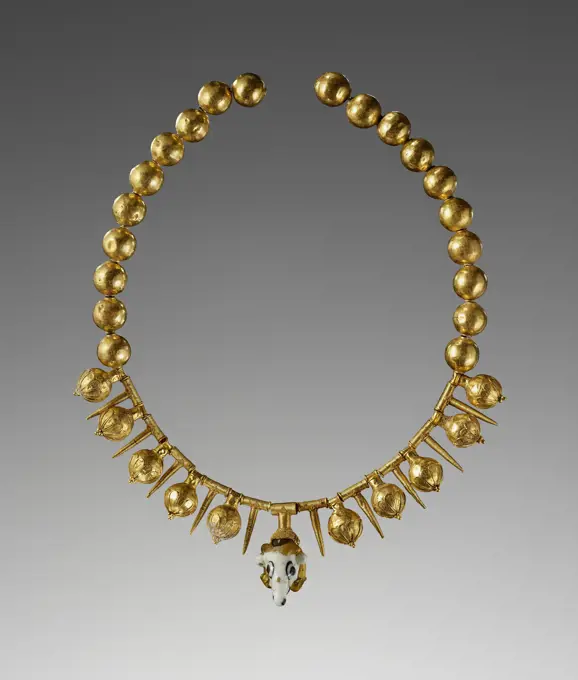
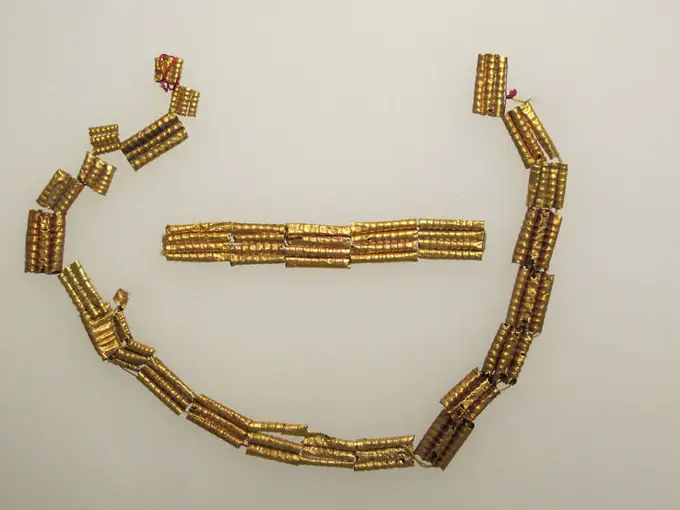
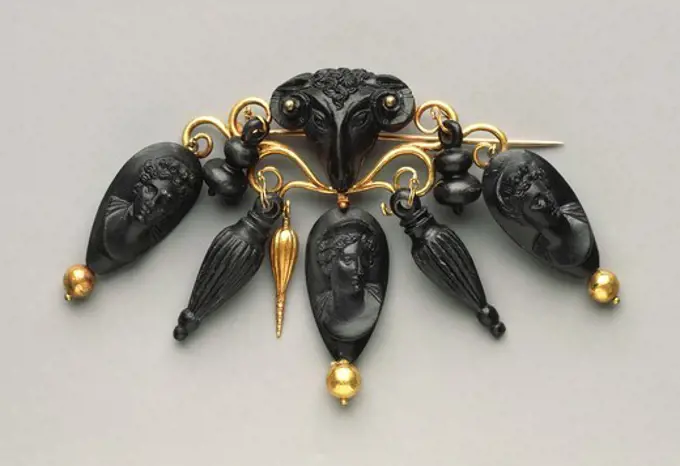
Necklace with a Pendant Featuring a Head of a Ram; Etruria; 525 - 500 B.C; Gold and glass; 29 × 2.5 × 2.5 cm (11 7,16 × 1 × 1 in.)
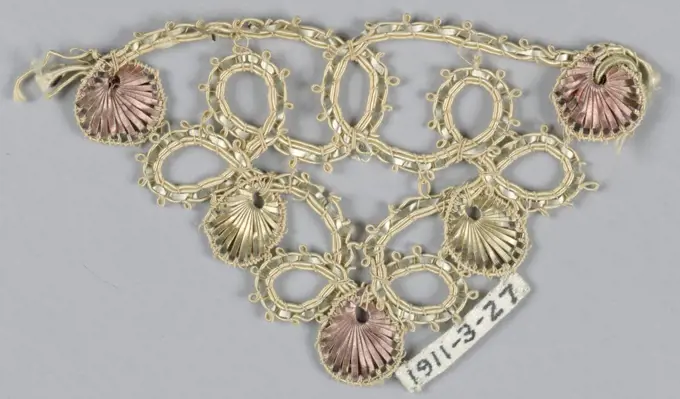
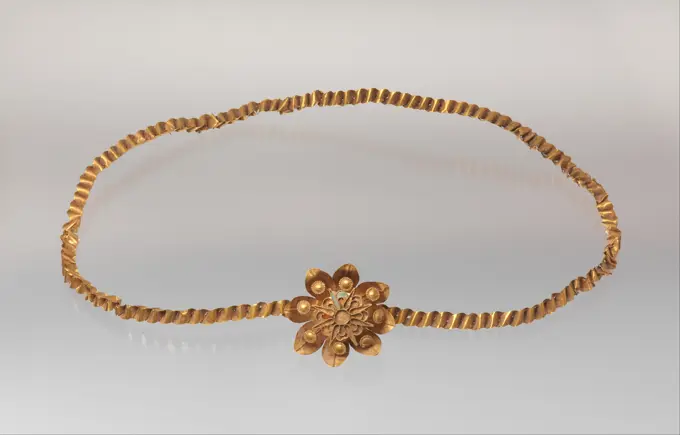
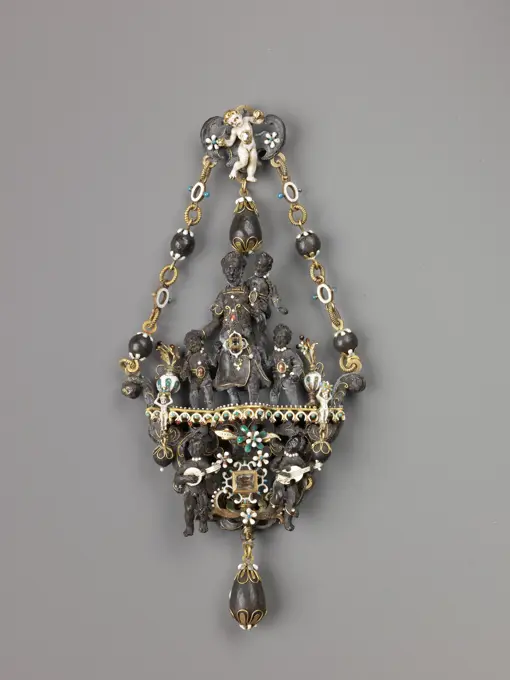
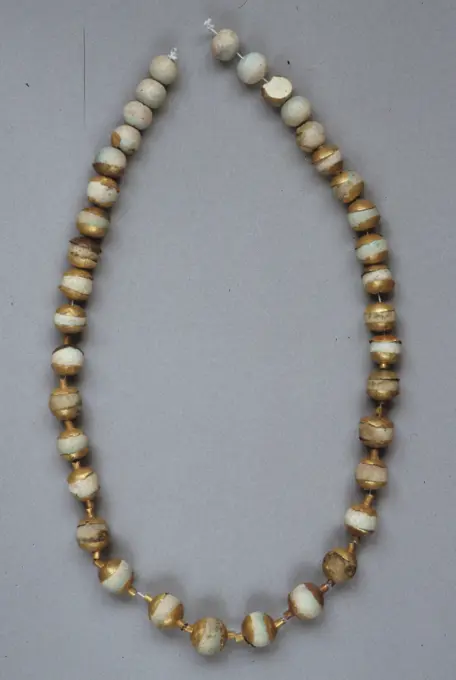
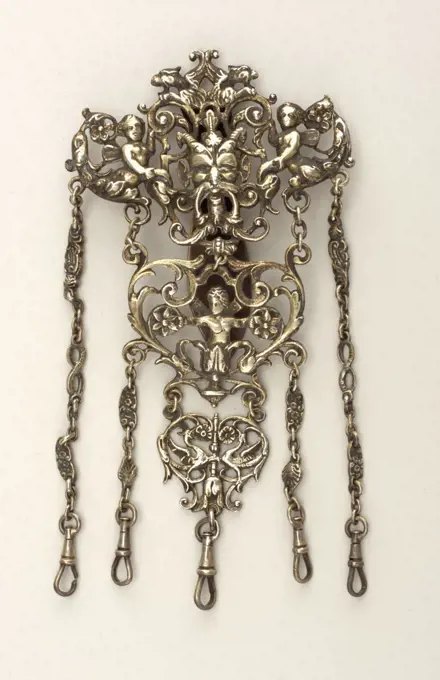
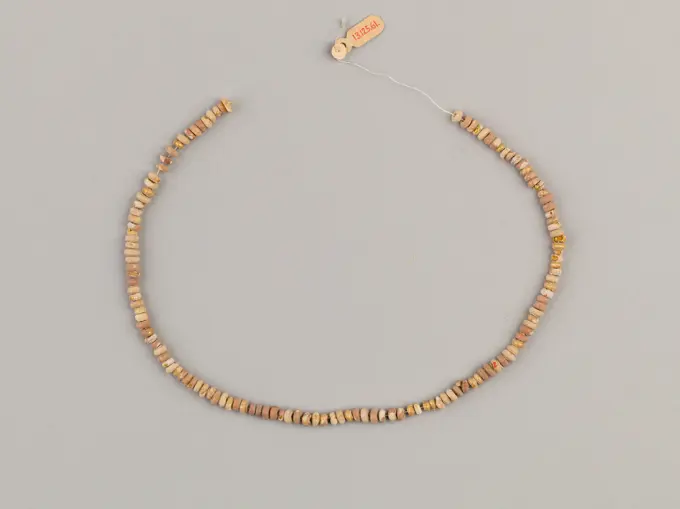
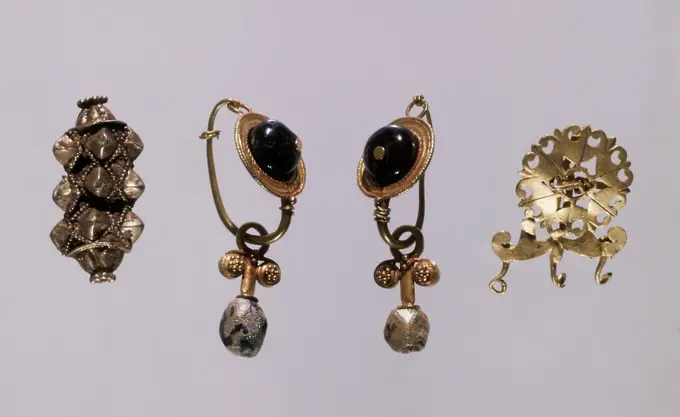
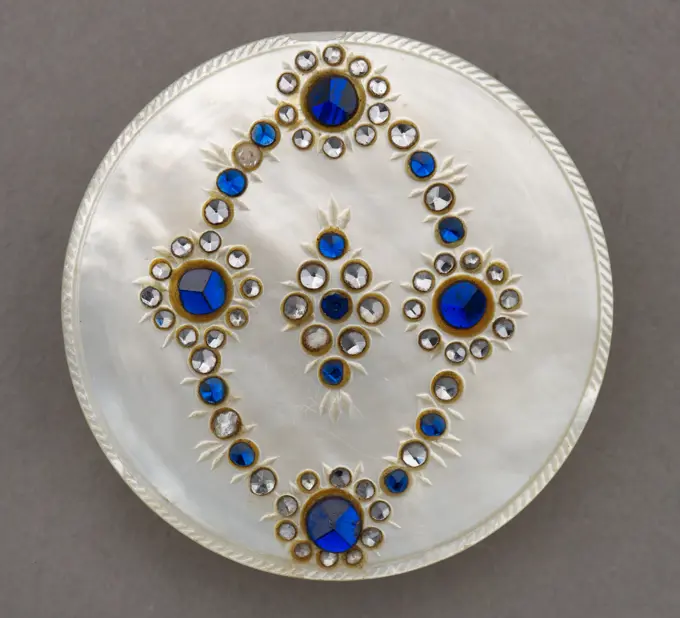
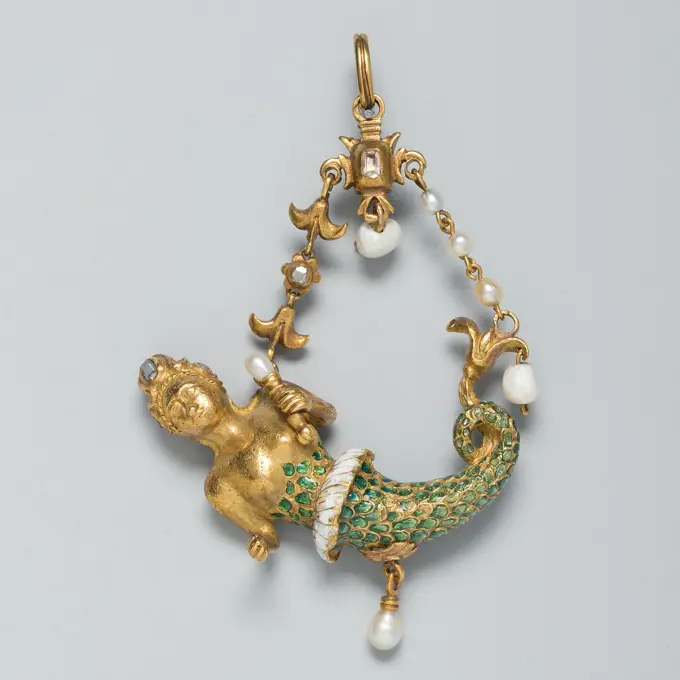
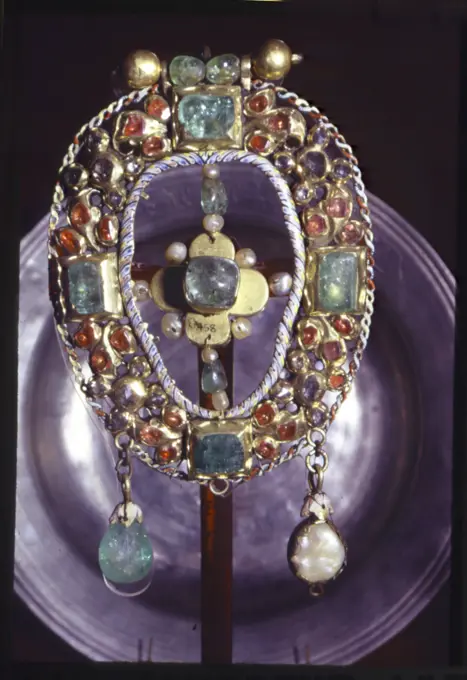
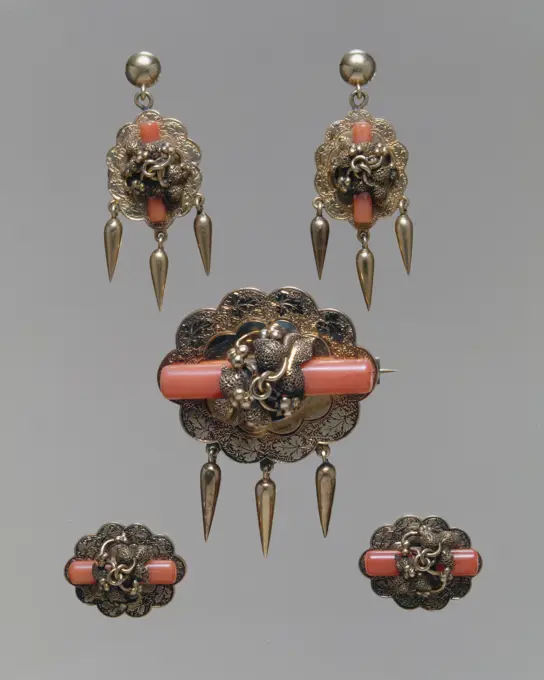
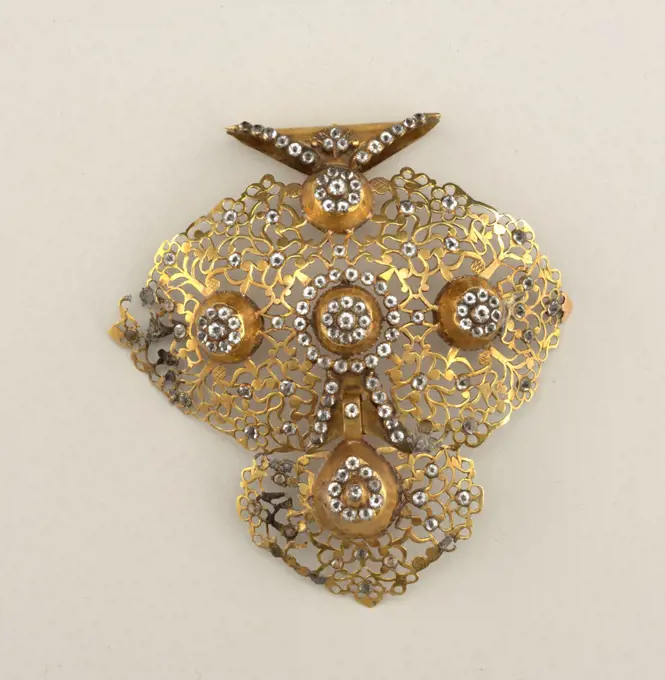
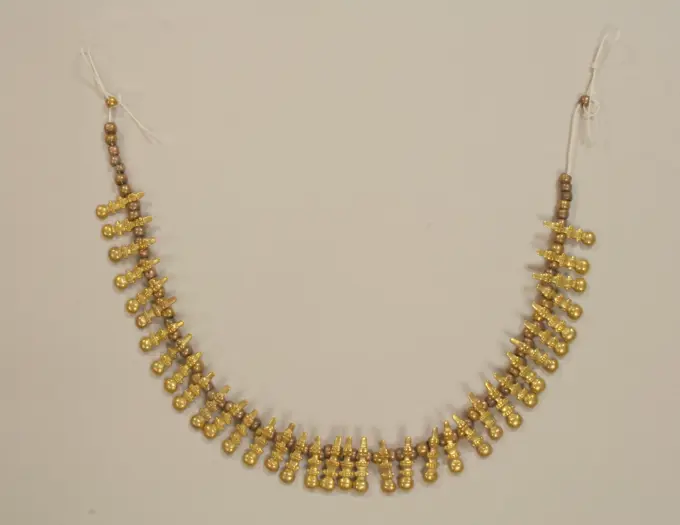
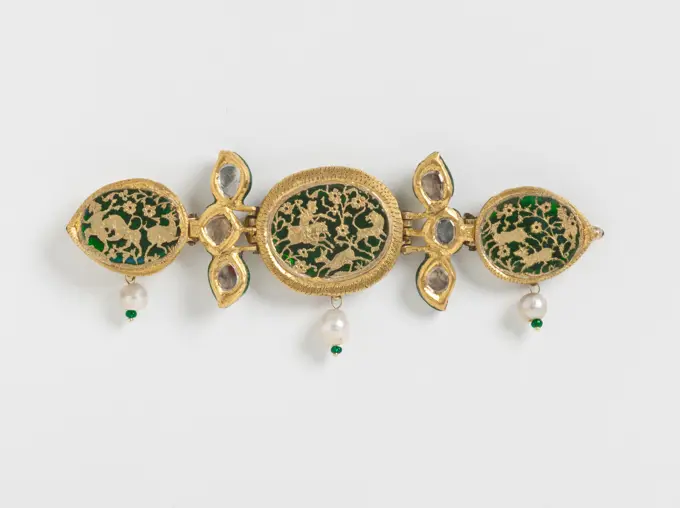
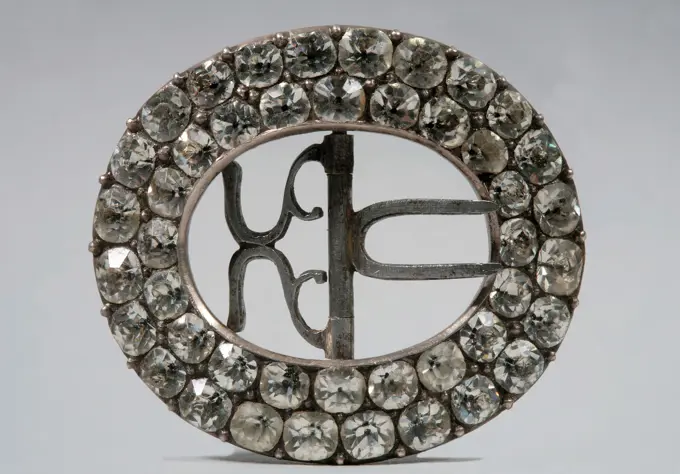
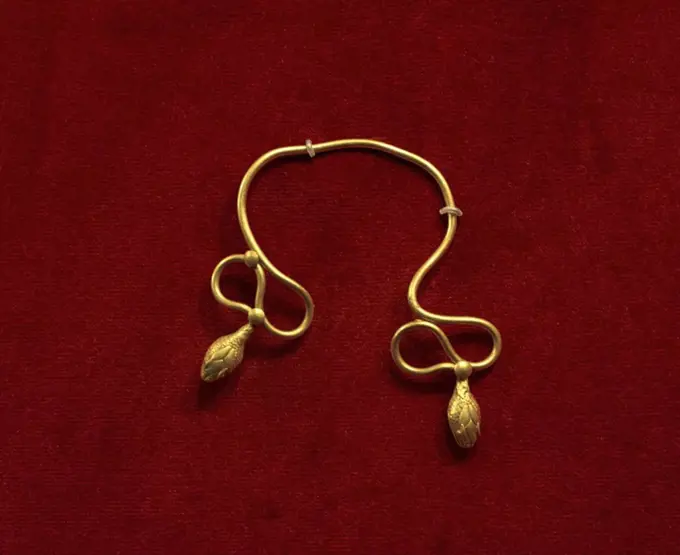
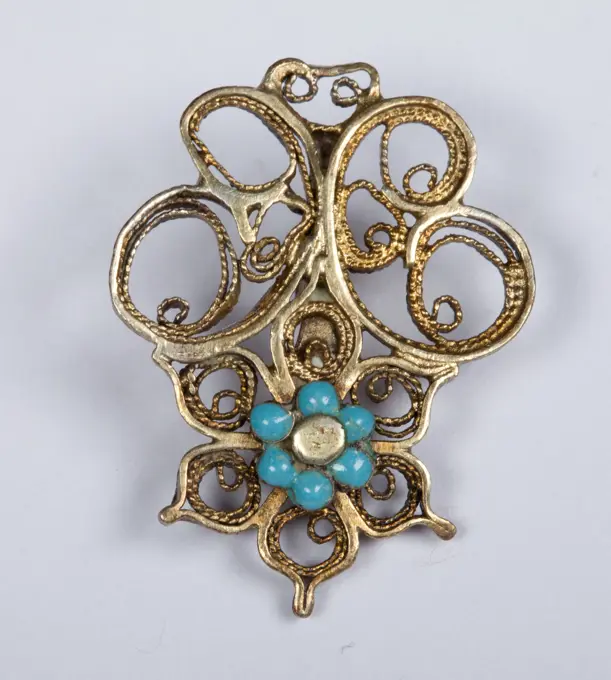
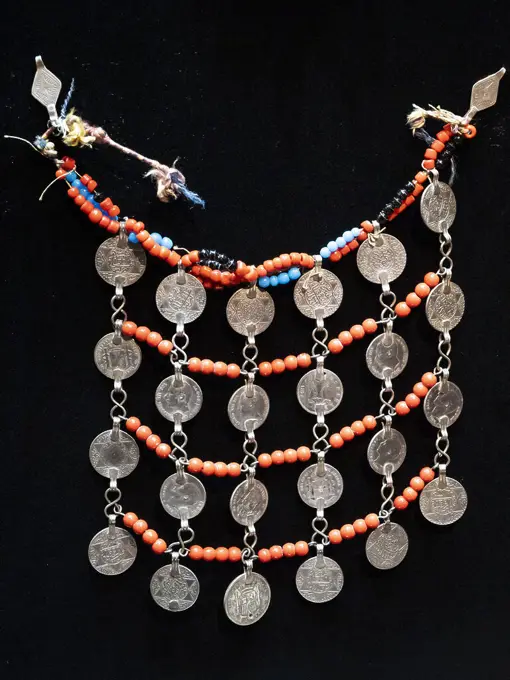
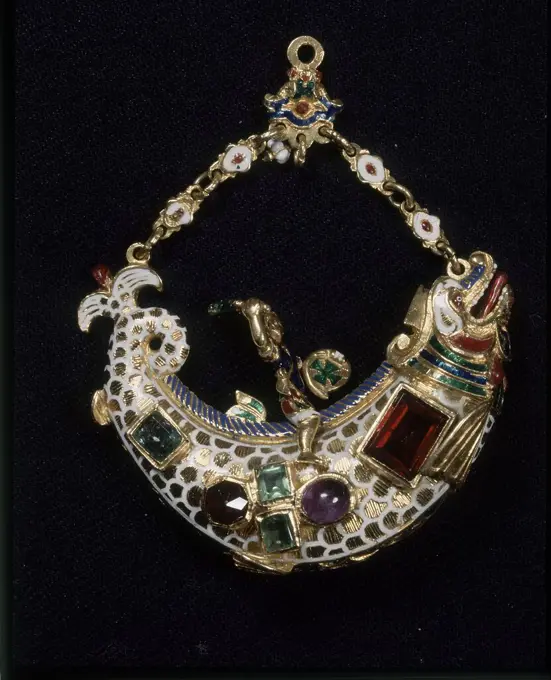
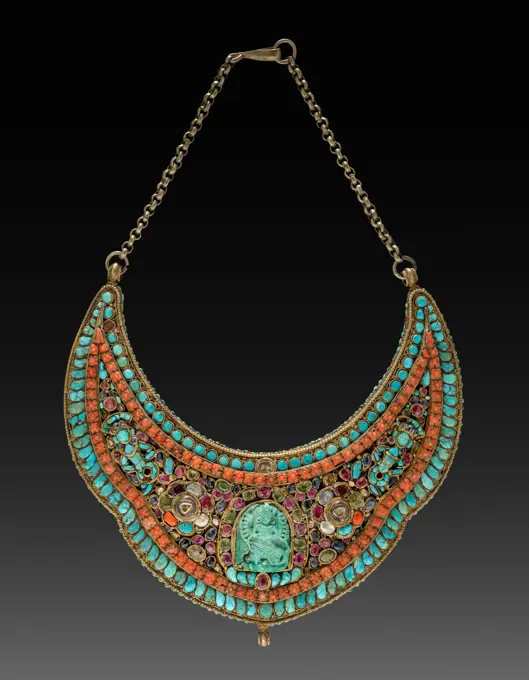
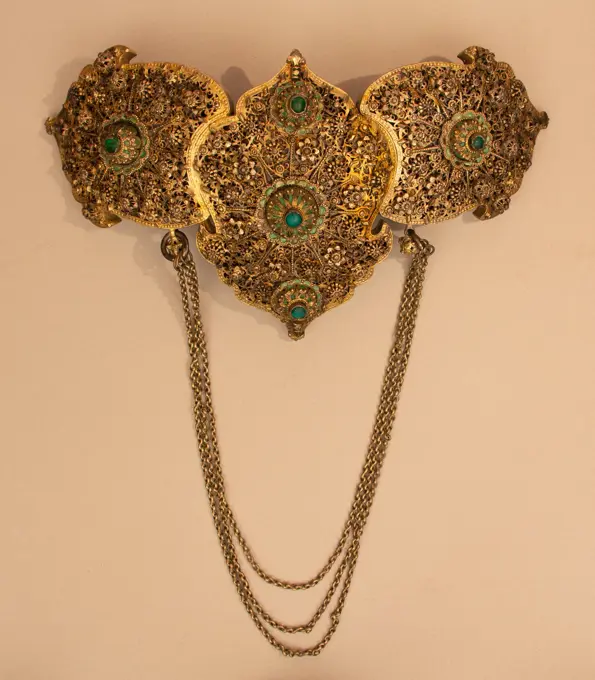
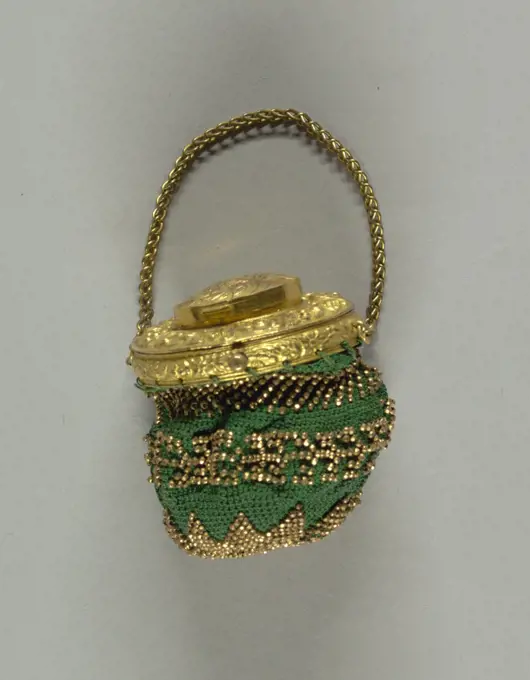
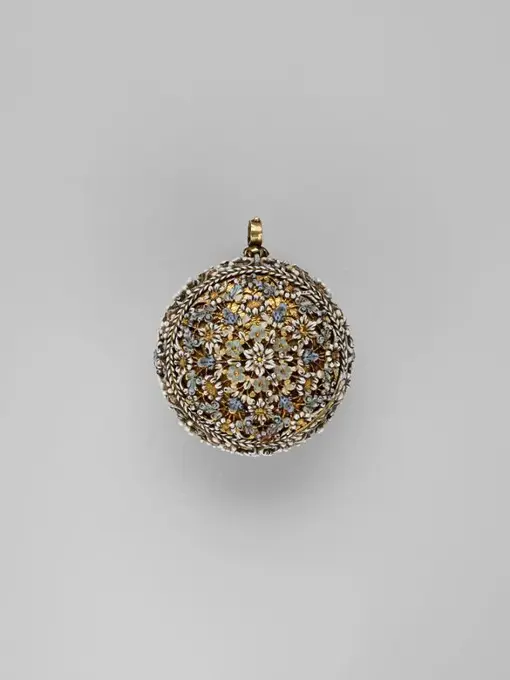
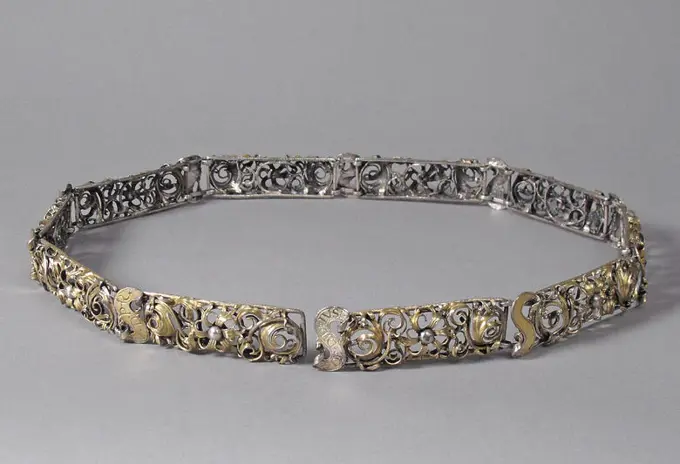
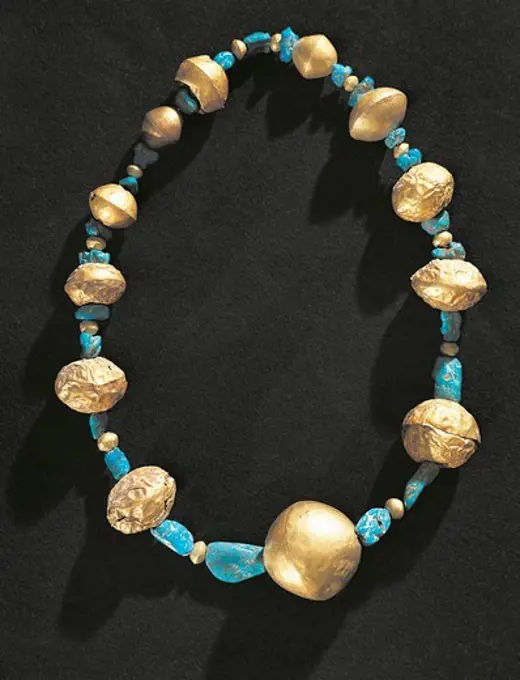
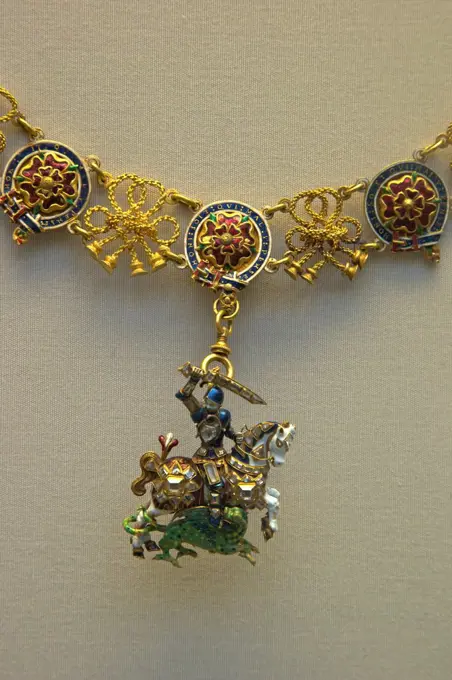
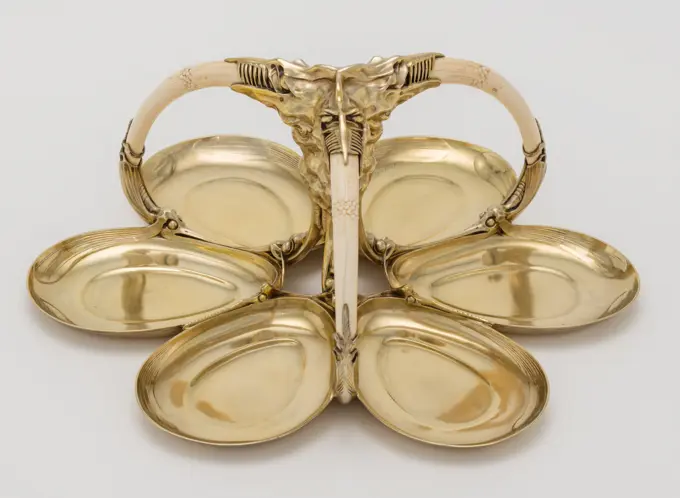
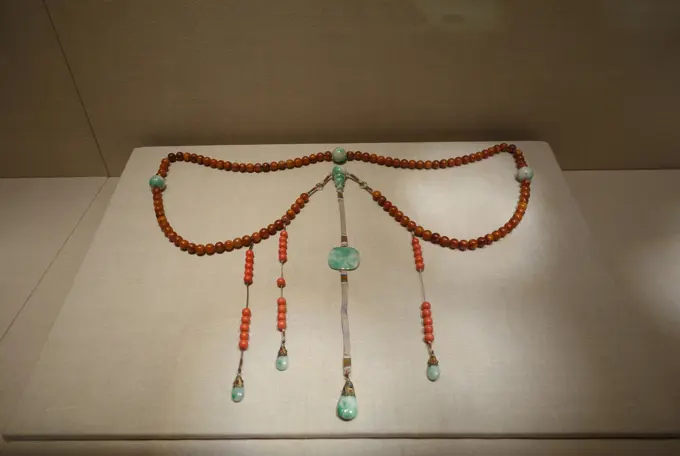
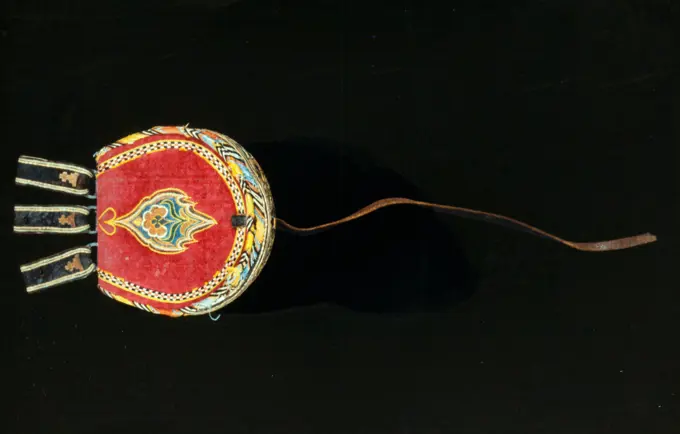
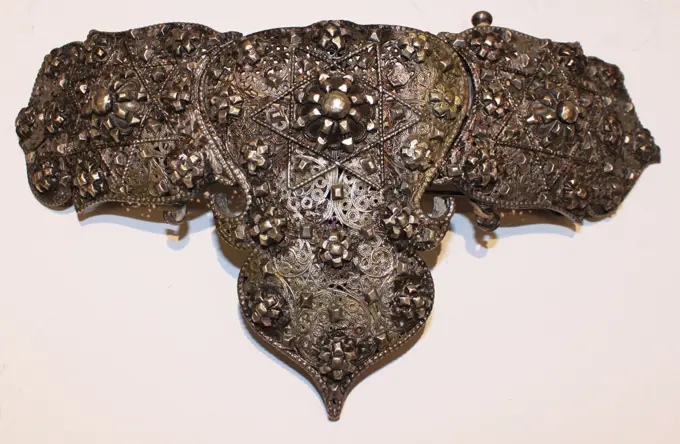
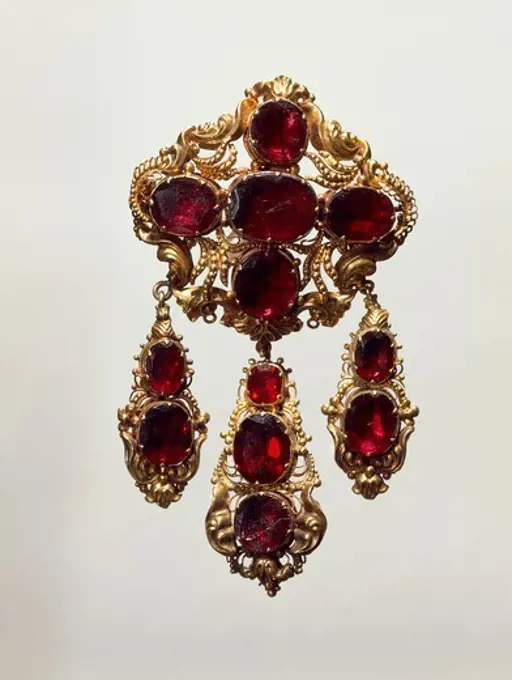
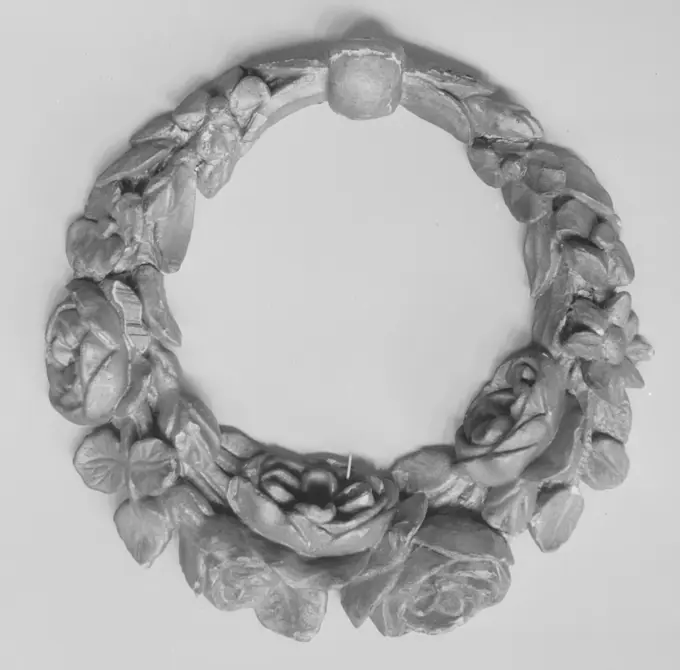
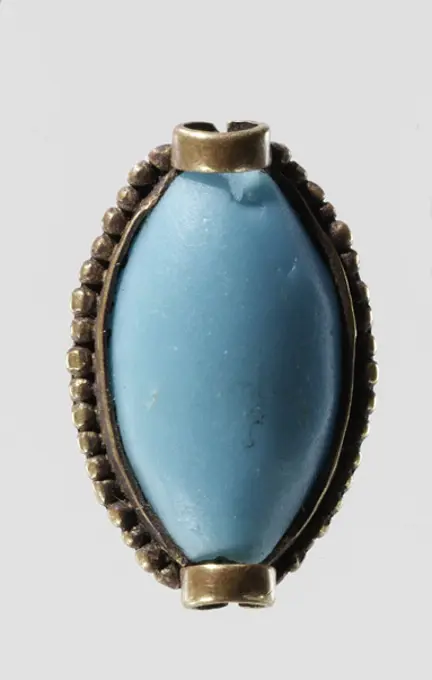
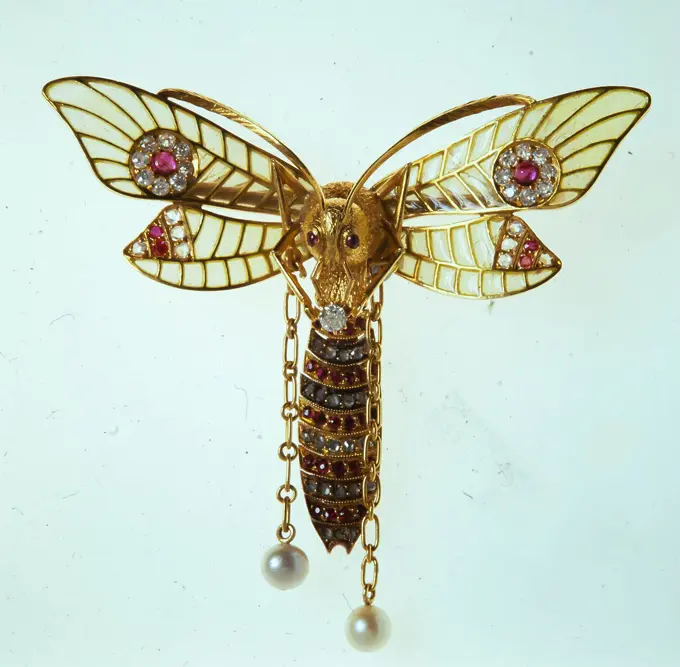
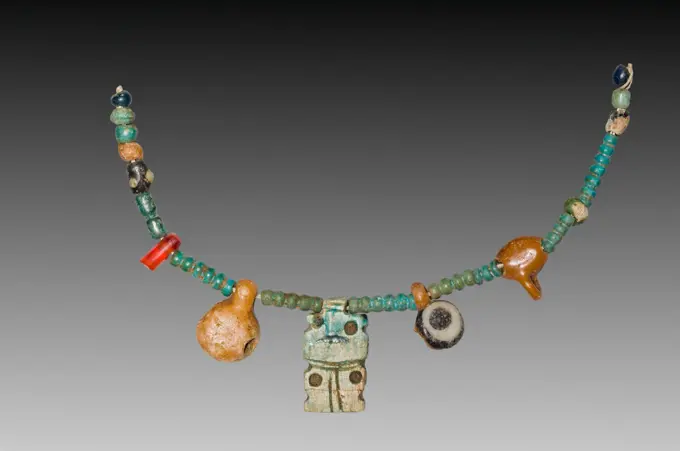
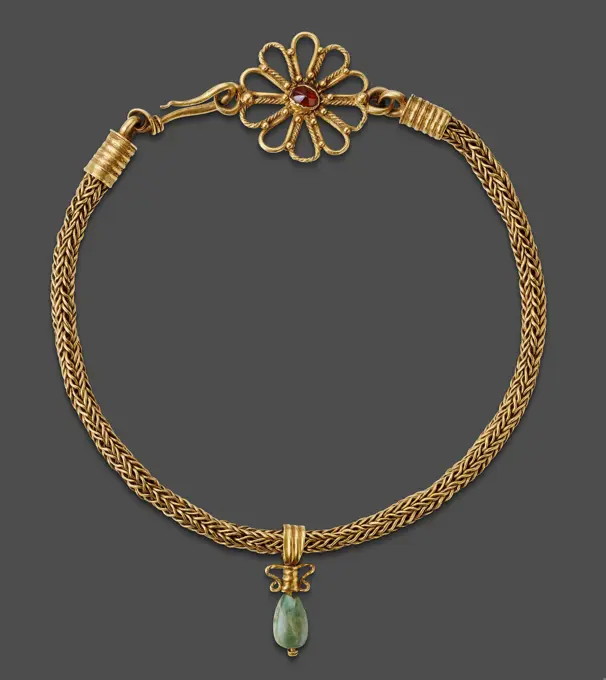
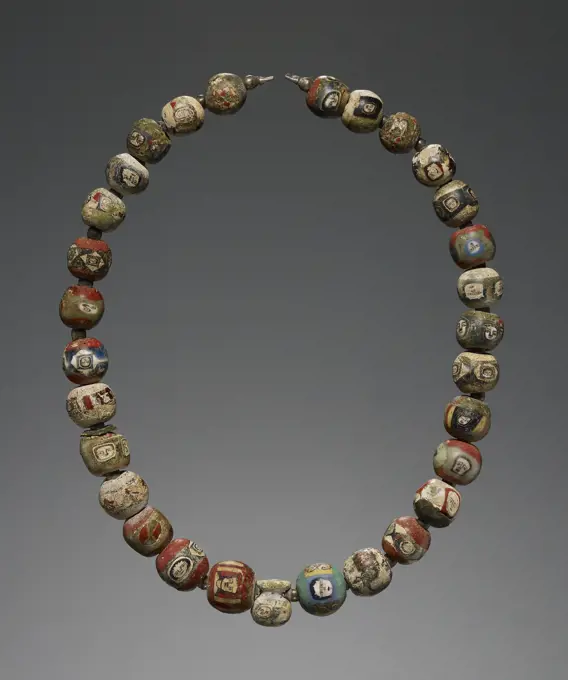
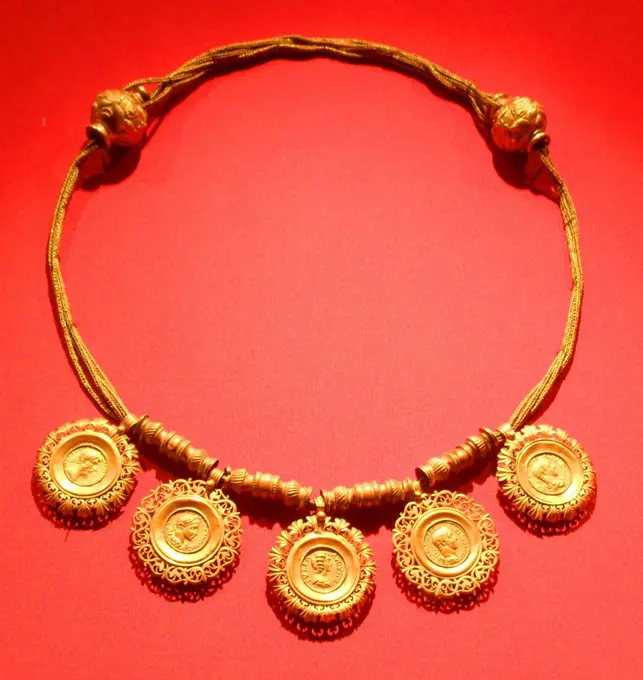
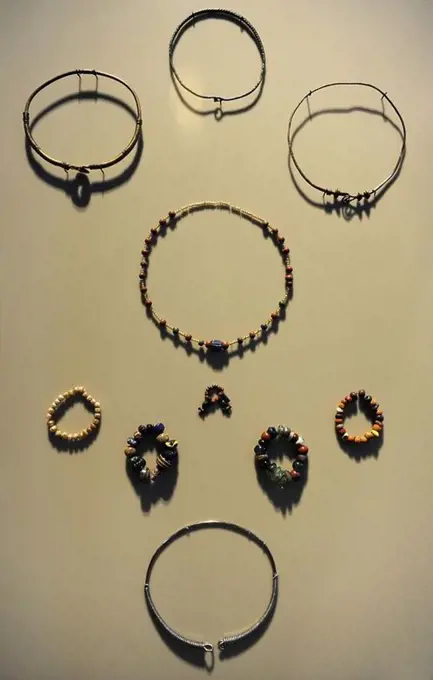
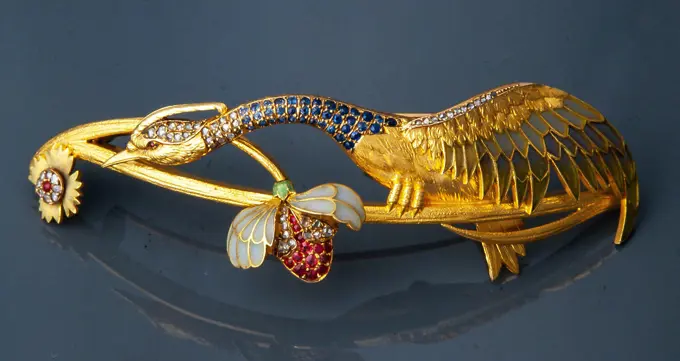
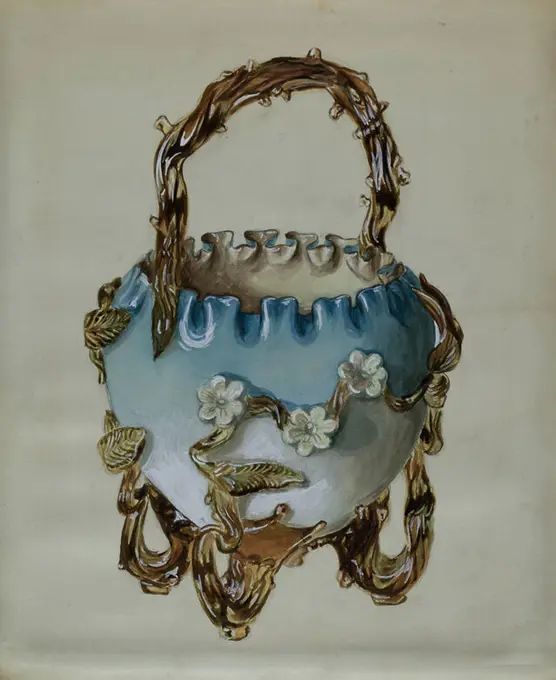
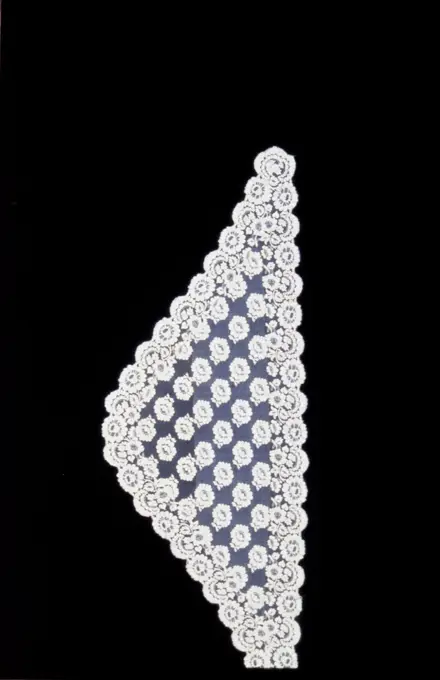
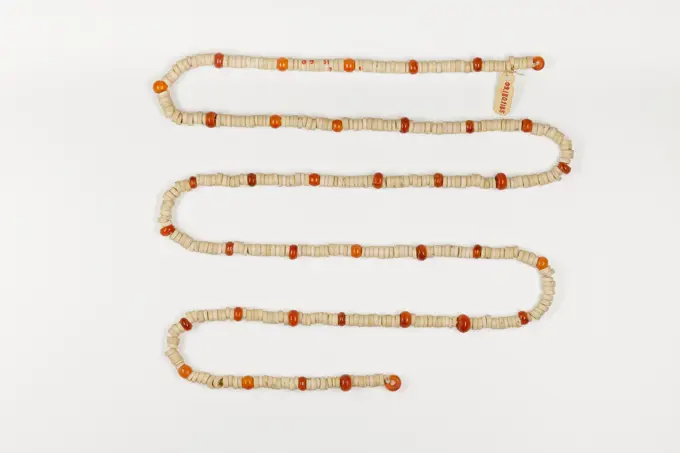
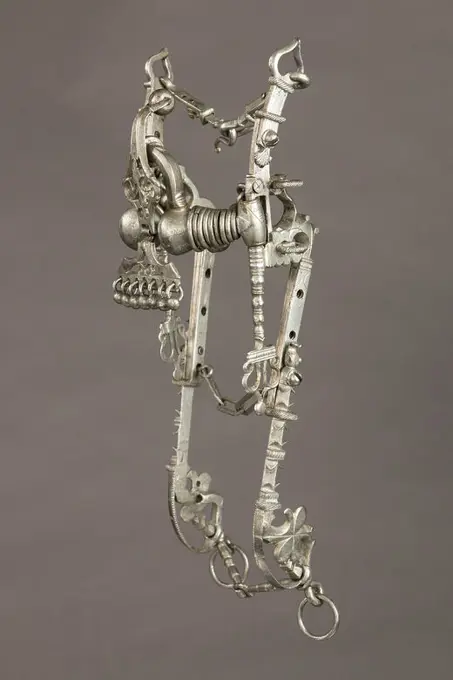
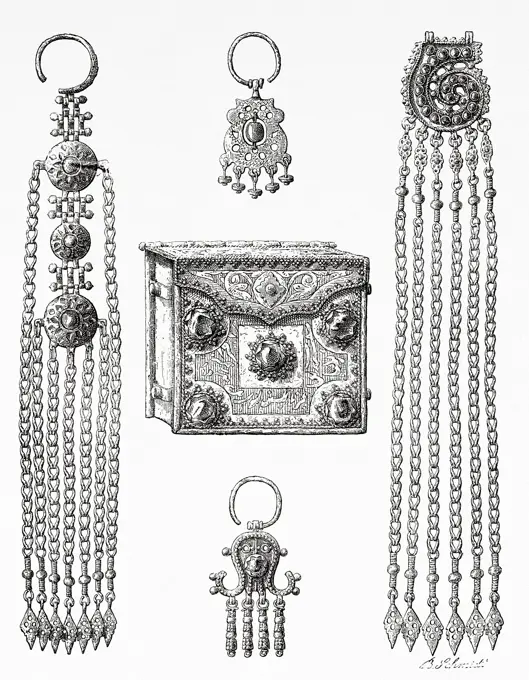
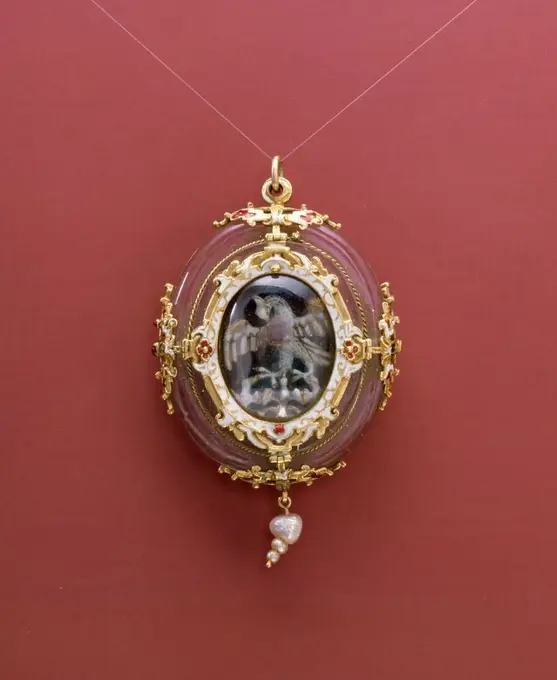
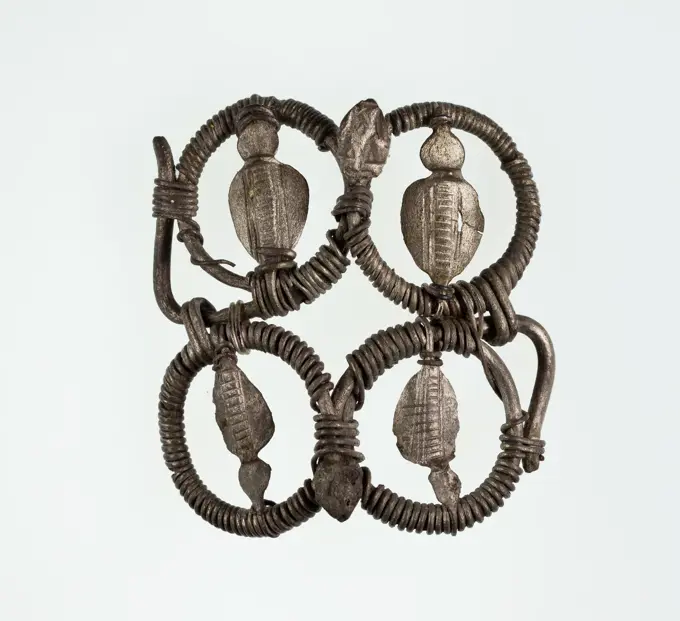
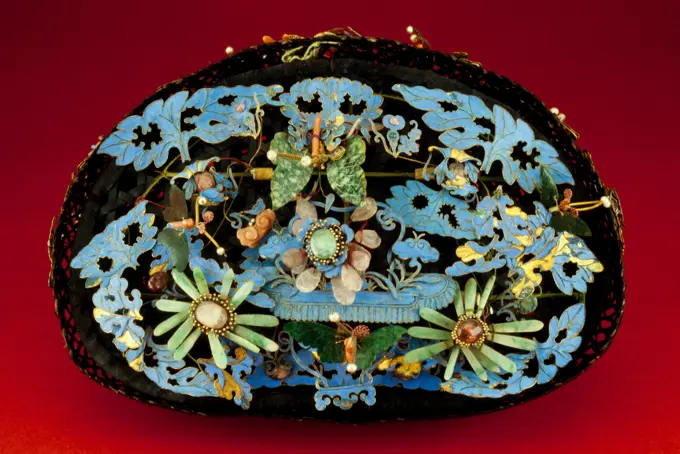
Trim, Medium: silk and gilt thread, jet beads Technique:, Trimming in pattern of oak leaves and acorns across horizontal band., USA, 19th century, trimmings, TrimUpholstery trimming, Medium: silk, copper strips Technique: woven, Trimming of white and pink silk cord and flat copper strips twisted into an ornamental design of loops., USA, ca. 1902, trimmings, Upholstery trimmingNecklace with a Pendant Featuring a Head of a Ram; Etruria; 525 - 500 B.C; Gold and glass; 29 × 2.5 × 2.5 cm (11 7,16 × 1 × 1 in.)Diadem 4th-2nd century B.C. Late Period-Ptolemaic Period The chain is formed from two interfolded strips of gold. Traces reveal the three-dimensional flower had red and blue inlay. Ttraces of turquoise glass can be observed in the narrrow pointed sepals and the edging of the background petals. The background petals themselves appear to have been red: one retains a bit of carnelian inlay and others show traces of red cinnabar, which is a bedding material for red stones at this time..The diadem might have been a funerary accoutrement, like a similar one found in an Achaemenid Period tomb at Sidon.. Diadem. 4th-2nd century B.C.. Gold, glass, carnelian. Late Period-Ptolemaic Period. From EgyptBracelet 30 B.C.-A.D. 364 Roman Period. Bracelet 573811Pendant of "Ambergris" late 19th century probably Western Europe, possibly Paris. Pendant of "Ambergris". probably Western Europe, possibly Paris. late 19th century. Black composition, gold, enamel, and diamonds.Globular Beads with Caps, Strung as a Necklace ca. 1648-1540 B.C. Second Intermediate Period. Globular Beads with Caps, Strung as a Necklace 545941Chatelaine, Silver, England, ca. 1890, jewelry, Decorative Arts, ChatelaineString of beads 30 BC-364 AD Meroitic Period. String of beads 570586JOYAS. Location: BANCO EXTERIOR-COLECCION. MADRID. SPAIN.Golden crown found in tomb of Hwangnam-DongPearl Button, 1770-1800. Made in Birmingham, maker unknownGoldsmith's art, 19th century. Diamond brooch in the shape of a branch in blossom.Necklace and Decorative Chain with Terminals, c. 800 - c. 1000  Indonesia gold (metal)  Indonesia gold (metal)Pendant Shaped as a Mermaid 1550-1650 Spain. Gold, enamel, diamonds, and pearls .Jewellery- Byzantine jewel pendant with emeralds, 6th cent. GREECE.Studs mid-19th century Ball, Black & Co. American This pair of studs with applied circular backs is part of a demi-parure that also includes earrings and a brooch. All elements have a gold scalloped base chased with a foliate border, as well as coral cylinders mounted at the center beneath cast and chased clusters of berries and leaves. The suite retains its original leather case, which is lined in pale green satin and velvet, and is marked in gold letters with the name and address of New York City jewelers Ball, Black & Co. Believed by classical civilizations to possess therapeutic and apotropaic powers and used as ornament since ancient times, coral was a staple of jewelry design in Victorian America. Coral is an organic gem, the skeleton of tiny marine animals called 'polyps.' During the mid-nineteenth century, when this demi-parure was fabricated, coral was mainly harvested from the Mediterranean waters surrounding Naples. American jewelers like Ball, Black & Co. imported NeapolitaAmulet Case 17th-19th century. Amulet Case 446801Fragment goudgalon, 1800 - 1900 Fragment golden galon, decorated with garlands with flowers and a branch with leaves and flowers.  . Fragment golden galon, decorated with garlands with flowers and a branch with leaves and flowers.  .Pendant and slide, Gold, brilliants, Two pieces of peasant jewelry of very thin gold stamped out in a design of flowers, leaves and scrolling stems and ornamented with brilliants. A: the pendant, which is horizontal, and oval in shape with a loop at the top and a triangular piece attached by a link at the bottom. One brilliant is missing. B: the slide, roughly heart-shaped. Both pieces are convex., Normandy, France, 19th century, jewelry, Decorative Arts, Pendant and slideBracelet carried by George Sand, given to his granddaughter Aurore. Paris, Museum of Romantic Life. 34870-7 Jewel, bracelet, French writer, woman of letters, granddaughterDiamond with gold jewellery pendent on white background Copyright: xHarixMahidhar/DinodiaxPhotoxNecklace Ornaments 1st-7th century Calima (Yotoco). Necklace Ornaments 312713Necklace with Three Tortoise-Shaped Pendants 8th-early 10th century Indonesia (Java). Necklace with Three Tortoise-Shaped Pendants 40141Turban Ornament (sarpatti). India, Rajasthan, Pratapgarh, circa 1850. Jewelry and Adornments. Gold and gold foil over silver, green glass, green enamel, rock crystal insets, and pendant pearls with green glass beadsLoop.Kind of arm strap or a gold bracelet with snake heads at the ends. Probably from Egypt, Roman Imperial Period. Museum of Mediterranean and Near Eastern Antiquities. Stockholm. Sweden.Beauty fashion concept with earringsSilver necklace with topazes, amethysts and zirconsPair of Rowel Spurs. Western European. Date: 1620-1640. Dimensions: L. 15.9 cm (6 1/4 in.); W. 8.9 cm (3 1/2 in.). Brass. Origin: Western Europe. Museum: The Chicago Art Institute, Chicago, USA.Closeup of artificial necklace on red backgroundRosetteOrnament. Culture: Dutch. Date: early 19th century.One of the most recognizable and interesting aspects of Dutch costume is the ear-iron. The Frisian style of this headwear is a wide band of metal fitting around the back of the head with ornaments at the temples. The shape and style of the ornaments were indicative of their status, their husband's or son's profession, their locality, or even their religion. The ear-iron was usually worn with a lace cap which partially covered the metal. This type of gold filigree work is said to have originated in East Frisia in the 15th century when gold was first discovered in that area. The high quality and intricate designs of these examples suggest the wearer's wealth and high social status. Museum: Metropolitan Museum of Art, New York, USA.Amazigh pectoral, Rif, Morocco, "Corral del Carbón" , "al-fundaq al-yadida", 14th century, Granada, Andalusia, Spain.Woman's Collar. Europe or North America, mid-19th century. Costumes; Accessories. Cotton bobbin lace, cotton embroidery, cotton velvetComb 1880 American. Comb 124830JOYA-PINJANTE CON DELFIN Y JINETE - ENTRE 1590-1610 - ORO CON ESMALTES Y PIEDRAS PRECIOSAS. Location: MUSEE D'ARTS DECORATIFS. MADRID. SPAIN.Gold Half Moon-Shaped Earring with Peacocks late 6th-7th century Byzantine Opus interrasile was a technique used by goldsmiths to make elegant jewelry from the 200s through the 600s. Designs were traced onto sheets of gold; the background was punched with holes of various sizes to highlight the pattern; and fine details were then worked on the surface. The patterns formed by piercing the metal ground encouraged the play of light and shadow across an object's surface.. Gold Half Moon-Shaped Earring with Peacocks 467645Gorget, 1700s. Tibet, 18th century. Silver; overall: 8.9 cm (3 1/2 in.); chain: 13.7 cm (5 3/8 in.).Clasp 18th-19th century View more. Clasp. 18th-19th century. Silver; gilded and filigreed with enamel and stones. Attributed to Turkey. JewelryPurse, Medium: silk, metal Technique: beaded crochet, Very small round crocheted silk bag with gilt beads. Set in a gold rim with a lid, ornamented in relief of c-curves which opened shows star-shaped cover over shallow cavity., Europe, 1820-50, costume & accessories, PurseWatch. Culture: French, Paris. Dimensions: Diameter: 1 1/4 in. (3.2 cm). Maker: Watchmaker: Nicolas Bernard (French, active 1560-90). Date: 16th century.A very few watchcases survive with this variety of openwork design of tour-de-force raised-and-dotted enamel. The dial, too, with black numerals on a pure white enamel chapter ring and a deep red basse-taille enamel center, is the product of a highly skilled artisan, who was almost certainly working in Paris about the middle of the seventeenth century. The pre-balance spring movement of the watch is signed Nicolas Bernard AParis. While there are several clockmakers named Bernard, or Benard, known to have been working in Paris in the late sixteenth and early seventeenth centuries, there is no record of a Nicolas Bernard before 1636, when a man by that name was made a master clockmaker there. By the time of his death in 1670, he had become a merchant clockmaker and a burgher of Paris. Museum: Metropolitan Museum of Art, New York, USA.Collar and Cuff Made 1875-1900 Belgium. Cotton, needle lace of a type known as Point de Gaze .Pendant, probably 1800s-1900s. Byzantium (style of), probably 19th-20th century. Gold with pearls; overall: 3.5 cm (1 3/8 in.).Bosporan Kingdom. Middle 5th century B.C. Torque, necklace with pendants and necklace of five strings with seventy-five beads. Gold. Barrow Semibratniy 2. Taman Peninsula. The State Hermitage Museum. Saint Petersburg. Russia.Necklace with MultipleAmuletsBraceletJewelry on a mannequin.Fragment of a Girdle. Culture: German. Dimensions: L. 85 cm., H. 3.2 cm. (33 1/2, 1 1/4 in.). Date: ca. 1500. Museum: Metropolitan Museum of Art, New York, USA.Curb Bit of Johannes Philip of Lamberg, Bishop of Passau (1651-1712). Culture: German. Dimensions: H. 12 1/2 in. (31.8 cm); W. 6 1/4 in. (15.9 cm); Wt. 1 lb. 15.1 oz. (881.7 g). Date: dated 1702.This bit belonged to Johannes Philip of Lamberg (1652 - 1712) who was Count of Lamberg, canon priest of Passau, Salzburg, and Olomouc, and imperial counselor. He became bishop of Passau and Prince of the Holy Empire in 1689, cardinal-priest in 1700, and finally cardinal of San Silvestro in Capite in 1701. The long purchases are decorated with two collared bracke dogs holding a mitre (the bracke dog is the heraldic device the Pottwein family, to which Johannes Philip was related). Each oval comb is bearing the heraldic wolf of Passau, with a pivoting scrolling ornament terminating with an acorn (on each comb a second hole, now empty, could have received another one). The traditional lower loops are entirely covered by the embossed and chiseled great arms of Philip of Lamberg, in a heart-shapeBrooch, Gold, red stained ivory, enamel, Base a curled vine, supporting green-enamelled leaves and red flowers and buds, of fuchsia., USA, 1865-70, jewelry, Decorative Arts, BroochNecklace made from gold and precious stones, Peru, Moche cultureEarringsUK, England, London, British Museum, Enamelled gold necklace with St George and Dragon set with DiamondsBeaded Necklace 5th-7th century Frankish. Beaded Necklace 465428 Frankish, Beaded Necklace, 5th7th century, Glass, amber, Overall: length of string 28 7/8 x 1/2 in. (73.3 x 1.3 cm). The Metropolitan Museum of Art, New York. Gift of J. Pierpont Morgan, 1917 (17.193.121)Salver, c. 1907. Carlo Bugatti (Italian, 1856-1940), Adrien-Aurélien Hebrard (French, 1866-1937). Gilt silver and ivory; overall: 14.6 x 33 cm (5 3/4 x 13 in.). This tea and coffee service, salver, and table, together with some now missing cups, were all designed by Carlo Bugatti as an ensemble and presented at the 1902 exposition devoted to decorative arts in Turin, Italy. The set was probably acquired from Bugatti's 1907 exhibition at the Galerie Hébrard in Paris by a wealthy South African widow, Anna Blake, who was living there at the time. Some of the animal and insect motifs suggest mythical beasts or the fossils of prehistoric animals. When Mrs. Blake returned to Cape Town, she took these and other pieces designed by Bugatti with her, and they remained in South Africa throughout her lifetime.Wreath from the celebrations of the 100th anniversary of Adam Mickiewiczs birth Werner, Teodor and SpókaString of Beads, 2040-1648 BC. Egypt, Middle Kingdom. Faience; overall: 20.4 cm (8 1/16 in.).Necklace, fragmentary. Culture: Roman. Dimensions: Other: 5/16 × 1/8 × 9 in. (0.7 × 0.3 × 22.9 cm)Other (.66a): 5/16 × 1/16 × 2 1/2 in. (0.9 × 0.2 × 6.3 cm). Date: 3rd century A.D.. Museum: Metropolitan Museum of Art, New York, USA.Official necklace (chaozhu) 18th century China. Official necklace (chaozhu). China. 18th century. Amber, jade (jadeite), imitation coral. Qing dynasty (1644-1911). AmberNose Ring, 20th Century. India. Silver; overall: 6.4 cm (2 1/2 in.).Earrings late 18th century French. Earrings 124293Pendant with Egyptian motifs, anonymous, c. 1900 - c. 1925 Pendant with silver and email chain in a neo-Egyptian style. The pendant consists of a kneeling, winged, Egyptizing female figure. She holds a sapphire above her head. The wings are decorated with green and lilac window mail. Two chains hang off the wings that come together at the bottom, on which a stylized lotus () Flower hangs. Germany (possibly) silver (metal). sapphire (mineral) Pendant with silver and email chain in a neo-Egyptian style. The pendant consists of a kneeling, winged, Egyptizing female figure. She holds a sapphire above her head. The wings are decorated with green and lilac window mail. Two chains hang off the wings that come together at the bottom, on which a stylized lotus () Flower hangs. Germany (possibly) silver (metal). sapphire (mineral)Pouch, 19th century, 5 x 5 1/4 in. (12.7 x 13.34 cm) (not including belt loops), Leather, velvet; embroidery, Bulgaria, 19th centuryMountTorque, 21 5/8 x 14 1/4 x 1 3/4 in. (54.93 x 36.2 x 4.45 cm), Silver, ChinaGirdle Clasp 19th century. Girdle Clasp. 19th century. Gold, precious stones. Attributed to Turkey. JewelryGoldsmith's art, England, 19th century. Gold and almandine garnets brooch.Gold spiral 7th-6th century B.C. Etruscan Ornamented with beading and groups of granules.. Gold spiral. Etruscan. 7th-6th century B.C.. Gold. Archaic. Gold and SilverWreath 18th century French. Wreath. French. 18th century. Wood, carved and gilt. WoodworkCowroid bead ca. 1550-1425 B.C. New Kingdom. Cowroid bead. ca. 1550-1425 B.C.. Glass, gold. New Kingdom. From Egypt, Upper Egypt, Thebes, Asasif, Tomb CC 37, Burial 78, Carnarvon/Carter excavations, 1911. Dynasty 18, earlyLluís Masriera / Broche con abeja, c. 1903, Oro, esmalte translúcido «pliqué-à-jour», diamantes, rubíes y perlas. Museu Nacional d'Art de Catalunya (MNAC). Author: LLUÍS MASRIERA I ROSÉS.Side Table; Design attributed to Johann Paul Schor (called Giovanni Paolo Tedesco), Austrian, 1615 - 1674; Rome, Italy, Lazio, Europe; about 1670; Gessoed and gilt poplar; Object: H: 170 x W: 224.8 x D: 84.9 cm (66 15/16 x 88 1/2 x 33 7/16 in.)Earring, 500-400 BC. Cyprus, 5th Century BC. Gold and agate; diameter: 2 cm (13/16 in.).Fragment of a Necklace, 1540-1296 BC. Egypt, New Kingdom, Dynasty 18. Steatite, glass, carnelian, and faience; overall: 12 cm (4 3/4 in.).Necklace with Pendant 101 CE-300 CE Roman Empire. This choker-length necklace is comprised of a braided gold chain with a single emerald pendant. The flower shaped closure is adorned with a garnet, and would have been a lovely flourish when the wearer swept her hair up into one of the many intricate hairstyle popular at the time.. Gold, garnet, and emerald . Ancient RomanNecklace; Eastern Mediterranean; perhaps 1st century B.C. - 1st century A.D; Glass; Various, see exts; 2003.259Collar with Medallions 225 A.D. Contains coins of Emperors Lucius Verus and Alexander Severus and of Julia Domna, wife of Emperor Septimius Severus.Roman Barbarian Jewels. Necklaces, earrings and bracelets of bronze, glass and silver. 3rd-4th centuries BC. Neues Museum (New Museum). Berlin. Germany.vector frame on concrete wallLluís Masriera / Broche con grulla, 1902. Colección privada. Author: LLUÍS MASRIERA I ROSÉS.Ornamental Basket. Dated: c. 1936. Medium: watercolor, graphite, and gouache on paper. Museum: National Gallery of Art, Washington DC. Author: Robert Stewart.Dagger with Sheath 18th century Indian. Dagger with Sheath 31403Necklace 17th-19th century Philippines. Necklace 40554Isolated Ornamental Wooden Frame Traditional wooden frame with carved ornament isolated in white background Copyright: xZoonar.com/DanielxFerreira-LeitesxCiccarinox 10284107Jewelry on a mannequin.Court necklace 19th century China. Court necklace 60644Bag in black silk moire with silver clasp and chain, detail, 1910, fashion accessories, Italy, 20th century.Mantilla or veil, 19th century, 71 x 26 1/2 in. (180.34 x 67.31 cm), Silk; bobbin lace, Spain, 19th centuryNecklace ca. 1802-1640 B.C. Middle Kingdom. Necklace 557397Curb Bit. Culture: German, Saxony. Dimensions: H. 12 3/4 in. (32.4 cm); W. 5 in. (12.7 cm); Wt. 2 lb. 3.1 oz. (995.1 g). Date: second half 16th century.According to contemporary equestrian manuals, this severe mouthpiece was designed for horses with a bad mouth, low bars (the part of the horses' jaw without teeth), a thick tongue, arming lips (lips placed between the bars and the mouthpiece). It is also designed to correct the horse which leans too much on the bit and forces the hand. The rolling bead at the top of the trebuchet (the central swinging piece) has a direct action on the palate and holds the head in place.This type of bit is called a geschraubt Biss in German, literally a 'screwed bit', a kind of adjustable dressage bit popular in Germany in the 16th and 17th centuries. The three lengths of the shanks (the levers on the sides of the bit to which the reins were attached), allow the rider to adjust the severity of their leverage effect. In its shortest position theGoldsmith's art, Italy, 19th century. Fortunato Pio Castellani (1794-1865), gold and agate demi parure, 1820-1830. Detail, brooch.Jewelry found in tombs around Kazan. Republic of Tatarstan, Russia. From Orenburg to Samarkand 1876-1878 by Madame Marie Ujfalvy-Bourdon, Le Tour du Monde 1879Pendant with a Pelican in Her Piety. Culture: probably Spanish. Dimensions: Height: 3 5/16 in. (8.4 cm). Date: first quarter 17th century.The pelican sustaining her young by means of her own blood, here represented by the ruby mounted on the breast of the bird, is the Christian symbol for loving sacrifice and hence for Christ the Redeemer. From the Middle Ages onward jewels have been presented as votive offerings to religious shrines or cult figures, and the religious nature of this jewel suggests that it may have had some such provenance. Charles Oman has noted the existence in Spain of several richly endowed shrines as well as many lesser ones before the Napoleonic invasions of 1808.1 The widespread destruction and looting by the French armies was followed by further depredations of religious treasure by both radical and impecunious governments throughout the century, but the last of the great treasuries was not dispersed until its sale in 1870 by the canons of the Cathedral of thPart () of a bracelet or armlet with uraei 304 B.C.-A.D. 364 Ptolemaic or Roman Period. Part () of a bracelet or armlet with uraei. 304 B.C.-A.D. 364. Silver. Ptolemaic or Roman Period. From Egypt, Central Delta, Tell el-Balamun (Diospolis Inferior), Carnarvon/Carter excavations, 1913Necklace, Medium: glass beads, metal fasteners, Tubular necklace with horizontal rows of white glass beads, with red, green and black stripes at the center front and back. Cone-shaped metal fastener., South Africa, late 19th-early 20th century, jewelry, NecklaceNecklace, c. 1200-1519. Mexico, Oaxaca, Mixtec, 13th-16th century. Gold, shell, turquoise; overall: 49 cm (19 5/16 in.); pendant: 6.3 cm (2 1/2 in.).Lluís Masriera / Colgante con flores, 1909. Colección privada. Author: LLUÍS MASRIERA I ROSÉS.Wedding hat, 19th century, 7 1/2 in. (19 cm) (depth at crown), silk,feathers,pearl,coral, beads, China, 19th centuryJewelry Beads, pearls, jewelry Copyright: xZoonar.com/AndreyxSkatx 16434721