My Boards
View Pictures
  • My Boards
← Fashion

Historical Fashion Dresses

Elegant historical dresses and gowns from the 18th and early 19th century, showcasing elaborate fabrics and intricate designs, representing vintage fashion.

Woman's Dress. Matching alternative bodice and bag of textile fragments to 1952M29.1
445 assets in this story
1788-28406
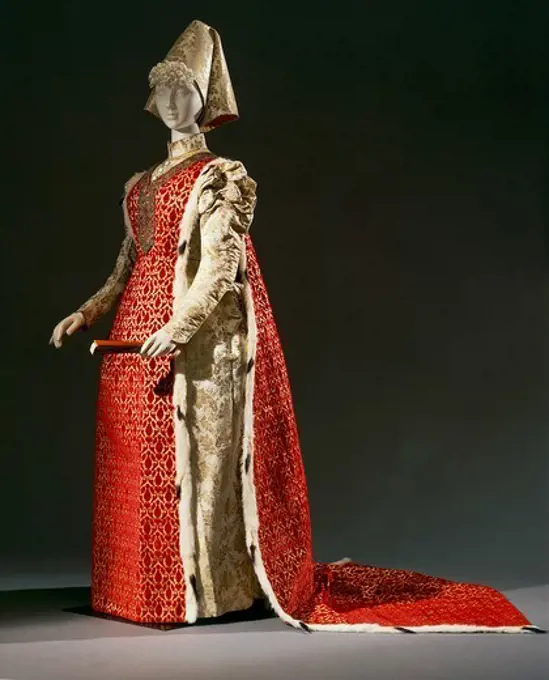
Fashion, 14th century. Red velvet ""giornea"", tabard-like overgown worn over a ""gamurra"" or fitted dress in white satin, with hennin headdress. Florentine manufacture, 1887.
6145-29755783
Dress 1855-59 American or European. Dress 105443
6145-52956065
Statue robe Hungarian 18th-19th century
6145-46049750
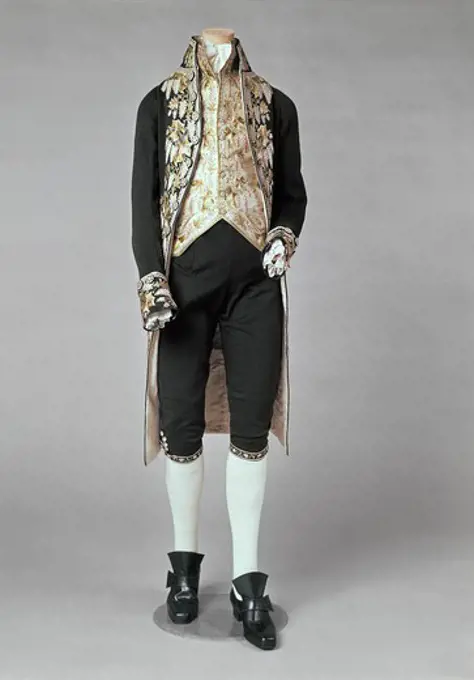
Full Dress Suit (habit à la française). From the beginning of the 18th century men wore a three-piece suit, the habit à la française. The prescribed combination as of mid-century consisted of a light waistcoat with dark knee breeches and a jacket. The pattern of the embroidery served to unify the pieces of this suit. The fabric was already embroidered before being cut and sewn to fit. This method of embroidery was called à la disposition.
6145-46049754
Black satin knee pants with a cross of purple silk and down the pipes decorated with embroidered multicolored floral motifs ...
6145-58926925
Fancy dress ensemble - I. Miller & Son , G. Shindhelm , Eaves Costume Co. I. Miller & Son , G. Shindhelm , Eaves Costume Co.
6145-46244731
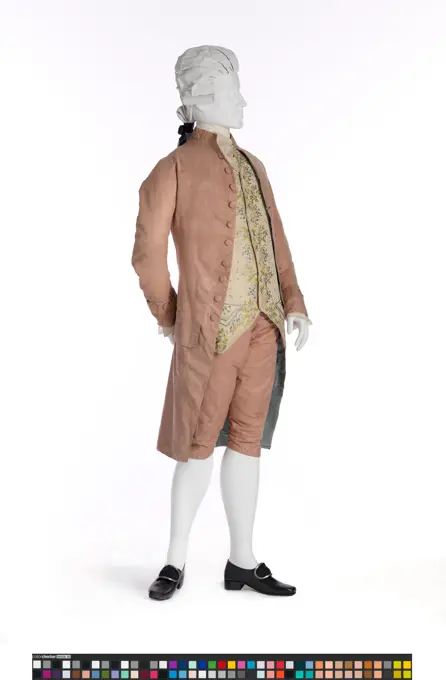
Knee pants from pink silk damask. Knee pants from pink silk damask, part of costume. Pants with pretty slim, tapered pipes with split. Silk waistband, with the back stuffed space. Front closure with mother-of-pearl and fabric buttons.
1525R-3332
6145-50493074
Print, Paper Doll Costume in Blue with White Trim and Garlands; USA; lithograph, brush and watercolor on cream heavy wove paper
6145-29811720
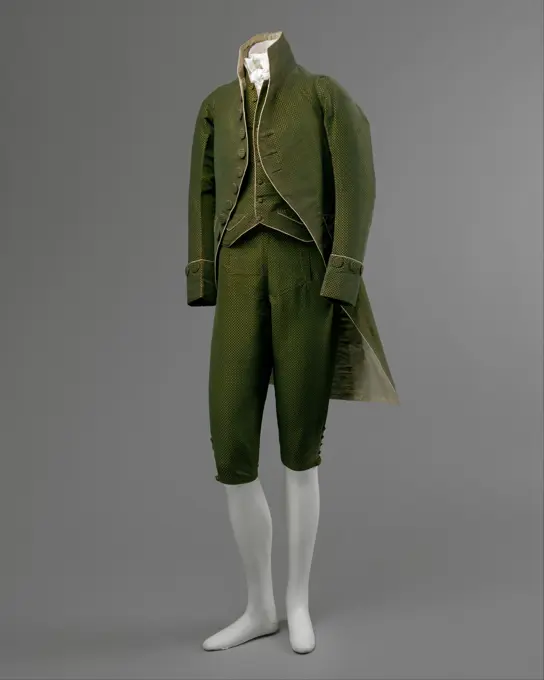
Ensemble ca. 1790 French The dualities and contradictions that characterized male fashion in the early Napoleonic period are captured in this spectacularly schizophrenic ensemble. Under the disintegrating forces of the French Revolution (1789-1794), the 18th century confidence, some might say smugness, in its uniformity of aesthetic beliefs was to disappear. The restless need for social and political reform, which began in the 1780s and was fostered through the works of the philosophes, resulted in new patterns of consumption and new forms of self-expression. For a time, however, the ideas, values and aesthetics of the Ancien Régime competed and co-existed with those of the founding Republic.This jockeying for position between the old and new elites gave birth to a variety of hybrid or transitional styles of dress, this suit being an outstanding example. Comprising a coat with narrow sleeves and a straight, cut-away skirt, a short vest or gilet and a pair of breeches that covered the l
6145-29747539
Morning dress 1862-65 British. Morning dress 108413
6145-29803789
Dress ca. 1802 Spanish. Dress 108424
6145-29138811
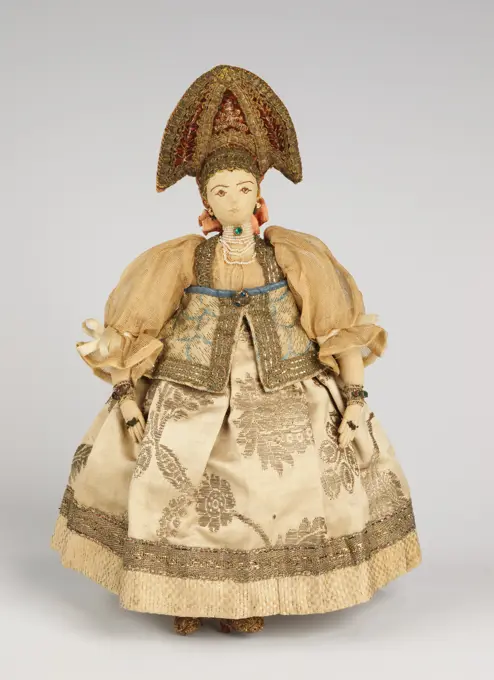
Doll late 18th century Russian This object is from the collection of Natalia de Shabelsky (1841-1905), a Russian noblewoman compelled to preserve what she perceived as the vanishing folk art traditions of her native country. Traveling extensively throughout Great Russia, she collected many fine examples of textile art of the wealthy peasant class. From the 1870s until moving to France in 1902, Shabelsky amassed a large collection of intricately embroidered hand-woven household textiles and opulent festival garments with rich decoration and elaborate motifs. The Brooklyn Museum holdings include many fine examples including the majority of the garments. Portions of Shabelsky's collection are also housed at the Museum of Fine Arts, Boston, the Cleveland Art Museum, and the Russian Museum of Ethnography in St. Petersburg.This doll, along with 2009.300.1718 offers a true representation of a traditional costume with all of the details. They are very rare objects, characterizing costumes worn
4409-17403819
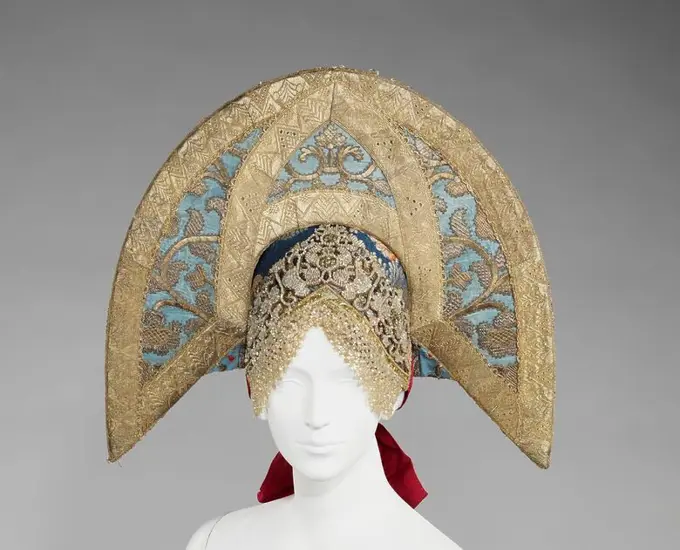
Headdress. Culture: Russian. Date: early 19th century.This object is from the collection of Natalia de Shabelsky (1841-1905), a Russian noblewoman compelled to preserve what she perceived as the vanishing folk art traditions of her native country. Traveling extensively throughout Great Russia, she collected many fine examples of textile art of the wealthy peasant class. From the 1870s until moving to France in 1902, Shabelsky amassed a large collection of intricately embroidered hand-woven household textiles and opulent festival garments with rich decoration and elaborate motifs. The Brooklyn Museum holdings include many fine examples including the majority of the garments. Portions of Shabelsky's collection are also housed at the Museum of Fine Arts, Boston, the Cleveland Art Museum, and the Russian Museum of Ethnography in St. Petersburg.Headdresses, or kokoshniks had the greatest abundance of ornamentation of any type of garment in Russia. They were most often made of damask woven
6145-29813663
Skirt 19th century China. Skirt. China. 19th century. Silk, metallic thread. Qing dynasty (1644-1911). Costumes-Embroidered
4409-17437341
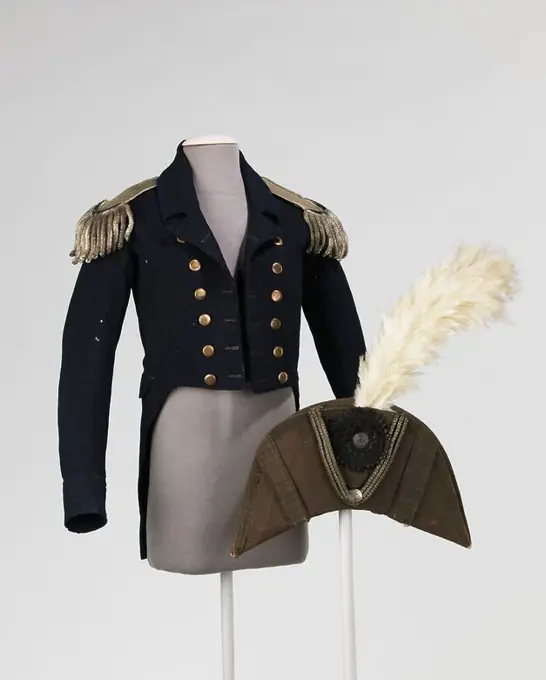
Military ensemble. Culture: American. Date: 1776-83.According to the donor, this ensemble was worn by Obedeak sic Herbert, a Continental Naval Admiral of the Revolutionary War. This form of jacket, the tail coat, persisted first, as men's everyday wear and, later, as formal attire throughout the 19th and 20th centuries. The epaulettes retain sense of delicacy and refinement as handmade objects. The silk on the underside is padded and sewn into a roll at the edge to enhance the shape of the tassels as they fall over the shoulders. The tape on the other end is meant to tie into corresponding studs on the shoulders of the jacket. The phrase on the medallion of the bicorne, "E Pluribus Unum" (translated as "Out of Many, One") was submitted by the committee Congress as part of a design for the seal for the United States of America in 1776, which, upon revisions, was passed as the official seal in 1782. The phrase was considered the motto of the United States until 1956 when it was replac
6145-58844754
Pop, representing a Miss, Anonymous, c. 1676 Pop, representing a lady, dressed in a dress consisting of three parts, a breastpiece of plain cream silk, a skirt of pink droguet liseré with floral and side motifs in white and black, about which an overjapon with short sleeves of solid green silk.  wax.. linen (material). tule (grass material). leather.. silk. pearl Pop, representing a lady, dressed in a dress consisting of three parts, a breastpiece of plain cream silk, a skirt of pink droguet liseré with floral and side motifs in white and black, about which an overjapon with short sleeves of solid green silk.  wax.. linen (material). tule (grass material). leather.. silk. pearl
1525R-204582
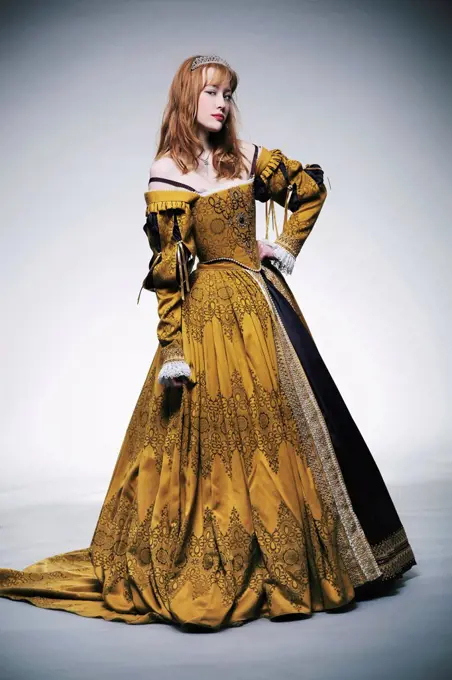
Medieval times lady
4409-6756
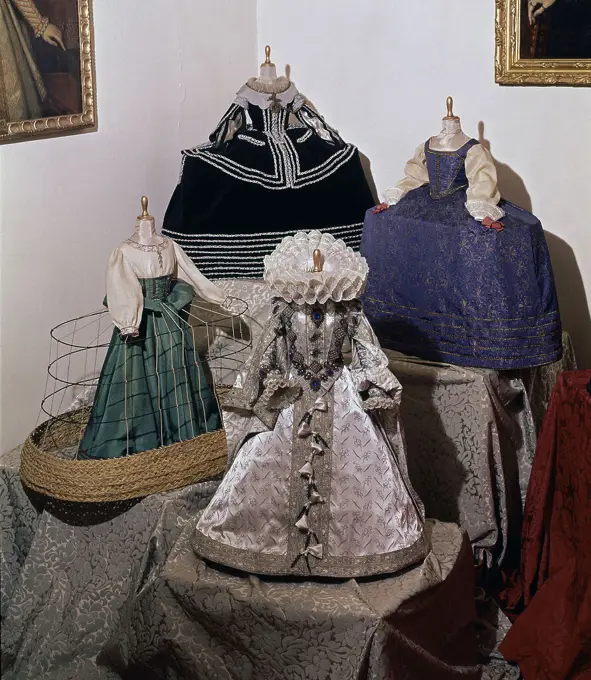
TRAJES DE DIFERENTES EPOCAS - ANTIGUA INSTALACION SITUADA EN EL PALACIO DEL SENADO ANTIGUO PALACIO DE PEPE BOTELLA. Location: MUSEO DEL PUEBLO ESPAÑOL. MADRID. SPANIEN.
6145-29739151
Evening dress 1898-1900 House of Worth French A superb example of dressmaking from the House of Worth, this dress exhibits the aesthetic of the last years of the nineteenth century. The fashionable reverse S-curve silhouette of the dress and the dramatic scroll pattern of the textile reflect the influence of the Art Nouveau movement. The striking graphic juxtaposition of the black velvet on an ivory satin ground creates the illusion of ironwork, with curving tendrils emphasizing the fashionable shape of the garment. In order to achieve this effect, the textile was woven à la disposition, with the intent that each piece would become a specific part of the dress. With this technique, the design of the fabric is intrinsic to the design of the dress.. Evening dress. French. 1898-1900. silk
4409-17419324
Evening dress. Culture: French. Designer: Paul Poiret (French, Paris 1879-1944 Paris). Date: 1922-23.During the first decade of the twentieth century, Paul Poiret initiated a fashion sea change when he declared the wasp-waisted silhouette outmoded, and the columnar form of high-waisted Directoire-Revival gowns the vogue. This jettisoning of the corset alone established Poiret as among the most important and influential designers to this day. In this two-piece dinner gown, Poiret's interest in the "liberating" style and cut of non-Western regional dress results in a peplos-like ensemble. Two separate but identical squares of cloth, one worn like a short poncho and the other wrapped into a cylindrical skirt, create a peplos effect with its apoptygma-style top. Although the ensemble is not constructed like any classical Greek precedent, the use of cloth, completely orthogonal as if off the loom, suggests an affinity to the simply configured garments of the ancient world, which were also
6145-46062891
Court Costume or Full Dress Costume. Officials were expected to wear a full dress costume at the court of King William I of the Netherlands. There was one for every occasion. The king determined what it looked like and drew inspiration from the period he spent in exile in England. This is evident from the stiff raised collar worn with a cravat, and the white piping of the suit.
6145-46062892
Vest of cream-colored rips silk with high upright board, sloping sloping lap and segged valves without pockets .. cardigan of cream-colored rips silk with high-upboard, sloping sloping lap and stylized valves without pockets. Lone of left front pawn. Seam runs along the top of the valve. Closure through four buttons of rips side embroidered with light blue silk star. First knot 13 cm under the neckline. Opening board consisting of six pieces. Shared at the front with edge embroidery. Valves without bag. Permanes and board lined with silk. Back of linen with small split in the middle of the bottom. Laces for waist. Also laces at the pointed ends of the lap. Spreading motif of blue flowers with orange heart on brown stalk interspersed with brown leaves. Furthermore floral ornaments consisting of laurel wreath-like flowers with tricolor heart and light blue leaves.
4409-164806
Draped dress by Pedro Rodríguez. Museum: Museu Textil i d'Indumentaria, Barcelona.
6145-29751713
Coat 1809 French. Coat. French. 1809. wool, silk, metallic
4409-17437735
Dress. Culture: British. Date: ca. 1797. Museum: Metropolitan Museum of Art, New York, USA.
1788-27777
Fashion, Italy, 18th century. Black cloth suit with ornaments in form of bunches of grapes. Lombardy Region, 1780.
6145-29747386
Tailcoat 1840-50 probably British. Tailcoat. probably British. 1840-50. wool, silk, cotton, metal
6145-58845139
Court Costume or Full Dress Costume, anonymous, c. 1815 - c. 1830 Jacket of Bruin sheet with upright collar, slanted front fronts and long tight -fitting sleeves. Fed and pissed off with white silk, with round, sharpened steel knots. Model: Standing board, slanted front fronts and long close -fitting sleeves with cuffs that have been laid out of which the side seam is left open. A strip of bobbin has been put on the cuffs; Later addition (). Lined and along the buildings, cuffs and pocket valves with white silk. Between the lining and the sheet an intermediate layer (from horsehair) From the chest to over the shoulder and the shoulder blades. The intermediate layer is stitched through horizontal and vertical jobs. Seven round, sharpened steel knots and three wide, founded buttonholes. Sewn valves without bags. The deep side pockets of calamated brown linen are located in the bell folds on the back. The back properties are cut and not finished further. Netherlands whole: Cloth. Lining:
6145-45972098
Lady in a hoop skirt. Meissen porcelain manufactory modeled by Johann Joachim Trader (1706-1775) Meissen, 1736Hard Paste Porcelain
4409-17409414
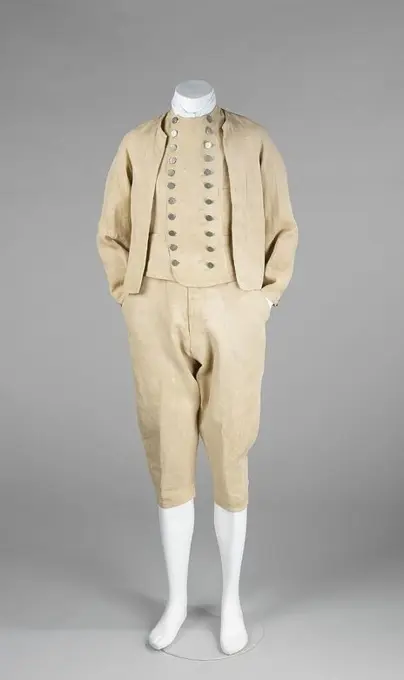
Suit. Culture: British. Date: 1875-90.This unique ensemble, with its loose jacket, vest and knee breeches, shows the style of dress adapted in the late-19th century for less strenuous sports such as shooting. Knee breeches, although replaced by long trousers for everyday wear in the early 19th century, were retained for country wear and formal court attire throughout the century. The complicated piecework on the back of the jacket is a distinctive and unexpected feature of an otherwise humble utilitarian object. Museum: Metropolitan Museum of Art, New York, USA.
6145-29140588
Suit 1875-90 British This unique ensemble, with its loose jacket, vest and knee breeches, shows the style of dress adapted in the late-19th century for less strenuous sports such as shooting. Knee breeches, although replaced by long trousers for everyday wear in the early 19th century, were retained for country wear and formal court attire throughout the century. The complicated piecework on the back of the jacket is a distinctive and unexpected feature of an otherwise humble utilitarian object.. Suit 159023
442-40233
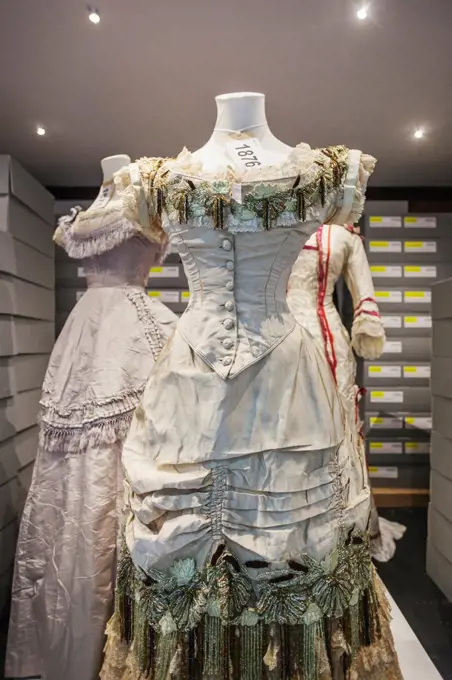
UK, England, Somerset, Bath, Assembly Rooms Fashion Museum, Display of Womens Dresses dating from the 1700's
6145-59500347
Official costume of J.R. Thorbecke as Minister of the Interior, Anonymous, c. 1850  Official costume of J.R. Thorbecke as Minister of the Interior. Consisting of jacket, two -sided stitch, Degen, pants, vest, gloves, board, distinctive ribbon, golden galon for pants and embroidery jacket. Netherlands
6145-29784388
Evening suit ca. 1885 British. Evening suit 174309
1746-30011857
Russian fashionable men's suit, 1710.
6145-59016988
Babani. Interior dress. Green silk velvet, applications of embroidery of silver metallic wires; Champagne silk canvas lining. Around 1912. Galliera, fashion museum of the city of Paris. 102215-6 Haute couture, female mode, female model
6145-29141464
Court presentation ensemble 1869 A. Dusautoy French. Court presentation ensemble 159336
6145-29117974
Man's Suit (Coat and Breeches). France, circa 1785. Costumes. Silk plain weave (faille) with warp-float patterning
6145-30110561
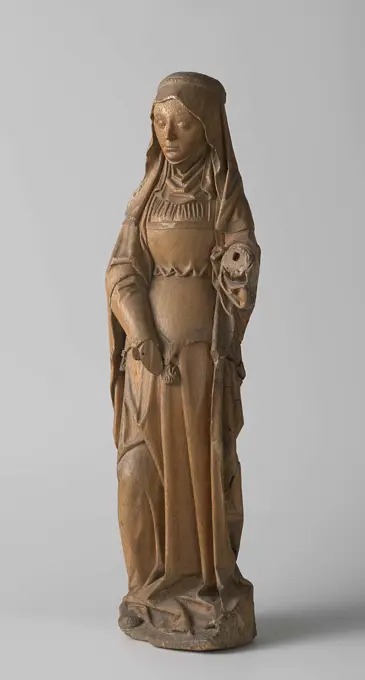
Anna, linker deel van een Anna-te-drieën.She stands forward with the right leg; The right arm hangs down, her gaze is sloping down. Under the veil hanging from the head, the child cloth is attached, which falls over the pleated shirt that comes out under the angular neck cutting of the straitjacket. The latter is around the agent and at the bottom of scallops and of brushes. The sheath hangs from the shoulder, which is included with the left elbow. The skirt releases the blunt shoe point.
6145-29117144
Sans-culotte Trousers. France, circa 1790. Costumes; principal attire (lower body). Cotton plain weave
6145-29116972
Vest. England, 1799-1800. Costumes; principal attire (upper body). Cotton double cloth (piqué)
6145-29232977
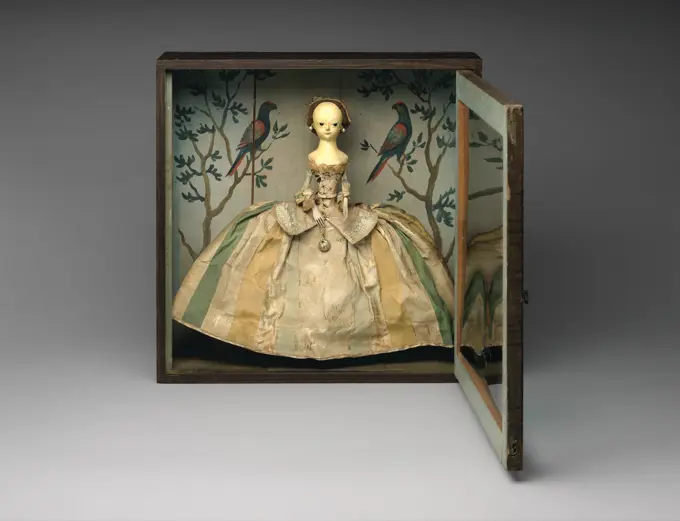
Doll in a box ca. 1748 British (Doll) and American (Box) This mid-eighteenth century English fashion doll probably arrived in the American colonies as the plaything for a lucky young girl. Dolls like this served two purposes—as both toys and advertisements of the latest fashion. They were often clothed by dressmakers to show the silhouette of the day, in this case the 1740s, when the style was for a skirt that was wider on the sides than it was in the front and back. The doll’s skirt is pieced from a variety of different narrow panels of silk, perhaps scraps of fabric the dressmaker had around her shop. A real dress from this period would all be of a single luxurious textile. Our doll is completely dressed, with two petticoats under her skirt, and shoes fashioned out of metallic ribbon. Never meant to be undressed like modern day dolls, she still even retains her pearl earrings and watch. Obviously a highly treasured object, soon after she arrived in the New World, someone fashi
6145-29137145
Man's Vest
4409-17410728
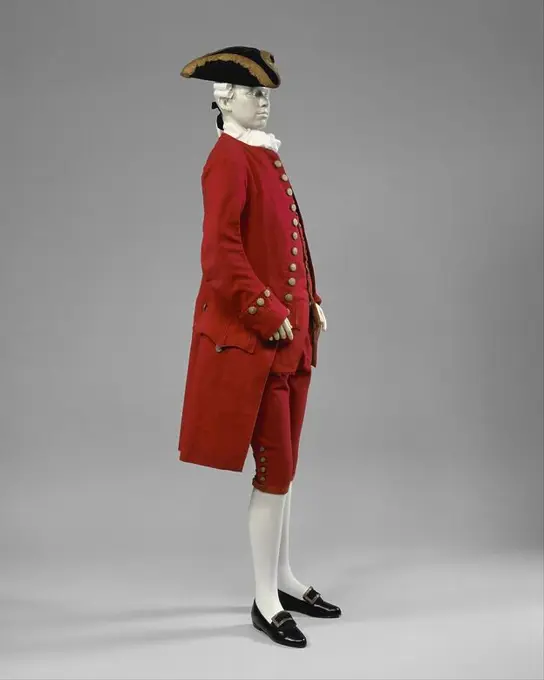
Suit. Culture: British. Date: 1750-75. Museum: Metropolitan Museum of Art, New York, USA.
PREVIOUS
of 5
NEXT
2401 S. Ervay, Suite 206
Dallas, Texas 75215
United States
Get Started
Free ResearchMy BoardsMy Cart
For Creators
How To License Your ContentContributor PortalFrame of Mind
Resources
API accessPricing
Contact
+1 866 236 0087help@viewpictures.co.uk Contact form
©2026 View Pictures. All Rights Reserved. -A
This site is protected by reCAPTCHA and Google Privacy Policy and Terms of Service apply.