My Boards
View Pictures
  • My Boards
← Fashion

Historical Fashion Masterpieces

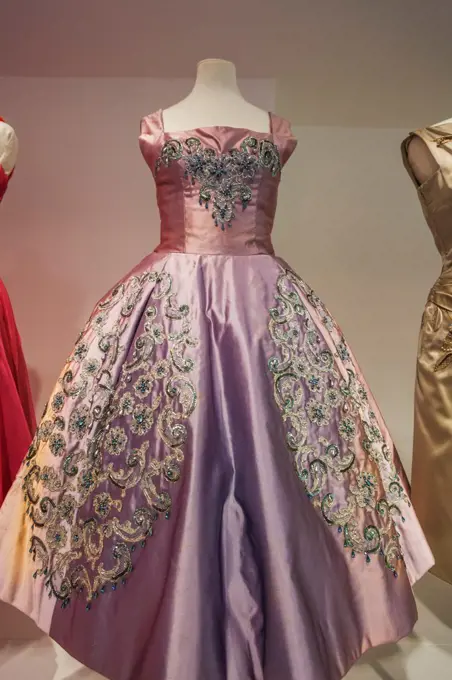
Antique dresses from various eras displayed on mannequins, showcasing historical fashion, intricate designs, and couture craftsmanship.

Maison Peillet, 1912. Satin and silk tulle. Cotton lace from Quimper, CTON PASEMENTERIE. Silk velvet. Palais Galliera, fashion museum of the city of Paris.
378 assets in this story
6145-29727919
Court dress ca. 1828 probably German. Court dress. probably German. ca. 1828. silk, metal
6145-29128291
Woman's Two-piece Dress (Wedding). United States, 1886. Costumes; ensembles. Silk faille, ciselé velvet
6145-29840440
Edith Towner, Doll  Rachel, 1935 1942 Doll: Rachel
6145-29713932
Evening ensemble 1893 House of Worth French. Evening ensemble. French. 1893. Silk, jet
6145-58990429
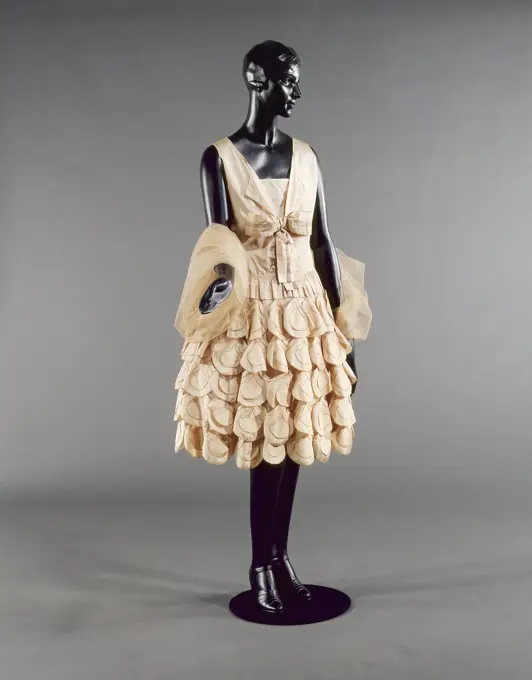
Lanvin Jeanne (attributed to) evening dress in silk taffeta and salmon silk tulle, gold thread applications, stole in salmon silk tulle, around 1928 1928 Galliera silk, fashion museum of the city Paris. 26122-14 FEMININE, HAUTE-COUTURE
6145-59043932
Lucrèce Borgia ", Damas Damasse Silver and Green Satin dress (front view), 1918. Galliera, fashion museum of the city of Paris. Scene costume, feminine, woman, silver damasse blade, green satin, part, dress
4409-17417920
Evening dress. Culture: French. Designer: Hoschedé Rebours. Date: ca. 1885.The bodice on this seductive evening dress has a very modern neckline for the time. Similar décolletage was shown in several James Abbott McNeill Whistler (1834-1903) paintings of the 1880s. The bustle silhouette, although primarily associated with the second half of the 19th century, originated in earlier fashions as a simple bump at the back of the dress, such as with late 17th-early 18th century mantuas and late 18th- early 19th century Empire dresses. The full-blown bustle silhouette had its first Victorian appearance in the late 1860s, which started as fullness in skirts moving to the back of the dress. This fullness was drawn up in ties for walking that created a fashionable puff. This trendsetting puff expanded and was then built up with supports from a variety of different things such as horsehair, metal hoops and down. Styles of this period were often taken from historical inspiration and covered in var
6145-58990273
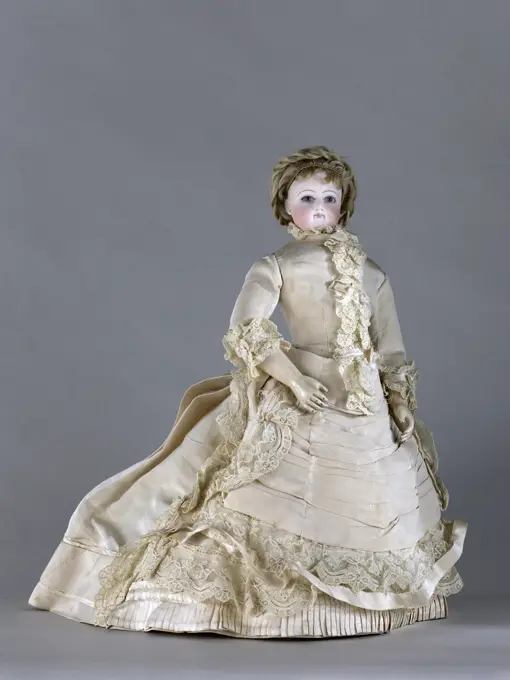
Doll in wedding clothes ". 1875-1880. Galliera, fashion museum of the city of Paris. White, white, doll, elegant, elegant, woman, figurine, fashion figurine, female fashion, doll, married dress, stylish, wedding outfit, wedding dress, white, bridle, fashion, woman
4409-17436885
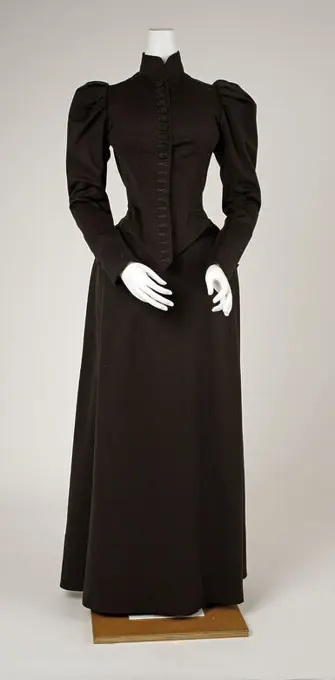
Suit. Culture: American. Date: 1891-92. Museum: Metropolitan Museum of Art, New York, USA.
6145-29129447
Woman's Dress
6145-29195145
Petticoat third quarter 18th century French. Petticoat. French. third quarter 18th century. silk
4409-17433321
Evening jacket. Culture: French. Design House: House of Lanvin (French, founded 1889). Designer: Jeanne Lanvin (French, 1867-1946). Date: 1936-37.This evening jacket of silver lamé with black satin, trimmed with black fox collar and cuffs may be viewed as an elaborate couture interpretation of the fantasy of Genghis Khan and his Mongol warriors and the feudal extravagance of the Qing court under Cixi, the last dowager empress. It was a most dramatic manifestation of fashionable exoticism in 1930s Paris. Museum: Metropolitan Museum of Art, New York, USA.
6145-29732012
Wedding dress ca. 1838 European. Wedding dress 163116
6145-58844876
Dolman coat, Madame Drugeon, c. 1880 - c. 1885 Mantille from fraise side with woven branches. Partially loose sleeves. The whole is padded, fed with silk and omboard with short -cut ostriches. Paris silk.   Paris Mantille from fraise side with woven branches. Partially loose sleeves. The whole is padded, fed with silk and omboard with short -cut ostriches. Paris silk.   Paris
4409-29053145
Vestido de novia diseñado por Carolina Montagne, 1905-1907, MTIB88114. Museu del Disseny de Barcelona.
4409-17464413
Gown. Dated: c. 1940. Dimensions: overall: 54.3 x 40.8 cm (21 3/8 x 16 1/16 in.) Original IAD Object: skirt: 40" long; train: 45" long; front of basque: 15" long. Medium: watercolor and graphite on paper. Museum: National Gallery of Art, Washington DC. Author: Douglas Campbell.
6145-29715150
Dress ca. 1810 British. Dress. British. ca. 1810. cotton
6145-29209812
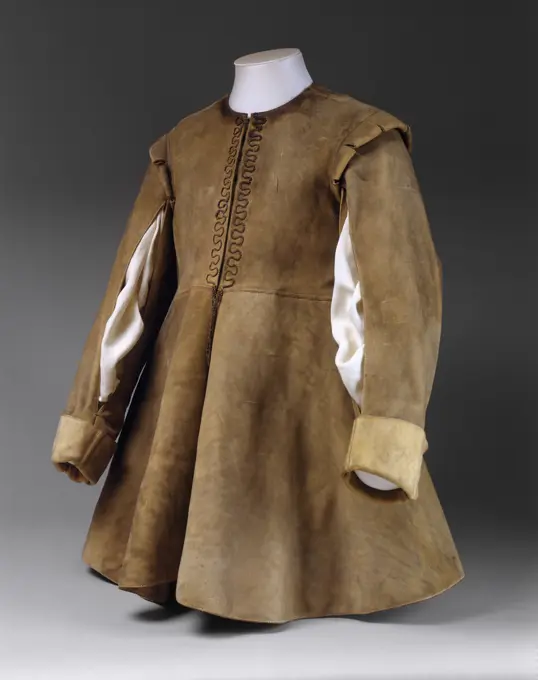
Coat 1630-40 British Presumably a utilitarian garment, this coat still retains a number of fashionable details such as decorative lashed sleeve caps and split sleeves through which the chemise would be visible.. Coat. British. 1630-40. leather
6145-29779689
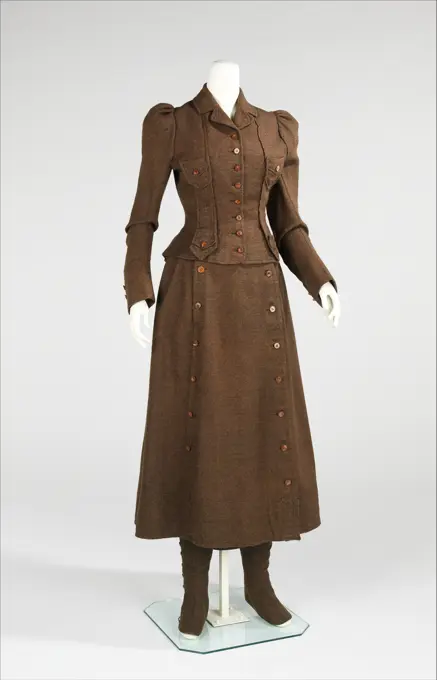
Cycling suit 1896-98 American A past time originally dominated by men, bicycling became more acceptable for women after Queen Victoria bought bicycles for her daughters. By the 1890s, clothing to be worn while participating in the activity was being produced. The bifurcated clothing worn while astride a bicycle not only opened the door for women to engage in the sport but also to gain their independence from strict societal rules. This particular ensemble features a bifurcated skirt that allowed the rider a more comfortable ride while also giving the modest appearance of a skirt at front. Other more daring ensembles featured fully bifurcated Knickerbockers. This suit also includes a pair of gaiters, which would provide protection for the legs.. Cycling suit. American. 1896-98. wool, leather, silk, linen, cotton
4409-29053147
Vestido femenino, siglo XIX, MTIB88106. Museu Textil i d'Indumentaria de Barcelona.
6145-29828727
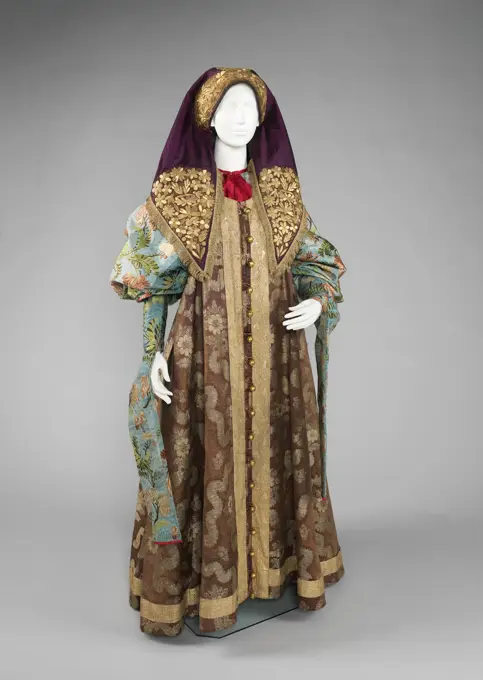
Ensemble late 18th-19th century Russian This object is from the collection of Natalia de Shabelsky (1841-1905), a Russian noblewoman compelled to preserve what she perceived as the vanishing folk art traditions of her native country. Traveling extensively throughout Great Russia, she collected many fine examples of textile art of the wealthy peasant class. From the 1870s until moving to France in 1902, Shabelsky amassed a large collection of intricately embroidered hand-woven household textiles and opulent festival garments with rich decoration and elaborate motifs. The Brooklyn Museum holdings include many fine examples including the majority of the garments. Portions of Shabelsky's collection are also housed at the Museum of Fine Arts, Boston, the Cleveland Art Museum, and the Russian Museum of Ethnography in St. Petersburg.Russian costume is characteristically voluminous with multiple layers. Beginning at the turn of the 18th century, the sarafan, a long, sleeveless dress, became th
6145-59034957
City dress and vague paletot. Beige silk canvas printed with rose pimples. Ocher bias applications. 1865-1866. Galliera, fashion museum of the city of Paris. City dress and vague paletot Pink, feminine button, ocher, town dress, second empire, beige silk canvas
4409-17432392
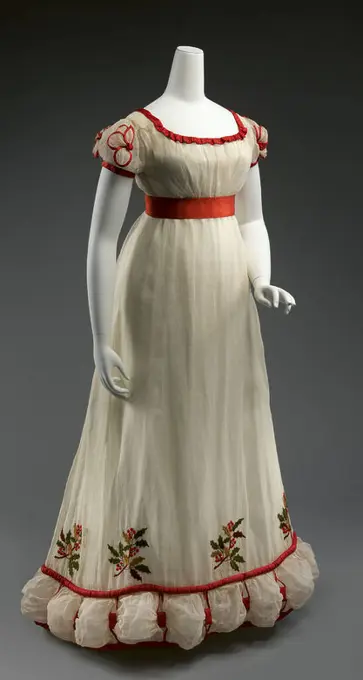
Dinner dress. Culture: British. Date: 1824-26.Fashionable British dress from the early decades of the nineteenth century reveals a fascination with historical styles. Drawing inspiration from literature, theater costumes, and history paintings of medieval and Renaissance subjects, dressmakers incorporated stylistic details from twelfth- through seventeenth-century dress into contemporary fashions. The decoratively slashed sleeves of the sixteenth century, through which linen undershirts were loosely drawn, inspired puffed trimmings such as the bouillons of fine white lawn that encircle the hem of this 1820s dress. Historicized elements such as these reflect a nostalgia for Britain's past, evoking romantic notions of the chivalry or patriotism of earlier eras. The wool crewel-embroidered holly boughs at the hem indicate that the dress was worn in winter, when the plant's berries and foliage provided welcome color and featured prominently in Christmas decorations. Museum: Metropolitan M
6145-46236793
Skirt (b) of dark green sheet, dragging and with lots of extra space for driving with a ladies saddle. Model: An Amazon sat on her skirt in the saddle, made to measure to the size of the buttocks. The skirt shows more wear places on the seat at the left-hand side. On the left was also the stirrup. From the hip, skewers are applied to the side seam for extra space. In the middle of wear in the fabric because of the pleats when sitting. The skirt has a clocking model with high waist, mounted waistband and straight, with silk padded shoulder straps. The front is carved and smoothed up at the waistband. In the side seams at the heep a side pocket; The willayaad next with scalloped 'valve' on which eleven buttons (ten false with in the middle of a real, which ensures the closure). The back is wrinkled with fine pleats at the waistband. Split mid-backs with a closure by means of two metal hooks and eyes (new). At the bottom of the split a sides and a silk trens. The skirt is unfinished; The
4409-17374350
Evening dress. Culture: American. Department Store: R. H. White & Co. (American, Boston, Massachusetts). Date: 1885.The bustle silhouette, although primarily associated with the second half of the 19th century, originated in earlier fashions as a simple bump at the back of the dress, such as with late 17th-early 18th century mantuas and late 18th- early 19th century Empire dresses. The full-blown bustle silhouette had its first Victorian appearance in the late 1860s, which started as fullness in skirts moving to the back of the dress. This fullness was drawn up in ties for walking that created a fashionable puff. This trendsetting puff expanded and was then built up with supports from a variety of different things such as horsehair, metal hoops and down. Styles of this period were often taken from historical inspiration and covered in various types of trim and lace. Accessories were petite and allowed for the focus on the large elaborate gowns. Around 1874, the style altered and the s
4409-20931799
Female dress, 19th century. Museum: Museu Textil i d'Indumentaria, Barcelona.
6145-29585887
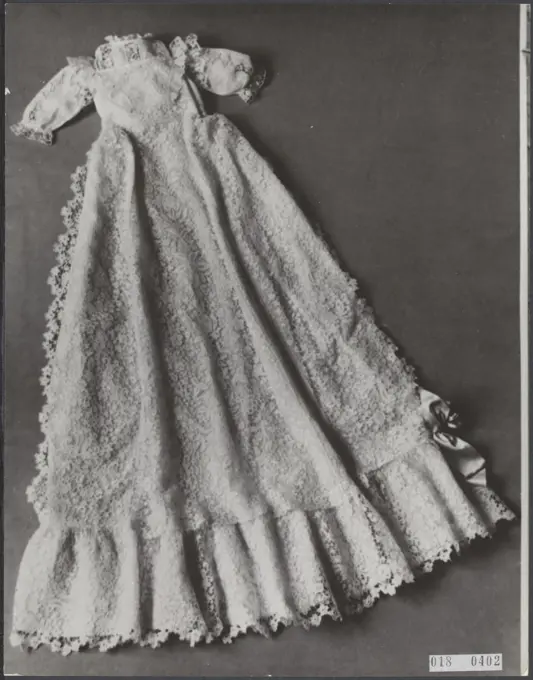
Elsevier photo collection. Prince Johan Friso provided Saturday 27 December Rev. H.J. Kater baptized Domkert Utrecht. baptism dress, family ownership, embroidered side. called "Sneewerwerk" Netherlands. December 23, 1968
6145-59034057
Wedding dress. White embroidery white cotton state at Beauvais point. 1855. Galliera, fashion museum of the city of Paris. Small flowers, interlacing. Embroidery, cotton state, feminine, model, beauvais point, married dress, second empire, crinoline
4409-17435611
Suit. Culture: American. Date: ca. 1780. Museum: Metropolitan Museum of Art, New York, USA.
4443-21908505
mw. Andres-Van Embden, Dollhouse doll, papier-mché head with inlaid brown glass eyes, wooden forearms, fabric body and legs, dressed in ankle-length lilac striped dress with red-white checkered apron, doll model papier_maché wood glass leather plaster cotton linen tulle, sewn textile Doll house doll representing linen maid in daily clothing. Woman with papier maché Head and painted face with inlaid brown glass eyes. Long narrow hands of very light pink painted wood. The hair is painted on and is dull black in color. On the head hat of white tulle with studs underneath black silk hat. Along the face border of lace ruffles with iron wire. Over the hat and along the neck wider linen band 1868 Sibilla van Embden playing kitchen
6145-45332436
Silk gown, two piece unknown
6145-29122829
Woman's Coordinates (Jacket, Bodice, Skirt, and Collar)
1788-28355
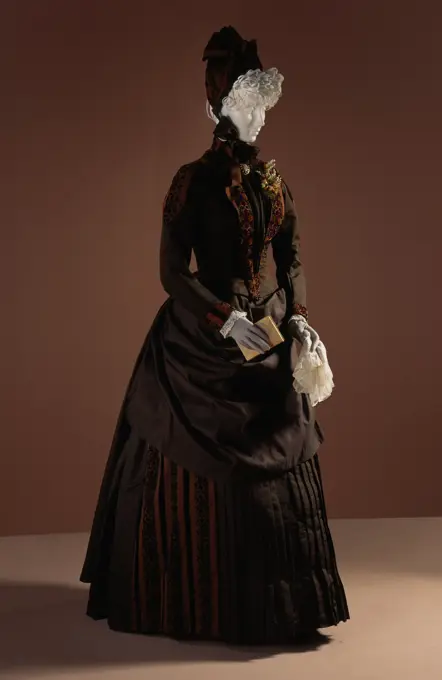
Fashion, 20th century. Walking dress in amber and brown satin, around 1873.
4409-17397990
Riding habit. Culture: American. Date: 1826. Museum: Metropolitan Museum of Art, New York, USA.
6145-29125593
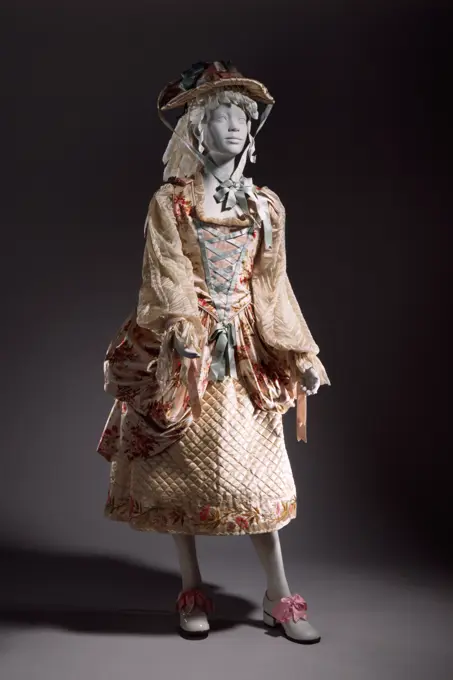
Girl's Fancy Dress Ensemble (Bodice, Skirt, and Hat), 'China Shepherdess'. England, circa 1890. Costumes; costume. a) Bodice: Silk satin, printed, and silk plain weave (chiffon), silk satin, and silk cord b) Skirt: Silk satin, printed, silk satin, quilted with silk embroidery, silk plain weave c) Hat: Silk satin, silk plain weave (faille), silk plain weave (organza), cotton plain weave, and cotton plain weave, coated
6145-29136910
Woman's Dress. England, 1815-1818. Costumes; principal attire (entire body). Cotton twill, cotton plain weave, and cotton gauze with linen lace
6145-29809916
Dress ca. 1864 probably French. Dress. probably French. ca. 1864. silk
6145-29824794
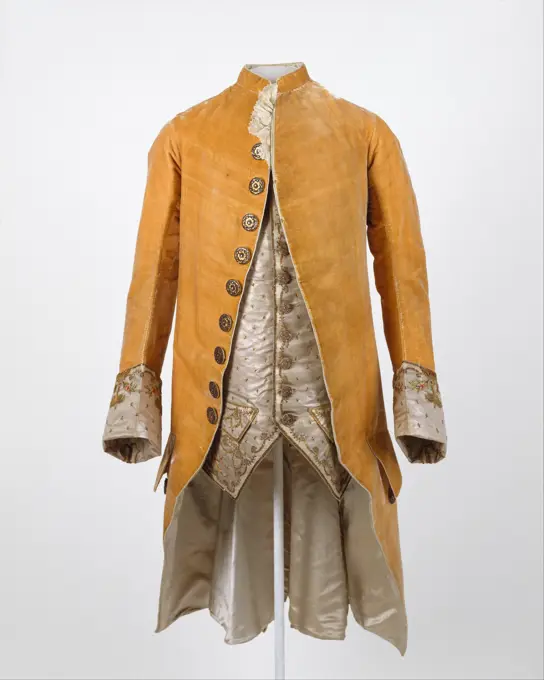
Ensemble ca. 1765 French This splendid coat comes with detachable cuffs with embroidery matching that of the waistcoat. Perhaps a practical element, as it doubles the use of the ensemble, the feature of removable cuffs betokens the abiding interest of menswear in the small details. Even today, features such as French cuffs or barrel sleeves are defining in menswear.. Ensemble 80404
6145-46123281
Childs Coat. In the 1870s children frequently wore clothing made of dark and heavy fabrics, such as this black velvet coat. The striking decoration also accords with the prevailing fashion. The back panels allow for a skirt with a bustle, a construction that puffed out a skirt at the back. They were worn by both girls and women, even though girls had shorter skirts.
6145-29116904
Vest. France, circa 1790. Costumes; principal attire (upper body). Silk satin with self-weft patterning and metallic-thread embroidery
6145-29116905
Breeches. France, circa 1790. Costumes; principal attire (lower body). Silk twill
6145-46251408
Woman with a basket on her back. Figure of painted porcelain. On an irregular around pedestal stands and woman with a large oval basket on her back. On her white skirt she wears a yellow apron with red edges. With her right hand she holds her apron, in her left hand on the back she has a yellow flower on a green branch. The image is not noticed.
6145-52893671
Man's Coat, 18th Century. Crimson cloth coat with turn over collar and mother or pearl buttons.
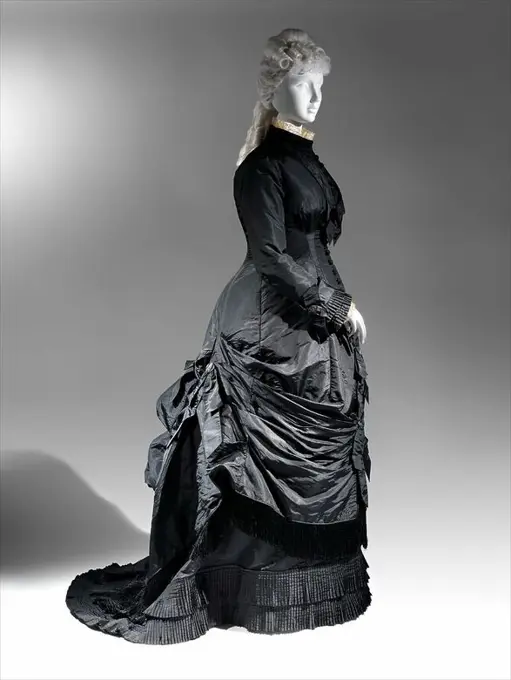
6145-29736044
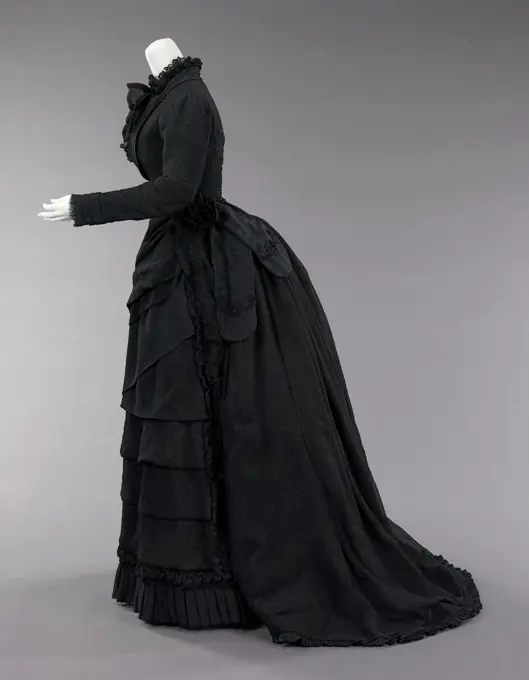
Mourning ensemble 1870-72 American Black mourning dress reached its peak during the reign of Queen Victoria (1819-1901) of the United Kingdom in the second half of the 19th century. Queen Victoria wore mourning from the death of her husband, Prince Albert (1819-1861), until her own death. With these standards in place, it was considered a social requisite to don black from anywhere between three months to two and a half years while grieving for a loved one or monarch. The stringent social custom existed for all classes and was available at all price points. Those who could not afford the change of dress often altered and dyed their regular garments black. The amount of black to be worn was dictated by several different phases of mourning; full mourning ensembles were solid black while half mourning allowed the wearer to add a small amount of white or purple. Mourning clothing tended to follow the fashionable silhouette of the period, much like this exquisitely finished full mourning dr
6145-29137086
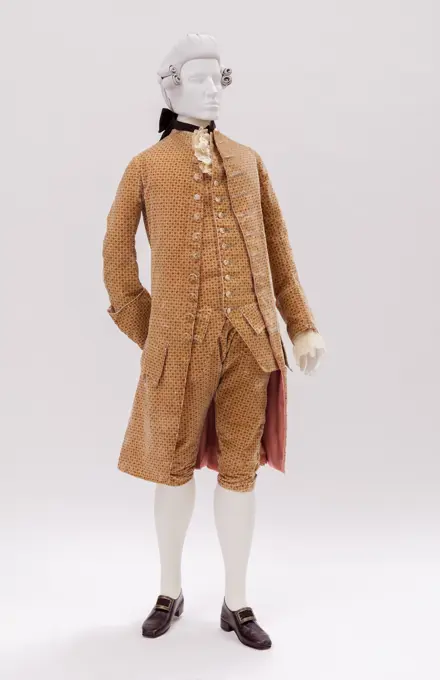
Man's Suit. France, 1780-1785. Costumes; principal attire (entire body). Coat and breeches: silk cut and uncut velvet on twill foundation with paste stones, foil, sequins, and metallic-thread embroidered appliqués; waistcoat: silk satin with foil, sequins, and metallic-thread embroidery
1788-28351
Fashion,  England, 19th century. Charles Frederick Worth (1825-1895), wedding dress in ivory and gold damask-like satin ornamented with pearls and silk fringes, 1878.
6145-29116887
Three-piece Suit. France, circa 1770. Costumes; ensembles. Silk cut velvet on plain weave with tie-resist-dyed pile warp (chiné) and self-weft patterning
4409-29053156
Vestido femenino, siglo XVIII, MTIB88002. Museu Textil i d'Indumentaria de Barcelona.
442-40230
UK, England, Somerset, Bath, Assembly Rooms Fashion Museum, Silk Satin Evening Dress designed by Norman Hartnell, 1960's
1848-63252878
Stately Ladies Wardrobe, Palmse Manor, Estonia, Palmse, Estonia, Europe
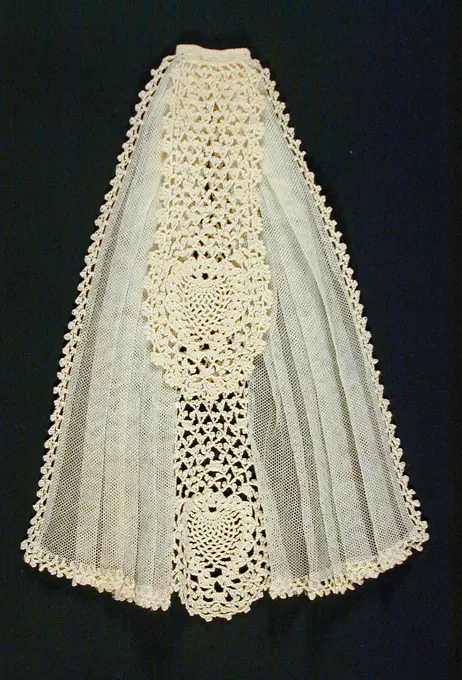
6145-29121599
Woman's Jabot. United States, Illinois, Lebanon, lace: late 19th century; constructed: early 20th century. Costumes; Accessories. Cotton machine net, cotton crochet lace
4409-17349289
Dress. Culture: American. Manufacturer: Textile by James McCreary and Co., N.Y. (American). Date: 1876-78.An hourglass silhouette with a princess-seamed structure called the "cuirasse" was created with a high waist, just an inch or two under the bust. It was an upholstered, exaggerated shape achieved with a corset and a spoon busk to cup and re-form the abdomen. American dress reformers, many newly directed former anti-slavery advocates, came together in the 1870s in specific opposition to such deliberate body molding. Museum: Metropolitan Museum of Art, New York, USA.
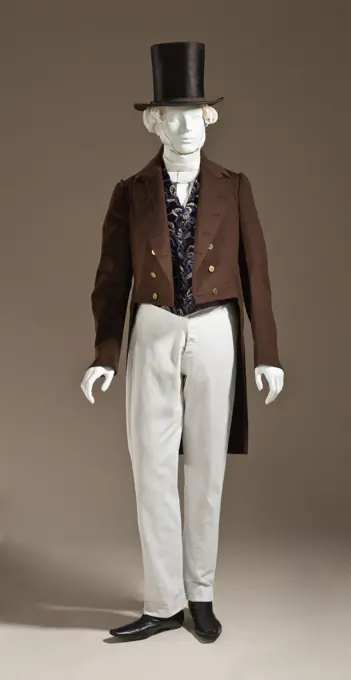
6145-29137161
Man's Top Hat. France, 1825-1850. Costumes; Accessories. Beaver fur with silk plain weave (grosgrain)
6145-29744860
Shirtwaist ca. 1900 American. Shirtwaist 86051
1606-175026
England,London,Victoria and Albert Museum,Wedding Suit worn by James II in 1673
4443-21908518
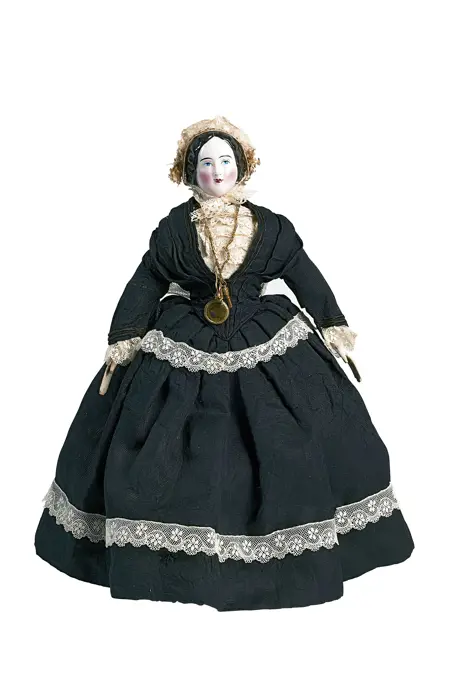
mw. Andres-Van Embden, Dollhouse doll, painted porcelain face with pink complexion, wooden arms, fabric body and legs, dressed in black dress with white lace and many layers of underwear, doll model ceramic porcelain wood leather copper brass silk cotton wool linen, sewn textile Doll house doll representing lady of well-off family in fashion of 1853. Woman with porcelain head and painted face shiny black hair blue eyes long narrow hands of very light pink painted wood. Glued on the head hat of white tulle with strips of lace over the ball and lace bow Dress front of white tulle and horizontal strips lace. Around the neck gold-colored chain with gold colored watch key and bow-shaped clip. Dress of black silk with white lace edges on the wide skirt and lace cuffs. In the skirt simple brown handbag is sewn on the inside. The body's legs and upper arms are made of fabric 1868 Sibilla van Embden playing kitchen
6145-46049751
Skirt from purple rip silk, decorated with embroidered spreading motifs and an edge motif of branches and bouquets in light purple, green, blue and some red; Crème silk lining ...
6145-30142535
A Creole.A loose figure from a Diorama of Gerrit Schouten, representing a Creole woman, standing. Both her hands in front of her breasts. Woman wears a long pleated skirt, red with a floral pattern in blue and white. About this skirt she wears a white solid shawl (Pangi). She wears bracelets, a chain and a headscarf her upper body is uncovered. She is barefoot.
6145-29117157
Breeches. France, 1790s. Costumes; principal attire (lower body). Cotton plain weave
6145-29117161
Vest. England, 1790s. Costumes; principal attire (upper body). Wool plain weave with wool and silk supplementary-warp patterning
6145-45365511
A woman in a folk costume
1848-67089082
Plauen, Museum Plauer Spitzen/ wedding dresses from the turn of the century
4409-17437562
Suit. Culture: British. Designer: Newton (British). Date: 1829.The well-padded upper chest has generally been a sign of masculine power, although there have been periods when a less muscular silhouette has prevailed. When a full chest was preferred, wool felt or cotton padding-sometimes an inch thick, as here-was inserted between a man's jacket and its lining. Museum: Metropolitan Museum of Art, New York, USA.
6145-46244735
Degen drunkier van wide, blue, edged silk bond with hold-string closure. Degen drunkier van wide, blue, edged silk bond with hold-string closure. Part of costume.
6145-29116927
Man's Suit (Coat and Breeches). 1785-1790. Costumes; principal attire (entire body). Coat: silk cut velvet with floating-warp and self-weft patterning with silk embroidery, paste (glass) stones and sequins Breeches: silk cut velvet with floating warp and self-weft patterning
6145-46063703
Costume setup around 1813. First costume setup in the Special Collections, 13-04 up to and including 03-11 2013
6145-29239634
Jacket 1898-99 F. X. Ledoux American. Jacket. American. 1898-99. wool, silk, metal
1801-62869132
Costume. Kubrick Exhibition at the Design Museum, London, United Kingdom. Architect: N/A, 2019.
6145-59016520
Doll. Head in cookie, glass sleeves in glass, mohair hair, composition body, printed cotton fabrics, silk pekin or striped cotton, cotton satin, cotton trimmings, cotton lace, white cotton canvas. 1910-1950. Galliera, fashion museum of the city of Paris. 101510-26 Costumes, dolls, clothing, 20th XXth XX 20th 20th 20th century
4409-17418336
Court suit. Culture: French. Date: 1774-93. Museum: Metropolitan Museum of Art, New York, USA.
1788-28906
Fashion, 20th century. Women's exotic straw hat ornamented with fruit and flower bouquet and wide-mesh veil on crown, 1948-1950.
6145-29117162
Man's Court Ensemble. England, 1858. Costumes; principal attire (entire body). h. Vest: Silk cut and voided velvet with silk supplementary patterning Braces: Silk velvet with silk embroidery, silk plain weave, and leather Garter: Leather
1788-26928
Fashion, 18th century. Ceremonial suit consisting in tail coat and vest, 1775-1800.
6145-58876339
Pop, representing a baker or a nanny, anonymous, c. 1675 - c. 1700 Pop, representing a baker or a nanny, made of metal wire and mattenbies. Head and hands of wax. Amsterdam Pop: Metal Thread. Pop: Tulle (Grass Material). Pop and clothing: Linen (Material). head, limbs: wax. Eyes: Glass. Clothing: Silk. Clothing: Cotton (Textile) Pop, representing a baker or a nanny, made of metal wire and mattenbies. Head and hands of wax. Amsterdam Pop: Metal Thread. Pop: Tulle (Grass Material). Pop and clothing: Linen (Material). head, limbs: wax. Eyes: Glass. Clothing: Silk. Clothing: Cotton (Textile)
4409-17389979
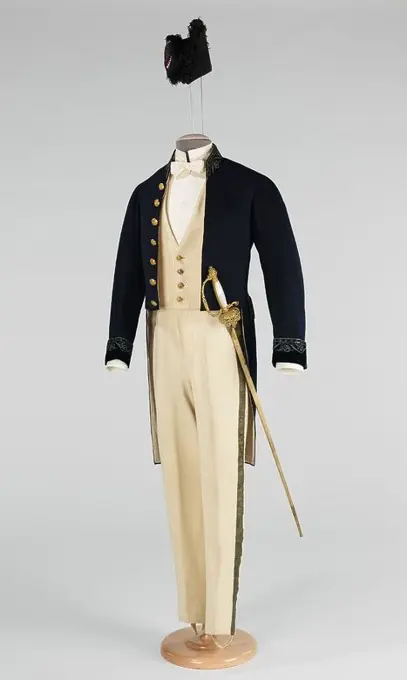
Court presentation ensemble. Culture: French. Designer: A. Dusautoy. Date: 1869. Museum: Metropolitan Museum of Art, New York, USA.
6188-60975534
Mardi Gras Exhibit at The Presbytere, part of the Louisiana State Museum, in New Orleans Mardi Gras Exhibit at The Presbytere, part of the Louisiana State Museum, in New Orleans Copyright: xZoonar.com/RituxJethanix 21070811
1746-19666850
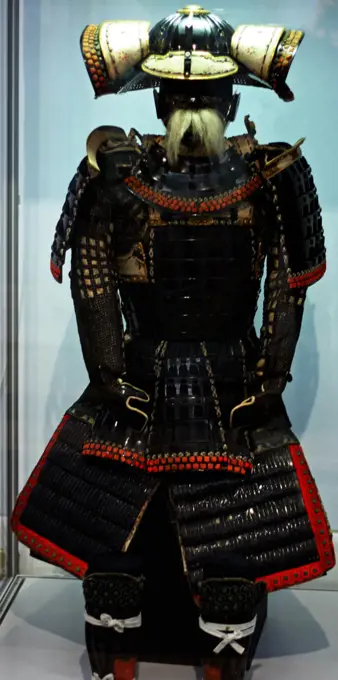
Samurai suit mid 18th century. Armour in Japan has a history that goes back as far as the 4th century.1 Japanese armour developed enormously over the centuries since its introduction to the battlefield. It was worn to varying degrees by numerous classes; most notably by the samurai (and by default the ashigaru), and was seen on the battlefield both on mounted and foot troops.
6145-29137955
Woman's Riding Dress Ensemble
PREVIOUS
of 4
NEXT
2401 S. Ervay, Suite 206
Dallas, Texas 75215
United States
Get Started
Free ResearchMy BoardsMy Cart
For Creators
How To License Your ContentContributor PortalFrame of Mind
Resources
API accessPricing
Contact
+1 866 236 0087help@viewpictures.co.uk Contact form
©2026 View Pictures. All Rights Reserved. -A
This site is protected by reCAPTCHA and Google Privacy Policy and Terms of Service apply.