Historical Flintlock Pistols

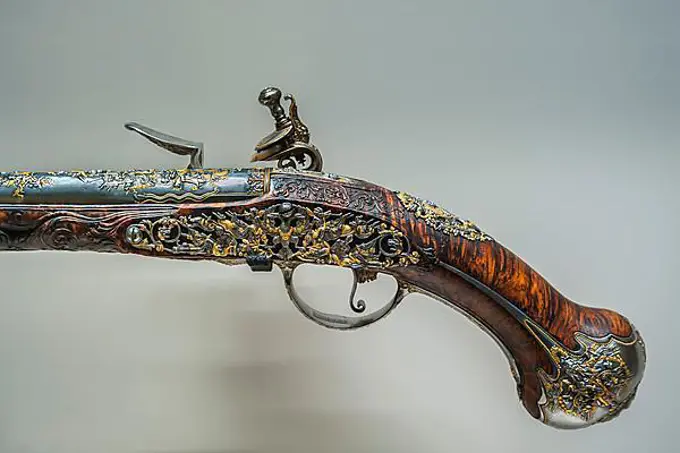
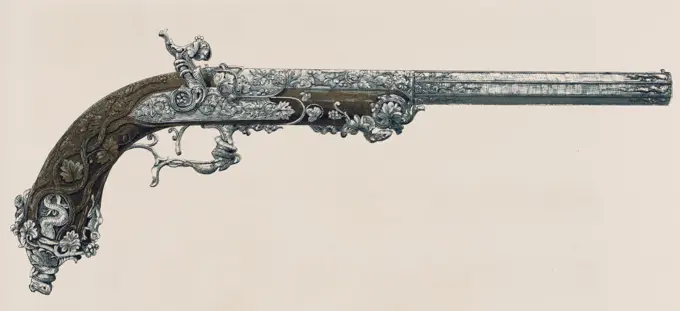
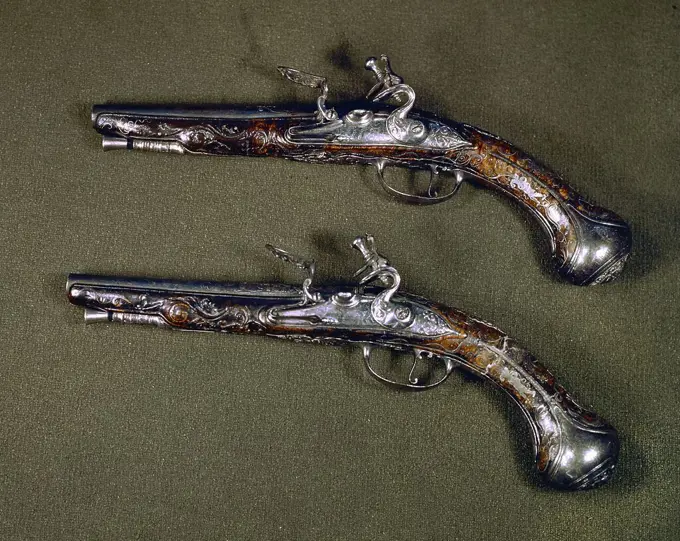
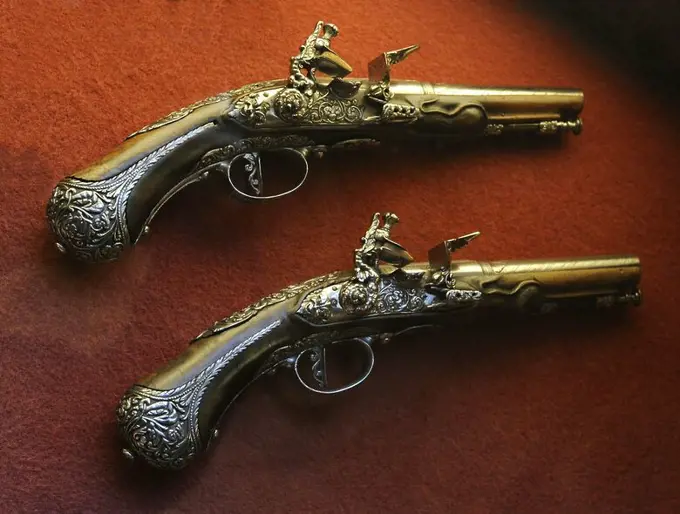
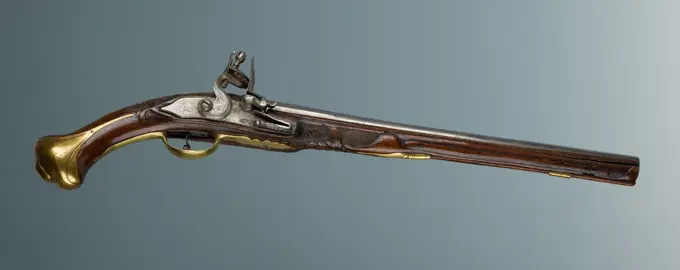
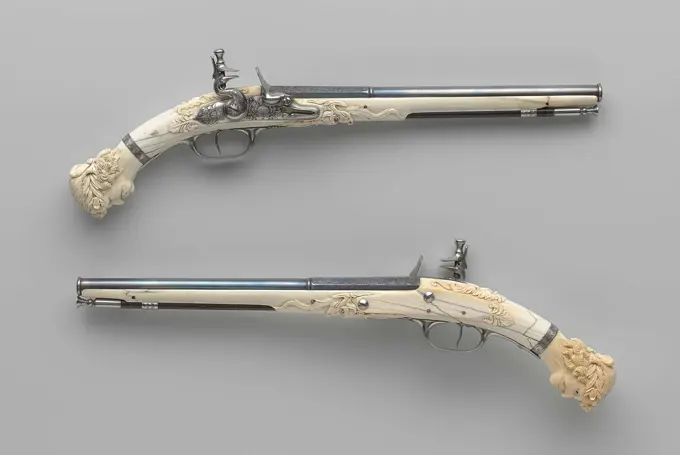
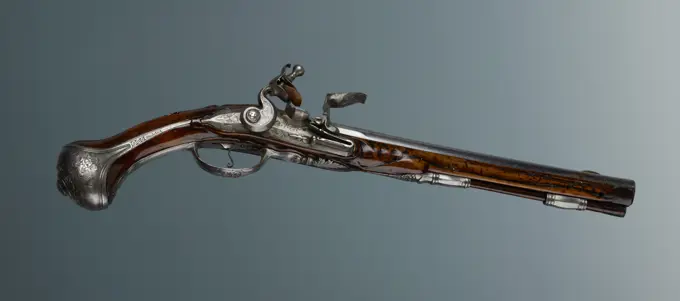
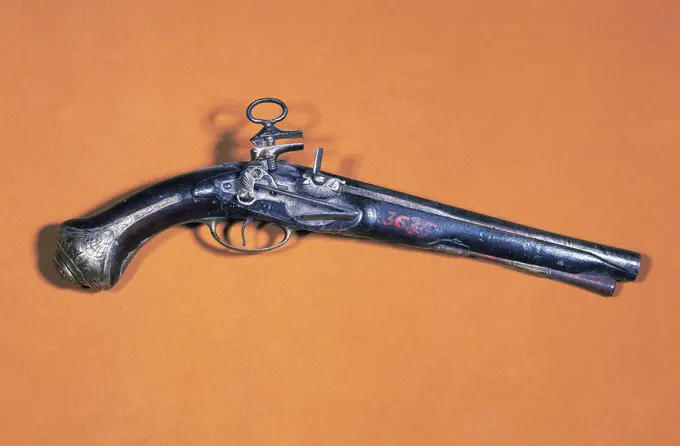
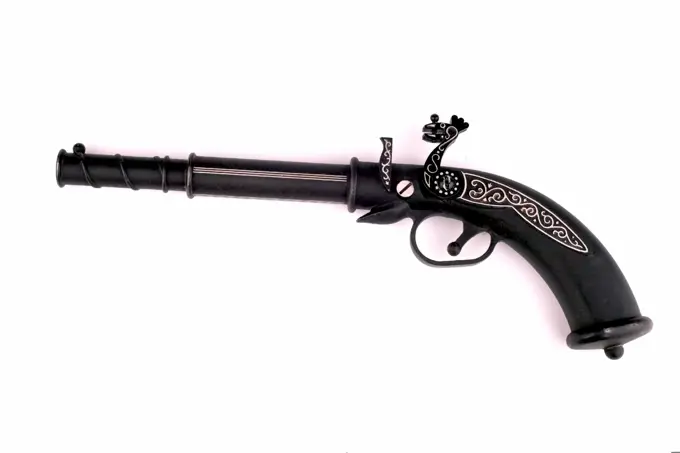
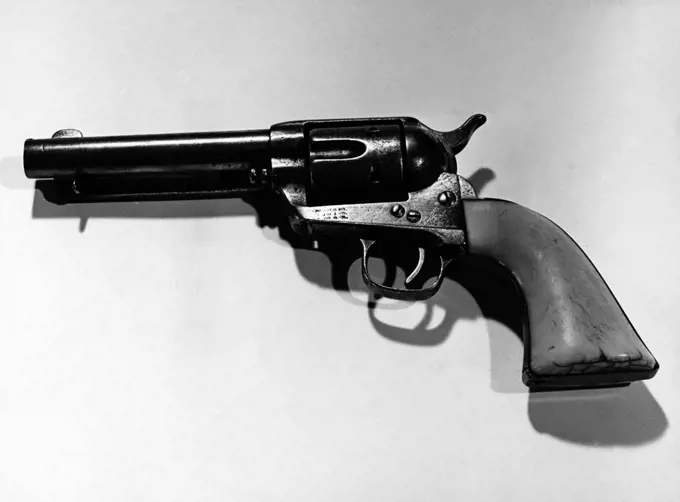
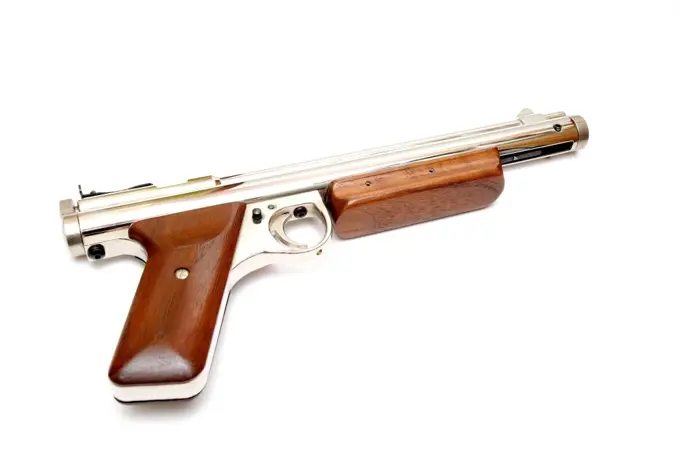
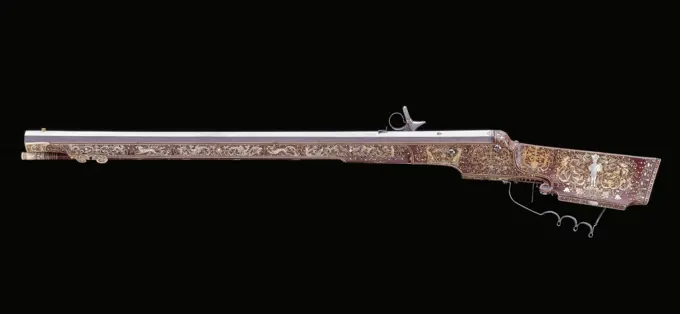
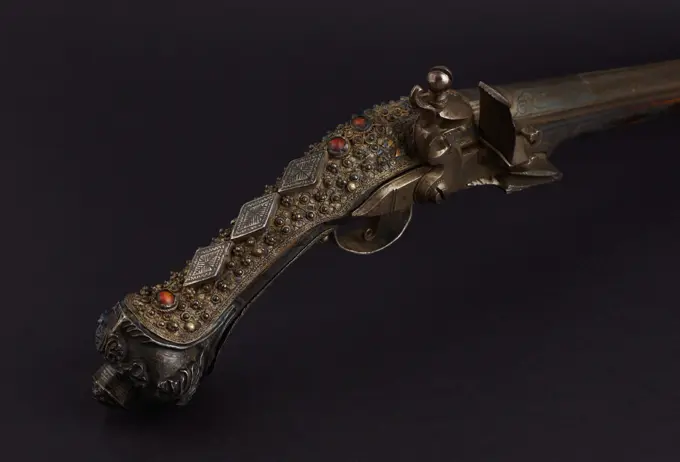
A selection of intricately designed flintlock pistols featuring ornate engravings and various metals, showcasing craftsmanship from the 17th to 18th century.

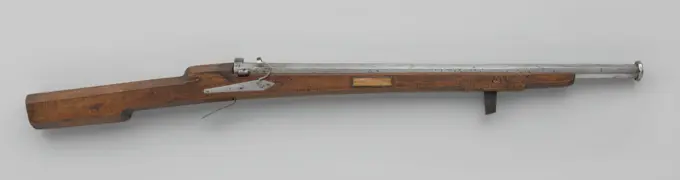
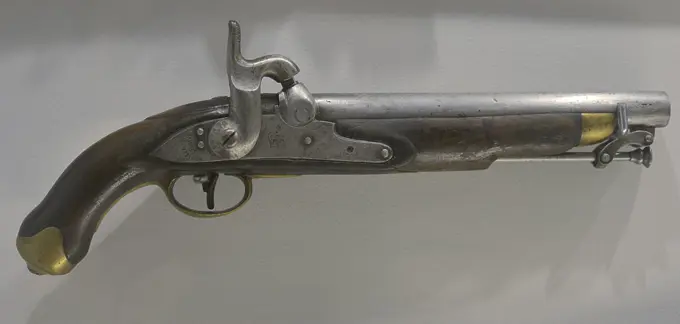
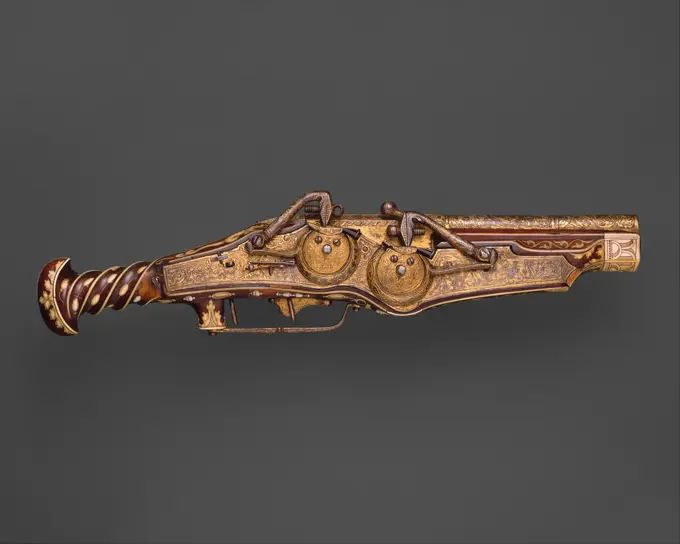
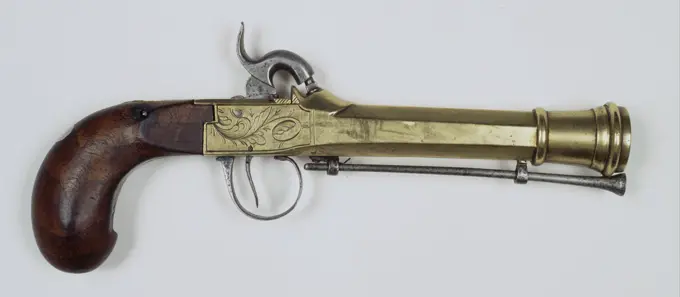
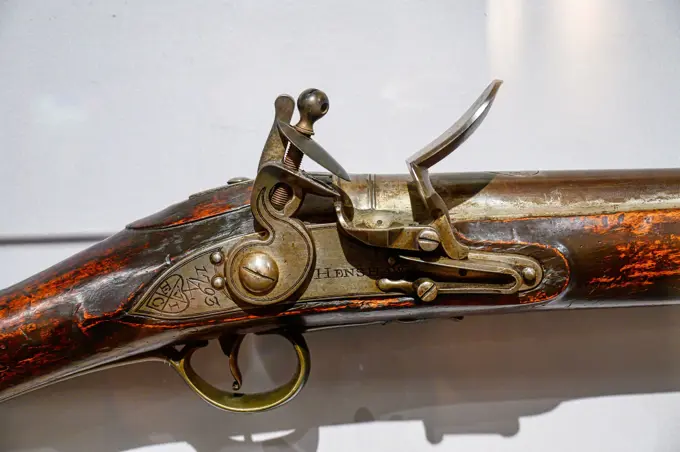
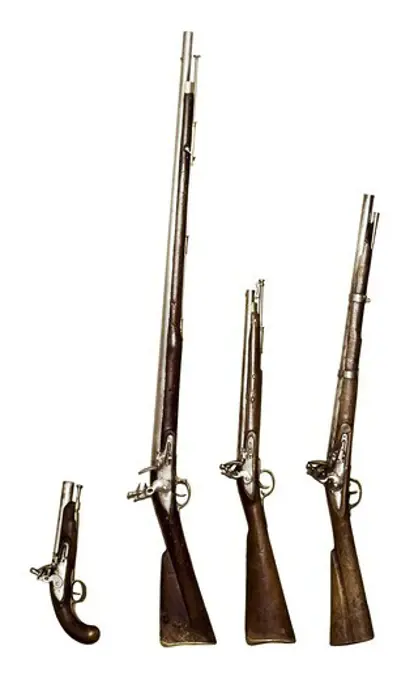
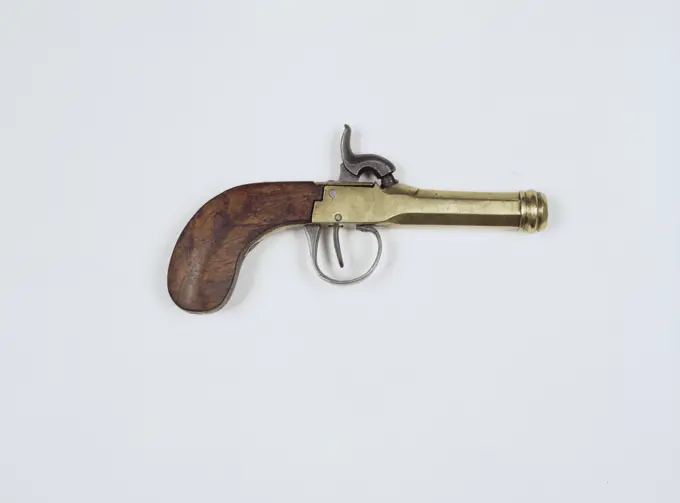
Flint gun, Fokkenberg, 1790 - 1795 flintlock pistol Frans Millitian flint gun, model 1777; The lock plate is engraved on the outside with the name of the maker and marked on the inside with G.S. The run is stamped on top with a crowned coat of arms marked y Rusta. The flask of Wortelnotenhout has a curved handle that flows into a flat, octagonal flask button. The brass batter consists of a loading sticker, a forked tractor bracket and the float button faceted on the bottom; no screw plate; The loading stick is made of wood. Utrecht brass (alloy). wood (plant material). iron (metal). engraving / faceting
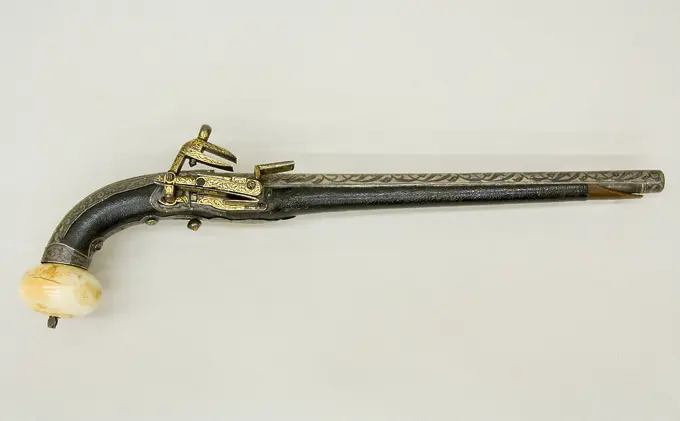
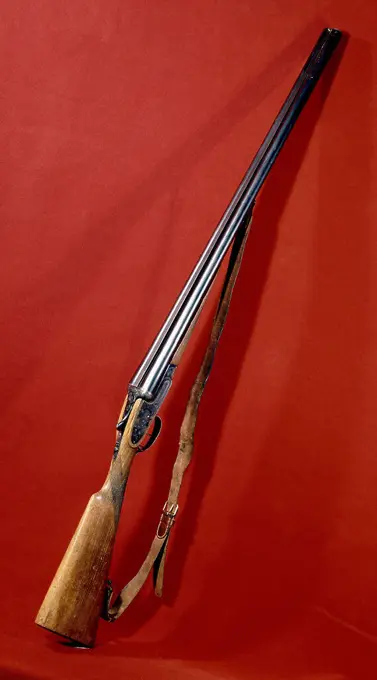
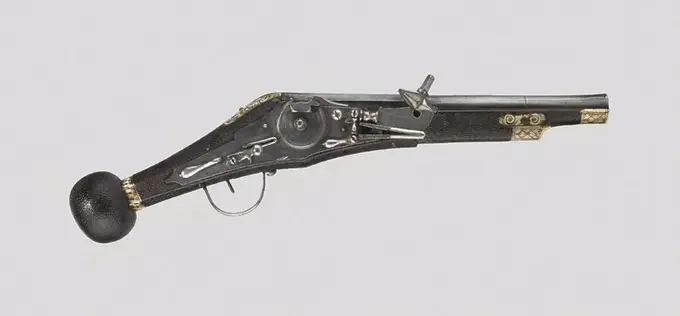
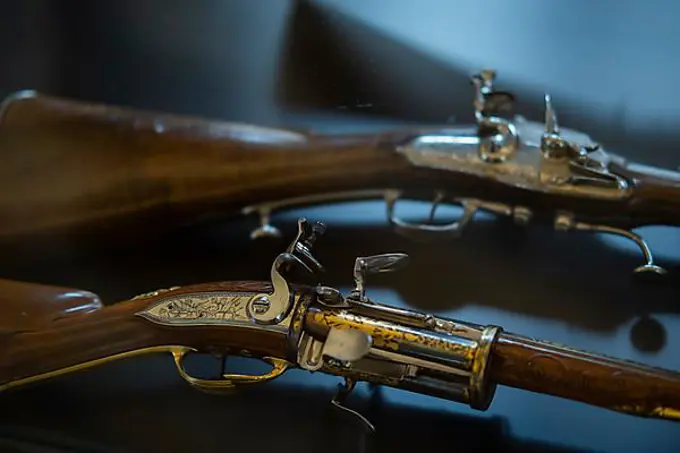
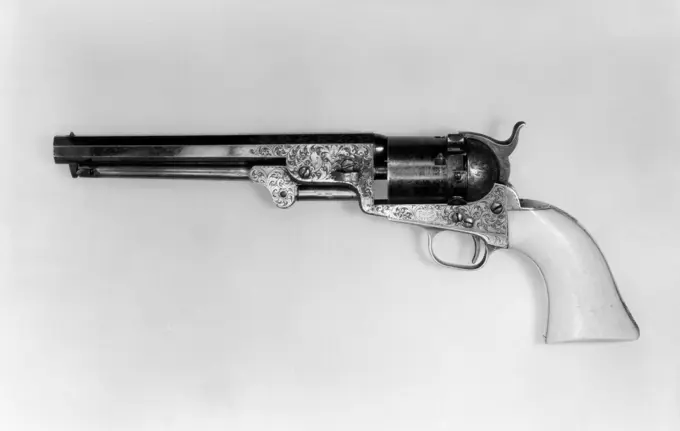
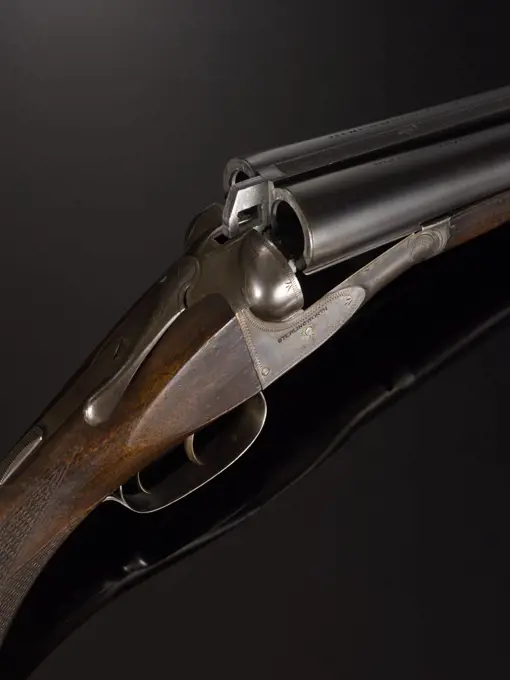
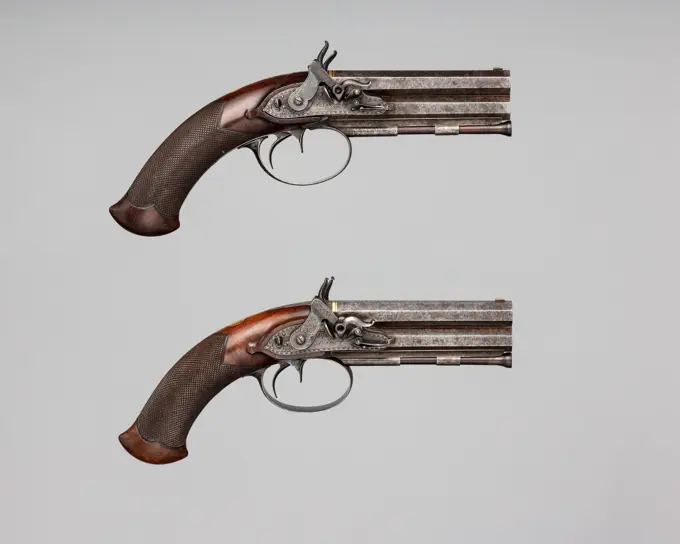
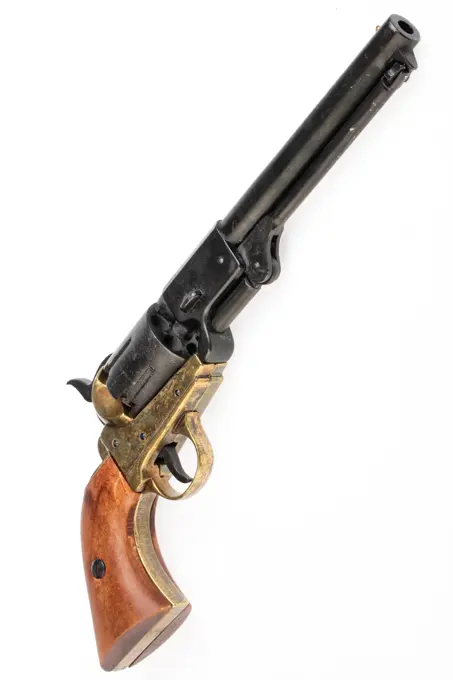
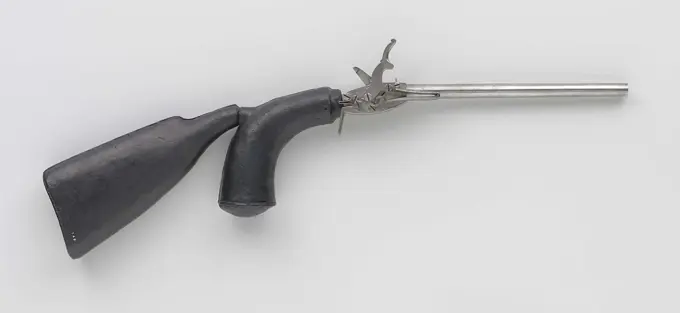
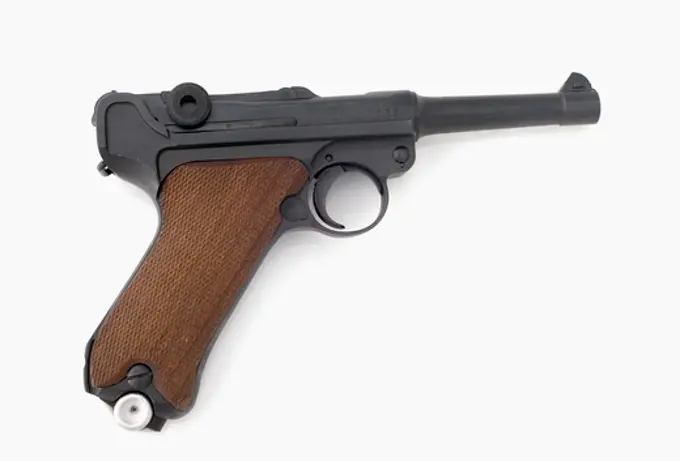
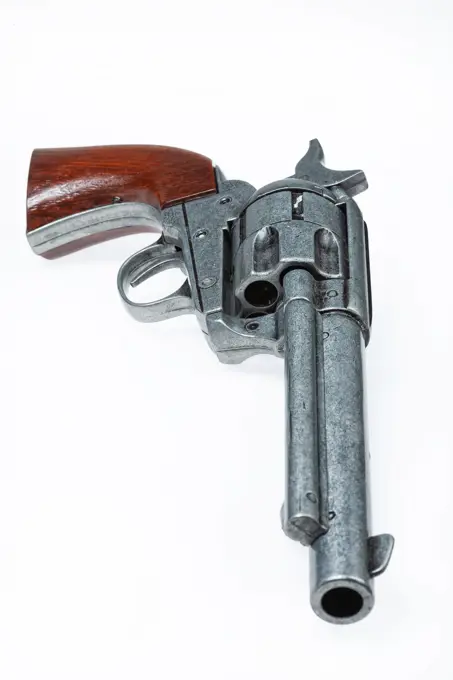
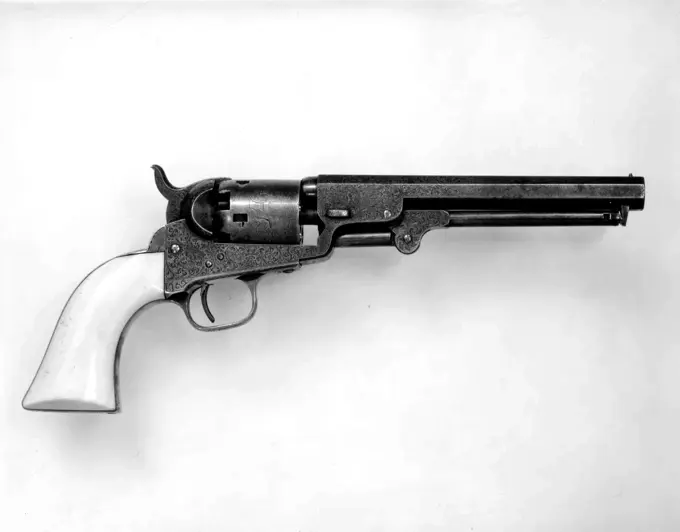
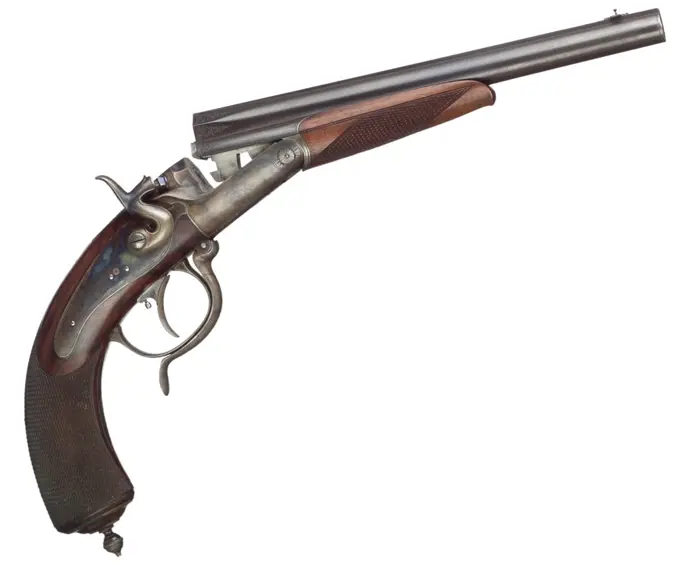
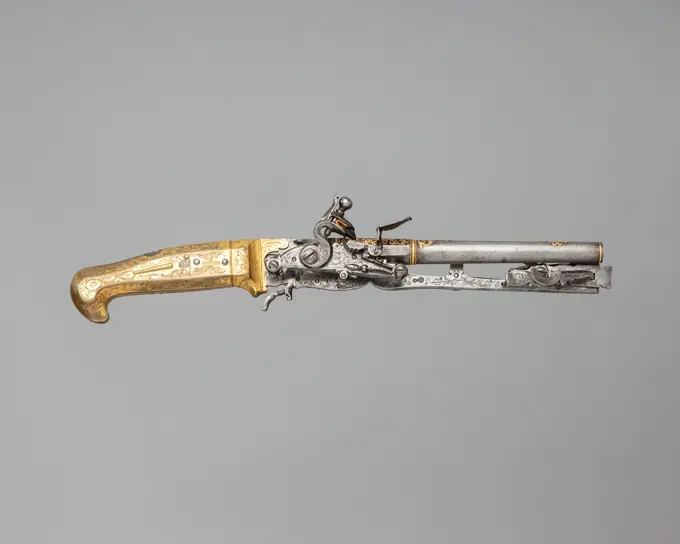
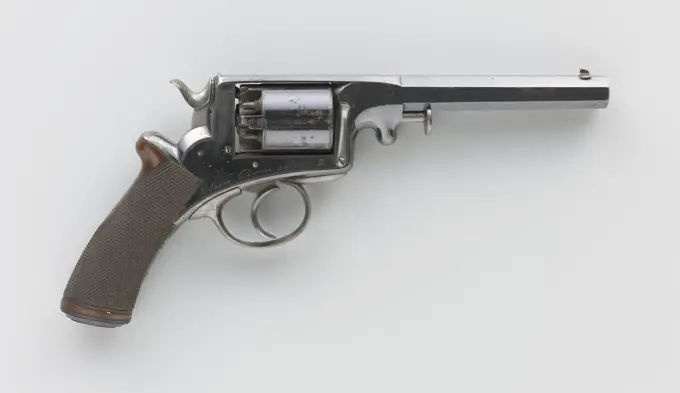
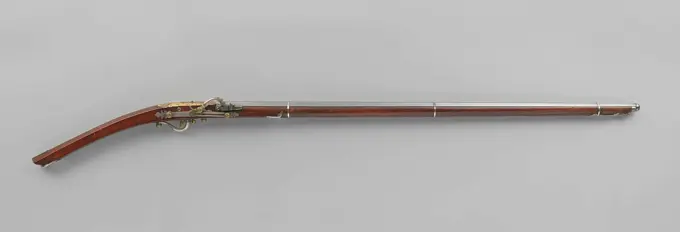
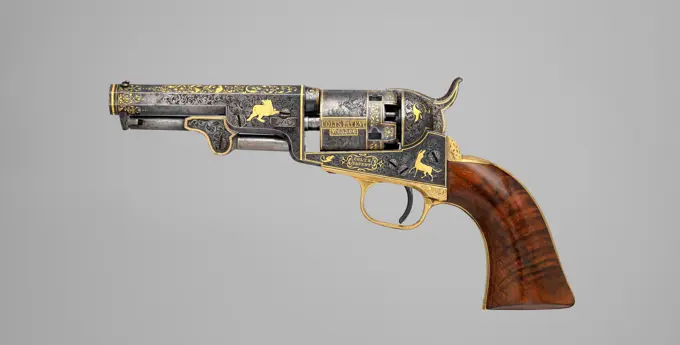
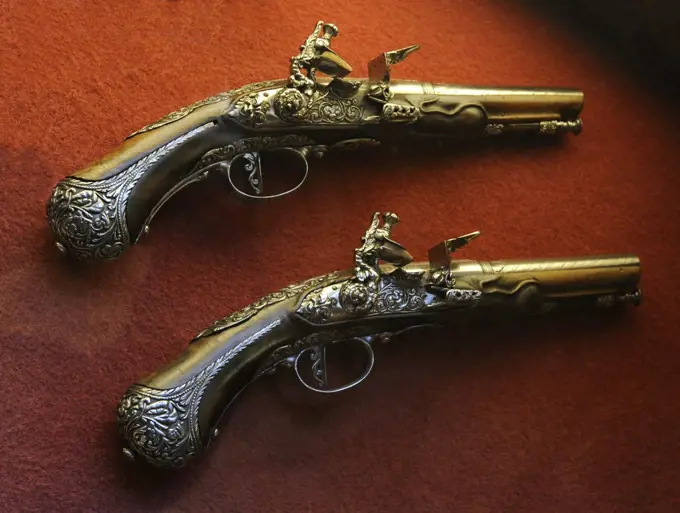
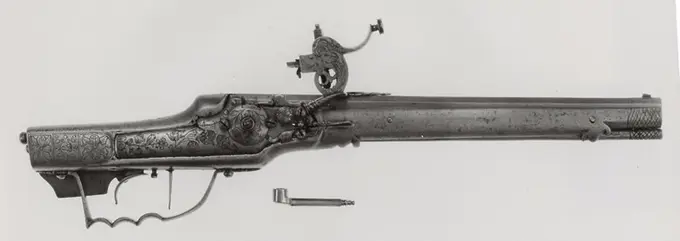
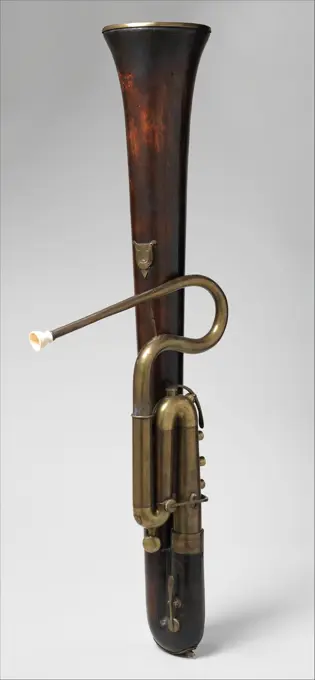
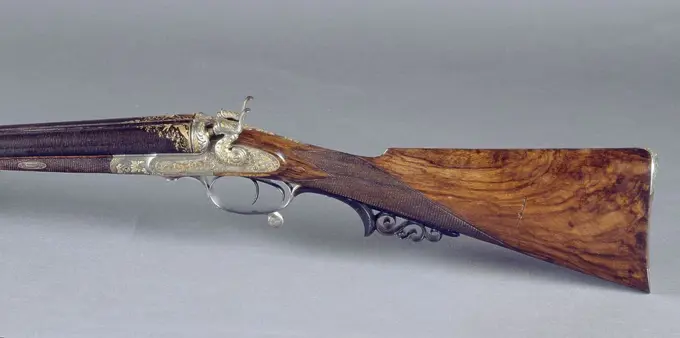
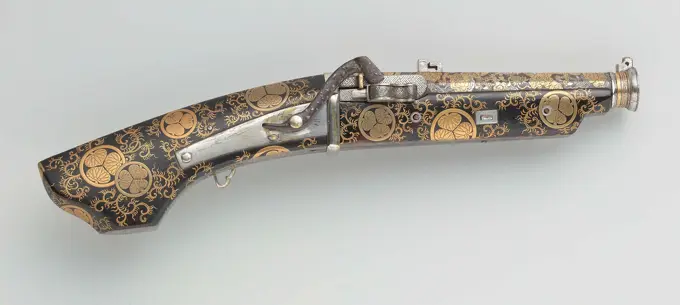
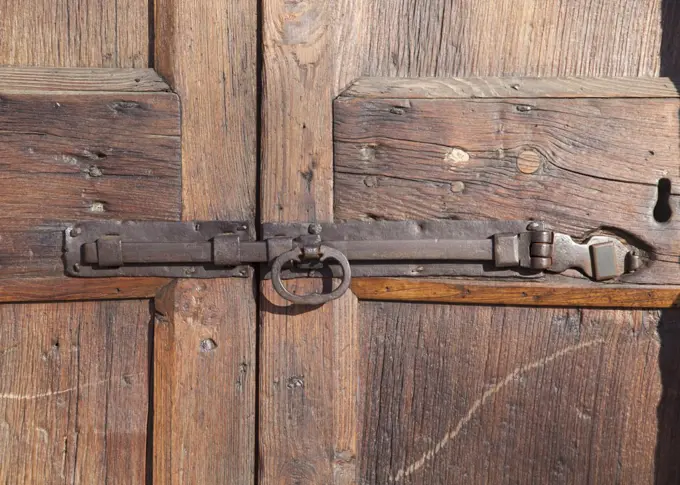
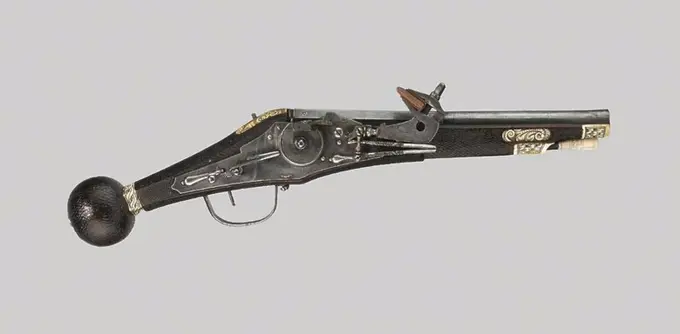
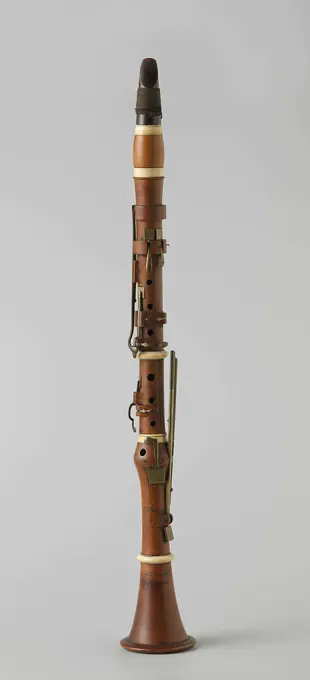
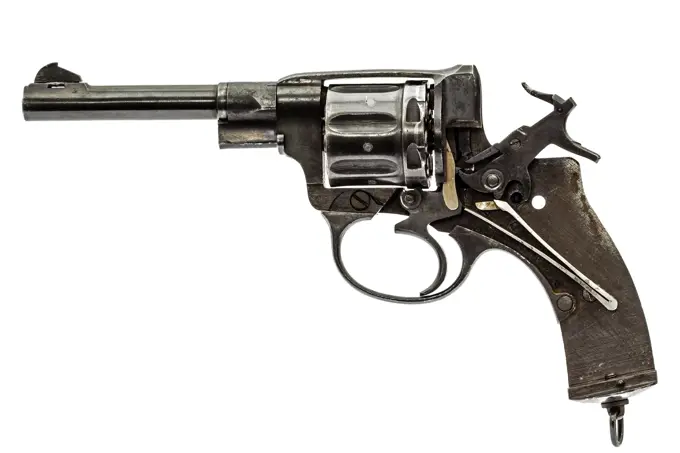
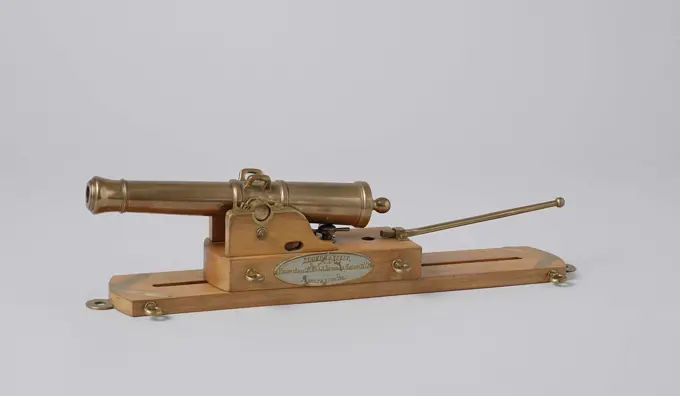
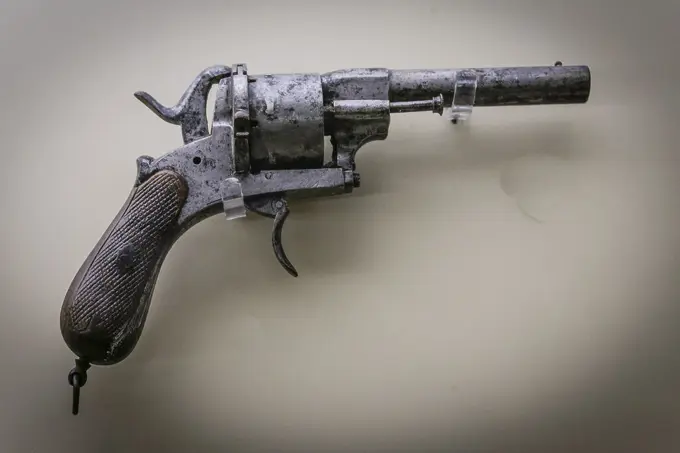
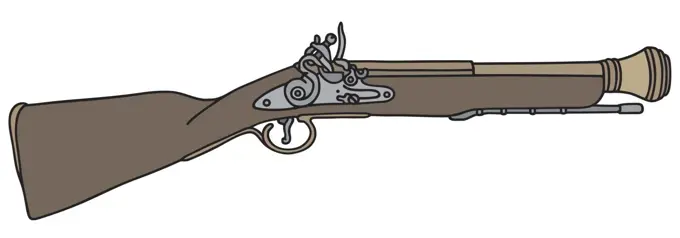
Antique Drum Revolver Isolated Side view old revolver isolated on white background Copyright: xZoonar.com/DanielxFerreira-LeitesxCiccarinox 13929040Model of a Bronze Field Cannon. Central European. Date: 1775-1800. Dimensions: Length overall of cannon: 13 3/4 in. (34.9 cm)Caliber: .57Diameter of wheels: 6 in (15.3 cm)Trail length: 15 in (30.1 cm)Trail width at base: 3 1/2 in (8.9 cm)Trail width in front: 2 7/16 in (6.5 cm)Overall length from muzzle to end of trail: 20 1/4 in (51.5 cm) Weight of cannon: 4 lb. 14 oz.Weight of carriage: 2 lb. 14 oz. Bronze, wood, and iron. Origin: Central Europe. Museum: The Chicago Art Institute, Chicago, USA.Albert Rudin, Pistol, c 1941 PistolBasset horn c. 1780, National Museum, Munich, Upper Bavaria, Bavaria, Germany, EuropeMiquelet Pistol. Culture: Caucasian. Dimensions: L. 17 3/8 in. (44.1 cm); L. of barrel 12 1/4 in. (31.1 cm); Cal.54 in (13.7 mm); Wt. 1 lb. 11.5 oz. (779.6 g). Date: 19th century; grip, dated A.H. 1268/A.D. 1851-2. Museum: Metropolitan Museum of Art, New York, USA.Flint hunt rifle, anonymous, 1690 - 1695 flintlock gun Polished iron lock. The loop is also made of polished iron and divided in three by stamped rings; The sight grain is made of silver. The carrot -knotwood flask is simply cut; The rearvizier is formed by two protrusions in a V around the tail of the loop. The iron batter consists of four loading stokkers, an S-shaped screw plate with a curled backward extension, the tractor bracket and a flask that extends over the flask; The wooden chest of drawers has an iron roof. Maastricht (possibly) iron (metal). silver (metal). wood (plant material) polishing / cuttingFlint gun with bayonet, part of a couple, c. 1400 - c. 1950 flintlock pistol Flint gun, part of torque, with iron smooth octagonal run. Plat slot plate with engraved weapon trophy, upright fire steel and iron rooster. The flask is made of wood and has a figures of a cannon, drums and banners in a silver thread on the sides. The Kolfhals is ribbed. Under the loop a folding bayonet that is attached to a hinge at the end of the barrel. No tractor bracket, a straight -fold iron tractor under the lock plate. West-Europa kolf: silver thread. kolf: wood (plant material). slot, loop: iron (metal) inlay (process)  NetherlandsSordini. The Sordini is a kind of pocket fiddle, also known as 'Pochette' and 'Taschengeige'. It is distinguished from the viol family thanks to its prolonged neck which extends from the body as opposed to being an attachment.ESCOPETA DE CAZA.Wheellock Puffer (Pistol) for the Mounted Bodyguard of the Elector of Saxony. Abraham Dressler; (German active 1572--1590), Dresden. Date: 1580-1600. Dimensions: L. 54.3 cm (21 3/8 in.)Barrel L. 33 cm (13 in.)Wt. 4 lb. 14 oz.Caliber .63. Steel, cherrywood, and staghorn. Origin: East Germany. Museum: The Chicago Art Institute, Chicago, USA.Long corridorFlintlock pistol with ivory fore-end, Jean Louroux, c. 1665 flintlock pistol Part of a couple. The lock plate is engraved with a bird, a leaf and signature. The blazed loop has a double row of hollows with a ring, and a trump ring. The ivory flask is cut by one piece and decorated with, among other things, leaf vines; The large pump button is cut around as a head of a mustache fighter with a classic helmet with a helmet forest, a dragon head with leaves on top and on either side samples that are connected to each other by means of a rope in their beak. Apart from the iron tractor plate, the batter is of gilded yellow buyer and consists of, among other things, the screw plate of Ajour, asymmetrical leaf drinks with two angels on either side of a cartouche engraved with a bust and profile of a man with a mustache; The ivory chest of drawers has a hood of gilded metal. Maastricht ivory. brass (alloy). gilding (material). iron (metal). metal. brass (alloy) engraving / cutting / gilding  MaColt Model 1851 Navy Revolver with Thuer Conversion for Self-Contained Cartridges, Serial no. 27060 1853; converted for cartidges, ca. 1868-71 Samuel Colt American In 1835 and 1836, the American inventor and industrialist Samuel Colt (1814-1862) patented a revolutionary type of multishot pistol that is still used today. Colt's revolvers had a rotating cylinder that could be loaded with several rounds and fired quickly by cocking and releasing the hammer or, in later models, by simply pulling the trigger. Early Colt firearms used percussion ignition and had to be loaded with powder, bullets, and ignition caps in separate operations. After 1870, Colt models were produced for self-contained cartridges that are much like modern pistol ammunition.First manufactured by Colt's factory in Peterson, New Jersey (1836-42), from 1847, the revolvers were made at a much larger plant in Hartford, Connecticut. A special workshop at the Hartford factory employed highly skilled decorators and artisans, Swivel musketoon, anonymous, c. 1780 - c. 1800 cannon. flintlock weapon Bronze Vooraad Enterbus on a standard. The loop has a caliber of 52 mm and a conical room. On the right side of the short drawer, a heavy flint lock has been installed, the pandic cover of which is taken care of by a spring when it opens. Behind an iron handle. The Enterbus hangs in an iron mik. France (possibly) bronze (metal). iron (metal). wood (plant material). textile materialsMiquelet Pistol ca. 1830-50 Caucasian, Tbilisi, Georgia, or Dagestan. Miquelet Pistol 24497Rifle with rock castle Pattern 1777, modified in 1805. Manufacture d`Armes St. EtienneFlintlock Pistol of Elector Johann Wilhelm von der Pfalz, c. 1690, National Museum, Munich, Upper Bavaria, Bavaria, Germany, EuropeModel of a Mainyard.model of a large RA, with two luchzils muscles. Particulars are the slats to the RA in the middle, to reinforce and as protection against wear, and the luchzil muscle brackets with rollers.Wheellock Rifle 1715-1725 Austria. Despite the invention of the simpler flintlock, the wheellock remained in use for hunting well into the 18th century, as the ignition was a split second faster. This could make a difference when hunting deer, sensitive enough to react to the sound of the ignition before the bullet left the gun.On later wheellocks, such as this example, the wheel is concealed under the lock plate. The decorative inlay of engraved mother-of-pearl, silver, and staghorn, with its florid designs of S- and C scrolls, reflects the newly developing Rococo style.. Steel, silver, walnut, horn, staghorn, and mother-of-pearl . Josef Haller (Decorator)Pocket Model Colt Revolver. Culture: American. Dimensions: L. 9 3/4 in. (24.8 cm); L. of barrel 5 in. (12.7 cm); Cal.31 in. (7.9 mm); Wt. 1 lb. 7.7 oz. (671.9 g). Date: 1848. Museum: Metropolitan Museum of Art, New York, USA.Antique Double-Barrel Shotgun, Close-UpFlint cadet rifle for the State Army, Hendrik Bosman, 1780 - 1800 flintlock gun The lock is unprocessed except for a signature on the final plate; The inside of the lock plate is stamped with the letters IG. The loop is stamped at the top with the Wapen van Amsterdam; A brand that is not to be identified, probably a capital letter M is stamped on the bottom; There is a bayonethaft under the tromp. The flask is simply cut. The yellow-loving batter includes four sliding running loops according to Austrian model, just like the bunch of iron hinged brackets, an S-shaped screw plate, an unadorned thumb plate and a steel chest of drawers. Amsterdam copper (metal). iron (metal). steel (alloy) cutting / engravingFlint gun, Gerrit Lasonder (II), c. 1690 flintlock pistol Part of a couple. The lock plate is engraved with blossom branches and a signature. The run is marked on the back with the Wapen van Utrecht, engraved with the same signature as the lock and stamped on the bottom with a brand in the form of a crowned heart. The flask is cut with, among other things, curl work. The iron batter consists of, among other things, an ajour processed thumb plate made of symmetrical curls, an ajour processed screw plate with symmetrical leaf vessels around a grotesque mask under the slot bolt, and an unprocessed flask hood with two pictures attached above each other as a central flask cover plate; The chest of drawers has an iron roof. Utrecht iron (metal). wood (plant material). engraving / cuttingKlover, anonymous, c. 1500 - c. 1550 musketoon Crochet can or clover with wick lock and octagonal run. Weapon of the Kloveniers. Holland Loop, lock, tractor: Iron (metal). Drawer, Kolf, Kolfhals: Wood (Plant Material)Smith & Wesson .44 Double-Action Frontier Model Revolver decorated by Tiffany & Co. (serial no. 8401), with Case and Cleaning Rod ca. 1893 Smith & Wesson This revolver is exceptional as one of the most elaborate Tiffany-decorated firearms of the late nineteenth century. Made for Smith & Wessons display at the Worlds Columbian Exposition in Chicago in 1893, the pistol stands as an unrivaled example of the silver firms distinct contribution to the decoration of American firearms. This transformative gift to The Met from the Robert M. Lee Foundation not only deepens the Museums holdings of Tiffany-decorated guns, as a masterpiece in its category it expands The Mets ability to tell stories about design in America during the late nineteenth century and to explore the intersections between fine art, industry, engineering, and weaponry.The revolver marks a peak in Tiffanys tradition of selling decorated weapons, which by 1893 had been a staple of the firms product offerings for nearly Case. Porta-Moschetto da Cavalleria mod. 1891. Etui or cast iron, for Italian carabiner. Leather, metal, big thread, 1935. General Leclerc Museum of Hauteclocque and the Liberation of Paris, Jean Moulin Museum. 78984-12Decorative pistol by  Lepage Mautier, ParisCranequin, c. 1480-1500. France (), late 15th Century. Steel and brass; incised decoration; pierced traceried Gothic windows; rack: 39.4 cm (15 1/2 in.); crank: 30.2 cm (11 7/8 in.); gear housing: 12.1 cm (4 3/4 in.). Bows made of composite materials were developed during the 1400s. They were immensely powerful and could be spanned only with the aid of a winder called a cranequin like the one seen here.Marine rifle marked a Middelbura, I. Rovart, c. 1400 - c. 1950 flintlock gun Rifle with flint lock, bayonet, iron chest of drawers and copper frame. Brand Van Middelburg I. Rovart, A Middelbura. Been to the Navy. Middelburg iron (metal). copper (metal).Pair of Over-and-Under Tube-Lock Percussion Pistols with Case and Accessories ca. 1805-10; converted after 1818 Durs Egg The son of a Swiss gunmaker, Durs Egg emigrated to England about 1768 and started his own business in London in 1772. He and his nephew, Joseph Egg (1775-1837), separately established reputations as two of the most talented gunmakers in the city. This elegant pair of pistols was originally fitted with flintlocks that were later converted to tube-locks, a more advanced mechanism patented by Joseph Manton (1766-1835) in 1818. Conversion was a common and economical method of updating a firearm as technology progressed.As a means of ignition, percussion mechanisms like the tube-lock utilized a highly combustible chemical compound called fulminate, which burns more rapidly than gunpowder when struck with force. The tube-lock operated using pre-fabricated fulminate-filled primer tubes, relieving the user from the step of priming the pan with loose gunpowder, and offering iCaptain Burton's Carbine Pistol and Projectile. From the book The Life of Captain Sir Richard Burton, volume I, by his wife Isabel Burton, published 1893.Old Revolver On Isolated Background Old revolver on an isolated studio background Copyright: xZoonar.com/AndreyxSkatx 12332204ARMAS ANTIGUAS. Location: PRIVATE COLLECTION. MADRID. SPANIEN.Model Field Cannon with Carriage and Wedge 1682 Austria. Bronze, wood, and iron .Pistol with a rock castlePair of Swiss pistolets circa 1803This carbine - a gun with a relatively short barrel - has a hollow iron stock that can be unscrewed and removed. It served as a container in which air could be brought to the correct pressure using a separate pump. Airguns were developed as hunting weapons owing to their relative silence and lack of powder smoke. These qualities also made them suitable for assassins and snipers.Caucasian flintlock pistol in silver mounts of the 19th centuryStill life of a lugar hand gun.Flintlock rifles from the hunting set of Max III Joseph, 18th century, National Museum, Munich, Upper Bavaria, Bavaria, Germany, EuropeStill Life In Western Style Cowboy equipment on an isolated studio background Copyright: xZoonar.com/AndreyxSkatx 14254807Muzzle-loading "Tower" pistol. Initially fitted using a flintlock mechanism. Converted into a caplock pistol after 1830, probably in the Portuguese Army Arsenal. Made in England, ca. 1780-1830. Maritime Museum. Lisbon, Portugal.Old signal pistol, flare gun and cartridges, isolated on white background Old signal pistol, flare gun and cartridges, isolated on white background Copyright: xZoonar.com/OleksandrxKostiuchenkox 8897088Percussion rifle - T. Bolton & Co. T. Bolton & Co.Double-Barreled Wheellock Pistol Made for Emperor Charles V (reigned 1519-56) ca. 1540-45 Peter Peck German One of the earliest pistols, this firearm was designed and produced by Peter Peck, a maker of watches and guns. The two locks combined in one mechanism provided the barrels with separate ignition. Made for Emperor Charles V (reigned 1519-56), the pistol is decorated with his dynastic and personal emblems: the double-headed eagle and the pillars of Hercules with the Latin motto PLUS ULTRA (More beyond). Listen to experts illuminate this artwork's story Listen Play or pause #4411. Double-Barreled Wheellock Pistol Made for Emperor Charles V Supported by Bloomberg Philanthropies We're sorry, the transcript for this audio track is not available at this time. We are working to make it available as soon as possible.. Double-Barreled Wheellock Pistol Made for Emperor Charles V (reigned 1519-56) 22387A duel pistol with a capither castle from a pairMiquelet Gun Made for Charles IV of Spain (reigned 1788-1808) dated 1796 Antonio Guisasola Spanish The Spanish inscription on the barrel of this fowling piece translates, "Gift to His Majesty the King, Don Carlos 4, in the Year 1796." The gun probably was presented to Charles IV (reigned 1788-1808) by the two gunmakers from Eibar, an important center of arms production in the Basque provinces.. Miquelet Gun Made for Charles IV of Spain (reigned 1788-1808) 22626Percussiepistool with copper loop, drumblon, anonymous, c. 1800 - c. 1900  Pistool with copper loop, drum blon and percussieslot. Haan and corporate stone above. The gun carries a Liège brand: 'E' above 'L G' above Asterisk, entirely in oval. Everything is copper, except the rooster, the chimney the tractor, bracket and loading stick; The handle wood. Liège copper (metal). wood (plant material). iron (metal)   NetherlandsRampart gun of 1793. Fort York is a National Historic Site of Canada.Colt Model 1849 Pocket Percussion Revolver, Serial no. 81015 ca. 1853 Samuel Colt American Samuel Colt presented this revolver to Colonel Thomas H. Seymour (1807-1868), governor of Connecticut and United States ambassador to Russia.. Colt Model 1849 Pocket Percussion Revolver, Serial no. 81015 24854Antique duel pistol against white background, close upWheel-lock flintlock, by Unknown, 17th Century, Unknow. Italy, Piemonte, Turin, Royal Armory. Detail. Firearm wheel trigger butt handle.FIIntlock pistolRatchet late 18th-mid-19th century American or English. Ratchet 504465Combination Flintlock and Knife Carrier 19th century Turkish. Combination Flintlock and Knife Carrier. Turkish. 19th century. Steel, gold. Firearms-Pistols-FlintlockWinchester Model 1886 Takedown Rifle decorated by Tiffany & Co. (serial no. 120528) 1899-1900 Winchester Repeating Arms Company Tiffany & Co. decorated this Winchester Model 1886 takedown rifle with cast and chased silver mounts in the Art Nouveau style for display at the Exposition Universelle in Paris in 1900. A collaborative masterwork by the countrys preeminent silver firm and leading rifle maker which combines a machine-made product of state-of-the-art design with hand-made decoration that bucked contemporary conventions of American firearms embellishment, the gun is emblematic of Americas artistic ambition and industrial accomplishment at the turn of the century. It also would have been understood by some contemporary audiences as a symbol of the Western frontiers closing, as many then viewed the Winchester rifle as a critical tool in the United States' territorial expansion.The rifle is a transformative gift to The Met from the Robert M. Lee Foundation in honor of the MuseumHandfeuerwaffen aus dem 19. Jahrhundert old firearms LicenseRF Copyright: xZoonar.com/VesselinxVassilevx 15138266Gun. Dated: c. 1936. Dimensions: overall: 24.4 x 34.9 cm (9 5/8 x 13 3/4 in.). Medium: watercolor, colored pencil, gouache, and pen and ink on paper. Museum: National Gallery of Art, Washington DC. Author: Harry G. Aberdeen.Pair of flintlock pistols. By Lazarino Cominazzo, Ca. 1650. Steel and wood. The State Hermitage Museum. Saint Petersburg. Russia.Percussion Revolver with Accessories in a Box, A. Francotte, 1852 - 1870 revolver. bullet mould. mould. chest. powder horn. sack Deane-Adams Revolver, drawn six-bars percussion, with accessories in a box. The revolver is made of blewy steel has an eight -sided barrel with sparing decorations. The patterns must be applied to the cylinder, whereby they can be tamped by a pestle on a lever along the barrel. The battle hats are applied to chimneys on the back of the cylinder. In the box there is a scraper, a ball tong, a pattern mold for making paper patterns, a Kruithoorn, a fat pot and a leather bag with battle hats. manufacturer: Liègepatentee: London iron (metal). brass (alloy). copper (metal). wood (plant material). leather. linen (material). paperLontslotgeweer behorend bij wapenrek van Cornelis Tromp.Lontlotguis with an octagonal loop and a strongly curved slim flask, characteristic of guns manufactured in Tonkin (North Vietnam). Associated capacity is also present.FIIntlock pistolPair of flintlock pistols. Leonard Cleuter was an adventurer and a mercenary who occasionally tried to make money from the firearms trade. He signed this brace of pistols, the pommels of which are carved in the form of Classical warrior heads crowned with laurel wreaths. When Cleuter was declared bankrupt as an arms dealer in 1664, he left Maastricht and borrowed money to start his own regiment.Presentation Flintlock Fowling Piece in the Eastern Fashhion. Gunsmith: Jean Le Clerc (French); Barrel smith: Fatou (French); Paris. Date: 1810. Dimensions: L. 149 cm (58 11/16 in.) Barrel L. 108 cm (42 1/2 in.)Wt. 7 lb. 9 oz.Caliber .66. Steel, gilding, silver, walnut, and baleen. Origin: Paris. Museum: The Chicago Art Institute, Chicago, USA. Author: Jean Le Clerk.Dolk, Kunihiro, 1600 Dagger whose sheath and batter pieces of the grip with gold and silver are incustrated, as well as the Kozuka and the Kogai. Japan steel (alloy). wood (plant material). gold (metal). silver (metal) Dagger whose sheath and batter pieces of the grip with gold and silver are incustrated, as well as the Kozuka and the Kogai. Japan steel (alloy). wood (plant material). gold (metal). silver (metal)FIIntlock pistol from a pair unknown scrunging plantFlintlock Belt Pistol Made 1775-1785 Doune. Steel, leather, and wood . John MurdochRock pistol Behr, Johann Jacob (fl. 1690 1750)Pistol of flint stone. 18th century. Made in Ripoll (Girona province). Ethnographic Museum. Ripoll. Spain.So called Walloon sward linked with Charles XII (1682-1718)Gold-inlaid Colt Model 1849 Pocket Revolver (serial no. 63306) ca. 1853 Samuel Colt This Model 1849 Pocket Revolver belongs to a rarefied group of Colt percussion firearms decorated with profuse engraving, relief carving, and flush or low relief gold inlay, of which about twenty examples are known to survive. Made at Samuel Colts (1814-1862) direction for exhibition at international fairs and for presentation to important officials and foreign and domestic heads of state, including the kings of Sweden and Denmark and the Czar of Russia, they functioned as diplomatic gifts and demonstrations of the companys artistic and technical achievements.The pistol is one of two gold-inlaid Colts donated by The Robert M. Lee Foundation to The Met in honor of the Museums 150th anniversary (see also acc. no. 2018.856.2a-o). The revolvers rank among the most significant additions to the Museums American firearms collection in decades due to their great rarity as a type, the richness of their decorPair of flintlock pistols. By Lazarino Cominazzo, Ca. 1650.  Steel and wood. The State Hermitage Museum. Saint Petersburg. Russia.Boy's Gun. German. Date: 1650-1675. Dimensions: L. 31 cm (12 1/4 in.)Barrel L. 20.8 cm (8 3/16 in.)Wt. 1 lb. 7 oz.Caliber .25. Steel and brass. Origin: Germany. Museum: The Chicago Art Institute, Chicago, USA.Serpent Forveille in B-flat ca. 1825 Forveille French The serpent, a wide bass brass horn with finger holes that evolved at the end of the sixteenth century, gained importance in band music during the second half of the eighteenth century. Thenceforth, the serpent's unwieldy shape was either modified or converted to upright forms. This version, with four keys and six fingerholes, was designed and first publicly displayed in Paris in 1823.. Serpent Forveille in B-flat 501672ESCOPETA DE CAZA DE PISTON-1863-REY FRANCISCO DE ASIS-NºINV K-148. Author: EUSEBIO ZULOAGA GONZALEZ (1808-1898) ARMERO. Location: PALACIO REAL-REAL ARMERIA DE MADRID. MADRID. SPAIN.. Richly decorated in gold and silver with Tokugawa-mon, a dragon and arabes.Pistol with a capshable castle converted from rock unknown scruxWrought iron slide barrel bolt, Sacred Mountain of Orta (UNESCO World Heritage List, 2003), Orta San Giulio, Piedmont, Italy.Wheellock Puffer (Pistol) for the Mounted Bodyguard of the Elector of Saxony. Abraham Dressler; (German, active 1572-90), Dresden. Date: 1585-1595. Dimensions: L. 54.6 cm (21 1/2 in.)Barrel L. 32 cm (12 5/8 in.)Wt. 4 lb. 6 oz.Caliber .65. Steel, cherrywood, and staghorn. Origin: Dresden. Museum: The Chicago Art Institute, Chicago, USA.Clarinet.Clarinet made of palm wood with ivory mounted, eight holes, twelve copper valves and a separate center piece. Signature: L. Embach & Co in Amsterdam.Pair of wheellock pistols, anonymous, c. 1650  Sober designed Radslot gun, part of a couple. The outer wheel is provided with a hook on the underside and stamped with an O; The pandel can be opened by means of a pressure tip. The round run is stamped on the back with a brand in the form of a climbing lion with a star above it; 98-A is stamped at the bottom with C.M.L. ..., 98-B with a brand that is not too ignorant. The flask of gust walnut wood is grooved at the front; There is an iron nail on the bottom of the flask button; The back of the handle is branded with a brand in the form of two curved fish above the number 3 on 98-A and the number 4 in 98-B. The iron fittings consists of a drawer, a round loading sticker, a loop -shaped tractor bracket, the front of which is screwed into the flask and to which a rounded plates is stamped around with the number 474 (on both pistols), and a band around the flask button; The chest of drawers has a hood and suite with the frontade. Maastricht Rifle from the VOC with Arm of Amsterdam. Rate with flint lock of the VOC and the weapon of Amsterdam. The loading stick is made of iron.carbine with ammunitionDisassembled revolver, pistol mechanism with the hammer cocked, isolated on white background Disassembled revolver, pistol mechanism with the hammer cocked, isolated on white background Copyright: xZoonar.com/OleksandrxKostiuchenkox 8905733Rifle, musket, carbine and gun. 'Tower' brand. SPAIN. BASQUE COUNTRY. ALAVA. Vitoria. Museum of the Armera (armoury).Model or a 3-pounder Gun on a slide for a launch. Model of a gun on a sliding slide for sloops. The trump is tulip-shaped and finished with a jewelry ring. The 28 cm long loop has a 14 mm caliber and two ornamental rod tires; Two simple dolphins have been poured on the tapping piece. There is a grape on the Kulas. The oFFuit is a thick rectangular shelf rounded at the front, and on which two cheeks are connected by a brass rod. The cheeks have elliptical holes at the bottom before the puzzle and the tapping are lined with brass. The buffer has a vertebral bolt that sails in the carriage of the sledge, an elevation screw that can be placed on two positions, one for a headit star and one for a gun, and a baking iron. The sled is a long frame with a trench in the middle and is rounded to both ends with an eye for a spindle bolt. Eye bolts are mounted on the corners of the sled and the affit. Scale 1: 5 (Scale on model).Pistol with a rock castleOld signal pistol, flare gun, isolated on white background Old signal pistol, flare gun, isolated on white background Copyright: xZoonar.com/OleksandrxKostiuchenkox 8897163old pistolClose-up of a Colt revolverA .177 caliber pellet gun also known as an airgun on a light colored bcakground.. Chrome AirgunWheel lock rifle, c. 1630, M.P., German (Central or Southern), German (Central or Southern), 8 5/8 x 3 x 39 1/4 in. (21.91 x 7.62 x 99.7 cm) (overall), Iron, fruitwood, bone, mother-of-pearl, and cowhorn, Germany, 17th centuryVuursteenjachtgeweer.The lock plate is signed. The loop is stamped at the bottom with PI within a crowned shield and equipped with a glass of sight grain. The flask is easily cut. The iron attachment consists of three charging bokekokers, a braco-shaped screw plate, a thumb plate with chiseled prainage on top and bottom and a flask plate stamped N45 and with the inscriptions such as (20) and N7; The loading cooker has a hood of Koehoorn.Retro weapon, vintage pistol with metal and wooden parts. Isolated antique elegant firearm for protection and defense. Battles and battlefields, historical gunshot. Ammunition vector in flat style. Antique firearm, vintage pistol, retro weaponTrigger, old rifle from 1795, Blair Castle, Blair Atholl, Perth and Kinross, Scotland, Great BritainPair of Wheellock Pistols 1560-1580 Nuremberg. Wood and steel .revolver Lefaucheux, France, Castle of San Carlos, seventeenth century, Palma, Mallorca, Spain.Historical short rifleZakpistool met percussieslot, anonymous, 1830 - 1860  Pocket gun, percussion, Scottish model with octagonal barrel of brass, internal lock, iron tractor bracket and rooster. Wooden flask with vk in the bottom. The lock cabinet is attached to the flask with two iron screws. The end of the loop is round -shaped. In the course an oval in which the Liège brand L.E.G. is standing with a carved K with a crown above it. Liège (Possible) Loop: Brass (Alloy). Kolf: Walnut (Hardwood). Bracket and Haan: Iron (Metal)   NetherlandsPistol with a rock castle