Historical Jewelry

Authentic pieces of gold jewelry and decorative items from various eras, featuring intricate designs and historical significance.

Brooch, Lodewijk Willem van Kooten (II), c. 1908 - c. 1911 Brooch made of gold, brown and white enamel, with a Peridot-Olivine. Amsterdam gold (metal). mineral. Brooch made of gold, brown and white enamel, with a Peridot-Olivine. Amsterdam gold (metal). mineral.
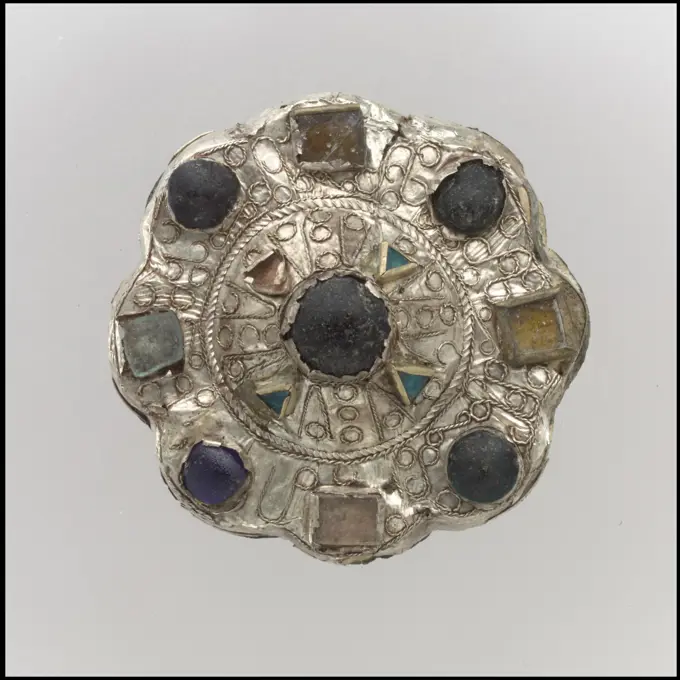
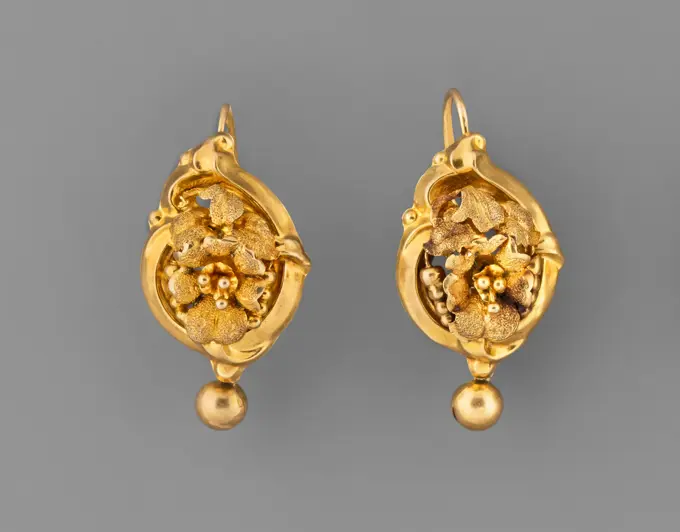
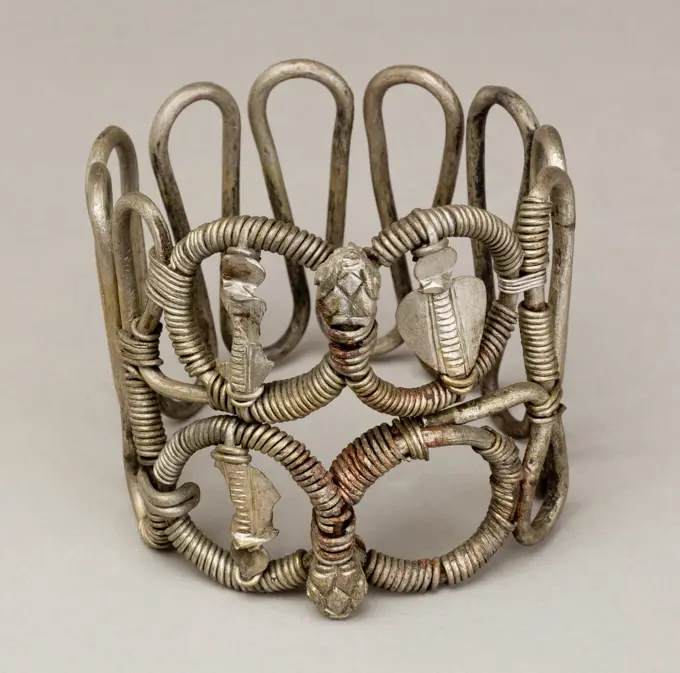
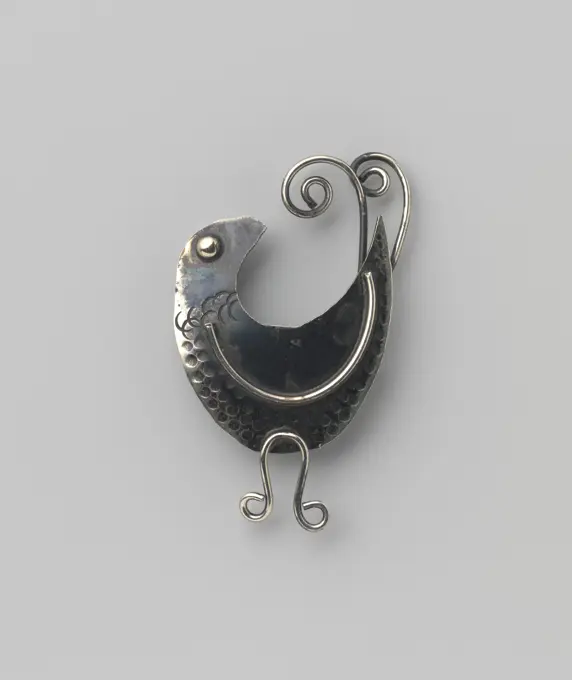
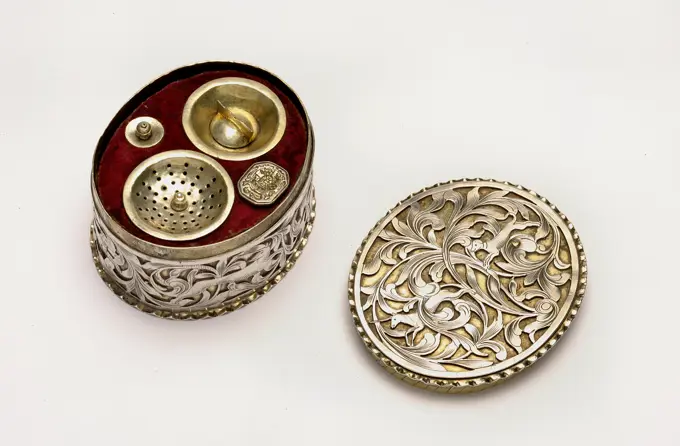
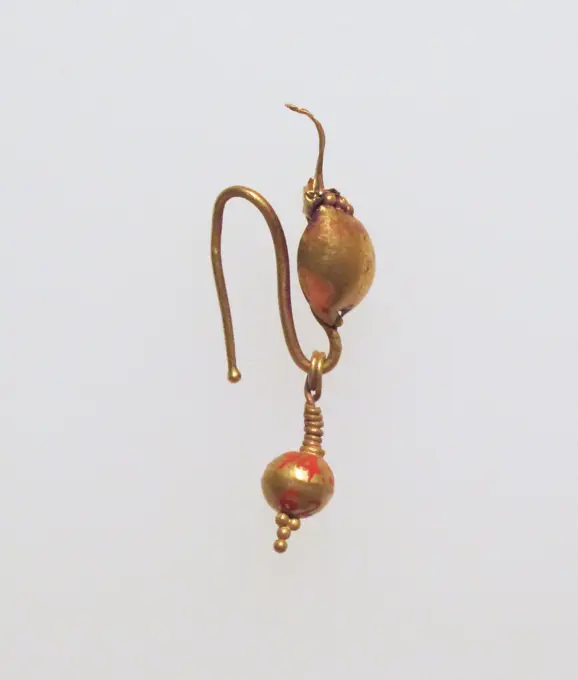
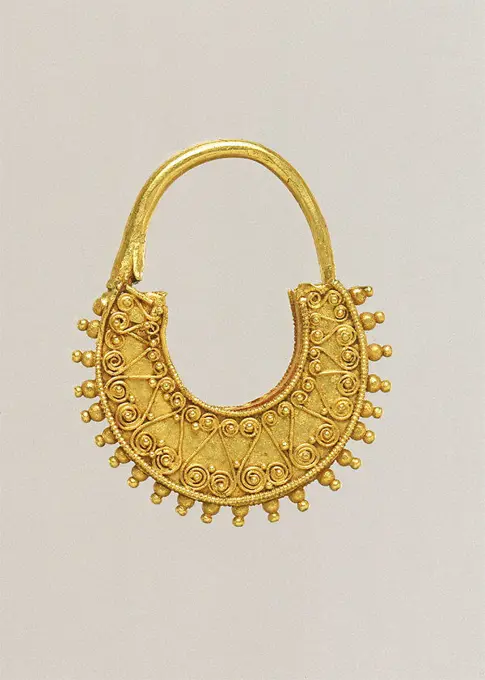
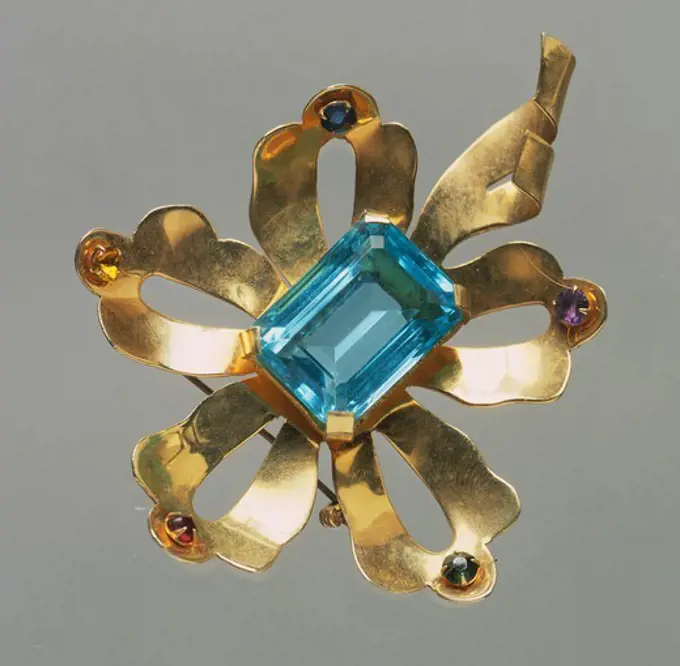
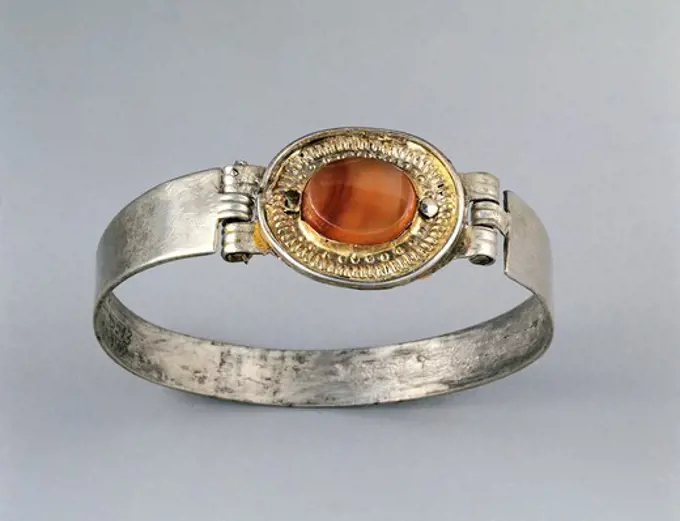
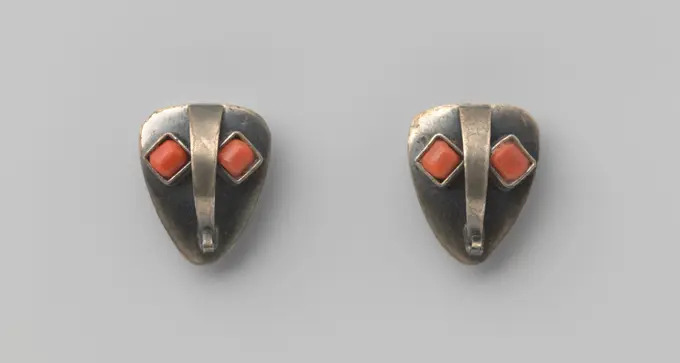
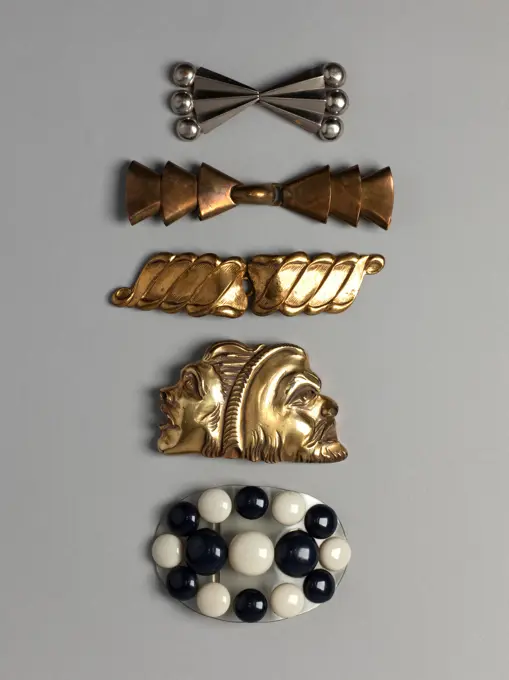
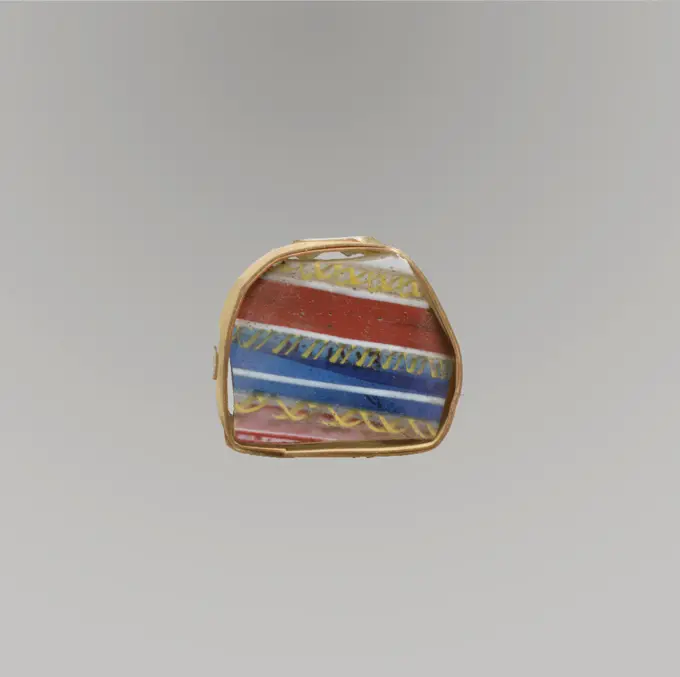
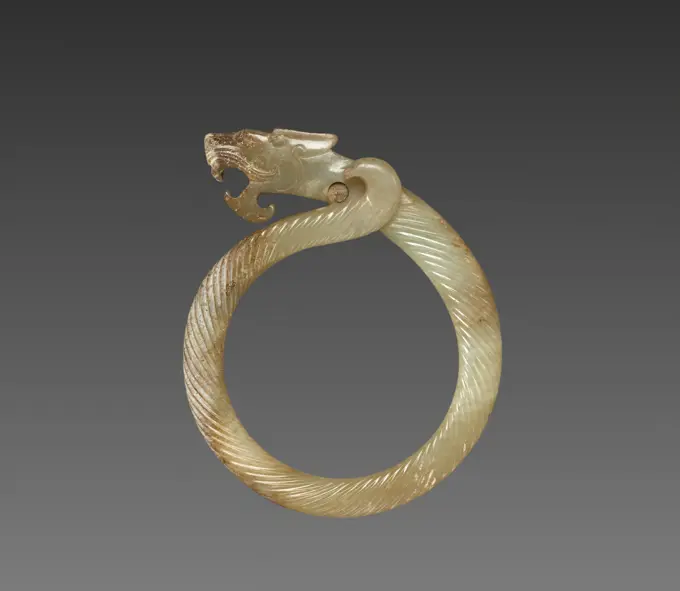
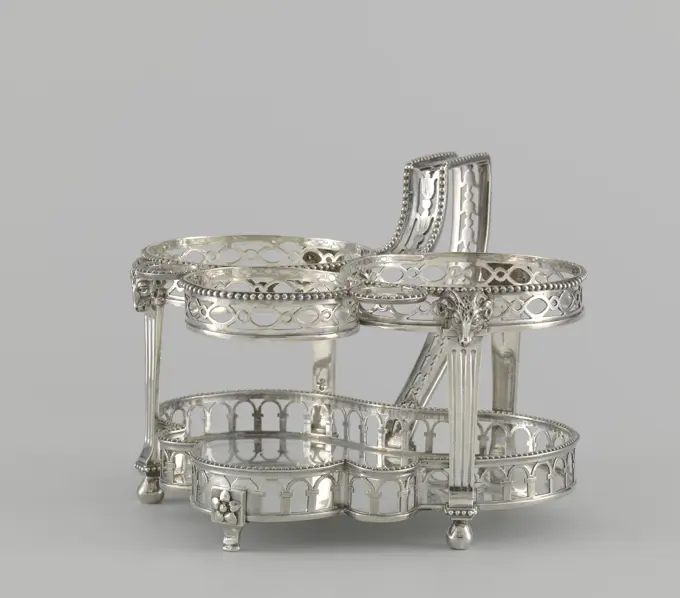
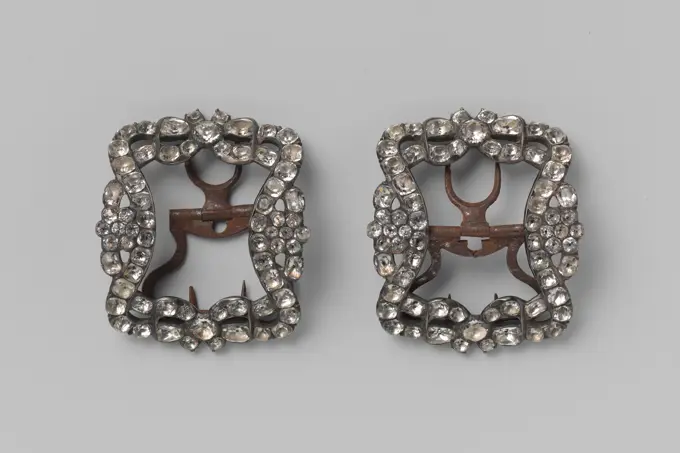
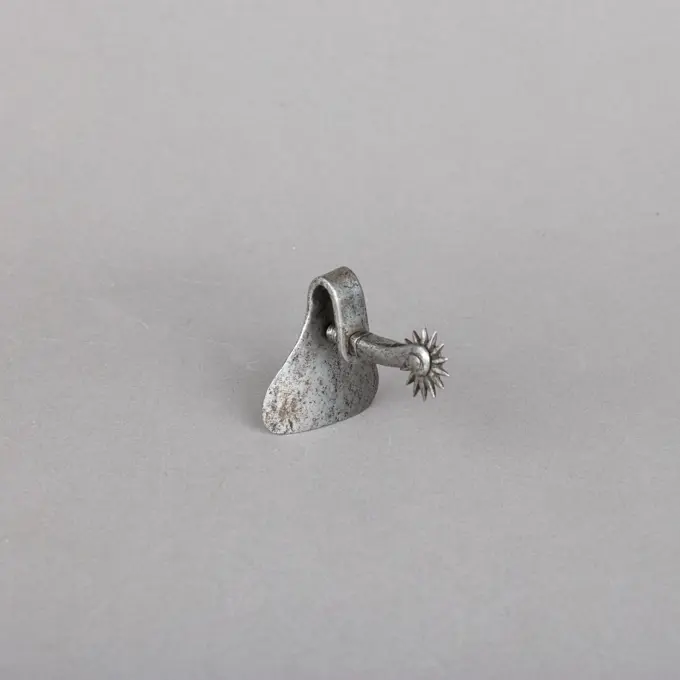
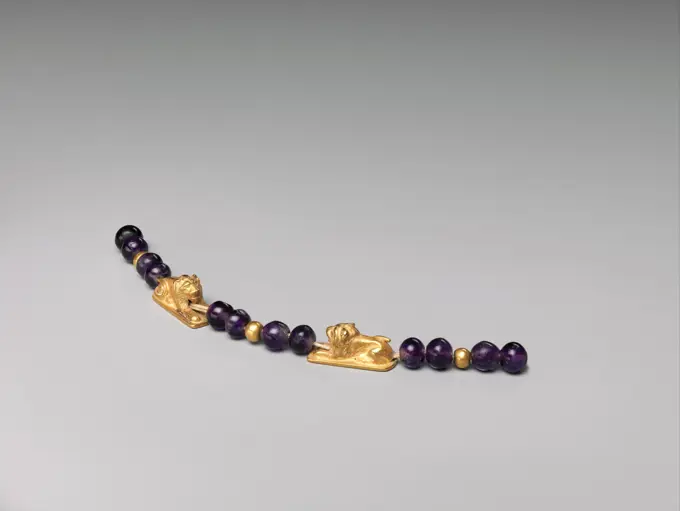
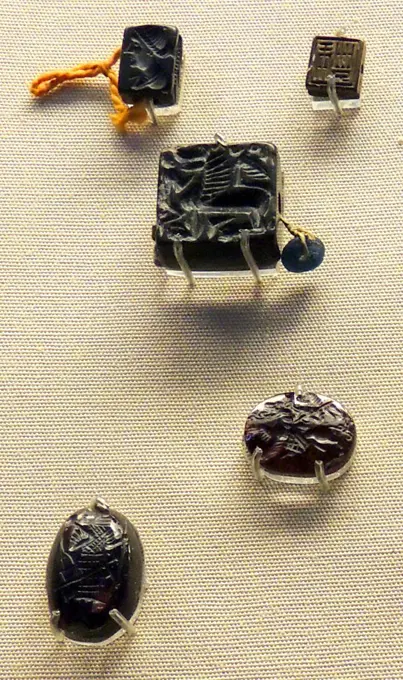
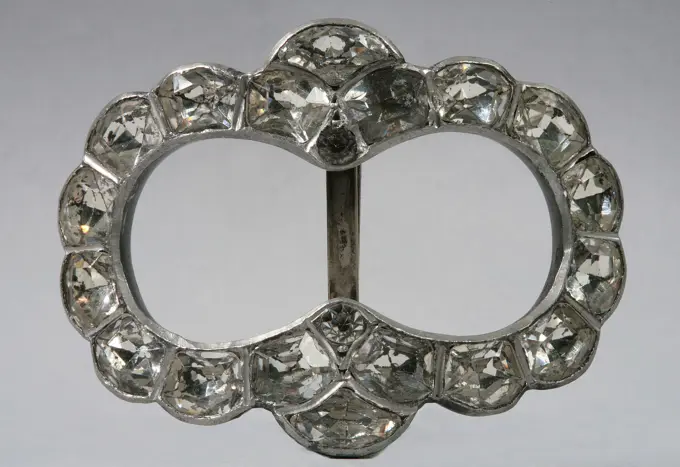
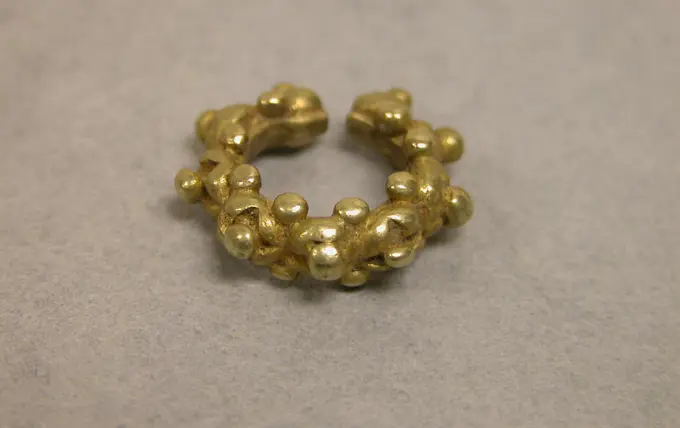
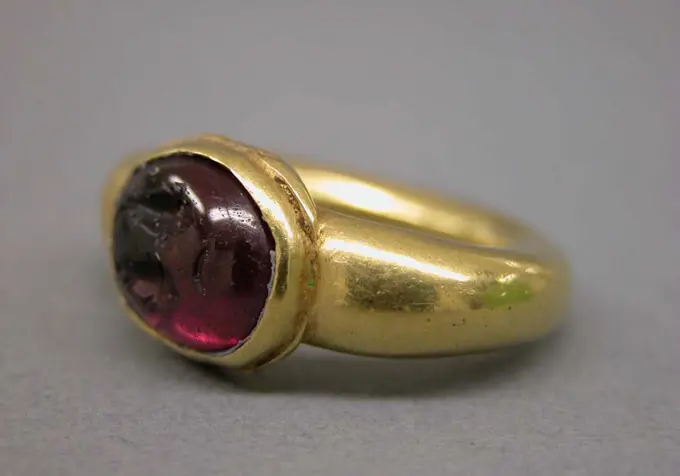
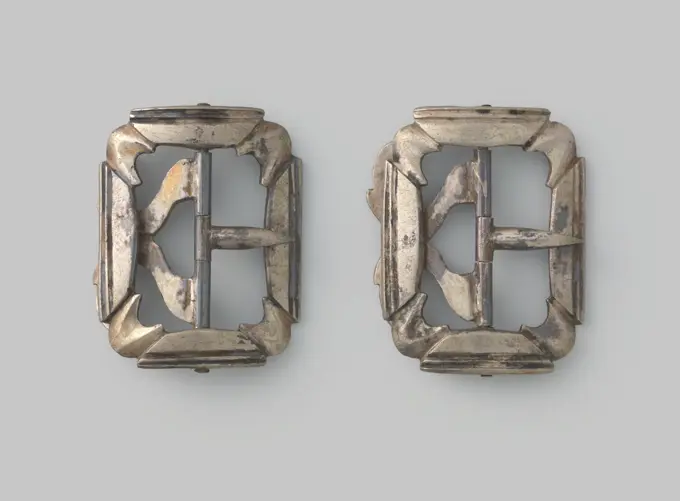
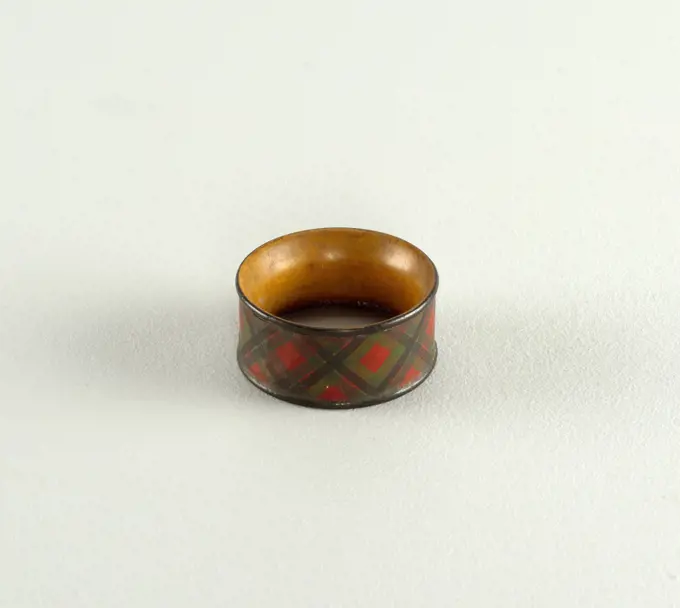
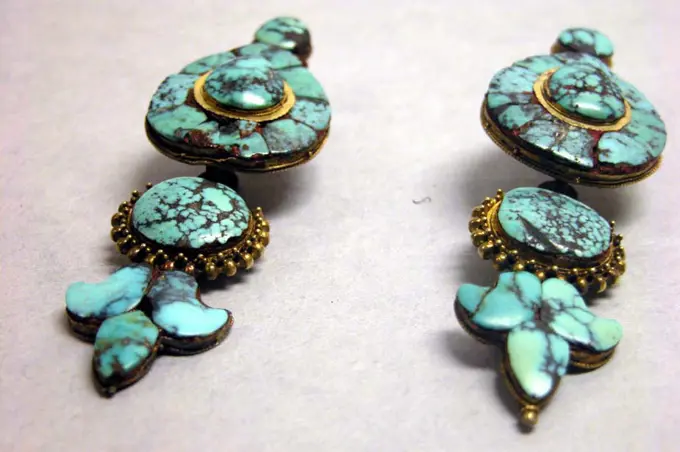
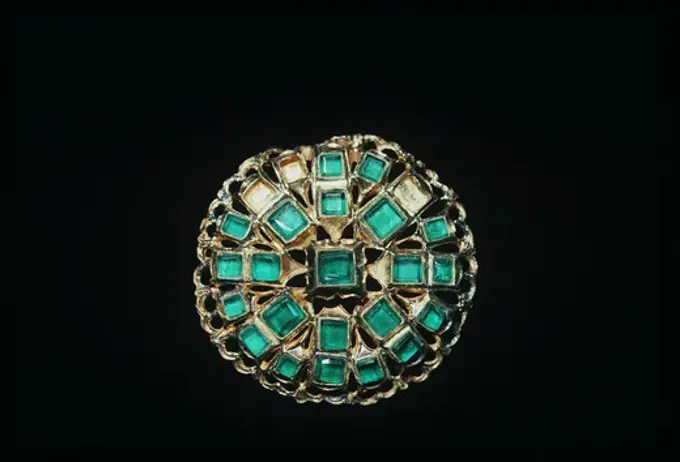
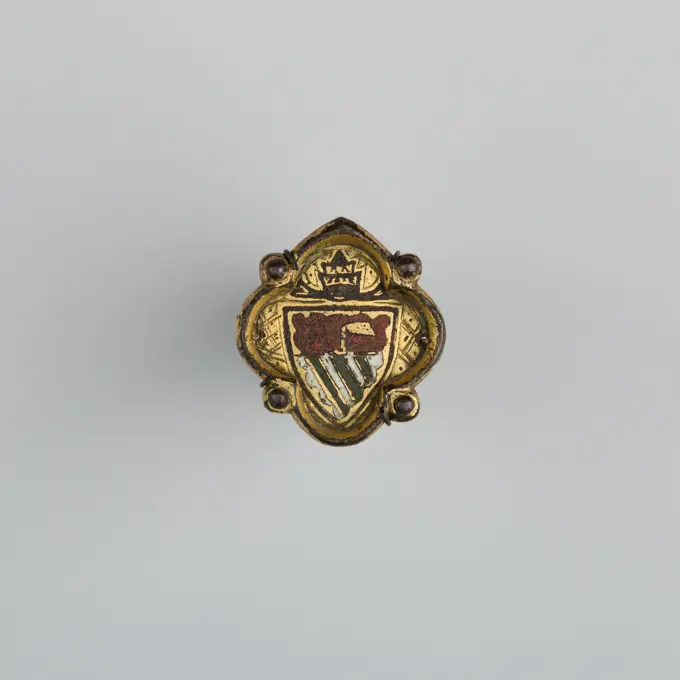
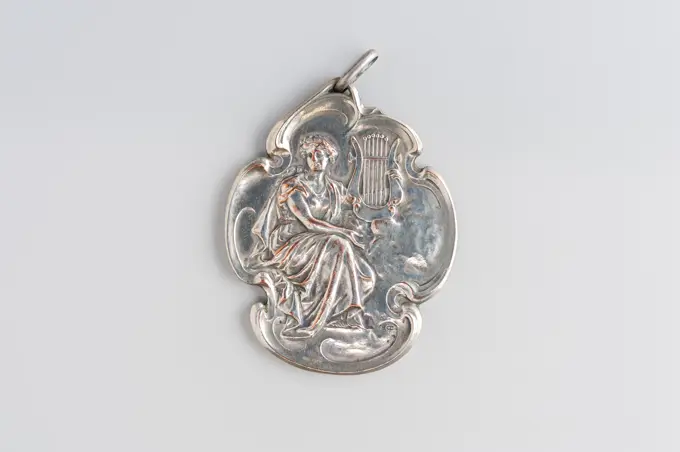
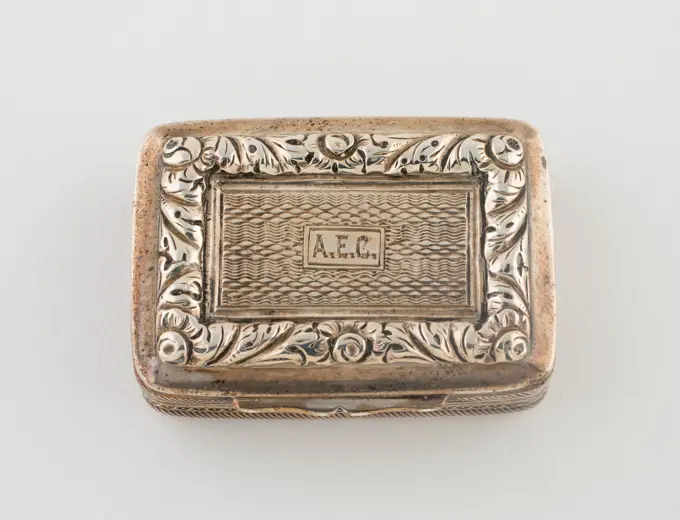
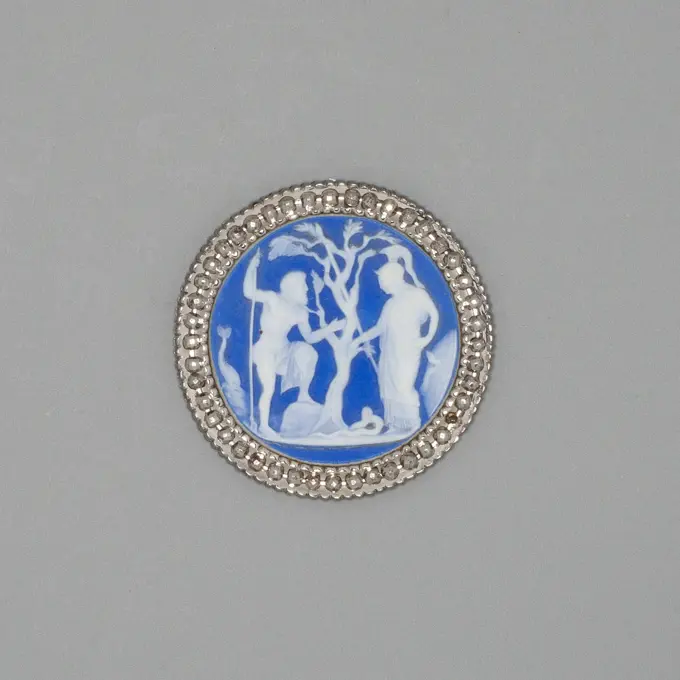
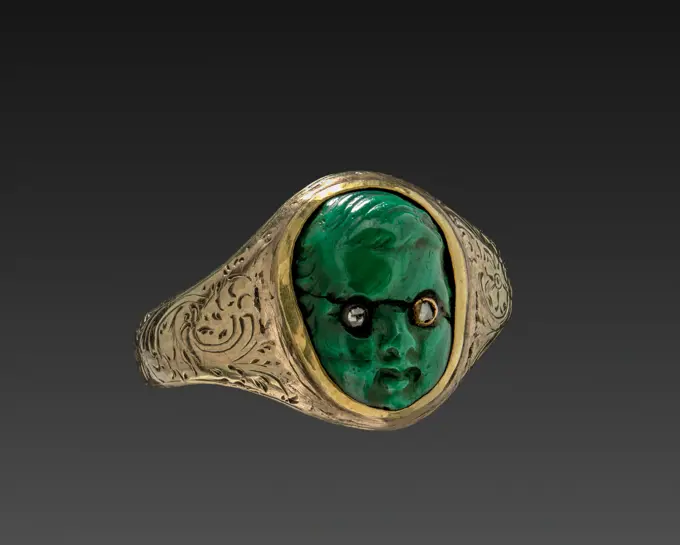
Pendant with pearl. Pendant with pearl 243412Finger Ring depicting King Akhenaten and Queen Nefertiti as Shu and Tefnut ca. 1353-1336 BC New Kingdom, Amarna Period This ring was found at Amarna. The hieroglyphs may be read as an ideogram. The two seated figures are probably Akhenaten (left) and Nefertiti (right) as the deities Shu (air as indicated by the feather he holds) and Tefnut (moisture). They were father and mother of the earth and sky, which are symbolically represented by the earth hieroglyph (below) and by the sun disk flanked by two sacred cobras (above).. Finger Ring depicting King Akhenaten and Queen Nefertiti as Shu and Tefnut 544679Flower-Shaped Clothing Plaque. Culture: China (Xinjiang Autonomous Region, Central Asia). Dimensions: Diam. 1 1/4 in. (3.2 cm). Date: 7th-9th century.The nomadic communities of Central Asia used such plaques to embellish clothing and horse trappings. As these nomadic cultures herded animals and were constantly moving, their artistic production was expressed in portable objects that marked the wearer's status and wealth. The outstanding preservation of these fragile ornaments suggests they were used in conjunction with burials, where the body was aggrandized with valuable textiles and augmented with gold. Although it is difficult to date and place these objects geographically, their presence in Central Asia and has a long, established history. Museum: Metropolitan Museum of Art, New York, USA.Disk Brooch 7th century Frankish. Disk Brooch 464998 Frankish, Disk Brooch, 7th century, Silver sheet; blue, green and clear glass, Overall: 2 1/8 x 7/8 in. (5.4 x 2.2 cm). The Metropolitan Museum of Art, New York. Gift of J. Pierpont Morgan, 1917 (17.191.29)Louis-François Louis-François Cartier (1819-1904). (1819-1904). Corner brooch. Drawing by Charles Jacqueau. Platinum, diamonds, rubies, sapphires. 1918. Museum of Fine Arts of the City of Paris, Petit Palais. Fashion accessory, jewelryEar Clip Second half of the 8th-second half of the 10th century Indonesia (Java). Ear Clip 49952Hollow gold earrings. unknown, jewellerRingPair ofearringsPair of Ear Ornaments, Stars 8th-12th century Indonesia (Central Java). Pair of Ear Ornaments, Stars 64246Double Scroll Fertility Earring 8th-12th century Indonesia (Central Java). Double Scroll Fertility Earring 64347Glass mosaic fragment late 1st century B.C.-early 1st century A.D. Roman Thick-walled body fragment.Translucent blue, deep purple () appearing black, opaque white, yellow, and red.Outsplayed curving side, then turned sharply downward.Mosaic pattern formed from tiny polygonal sections of three canes all in a blue ground: one with a purple rosette with white radiating spokes and two circles in white and red around a central yellow rod; another with a purple rosette outlined in white and two circles in yellow and red around a central white rod, and a third with a purple circle outlined in white and filled with a ring of yellow dots and two circles in white and red around a central yellow rod.Polished interior; pitting and slight weathering of surface bubbles and scratches on interior; dulling and iridescent weathering on exterior and jagged edges.. Glass mosaic fragment 257361Ring with Claw setGemPendant, aidoion. Pendant, aidoion 243061Mourningring. Honorand: Colonel Abraham de Peyster, American, 1657-1728Bracelet or armlet with uraei 304 B.C.-A.D. 364 Ptolemaic or Roman Period. Bracelet or armlet with uraei. 304 B.C.-A.D. 364. Silver. Ptolemaic or Roman Period. From Egypt, Central Delta, Tell el-Balamun (Diospolis Inferior), Carnarvon/Carter excavations, 1913Silver -colored metal brooch in the shape of a bird, anonymous, c. 1950 - c. 1970 Brooch made of gushed silver with wire work in the shape of a bird. The legs and tail of the animal are indicated with wire work. The eye consists of a poli bulging. The brooch can be confirmed with a safety pin. Netherlands metal Brooch made of gushed silver with wire work in the shape of a bird. The legs and tail of the animal are indicated with wire work. The eye consists of a poli bulging. The brooch can be confirmed with a safety pin. Netherlands metalA can from the cover with traveling instruments; Petrus, Hans III (fl. Ca 1621-1672); 1680-1684 (1680-00-00-84-00-00);Unicorn (iconogr.), Ministry of Finance, National Bank of Poland (Warsaw - 1945-), Hunting for Unicorn (iconogr.), Baroque (style), message (provenance), Writing accessoriesFemale Golfer, Silver, Oblong, with curves and counter-curves around perimeter, featuring raised decoration of female golfer in hat and long dress at tee, on grass course, with building and hills in background, c and s-scroll edges and flower at top center of lid. Lid hinged at side. Striker at bottom., ca. 1895, containers, Decorative Arts, Matchsafe, MatchsafeBracelet, one of a pair, 2 7/8 x 3 1/2 x 5/8 in. (7.3 x 8.89 x 1.59 cm), Silver, ChinaGold earring with disc and pendant 2nd century A.D. Roman. Gold earring with disc and pendant 243175Ring, 1700s-1800s. North Africa, 18th-19th century. Gold; diameter: 2.2 cm (7/8 in.).Earring for a Deity Showing Vishnu Riding Garuda. Culture: Nepal. Dimensions: H. 3 1/2 in. (8.9 cm); W. 2 5/8 in. (6.7cm). Date: 17th-19th century. Museum: Metropolitan Museum of Art, New York, USA.Gold crescent-shaped earring 2nd half of the 5th century B.C. Greek, Cypriot This shape of earring has a long tradition in the ancient Near East, stretching back to the Early Bronze Age.. Gold crescent-shaped earring 243023Czepiec unknownFlemish heart. Maria for.)Goldsmith's art, Italy, 20th century. Bow knot brooch by Coro with colored crystals, 1950s.Glass network mosaic fragment late 1st century B.C.-early 1st century A.D. Roman Body fragment.Colorless, with opaque white.Convex curving side.Eight parallel canes decorated with two spirally twisted threads.Pinprick bubbles; exterior polished; slight pitting of surface bubbles; creamy iridescent weathering on interior; jagged, weathered edges.. Glass network mosaic fragment 257337Ring with hexagonal motif decorated with email, anonymous, 1850 - 1925 Golden smooth (pink) ring with hexagonal motif inlaid with white, blue and red email. The shin is also decorated on either side with the same color enamel in a trapezoidal shape. A guillochering is installed under the blue email. Netherlands (possibly) gold (metal). Golden smooth (pink) ring with hexagonal motif inlaid with white, blue and red email. The shin is also decorated on either side with the same color enamel in a trapezoidal shape. A guillochering is installed under the blue email. Netherlands (possibly) gold (metal).Peacock Ring, AD 1-200. Seleucia, Iraq, Parthian Period. Gold and chalcedony; diameter: 1.8 x 2.3 x 1 cm (11/16 x 7/8 x 3/8 in.).Earrings 2nd-3rd century A.D. Roman Large, with plain tubular hoop.. Earrings. Roman. 2nd-3rd century A.D.. Gold. Gold and SilverGold earring with disc and pendant. Culture: Roman. Dimensions: Other: 7/8 in. (2.3 cm). Date: 2nd century A.D..Loop earring of an unsymmetrical type consisting of a plain wire loop with a concave disc and a ball pendant. Museum: Metropolitan Museum of Art, New York, USA.Pair of Sword-Grip Ornaments (Menuki). Culture: Japanese. Dimensions: L. of each 1 1/4 in. (3.2 cm); Wt. of each 0.2 oz. (5.7 g). Date: 18th century. Museum: Metropolitan Museum of Art, New York, USA.Nose Ornament, c. 400-1000. Colombia, Sinú style, 5th-11th century. Hammered gold; overall: 2.1 x 4 x 1.8 cm (13/16 x 1 9/16 x 11/16 in.).Pair of Ear Clips with Foliate Motifs and Granulate Designs Second half of the 8th-second half of the 10th century Indonesia (Java). Pair of Ear Clips with Foliate Motifs and Granulate Designs 50046LoopColorful decorative objects in the shape of a heartSilver and cornelian bracelet, Crimea. Jewellery. Gotho-Alanic Civilization, 3rd-4th Century.Earring, crescent-shaped 5th-4th century B.C. Etruscan. Earring, crescent-shaped 245879Ear clip made of silver -colored metal and two beads of coral -colored paste, anonymous, c. 1950 - c. 1970 The ear clip is triangular and light -bulging in shape, with rounded corners. A light -bent tapered piece of metal that ends in a circle runs from the bottom to the bottom to the bottom corner. On either side of this piece of metal is a round bead of coral -colored paste in a diamond -shaped setting. The beads are placed parallel to each other. Netherlands metal. The ear clip is triangular and light -bulging in shape, with rounded corners. A light -bent tapered piece of metal that ends in a circle runs from the bottom to the bottom to the bottom corner. On either side of this piece of metal is a round bead of coral -colored paste in a diamond -shaped setting. The beads are placed parallel to each other. Netherlands metal.Wedding rings with a seal on burgundy ribbonPortrait of MarsFlower-Shaped Clothing Plaque. Culture: China (Xinjiang Autonomous Region, Central Asia). Dimensions: Diam. 1 1/4 in. (3.2 cm). Date: 7th-9th century.The nomadic communities of Central Asia used such plaques to embellish clothing and horse trappings. As these nomadic cultures herded animals and were constantly moving, their artistic production was expressed in portable objects that marked the wearer's status and wealth. The outstanding preservation of these fragile ornaments suggests they were used in conjunction with burials, where the body was aggrandized with valuable textiles and augmented with gold. Although it is difficult to date and place these objects geographically, their presence in Central Asia and has a long, established history. Museum: Metropolitan Museum of Art, New York, USA.Belt loops. Metal and synthetic material. 1930s. Galliera, fashion museum of the city of Paris. 74725-1 Fashion accessory, two -tone, jewelry, buckle, ball, spit, belt, gilding, haute couture, female mode, metal, sphere, syntheticsGlass striped mosaic bowl fragment late 1st century B.C.-early 1st century A.D. Roman Body fragment.Translucent blue, purple appearing opaque brick red, opaque yellow, and white, with colorless glass.Convex curving and tapering side. Decorated with vertical () bands, forming a pattern: white, colorless with two spiral yellow threads, white, red, white, colorless with double spiral yellow threads, blue with white stripes, colorless with two spiral yellow threads, and purple mixed with white.A few pinprick bubbles; interior polished, with pitting of surface bubbles; dulling and faint iridescent weathering on exterior; some iridescent weathering on edges.. Glass striped mosaic bowl fragment. Roman. late 1st century B.C.-early 1st century A.D.. Glass; cast. Early Imperial. GlassZegelring, anonymous, c. 1000 - c. 1900 Copper signet ring. Round seal on which a horseshoe, hammer and pipeline and initials. Dug up in Vierlingsbeek in Noord-Brabant.  bronze (metal) forging / engraving  Limburg (Dutch province) Copper signet ring. Round seal on which a horseshoe, hammer and pipeline and initials. Dug up in Vierlingsbeek in Noord-Brabant.  bronze (metal) forging / engraving  Limburg (Dutch province)Ring. Unknown, 1000-1250. Jewelry and Adornments. Gold with carnelian oval seal and shot at one side of bezelFluted Ring with Dragon Head (Huan), 475-221 BC. China, Warring States period (475-221 BC). Jade (nephrite); overall: 9.1 cm (3 9/16 in.).Holder of oil and vinegar consisting of two glass bottles and a pepper bus of silver., Jan Hendrik Middelhuysen (attributed to), 1783 The silver holder has a three -lobe base plate with a raised, openwork edge crowned with a pearl edge. On four straight legs with cannelures, two large and a small, openwork rings, crowned with a pearl edge, in which the bottles and the pepper bus can stand. The ear is mounted between the large rings and the bottom plate, there are two even smaller rings on either side of the small ring with pearl edge decorations for the stops of the bottles. The holder rests on four spherical legs and one curved leg. Amsterdam silver (metal) The silver holder has a three -lobe base plate with a raised, openwork edge crowned with a pearl edge. On four straight legs with cannelures, two large and a small, openwork rings, crowned with a pearl edge, in which the bottles and the pepper bus can stand. The ear is mounted between the large rings and the bottom plate, there areShoe spacer with steel pin, anonymous, c. 1400 - c. 1950 jewellery Shoe spacer with a steel pin, decorated with two flowers and two bows. West-Europa (possibly) paste (glass). steel (alloy)Gold snake bracelet. 19th century Snake coil bracelet 14 carat gold- diamond eyes and ruby on head.bell Christmas isolated on white backgroundRowel Spur 18th century German This is a branchless spur that could be attached directly at the back on a regular shoe, for occasional and casual riding. The neck is mounted on a screw used for tightening it to the shoes leather.This type of spur, particularly popular in the Germanic lands, is described in the entry Eperon in the Swiss Encyclopédie d'Yverdon published in 1772 by Fortuné Barthélemy de Félice. It is said that "these spurs not being maintained by any kind of tie, they can be lost very easily [.... We leave them to doctors, barbers, village priests, and monks. They are known in some countries and by some spur-makers by the name 'Carthusian spurs' (éperons à la chartreuse).". Rowel Spur. German. 18th century. Iron alloy. Equestrian Equipment-SpursRingShoe buckles 1770-80 probably British. Shoe buckles 170580Braid clasp;  End of the 19th century (1891-00-00-1900-00-00);Brooch; stoneLion Bracelet of Sithathoryunet ca. 1887-1813 B.C. Middle Kingdom. Lion Bracelet of Sithathoryunet. ca. 1887-1813 B.C.. Gold, amethyst. Middle Kingdom. From Egypt, Fayum Entrance Area, Lahun, Tomb of Sithathoryunet (BSA Tomb 8), Chamber E, box 1, BSAE excavations 1914. Dynasty 12Watch ca. 1570 Watchmaker: Nicolas Bernard. Watch. French, Paris. ca. 1570. Rock crystal, gilt-metal. HorologyGems carved in intaglio for use as seals. Designs are based on Greco-Roman classical figures, Sasanian Iran and Hephalite figures, local Central Asian motifs and provincial versions of Chinese characters. The seals are of garnet, nicolo, sard, carbuncle, carnelian, ivory, nicolo, crystal or stone.Glass mosaic bowl fragment late 1st century B.C.-early 1st century A.D. Roman Rim fragment.Translucent cobalt blue, deep honey yellow, opaque white, yellow, and brick red.Vertical rim with beveled edge; almost straight side, tapering downward.Composite mosaic pattern formed from polygonal sections and short rectangular lengths of three canes: one in a blue ground with a ring of white dots around a white circle and central white rod; a second in a yellow ground with a circle of white dots around a central design of four red rods surrounded by white circles in a blue () ground, and a length in red flanked by blue layered with white; a blue cane wound spirally with a white thread is attached as a rim.Polished exterior; pitting of surface bubbles on exterior; dulling, pitting, and creamy iridescent weathering on interior, edge of rim, and jagged edges.. Glass mosaic bowl fragment 257180LoopBuckleScarab. Dimensions: l. 0.8 cm (5/16 in). Dynasty: Dynasty 12-18. Date: ca. 1981-1295 B.C.. Museum: Metropolitan Museum of Art, New York, USA.Hirtenring Pastoral ring, gilded silver with sapphires and zircons, twentieth century, Huesca Diocesan Museum, Aragon community, Spain Copyright: xZoonar.com/Tolox 22307651traditional Chinese decorationEarring with Repoussé Nodules 8th-12th century Indonesia (Central Java). Earring with Repoussé Nodules 64267Brooch Shaped as a Bow 1600-1699 France. Silver gilt, enamel, and aquamarines .Ring with Dark Red Inset Oval-Shaped Stone Second half of the 8th-second half of the 10th century Indonesia (Java). Ring with Dark Red Inset Oval-Shaped Stone 50135Button, Pearl shell, glass, brass, Flat circular button of engraved pearl shell with disc of blue glass held in place by a brass knob at the center., On card 31, France, 19th century, costume & accessories, Decorative Arts, ButtonButton; pearl, shell, brass, copper, glass; 1931-59-225-bEarrings, Turquoise matrix and silver, Pair of earrings. Turquoise matrix and silver., India, late 19th century, jewelry, Decorative Arts, EarringsEar ornament 8th-12th century Indonesia (Central Java). Ear ornament 64396RingPurse-Shaped Vinaigrette 1818-1819 Birmingham. Silver and silver gilt . Joseph WillmoreHead of a Medusa () mid-16th century probably French The distinctive Mannerist style of this cameo, with its shallow, flattened relief and elegantly meandering flourishes such as the snaky locks of hair, seems un-Italian, yet one hesitates to call it French because so little is known as yet about Renaissance carvers in France.. Head of a Medusa () 198336Pair pants, J. van Gelder (Possible), 1810 A few silver pants, with a symmetrical decoration. Utrecht silver (metal) A few silver pants, with a symmetrical decoration. Utrecht silver (metal)Bottess label with Port, Anonymous, 1800 - 1900 Silver wine label, on a chain. Inscription: Port. Great Britain (possibly) silver (metal) Silver wine label, on a chain. Inscription: Port. Great Britain (possibly) silver (metal)napkin ring, wood, Tartanware, Scotland for export, 1880-1900, tableware designs, Decorative Arts, napkin ringVinaigrette box 1824 John Bettridge. Vinaigrette box 207434Earring 17th-19th century Tibet, Lhasa area. Earring 39455Lovers in a Boat Brooch; Made by Carlo Giuliano (Italian, 1831 - 1895); England; gold, enamel, diamonds, sapphires, emeralds, rubies, pearlsSilver loop.Emerald brooch recovered from the shipwreck ""Las Maravillas"", a Spanish galleon sunk in 1658, Bahamas. 1987.wedding rings on white backgroundBadge or Harness Pendant 14th century Spanish Heraldry, or coat-of-arms, were vitally important in Europe throughout the Middle Ages and the Renaissance. Heraldic emblems were used to identify noble families, cities, regions, and even countries. In addition to being displayed on shields and flags, heraldry was incorporated into architectural decoration on the interior and the exterior of buildings, on furniture, works of art, clothing, and horse equipment. Harness pendants, like this example, would have been attached to a headstall, bridle, or other straps making up the tack of a horse ridden by a nobleman or noblewoman, or a member of their household. Many harness pendants also have decoration that is simply ornamental, or have symbols that are not specifically heraldic in nature.. Badge or Harness Pendant. Spanish. 14th century. Gold, copper, enamel. Miscellaneous-BadgesCarnavalet museum, medal collection Right music personified by a young girl seated between the clouds, laureate, draped, holding a lyre; Reverse a smooth accosted medallion, on the right, by a branch branch.Gold ornaments Set of six golden Christmas ornaments in gift shape Copyright: xZoonar.com/Baloncicix 14712319Vinaigrette 1822-1823 Birmingham. Silver and silver gilt .Brooch - Ancient Figures Josiah Wedgwood Josiah WedgwoodDemi-tasse spoon, Charles Victor Gibert, French, Silver, Handle in the form of a patinated stag beetle crawling onto a leaf from its stem., ca. 1890, cutlery, Decorative Arts, Demi-tasse spoonLluís Masriera / Brazalete con camafeo, 1916. Colección privada. Author: LLUÍS MASRIERA I ROSÉS.Signet ringLorgnette (face-à-main). Around 1900 French fashion set the tone everywhere. In the United States, large jewellery houses, such as Tiffany & Co. in New York, were instrumental in disseminating it. Not only did they sell French wares, they also had objects designed locally that emulated the form and decoration of French models. A typical example is this lorgnette, which, when folded, looks like an iris in bloom.Seal with Egg-Shaped Handle, rhodonite, gold, white enamel, green enamel, pearl, Composed of a melon-shaped rhodonite held by a white enamel strap and set with a pearl on top. Mounted on a round base with a green enamel top, white enamel belt and gold base engraved with an order., Russia, late 19th century, jewelry, Decorative Arts, seal, sealVinaigrette. Marked TN; Birmingham, England. Date: 1822-1823. Dimensions: 3.8 × 2.9 cm (1 1/2 × 1 1/8 in.). Silver and silver gilt. Origin: Birmingham. Museum: The Chicago Art Institute, Chicago, USA.Button 1775-1799 Burslem. Stoneware (jasperware) . Wedgwood Manufactory (Manufacturer)Textile Ornament 14th-15th century Chimú. Textile Ornament 308744Ring, c. 1870. America , 19th century. Gold band with green stone head set with diamond chips; diameter: 1.8 cm (11/16 in.).Ring