Historical Jewelry

Authentic pieces of gold jewelry and decorative items from various eras, featuring intricate designs and historical significance.

Brooch, Lodewijk Willem van Kooten (II), c. 1908 - c. 1911 Brooch made of gold, brown and white enamel, with a Peridot-Olivine. Amsterdam gold (metal). mineral. Brooch made of gold, brown and white enamel, with a Peridot-Olivine. Amsterdam gold (metal). mineral.
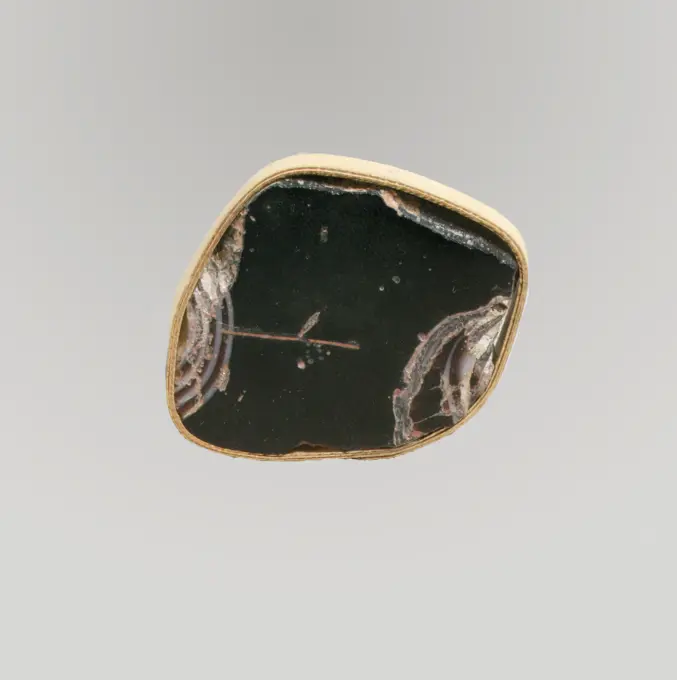
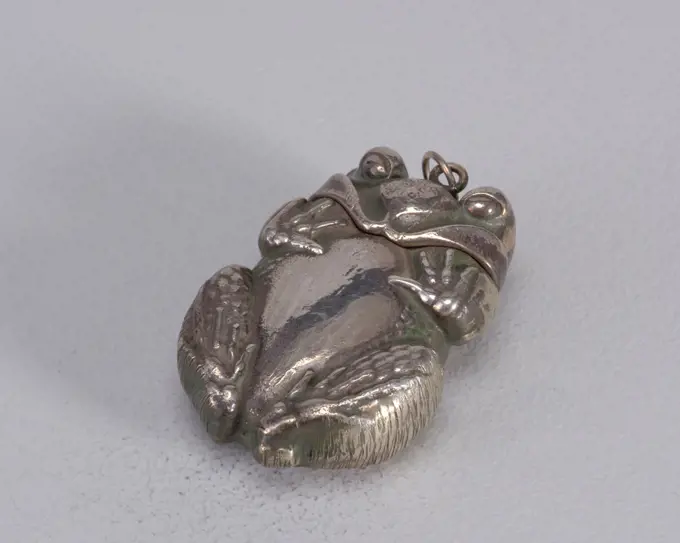
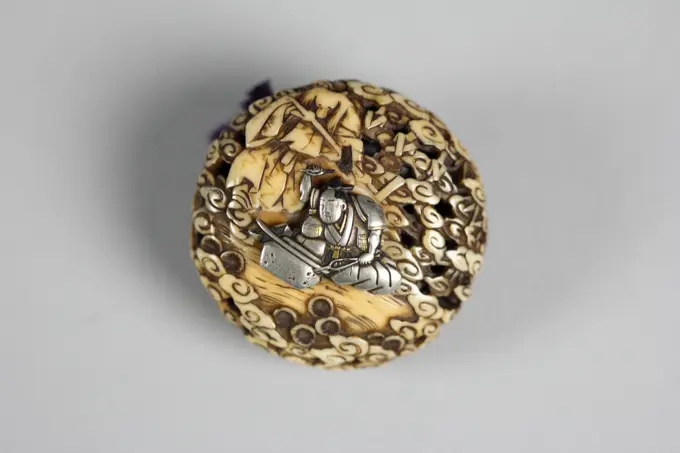
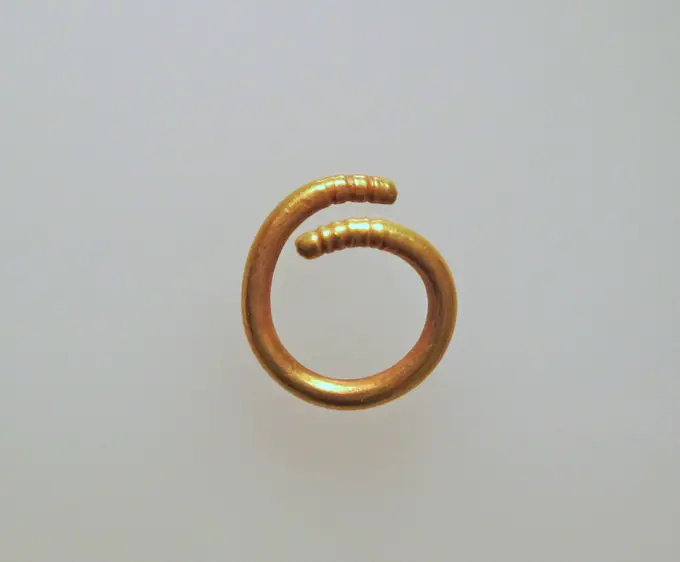
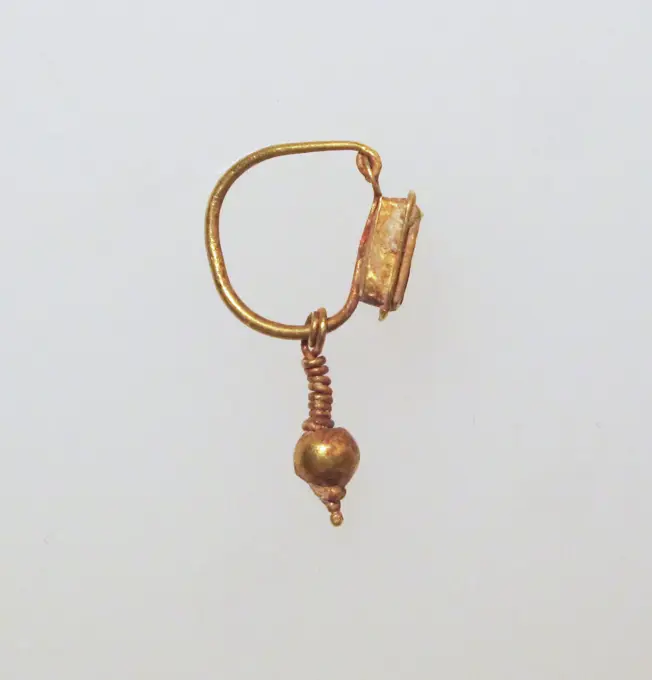
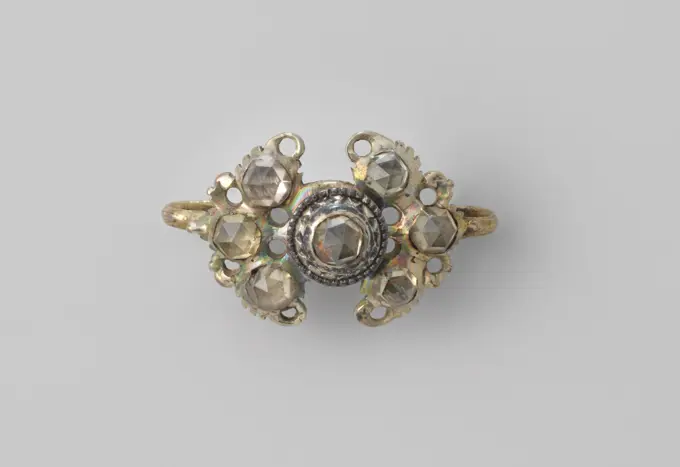
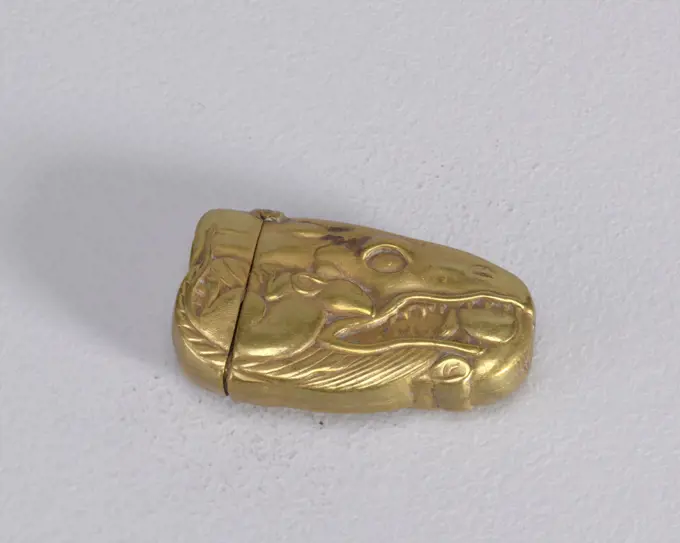
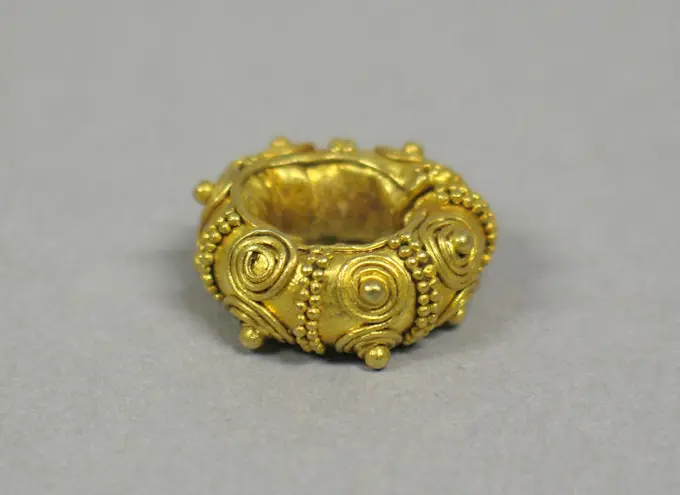
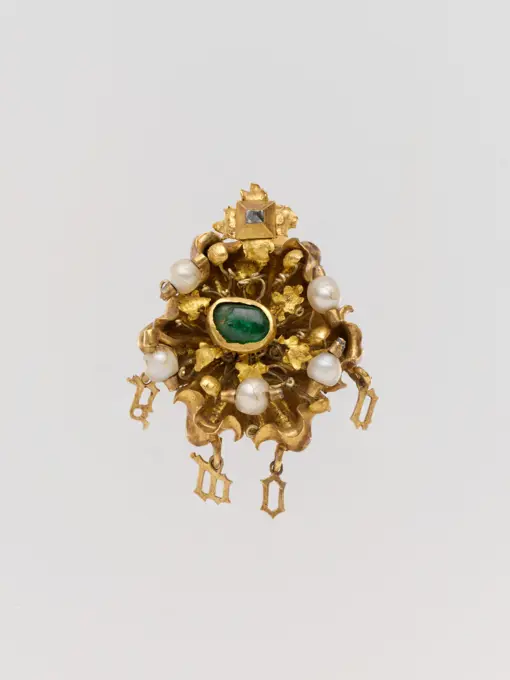
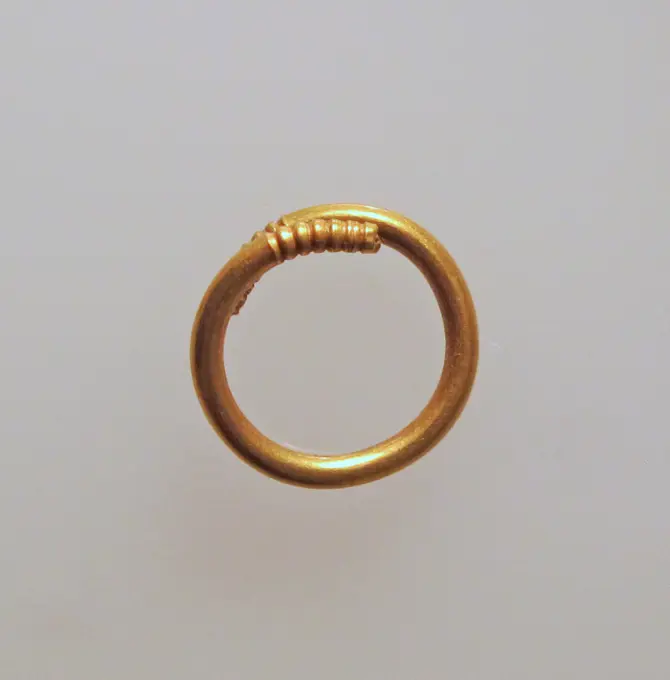
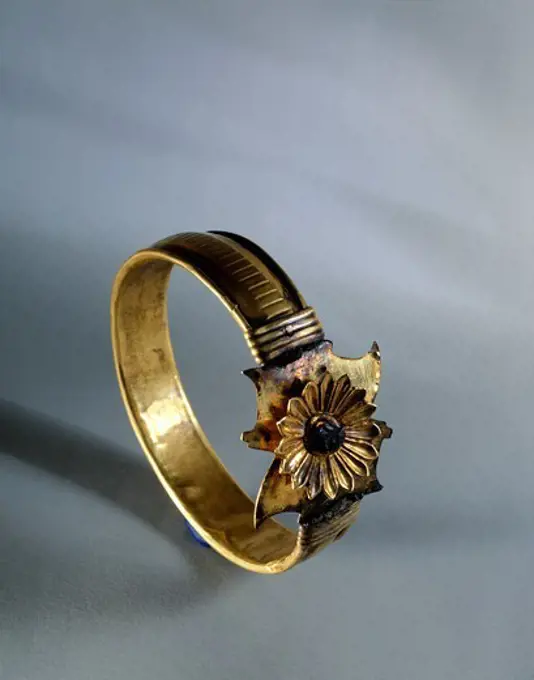
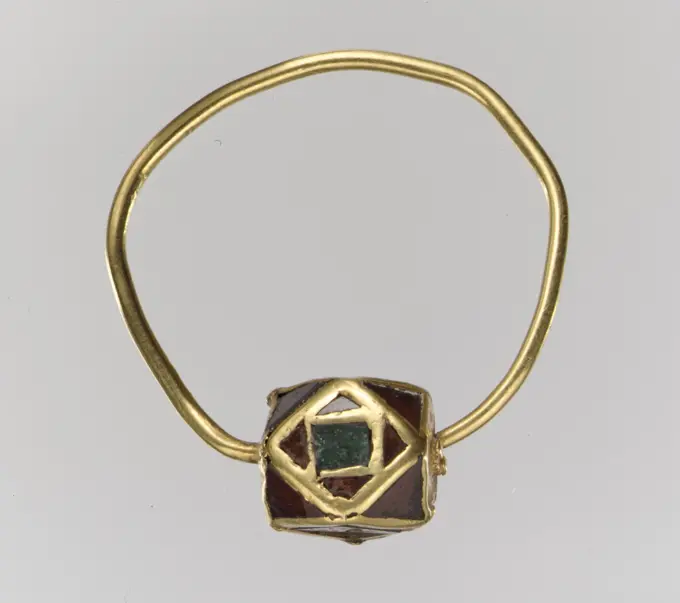
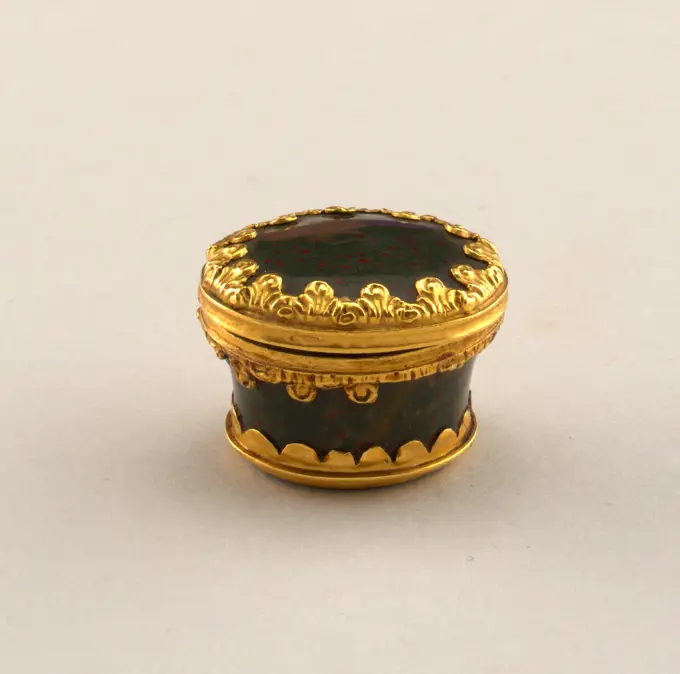
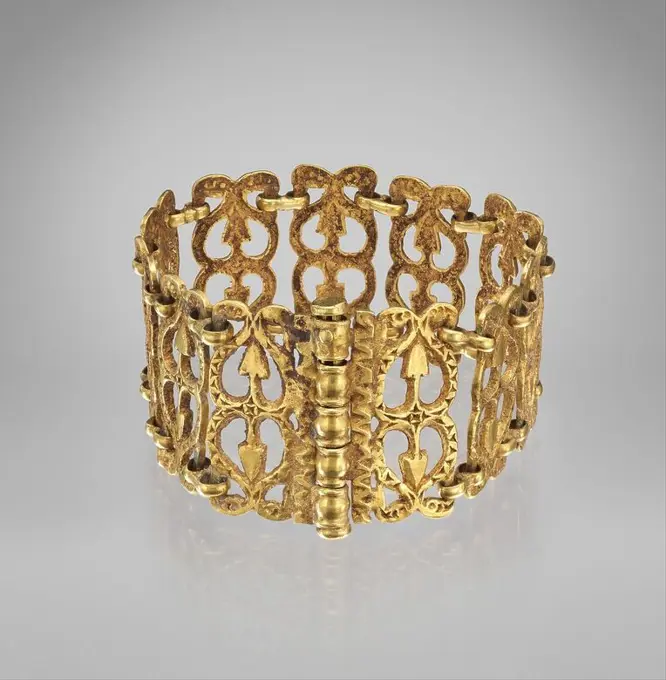
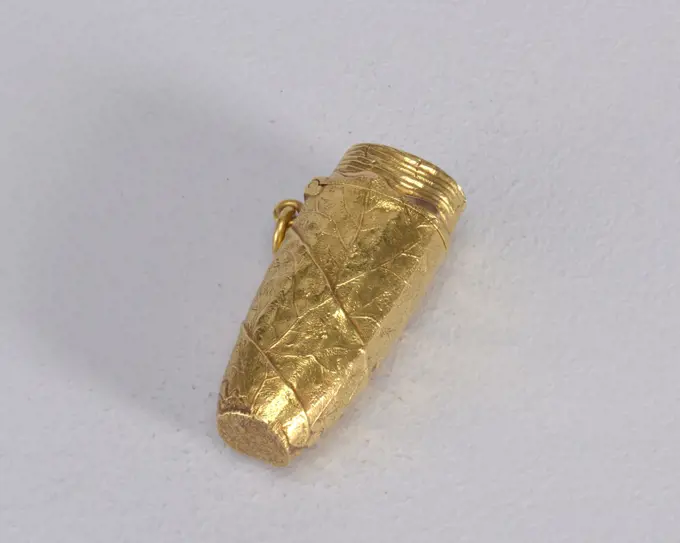
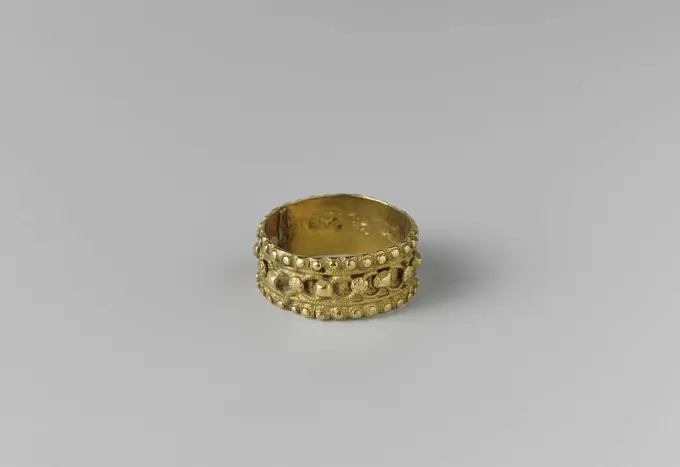
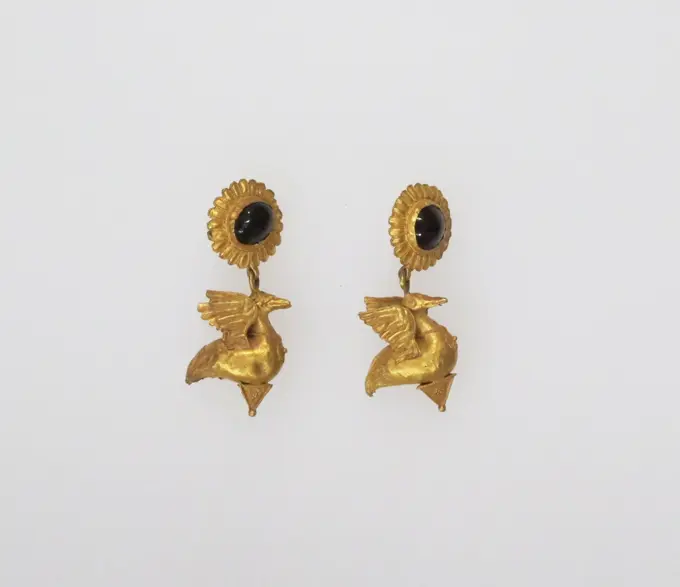
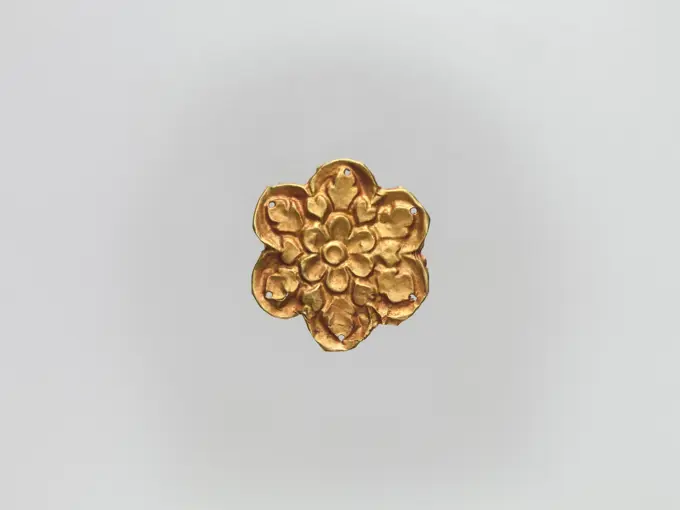
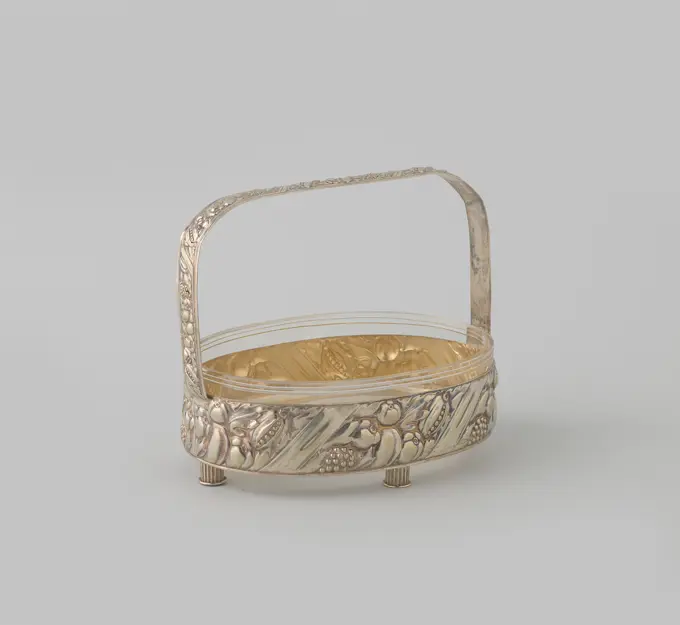
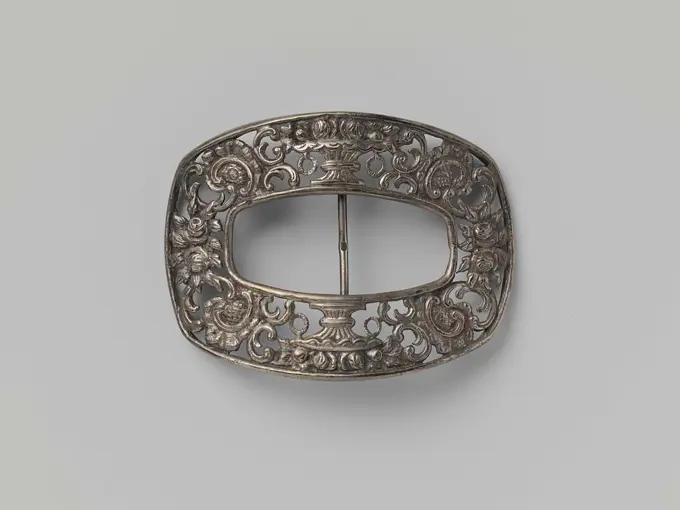
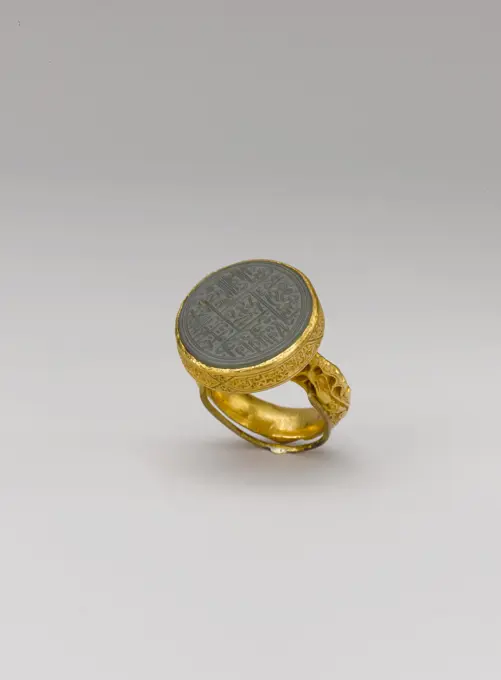
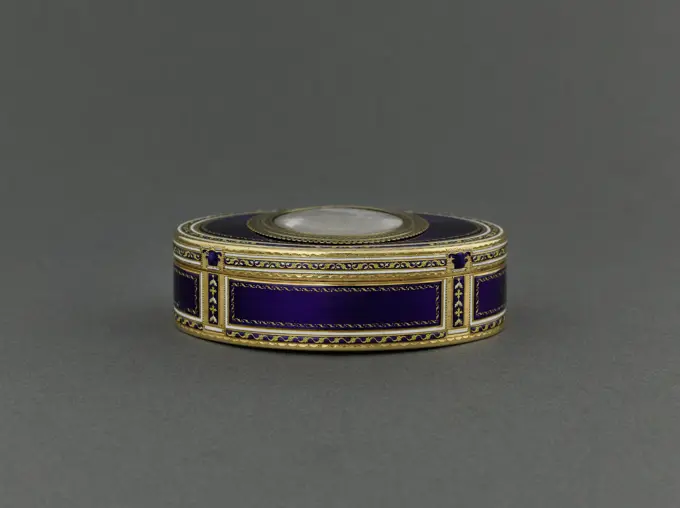
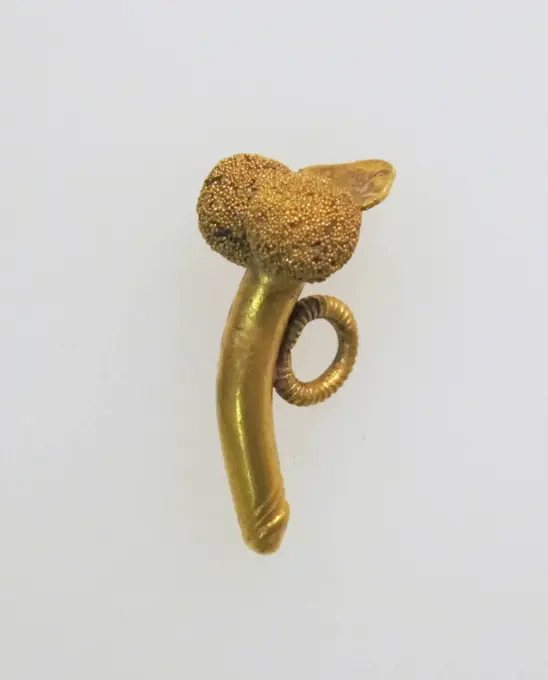
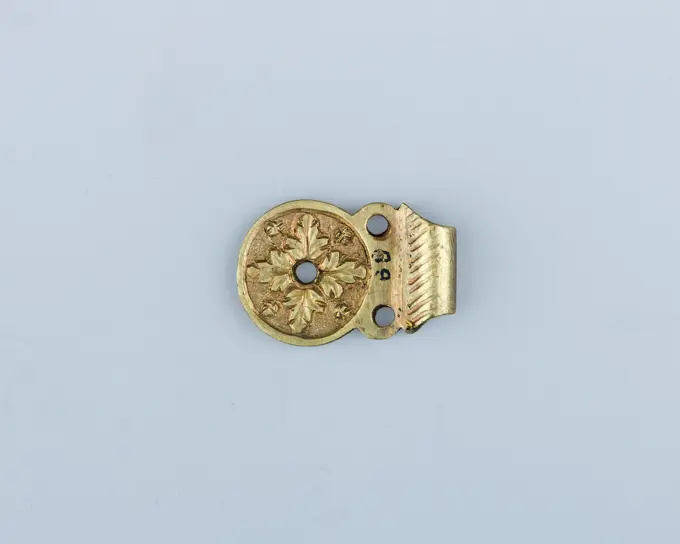
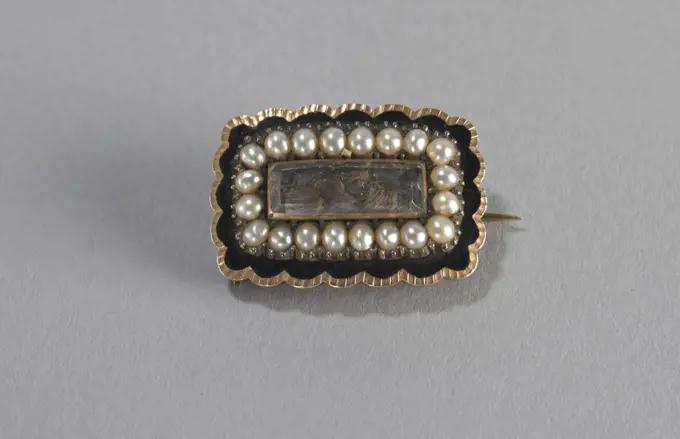
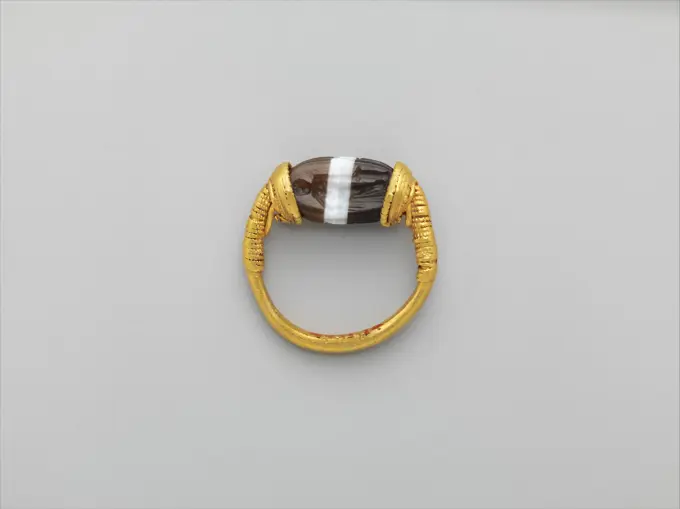
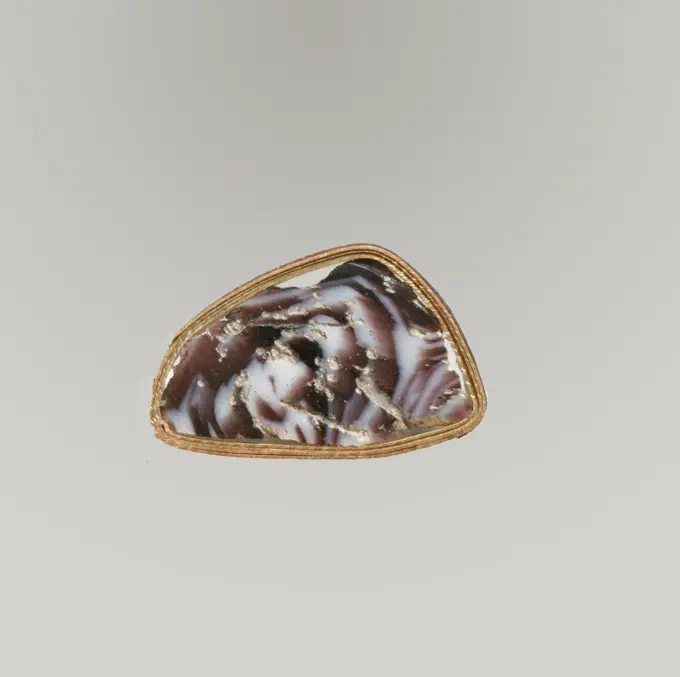
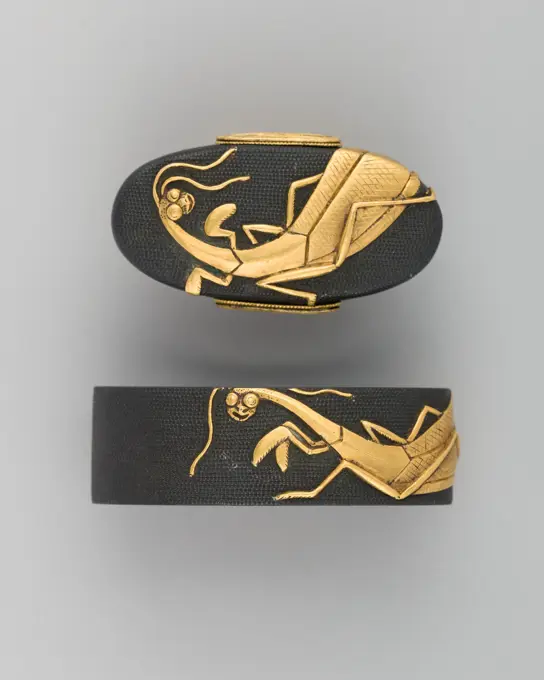
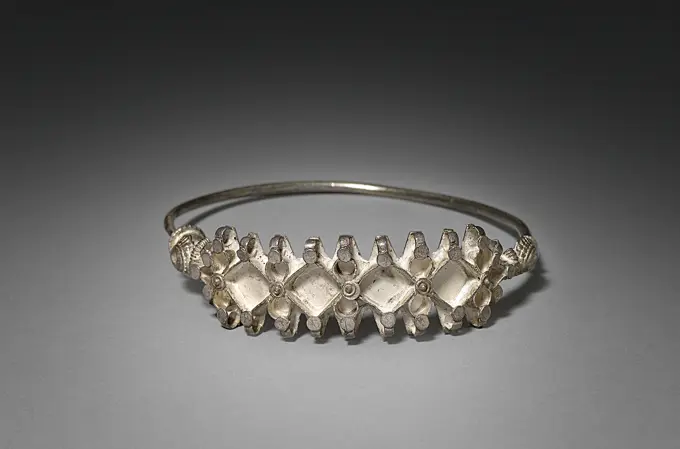
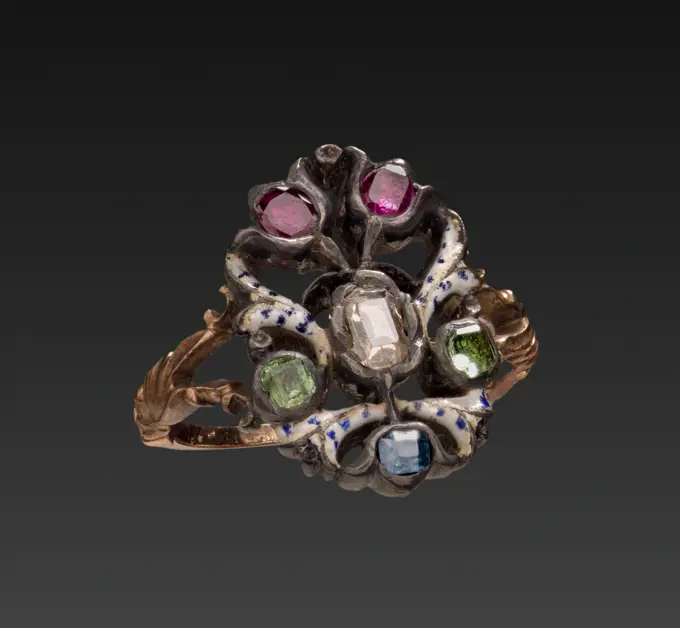
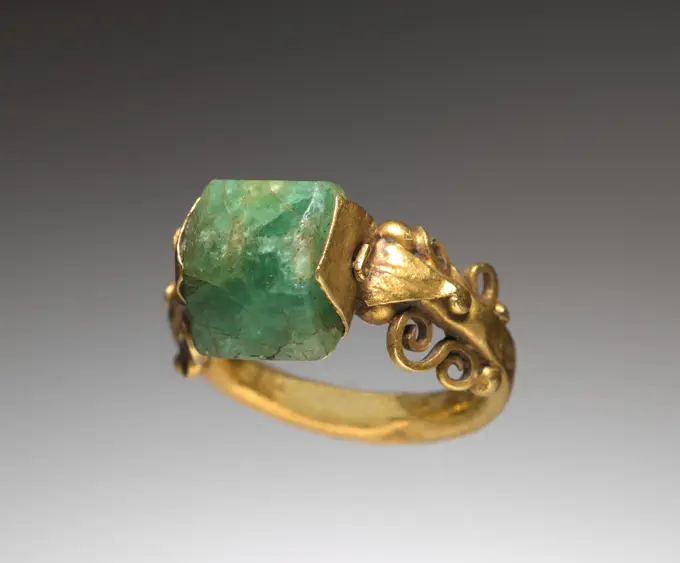
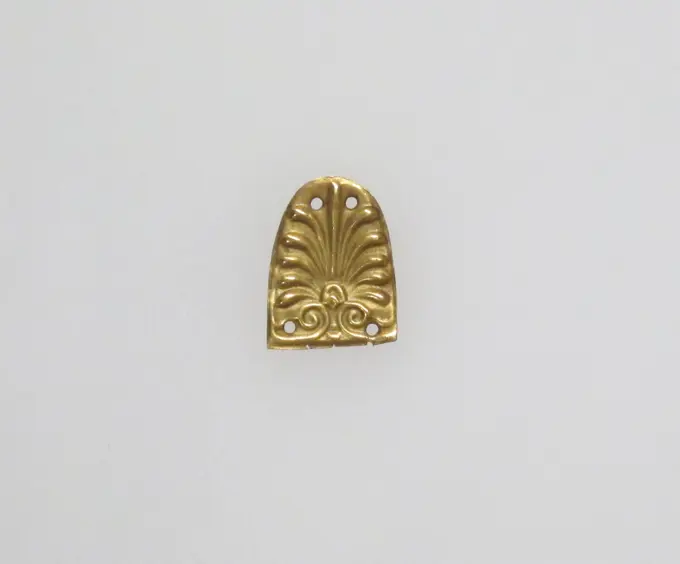
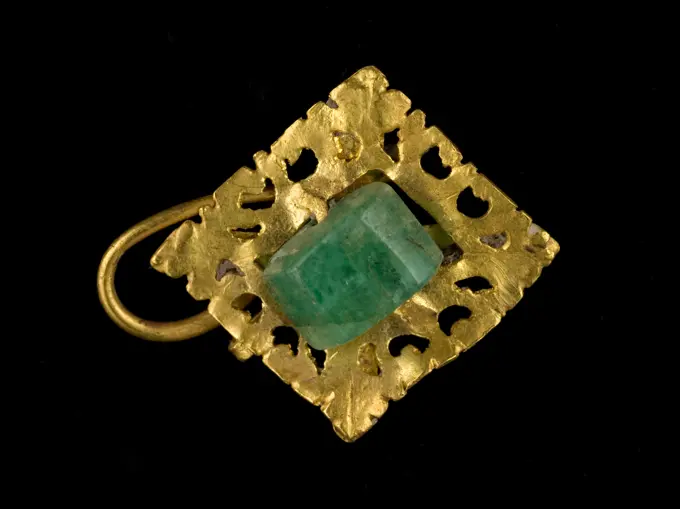
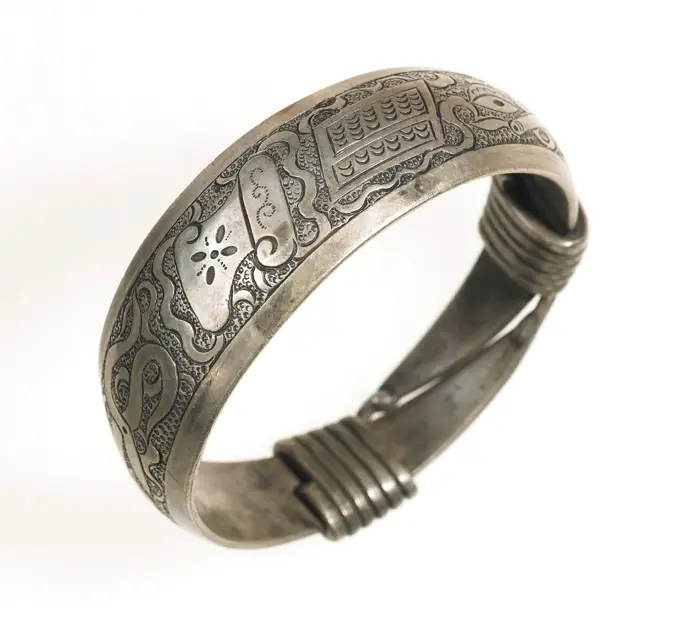
Ear Clip in the Shape of a Starfruit with Foliate Design Second half of the 8th-second half of the 10th century Indonesia (Java). Ear Clip in the Shape of a Starfruit with Foliate Design 49951Gold earring with rosette disk 3rd century A.D. Roman. Gold earring with rosette disk 243237Earring or spiral 5th century B.C. Cypriot Worn in the upper lobe of the ear.. Earring or spiral. Cypriot. 5th century B.C.. Gold, bronze. Classical. Gold and SilverScent bottle, Agate, gold, Bottle composed of agate in gold cagework decorated with shells and plant forms., England, ca. 1750, containers, Decorative Arts, Scent bottleBrooch, Lodewijk Willem van Kooten (II), c. 1908 - c. 1911 Brooch made of gold, brown and white enamel, with a Peridot-Olivine. Amsterdam gold (metal). mineral. Brooch made of gold, brown and white enamel, with a Peridot-Olivine. Amsterdam gold (metal). mineral.Stirrup. Culture: Tibetan. Dimensions: H. 4 15/16 in. (12.5 cm); W. 4 1/2 in. (11.4 cm); D. 2 1/16 in. (5.2 cm); Wt. 10.9 oz. (309 g). Date: 15th-18th century. Museum: Metropolitan Museum of Art, New York, USA.Gold earring with disc and pendant 2nd century A.D. Roman. Gold earring with disc and pendant 243182Glass mosaic inlay fragment late 1st century B.C.-early 1st century A.D. Roman Translucent deep purple, appearing black, and opaque white.Fragment of thick, flat block.Pattern of concentric wavy lines in white on purple ground.Polished upper surface; some pitting of surface bubbles on upper surface; deep pitting, dulling, brilliant iridescence, and patches of thick creamy weathering on underside and edges.Probably used as decoration in wall or ceiling revetment.. Glass mosaic inlay fragment. Roman. late 1st century B.C.-early 1st century A.D.. Glass; cast. Early Imperial. GlassBowl (Switzerland); glassGold earring with head of a bull 4th3rd century B.C. Greek. Gold earring with head of a bull 242920Toad, Gorham Manufacturing Company, Providence, Rhode Island, USA, founded 1818, Silver, In the shape of a toad, its feet folded up against body, its belly smooth, the back textured with bumps, some green patination in crevices. Hinge attached to top of head. Head (lid) flips backwards, hinge on back. Sides of thighs have hatch marks likely intended to serve as strikers., Providence, Rhode Island, USA, ca. 1890, containers, Decorative Arts, Matchsafe, MatchsafeNetsuke of Munechika Forging Blade "Little Fox" 19th century Japan. Netsuke of Munechika Forging Blade "Little Fox". Japan. 19th century. Ivory with silver insert. Edo (1615-1868) or Meiji period (1868-1912). NetsukeReptilependant.  Artist: UnknownSpirals Cypriot. Spirals 242537Earring with ball pendant and paste setting 1st-2nd century A.D. Roman. Earring with ball pendant and paste setting 243224Archer's Ring. Culture: Ottoman. Dimensions: L. 1 3/4 in. (4.4 cm); W. 1 1/4 in. (3.2 cm); Wt. 0.6 oz. (17 g). Date: probably late 16th-early 17th century. Museum: Metropolitan Museum of Art, New York, USA.Pin of (gilded) silver in the form of a bow, decorated with seven imitation diamonds, anonymous, c. 1675 - c. 1775 Pin (or sliding pin) of partly gilded silver in the form of a bow, decorated with seven imitation precious stones. The stones are made of glass, in a dense cupboard on foil and set and provided with a roar cut to imitate diamond. There are four eyes on the top and bottom, with which pin could possibly be pinned on a piece of clothing. Possibly ever been a ring Netherlands (possibly) Silver (Metal). precious stones: Pin (or sliding pin) of partly gilded silver in the form of a bow, decorated with seven imitation precious stones. The stones are made of glass, in a dense cupboard on foil and set and provided with a roar cut to imitate diamond. There are four eyes on the top and bottom, with which pin could possibly be pinned on a piece of clothing. Possibly ever been a ring Netherlands (possibly) Silver (Metal). precious stones:. Buckle of silver with decorated edge and a hinged part that two teeth marked.Dragon Head, Brass, In the form of a dragon's head, pearl clasped in bared teeth, rodent hangs on to dragon's gills; reverse features rodent hanging upside down from dragon's mouth. Back of neck, hinged on top, opens as lid. Striker on front of snout., late 19th century, containers, Decorative Arts, Matchsafe, MatchsafeEar Ornament, Spiral and Granular 8th-12th century Indonesia (Central Java). Ear Ornament, Spiral and Granular 64221Signet Ring, c. 1550-1600. England. Gold; diameter: 1.8 cm (11/16 in.). This type of multiple sided signet ring was popular in the later half of the 17th century.Cluster Brooch with Letters Spelling "Amor" mid-15th century French This gold cluster jewel includes the Latin word amor (love) in delicate gold letters. It could have been worn either as a pendant or a brooch, and in portraits of young women many similar jewels are seen in their hair or at the shoulder or neck. Expensive jewelry played an important role in betrothal and marriage, and the groom gave brooches to the bride as tokens of love. In 1447, for example, Marco Parenti gave his betrothed, Caterina Strozzi, a golden brooch with two sapphires and three pearls to be worn on her shoulder.. Cluster Brooch with Letters Spelling "Amor". French. mid-15th century. Gold, pearl, emerald, silver pin. Metalwork-GoldEarring or spiral Cypriot. Earring or spiral 242548Bracelet with a flower, from Tomb IV of the Circle of Mycenae (Greece). Goldsmith art, Mycenaean Civilization, 16th Century BC.One of a Pair of Gold Cloisonné Earrings 500-550 Frankish Hoop earrings with polyhedral beads, derived from late Roman jewelry, remained fashionable among Frankish women from the 400s through the 700s. Many are delicate pieces, their beads decorated with garnets or precious stones. Others, often with the least imposing beads, impress by their large hoops and distinctive closures.. One of a Pair of Gold Cloisonné Earrings 465137 Frankish, One of a Pair of Gold Cloisonn Earrings, 500550, Gold, garnets with patterned foil backings, green stone; garnets with unpatterned foil backings are restorations, Overall: 1 9/16 x 1 5/16 x 9/16 in. (3.9 x 3.3 x 1.4 cm) bead: 9/16 x 1/2 in. (1.4 x 1.2 cm). The Metropolitan Museum of Art, New York. Gift of J. Pierpont Morgan, 1917 (17.191.86)Pair of Ear Clips second half of the 8th-second half of the 10th century Indonesia (Java). Pair of Ear Clips 49749Earring with pendant Roman. Earring with pendant 243215Box; agate, gold; Overall: 4.2 x 2 x 1.6 cm (1 5/8 x 13/16 x 5/8 in.)Brochette of wire work in gold with amethist, c. 1943 - c. 1953 Brochette of wire work in gold with an oval -faceted amethist. Diemen amethyst (mineral) faceting Brochette of wire work in gold with an oval -faceted amethist. Diemen amethyst (mineral) facetingEntourage, the hoop in the shape of a bow. Gold ring. The stones in the shape of a bow.Gold Bracelet. Culture: Byzantine. Dimensions: 7 1/16 × 1 1/4 × 3/16 in. (17.9 × 3.1 × 0.5 cm)Diameter: 1 15/16 × 1 1/4 in. (5 cm). Date: ca. 650.Large opus interrasile openings outline ivy leaves on this bracelet from the Pantalica Treasure, a hoard of fourteen pieces of jewelry.Opus interrasile was a technique used by goldsmiths to make elegant jewelry from the 200s through the 600s. Designs were traced onto sheets of gold; the background was punched with holes of various sizes to highlight the pattern; and fine details were then worked on the surface. The patterns formed by piercing the metal ground encouraged the play of light and shadow across an object's surface. Museum: Metropolitan Museum of Art, New York, USA.Glass pendant in the form of a bird 8th-7th century B.C. Greek, possibly Rhodian Translucent purple.Shaped like a stylized bird, with large hole horizontally through plump body from side to side; tooled to form small head and upturned flaring tail.Intact, except for tip of tail; pitting of surface bubbles, some dulling, and iridescence.. Glass pendant in the form of a bird. Greek, possibly Rhodian. 8th-7th century B.C.. Glass; rod-formed and tooled. Glass. Gold-plated shoe pose from copper (), With shellfish and relieving relief. Rococco. Rectangular and curved model, rounded corners. From slippery and thickened for the spindle. Under buckle: single, U-shape eye of steel with two sharp points and a battery drawer shaped part at the spindle, which is blindly attached in the decorative edge. Loose, hinged yoke-shaped tongue (or point) With sharp points. England or France The shoe closes on the rubbed with two covered leather slippers, the other through the top edge. Forms a few with BK-1978-407-A.Ring. Ring 243532Cigar Butt, Gold, metal, In the form of a short cigar butt, with leaves defined on realistically cast body in gold, the tip with ashes in silver metal. Tip hinged at side and opens as lid. Tip also likely intended as striker., late 19th century, containers, Decorative Arts, Matchsafe, Matchsafe. Gold ring. Decorated with a wreath from filigreinn circles with alternating buttons and roses on the torch points, between two pearl edges.Earring with pendants of birds 4th century B.C. Greek. Earring with pendants of birds. Greek. 4th century B.C.. Gold, carbuncle. Late Classical. Gold and SilverGold earring with disc and pendant 2nd century A.D. Roman. Gold earring with disc and pendant 243164Gold spiral ca. 1600-1100 B.C. Cypriot Of plain wire with one turn.. Gold spiral. Cypriot. ca. 1600-1100 B.C.. Gold. Late Bronze Age. Gold and SilverFirst Annual Bronx Press Club Banquet, German silver (white metal), Oblong, curved sides and corners, all sides slightly cinched at middle, featuring raised decoration on perimeter of stylized, sinuous, whiplash lines, large and smaller flower motifs at bottom and on lower right hand corner, central reserve inscribed 'Bronx Press Club', below is incised decoration of old-style printing press; reverse features identical raised decoration, central reserve inscribed 'First Annual Banquet, Tuesday April 25, 1905.' Lid hinged on side. Striker on bottom., ca. 1905, containers, Decorative Arts, Matchsafe, MatchsafeFlower-Shaped Clothing Plaque 7th-9th century China (Xinjiang Autonomous Region, Central Asia) The nomadic communities of Central Asia used such plaques to embellish clothing and horse trappings. As these nomadic cultures herded animals and were constantly moving, their artistic production was expressed in portable objects that marked the wearers status and wealth. The outstanding preservation of these fragile ornaments suggests they were used in conjunction with burials, where the body was aggrandized with valuable textiles and augmented with gold. Although it is difficult to date and place these objects geographically, their presence in Central Asia and has a long, established history.. Flower-Shaped Clothing Plaque 65214Pair of knee buckles Buckle; probably England; silver, gold, glass pastes, ironHandel basket of silver, oval, anonymous, c. 1920 Oval handle basket of silver. The right -wing basket rests on 4 legs. The wall has a cast decoration of leaves and fruits. Vienna silver (metal) Oval handle basket of silver. The right -wing basket rests on 4 legs. The wall has a cast decoration of leaves and fruits. Vienna silver (metal)RosetteSpirals Cypriot. Spirals. Cypriot. Gold. Gold and SilverElements 11th-12th century. Elements 453022. Shoe or belt bucket of openwork silver. Rectangular model with convex sides and rounded corners. Ajour decorated with a wide fruit basket with hanging ears between C-Volutes and roses on the sides.Seal Ring with Inscription late 15th-early 16th century This magnificent gold ring holds a jade stone engraved with religious verses known as the Nad-i 'Ali, an invocation to 'Ali ibn Abi Talib, son-in-law of the Prophet Muhammad. The text is written in mirror reverse, suggesting that the stone may once have served as a seal. Further tiny poetic inscriptionsin cartouches around the golden bezelcontain prayerlike verses, perhaps invested with apotropaic qualities, placed there to ensure the safety of its wearer.. Seal Ring with Inscription. late 15th-early 16th century. Gold, cast and chased; nephrite, carved. Attributed to Iran or Central Asia. JewelryDamn in chopped gold and blue-of-kroit-shaped enamel decorated with a miniature: Kermesse in a park. 1775. Paris, Cognacq-Jay museum. 56022-2 Bleu-de-Roi, round box, chisel, emailler, fair, gold, adorn, park, smoker, miniatureEarring with discs and pyramids. Earring with discs and pyramids. Gold. Gold and SilverRing with Square Bezel Second half of the 8th-second half of the 10th century Indonesia (Java). Ring with Square Bezel 50396Earring with Eros Greek. Earring with Eros. Greek. Gold. Gold and SilverPendant in the form of a phallos Etruscan Ornamented with granulation.. Pendant in the form of a phallos. Etruscan. Gold. Gold and SilverMordant dated 1528 German. Mordant. German. dated 1528. Brass. Miscellaneous-Buckles & OrnamentBrooch, Enameled gold set with pearls, braided hair under glass cover, Small rectangle brooch with scalloped edges, a row of pearls, and a woven brown hair center., England or USA, ca. 1830-40, jewelry, Decorative Arts, BroochRing with Yellow Stone and Ornamented with Foliate Forms Second half of the 8th-second half of the 10th century Indonesia (Java). Ring with Yellow Stone and Ornamented with Foliate Forms. Indonesia (Java). Second half of the 8th-second half of the 10th century. Gold with yellow stone. Central Javanese period. JewelryRing Brown, William (1814 1877)Earring with disc and pyramid. Earring with disc and pyramid 245955Brooch, Silver, India, 17th century, metalwork, Decorative Arts, BroochMountPair of Ear Ornaments, Comma and Star 8th-12th century Indonesia (Central Java). Pair of Ear Ornaments, Comma and Star 64218Two earrings, J.J.R. van de Wilde, c. 1835 - c. 1837 Two gold earrings in filigrein technology. The hangers are part of a parure. Amsterdam gold (metal) filigree Two gold earrings in filigrein technology. The hangers are part of a parure. Amsterdam gold (metal) filigreeGoldsmith's art, 19th century. Gold garter bracelet with beads buckle, around 1890.Gold and banded carnelian ring: on scarab bezel, a youth early 5th century B.C. Etruscan Ring with scarab from a tomb group allegedly from Vulci, one of the richest and most impressive sets of Etruscan jewelry ever found.. Gold and banded carnelian ring: on scarab bezel, a youth 253602 Etruscan, Gold and banded carnelian ring: on scarab bezel, a youth, early 5th century B.C., Gold, agate, Diam.: 7/8 in. (2.2 cm). The Metropolitan Museum of Art, New York. Harris Brisbane Dick Fund, 1940 (40.11.14)Glass mosaic inlay fragment late 1st century B.C.-early 1st century A.D. Roman Translucent purple and opaque white.Flat revetment plaque.Marbled mosaic pattern in purple with white circles and streaks.Polished upper side; pitting of surface bubbles; dulling, deep pitting, weathering, and slight iridescence on underside and jagged edges.. Glass mosaic inlay fragment. Roman. late 1st century B.C.-early 1st century A.D.. Glass; cast. Early Imperial. GlassSword-Hilt Collar and Pommel (Fuchigashira) second half 18th century Japanese A fuchigashira is a pair of matching sword fittings comprising the fuchi (collar at the base of the grip of the sword hilt) and kashira (pommel cap at the end of a sword hilt).. Sword-Hilt Collar and Pommel (Fuchigashira). Japanese. second half 18th century. Copper-gold alloy (shakud), gold. Sword Furniture-Fuchi-KashiraDouble-Eagle Ornament 7th-16th century Costa Rica. Double-Eagle Ornament 309969Nose Ring, 20th Century. India. Silver; overall: 6.4 cm (2 1/2 in.).Gold bracelet on black background, kundan bracelet, Style, fashion and design of jewelry. indian traditional jewellery, Indian wedding jewellery Copyright: xNehaxSadaye/DinodiaxPhotoxStirruped-Shaped Ring with Circular Bezel with Lotus Second half of the 9th-first quarter of the 10th century Indonesia (Java). Stirruped-Shaped Ring with Circular Bezel with Lotus 50431Mosquito net of silver. The hook is attached to an oval shield with an engraved decoration of a stylized leaf motif, anonymous, c. 1790 - c. 1800 Mosquito net of silver. The hook is attached to an oval shield with an engraved decoration of stylized leaf motif. Indonesia silver (metal) Mosquito net of silver. The hook is attached to an oval shield with an engraved decoration of stylized leaf motif. Indonesia silver (metal)Ring, 1700s. Italy or France, 18th century. Gold band, silver and enamel setting with diamond, ruby, emerald and garnet stones; diameter: 1.8 cm (11/16 in.).Ring, probably 1800s-1900s. Byzantium (style of), probably 19th-20th century. Gold and jade; diameter: 1.6 cm (5/8 in.).Matchsafe with Chrysanthemums and Butterfly Matchsafe; Japan; brass, silver, copperRing with Oval Bezel Depicting Zoomorphic Design Second half of the 8th-second half of the 10th century Indonesia (Java). Ring with Oval Bezel Depicting Zoomorphic Design 50243Cachet with the weapons of Gerard Johan Vreelandt and Petronella Visboom ,, 1740 - 1750 pendant (jewelry) There is a sharpened Berkrystal on the Golden Bengeltje with carrying eye and carrying ring. On three sides, a round stamp was cut in the stone with a coat of arms: twice a different weapon, the third a combination of the first two. The stone is so attached to the gold pendant that she can turn around her axis and stamped separately with the three stamps. Colombo gold (metal) grinding / cutting / forging  Sri Lanka. ColomboBee Ear Ornament withGemstoneCup and Saucer, porcelain, vitreous enamel, gold, Cylindrical cup with handle. Saucer has one side extended upward to form a windshield, with handle. Decorated in gold and green, with flowers and medallion with landscape., France, ca. 1793, ceramics, Decorative Arts, cup and saucer, cup and saucerEarrings tiruchy thodu  Tamil Nadu  India Copyright: xMxAmirtham/DinodiaxPhotoxThree gold appliqués 5th-4th century B.C. Greek Symmetrical holes on each piece would have been used to sew the ornaments into clothing.. Three gold appliqués. Greek. 5th-4th century B.C.. Gold. Classical. Gold and SilverRingEar Ornament with Makara Motif Last quarter of the 10th-last quarter of the 15th century Indonesia (Java). Ear Ornament with Makara Motif. Indonesia (Java). Last quarter of the 10th-last quarter of the 15th century. Gold. Eastern Javanese period. JewelryPierce; Doreau, Romain (Fl. 1848-1863); Years of the 19th century (1850-00-00-1859-00-00);gift (provenance), photographs, women's decorations, hand decorationsGolden ring isolated on the white backgroundFibula. Fibula 252409 Fibula, Bronze, H.: 1/2 x 2 1/8 in., 0.7 cm (1.3 x 5.4 x 0.7 cm). The Metropolitan Museum of Art, New York. Bequest of Richard B. Seager, 1926 (26.31.489)Ring Etruscan Open ring of woven gold, ornamented with granules.. Ring 246003Earrings 5th-3rd century B.C. Etruscan. Earrings 245874This is a very old ring from Anatolia. Ottoman styleGalalith's hair comb with a half round back with an ajour sliced dragon in the middle, anonymous, c. 1925 - c. 1930 Galalith's hair comb with a half round back, on which an ajour cut dragon in the middle with a lotus -like flower on both sides. Six teeth. Netherlands . sawing / filing / polishing Galalith's hair comb with a half round back, on which an ajour cut dragon in the middle with a lotus -like flower on both sides. Six teeth. Netherlands . sawing / filing / polishingSolid Cast Ring with Sri Inscription Second half of the 9th-first quarter of the 10th century Indonesia (Java). Solid Cast Ring with Sri Inscription 50405Inner box of blue glass, Wouterus Verschuur (silversmith) (attributed to), 1790 Inner box of blue glass. Amsterdam glass Inner box of blue glass. Amsterdam glassBracelet with DuckFinialsGold ring with red garnet stone, ring ornament clothing accessory clothing soil find gold gemstone metal, w with stone 2.8 forged cut Round narrow ring smooth on the inside Stone on both sides and setting thickening in gold followed by wedge-shaped piece on which little ball wider cross piece. The settlement is square in height reprocessed archeology Rotterdam rail tunnel adorn prosperity status Soil discovery: collapsed rail tunnel route summer 1989.Earring with Dolphin Head Finial. Greek, Hellenistic. Date: 300 BC-101 BC. Dimensions: Diam. 2.22 cm (7/8 in.). Gold, glass, sardonyx. Origin: Ancient Greece. Museum: The Chicago Art Institute, USA.Solid Open Bangle with Applied Decoration 300 B.C.-A.D. 300 Thailand. Solid Open Bangle with Applied Decoration 53869Pair of Sword-Grip Ornaments (Menuki) 18th century Japanese Menuki are a pair of ornamental sword fittings attached to either side of a sword hilt.. Pair of Sword-Grip Ornaments (Menuki). Japanese. 18th century. Copper-gold alloy (shakud), gold, copper-silver alloy (shibuichi). Sword Furniture-MenukiEarring. Gallo-Roman. Now, emerald. Paris, Carnavalet museum. Jewel, earring, emerald, Gallo-Roman, Gallo-Roman, gold, precious stone, archeological vestigeBracelet, 3 x 3 1/4 x 1 1/8 in. (7.62 x 8.26 x 2.86 cm), Silver, ChinaEarring with lion-griffin head terminal. Dimensions: As Worn: H. 2.3 × W. 2.2 cm (7/8 × 7/8 in.). Date: 4th-3rd century B.C..Hoops formed of wound wire with animal head terminals are the commonest type of Hellenistic earring. The griffin is a mythical winged animal that could have an eagle head or a horned lion-head. The latter is the only sort found on Egyptian jewelry; it has been suggested that it was associated with the Macedonian dynasty, while the eagle griffin was associated with the Achamenid Persians.The 'collar' behind the lion-griffin's head is decorated with granulation and filagree. Museum: Metropolitan Museum of Art, New York, USA.Pair of Sword-Grip Ornaments (Menuki) 18th century Japanese Menuki are a pair of ornamental sword fittings attached to either side of a sword hilt.. Pair of Sword-Grip Ornaments (Menuki). Japanese. 18th century. Copper-gold alloy (shakud), silver, gold. Sword Furniture-Menuki