Historical Keys

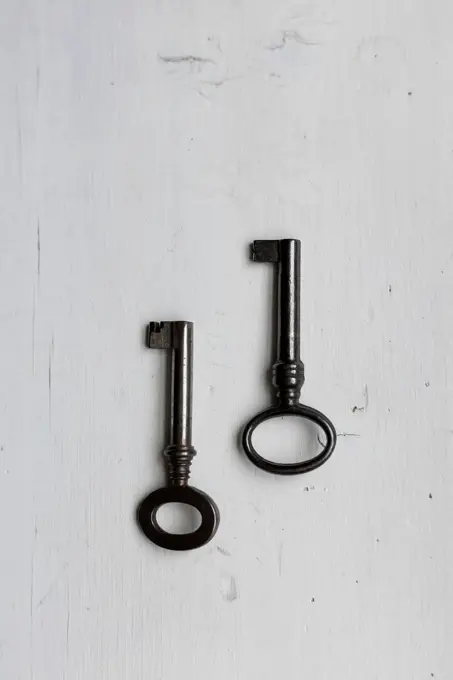
A collection of antique keys with unique designs, showcasing elaborate craftsmanship from different centuries.

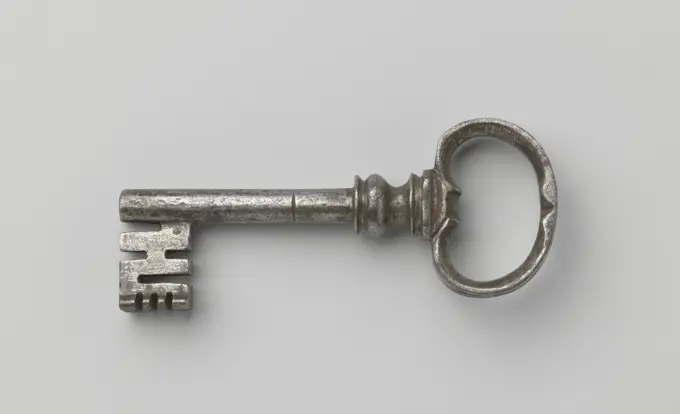
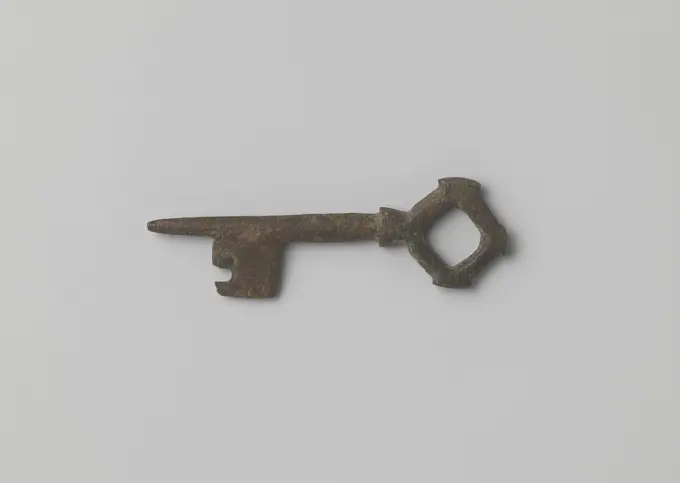
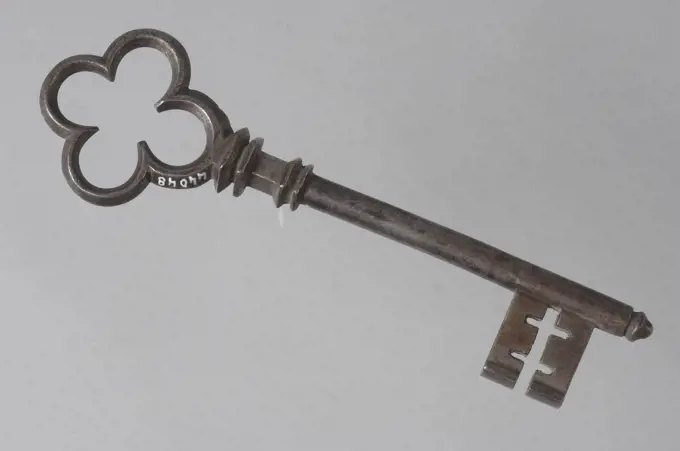
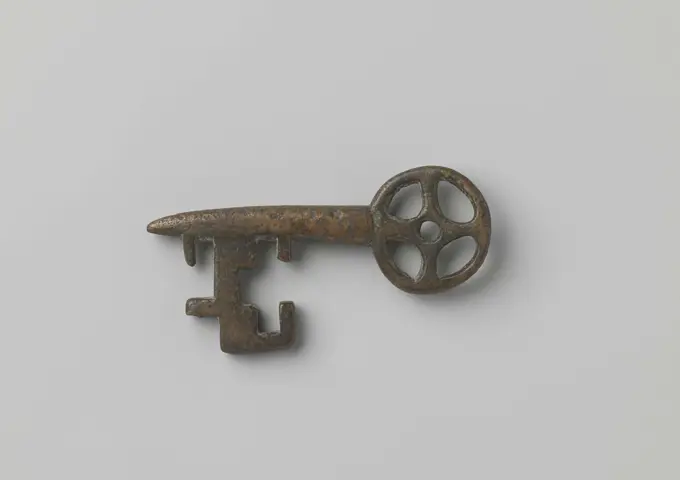
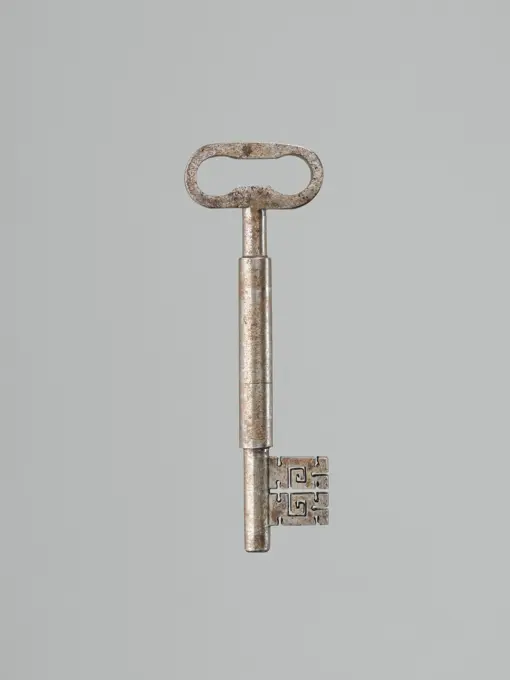
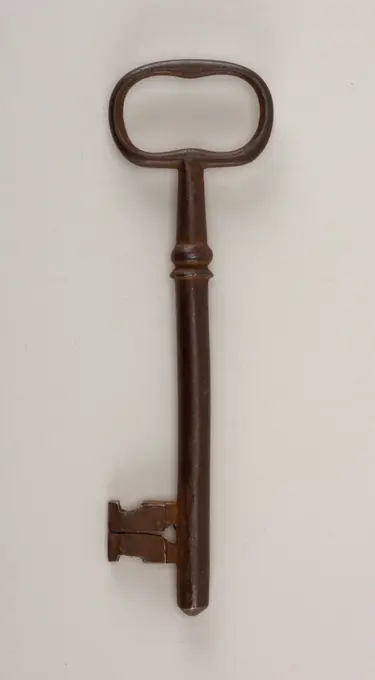
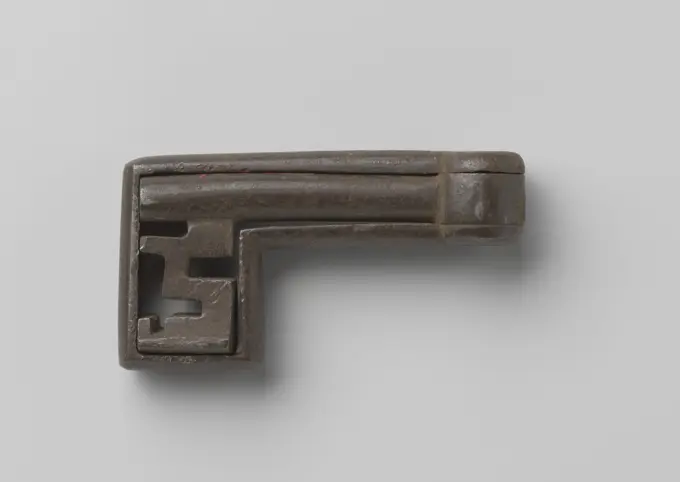
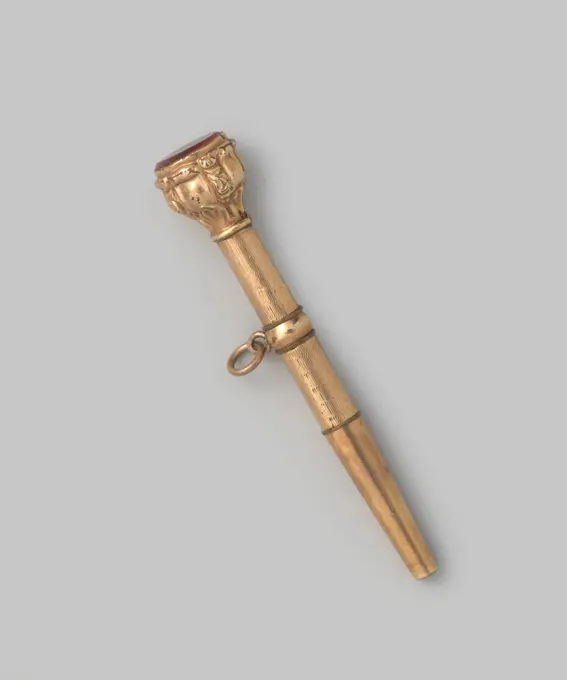
Iron key with heart-shaped eye, hollow key handle and cruciform beards in beard, key iron value soil find, hand forged Key with heart-shaped eye (handle) with small notch on the top hollow key handle cross-shaped notches (horizontal vertical and diagonal) in key beard and symmetrical keyhole cross section archeology Rotterdam City triangle Delftware hang-en- The object was probably excavated and found at the partial reclamation of the Delfsevaart for the purpose of making the lift over the Vaart in the summer of 1928.
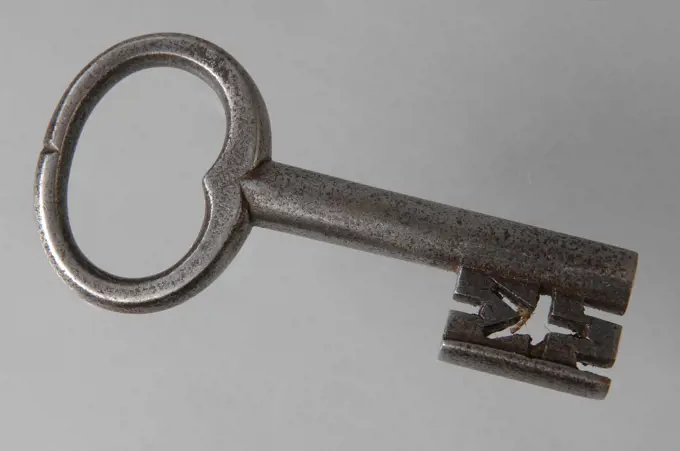
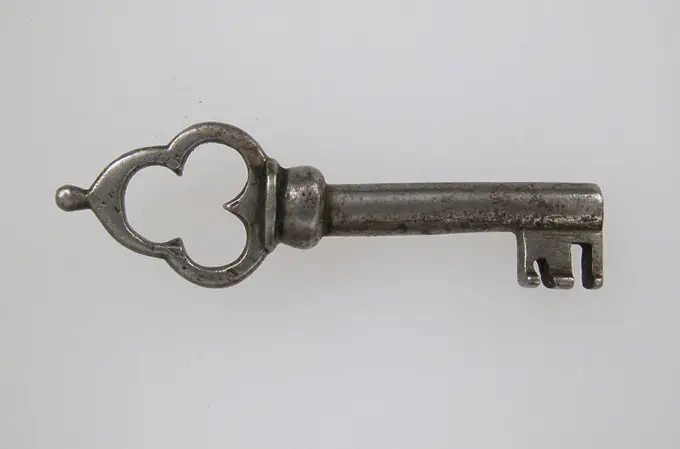
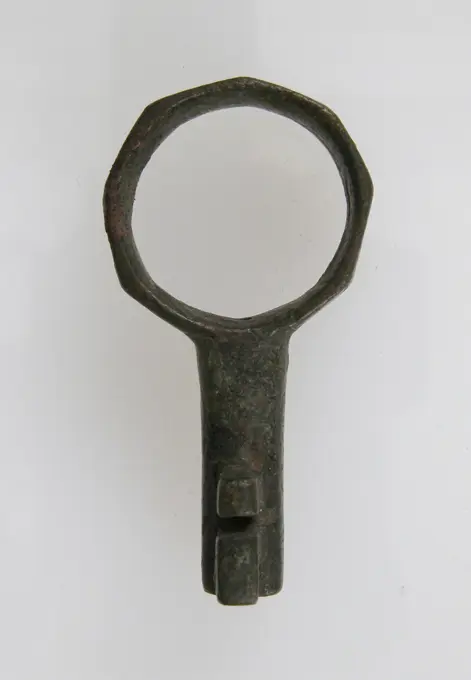
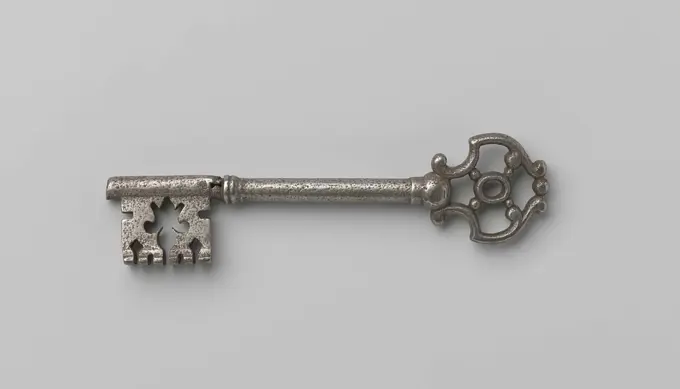
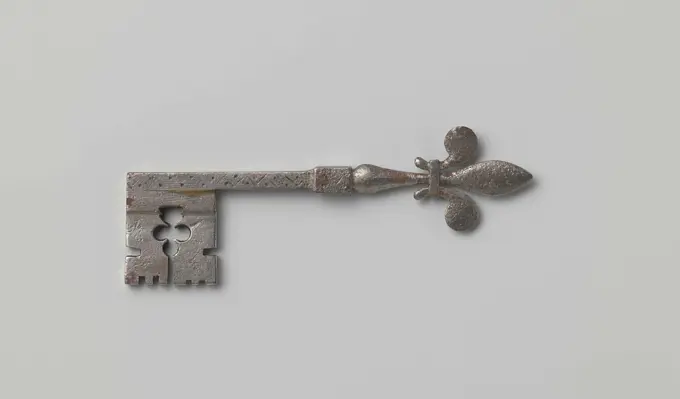
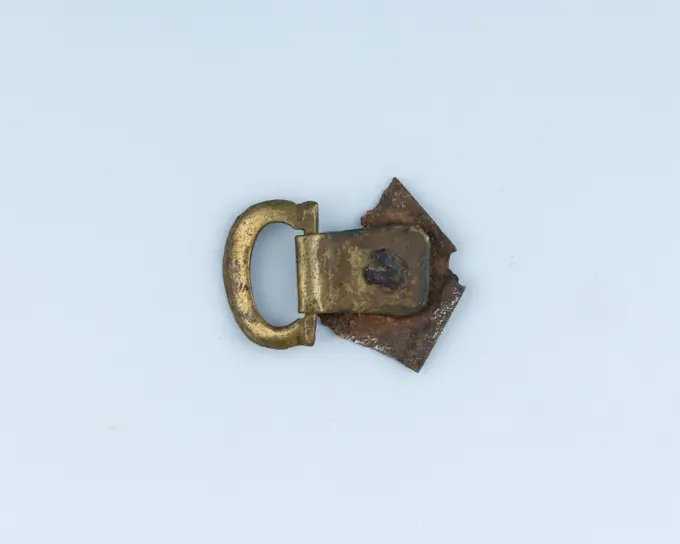
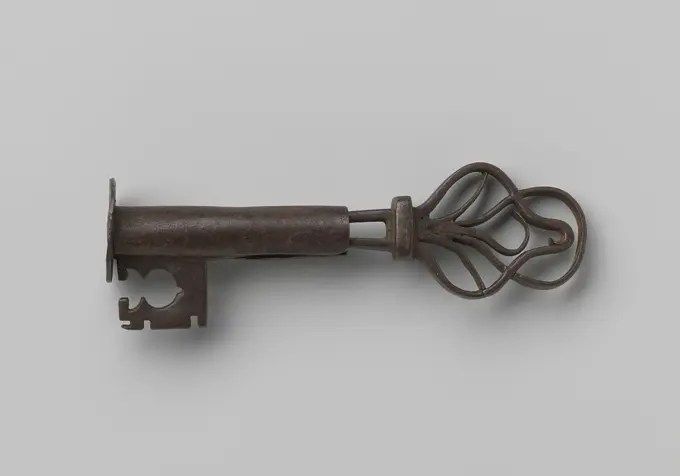
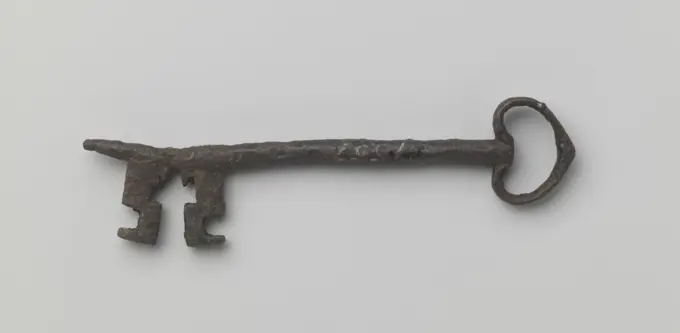
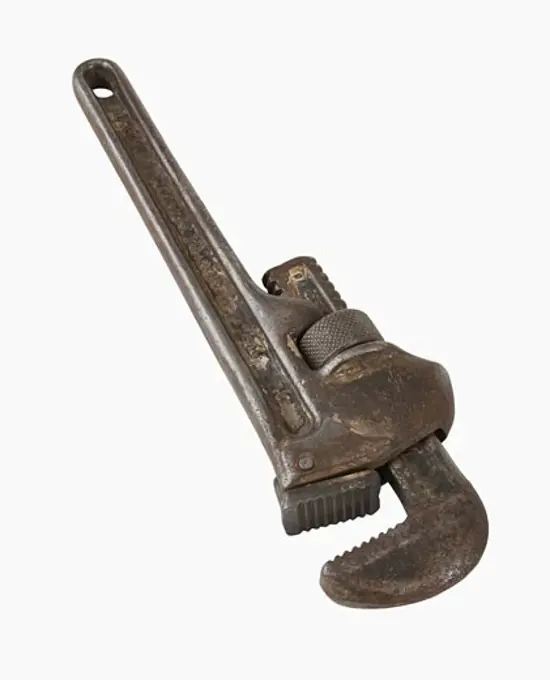
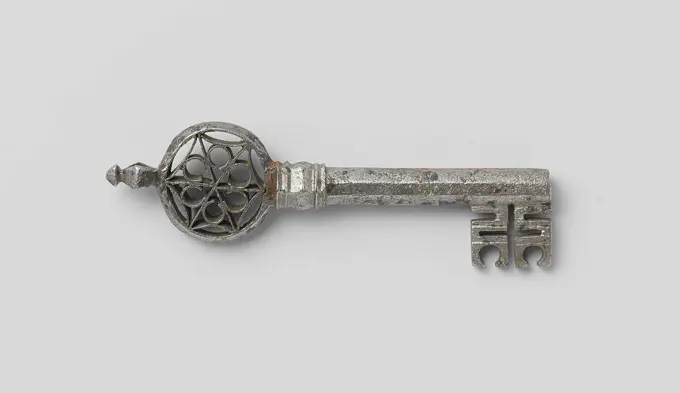
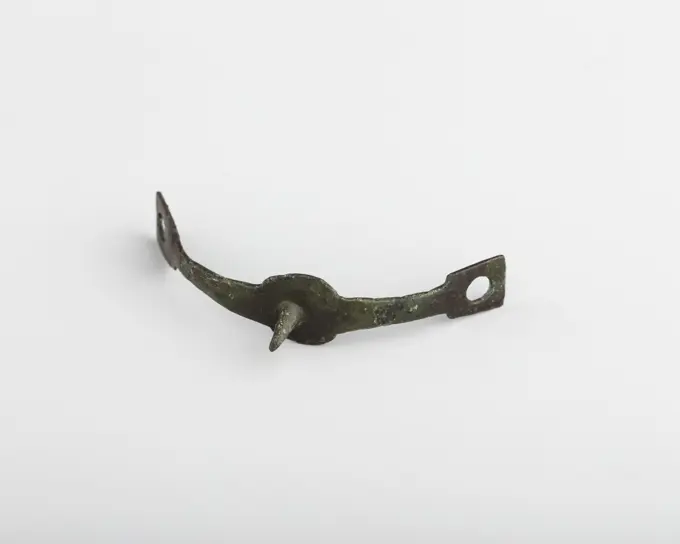
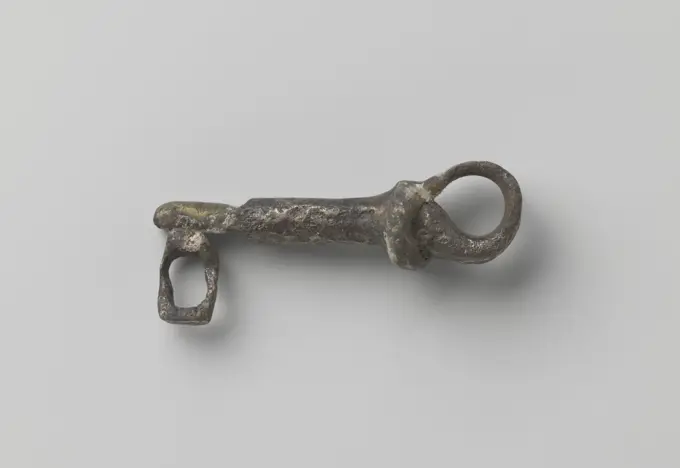
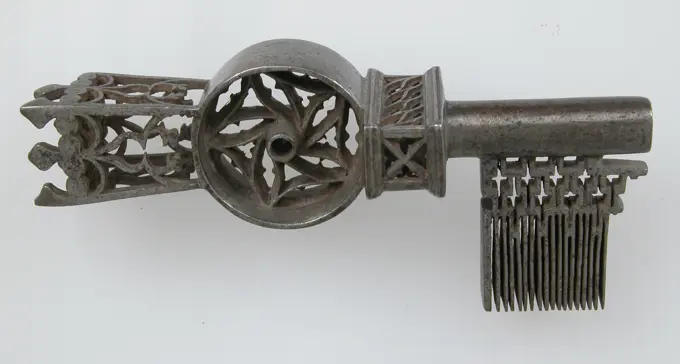
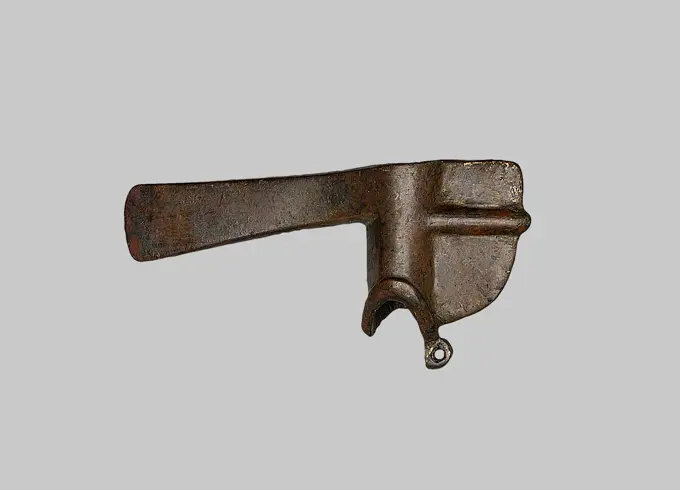
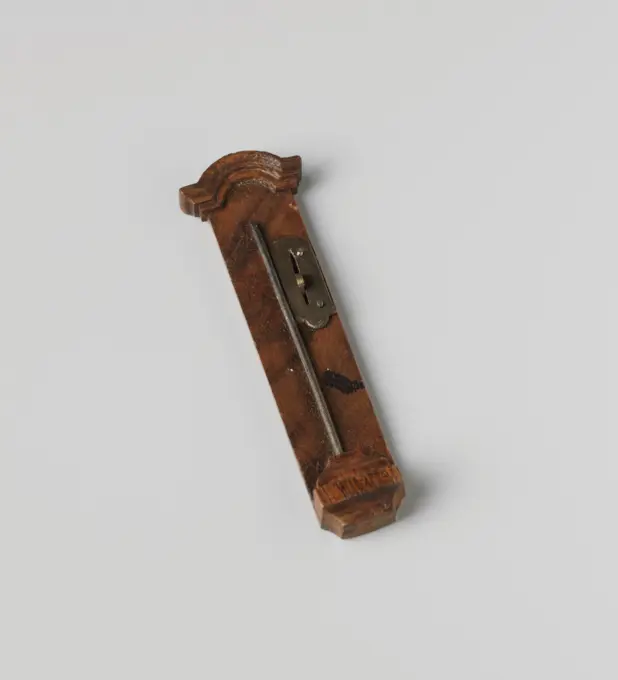
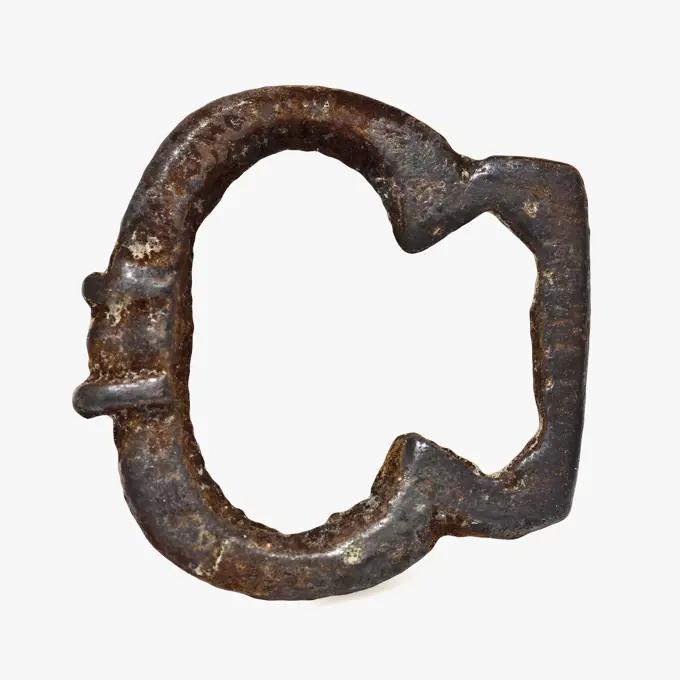
Key. Culture: German. Dimensions: Overall: 1 7/8 x 9/16 x 1/4 in. (4.8 x 1.4 x 0.7 cm). Date: 15th century.The decoration of Gothic iron locks and keys was often elaborate and of the highest standard of workmanship. The motifs were frequently drawn from Gothic architecture, reproducing on a miniature scale complicated tracery patterns and even tiny statuettes. A number of these tiny locks were compound, with some of the mechanisms concealed from view, and required two or even three keys used in sequence to open them. It has been suggested that the greatly expanded use of locks on doors, or coffrets and other types of storage chests was a result of the increasing urbanization of life and the new emphasis on material wealth and private ownership which developed in the late Middle Ages. Museum: Metropolitan Museum of Art, New York, USA.Key, c. 1400 - c. 1500 Key with V-shaped handle, half of which is missing. There is a slot in the shaft.  iron (metal) Key with V-shaped handle, half of which is missing. There is a slot in the shaft.  iron (metal)Pipe wrench. Pipe wrench with around eye; Forged from a piece.Key, 1500 - 1600 Key with bean -shaped eye. The V-shaped carved beard runs beyond the shaft.  iron (metal) Key with bean -shaped eye. The V-shaped carved beard runs beyond the shaft.  iron (metal)Iron key with heart-shaped eye, hollow key handle and cruciform beards in beard, key iron value soil find, hand forged Key with heart-shaped eye (handle) with small notch on the top hollow key handle cross-shaped notches (horizontal vertical and diagonal) in key beard and symmetrical keyhole cross section archeology Rotterdam City triangle Delftware hang-en- The object was probably excavated and found at the partial reclamation of the Delfsevaart for the purpose of making the lift over the Vaart in the summer of 1928.Key, c. 1600 Key with bean -shaped eye. The eye is formed by a lowered band-shaped C-Volute whose outside shows an outstretched chain ornament. The key breast is vase -shaped.  iron (metal) Key with bean -shaped eye. The eye is formed by a lowered band-shaped C-Volute whose outside shows an outstretched chain ornament. The key breast is vase -shaped.  iron (metal)Model of an Anchor, anonymous, 1823 demonstration model Wooden model from Hawkins' patent anchor. This anchor has no ordinary anchor stick; This has been replaced by a short stick at right angles to the cross of the arms. The arms and anchor sticks turn together in the forked end of the shaft, forcing the anchor stick into the ground; The stick is brought into the correct position by a rope on a harp near the Ankerkruis, with which the anchor can also be lifted. The hands are in the same surface as the arms. There is a harp at the top of the shaft. Scale 1:10 (estimate). model maker: Netherlandsafter design by: United Kingdompatentee: United Kingdom wood (plant material). bronze (metal)Sleutel van ijzer.Forged iron key with around eye, hollow pipe, beard with straight cuts, forged entirely of a piece.. A key.Pulls..Key with mahogany cassette, 1806 - 1832 Key with mahogany cassette.  metal Key with mahogany cassette.  metalKey, c. 1600 - c. 1699 Key with bean -shaped eye, profiled shaft that ends in a button under the beard. The key breast is located just above the beard.  iron (metal) Key with bean -shaped eye, profiled shaft that ends in a button under the beard. The key breast is located just above the beard.  iron (metal)Pijpsleutel.Pipe lut with handle shaped by a small three pass, on which a "basket", wrapped with a pearl necklace, rest. Handle and capital of silver plated copper; Shaft and beard of iron.Pipe key, c. 1700 - c. 1750 Pipe key whose round grip consists of struck half moons, for a button with a button. There is a rebellion on the ball -shaped capital. The round key breast is deeply grooved.  iron (metal) Pipe key whose round grip consists of struck half moons, for a button with a button. There is a rebellion on the ball -shaped capital. The round key breast is deeply grooved.  iron (metal)Key, c. 1400 - c. 1950 Key of which the handle consists of two, horizontally lying together from the stem, binding towards each other. They are covered above by a saddle.  iron (metal) Key of which the handle consists of two, horizontally lying together from the stem, binding towards each other. They are covered above by a saddle.  iron (metal)Steel socket wrench, c. 1400 - c. 1500 Steel cover key with detailed and open beard, ring bean -shaped. France steel (alloy) Steel cover key with detailed and open beard, ring bean -shaped. France steel (alloy)Sleutel.Key with bean-shaped eye. The eye is formed by a controlled belt-shaped C-volt whel of which the outside has an outstretched chain ornament. The key chest is vase-shaped.Sleutel, Mathurin Jousse (II), 1607 - 1692 Key.  iron (metal) Key.  iron (metal)Socket wrench from bronze. Bronze socket wrench, diamond-shaped ring, pin flared in pointed point, beard of bottom.Key Roman 1st-3rd centuryFibula, era of the tène (attributed title). Bronze. Carnavalet museum, history of Paris.Key, c. 1800 - c. 1900 Key with bean -shaped eye. The four -sided stem is turned half a stroke around her ash in the middle and is around the two -part beard.  iron (metal) Key with bean -shaped eye. The four -sided stem is turned half a stroke around her ash in the middle and is around the two -part beard.  iron (metal)Sleutel.Key whose handle consists of two opposite and broken volutes, an oval between four balls. The beard has a lily-shaped incision, the shaft is partially drilled.39 keys from the collection of Emmanuel Vita Israël. The Amsterdam apothecary and art collector Emmanuel Vita Israël. He donated his collection, comprising keys dating from Roman antiquity to the 19th century, to the Koninklijk Oudheidkundig Genootschap (Royal Antiquarian Society) in 1937. Vita Israël claimed that his key collection had grown more or less by accident: being one of the few collectors of keys, dealers automatically made their way to him.Sleutel.Key whose handle is formed by a French lily. In the beard a clover-shaped incision. The shaft is square and decorated with dots and dashes. Probably symbolic key.Key, wrought, cast, and cut-out steel, the tubular shaft with two pendant elements, one with three teeth, the other with two, the shaft attached to an openwork handle with opposing scrolls below a terminal shaped like a tent, Italy or Spain, 1770-1810, metalwork, Decorative Arts, KeyKey 14th-15th century German The decoration of Gothic iron locks and keys was often elaborate and of the highest standard of workmanship. The motifs were frequently drawn from Gothic architecture, reproducing on a miniature scale complicated tracery patterns and even tiny statuettes. A number of these tiny locks were compound, with some of the mechanisms concealed from view, and required two or even three keys used in sequence to open them. It has been suggested that the greatly expanded use of locks on doors, or coffrets and other types of storage chests was a result of the increasing urbanization of life and the new emphasis on material wealth and private ownership which developed in the late Middle Ages.. Key 46332439 keys from the collection of Emmanuel Vita Israël, c. 1200 - c. 1300 Pipe key with eye, consisting of a square that is placed with a corner on the back shaft and of which the other angles consist of a corrupted floral pattern. The shaft has a profiling at the top.  bronze (metal) Pipe key with eye, consisting of a square that is placed with a corner on the back shaft and of which the other angles consist of a corrupted floral pattern. The shaft has a profiling at the top.  bronze (metal)Spoon with oval bowl, flat handle ending with two notches, spoon cutlery soil find tin metal, w bak 5.0 Probably marked on the stem at the back, however, no longer to be found archeology Valckensteyn Poortugaal Albrandswaard archaeological find in the soil Poortugaal Castle ValckensteynLoop for Strap 15th-17th century European. Loop for Strap. European. 15th-17th century. Brass. Miscellaneous-Buckles & OrnamentSleutel.Key. Horse with a lock (BK-NM-8726-A).Key 15th century German The decoration of Gothic iron locks and keys was often elaborate and of the highest standard of workmanship. The motifs were frequently drawn from Gothic architecture, reproducing on a miniature scale complicated tracery patterns and even tiny statuettes. A number of these tiny locks were compound, with some of the mechanisms concealed from view, and required two or even three keys used in sequence to open them. It has been suggested that the greatly expanded use of locks on doors, or coffrets and other types of storage chests was a result of the increasing urbanization of life and the new emphasis on material wealth and private ownership which developed in the late Middle Ages.. Key 468876Pin from the wreck of the East Indies Hollandia, Anonymous, 1700 - in Or Before 1743  Tools and instruments, sewing and sailmaking, pin; fragm of shaft with bow, id. NG 1980-27H3265. Netherlands copper (metal)   SecondKnip, anonymous A sorner single cut. A sorner single cut.Decorated key with cloverleaf shaped eye, massive key handle and cruciform beards in beard, key iron iron, hand forged Key with cloverleaf shaped eye (handle) solid key handle (with socket wrench end) Hexagonal collar with different profile edges cross-shaped notches (horizontal and vertical) in key beard and asymmetrical keyhole cross-section hang-and-close work Rotterdam education Academy of Fine Arts and Technical Sciences Cool Coolvest Dijkzigt GJ de Jonghweg City Triangle Blaak Academy of Fine Arts and Technical Sciences Rotterdam.Pen with round eye, pointedly tapered, locking pin, pin fastener part soil find copper metal, cast Rectangular metal rod ending in point with an eye at the end. Pen or lock pin archeology Rotterdam rail tunnel close secure confirm confirmation Soil discovery: trajectory rail tunnel Rotterdam.antique key Bronze stamper, pestle tools equipment bronze, cast Round handle with ring shaped profiled in the middle At the ends pear-shaped widening healthcare pharmacy grinding augervintage brass eye snap hook over white, clipping pathSteelsleutel.Steel wrench whose handle is formed by two cross-placed dolphins with tail and heads towards each other, so that they form two eyes placed above each other.Key. Key with handle similar to a four-packed wheel and a shaft ending in a point. Strongly incised and large beard.Sleutel.Key, in the ring a star.Key. Key with accompanying shape bus. The handle consists of a palm with, the handle has been split longitudinally and the beard has a mosque-like cutting.Key, c. 1400 - c. 1950 Key.  iron (metal) Key.  iron (metal)Snaffle Bit. Culture: Italian, Lombardy. Dimensions: W. 6 1/8 in. (15.6 cm); Wt. 7.9 oz. (224 g). Date: 4th-5th century.The snaffle bit is the simplest type of horse bit, and has an effect on the bars (part of the horses' jaw without teeth) and the corners of the lips. The mouthpiece consists of two square-section canons, half in bronze, half in iron, articulated in the center. The side rings retain the pear-shaped tabs with rivets used for hanging the bit from the bridle and one remaining simple straight tab on one side for attaching one of the reins.This bit is said to have been found in Lodi Vecchio, in Lombardia. Similar bits have also been discovered in 4th-5th century tombs in Crimea, possibly indicating the presence of Eastern riders in the Italian peninsula at this time, or at least any connection with Eastern equestrian cultures. Museum: Metropolitan Museum of Art, New York, USA.Close-up of wrenchKey;  k. XVIII - 1st half 19th century (1801-00-00-1900-00-00);Two old keys, still lifeKnob Knob; brassMusketvork, anonymous, c. 1590 - c. 1596  Muskulevolk.  iron (metal) forging  Nova Zembla. Saving HuysCoat hook or coat closure with floral decoration, round eye and bent end as hook, closure clothing accessory clothing soil find copper metal, cast archeology rugs closeModel or a jury rudder. Model of a part of a keel with stern and emergency rudder, incomplete. The stirring king has been put together from four parts, held together by the stirring hooks and wooden pens. The springs of the stir hooks are connected to the back for this. The hooks themselves are loose and in the front of the springs. The heel of the helm is incomplete.Steel and old pliers on a white backgroundKey. Pipe key with hinge connection. The flat annular handle is sheered over the width and provided with rolled circles at the bottom. The shaft is regularly grooved.The Amsterdam apothecary and art collector Emmanuel Vita Israël. He donated his collection, comprising keys dating from Roman antiquity to the 19th century, to the Koninklijk Oudheidkundig Genootschap (Royal Antiquarian Society) in 1937. Vita Israël claimed that his key collection had grown more or less by accident: being one of the few collectors of keys, dealers automatically made their way to him.Handle, swinging, of a bowl. Handle, swinging, of a bowl 244523Key; 1910-26-1Alps cowbell on white backgroundCranequin (Winder) for a Sporting Crossbow 1550-1600 Germany. Steel with gilding, wood, horn, and cord .Vouwsleutel, c. 1800 - c. 1900 Folding key whose wide handle over the beard and shaft can be folded.  iron (metal) Folding key whose wide handle over the beard and shaft can be folded.  iron (metal)Prick Spur possibly 2nd-1st century B.C. possibly Roman or Celtic Spurs have been found in Celtic and Greek contexts from the 5th century B.C. onwards. In high antiquity, they were not used in pairs, but rather as a single accessory attached to only one of the feet, usually on the left. The first pairs are recorded in some Greek regions in the late 2nd century B.C. They were used, as they are today, for directing a horse to move forwards. The prick spur was the first type of spur to be invented, and it consists of a goad or prick, more or less pointed, connected to side arms or a heel plate. The earliest spurs were probably simple thorns attached at the back of the heel or ankle, before they began to be made out of metal.. Prick Spur. possibly Roman or Celtic. possibly 2nd-1st century B.C.. Copper alloy (bronze). Equestrian Equipment-SpursSlot with complaining cover page, c. 1400 - c. 1950   iron (metal)   iron (metal)Part of a crane from the wreck of the East Indians Meresteijn, Anonymous, 1693 - 1702  Part of a crane made of blacken copper: tube with a cross piece, the control plall is in the shape of a mouth. Tap, spigot. Netherlands copper (metal)   Cape of Good HopeKey, 1600 - 1699 Key whose shaft above the disc ends in a loop -shaped eye. The beard is an open quadrush.  iron (metal) Key whose shaft above the disc ends in a loop -shaped eye. The beard is an open quadrush.  iron (metal)Miniature tongs (part of a set). Culture: British, London. Dimensions: Length: 4 in. (10.2 cm). Maker: David Clayton (British, active 1689). Date: late 17th-early 18th century. Museum: Metropolitan Museum of Art, New York, USA.Key 16th century French The decoration of Gothic iron locks and keys was often elaborate and of the highest standard of workmanship. The motifs were frequently drawn from Gothic architecture, reproducing on a miniature scale complicated tracery patterns and even tiny statuettes. A number of these tiny locks were compound, with some of the mechanisms concealed from view, and required two or even three keys used in sequence to open them. It has been suggested that the greatly expanded use of locks on doors, or coffrets and other types of storage chests was a result of the increasing urbanization of life and the new emphasis on material wealth and private ownership which developed in the late Middle Ages.. Key. French. 16th century. Iron. Metalwork-IronKey. KEY with large bean-shaped eye, formed by a used C-voltage. This is attached to a square block with the ends in which a Ruif Crown is engraved on both sides. The upper part of the shaft is balusterly profiled and at the bottom it ends in a button. Beard two-fold.Key of golden men's watch, Gaudy, c. 1800 Key of gold with agate. Paris gold (metal). agate (chalcedony) Key of gold with agate. Paris gold (metal). agate (chalcedony)wooden clothespin isolated on white backgroundBrooch -Key; 1909-2-236Topór bojowy. unknown, authorFireplacetongsBarometer in an elongated cupboard with curved hood, anonymous, c. 1740 - c. 1760 Smooth, elongated wall barometer made of walnut, with copper rod, resting on a pedestal, next to a copper plate. The cupboard has been crowned with a curved, profiled hood and can be hung on a rope. Amsterdam (possibly) walnut (hardwood). brass (alloy) Smooth, elongated wall barometer made of walnut, with copper rod, resting on a pedestal, next to a copper plate. The cupboard has been crowned with a curved, profiled hood and can be hung on a rope. Amsterdam (possibly) walnut (hardwood). brass (alloy)Key, Steel, 18th century, metalwork, Decorative Arts, KeySmall copper buckle in the shape of keyhole, clasp fastener component soil found brass copper metal, cast Copper clasp in the form of keyhole. No middle style. Double ledge on the table in front of the point of the angel archeology Rotterdam railway tunnel fastening fastening Soil discovery: trajectory rail tunnel Rotterdam.Qatar, Doha, Old flintlock pistol in Doha Museum.Hook. UnknownBed leg (one of four) 16th century Italian. Bed leg (one of four). Italian. 16th century. Iron. Metalwork-IronRail of steel, 1825 - 1832  Steel track with buckle, straight neck with a large toothed wheel. Netherlands steel (alloy)clamp Door knocker early 16th century possibly French. Door knocker. possibly French. early 16th century. Bronze. Sculpture-BronzeFíbula romana de bronce. Can Serra Museu de Mataró.Model of a Chain Stopper, anonymous, 1840 - 1850 demonstration model Model of a chain stopper, consisting of a devil's claw with a loose maker. It consists of two parallel hooks, connected by means of a harp at the right end and at the bend with a bolt. Around this bolt is a lever between the legs hooks, with which the chain scale can be pushed out of the hooks. Netherlands (possibly) brass (alloy)ClipSpanner, c. 1500 - c. 1600 Sight key without a beard. The eye is lobed on both sides and is closed by a flat final piece. Intended for a padlock.  iron (metal) Sight key without a beard. The eye is lobed on both sides and is closed by a flat final piece. Intended for a padlock.  iron (metal)Clothes hook or coat closure with eye and broken hook, closure clothing accessory clothing ground find copper metal, d 0,3 cast archeology Rotterdam Kralingen-Crooswijk Kralingsche Bos Kralingse Plas dress close Soil discovery Kralingse Plas.Key. UnknownPadlock, anonymous A triangular padlock with key. A triangular padlock with key.Antique keys on a ring on a white backgroundRotary Pump, anonymous, c. 1850 - c. 1858 test model Rotation pump on the suction and pushing principle, consisting of a cylindrical drum with a supply and output pipe and a crank. Inside the drum is not cylindrical but heart -shaped. A large cylinder in the middle touches the inner wall where the inward point of the heart is. A slat is installed in the cylinder, which protrudes through a slot in the cylinder wall and serves as a piston. Cylinder and piston are turned around a central heart -shaped core with the crank that controls the movement of the piston so that it always forms a wall between cylinder and inner wall of the drum. If cylinder and piston are turned around, the space between the cylinder and the inner wall of the drum is divided into two rooms by the piston, which differ in size depending on the position of the piston. For example, a room is created during the supply that is getting bigger and thus sucks in, and when the piston subsequently comes back to the supply, thSprinklerrusty old bolts and cogwheel isolated on white background - clipping pathShoe buckle with decoration and holes on the corners, buckle fastener component soil find bronze copper metal, cast Shoe buckle Rectangular shape protrusions on the corners at the corners and sides. Slight curved model. Decorated with irregularly punched grooves radially. Four holes in the corners archeology Rotterdam railway tunnel attaching footwear adorning fastening shoe Soil discovery: trajectory rail tunnel Rotterdam.Model of an Anchor. Wooden model of a composed anchor, which can be exploited. The shaft and arms consist of six layers, which are kept together by brass brackets. The model has no anchor stick. Scale 1:10 (estimation).Tangent Sight, anonymous, 1845 - 1865 demonstration model. test model Set -up or target that is mounted against the back of the final increases; The support for this is provided with a ridge that grabs in the closure and is tightened from the back with a screw. The design rod is a short square iron rod, on top is pyramid -shaped with grooves through the top; He can move vertically back and forth. Demonstration and or test model. Netherlands iron (metal). brass (alloy)Pewter hammer, hammer from casting, hammer tool kit metal iron wood veneer, forged Hammer Short round wooden handle. Elongated and curved head with two striking surfaces constricted on both sides of the handle. The striking surfaces have bevelled corners and are slightly round at the top. Decorated with double grooves over the head. Struck marks struck initials of the owner: WP tin foundry tin pewter craft craft driving hammer polishing hammer metal processing Meeuws Originating from collection Meeuws.Half of a horse bit ca. 9th century B.C. Iran. Half of a horse bit 325171Curb Bit ca. 1550 Italian, Mantua or Milan The iron shanks of this bit are entirely decorated with flowers and scrollwork damascened in gold and silver, including flowers and scrollwork. On each side, a circular iron boss, partly silvered and gilded, displays a grotesque satyrs mask in vegetal scrolls. The workshop may have been in a hurry when making it though, as the two halves of the bit have been hastily decorated by two different hands, interpreting slightly differently the same given design. It was probably part of a horse tack commissioned for a particular event, and thus had to be delivered on time.The mouthpiece is composed of a central high port from which hangs a triangular pendant used, like the thin watering chain attached above, ‘to entertain the horse, which, by playing with it with its tongue, would salivate and relax its jaw. Other rings, beads and rollers, now lost, would have been strung on the bars.The bosses of this bit are actually identical to those attached to