Historical Keys and Artifacts

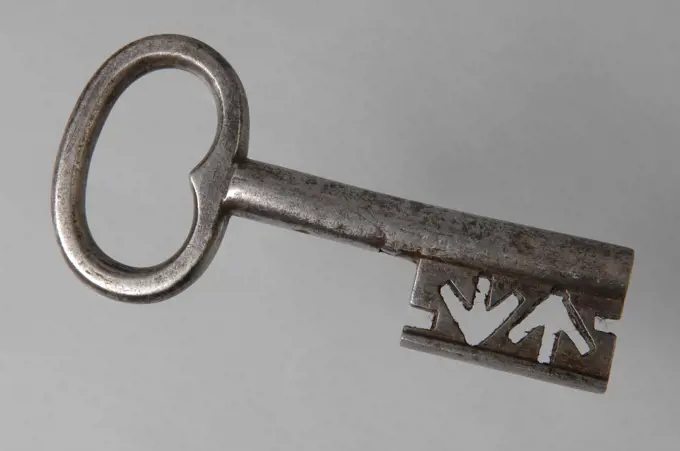
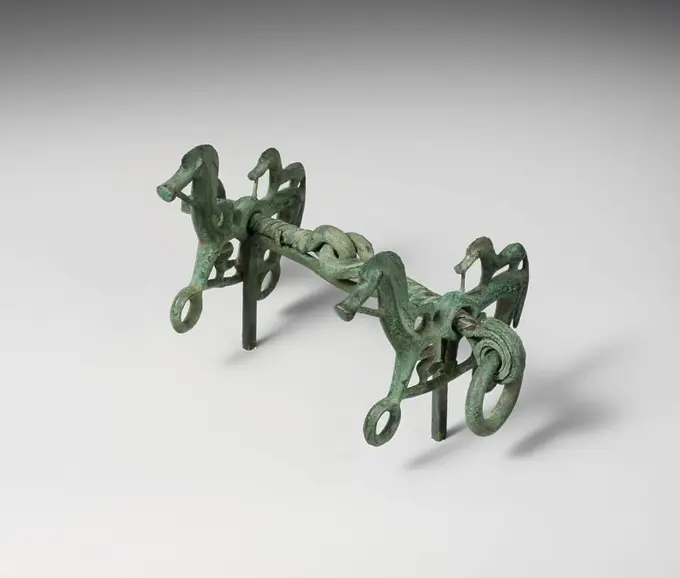
Intricate antiques including decorative keys and carriers, showcasing historical craftsmanship and design details.
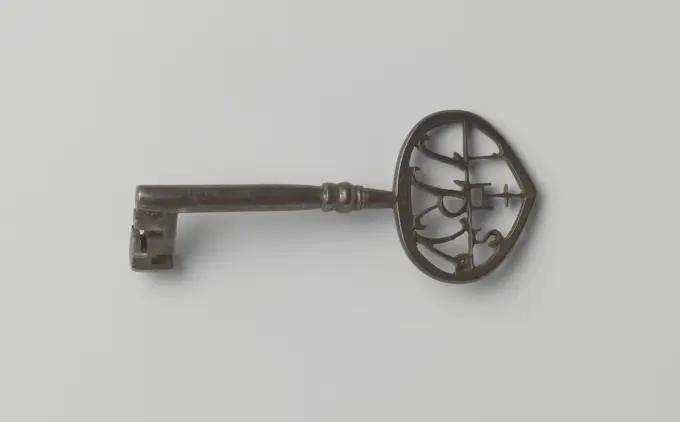
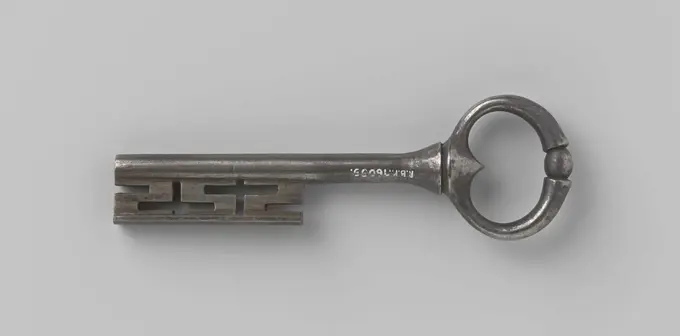
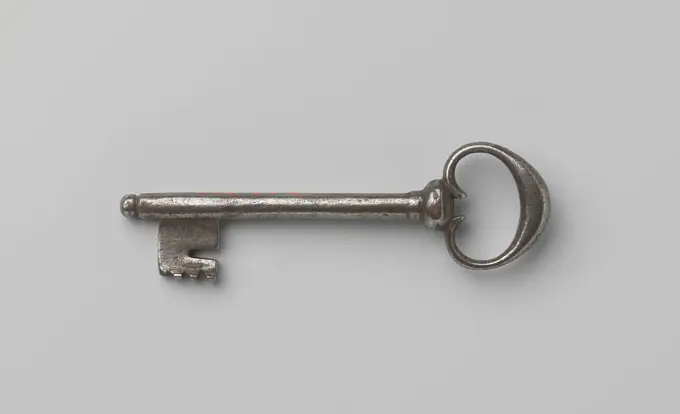
Key with the letter r in the beard, c. 1489 - c. 1509   iron (metal)   iron (metal)
Key with the letter r in the beard, c. 1489 - c. 1509 iron (metal) iron (metal)
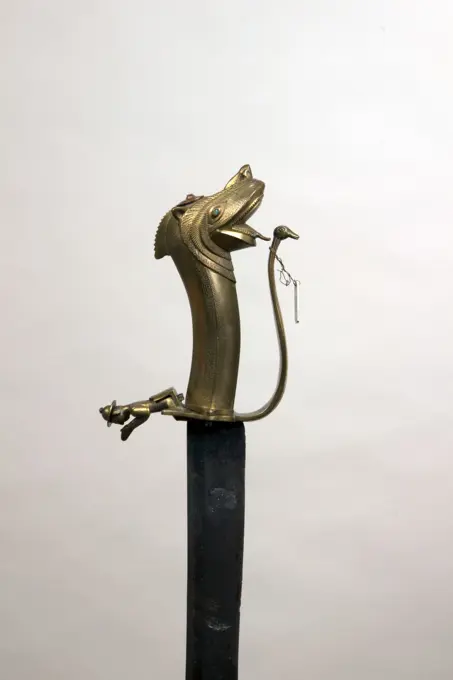
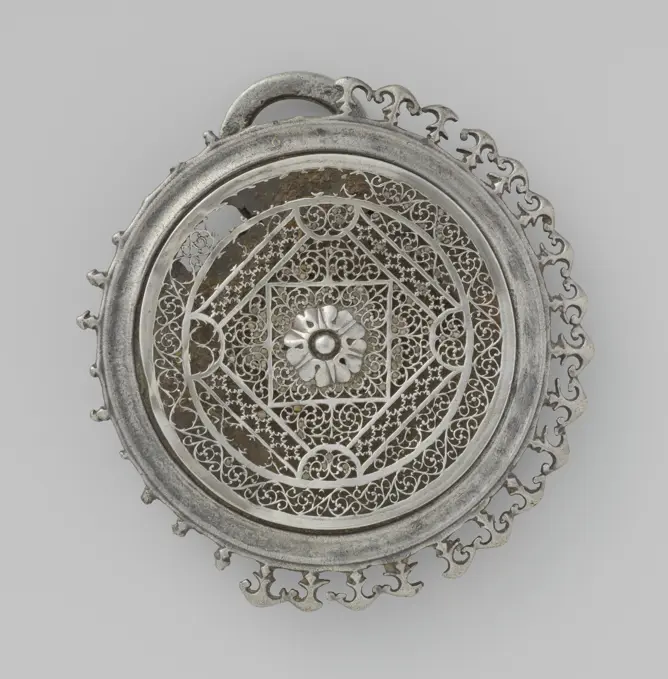
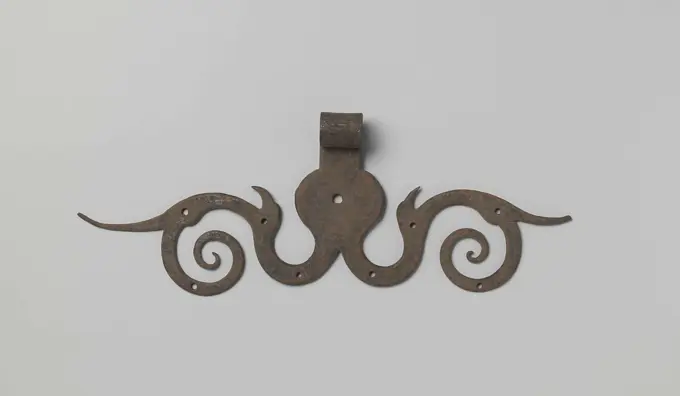
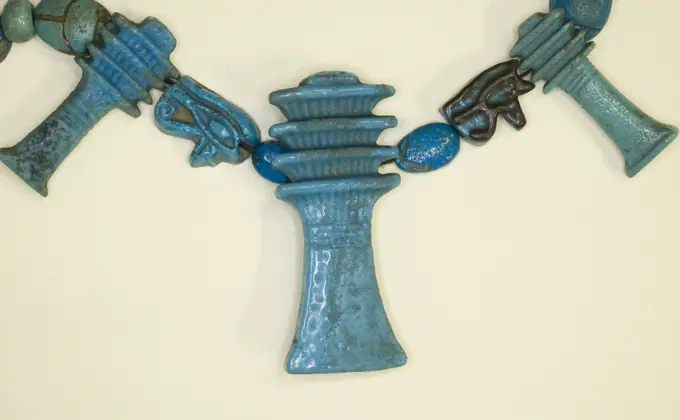
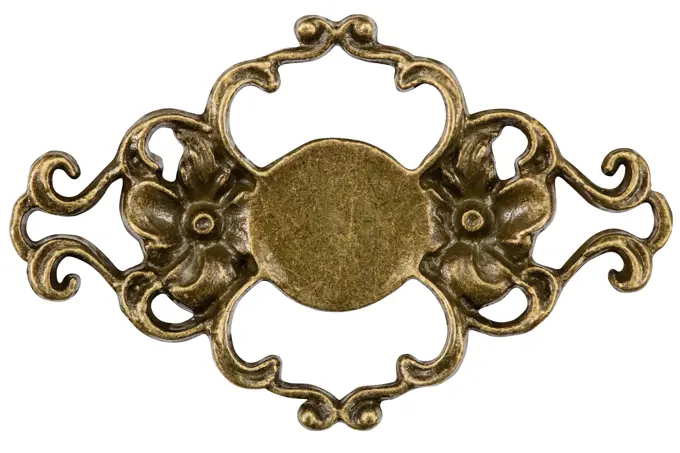
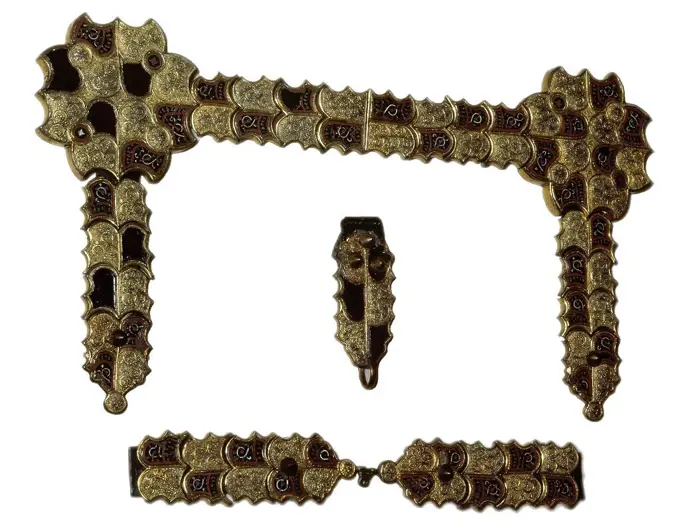
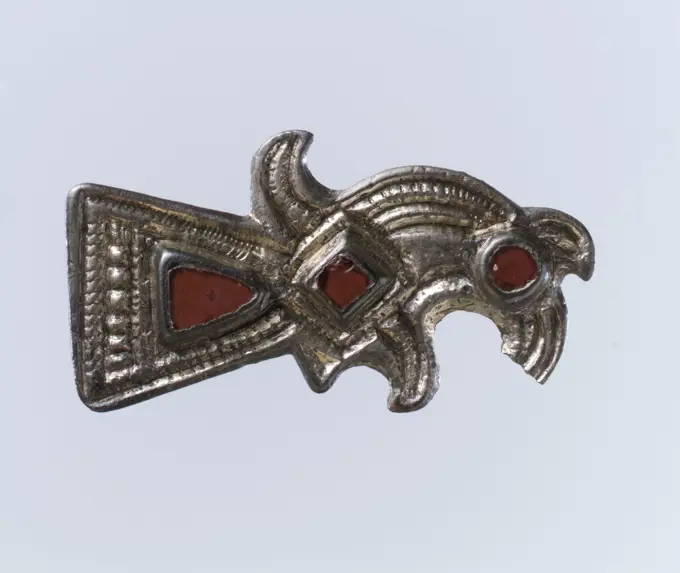
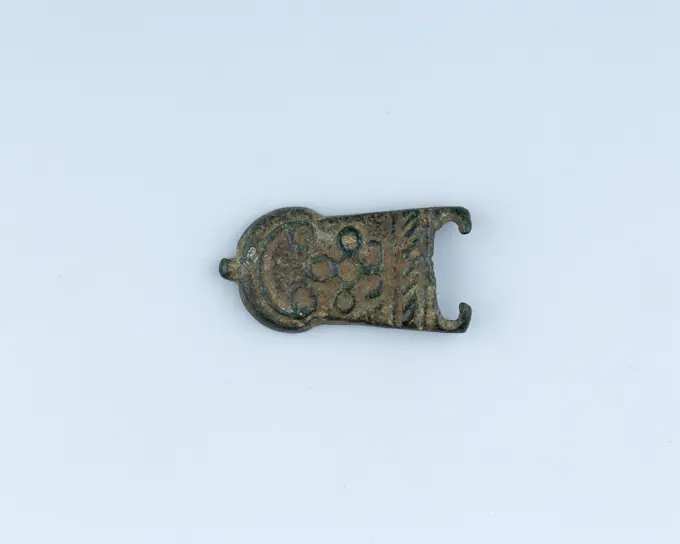
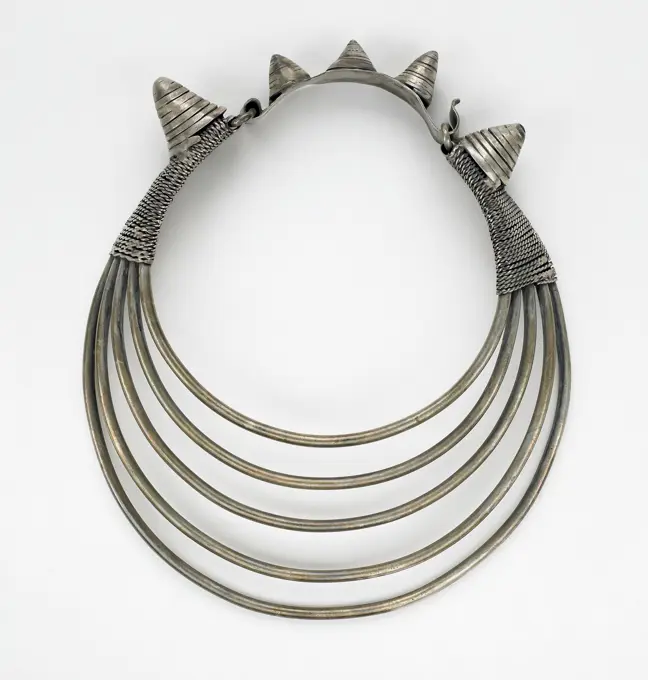
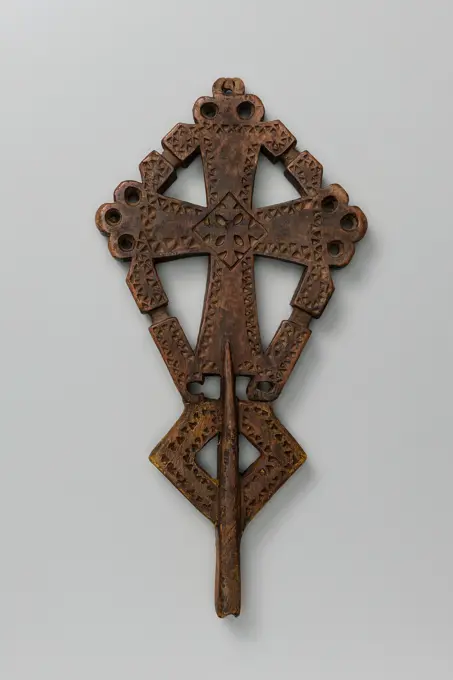
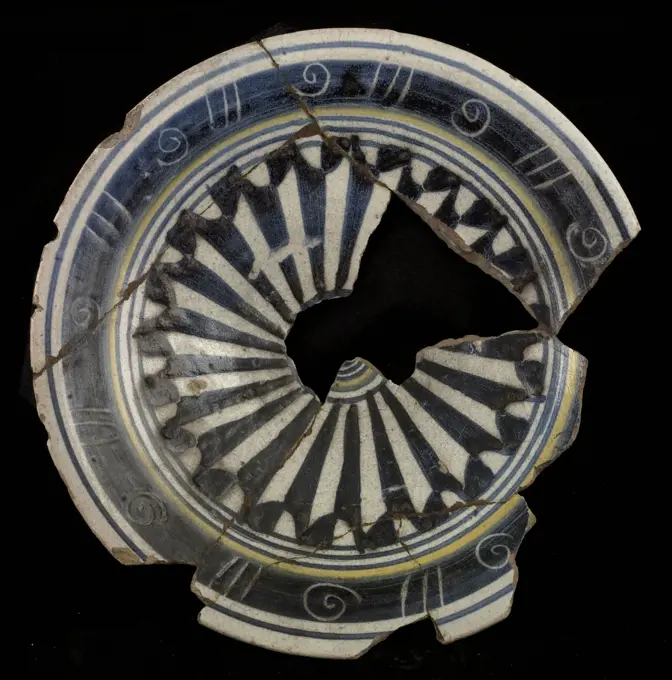
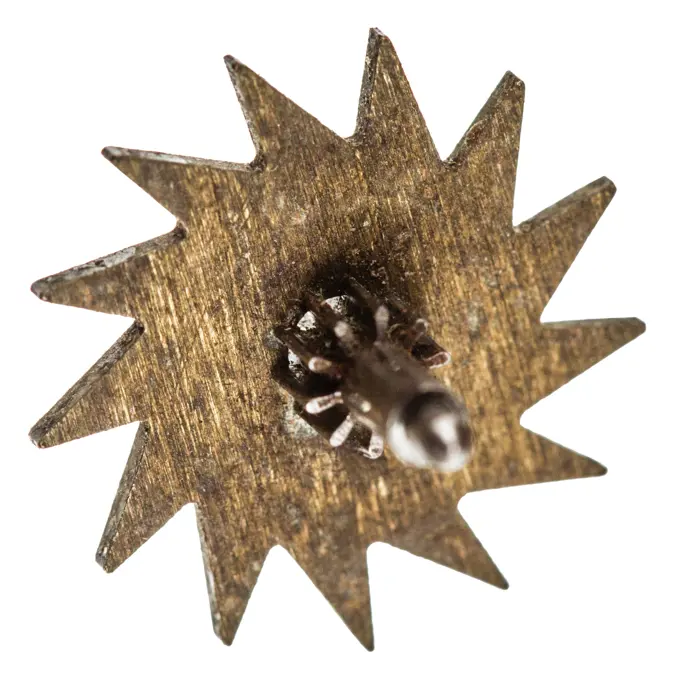
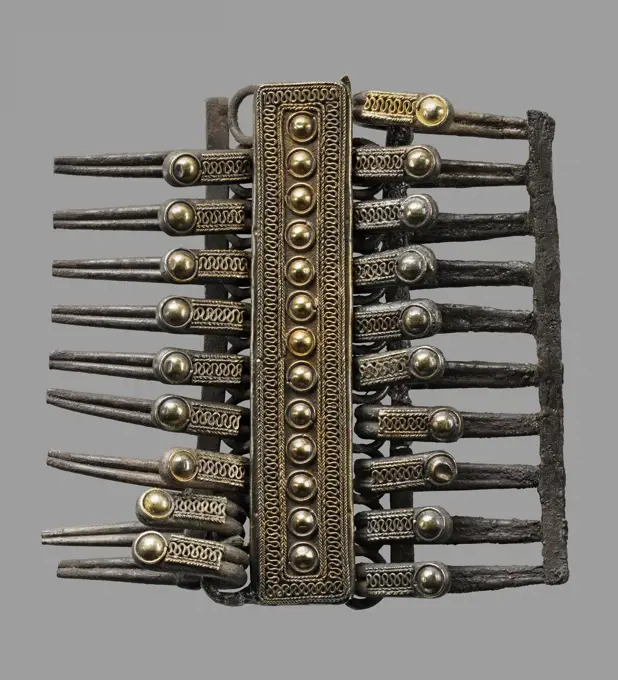
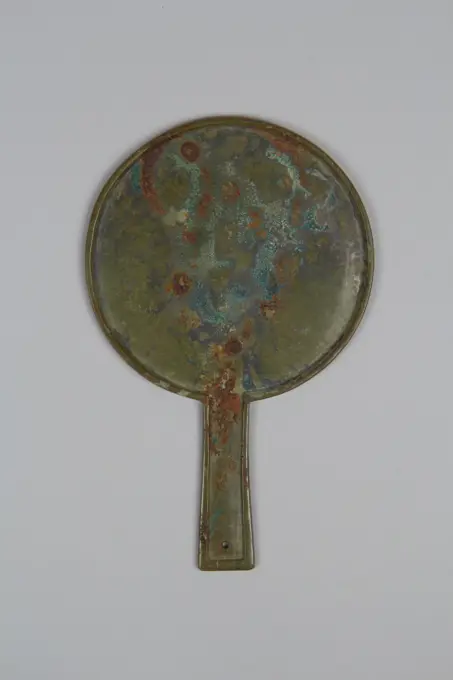
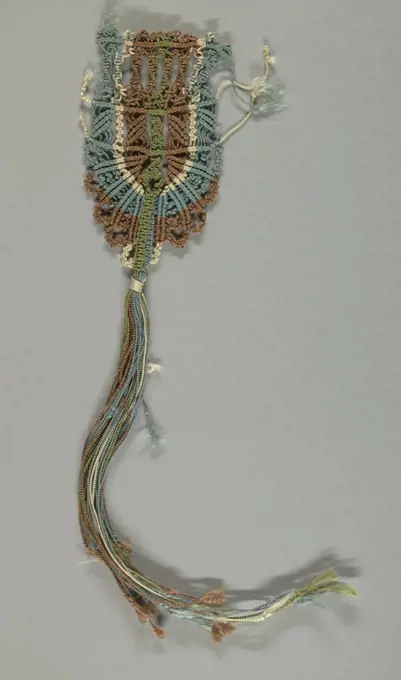
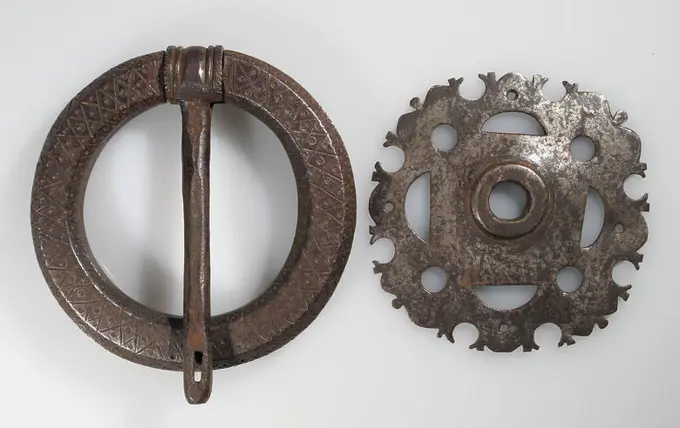
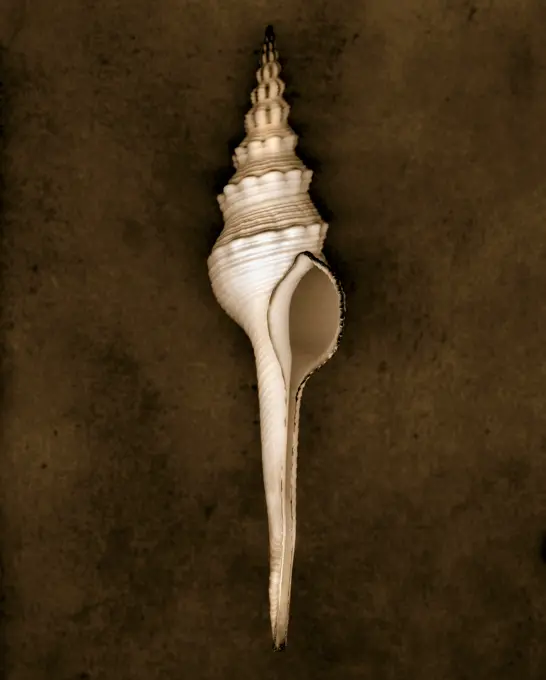
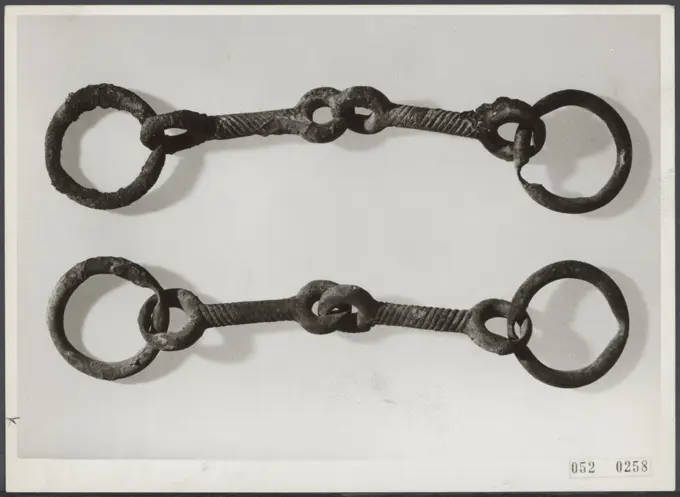
Elsevier photo collection. Horse bits wagon grave (cremation) the Zelse Bergen near Nijmegen. "People's Publisher" rode double .. undatedSword 18th-19th century Sri Lankan. Sword 31045Treasure of El Carambolo. Tartessian. Gold necklace with pendants. Reproduction. Orientalizing Period. Late 7th-6th century BC. El Carambolo (Camas, province of Seville, Andalusia, Spain). National Archaeological Museum. Madrid. Spain.Sleutel van een hangslot Gildeproef.Key of padlock with double closure Get. 16. W. 08; Gildeproef. The padlock consists of a profiled quadrangular substructure; The lock case. This has a slot valve with buttons on either side. On the lock case there are two square increases, allowing two copper cylinders that are each connected to a short side of the closing case. The increases have been awarded by a button and a rosette.Shoe spur of silver with shallow decoration in relief, c. 1763 Shoe spur of silver with shallow decoration in relief. Sneek (Possible) whole: Silver (Metal) forging Shoe spur of silver with shallow decoration in relief. Sneek (Possible) whole: Silver (Metal) forgingLoop. 3 openwork strips with small different patterns on each strip small discs on the outer strip, stylized floral patterns on the central strip, oblong patterns on the interior strip.Tower cross whose intersection was forged into a window in which a cloverleaf, c. 1400 - c. 1950 A forged iron cross (from a spire or roof fault) with a square fork, around which two brackets attached to the wood. The trunk is smooth, the intersection forged into a window in which a cloverleaf is applied. The cross arms end in one of the 4 sides of tulip -shaped flour, which lacks some sheets. The striker is thin and rounded as a pivot for a wind vane. The wind vane is missing.  iron (metal) A forged iron cross (from a spire or roof fault) with a square fork, around which two brackets attached to the wood. The trunk is smooth, the intersection forged into a window in which a cloverleaf is applied. The cross arms end in one of the 4 sides of tulip -shaped flour, which lacks some sheets. The striker is thin and rounded as a pivot for a wind vane. The wind vane is missing.  iron (metal)Koormantelsluiting, anonymous, c. 1400 - c. 1500 Agraaf van Zilver. Possible from a priest's mantle. Round with an outer edge of Fleurons. Covered with a separate plate only attached in the middle with a driven flower in the middle. Furthermore decorated with ornament work in filigrein. West-Europa silver (metal) filigree Agraaf van Zilver. Possible from a priest's mantle. Round with an outer edge of Fleurons. Covered with a separate plate only attached in the middle with a driven flower in the middle. Furthermore decorated with ornament work in filigrein. West-Europa silver (metal) filigreeHengsel van vertind ijzer met rankmotieven.Handle handle handle. At the bottom of a large, round opening of a hinge. From there, two symmetrical, stylized rank motifs, which curl into the end in Volutes.Art Nouveau mug. Henin & Cie (Paryż ; wytwórnia złotnicza ; 1865-ca 1990), goldsmiths companyIron key plate, finished with ajour decor, in renaissance band and scroll ornamentation, keyplate cover plate finishing iron iron paper, Registration number from about 1905: 981 door hinges door renaissanceAmulet of a Djed Column 332 BCE-30 BCE Egypt. Amulets could be strung on cords to be worn by the living or the dead. This group of ancient amulets features a pillar with cross bars, (the djed column) that represented the backbone of the god Osiris and conveyed stability.. Faience . Ancient EgyptianRalph Russell, Iron Bracket from Zoar Tavern, c 1938 Iron Bracket from Zoar TavernFiligree, decorative element for manual work, isolated on white, with clipping path Filigree, decorative element for manual work, isolated on white, with clipping path Copyright: xZoonar.com/OleksandrxKostiuchenkox 11632308GUARNICION DE CABEZADA - PERIODO NAZARI - SIGLO XV - BRONCE DORADO Y ESMALTE CLOISONNE. Location: BRITISH MUSEUM. LONDON. ENGLAND.vintage brass cabinet lock key over white, clipping pathLoop. Fine strip of square stones.Sugar tongs (part of a set) ca. 1730-50 Irish, Dublin In the first half of the eighteenth century, tea was a luxury item, an expensive imported commodity. Although most vessels made for the tea serviceusually of silver or porcelainwere also expensive, this set of gold implements must have seemed impossibly lavish. The pierced spoon was used to skim stray tea leaves from the cup.. Sugar tongs (part of a set) 195723Bird-Shaped Brooch late 6th century Frankish. Bird-Shaped Brooch 465244Pilgrim's Badge 14th-16th century French. Pilgrim's Badge. French. 14th-16th century. Lead. Metalwork-LeadBishop Hill: Auger. Dated: c. 1936. Dimensions: overall: 31.6 x 24.1 cm (12 7/16 x 9 1/2 in.) Original IAD Object: 33" long; 18" wide. Medium: watercolor and graphite on paper. Museum: National Gallery of Art, Washington DC. Author: Harry G. Aberdeen.old open end wrenches old vintage retro used open-end wrenches on wooden table Copyright: xZoonar.com/FuroxLxFelixx 7106663Key of a tabernacle door. Cast silver and scilated. The ring is formed by two acanthus volutes, awarded by a shell, the component decorated with corners and vines (symbol of the supper). The upper of the pipe carries a mask.Arrowhead (Yanone) 18th century Japanese Although today Japanese warriors are renowned most for their swordsmanship, archery, especially from horseback, has been an essential part of samurai warfare and culture for centuries. Arrows were fitted with heads of varying shape according to their intended use in war, the hunt, or target practice. Arrowheads made for use on the battlefield incorporated different designs intended for specialized purposes such as the piercing of armor or to cause maximum damage to horses and unarmored personnel.Large arrowheads, pierced and elaborately chiseled with landscapes, birds, flowers, dragons, and Buddhist divinities, were created to be admired for the beauty of their metalwork and design rather than for use in archery. Such highly elaborate examples may have been made for presentation or as a votive offerings to a shrine.. Arrowhead (Yanone). Japanese. 18th century. Steel. Archery Equipment-ArrowheadsBrooch -HorseshoeHandle from a Hydria (Water Jar) or a Stamnos (Wine Jar). Etruscan. Date: 500 BC-401 BC. Dimensions: 16.5 × 2.5 × 3.5 cm (6 1/2 × 1 × 1 3/8 in.). Bronze. Origin: Ancient Greece. Museum: The Chicago Art Institute, Chicago, USA. Author: ANCIENT GREEK.Uithang arm, gave. Mannheimer. ,, 1700 An iron sign consisting of a vertical and a horizontal four -sided rod perpendicularly placed on it, the ends of which are provided with profiled buttons. At the end of the horizontal rod a bronze candle holder () And a hanging spiral. The uneven corner spaces are filled at the bottom with a sort of slender formed from bundled volutes with some leaves; The upper space through a pull rod with three volutes and a leaf. Coming from the collection of Dr. F. Mannheimer. Italy iron (metal). bronze (metal) An iron sign consisting of a vertical and a horizontal four -sided rod perpendicularly placed on it, the ends of which are provided with profiled buttons. At the end of the horizontal rod a bronze candle holder () And a hanging spiral. The uneven corner spaces are filled at the bottom with a sort of slender formed from bundled volutes with some leaves; The upper space through a pull rod with three volutes and a leaf. Coming from the collection of Dr. FWreaths, 6 Greek, Laconian. Wreaths, 6 251742 Greek, Laconian, Wreaths, 6, Lead, Diameter: 15/16 in. (2.3 cm). The Metropolitan Museum of Art, New York. Gift of A. J. B. Wace, 1924 (24.195.176)Buckle 13th century French, Haute-Savoie. Buckle. French, Haute-Savoie. 13th century. Bronze. Miscellaneous-Buckles & OrnamentLead grille. Culture: Greek, Laconian. Dimensions: Height: 1 1/2 in. (3.8 cm). Date: 6th-5th century B.C..Small flat votive figurines of cast lead have been found in great quantities at the ancient sanctuaries of Laconia; over one hundred thousand, dating from the seventh century B.C. to the Classical period, were dedicated to the goddess Artemis Orthia in Sparta. Museum: Metropolitan Museum of Art, New York, USA.Villanovan Horse BitLoop . Simple and narrow twists.Beautiful toy of hand-worked for festive decoration, isolated on black background Beautiful toy of hand-worked for festive decoration, isolated on black background Copyright: xZoonar.com/OleksandrxKostiuchenkox 10008296Key. Key with cylinder eye on a long-rated four-sided grip bounded below and bounded above by a square-protected plate. The four-sided stem is in a beard consisting of two changing inner corners, provided with five teeth.ARTE IRANI-ATALAJE DE BRONCE. Location: MUSEO ARQUEOLOGICO NACIONAL-COLECCION. MADRID. SPAIN.Furniture accessories: Stylish bronze handles, isolated on a white background Furniture accessories: Stylish bronze handles, isolated on a white background Copyright: xZoonar.com/OleksandrxKostiuchenkox 9780900Lamppost isolated on a   white backgroundCandle Snuffer with Tray. Joachim Martin; French, 1681-c. 1760; France. Date: 1751. Dimensions: Snuffer: 17.4 × 5.9 cm (6 7/8 × 2 3/8 in.); Tray: 20 × 9.1 cm (7 7/8 × 3 9/16 in.). Silver. Origin: France. Museum: The Chicago Art Institute, Chicago, USA.Brooch -Pilgrim's Badge 14th-16th century French. Pilgrim's Badge. French. 14th-16th century. Lead. Metalwork-LeadPersian astrolabe from 17th century. FRANCE. ëLE-DE-FRANCE. Paris. Conservatoire National des Arts et MŽtiers (National Conservatory of Arts and Trades).Pendant 15th-17th century European. Pendant. European. 15th-17th century. Bronze. Miscellaneous-Buckles & OrnamentTorque, 9 1/4 x 7 7/8 x 1 1/8 in. (23.5 x 20 x 2.86 cm), Silver, ChinaJewelry from Indian Arts and Crafts Board displayKrzyż procesyjny. nieznany warsztat etiopski (1400-1970), authorMajolica dish, round-and-white blue and white fan motif, polychrome, sgraffito over the edge, dish crockery holder soil find ceramic earthenware glaze, sgraffito baked underside covered with bright greenish tinted lead glaze. Polychrome. Sgraffito over wide blue band for the edge. In the middle fan motif or slat motif Italian decor archeology Rotterdam Italy food decorate archaeological find in the soil Rotterdam 1941.Emblem Branch of Service of the Coat of arms of Infantry, General, Nulli CedoStemhamer. StemhamerLoop 2 semicircles separated by 2 geometric patterns, stones cut in shape.CDK unknownCandle holder and fat catcher of brass or bronze. The candle holder has broken off the wall arm.Buckle 15th-16th century European. Buckle. European. 15th-16th century. Bronze. Miscellaneous-Buckles & OrnamentSixteen beads ca. 9th century B.C. Iran. Sixteen beads 326182Pinion of old clock mechanism, isolated on white background Pinion of old clock mechanism, isolated on white background Copyright: xZoonar.com/OleksandrxKostiuchenkox 9785437K'o, Zhou dynasty (1045-256 BC). China, Zhou dynasty (c. 1046-256 BC). Bronze; overall: 35.6 cm (14 in.).Comb Brooch; Etruria; 700-650 B.C; Silver and gold; 5.6 × 5.7 × 1 cm (2 3,16 × 2 1,4 × 3,8 in.)Treble clef, decorative element, isolated on white background Treble clef, decorative element, isolated on white background Copyright: xZoonar.com/OleksandrxKostiuchenkox 9749888Harness Ornament with Tigers 7th-6th century B.C. Northeast China. Harness Ornament with Tigers 59457Pair of Legcuffs, Frogatt, c. 1860 - c. 1866  A few iron footcuffs, connected by a chain, with key. The lock works with a simple pal in which the bracket falls; The key runs on a thread, which withdraws it right. Both buoys and the key are marked '5'. Birmingham iron (metal)WhiskTorque, 9 13/16 x 9 3/4 x 3/4 in. (24.92 x 24.77 x 1.91 cm), Silver, ChinaHobnail Finger Bowl after 1886 Probably Hobbs, Brockunier and Company. Hobnail Finger Bowl. American. after 1886. Pressed cranberry glass. Made in Wheeling, West Virginia, United StatesMirror Korea. Mirror. Korea. Bronze. Goryeo dynasty (918-1392). MirrorsArmband - Jonathan Tyler (active 1817-1828)Eiffel Tower model made of metal in chainsSeamless pattern with jute rope knots. Nautical, marine, fishing and decorative nodes.. Seamless pattern with jute rope knots. Nautical, fishing and decorative nodes.Thomas Heming, Basket, 1766/67, silver.Ornaments, Medium: silk Technique: knotting (macramé), Cord in green, brown, white and blue, knotted into an oval shaped ornament, ending in tassel with fringed ends. All four ornaments are alike, except that two have long tassels and two short tassels., New York, USA, ca. 1890, non-woven textiles, OrnamentsSleutel.Key whose eye is formed by a bliding C-volute in the middle, rested at the ends on a bell-shaped thickening of the shaft. This ends under the beard in a button.Locker and keyOrnament, 5 1/2 x 11 x 1/4 in. (13.97 x 27.94 x 0.64 cm), Silver, ChinaShield (Dhàl). Culture: Indian, Chota Nagpur. Dimensions: H. 18 7/8 in. (47.9 cm); W. 9 5/8 in. (24.4 cm); D. 3 3/8 in. (8.6 cm); Wt. 1 lb. 5.4 oz. (g). Date: 19th century. Museum: Metropolitan Museum of Art, New York, USA.Pair of Sword-Grip Ornaments (Menuki). Culture: Japanese. Dimensions: L. of each 1 1/2 in. (3.8 cm); Wt. of each 0.2 oz. (5.7 g). Date: 18th century. Museum: Metropolitan Museum of Art, New York, USA.Ottoman style decorative mace isolaed on white backgroundMouthpiece of a serpent. Serpent nozzle.OrnamentationAbruzzo L'Aquila Castelvecchio Subequo S. Francesco, Museum0. Hutzel, Max 1960-1990 Reliquaries, processional cross (15th century) statues- including a silver Madonna and Child with Angels, sculpture-including wooden statue of Christ, and frescoes Roman sculpture fragments, bronze sculpture, bronze plate, iron sword, roman coins German-born photographer and scholar Max Hutzel (1911-1988) photographed in Italy from the early 1960s until his death. The result of this project, referred to by Hutzel as Foto Arte Minore, is thorough documentation of art historical development in Italy up to the 18th century, including objects of the Etruscans and the Romans, as well as early Medieval, Romanesque, Gothic, Renaissance and Baroque monuments. Images are organized by geographic region in Italy, then by province, city, site complex and monument.Door Knocker with Plate and Nail. Culture: European. Dimensions: Diam. of handle: 6 3/4in. (17.1cm)L. of pin: 7 1/2in. (19.1cm)Diam. of plate: 6in. (15.2cm). Date: 15th-16th century. Museum: Metropolitan Museum of Art, New York, USA.Jewelry from Indian Arts and Crafts Board displayTorque, 14 x 12 1/2 x 1 3/4 in. (35.56 x 31.75 x 4.45 cm), Silver, ChinaDoor Hinge. Dimensions: H. 29 in. (73.7 cm). Date: 1700-1800. Museum: Metropolitan Museum of Art, New York, USA.Abruzzo L'Aquila Sulmona Museo Civico5. Hutzel, Max 1960-1990 Museo Civico Treasures: these objects (Tesoro del Pio Istituto della SS. Annunziata and Tesoro della Cattedrale) are now housed in the security vault of a bank, not in the Museo Civico, as noted in Hutzel's photo campaign notes of August 1984. Views of the treasures include: a silver processional cross (14th century); gold, silver and enamel chalice (13th century), gold and silver crosier with sculpted figures depicting the Annunciation (13th century), a silver and gold reliquary with glass (13th century), a silver diadem (13th century), and a box-like silver and gold reliquary (15th century). German-born photographer and scholar Max Hutzel (1911-1988) photographed in Italy from the early 1960s until his death. The result of this project, referred to by Hutzel as Foto Arte Minore, is thorough documentation of art historical development in Italy up to the 18th century, including objects of the Etruscans and the Romans, as welIron key with heart-shaped eye, hollow key handle and cruciform beards in beard, key iron iron, hand forged Key with heart-shaped eye (handle) hollow key handle cross-shaped notches (horizontal vertical and diagonal) in key beard and symmetrical keyhole cross-section hingesBronze horse bit. Culture: Late Villanovan. Dimensions: width 8 3/16in. (20.8cm). Date: ca. 725-700 B.C..Solid cast, with twisted mouthpiece terminating in heavy rings that orgianlly held the guide reins. The ends are flanked with open work cheek pieces depicting stylized horses with a smaller horse standing on its croup and two small birds below.An almost identical horse bit was discovered recently in the Tomb of the Warrior of Poggio alle Croci in Volterra. Several examples of this type, with elaborate cheekpieces depicting horses and ducks, are associated with Volterra, a likely place of manufacture. Museum: Metropolitan Museum of Art, New York, USA.Pair of candlesticks 1716-17 Joseph Bird. Pair of candlesticks. British, London. 1716-17. Silver. Metalwork-SilverShoe buckles late 18th century British. Shoe buckles 78924Bliżej Kultury unknownWeapons collection, stabbing weapons, museum, Junagarh Fort, Rajasthan, India, AsiaGolden slide, christmas decorationVotive Counterweight (Menit) with Name of Queen Ahmose Nefertari. Dimensions: H. 18 cm (7 1/16 in.); W. 5.5 cm (2 3/16 in.); Th. 1 cm (3/8 in.). Dynasty: Dynasty 18. Reign: reign of Ahmose I. Date: ca. 1550-1525 B.C.. Museum: Metropolitan Museum of Art, New York, USA.Ink Cake, 1800s. China. Ink cake; overall: 4.8 x 1.4 cm (1 7/8 x 9/16 in.).Part of a Buckle or Ornament, 1800s-1900s. China, 19th-20th century. White jade; overall: 5.8 cm (2 5/16 in.).ESCULTURA. Author: LEANDRO MBOMIO (1938-). Location: PRIVATE COLLECTION. MADRID. SPAIN.Spanning Lever (Gaffle or "Goat's-Foot" Lever) late 15th or first half of the 16th century Western European, probably Spanish. Spanning Lever (Gaffle or "Goat's-Foot" Lever) 33648Shell by John KussSketch of isolated medieval door keys or skeletons with ornamental bows, decorated by forged curlicues and twirls.. Sketch of isolated medieval keys or skeletons Balcony Screen (Germany); iron (wrought)brass door knockers on cottage doors in the Cotswolds UK brass door knockers on cottage doors in the Cotswolds Copyright: xZoonar.com/davidxridleyx 15882259Sweden, Blekinge, Blekinge, Karlskrona, Karlskrona, external marina (depicted, town).Sweden, Blekinge, Blekinge, Karlskrona, Karlskrona, External War Gogs (depicted, City)