Historical Keys and Artifacts

Intricate antiques including decorative keys and carriers, showcasing historical craftsmanship and design details.
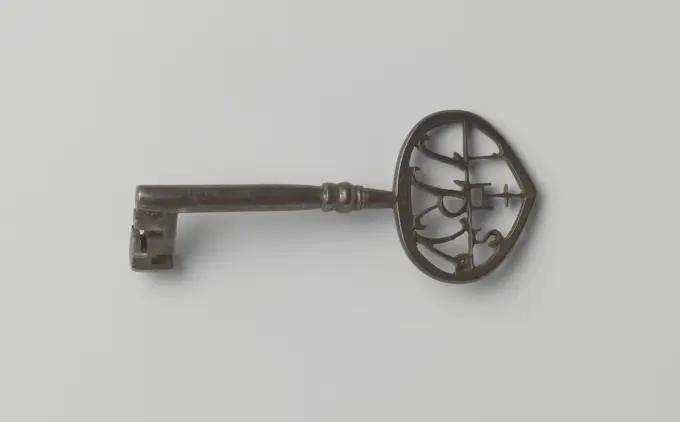
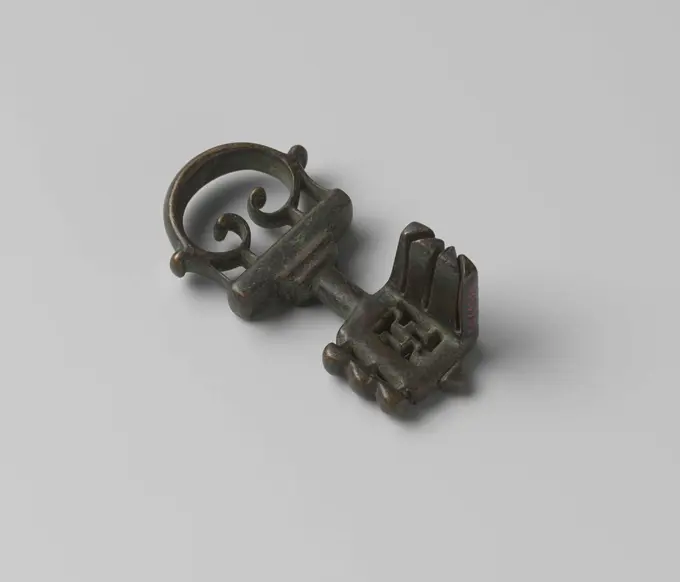
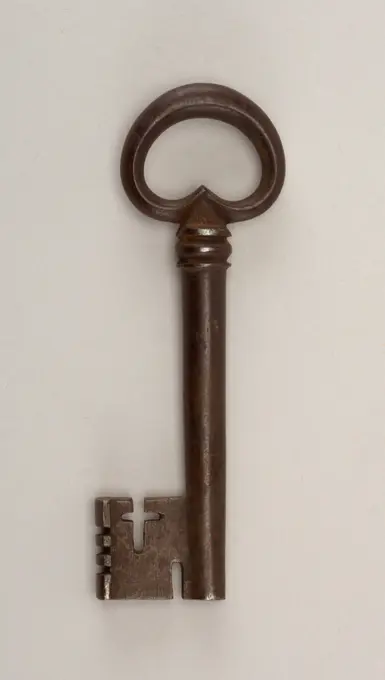
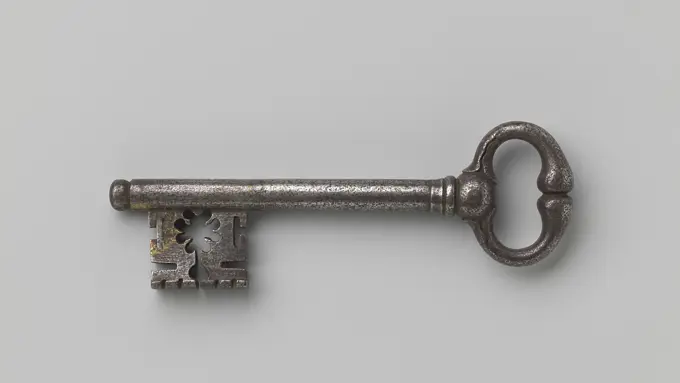
Key with the letter r in the beard, c. 1489 - c. 1509   iron (metal)   iron (metal)
Key with the letter r in the beard, c. 1489 - c. 1509 iron (metal) iron (metal)
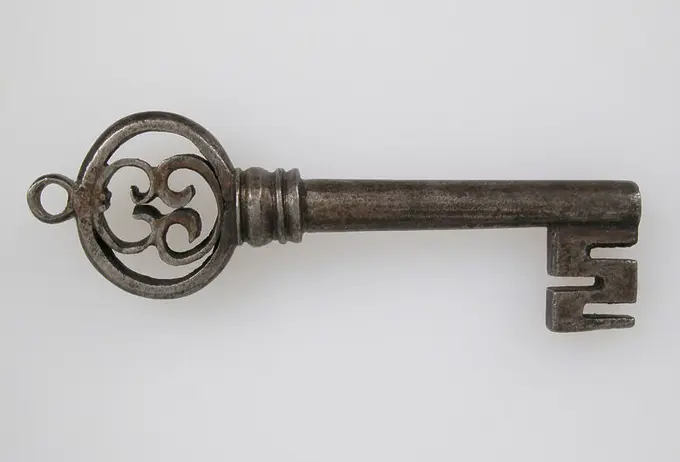
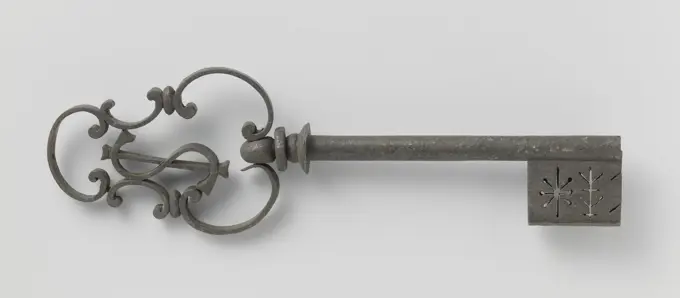
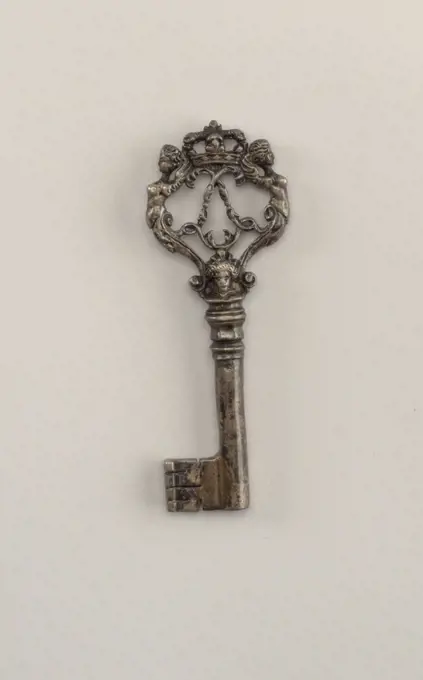
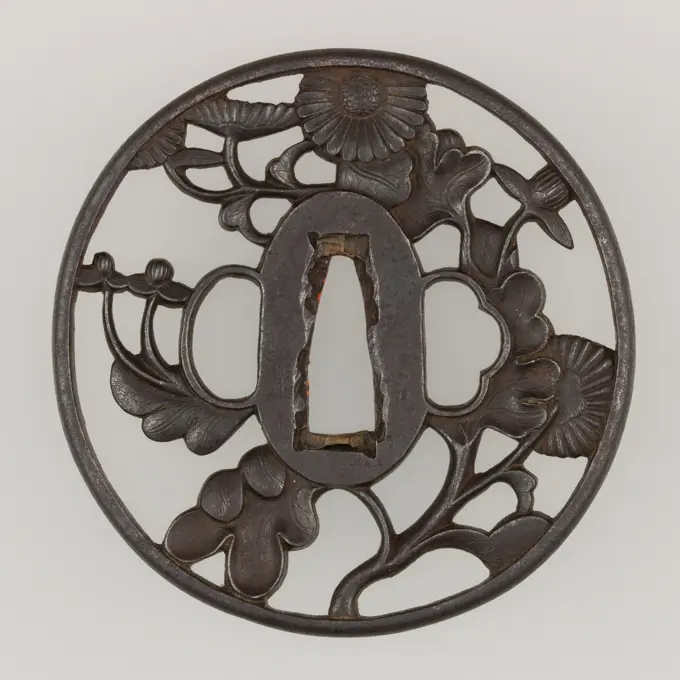
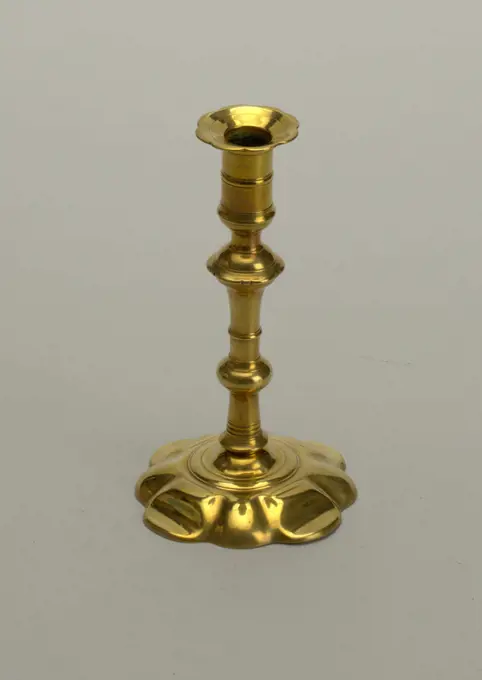
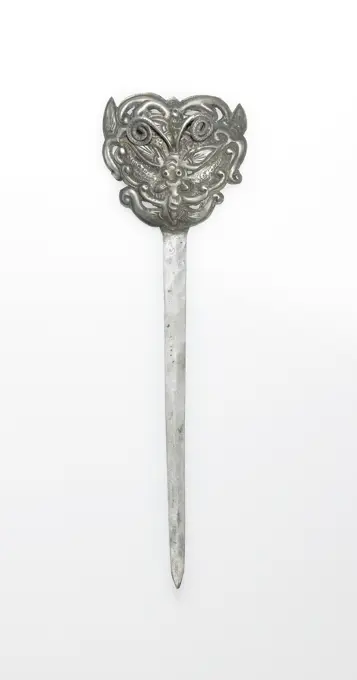
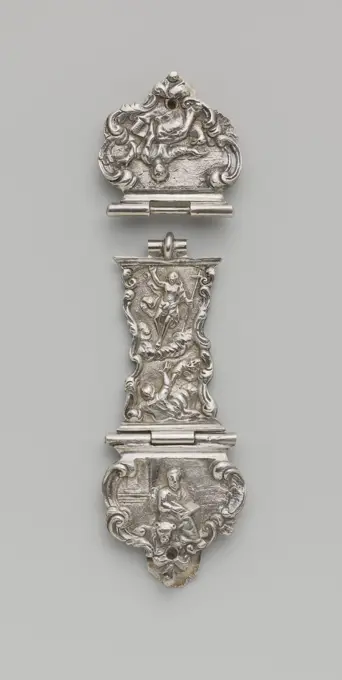
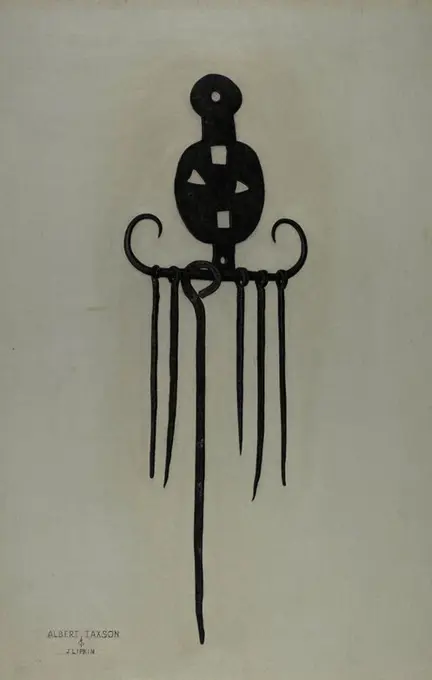
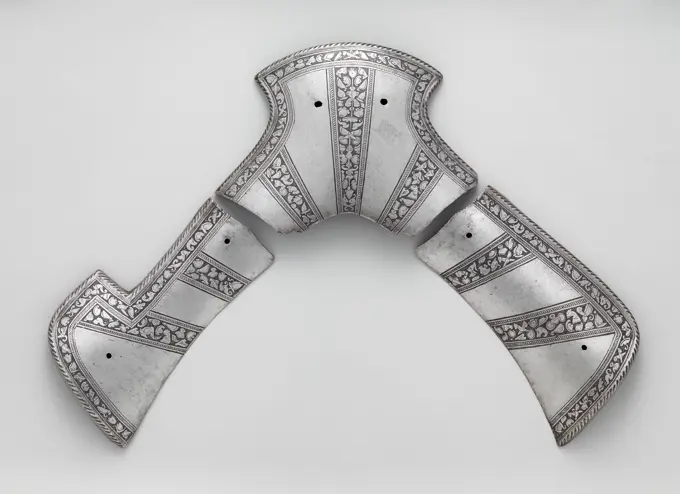
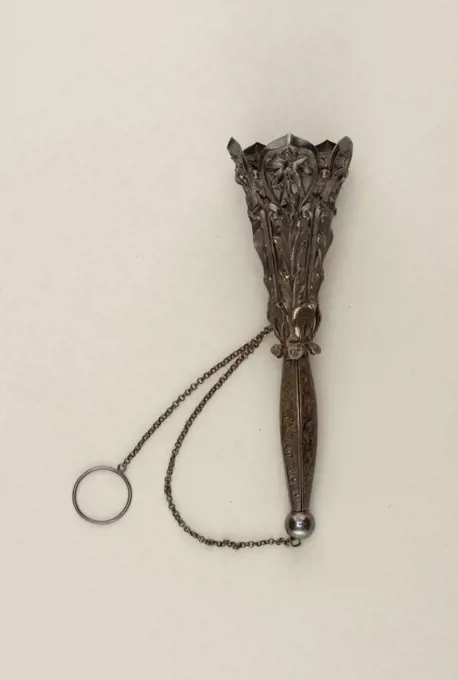
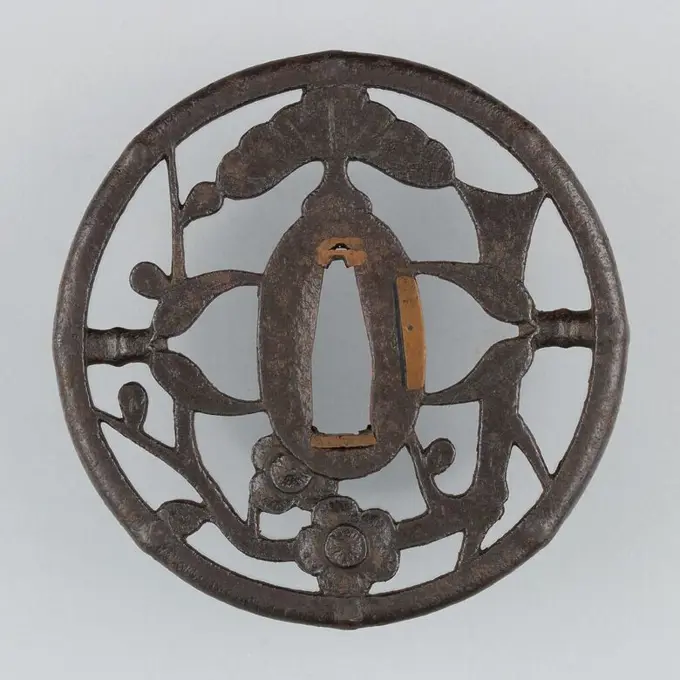
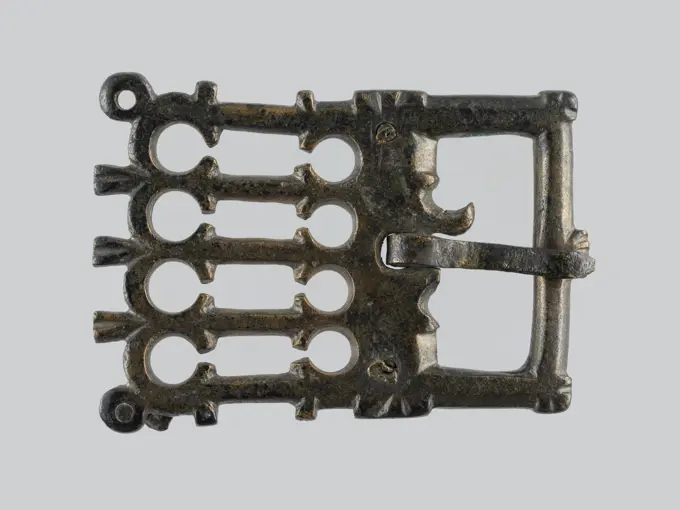
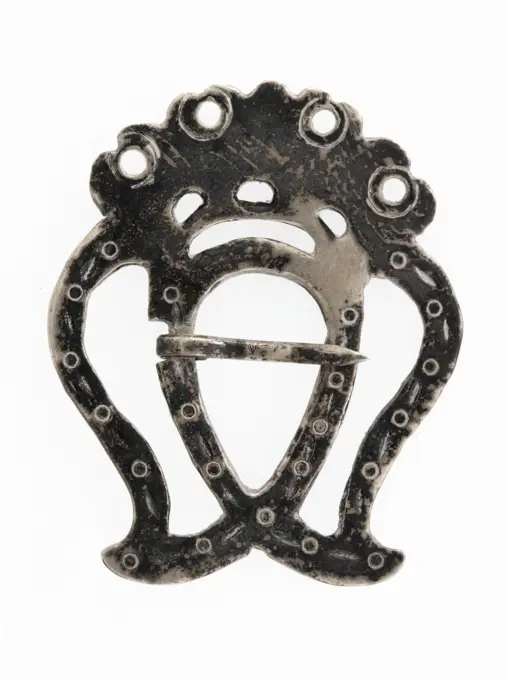
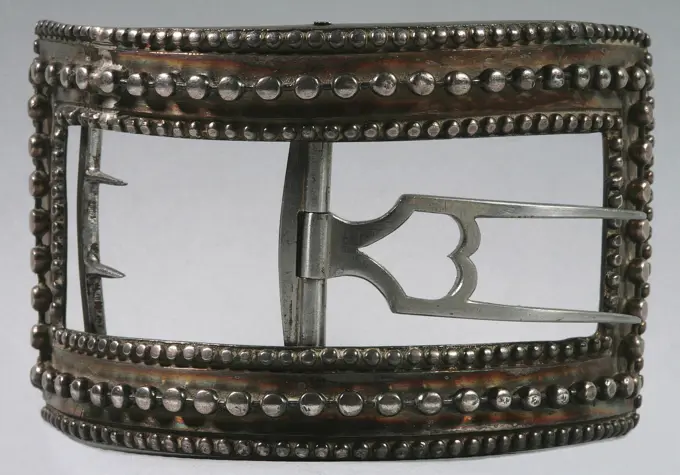
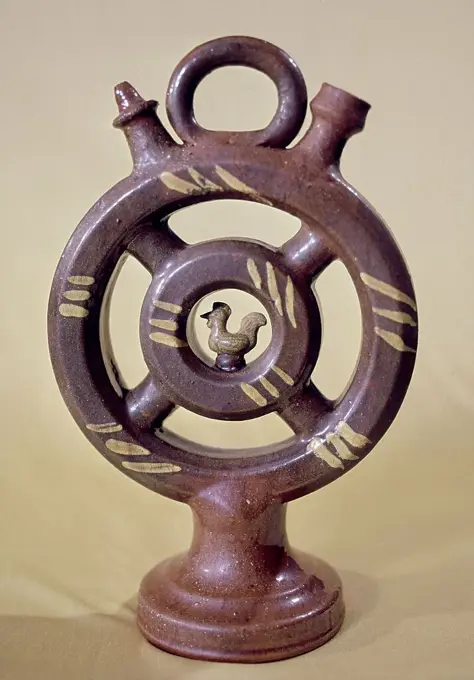
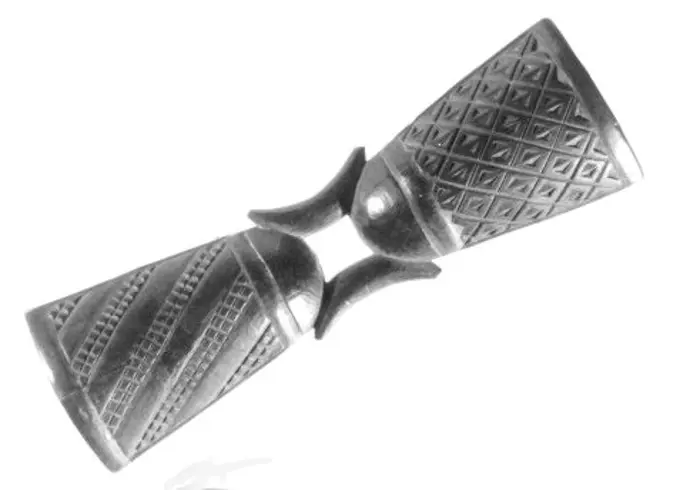
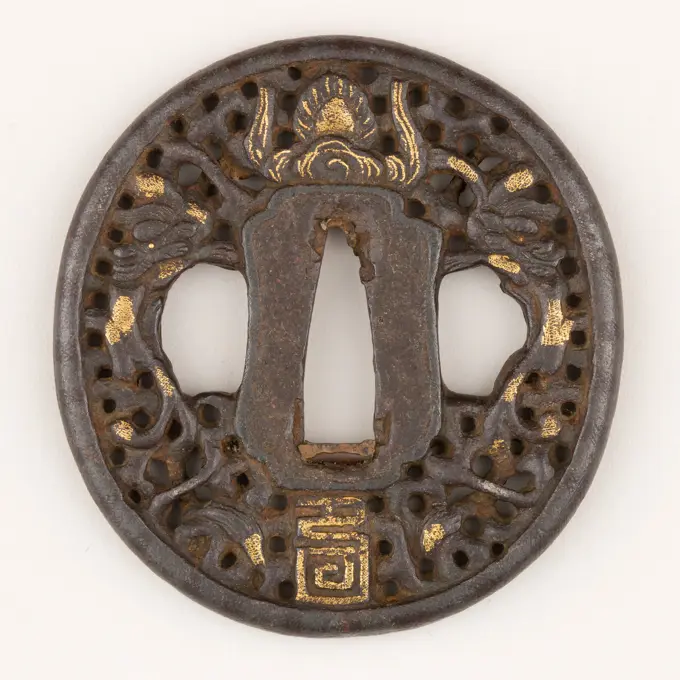
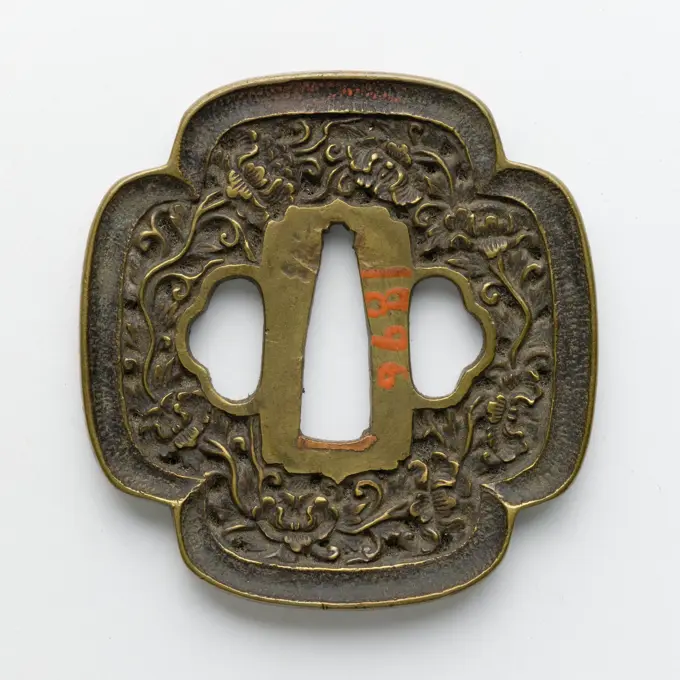
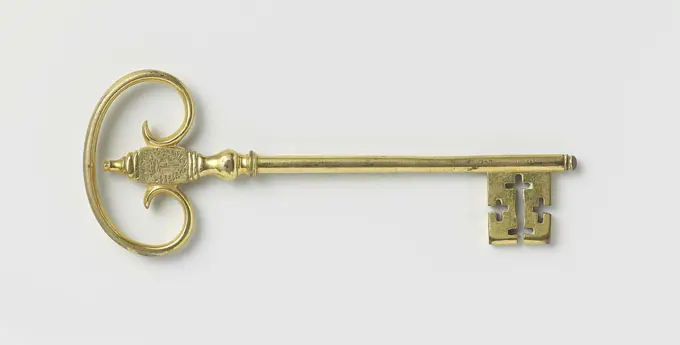
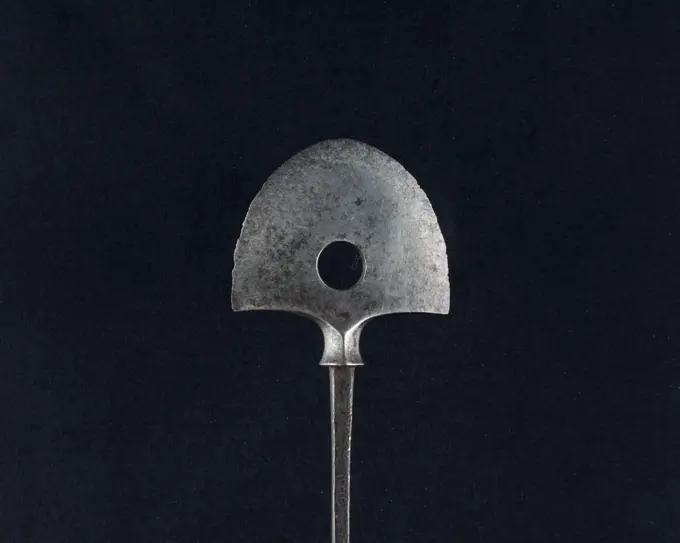
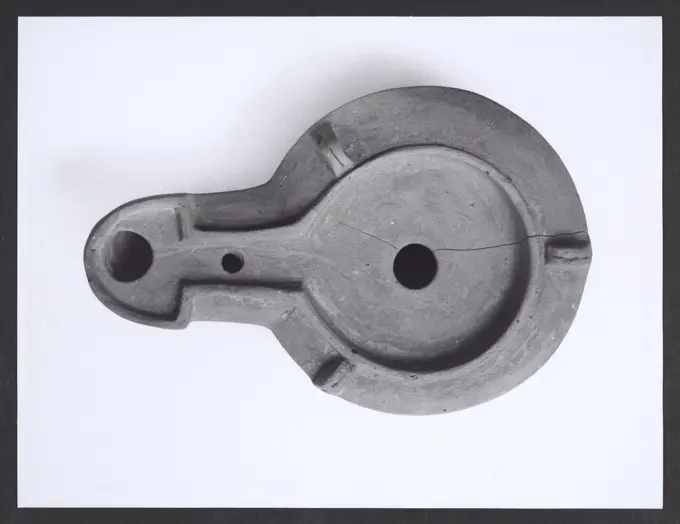
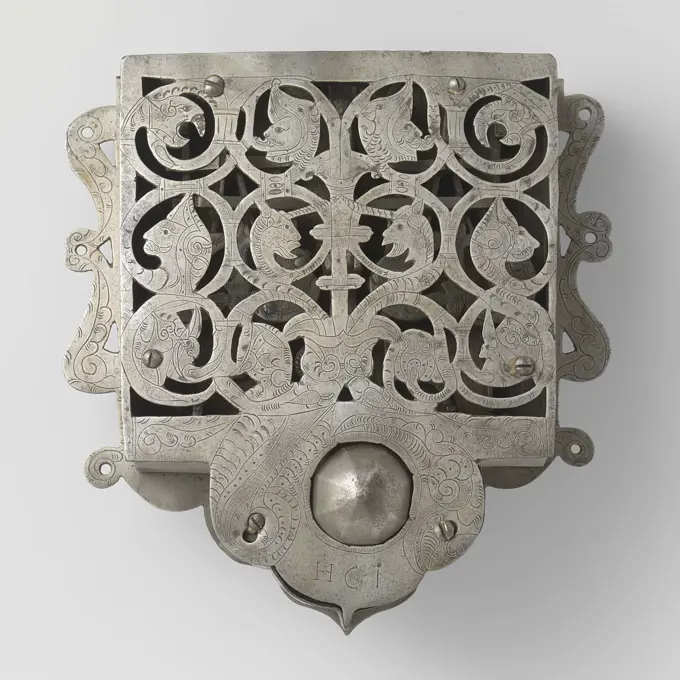
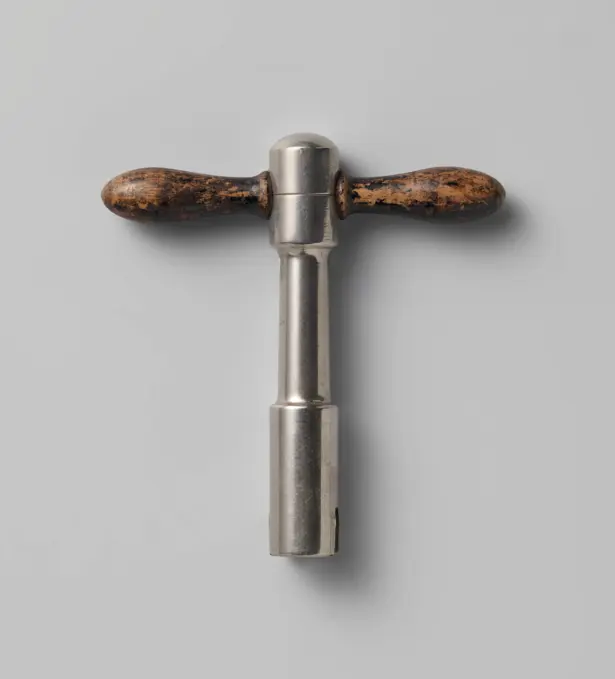
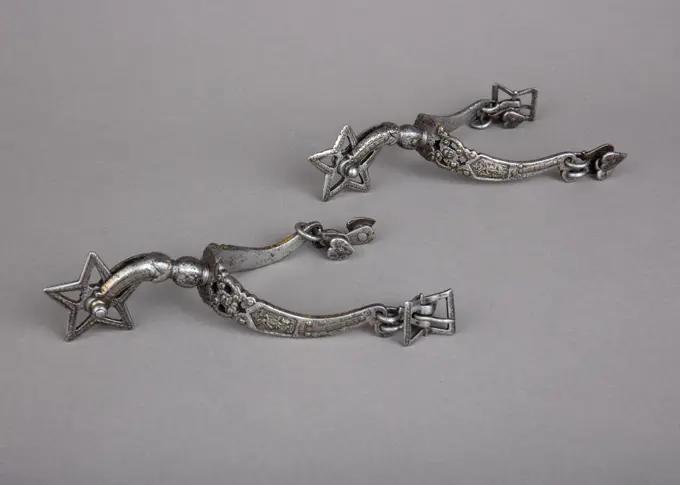
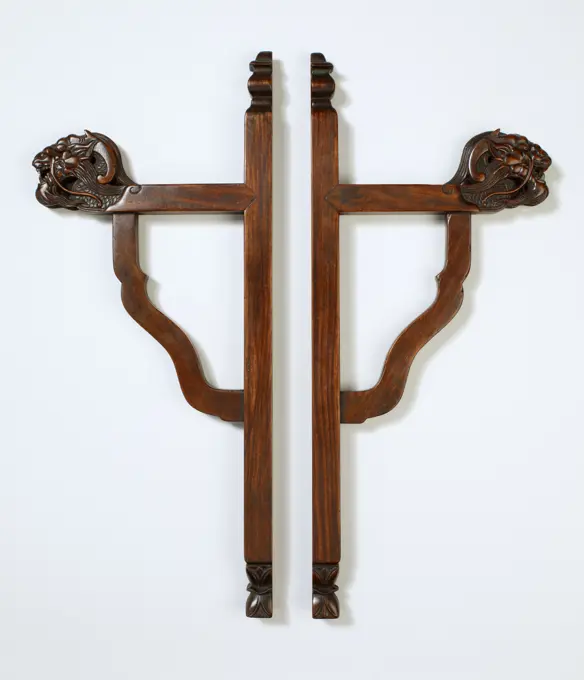
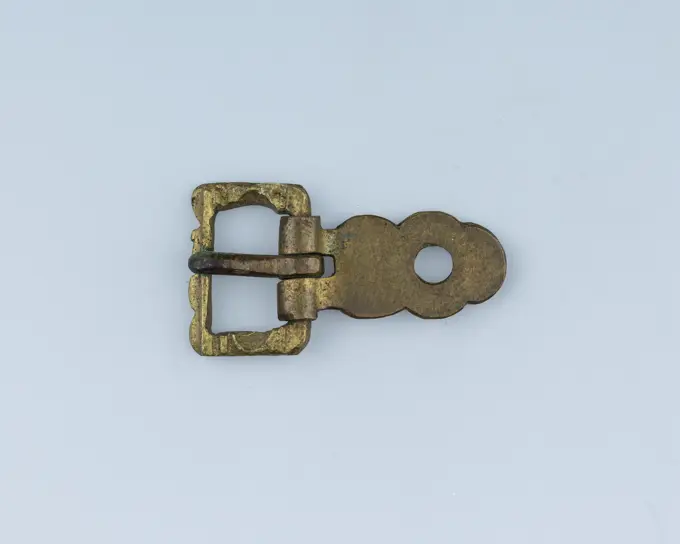
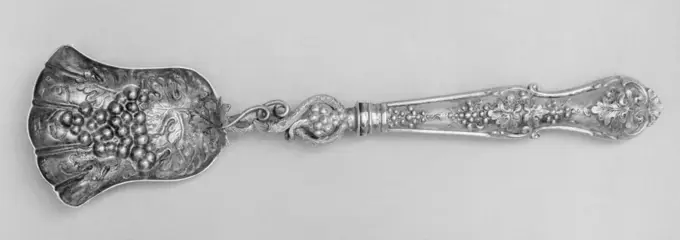
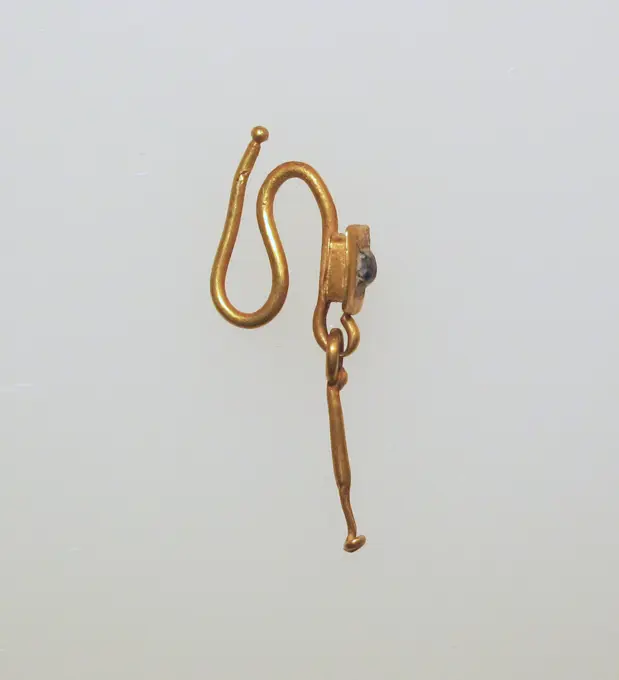
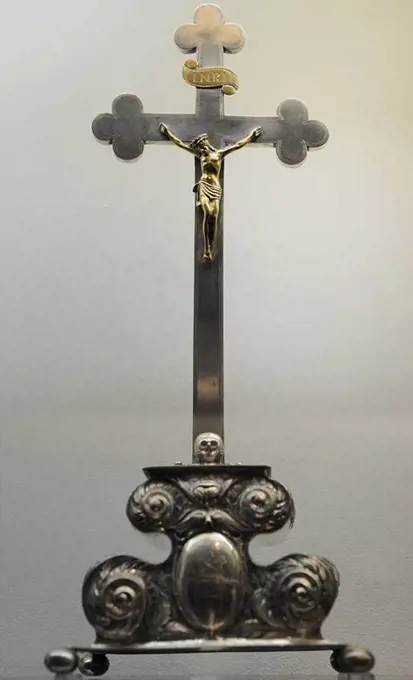
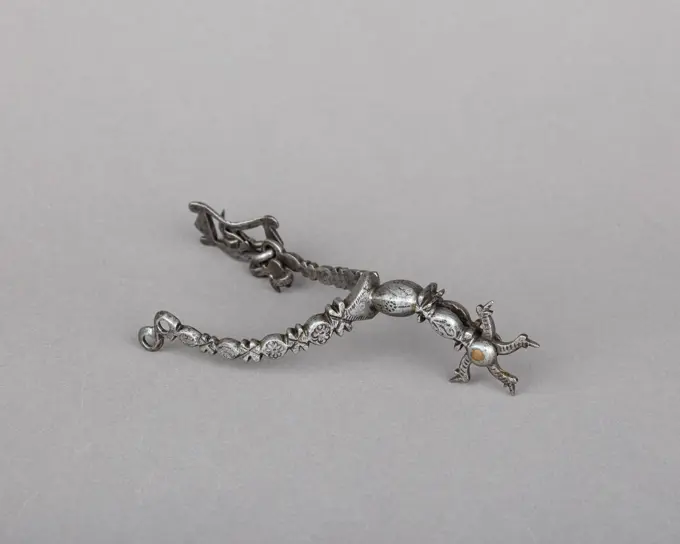
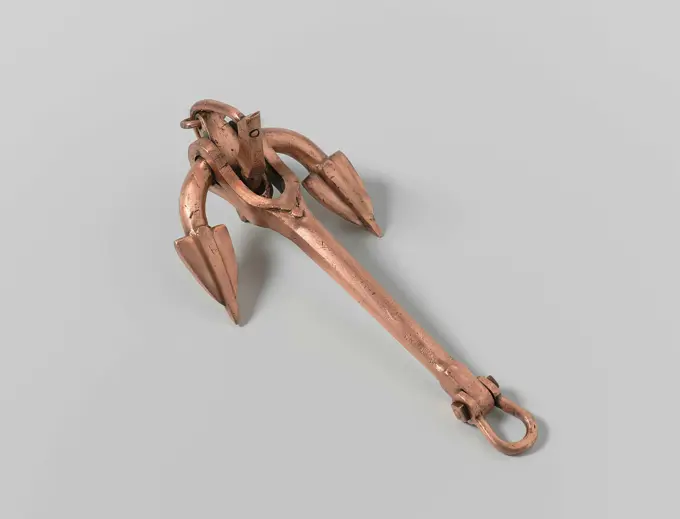
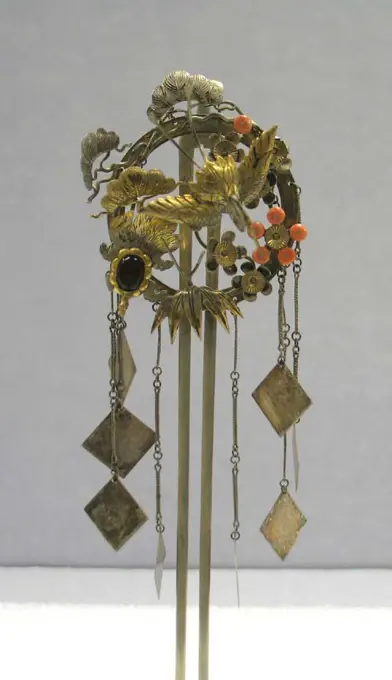
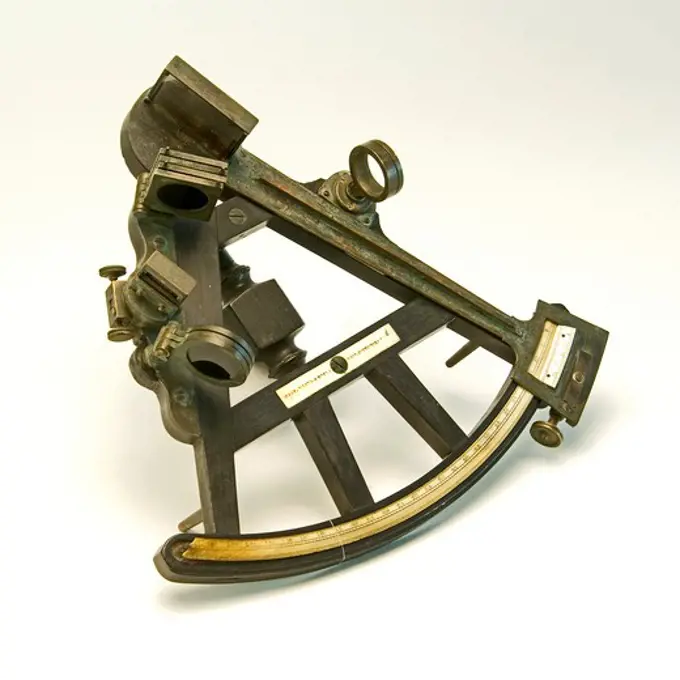
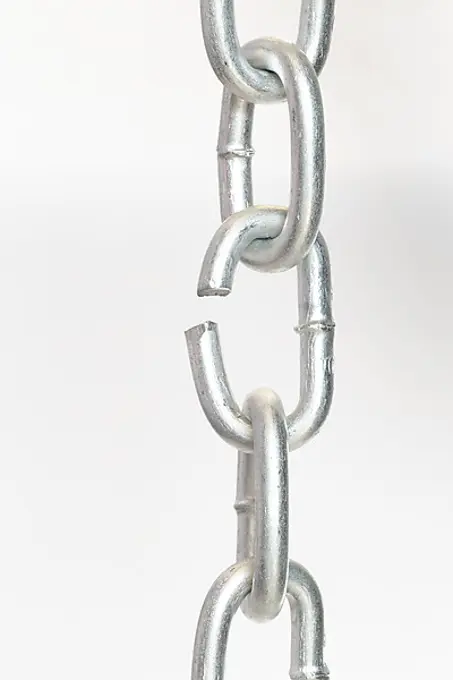
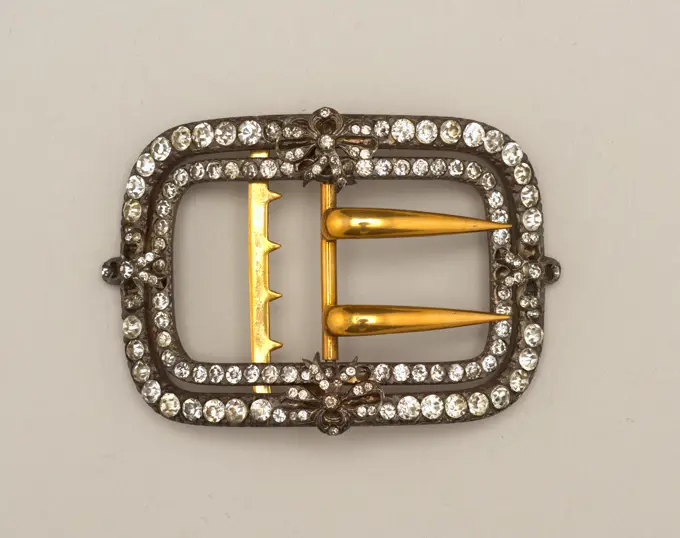
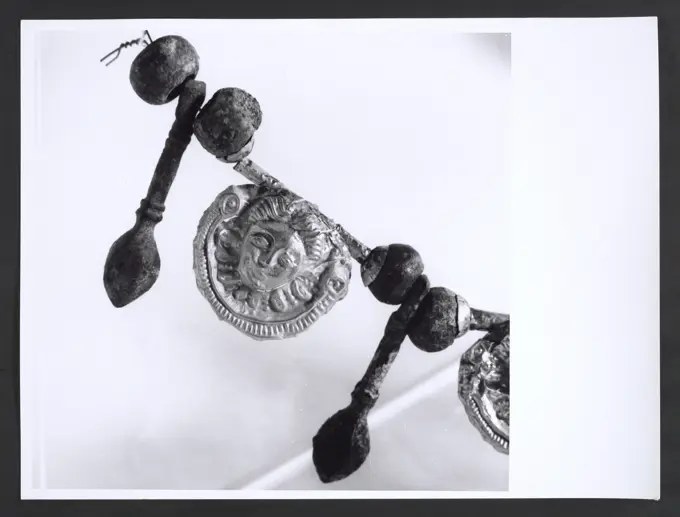
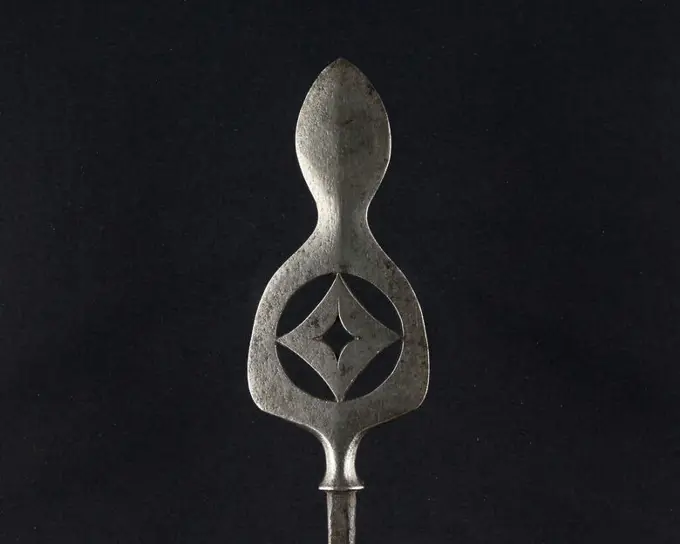
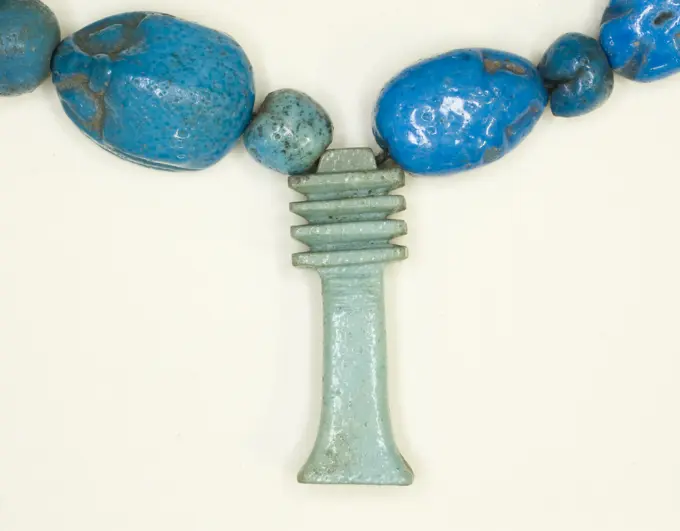
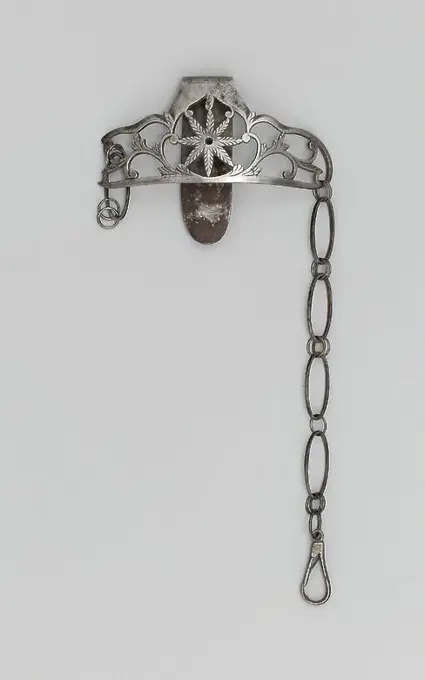
Smallsword Carrier. Possibly English. Date: 1660-1700. Dimensions: Overall. Steel. Origin: Spain. Museum: The Chicago Art Institute, Chicago, USA.Pijpsleutel.Pipe key of iron with sleeve. The pipe from clover leaf-shaped and filled with a cross. The heavy beard is V-shaped and shows a notch under and above. The impact ring is profiled at the top.Key with the letter r in the beard, c. 1489 - c. 1509   iron (metal)   iron (metal)MountKey. Key with a handle shaped by a top-controlled c-voluten by four rods connected to the keyboard. The beard is decorated with the sun sign.Key. Culture: German. Dimensions: Overall: 4 7/16 x 1 1/2 x 9/16 in. (11.3 x 3.8 x 1.5 cm). Date: 16th century.The decoration of Gothic iron locks and keys was often elaborate and of the highest standard of workmanship. The motifs were frequently drawn from Gothic architecture, reproducing on a miniature scale complicated tracery patterns and even tiny statuettes. A number of these tiny locks were compound, with some of the mechanisms concealed from view, and required two or even three keys used in sequence to open them. It has been suggested that the greatly expanded use of locks on doors, or coffrets and other types of storage chests was a result of the increasing urbanization of life and the new emphasis on material wealth and private ownership which developed in the late Middle Ages. Museum: Metropolitan Museum of Art, New York, USA.Key; steelModel of an Anchor, anonymous, c. 1850 instruction model Model of an anchor, consisting of a shaft with a curved arm with anchor hands on the ends. Wooden anchor with brass brackets; Iron Ankerring with anchorage of tacked rope. The shaft is heavier, the angle between shaft and arms smaller and the hands are wider than usual. Scale 1:10 (estimate). Netherlands iron (metal). wood (plant material). brass (alloy). ropeBoekslot with image of the victory or the fame, W.N. Ernens, 1814 - 1827 Kerkboekslot of silver. In the middle an image of victory or the fame. Freedom at the ends. Hoorn (North Holland) silver (metal) Kerkboekslot of silver. In the middle an image of victory or the fame. Freedom at the ends. Hoorn (North Holland) silver (metal)Brooch -Model of Anchor, Rijkswerf Vlissingen, 1823 demonstration model Hawkins' patent anchor model. This anchor has no ordinary anchor stick; This has been replaced by a short stick at right angles to the cross of the arms. The arms and anchor sticks turn together in the forked end of the shaft, forcing the anchor stick into the ground; The stick is brought into the correct position by a rope on a harp near the Ankerkruis, with which the anchor can also be lifted. The hands are in the same surface as the arms. There is a harp at the top of the shaft. Almost identical to NG-MC-608-A. model maker: Flushingafter design by: United Kingdompatentee: United Kingdom copper (metal)Sign key, anonymous, c. 1600 - c. 1699 A sign key. In the ring the letter S. A sign key. In the ring the letter S.Sword Guard (Tsuba) late 16th or early 17th century Japanese A tsuba is a sword guard and part of a sword mounting. It is mounted between the swords blade and grip to protect the users hands.. Sword Guard (Tsuba). Japanese. late 16th or early 17th century. Iron, copper. Sword Furniture-TsubaKey, Silver, Key with crowned interlacing Ls flanked by harpies, above a mask., France, late 18th century, metalwork, Decorative Arts, KeySword Guard (Tsuba) 18th century Japanese A tsuba is a sword guard and part of a sword mounting. It is mounted between the swords blade and grip to protect the users hands.. Sword Guard (Tsuba) 26353Abruzzo L'Aquila Castelvecchio Subequo S. Francesco, Museum. Hutzel, Max 1960-1990 Reliquaries, processional cross (15th century) statues- including a silver Madonna and Child with Angels, sculpture-including wooden statue of Christ, and frescoes Roman sculpture fragments, bronze sculpture, bronze plate, iron sword, roman coins German-born photographer and scholar Max Hutzel (1911-1988) photographed in Italy from the early 1960s until his death. The result of this project, referred to by Hutzel as Foto Arte Minore, is thorough documentation of art historical development in Italy up to the 18th century, including objects of the Etruscans and the Romans, as well as early Medieval, Romanesque, Gothic, Renaissance and Baroque monuments. Images are organized by geographic region in Italy, then by province, city, site complex and monument.Key;  XVIIIw. (1701-00-00-1800-00-00);Candlestick, Brass, Molded baluster stem, on quatri-lobate stepped petal bases, the scalloped drip pans on the campana-shaped girdled candleholder above a scalloped knop; stick unscrews in two places to form three sections., England, 1750-65, metalwork, Decorative Arts, CandlestickHair Pin, 7 x 2 x 3/4 in. (17.78 x 5.08 x 1.91 cm), Silver, ChinaBoekslot with the resurrection of Maria, Anonymous, 1810 - 1812 Book lock of silver, with the resurrection of Maria. Two evangelists in the corners. Hoorn (North Holland) silver (metal) Book lock of silver, with the resurrection of Maria. Two evangelists in the corners. Hoorn (North Holland) silver (metal)Key, c. 1400 - c. 1950 Key.  iron (metal) Key.  iron (metal)Skewers and Holder. Dated: c. 1940. Dimensions: overall: 44.7 x 30.3 cm (17 5/8 x 11 15/16 in.) Original IAD Object: 20 1/2" long; 7 5/8" wide. Medium: graphite on paperboard. Museum: National Gallery of Art, Washington DC. Author: Albert Taxson and Jacob Lipkin.Alternate Set of Saddle Steels ca. 1550 to 1575 Italian This complete set of saddle steels is part of an unusually large armor garniture (acc. no. 27.159.1) from the armory of the Dos Aguas family in Valencia, Spain. The garniture contains pieces for use in battle and for the tilt in both the Italian and German fashions. The tilt was a tournament fought on horseback between two opponents armed with lances and separated by a lengthwise barrier.The armor as mounted is equipped with a helmet and vambraces (arm defenses) for the tournament. The buffe (chin defense), second breastplate (27.159.2), and manifer (reinforced left gauntlet) (27.159.6) would have been added to make the armor ready for exchange pieces for different forms of the tournament. For the German tilt, the trellised targe (shield) (27.159.7), small elbow defense (27.159.5), and small stomach defense (27.159.3) were added. For the Italian tilt, these elements were replaced by the form-fitting reinforce covering the left halLoop. Charançon, import from countries subject to the same regime as in France. Almost round Tsuba with open-worked positive silhouette and raised relief three aubergines; Signed "Bushu Ju Kazuki" ().Watch chain made of steel with widded medallion in white and blue, Matthew Boulton, 1790 - 1810 Steel watch chain (Acier Découpé). Consisting of three chains, the outer of which are formed by a succession of three beads cut together and the middle by five rectangles with cut ornaments. This has a scalloped medallion with relief of stoneware in white and blue (Wedgwood). One side shows () And two lions; The other side classic figures for an altar with burning fire. On this medallion hanging chains, two of which end in steel brushes and the middle one in a cachet. BirminghamEngland steel (alloy) Steel watch chain (Acier Découpé). Consisting of three chains, the outer of which are formed by a succession of three beads cut together and the middle by five rectangles with cut ornaments. This has a scalloped medallion with relief of stoneware in white and blue (Wedgwood). One side shows () And two lions; The other side classic figures for an altar with burning fire. On this medallion hanging Loop. Flat and United Strip.Key; 1909-2-248granite hexagon white design on white background minimal. 3D renderingPosey holder, Silver, Five solid panels 9with engraved design) for handle; five open-work panels, each showing a simple upright flower, for bouquet. Chain with ring for finger., USA, mid-19th century, jewelry, Decorative Arts, Posey holderKey, c. 1700 - c. 1800 Edited key.  iron (metal) Edited key.  iron (metal)Boatswain's call from the wreck of the Dutch East Indiaman Witte Leeuw, anonymous, c. 1600 - before 1613 musical instrument. whistle. boatswain's call Bootsmansfluitje from V.O.C. ship De 'Witte Leeuw'. Silver bootmans whistle or sifflet with carrying chain. This bootensmans flute was carried around a long cord around the neck as a sign of dignity. Netherlands (possibly) silver (metal)   Sint-HelenaMuuranker, anonymous, c. 1500 - c. 1600 Forged iron wall anchor, consisting of spring and shooter, in Gothic style. Coming from a house on the corner of Rijnstraat and Weverstraat in Arnhem unknown iron (metal) forging Forged iron wall anchor, consisting of spring and shooter, in Gothic style. Coming from a house on the corner of Rijnstraat and Weverstraat in Arnhem unknown iron (metal) forgingThree Pommel Plates of a Saddle. Culture: German. Dimensions: L. 24 1/4 in. (61.5 cm); W. 6 in. (15.2 cm); Wt. 2 oz. (950 g). Date: ca. 1520-40. Museum: Metropolitan Museum of Art, New York, USA.Sword Guard (Tsuba). Culture: Japanese. Dimensions: Diam. 3 3/8 in. (8.6 cm); thickness 1/4 in. (0.6 cm); Wt. 5 oz. (141.7 g). Date: 17th century. Museum: Metropolitan Museum of Art, New York, USA.Bilder von dreidimensionalen Fraktalen Bilder von dreidimensionalen Fraktalen Copyright: xZoonar.com/Dr.xNorbertxLangex 13534112Belt baking sheet (common name). Copper alloy. Carnavalet museum, history of Paris.Luckenbooth brooch -Sounding Lead, Lecointre, 1841 sounding lead Deepzeelood, consisting of a brass cylinder with lead base, and a counting. The counting consists of a small two-leaf propellor on top that drives a screw-without-end into the cylinder, on which a wiser moves behind a pink glass with a bowl next to it. Two protective brackets have been applied to the propellor; The leaves of the propellor fold out as soon as the lead sinks into the water, and hit as soon as it is lifted. France brass (alloy). lead (metal). glassLoop. Squares decorated with a pearl surrounded by a dotted line.Silver buckle. Loading label for small work, Paris 1775-1781; Discharge hallmark Small works for Paris 1775-1781; Guarantee hallmark for departments from 1838; Master hallmark (A.F.I.) not identified; Inverted and crowned unidentified punch. Large strip, 3 rows of pearls, 2 by the edge, one in relief in the center.CERAMICA DE GALICIA (BUNO).Lámpara de aceite. Museu Català de les Arts i Tradicions Populars.Kunda Yombe group, Kongo people 19th century Used by the Nganga, healer and spiritualist, the hourglass shaped double bell is liked to Nkisi cult worship and is used during songs and dances to treat the ill. It was also used to tame evil witches, evil spirits of the dead and ghosts. This example is beautifully carved with two distinct bells integrally joined by crescent-shaped links; each bell geometric designs.Spoon board 1760 European. Spoon board 7857Sword Guard (Tsuba) Depicting Two Dragons Chasing a Gem (追い双龍図南蛮鐔) ca. 1615-1868 Japanese This Nanban-tsuba (南蛮鐔) shows a a three-dimensional openwork (nikubori ji-sukashi) of two dragongs chasing after a gem, which is shown at the top center of the plate, all of which embedded into an arabesque design (karakusa). At the bottom center, a seal script character is shown on both sides which is highlighted in gold nunome-zōgan. One of the characters might be (嵩), possibly a reference to Mt. Song (Sōngshān, 嵩山), one of the Five Great Mountains of China. The two hitsu-ana (openings for scabbard accessories) are organically shaped from the design of the dragons and arabesques.. Sword Guard (Tsuba) Depicting Two Dragons Chasing a Gem (追い双龍図南蛮鐔) 25676Tsuba. Japan. Brass. Paris, Cernuschi museum. Assessment, armaments, Asian art, Japanese art, weapon custody, art object, metallic object, armament piece, tsubaPipe key, c. 1700 - c. 1800 Pipe key whose oval eye is formed by two volutes that are sealed by a shell at the top. The long shaft is profiled.  silver (metal) Pipe key whose oval eye is formed by two volutes that are sealed by a shell at the top. The long shaft is profiled.  silver (metal)Croiser of Clasqueri abbot . Showing the Agnus Dei. 13th century. Gilded wood. From Monastery of Sant Cugat (Catalonia). Diocesan Museum of Barcelona. Spain.Fragment fork from the wreck of the East Indians Hollandia, Anonymous, 1700 - in Or Before 1743  Cutlery, fork; fragm, lower end of stem with 3 prongs, id. NG 1980-27H3366. Netherlands copper (metal)   SecondThe Amsterdam apothecary and art collector Emmanuel Vita Israël. He donated his collection, comprising keys dating from Roman antiquity to the 19th century, to the Koninklijk Oudheidkundig Genootschap (Royal Antiquarian Society) in 1937. Vita Israël claimed that his key collection had grown more or less by accident: being one of the few collectors of keys, dealers automatically made their way to him.Stemhamer. StemhamerArrowhead (Yanone) 18th century Japanese Although today Japanese warriors are renowned most for their swordsmanship, archery, especially from horseback, has been an essential part of samurai warfare and culture for centuries. Arrows were fitted with heads of varying shape according to their intended use in war, the hunt, or target practice. Arrowheads made for use on the battlefield incorporated different designs intended for specialized purposes such as the piercing of armor or to cause maximum damage to horses and unarmored personnel.Large arrowheads, pierced and elaborately chiseled with landscapes, birds, flowers, dragons, and Buddhist divinities, were created to be admired for the beauty of their metalwork and design rather than for use in archery. Such highly elaborate examples may have been made for presentation or as a votive offerings to a shrine.. Arrowhead (Yanone). Japanese. 18th century. Steel. Archery Equipment-ArrowheadsEmilia-Romagna Ferrara Ferrara Museo Civico di Schifanoia12. Hutzel, Max 1960-1990 General Notes: INCOMPLETE RECORD--NEGATIVES PROCESSED, PRINTS FILED German-born photographer and scholar Max Hutzel (1911-1988) photographed in Italy from the early 1960s until his death. The result of this project, referred to by Hutzel as Foto Arte Minore, is thorough documentation of art historical development in Italy up to the 18th century, including objects of the Etruscans and the Romans, as well as early Medieval, Romanesque, Gothic, Renaissance and Baroque monuments. Images are organized by geographic region in Italy, then by province, city, site complex and monument.OLd dirty concerete spiral mixer on white OLd dirty concerete spiral mixer on white Copyright: xZoonar.com/OttoxxPleskax 19652803. .Tuning hammer, anonymous, c. 1900 - c. 1950 Stamp  metal. wood (plant material) Stamp  metal. wood (plant material)Rotary key. Ring with rotary key whose pipe has a hole in the middle.Brooch -Pair of Rowel Spurs 17th century German This pair of spurs, originally entirely gilded (some traces left), are inlaid with a silver decoration consisting of fruits, stars, vegetal garlands and cherubs' heads. On each side of the arms, there is a medallion with a stamped silver foil bearing an allegory of Fortune (a woman holding a sail and standing on a winged globe). In the first half of the 17th century, the fashion trend for gentlemen was to wear boots and spurs even non-riding circumstances, including for dancing or walking around at court. Spurs became then more than equestrian tools, but pieces of male jewelry often enriched by the same goldsmiths also working on armor and weapons. Their decoration was sometimes intended to match the sword hilt and the general outfit and horse tack of their owner. These trendy accessories were also a significant mark of status for gentlemen, sometimes nonetheless copied by the bourgeoisie. This fashion progressively disappeared after the mid 17thFibula. UnknownBracket, one of a pair, 18 3/4 x 7 7/8 x 15/16 in. (47.63 x 20 x 2.38 cm), Wood, ChinaBuckle dated 1525 German. Buckle. German. dated 1525. Brass. Miscellaneous-Buckles & OrnamentSilver buckle 2nd title between 1809 and 1819. Stone strip of stones and 2 large flower patterns in the upper and bottom middle.Key, c. 1600 Drilled key of which the eye consists of two C-Voluten, which ends up to each other, ending above and placed against a pyramid, which rests on a bullet. The shaft is around at the top and later becomes triangular.  iron (metal) Drilled key of which the eye consists of two C-Voluten, which ends up to each other, ending above and placed against a pyramid, which rests on a bullet. The shaft is around at the top and later becomes triangular.  iron (metal)Sugar spoon 1854-55 H. & T., Birmingham. Sugar spoon 188210 Maker: H. & T., Birmingham, Sugar spoon, 185455, Silver, parcel gilt, Length: 6 in. (15.2 cm). The Metropolitan Museum of Art, New York. Gift of Mrs. Samuel P. Avery, 1897 (97.2.186)Gold earring with pendant and paste setting 2nd century A.D. Roman. Gold earring with pendant and paste setting. Roman. 2nd century A.D.. Gold, glass paste. Mid Imperial. Gold and SilverSide plate of a musket with the coat of arms of Amsterdam and VOC-ensign from the wreck of the Dutch East Indiaman 't Vliegend Hart, anonymous, 1700 - in or before 1743  Side plate; central escutcheon with crowned coat of arms of Amsterdam in relief, 2 flat wings on either side, curving in opposite directions, each with a circular eye at the end and engraved mark AVOC. Netherlands copper (metal)   Other. AmsterdamSilver crucifix. Baroque. 1668. Museum of History and Navigation. Riga. Latvia.Batter. .Candle holder, anonymous, c. 1625 - c. 1675 This object is composed of the following four parts: the baluster, the button, the Vetvanger, the candle holder. The profiled baluster is provided with screw wires at the top and bottom. These are still originally. The arm is stabbed on the smooth top of the baluster. This is bent twice, and ends on one side in a spiral with stylized bird heads and on the other side in a thickening. The profiled candle holder is screwed onto the fat catcher on the bottom. The fat catcher slightly off BK-1976-15-B and, like the holder, may not be originally associated. Netherlands brass (alloy) casting This object is composed of the following four parts: the baluster, the button, the Vetvanger, the candle holder. The profiled baluster is provided with screw wires at the top and bottom. These are still originally. The arm is stabbed on the smooth top of the baluster. This is bent twice, and ends on one side in a spiral with stylized bird heads and on the other Skewer, silver, Tapering pointed pin or blade, cast relief terminal in the form of a palmette-embellished bar topped by an eagle's head., Milan, Italy, 19th century, cutlery, Decorative Arts, Skewer39 keys from the collection of Emmanuel Vita Israël, 1100 - 1300 Pipe key with eye, consisting of a square that is placed with a corner on a thickening above the eight -sided shaft.  bronze (metal) Pipe key with eye, consisting of a square that is placed with a corner on a thickening above the eight -sided shaft.  bronze (metal)Bridle and Matching Crupper Straps 15th-17th century Tibetan The lavish fittings of this bridle rank among the best examples of pierced and damascened Tibetan ironwork. The delicacy and complexity of the pierced work are particularly noteworthy. Ceremonial bridles with iron fittings of this type are extremely rare, the vast majority having fittings made of gilded copper.. Bridle and Matching Crupper Straps 27813Andiron. Dated: c. 1953. Dimensions: overall: 30.2 x 22.7 cm (11 7/8 x 8 15/16 in.). Medium: graphite on paperboard. Museum: National Gallery of Art, Washington DC. Author: Alexander Berth.Lifts silver. A separate silver handle. On the lift four children in medallions and running dog and a deer and the tip and hobby horse.Key; 1915-16-12Rowel Spur (Right) 17th century German The points of this spur's rowel are shaped as birds heads, while its body alternates stamped flowers and crosses. In the early 17th century spurs became true fashion accessories often worn outside the equestrian context, and some of them were real pieces of jewelry. Even if this spur is less luxurious than some of its contemporaries, its very decorative aspect aligns it with this idea.. Rowel Spur (Right). German. 17th century. Iron alloy. Equestrian Equipment-SpursModel of an Anchor. Model of Hawkins' patent anchor. This anchor has no ordinary anchor stick; This has been replaced by a short stick perpendicular to the cross of the arms. The arms and anchor stick are turning together in the forked end of the shaft, wherein the anchor stick force the hands into the ground; The stick is brought into the correct position by a rope on a harp at the anchor cross, which can also be lifted the anchor. The hands are in the same plane as the arms. There is a harp at the upper end of the shaft. Almost identical to NG-MC-608-A.Hair Ornament 19th century Japan. Hair Ornament 60608Little model Eiffel Tower in chains on a white backgroundVintage brass key Vintage brass key on white background ,model released, Symbolfoto ,property released Copyright: xZoonar.com/MYCHKO*ALEXAx 2205804 ,model released, Symbolfoto ,property releasedClose-up of an antique sextant a navigational deviceCommemorative pendant of the 53rd anniversary of the January UprisingModel for a crochet plate of a chatelaine, anonymous, c. 1775 - c. 1800 The model driven from plate for a mold has a decoration consisting of a men's head with laurel wreath in the medallion, surrounded by a pendulum of flowers. Left and right at the ends a curly eagle, on which an eye. Amsterdam copper (metal) The model driven from plate for a mold has a decoration consisting of a men's head with laurel wreath in the medallion, surrounded by a pendulum of flowers. Left and right at the ends a curly eagle, on which an eye. Amsterdam copper (metal)MacePilgrim's Badge 14th-16th century French. Pilgrim's Badge. French. 14th-16th century. Lead. Metalwork-LeadBliżej Kultury Pulański, Kazimierz (1861 1921)Sleutel.Key whose eye is formed from two c-volutes donated to each other, which end up at the above lystormous and be split down, a bullet holding. The shaft is profiled at the top and ends at the bottom of a button. The beard has a rosette-shaped cutting.Steel chain with an open link, symbolic image for "a chain is only as strong as its weakest link"Emilia-Romagna Ferrara Ferrara Museo Civico di Schifanoia23. Hutzel, Max 1960-1990 General Notes: INCOMPLETE RECORD--NEGATIVES PROCESSED, PRINTS FILED German-born photographer and scholar Max Hutzel (1911-1988) photographed in Italy from the early 1960s until his death. The result of this project, referred to by Hutzel as Foto Arte Minore, is thorough documentation of art historical development in Italy up to the 18th century, including objects of the Etruscans and the Romans, as well as early Medieval, Romanesque, Gothic, Renaissance and Baroque monuments. Images are organized by geographic region in Italy, then by province, city, site complex and monument.Door hinge;  2nd half XVII century (1650-00-00-1705-00-00);Buckle (France); steel, brass, citrinesLazio Viterbo Viterbo Museo Civico50. Hutzel, Max 1960-1990 Views of paintings (Middle Ages through 18th c.), frescoes, a tabernacle, coffin, sculpture reliefs, portal fragments, busts, sculpture, tapestry found in the Pinacoteca, Second floor gallery and Second floor cloister sequences. Antiquities: Many views of Etruscan and Roman fragments, sculpture, sarcophagi, pottery, masks, jewelry and other objects found in the Storeroom sequence (inventory numbers on back of prints), and the Cloister, Second floor Cloister, Valle Giulia, Sala Romana and Sala Etrusca sequences. General Notes: There are eight separate numerical sequences for this location. The cloister as an architectural structure, rather than museum site, is documented in the record and file for S. Maria della Verita, Cloister, all views of which are stored in Medieval core collection. Five views from the Museo Civico Second floor cloister sequence are stored in Medieval. German-born photographer and scholar Max Hutzel (1911-Curb Bit. European. Date: 1500-1600. Dimensions: . Iron. Origin: Europe. Museum: The Chicago Art Institute, Chicago, USA.Old water valve, isolated on white background Old water valve, isolated on white background Copyright: xZoonar.com/OleksandrxKostiuchenkox 8897972Combined spiked club and firearm unknown labelArrowhead (Yanone). Culture: Japanese. Dimensions: L. 11 5/8 in. (29.5 cm); L. of head 4 1/4 in. (10.8 cm); W. 1 3/4 in. (4.5 cm); Wt. 2.6 oz. (73.7 g). Date: 18th century. Museum: Metropolitan Museum of Art, New York, USA.Amulet of a Djed Column 664 BCE-332 BCE Egypt. Amulets could be strung on cords to be worn by the living or the dead. This group of ancient amulets features a pillar with cross bars, (the djed column) that represented the backbone of the god Osiris and conveyed stability.. Faience . Ancient EgyptianCeremonies key. Ceremonies key with double beard that a beard has rectangular teeth placed on this. The handle, resting on a square capital, is formed from two c-volutes, an hourglass in collateral. They did an architrave on which two deviant C-Volutes are placed in a crowned by a globe with cross.