Historical Metal Artifacts

A collection of ornate metal objects from various eras, including stirrups, mirrors, and rattles, showcasing intricate designs and craftsmanship.

Iron stirrup with brass inlay. 10-11th cent. Found in Thames, Battersea. England. VIKING.
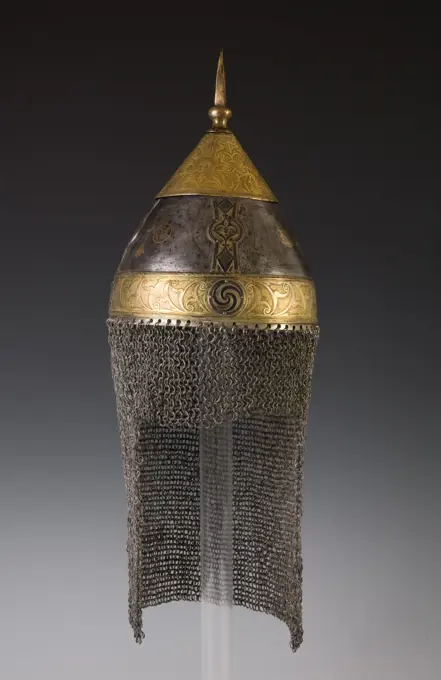
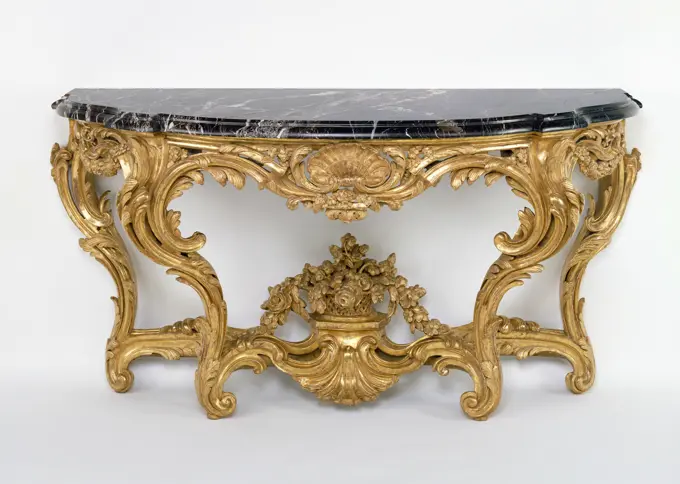
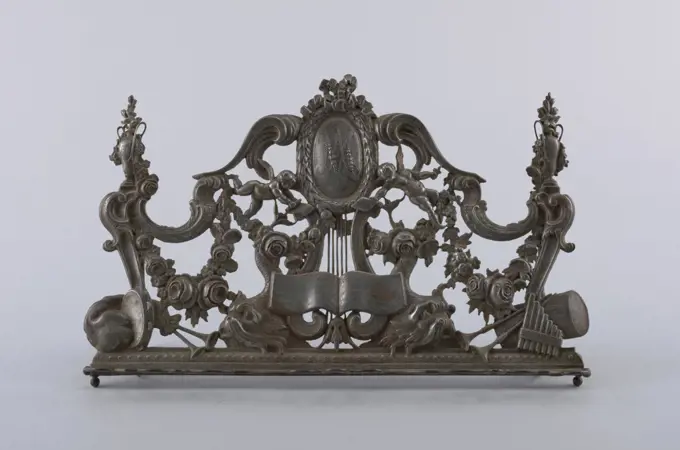
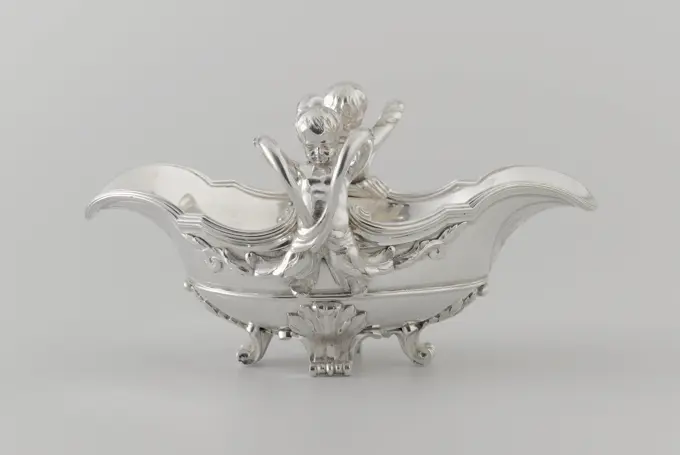
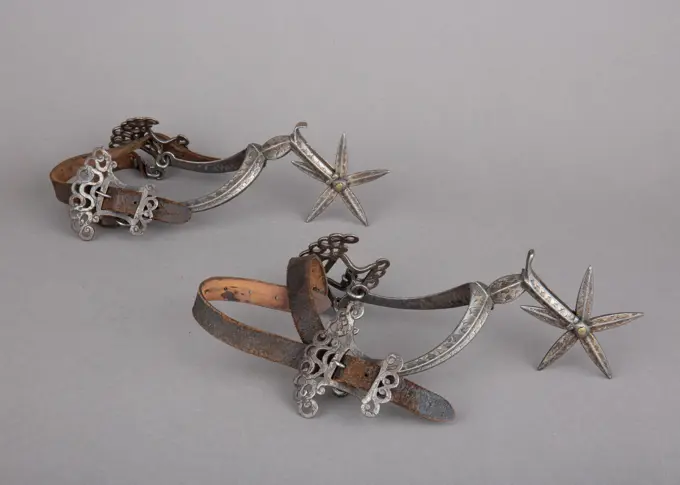
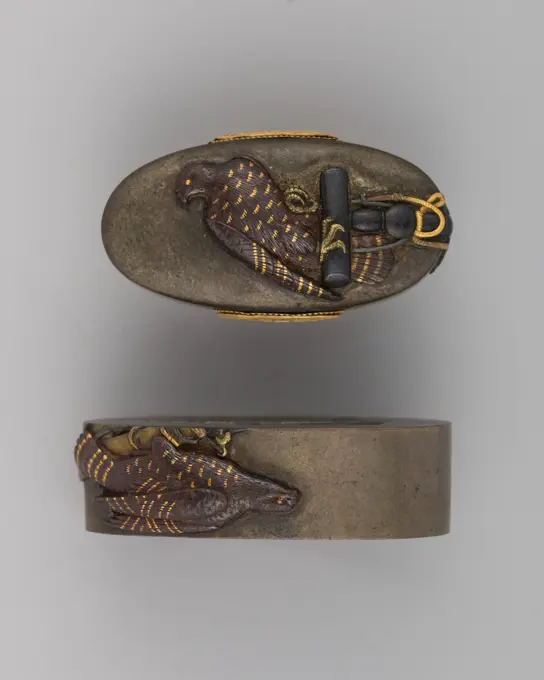
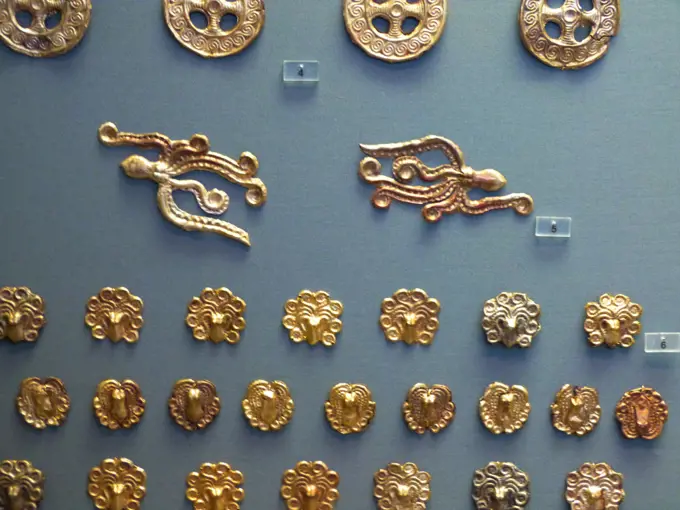
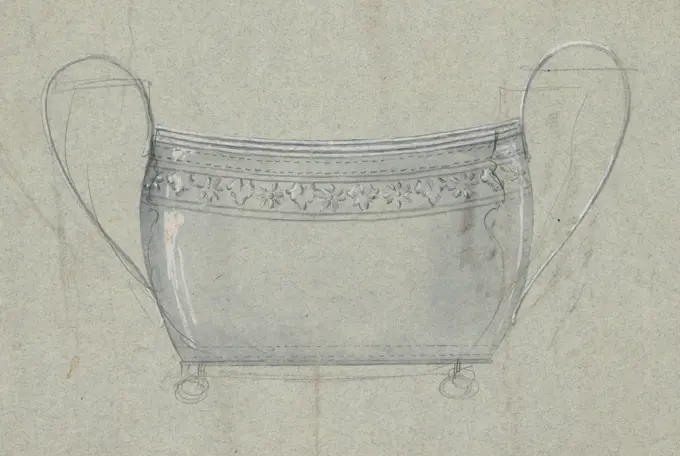
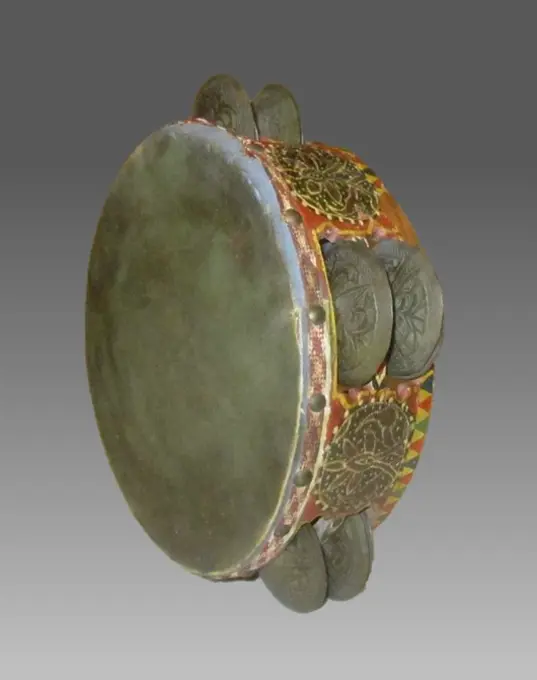
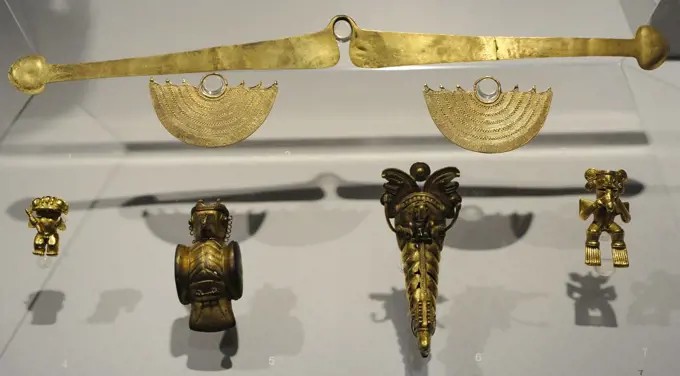
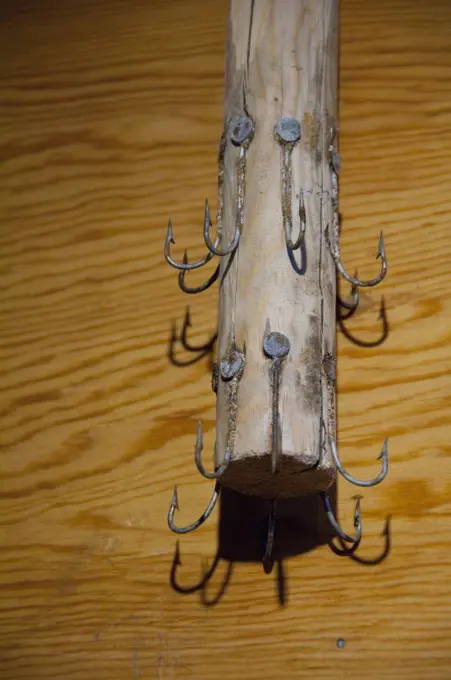
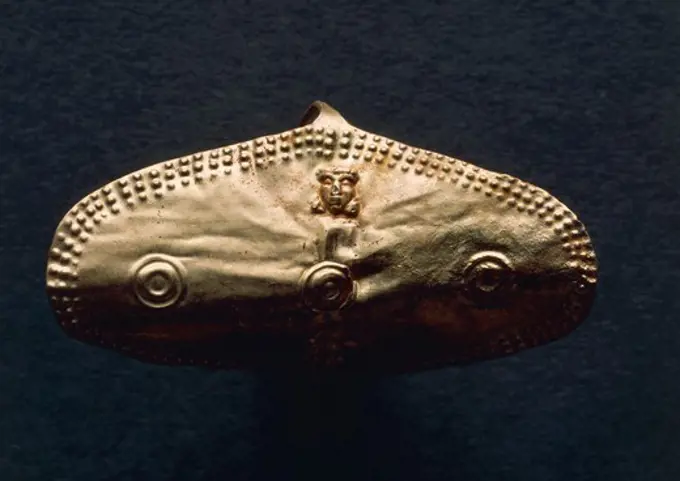
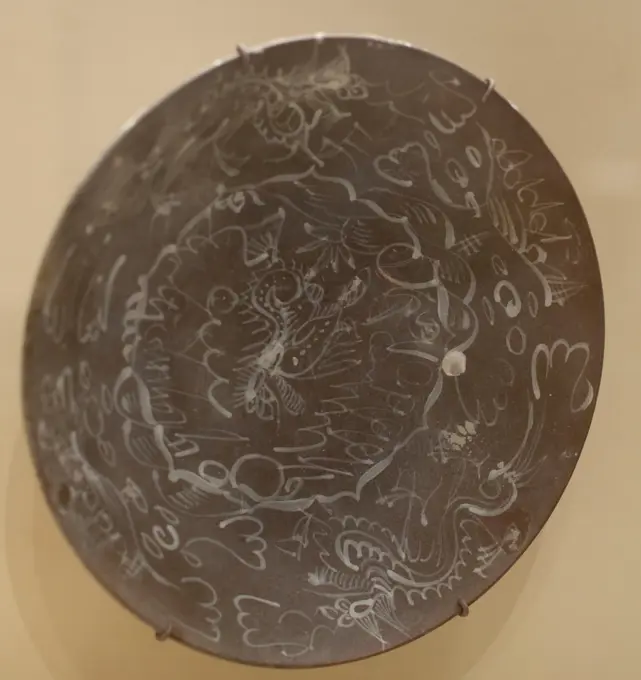
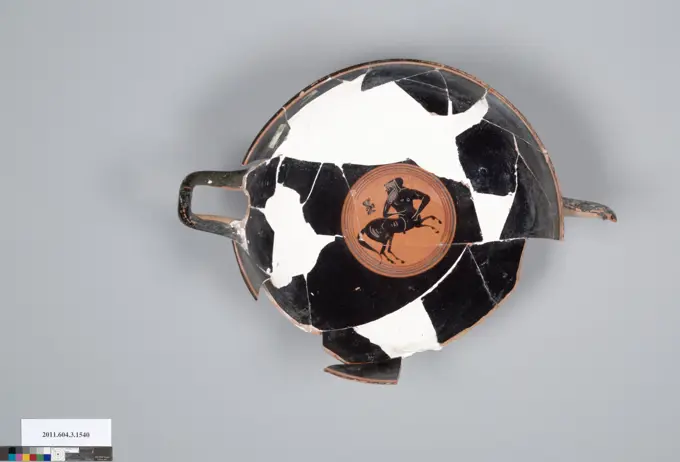
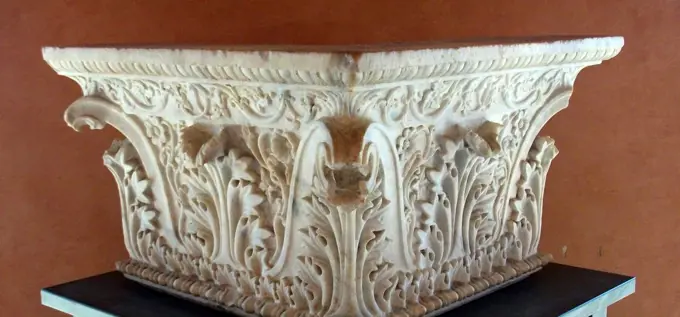
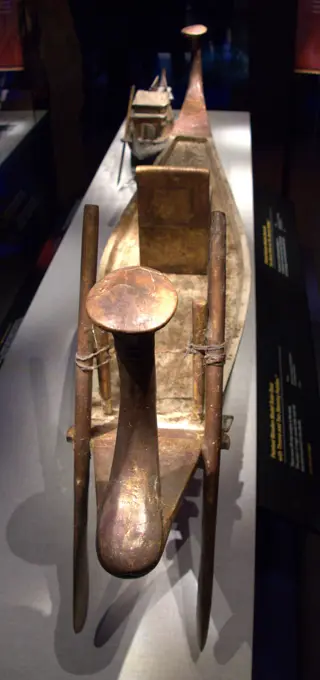
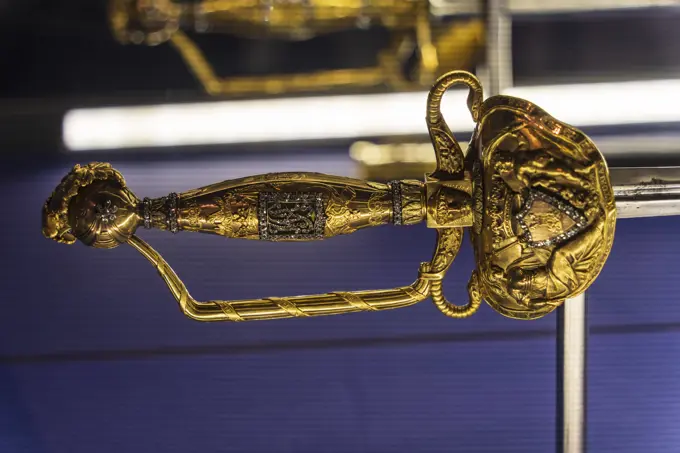
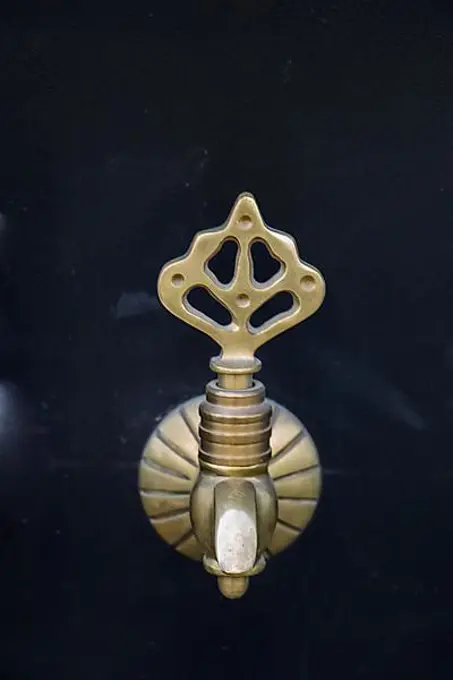
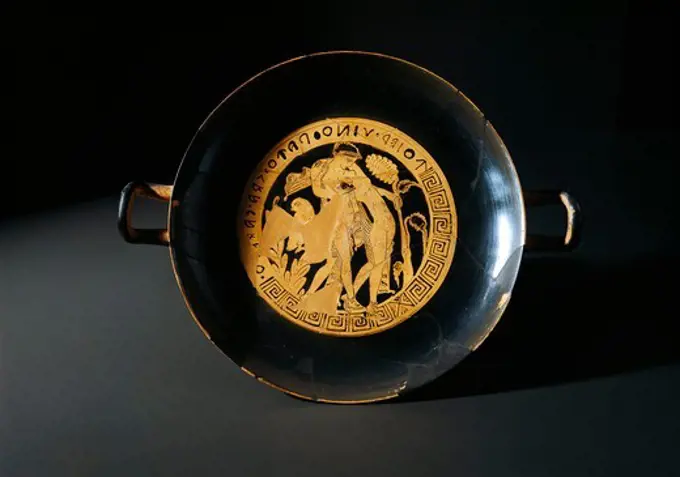
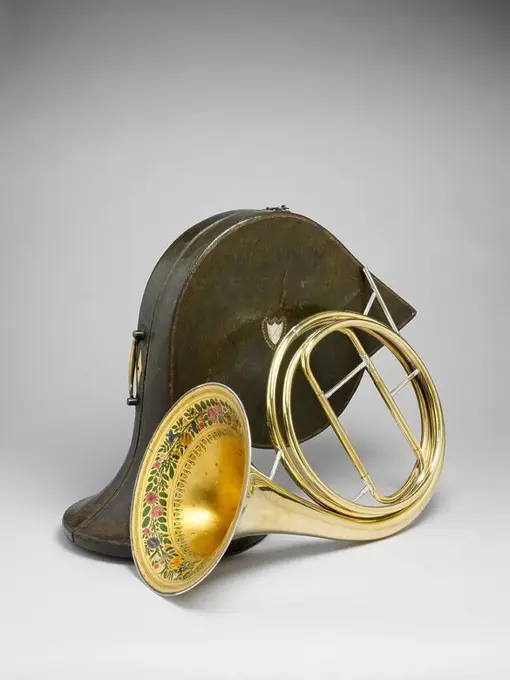
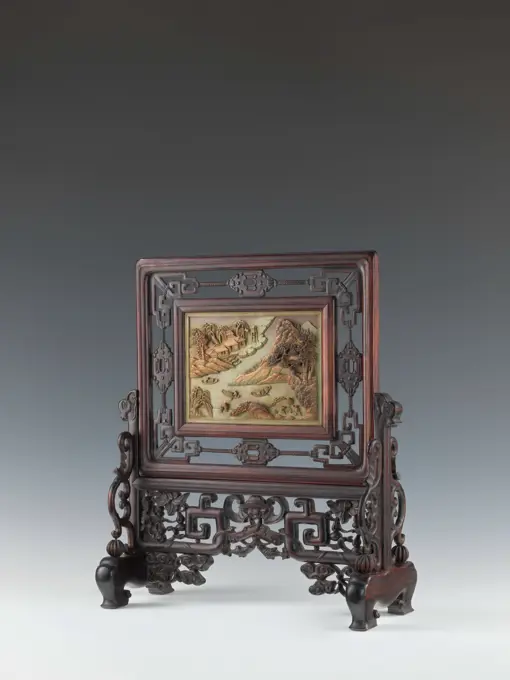
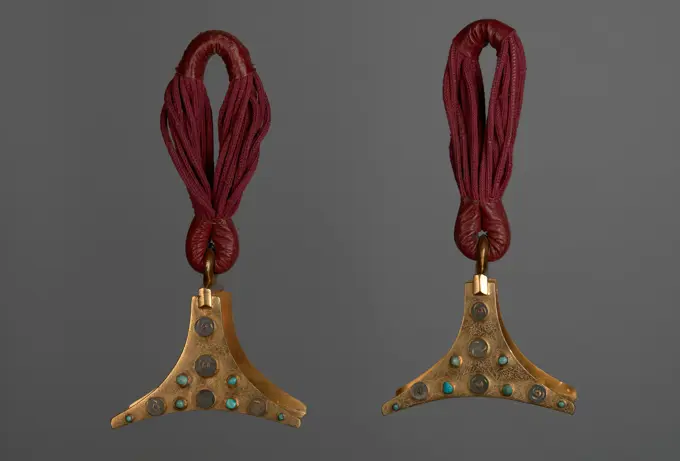
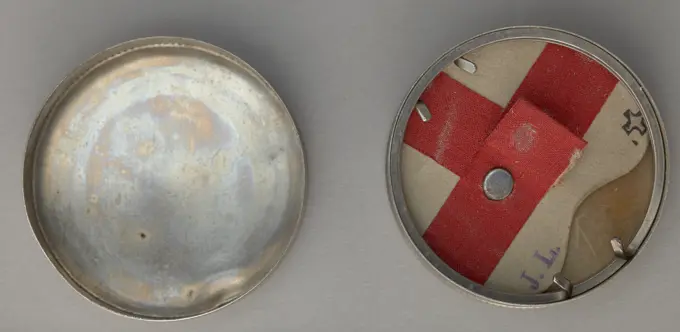
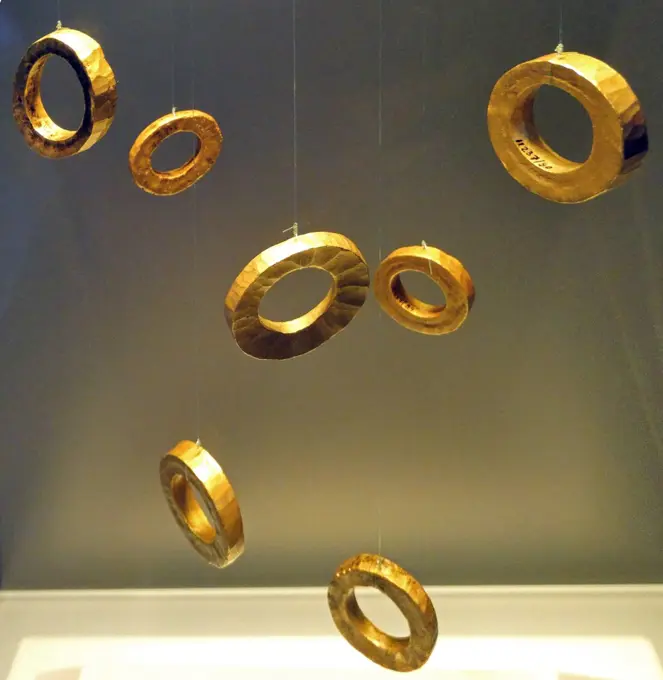
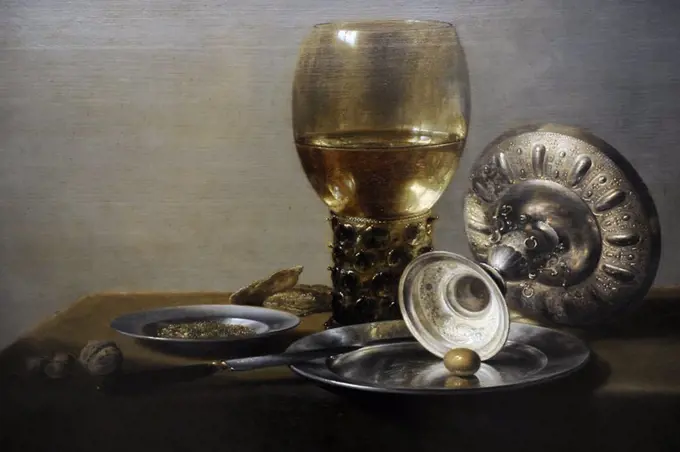
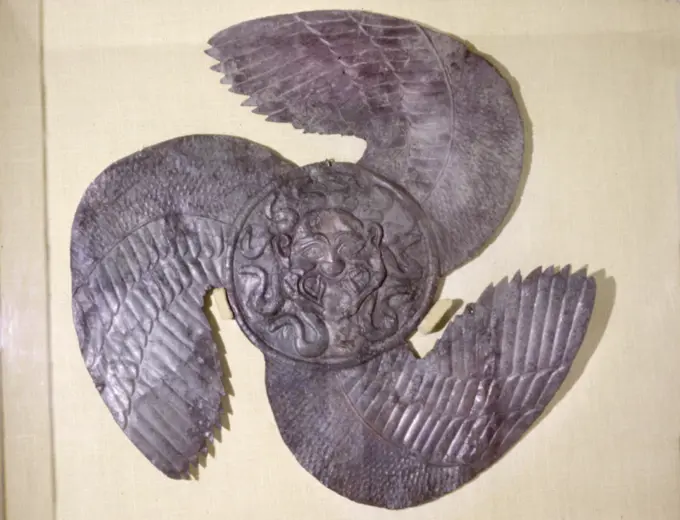
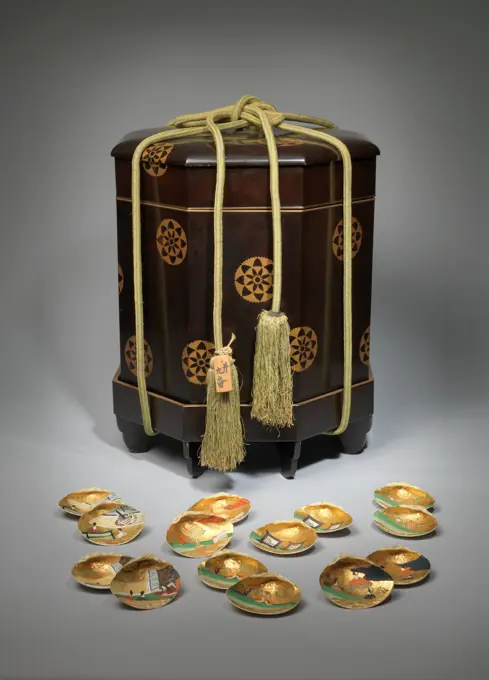
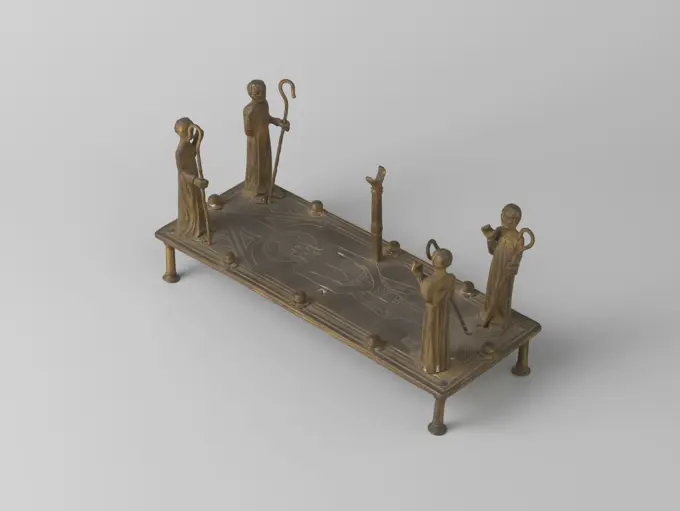
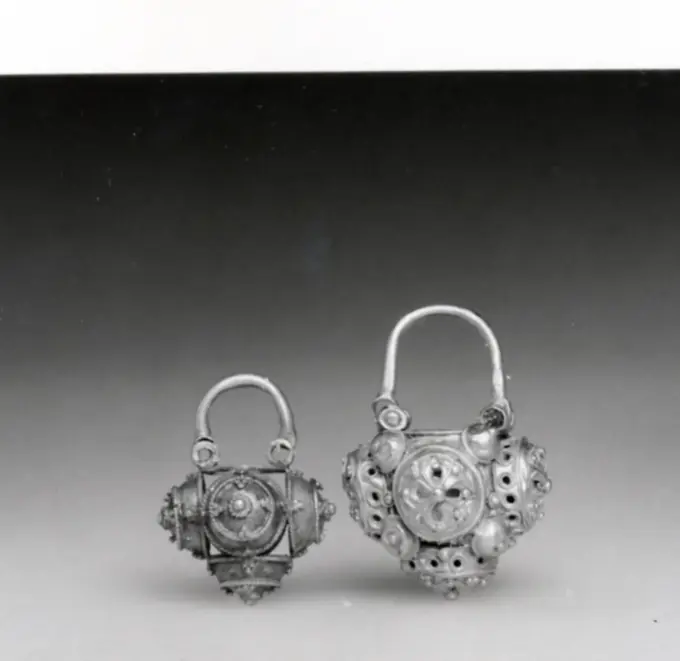
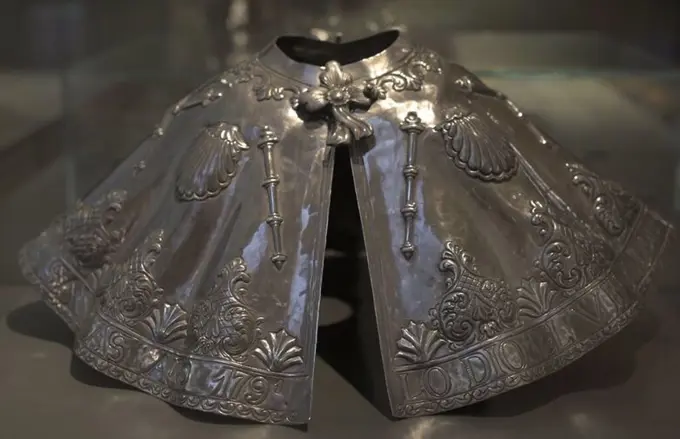
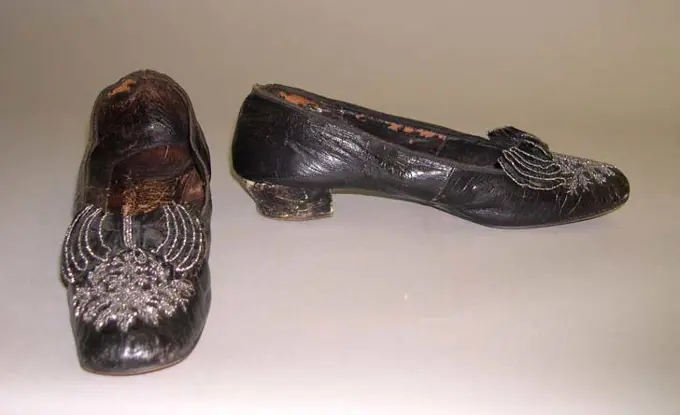
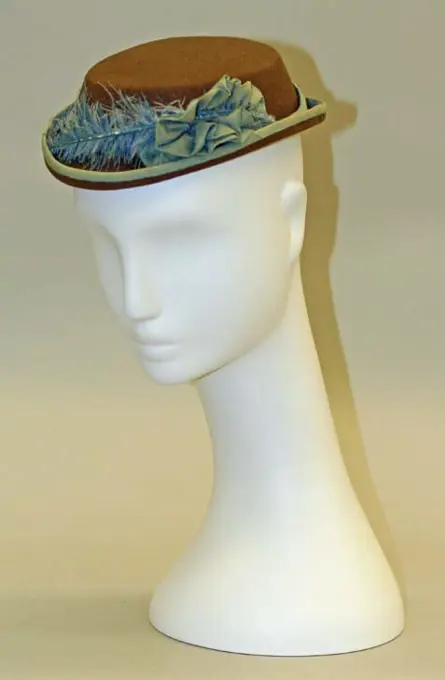
Excerpt of a wing, anonymous, 1650 - 1800 fragment A wing of a griffin painted with gold paint that has been broken off from the weapon board.  wood (plant material)Circassian zischägge with caseOval emblem for the hat of the police militia of the capital city of Warsaw with the coat of arms of the Warsaw GovernorateConsole Table. Design attributed to Pierre Contant d'Ivry (French, 1698 - 1777)Music stand, Repousséd, engraved steel, Thin sheet of steel, cut out, repousse, engraved. Initials MA (Marie Antoinette) in oval cartouche with wreath frame, surmounted by ribbon bow knot and supported by lyre with open music book. On each side: c-scroll designs, winged putti holding scrolls with names 'Lulli' and 'Collase,' dolphins, urns, musical instruments and festoons of roses. Two small ball feet, two folding supports in back; hinged music holder in front., France, ca. 1770, metalwork, Decorative Arts, Music standSauce bowl with children's figures on the short side, the arms of which form handles, Robert Joseph Auguste, c. 1768 - c. 1769 Silver sauce bowl, on four feet. Children's figures have been installed on the center of the long side, the arms of which form a handle. Under the De Schenzuiten, the coat of arms of Count Ivan Grigorjevich Tsjernichov is engraved. Paris silver (metal) Silver sauce bowl, on four feet. Children's figures have been installed on the center of the long side, the arms of which form a handle. Under the De Schenzuiten, the coat of arms of Count Ivan Grigorjevich Tsjernichov is engraved. Paris silver (metal)Tweezer-Razor ca. 1560-1479 B.C. New Kingdom. Tweezer-Razor 545171Remains of a wooden sleigh, decorated with reliefs and silver and bronze nails. Found in the Tomb of the Boat of Oseberg, Norway. 9th century. Viking Ship Museum. Oslo. Norway.Model of a Buoy, anonymous, 1831 demonstration model Copper model of an iron buoy or sole, made of tuggled plates. It has a conical end and a spherical side. There is an open pipe on one side. A bracket is applied around the spherical part, to which a handle with a ring for the anchor chain is attached. There is also an eye in the center of the spherical surface. Netherlands copper (metal)Broche, obra de Juli González i Pellicer, siglo XX. Colección privada.Stirrup 10th-11th century German This type of stirrup, with its wide rectangular suspension eye and its flaring sides at the bottom, is characteristic of the Germanic (Viking) populations living around the Baltic and Northern Seas. It evolved from types used by the Avars in Eastern Europe in the 7th and 8th centuries and was brought to Central Europe through the migration of Eastern populations.If the Vikings are mostly known for being talented sailors, one may forget they were also horse riders, and as in all the Germanic cultures, horses had great importance in their society, in both its social and religious aspects. Equestrian equipment, like stirrups, spurs and bits, are regularly found in Viking burials, among the goods warriors wanted to bring with them to the afterlife. The elite would sometimes even be accompanied by sacrificed horses, a meaningful practice at that time, considering the high economic value of horses.. Stirrup. German. 10th-11th century. Iron. probably East PrusPair of Rowel Spurs ca. 1630-1660 German These spurs are decorated overall with stamped floral designs partially silvered. In the first half of the 17th century, the fashion trend for gentlemen was to wear boots and spurs even non-riding circumstances, including for dancing or walking around at court. Spurs became then more than equestrian tools, but pieces of male jewelry often enriched by the same goldsmiths also working on armor and weapons. Their decoration was sometimes intended to match the sword hilt and the general outfit and horse tack of their owner. These trendy accessories were also a significant mark of status for gentlemen, sometimes nonetheless copied by the bourgeoisie. This fashion progressively disappeared after the mid 17th century.. Pair of Rowel Spurs. German. ca. 1630-1660. Iron alloy, silver, copper alloy, leather. Equestrian Equipment-SpursSword-Hilt Collar and Pommel (Fuchigashira) 19th century Japanese A fuchigashira is a pair of matching sword fittings comprising the fuchi (collar at the base of the grip of the sword hilt) and kashira (pommel cap at the end of a sword hilt).. Sword-Hilt Collar and Pommel (Fuchigashira). Japanese. 19th century. Copper-silver alloy (shibuichi), iron, gold. Sword Furniture-Fuchi-KashiraDoll canopy hat made of light turquoise taf side, decorated with white and turquoise striped ribbon, anonymous, c. 1835 - c. 1845 Doll canopy hat made of light turquoise taf side, decorated with white and turquoise striped ribbon. Amsterdam silk. taffeta. cotton (textile). Doll canopy hat made of light turquoise taf side, decorated with white and turquoise striped ribbon. Amsterdam silk. taffeta. cotton (textile).Bracelet. Indonesia, Sulawesi, 100 B.C. - A.D. 300. Jewelry and Adornments; bracelets. Copper alloy and a rattling stoneGold cut-outs in the shape of octopus with 6. Gold roundels decorated with octopus. Greek , Mycenaean, Circa 1600BCTurkish Ottoman style water tap examplesPowder Horn 18th century American This powder horn is engraved with a map of Boston and the surrounding area.. Powder Horn 29504Cap (Italy); white satin, gold thread, paillettes, gold lace (bobbin)Engraving plate with a performance of the exhibition in Amsterdam, Claes Jansz. (I) Visscher (fictional artist) (Rejected Attribution), After 1611 - Before 1652 The plate shows the courtyard of the fair in Amsterdam built by Hendrick de Keyser. At the top a banderole with in mirror image the inscription: Byrsa Amstero Damensis. At the bottom a rectangular at the top by rolling work decorated with Amsterdam, seen from the IJ and left and right two six -line poems in the Dutch and the Latin language. To the left of the weapon of Amsterdam applied in the middle the inscription: "Pleijenaar Excu.", At the bottom in the middle the inscription: "Isack Houwens Excudit". The shape of a presentation sheet was given to the plate in later times and three holes were drilled at the top to be able to hang it on the wall. AmsterdamAmsterdamNorthern NetherlandsNorthern Netherlands copper (metal) engraving  Fair of Hendrik de Keyser The plate shows the courtyard of the fair in Amsterdam built by HendriPresentation drawing (reworked) for a sugarbowl. Artist: George Christian Gebelein, American, 1878-1945Goldsmith's art, France, 20th century. Pendant brooch set with pearls and diamonds with pink pearl pendant, Cartier 1923.Tar late 19th century Moroccan This instrument, decorated profusely inside and out, was used in Andalusian nawbt ensembles. The term t.r is not exclusive to this instrument, as other terms, such as daff and riqq, are used in other Middle Eastern localities.. Tar. Moroccan. late 19th century. wood, skin. Morocco. Membranophone-single-headed / frame drumAntropomorphic pendant, gold, Quimbaya culture. Raptor figure pendant, golden copper, Tairona culture. Pendant depicting a fantastic, gold, Tairona culture. Antropomorphic pendant, gold, Tairona culture. Integration period (800-1500 AD). Colombia. Museum of the Americas. Madrid, Spain. Mesopotamian Silver and Gold winged goat, Achaemenid, 4th century BC Artist: Unknown.Visigothic broque from the 7th century, Mortera cave, Pielagos, Museum of prehistory and archeology (MUPAC), Santander, Cantabria, Spain.Canada, Newfoundland and Labrador, Twillingate. Prime Berth historic fishing center & cod museum, museum display vintage fishing hook.EscutcheonGolden sandal of King Tutankhamen, From his tomb. 1323 BC. 18th dynasty, New KingdomItalic civilizations, Liguri. Earrings with female heads. From the necropolis of Chiavari, province of Genoa.Pump with two sweats and sink, anonymous, c. 1750 Pump made of wood, painted on the front and side with tiling pattern, marbled above and gehout, fitting with the kitchen, back and plain brown-colored. Rewstone sink with copper drain, two yellow-heading curbels with red-copper ring and button decoration, yellow copper decorative edge and tap. Pump structure from inside fully designed as pumps in full size. Amsterdam oak (wood). copper (metal). brass (alloy). ashlar brick Pump made of wood, painted on the front and side with tiling pattern, marbled above and gehout, fitting with the kitchen, back and plain brown-colored. Rewstone sink with copper drain, two yellow-heading curbels with red-copper ring and button decoration, yellow copper decorative edge and tap. Pump structure from inside fully designed as pumps in full size. Amsterdam oak (wood). copper (metal). brass (alloy). ashlar brickDish, c. 1643, 3 x 13 1/2 in. (7.62 x 34.29 cm), Porcelain, China, 17th century, While kraak porcelain found particular popularity in Europe, China was producing Swatow ware for export to Japan, Southeast Asia, India, and Indonesia. Named for a port city from which they were exported, these dishes have a distinctively gritty glaze and were made along the southern coast of China in the 16th and 17th centuries.Tobacco Pouch 1850-80 Japan. Tobacco Pouch 58495A picture of three rifles inside the Weapon and Armours room, part of the Topkapi Palace complexTerracotta fragment of a kylix: eye-cup (drinking cup) 520-500 B.C. Greek, Attic Interior, in the center, a centaur to right, looking over his right shoulder to the bird, who is in flight; Obverse and reverse: Dionysos between two satyrs and vines. Terracotta fragment of a kylix: eye-cup (drinking cup). Greek, Attic. 520-500 B.C.. Terracotta; black-figure. Archaic. VasesSculptural and Architectural fragments from wall and column adornments in the Castel Sant'Angelo, Rome, Italy. Roman, Circa 2nd century AD.Bowl with kufic inscription from the Samanid Dynasty, Iran. Dated 10th CenturyBox. Box of turtle in the shape of a boat mounted with silver. A lion on the vent.Family album from the Kessler-de Lange family. Family album from the Kessler-de Lange family with 58 photos.Painted wooden model Solar Boat with throne and two steering paddles from the tomb of King Tutankhamen 1336 - 1326 B.C.Art Nouveau picture frame. Rembowski, Jan (1879-1923), sculptor, Hempel, Bracia (Warszawa ; wytwórnia złotnicza ; 1894-1944), factorysword gift from the city of Vitoria to General Alava sword gift from the city of Vitoria to General Alava, Álava Armory Museum, Vitoria, Basque Country, Spain Copyright: xZoonar.com/Tolox 21366567Celery Holder. Dated: c. 1936. Medium: watercolor, graphite, and gouache on paper. Museum: National Gallery of Art, Washington DC. Author: Robert Stewart.Turkish Ottoman style water tap examplesRed-figure pottery kylix depicting couple embracing with Faliscan inscription, from Civita CastellanaFili Empir, from miniatures landscape, saucer, complete with a branch; Baranówka (Porcelain Manufaktura; 1804-2012); 1 PO. 19th century (1800-00-00-1900-00-00);Muffin Pan. Dated: c. 1938. Dimensions: overall: 20.9 x 33.9 cm (8 1/4 x 13 3/8 in.) Original IAD Object: 11" long; 7 5/8" in diameter. Medium: graphite on paperboard. Museum: National Gallery of Art, Washington DC. Author: PHILIP JOHNSON.Miser's purse, Medium: silk, metal Technique: crocheted, Crocheted light blue silk, unornamented. Two gold rings control side opening; gold seals containing carved stones are attached to either end. A carved portrait head is on one; writing, possibly a signature, is engraved on the other., France, early 19th century, costume & accessories, Miser's purseScandinavia. Low Roman Iron Age. 1st-4th century. Gold jewel. Sweden. Historical Museum. Stockholm. Sweden.TableMETACRILATO CON INSECTO FOSILIZADO EN EL INTERIOR.Amazigh bracelets decorated with reliefs of birds, Libya, "Corral del Carbón" , "al-fundaq al-yadida", 14th century, Granada, Andalusia, Spain.Cor Solo. Culture: French. Dimensions: Diameter (Of bell): 11 1/4 in. (28.5 cm). Maker: Dubois et Couturier. Date: 1829.Cors solo, a French invention, are horns built specifically for the use of soloists. They not only are extremely carefully crafted but also have a slightly narrower bore than regular orchestral French horns. Only a few shops, most of them in Lyon and Paris, were able to build excellent, easy-speaking cors solo with refined workmanship and balanced sound qualities. This cor solo, dated 1829, is the earliest known instrument made by Dubois & Couturier, a firm that flourished in Lyon in the 1830s. The style of the ferrules and stays between the sections of tubing was very modern for the time and became generally accepted only in the 1850s. Because in the early nineteenth century literally all solo literature for cors solo was composed in the keys of G, F, E, and E-flat, the horns were built with exchangeable loops just for those keys.This instrument has been used very CorkPILA BAUTISMAL DE CERAMICA - S XV. Location: IGLESIA DE LA CONCEPCION. SAN CRISTOBAL DE LA LAGUNA. TENERIFFA. SPAIN.Pejzaż górski - ekran w ramie. unknown, craftsmanPrzeszo Przyszoci unknownFan 1870-89 French. Fan 168771Harp, c. 1780-1790, Cousineau Père et Fils; Artist: Formerly attributed to Pierre Joseph Cousineau, French, 1753 - 1824, 68 1/4 x 33 1/4 in. (173.36 x 84.46 cm), Mahogany, ivory, pigment, gilt, and metal works, France, 18th centuryA box with a pair of spare glasses for the Swiss army's anti kept mask unknown labelBroilerDoor and key in original door frame. Artist: Samuel Yellin (American, born Russia, 1884-1940). Culture: American. Dimensions: 81 x 32 3/8 in. (205.7 x 82.2 cm). Date: 1929. Museum: Metropolitan Museum of Art, New York, USA.Knife with jade handle inlaid with gold and set with gems from Istanbul, Turkey. Dated 16th CenturyA carved sea shell depicting Diana at the Hunt. Italy (probably Naples) Queen helmet shell Cassis madagascariensis). Oil lamp old-style vectorMONTANTE DE SANCHO DAVILA - DETALLE. Location: ALCAZAR / MUSEO DEL EJERCITO-COLECCIÓN. Toledo. SPANIEN.The Hockwold Treasure, a hoard of seven silver Roman cups and handles. From Hockwold cum Wilton, Norfolk. Dated 1st Century ADOld ancient Moroccan lantern hanging from a traditionally built wooden ceiling, Agadir in MoroccoCirclets from Nahal Qanah Cave, Western Samaria from 6,500-5,500 years ago. Made from gold and electrum.Baton. Gold. Chimu culture (1100-1400 AD). Peru. Museum of the Americas. Madrid, Spain.Button, 1801-50; cut steelLAMPARA DE PLATA. Author: ZULOAGA JB. Location: IGLESIA DE SANTA BARBARA. ECIJA. Seville. SPAIN.Pieter Claesz (c. 1597-1660). Dutch Golden Age still life painter. Still life, c. 1635. Oil on panel. Gemaldegalerie, Berlin. Germany.CAJA DE PLATA PARA GUARDAR LA CONSTITUCION DE 1869 - SALAS DE PRESIDENCIA. Location: CONGRESO DE LOS DIPUTADOS-OBJETOS. MADRID. SPAIN.Commemorative badge of a graduate of the University of Government in ChyliszkiShield with Gorgon's head. 5th cent. BC. GREECE.Shell-matching game, 19th century, Unknown Japanese, 1 × 3 1/4 × 2 1/2 in. (2.54 × 8.26 × 6.35 cm) (each shell, approx.), Gold, color, and shell white pigment on paper on oyster shells, Japan, 19th century, These hand-painted seashells are parts of the popular game known as kai-awase, or the 'shell-matching game.' Pairs of shells are decorated on their insides with the same scene from the Tale of Genji As in Memory and other matching games, the point was to try to match shells with similar scenes. Players could enjoy the fun of the game itself, and were also entertained by the images that reminded them of the Tales twists and turns or of a famous poem recited by one of the characters.Egret on a Bridge Post. Origin: Japan. Period: Edo period. Ink and color on paper. Date: ca. 1801-1802. Museum: Freer Gallery of Art and Arthur M. Sackler Gallery.Scandinavia. 4 medaillons, 17 bracteates and a sword scabbard mount. Sletner, Eidsberg, Ostfold. 5th-6th century. Scandinavia. Norway. Historical Museum. Oslo. Norway.Commemorative plaque to a famous zarzuela actor, embossed silver, Manila, 19th century, PhilippinesAnthropology National Museum, Madrid, Spain.Oak Hammock MarshMODELO EMBARCACION A VELA DEL OCEANO PACIFICO. Location: ATARAZANAS / MUSEO MARITIMO. Barcelona. SPAIN.Reliek-Oostensorium, Anonymous, c. 1800 - c. 1900 The object of gilded copper consists of a plate of a engraved Christ figure, which is placed on four legs and with two gaffel standards in the middle, one of which is missing. On the corners there are four bishops with the heads in the same direction and each with a crook in their hands. With the other hand, they carry the upper part of the reliquary, together with the Gaffel standards. West-Europa copper (metal) casting / engraving / gilding The object of gilded copper consists of a plate of a engraved Christ figure, which is placed on four legs and with two gaffel standards in the middle, one of which is missing. On the corners there are four bishops with the heads in the same direction and each with a crook in their hands. With the other hand, they carry the upper part of the reliquary, together with the Gaffel standards. West-Europa copper (metal) casting / engraving / gildingRoman sundial, from Ephesus, 3rd century AC. Garden of the Museum of Ephesus. Selçuk, Turkey.Close-up of lot potSunburst CupPlateTraditional Yemenite Jambia Dagger, Sana'a, YemenFrançois-Joachim Aubert. Discharge punch. 1767-1768. Paris, Cognacq-Jay museum. 56057-3 Boite, youarage, orfrevrerie, poinconAsian Pavilion setup, August 2015. Display with tsubas, indoors and kosukasBasket Earring, One of a Pair 11th-13th century. Basket Earring, One of a Pair 453615Lisbon, Portugal. Soup terrine and platter antique.Pellegrina with Jacobean symbols that would serve as clothing for a sculpture. 1791. Possible Cuzco School (Peru). Embossed chiselled silver. Museum of Pilgrimage and Santiago. Santiago de Compostela, Galicia, Spain.Miniature box with cover 1690-1710 German, probably Augsburg. Miniature box with cover 202768Aladdin lamp of wishes in metal with patterns in viewShoes late 19th century British. Shoes 105449Hat 1868-70 American. Hat 113227Model of Cap Roig. Small ship of Tansporting coal. Scale: 1:30. Maritime Museum of Barcelona, Catalonia, Spain.Button; cut steelCopper Crown with Dangles 3rd century B.C.-A.D. 2nd century Vicús (). Copper Crown with Dangles 315361Showcase with objects of ceramics, including two terrines; Vitters crafts. This is the device of the display case before emptying in October 1959. In the case of two terrines in the form of a dromedary, possibly manufactured by Plateelbakkerij Blankenburg.