Historical Metal Artifacts

A collection of ornate metal objects from various eras, including stirrups, mirrors, and rattles, showcasing intricate designs and craftsmanship.

Iron stirrup with brass inlay. 10-11th cent. Found in Thames, Battersea. England. VIKING.
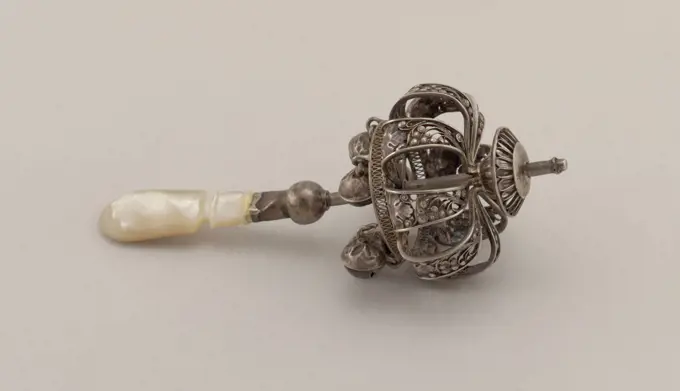
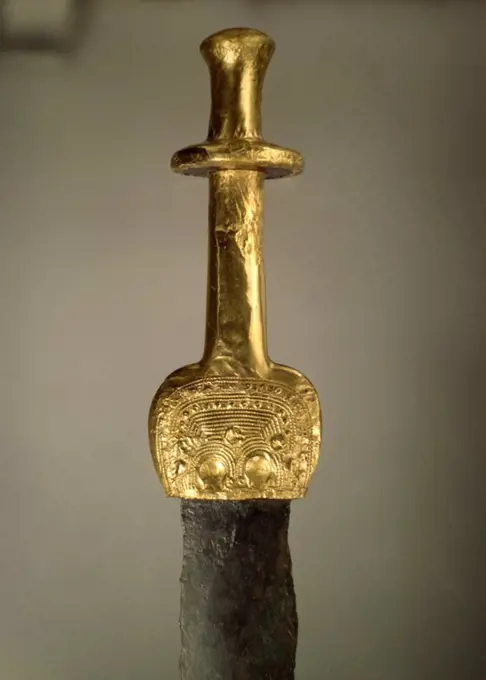
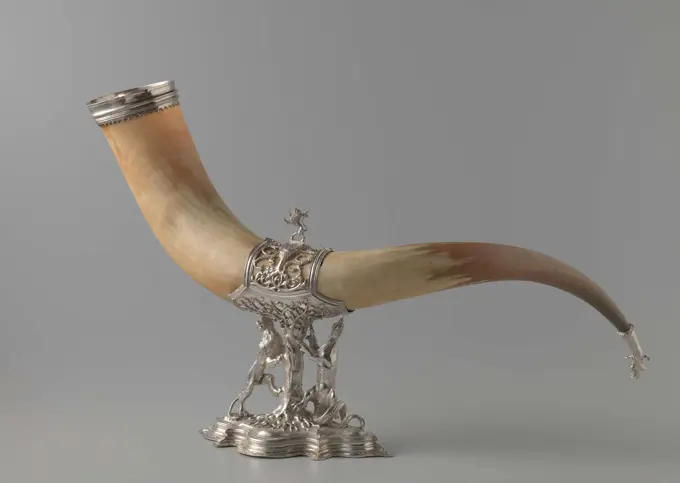
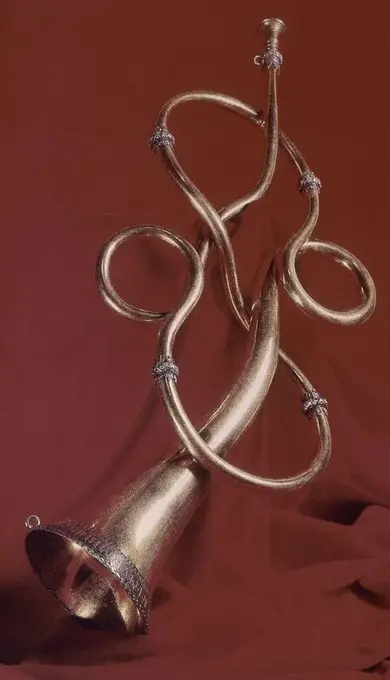
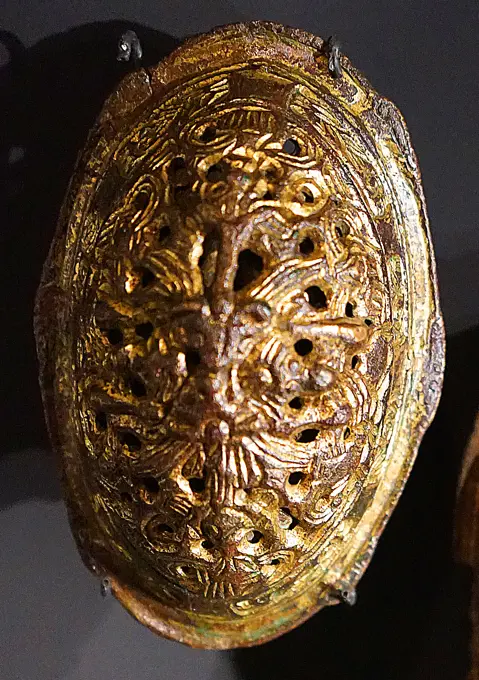
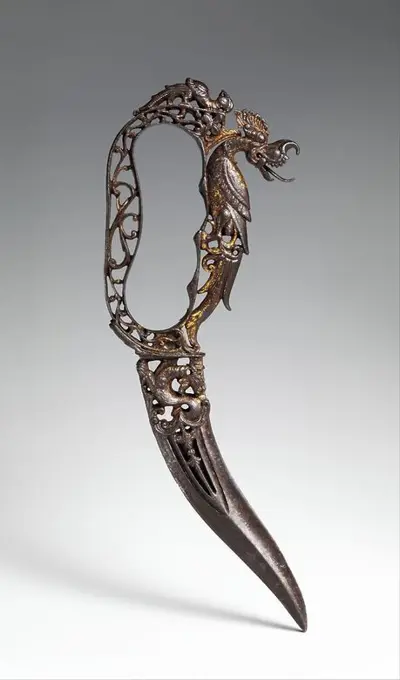
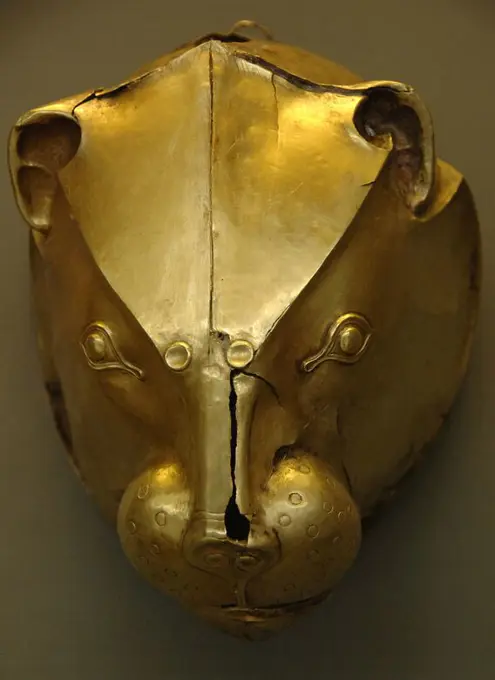
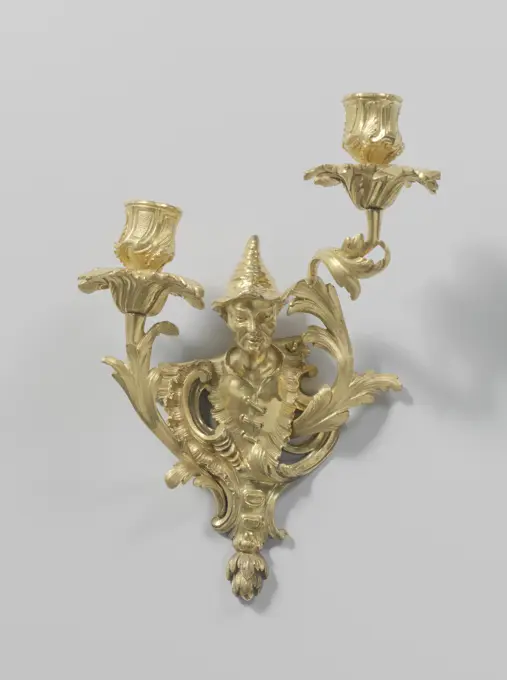
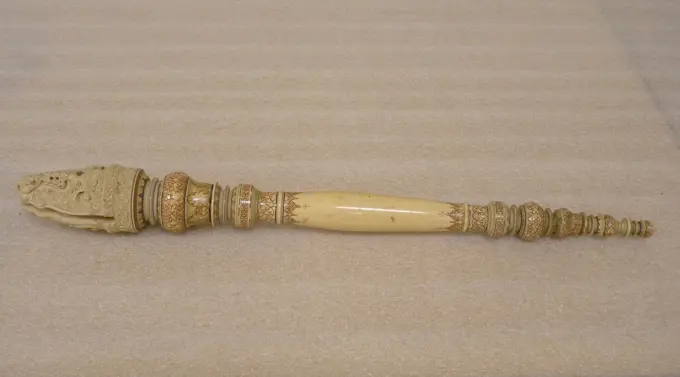
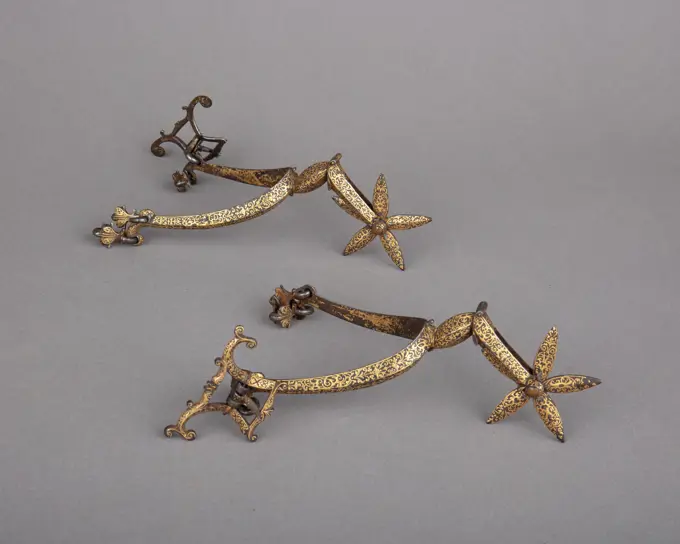
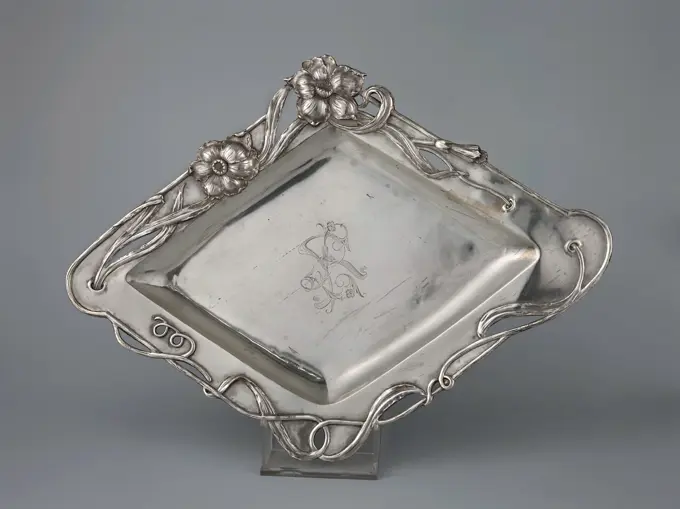
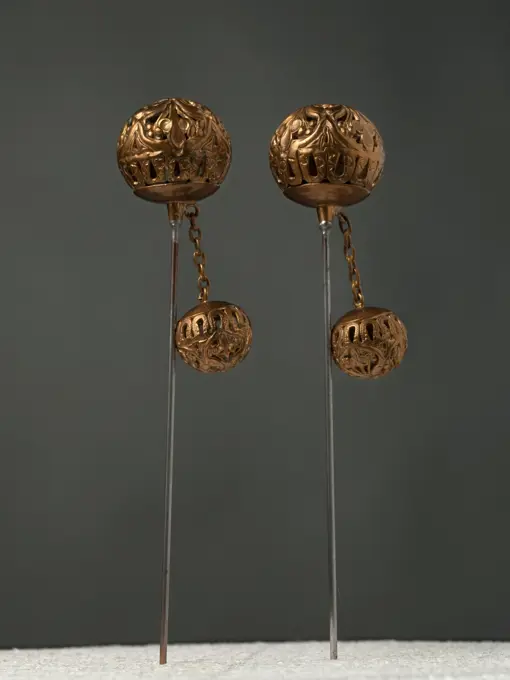
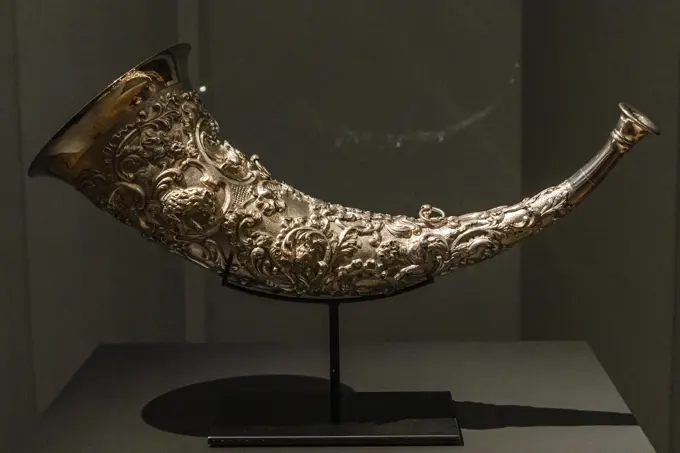
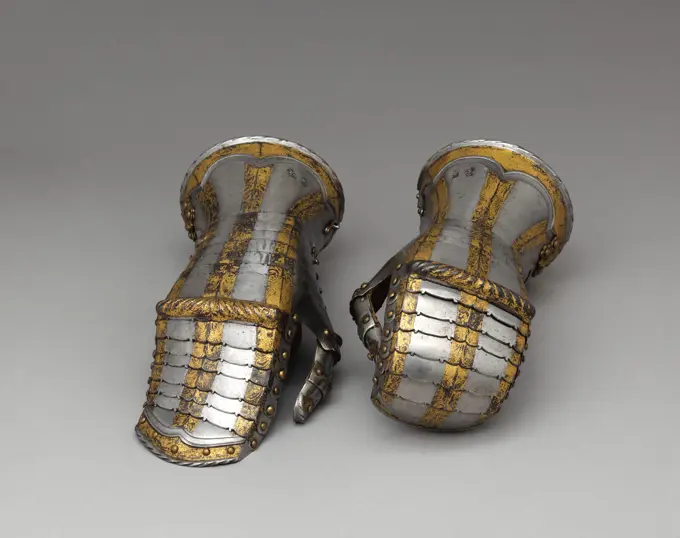
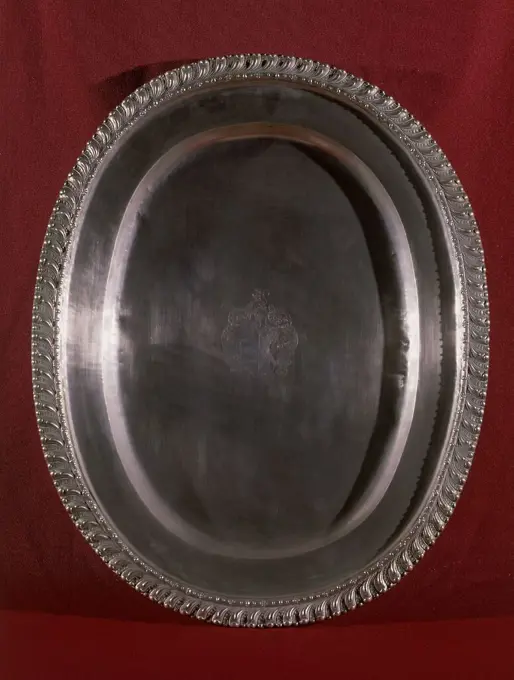
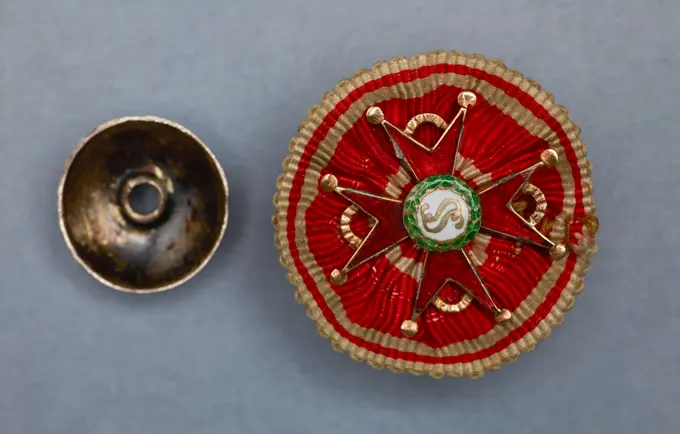
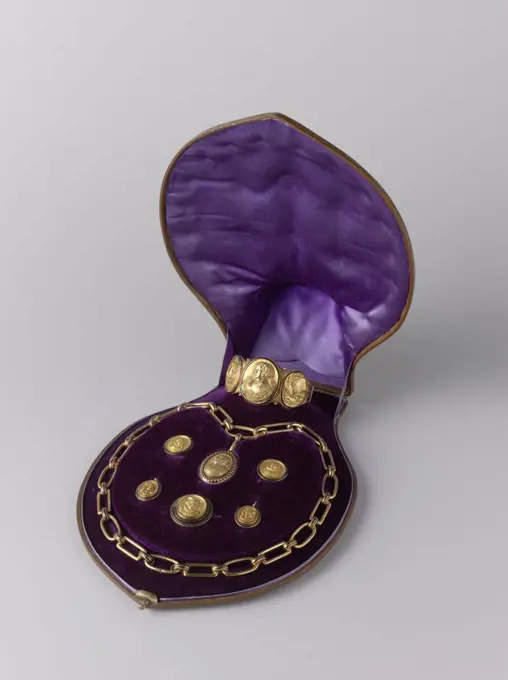
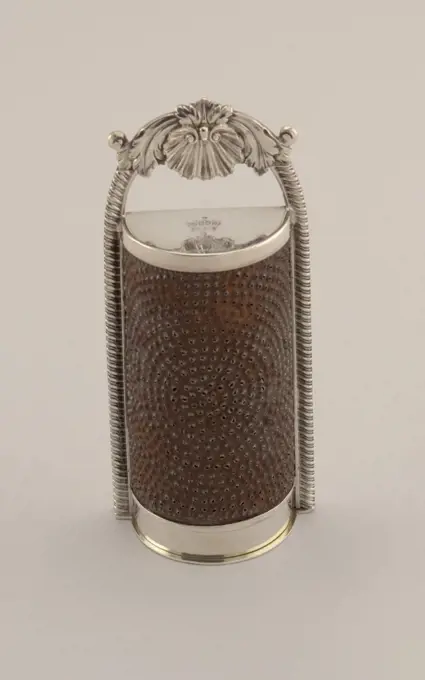
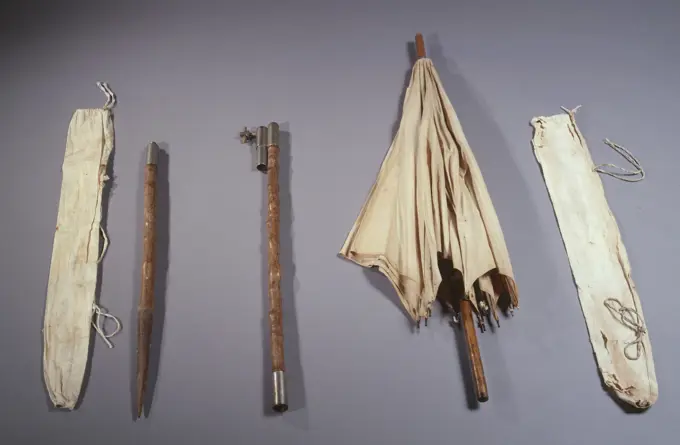
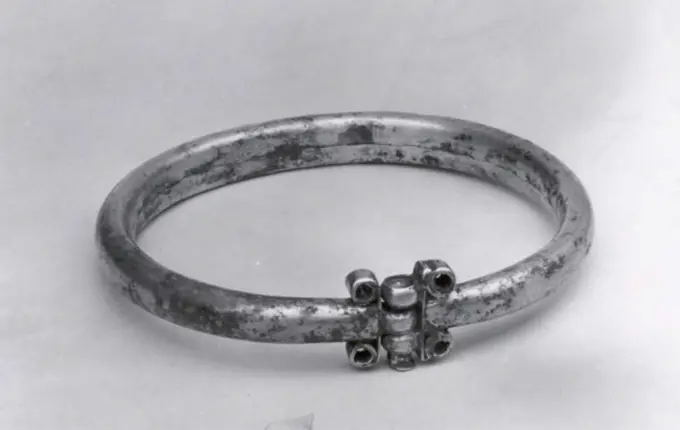
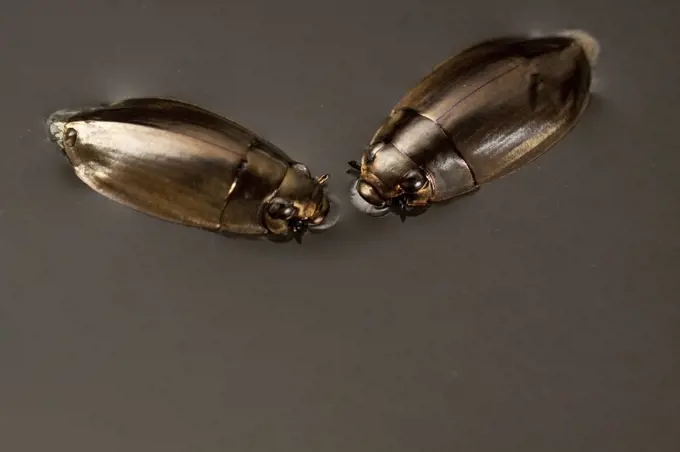
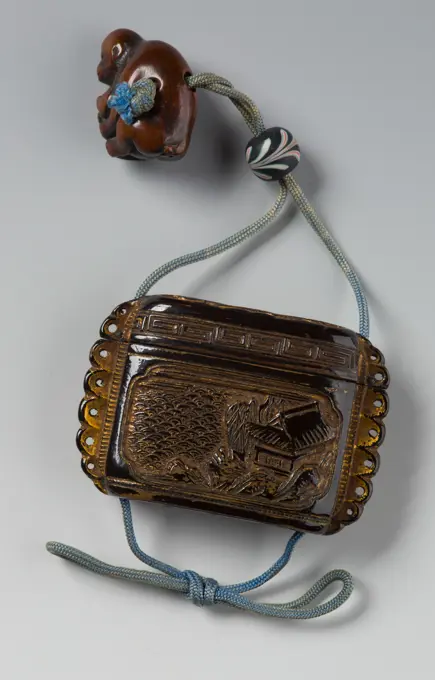
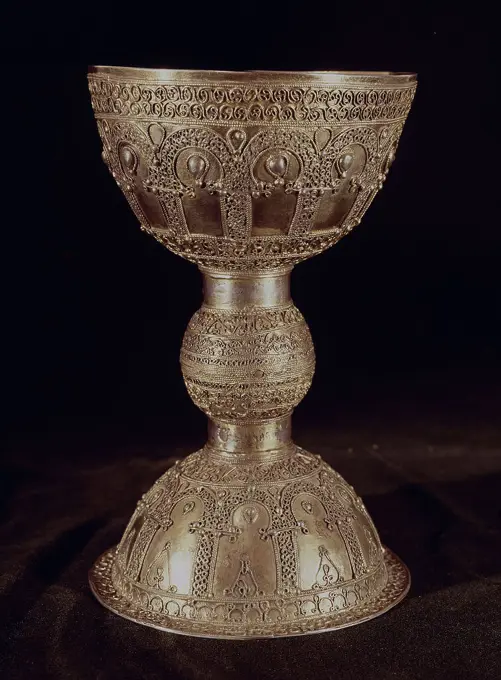
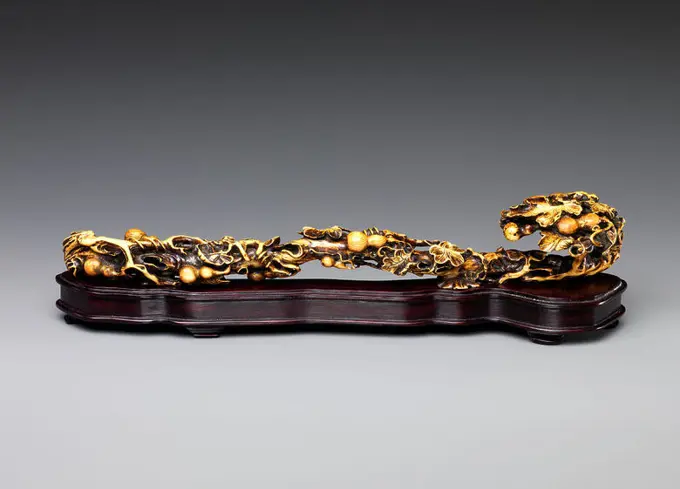
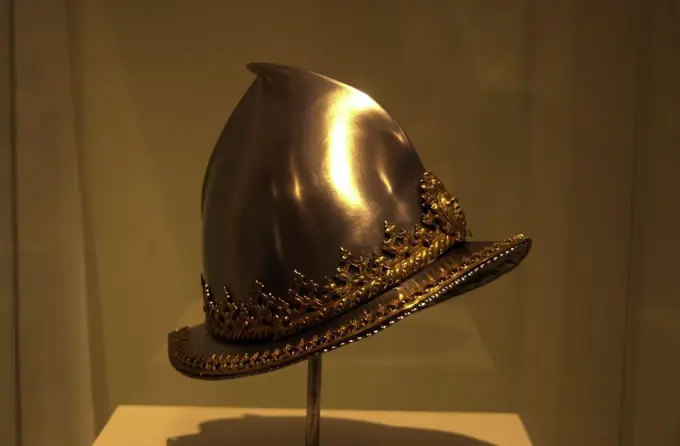
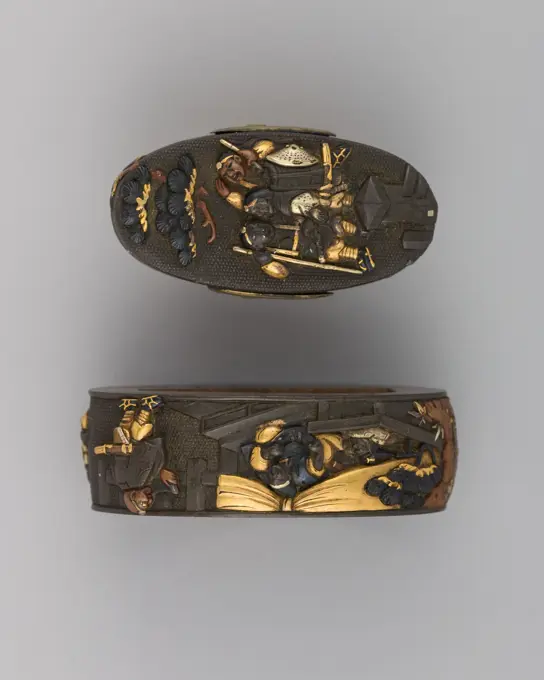
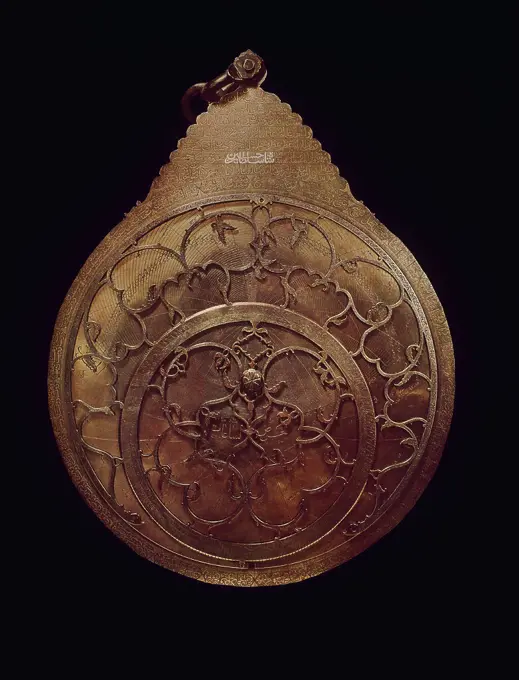
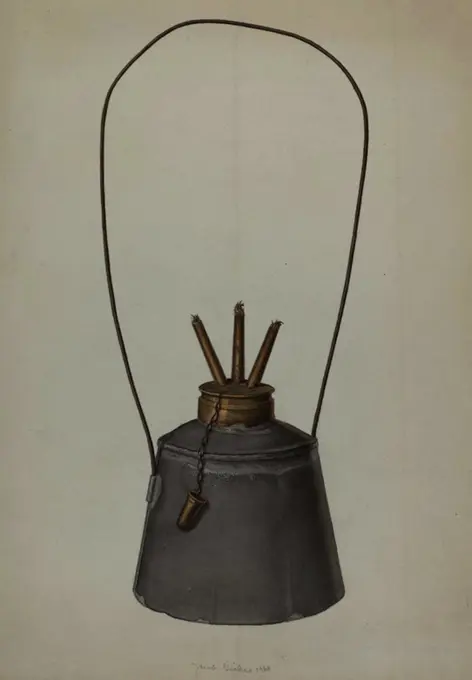
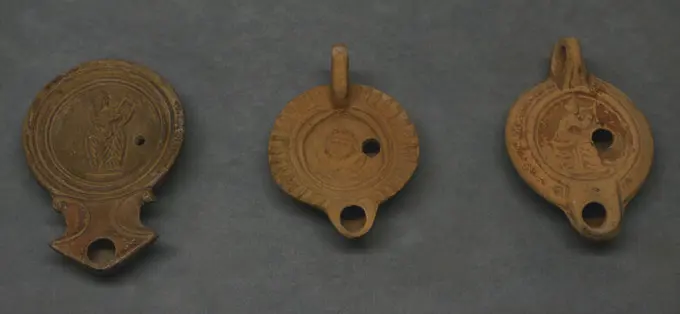
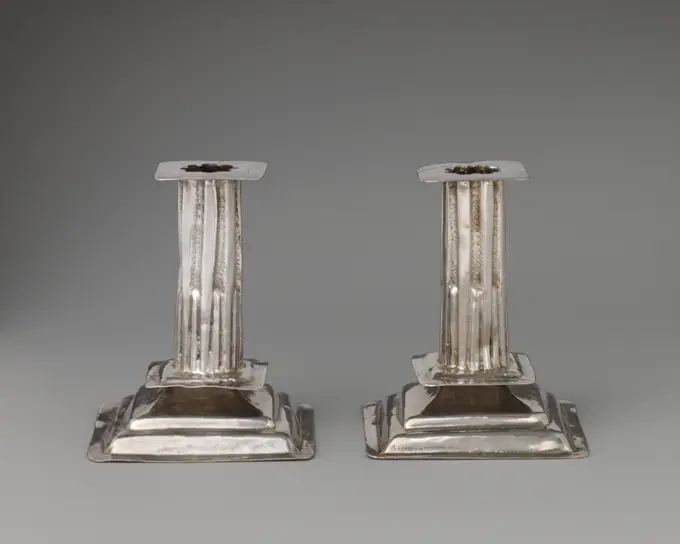
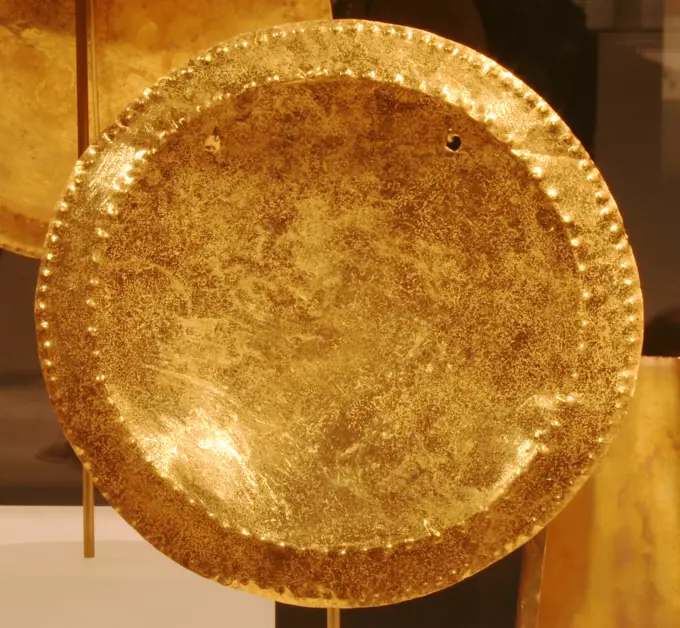
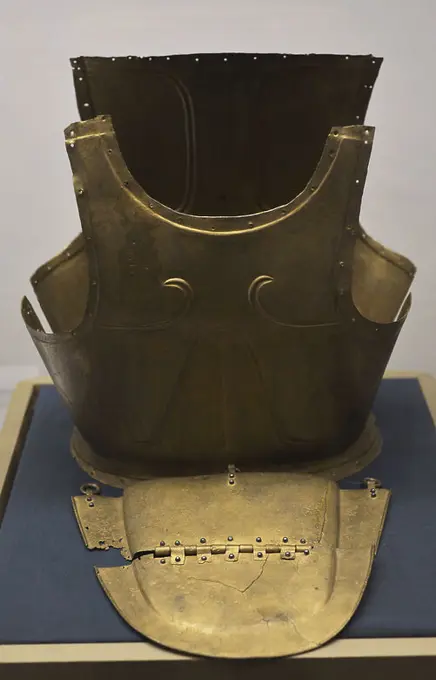
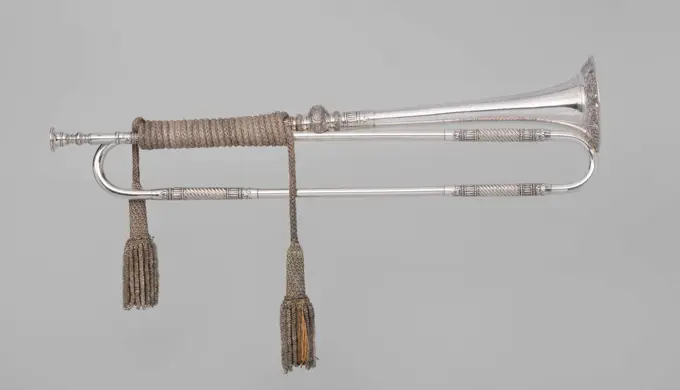
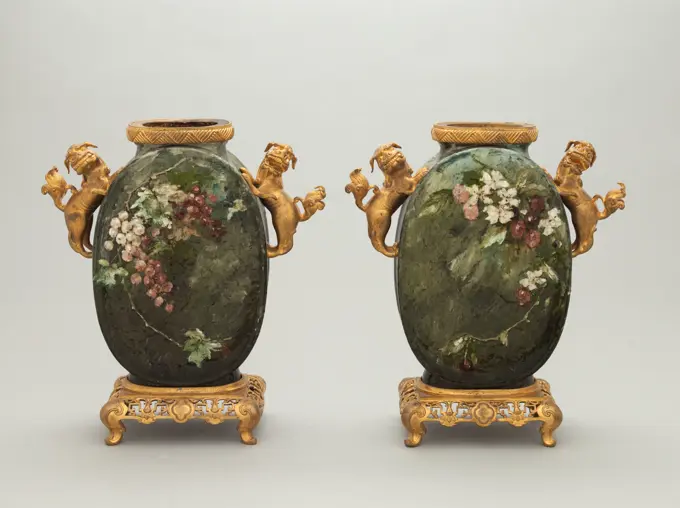
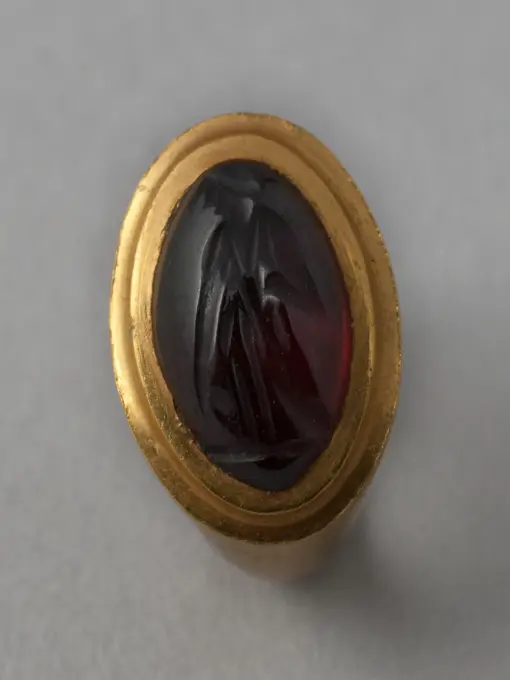
Iron stirrup with brass inlay. 10-11th cent. Found in Thames, Battersea. England. VIKING.Handle of mirror. Handle of mirror, decorated with sky nymph sitting on rock.Rattle, Silver, mother-of-pearl, Open cage formed of eight silver filigree straps featuring delicate scroll and leaf motifs on each, straps attached to ball above, which rotates and slides up and down central post; attached to base of cage is circular, filigree frame, beneath which hang 6 bells on links (five bells are unadorned; a sixth, which is evidently a replacement, features leaf motifs); 6 structural spokes extend inward from links to ring attached to central post; small domed disc with filigree work situated above cage, which also rotates and slides up and down post; stationary ball near bottom of post prevents cage from sliding further down; attached to fixed ball and post is a flat pearl handle with incised star on front and reverse., Europe, 18th century, metalwork, Decorative Arts, RattleCrucifix with base and predella with the scene of the Coronation of the Virgin Mary (obverse) and the Mourning of Christ under the Cross with the Virgin Mary and St Jan (reverse), Nuremberg, ca. 1500 (predella), 1st quarter of the 16th century (angels), Krakow, 17th century - before 1807 (base and crucifix)Stirrup in the shape of a slip. The molded and topic object has the model of a slip with a belt attachment. The edge of the slof is ribbed. Two triangles are cut into the sole.Arte Edad Antigua. Detalle de espada de fines de la Edad de Bronce. Guadalajara. Museum: MUSEO ARQUEOLOGICO, MADRID, SPAIN.. This luxury drinking horn played a prominent role in civic guard ceremonies. The horn was passed around the table and everyone drank from it. In this way, the militiamen expressed their common bond and unity. The claws in the silver mount are the symbol of the arquebusiers.Strip of gold side with wide wavy band and fan shapes, anonymous, c. 1700 - c. 1799 Strip bobbin, gold side. The pattern consists of scales with fan forms, which are created below and above a wide wavy band of vertically tense threads. The scallops consist alternately of a fan crowned by a smaller fan and a heart crowned by a fan. A cross is made in the heart in the heart. Work has been done with slat gold thread, smooth filé yarn and ribbed filé yarn, in different thicknesses. France (possibly) . bobbin lace Strip bobbin, gold side. The pattern consists of scales with fan forms, which are created below and above a wide wavy band of vertically tense threads. The scallops consist alternately of a fan crowned by a smaller fan and a heart crowned by a fan. A cross is made in the heart in the heart. Work has been done with slat gold thread, smooth filé yarn and ribbed filé yarn, in different thicknesses. France (possibly) . bobbin laceTROMPETA 1598. Author: SCHNITZER A. Location: KUNSTHISTORISCHES MUSEUM / MUSEO DE BELLAS ARTES. WIEN. AUSTRIA.Slippers 1845-65 Melnotte. Slippers 168921Pair of Stirrups. Culture: Indian. Dimensions: Stirrup (a); H. 5 1/8 in. (13 cm); W. 5 1/4 in. (13.3 cm); D. 3/4 in. (1.9 cm); Wt. 4.9 oz. (138.9 g); stirrup (b); H. 5 1/4 in. (13.3 cm); W. 5 in. (12.7 cm); D. 5/8 in. (1.6 cm); Wt. 3.9 oz. (110.6 g). Date: 18th-19th century. Museum: Metropolitan Museum of Art, New York, USA.Lock with two shots, c. 1400 - c. 1950   wood (plant material). iron (metal)   wood (plant material). iron (metal)Morion. Culture: German. Dimensions: H. 11 1/4 in. (28.6 cm); H. of comb 3 1/4 in. (8.3 cm); W. 11 in. (27.9 cm); D. 14 3/8 in. (36.5 cm); Wt. 3 lb. 9 oz. (1611 g). Date: ca. 1600. Museum: Metropolitan Museum of Art, New York, USA.Pickle dish and spear, Silver, gilt silver, In the form of a cucumber pickle, with gilt interior; scrolled vine handle flanked by a small pickle and leaf. The separate pickle spear with matching leaf handle., New York, New York, USA, ca. 1880, metalwork, Decorative Arts, Pickle dish and spearItaly, Bergamo, Lovere, Silverware known as Fisherman's plateSpoon. Culture: possibly Hungarian. Dimensions: Length: 7 13/16 in. (19.8 cm). Date: mid-16th century.The carefully applied partial gilding and the elaborate leaf-shaped handle of this spoon reflect the international court style of the mid-sixteenth century. While, from the point of view of its style, it could have been produced almost anywhere in Central Europe or Northern Italy, the inscription in Hungarian suggests it may have been made in the region. However the dedication in Hungarian from 1628 was engraved later.LiteratureJudit H. Kolba. Hungarian Silver: The Nicolas M. Salgo Collection. London, 1996, p. 139, no. 117.Wolfram Koeppe 2015. Museum: Metropolitan Museum of Art, New York, USA.Flat curved Kruithoorn, Anonymous, 1600 - 1625 powder horn Flat, curved crush horn engraved at the front with a medallion in which the bust of a woman. Decoration with leaf and flower vines within a frame of lines and stripes. Reverse engraved with three circular ornaments. Seat hook. Tuit with closing mechanism. Similar object: NG-NM-576. State good. Netherlands horn (animal material). iron (metal) forging / engraving ornament derived from plant formsFragment majolica plate, yellow, orange, dark blue (black) On white, middle concentric circles, surrounded by broad nissenrand, bubble and wave edge with sgraffito decor, plate dish crockery holder soil find ceramics pottery glaze, archeologyKnife, before 1916. Africa, Central Africa, Democratic Republic of Congo, Bangala, early 20th Century. Iron, copper alloy, wood, and cloth; overall: 57.2 cm (22 1/2 in.); blade: 36.2 cm (14 1/4 in.).Incense Box (Kobako) with Scene from "His Perfumed Highness" (Niou no Miya), chapter 42 of the Tale of Genji. Culture: Japan. Dimensions: H. 2 in. (5.1 cm); W. 2 7/8 in. (7.3 cm); L. 5 1/8 in. (13 cm). Date: 19th century.The lid of this box is made of two interlocking seashells illustrating a chapter of the Tale of Genji. Publicly recognized as Genji's son, Kaoru has doubts about the circumstances of his birth. A poem voiced by the troubled man, and written above him within stylized clouds, reads: Obotsukana tare ni towamashi Ikanishite hajimemo hatemo shiranu wagami zo (Whom might I ask Why must it be that I do not know the beginning or the end) --trans. Edward G. Seidensticker, Tale of Genji, by Murasaki Shikibu (New York: Alfred A. Knopf, 1986), p. 737. Museum: Metropolitan Museum of Art, New York, USA.Miniature fender (part of a set). Culture: British, London. Dimensions: Length: 3 1/2 in. (8.9 cm). Maker: David Clayton (British, active 1689). Date: late 17th-early 18th century. Museum: Metropolitan Museum of Art, New York, USA.DrumMaker: Jan Van Nieu Kirke, w. ca. 1708 - 1715, Tankard, ca.1700-1710, Silver, 7 1/8 in. (18.1 cm), Made in New York, New York, American, 18thcentury, Containers -MetalsWeapon glove, 1599 - 1699  Weapon glove made of iron, white. The glove has a hood with four bulges that protect part of the fingers. The middle section is articulated by means of four strips hanging over each other that sounded with rivets on both sides. The glove consists of two parts, the upper part of which ends in a point, above the floating edge small round holes, the edges are cacked. The inside is painted black. Europe whole: Iron (metal)Icelandic Women's brooches, ornamented similarly to that from Viking Age Scandinavia. The most frequent finds are womens brooches, which were used to fasten the over-tunics at the shoulders. 9th century.Dish cross, silver, 1792, metalwork, Decorative Arts, Dish crossEpergne. Possibly Pierre-Philippe Thomire (French, 1751-1843); Paris, France. Date: 1805-1825. Dimensions: h. 61 cm (24 in.). Gilded bronze and glass. Origin: Paris. Museum: The Chicago Art Institute, Chicago, USA.BumpDagger (Bichuwa). Culture: Indian, Thanjavur. Dimensions: L. 8 1/8 in. (20.6 cm). Date: 17th century.This intricately crafted dagger is among the best examples of ornamental steel chiseling from southeastern India, an area renowned for this kind of metalwork. It may belong to a group of ornately decorated weapons that was preserved in the palace armory of Tanjore (present-day Thanjavur, Tamil Nadu) until the 1850s. The dagger is particularly noteworthy for the fineness of its workmanship, including complete figures in the round, and for retaining areas of original gilding, which is entirely missing on most surviving pieces of this type. Museum: Metropolitan Museum of Art, New York, USA.Polish Saxon swordMycenaean art. Greece. Rhyton as lion's head embossed in gold foil. Found in Tomb IV Circle A at Mycenae. Around 1550 BCE National Archaeological Museum. Athens. Greece.Two wall-lights, anonymous, c. 1750 - c. 1760 Gilt bronze wall arm, with two arms. The trunk is formed by a bust of a Chinese man or woman, surrounded by C-shaped rocaillem motifs. The arms show C and S-shaped leaf motifs. Paris bronze (metal) gilding Gilt bronze wall arm, with two arms. The trunk is formed by a bust of a Chinese man or woman, surrounded by C-shaped rocaillem motifs. The arms show C and S-shaped leaf motifs. Paris bronze (metal) gildingFan (Chauri) Handle and Finial 18th century Sri Lanka (Kandy district) Buddhist devotees presented high-quality ivory fans of this type to revered monks.. Fan (Chauri) Handle and Finial. Sri Lanka (Kandy district). 18th century. Ivory with engraved and painted design. Kandyan period (1480-1815). IvoriesPair of Rowel Spurs ca. 1630-1660 possibly French or German This pair of spurs is decorated overall with a gold damascened grotesque decoration featuring motifs of a kind of organic strapwork style called Schweifwerk. This style, popular in the German and Dutch-speaking lands, as we see for example on the ornament prints made by the Dutch artist Esaias van Hulsen, was also practiced by some other artists in Europe, particularly in France, including the designs made by the French Jacques Hurtu and Etienne Carteron. In the first half of the 17th century, the fashion trend for gentlemen was to wear boots and spurs even non-riding circumstances, including for dancing or walking around at court. Spurs became then more than equestrian tools, but pieces of male jewelry often enriched by the same goldsmiths also working on armor and weapons. Their decoration was sometimes intended to match the sword hilt and the general outfit and horse tack of their owner. These trendy accessories were also aPrick Spur late 10th - early 11th century German Horses had great importance in Germanic cultures, in both social and religious aspects. Equestrian equipment, like stirrups, spurs and bits, are regularly found in their burials, among the goods warriors wanted to bring with them to the afterlife. The elite would sometimes even be accompanied by sacrificed horses, a meaningful practice at that time, considering the high economic value of horses.The prick spur was the first type of spur to be invented, and it consists of a goad or prick, more or less pointed, connected to side arms or a heel plate. The earliest spurs were probably simple thorns attached at the back of the heel, before they started to be made out of metal in antiquity. Prick spurs were the main type of spurs used in the Middle Ages until the mid-14th century, when they were supplanted by rowel spurs, which appeared in Europe a century before and with which they had cohabitated for a time. As a knights status was closely rArt Nouveau tray. Hempel, Bracia (Warszawa ; wytwórnia złotnicza ; 1894-1944), factoryNanny caps: pair of pendant balls. Esta, openwork, chopped and welded brass on an iron needle. Around 1885. Nanny Bonnet Epings Fashion accessory female, iron needle, adding, nanny hat, ball, chisel, epingle, stamped brass, pair, pendant, sodaBackplate with Associated Culet of One Lame. German, Brunswick. Date: 1550-1570. Dimensions: . Steel, etched. Origin: Northern Germany. Museum: The Chicago Art Institute, Chicago, USA.Triangular Tray with engraved coat ofarmsPair of Stirrups 18th-19th century Syrian This shape of stirrups, with their square footplates and their wide flaring sides, is found in most of the Islamic world. This pair is decorated with brass damascened geometric designs and dots of silver inlays. The now empty sockets were originally inlaid with turquoise stones, all lost except a very small fragment.This rich decoration is inspired from traditional Syrian jewelry, often combining silver and turquoise.. Pair of Stirrups. Syrian. 18th-19th century. iron, copper alloy, silver, turquoise. Equestrian Equipment-StirrupsBracelet (azbeg), 20th century, 2 7/16 x 2 7/8 x 2 1/2 in. (6.19 x 7.3 x 6.35 cm), Silver, gemstone, Morocco, 20th centuryPair of Rowel Spurs early 17th century French This pair of rowel spurs, gilded overall, is richly adorned with an etched and enameled decoration, featuring flowers, leaves, and trophies of arms. Even the inside of the branches is etched with vegetal scrolls and a grotesque mask on the heel. This type of decoration matches some armors made in France in the early 17th century.In the first half of the 17th century, the fashion trend for gentlemen was to wear boots and spurs even in non-riding circumstances, including for dancing or walking around at court. Spurs became then more than equestrian tools, but pieces of male jewelry often enriched by the same goldsmiths also working on armor and weapons. Their decoration was sometimes intended to match the sword hilt and the general outfit and horse tack of their owner. These trendy accessories were also a significant mark of status for gentlemen, sometimes nonetheless copied by the bourgeoisie. This fashion progressively disappeared after theAncient Age. Germanic tribes of eastern Germany. Bracelet with snake-head terminals. 3rd century. Bronze. Neues Museum (New Museum). Berlin. Germany. St. Antonius of Padua Pendant; gold, colored stones, enamel, wood pedestal; Overall: 5 x diameter 1.9 cm (1 15/16 x 3/4 in.)CandlestickMorion ca. 1570 Italian. Morion 34260Etruscan kyathos, 6th Century B.C.Hamer used by King William III when laying the first stone of the railway bridge over the IJssel near Zutphen, Anonymous, 1861 hammer Hammer with Palmhoutenkop. The end of the stem is decorated with pearl edge and plant motifs. On the head on one side of black wood, crowned crowned lions above a banderole with inscription: "Je Mintiendrai"; Silver plate with inscription on the other side. On top of a relief cut passer, square and chisel between oak wreaths. Dated: XXII October MDCCCLXI. Marked: Sr .... (unreadable). Inscription: King William III has used this hammer to lay the first etc. Netherlands silver (metal). wood (plant material). copper (metal) engraving / soldering  Zutphen. Oude IJsselbrug (1865)Tray, late 18th-early 19th century, 1 x 7 x 10 3/16 in. (2.5 x 17.8 x 25.9 cm), Brass, copper, paktong, China, 18th-19th centuryClose-up of bell hanging at Wat Phrathat Doi Suthep, Chiang Mai, ThailandPair of Stirrups 18th-19th century Indian, Central or South India. Pair of Stirrups. Indian, Central or South India. 18th-19th century. Brass. Equestrian Equipment-StirrupsTAZA DE CAFE TURCO.CDK MAHALE (1815 1890), UnknownGoldsmith's art, France, 20th century. Gold and platinum fibula brooch set with emeralds and diamonds, by Cartier, 1924.Evening slippers 1845-65 Gundry & Sons British. Evening slippers 168917Hunting Horn Hunting Horn, Johannes Matheus van Kenpen, 1849, Amsterdam, Netherlands Copyright: xZoonar.com/BartomeuxBalaguerxRotgerx 21697320Sword with scabbard and belt, associated with Jerzy Ossoliński (1595-1650) unknownPair of Mitten Gauntlets ca. 1535 Valentin Siebenbürger German. Pair of Mitten Gauntlets. German, Nuremberg. ca. 1535. Steel, gold. Nuremberg. Armor Parts-GauntletsBANDEJA S XVIII (ESCAVACIONES IRIA FLAVIA). Location: MUSEO DE ARTE SACRO. Padrón. Coruña. SPAIN.Miniature of the Order of Saint Stanisław with a bow from the order ribbonPowder flask, c. 1590, 11 3/4 in. (29.85 cm), Ivory with opaque color and silver fittings, India, Mughal dynasty (1526-1857), Ivory gunpowder flasks were popular luxury items in early modern South Asia (1400-1830). Meant to be used during hunting, a favorite pastime of the elite, these flasks were often carved with intertwining animals. Both ends terminate in leaping antelope heads, one showing a cheetah chasing a motley group of rabbits and antelopes (in some South Asian courts, cheetahs were raised in captivity and trained to hunt). The body of the flask depicts a cheetah and two hounds pursuing fish, birds, dogs, deer, and rabbits, with small touches of paint highlighting the animals eyes. Composite animals and scenes of predators pursuing prey were common subjects in painting, textiles, and decorative arts of the time.Pedreñal de pistola de rueda, siglo XVII. Museu Etnogràfic de Ripoll.Maker: Myer Myers, American, 1723-1795, ShoeBuckle, Gold and steel, 1 3/4 × 2 3/8 × 3/4 in. (4.45 × 6.03 × 1.91 cm, 45g), Made in New York, New York, American, 18thcentury, JewelryEngraved Gem with a portrait of Demosthenes inset into a gold ring. Signed by Apelles (Greek, active about 100 - 1 B.C.)Teaspoon unknownCreampot.   Maker: Paul Revere, American, 1735-1818The first fifteen minutes of the weapon of M.A. de Ruyter, Anonymous, in or after 1677 shield Crowned wooden coat of arms, cut out in relief. Silver cross on red field gilded the crown. The cross is now black. Traces of mounting on the downside. Netherlands wood (plant material)   FaeröerParure, Johannes Mattheus van Kempen, c. 1854 - c. 1858Nutmeg grater, Silver, steel, brass, London, England, 1812-13, metalwork, Decorative Arts, Nutmeg graterMaterial of the painter Ernest Renoux: Shadow: upper element, foot, intermediate part and covers ". Museum of Fine Arts of the city of Paris, Petit Palais. 26987-3 Cover, materials, blacksmith, tool, painter, footFlower box with marbled matte gray -green glaze and gilded ornaments, anonymous, c. 1900 - c. 1925 Flower box on high cylindrical base (B) of earthenware, completely covered with a marbled matte gray -green glaze. On the flower box, gilded ornaments with flowers and dependent cords have been applied in relief. Marked 34 in red by a brand. West-Europa earthenware. gilding (material) vitrification Flower box on high cylindrical base (B) of earthenware, completely covered with a marbled matte gray -green glaze. On the flower box, gilded ornaments with flowers and dependent cords have been applied in relief. Marked 34 in red by a brand. West-Europa earthenware. gilding (material) vitrificationBowl And Cover (USA); pressed glassFolding Spoon (France); Made by Gavet Coutelier (France); silver, wood, steel; L x W: 21.5 x 4.3 cm (8 7/16 x 1 11/16 in.); The Robert L. Metzenberg Collection, gift of Eleanor L. Metzenberg; 1985-103-281-eCup (France); Made by Gavet Coutelier (France); silverBracelet ca. 5th-6th century or 11th century A.D. This bracelet is comprised of a slender ring of silver with flat terminals that curl back on themselves. The terminals flank a pin that connects them, running through three silver loops.The best parallels for this bracelet date to the 11th century A.D. However, the form could very well have originated earlier, in the Sasanian period.. Bracelet 323796Two Whirligig / Gyrinidae beetles (Dineutus sp) swimming on pond, Central Texas, USA, March.CDK unknownCALIZ DE SILOS - CALIZ DE PLATA DORADA LLAMADO MISTERIAL - SIGLO XI - MOZARABE. Location: MONASTERIO. SANTO DOMINGO DE SILOS. BURGOS. SPAIN.Scepter (ruyi) with calabash gourds and vines. Culture: China. Dimensions: W. 2 /38 in. (6 cm); L. 11 in. (27.9 cm); D. 1 5/8 in. (4.1 cm). Date: 18th century.Probably used as a display item, this scepter takes the shape of a fungus known as a ruyi, a rebus for "according to your wishes." The gourds and vines are a rebus for happiness or good fortune because the Chinese characters for gourd, vine, and happiness are all pronounced hu. The calabash gourd, which was used to hold herbs and other plants ground as medicine, is also a rebus for protection because their Chinese characters are homonyms. Museum: Metropolitan Museum of Art, New York, USA.Arm with candle holder of candle crown of two heights with six arms each, c. 1475 - c. 1500 Candle arm belonging to a candle crown of two heights with maria figure at the top. The arm is bent twice and is decorated with two grape bunches and two vine leaves. The round fat catcher has openwork, serrated vertically placed edges at the bottom, to mask the confirmation on the arm. This is done by a round iron pin, which is screwed into the end of the arm. This is the fourth arm of the upper ring, numbered with 4 vertical notches. The fat catcher is numbered with 1 vertical notch. Southern Netherlands brass (alloy). kaarsenpin: iron (metal) casting / forging Candle arm belonging to a candle crown of two heights with maria figure at the top. The arm is bent twice and is decorated with two grape bunches and two vine leaves. The round fat catcher has openwork, serrated vertically placed edges at the bottom, to mask the confirmation on the arm. This is done by a round iron pin, which is screwedCAPACETE - 1500-1510 - ACERO LATON DORADO REPUJADO Y CINCELADO - 25,5x26x35,1. Location: PALACIO REAL-REAL ARMERIA DE MADRID. MADRID. SPAIN.. Candle arm belonging to a candle wreath of two heights with maria figure at the top. The arm is bent twice and is decorated with two grape vegetables and two winger leaves. The round fat catcher has opened, knurled vertically placed edges on the bottom, to mask the attachment to the arm. This is done by a round iron pin, which has been screwed into the end of the arm. This is the second arm of the upper ring, numbered with 2 vertical notches.Sword-Hilt Collar and Pommel (Fuchigashira) 19th century Japanese A fuchigashira is a pair of matching sword fittings comprising the fuchi (collar at the base of the grip of the sword hilt) and kashira (pommel cap at the end of a sword hilt).. Sword-Hilt Collar and Pommel (Fuchigashira). Japanese. 19th century. Copper-silver alloy (shibuichi), gold, silver, copper-gold alloy (shakud), copper. Sword Furniture-Fuchi-KashiraSet of Nested Cup Weights, Guilliam de Neve (attributed to), c. 1625 - c. 1650 The object consists of seventeen parts: ten weights, the container and the lid (which form a house), a hinge, a closing bracket, two handle, the handle. The center point can be seen on the inside at the container and a few weights. The container has four ribs, two of which have been applied in the middle above and below a decorative with punched circles. A decorative, constructed arches of punched arches of punched arches, has been installed in the other flat sections of the wall. The lid has grooved rings along the excellent punched edge. The hinge, the closing bracket and the handle racks are sounded. At the end, the hinge runs out of the wall in a triangular coarse processed leaf shape and turns to the lid to two dragons, the cat ends of which are getting pointed to the hinge, so that the handle button falls in between. The closing bracket is decorated on the lid with a dog head and passes into a curl at ASTROLABIO ARABE EN BRONCE CON INSCRIPCION. Location: BRITISH MUSEUM. LONDON. ENGLAND.LAMPARA DE BRONCE DE LA ALHAMBRA DECORADA CON MOTIVOS FLORALES Y GEOMETRICOS. NAZARI.(DEPOSITO: MUSEO ARQUEOLOGICO NACIONAL).Camphene Lamp. Dated: 1938. Dimensions: overall: 35.6 x 24.4 cm (14 x 9 5/8 in.) Original IAD Object: 12" high; 4 1/2" wide. Medium: watercolor and graphite on paper. Museum: National Gallery of Art, Washington DC. Author: Jacob Gielens.Roman clay oil lamps. The ones on the left and right are decorated with a depiction of a Muse. The central one depicts Selene. National Archaeology Museum. Lisbon, Portugal.Engraved bone ornaments depicting a harpy eagle (Harpia harpya) from the Isla de Sacrificios. Dated 10th CenturyAstronomical tile clock. Günther, Wolfgang (fl. 1637-1659), watchmakerPair of miniature candlesticks 1685-86 George Manjoy British. Pair of miniature candlesticks. British, London. 1685-86. Silver. Metalwork-Silver-MiniatureArmour Armour of the medieval knight. Metal protection of the soldier against the weapon of the opponent Copyright: xZoonar.com/ValeryxxSibrikovx 2494295Pectoral Disk 8th-12th century Coclé (Macaracas). Pectoral Disk 316671Armour. Bronze. Late Iron Age. Late 5th century BC. From a grave mound. Ruets, Targovishte region, Bulgaria. National Archaeological Museum. Sofia. Bulgaria.Trompet van het Corps Lijfwachten te Paard.Trumpet with a handle and two brushes wound through silver thread. To the tromp a narrow band with engraved plant and floral motifs and drums and trumpets. On the thickening in front of the handle also a decoration with engraved plant and floral motifs. The four flanges engraved with simple line motifs. Signed: W. T. Mounted: Running lion, coat of arms, annual letter (illegible) top tromp. Inscription.Hod and Trowel, anonymous, 1802 hod. trowel Lime tray with scalloped walls, brass on the inside and a hook on the back. The trowel has no distinctive characteristics. Netherlands mahogany (wood). brass (alloy). rosewood (wood). copper (metal)   HellevoetsluisEdouard Dammouse (1850-1903). Pair of mounted vases. Enameled terracotta and gilded bronze, 1876-1881. Museum of Fine Arts of the City of Paris, Petit Palais. Pair of Montes vases Decorative art, Asian Inspiration, Fantastic Bete, Dore bronze, Floral Decor, Decorative Art, Dog, Emaillee, Enamed, Fantasy Creature, Flower Decor, Gilded Bronze, Gilt, Grape Grape, Asian Inspiration, Lion, Pair Vase Monte, People in Nature , Terracotta, terracotta, vase, dog, grape, peerDecorative plate; Radziwi , Micha Piotr (1853-1903); 1870 (1870-00-00-1880-00-00);Funeral furniture: ring. Metal, gold and garnet. Héllenistic period, around 200 BC. AD Museum of Fine Arts of the City of Paris, Petit Palais. 59721-12 Ring, antiquity, Greek antiquity, ancient art, ring, belief, hellenistic period, garnet, 4th 4th 4th 4th 4th century AV.J-C., Precious metal, Funeral furniture, death, gold, ancient period, weighing, semi-pronoucious stone , Funeral rite, ritualSnuff Box and Original Case, c. 1750. 18th century. Gold mounted agate with original leather case; overall: 3.2 x 5.7 x 4.5 cm (1 1/4 x 2 1/4 x 1 3/4 in.).