My Boards
View Pictures
  • My Boards

Historical Military Figures

Illustrations of various historical military figures in traditional uniforms, showcasing armor, weapons, and distinct cultural attire from different eras.

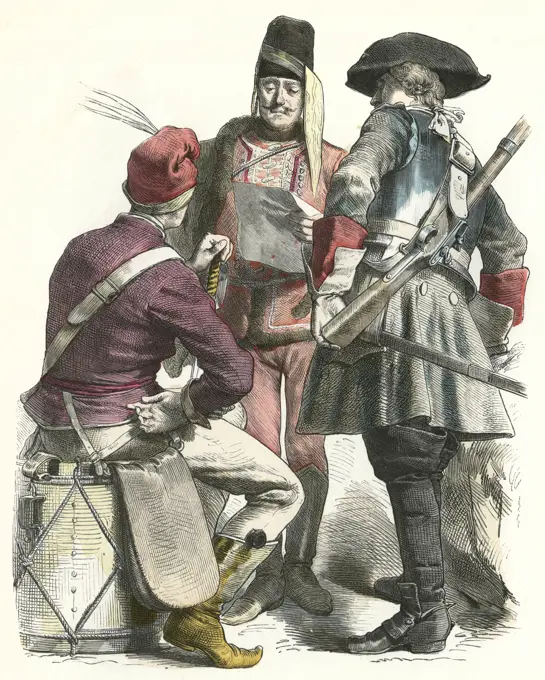
Austrian cavalry - without their horses         Date: 1704
Austrian cavalry - without their horses Date: 1704
231 assets in this story
6176-66097263
This illustration shows members of the Roman Praetorian Guard and is taken from a bas-relief in the Louvre Museum. Praetorian Guards is the name given to a special group of military soldiers whose duty it was to protect the emperor. They had existed during the Republic as the guards of Roman generals. The post ended in the fourth century A.D. under Constantine the Great.
6145-54527302
Turkey, 1820. 1910. Vinkhuijzen, Hendrik Jacobus. still image. Illustrations. General Research Division. Military uniforms , History, Turkey
1848-50228784
Frankish foot fighter in the Carolingian Empire, ca 800, Knight, Franconia, Germany, Historical, digitally restored reproduction of a 19th century original, exact date not known, Europe
1899-18716699
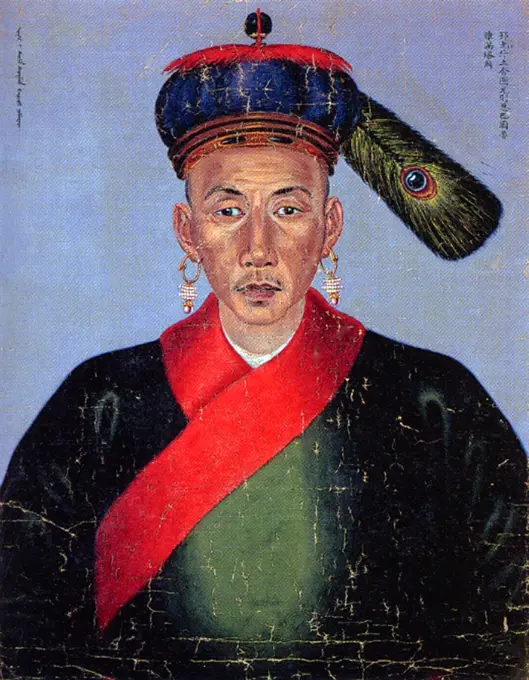
Qing Imperial court portraits of senior Manchu military officers, known as Bannermen, mid-18th century. From the time China was brought under the rule of the Qing dynasty (1644 - 1683), the banner soldiers became more professional and bureaucratised. Once the Manchus took over governing, they could no longer satisfy the material needs of soldiers by garnishing and distributing booty; instead, a salary system was instituted, ranks standardised, and the Bannermen became a sort of hereditary military caste, though with a strong ethnic inflection. Banner soldiers took up permanent positions, either as defenders of the capital, Beijing, where roughly half of them lived with their families, or in the provinces, where 18 garrisons were established. The largest banner garrisons throughout most of the Qing dynasty were at Beijing, followed by Xi'an and Hangzhou. Sizable banner populations were also placed in Manchuria and at strategic points along the Great Wall, the Yangtze River and Grand Can
4443-75459447
Trenk'scher Pandur from 1756, created by Rudolf von Ottenfeld in 1910, depicting military uniforms of the Austrian cavalry, specifically Croatian soldiers. The piece is associated with military history in Austria and was created in Amsterdam between 1741 and 1756
1746-30011097
Soldiers. Sevastopol, 1855.
1746-28996425
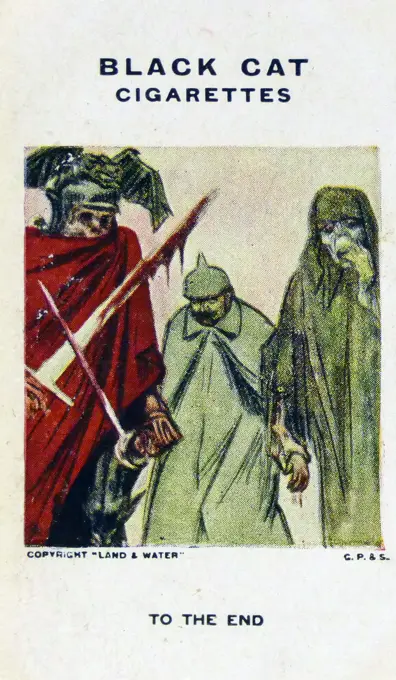
Black Cat Cigarettes, World war One, propaganda card showing: The Kaiser Wilhelm II in the company of death
1838-20474858
Mail Carrier on Horseback, Afghanistan, "Classical Portfolio of Primitive Carriers", by Marshall M. Kirman, World Railway Publ. Co., Illustration, 1895
6145-29270700
Two men in oriental dress bearing weapons. Lithograph by L.C. Dickinson, 1844, after Emily Eden.
6176-66918015
A Moro encased in a suit of mail made from Carabao Horn linked together with brass rings during the Philippine American War
6145-29857615
German 16th Century, Freydal, The Book of Jousts and Tournament of Emperor Maximilian I  Combats on Foot (Jousts)(Volume III), c 1515 Freydal, The Book of Jousts and Tournament of Emperor Maximilian I: Combats on Foot (Jousts)(Volume III)
6145-52311511
Turkey, 1821-25. 1910. Vinkhuijzen, Hendrik Jacobus. still image. Illustrations. General Research Division. Military uniforms , History, Turkey
6145-52319431
British Guiana police. 1910. Vinkhuijzen, Hendrik Jacobus. still image. Illustrations. General Research Division. Military uniforms , History, Great Britain, Guiana
6145-52311737
Turkey, 1896-1909. 1910. Vinkhuijzen, Hendrik Jacobus. still image. Illustrations. General Research Division. Military uniforms , History, Turkey
1848-60468312
Count Emmanuel von Mensdorff-Pouilly, 24 January 1777, 28 June 1852, was an Austrian field marshal lieutenant, vice governor of the fortress of Mainz, and honorary citizen of the city of Mainz, Historical, digitally restored reproduction from a 19th century original, Record date not stated
1899-18791906
Lithograph from 'Afghaunistan' by Lieutenant James Rattray (1841). The Kohistani is Mir Alam, formerly one of a band of noted robbers on the road to Turkestan, north-west of Begram. Rattray wrote: 'Coistaun has always been remarkable for the war-like character of its inhabitants, who average some forty thousand families famous for the efficiency and excellence of their Pyadas (foot-soldiery). As light infantry they are unrivalled, and from their numbers and determined courage, are of considerable importance in the event of any revolution in which they may take part'. The robber chief Hassan secretly and daringly accosted the British envoy William McNaghten and offered to bring him Dost Mohammmed's head in return for a large amount of money. Although this offer was hastily turned down, Hassan and his men were later enrolled among the infantry escort of Rattray's brother. Giving up their precarious livelihood, they became most efficient soldiers. Mir Alam carries a 'juzzail', a type of l
1899-18789369
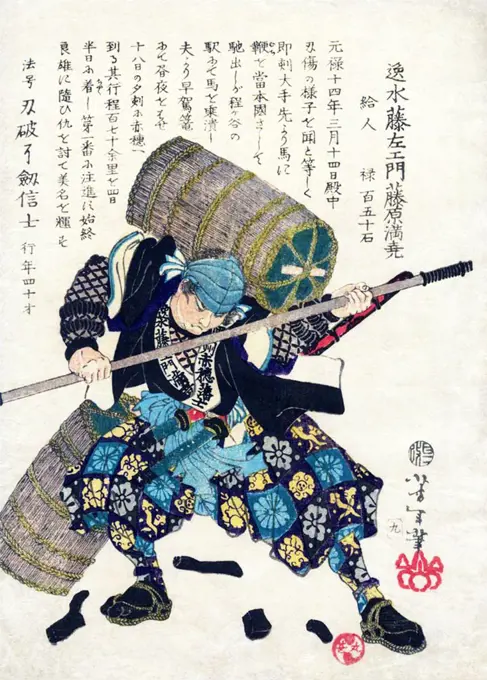
The revenge of the Forty-seven Ronin (Shi-ju-shichi-shi), also known as the Forty-seven Samurai, the Aki vendetta, or the Genroku Aki incident (Genroku aki jiken) took place in Japan at the start of the 18th century. One noted Japanese scholar described the tale as the country's 'national legend'. It recounts the most famous case involving the samurai code of honor, bushidi. The story tells of a group of samurai who were left leaderless (becoming ronin) after their daimyo (feudal lord) Asano Naganori was forced to commit seppuku (ritual suicide) for assaulting a court official named Kira Yoshinaka, whose title was Ki zuke no suke. The ronin avenged their master's honor after patiently waiting and planning for two years to kill Kira. In turn, the ronin were themselves ordered to commit seppuku for committing the crime of murder. With much embellishment, this true story was popularized in Japanese culture as emblematic of the loyalty, sacrifice, persistence, and honor that all good peopl
6145-45307844
Dębicki zuber  Carpathian Highlanders Altenberg, H.
6145-52327756
France, 1854-1870 1910. Vinkhuijzen, Hendrik Jacobus. still image. Illustrations. General Research Division. Military uniforms , History, France
6145-52317567
France, 1764, 3 1910. Vinkhuijzen, Hendrik Jacobus. still image. Illustrations. General Research Division. Military uniforms , History, France
6145-29945426
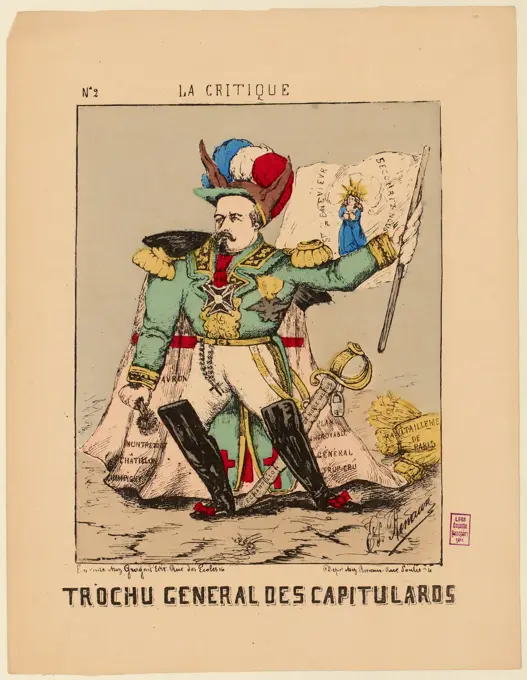
Criticism / N ° 2 / Trochu, General Capituards.
4048-16066065
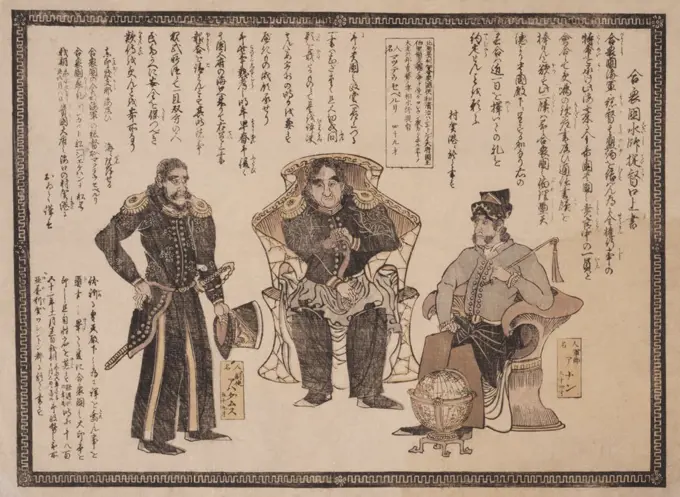
Japanese print shows three men, high officers of the US quasi-military diplomatic mission of 1852-54, which opened Japan to the West. Left to right are Commander Anan, Commodore Matthew Perry, and Captain Henry Adams  (BSLOC_2019_7_61)
6176-67043749
'France !!! Quo vadis', French WWI postcard, 1914-1918. Artist: Unknown
4409-17511131
Auf Vorposten / Outpost Duty. Date/Period: 1829. Painting. Oil on panel. Height: 18 cm (7 in); Width: 24 cm (9.4 in). Author: GEORG FRIEDRICH KERSTING.
6176-66084028
Ashanti warrior from the Jardin d'Acclimatation with his weapons, Paris. France. Old 19th century engraving from La Nature 1887
1848-54805664
Louis-Lazare Hoche (born 25 June 1768 in Montreuil died 19 September 1797 in Wetzlar) was a French general de division of the revolutionary period, Historical, digitally restored reproduction from a 19th century original, Record date not stated
6145-52847467
Chalk lithograph by Henry Emy, titled 'History of the Army', produced around 1850. The artwork depicts military scenes and uniforms from the mid-19th century, showcasing historical military attire and events.
6176-67066966
Battles of the The Hundred Years War, (20th century). Artist: Unknown
1899-18716707
Qing Imperial court portraits of senior Manchu military officers, known as Bannermen, mid-18th century. From the time China was brought under the rule of the Qing dynasty (1644 - 1683), the banner soldiers became more professional and bureaucratised. Once the Manchus took over governing, they could no longer satisfy the material needs of soldiers by garnishing and distributing booty; instead, a salary system was instituted, ranks standardised, and the Bannermen became a sort of hereditary military caste, though with a strong ethnic inflection. Banner soldiers took up permanent positions, either as defenders of the capital, Beijing, where roughly half of them lived with their families, or in the provinces, where 18 garrisons were established. The largest banner garrisons throughout most of the Qing dynasty were at Beijing, followed by Xi'an and Hangzhou. Sizable banner populations were also placed in Manchuria and at strategic points along the Great Wall, the Yangtze River and Grand Can
6188-60060942
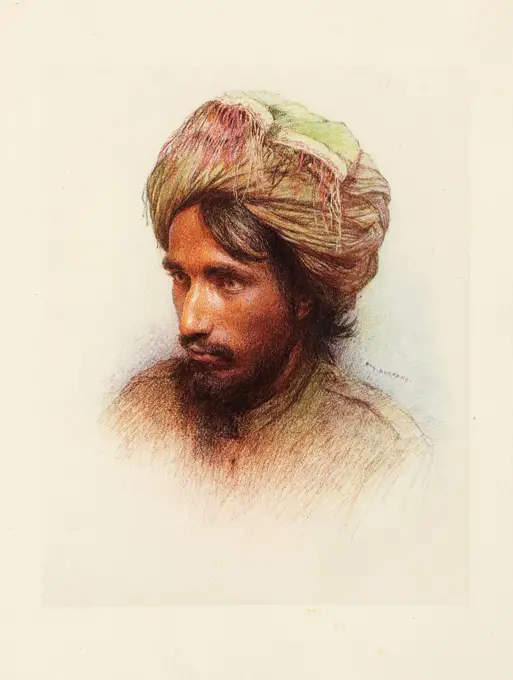
The Allies in the First World War, British Empire, Baluchi Auxiliary, Chan Mohamed, Historical, Digitally Restored Reproduction of a Template from the 19th Century, Record Date Not Stated 1f-4913454
1899-18716662
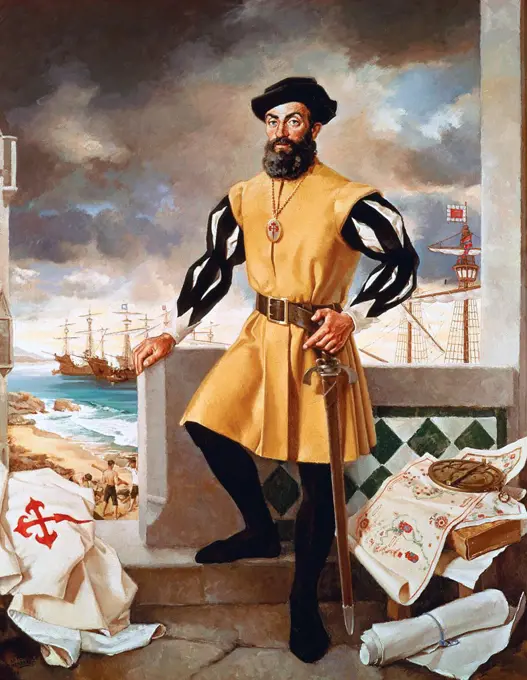
Ferdinand Magellan c. 1480-April 27, 1521) was a Portuguese explorer. He was born at Sabrosa, in northern Portugal, but later obtained Spanish nationality in order to serve King Charles I of Spain in search of a westward route to the Spice Islands (modern Maluku Islands in Indonesia). Magellan's expedition of 1519-1522 became the first expedition to sail from the Atlantic Ocean into the Pacific Ocean and the first to cross the Pacific. It also completed the first circumnavigation of the Globe, although Magellan himself did not complete the entire voyage, being killed during the Battle of Mactan in the Philippines.
PREVIOUS
of 3
NEXT
2401 S. Ervay, Suite 206
Dallas, Texas 75215
United States
Get Started
Free ResearchMy BoardsMy Cart
For Creators
How To License Your ContentContributor PortalFrame of Mind
Resources
API accessPricing
Contact
+1 866 236 0087help@viewpictures.co.uk Contact form
©2026 View Pictures. All Rights Reserved. -A
This site is protected by reCAPTCHA and Google Privacy Policy and Terms of Service apply.