My Boards
View Pictures
  • My Boards

Historical Rocket Launches

Black-and-white photographs capturing the launches of various rockets from Cape Canaveral, depicting the evolution of space exploration.

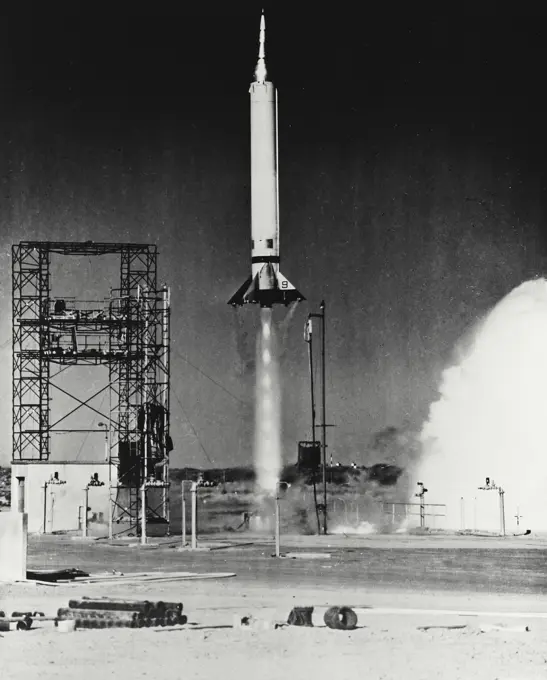
Vintage Photograph. US Navy's Martin Viking number 9 high altitude research rocket
142 assets in this story
6177-V53810369
6145-44630851
A V-2 rocket takes flight at White Sands, New Mexico, in 1946. The German engineers and scientists who developed the V-2 came to the United States at the end of World War II and continued rocket testing under the direction of the U. S. Army, launching more than sixty V-2s.
1746-29999946
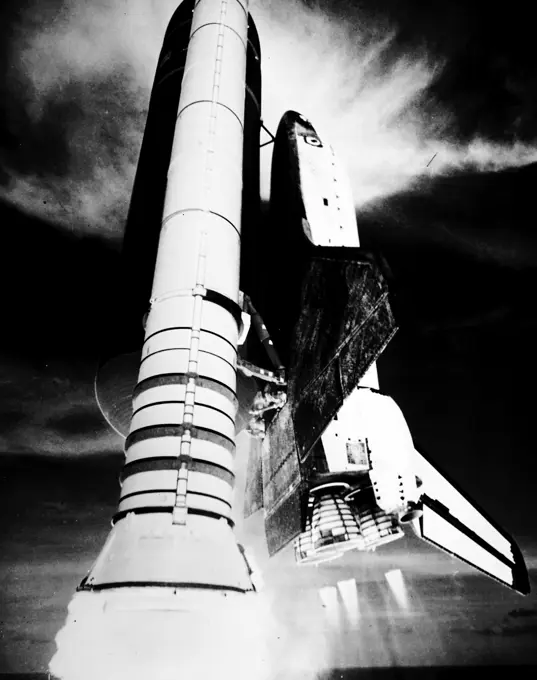
Just moments following ignition, the Space Shuttle Challenger, mated to its two solid rocket boosters and an external fuel tank, soars toward a week-long mission in Earth orbit. Note the diamond shock effect in the vicinity of the three main engines. Launch occurred at 5:00 p.m. (EDT), July, 29,1985.
5513-51515914
Instrument carrying rocket, the upper half of a satellite rocket some 200 miles above the earth, orbiting. It is not beyond the pull of gravity but stays up for the same reason as the moon does, - because of velocity. Only if it lost speed would it fall down. Three micro-wave aerials are extended to transmit automatic instrument readings back to earth and receive radio control. Readings would include cosmic ray intensity, magnetic field strength, temperature, solar radiation. At 200 miles it would circle the earth every hour and a half. May 04, 1955.
6177-V53457859
7036-69968131
Evel blasts off during Evel Knievel's jump at the Snake River Canyon in September 1974
255-5464
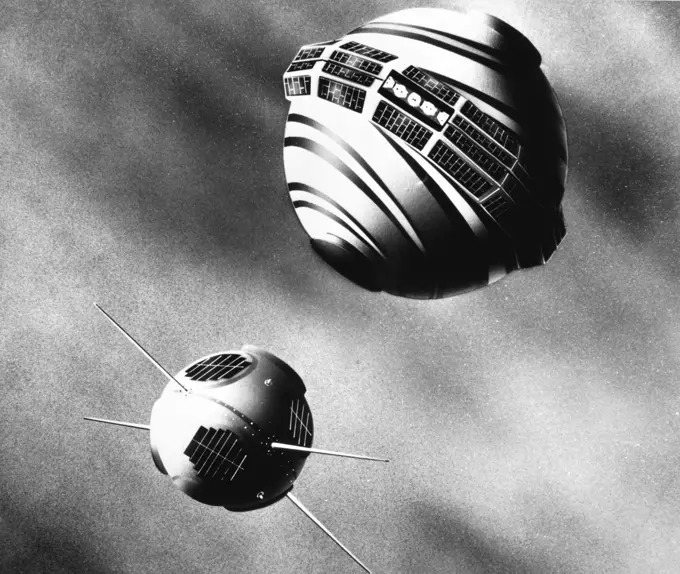
Two satellites orbiting in space, Transit 2A Satellite, Solar Radiation Measurement Satellite, US Navy
6145-52097957
Shock-absorbing pads fall away from the surface of an MGM-118A Peacekeeper intercontinental ballistic missile as it emerges from its launch canister. This is the first test launch of the Peacekeeper. Base: Vandenberg Air Force Base State: California (CA) Country: United States Of America (USA)
6145-44493573
Pre-launch alert of Atlas-Agena 7, Ranger V.
6145-44717513
S71-17620 (31 Jan. 1971) --- The huge, 363-feet tall Apollo 14 (Spacecraft 110/Lunar Module 8/Saturn 509) space vehicle is launched from Pad A, Launch Complex 39, Kennedy Space Center, Florida, at 4 03 02 p.m. (EST), Jan. 31, 1981, on a lunar landing mission. This view of the liftoff was taken by a camera mounted on the mobile launch tower. Aboard the Apollo 14 spacecraft were astronauts Alan B. Shepard Jr., commander; Stuart A. Roosa, command module pilot; and Edgar D. Mitchell, lunar module pilot.
4389-1810
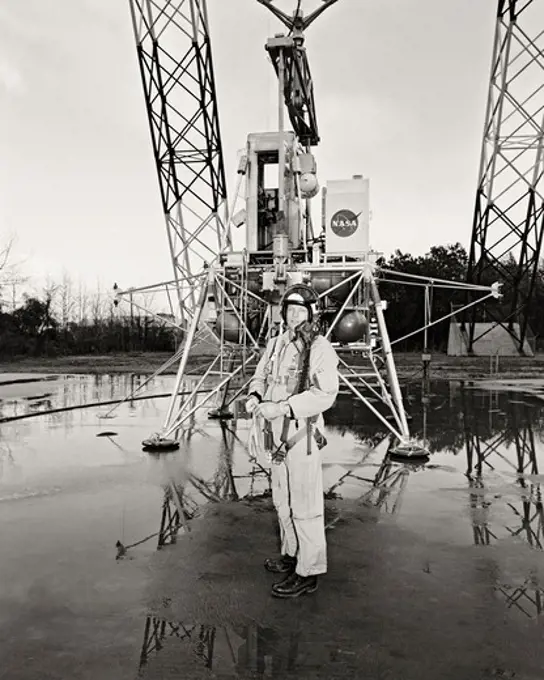
Neil Armstrong
5513-111421942
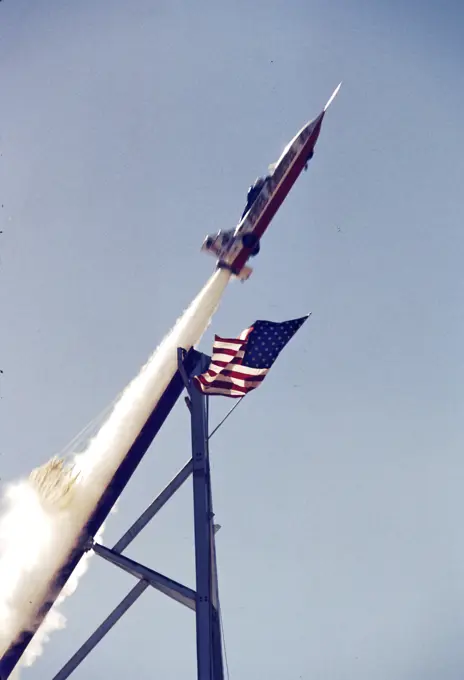
Flaming from a tall launching tower at the Holloman Air Force Base, Alamogordo, New Mexico, is a North American Aviation NATIV guided missile. NATIVS travel at supersonic speeds and reach trajectory altitudes of 10 miles. April 6, 1949. (Photo by North American Aviation, Inc.).
6145-29472870
Anefo photo collection. Launch of Apollo II from Cape Kennedy, USA. August 13, 1969. America
6145-58961717
ISS026-E-032262 (7 March 2011) --- The space shuttle Discovery is seen from the International Space Station as the two orbital spacecraft accomplish their relative separation on March 7 after an aggregate of 12 astronauts and cosmonauts worked together for over a week. During a post undocking fly-around, the crew members aboard the two spacecraft collected a series of photos of each others vehicle.
6177-V54016801
6177-V53836784
6177-V53841159
6145-44773038
CAPE CANAVERAL, Fla. -  At the Apollo/Saturn V Center at NASA's Kennedy Space Center in Florida, Apollo astronaut Walt Cunningham is introduced during NASA's 40th Anniversary of Apollo Celebration of the July 1969 launch and landing on the moon. Cunningham was joined by seven others involved in the program. Cunningham occupied the lunar module pilot seat for the 11-day flight of Apollo 7--the first manned flight test of the third-generation United States spacecraft.
6145-44817841
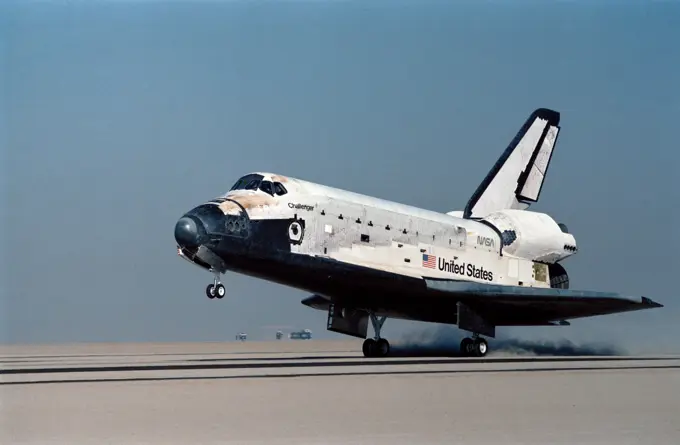
61A-S-139 (6 Nov 1985) --- Eight persons returning from space at one time is a record which was set at 9 45 39 a.m. (PST) today when the Space Shuttle Challenger's wheels came to a stop on the runway at Edwards Air Force Base. The main gear is seen touching down at 9 44 51 a.m. Inside the spacecraft are astronauts Henry W. Hartsfield Jr., Steven R. Nagel, Bonnie J. Dunbar, James F. Buchli, Guion S. Bluford Jr., Reinard Furrer, Ernst Messerschmid and Wubbo J. Ockels. A number of West German and other European experiments were performed during the week-long Spacelab D-1 mission.
6145-58965768
The Apollo 17 space vehicle towers over the astronauts it will launch to the moon on December 6, 1972 from KSC. The astronauts, L-R, Harrison H. Schmitt, Ronald E. Evans and Eugene A. Cernan participated in a walkdown of the emergency route at Launch complex 39A.
6145-29097197
Inspection tour of NASA installations: Huntsville Alabama, Redstone Army Airfield and George C. Marshall Space Flight Center, 9:35AM. President John F. Kennedy (center right) views models of the Saturn rocket, during a tour of the George C. Marshall Space Flight Center (MSFC) at Redstone Arsenal, Huntsville, Alabama; Director of the MSFC, Dr. Wernher von Braun (center right, with arm raised), briefs President Kennedy. Standing behind the President: Vice President Lyndon B. Johnson; Administrator of the National Aeronautics and Space Administration (NASA), Dr. James E. Webb; Minister of Defence of Great Britain, Peter Thorneycroft. President Kennedy visited the MSFC as part of a two-day inspection tour of NASA field installations.
6145-44552573
Apollo 11 Commander Neil A. Armstrong and his wife, Carol, were among the many special NASA STS-83 launch guests who witnessed the liftoff of the Space Shuttle Columbia April 4 at the Banana Creek VIP Viewing Site at KSC. Columbia took off from Launch Pad 39A at 2:20:32 p.m. EST to begin the 16-day Microgravity Science Laboratory-1 (MSL-1) mission
6145-52304117
Grenade head containing the inflammatory mechanism and the explosive charge for a 25-pin cannon. Right is a cross section of the same type. 25 Ponder: caliber 88 mm
4389-1854
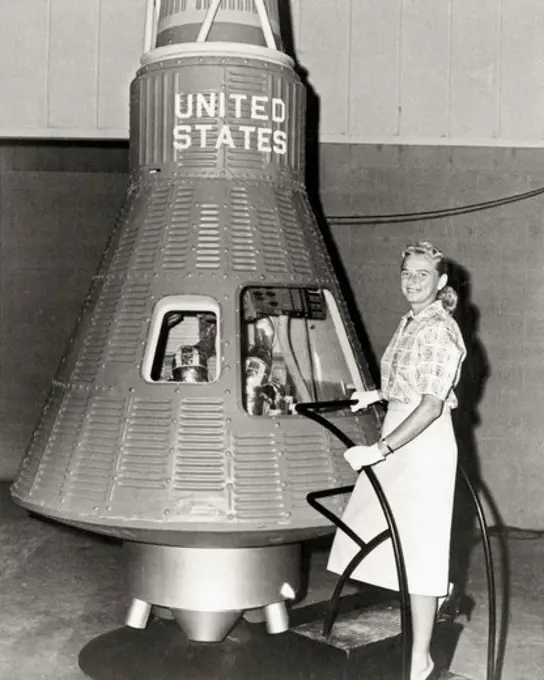
Jerrie Cobb Poses Beside Mercury Capsule
6145-44710771
S65-29601 (3 June 1965) --- Distant view of the launch of the Gemini-Titan 4 (GT-4) spacecraft from Pad 19 at 10 16 a.m. (EST) on June 3, 1965. The Gemini IV spacecraft carried astronauts James A. McDivitt, command pilot; and Edward H. White II, pilot, on a four-day, 62-revolution mission that lasted 97 hours and 56 minutes.
6145-44493530
S63-00693 (3 Oct. 1962) --- Landing with parachute extended of astronaut Walter M. Schirra's Mercury-Atlas 8 (MA-8) capsule, called the Sigma 7, after a world orbital flight. Photo is labeled "Splashdown".
6145-45244630
The drag-chute is fully deployed as the Space Shuttle Atlantis (STS-66) heads toward a stop at Edwards Air Force Base in southern California, ending a successful mission. The crew supported the Atmospheric Laboratory for Applications and Science (ATLAS-3), conducting approximately 80 experiments. The Cryogenic Infrared Spectrometer and Telescopes for the Atmosphere-Shuttle Pallet Satellite (CRISTA-SPAS), which was developed by German engineers, was successfully deployed and retrieved during this space mission.
6145-58965835
KENNEDY SPACE CENTER, FLA. - The Apollo 15 Saturn V Space Vehicle is seen from a camera located at the mobile launcher's 360-foot level at Launch Pad 39A during venting of the liquid oxygen during the 'wet' portion of the Countdown Demonstration Test today. Astronauts David R. Scott, Commander; James B. Irwin, Lunar Module Pilot; and Alfred M. Worden, Jr., Command Module Pilot, will participate tomorrow in the 'dry' portion of the Countdown Demonstration Test (CDDT), as a final dress rehearsal for the launch to the Moon, scheduled for no earlier than July 26, 1971.
6145-44652151
Dr. Wernher Von Braun, stands in front of a Saturn IB Launch Vehicle at Kennedy Space Center (KSC). Dr. Von Braun was Marshall's first Center Director (1960-1970). Under his leadership Marshall was responsible for the development of the Saturn rockets, the Skylab project and getting the United States into Space and landing on the moon with the Apollo missions.
4186-111898068
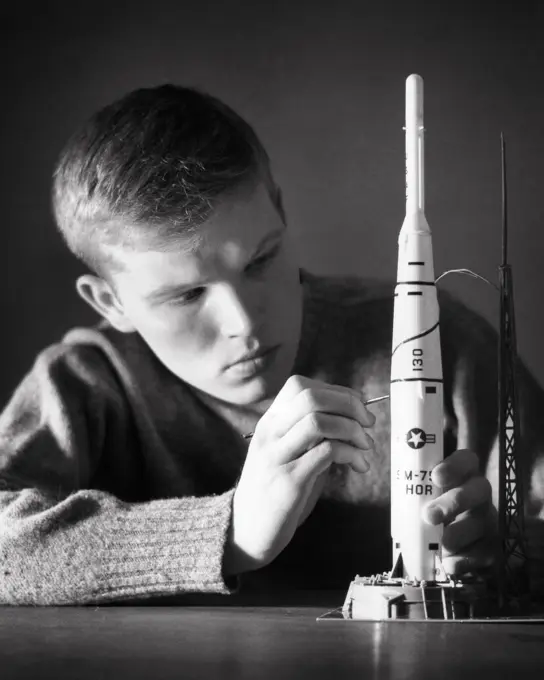
1960s INTENT TEENAGE BOY BUILDING DETAILING MODEL OF MULTISTAGE LAUNCH VEHICLE ROCKET
4389-1785
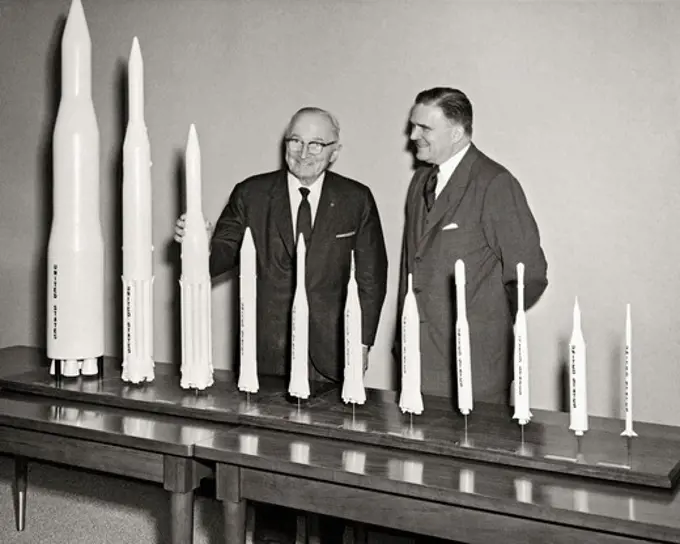
Truman Receives Rocket Models
5514-51159986
50th Anniversary Celebration of the Apollo Moon Landing
6145-44761228
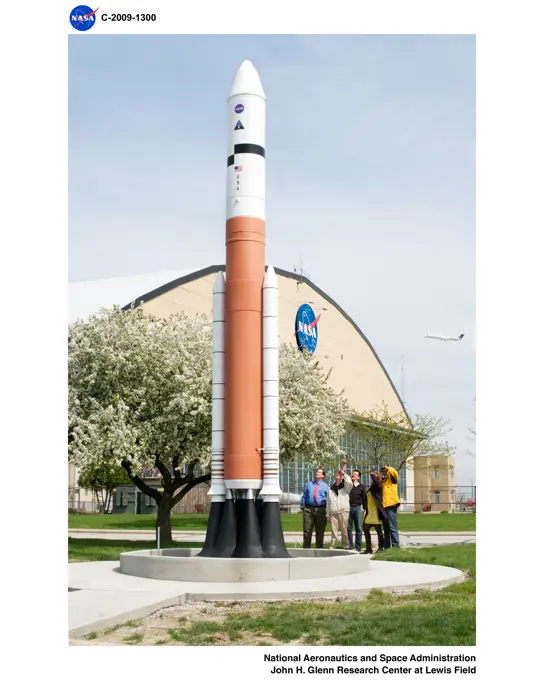
Installation of Ares V Model
4186-20445457
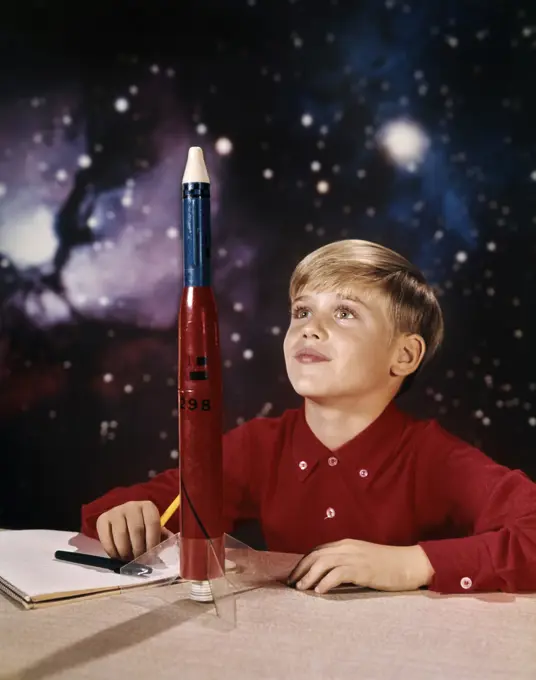
1960s BOY WITH MODEL ROCKET DAYDREAMING LOOKING AT ROCKET ON DESK STAR GALAXY BACKGROUND
4404-1616
Photograph of Soyuz rocket on the launch pad signed by astronauts and cosmonauts on display in a museum, Baikonur Space Museum, Baikonur Cosmodrome, Kazakhstan
6177-V54004586
6177-V53833440
4404-1390
USA, Florida, Titusville, Astronaut Memorial Plaza, Atlas-Agena Program Memorial
6177-V53807368
6177-V53990313
6145-45231077
Managed by Marshall Space Flight Center, the Space Tug was a reusable multipurpose space vehicle designed to transport payloads to different orbital inclinations. Utilizing mission-specific combinations of its three primary modules (crew, propulsion, and cargo) and a variety of supplementary kits, the Space Tug was capable of numerous space applications. This 1970 artist's concept depicts the Tug's propulsion module launching a space probe into lunar orbit.
6145-45239511
In January 1958, a modified Redstone rocket lifted the first American satellite into orbit just 3 months after the the von Braun team received the go-ahead. This modified Redstone rocket was known as a Jupiter-C. Its satellite payload was called Explorer I.
PREVIOUS
of 2
NEXT
2401 S. Ervay, Suite 206
Dallas, Texas 75215
United States
Get Started
Free ResearchMy BoardsMy Cart
For Creators
How To License Your ContentContributor PortalFrame of Mind
Resources
API accessPricing
Contact
+1 866 236 0087help@viewpictures.co.uk Contact form
©2026 View Pictures. All Rights Reserved. -A
This site is protected by reCAPTCHA and Google Privacy Policy and Terms of Service apply.